Dr. Sebastian Gorka: Trump Is Not An Interventionist Commander In Chief, Fox News via YouTube, April 16, 2017
A Month of Islam and Multiculturalism in Britain: March 2017, Gatestone Institute, Soeren Kern, April 16, 2017
“Have you seen some of those ISIS propaganda videos, they are cut like action movies. Where is the counter narrative?” — Riz Ahmed, actor.
Britain’s foreign aid budget is reportedly funding at least two dozen Palestinian schools, some of which are named after terrorists and murderers and which openly promote terrorism and encourage pupils to see child killers as role models.
An estimated 400 home-grown jihadis have returned to the United Kingdom after fighting in Syria, but only 54 of those have been prosecuted, according to a Mail on Sunday investigation, which also discovered that some returned jihadis are roaming free on the streets of Britain.
March 1. A new Channel 4 documentary series called “Extremely British Muslims” showed the inner workings of a sharia court inside Birmingham’s Central Mosque. In the first episode, viewers witnessed the case of mother-of-four Fatima, 33, as she sought permission to divorce her drug dealer husband she says has abused her throughout their 14-year marriage. According to sharia law, Muslim women must plead their divorce cases in court, while Muslim men need only to say the words “I divorce you” three times to obtain a divorce. Birmingham Central Mosque said it allowed the sharia proceedings to be filmed in an effort to “break down misconceptions about Islam.” Some 100 sharia courts in Britain are now dispensing Islamic justice outside the remit of the British legal system.
March 2. English actor Riz Ahmed warned that the lack of Muslim faces on British television was alienating young people, driving them towards extremism and into the arms of the Islamic State. Delivering Channel 4’s annual diversity lecture in Parliament, Ahmed said that television had a pivotal role to play in ensuring that Muslims felt heard, and valued, in British society:
“If we fail to represent, we are in danger of losing people to extremism. In the mind of the ISIS recruit, he’s the next James Bond right? Have you seen some of those ISIS propaganda videos, they are cut like action movies. Where is the counter narrative? Where are we telling these kids they can be heroes in our stories — that they are valued? If we don’t step up and tell a representative story we are going to start losing British teenagers to the story that the next chapter in their lives is written with ISIS in Syria.”
March 3. The Amateur Swimming Association changed its swimsuit regulations to allow Muslim women to wear full body outfits, after a request from the Muslim Women’s Sport Foundation. The rule was changed to encourage more Muslim women to take part in the sport. Rimla Akhtar, from the Muslim Women’s Sport Foundation, said:
“Participation in sport amongst Muslim women is increasing at a rapid pace. It is imperative that governing bodies adapt and tailor their offerings to suit the changing landscape of sport, including those who access their sport.”
March 4. Ryan Counsell, 28, a jihadist from Nottingham who left his wife and two small children to fight with the Abu Sayyaf Islamist group in the Philippines, blamed his behavior on the Brexit vote. He told the Woolwich Crown Court that increased tension within the local Muslim community after Brexit sparked his decision to leave. He said that he wanted to escape Britain’s political climate and seek an “idyllic life” under sharia law. He was arrested at Stansted airport in July 2016 and was later sentenced to eight years in prison.
March 5. Homegrown terrorism inspired by the Islamic State poses the dominant threat to the national security of the United Kingdom, according to a comprehensive new report on violent Islamism in Britain. The 1,000-page report — “Islamist Terrorism: Analysis of Offenses and Attacks in the UK (1998–2015)” — was published by the Henry Jackson Society, a foreign policy think tank based in London.
The report found that number of Islamism-related offenses (IROs) in Britain doubled between 2011 and 2015 from 12 to 23 a year. More than half (52%) of IROs were committed by individuals of South Asian ancestry: British-Pakistanis (25%) and British-Bangladeshis (8%). Other offenders had family ties to countries in Africa, the Middle East and the Caribbean. Forty-seven percent of IROs were committed by individuals born in the UK.
The also report showed a clear link between terrorism and growing up in Muslim-dominated neighborhoods. London was the place of residence of 43% of IROs, followed by West Midlands, with 18%. Of the latter, 80% of IROs were in Birmingham. The third most common region was North West England, with 10% of IROs. Together, these three regions contained the residences in almost three-quarters (72%) of cases. East London was home to half (50%) the London-based offenders, while the three most common boroughs — Tower Hamlets, Newham and Waltham Forest — contained the residence of offenders’ in 38% of all London IROs (and 16% overall).
March 6. British security services have prevented 13 potential terror attacks since June 2013, according to Assistant Commissioner Mark Rowley, the UK’s most senior counter-terrorism police officer. He also said that there were 500 live counter-terror investigations at any given time, and that investigators have been arresting terror suspects at a rate of close to one a day since 2014. The official threat level for international terrorism in the UK has stood at severe — meaning an attack is “highly likely” — for more than two years.
March 7. The National Health Service (NHS) revealed that there were 2,332 new cases of female genital mutilation (FGM) in Britain between October and December 2016. That brought the total of new cases in 2016 to nearly 5,500.
March 7. The managers of the cash-strapped Sandwell General Hospital near Birmingham are considering the construction of a special kitchen for preparing halal meals for Muslim patients and staff. The move follows complaints about the quality of halal meals that the hospital has outsourced to local vendors. A spokesman said: “We are still reviewing options around creating a separate halal kitchen and the best ways to provide a range of healthy halal options to patients and staff who want them.”
March 10. The BBC announced that it would begin outsourcing production of Songs of Praise, a Sunday worship program that has been produced in-house for 55 years. Critics of the move said they feared that Songs of Praise will lose its Christian focus in favor of Islam. Anglican priest Lynda Rose said a recent Songs of Praise episode featuring a segment about the Muslim faith, including Church of England children visiting a mosque, exemplified the “Islamization of the BBC.” More than 6,000 people have signed an online petition calling for MPs to investigate the BBC after it appointed Fatima Salaria as the BBC’s head of religious programming — the second Muslim in a row to hold the post.
March 11. Britain’s foreign aid budget is reportedly funding at least two dozen Palestinian schools, some of which are named after terrorists and murderers and which openly promote terrorism and encourage pupils to see child killers as role models. A Mail on Sunday investigation found pictures of “martyrs” posted on school walls, revolutionary slogans and symbols painted on premises used by youngsters, sports events named after teenage terrorists and children encouraged to act out shooting Israeli soldiers in plays.
Head teachers openly admitted to flouting attempts by British and European donors to control the curriculum at schools. They reportedly print overtly political study aids for pupils, some even denying the existence of Israel, while teachers boast of encouraging pupils to emulate teenage “martyrs” killed in terrorist attacks in the region.
One senior teacher from a prominent West Bank school, when asked what he would say to a pupil threatening to attack Israelis, said: “I would tell them go in the name of Allah.”
March 11. Islamic preachers may be asked to begin delivering their sermons in English under measures being prepared to rid Britain of hate preaching. The Telegraph reported that the government’s counter-extremism taskforce is working on the plans amid concern that preaching in foreign languages enforces divisions between Islam and mainstream British society and can foster radicalization.
March 12. An Islamic bookstore in Alum Rock, a predominately Muslim suburb of Birmingham that has produced 10% of all of Britain’s convicted terrorists, was found to be openly selling books promoting jihad. The Sunday Express visited the Madina Book Centre and bought a copy of the 440-page “Bringing up Children in Islam” for £5 ($6). The book encourages parents to “keep alive in the children the spirit of jihad.” It says:
“They [your children] may be inspired to strive for the restoration of the glory of Islam and Muslims. Jihad of warfare is where all humans spend their energies to stop a tyrant from being oppressive, for example when a tyrant makes it difficult for people to fulfill the commands of Allah to propagate Islam.
“Tyrants must be subdued whether they rule in an Islamic or non-Islamic land, or whether they are on a battlefield.
“It is the duty of Muslims to divert people from worshipping created things to the worship of the Almighty Allah alone.”
The book also rails against cinema and theater, arguing they are the work of “evil-minded” Jews, and warns of a Jewish conspiracy to take over the world. The book supports adulterers being stoned to death and Muslim schoolchildren being kept separate from others: “Education under unbelieving and atheist teachers results in them going astray. Dangerous, communistic and materialistic ideas grow in their minds.”
March 14. A father who describes himself as “Anglo-Saxon” lost a legal battle to prevent his Muslim ex-wife from sending their 10-year-old son to an Islamic secondary school. The man, who was not named for legal reasons, said he wanted to prevent his son from attending a “school inside a mosque” on the grounds that he would be “marginalized” by his son if he enrolled at the London-based school. The man’s lawyer said that the mother and father had “different world views” and that it was client’s wish that his son be educated in a “neutral” environment. The man and his ex-wife, both in their 40s, had divorced more than three years ago following a nine-year marriage. The man had converted to Islam but renounced his faith following the separation. The lawyer argued that the boy’s Muslim faith could be adequately catered for at a secular school. A High Court judge dismissed the man’s appeal on the grounds that an earlier ruling made by a judge at a family court — that the man would not be marginalized by his son — was correct.
March 15. Lawyers warned that a landmark ruling by the European Court of Justice (ECJ), which allows employers to ban staff from wearing Islamic headscarves at work under certain conditions, will not automatically apply in Britain. The ECJ ruled that prohibiting the visible wearing of any political, philosophical or religious sign does not constitute direct discrimination. The judgment was delivered in cases brought by two employees, one in Belgium and one in France, who were dismissed for refusing to remove headscarves. Lawyers said that British companies adopting the ban could easily be sued for discrimination. The Muslim Council of Britain, the country’s largest Islamic organization, condemned the ruling:
“At a time when populism and bigotry are at an all-time high, we fear that this ruling will serve as a green light to those wishing to normalize discrimination against faith communities. Many will be worried that this action will prevent Muslim women who choose to wear the scarf from securing jobs. And it sends a message that we cannot accept a plural society that recognizes and celebrates religious differences.”
Prime Minister Theresa May said that the government should not tell women what to wear:
“We have a strong tradition in this country of freedom of expression, and it is the right of all women to choose how they dress and we don’t intend to legislate on this issue. There will be times when it is right for a veil to be asked to be removed, such as border security or perhaps in courts, and individual institutions can make their own policies, but it is not for government to tell women what they can and can’t wear.”
March 17. The former owners of a bookstore in Bradford apologized after copies of the Koran and other Islamic literature were found in a garbage dumpster outside the store. Police were called to the store after a group of Muslim males began shouting at and abusing staff. The imbroglio began after the bookstore’s 80-year-old owner decided to close down his business, and the new owners gave him a month to move out the stock, which included a number of Korans and other Islamic books. A spokesman for the bookstore said:
“It has come to our attention that some Islamic materials were found in a skip [garbage dumpster] next to Book Centre. While the Book Centre site is being cleared, no Islamic material of any sort was purposefully disposed of. A small workforce was instructed to clear two storerooms from which some material made its way into the skip. This is wrong, unacceptable and a genuine mistake. The skip will be looked at as a matter of urgency and any materials removed.”
A spokesman for Baker Reign Solicitors, which represents the new owners, said:
“Should our client have been aware that the previous owner would have sought to dispose of the Holy Koran and other books in this manner, they would have assisted in distributing the books to various mosques throughout the city.
“Our client now hopes that the previous owner takes a more responsible course of action by distributing the books to those less fortunate and in need of Islamic guidance.”
March 17. Zameer Ghumra, a 37-year-old Leicester pharmacist accused of showing a beheading video to two young children, was released on bail until his trial begins at Nottingham Crown Court on September 25. He has been charged with distributing terrorist publications under section two of the Terrorism Act 2006.
March 18. The BBC apologized after a tweet from the BBC Asian Network account asked, “What is the right punishment for blasphemy?” The tweet provoked criticism that the BBC appeared to be endorsing harsh restrictions on speech. In an apology posted on Twitter, the network said it had intended to debate concerns about blasphemy on social media in Pakistan. “We never intended to imply that blasphemy should be punished,” it said.
 On March 18, the British taxpayer-funded BBC Asian Network account asked, “What is the right punishment for blasphemy?”
March 19. A British jihadist reportedly used social welfare payments to move his family to Syria to join the Islamic State. Shahan Choudhury, 30, who was radicalized at Belmarsh Prison while serving an 18-month sentence for allegedly stabbing to death a 17-year-old hospital worker over an alleged £15 ($18) drug debt, vanished from his apartment in London and has since used social media to urge other British Muslims to carry out terror attacks in the UK.
March 20. Mohammed Karamat, 45, an imam at a mosque in Coventry who assaulted four children as young as nine, was spared jail time. Magistrates watched footage of Karamat twisting a child’s arm, slapping a child, and using a pen to stab a child and pricking a child’s hand with the lid of a pen. He was filmed attacking the children during a six-day period. Karamat, who admitted to four counts of assault by beating, was ordered to do 100 hours unpaid work.
March 21. Minister for Higher Education, Jo Johnson, ordered British universities to include a clear commitment to freedom of speech in their governance documents to counter the culture of censorship and so-called safe spaces. In a letter, Johnson wrote that it was the “legal duty” of universities to ensure as far as practicable that freedom of speech is secured for “members, students, employees and visiting speakers.” This meant that all university premises should not be “denied to any individual or body on any grounds connected with their beliefs or views, policy or objective.”
March 22. Khalid Masood, 52, drove a car at pedestrians on London’s Westminster Bridge and, armed with two knives, stormed the parliamentary estate. He killed five people and injured more than 50 before he was shot dead by police. Masood, a convert to Islam, was born in Kent as Adrian Elms. During his school years, he used his stepfather’s surname, Adrian Russell Ajao. A former English tutor, he was unemployed at the time of the attack and had been living on social welfare benefits. Masood, who had a history of criminality — he had previous convictions for assaults, including grievous bodily harm, possession of offensive weapons and public order offences — was reportedly radicalized in prison.
March 23. A total of 29 people were charged after girls as young as 11 were raped and sexually abused in Huddersfield. West Yorkshire Police said the 27 men and two women men face numerous offences including rape, trafficking with intent to engage in sexual exploitation, sexual activity with a child, child neglect, child abduction, supply of Class A drugs and the possession and making of indecent images of children. They are accused of committing the crimes against 18 girls in Huddersfield when they were aged between 11 and 17, between 2004 and 2011.
March 23. The Islamic State claimed responsibility for the Westminster attack. “The perpetrator of the attacks yesterday in front of the British parliament in London is an Islamic State soldier and he carried out the operation in response to calls to target citizens of the coalition,” the group’s Amaq news agency said in a statement.
March 23. Prime Minister Theresa May said that it would be “wrong” to describe the jihadist attack on Westminster Bridge and Parliament as “Islamic terrorism.” Instead, she said, it should be referred to as “Islamist terrorism” and “a perversion of a great faith.”
March 25. Mark Ashdown, a childhood friend of Westminster terrorist Khalid Masood, described how Masood had completely changed after prison, where he converted to Islam. Ashdown said:
“When he first came out he told me he’d become a Muslim in prison and I thought he was joking. Then I saw he was quieter and much more serious. I gave him some cash-in-hand work for a few months as a laborer. He said he needed time to pray and read the Koran — something about finding inner peace. I heard he’d split from his partner and got even more deeply into religion.”
March 25. Police investigating the Westminster attack concluded that Khalid Masood acted entirely alone for reasons that may never be known. “We must all accept that there is a possibility we will never understand why he did this,” deputy assistant Metropolitan police commissioner Neil Basu said. “That understanding may have died with him.” Meanwhile, British security services reportedly do not like the term “lone wolf” because they feel it glamorizes an attacker. They prefer using “lone actor” instead.
March 25. An estimated 400 home-grown jihadis have returned to the United Kingdom after fighting in Syria, but only 54 of those have been prosecuted, according to a Mail on Sunday investigation, which also discovered that some returned jihadis are roaming free on the streets of Britain.
March 28. Kevin Lane, a convicted murderer who spent 20 years in British prisons, including HMP Woodhill and HMP Frankland, told the BBC that he saw many inmates pressured to convert to Islam and carry out attacks on other prisoners. “I have seen many attacks within the prison system,” he said. “One man boiled fat and poured it over someone’s head because of an insult to Islam.” A spokesman for the Ministry of Justice said: “The allegations put forward by the former prisoner are historic.”
March 29. The BBC tried to downplay Westminster attacker Khalid Masood’s ties to radical Islam by airing an interview with a former employer of Massood. The man, identified only as Farasat, was a manager at an English language school where Massood worked between 2010 and 2012: The interview follows:
Q: Who was the man that you knew?
A: As a teacher, a very professional man. He was an excellent teacher. He got on well with his non-Muslim colleagues. A very friendly, stable kind of guy, really. He was not interested in the politicized version of Islam. He had no contact with any of the extremist groups. He was more a practicing Muslim who was committed to his faith, committed to his family and was focused on his career. I don’t think he was influenced by extremist groups at all…. In fact, I’d go as far to say that he was the antithesis of a violent radical.
Masood was, in fact, known to police and security services and had once been investigated by MI5 over concerns about violent extremism.
March 30. Acting Metropolitan Police Commissioner Craig Mackey said there was a slight increase in “Islamophobic incidents” following the Westminster terror attack. Breitbart London reported: “The statement which New Scotland Yard sent along with its figures suggests the rise may not be due to a genuine increase in Islamophobia, but could instead be due to a ‘community engagement plan’ which sees the authorities actively encourage Muslims to come forward with allegations following what they describe as ‘trigger events.'” The Met, the police service for the Greater London area, now employs 900 specialists focused on monitoring so-called Islamophobia.
March 31. A new biography of Prince Charles revealed that the heir to the British throne tried to halt the U.S. invasion of Afghanistan to “honor” Ramadan. He made the plea in an “urgent call” to William Farish, the American ambassador to London, four weeks into the huge military operation launched after the 9/11 terror attacks. Farish recalled: “Prince Charles asked me if it would be possible to stop the invasion to honor Ramadan, and if I could convey that request to President Bush.” The ambassador replied that it would be difficult to halt a military invasion already in full swing, but the prince allegedly protested: “But Americans can do anything!” Farish asked: “Sir, are you really serious?” Prince Charles replied: “Yes I am.”
North Korean missile launch possibly sabotaged, DEBKAfile, April 16, 2017

Out of a basketful of aggressive options, DEBKAfile’s military and intelligence experts pick the four most likely methods the Americans may have applied to thwart the latest North missile launch
*****************************
An unidentified North Korean ballistic missile exploded seconds after it was launched Sunday, April 16, from a site near the port city of Sinpo, just as US Vice President Mike Pence arrived in Seoul for talks with the South Korean government on how to deal with Pyongyang’s belligerence. The medium-range missile failure occurred the day after a spectacular military parade rolled through central Pyongyang to mark the 105th anniversary of North Korea’s founder Kim Il-sung. It showcased 50 missiles, including the first display of a submarine-launched missile.
Missile launches have failed before – and not just in North Korea. But worth noting are the comments by US officials before and after the North Korean missile detonated: “We had good intelligence before the launch and good intelligence after the launch,” was one. The US Pacific Command said it had detected and tracked what it assessed to be a North Korean ballistic missile launch. Another US official remarked: “It’s a failed test. It followed another failed test. We don’t need to expend any resources against that.”
The responses of US officials and the concurrence of the failed detonation with the arrival of the US vice president suggest that North Korea’s missile and nuclear programs are closely monitored by US intelligence, electronic and cyber tools. A previous North missile launch on April 5 suffered an in-flight failure before the weapon crashed into the Sea of Japan. There was also an unsuccessful missile launch in late March.
Out of a basketful of aggressive options, DEBKAfile’s military and intelligence experts pick the four most likely methods the Americans may have applied to thwart the latest North missile launch:
1. Sabotage of the missile’s fuel, guidance, or communications systems, or of its exterior or the launch pad.
Method: Cutting of cables or fuel lines, changing the flight system’s programming, etc.
Possible perpetrators: Engineers secretly collaborating with the US or those motivated by hatred, jealousy or other factors.
2. Sabotage of the missile’s command and control system, such as changing its flight commands, ignition system, or ordering it to self-destruct, as is done to avoid landing in an unintended location or falling into enemy hands.
Method: Secretly planting instructions in the command and control system, or interfering with the controllers in charge of sending instructions to the missile
Possible perpetrators: mission control staff or military engineers involved in the composition of the command and control programs.
3. Electronic warfare against the command and control systems in the mission control center by sending powerful electromagnetic pulses to disrupt communications with the missile.
Method: US warships, surveillance planes or satellites
Possible perpetrators: US army or navy
4. A cyberattack against the missile’s control system that changes the electronic commands and downs the missile
Method: Planting of malware that enables the attackers to seize control of the computer system without being detected
Possible perpetrators: US intelligence agencies, first and foremost the National Security Agency.
Yazidi Activist: Islamic State Cut Open My Friend, Raped Her Baby, Then Raped Her, Breitbart, John Hayward, April 14, 2017
(What are feminists doing about these atrocities? What more can be done? — DM)
 YouTube
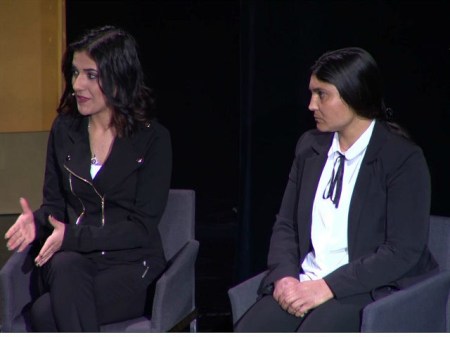
Women for Women International has posted an astonishing interview conducted by its founder,Zainab Salbi, of two eyewitnesses to the horrors of the Islamic State.The tale was not easy to tell, as you can see from the video below, and it is not easy to hear.
The interviewees are Shireen Ibrahim, a Yazidi woman who escaped Islamic State slavery, and activist Feryal Pirali, who handles translation duties.
Ibrahim was captured by ISIS in 2014 while attempting to flee their assault on Iraqi Kurdistan. The Yazidis are a religious minority despised by the Islamic State and considered “devil worshipers” by some other Muslims because they pray to an archangel who is often misidentified as Satan. More details about them can be found here.
Ibrahim became one of many Yazidis held as slaves by the Islamic State, with women and even very young girls often used as sex slaves. She was taken to Sinjar and separated from some forty family members taken with her. She said in her interview with Salbi that half of her family is now missing or dead.
Ibrahim avoided rape at the hands of her ISIS captors for a while by pretending to be married to her cousin and claiming her nephew was her son. She was taken to Syria and tormented in various ways, including ISIS fighters shooting guns into the ground around her, while she was wrapped in a blanket while telling her she would be killed, and pouring some unknown substance down her throat. After she was recaptured during an escape attempt, they tortured her with electric shocks.
“They did everything to me,” Ibrahim said. “They did every bad thing you can think of to me because I ran away.”
She said she was sold as a slave five times during her Islamic State captivity. “The first time I got sold was by a doctor, a guy who came to Syria to buy me,” she recalled. “The last time I got sold it was to the same guy, the same doctor.”
Ibrahim said the price of her first sale was just one dollar. The buyer told her she was a cheap purchase.
The last time she was sold, the ISIS militant hired to transport her helped her escape for reasons she does not know. She currently lives in a camp in northern Iraq for Yazidis who have been rescued from the Islamic State. Ibrahim said she is too traumatized and fearful of ISIS to ever return to her family home in Sinjar.
“It’s hard for us,” Ibrahim said of the other women at the camp who escaped from the Islamic State. “Every minute is like a year.”
The most horrifying story in the interview came from Pirali, who is herself a Yazidi from the Sinjar region. She said she left Iraq in 2010, leaving behind a high school friend who got married and was pregnant with a baby girl when ISIS arrived.
“When ISIS took over our town, when they were trying to run away, because she was heavy, she was pregnant, she couldn’t run a lot,” Pirali said. “So she told her family to leave her behind, ‘save yourself, go.’ She was going to walk slowly until she gets to where they are.”
“Unfortunately, she didn’t make it, The ISIS people got her. What they did to her, they opened up her stomach, like from here to here” — Pirali pantomimed a cut horizontally across her entire stomach — “they opened her up, and they got her baby girl out. They raped the baby, and they also raped her. And she survived.”
“The baby did not make it,” she added. “They thought she was dead. They left her behind. The ISIS fighters, they left her. Her family came back, saw her just like that, in that situation.”
Pirali said this was the atrocity that prompted her to become an activist. In 2015, she circulated a petition asking then-President Barack Obama to help women and girls in ISIS captivity. The petition attracted 100,000 supporters.
“The message I want to send to ISIS people is that we are Yazidis, and we are going to be Yazidis. We are not going to change our religion, no matter what,” Ibrahim said defiantly, with Pirali translating her words.
She wept as she passed along her message to the civilized world: “Save our people that is in ISIS captivity. They’re killing kids in front of our eyes, and they’re bombing them.”
On Tuesday, a Kurdish official told CNN that the bodies of between 1,300 and 1,500 Yazidis have been found in the area around Sinjar, interred in 35 mass graves plus over 100 individual graves. The Kurds believe they will find more mass graves as more territory is recaptured from the Islamic State. The official who spoke to CNN believed there are up to a dozen mass graves in a single village still controlled by ISIS and identified as a site of mass killings by the United Nations.
The United Nations has formally accused the Islamic State of committing genocide against the Yazidis.
Unfortunately, Yazidis in northern Iraq who only recently returned to their homes have been displaced again, as Kurdish and Yazidi militia battle ISIS fighters in the region. The Kurdish Regional Government is seeking to persuade armed Yazidis to break away from the PKK — a militant group engaged in separatist violence in Turkey, which recruited and trained many Yazidis to fight ISIS in the Sinjar region — and join the Kurdish Peshmerga instead.
The world’s largest Yazidi temple, seen by many as a sign of renewal for their religion, is currently under construction in Armenia. Yazidis are a large and respected minority in Armenia, but many of them have relocated to Europe, Russia, and the U.S. in search of jobs, due to a slow economy.
Iran’s Stage-Managed Elections, American Thinker, Reza Shafiee, April 15, 2017
(What can President Trump do to promote regime change in Iran? What can he do to support the resistance, in and outside Iran? What, if anything will he do?– DM)
Iran’s history has shown that people are willing to risk and speak openly when they have outside support and sympathy. The United States’ policies with regard to human rights have an instant effect in hearts and minds of ordinary citizens in Iran. What happened in Iran in 2009 is not a distant memory. The Obama administration’s flawed policy set off a chain reactions in the region which still reverberates in Syria, Yemen and Iraq. By focusing just on getting the nuclear deal done with the mullahs in Tehran, it actually left out other pressing issues such supporting the Iranian people and indirectly preventing the carnage in the neighboring countries.
***************************
Every four years, Iranian citizen witness a show called ‘elections.’ These have nothing in common with genuine democratic elections; they’re facades. The upcoming May 19 elections are no exception.
A closer look at the candidates proves that they are no different from one another and all have a clear track record of participation in suppression of Iranian people over the past four decades. They have won the approval to enter the race by the mullahs for just this reason.
The two more serious ones are: Hassan Rouhani, the incumbent president; and Ebrahim Raisi, custodian of Iran’s wealthiest charity, Astan Quds Razavi in Iran’s holiest shrine of Imam Reza in Mashhad, northeastern Iran. Having charge of such vast amount of wealth, it’s a given that Raisi enjoys Supreme Leader Khamenei’s full trust. Both candidates are cut from the same cloth and are committed to principle to Supreme Guardianship (Velayat-e faqih), meaning, the rule of the ayatollahs
So who are they? Let’s start with the second one.
Ebrahim Raiai a member of “Death Commission” and close confident of Ali Khamenei
The “Death Commission” was a four-member body with the sole task of carrying out Khomeini’s fatwa against dissidents. In his hand-written decree, Khomeini openly ordered the commission to kill the political prisoners, the majority of whom had been already imprisoned.
Ayatollah Hossein-Ali Montazeri, Khomeini’s handpicked successor was later sacked over his quarrel with Khomeini for the indiscriminate killings. In a shocking 28-year-old audio file of one the meetings of Death Commission leaked in August by his son Ahmad, Montazeri called the killings a “crime that future generations will certainly not forget” and declared: “It is committed in the name of the Islamic Republic and carried out by you.”
Ahmad Montazeri has regarded Ebrahim Raisi’s standing for presidential elections a ‘joke’ and ‘an insult to Iranian people’. Raisi’s record does not stop at just his role in the massacre of political prisoners in 1988, but what he did overrides any other tasks he has undertaken in Islamic Republic’s killing machine.
Canada’s Parliament adopted the following motion on June 5th, 2013 on the events of 1988 in Iran: “That the House condemn the mass murder of political prisoners in Iran in the summer of 1988 as a crime against humanity, honors the memory of the victims buried in mass graves at Khavaran cemetery and other locations in Iran, and establishes Sept. 1 as a day of solidarity with political prisoners in Iran.”
Now let’s look at the other candidate:
Hassan Rouhani is no saint
Make no mistake about Rouhani being a saint by comparison. He is not far behind Raisi when it comes to cruelty. For starters, Mostafa Pour-Mohammadi, his justice minister, is none other than another member of the same notorious Death Commission. Last summer when Pour-Mohammadi was pressed to answer for the massacre of 1988, he proudly said: “I carried out God’s will and I have not lost sleep over what I did.”
The rate of executions during Rouhani’s presidency has been unprecedented in past 25 years in Iran, according to Ahmed Shaheed, who was Iran’s last UN Special Rapporteur for human rights. During Rouhani’s tenure, around 3000 executions were carried out.
When asked about hangings during his presidency, Rouhani simply said: “They were carried out according to God’s laws.”
Amnesty International’s report for 2016 indicates that with the exception of China, Iran carried out 55 percent of all executions worldwide.
Rouhani has always said that he has been in a decision making-position throughout the life of the Islamic Republic. He personally was in a commanding position when the 1999 student uprisings were crushed in Iran.
The European Union extended its sanctions on Iranian regime’s offices for participating in suppression of Iranian citizens.
EU documents state that they target persons complicit in “torture, cruel, inhuman and degrading treatment, or the indiscriminate, excessive and increasing application of the death penalty, including public executions, stoning, hangings or executions of juvenile offenders.”
As U.S. Ambassador to the UN Nikki Haley mentioned recently: “Peace and security cannot be achieved in isolation from human rights.” The long-suffering people of Iran, Syria, and Iraq bear witness that “human rights abuses are not the byproduct of conflict; they are the cause of conflict, or they are the fuel that feeds the conflict.”
There’s also a third candidate worth looking at:
Mahmoud Ahmadinejad is back in the race
The trio of Rouhani, Raisi and Ahmadinejad in Iran’s upcoming elections is more than a mere joke: It has a plain and clear message – that of Khamenei’s extreme weakness in controlling his goons. The humorous Iranian people have already made jokes about the three and this bagatelle called elections. Social media is full of them.
Khamenei ordered Ahmadinejad to stay away from elections. By disobeying his master’s direct order he is demonstrating the Supreme Leader’s unprecedented lack of control over his establishment. Khamenei offered an explicit warning in September that his candidacy would be a “polarizing situation” that would be “harmful to the country.”
That is a reference to the disputed election in 2009 which ignited massive street demonstrations and subsequent arrests of thousands of protesters and the killing of hundreds of others by the Revolutionary Guard Corps (IRGC).
Final thoughts
Iran’s history has shown that people are willing to risk and speak openly when they have outside support and sympathy. The United States’ policies with regard to human rights have an instant effect in hearts and minds of ordinary citizens in Iran. What happened in Iran in 2009 is not a distant memory. The Obama administration’s flawed policy set off a chain reactions in the region which still reverberates in Syria, Yemen and Iraq. By focusing just on getting the nuclear deal done with the mullahs in Tehran, it actually left out other pressing issues such supporting the Iranian people and indirectly preventing the carnage in the neighboring countries.
The elections in Iran – for parliament or president – have been designed or “engineered,” as the word has been widely used, by the regime’s inner circles, for both internal and external consumption. However after the nuclear deal with the West, it has become a high priority for the regime to show popular support at home and project it as an image to the rest of the world as a regime fully in control and ready to do business. It is no secret that the regime has no popular support in Iran.
Ebrahim Rasis, Hassan Rounhani, Mahmoud Ahmadinejad and their likes should not be allowed to escape the consequences of their crimes against humanity. Known human rights criminals such as entire ruling mullah class in Iran should not go unpunished. They should soon see the inside of International Criminal Court.
Reza Shafiee is a member of Foreign Affairs Committee of the National Council of Resistance of Iran (NCRI)
Trump’s Strategy for Dividing the Enemy Alliance, Iran News Update, April 14, 2017
Russia and Iran still needed to be dealt with, so Tillerson met with Putin Wednesday, and Buckley writes, “…from our perspective the possibility of a rapprochement with Russia is greater now than it was before the attack on the Syrian air base: Trump no longer has to worry about critics who say he’s soft on Russia.”
He continues, “As for the Russians, they’re the ultimate realists. We’ve signaled to them that we’re not going to try to dislodge them from Syria. But everything else is on the table. We’re telling them they can move in more civilized company if they want. Only it’s going to cost them, if we’re to accept them as civilized players.”
***********************
The past few weeks were a triumph for America.
“Now what?” asks F.H. Buckley, Scalia Law School professor, and author of “The Way Back: Restoring the Promise of America.”
In an article for the New York Post Buckley writes, “When facing three opponents, as America is with Russia, Syria and Iran, the most obvious response is to try to break them up through a side deal with one of them. That’s the signal Secretary of State Rex Tillerson and UN Ambassador Nicki Haley sent to Syrian strongman Bashar al-Assad on March 30 in saying we’d be prepared to live with him.”
In essence, the message was, “Be nice, Assad, distance yourself from Iran and we’ll accept a solution to the Syrian civil war that leaves you in power,” writes Buckley. The offer’s chance of being accepted was slight. Syria, under Assad, is dependent on Iran. More fighters take orders from Tehran than there are members of Assad’s army, including members of Iran’s Revolutionary Guards.
No one has asked is why Assad ordered the Sarin attack, but Buckley assumes that it “…had simply been ordered to employ chemical weapons by Tehran, as a means of turning down the American overture. It signaled that the Iranian-Syrian alliance could not be broken.”
Next came our attack on the Syrian Shayrat airbase last week.
However, Russia and Iran still needed to be dealt with, so Tillerson met with Putin Wednesday, and Buckley writes, “…from our perspective the possibility of a rapprochement with Russia is greater now than it was before the attack on the Syrian air base: Trump no longer has to worry about critics who say he’s soft on Russia.”
He continues, “As for the Russians, they’re the ultimate realists. We’ve signaled to them that we’re not going to try to dislodge them from Syria. But everything else is on the table. We’re telling them they can move in more civilized company if they want. Only it’s going to cost them, if we’re to accept them as civilized players.”
Finally, Buckley talks about Iran. He writes, “Of the three countries, only Iran under the mullahs is America’s implacable enemy, one with whom a peaceful resolution of differences is entirely impossible. More than that, the mullahs take our willingness to reach out to them as a sign of weakness they can exploit. They constantly test our resolve, and when we fail to respond, they take it one level further.”
Some options remain, and one of them is to push back when pushed. The Iranian regime’s legitimacy is threatened by liberal opposition groups, particularly the National Council of Resistance of Iran (NCRI). The National Council revealed Iran’s nuclear program in 2002, and it’s been praised by Elie Wiesel, Rudy Giuliani and Michael Mukasey.
Support for the NCRI and other Iranian dissident groups is a good place to begin change, and end the years of acquiescence to Iran.
Trump Calls Putin’s Bluff, In Syria and Beyond, PJ Media, Michael Ledeen, April 14, 2017
(“Putin’s puppy” does not wag his tail; he bites. — DM)
 (Sergey Guneev/Sputnik via AP)
[A]ll those pundits who belittled the Tomahawk attack have missed a very important point. Over the past eight years, Russia’s effective power in the world had grown far beyond its real power. That has now changed, and you can expect our actual and would-be allies, and our global enemies, to change their recent tunes.
***************************
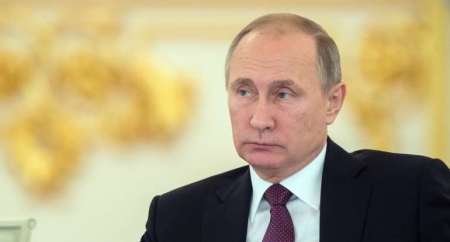
You may have noticed that Vladimir Putin is distinctly annoyed with us, and he is right to be. For we have deprived him of his great dream to join, and perhaps even lead, the ranks of the world’s most important leaders. Today, following the attack on the Syrian air base, Putin is just one more dictator.
During the Obama years, the Russian tyrant had grown accustomed to getting his way most everywhere. Invade Crimea? Fine. Grab slices of eastern Ukraine? No problem. Open military bases in Syria and Libya? You bet. We wouldn’t challenge him.
Along with these actions was a kind of implied Brezhnev Doctrine (according to which, once a country joined the Soviet bloc, it would never leave it): If you allied with Putin, he’d protect you. Nobody would invade, and Russian antiaircraft missiles would defend against air attack.
As Richard Perle has said, Putin’s Russia is not a major military power.
“The appearance that Vladimir Putin is strong is largely the result of weakness displayed by the United States in the [Barack] Obama years. Russia is not a very strong country.
“Its military is relatively weak and ineffective, even though they spend a lot of money. It’s true they have nuclear weapons, but no one can quite imagine those being brought to play.”
So Putin’s posture as the leader of a major power was blown up in Syria, along with the airplanes and jet fuel storage tanks, and you can be sure that the Russian antiaircraft systems do not seem to have functioned at all.
Thus, all those pundits who belittled the Tomahawk attack have missed a very important point. Over the past eight years, Russia’s effective power in the world had grown far beyond its real power. That has now changed, and you can expect our actual and would-be allies, and our global enemies, to change their recent tunes.
When America moves decisively, the whole world changes. It is now likely that countries like Egypt, which had taken out insurance against American weakness by buying Russian weapons and permitting Russian special forces to operate on Cairo’s side of the Egyptian/Libyan border, will find it easier to support the United States. And you can see the same effect in recent declarations from NATO, bragging about the increases in defense spending throughout the alliance.
On the other side of the global war, the Iranians have of course enlisted in Putin’s disinformation campaign, accusing Trump of falsifying the evidence of Syrian chemical weapons, and thumping their chests, warning of dire consequences if the United States dares to move against Tehran.
But if you think Russia’s not a credible military threat to us, Iran is much more toothless, and Khamenei faces a far greater internal threat than Putin does. All Iranians understand that if Trump is willing to strike Syria, he is likely willing to strike Iran, without whose fighters and weapons the Syrian dictatorship would be doomed. They are also impressed with the deployment of the Mother Of All Bombs in Afghanistan. That sort of thing resonates with the Persians. If they had such power, they’d certainly use that sort of language. Thankfully, they don’t have the power, and so they resort to fantasies.
Exciting times, and not nearly so bad as the old Chinese curse would have you believe. As I’ve said for years, we’re in the midst of a paradigm shift. Nobody knows how it will turn out, but the news is certainly not all bad.
Immigration Hawks Ascend to Senior DHS Positions, Breitbart, John Binder, April 14, 2017
 David Maung/Bloomberg via Getty Images
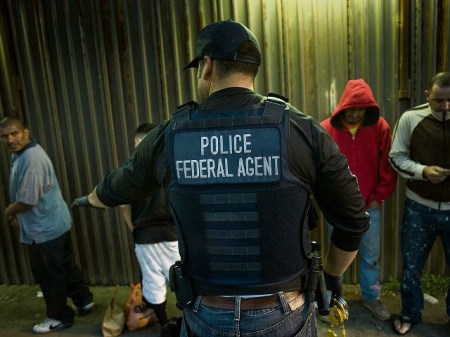
Two leading advocates for reforming illegal and legal immigration enforcement were appointed by President Donald Trump to serve as senior advisors for the Department of Homeland Security (DHS).
Jon Feere, the former legal analyst for the Center for Immigration Studies, and Julie Kirchner, the previous executive director for the Federation of American Immigration Reform (FAIR), have both been appointed to senior positions.
Kirchner, a campaign alum as well, will serve as the senior adviser to Customs and Border Protection (CBP) Commissioner Kevin McAleenan.
Center for Immigration Studies Executive Director Mark Krikorian told Breitbart Texas that the Trump Administration appointed a person who “knows the ins and outs” of immigration when they chose Feere to serve.
“ICE needs somebody like Jon because he’s worked on immigration policy for many years,” Krikorian said. “After eight years of Obama, there were civil servants and people at ICE who weren’t as quite up to date on immigration enforcement.”
FAIR spokesperson Ira Mehlman told Breitbart Texas that Kirchner’s appointment is welcome news.
“They’re both people with long experience and deep knowledge and they’re highly qualified for their positions,” Mehlman said.
Both the Center for Immigration Studies and FAIR have long been advocates for increased border security, a wall, reforming foreign guest worker visas and lower levels of legal immigration to help American wages to rise.
The appointments have come with the usual media backlash that the Trump Administration has grown accustomed to.
CNN, for instance, has written that Feere and Kirchner’s appointments have “alarmed” the open borders lobby. The network propped up opposition to the appointments through the left-wing Southern Poverty Law Center, with Director Heidi Beirich claiming that that the Center for Immigration Studies and FAIR publish “racist” and “xenophobic” reports.
Krikorian, though, said the open borders lobby is only outraged because they know how effective both nominees could be.
“This isn’t a complaint about qualification,” Krikorian told Breitbart Texas. “Jon and these others know what they’re doing and that’s what the anti-borders groups are afraid of.”
4/14/2017: Press Release – Muslim Doctor Welcomes Arrest, Demands Full Investigation of Physician Who Mutilated Girls in U.S., AIFD, Mischel Yosick, April 14, 2017
(Please see also, Detroit doctor charged with female genital mutilation of seven-year-olds. – DM)
Since girls were brought to Nagarwala from out of state, it appears that she may be just a piece of a network of individuals facilitating the mutilation of girls and women in the United States.
*********************************
Today, the American Islamic Forum for Democracy (AIFD), a Muslim-led organization whose founding principles include gender equality, welcomes the news that Jumana Nagarwala, a Detroit-based physician, has been arrested for allegedly carrying out female genital mutilation (FGM) against girls here in the United States. Dr. M. Zuhdi Jasser, AIFD president and a physician who has long championed efforts against the barbaric practice, said:
“Healthcare professionals, especially physicians, should be the safest people our children encounter outside of their families. What we at the front lines of reform against radical Islamism know is that one of the ideology’s symptoms is the regular violation and abuse of women and girls, especially through efforts to control or destroy their bodies and sexuality. As a physician, Muslim, father, and husband – I am appalled – but not surprised – to learn of this doctor’s mutilation of girls. I urge authorities to conduct a full and vigorous investigation. Since girls were brought to Nagarwala from out of state, it appears that she may be just a piece of a network of individuals facilitating the mutilation of girls and women in the United States.
As a physician, Ms Nagarwala – I will not call her ‘doctor’ – knows full well the position of the American Medical Association on this issue. As an expert on medical ethics and a person of conscience, I must urge that her license(s) be revoked, that she remain jailed, and that all who acted with her be brought to justice. Further, any girls and women she harmed must receive intensive counseling, and their families investigated. I also encourage investigations of their schools, universities, and other places where they may have complained of physical pain, or been absent for periods of time during which the mutilation took place and immediately after.”
Reading Iran’s Reaction To US Missile Strikes In Syria, Long War Journal, Behnam Ben Taleblu, April 14, 2017
Seyyed Hossein Taghavi-Hosseini, the spokesperson for the Iranian parliament’s hawkish National Security and Foreign Policy Committee exclaimed: “The truth is that the Americans and some regional countries which are supporters of terrorism and terrorist groups were defeated in the Syrian arena… [therefore] the Americans entered so as to revive the terrorists and develop a support umbrella for them.” Taghavi-Hosseini’s comments are designed to alter international public opinion. Should Taghavi-Hosseini’s erroneous narrative go unchecked, Iran, along with its Russian partners, could more aggressively look to offer themselves as guarantors of the regional order.
***************************
On the evening of Thursday April 6, Washington time, President Donald Trump ordered the US military to respond to the Assad regime’s recent use of chemical weapons which had “choked out the lives of helpless men, women and children.” In so doing, the US launched 59 Tomahawk Land Attack Cruise Missiles at the Shayrat Airfield in Homs belonging to the Syrian government. The strikes, according to a Pentagon press statement, were delivered from two US destroyers stationed in the Eastern Mediterranean. According to a more recent Department of Defense evaluation, “20 percent of Syria’s operational aircraft” were wrecked by strike.
To date, international reactions have been somewhat predictable. US partners and allies in the Middle East, such as Israel and Saudi Arabia, endorsed the kinetic action. Conversely, government officials from the Syrian Arab Republic and Islamic Republic of Iran admonished the move. Such censures nonetheless provide insight into Iran’s framing of the war in Syria, as well as the methods of argumentation Iran has long used to support the Assad regime. As always, vitriolic anti-Americanism featured prominently in Tehran’s diplomatic response.
Iran’s Supreme Leader, Ayatollah Seyyed Ali Khamenei, called the strike a “strategic mistake.” He also ominously warned that the US was about “to repeat their past mistakes” in the region. “Former American officials created DAESH or helped it, and current American officials are in a state of strengthening DAESH or groups like it,” he alleged.
The conspiracy theory that the US has had a hand in the creation of the Islamic State is as old as the group itself, and is a narrative both favored and promoted by regime elites in Tehran. Over time it has even made itself manifest in elements of the Iranian population. On April 8, part of the headline above the fold on the front cover of the hardline Kayhan newspaper – whose editor-in-chief is a close Khamenei confidant – read: “America formally stood beside DAESH.”
Several other Iranian officials also framed American involvement in the region as a boost to such groups. Seyyed Hossein Taghavi-Hosseini, the spokesperson for the Iranian parliament’s hawkish National Security and Foreign Policy Committee exclaimed: “The truth is that the Americans and some regional countries which are supporters of terrorism and terrorist groups were defeated in the Syrian arena… [therefore] the Americans entered so as to revive the terrorists and develop a support umbrella for them.” Taghavi-Hosseini’s comments are designed to alter international public opinion. Should Taghavi-Hosseini’s erroneous narrative go unchecked, Iran, along with its Russian partners, could more aggressively look to offer themselves as guarantors of the regional order.
Alaeddin Boroujerdi, the Chairman of the same parliamentary committee, cited themes about perceived US desperation in his post-strike commentary. He told members of the Iranian press that, “The recent American action in Syria is indicative of the defeat of the statesmen and government of this arrogant country in the region and in the world.” Despite the obvious imbalance in capability, Iranian officials have often sought to position themselves as more adept than the US in the region, whom they accuse of being in retreat and decline. While Iran’s military assistance has been critical in the form of money, men, and munitions to the Assad regime, Iran lacks the conventional military power to project force in the region, and has therefore had to rely on tried and true asymmetric methods. For conventional force projection, Iran has turned to another state: the Russian Federation.
In a telephone call with Iran’s closest state partners, Syria and Russia, the latter of whom has provided air power and advanced Surface-to-Air Missiles to the beleaguered Assad regime, Iran’s President Hassan Rouhani similarly took to condemning the strike. Rouhani reportedly told Russian President Vladimir Putin that “We condemn America’s missile attack on Syria and believe it to be a case of gross violation of the sovereignty of an independent country which makes it necessary for this unilateral action to be investigated and condemned by the United Nations Security Council.”
The citing of the Assad regime as “independent” is in line with the Islamic Republic’s anti-Western and anti-imperialist governing ideologies. But it also draws from the lexicon of Syrian President Bashar al-Assad himself. At least twice in 2016 (once in July and once in October), the Iranian press reported comments by Assad attempting to frame his regime’s actions as measures needed to keep Syria independent because the West “cannot tolerate” or “does not accept” a sovereign Syrian state. The irony being that the longer the Assad regime lives on, the more reliant it will be on foreign patrons like Moscow and Tehran should they decide to reconquer lost territory or merely govern and hold the territory it presently controls.
Similarly, Tehran has long insisted on the “territorial integrity” of Syria, as well as that of Iraq, where it is using the campaign against the Islamic State to cement its presence through armed networks. These armed networks are seldom mentioned by Iranian diplomats.
Formally, Iran’s Foreign Minister Mohammad-Javad Zarif and its Foreign Ministry Spokesman Bahram Ghassemi also critiqued the strike. Zarif took to one of Iran’s new favorite mediums – Twitter – to berate the US for “impetuous unilateralism based on self-serving allegations.” Zarif bandwagoned on the argument made by Kayhan about the US and Salafist-terrorist groups. He purported that “Not even two decades have passed since the events of the 11th of September and America’s armed forces now fight beside al-Qaeda and DAESH in Yemen and Syria in a [unified] front.” This gross mischaracterization of recent US actions in the Middle East notwithstanding, Zarif also drew on Iran’s harrowing experiences during the Iran-Iraq War to bolster an argument against chemical weapons and WMD-use more generally.
In so doing, Zarif failed to mention that one of the strategic drivers of Tehran’s nuclear weapons program was its own eight-year conflict with Iraq. The same logic also helped guide Iran to develop and retaliate against Iraq’s chemical attacks by weaponizing pathogens of its own.
While Iranian military and religious elites also commented on the strike along themes already noted in this article, Iran’s regional proxies also weighed-in on the matter. Lebanese Hezbollah issued a press release calling the move a transgression of “Syrian sovereignty” that was ultimately in the “service of the Zionist entity.” Another militia, the Iran-linked Nujaba movement of Iraq noted via its spokesman that, “This missile attack does not change the rules of the Syrian conflict.” The spokesperson for Nujaba echoed themes about how American military action in Syria was merely a “tool… used to save terrorist groups.”
Conversely, Muqatada al-Sadr, the infamous Iraqi Shiite cleric who led the Mahdi Army (which despite being “disbanded” has been partially reconstituted into the “Peace Brigades” and is believed to be active in Syria) did not tow Tehran’s line on the strike and Assad’s future. According to reporting by Reuters, the cleric said, “it would be fair for President Bashar al-Assad to offer his resignation and step down in love for Syria, to spare it the woes of war and terrorism …and take a historic, heroic decision before it is too late.”
Despite the marked difference in tone by the leader of a prominent Shiite militia, Iranian officials have not seen the strike as inhibiting their support for Assad. While Iranian capabilities (presently comprised of ground assets often delivered by plane) do not appear to be impaired by the strike, there has been no overt escalation by Tehran at the time of this writing in the Syrian theater. Tehran also lacks the capability to respond on the same scope and scale as 59 cruise missile strikes against US assets without launching a major war. Rather, Iran appears to have fallen back on gloating, intimidation, and misinformation tactics that so often characterize Persian-language reporting. Nonetheless, Iranian officials would be wise to not write off the strike. US military power was just demonstrated on a key Iranian partner with exceeding ease. At a minimum, that should remind both Damascus and Tehran to be cognizant of escalation dynamics as the Syrian conflict drags on.
Yet, whatever the proximate cause for varying levels of Iranian activity in Syria, the root cause for the country’s continued involvement there remains the survival of the Islamic Revolution and its rejectionist message. To export this revolution and keep conflict away from Iranian territory, Tehran has continuously and successfully relied on a diverse array of non-state actors, terrorists, and armed religious networks across jurisdictions of weak central authority. But the Assad regime (both in its present incarnation under Bashar and previously under his deceased father, Hafez), has long represented the enduring value of a pro-Iranian state on Israel’s doorstep. Put differently, Tehran’s relationship with Damascus has permitted the Islamic Republic to inject hard- and soft-power into the Levantine theater for over three decades.
Time will tell if Iran will ultimately read the strike as a show of American resolve or indecision. But until then, sentiments such as those from 2013 by Hojjat al-Eslam Mehdi Taeb, the leader of the Ammar Base – an organization tasked with fighting the “soft war” – appear to be guiding Iran’s approach to the country: “Syria… is a strategic province for Iran… If we lose Syria, we will be unable to keep Tehran.”




 anneinpt
 artaxes
 danmillerinpanama
 davidking1530
 Peter Hofman
 Joseph Wouk
 Peter
Peter Louisiana Steve
 WarSclerotic
Recent Comments