Archive for April 5, 2017

Did the Obama Administration’s Abuse of Foreign-Intelligence Collection Start Before Trump?

April 5, 2017

Did the Obama Administration’s Abuse of Foreign-Intelligence Collection Start Before Trump?, Tablet MagazineLee Smith, April 5, 2017

The accusation that the Obama administration used information gleaned from classified foreign surveillance to smear and blackmail its political opponents at home has gained new traction in recent days, after reports that former National Security Adviser Susan Rice may have been rifling through classified transcripts for over a year that could have included information about Donald Trump and his associates. While using resources that are supposed to keep Americans safe from terrorism for other purposes may be a dereliction of duty, it is no more of a crime than spending all day on Twitter instead of doing your job. The crime here would be if she leaked the names of U.S. citizens to reporters. In the end, the seriousness of the accusation against Rice and other former administration officials who will be caught up in the “unmasking” scandal will rise or fall based on whether or not Donald Trump was actively engaged in a conspiracy to turn over the keys of the White House to the Kremlin. For true believers in the Trump-Kremlin conspiracy theories, the Obama “spying and lying” scandal isn’t a scandal at all; just public officials taking prudent steps to guard against an imminent threat to the republic.

But what if Donald Trump wasn’t the first or only target of an Obama White House campaign of spying and illegal leaks directed at domestic political opponents?

In a December 29, 2015 article, The Wall Street Journal described how the Obama administration had conducted surveillance on Israeli officials to understand how Prime Minister Benjamin Netanyahu and other Israeli officials, like Ambassador Ron Dermer, intended to fight the Iran Deal. The Journal reported that the targeting “also swept up the contents of some of their private conversations with U.S. lawmakers and American-Jewish groups.”

Despite this reporting, it seemed inconceivable at the time that—given myriad legal, ethical, political, and historical concerns, as well as strict National Security Agency protocols that protect the identity of American names caught in intercepts—the Obama White House would have actually spied on American citizens. In a December 31, 2016, Tablet article on the controversy, “Why the White House Wanted Congress to Think It Was Being Spied on By the NSA,” I argued that the Obama administration had merely used the appearance of spying on American lawmakers to corner opponents of the Iran Deal. Spying on U.S. citizens would be a clear abuse of the foreign-intelligence surveillance system. It would be a felony offense to leak the names of U.S. citizens to the press.

Increasingly, I believe that my conclusion in that piece was wrong. I believe the spying was real and that it was done not in an effort to keep the country safe from threats—but in order to help the White House fight their domestic political opponents.

“At some point, the administration weaponized the NSA’s legitimate monitoring of communications of foreign officials to stay one step ahead of domestic political opponents,” says a pro-Israel political operative who was deeply involved in the day-to-day fight over the Iran Deal. “The NSA’s collections of foreigners became a means of gathering real-time intelligence on Americans engaged in perfectly legitimate political activism—activism, due to the nature of the issue, that naturally involved conversations with foreigners. We began to notice the White House was responding immediately, sometimes within 24 hours, to specific conversations we were having. At first, we thought it was a coincidence being amplified by our own paranoia. After a while, it simply became our working assumption that we were being spied on.”

This is what systematic abuse of foreign-intelligence collection for domestic political purposes looks like: Intelligence collected on Americans, lawmakers, and figures in the pro-Israel community was fed back to the Obama White House as part of its political operations. The administration got the drop on its opponents by using classified information, which it then used to draw up its own game plan to block and freeze those on the other side. And—with the help of certain journalists whose stories (and thus careers) depend on high-level access—terrorize them.

Once you understand how this may have worked, it becomes easier to comprehend why and how we keep being fed daily treats of Trump’s nefarious Russia ties. The issue this time isn’t Israel, but Russia, yet the basic contours may very well be the same.

***

Two inquiries now underway on Capitol Hill, conducted by the Senate intelligence committee and the House intelligence committee, may discover the extent to which Obama administration officials unmasked the identities of Trump team members caught in foreign-intelligence intercepts. What we know so far is that Obama administration officials unmasked the identity of one Trump team member, Michael Flynn, and leaked his name to the Washington Post’s David Ignatius.

“According to a senior U.S. government official,” Ignatius wrote in his Jan. 12 column, “Flynn phoned Russian Ambassador Sergey Kislyak several times on Dec. 29, the day the Obama administration announced the expulsion of 35 Russian officials as well as other measures in retaliation for the hacking. What did Flynn say, and did it undercut the U.S. sanctions?”

Nothing, the Times and the Post later reported. But exposing Flynn’s name in the intercept for political purposes was an abuse of the national-security apparatus, and leaking it to the press is a crime.

This is familiar territory. In spying on the representatives of the American people and members of the pro-Israel community, the Obama administration learned how far it could go in manipulating the foreign-intelligence surveillance apparatus for its own domestic political advantage. In both instances, the ostensible targets—Israel and Russia—were simply instruments used to go after the real targets at home.

In order to spy on U.S. congressmen before the Iran Deal vote, the Obama administration exploited a loophole, which is described in the original Journal article. The U.S. intelligence community is supposed to keep tabs on foreign officials, even those representing allies. Hence, everyone in Washington knows that Israeli Ambassador Ron Dermer is under surveillance. But it’s different for his American interlocutors, especially U.S. lawmakers, whose identities are, according to NSA protocol, supposed to be, at the very least, redacted. But the standard for collecting and disseminating “intercepted communications involving U.S. lawmakers” is much less strict if it is swept up through “foreign-foreign” intercepts, for instance between a foreign ambassador and his capital. Washington, i.e. the seat of the American government, is where foreign ambassadors are supposed to meet with American officials. The Obama administration turned an ancient diplomatic convention inside out—foreign ambassadors were so dangerous that meeting them signaled betrayal of your own country.

During the long and contentious lead-up to the Iran Deal the Israeli ambassador was regularly briefing senior officials in Jerusalem, including the prime minister, about the situation, including his meetings with American lawmakers and Jewish community leaders. The Obama administration would be less interested in what the Israelis were doing than in the actions of those who actually had the ability to block the deal—namely, Senate and House members. The administration then fed this information to members of the press, who were happy to relay thinly veiled anti-Semitic conceits by accusing deal opponents of dual loyalty and being in the pay of foreign interests.

It didn’t take much imagination for members of Congress to imagine their names being inserted in the Iran deal echo chamber’s boilerplate—that they were beholden to “donors” and “foreign lobbies.” What would happen if the White House leaked your phone call with the Israeli ambassador to a friendly reporter, and you were then profiled as betraying the interests of your constituents and the security of your nation to a foreign power? What if the fact of your phone call appeared under the byline of a famous columnist friendly to the Obama administration, say, in a major national publication?

To make its case for the Iran Deal, the Obama administration redefined America’s pro-Israel community as agents of Israel. They did something similar with Trump and the Russians—whereby every Russian with money was defined as an agent of the state. Where the Israeli ambassador once was poison, now the Russian ambassador is the kiss of death—a phone call with him led to Flynn’s departure from the White House and a meeting with him landed Attorney General Jeff Sessions in hot water.

Did Trump really have dealings with FSB officers? Thanks to the administration’s whisper campaigns, the facts don’t matter; that kind of contact is no longer needed to justify surveillance, whose spoils could then be weaponized and leaked. There are oligarchs who live in Trump Tower, and they all know Putin—ergo, talking to them is tantamount to dealing with the Russian state.

Yet there is one key difference between the two information operations that abused the foreign-intelligence surveillance apparatus for political purposes. The campaign to sell the Iran deal was waged while the Obama administration was in office. The campaign to tie down Trump with the false Russia narrative was put together as the Obama team was on its way out.

The intelligence gathered from Iran Deal surveillance was shared with the fewest people possible inside the administration. It was leaked to only a few top-shelf reporters, like the authors of The Wall Street Journal article, who showed how the administration exploited a loophole to spy on Congress. Congressmen and their staffs certainly noticed, as did the Jewish organizations that were being spied on. But the campaign was mostly conducted sotto voce, through whispers and leaks that made it clear what the price of opposition might be.

The reason the prior abuse of the foreign-intelligence surveillance apparatus is clear only now is because the Russia campaign has illuminated it. As The New York Timesreported last month, the administration distributed the intelligence gathered on the Trump transition team widely throughout government agencies, after it had changed the rules on distributing intercepted communications. The point of distributing the information so widely was to “preserve it,” the administration and its friends in the press explained—“preserve” being a euphemism for “leak.” The Obama team seems not to have understood that in proliferating that material they have exposed themselves to risk, by creating a potential criminal trail that may expose systematic abuse of foreign-intelligence collection.

Dr. Jasser discusses CAIRs attempts to have a teacher fired claiming he is ‘islamophobic’

April 5, 2017

Dr. Jasser discusses CAIRs attempts to have a teacher fired claiming he is ‘islamophobic’, AIFD via YouTube, April 4, 2017

(Please see also CAIR Smears and Tries to Silence an IPT Fellow — DM)

According to the blurb beneath the video,

Dr. Jasser joins the Dana Loesche Show discussing CAIRs pressuring the Air Force to fire Patrick Dunleavy, an instructor it deems islamophobic.

Zuhdi refutes CAIRs claims and exaggerations saying that Dunleavy’s course educates Air Force personnel about issues critical for them to know o [sic] the front lines.

Iran Sponsored Shi’a Militia Launches Terror Group to Fight Israel

April 5, 2017

Iran Sponsored Shi’a Militia Launches Terror Group to Fight Israel, Investigative Project on Terrorism, April 5, 2017

Israel is very concerned with the establishment of Iranian-led terrorist bases in the Golan Heights. Hizballah openly seeks to consolidate its presence in the region and launch attacks against Israel from a new front in a future war.

**************************

An Iranian supported Shi’a militia, Al-Nujaba, says it formed the “Golan Liberation Army” to fight Israel, the Middle East Media Research Institute (MEMRI) reports.

“This army has been trained and has detailed plans. If the Syria regime asks us to, we are ready to act to liberate the Golan [from Israel] along with our allies,” Al-Nujaba spokesman Hashem Al-Mousawi said in a March 8 interview with Iran’s Tasnim news agency.

Al-Mousawi also admitted that the new militant group is “part of the PMU [Popular Mobilization Units],” an Iraqi-backed umbrella organization comprised of numerous Shi’a militias, including some with close ties to Iran. The Golan Liberation Army emerged from the Iranian led “resistance” axis and consists of “special forces who have received training and equipment,” he said.

“Iran is the only country that has helped us,” Al-Mousawi said, “and sent us its military advisors, led by Qassem Soleimani.”

Soleimani, the commander of the Iranian Revolutionary Guards Corps’ (IRGC) Quds Force, is tasked with advancing Iran’s regional expansion and terrorist networks. Since September 2015, Iran increased its forces in Syria from hundreds to thousands to support Hizballah terrorists acting at Iran’s behest in propping up the Bashar al-Assad regime.

Despite Iran’s commitment to Syria, the Islamic Republic is establishing terrorist networks in the Golan Heights, using Hizballah, Druze, and Palestinian Islamic Jihad (PIJ) operatives to target Israel. The new Golan Liberation Army shows that Iran is now diverting Iraqi militia assets from fighting ISIS to confront the Jewish state.

Soleimani’s Quds Force financed most of the Iraqi-Shi’ite militias and provided them with weapons specifically to target American soldiers. With Hizballah’s assistance, the Quds Force supplied terrorists with powerful explosive devices that killed numerous American and coalition troops in Iraq.

Israel is very concerned with the establishment of Iranian-led terrorist bases in the Golan Heights. Hizballah openly seeks to consolidate its presence in the region and launch attacks against Israel from a new front in a future war.

President Trump and King Abdullah II Hold a Joint Press Conference

April 5, 2017

President Trump and King Abdullah II Hold a Joint Press Conference, White House via YouTube, April 5, 2017

Australia: Muslim women accuse Ayaan Hirsi Ali of “white supremacism”

April 5, 2017

Australia: Muslim women accuse Ayaan Hirsi Ali of “white supremacism” Jihad Watch

Ms Ali, a former Muslim turned atheist who spent part of her childhood in Saudi Arabia, has called for a reformation of Islam so the Koran isn’t taken literally and individual rights are respected…..

************************************

Islam critic Ayaan Hirsi Ali has hit back at Australian Muslim women for accusing her of being a white supremacist and a misogynist, describing them as apologists for terrorist groups.

Anyone who criticizes Islam legitimately for its Sharia-sanctioned abuse of women, apostates and infidels is deemed “a white supremacist” and an “Islamophobe.” The absurdity of referencing Ayaan Hirsi Ali (who has herself been victimized in the name of Islam) as a “white supremacist” exposes the stealth agenda of Islamic supremacists, along with the useful idiots who assist them in advancing their Sharia objectives.

“‘Shutting people up raising awareness about Sharia law’: Islam critic Ayaan Hirsi Ali hits back at Muslim women accusing her of being a ‘white supremacist’ – after she was forced to cancel Australian tour over security”, by Stephen Johnson, UK Daily Mail, April 5, 2017:

Islam critic Ayaan Hirsi Ali has hit back at Australian Muslim women for accusing her of being a white supremacist and a misogynist, describing them as apologists for terrorist groups.

Six Muslim women, including four wearing hijabs, feature in a video describing the Somali-born writer and former refugee as someone who marginalises followers of Islam.

The three-minute clip, posted on Facebook by a group called Persons of Interest, describes Ms Ali as a racist and sexist person.

They overlook how she is a black woman who campaigns against female genital mutilation.

‘This is the language of patriarchy and misogyny. This is the language of white supremacy. This is the language used to justify war and genocide,’ the women say.

They posted the video on Monday, after Ms Ali’s AHA Foundation and event organisers Think Inc announced she had abruptly cancelled her Australian tour for security reasons.

Speaking from the United States, Ms Ali accused the woman of ‘carrying water’ for Islamist extremist groups campaigning for a global caliphate based on sharia law.

The 47-year-old former Dutch politician linked them to the Egyptian-based Muslim Brotherhood, which is outlawed in its home nation, Islamic State and Boko Haram, which captured 276 schoolgirls in 2014.

Moroccan Soup Bar owner Hana Assafiri, who featured in the video, is the same person who was a spokeswoman for a change.org petition calling for Ms Ali’s Australian tour to be cancelled.

That petition was authored by Islamic Museum of Australia board director Sherene Hassan.

Daily Mail Australia contacted Ms Assafiri for comment on Tuesday.

However, on Monday she declined to criticise sharia law, which secular Muslims reject.

‘Sharia law is a whole massive conversation we need time to discuss and debate with,’ she said.

‘It’s not something I can give you a quick sound bite.’

Zerin Firoze, a former Muslim turned atheist who lives in New York, denounced the video.

‘This is the dumbest video I have seen recently,’ she said on Facebook.

‘Ex-Muslims like Ayaan Hirsi Ali are not demonising Muslim women or Islam.

‘Islam itself demonises Muslims, especially Muslim women.’

Ms Ali, a former Muslim turned atheist who spent part of her childhood in Saudi Arabia, has called for a reformation of Islam so the Koran isn’t taken literally and individual rights are respected…..

Apathy, Balcony Girls & Refugee Honor Violence in Sweden

April 5, 2017

Apathy, Balcony Girls & Refugee Honor Violence in Sweden, Front Page MagazineDawn Perlmutter, April 5, 2017′

Denial of refugee violence is necessary to maintain the liberal ideal of Sweden as a successful progressive socialist utopia – even at the expense of children falling into comas and girls falling off balconies.

*****************************

An article by Rachel Aviv titled ‘The Trauma of Facing Deportation’ describes an unusual disorder known as ‘uppgivenhetssyndrom’ or ‘resignation syndrome’ that only exists in Sweden and is specific to the children of immigrants. Published in the April 3, 2017 issue of The New Yorker, Aviv describes how refugee children suffering from resignation syndrome fall into a coma-like state after being informed that their families will be expelled from the country. The Swedish refer to the condition as ‘apathy’ and the children as ‘de apatiska’, the apathetic. There have been several hundred cases of resignation syndrome in the past decade. The symptoms are very severe and typically begin with depression followed by a gradual withdrawal into an unconscious state that requires tube feeding. The children are unable to move, eat, drink or respond even to painful stimuli and are in this state for months sometimes years. The only known cure is for their families to receive residency permits to stay in Sweden.

A simple objective cultural explanation for resignation syndrome is that it is another manifestation of honor violence. However, studies that suggested the family was staging the illness were labeled xenophobic while research that theorized the migratory process precipitated the condition became the basis for government policy. Hence, a 2013 guide for treating apathy published by the Swedish Board of Health and Welfare advised “A permanent residency permit is considered by far the most effective ‘treatment,’ and that a patient will not recover until his family has permission to live in Sweden.” In brief, political correctness tainted the studies because it was more politically expedient to grant residency to all families with children suffering from the syndrome than to acknowledge that this could be another manifestation of honor violence where cultural traditions allow parents to abuse their own children. If honor violence is proven to be the reason for the syndrome than Sweden’s immigration policy is the cause of the illness not the cure.

Honor violence is a form of domestic violence that is committed by family members against other family members to either prevent the family from being dishonored or restore the families damaged honor. Victims of honor violence typically internalize the values of their family or community and feel guilty and responsible for the perceived offense against honor. Honor violence is typically attributed to assaults and murders of women who have refused arranged marriages or defiled the family’s honor by not following traditions. Honor violence is not always punitive for alleged violations of cultural traditions. Anything that preserves the family honor is permitted including forcing children into slavery or child marriage to settle a debt. Being deported back to a country where the family status and honor would be diminished could be motivation for shaming a child into staging resignation syndrome. The New Yorker article did not mention that the majority of mothers of the apathetic refugee children had been subjected to physical and/or sexual abuse and were described as severely traumatized. One study suggested a Munchausen by proxy scenario proposing the idea that the mother staged the illness as a method to cope with her own trauma. The theory characterized the syndrome as ‘lethal mothering’, a behavior that is consistent with honor violence. In honor based tribal cultures men can justifiably subject their wives to physical and sexual abuse and mothers can willingly harm their own children to preserve the family honor. A 2016 study claimed that almost all children with resignation syndrome suffered traumatization from physical abuse, harassment or by witnessing violence and abuse in the close family. Intrafamily violence is also consistent with honor crimes.

There is another unusual phenomenon among refugee children in Sweden that is not included in the New Yorker article. It is referred to as ‘Balcony Girls’ and unlike resignation syndrome this malady did not prompt lengthy medical studies. ‘Balcony Girls’ is the term for young women and girls who are either forced to jump or are thrown off the balconies of their homes. Forensically it is death due to fall from height. Culturally it is death by Islamic Sharia law. It is a more common form of honor violence also referred to as honor killing. Similar to how the apathetic children may be forced to sacrifice themselves for their family, the young girls are forced to defend the honor of their families by committing suicide.  The families inform the girls that if they do not commit suicide they will kill them. Sometimes they give them the choice of overdosing on pills, jumping in front of a train, hanging or jumping off the apartment balcony.

Forensically, pushing someone off a balcony is an easy way to get away with murder. When the body is found it is difficult to determine whether the cause of death is accident, suicide, or homicide. But on the up side nothing cuts down on those Swedish rape statistics like women not reporting for fear of being tossed off a balcony. When analyzing a fatal fall from height, pathologic features alone are not sufficient to assess the cause of death. Postmortem findings are typically considered in the context of the victim’s social, medical, and psychiatric history in conjunction with findings at the death scene and toxicology results. When the whole family participates in honor killing their interviews are going to suggest suicide.

In addition to dozens of balcony ‘accidents’ there have been several other incidents of honor killing in Sweden that involved multiple stab wounds, burning, beating with an iron bar and baseball bat, dousing in hot oil, and facial mutilations. If the women are fortunate enough to survive they are forever stigmatized.

Honor crimes have been recognized by the Swedish authorities as a subset of domestic violence but do not appear to have been as extensively studied as resignation syndrome. A report titled Resignation Syndrome: Catatonia? Culture-Bound? was published in the journal of Frontiers of Behavioral Neuroscience in 2016. The report detailed medical, psychological and cultural case studies that considered various neurological disorders, epidemic hysteria, and stress induced disorders resulting from a lengthy migration process. The study provided the age of the patients as 7–19 with the average being 14.3, the gender ratio was 2 males to 3 females and noted that all the cases were refugees belonging to a political or ethnic minority. They observed that there was a disproportionally large number originating from former Soviet Republics or former Yugoslavia with cases from Bangladesh and Africa and that the Uighur ethnic group was over-represented among those affected. Aviv wrote about two sisters who are Roma from Kosovo but does not disclose their religion. Roma, also known as Romani, are commonly referred to as Gypsies and the vast majority of the Roma population in Kosovo are Muslim. The Islamic religion did not appear to be mentioned in The New Yorker article.

Although Islam is not mentioned, Aviv details how the children became the focus of intense public and political debate on immigration. She describes how 42 psychiatrists accused the government of “systematic public child abuse” and how they claimed that the time it took the Migration Board to process their applications was causing the disease. Swedish news started broadcasting dramatic images of children on stretchers being expelled from the country. Thousands of Swedes signed a petition to stop the deportations and five of Sweden’s political parties demanded amnesty for the children. Consequently, Sweden’s Migration Board decided that all families of apathetic children would be granted residency permits. Remarkably, there have never been any fatalities associated with this disease. According to Aviv’s article no one knows why the illness is specific to Sweden and “there is now universal consensus that the children are not faking”. Perhaps it is specific to Sweden because they are the only country that would grant residency to an entire family that may be abusing their own child to prevent deportation.

The children may not be faking. An investigation that considered honor violence as a motive could test the children for substances that would simulate the symptoms and go undetected in a typical toxicology screening. By drugging them the family could make the children, the physicians and the researchers think they are suffering from resignation syndrome. It took a very long time for law enforcement to distinguish honor killings from more typical types of domestic violence and to adapt their investigations to include the potential of a family conspiracy. Swedish police developed an interview guide and checklist for assessing honor related crime. It is unfortunate that this assessment tool has not been applied to resignation syndrome.

It is not surprising that liberal pro-immigration bias is evident throughout The New Yorker article. In addition to romanticizing this bizarre phenomenon, Aviv exploits the children’s illnesses to characterize refugees as ‘the moral crisis of our era’ and portray Sweden as having the most diligent and conscientiousness response to refugees. Denial of refugee violence is necessary to maintain the liberal ideal of Sweden as a successful progressive socialist utopia – even at the expense of children falling into comas and girls falling off balconies.

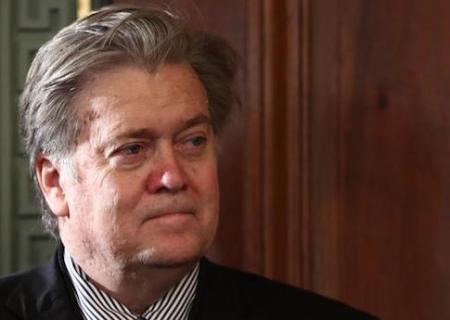
Steve Bannon Removed From National Security Council

April 5, 2017

Steve Bannon Removed From National Security Council, Washington Free Beacon, April 5, 2017

Steve Bannon, Chief Strategist and Senior Counselor to U.S. President Donald Trump attends the swearing in ceremony for Nikki Haley as the U.S. Ambassador to the United Nations in Washington, DC.  (Rex Features via AP Images)

President Donald Trump reportedly removed his chief strategist, Steve Bannon, from the National Security Council on Wednesday as part of a broader reorganization of the NSC.

Trump has reorganized his principal forum to consider national security matters by removing his top strategist and downgrading Homeland Security Adviser Tom Bossert, according to Bloomberg, which obtained a presidential memorandum on the NSC shakeup.

Trump’s national security adviser, Lt. Gen. H.R. McMaster, was given authority to set the agenda of the NSC.

The changes also allow the director of national intelligence, Dan Coats, and the chairman of the Joint Chiefs of Staff, Marine Gen. Joseph Dunford, to again be regular attendees of the NSC’s principals committee.

Bannon was appointed to the NSC earlier this year as part of a reorganization that drew intense opposition from members of Congress and foreign policy experts.

One White House official told Bloomberg that Bannon was initially elevated to the NSC to keep an eye on former National Security Adviser Michael Flynn, but never attended a meeting. Now with Flynn gone, Bannon is no longer needed, the official said.

A new age of diplomacy

April 5, 2017

A new age of diplomacy, Israel Hayom, Prof. Abraham Ben-Zv, April 5, 2017

The character of the new American diplomacy is slowly becoming clear, both in terms of style and essence, and especially as it pertains to the Middle East. We are being given the impression that U.S. President Donald Trump is trying to adopt the management style of late U.S. President Franklin D. Roosevelt, who tended to bypass his secretary of state.

Preliminary signs indicate that Trump sees his current wandering adviser and envoy, Jared Kushner, as a confidant and trustworthy emissary for sensitive diplomatic missions. This is clear from his mission to Baghdad at the beginning of the week and in his ongoing involvement in advancing the peace process in the Palestinian arena. Kushner is also expected to take part in the U.S.-China summit (set to take place in Florida this week), reflecting his role as moderating figure in the charged relationship between Trump and the Chinese leadership and indicating his growing power.

While a young and energetic Kushner hops between continents as the president’s representative, U.S. Secretary of State Rex Tillerson lags behind him, excluded and disconnected from the big decision-makers.

This gives a good idea of style. As for the essence — when it comes to the Middle East in particular, we are seeing a sort of diplomacy that is radically different than former U.S. President Barack Obama’s approach. This is especially true regarding the Trump administration’s efforts to establish a Sunni anti-Iranian axis led by Cairo and Riyadh. While the Obama administration abandoned the United States’ traditional partners on this front, and instead, worked tirelessly to reconcile with Iran, the current White House is signalling unequivocally that it is determined to at least turn over a new leaf in its relationship with these regional powers and to upgrade strategic cooperation with them in order to uproot terrorism.

While Obama’s relationship with Egyptian President Abdel-Fattah el-Sissi was characterized by coldness (in contrast to the warmth he showed to Egypt’s previous leader, Muslim Brotherhood member and sworn Hamas supporter Mohammed Morsi), Trump’s approach is quite different. El-Sissi’s state visit to Washington this week was marked by extraordinary warmth and cordiality on the part of the American president. This was an effort to erase the remnants of the recent past — especially the memory of punitive and alienating policy led by Obama against the Egyptian leader — from the Egyptian consciousness.

A similarly dramatic improvement can be seen in U.S.-Saudi relations, wherein strategic cooperation has also been upgraded recently, especially (but not only) regarding fighting on the Syrian front and in the struggle against the Houthi militias operating in Yemen with Iran’s help and support (against al-Qaida forces in the field). This follows the deep ebb in their relationship due to Obama’s tireless efforts to appease the Ayatollah regime in Iran, the sworn enemy of the Saudi royalty. Regarding Syria, in 2013, Obama abandoned the civilian population there to its fate, remaining, despite his declarations, completely passive even after Syrian President Bashar Assad crossed all the red lines by using murderous chemical weapons against masses of civilians. On Tuesday, too, Assad’s forces carried out a major chemical attack, harming many civilians, in the country’s destroyed and divided north. Based on the growing military involvement and the Trump administration’s determination to deal with the “axis of evil” there too, we can assume that the White House will have a different response to this war crime.

Finally, regarding U.S.-Israeli relations, we are witnessing the expression of exceptional support and identification, reminiscent of the golden age of late U.S. President Lyndon B. Johnson (during which time then-U.S. Ambassador to the U.N. Arthur Goldberg’s speeches reflected the strength and resilience of the “special relationship”). While the Obama administration focused on efforts to settle the conflict, which it defined as a core issue of utmost local and regional importance, the Trump administration is demonstrating a much more relaxed and relevant approach to the complex situation. On this front too, there is real change in the form and style of American diplomacy in the Trump era.

White House Officials Divided on Islam, ISIS, Israel and Iran

April 5, 2017

The decision to select Army Lieutenant General Herbert Raymond “H.R.” McMaster to replace retired Lieutenant General Michael Flynn as national security advisor is setting into motion a cascade of other personnel decisions that, far from draining the

by Soeren Kern
April 5, 2017 at 5:00 am

Source: White House Officials Divided on Islam, ISIS, Israel and Iran

  • The decision to select Army Lieutenant General Herbert Raymond “H.R.” McMaster to replace retired Lieutenant General Michael Flynn as national security advisor is setting into motion a cascade of other personnel decisions that, far from draining the swamp, appear to be perpetuating it.
  • Trump has decided to retain Yael Lempert, a controversial NSC staffer from the Obama administration. Analyst Lee Smith reported that, according to a former official in the Clinton administration, Lempert “is considered one of the harshest critics of Israel on the foreign policy far left.”
  • Sahar Nowrouzzadeh, who served as the NSC’s Iran director during the Obama administration, is now in charge of policy planning for Iran and the Persian Gulf at the Trump State Department. Nowrouzzadeh, whose main task at Obama’s NSC was to help broker the Iran Nuclear Deal, is a former employee of the National Iranian-American Council (NIAC), a lobbying group widely believed to be a front group for the Islamic dictatorship in Iran.
  • “The people who are handling key elements of those conflicts now are the same people who handled those areas under Obama, despite the results of the last election. No wonder the results look equally awful.” — Lee Smith, Middle East analyst.

The people U.S. President Donald J. Trump has chosen to lead his foreign policy team may complicate efforts to fulfill his inaugural pledge to eradicate “radical Islamic terrorism” “from the face of the Earth” — a Herculean task even under the best of circumstances.

An analysis of the political appointments to the different agencies within the U.S. national security apparatus shows that the key members of the president’s foreign policy team hold widely divergent views on the threat posed by radical Islam — and on the nature of Islam itself. They also disagree on approaches to Iran, the Arab-Israeli conflict, the European Union, Russia, globalism and other national security issues.

The policy disconnect is being exacerbated by the fact that dozens of key positions within the Pentagon, the State Department and other agencies remain unfilled. The result is that the administration has been relying on holdovers from the Obama administration to formulate and implement U.S. foreign policy.

Current foreign policy advisors can be roughly divided into several competing factions and ideological schisms: career staffers versus political appointees, civilian strategists versus military tacticians, Trump supporters versus Obama loyalists, politically correct consensus-seekers versus politically incorrect ideologues, New York moderates versus populist hardliners, Palestinian sympathizers versus advocates for Israel, proponents of the Iran deal versus supporters of an anti-Iran coalition — and those who believe that Islamism and radical Islamic terrorism derive from Islam itself versus those who insist that Islam is a religion of peace.

The winners of these various power struggles ultimately will determine the ideological direction of U.S. policy on a variety of national security issues, including the war on Islamic terror.

During his presidential campaign, voters were promised a radical shift in American foreign policy, and the consensus-driven foreign policy establishment in Washington was repeatedly blamed for making the world less stable and more dangerous.

Although much can change, the current incarnation of the national security team indicates that the administration’s foreign policy, especially toward the Middle East and the broader Islamic world, may end up being more similar than different to that of the Obama administration. Those hoping for a radical change to the politically correct status quo may be disappointed.

National Security Advisor

Among recent personnel decisions, arguably the most fateful has been to select Army Lieutenant General Herbert Raymond “H.R.” McMaster to replace retired Lieutenant General Michael Flynn as national security advisor. This change is setting into motion a cascade of other personnel decisions that, far from draining the swamp, appears to be perpetuating it.

Flynn, who resigned on February 13 after leaked intelligence reports alleged that he misrepresented his conversations with a Russian diplomat, has long argued that the West is in a civilizational clash with Islam, and that the war on terror must be expanded and intensified to reflect this reality.

By contrast, McMaster emphatically rejects the notion of a clash of civilizations. His statements on Islam are highly nuanced and not materially different from those of former presidents Barack Obama and George W. Bush.

President Donald Trump appears with Lieutenant General Herbert Raymond “H.R.” McMaster, on February 20, 2017. (Image source: PBS News video screenshot)

Flynn, in a speech delivered at a synagogue in Stoughton, Massachusetts in August 2016, warned that the ultimate goal of radical Islam is world hegemony:

“We are facing another ‘ism,’ just like we faced Nazism, and fascism, and imperialism and communism. This is Islamism, it is a vicious cancer inside the body of 1.7 billion people on this planet and it has to be excised.”

That same month, Flynn addressed a Baptist Church in San Antonio, Texas:

“I don’t see Islam as a religion. I see it as a political ideology that will mask itself as a religion globally, and especially in the West, especially in the United States, because it can hide behind and protect itself by what we call freedom of religion.”

In Flynn’s book, “The Field of Fight: How We Can Win the Global War against Radical Islam and its Allies,” he warned:

“We’re in a world war against a messianic mass movement of evil people, most of them inspired by a totalitarian ideology: Radical Islam…. We’ve got to stop feeling the slightest bit guilty about calling them by name and identifying them as fanatical killers acting on behalf of a failed civilization.”

In an opinion article published by the New York Post in July 2016, Flynn wrote that America’s war against radical Islam is being run by political leaders who refuse to see the big picture:

“If our leaders were interested in winning [the war against radical Islam], they would have to design a strategy to destroy this global enemy. But they don’t see the global war. Instead, they timidly nibble around the edges of the battlefields from Africa to the Middle East, and act as if each fight, whether in Syria, Iraq, Nigeria, Libya or Afghanistan, can be peacefully resolved by diplomatic effort….

“No, we’re not going to talk our way out of this war, nor can we escape its horrors. Ask the people in San Bernardino or South Florida, or the relatives of the thousands killed on 9/11. We’re either going to win or lose. There is no other ‘solution.’

“I believe we can and must win. This war must be waged both militarily and politically; we have to destroy the enemy armies and combat enemy doctrines. Both are doable. On military battlefields, we have defeated radical Islamic forces every time we have seriously gone after them, from Iraq to Afghanistan. Their current strength is not a reflection of their ability to overwhelm our armed forces, but rather the consequence of our mistaken and untimely withdrawal after demolishing them….

“We have the wherewithal, but lack the will. That has to change. It’s hard to imagine it happening with our current leaders, but the next president will have to do it.”

McMaster, however, has openly repudiated Flynn’s — and Trump’s — views on Islam. He rejects any connection between terrorism and Islam, even though Islamic scripture clearly states that true Muslims are duty-bound to wage jihad on non-Muslims until the entire world is brought under the submission of Islam and Sharia law.

On February 23, during his first staff meeting as the newly minted national security advisor, McMaster reportedly urged National Security Council employees to avoid using the term “radical Islamic terrorism” because, according to McMaster, groups such as the Islamic State represent a “perversion of Islam” and are therefore “un-Islamic.” McMaster added that “he’s not on board” with using the term because it castigates “an entire religion” and may alienate Muslim allies in the Middle East.

Less than a week later, McMaster urged Trump to remove references to “radical Islamic terrorism” from the speech the president was to deliver to Congress on February 28. The president nevertheless prevailed. “We are also taking strong measures,” he said, “to protect our nation from radical Islamic terrorism.”

Long before becoming America’s leading advisor on national security matters, McMaster, who has a long history of service in Iraq and Afghanistan, consistently echoed the Obama administration’s rhetorical efforts to delink Islamic terrorism from Islamic doctrine.

In November 2016, during a speech to the Virginia Military Institute, McMaster said that the Islamic State “cynically uses a perverted interpretation of religion to incite hatred and justify horrific cruelty against innocents.”

In May 2016, during a conference at the Center for Strategic and International Studies, he said:

“Groups like the Islamic State use this irreligious ideology, this perverted interpretation of religion to justify violence. They depend on ignorance, and the ability to recruit vulnerable segments of populations to foment hatred, and then use that hatred to justify violence against innocents.”

In August 2014, when McMaster was the featured speaker for the President’s Lecture Series at the National Defense University, he reportedly declared: “The Islamic State is not Islamic.”

In 2010, McMaster enthusiastically endorsed a book entitled, “Militant Islamist Ideology: Understanding the Global Threat,” by U.S. Navy Commander Youssef H. Aboul-Enein and published by the Naval Institute Press. A review by analyst Youssef M. Ibrahim found its claims, “many of which the Obama administration followed to disastrous results, to be incorrect and problematic.”

Aboul-Enein’s central objective is to urge American policymakers to distinguish between militant Islamists such as members of the Islamic State and non-militant Islamists such as members of the Muslim Brotherhood.

Ibrahim counters: “In reality, all Islamists share the same ultimate goal of global Islamic hegemony. They differ in methodology — but not in their view of us as the enemy to be crushed.”

Ibrahim continues:

“Aboul-Enein also suggests that if an American soldier ever desecrates a Koran, U.S. leadership must not merely relieve him of duty, but offer ‘unconditional apologies,’ and emulate the words of Maj. Gen. Jeffrey Hammond, which Aboul-Enein quotes as exemplary: ‘I come before you [Muslims] seeking your forgiveness, in the most humble manner I look in your eyes today, and say please forgive me and my soldiers,’ followed by kissing a new Koran and ‘ceremoniously’ presenting it to Muslims.

McMaster’s endorsement of the book, which appears on the jacket cover, reads:

“Terrorist organizations use a narrow and irreligious ideology to recruit undereducated and disenfranchised people to their cause. Understanding terrorist ideology is the first and may also be the most important step in ensuring national and international security against the threat that these organizations pose.

“Youssef Aboul-Enein’s book is an excellent starting point in that connection. Militant Islamist Ideology deserves a wide readership among all those concerned with the problem of transnational terrorism, their ideology, and our efforts to combat those organizations that pose a serious threat to current and future generations of Muslims and non-Muslims alike.”

McMaster’s position on the nuclear deal with Iran remains unclear. If his views on Islam are any indication, McMaster, unlike Flynn, probably does not view Iran in ideological terms.

The president has described the “Iran Deal” as a “disaster” and “the worst deal ever negotiated.” On February 1, after Iran launched a ballistic missile, the White House signaled a tougher line on Tehran. Flynn said:

“President Trump has severely criticized the various agreements reached between Iran, the Obama administration as well as the United Nations as being weak and ineffective. Instead of being thankful to the United States in these agreements, Iran is now feeling emboldened. As of today, we are officially putting Iran on notice.”

Flynn’s ouster less than two weeks later was rumored to have been orchestrated by Obama confidants in order to preserve the Iran Deal. According to reporter Adam Kredo:

“The effort, said to include former Obama administration adviser Ben Rhodes — the architect of a separate White House effort to create what he described as a pro-Iran echo chamber — included a small task force of Obama loyalists who deluged media outlets with stories aimed at eroding Flynn’s credibility, multiple sources revealed.

“The operation primarily focused on discrediting Flynn, an opponent of the Iran nuclear deal, in order to handicap the Trump administration’s efforts to disclose secret details of the nuclear deal with Iran that had been long hidden by the Obama administration.”

Strategic Initiatives Group

McMaster’s views on Islam are also diametrically opposed to those held by Stephen K. Bannon, the administration’s chief political strategist. Bannon has long warned that the Judeo-Christian West is in a civilizational conflict with Islam.

On January 28, the president signed an executive order making Bannon a permanent invitee to all meetings of the National Security Council, and also making him a regular member of the so-called Principals Committee, the Cabinet-level senior interagency forum that is led by the national security advisor and decides foreign policy issues that do not go to the president. The executive order significantly increased Bannon’s influence and power in the White House decision-making process.

At the same time, Bannon and the president’s son-in-law, Jared Kushner, have established the Strategic Initiatives Group, an internal White House think tank that some analysts believe will challenge policy advice coming from McMaster and the National Security Council.

The Strategic Initiatives Group, which has been described as a “shadow NSC,” is run by assistant to the president Christopher Liddell and White House chief of staff Reince Priebus, and includes deputy assistant to the president Sebastian Gorka, author of the book, “Defeating Jihad: The Winnable War.” Like Bannon, Gorka believes that “the global jihadi movement is a modern totalitarian ideology rooted in the doctrines and martial history of Islam.”

McMaster is rumored to be considering a reorganization of the White House foreign policy team that would give him more control. Sean Spicer, the White House press secretary, said that McMaster has full authority to organize his staff, but that any change in Bannon’s status must be approved by the president. Either way, conflict between McMaster and Bannon seems inevitable.

National Security Council

McMaster’s first personnel decision was to name Dina Powell to serve as Deputy National Security Advisor, the number two position on the National Security Council — and a post already filled by K.T. McFarland.

McFarland, a former official in the Reagan administration, has been a vocal critic of the Obama administration’s timidity in the face of radical Islam, which she has described as “the most virulent, lethal, apocalyptic death cult in history.” In an opinion article that was published in the wake of the jihadist attacks in Brussels on March 22, 2016, McFarland wrote:

“Global Islamist jihad is at war with all of Western civilization. President Obama and other Western leaders may not see it as a war, but the other side does. Left largely unchecked over the last seven years, radical Islam has exploded worldwide….

“We have been one step behind this enemy for years. We’re still tongue-tied by political correctness, while they’re setting off bombs at train stations, airports and community centers.

“We are losing this war. Our losses grow greater every day, while terrorists recruit off the images of the West’s most innocent and vulnerable fleeing in horror. The hour is already late to defeat this growing scourge. But if we are to defeat radical Islam, it will be only with a multifaceted, comprehensive strategy that calls on all the aspects of the national power of ourselves and our allies — like we summoned to defeat the Nazis in World War II or the Communists in the Cold War.”

McFarland, whose future at the NSC has been uncertain since Flynn resigned, reportedly has been offered the post of U.S. ambassador to Singapore.

Dina Habib Powell, 43, a former executive with Goldman Sachs, is the first Arab-American to join the Trump White House. She was born in Egypt and immigrated to the United States as a child with her Coptic Christian parents. Fluent in Arabic, she worked in the Bush administration, on public diplomacy to improve perceptions of America in the Arab world.

Powell is also said to be close to many Democrats, including some who have worked in the Obama administration. According to Politico, Powell has a strong personal relationship with Valerie Jarrett, one of the closest advisors to Barack Obama. Jarrett, who was born in Iran, and is widely rumored to be the architect of the Iran Nuclear Deal, reportedly has moved into Obama’s home in Washington, D.C. to lead a resistance movement against Trump’s efforts to reverse his predecessor’s foreign and domestic policies.

Powell’s ascendancy is tied to Trump’s daughter, Ivanka, who hired her to provide advice on politics in Washington. Powell has been described as “Ivanka Trump’s woman in the White House.”

Meanwhile, McMaster has tried to replace Ezra Watnick-Cohen, the NSC’s senior director for intelligence programs. Watnick-Cohen, another Flynn protégé, is a 30-year-old intelligence operative with the Defense Intelligence Agency who has reportedly fallen out of favor with some people at the Central Intelligence Agency. Politico reported that Cohen-Watnick and Flynn “saw eye to eye about the failings of the CIA human intelligence operations,” according to an operative. “The CIA saw him as a threat, so they tried to unseat him and replace him with an agency loyalist,” he said.

Cohen-Watnick appealed McMaster’s decision to Bannon and Kushner, both of whom brought the matter to Trump. The president eventually agreed that Cohen-Watnick should remain as the NSC’s intelligence director.

McMaster reportedly also wanted to replace Cohen-Watnick with Linda Weissgold, a longtime CIA official. During the Obama administration Weissgold served as director of the CIA’s Office of Terrorism Analysis. Journalist Michael Warren wrote:

“In her position at OTA, she was also involved directly in drafting the now infamous Benghazi talking points, which government officials revised heavily to include factually incorrect assessments that stated the attackers were prompted by protests. According to the House Select Committee on Benghazi’s report, Weissgold testified she had changed one such talking point to say that extremists in Benghazi with ties to al Qaeda had been involved in ‘protests’ in the Libyan city, despite the fact that no such protests occurred there on the day of the attack.”

The CIA also rejected a security clearance for Robin Townley, the NSC’s senior director for Africa and one of Flynn’s closest advisors. The denial of a request for so-called “Sensitive Compartmented Information” clearance forced Townley, a former Marine intelligence officer who had long maintained a top secret-level security clearance, out of his NSC post. The rejection was approved by Mike Pompeo, the new CIA director.

Flynn and his allies reportedly believed that the rejection was motivated by Townley’s skepticism of the intelligence community. “They believe this is a hit job from inside the CIA on Flynn and the people close to him,” said one source, who argued that some in the intelligence community felt threatened by Flynn and his allies. “Townley believes that the CIA doesn’t run the world,” the source said.

The Cohen-Watnick and Townley episodes have highlighted ongoing tensions between the CIA and Trump advisors who are skeptical of the agency. Flynn was said by some as waging “a jihad against the intelligence community” while others have pointed to Flynn’s ouster as an example of how the CIA is trying to undermine the Trump administration and retain its own autonomy.

At the same time, Trump has decided to retain Yael Lempert, a controversial NSC staffer from the Obama administration. Analyst Lee Smith reported that, according to a former official in the Clinton administration, Lempert “is considered one of the harshest critics of Israel on the foreign policy far left.” The source added:

“From her position on the Obama NSC, she helped manufacture crisis after crisis in a relentless effort to portray Israel negatively and diminish the breadth and depth of our alliance. Most Democrats in town know better than to let her manage Middle East affairs. It looks like the Trump administration has no idea who she is or how hostile she is to the U.S.-Israel relationship.”

Smith noted:

“This is the same Trump administration that said it was going to move the U.S. embassy to Jerusalem? Making big promises to Jewish voters during campaign season and then dumping them in the trash along with yesterday’s campaign lawn signs is old hat in Washington, though. And after eight years of Obama’s very public ministrations to his favorite ‘donors,’ Jewish votes are especially cheap — you can name Louis Farrakhan’s former spokesman as vice chairman of your party and the faithful will sigh with relief. So why should Trump bother?”

Smith also revealed that the Trump administration has retained Brett McGurk, the Obama administration’s special envoy to lead the campaign against the Islamic State. According to Smith:

“One of the main reasons Obama’s ISIS policy failed was because Sunni actors refused to engage in an intramural civil war whose spoils would go to the Iranians and their Shia allies. McGurk was the point man on this pro-Iran policy, famously arranging for Iran to get $400 million in cash delivered on wooden pallets to the IRGC in exchange for American hostages.

“Remember when the Trump administration promised to make public the secret agreements that Obama made with Iran? McGurk signed some of the secret documents, relieving sanctions on a key financial hub of Iran’s ballistic-missile program, and dropping charges against 21 Iranian operatives linked to terrorism. Notably, none of those documents has actually been made public. Maybe that’s because McGurk’s name is on them.”

State Department

Meanwhile, Sahar Nowrouzzadeh, who served as the NSC’s Iran director during the Obama administration, is now in charge of policy planning for Iran and the Persian Gulf at the Trump State Department. Nowrouzzadeh, whose main task at Obama’s NSC was to help broker the Iran Nuclear Deal, is a former employee of the National Iranian-American Council (NIAC), a lobbying group widely believed to be a front group for the Islamic dictatorship in Iran.

In an opinion article published by the Washington Examiner on March 16, Amir Basiri, an Iranian human rights activist wrote:

“Obama’s failed Iran policy is a clear testament to the damage that appeasement and rapprochement does to the Iranian people, Middle East nations, and U.S. interests. The ill that Nowrouzzadeh and her ilk have caused only underlines the necessity to drain the Iran appeasement swamp in the State Department, and to stand with the Iranian people for a change.”

Other notable holdovers from the Obama administration include:

  • Chris Backemeyer, who serves as deputy assistant secretary for Iranian affairs under Secretary of State Rex Tillerson. Backemeyer is now the highest-ranking official at the State Department for Iran policy. During the Obama administration, Backemeyer was tasked with persuading multinational corporations to do business with Iran.
  • Thomas A. Shannon, Jr., a career foreign service officer who serves as Under Secretary of State for Political Affairs. Shannon, the State Department’s fourth-ranking official, has warned that scrapping the Iran Deal would lead to a nuclear arms race in the Middle East. “Any effort to step away from the deal would reopen a Pandora’s box in that region that would be hard to close again,” he said. His statement indicates that Shannon could be expected to lead efforts to resist any attempts to renege or renegotiate the deal; critics of the deal say that Iran’s continued missile testing has given Trump one more reason to tear up his predecessor’s deal with the Islamist regime.
  • Michael Ratney, a top advisor to former Secretary of State John Kerry on Syria policy. Under the Trump administration, Ratney’s role at the State Department has been expanded to include Israel and Palestine issues. In July 2016, the Senate Permanent Subcommittee on Investigations disclosed that Ratney, who was the U.S. Consul in Jerusalem between 2012 and 2015, oversaw $465,000 in U.S. grants to the OneVoice Movement, a liberal group that waged a clandestine campaign to smear and remove Israeli Prime Minister Benjamin Netanyahu from office. Ratney admitted to Senate investigators that he deleted emails containing information about the Obama administration’s relationship with the non-profit group.

On March 30, Trump’s State Department announced that it would allow Jibril Rajoub, a Palestinian official known for promoting the murder and kidnapping of Israelis, into the United States for a series of high-level meetings on the Israel-Palestinian peace process.

Rajoub was sentenced in September 1970 to life in prison for throwing a grenade at an Israeli Army bus near Hebron. He served 15 years in prison, but was released in a 1985 prisoner exchange. Since then, he has repeatedly praised Palestinian terrorists who kill Israeli civilians. In an October 2015 television interview, Rajoub said:

“These are individual acts of bravery, and I am proud of them. I congratulate everyone who carried them out. I say to you, we are proud of you. Whoever confronts, fights, dies as a Martyr, is arrested or injured, they are assets to the entire Palestinian people.”

The Trump administration issued an anodyne statement that could easily have come from the Obama administration:

“The U.S. government does not endorse every statement Mr. Rajoub has made, but he has long been involved in Middle East peace efforts, and has publicly supported a peaceful, non-violent solution to the Israeli-Palestinian conflict. We continue to press Fatah officials, including Rajoub himself, to refrain from any statements or actions that could be viewed as inciting or legitimizing others use of violence.”

Foreign affairs columnist Lawrence J. Haas has sharply criticized the administration’s embrace of Rajoub:

“Rajoub is no peace activist who just needs to tone down his rhetoric. He’s a hardcore Israel rejectionist who honors ‘martyrs,’ promotes murder and kidnapping, and envisions a Palestine that stretches from the Jordan River to the Mediterranean Sea, erasing Israel in the process.

“The embrace of Rajoub raises profound questions as to whether President Donald Trump has a coherent policy toward Israel or, as seems more likely, disjointed policies are emerging from competing power centers across the administration that view Israel and the U.S.-Israeli alliance in profoundly different ways.”

Historian Daniel Pipes believes the Trump administration may follow Obama’s footsteps and ultimately turn against Israel. In an interview, Pipes said:

“I also wouldn’t be surprised if he [Trump] turned against Israel, seeing it as the intractable party because that is what often happens. Look at Jimmy Carter and Barack Obama: they make efforts and they get frustrated that the Israelis don’t give more because there is an enduring belief that if only the Israelis gave more, the Palestinians would relent and stop being rejectionists and everything would be fine. So, I am worried.”

Department of Defense

At the Pentagon, Defense Secretary James Mattis’s initial choice to be his second in command was Michèle Flournoy, a Democrat who was seen as a leading candidate for Defense Secretary in a Hillary Clinton administration. Flournoy turned down Mattis’s offer and the position continues to be filled by Robert O. Work, who was appointed to the job by President Obama. Some Republicans blame Work for Mattis’s failure to advocate for a greater increase in the defense budget.

Mattis, who fell out with the Obama administration over Iran, also proposed Anne W. Patterson as his choice for undersecretary for policy. Patterson served as U.S. ambassador to Egypt from 2011 to 2013, a time when the Obama administration supported the Muslim Brotherhood-backed government of then-President Mohamed Morsi. Patterson’s nomination was vetoed by the White House. The position is being filled by Theresa Whelan, a career member of the Senior Executive Service.

For the post of undersecretary for personnel and readiness, Mattis proposed Rudy de Leon, a veteran of the Clinton administration and a senior fellow at the Center for American Progress, a liberal think tank founded by Clinton acolyte John Podesta. De Leon, it so happens, signed a January 30 letter opposing Trump’s moratorium on migrants from six Muslim countries. The letter says the suspension is “inhumane” and “beneath the dignity of our great nation.”

Republicans on Capitol Hill have expressed frustration with Mattis. An aide to a Republican Senator on the Armed Services Committee said: “He certainly has got a tough job, but it sometimes feels like he forgets that we won the election.” Another said: “We’ve waited eight years for this, to be able to fill these posts with Republicans. We know Trump isn’t part of the establishment and that it’s going to be a bit different, but it should go without saying that a Republican administration is expected to staff federal agencies with Republicans.”

National Economic Council

The National Economic Council, the main forum for developing and coordinating the president’s economic program, is headed by Gary Cohn, a registered Democrat and, like Dina Powell, a former executive of Goldman Sachs. So far, so good.

As Trump’s top economic policy advisor, however, Cohn has sparred with Bannon over key aspects of the administration’s economic, tax and trade policies. Among other issues, the two men are said to have competing positions on the border adjustment tax (Bannon is for it, Cohn is not), the carbon tax (Cohn is for it, Bannon is not) and trade. Cohn is a free trade globalist who supports multilateral trade deals like the North American Free Trade Agreement (NAFTA), while Bannon is an economic nationalist who eschews them.

During his campaign, Trump repeatedly described NAFTA as a “disaster” and vowed to renegotiate the deal. On March 30, however, the Wall Street Journal, reviewing an administration draft proposal, reported that the White House is now seeking mostly minor changes to NAFTA and plans to retain some of its most controversial provisions.

Fox Business Correspondent Charlie Gasparino wrote:

“How Bannon and Cohn became senior officials in the Trump administration speaks to the president’s unorthodox management style, where he appoints people to key positions often based on gut and personal relationships.

“While Trump was naturally attracted to Bannon’s political and economic policies, he is said to be fond of Cohn’s assertive management style and stature; while at Goldman, Cohn was an imposing figure on the firm’s trading floor and later as a top executive, where he was regarded as the heir apparent to the firm’s chief executive Lloyd Blankfein.

“But now Trump’s management style is being put to the test on economic issues as Bannon and Cohn compete for the president’s ear.”

Roger Stone, a longtime Trump loyalist, has accused Trump’s son-in-law, Jared Kushner, of feeding “lies and intel” to the media to hurt Bannon and others who are arguing against the “globalist agenda.” In an interview with the Washington Examiner, Stone said:

“The president’s son-in-law, Jared Kushner, perhaps the one presidential aide who cannot be fired, is now in regular text-message communications with Joe Scarborough [a cable news and talk show host],” Stone said. “Many of the anti-Steve Bannon stories that you see, the themes that you see on ‘Morning Joe’ are being dictated by Kushner.”

Cohn and Powell are said to be allied with Trump’s eldest daughter Ivanka and Kushner. They are allegedly leading a White House faction that has been referred to as the “New York liberals.” They are reportedly battling with the Bannon faction of populist hardliners for policy influence on a wide variety of policy issues.

Former House speaker Newt Gingrich, an informal adviser to the president, put it this way: “It would be interesting to see to what degree the New York liberals change Trump and to what degree Trump changes the New York liberals.”

Conclusion

Trump has the opportunity to fill as many as 4,000 leadership and policymaking positions across the federal government, but he has vowed to leave many political appointments unfilled “because they’re unnecessary to have.”

As Lee Smith points out, the policy implications of the unfilled vacancies and the ongoing turf wars within the Trump administration are far-reaching:

“The main point is this: While the Trump cabinet is at daggers drawn, while it can’t hire the staff to implement the policies the president campaigned on — to destroy ISIS, to rein in Iran and crash the nuclear deal, to protect American citizens and interests, and to realign with allies like Israel that Obama made vulnerable — there are much more decisive and deadly conflicts going on almost everywhere around the world. The people who are handling key elements of those conflicts now are the same people who handled those areas under Obama, despite the results of the last election. No wonder the results look equally awful.”

Soeren Kern is a Senior Fellow at the New York-based Gatestone Institute. Follow him on Facebook and on Twitter.


 

Rebel warehouse with chem weapons hit by Syrian airstrike in Idlib

April 5, 2017

The Syrian Air Force has destroyed a warehouse in Idlib province where chemical weapons were being produced and stockpiled before being shipped to Iraq, Russia’s Defense Ministry spokesman said.

Source: Rebel warehouse with chem weapons hit by Syrian airstrike in Idlib – Russian MOD — RT News

ARCHIVE: Russian military inspect suspected chemical weapons workshop in Aleppo © Ruptly

The Syrian Air Force has destroyed a warehouse in Idlib province where chemical weapons were being produced and stockpiled before being shipped to Iraq, Russia’s Defense Ministry spokesman said.

The strike, which was launched midday Tuesday, targeted a major rebel ammunition depot east of the town of Khan Sheikhoun, Russian Defense Ministry spokesman Major-General Igor Konashenkov said in a statement.

The warehouse was used to both produce and store shells containing toxic gas, Konashenkov said. The shells were delivered to Iraq and repeatedly used there, he added, pointing out that both Iraq and international organizations have confirmed the use of such weapons by militants.

READ MORE: Intl monitoring body & West ignoring reports of ‘chemical attack’ in Mosul – Russian MoD

Read more

Syrian children receive treatment following a suspected gas attack in Khan Sheikhun, Idlib province. April 4, 2017. © Mohamed Al-Bakour

The same chemical munitions were used by militants in Aleppo, where Russian military experts took samples in late 2016, Konashenkov said.

The Defense Ministry has confirmed this information as “fully objective and verified,” Konashenkov added.

According to the statement, Khan Sheikhoun civilians, who recently suffered a chemical attack, displayed identical symptoms to those of Aleppo chemical attack victims.

READ MORE: Syria hands over evidence of mustard gas attack by rebels on civilians to OPCW (VIDEO)

Hasan Haj Ali, commander of the Free Idlib Army rebel group, rejected Russia’s version of the incident, saying the rebels had no military positions in the area.

“Everyone saw the plane while it was bombing with gas,” he told Reuters.

“Likewise, all the civilians in the area know that there are no military positions there, or places for the manufacture [of weapons]. The various factions of the opposition are not capable of producing these substances,” he added.

At least 58 people, including 11 children, reportedly died and scores were injured after a hospital in Khan Sheikhoun was targeted in a suspected gas attack on Tuesday morning, Reuters reported, citing medics and rebel activists. Soon after a missile allegedly hit the facility, people started showing symptoms of chemical poisoning, such as choking and fainting.

The victims were reportedly also seen with foam coming out of their mouths. While the major Syrian opposition group, the Syrian National Coalition, and other pro-rebel groups put the blame on the attack onto President Bashar Assad’s government, the Syrian military dismissed all allegations as propaganda by the rebels.

Read more

Idlib, Syria April 4, 2017 © Ammar Abdullah

“We deny completely the use of any chemical or toxic material in Khan Sheikhoun town today and the army has not used nor will use in any place or time, neither in past or in future,” the Syrian army said in a statement.

The Russian military stated it did not carry out any airstrike in the area either.
However, EU foreign affairs chief Federica Mogherini, commenting on the incident, was quick to point to the Syrian government as a culprit, saying that it bears responsibility for the “awful” attack.

US Secretary of State Rex Tillerson echoed Mogherini, accusing the Syrian government of perpetrating the attack calling it “brutal, unabashed barbarism.” He argued, that besides the Syrian authorities, Iran and Russia should also bear “moral responsibility” for it.