Archive for November 18, 2016

Massachusetts: Muslim prison chapel used to preach jihad; set up power structure over other inmates

November 18, 2016

Massachusetts: Muslim prison chapel used to preach jihad; set up power structure over other inmates, Creeping Sharia, November 18, 2016

(Did the Feds who found no wrongdoing review translations of the jihad tapes? — DM)

But the feds found no wrongdoing!!!

prison

Source: FOX25 Investigates: “Jihad” preached inside state prison | FOX25

BOSTON – Six inmates at MCI Norfolk are facing discipline after a probe into information that some convicts at the prison’s Muslim chapel were preaching jihad speeches by a former Al Qaeda recruiter, FOX25 Investigates has learned.

FOX25 confirmed a report that inmates used recordings from Al Qaeda recruiter and U.S. citizen Anwar al-Awlaki, who was killed years ago in a drone strike, to preach jihad to others at the state prison.

The state Department of Correction has confirmed six inmates who attended the prison’s Muslim chapel are facing discipline for setting up a structure of power over other inmates, requiring uniforms and demanding contracts of allegiance.

Martin Horn, a professor at John Jay College of Criminal Justice who once led New York City’s prison system and set up an intelligence center on Rikers Island, said law enforcement officials need to look at more than just the jihad preaching.

“You want to begin to look at, for example, their phone calls. You want to look at the records of who’s sending money to their account,” Horn told FOX25 Investigative Reporter Eric Rasmussen via Skype. “If one were going to try to recruit individuals to engage in the kinds of terrorist activities that most concern us, what better place to look for recruits than inside a prison?”

In a statement to FOX25, the state Department of Correction said, “It was determined that the ‘jihad’ that was being preached was in the context of personal spiritual struggle with regard to oneself, as opposed to a war against non-believers.”

A DOC spokesman said there is “no evidence that their unauthorized activities were being used as a recruiting tool for any extremist ideology.”

But Horn also says there’s good reason to investigate.

“Well, look, first of all, prisoners come out. Eventually, they’re all coming out to the community,” Horn told FOX25 Investigates. “And we know from several experiences that, often times, they can influence activities that occur on the outside.”

The Department of Correction confirms it consulted with federal law enforcement on the investigation but told FOX25 Investigates it found nothing illegal.

The six medium-security inmates, who have not been identified, are still facing discipline because prison rules forbid setting up any kind of hierarchy – like a gang – regardless of religion.


Video at the link above.

Reports In Arab Press: ‘Abbas Resisted Arab League Pressure To Appoint Successor – Despite Threats Of Sanctions Against Him

November 18, 2016

Reports In Arab Press: ‘Abbas Resisted Arab League Pressure To Appoint Successor – Despite Threats Of Sanctions Against Him, MEMRI, November 18, 2016

The Arab Quartet (Egypt, Saudi Arabia, Jordan and the UAE) is continuing its efforts to effect a reconciliation within Fatah and to have a successor to Palestinian President Mahmoud ‘Abbas appointed. Recently, ‘Abbas rejected a Quartet initiative for such an appointment, on the grounds that he would not accept Arab intervention in Palestinian affairs.[1]

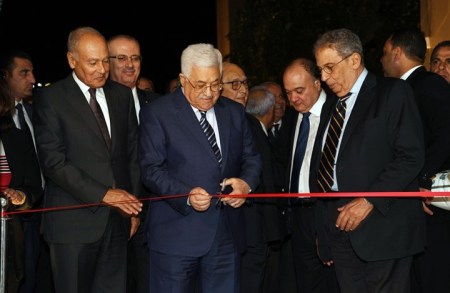
Several Arab media reports stated that recently, in order to resolve this issue, a high-level Arab League delegation visited ‘Abbas in Ramallah on November 9, 2016. The delegation, comprising Arab League Secretary-General Ahmad Abu Al-Gheit and his two predecessors, ‘Amr Moussa and Nabil Al-Arabi, came to the city on the pretext of attending the opening of the Arafat Museum. According to the reports, the three attempted to pressure ‘Abbas to choose a successor, and also tried to persuade him to reconcile with Muhammad Dahlan – who previously served as Palestinian Legislative Council (PLC) member from Fatah and head of Preventive Security in Gaza, and who is now a proposed successor – as well as to allow him to return to the political scene after his 2011 expulsion from Fatah, and to stop persecuting him and his supporters.

The Arabi21 website, which is close to the Muslim Brotherhood, noted in a November 12 report that the delegation’s visit to Ramallah and its meeting with ‘Abbas had been conducted “far from the eyes of the media” in order to avoid the appearance of normalization with Israel, and also due to the sensitive nature of the meeting’s goal – that is, appointing a successor to ‘Abbas.[2]

On November 16, the independent Egyptian Islamic daily Al-Misriyyoun published a lengthy report on this matter, according to which Abu Al-Gheit presented ‘Abbas with the names of three possible successors: former PA foreign minister and Arafat nephew Nasser Al-Qidwa; senior Fatah member Marwan Al-Barghouti, who is serving five life sentences in Israel for orchestrating terrorist attacks during the second intifada; and Dahlan. The newspaper explained that the Arab countries, and particularly Egypt, were so insistent on lining up a successor to ‘Abbas because if ‘Abbas left the political scene without naming one, the post of PA president could go to PLC Speaker and Hamas official ‘Aziz Dweik, giving Hamas a foothold in the PA leadership.[3]

Both Arabi21 and Al-Misryyoun reported that ‘Abbas had rejected the delegation’s demands, despite its threats that he would face sanctions and would lose his legitimacy in the eyes of the Arab League.

It should be mentioned that in recent weeks there have been articles in the Egyptian press harshly criticizing ‘Abbas for his response to the Arab Quartet’s mediation efforts.[4]

The following are translated excerpts from the Al-Misriyyoun article.[5]

30729‘Abbas and the Arab League delegation at the opening of the Arafat Museum (arabi21.com, November 12, 2016)

Al-Misriyyoun: ‘Abbas Determined To Prevent Dahlan’s Return To Political Scene

The Al-Misriyyoun article stated: “Egypt’s relations with PA President Mahmoud ‘Abbas have entered a dark tunnel, after a visit by a high-level delegation, headed by Arab League Secretary-General Ahmad Abu Al-Gheit and also including two former secretary-generals of the Arab League, ‘Amr Moussa and Nabil Al-Arabi, failed [to achieve the desired results]. The delegation discussed [with ‘Abbas] ways to resolve the crisis within Fatah and pump new blood into the reconciliation between the West Bank and Gaza. Knowledgeable sources reported that Ahmad Abu Al-Gheit demanded that ‘Abbas agree to the return of Fatah official Muhammad Dahlan to the political scene, and that he stop persecuting [Dahlan’s] supporters in the movement and maligning him, after ‘Abbas accused him of involvement in the assassination of the late Palestinian president Yasser Arafat. ‘Abbas did not agree to the demands, and expressed his determination to convene the Fatah General Assembly that will consolidate [his position] as both Fatah chairman and PA president.

“The sources claimed that the high-level Egyptian delegation was surprised by ‘Abbas’s inflexible positions on all issues. Moreover, ‘Abbas also criticized the Arab states’ intervention in a Palestinian matter, while rejecting all the demands, especially the demand to appoint a successor for the role of PA president who will be acceptable to the Arab states, in light of his own failing health.”

Al-Misriyyoun: Three Candidates To Succeed ‘Abbas Were Proposed – Nasser Al-Qidwa, Marwan Al-Barghouti, And Muhammad Dahlan

According to the Al-Misriyyoun report, “Ahmad Abu Al-Gheit proposed three candidates to succeed ‘Abbas: former [PA] foreign minister and Arafat’s nephew Nasser Al-Qidwa, [former] Fatah secretary in the West Bank Marwan Al-Barghouti, and [former] head of Preventive Security in Gaza, Muhammad Dahlan. ‘Abbas refused, and informed [Abu Al-Gheit] of his intention to remove Dahlan from all Fatah institutions so as to prevent him from attaining any political position in the future, and also [of his intention] to gain the support of Fatah’s next [i.e. seventh] General Assembly for his decision. ‘Abbas’s stubbornness on the Dahlan issue enraged the Arab states, headed by Egypt, who are very interested in naming ‘Abbas successor, so as to be prepared for a deterioration in the state of his health or any possibility of his disappearance from the political scene. [The absence of a successor] will enable [Palestinian] Legislative Council Speaker ‘Aziz Al-Dweik, a Hamas leader, to take ‘Abbas’s place, giving Hamas a foothold in Palestinian decision-making, a possibility to which Egypt strongly objects.”

Al-Misroyyoun: Cairo Threatened Sanctions Against ‘Abbas Should He Refuse To Appoint A Successor

The report stated further that “Cairo threatened to take sanctions against ‘Abbas if he rejected its efforts to appoint a successor, and expressed willingness to reach an agreement with Israel in order to release Marwan Barghouti [from prison], should ‘Abbas accept him as the successor – and this as a signal to ‘Abbas that the successor does not necessarily have to be Dahlan, whom he still rejects…

“According to observers, ‘Abbas’s rejection of the Arab states’ mediation in resolving the crisis with Dahlan or appointing a successor will lead to a deep crisis with the Arab Quartet (Egypt, Saudi Arabia, Jordan and the UAE). He will be bereft of Arab support and will be isolated, as [the late] Palestinian president Yasser Arafat was isolated before his death.”

International Relations Expert To Al-Misriyyoun: ‘Abbas Is Irrelevant; Dahlan Is Popular

According to the daily, Sa’id Al-Lawandi, an expert in international relations at Al-Ahram Center for Political and Strategic Studies, “believes that ‘Abbas became irrelevant in the eyes of all Arab states after he refused every compromise proposed by the Arab Quartet regarding naming his successor, while Dahlan enjoys overt Arab support, since he is one of the few people able to restrain Hamas and keep it from taking over the [Palestinian] Authority. Al-Lawandi said in exclusive statements to Al-Misriyyounthat Dahlan has good relations with Israel, he is highly popular within Fatah, and he has close ties with the Arab states. In fact, he remains the top candidate to succeed ‘Abbas should [the latter] vanish from the Palestinian scene. He noted that some Arab states were grooming Dahlan as ‘Abbas’s successor, and this was the cause of the crisis between ‘Abbas and the Arab states that have influence in the Palestinian arena and have been long [pushing] Dahlan as an alternative to ‘Abbas.”

Former Arab League Assistant Secretary-General To Al-Misriyyoun: There Are Indications That Dahlan Will Be PA President

The daily also presented statements by Sa’id Kamal, a former Arab League assistant secretary-general, who “revealed that PA President Mahmoud ‘Abbas is expected to quit politics due to a deterioration in his health, and that Dahlan is slated to take his place due to his considerable popularity. In exclusive statements to Al-Misriyyoun, Kamal noted that there have long been indications that Dahlan will be the [next] PA president, but that he will face the same fate [as ‘Abbas], namely the Gaza-West Bank conflict. [Kamal] noted that the next Fatah Assembly, scheduled to take place in a few weeks, will discuss various political issues, including ‘Abbas’s future and the future of Fatah and the PA, due to the Arab [states’] desire to settle matters to the satisfaction of the mother Palestinian movement [i.e. Fatah].”

Former Egyptian Assistant Foreign Minister To Al-Misriyyoun: Barghouti Is Unlikely To Be ‘Abbas’s Successor

“In a different context, former [Egyptian] assistant foreign minister Ahmad Al-Qweisni [also] said that whoever succeeds ‘Abbas as PA president will face the same problems ‘Abbas faced. In exclusive statements to Al-Misriyyoun, Al-Qweisni stressed that, if ‘Abbas dies, Fatah’s policy will change, and many other aspects of the movement could change as well. He noted that there are several candidates for successor to ‘Abbas, one of them Dahlan, despite the rivalry between the two. However, he rejected the possibility of Marwan Barghouti holding public office, [noting] that he will certainly not be [the PA president], unless the Palestinian people insist on this.”
Endnotes:

[1] See MEMRI Inquiry & Analysis No. 1270, Tension Between Mahmoud ‘Abbas, Arab Quartet Over Initiative For Internal Reconciliation In Fatah, September 27, 2016.

[2] Arabi21.com, November 12, 2016.

[3] Al-Misriyyoun (Egypt), November 16, 2016.

[4] See for example Al-Ahram (Egypt), October 27, 2016, November 13, 2016; Al-Yawm Al-Sabi’(Egypt), November 8, 2016.

[5] Al-Misriyyoun (Egypt), November 16, 2016.

Are Bannon’s Critics for Real?

November 18, 2016

Are Bannon’s Critics for Real? Front Page MagazinePaul Gottfried, November 18, 2016

Trying to make sense out of senseless accusations — and an even more absurd double standard.

bannon

I’m beginning this commentary on the recent assaults on Steve Bannon by quoting my response to questions that a CNN-Digital reporter asked me concerning President-elect Trump’s friend and adviser:

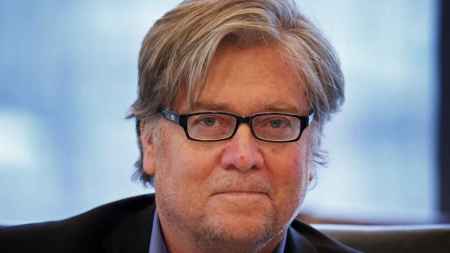
There’s no indication that Steve Bannon, the Breitbart executive and Donald Trump adviser, who has been characterized as a white nationalist, is a racist or anti-Semite. Bannon is not a white identitarian or race realist. He comes from the world of Washington politics and journalism, not white identity politics. Although I don’t know the man, I doubt Bannon hangs out with people who burn crosses on other people’s lawns.

I expressed this view, more or less, not only to CNN-Digital. I also expressed it in a phone-call marathon to representatives of a Danish daily and the Jewish Forward and, in an hour and a half German conversation, with an editor of the German conservative weekly Junge Freiheit. In all these exchanges I had to answer the question of whether Steve Bannon was in fact an anti-Semite and racist, a judgment that was coming from, among others, such exemplary American “conservatives” as Glenn Beck, Jonah Goldberg, and writers for the Wall Street Journal. I was also asked whether as the co-inventor of the term “Alternative Right,” which has now been shortened to “Altright,” I could tell if Bannon, who likes the term in question, enjoys the company of “white nationalists.”

I tried to explain that the exceedingly elastic term “Altright” has been claimed by a number of groups that belong to the non-establishment Right. All those on the Right who are at war with the GOP establishment and neoconservative politics and who are combatting PC with particular ferocity have embraced the designation “Altright.” This is especially true of Millennials who scorn establishmentarian positions.  But it’s not at all clear to me that those who write for Bannon’s website publication, some of whom are Orthodox Jews, have much to do with white identitarians who also use the term “Altright.” I would doubt that these writers go out to drink with the Philonazi blogger Matt Heimbach, who also claims the Altright moniker.

Like David Horowitz, David Goldman, Rudolf Giuliani, and dozens of other commentators, I find the charges leveled against Bannon to be outrageous slander. I am also horrified by the double standard in play when Bannon, who may or may not have complained to a now divorced wife about Jewish students in a private school, is depicted as the reincarnation of Hitler. At the same time, attacks on Jews or other ethnic groups coming from the Left are given short shrift by the media.

Disparaging descriptions of blacks, Latinos, and Catholics that have emanated from Hillary’s staff (and which have been revealed by Wikileak) occasioned a yawn from the mass media here and in Europe. And so has Hillary’s hateful obscenity about her husband’s Jewish campaign manager, which has never received the same critical scrutiny as Steve Bannon’s totally fictitious anti-Semitism and racism. What would happen to Bannon’s or any Republican’s career if, like Hillary, he referred to someone as a “f-cking Jew bastard”? Presumably that person would not be the darling of the media establishment and the presidential candidate of George H.W. Bush, Robert Kagan, Max Boot and Alan Dershowitz.

I intend to raise these questions the next time someone calls on me as an expert on the Altright who can document Steve Bannon’s possible connection to neo-Nazi websites. Perhaps the interviewers would be interested in knowing what Hillary and John Podesta said about certain groups. Even more relevant, they might want me to explain how it came to pass that the Democratic National Committee is about to nominate as its new director Congressman Keith Ellison, a Muslim convert and close friend of Louis Farrakhan. Ellison is entirely explicit in his anti-white and anti-Jewish views and unlike Bannon, does not require reinvention to be turned into what he’s not. The fact that Ellison is heartily endorsed by such presumed idealists as Bernie Sanders and Elizabeth Warren is not likely to hurt the reputations of either social justice warrior.

But one must wonder what would happen to a Republican politician who praised David Duke as warmly as Warren and Sanders have extolled the firebrand Keith Ellison. Why are the Black Muslims less distasteful racists than the white supremacist Duke, who by the way quit the Ku Klux Klan decades ago but who remains a code word for (Republican) racism? Or why does Al Sharpton remain a respected confidant of Democratic political leaders, after leading a black race riot against Jewish merchants in Harlem and after engaging in other demagogic incitements to racial violence. (All of Sharpton’s misdeeds are meticulously listed and documented in Carl Horowitz’s Sharpton: The Rise of a Demagogue.)

Meanwhile Steve Bannon is condemned internationally for having possibly said, at least according to an estranged wife, that he objected to spoiled Jewish students in a private school? Perhaps the kids there were spoiled. Why should I even care what he said on this subject, if he really said it?  Another accusation leveled against Bannon is that he allowed Bill Kristol, who made a fetish of belittling Donald Trump, to be attacked as a “renegade Jew.” But that charge, hardly a proof of anti-Semitism, came from the fervently pro-Israeli David Horowitz. In a recent comment Horowitz laments that the “Left has lost touch with the American people.”

Given the Left’s ridiculous double standards, one has to wonder on what planet the Left and the rest of Bannon’s haters are standing.

Nigel Farage on The Year of Political Revolution

November 18, 2016

Nigel Farage on The Year of Political Revolution, Front Page Magazine, November 18,2016

nigelfarage

Below are the video and transcript of Nigel Farage’s address at the David Horowitz Freedom Center’s 2016 Restoration Weekend. The event was held November 10th-13th in Palm Beach, FL.

https://vimeo.com/191621313

Nigel Farage from DHFC on Vimeo.

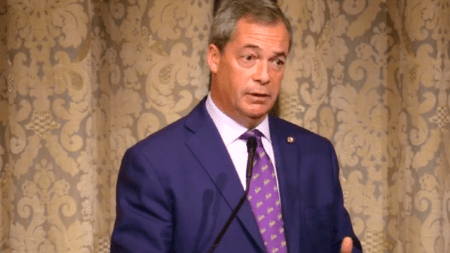
Nigel Farage: Wow, wow, well, thank you very much indeed, and thank you to David and the Freedom Center, and thank you for that wonderful warm introduction. You know, often there are decades in which very little happens. And occasionally there’s a year in which decades happen, and I think when our grandchildren, great–grandchildren look back at the history of this period of time, 2016 will be the year of political revolution; the year that changed everything.

Now, I never had any doubt after Brexit that what we managed to achieve was possible here in the United States of America, and the parallels, the crossover between the debates and the arguments and the type of people that were motivated to vote for Brexit and vote for Trump are really very interesting. But, what I’m really enjoying, what I’m really enjoying even more than the independence of my own nation, even more than President–Elect Trump, what I’m really enjoying are the faces of the media on CNN.

It is as if they’re in mourning, isn’t it? They simply can’t face up to the idea that there are people out there that don’t share their own very narrow metropolitan view, and I’m enjoying that enormously. My goodness me, they’re right to be worried because this revolution that has taken place in Britain and now on a much bigger scale here in the United States of America is, I hope and believe, gonna roll out over the course of the next couple of years across the entire Western world. We are going to get our democracy back.

Now, I got involved in this — I was actually in business. I had a proper job before politics. How about that? It seems pretty amazing, doesn’t it? You know, certainly Westminster is full of a group of college kids who go straight into the Houses of Parliament in their early 20s who have never had a job in their lives, who don’t really believe in very much, and they are professional career politicians. What they worry about is getting reelected. What they worry about is playing safe, and because of that, and because of the direction of the media, we have suffered now from decades of political correctness where no one dares stand up and speak their mind. They’re frightened of being criticized.

Actually, when we use the term political correctness, we aren’t really being accurate. What it really represents is a crackdown on our democratic rights and liberties, a crackdown on freedom of speech. That is what has been going on. And I know exactly what Donald Trump has gone through over the last few months. In fact, I think that Trump and myself are the most reviled people by the media across the entire West, but you know what, I’m happy to be judged by my enemies. I have no problem with that. But my journey on this was as a businessman who had never been actively involved in politics, although I was a massive supporter of Thatcher and Reagan back in the 1980s, and I thought they gave hope and wealth to tens and tens of millions of people.

But, I got involved in politics because I simply could not believe that my country, my ancient country, who had done more than anyone to develop the concept of parliamentary democracy had been happy for a career political class hand–in–glove with big multinational businesses and banks to progressively piece by piece give away our ability to make our own laws, to run our own country, and, crucially, to control our own borders. And, I thought, well the hell with this, I’m gonna stand and fight. And it was a very long fight. In fact, it took me nearly 25 years to win this battle. But, for the last 10 or 15 of them, the reason that I suffered personally at the hands of these people is because I dared to touch on a subject that through political correctness, through the crackdown on freedom of speech, had effectively become banned in the United Kingdom. You were not allowed in British politics to even discuss immigration. It had been banned. And despite the fact that we signed up to complete open borders with nearly half-a-billion people within the European Union, despite the fact we’ve had a growth of international jihadi terrorism, no, we weren’t allowed to even discuss the issue. So, I did talk about immigration, and I did take the brickbats for years, and I’m pleased to say that, actually, the main reason we got Brexit is because ordinary people had simply had enough of open door mass immigration driving down their wages, stopping them getting access to public services, and seeing social change within their communities the likes of which they’d never experienced before.

You know, it’s not just about controlling our borders and numbers and economics. There is an issue of culture here. There is a big issue of culture. You know, I come from a country that is a Christian country within its very constitution, and I believe that you can stand up and defend Christian values and Christian culture without giving offense to any other religious minority, but it’s time we had leaders that recognize that. And I think in the same way in this campaign here in America, Trump dared to talk about issues that everybody had brushed under the carpet that everybody else found too difficult. What kind of message does it send to people in this country if illegal immigrants that come into America from Mexico are given pardons after a few years? What message does that send to Mexicans who have actually gone through the process and done it legally and done it properly? And I have to say I admire Trump. I admire him for having the courage to put immigration at the front and center of this campaign. Well done him.

But something even worse than that had happened to our political classes. It’s what I call in Britain the “victory of social democracy.” It was parties that had been on the left and parties that had been on the right who decided to merge together in the middle where, frankly, you couldn’t put a cigarette paper between the manifestos of these parties at successive general elections. It was part of this process of professionalizing politics. It was part of the not wishing to cause offense. It was part of not wishing to take any risks and certainly, as far as the British political system had become, we were run by a group of people who all went to the same handful of schools, who all went to the same university, who all studied the same degree, who all went straight into politics and who all married each other’s sisters. That is what had happened to British politics.

And nobody was daring to say anything, but at the same time, look, it happened here, didn’t it? I mean, come on, look at the last presidential election. What were the big ideological fault lines that existed between Obama and Mitt Romney? I couldn’t spot them. I genuinely couldn’t spot them. It didn’t actually make a fundamental difference whether you had Obama or Romney. Yeah, sure, there are issues of policy, but there weren’t fundamental issues of principle. And all this was happening whilst our leaders in Britain, but yours, too, in America, were happy to give away increasingly your powers to make your own decisions, whether it’s signing up to the Paris Deal, whether it’s Hillary Clinton’s vision, which I’m pleased we got from that secret Wall Street tape recording where she saw the European Union as a prototype for a bigger form of world government; where you in America increasingly would have had your laws made somewhere else. This fight back matters, and I tell you above all what the history books will say is that 2016 was the year that nation state democracy and people being proud of their own identity came back onto the agenda.

And I was sneered at, condescended to for daring to say that I was proud to be British, for daring to say that I believed in our nation. It was as if I’d said something dreadful. Well, just to prove the point … [Laughter.] And, again, Trump’s big slogan “Make America Great Again.” You’re in no doubt, are you, when that guy speaks that he believes in this country, he believes in its people, and he believes in your ability to take things forward. So that’s good. And I also think what we’ve done similarly together is we have rejected this desperate creep of corporatism; the business by which the big businesses now effectively own the political class. They and the lobbyists basically set the rule book and set the agenda for how industries are run, and while it may be burdensome to big business to put up with laws, it suits them because it puts out of business or it prevents entry into the market of small and medium–sized business. And I think one of the debates that we need to have, and it probably will start in America — isn’t it funny? Normally, America catches a cold, and London sneezes. You are normally 20 years ahead of us in terms of most social and technological trends. I’m pleased to say that with Brexit this time we showed you the right way to go.

But here’s the debate that we need to have. We need to recognize, in my opinion, that we are no longer a free market capitalist society. That is gone. All those things that Reagan and Thatcher did so much to create, environments and societies and communities in which the individual, the small man or woman, could set up a business in whatever sector they chose and if they did well, make money and succeed. Increasingly, that is not happening, and increasingly, the voters who voted Brexit and who voted for Trump are recognizing that this world of big global corporatism gives them no room, and I hope and I pray that Trump quickly puts into place the Reaganite bits of his agenda. When he talked about deregulating small businesses to give them an even break — please, President Trump, do that as quickly as you can.

When he talks about tax cuts and giving people real incentives and giving a boost to spending within the economy, I totally agree and support that and, frankly, I think it is overdue but genius that somebody in this country recognizes that your rates of corporation tax are completely and totally absurd and that if Trump cuts corporation tax hundreds of billions of dollars will flow back into this country. So, I wish him Godspeed with all of those things.

Because it seems to me that for Trump to succeed with the rest of his agenda he first has to get the economy heading in the right direction, and I think all the ingredients are there. It was funny, wasn’t it, on that little video you saw, the IMF bus saying that if we voted Brexit there’d be some terrible economic decline. We also saw Obama coming to my country looking down his nose at us, telling us we weren’t good enough to run ourselves. Gosh, I’m pleased we’re all seeing the back of him.

And what of the future? Well, today is the 11th of November. Today is the 98th anniversary of the signing of the Armistice that ended the first World War, and I think it is worth reflecting. I really do believe it is worth reflecting. In fact, one of the things that got me into politics were the massive sacrifices that the generations that went before us had to make to overcome tyranny and to give us liberty and democracy, and I was damned if I was gonna see all of that sacrifice thrown away by career politicians. I really was.

But it is worth reflecting on today of all days that our two countries, between us, without us there would have been no victory over Nazi Germany. It simply couldn’t have happened. We held the fort, just about. Just about. We were lucky, but we got there, and by the way, we also were led by a man called Winston Churchill, and I want to see his bust back in the oval office. My critics in the British media always say, “Nigel Farage, he’s always photographed with a pint of beer” and “Does he drink too much to be in politics?” To which I always say, “Compared to Winston Churchill, I’m a mere beginner.”

We have done between us some fantastic things for the Free World. We’ve done it at great cost to ourselves. You guys even more than us. You know, we were directly in the line of fire. Yes, you had Pearl Harbor, but you came and helped us. You came and assisted us. And I now believe that a United Kingdom that has voted for Brexit, and a United Kingdom that will get Brexit — yes, of course, there’ll be attempts through the Houses of Parliament and through the courts. There’ll be attempts to slow us down. There’ll be attempts to delay us, but believe me, it isn’t going to work. If we get betrayed, if we were to get betrayed on our Brexit vote, you would then see a political revolution in Britain that we haven’t seen since the English civil war. So believe me, it is going to happen.

But I think it’s important in this modern world for both of us that we use the opportunity of an independent United Kingdom and a Trump presidency to start talking about some of these issues again, and I generally do. In terms of trade, I completely understand why Trump has reservations about China. I understand why he has reservations about countries undercutting, about countries dumping steel or whatever else it may be, but I do genuinely think that we don’t need to go through a big corporatist dream. We don’t need to go through resolution courts that go above our own parliaments and courts. I just simply believe that if you look at the business relationship between your country and my country we are both massive investors in each other’s country. We share a language, we share a similar legal system, we share many similar economic interests, and I think if there’s one country that President Trump might do a trade deal with, unlike Obama, sneering at us and telling us we’d be at the back of the line, I think Trump wants us to be at the front of the line, and what a great message that would be.

But, I also believe we need to think very seriously about security. Now, one of the reasons I think that in the end that although Trump was the anti–establishment candidate, he began to get the support of a big chunk of the establishment, and by that I mean the military and the police and who knows, maybe some even in the FBI. So, but one of the reasons is that Hillary could not even bring herself to say the words “Islamic terrorism.” Couldn’t even bring herself to say it. She was in complete denial, and I think we’ve all got to be honest and face up to the fact that the great challenge that the world faces, the great challenge our kids face, is this new evil that exists on this earth, and we’re going to have to be resolute and work together as friends and partners to deal with this problem. That, I think, is very important. Very important indeed.

And, then I think we need to talk and debate and think about the future of NATO. Now, NATO has served an enormously valuable role. But the difficulty with NATO is once the Berlin Wall fell, the clear enemy that had existed for all those decades suddenly wasn’t there. And at no point since 1990 have members of NATO sat down and genuinely debated what the role of NATO is in a post-Soviet Union world. I think we need to have a defensive alliance, but I think we need to redefine it, and I’m gonna say, I think President–Elect Trump is right when he says that America should not be expected to go on paying all the bills. I genuinely do.

And I think the conduit between President Trump when he’s there and the rest of NATO members is the United Kingdom. We are the people with a foot in both camps. We are the people, I hope and believe, who can bring us together. Let’s not throw NATO out because it has been valuable to us since the late 1940s, but let’s be grown up and let’s redefine what it’s there for and what it actually means, and that matters. And, I, for myself, have to say what an absolute honor it was to be invited by Trump’s team to come to America and to appear on that stage with him in Mississippi. I’ve tried to make British politics and European Parliament politics a little more spicy than perhaps people were used to. But I regularly get fined for behaving badly and it’s okay. It’s all cheap advertising, you know. But, I have to say coming to a Trump rally was quite unlike anything I’d ever attended in my life. It was amazing. It was amazing, and it’s perhaps worth reflecting that I’m the only elected politician in the entire United Kingdom who had a single good word to say about Trump during that whole campaign. Once again, I was taking abuse from everybody, but I’m used to it. It’s okay. It’s not a problem. No, I was pleased to do that and I was pleased to come back and to attend all of the debates and to act as a commentator from overseas on the relative merits of Trump versus Clinton. I just struggled to find the merits of Clinton. It wasn’t very easy to balance that, but I’m thrilled to have played a part in this, and I’m thrilled that Brexit has provided an inspiration, I think, for many campaigners out there. You know, we showed you that the little guys can beat the big guys. We showed you that a free people, provided their spirit is undiminished, can overcome, bad can beat evil, and you’ve now done it on an even bigger and better scale.

And I’m now gonna be going and doing a bit of tour of Europe. I spoke in Barcelona on Wednesday of this week. I spoke in Stockholm on Friday of last week, and I’m now traveling around the rest of the European Union, and my message to them is this: I am not, as they term me, anti–European. Of course I’m not. I’m married to a woman who was born in Germany. I mean no one needs to tell me about the dangers of living in a German–dominated household. I get it. (I know it’s a cheap shot, but I like it.) The point is this: Europe is very different to the United States of America. These are ancient countries that have no desire to merge together. They are different. There are different religions in the north and in the south. There are different cultures of work, different patents, different means of trade, and I actually want to champion a Europe of democratic independent nation states that work together, trade together, and act as good next–door neighbors with each other. But you could never get to that all the while you’ve got this monolithic European structure that intends to steal powers from all those individual countries. So, I will be going around the whole of Europe taking this message that actually you can beat the system. All you have to do is have the courage to stand up against what you’re being told, and if I’m told that I’ve wrecked Britain’s relationship with the European Union, well, I did my best to get Britain out of the European Union. I now want to get Europe out of the European Union. Thank you very much. Thank you. Thank you. Thank you. Thank you.

I noticed last night when I was bumping into you that lots of you, apart from those who wanted selfies, lots of you wanted to ask questions, and it’s been the same this morning. So what I’ve done is I’ve left lots of time for questions. So, please put your hands up, and we’ve got some roving microphones that are going to go around, and I will do my very best to answer as many of them as I can.

Audience Member:

Thank you, Nigel. It’s okay, I’m American now. Thank you for your bravery. You mentioned Churchill, and Churchill spent years in the wilderness, and we are very grateful for what you’ve done to come out of the wilderness and win the fight. What we’d like to hear from you now is some reassuring words about how the elite can’t disrail the Brexit reality. Can you talk to us about your expectations for the next year or two?

Nigel Farage:

Yes, the elite — they call themselves the liberal elite, and I can’t fathom this because, actually, in a historical sense, they’re the most illiberal people the world’s ever seen. You know, Gladstonian liberalism was about individual liberty and choice and helping the poor and the weak. This lot want to ban everything. This lot want to control everything. This lot have set the agendas of speech through political correctness and this lot don’t accept referendum results or election results that they don’t like. Look at those people rioting on the streets of New York and out in LA. You know, you’re seeing a taste of it here in America, aren’t you? You’re seeing people who simply can’t live up to it.

Now the European Union, when the Danes voted no to Maastricht back in the 1990s, they were forced to vote again until they got the right result. Twice the Irish have rejected European constitutions and been forced to vote again in completely rigged loaded referendums where one side outspent the other side by a factor of 100 to 1. We’ve seen the French referendum on the European constitution, the Dutch referendum on that and the Ukraine deal, and we’ve seen them simply be ignored. So, there is a tradition here of them ignoring. I remember being in the European parliament after the Irish had said no to the Lisbon Treaty, and it was an amazing day. I’d actually used a huge lump of the European Parliament’s money. It’s called the information budget. It’s supposed to be used to promote European Union values to member states. Well, my lawyer said there was nothing to say you couldn’t spend it saying that it was a bad idea. So, I sent a booklet, an eight–page booklet to every house in Ireland telling them why the Lisbon Treaty was a bad idea, and the Irish prime minister the next day said Nigel Farage almost single handedly has derailed the democratic process of Ireland, and I thought, “Oh, please.”

But the point is the victory was very short–lived. I remember that next day, Barroso, Jose Manuel Barroso, he was the European Commission President at the time, a former Maoist, so he was quite well suited for that job, wasn’t he really? I remember him saying, “Oh no, the people didn’t really vote no.” And, I said, “What part of the word ‘no’ don’t you understand?” Look, they’re trying. They’re trying to redefine the referendum result. They’re trying to say it wasn’t about the single market. There are lots of attempts being made and one of the ways that we do need help is we need help from America. Because if President Trump makes it clear that actually the United Kingdom is a priority in terms of security, defense, and trade, that signal starts to put massive pressure on the naysayers in our country, and, indeed, on the Brussels process. So, actually, Trump saying positive things is going to make our life one whole lot easier. They will try and stop us. They will try and delay us, but they won’t be able to because here’s the difference. When the Dutch and the French and the Irish and the Danes were overruled, they shrugged their shoulders, and said, “Oh well, there we are.” That ain’t gonna happen. You know, that isn’t going to happen. And, I promise you, if Brexit by 2019 has led into a betrayal, there will then be an earthquake in British politics and the existing parties will be swept off the table, and because of that they’ll wince, they’ll whine, they’ll moan, they’ll cry a bit on television, which I’ll like, but in the end, believe me, Brexit will mean Brexit.

Audience Member:

Thank you for your courage. I, too, am an American by choice. I guess it’s all immigrants today who are going to speak. But back in the ’60s when I was a young guy I lived in the former English city of London, and during that time you had a politician, Enoch Powell, who gave the famous River of Blood speech. Could you talk about what that speech meant to immigration?

Nigel Farage:

Yes I can. In fact, it was the 20th of April 1968 in Birmingham Town Hall, and I’m not very good at the accent, but he said, “Those whom the gods wish to destroy first they make mad. And we must be mad to allow the unqualified flow of tens of thousands of migrants into Britain every single year.” And he went on to say — and, in fact, he predicted this at the start of the speech. Because at the start of the speech he said, “Even now I can hear the howls of execration. How could I say such a horrible thing?” But he went on to say that if it continued like this — and he was a classical scholar. In fact, he was, just briefly for those who haven’t heard of Enoch Powell, this extraordinary fellow, was the youngest professor in the British Empire. He was professor of Greek at Sydney University age 25. It was then 1939, so he came back to England and joined the Royal Warwickshire Regiment, and by 1944 he was the youngest brigadier in the British Army. I mean, the bloke was extraordinary in every way. But he said, “I feel like the Roman standing on the banks of the Tiber foaming with much blood.” And, of course, it became known as the Rivers of Blood speech.

The problem with that speech was this: That you need to be in politics if you’re there, not just for a career, but you’re there to change things, to move things on, you need to be ahead of public opinion to try and be a magnet and to bring public opinion and bits of the media and change with you. I’ve done that throughout the last 20 years. I’ve tried to keep putting the flag further and further out in the ground, but there’s a problem if you go too far ahead, and you go to a place the people simply aren’t ready to even conceive. And it led to the destruction of the career of, without doubt, the most talented post–war politician in Britain. But it did something else. It also allowed that liberal media elite to make immigration a banned subject. And from 1968 until me in 2003–4, nobody with a sensible voice or view in British politics dared to touch the subject, so the irony was that Powell was right in many ways, not in every way, but right in many ways. The irony was he stopped it being a debate, and that’s my analysis.

One last quick point on Powell, he was the first Euro-skeptic. He was the first person who saw the European Union not as a common market but as a political project. And in the general election of February 1974 he said he would not stand as a candidate in the election, and nobody could quite believe that a man who was not very far away, perhaps, from becoming a prime minister at one point, wouldn’t stand in the election. And he, two days before the general election, booked the City Hall in Birmingham, his home city, and gave a speech at which he said he urged British voters to vote for the Labor Party. Now, my parents just simply couldn’t believe this. You know, how could the buttoned–up, conservative brigadier, the darling of the right of British politics, advocate voting for a socialist party, but the reason was that the socialists said we could have a referendum on our common market membership. So the very highly principled man — and there was an amazing moment in that speech when somebody at the back of the room shouted at Powell, “Judas.” And he stared at the man and he pointed. He said, “No, Judas was paid; I’m making a sacrifice.” How about that?

Moderator:

All right, we have time for one more question, and then after this question, we’re gonna move back into the breakout room. But last question here.

Audience Member:

I’m sure that President Trump would be honored to have the bust of Winston Churchill back in the White House. Do you think you can make arrangements to have that done?

Nigel Farage:

Yeah, I’ll tell you what. I’ll do my very best, and I’m gonna go one better than that in some ways. I was at the convention in Cleveland, which I went to. I became friendly with the Mississippi delegation, and I went down and stayed with the governor, Phil Bryant, in Mississippi, and he has got so many books and memorabilia about Churchill. I think we all admire, all of us in the Western world who believe in freedom and liberty, admire this amazing man who, of course, had an American mother, so the link is incredibly strong. Anyway, Governor Bryant is coming to England next April to the Farnborough Air Show, big international air show, and I’ve already agreed that I will take Governor Bryant to Chartwell, Churchill’s home, and give him a personal guided tour. And if anybody else wants to come and see Chartwell, I’m your man to show you around, so there you are. And can I just say thank you very much for this invitation, this opportunity to speak to you today, to meet many of you, and remember what I said at the beginning that in years to come people will look back in 2016 as the year that changed everything, and now we have to be strong. We have to be full of resolve. We have to make sure we don’t give any daylight in that door to let those bad people who gave away our democracy and risked our liberty and freedom a chance to come back. We’re in charge now, let’s stay there.

Clueless Clapper Calls It Quits

November 18, 2016

Clueless Clapper Calls It Quits, Front Page MagazineRobert Spencer, November 18, 2016

crapper

While he was Director of National Intelligence, Clapper made every American less safe. He epitomized the denial and willful ignorance that characterized the Obama administration’s approach to the jihad threat. In this time of swamp-draining, Clueless Clapper is leaving the stage not a moment too soon.

************************

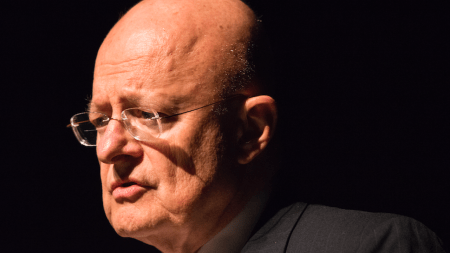
Barack Obama’s Director of National Intelligence, James Clapper, submitted his letter of resignation on Wednesday, and the next day he told the House Select Committee on Intelligence that doing so “felt pretty good….I have 64 days left and I’d have a pretty hard time with my wife going past that.” Why? Is Mrs. Clapper opposed to intelligence policies based on politically correct fantasies and willful ignorance?

Nothing epitomizes more perfectly the Obama Administration’s consistent refusal to come to grips with the reality of the global jihad than Clapper’s embarrassing tenure as Director of National Intelligence.

One incident that took place in December 2010, four months after Clapper took office, epitomized his abject incompetence. British authorities arrested twelve jihadists who had been planning to set off bombs in a variety of locations; that same day, Clapper appeared on Diane Sawyer’s ABC show, on which Sawyer said to him that she expected he must be very busy with the London arrests. Clapper looked confused, and admitted that he had no idea what she was talking about. Arrests? A terror plot?

Had Sawyer been conducting a man-on-the-street interview, and Clapper was in reality the befuddled accountant he appears to be, he might be excused for having no idea that a large-scale anti-terror operation had just been carried out in London. But this was the Director of National Intelligence, and he was far less informed and up to speed on the situation than was Sawyer herself, or probably an entire legion of befuddled accountants.

Obama’s team ran interference for Clapper, claiming essentially that Clapper had been so involved with the London arrests that he was too preoccupied to answer Sawyer’s question properly, but that his display of cluelessness was no indication of…cluelessness.

But it was. Clapper showed that again in February 2011, when he claimed at the height of the Egyptian “Arab Spring” that the Muslim Brotherhood was “largely secular,” a claim as absurd as it was inaccurate. Although the subsequent torrent of ridicule compelled the Obama camp to issue a correction, the subtext of Clapper’s statement was clear: the Obama Administration had no problem with Muslim Brotherhood rule in Egypt, and was not only going to do nothing to stop it, but was going actively to enable it.

The Brotherhood that Obama worked so assiduously to aid is dedicated, of course, to establishing the rule of Islamic law not only in Egypt, but everywhere that it possibly can. And if that rather commonplace fact was too much for Clapper and his boss, they could have resorted to a much simpler indicator of the religious foundation of the Brotherhood’s political program: its name. It isn’t, after all, called the Arab Nationalist Brotherhood, or the Egyptian Brotherhood, but rather the Muslim Brotherhood. Its name itself shows that it is no more secular than the Christian Brothers religious order.

Clapper also appeared woefully (if not willfully) ignorant of the Brotherhood’s pro-Sharia agenda, and no doubt completely oblivious to the implications for the United States and the world of an Egypt governed by Islamic law.

There was, of course, more. In March 2011, Clapper told Senator Joe Manchin (D-WV) that Russia and China represented the greatest “mortal threat” to the United States.

Russia and China? Not North Korea and Iran, or the forces of the global jihad that grew steadily more aggressive while Clapper was Director of National Intelligence? Clapper’s statement sounded like a Rip Van Winkle who had been sleeping for twenty years or longer, and nobody had gotten around to clueing him in to the fact that the Cold War was over.

Had Clapper, a retired lieutenant general in the Air Force and longtime intelligence professional, made any study in the area of national intelligence since 1985? Was he aware that the world situation has drastically changed since 1985? Had he had any kind of thought at all since 1985?

James Clapper is perhaps the most abysmally ignorant and unqualified individual ever to have held a position of so much responsibility. While he was Director of National Intelligence, Clapper repeatedly demonstrated that he had no idea about the nature of the world today, no sense of the genuine threats that face the United States, and no clue as to what to do about those threats.

Yet instead of firing him, Obama continually made excuses for him, explaining away his idiotic remarks, and running interference for him with the international media. What Clapper did to merit such solicitude is unclear, but the stakes were far too high for the nonsense and fantasy that Clapper purveyed. While he was Director of National Intelligence, Clapper made every American less safe. He epitomized the denial and willful ignorance that characterized the Obama administration’s approach to the jihad threat. In this time of swamp-draining, Clueless Clapper is leaving the stage not a moment too soon.

Dr. Jasser discusses the misreporting of a immigrant registry on Varney & Co 11.17.2016

November 18, 2016

Dr. Jasser discusses the misreporting of a immigrant registry on Varney & Co 11.17.2016, Fox News and AIFD via YouTube, November 17, 2016

How Trump Can Stop Obama from Closing Gitmo

November 18, 2016

How Trump Can Stop Obama from Closing Gitmo, American ThinkerEd Lasky, November 18, 2016

Donald Trump can stop Barack Obama from continuing to free terrorists, and the sooner he acts, the better.

Barack Obama is a lame-duck president and, empowered by his pen and a phone (the only weapons he has ever held, no doubt) is determined to continue to carve out a dubious legacy for himself. He had promised to close Guantanamo prison during his first presidential campaign and on the second day in office he issued one of his numerous executive orders to come, this one directing that the prison be closed within one year.

Terrorists were big supporters of Barack Obama. At Gitmo they were chanting “Obama! Obama! Obama!” during election night and when he won started chanting to their guards and prosecutors the refrain “Hey, hey…goodbye”

President Obama was stymied in his efforts to transfer many of them to American prisons when Republicans led an effort (joined by many Democrats) to pass a law that forbade prisoners from being moved into American prisons.  But Barack Obama has found another way to release these terrorists (or “detainees” as liberals call them) by working to depict them as less of a threat than they are and then releasing them into the custody of foreign governments.

As Stephen Hayes has written in a Weekly Standard column, “Lying About Gitmo,” Obama and his team have been lying about the backgrounds and records of these terrorists to downgrade their threats to Americans and others around the world:

Let’s begin with the conclusion: Barack Obama is releasing dangerous terrorists against the recommendations of military and intelligence professionals, he’s doing so at a time when the threat level from radical Islamists is elevated, and he is lying about it. He is lying about how many jihadists he has released and lying about their backgrounds, all part of his effort to empty the detention facility at Guantánamo Bay.

Hayes assembles quite the collection of examples of anti-American jihadists that Obama has given a get out of jail card. Included among them are the so-called Taliban Five, terror masterminds released in return for Sgt. Bowe Bergdahl. All five had worked for Al Qaeda before 9/11.

Hayes writes:

Obama has also downplayed the threats from released Guantánamo prisoners in other ways. He describes the detainees as “embittered,” as if the hatred that inspires them grows from their time in Guantánamo rather than their devotion to a murderous cause. Instead of rejoining the war, the recidivists are merely “trying to link up with their old organizations.” Perhaps most bizarre is his description of the process he’s using to determine which detainees can be transferred or set free. “The judgment that we’re continually making is: Are there individuals who are significantly more dangerous than the people who are already out there who are fighting? What do they add? Do they have special skills? Do they have special knowledge that ends up making a significant threat to the United States?”

Those are the criteria? Detainees can be released if the White House determines that they are no more dangerous than, say, the leaders of ISIS, AQAP, Boko Haram, Jabhat al Nusra, the Haqqani network, the Khorasan group? If this is actually the way the administration evaluates potential releases, it would explain why so many veteran jihadists have been freed. It’s a process that prioritizes emptying the facility over the security of the country.

Obama has been dishonest about his policy and has downplayed threats from Islamic terrorism from the first day of his presidency to the (thankfully) last days to come. Pentagon and other national security experts have decried this minimizing of threats to America. His actions have been condemned by Congressman such as Edward Royce, the Republican head of the House Foreign Affairs Committee, who accused the White House of “doubling down on policies that put American lives at risk” and “recklessness.”

Climate change is a greater threat in Obama’s mind.

Barack Obama seems laser-focused on closing Gitmo as part of his legacy. This would cause irreparable harm to the security of America: released terrorists have a very high recidivism rate (killing is what they live for, and released “detainees” have been implicated in subsequent attacks on Americans) and Gitmo has a very unique legal status that makes it absolutely crucial in our battle against terrorism. If Obama succeeds in closing Gitmo and, perhaps, turning it over to the Castro brothers (who no doubt will be glad to have more prison space for their political prisoners), it will never again be an American asset in our fight against Islamic terrorism.

Obama has justified his actions by being able to claim formally that these terrorists are not being freed; instead he has been transferring them to other nations who supposedly will monitor them to prevent their return to terrorism. In practice, this monitoring has been a farce as the various nations, some but not all of them of them Muslim nations, have looked the other way as the terrorists “go back to work.” Detainees have vanished; they have gone off the radar screen and found their ways back to join their fellow terrorists.

What can be done in the next two months to stop Obama?

Donald Trump has vowed to keep the prison open, and to “load it up with some bad dudes.” But he can’t keep his promise if Obama empties the prison and fulfills his promise to close Gitmo.

President-elect Donald Trump and a Republican Congress can put foreign nations on notice that change is coming to Washington and America in January and that nations that cooperate with Barack Obama in his terrorist release program will be scrutinized in the years to come when it comes to foreign aid, trade pacts, security cooperation and a range of other measures. Some of the nations that have taken the terrorists are oil-rich Middle Eastern nations, but others are less wealthy South American nations. Would Uruguay be willing to take any more terrorists if faced with warnings from the incoming administration that moves to take them will be “looked at with disfavor” (to be diplomatic) in the years to come? Even Arab nations, who certainly have no reason to seek to please Barack Obama, might be reluctant to displease a President Trump who they will have to engage with the next four years.

President-elect Donald Trump has a chance to do a great deal to help defend America even before he becomes Commander-in-Chief.


The New York Times’ Dishonest Reporting on the Iran Nuclear Deal

November 18, 2016

The New York Times’ Dishonest Reporting on the Iran Nuclear Deal, Center for Security Policy, Fred Fleitz, November 17, 2016

nyslimes1

You may have read that in response to criticism about its biased coverage of the Trump campaign, the New York Times has rededicated itself to honest reporting.

After you get up off the floor from laughing hysterically, consider this story that ran days after the Times’ renewed commitment to ethical journalism: On November 14, the New York Times ran an article with the headline: “76 Experts Urge Donald Trump to Keep Iran Deal.” In the second paragraph, the article claims this report was signed by “former officials from both major political parties.”

Not until the sixth paragraph does the story mention that this report was issued by the National Iranian American Council (NIAC).

This is the kind of dishonest reporting we have come to expect from the New York Times.

NIAC, well known as the head of the Iran lobby in the United States, aggressively campaigned for the Iran nuclear deal. The Times misleadingly describes it as “a Washington group that has advocated improved relations with Iran, even while sharply criticizing Iranian leaders over human rights issues.”

The NIAC report reads like it was written by the Iranian foreign ministry. Not only does it call for President Trump to stick with the Iran deal and not impose new sanctions, the report ignores a sharp increase in belligerent behavior by Iran since the nuclear agreement was announced, suggests the U.S. should ignore Iran’s ballistic-missile program, and calls for close U.S.–Iran cooperation on Iraq, Syria, and Afghanistan.

According to the report, U.S.–Iran relations have reached their highest point in 37 years due to the nuclear agreement. I don’t think the crews of U.S. ships in the Persian Gulf and the Red Sea who have been harassed by Iranian ships and had missiles fired at them from Yemen would agree.

On Iran’s gross human-rights violations, the report essentially calls for the Trump administration to ignore them and instead makes the bizarre recommendation that President Trump take steps to show that America does not seek to harm innocent Iranians by speeding up the sale of civilian airliners to Iran.

The 76 “experts” who signed the NIAC report are mostly on the far left, including Noam Chomsky, Joseph Cirincione, Juan Cole, and John Esposito.

The article identified Lawrence Korb, Lawrence Wilkerson, Chas Freeman, and Gary Sick as experts who signed the report and served in Republican administrations. The Times did not mention that these men are now firmly on the left.

Korb may have been a Republican at one time but now works for the George Soros-funded Center for American Progress and was a surrogate for Bernie Sanders and Hillary Clinton.

Wilkerson, Secretary of State Colin Powell’s chief of staff, joined the far Left as a fierce critic of the Republican party after Powell stepped down. He has called for George W. Bush and Dick Cheney to be charged with war crimes over the Iraq War.

Freeman, a former ambassador to Saudi Arabia and assistant defense secretary for international affairs in Republican administrations, blamed the “Israel Lobby” for forcing him to withdraw from accepting a top intelligence post in the Obama administration.

And then there is Gary Sick, who the Times identifies as “a Columbia University scholar who served on the National Security Council under Reagan as well as Presidents Gerald Ford and Jimmy Carter.” Sick is better known for circulating a false story in 1980 that that the Reagan campaign persuaded the Iranian government to not free U.S. hostages until after the 1980 election to ensure President Carter’s defeat.

How could the Times fail to mention this report was issued by a group that is essentially Iran’s main lobbying arm in the United States? How could it ignore the strong pro-Iran bias in this report? How could the Times not mention the troubling backgrounds of the signatories like Wilkerson, Freeman, Sick, and others?

Most importantly, why did the Times article not admit the NIAC report has zero credibility and will be completely ignored by the Trump administration?

The answer to these questions is that the New York Times has no interest in changing its ways and doing honest reporting. It remains a propaganda organ of the Left. Fortunately, the Timeshas lost so much credibility that few take articles such as its NIAC-report story seriously.

For a fair and balanced discussion of how President Trump should deal with Iran, see my November 14, 2016, National Review article, “Yes, Trump’s Going to Dump the Iran Deal.”

Hezbollah has U.S. armored personnel carriers. But how did they get them?

November 18, 2016

Hezbollah has U.S. armored personnel carriers. But how did they get them?

November 16

Source: Hezbollah has U.S. armored personnel carriers. But how did they get them? – The Washington Post

Jordanian Armed Forces M113 armored personnel carriers attack a simulated invasion force during a mission readiness exercise at the JAF’s Joint Training Center on Jan. 17. (Sgt. Youtoy Martin/U.S. Army)

Over the weekend images surfaced online of a Hezbollah parade in Qusair, Syria, featuring U.S. armored personnel carriers affixed with antiaircraft guns. The images prompted a flurry of speculation about the vehicles’ origin and whether the group had pilfered the stocks of the U.S.-supplied Lebanese military.

The armored personnel carrier, known as the M113, is one of the United States’ most ubiquitous armored vehicles and has been in service since the 1960s. The tracked semi-rhombus-shaped vehicle comes in numerous variants and can be outfitted to carry troops and artillery; its chassis was even used as the basis for a nuclear-missile carrier. It has appeared in every major U.S. conflict since the Vietnam War and is used by U.S. police departments and dozens of others countries’ militaries around the world.

https://twitter.com/tobiaschneider/status/797881849850695680?ref_src=twsrc%5Etfw

As a prominent political and military entity in Lebanon, Hezbollah’s possession of the vehicles could support the theory floated by the defense analyst Tobias Schneider, who tweeted that the personnel carriers were probably taken from the Lebanese Armed Forces, a major recipient of U.S. military aid.

Over the summer, the Lebanese military took possession of dozens of pieces of artillery, armored vehicles, semiautomatic grenade launchers and 1,000 tons of ammunition — all worth about $50 million — as part of the United States’ ongoing efforts to bolster the country’s capacity to fight extremists. The shipment, overseen by the Pentagon and the State Department, brought the amount of U.S. military aid sent to Lebanon in 2016 to $221 million, according to U.S. Ambassador Elizabeth H. Richard.

While Lebanese smugglers have helped move weapons and ammunition to opposition groups in Syria, cases of Lebanese military equipment appearing in the conflict have been rare. In a tweet, the Lebanese military denied that the M113s were taken from its stocks, a claim backed up by a State Department official, who spoke on the condition of anonymity to discuss the issue.

“The Lebanese military has publicly stated that the M113s depicted online were never part of their equipment roster,” the official said. “Our initial assessment concurs: The M113s allegedly in Hezbollah’s possession in Syria are unlikely to have come from the Lebanese military. We are working closely with our colleagues in the Pentagon and in the Intelligence Community on to resolve this issue.”

After comparing the “structual analysis of the vehicles in the picture,” Pentagon spokesman Chris Sherwood said that the Pentagon had ruled out the possiblity of Hezbollah taking the M113s from the Lebanese Armed Forces.

Closely aligned with Iran and Syria, Hezbollah has been fighting alongside Syrian government troops since the beginning of the conflict.

The Hezbollah M113s appear to be an older variant, and U.S. officials said they are inclined to believe that vehicles came from the disintegration of the Southern Lebanese Army, or SLA. The SLA was an Israeli-allied and supplied Christian militia that fought during the Lebanese civil war. Its military equipment was ultimately absorbed by Hezbollah in the early 2000s when Israel withdrew from southern Lebanon.

In 1985, Israel supplied 20 M113s to the SLA, according to arms transfer data provided by the Stockholm International Peace Research Institute. From 1984 to 1996, Israel provided more than 130 armored vehicles, tanks and artillery pieces to the SLA, according to the data. Another possibility, as pointed out by Schneider in subsequent tweets, is that Hezbollah took them from Syria’s recently renamed al-Qaeda affiliate, formerly known as Jabhat al-Nusra. It is unclear where al-Nusra got its M113s.

U.S. equipment falling into the hands of extremist groups and regional opponents has been a recurring theme in the Middle East and southwest Asia for the past 15 years as American wares have been distributed wholesale to those willing to fight for U.S. causes. Armored vehicles, weapons, night-vision devices and body armor have been diverted from places such as Iraq, Afghanistan, Syria, Saudi Arabia and Yemen, subsequently showing up on battlefields throughout the region.

The post has been updated to reflect a comment from the Pentagon.

Responses In Iran To Trump’s Presidential Win

November 18, 2016

Responses In Iran To Trump’s Presidential Win, Memri, By: A. Savyon, E. Kharrazi, and U. Kafash*, November 17, 2016

Introduction

While the Iranian regime’s official position is that there is no difference between a Democrat or a Republican in the White House because both of them will be anti-Iran, there are a number of notable trends in Iranian reactions to Donald Trump’s election:

Reactions Common To Both The Ideological And Pragmatic Camps  

  • Trump’s win was a protest against the U.S. administration’s policies of slaughter, violence, and oppression both in and outside the U.S. Despite the Obama administration’s extraordinary efforts to end Iran’s international isolation, speakers from both Iranian camps attacked Obama and gloated over the Democrats’ loss.
  • Trump is better for Iran than Clinton. In spite of the regime’s official policy of not preferring either candidate, some Iranians have said that a President Trump is better for Tehran for a number of reasons:

o Trump seeks better relations, not conflict, with Russian President Vladimir Putin, so Iran expects that he will let Putin deal with Syria, which is controlled by Iran.

o Trump is unpopular in the West, and will therefore find it difficult to form an international coalition against Iran – which Clinton could have easily done.

o Trump will need some time to identify his Republican allies in Congress before he can act against Iran.

o Since Trump is a businessman, there is cautious hope that his actions will be business-oriented, not purely ideology-oriented.

Reactions From The Pragmatic Camp

  • Fear that the JCPOA will now be cancelled – particularly among those who labored to achieve the agreement, including President Hassan Rohani, Foreign Minister Javad Zarif, and members of the negotiating team. These representatives of the pragmatic camp were quick to stress that the U.S. must adhere to its commitments and implement the agreement with Iran, due to their apprehensions that President Trump would follow through on his campaign promise to reverse it. Others expressed cautious optimism that Trump as president would be different than Trump as candidate, as evinced by his victory speech, which they said was more measured and moderate than his campaign rhetoric.

Reactions From The Ideological Camp

  • Threats against the U.S. are toned down, and instead there are vague threats that are less specific than in the past about an appropriate Iranian response to any move the U.S. might make against Iran.
  • Recommendations that Trump focus on rebuilding at home rather than taking anti-Iran measures.
  • Calling on Iranians to adhere to the regime’s official stance by refraining completely from issuing any pro- or anti-Trump statements.
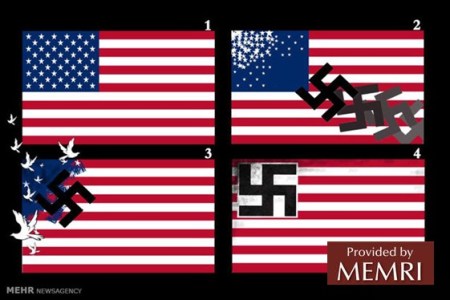
30714Cartoon published November 16, 2016 by the Iranian news agency Mehr. Note the two Hitler serpents behind Trump.

MEMRI’s Assessment

It appears that Iran’s military-political elite prefers to deal with a male president, not a female one.[1] Furthermore, in a November 2 speech ahead of the anniversary of the U.S. Embassy takeover in Tehran, Supreme Leader Ali Khamenei, in an unusual statement, explained Trump’s popularity among the American public as due to the fact that he speaks “honestly.” Moreover, unlike Clinton, Trump is seen by the Iranian leadership as not committed to democratic values or human rights because of his past remarks on women and minorities, and as a dominant ruler with whom Iran can find common ground. Iran has actually chosen to cooperate with Republican administrations that demonstrated strength and determination.

In this context, it is important to note that it is with Republican administrations that have demonstrated strength and determination that Iran has chosen to cooperate. For instance, when the U.S. military operated in Iraq and Afghanistan during the George W. Bush administration, Iran cooperated with U.S. forces and even stopped enriching uranium of its own accord, fearing an American attack. Also, during the Reagan administration, it was the Iranian regime that initiated dialogue with the U.S. on the Iran-Contra affair.

A contemporary example is the announcement by an Iranian diplomatic source, immediately after Trump’s win was declared, that Iran intends to remove from its territory a quantity of heavy water that puts it above the limits set by the JCPOA. An International Atomic Energy Agency (IAEA) report from early November 2016 warned that Iran possessed too much heavy water, but it was only after Trump’s win that Iran hastened to announce its intention to rectify the violation.

It should also be noted that Trump, who was critical of the JCPOA, need not take measures to cancel the agreement. He can take another tack to do this, by this by strictly implementing all sections of the agreement as it already exists, upholding Congress’ initial sanctions on Iran for its human rights violations and support for terrorism, and passing additional sanctions, for example on Iran’s ballistic missile program which the Obama administration did not include in the JCPOA. In fact, in recent months, the Obama administration had been working to help Iran,[2] in direct violation of the JCPOA and of Congress’s initial sanctions.

Such moves could restructure the relationship between Iran and the U.S. administration, making it into one based on cooperation and mutual understanding – in contrast to the Iranian regime’s contempt for and ridicule of the Obama administration. This scenario would be like the Reagan presidential win, after which Iran immediately released the Americans it had been holding hostage for over a year during the Carter administration.

Even more important than the future of the JCPOA, and much more urgent, is what Trump will do about the military and political empire that Iran is building in the Middle East – in Iraq, Syria, Lebanon, and Yemen – with the encouragement of the Obama administration, which sought to shift the region’s Sunni-Shi’ite power balance towards the Shi’ites.[3] What action will he take against the Iran-led Shi’ite axis that is standing against the Sunnis, led by Saudi Arabia and Turkey? What will he do about Iran’s strategic partner, Putin’s Russia?
30715Mehr, November 16, 2016.

Following are excerpts from Iranian reactions to Trump’s win, from both the pragmatic and ideological camps:

Iran’s Pragmatic Camp

Iranian Foreign Minister Javad Zarif said, during a visit to Romania: “We do not interfere in the internal affairs of other countries. This is the choice of the American people. Anyone who will be president in America should recognize the reality in the region and the world, and address it realistically. Iran and America have no political ties, but America must meet its international obligations [under] the JCPOA, along with other parties.”[4]

Iranian Foreign Ministry spokesman Bahram Qassemi said: “The Iranian people and the Islamic Republic of Iran have bad and bitter memories from the previous policies and approach of American administration officials. What is important to Iran, and the Iranian people – whom [we] consider a touchstone – is how the next American administration will act and conduct itself. These things are more important than [Trump’s] statements and the policies he expressed during his election campaign.

“The main cause of the escalating violence, extremism, and provocations of Muslims in the region is the policies of the previous American administrations, and their interference in the affairs of the countries in the region. The instability in the strategic regions of the Middle East, the Persian Gulf, the Gulf of Aden, and the Red Sea, and the threats stemming from the violence, extremism, spread of deviant and dangerous thought, and terrorism of groups such as ISIS – which Iran is at the forefront of combatting – indicate that America must reexamine its regional policy.”[5]

Iranian President Hassan Rohani stated, at a government meeting on November 9, that the JCPOA cannot be cancelled: “Iran’s wisdom in the nuclear agreement was to ratify the JCPOA as a Security Council resolution, and not a [bilateral] agreement with a particular country or administration. Therefore, [the JCPOA] cannot be changed according to the whims of a particular administration… The results of the American election will not influence Iranian policy.” He added: “Because of its mistaken policies, America’s status in international society and in global public opinion has waned, and its growing rift with the global society and with Europe damages this status even further… The American election results attest to domestic worry and instability, which will remain for a long time. It will also take a long time until these domestic disagreements and problems are sorted out.

“America today can no longer take advantage of Iranophobia to create a global anti-Iran coalition. Iran’s policy is based on constructive cooperation with the world, on breaking the nuclear sanctions, and on economic ties with the entire world. [This policy] is now emerging, and can no longer be reversed.”[6]

Reformist intellectual Prof. Sadegh Zibakalam explained on November 10 why Iran’s ideological camp preferred Trump to Clinton: “After the American election, there is surely much rejoicing among the streams hostile to America, and among those in Iran who persist in remaining hostile to America, because when Trump enters the White House there will be no more opportunity to ease Iran-U.S. tensions or to bring the [two] closer together… The extremists will exploit Trump’s positions and tell the moderates ‘See how wrong you were? Do you see we were right and that America can absolutely not be trusted? Look at Trump’s anti-Iran stances – do you see why we said that we cannot be fooled by America and that we shouldn’t take its friendly smile seriously?’

“It won’t be long before many in Iran long for the days when Obama was in the White House and John Kerry ran the U.S. State Department. Then they will realize how good we had it, and that we could have reached understandings with America and moved towards removing the tension – but we missed that golden opportunity.

“The Russians are also glad that an extremist is now in the White House, because they believe that they can handle extremists, but not Democrats. They believe that it is possible to get along with Reagan, Trump, and George Bush, but that it is always difficult to deal with the Democrats. Therefore, the Russians, much like our own extremists, welcome Trump’s election, while moderate liberal streams in Europe that support human rights and such do not.”[7]

Responding to Zibakalam’s argument that Iran would welcome Trump, but not an Obama or a Clinton,the pragmatic website Asr-e Iran wrote: “Many believe that Trump’s victory will damage Iran and that Iran will encounter many problems in the post-Obama era. But in this article we will state not only that Trump’s victory will not harm Iran, but that Iran will benefit it.

“Unlike Obama and Clinton, Trump is more inclined [to deal with] domestic affairs, and does not wish to occupy himself with foreign affairs and regional crises. In his speeches, Trump openly stated that he opposes the attacks in Iraq and Afghanistan and does not want to bring America into other countries’problems. Obama and Clinton desperately wanted to create hegemony in the region and outside it, but because America is now weaker at home, Trump wants to improve its domestic situation, and it can therefore be said that he does not wish to deal with Iran and the Middle East region.

“The most important Trump opponents now are European governments. The Europeans did not want Trump in power. But this is today’s reality, and we can say that Trump’s arrival has opened up a yawning chasm between Europe and America. The American presidents who preceded Trump had global leadership strength, because the world, and especially Europe, recognized them as world leaders. But today, not even the American elite, let alone European countries, recognize Trump as a global powerbroker. This means that Trump cannot form an international coalition against Iran or against countries that oppose America.

“Certainly, Europe in the Trump era will try to engage in its own interests, and will no longer make efforts for American interests. This is Iran’s best opportunity to take advantage of this possible Europe-U.S. gap. The Europeans have expressed interest in economic and political cooperation with Iran, and during these years [i.e. the Obama years], America was the only obstacle. In the Trump era, Iran could strengthen its ties with Europe.

“Trump is an economic player; for him, policy is determined by economic profit. Those who seek economic windfalls are never interested in wars or political crises, which can create market panic, unless the war benefits their economic interests.

“Trump’s America will be a country focused on matters that are marginal and on mere noise. This is the best time for Iran to promote its policy on the regional and international levels. The JCPOA under Trump could be the JCPOA of Iran and Europe, and because of the red-headed American president, America might slowly drift away from the JCPOA with Iran. Of course, we must stress that nothing is certain or predictable, especially with regard to Trump, and therefore the world and Iran should keep a close eye on the 45th American president.”[8]

Foad Izadi, an assistant professor in the American Studies department at Tehran University who has a degree from Louisiana State University, claimed that the biggest gift that Trump’s win is giving Iran is that Trump will find it difficult to mobilize international support against Iran – unlike Clinton, who could have easily done so. He added that Trump would also work against Iran in Congress, as Clinton would have, but that it will take Trump a while to identify his allies in Congress, unlike Clinton who would easily have gained support for whatever she chose to do.

Iran’s Ideological Camp

Deputy Majlis Speaker Ali Motahari said: “There will be a difference between Trump’s positions during the election campaign and [those he will adopt] during his presidency. I will summarize his election positions by saying that his presidency will be better for Iran than Clinton’s would have been, because the Democrats advance [toward their goals] more meticulously and they behead you with cotton wool.

“Trump is more honest and has better positions on Syria. Additionally, he does not view Saudi Arabia positively, and he wants good relations with Russia. I believe Trump’s opposition to the JCPOA is good for Iran. In effect, they [the Americans] can do nothing. Ultimately, I think Trump’s presidency will benefit Iran.”[9]

Mocking Western democracy, the Kayhan daily, on its November 10 front page, called Trump’s victory “Another Win For Liberal Democracy: The Madman Defeats The Mendacious Woman.”[10] That day’s editorial explained: “The whites who voted for Trump, being mostly educated [sic], and not from the upper classes, are greatly inclined to clash with racial minorities. Yesterday, immediately after Trump’s victory, in one state, young people who support him [congregated] and chanted anti-black and anti-Muslim slogans. The domestic situation in America is not so great, and daily events, such as what happened in Ferguson, deprive citizens of security. The Trump era could be anything but a time to heal the wounds opened by racial discrimination…

“Trump’s America will absolutely not be a new America with new capabilities, and therefore his anti-Iran declarations will not come to fruition. What is certain is that in the current situation, most Republicans in today’s House and Senate wish to reduce America’s extra-regional conflicts, and will abandon the rash policies of Obama, [who sought] to solve the [crisis] dossiers of the Middle East.

“Trump cannot reinvigorate America’s weary army, and the region is also lacking forces that can seriously replace those who are interfering there on behalf of America [i.e. rebel groups]. That is, the Trump era will see a decline in the wars waged by those who fight in America’s name.

“An interesting point in the American election was crediting Russia [with influencing the result]… Now there is talk of Russia’s influence in the American elections. Donald Trump not only does not deny allegations that he depends on Russia, but his [campaign] statements regarding U.S.-Russia cooperation brought him votes. He said that if he were elected, he would consider Crimea to be under Russian rule.”[11]

Iranian Army chief of staff Mohammad Bagheri said on November 10: “With regard to statements by the American president-elect and what he said during the election campaign – this man, who has now come to power, was too boastful. I have a suggestion for him: ‘Relax, and ask your naval commanders and officers how your forces on that [U.S.] vessel ended up [i.e. captured by Iran, in January 2016].’ Threatening Iran in the Strait of Hormuz and the Persian Gulf is a joke. The might of Iran’s navy also exists in the IRGC’s land [branch], air [branch], passive defense, and Qods Force.”[12]

Ala Al-Din Boroujerdi, chairman of the Majlis National Security and Foreign Policy Committee, said on November 9: “Trump’s victory shows the America people’s reaction to the [U.S.] policy of warmongering, which caused thousands of Americans to lose their lives and squandered hundreds of millions of U.S. dollars in vain… It seems that American public opinion expects the people’s problems to be addressed [now]… We must wait and see what Trump’s policy vis-à-vis the region and the Islamic world will be…

“As for implementing the JCPOA, there is a difference between Trump campaigning for election and Trump the president. It is natural that when someone is elected U.S. president, they must place themselves within the framework of laws and international relations, including the JCPOA, and must remain committed to them. Any step or action [by Trump] will be met with an appropriate [Iranian] reaction.

“If Trump wants to act according to the positions he expressed during his campaign, he must end America’s cooperation with Saudi Arabia in the evil slaughter of the Yemeni people, because Saudi Arabia cannot drown tens of thousands of oppressed Yemenis in blood and ashes without American support. Trump should, at the very least, stop the [American] shipment of weapons to Saudi Arabia.”[13]

Yadollah Javani, senior advisor to Khamenei’s representative in the IRGC, indicated that Trump’s election campaign was different from previous campaigns, and that this has to do with the domestic situation in the U.S.: “Although Trump himself is seen as a wealthy businessman, in his election campaign he defended the poor, blacks, and the lower classes, and challenged the White House’s discriminatory and corrupt policy. Therefore, his message was popular.” Javani added that Trump becoming president was unlikely to radically shift American policy: “Neither Trump nor Clinton nor anyone else can save America, whose power is dwindling, and which has reached the end of the line as a superpower and an empire… American hostility towards [Iran’s] Islamic Revolution, its Islamic regime, and the Iranian nation lies in the arrogance of the American political regime. Thus, there is no difference between Democrats and Republicans… The clearer the enemy’s hostility becomes, the easier it is to deal with. Based on experience over the past 37 years, the Republicans’ hostility towards the Islamic Revolution and the Iranian nation has been more out in the open [than the Democrats’].”[14]

Hossein Naqavi Hosseini, spokesman for the Majlis National Security and Foreign Policy Committee, said on November 9 that Trump had won because the Americans “were displeased with their rulers.” U.S. foreign policy, he said, “is fixed, and is based on interference, aggression, control, usurpation, and the beheading of nations. [But the difference is that] Democrats loot and behead with cotton wool, while Republicans [do it] cruelly with a knife.” About the JCPOA, he said: “Trump only has two options: [Either] act within the framework of the agreement, since it is not an agreement with America [only]. [Or,] if the Americans tear up the agreement, then Iran will be ready to burn it, as the leader [Khamenei] has said.”[15]

In his main official Friday sermon, on November 11, Ayatollah Ahmad Khatami, Assembly of Experts member and Tehran Friday prayer leader, rebuked all those in Iran who expressed hope for a Trump presidency, contradicting the regime’s official line, and advised Trump to focus on U.S. affairs rather than seek adventures overseas: “Before the election, Iran’s policy [vis-à-vis the candidates] was logical and neutral, because our regime said that as far as that is concerned ‘they are all the same,’ and [all the candidates] take orders from somewhere else – that is, they are servants of the Zionist regime. But some websites and newspapers [in Iran] were biased, and even before the election they welcomed a particular candidate’s win. This was unwise, and it would have been better for them to adhere to the regime’s policy…

“The candidate who won the American presidency said, ‘Our country needs new roads, tunnels, and hospitals, but we do not have the necessary funds.’ Where do the [American] tax dollars go? They are spent on slaughter. I want to preach to the new president who has just come to power in America: If you continue in the path of your predecessors, be certain that your fate will be the same as theirs. They had particular characteristics, and you should not repeat their mistakes.

“The American president-elect must know that the Iranian nation exhausted previous American presidents… You called the Iranian people terrorists. If you have any decency and courage, you will apologize to them.

“Take care, because playing with the Iranian nation is like playing with a lion’s tail. I hope these words will reach your ears. You should know that Iran has a single character and a single slogan. Our character is resisting to the final man and final breath, and our slogan is that of the Imam Hussein: ‘Humiliation and disgrace are far from us.’

“I hope that the new American president is wise enough to carry out what he said when he said ‘I do not want tense [relations] with any country.’ If he does not carry this out, he will soon get to know the Iranian people…”[16]

Majlis speaker Ali Larijani called for restraint, saying, on November 13: “The analyses and editorializing regarding the American president-elect should be more mature. We must refrain from making rash judgments and from judging prematurely. We must wait and allow [Iran’s] diplomatic apparatus to take a clear stance.”[17]   

*A. Savyon is director of the MEMRI Iran Studies Project; E. Kharrazi, and U. Kafash are Research Fellows at MEMRI*


Endnotes:

[1] Due in part to a preference by Iran’s political and cultural leadership, which ideologically excludes women in key roles, to not deal directly with a woman, especially one who in the past has openly worked against Iran.

[2] According to Western media reports, the Obama administration, and particularly Secretary of State John Kerry, are pressuring European companies and banks to invest in Iran despite Congress’s sanctions. See, for example, State.gov/secretary/remarks/2016/04/256536.htm, April 23, 2016; State.gov/secretary/remarks/2016/05/257116.htm,  May 12, 2016.  See also article by Stuart Levey, chief legal officer of HSBC Holdings, and former undersecretary for terrorism and financial intelligence at the U.S. Treasury Department (2004-11), “Kerry’s Peculiar Message About Iran For European Banks: Why is Washington pushing banks like mine to do what is still illegal for American banks?”,” Wsj.com/articles/kerrys-peculiar-message-about-iran-for-european-banks-1463093348, May 12, 2016; Finance.yahoo.com/news/uk-working-resolve-banking-concerns-093933912.html; and Bloomberg.com/view/articles/2016-10-26/clinton-s-allies-promise-a-tougher-line-on-iran.

[3] Saudi Prince Turki Al-Faisal also said that Trump should not cancel the JCPOA and instead should focus on thwarting Iran, “which is working to destabilize” the Middle East. Reuters.com, November 11, 2016.

[4] Tasnim (Iran), November 9, 2016. Behrouz Kamalvandi, spokesman for the Atomic Energy Organization of Iran (AEOI) also said that “Iran is prepared for any development. Iran is attempting to continue implementing the JCPOA” and “it has a long term plan.” Tasnim (Iran), November 9, 2016.

[5] ISNA (Iran), November 9, 2016.

[6] ISNA (Iran), November 9, 2016.

[7] Asr-e Iran (Iran), November 10, 2016.

[8] Asr-e Iran (Iran), November 10, 2016.

[9] ISNA (Iran), November 9, 2016.

[10] Kayhan (Iran), November 10, 2016.

[11] Kayhan (Iran), November 10, 2016.

[12] Tasnim (Iran), November 10, 2016.

[13] ISNA (Iran), November 9, 2016.

[14] Javan (Iran), November 10, 2016.

[15] Javan (Iran), November 9, 2016.

[16] Fars (Iran), November 11, 2016.

[17] ISNA (Iran), November 13, 2016.