(What’s the big deal? Nearly everybody on her side already knows she’s corrupt and will vote for her anyway, so what difference does it make now?)
The panel on MSNBC’s Morning Joe tore apart Bill and Hillary Clinton on Wednesday for over half of Hillary’s meetings with people from non-governmental organizations while she was secretary of state being donors to the Clinton Foundation.
The Associated Press reported Tuesday that of the 154 people from private interests who Clinton met at the State Department, 85 either individually or represented organizations that donated significant sums of money to the Clinton Foundation, leading to “pay-for-play” accusations.
“The numbers are staggering. I don’t know what else to say, how else to put it. I want to be careful with what I say here, but I don’t think I can–it’s just so crass,” host Joe Scarborough said. “I saw the numbers. I saw the AP report, and I just sat there and I’m like, ‘Are you kidding me?’”
“If she were running against a more credible opponent, this would perhaps be almost a death knell because rather than get to corruption at first, it gets to judgment,” columnist Mike Barnicle said. “What were they thinking? Both Clintons. What were they thinking while she was secretary of state to continue this, and it does show it was about access to a certain extent, to a large extent.”
“They knew, obviously, that she was going to be running for president at some point. What were they thinking?” Barnicle asked.
“It gets to what we were talking about, Maureen Dowd before the show, what she’s written about for years, just this sort of feeling that Clintonism includes an ideology and a mindset that the rules don’t apply to them,” MSNBC contributor Nicolle Wallace said.
“For the Associated Press to write in a news story, this term, that it was ‘an extraordinary proportion,’ shows you just how out of skew this was,” Scarborough said. “It really was breathtaking when I read this story.”
“Hillary Clinton knew she was going to run for president the minute she lost in 2008. So, she had some ample time to prepare and to position herself to run,” NBC’s Willie Geist said. “That presumably would have included not having a private server put into her home to open herself up to that and not taking these donations to the Clinton Foundation.”
“And having half of everybody that gets in to see you that’s not in government, like having to give to the Clinton Foundation first,” Scarborough said. “And I said it yesterday to James Carville, it’s also giving speeches to state universities that you represented, that you represented as a senator for $250,000.”
“There is a lot of poor judgment here,” the Huffington Post’s Sam Stein said. “If you go through the list, there’s a lot of poor judgment.”
WASHINGTON (AFP) – The United States reiterated its recommendation that Americans in Gaza leave the territory controlled by Hamas, which Washington calls a terrorist group, “as soon as possible.”
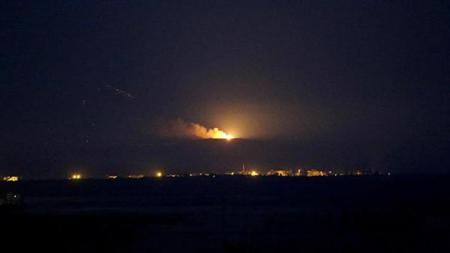
The warning came after the Israeli army said it bombed dozens of targets in Gaza from Sunday to Monday, in response to rocket fire from the strip. Palestinian medical officials said four people were wounded.
Washington regularly updates warning notices to Americans traveling to and living in countries around the world.
In the case of Gaza, the State Department warned against “all travel” to the territory and “urges those present to depart as soon as possible when border crossings are open.”
It had issued a similar warning in December 2015.
Since January, 14 rockets fired from Gaza have hit Israeli territory, the military said.
The border area has remained tense since the July-August 2014 war between Israel and Gaza militants that killed more than 2,200 Palestinians and 73 people on the Israeli side.
“Gaza is under the control of Hamas, a foreign terrorist organization. The security environment within Gaza and on its borders is dangerous and volatile,” the State Department said in its warning Tuesday.
As for Israel and the West Bank, a wave of violence there since October 2015 has left Americans dead and wounded, the department said.
However, “there is no indication that US citizens were specifically targeted based on nationality.”
The violence has eased in recent weeks, but an AFP count shows 220 Palestinians and 34 Israelis killed since October 1, 2015 in the Palestinian territories, Jerusalem and Israel.
Most of the Palestinians killed were attackers or suspected attackers. A number were killed in clashes with the Israeli army.
Turkish army attacks Syrian Jarablus Wednesday, Aug. 23
The wily Erdogan appears to believe that he can use his friendship with Israel as a fig leaf. Whenever the US or others chastise him for his negative actions, he can point out that even Israel goes along with his policies
*****************
Turkey – in full momentum since the Erdogan-Putin summit on Aug. 9 – is setting a rapid pace for its rapprochement with Israel. Saturday, Aug. 20, the Turkish parliament ratified the reconciliation agreement Ankara signed with Jerusalem and Prime Minister Binali Yildirim announced that ambassadors would be exchanged soon.
There is even mention of Turkey’s President Tayyip Erdogan visiting Israel in September.
Both Ankara and Jerusalem are quickly moving on from their sharp exchange of recriminations this week, over the massive IDF military retaliation against Hamas Sunday and Monday for a missile fired from the Gaza Strip.
Israel harshly reproved Turkey for its condemnation, as hardly in a position to interfere in another government’s response to terrorism.
Erdogan uncharacteristically held silent and let Israel have the last word..
Erdogan and Israel’s Prime Minister Binyamin Netanyahu are clearly of one mind that nothing should be allowed to hinder their burying of the hatchet.
In today’s Middle East’s crazy slalom of events, whereby every few hours, new conflicts spring up and new deals are forged – only to end in tatters a couple of days later (e.g. Tehran’s abrupt reversal of its permission to allow the Russia an air base in Western Iran), bilateral realpolitik is bound to be the order of the day.
Yesterday’s enemy might be today’s friend, and today’s friend might become tomorrow’s enemy.
The mercurial Turkish president initiated a series of earthshaking moves in the past two weeks:
He rid the strategic southern Turkish Incirlik base of the US nuclear arsenal, and is keeping the future of US warplanes there for operations in Syria up in the air, amid talk of opening the base for the use of the Russian air force.
Joined Russia and Iran to establish a new Middle East alliance.
Opened a direct line of communication from Ankara to Syria’s Bashar Assad. Turkish MIT Secret Service director Hakan Fidan paid a visit to Damascus.
Working with Israel therefore did not stop the Turkish leader from going after a deal with the Syrian ruler at the same time.
Erdogan plans a visit to Tehran for a grand friendship photo op with Iranian leaders with the same fanfare as his summit with Vladimir Putin.
That summit which ended in an accord to prevent the Kurds from gaining independence in Syria and Iraq let Ankara off the leash for an all out offensive against the YPG Syrian Kurdish army in northern Syria.
Wednesday, Aug. 24, the Turkish army crossed the border to attack ISIS strongholds in the border town of Jarablus, so intervening in the Syrian conflict to block the Kurdish assault on the jihadists.
Ankara has also stepped up its interference with Egyptian and Saudi policies in the Middle East.
How does the Turkish leader reconcile his contradictory polices?
On the one hand he initiates open friendship with Israel while, at the same time, forging alliances with its enemies in Tehran, Damascus and Gaza. How does Israel perceive Ankara’s hostile steps against its friends and allies, the Americans, Egyptians, Saudi and Kurds?
The wily Erdogan appears to believe that he can use his friendship with Israel as a fig leaf. Whenever the US or others chastise him for his negative actions, he can point out that even Israel goes along with his policies.
As for Netanyahu, he appears to have taken a leaf out of President Barack Obama’s Middle East book.
In the face of all Erdogan’s provocations and betrayals, Obama goes overboard to hold Washington’s line to Ankara in place and hold Turkey back from irrevocably quitting NATO.
To do just that, he even sent Vice President Joe Biden to Ankara Wednesday, Aug. 24.
As a global power, the US can afford to look the other way when Erdogan goes over the top, even though it is hard to see where he is going.
Israel, on the other hand, can’t afford to let itself be used as Erdogan’s alibi, without damaging its precious ties with Washington and risk impairing the understandings Netanyahu has been able to develop with Egypt and Saudi Arabia. It would be a mistake to try and isolate the relationship with Ankara as a purely bilateral issue without expecting a backlash on Israel’s other ties.
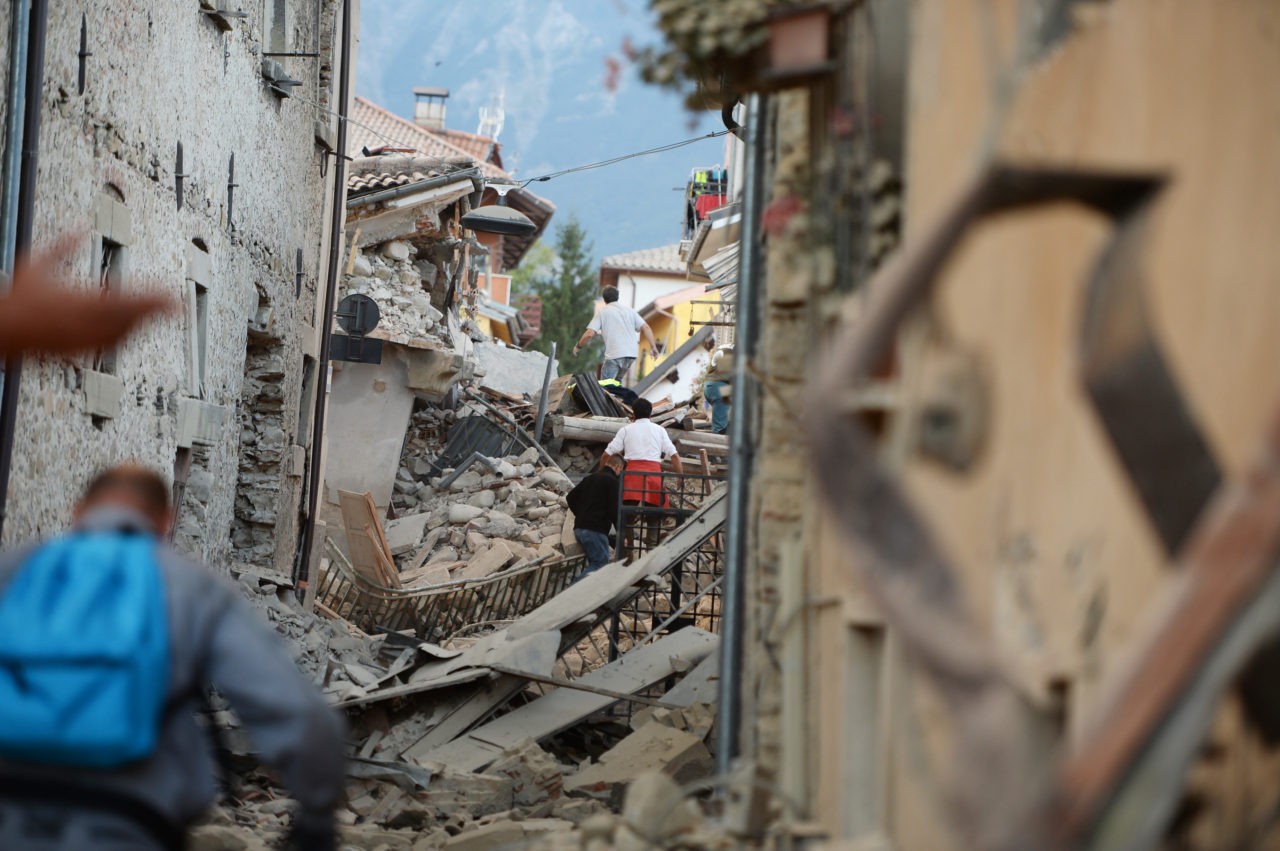
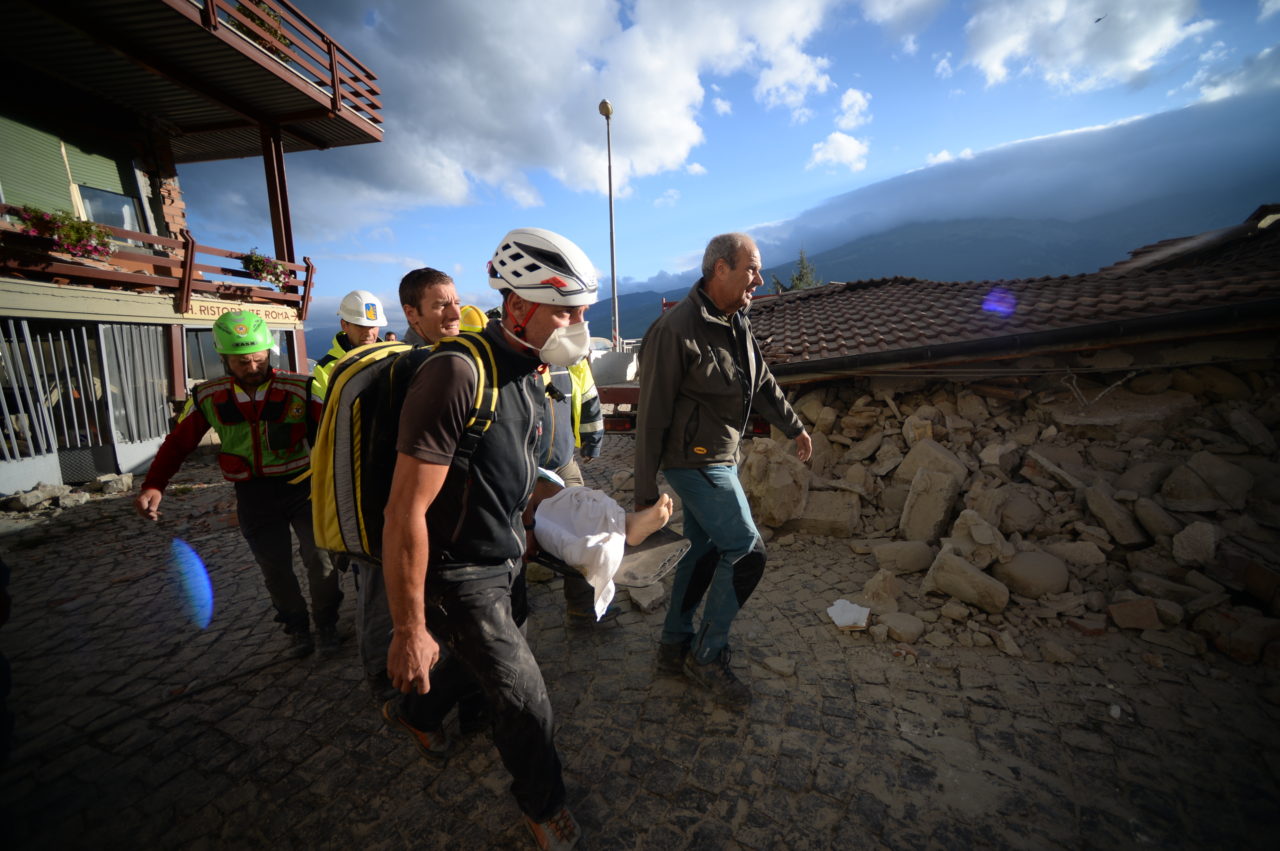
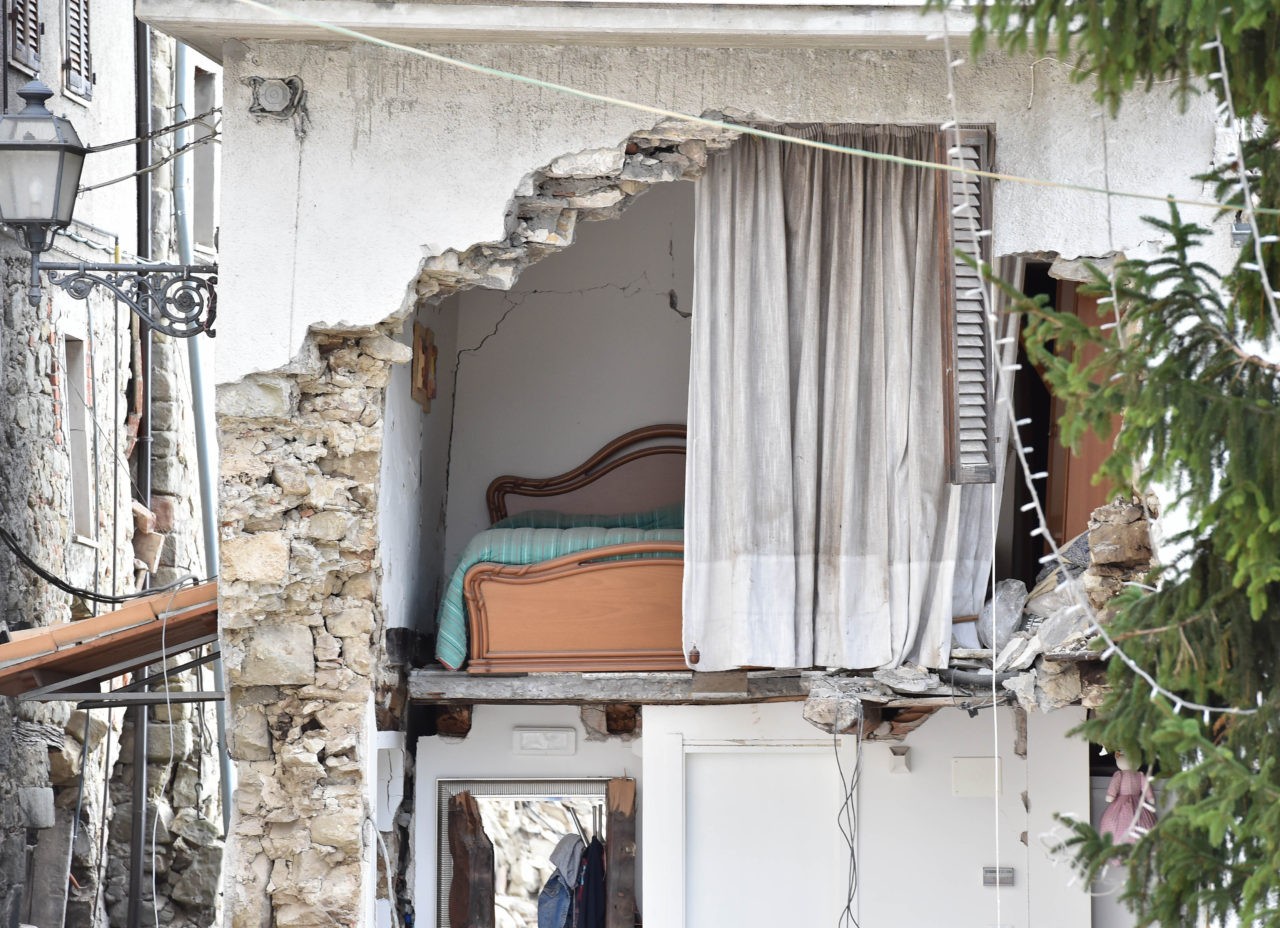
A major earthquake has rocked central Italy, demolishing ancient hill towns, killing scores and leaving thousands homeless.
Update 15.20 BST – 73 people have died
At least 73 people have killed in the 6.2 magnitude quake, including a family of four who were found trapped beneath rubble showing no signs of life, Reutersreports.
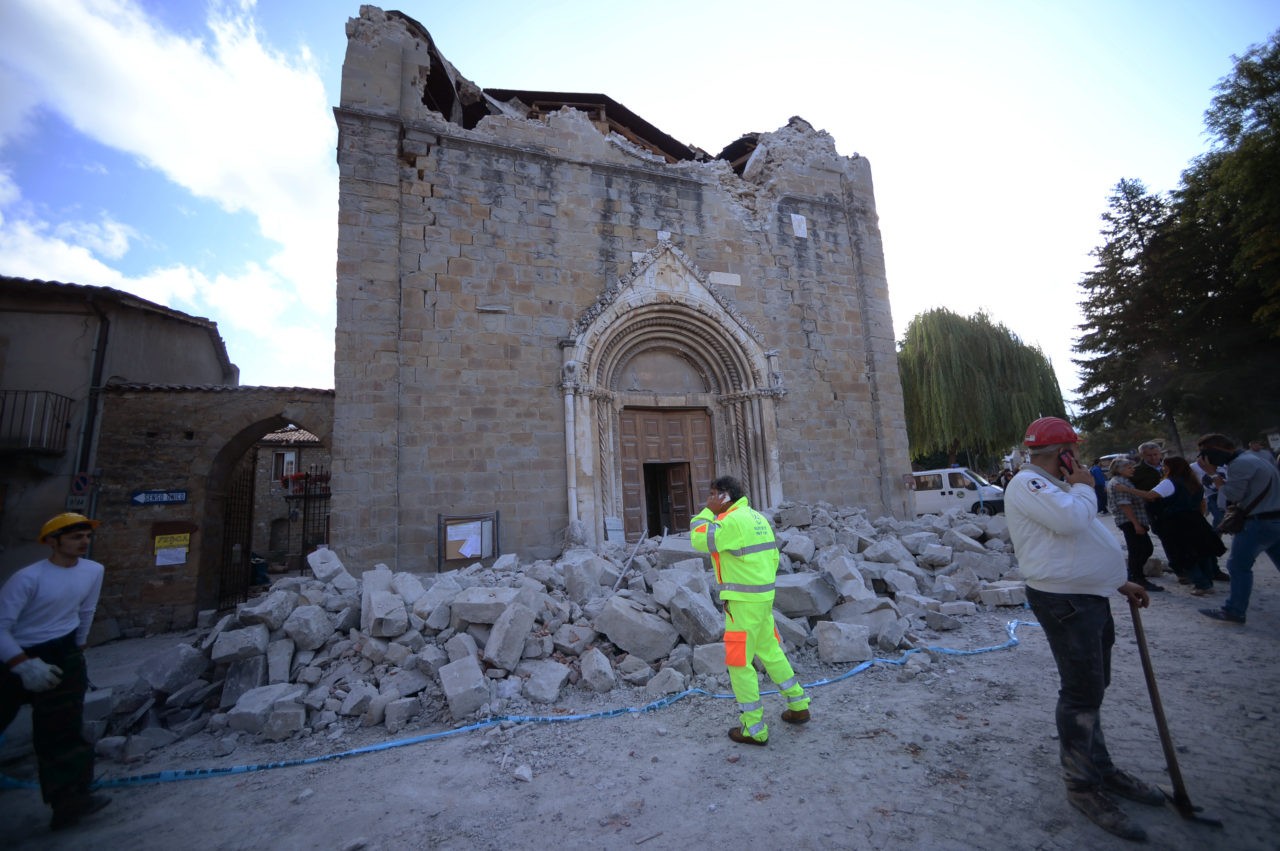
Update 14.55 BST – The latest images from the region show a destroyed medieval church and a hastily assembled field hospital.
People stand in front of a damaged church in Amatrice on August 24, 2016 (FILIPPO MONTEFORTE/AFP/Getty Images)
Rescuers set up a first aid camp in the courtyard of the hospital of Amatrice on August 24, 2016 a (FILIPPO MONTEFORTE/AFP/Getty Images)
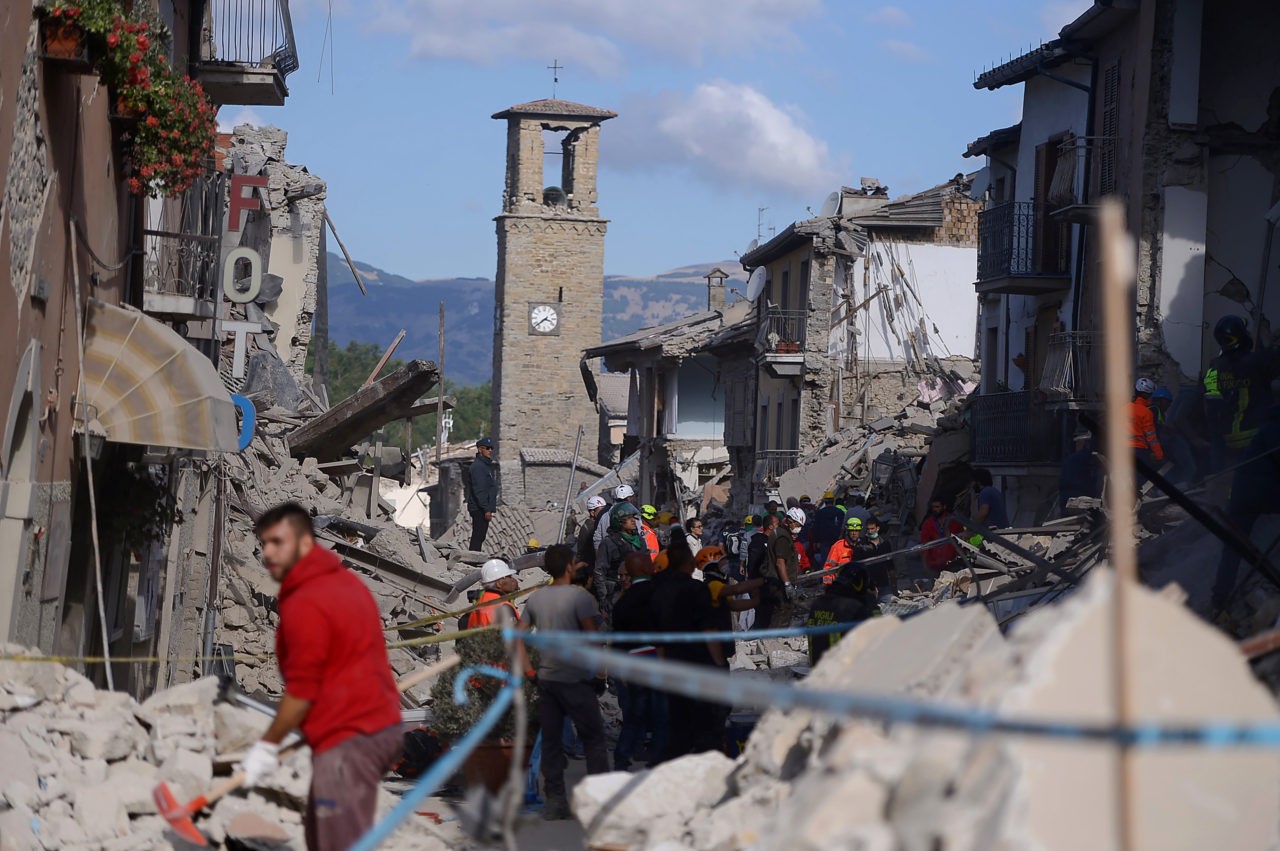
Rescuers and firemen inspect the rubble of buildings in Amatrice on August 24, 2016 (FILIPPO MONTEFORTE/AFP/Getty Images)
Update 1430 BST — Death Toll Over 60
Germany’s Zeitreports the death toll has now hit 63, with many having died in hospital after being pulled from the rubble. some 2,500 have been left homeless in just one town, Accumoli, where the mayor has vowed to build a “tent city” as a short term fix.
Update 11.27 BST – Italian Prime Minister addresses the nation.
Matteo Renzi said that, “when things don’t go well the whole of Italy demonstrates its most beautiful aspect”.
Italian PM says that “when things don’t go well the whole of Italy demonstrates its most beautiful aspect” https://t.co/eVs5UJqAfm
(REUTERS) – A powerful earthquake devastated a string of mountainous towns in central Italy on Wednesday, trapping residents under piles of rubble, killing at least 38 people and leaving thousands homeless.
The quake struck in the early hours of the morning when most residents were asleep, razing homes and buckling roads in a cluster of communities some 140 km (85 miles) east of Rome.
A family of four, including two boys aged 8 months and 9 years, were buried when their house in Accumoli imploded.
As rescue workers carried away the body of the infant, carefully covered by a small blanket, the children’s grandmother blamed God: “He took them all at once,” she wailed.
The army was mobilized to help with special heavy equipment and the treasury released 235 million euros ($265 million) of emergency funds. At the Vatican, Pope Francis canceled part of his general audience to pray for the victims.
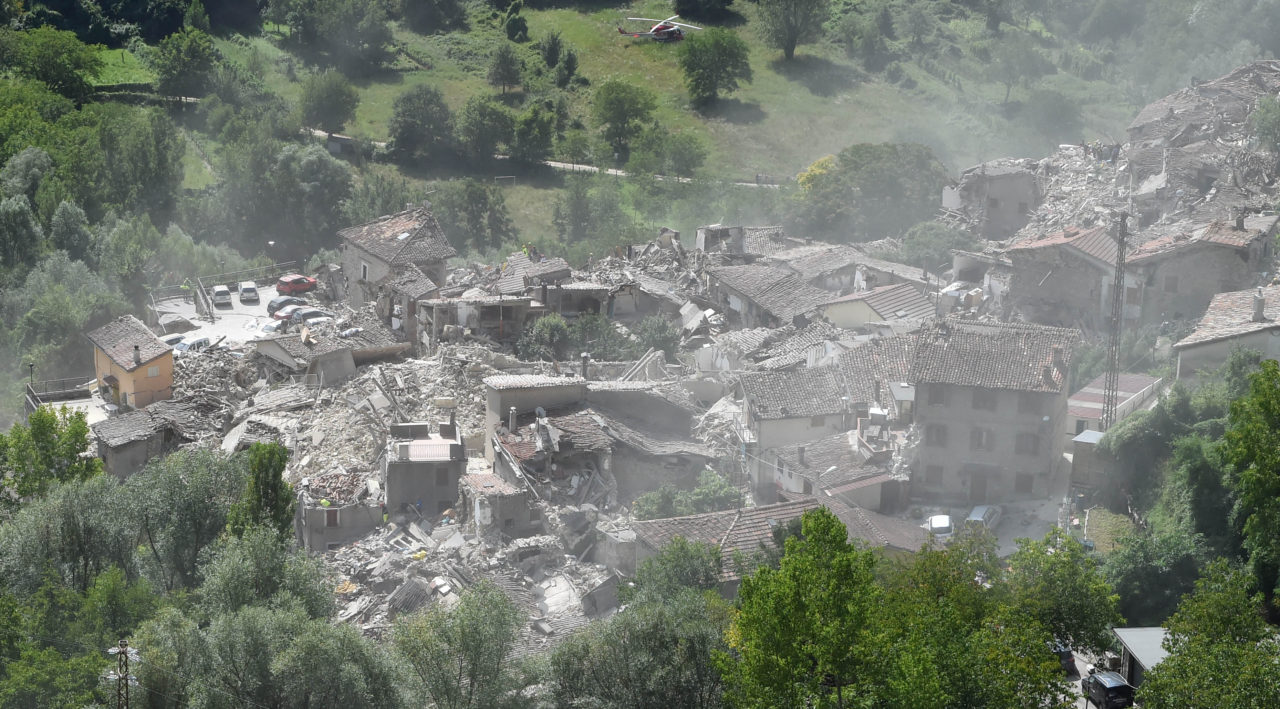
Aerial photographs showed whole areas of Amatrice, voted last year as one of Italy’s most beautiful historic towns, flattened by the 6.2 magnitude quake.
A general view of Pescara del Tronto town destroyed by the earthquake on August 24, 2016 in Pescara del Tronto, Italy. (Giuseppe Bellini/Getty Images)
“It’s all young people here, it’s holiday season, the town festival was to have been held the day after tomorrow so lots of people came for that,” said Amatrice resident Giancarlo, sitting in the road wearing just his underwear.
“It’s terrible, I’m 65-years-old and I have never experienced anything like this, small tremors, yes, but nothing this big. This is a catastrophe,” he said.
Accumoli mayor Stefano Petrucci said some 2,500 were left homeless in the local community, which is made up of 17 hamlets.
ARQUATA DEL TRONTO, ITALY – AUGUST 24: The body of an unidentifeid child lies on a bench on August 24, 2016 in Arquata del Tronto, Italy. (Photo by Giuseppe Bellini/Getty Images)
Victims and rescuers walk among the rubble of houses after a strong heartquake hit Amatrice on August 24, 2016. (FILIPPO MONTEFORTE/AFP/Getty Images)
Residents responding to wails muffled by tonnes of bricks and mortar sifted through the rubble with their bare hands before emergency services arrived with earth-moving equipment and sniffer dogs. Wide cracks had appeared like open wounds on the buildings that were still standing.
The national Civil Protection Department said some survivors would be put up elsewhere in central Italy, while others would be housed in tents that were being dispatched to the area.
Italian Prime Minister Matteo Renzi said he would visit the disaster area later in the day: “No one will be left alone, no family, no community, no neighborhood. We must get down to work .. to restore hope to this area which has been so badly hit,” he said in a brief televised address.
The quake hit during the summer when the area, usually sparsely populated, hosts large numbers of holidaymakers.
A spokeswoman for the civil protection department, Immacolata Postiglione, said the dead were in Amatrice, Accumoli and other villages including Pescara del Tronto and Arquata del Tronto. She put the initial death toll at 38, but said rescue teams had only just reached some stricken areas.
The earthquake caused damage in three regions — Umbria, Lazio and Marche — and was felt as far away as the southern Italian port city of Naples.
Residents search for victims among damaged buildings after a strong heartquake hit Amatrice on August 24, 2016. (FILIPPO MONTEFORTE/AFP/Getty Images)
DISAPPEARING IN DUST
The hospital in Amatrice was among the buildings that were badly damaged, and patients were moved into the streets.
“Three quarters of the town is not there anymore,” Amatrice mayor Sergio Pirozzi told state broadcaster RAI. “The aim now is to save as many lives as possible. There are voices under the rubble, we have to save the people there.”
RAI reported that two Afghan girls, believed to be asylum-seekers, were also missing in the town.
The U.S. Geological Survey, which measured the quake at 6.2 magnitude, said it struck near the Umbrian city of Norcia, while Italy’s earthquake institute INGV registered it at 6.0 and put the epicenter further south, closer to Accumoli and Amatrice.
The damage was made more severe because the epicenter was at a relatively shallow 4 km below the surface of the earth. Residents of Rome were woken by the tremors, which rattled furniture, swayed lights and set off car alarms in most of central Italy.
Rescuers carry an injured man among damaged homes after a strong heathquake hit Amatrice on August 24, 2016. (FILIPPO MONTEFORTE/AFP/Getty Images)
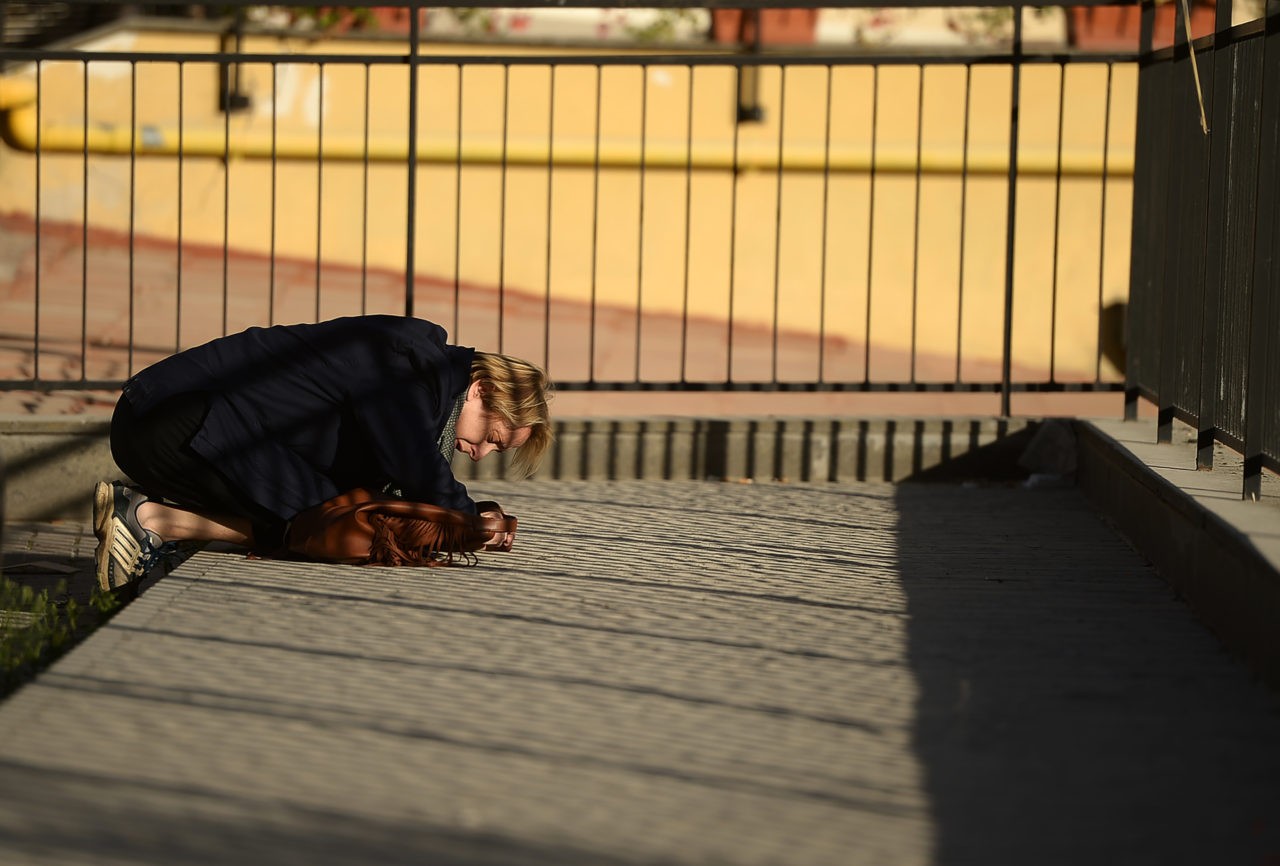
A woman reacts in front of her damaged home after a strong heathquake hit Amatrice on August 24, 2016. (FILIPPO MONTEFORTE/AFP/Getty Images)
“It was so strong. It seemed the bed was walking across the room by itself with us on it,” Lina Mercantini of Ceselli, Umbria, about 75 km away from the hardest hit area, told Reuters. Olga Urbani, in the nearby town of Scheggino, said: “Dear God it was awful. The walls creaked and all the books fell off the shelves.”
INGV reported 60 aftershocks in the four hours following the initial quake, the strongest measuring 5.5.
Italy sits on two fault lines, making it one of the most seismically active countries in Europe.
The last major earthquake to hit the country struck the central city of L’Aquila in 2009, killing more than 300 people.
The most deadly since the start of the 20th century came in 1908, when an earthquake followed by a tsunami killed an estimated 80,000 people in the southern regions of Reggio Calabria and Sicily.
(Writing by Crispian Balmer and Philip Pullella, reporting by Steve Scherer, Philip Pullella, Stephen Jewkes, Eleanor Biles and Giulia Segreti.; Editing by Nick Macfie, Robert Birsel and Peter Graff)
Damged houses are seen on August 24, 2016 in Arquata del Tronto, Italy. (Photo by Giuseppe Bellini/Getty Images)
It is an article of faith in the Arab world that Israel is guilty, guilty, guilty of terrorizing the poor Palestinians, which is why Jews deserve to be terrorized worldwide. The origins of violence lie exclusively on the Jews, too. So Arabs and all Muslims have a duty to defend their brothers and sisters by acts of extreme cruelty against Israelis in particular, and Jews in general.
This dogma is extremely important because it avoids any scrutiny of Koranic and other scriptural incitements of violence – even genocide – against Jews. I thus serves a dual purpose. And as a result, it must remain unquestioned. And for decades, there has been rhetorical solidarity on this point.
Until now.
The fall of the Muslim Brotherhood in Egypt and its replacement by the anti-MB regime of General Sisi, along with the spread of chaos in the Arab world has changed matters. Meanwhile, Israel is quietly building itself into a tiny superpower, its high tech economy and rapid development of offshore gas and onshore fracking making it a global economic power, able to finance a high tech military.
As a result, a stunning break with the past happened, beyond the notice of our mainstream media. The Jerusalem Post reports:
Egyptian Foreign Minister Sameh Shoukry said on Sunday that Israel’s actions against Palestinians does not constitute terrorism, eliciting an angry response from a Hamas spokesman who said Egypt’s top diplomat is blind.
Shoukry’s comments came during a Q&A session with students held at the Egyptian Foreign Ministry, where he was asked why Palestinians children killed in the conflict with Israel were not considered victims of terrorism.
“When looking at this issue, it can be defined as a ‘regime of force,’” the Egyptian media quoted Shoukry as saying. He said there was no evidence to link Israel to terrorist organizations.
“There is nothing that leads to this conclusion,” he said.
Shoukry added that Israel’s history has made it very sensitive to security issues, and as a result tightens control over its territory and border crossings to ensure its security.
The reaction has not been favorable among other Arab regimes. In public, at least. Speaking from Qatar, a major Clinton Foundation donor (and recipient of questionable favors):
Husam Badran, a Hamas spokesperson in Qatar, slammed the Egyptian foreign minister in a Twitter post, saying, “He who does not see the crimes of the Zionist occupation as terrorism is blind.”
The Egyptian cozying up with Israel is far ahead of public opinion there. It is inconceivable to me that Shoukry made these comments without first discussing them with Saudi Arabia, Egypt’s primary financial backer.
Tectonic plates are shifting in the Arab world, with some pragmatic leaders realizing that the primary problems of Arabs are created by themselves, and Israel has much more to offer as a friend than as a mortal enemy.
He is thanking the Pope for furthering what he must know are false statements that keep people ignorant and complacent about the jihad threat. He is, in effect, thanking the Pope for being a tool of the global jihad.
*****************
“Grand Ayatollah Makarem Shirazi of Qom wrote in a letter to the Pope: ‘I am really delighted to have heard your comments during your last trip to Poland in which you stated “Islam is not equal to terrorism” and further dismissed the association of violence and harshness with any and all divinely-sent religions.’”
Grand Ayatollah Makarem Shirazi of Qom must know better. He must know that the Qur’an and Sunnah teach warfare against unbelievers, as I demonstrate here and in many other places. He is thanking the Pope for furthering what he must know are false statements that keep people ignorant and complacent about the jihad threat. He is, in effect, thanking the Pope for being a tool of the global jihad.
“Top Muslim cleric praises Pope Francis for saying it is wrong to identify Islam with violence,” by Carey Lodge, Christian Today, August 23, 2016:
A top Iranian religious leader has praised Pope Francis for saying it is wrong to identify Islam with violence.
Grand Ayatollah Makarem Shirazi of Qom wrote in a letter to the Pope: “I am really delighted to have heard your comments during your last trip to Poland in which you stated ‘Islam is not equal to terrorism’ and further dismissed the association of violence and harshness with any and all divinely-sent religions.
“Your wise and logical stance regarding Islam in disassociating the religion from the inhumane actions and atrocities of the Takfiri groups such as Daesh is truly admirable.”
Pope Francis told reporters on his plane back from Poland last month: “I think it is not right to identity Islam with violence. This is not right and this is not true.”
He was speaking following the murder of Father Jacques Hamel, an 85-year-old Catholic priest in Rouen, France, in an attack that was claimed by Islamic State.
“I think that in nearly all religions there is a always a small fundamentalist group,” the Pope said. “I don’t like to talk about Islamic violence because every day when I look at the papers I see violence here in Italy – someone killing his girlfriend, someone killing his mother-in-law. These are baptised Catholics.
“If I speak of Islamic violence, I have to speak of Catholic violence. Not all Muslims are violent.”
In his letter, Shirazi said that “such barbaric acts have nothing to do with divinely-sent religions and their various schools of thought. Rather, they originate from the inferior materialistic objectives of some corrupt superpowers who seek nothing but to obtain more illegitimate wealth.”…
Extremist literature is widely available in mosques and Islamic schools in Canada, according to a new study, reported by the National Post.
The study was conducted by Thomas Quiggin a former intelligence analyst with the Privy Council Office and the Royal Canadian Mounted Police (RCMP) and Saied Shoaaib, a journalist originally from Egypt.
The study found that not only was the material available, but in some places it was the majority of the literature available.
The co-authors argued that politicians have reacted insufficiently to the threat, and that extremists were gaining the upper hand ideologically.
“Further research is required to determine the depth and breadth of this problem,” the study concluded.
The findings are especially troubling in the light of another study, published earlier in August, which interviewed Canadian citizens who had travelled to Syria or Iraq to fight for jihadist organizations such as the Islamic State (ISIS, ISIL), as reported by Macleans.
In this study, titled Talking to Foreign Fighters: Socio-Economic Push versus Existential Pull Factors, researchers questioned 40 foreign fighters, 60 family members, friends and associates, and 30 online supporters from December 2015 to February 2016.
They have so far they have published findings from an initial sample of 20 jihadists. Their findings indicate that ideology was a primary motivating factor in the radicalization journeys by of those to whom they spoke.
“None of our sample indicated coming from familial situations of poverty or marginality,” they said. “On the contrary, many indicated they had fairly happy and privileged, or at least comfortable, childhoods. In general, there was almost no discussion of the economic situation of their families.”
Those interviewed “run the gamut from troubled youth with personal problems to accomplished young men and women from stable backgrounds,” the authors wrote.
“Anger and frustration have their role to play in the process, but it is the positive investment in an alternate world-saving role that matters most, no matter how strange it may appear to outsiders.”
They also saw that many seemed to radicalize and travel in “clusters,” as opposed to lone wolves.
Furthermore, they added that mentoring from someone seen as a religious figure was necessary for many to complete the process of radicalization. “In most cases, we would say the help and encouragement of some other outside mentors is required to complete the process of radicalization, to turn wannabe terrorists into deployable agents or independent martyrs for the cause. The process of self-radicalization needs to be legitimated to be complete.”
With the presence of extremist literature available in mosques, the ability of Canadians to be drawn into such an ideology seems clear.
Turkish tanks roll into Syria to confront Islamic State President Erdogan says operation aims to uproot jihadist group and Syrian Kurdish rebels, ‘put an end’ to border problems
A Turkish army tank drives toward Syria in the Turkish border city of Karkamis, in the southern region of Gaziantep, August 24, 2016. (AFP/BULENT KILIC)
ANKARA, Turkey — Turkey’s military launched an operation before dawn Wednesday to clear a Syrian border town of its Islamic State militants, and the country’s state-run news agency said Turkish tanks had crossed into Syria as part of the offensive.
In its report, the Anadolu Agency, which cited unnamed military officals, did not say how many tanks entered Syria. The private NTV television said as many as 20 tanks had crossed into Syria and that clashes were taking place at the border. Earlier in the day, NTV said that a small number of Turkish special forces had crossed into Syria as part of the operation.
NTV television said it was an “intruder mission” to carry out “pinpoint operations” against IS as part of the operation to clear the town of Jarablus of the extremists.
President Recep Tayyip Erdogan said the Turkish operation inside Syrian territory was aimed not just against jihadists but also Kurdish militia and should permanently put an end to problems on the border.
“From 4:00 am (0100 GMT) our forces began an operation against the Daesh (IS) and PYD (Kurdish Democratic Union Party) terror groups,” Erdogan said in a speech in Ankara, adding the move was aimed at “putting an end” to problems on the border.
As he spoke, Turkey’s state-run Anadolu news agency reported that pro-Ankara Free Syrian Army (FSA) rebels had already penetrated three kilometers (two miles) inside Syria toward the IS-held town of Jarabulus.
The office of Turkish Prime Minister Binali Yildirim said the operation, carried out by Turkish and US-backed coalition forces, began at 4 a.m. (0100 GMT), with Turkish artillery launching intense cross-border fire on the town of Jarablus, followed by Turkish warplanes bombing IS targets in the town, Anadolu said.
Smoke billows following air strikes by a Turkish Army jet fighter on the Syrian Turkish border village of Jarabulus during fighting against Islamic S State group targets, August 24, 2016 . (AFP/BULENT KILIC)
Just a few hours after the operation started, Vice President Joe Biden landed in Ankara for talks that include developments in Syria.
The visit comes at a difficult time for ties between the two NATO allies. Turkey is demanding that Washington quickly extradite a US-based cleric blamed for orchestrating last month’s failed coup. The United States is asking for evidence against the cleric and asking that Turkey allow the extradition process to take its course.
In Syria, Turkey is concerned about the growing power of US-backed Syrian Kurdish forces, who it says are linked to Kurdish groups waging an insurgency in southeastern Turkey. Wednesday’s operation puts Turkey on track for a confrontation with the Kurdish fighters in Syria.
Biden is scheduled to meet with Erdogan and Prime Minister Binali Yildirim.
The operation in Jarablus is meant to safeguard Turkey’s own security, according to Turkish Interior Minister Efkan Ala, who said Ankara “cannot sit and watch.”
“It is Turkey’s legal right, it is within its authority” to take action, the minister said, adding that Wednesday’s operation aimed to support the moderate Syrian opposition and was being carried out in coordination with the US-led coalition forces.
A Turkish army tank and an armored vehicle are stationed near the border with Syria, in Karkamis, Turkey, August. 23, 2016. (IHA via AP)
Turkey’s Hurriyet newspaper quoted Turkish sources as saying Turkish howitzers and rocket launchers had fired 224 rounds at 63 targets within an hour and 45 minutes, and that the Turkish air raids started just after 6 a.m.
The London-based Syrian Observatory for Human Rights also said Turkish ground troops had entered Syria. The activist group, which tracks the war through a network of local residents and fighters, said Turkish tanks and anti-mine vehicles crossed into Syria and were heading to Jarablus on Wednesday morning.
The Turkish government said the border area had been declared a “special security zone,” and asked journalists not to try to access it, citing safety concerns and threats posed by IS.
The assault followed Turkish Foreign Minister Mevlet Cavusoglu’s pledge on Tuesday of “every kind” of support for operations against IS along a 100-kilometer (62-mile) stretch of Syrian frontier. He said Turkey would support twin operations stretching from the Syrian town of Afrin in the northwest, which is already controlled by Kurdish forces, to Jarablus, in the central north, which is held by the Islamic State group.
Turkish army tank driving towards Syria in the Turkish-Syrian border city of Karkamis, in the southern region of Gaziantep, August 24, 2016. (AFP/BULENT KILIC)
Jarablus, which lies on the western bank of the Euphrates River where it crosses from Turkey into Syria, is one of the last important IS-held towns standing between Kurdish-controlled areas in northern Syria.
Located 20 miles (33 kilometers) from the town of Manbij, which was liberated from IS by Kurdish-led forces earlier this month, taking control of Jarablus and the IS-held town of al-Bab to the south would be a significant step toward linking up border areas under Kurdish control east and west of the Euphrates River.
In recent days Turkey has increased security measures on its border with Syria, deploying tanks and armored personnel carriers. On Tuesday, residents of the Turkish town of Karkamis, across the border from Jarablus, were told to evacuate after three mortars believed to be fired by IS militants landed there, Turkey’s Dogan news agency said.
Turkey has vowed to fight IS militants at home and to “cleanse” the group from its borders after a weekend suicide bombing at a Kurdish wedding in southern Turkey killed at least 54 people, many of them children. Turkish officials have blamed IS for the attack.
Ankara is also concerned about the growing power of US-backed Syrian Kurdish forces, who it says are linked to Kurdish groups waging an insurgency in southeastern Turkey.
A Turkish army tank and an armored vehicle are stationed near the border with Syria, in Karkamis, Turkey, Tuesday, Aug. 23, 2016. (IHA via AP)
The Kurdish-led group known as the Syria Democratic Forces, or SDF, recaptured Manbij from IS earlier this month, triggering concerns in Ankara that Kurdish forces would seize the entire border strip with Turkey. The US says it has embedded some 300 special forces with the SDF, and British special forces have also been spotted advising the group.
The Kurds’ outsized role in the Syrian civil war is a source of concern for the Syrian government as well. Fierce clashes erupted between the two sides over control of the northeastern province of Hasakeh last week, and Syrian warplanes bombed Kurdish positions for the first time, prompting the US to scramble its jets to protect American troops in the area.
The Syrian government and the Kurds agreed on a ceasefire Tuesday, six days after the clashes erupted. The Kurdish Hawar News Agency said government forces agreed to withdraw from Hasakeh as part of the truce.
Syrian state media did not mention any withdrawal, saying only that the two sides had agreed to evacuate the wounded and exchange detainees. Government and Kurdish forces have shared control of Hasakeh since the early years of the Syrian war.
If The British needed any more confirmation of their decision to leave The EU, Jean-Claude Juncker, president of the European Commission, just gave them a big one. The often incoherent “when it’s important, you have to lie” politician spewed more United States Of Europe tripe this morning when he called for European nations to drop border controls, claiming that borders were “the worst invention ever.” Britain’s new PM, Theresa May, was not amused…
Speaking at the European Forum Alpbach in Austria’s Tyrol, Mr Juncker said: “Borders are the worst invention ever made by politicians” and said solidarity must be given to refugees and their children… (Border bullshit starts at 10:15 – note the mindless applause from the audience when Juncker drops his line)
Mr Juncker’s comments were taken as a sign that he intends to block attempts to tighten border checks to deal with the migrant crisis overwhelming Europe.
It is also a challenge to France and Belgium who have pushed for an end to the Schengen free-movement zone across the EU to stop terrorists crossing the Continent without checks after Europe was rocked by a series of atrocities.
The intervention from Mr Juncker came as Germany’s chancellor Angela Merkel, French president Francois Hollande and Italian prime minister Matteo Renzi met on the Italian island of Ventotene where the concept of the EU was first dreamt up, to discuss the impact of Brexit.
The latest views of Mr Juncker, who also said the EU needs to “block popular nationalism” in response to Brexit, were immediately disagreed with by Theresa May.
Britain’s new prime minister Theresa May was not impressed by Juncker’s de-sovereignisation rhetoric… (via The Telegraph)
“This is not something that the Prime Minister would agree with and, indeed, you have heard the Prime Minister talk about the views that the British people expressed in the referendum.
“The British people think that borders are important, having more control over our borders is important, and that is an issue we need to address.”
And, unsurprisingly, UKIP spokesman Peter Whittle said that Juncker’s comments were “beyond parody”…
This was another reason “why we must exit the EU as quickly as possible, otherwise our security could be left exposed by Juncker’s anti-borders policy.
“Safe and secure borders help to define a nation, you only have to look at Germany to see what happens when you when you effectively discard them.
“Mr Juncker is also well behind the curve to think he, or his colleagues amongst the European political elite, can stop popular democracy from flourishing across Europe following the historic Brexit vote.
“I’m happy to predict that Britain will not be the only country to leave the EU and become a free and sovereign nation again,” added Ukip’s national culture spokesman.
The big question is – of course – what will George Soros demand of Juncker next?











 anneinpt
 artaxes
 danmillerinpanama
 davidking1530
 Peter Hofman
 Joseph Wouk
 Peter
Peter Louisiana Steve
 WarSclerotic
Recent Comments