Archive for May 8, 2016

Obama, the Iran Scam, Ben Rhodes and Public Credulity

May 8, 2016

(The views expressed in this article are mine and do not necessarily reflect those of Warsclerotic or any of its other editors. — DM)

A recent article by David Samuels at the New York Times Magazine, based on an interview with Obama’s foreign policy guru Ben Rhodes, purported to explain how, and about what, the Obama administration lied to get public support for the Iran Scam. According to the article, the principal Obama lie involved who was the Iranian president when the negotiations with Iran began. It’s much deeper and worse than that. As Paul Harvey would say, “Here’s “the rest of the story.” 

Iranian President Rouhani was elected on June 15, 2013 and assumed office on August 3d. According to Rhodes,

negotiations started when the ostensibly moderate Hassan Rouhani was elected president, providing an opening for the administration to reach out in friendship. In reality, as Samuels gets administration officials to admit, negotiations began when “hardliner” Mahmoud Ahmadinejad was still president. [Emphasis added.]

There is no necessary inconsistency — about a month and a half elapsed between Rouhani’s election and becoming the Iranian president. However, that is of little if any consequences.

Mr. Rosen, interviewed in the above video, touches, very briefly, on other problems with the Iran scam. Back in the world of reality, “we” had been negotiating with Iran during Ahmadinejad’s presidency for a couple of years, during which “we” gave Iran everything it requested. This article is intended to provide substantially more information and analysis of what happened and why during “our” secret bilateral negotiations with Iran.

The Negotiations

According to interviews with Iranian vice president and Atomic Energy Organization head Ali Akbar Salehi, translated and published by the Middle East Media Research Institute (MEMRI) on August 17, 2015, secret bilateral negotiations between the Obama and Iranian regimes had begun much earlier and included Obama’s Assistant Secretary of State, William Burns. During those negotiations, the U.S. conceded that Iran’s right to Uranium enrichment would be respected, that Iran’s missile programs would be left out of any deal and that its efforts to develop nuclear warheads and other devices would be ignored. Obama had essentially caved in to Iran’s demands even before the existence of negotiations was acknowledged.

In an interview published in the daily Iran on August 4, 2015 under the title “The Black Box of the Secret Negotiations between Iran and America,” Iranian vice president and Atomic Energy Organization head Ali Akbar Salehi, who is a senior member of Iran’s negotiation team and was foreign minister under president Ahmadinejad, revealed new details on the secret bilateral talks between Iran and the U.S. that started during Ahmadinejad’s second presidential term. According to Salehi, U.S. Secretary of Energy Dr. Ernest Moniz, whom Salehi knew from his period as a doctoral student at MIT, was appointed to the American negotiation team at Salehi’s request, a request which the Americans met within hours. [Emphasis added.]

Salehi added that Khamenei agreed to open a direct channel of negotiations between Iran and the U.S. on the condition that the talks would yield results from the start and would not deal with any other issue, especially not with U.S.-Iran relations. Following this, Salehi demanded, via the Omani mediator Sultan Qaboos, that the U.S. recognize Iran’s right to enrich uranium, and received a letter from Qaboos expressing such American recognition, which he relayed to Ahmadinejad.  [Emphasis added.]

The secret bilateral Iran-US negotiations had begun with a letter for Iran delivered to an Omani official. Salehi told an Omani intermediary.

‘I am not sure how serious the Americans are, but I will give you a note. Tell them that these are our demands. Deliver it on your next visit to Oman.’ I wrote down four clear issues, one of which was official recognition of rights to [uranium] enrichment. I figured that if the Americans were sincere in their offer, then they must agree to these four demands. Mr. Suri gave this short letter to the mediator, and stressed that these were Iran’s demands. [He added that]if the Americans wished to solve this issue, they were welcome to, otherwise dealing with White House proposals would be useless and unwarranted…

“All the demands in the letter were related to the nuclear challenge. These were issues we have always come against, such as closing the nuclear dossier [in the Security Council], official recognition of [Iran’s] right to enrich [uranium], and resolving the issue of Iran’s actions under the PMD [Possible Military Dimensions]. After receiving the letter, the Americans said: ‘We are certainly willing and able to easily solve the issues Iran has brought up.’ [Emphasis added.]

The first meeting between the Iranian and American negotiating teams began following eight months of coordination. Iran

sent a team to Oman that included the deputy foreign minister for European and American affairs, Mr. [Ali Asghar] Khaji, as well as several CEOs. The Americans were surprised in the first meeting and said, ‘We cannot believe this is happening. We thought Oman was joking. We aren’t even prepared for these talks with you.’

Q: What was the level of the team that the Americans dispatched?

A: It included Assistant Secretary of State William Burns. They said: ‘We only came to see if Iran was truly willing to negotiate.’ Our representative gave them the required response and eventually there were talks on this issue. The initial result was achieved and the ground was prepared for further coordination. [Emphasis added.]

Q: How were the Americans convinced that the Iranian diplomats who were dispatched had the necessary authority?

A: [Until] that phase, Iran and America had not been allowed to sit opposite each other at the negotiating table. The fact that Iran had sent a deputy foreign minister to the talks indicated its seriousness. The Americans also noticed how seriously [Iran was taking] the issue. At that meeting, Khaji pressed the Americans to set up a roadmap for the negotiations, and eventually the talks of a roadmap were postponed to the second meeting. At the second meeting, Khaji warned the Americans: ‘We did not come here for lengthy negotiations. If you are serious, you must officially recognize enrichment, otherwise we cannot enter into bilateral talks. But if you officially recognize enrichment, then we too are serious and willing to meet your concerns on the nuclear matter as part of international regulations.

International regulations were later agreed upon by the P5+1 negotiators, in the form of the Iran – IAEA secret deals concerning nuke inspections and a UN resolution dealing with Iranian missiles. Neither was included in the Joint Cooperative Plan of Action.

“Of course, at that time we were [still] exchanging various information with the Americans via the [Omani] mediation, and this is documented at the Foreign Ministry. We did not do it in the form of official letters, but rather unofficially and not on paper. The Omani mediator later came to Iran, held talks with us, and then later spoke to the Americans and told them our positions, so that the ties were not severed. But there was no possibility for direct talks.

Thus, a real opportunity was squandered because, at the time, the Americans were genuinely prepared to make real concessions to Iran. Perhaps it was God’s will that the process progressed like that and the results were [eventually] in our favor. In any case, several months passed and Obama was reelected in America [in November 2012]. I thought that, unlike the first time, we must not waste time in coordinating [within regime bodies], so with the leader’s backing and according to my personal decision, I dispatched our representatives to negotiate with the Americans in Oman. [Emphasis added.]

Q: Didn’t you have another meeting with the leader about the process and content of the talks?

A: No. Obviously during the process I wrote a letter to the leader detailing the problems. He said ‘try to solve them.’ He was always supportive but told me to ‘act in a manner that includes necessary coordination [within the regime]. In this situation, I dispatched Khaji to the second meeting in Oman (around March 2013) and it was a positive meeting. Both sides stayed in Oman for two or three days and the result was that the Omani ruler sent a letter to Ahmadinejad saying that the American representative had announced official recognition of Iran’s enrichment rights. Sultan Qaboos sent the same letter to the American president. When Ahmadinejad received the letter, several friends said that this move would be fruitless and that the Americans do not keep [their]  commitments. [But] we had advanced to this stage. [Emphasis added.]

. . . . We [then ] prepared ourselves for the third meeting with the Americans in order to set up the roadmap and detail the mutual commitments. All this happened while Iran was nearing the presidential elections [in June 2013]. At that time, the leader’s office told me that I had to cease negotiations and let the next government handle the talks after the results of the elections were known.

. . . .

Q: What was the Americans’ position in the first meetings between Iran and the P5+1 held during the Rohani government [era]?

A:After the Rohani government began to operate – along with the second term of President Obama – the new negotiations between Iran and the P5+1 were started. By then, Kerry was no longer an American senator but had been appointed secretary of state. As a senator, Kerry had been appointed by Obama to be in charge of handling the nuclear dossier, and then [in December 2012] he was appointed secretary of state. [Emphasis added.]

“Before that, the Omani mediator, who had close relations with Kerry, told us that Kerry would soon be appointed [U.S.] secretary of state. During the period when the secret negotiations with the Americans were underway in Oman, there was a situation in which it was easier to obtain concessions from the Americans. After the Rohani government and the American administration [of Obama’s second term] took power, and Kerry become secretary of state, the Americans spoke from a more assertive position. They no longer showed the same degree of eagerness to advance the negotiations. Their position became harder, and the threshold of their demands rose. At the same time, on the Iranian side, the situation [also] changed, and a most professional negotiating team took responsibility for negotiating with the P5+1. [Emphasis added.]

As to the reluctance of the American side to make concessions after Kerry had replaced Clinton as the Secretary of State, it must be remembered that “we” had already made all or most of the concessions Iran sought.

Another positive point was that [President] Rohani oversaw the dossier, knew its limits, and as a result succeeded in producing a good strategy to advance the nuclear dossier. At the same time, Rohani took responsibility for everything. Many may have reservations and ask why we were putting ourselves in danger, but Rohani’s willingness to take responsibility was very high. There are those who say, from a political standpoint, that he was willing to take a very great risk, because, had the negotiations not achieved certain results, and had the best results not been achieved, he would have faced waves of criticism. But he took upon himself the risk of [such] criticism. In any event, he agreed to take this responsibility, and, God be praised, even God helped him, and he emerged [from the negotiations] with his head held high.” [Emphasis added.]

At some point, the negotiations broke down over “technical issues.” Salehi, a technical expert as well as a diplomat, found a way to resolve those issues.

A . . .  condition was that American experts would come to Iran and talk to me. I said that as vice president I would not enter into a discussion with their experts, because as far as the protocol was concerned, this would create a bad situation and they would say that Iran would capitulate in any situation. This was not good for Iran, but I was willing to quit and to come to the talks not as vice president but as the foreign minister’s scientific advisor. Larijani said ‘he’s right.’ The next day, Fereydoun asked me to come to his office and asked me who my [American] counterpart was. I said, the [U.S.] Department of Energy. Fereydoun called Araghchi and said, ‘Tell [U.S. Under Secretary of State for Political Affairs] Ms. [Wendy] Sherman that Salehi is joining the negotiations provided that the American secretary of energy also joins the negotiators.‘ Araghchi and Sherman were the liaison between Iran and America. Araghchi said in this conversation with Fereydoun that on such short notice it was unlikely that they [i.e. the Americans] would send their secretary of energy. I heard [Fereydoun’s conversation with Araghchi]. In short, Fereydoun asked and Araghchi contacted Sherman and a few hours later a report that they welcomed Iran’s proposal arrived. [Emphasis added.]

Q: How many hours did it take before they [the Americans] said yes?

A: It didn’t take long. I went to see Fereydoun in the evening and the next day they responded. This was because of the time difference [between Tehran and Washington].

Q: The general perception was that because Moniz was brought into the negotiating team, you were brought into the Iranian team?

A: [On the contrary,] Moniz came because of me. In any case, in February [2015] I joined [the negotiations], and praise God, matters moved forward with Moniz.

Q: Did you and Moniz study together?

A: Moniz knew me more than I knew him. I saw him at the annual IAEA meeting. When I was a doctoral student at MIT, he had just been accepted as a staff member. He is five years older than me.

Q: Did you take one of his classes?

A: No. He knew me because my doctoral studies advisor was his close friend and right hand man in scientific fields. Even now he is an advisor on many of Moniz’s scientific programs. Many of my fellow students are now experts for Moniz. One of them was Mujid Kazimi, who is of Palestinian origin. He recently died. He was two years older than me but we were friends in college. After graduating, he became the head of the MIT Department of Nuclear Science and was a prominent figure who carried out many programs with Moniz.

Q: How did Moniz treat you initially?

A: In light of our prior acquaintance, he was excited. We’ve known each other for years and he treated [me] very well. Our first meeting was in public.

Q: How did you feel when you heard Moniz was coming [to the talks]?

A: I was very happy. I was assured. I said that the prestige of the Islamic Republic remained intact [because] an Iranian official would not speak to an American expert but rather would negotiate with a high-ranking American official. This was very important. Second, as I said before, he could make a decision [while] an expert could not. We had a very interesting group meeting. The American experts were same ones who had dealt with disarmament vis-à-vis the Soviet Union.

“I said [to Moniz]: ‘I cannot accept your offer for various reasons.’ One American expert said, ‘We do not accept the basic assumption of your calculations.’ I said, ‘Tell us what is the basic assumption of [your] calculations so we can work from there.’ He said ‘we can’t do that.’ I said to them, ‘If you don’t accept our estimation, then tell us [yours]. You say that you cannot because this [exposes] your process. If we show [our] calculation, you will know our working secrets.’ So then I said ‘ok, what do we do now?’ The meeting stagnated.

“Later I thought about it… and said ‘Mr. Moniz, I am here with full authority from my country. Anything I sign will be acceptable to my country. Do you have full authority as well, or does any result achieved here need to be asked and clarified with officials from other countries?’ He said ‘no, I have full authority.’

Q: Did you have full authority?

A: Yes. In the scientific discussions, I knew the level of [Iran’s] demands. I said, ‘Mr. Moniz, you made an offer to Iran, and Iran rejects it. I want to ask you a question. If you can answer it [then] I will have no problem with your offer.’ I continued and said: ‘Show me one place on earth where enrichment is taking place using the method you are demanding of us. If you can give me even a single example then I will sign on the spot and we will become the second country to enrich in this method.’ He looked [at me] and then announced that the meeting was over, and we spoke. We had the first private meeting that lasted two or three hours. He said: ‘Mr. Salehi, when I was called [out of the negotiating room, it was because] Obama wanted to speak to me. Now I am free [to continue]. What you said is acceptable [but] there are practical problems with your offer.’ I said, ‘Do you agree? Then I relinquish that proposal.’ Eventually. we reached mutual understandings on this issue. I said ‘let’s start from the top.’ This diplomatic challenge should be published in a memoir so that everyone can understand how we reached 6,000 centrifuges. It is a very nice story… [Emphasis added.]

The Aftermath

Ultimately, Iran’s right to enrich Uranium was fully recognized in the Joint Plan of Action (JPOA) and in the subsequent Joint Cooperative Plan of Action (JCPOA). As to the missile aspects of the  “possible military dimensions” of Iran’s nuclear program, neither document dealt with Iranian missiles. That was left up to the United Nations Security Council to deal with in its resolution approving the nuke “deal.” In light of Russia’s warm relations with Iran, Russia would most likely veto any proposed Security Council resolution finding Iran in violation of its missile provisions.

The “verification” mechanism was included only in separate and secret “side deal(s)” solely between Iran and the IAEA which members of the U.S. Congress were not permitted to see during the pseudo-approval process. According to Kerry, he was not permitted to see them either, but the details were “fully explained” to him.

Here’s a video of Secretary Kerry under questioning about the side deals:

Questions might have been better directed to this Kerry clone; more candid answers might have been provided.

As I wrote earlier, the Iranian nuke inspections are a sick joke.

Any pretense that the IAEA will have “any time, anywhere” access to Iran’s military sites was mere rhetoric, as acknowledged by US Under Secretary of State Wendy Sherman on July 16th

“I think this is one of those circumstances where we have all been rhetorical from time to time,” Sherman said in a conference call with Israeli diplomatic reporters. “That phrase, anytime, anywhere, is something that became popular rhetoric, but I think people understood that if the IAEA felt it had to have access, and had a justification for that access, that it would be guaranteed, and that is what happened.” [Emphasis added.]

Ms. Sherman was right about the rhetorical nature of administration assertions, but wrong about IAEA access, of which there will apparently be little or none pursuant to the secret deals between Iran and the IAEA.

As I observed on August 4, 2015,

In an interview on Al Jazeera TV last week Ali Akbar Velayati, Security Adviser to Iran’s Supreme Leader, stated that

United Nations nuclear inspectors from the International Atomic Energy Agency would not be given access to Tehran’s sensitive military nuclear sites.

. . . .

“First, allow me to emphasize that the issue of the missiles and of Iran’s defensive capabilities were not part of the negotiations to begin with,” Velayati said. [Emphasis added.]

“No matter what pressure is exerted, Iran never has negotiated and never will negotiate with others – America, Europe, or any other country – about the nature and quality of missiles it should manufacture or possess, or about the defensive military equipment that it needs. This is out of the question.” [Emphasis added.]

. . . .

Reza Najafi, Iran’s ambassador and permanent envoy to the IAEA, stated over the weekend that “no country is permitted to know the details of future inspections conducted by the IAEA.” [Emphasis added.]

Najafi’s statement could mean (a) that no details about inspection methodology will be disclosed, (b) that no details about inspection results will be disclosed or (c) both. If inspection methodologies — who did the inspections as well as when, where and how, are not disclosed, what useful purpose will they serve, other than for Iran? If details of the results of inspections are not disclosed, that will also be the case. How, in either or both cases, will the members of the P5+1 negotiating teams have sufficient information to decide whether to “snap back” sanctions — if doing so is now even possible — or anything else? [Emphasis added.]

Conclusions

One can only hope that our next president will dispose of the Iranian “deal” as a treaty which Obama refused to submit to the Congress as the Constitution requires or at least ostentatiously ignore it and grant no more concessions.

Otherwise, be not afraid; Obama the Great One — the smartest person in any room and the best President ever — has made us safe. How can one possibly be safer alive than dead?
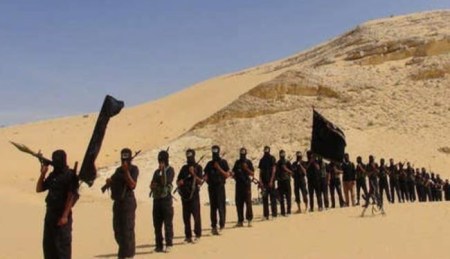
ISIS to Israel: “We’re coming very soon”

May 8, 2016

ISIS to Israel: “We’re coming very soon” DEBKAfile, May 8, 2016

65 Killed in Egypt's Sinai, ISIS Claims Responsibility

65 Killed in Egypt’s Sinai, ISIS Claims Responsibility

The last 48 hours (May 7-8) have seen a major escalation of the ISIS threats against Israel, DEBKAfile’s intelligence and counterterrorism sources report. In a coordinated maneuver by all of the ISIS commands in the Middle East, the terrorist organization simultaneously released at least 10 videos that it said showed ISIS forces on their way to attack targets in Israel.

All of the videos refer to the Palestinian issue, Jerusalem and the timing of the attacks. In each one, the narrator claims the terror organization did not forget the Palestinians, and will not neglect them any more; describes Jerusalem as “a bridge to Islam”; and threatens an impending attack, saying “We’re coming, and coming very soon” accompanied by images of fighters from the ISIS affiliate in the Sinai are shown.

It was not the first time for the ISIS propaganda machine to threaten hostilities against Israel, but it was the first time for the threat to be issued simultaneously from every province or city where ISIS is located in the Middle East. The videos included ones from Raqqa, the ISIS capital in Syria; Mosul, the terrorist organization’s capital in Iraq; the Sinai Peninsula and Egypt; Derna in eastern Libya; and central Libya, where according to DEBKAfile’s counterterrorism sources ISIS controls a huge 300-kilometer area including the Mediterranean coast on the Gulf of Sidra.

Our sources report that every video contains the following sentences: “We know that the Egyptian army is being helped by Israeli intelligence and the Israeli Air Force in its war against us”; “We also know that Israel set up intelligence networks within the population of the Bedouin tribes in the Sinai”; and “From now on we will take action against Egyptian and Israeli targets as one.”

DEBKAfile’s intelligence sources report that these comments are intended to counter efforts by the Egyptian military to establish anti-ISIS militias among the Bedouin tribes. This came after American counterterrorism experts advised the Egyptian military to operate the same way that the US operates among the Sunni tribes in western Iraq’s Anbar province, where US military instructors are setting up local militias to prevent ISIS fighters from entering or passing through areas under the tribes’ control.

Our sources report that three Bedouin anti-ISIS militias have been established in the Sinai so far: the “Sons of Sinai”, “Unit 103”; and the “Death Squad”.

Meanwhile, the ISIS affiliate in the Sinai carried out one of its boldest terrorist attacks on Sunday, May 8, killing eight Egyptian policemen including an officer, in the Cairo suburb of Helwan. Four masked terrorists with automatic weapons jumped out of a commercial vehicle that had blocked a minibus transporting the policemen, fired hundreds of bullets at the minibus, killing everyone inside, and then fled the scene.

Western counterterrorism experts monitoring ISIS-Sinai estimate that it not only has the ability to carry out terrorist attacks in major Egyptian cities, but also against Israel.

John Kerry Says to Prepare for ‘Borderless World’ During Trump Jab

May 8, 2016

John Kerry Says to Prepare for ‘Borderless World’ During Trump Jab “You’re about to graduate into a complex and borderless world”

Infowars.com – May 8, 2016

Source: John Kerry Says to Prepare for ‘Borderless World’ During Trump Jab » Alex Jones’ Infowars: There’s a war on for your mind!

Image Credits: Wikimedia Commons.

Secretary of State John Kerry told graduating students to prepare for a “borderless world” Friday during a commencement speech at Northeastern University.

Using the opportunity to take a jab at Donald Trump, Kerry criticized the idea of using a wall to protect the country’s porous Southern border.

“Many of you were in elementary school when you learned the toughest lesson of all on 9/11,” Kerry said. “There are no walls big enough to stop people from anywhere, tens of thousands of miles away, who are determined to take their own lives while they target others.”

Completely ignoring the fact that J. Michael Springman, the former chief of the visa section at the U.S. Consulate in Jeddah, Saudi Arabia, testified that the C.I.A. ordered him to approve the 9/11 hijackers’ visas, Kerry went on to accuse those who support a wall as “hiding” from the world.

“So I think that everything that we’ve lived and learn tells us that we will never come out on top if we accept advice from sound-bite salesmen and carnival barkers who pretend the most powerful country on Earth can remain great by looking inward,” Kerry continued. “And hiding behind walls at a time that technology has made that impossible to do and unwise to even attempt.”

Kerry not only balked at the idea of a border wall, but openly denounced national sovereignty by speaking against borders in general.

“The future demands from us something more than a nostalgia for some rose-tinted version of the past that did not really exist in any case,” Kerry said. “You’re about to graduate into a complex and borderless world.”

The growing popularity of Trump’s anti-globalist message, which approves of global cooperation but rejects the top-down global government model, has caused immense backlash from the political class.

Sadiq Khan: Britain’s Obama

May 8, 2016

Britain has found its Obama

Jim Edwards

May 7, 2016, 5:10 AM

Source: Sadiq Khan: Britain’s Obama – Business Insider

Yes, he Khan.

Sadiq Khan’s victory in the London mayoral election puts him — in theory — just two or three election cycles away from being Britain’s first nonwhite, Muslim prime minister. His ability to win (in contrast to the current Labour leadership generally) potentially makes him Britain’s Obama.

The chief executive of London is the second-most-powerful political office in the UK. If London were its own country — metro population of 14 million, GDP of $700 billion — it would be a formidable nation in its own right. London is 22% of UK GDP, and that makes it the financial equivalent of Turkey or Switzerland.

It is easy to see how Khan could use his term as mayor to springboard back into parliament as an MP, where he would inevitably be seen as a successor to Labour leader Jeremy Corbyn. After that, in the 2025 general election, Labour could go into battle with an experienced leader who has a track record of winning, if the party wants it that way.

The difference between Corbyn and Khan is that Khan’s politics are more malleable. He has both supported and then distanced himself from Corbyn. He has both snuggled up to, and later condemned, various Islamic extremists.

Most importantly, he now has a track record of winning elections that require votes from outside the Left of the Labour party (perhaps because of that malleability, rather than in spite of it).

Like US President Obama, Khan is young, telegenic, and has a great backstory: He is the son of a Pakistani immigrant bus driver and a seamstress, who grew up in council housing. He went to state schools, and then graduated as a lawyer from the University of North London. From there, he practiced civil-rights law until he went into politics.

As London’s most important VIP, he’s a living anecdote that shows anyone — regardless of class or colour — can make it in Britain if you work hard enough.

Khan

Paramount / Wrath of KhanKhan!

Khan is the exact opposite of Conservative Prime Minister David Cameron. A Khan vs. Cameron clash would be a delicious fight between the haves and the have-nots: Cameron is the son of a wealthy stockbroker who hid his money in Panama, went to private school (Eton), and then Oxford.

OK, it’s not that simple. But that’s the great thing about the Khan story: You can read into his life narrative whatever you want. Everyone can get on the Khanwagon!

There have been many, many nearly men (and women) who have been mooted as Britain’s first nonwhite prime minister (Helen Grant, Shaun Bailey, Chuka Umunna, and Sajid Javid among them).

But right now No. 10 looks well within Khan’s grasp in 2025, assuming — a big “if” — the Labour party gets out of his way. He could be our Obama.

Rhodes is just the messenger

May 8, 2016

Rhodes is just the messenger, Israel Hayom, Boaz Bismuth, May 8, 2016

This is the story of one young man — Ben Rhodes is his name — who aspired to become a novelist. He realized that dream, in a manner of sorts, by becoming a storyteller, and he would tell those stories at the White House, as the president’s deputy national security advisor for strategic communications.

Storyteller is too elegant a title, perhaps, for the person who sold us the tale known as the Iran nuclear deal. A profile piece on Rhodes, one of President Barack Obama’s closest advisers, by the New York Times Magazine reveals facts that we already knew, facts that led to the outrageous nuclear deal between Iran and world powers on July 14, last year:

1. The story of the elections in Iran and the victory of the “moderate” camp was a well-planned spin — an invention — to sell the nuclear deal to the American public (which opposed it) and to the world.

2. Obama desired a nuclear deal with Iran as early as 2009. He wanted it even more than the Iranians did, and was even prepared to sign such a deal with extremist President Mahmoud Ahmadinejad. 

3. Obama upgraded Iran’s international and regional standing in order to shirk his commitments toward U.S. allies in the region, among them Israel, Saudi Arabia, Egypt and Turkey.

4. The Obama administration exploited journalists who are “27 years old … and know literally know nothing” (in the words of Rhodes himself), having them sing the administration’s tune to the world.

Even more experienced reporters like Jeffrey Goldberg (The Atlantic) and Laura Rozen (Al-Monitor) were relegated, at least on the Iranian issue, to “mouthpieces” for the administration.

5. Even had Iran failed to fulfill its obligations or concealed figures pertaining to its nuclear project, Obama would not have followed through on his threat to order a pre-emptive strike against it. This is according to former Defense Secretary Leon Panetta, whose job, according to the New York Times article, was to make sure that Israel wouldn’t attack Iran.

The giant scam, revealed by the person tasked with executing these deceitful manipulations (the same Rhodes), is nothing short of scandalous. It is testimony to how in July 2012, then-Secretary of State Hillary Clinton’s close aide Jake Sullivan was dispatched to Muscat in Oman to coordinate the details of the interim and permanent nuclear deal with the Iranians.

The New York Times story also reveals that three months before “moderate” Iranian President Hassan Rouhani was elected to office in the summer of 2013, Sullivan and then-Deputy Secretary of State William Burns had already met at the White House to approve the interim deal, which served as the basis for the permanent deal.

The Rhodes profile piece sheds light on things we already knew, or at the very least suspected, to have transpired during these manipulative negotiations. We witnessed the charade at Laussane from up close, in November 2013. Looking back, those talks were supposedly on the verge of collapsing, but in actuality the sides had already planned out the signing ceremony.

Rhodes is not waiting for Obama’s term in office to end to explain the roots of his boss’ worldview: the boy who grew up in Southeast Asia, in Indonesia, whose revulsion against a certain kind of global power politics was influenced by the interactions with power he had there.

As a young man, Obama, according to Rhodes, was revolted by the notion of a superpower. Thus, Rhodes explains, if someone tries tracing the origins of the idea of “leading from behind,” which Obama implemented in Libya, the answers can be found in the president’s childhood.

While the New York Times article focuses on Rhodes, he is only the executioner of policy. The person responsible for the scam is Obama. He is not the first to manipulate the media; many have done so before him. In 1967, President Lyndon B. Johnson “sold” Congress on the idea that the U.S. had met the challenges it faced in Vietnam, which was not the case. Other presidents, as well, such as Nixon and even George W. Bush in regard to Iraq, cynically used the media. But here we are talking about Obama — “Mr. Clean” — the man who is allegedly without flaw.

A storyteller’s festival

The New York Times piece illustrates yet again the extent to which the president is living in a virtual reality. Remember how just two weeks ago he called this the most peaceful era of human history? Now we understand that his comments have no place in the real world. Perhaps they are more befitting a storyteller’s festival.

Throughout the nuclear talks with Iran, Rhodes also gave interviews to Israeli news outlets. The New York Times article about him went online Thursday; did anyone over the weekend hear those Israeli news outlets mention even one word of what Rhodes himself has just revealed?

Of course not. After all, it’s one thing to hurt Israel — but to hurt Obama’s narrative? Heaven forbid.

London’s New Muslim Mayor: Extremist or Opportunist?

May 8, 2016

London’s New Muslim Mayor: Extremist or Opportunist? Clarion Project, Meira Svirsky, May 8, 2016

Sadiq-Khan-HPSadiq Khan makes his acceptance speech. (Photo: Video screenshot)

Majid Nawaz’s assessment of London’s new Muslim mayor, the newly elected Sadiq Khan, is that he is not an Islamist extremist. He is merely a manipulative politician willing to use guile and duplicity to achieve his electoral aims — not so different from the average politician.

Leading up to the mayoral vote, questions arose about Khan’s association with extremists, which constitutes a long list in the new mayor’s political history.

Consider:

  • In 2001, Khan was the lawyer for the American radical Islamist group Nation of Islam, successfully arguing in front of the UK’s High Court to overturn the ban on its leader, Louis Farrakhan.
  • In 2003, Khan appeared at a conference with Sajeel Abu Ibrahim, a member of the banned al-Muhajiroun group that was founded by hate preacher Omar Bakri Muhammad (now prohibited from entering the UK) and led by hate preacher Anjem Choudary (whose many organizations have been said to have contributed “the single biggest gateway to terrorism in recent British history”). Sajeel also ran a terrorist training camp in Pakistan attended by 7/7 bomber Mohammad Sidique Khan.
  • In 2004, Khan testified to the House of Commons as head of the Muslim Council of Britain’s legal affairs committee. As council legal head, Khan argued in parliament that the Muslim Brotherhood’s spiritual leader Yusuf Al-Qaradawi “is not the extremist that he is painted as being.” Qaradawi (also banned in the UK for his extremist views) advocates, among other sharia principles, for wife beating and suicide bombings against Israeli citizens. After the murder of an Ahmadi Muslim in Scotland for wishing his Christian customers a peaceful Easter, the council “condemned” the incident by pointing out that Ahmadis are not Muslims.
  • Khan was the defense lawyer for Zacarias Moussaoui, a 9/11 terrorist and confessed member of Al Qaeda.
  • Khan attended events for the extremist group CAGE and wrote a forward for one of their reports. CAGE is a primary supporter of the Islamic State executioner known as “Jihadi John,” who they described as a “beautiful young man.”
  • Khan appeared on panels with Muslim community leader and cleric Suliman Gani, a supporter of the Islamic State (ISIS/ISIL), no less than nine times.
  • In 2010, Khan shamelessly played the Ahmadi card, flaring up sectarian hatred in his reelection bid to the parliament when faced with stiff competition from Nasser Butt, an Ahmadi who had opposed the war in Iraq unlike Khan who had voted in favor of it.

Defending himself against charges of extremism, Khan points to his record on supporting rights for homosexual and transsexual rights. Since he was first elected to parliament in 2005, that support has been unwavering.

Khan has been an outspoken critic of anti-Semitism. Most recently, he stated he was “embarrassed and sorrowful” about the glaring anti-Semitism that has been spotlighted in his own party.

As the Muslim Public Affairs Committee in the UK (MPAC-UK) derogatorily pointed out in a comment piece on their website posted just two days before the election, “A Vote for Sadiq Khan in the London Mayor Elections is a Vote for Israel.”

Much to MPAC-UK’s chagrin and dismay, Khan is an opponent of the anti-Israel BDS movement. Although he called for sanctions against Israel in 2009, he says he has since changed his mind.

On the last day of his campaign, it was revealed that in an interview Khan gave in 2009 on Iranian television, he referred to Muslims fighting extremism as “Uncle Toms.”  (He has since apologized.)

Still, Majid Nawaz insists that Khan is no extremist. Khan was Nawaz’s lawyer when he was arrested in Egypt for working for the banned Islamist group Hizb ut-Tahrir. Nawaz, now a prominent counter extremism campaigner, says he is forever indebted to Khan for visiting him in Egypt’s Mazra Tora prison, “while the world gave up on me.”

Ironically, it was Nawaz’s counter-extremism foundation Quilliam that were targeted by Khan in his “Uncle Tom” remarks.

Nawaz refrained from commenting on Khan and his electoral bid until after the election. In his first piece penned after the election, Nawaz paints a picture of Khan as a realist (read: opportunistic) and consummate politician.

“When push comes to shove, gaining power becomes more important for politicians from all parties, than defending principles,” writes Nawaz. “And sadly, extremists remain among the most powerful organized forces in Britain’s Muslim grassroots.”

Nawaz explains the unfortunate political climate in today’s Britain: “By 2009, extremism had grown so rife among my own British Muslim community that, in a sign of our times, a Muslim government minister for Social Cohesion [Khan] would find it politically expedient to call a group of Muslims, who were not in government, ‘Uncle Toms’ simply for criticizing extremism.”

Yet, Nawaz doesn’t give Khan a free pass, saying, “It did not need to be like this. As a column in the Wall Street Journal recently noted, ‘Other Muslim leaders took a different approach.’

“The struggles that reforming liberal and ex-Muslims face every day, the dehumanization, the delegitimization, the excommunication, the outcasting, the threats, intimidation and the violence makes this inexcusable … Why is it okay for a mayor to have shared panels with all manner of Muslim extremists, while actively distancing himself from, and smearing, counter-extremist Muslims?”

A good question it would behoove the new mayor to answer.

Meet the First Muslim Mayor of London

May 8, 2016

Meet the First Muslim Mayor of London

by Soeren Kern

May 8, 2016 at 5:00 am

Source: Meet the First Muslim Mayor of London

  • Conservative Party candidate Zac Goldsmith accused Khan of giving “platform, oxygen and cover” to Islamic extremists. He also accused Khan of “hiding behind Britain’s Muslims” by branding as “Islamophobes” those who shed light on his past.
  • “The questions are genuine, they are serious. They are about his willingness to share platforms with people who want to ‘drown every Israeli Jew in the sea.’ It’s about his having employed someone who believed the Lee Rigby murder was fabricated. It’s about his career before being an MP, coaching people in how to sue the police.” — Conservative Party candidate Zac Goldsmith.
  • In 2008, Khan gave a speech at the Global Peace and Unity Conference, an event organized by the Islam Channel, which has been censured repeatedly by British media regulators for extremism. Members of the audience were filmed flying the black flag of jihad while Khan was speaking.
  • “I regret giving the impression I subscribed to their views and I’ve been quite clear I find their views abhorrent.” — Sadiq Khan.
  • “A Muslim man with way too many extremist links to be entirely coincidental is now the Mayor of London. I suppose this is hardly a shock, though. The native English are a demographic minority (and a rapidly dwindling one) in London, whilst Muslims from Pakistan and Bangladesh are a rapidly expanding demographic.” — British politician Paul Weston.

Labour Party politician Sadiq Khan has been sworn in as mayor of London. He is the first Muslim to lead a major European city.

Khan, 45, is the London-born son of Pakistani immigrants. His father was a bus driver and he grew up with seven siblings in a government-subsidized apartment. He studied law, became a university professor and served as chairman of the civil liberties pressure group Liberty. He was elected to Parliament in 2005. Khan’s supporters say he is the epitome the Muslim immigrant success story.

Khan — who won 57% of the ballot, or 1.3 million votes, a number which happens to be roughly equal to Muslim population of London — has promised to be “the British Muslim who takes the fight to the extremists.” Others are not so sure. During the election campaign, Khan faced a steady stream of allegations about his past dealings with Muslim extremists and anti-Semites.

has promised to be “the British Muslim who takes the fight to the extremists.” Others are not so sure. During the election campaign, Khan faced a steady stream of allegations about his past dealings with Muslim extremists and anti-Semites.

Khan’s opponent, Conservative Party politician Zac Goldsmith, drew attention to Khan’s past career as a human rights lawyer that included repeated public appearances alongside radical Muslims.

Goldsmith accused Khan of giving “platform, oxygen and cover” to Islamic extremists. He also accused Khan of “hiding behind Britain’s Muslims” by branding as “Islamophobes” those who shed light on his past.

In an interview with the London Evening Standard, Goldsmith said:

“To be clear, I have never suggested he [Khan] is an extremist but without a shadow of doubt he has given platform, oxygen and cover to people who are extremists.

“I think he is playing with fire. The questions are genuine, they are serious. They are about his willingness to share platforms with people who want to ‘drown every Israeli Jew in the sea.’

“It’s about his having employed someone who believed the Lee Rigby murder was fabricated. It’s about his career before being an MP, coaching people in how to sue the police.

“It just goes on and on and on. To pretend those are not legitimate questions, to pretend that by asking those questions newspapers, Londoners or my campaign are engaging in Islamophobia is unbelievably irresponsible.

“It is just obscene that somebody who wants to be the mayor of the world’s greatest city, to be in charge of our police and security, should behave not only with such bad judgment but in a way that is totally shameless.”

Goldsmith also drew attention to Khan’s ties with Suliman Gani, a Muslim cleric in Tooting, the constituency in South London where Khan is an MP. “To share a platform nine times with Suliman Gani, one of the most repellent figures in this country, you don’t do it by accident,” Goldsmith said.

Goldsmith was referring to a Sunday Times exposé, which revealed that between 2004 and 2013, Khan had spoken alongside Gani on at least nine occasions, “even though Gani has called women ‘subservient’ to men and condemned homosexuality, gay marriage, and even organ transplants.”

Gani — who has ties to the extremist Islamist group Hizb-ut-Tahrir, and has rallied in support of Shaker Aamer, an al-Qaeda terrorist who was detained at Guantanamo Bay — is also linked to the London-based Tayyibun Institute, which the British government says “tolerates or promotes non-violent extremism.”

According to the Times, on the night of the Paris attacks in November 2015, Gani appeared at an “Islamic question time” event in Bedford, where speakers reportedly told British Muslims to “struggle” for an “Islamic state.”

Khan and Gani first shared a platform in August 2004 at an event organized by Stop Political Terror, a group supported by Anwar al-Awlaki, a radical American imam who was killed in 2011 by a CIA-led drone strike in Yemen. According to the Times, Khan spoke at least four times at events organized by Stop Political Terror, which has since merged with CAGE, a group that called the Islamic State butcher Jihadi John a “beautiful young man.”

In an interview with the Times, Davis Lewin, deputy director of the Henry Jackson Society, an anti-extremism think tank, said:

“Gani has campaigned on behalf of convicted terrorists, appeared at events designed to undermine government counter-radicalization strategies, including sharing platforms with a pro-terrorist organization such as CAGE, and is said to hold repugnant views about women and the lesbian, gay, bisexual, trans community.

“Given that the UK, and London in particular, is a major target for Islamist-inspired terrorist attacks, it is intolerable to see any politician, much less one seeking such a vitally important office as mayor of London, associate with an individual such as this.

“Mr Khan’s reportedly repeatedly sharing a platform with this man, whose views are widely available, is deeply alarming.”

Khan also spent years campaigning to prevent Babar Ahmad from being extradited to the United States on charges of providing material support to terrorism. Ahmad, who admitted his guilt, later said that his support for the Taliban was “naïve.”

In 2002, Khan represented the leader of the Nation of Islam, Louis Farrakhan. Khan tried to reverse a decision by the Home Office, which had banned Farrakhan from entering the UK due to fears that his anti-Semitic views would stir up racial hatred. Farrakhan has called Jews “bloodsuckers” and referred to Judaism as “a gutter religion.”

At the time, Khan said: “Mr. Farrakhan is not anti-Semitic and does not preach a message of racial hatred and antagonism.” Khan added:

“Farrakhan is preaching a message of self-discipline, self-reliance, atonement and responsibility. He’s trying to address the issues and problems we have in the UK, black on black crime and problems in the black community. It’s outrageous and astonishing that the British Government is trying to exclude this man.”

Khan now says: “Even the worst people deserve a legal defense.”

In 2004, Khan was the chief legal advisor to the Muslim Council of Britain, a group linked to the Muslim Brotherhood. Khan defended Yusuf al-Qaradawi, an Egyptian-born Islamist who has been banned from entering the UK. Al-Qaradawi has expressed support for Hamas suicide bombings against Israel: “It’s not suicide, it is martyrdom in the name of Allah.” According to Khan, however, “Quotes attributed to this man may or may not be true.”

Also in 2004, Khan shared a platform with a half-dozen Islamic extremists in London at a political meeting where women were told to use a separate entrance. One of the speakers was Azzam Tamimi, who has said he wants Israel destroyed and replaced with an Islamic state. Another speaker was Daud Abdullah, who has led boycotts of Holocaust Memorial Day. Yet another speaker was Ibrahim Hewitt, a Muslim hardliner who believes that adulterers should be “stoned to death.”

In 2006, Khan attended a mass rally in Trafalgar Square to protest the publication of cartoons of Mohammed by Western newspapers. One of those present at the rally was Tamimi, who told Sky News: “The publication of these cartoons will cause the world to tremble. Fire will be throughout the world if they don’t stop.” Khan defended Tamimi: “Speakers can get carried away but they are just flowery words.”

In 2008, Khan gave a speech at the Global Peace and Unity Conference, an event organized by the Islam Channel, which has been censured repeatedly by British media regulators for extremism. Members of the audience were filmed flying the black flag of jihad while Khan was speaking.

Also in 2008, Khan wrote that Turkey should be allowed to join the European Union in order to prove that the bloc is not a “Christian Club” that discriminates against Muslims:

“Muslims across Europe will see the question for Turkish admission to the EU as a clear test of European inclusion. If the door is slammed shut it will be understood by 20 million Muslim citizens of the EU that the basis of the decision to treat Turkey differently to new members like Bulgaria or Romania has been made on the basis that Europe is a ‘Christian Club.’

“Some will see this as a clear indication that Muslims can never be a part of the story of Europe or the West. That will undermine everybody working to say that of course one can be British, European and Muslim, or French, European and Muslim.”

In 2009, when Khan was the Minister for Community Cohesion in charge of government efforts to eradicate extremism, he gave an interview to the Iran-backed Press TV. He described moderate Muslims as “Uncle Toms,” a racial slur used against blacks to imply that they are too eager to please whites.

In the same interview, Khan expressed support for boycotts of Israeli products: “You know, there’s nothing wrong, and I encourage people to protest, to demonstrate, to complain, to write into newspapers and TV, to, if you want to boycott certain goods, boycott certain goods — all lawful means open in a democratic society.”

In 2012, Khan addressed and praised the Federation of Student Islamic Societies (FOSIS), an umbrella group founded by activists from the Muslim Brotherhood. The British government has criticized FOSIS for promoting Islamic extremism.

In 2014, Khan expressed support for Baroness Warsi, who resigned from Prime Minister David Cameron’s cabinet because she felt that Cameron was insufficiently critical of Israel. In an essay for the Guardian, (which has now been removed from the Guardian’s website) Khan wrote:

“Warsi must be listened to when she says, ‘our response to [Gaza] is becoming a basis for radicalization that could have consequences for us for years to come’ […] The government’s failure to criticise Israel’s incursion is not just a moral failure — it goes directly against Britain’s interests in the world and risks making our citizens less safe as a result.”

Commentator Anthony Posner wrote:

“Although Khan has assured Londoners that he would not use the mayoral office as ‘a pulpit to pronounce on foreign affairs,’ one wonders if he would really be able to remain neutral if London was once again dealing with large anti-Israel demos. On the basis of his response to Warsi’s resignation, it seems unlikely that he would show restraint.”

In March 2016, Khan was pressured to fire a top aide, Shueb Salar, after the Daily Mail revealed that Salar was sending misogynistic messages on social media: “Along with homophobic and sexist comments, Salar jokes about rape and murder, claims Bengali people ‘smell’ and said he thought the slaying of soldier Lee Rigby by extremists in 2013 may have been fabricated.”

In May, a close ally of Khan, Labour politician Muhammed Butt, apologized for sharing a Facebook post which compared Israel with Islamic State.

In an election debate aired by the BBC on April 18, Khan said he had “never hidden” the fact that he had represented “some pretty unsavory characters.” When asked if he regretted sharing a platform with extremists, he said: “I regret giving the impression I subscribed to their views and I’ve been quite clear I find their views abhorrent.”

Labour MP Rob Marchant said he was worried about Khan’s links to extremists, but that he should be given the benefit of the doubt:

“While this dabbling with Islamist politics may well have been more to do with a streak of ruthless populism in Khan in building political support, than a genuine meeting of minds with the Islamists, it does cast some doubt upon both his judgement and his values.”

By contrast, British politician Paul Weston, who has long cautioned about the Islamization of Britain, warned that Khan’s rise is a harbinger of things to come:

“The previously unthinkable has become the present reality. A Muslim man with way too many extremist links to be entirely coincidental is now the Mayor of London. I suppose this is hardly a shock, though. The native English are a demographic minority (and a rapidly dwindling one) in London, whilst Muslims from Pakistan and Bangladesh are a rapidly expanding demographic…..

“In a couple more decades Britain may well have its first Muslim Prime Minister, and I think we can safely assume he will be of the same ideological stock as Sadiq Khan…. Reality cannot argue with demographics, so the realistic future for Britain is Islamic.”

Soeren Kern is a Senior Fellow at the New York-based Gatestone Institute. He is also Senior Fellow for European Politics at the Madrid-based Grupo de Estudios Estratégicos / Strategic Studies Group. Follow him on Facebook and on Twitter. His first book, Global Fire, will be out in 2016.

Op-Ed: Trump’s “peace through strength” for USA also applies to Israel

May 8, 2016

Op-Ed: Trump’s “peace through strength” for USA also applies to Israel, Israel National News, Ted Belman, May 8, 2016

(A problem with “make them an offer they will refuse” is that they may accept it, make more demands and then renege on the original deal. History suggests that such an outcome is more likely than not. Israel would then be more endangered than if the offer had not been made. As the author suggests, Israel is not likely to survive a “two state solution” and peace through strength is the only viable solution.– DM)

The next American president may decide to dictate a solution, pressure Israel as the only party that can be pressured, and an Israeli response that is responsive and defensive could lose the day.

A recent article titled Time for an Israeli strategy for the next American administration, galvanized me to write a response. I did not agree with the strategy set out and normally would not have made mention of the article except that it was written by Eric Mandel.

Not only is he the director of MEPIN™ which is read by members of Congress, their foreign policy advisers, members of the Knesset, and journalists, he is also the Northeast Co-Chair of StandWithUs, an international organization dedicated to educating the public about Israel, while fighting the BDS movement. His views and policy prescriptions should not be ignored.

He argues that “Israel must begin to think differently, actively show that it is trying to be the partner for peace, and demonstrate that it will manage the situation instead just playing defense.” I believe that Israel is just doing that. Netanyahu always says that he is ready for negotiations without pre-conditions and Naftali Bennett is pushing for an improvement to the economic conditions for both Arab Israelis and Arabs in Judea and Samaria. Mandel thinks they aren’t doing enough.

He fears that pressure will build on Israel to make moves toward peace. He argues that Israel should take the initiative for peace rather than to be resistant to it.

Better judgment is needed going forward, and the excuse that Bibi must manage his fragile 61-seat coalition by placating the hard right doesn’t cut it anymore. Israel, for the foreseeable future, needs America diplomatic and security support.

The next American president may decide to dictate a solution, pressure Israel as the only party that can be pressured, and an Israeli response that is responsive and defensive could lose the day.

He is too much of a defeatist for me. He obviously believes in the two-state solution, no matter what the arguments against it, are.

ut to be fair to him, he has a clear-eyed view of what Israel is up against.

If the next president is a Democrat, you will hear growing calls for a balanced “even-handed” approach to the Israel-Palestinian conflict. The Bernie Sanders Democrats are on the ascendancy, and will be casting a large shadow on the party for the next generation.

In today’s progressive parlance, even-handed does not necessarily mean support for two states for two peoples.

Rather, it means to many of the “Palestinian Lives Matter” Democrats, two Palestinian states – one in what now comprises Israel within the 1949 armistice line, and one in the West Bank and Gaza. Too many well-meaning people have been hijacked by the BDS movement, being misled into believing that if Israel just left the West Bank, peace would break out. Nothing could be farther from the truth.

He recommends that Israel, “Take to the offensive, put some plans down on the table as soon as there is a new administration, work with them, and then actively manage the situation and expectations.” One can’t argue with this except that he suggests the wrong plans to be put forward.

Some ideas: Announce a readiness for an Israeli settlement freeze beyond the land swap areas (6%) in exchange for Palestinian, Arab League, UN recognition of a Jewish State as envisioned by UNGA Resolution 181, the end of the (Arab) right of return, and acceptance of a totally demilitarized Judea and Samaria. Offer conditional recognition of a Palestinian state for a signed end of conflict agreement.

Consider convening an Israeli summit of the nation’s security and military leaders, past and present, to discuss the maximum land offer to the Palestinians that won’t endanger Israeli security interests. Put Bogie Ya’alon in charge, as he is one of the very few members of the government respected by much of the opposition. Other than the Jordan River Valley and the settlement blocs, there is much to discuss that would not endanger Israel.

There is nothing new in suggesting that we offer a settlement freeze outside the settlement blocs. My opposition to doing so is that even if the quid quo pro is that the world accepts our building in the blocs, we would end up holding the rest of the land on trust for the Palestinians should they ever decide to take it. But in exchange for this offer, he wants recognition as a Jewish state by Palestinians, Arab League and the UN. He also wants them to recognize that the area will be demilitarized and that there will be no refugee return to Israel. He knows that these demands won’t be accepted but thinks there is value in making the offer.

I disagree. Time, and again, Israel makes offers subject to caveats, only to find out that the world accepts the offerings and ignores the caveats. For example, Netanyahu, under great pressure, offered a two states for two peoples, solution providing the Palestinian state be demilitarized and Israel be recognized as a Jewish state. Not only did Obama minimize the demilitarization to a few years only but he ignored R 242 and called for a solution based on ’67 lines. The upcoming French resolution will offer even less to Israel.

Far better to work to convince the next US administration, especially one led by Trump, to abandon the Two State Solution (TSS) for something more workable and equitable (in Israel’s eyes) and which will bring us closer to peace. Trump is now embracing Reagan’s policy of peace through strength. Time to apply the same policy to the Israel/Arab conflict and support and strengthen Israel to achieve peace.

As for the basket case of Hamas’ Gaza, offer a seaport in exchange for demilitarization with acceptance of all previous agreements. It won’t happen, but it may smooth the way for the Turkish-Israeli rapprochement that both nations need and want.

Nothing new here. Israel would gladly lift the blockade, not just allow a sea port, in exchange for these things. Turkey is demanding a seaport without these things. Israel should not capitulate to Turkey without them.

He is realistic enough to say:

These conciliatory steps are all conditional; nothing will be given up if the Palestinians remain intransigent or if Israeli security is seen to be compromised.

The Palestinian Authority in all likelihood would not accept any of this, but that is not the point. The goal is to change the dynamic going forward, putting Israel on the diplomatic offensive to blunt the pro-BDS movement, and create a situation for an improved relationship with the American people, who do not understand why Israel is building in communities in the West Bank. America should simultaneously pressure the Gulf Cooperation Council to move towards a more public relationship with Israel, as Jordan, Egypt, Turkey and Morocco now have.

The diplomatic offensive he calls for, is basically to convince the world that we are ready to capitulate. The American people don’t need convincing of the rightness of our cause and conduct.. 70% of them support Israel, many of whom want Israel to retain Judea and Samaria.

Better still, we should mount a diplomatic offensive to convince the world that the TSS is not a prescription for peace, that Israel has the only right to Judea and Samaria, that the Arabs and the BDS movement they finance, want the destruction of Israel not the creation of a Palestinian state and for a lasting peace Israel must remain in control of J&S forever.

He wants to convince America that Israel is making “painful compromises for a lasting peace”. The problem is that the more painful the compromises, the less lasting the peace.

Jewish Travelers Separated and Removed from British Airline in Barcelona

May 8, 2016

Jewish travelers en route to Paris from Barcelona were pulled from the flight on a British airline.

By: Hana Levi Julian Published:

May 8th, 2016

Source: The Jewish Press » » Jewish Travelers Separated and Removed from British Airline in Barcelona

EasyJet cabin
Photo Credit: EasyJet website

A group of Jewish families that included elderly people, pregnant women and children were taken off an EasyJet passenger plane in Barcelona waiting to depart for Paris, according to a report on the European Jewish Press.

One of the passengers, a Holocaust survivor, said the behavior of police who came to take the travelers off the flight was similar to that of the German Nazi SS police during World War II.

The families were removed after the plane had been sitting on the tarmac for more than two hours, waiting for departure. Many of the Jewish men were wearing kippahs, making them clearly identifiable.

They were returning home to Paris after having spent the Passover holiday in Spain, but were removed from the flight by armed Spanish police officers.

Despite the fact that the British-owned EasyJet flight was en route to Paris from Barcelona, the flight attendant chose to speak only Spanish when she told the Jewish group they were being removed from the flight.

When they asked her to speak in French, she declined, saying she could not speak a word in French or English.

One of the Jewish passengers, a 15-year-old boy, tried to use sign language, motioning with his hands to ask what was going on. In response the flight attendance called the Spanish Guardia Civil Police, a passenger told JPUdates.

Another passenger, Franck Ben, described the nightmare in a French-language Facebook post, saying he and others felt like they were being treated like terrorists.

Ben said the police wanted to take away the teenager who had tried to communicate with hand gestures, but his mother intervened and would not allow him to be taken without her coming along.

Police then took all the Jewish passengers from the aircraft and placed them under tight security in the gate area without air conditioning.

Six hours later, they were allowed to board another aircraft, Ben recounted, adding that the staff had changed and included a French-speaking flight attendant.

But the harassment had not yet ended: police attempted to arrest a 22-year-old woman when the group began boarding the aircraft. The woman’s mother begged the police to let her go.

Ben wrote that police would not allow her to board until she first erased all her videos and photos recording their experience at the departure area where they were held.

A spokesperson for the British-based EasyJet airline confirmed the veracity of the incident.

“We would like to apologize to customers for the inconvenience and the delay,” the spokesperson said in a statement. “The safety and well-being of passengers and crew is always EasyJet’s priority.”

Police were called, the statement added, “due to a group of passengers behaving in a disruptive manner.” JPUpdates asked the airline about the allegations of the families regarding their separation due to their faith.

The response of the airline’s spokesperson is illuminating: “All of our staff are carefully selected and undergo a rigorous training program to maintain our high level of customer care. To confirm, we have a zero tolerance towards discrimination of any kind.”

EasyJet is a British low-cost airline based at London Luton Airport. It may be of interest to note that Luton’s Labour councillor Aaysegul Gurbuz, 20, was suspended last month over claims that she called Adolf Hitler ‘the greatest man in history,’ according to the April 9, 2016 edition of the UK’s Daily Mail newspaper.

Gurbuz is accused of posting a number of anti-Semitic tweets between 2011 and 2014, including one in 2013 that said ‘the Jews are so powerful in the U.S. It’s disgusting.’

Gurbuz resigned two days later.

Donald Trump: Hillary Clinton Is ‘Trigger Happy’ on Foreign Policy

May 8, 2016

Donald Trump: Hillary Clinton Is ‘Trigger Happy’ on Foreign Policy

by Michelle Moons

7 May 2016

Source: Donald Trump: Hillary Clinton Is ‘Trigger Happy’ on Foreign Policy – Breitbart

Speaking to an overflow crowd in Lynden, Washington, Donald Trump called Democratic presidential frontrunner Hillary Clinton “trigger happy” on foreign policy:

On foreign policy Hillary is trigger happy. She is, she’s trigger happy. She’s got a bad temperament. By the way, and her husband learned that a few times didn’t he? Bad timing. No it’s bad timing. But she’s trigger happy.

You look what she did, and look at this, I just wrote this down. Iraq, Libya she voted, Iraq, let’s go into Iraq. I voted against it except I was a civilian so nobody cared. From the beginning I said it’s gonna destabilize the Middle East and Iran will take over Iraq. Ya know for years they’ve been trying to get Iraq and Iraq has been trying to get Iran. We decimated that country’s military and now the country’s a mess. And what we did is we got ISIS, they got oil.

Trump moved on to slam former Secretary of State Hillary Clinton’s successor, John Kerry:

Now Iran, not only did they make a great deal with this total idiot Secretary of State that we have — he’s a clown. I’m telling ya he’s a clown. He never left the table once. He never left the table once. He’s making a deal with the Persians who are grea,t great negotiators over history.

“They’re killing him,” said Trump of Kerry’s negotiations with Iran. “Instead he goes on a bicycle and he breaks his leg so badly that for six months he’s out…”

Trump vowed, “I promise you I will never be in a bicycle race. I give you my word, okay? I promise.”

Trump returned to speaking of Clinton:

Her decisions in Iraq, Syria, Egypt, Libya have cost trillions of dollars, thousands of lives, and have totally unleashed ISIS. Now thousands of lives yes, for us, but probably millions of lives in all fairness, folks.

He referred to another side to the story. “You know, they bomb a city, I watch it, they bomb a city and you go and you see this city that’s obliterated, obliterated. We started this. Obama couldn’t get us out properly, but we started this; now it’s a total mess. If nothing would have happened we would have been far better off than we are now. We spent four trillion dollars.”

Trump called out reports from the Middle East that showed cities laid waste with statements that nobody was killed. “I’ll bet you thousands and thousands of people were killed every time you see that television set.”

“We’ve lost thousands of lives,  trillions of dollars, millions of people have been killed,” said Trump, postulating that if the United States had done nothing, “We would have been in much better shape.” Trump called Saddam Hussein a horrible, miserable, bad guy but said that he did something very well: “He killed terrorists.”

“Now Iraq is Harvard for terrorists,” said Trump.

Follow Michelle Moons on Twitter @MichelleDiana


