Archive for March 16, 2016

Trump on Possibility of Being Denied GOP Nod at Convention: ‘I Think You’d Have Riots’

March 16, 2016

Trump on Possibility of Being Denied GOP Nod at Convention: ‘I Think You’d Have Riots’

by Jeff Poor

16 Mar 2016

Source: Trump on Possibility of Being Denied GOP Nod at Convention: ‘I Think You’d Have Riots’ – Breitbart

Wednesday on CNN’s “New Day,” Republican presidential front-runner Donald Trump was asked by show co-host Chris Cuomo about the possibility he could be denied the Republican presidential nomination at the party’s convention in Cleveland later this summer.

Trump said he expected to have enough delegates before heading into the convention, but added that if he were just shy of the 1,237 requited to clinch the nomination and was ultimately denied it, there could be the possibility of “riots.”

“Once the battle is over, once the war is over, I think there really is a natural healing process and I’ve gotten along with people all my life,” Trump said. “This is actually a little bit unusual. I’ve gotten along very well with people and I think it’ll happen again and I believe it will. Now, if it doesn’t, it doesn’t. I’ll go along the same path, which has obviously been an effective path. I think we’ll win before getting to the convention, but I can tell you, if we didn’t and if we’re 20 votes short or if we’re 100 short and we’re at 1,100 and somebody else is at 500 or 400, because we’re way ahead of everybody, I don’t think you can say that we don’t get it automatically. I think it would be — I think you’d have riots. I think you’d have riots.”

“I’m representing a tremendous, many, many millions of people. In many cases, first time voters,” he continued. “These are people that haven’t voted because they never believed in the system, they didn’t like candidates, etc., that are 40 and 50 and 60 years old and they’ve never voted before. Many of those people, many Democrats, many independents coming in. That’s what the big story is really, Chris. I mean, the really big story is how many people are voting in these primaries. The numbers are astronomical. Now, if you disenfranchise those people and you say, well I’m sorry but you’re 100 votes short, even though the next one is 500 votes short, I think you would have problems like you’ve never seen before. I think bad things would happen, I really do. I believe that. I wouldn’t lead it but I think bad things would happen.

Follow Jeff Poor on Twitter @jeff_poor

Iran’s Free Hand in Testing Ballistic Missiles

March 16, 2016

Iran’s Free Hand in Testing Ballistic Missiles, Front Page MagazineJoseph Klein, March 16, 2016

rg

The United Nations Security Council met in an “emergency” closed door session on Monday March 14th to discuss Iran’s recent testing of ballistic missiles reportedly designed to be capable of delivering nuclear weapons. The words “Israel must be wiped out” were written in Hebrew on the side of the missiles. These most recent tests followed in the wake of missile tests conducted last fall, which the Security Council did nothing about at the time.

While North Korea was finally hit with more UN sanctions for its nuclear and missile tests, North Korea’s nuclear weapons collaborators in Iran continue to be let off the hook without even a slap on the wrist.

U.S. Ambassador to the UN Samantha Power told reporters, after the March 14th meeting produced no concrete results, that she will keep trying “no matter the quibbling that we heard today about this and that.” She said that Iran’s missile tests were “in defiance of provisions of UN Security Council Resolution 2231, the resolution that came into effect on January 16, on Implementation Day for the JCPOA [Joint Comprehensive Plan of Action].”

The quibbler in chief is Russia. Its UN ambassador said that Iran has not violated the resolution and that there was no need for any punitive measures against Iran.

The truth is that the Obama administration is now hoisted with its own petard. Ambassador Power complained that “Russia seems to be lawyering its way to look for reasons not to act rather than stepping up and being prepared to shoulder our collective responsibility.” Yet that would not have been as easy for Russia to do if the Obama administration had not allowed a loophole in the nuclear deal wide enough for Iran to fire a whole bunch of missiles through.

President Obama wanted the nuclear deal with Iran so badly that he gave in to Iran’s last minute demands to preserve its missile program. Iran insisted that all prior UN Security Council resolutions which had unambiguously prohibited Iran’s development, testing or procurement of ballistic missiles designed to be capable of delivering nuclear weapons must be terminated. Otherwise, Iran would not go forward with the JCPOA. To make matters worse, even though Iran had held the JCPOA hostage to its missile demands, the Obama administration also bowed to Iran’s insistence that its missile program would not be covered by the JCPOA itself. Thus, Iran would not be subject to the automatic “snap back” of sanctions when Iran is found to have violated the JCPOA, because its missile tests would be outside the scope of the JCPOA. In fact, the Obama administration agreed to language in the JCPOA to clarify that such separation of Iran’s missile program from the JCPOA was the intent. All reliance for dealing with Iran’s missile tests would be placed on the much weaker Security Council Resolution 2231.

The new Security Council Resolution 2231, which endorsed the JCPOA but drafted as separate from the JCPOA, used weaker language than the outright prohibition that had existed under the prior resolutions that were now superseded. Calling upon Iran to refrain from doing something is not the same as an enforceable ban. Moreover, even this insipid “call upon” language is included in an annex to the resolution. This annex is little more than a statement of intent by the parties negotiating with Iran, which Iran does not consider binding on itself.

The Obama administration missed the window of opportunity to clamp down on Iran’s missile testing when those tests were being conducted last fall. The previous Security Council resolutions that prohibited Iran’s missile program outright, and the sanctions regime against Iran, were then still in effect. Those resolutions were referenced in the JCPOA itself as still being binding until the JCPOA was actually implemented. Implementation in turn was dependent on verification of Iran’s compliance with certain commitments set forth in the JCPOA having to do with its enrichment and plutonium programs. Until the JCPOA’s formal implementation date of January 16, 2016, when those resolutions were terminated, the missile program ban had not been technically untethered from the JCPOA.

All the Obama administration had to do last fall was to declare Iran in breach of the JCPOA because the missile ban under those resolutions that Iran breached were effectively incorporated into the JCPOA until terminated. The sanctions were still in place. Iran’s assets were still frozen. Russia’s “lawyering” would have done it little good last fall when the United States still had the upper hand both legally and in practical terms. But President Obama frittered away the last real chance to hold Iran’s feet to the fire before the sanctions were lifted. He wanted the nuclear deal to go forward as a centerpiece of his “legacy” and let the next president worry about its fallout.

In fact, instead of pressing the case against Iran and threatening to walk away from the JCPOA when he had the leverage, Secretary of State John Kerry actually defended Iran’s position on its missile tests. “The issue of ballistic missiles is addressed by the provisions of the new United Nations Security Council Resolution (UNSCR), which do not constitute provisions of the Joint Comprehensive Plan of Action (JCPOA),” Kerry wrote in a letter to Senator Marco Rubio last September.  “Since the Security Council has called upon Iran not to undertake any activity related to ballistic missiles designed to be capable of delivering nuclear weapons, including launches using such ballistic missile technology, any such activity would be inconsistent with the UNSCR and a serious matter for the Security Council to review.”

Rubio raised his concern with Kerry that the language in the new Security Council resolution did not appear to require Iran to refrain from pursuing its ballistic missile tests. Rubio seized upon the weak “call upon” language discussed earlier as the basis for his concern. Kerry’s response was that “if Iran were to undertake them it would be inconsistent with the UNSCR and a serious matter for the Security Council to review.”

Senator Rubio had a right to be concerned. Kerry had deliberately agreed to a circular process to deal with Iran’s missile program violations, which was doomed to fail. To placate Iran, he kicked the can down the road until the JCPOA was actually implemented and the prior, much stronger Security Council missile resolutions that were initially tied into the JCPOA by reference went away. The separation of the JCPOA and the new Security Council resolution was completed as of the formal implementation date. Kerry had to know that once the JCPOA was implemented and in full force, with sanctions lifted and the missile program separated out from the JCPOA with its automatic “snap back” provisions, Russia would likely veto any separate sanctions resolution against its ally and missile purchaser based on Iran’s missile tests. The American people got suckered by President Obama’s reckless concessions.

Iran not only will have a pathway to nuclear enrichment sufficient to produce nuclear weapons when the deal’s restrictions sunset – if not before. Thanks to the Obama administration, Iran presently has a free hand to develop and test ballistic missiles capable of delivering those nuclear weapons along any pathway of attack it chooses.

We choose the nominee, not the voters: Senior GOP official

March 16, 2016

We choose the nominee, not the voters: Senior GOP official

Matthew J. Belvedere | @Matt_Belvedere 30 Mins Ago

Source: We choose the nominee, not the voters: Senior GOP official

Political parties, not voters, choose their presidential nominees, a Republican convention rules member told CNBC, a day after GOP front-runner Donald Trump rolled up more big primary victories.

“The media has created the perception that the voters choose the nomination. That’s the conflict here,” Curly Haugland, an unbound GOP delegate from North Dakota, told CNBC’s “Squawk Box” on Wednesday. He even questioned why primaries and caucuses are held.

Haugland is one of 112 Republican delegates who are not required to cast their support for any one candidate because their states and territories don’t hold primaries or caucuses.

Even with Trump‘s huge projected delegate haul in four state primaries Tuesday, the odds are increasing the billionaire businessman may not ultimately get the 1,237 delegates needed to claim the GOP nomination before the convention.

This could lead to a brokered convention, in which unbound delegates, like Haugland, could play a significant swing role on the first ballot to choose a nominee.

Most delegates bound by their state’s primary or caucus results are only committed on the first ballot. If subsequent ballots are needed, virtually all of the delegates can vote any way they want, said Gary Emineth, another unbound delegate from North Dakota.

“It could introduce Paul Ryan, Mitt Romney, or it could be the other candidates that have already been in the race and are now out of the race [such as] Mike Huckabee [or] Rick Santorum. All those people could eventually become candidates on the floor,” Emineth said.

House Speaker Paul Ryan, who decided not to run for the White House this year, said in a CNBC interview Tuesday he won’t categorically rule out accepting the GOP nomination if a deadlocked convention were to turn to him. But on Wednesday, a Ryan spokeswoman said the speaker would not accept a Republican nomination for president at a divided convention.

Democrats experienced the last true brokered presidential convention to go beyond the first ballot in 1952. Republicans came close at their 1976 convention.

“The rules haven’t kept up,” Haugland said. “The rules are still designed to have a political party choose its nominee at a convention. That’s just the way it is. I can’t help it. Don’t hate me because I love the rules.”

Haugland said he sent a letter to each campaign alerting them to a rule change he’s proposing, which would allow any candidate who earns at least one delegate during the nominating process to submit his or her name to be nominated at this summer’s convention.

If the GOP race continues at the same pace, Trump would likely have a plurality of delegates. So far, he’s more than halfway to the 1,237 magic number.

Trump split Tuesday’s winner-take-all primaries in Florida and Ohio.

The real estate mogul dominated in Florida over Sen. Marco Rubio, who dropped out of the race after losing his home state.

But Trump lost Ohio to the state’s governor, John Kasich. Trump also won Illinois and North Carolina. He held a slim lead over Texas Sen. Ted Cruz in Missouri early Wednesday.

Emineth, also a former chairman of the North Dakota Republican Party, told “Squawk Box” in the same interview that he’s concerned about party officials pulling “some shenanigan.”

“You have groups of people who are going to try to take over the rules committee,” he warned. “[That] could totally change everything, and mess things up with the delegates. And people across the country will be very frustrated.”

“It’s important that the Republican National Committee has transparency on what they’re doing [on the rules] going into the convention and what happens in the convention,” he continued. That’s because of “all the votes that have been cast in caucuses and primaries. Don’t disenfranchise those voters. Because at the end of the day, our goal is to beat Hillary Clinton or whoever their [Democratic] nominee is in November.”

Emineth said he’s worried that frustration would discourage Americans in the general election from voting Republican.

— CNBC’s Lori Ann LaRocco contributed to this report.

Russia to keep S-400 in Syria until Saudi warplanes leave Turkey

March 16, 2016

Russia to keep S-400 in Syria until Saudi warplanes leave Turkey, DEBKAfile, March 16, 2016

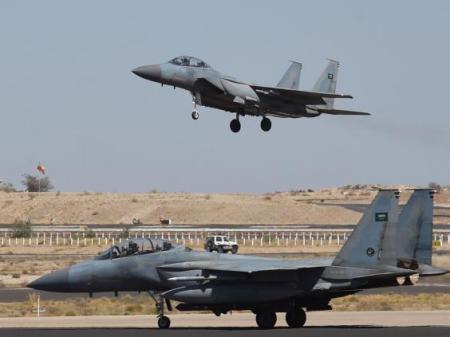
F15-fighter-jetsSaudi F-15 bombers

The highly-advanced S-400 air defense missiles will also eventually be evacuated from Syria, said high-ranking officials in Moscow on Wednesday, March 17, according to an exclusive DEBKAfile report. But their presence for now is crucial in view of the continuing Saudi buildup of warplanes in Turkey, close to the Syrian border.

Our military sources disclose that the initial Saudi deployment of four warplanes to the Turkish air base of Incirlik earlier this month, has been expanded to sixteen, while Saudi officials declare that Riyadh and Ankara are preparing to intervene jointly in the Syrian conflict.

According to our sources, Turkish armored and infantry troops have already crossed the border and set up positions in the northern Syrian province of Idlib, just a few hundred meters inside the border.

Russian Foreign Minister Sergei Lavrov referred Sunday, March 14, to evidence of “a creeping expansion by Turkey in the sovereign nation of Syria.”

This was taken as a warning that Moscow would not tolerate any further Turkish encroachments in Syria, any more than it would accept Saudi air force intrusions of Syrian air space.

The Russians infer from Turkish military movements that Ankara aims to establish enclaves inside Syria as no-fly or security zones, which Moscow has consistently opposed. The presence of the top-grade S-400 anti-air missiles in Syria is meant to obstruct this plan and discourage Turkish and Saudi aerial flights over Syria.

At the same time, the presence of the S-400 missiles close by is a worry for the Israeli Air force.  The batteries, currently positioned at the Latakia base, would cover a broad stretch of air space over northern and central Israel if they were moved further south.

A word of reassurance on this score was understood to have come from Russian military sources Wednesday. They said that the S-400 would be removed eventually, leaving behind only the Pantsir-S1 anti-air missile systems, which have never posed a challenge to the Israeli air force in the last decade.

DEBKAfile’s military sources also confirm that Putin has so far kept his promise to Prime Minister Binyamin Netanyahu to withhold advanced S-400 and S-300 air defense missiles from Iran, by executing a series of delays.

On Feb. 17, Iranian military officials announced a ceremony the next day at the Caspian port of Astrakhan for the handover of the first batch of S-300s. The ceremony never took place.

This week, Russian arms industry sources announced that the missiles would be not be delivered to Iran before August or September – another delay, which is unlikely to  be the last.

France: Jihad Infecting Army, Police

March 16, 2016

France: Jihad Infecting Army, Police

by Yves Mamou

March 16, 2016 at 4:00 am

Source: France: Jihad Infecting Army, Police

  • Some police officers have openly refused to protect synagogues or to observe a minute of silence to commemorate the deaths of victims of terrorist attacks.
  • That police officers are armed and have access to police databases only intensifies anxiety.
  • In July 2015, four men, one of whom is a Navy veteran, were called in for questioning. They had planned to penetrate a Navy base in the south of France, seize a high-ranking officer, decapitate him, and then spread photos of the decapitation on social media networks.

According to a confidential memo, dated January 2015, from the anti-terrorist unit of the French interior ministry, France is already host to 8,250 radical Islamists (a 50% increase in one year).

Some of these Islamists have gone to Syria to join the Islamic State (IS); others have infiltrated all levels of society, starting with the police and the armed forces.

A leaked confidential memo from the Department of Public Security, published by Le Parisien, details 17 cases of police officers radicalized between 2012 and 2015. Particularly noted were the police officers who listen to and broadcast Muslim chants while on patrol.

Some of these police officers have openly refused to protect synagogues or to observe a minute of silence to commemorate the deaths of victims of terrorist attacks.

In addition, the police were alerted to a policewoman who incited terrorism on Facebook, and called her police uniform a “filthy rag of the Republic” while wiping her hands on it. In January 2015, immediately after the attacks on Charlie Hebdo and the Hypercacher kosher supermarket in Vincennes, which had left 17 people dead, she wrote on her Facebook page: “Masked attack led by Zionist cowards… They need to be killed.”

That police officers are armed and have access to police databases only intensifies anxiety.

Although police headquarters in Paris claims that these cases are rare, they have decided to review on a weekly basis any behavior that oversteps the principle of separation of church and state, such as that of Muslim officers who appear to be leaning toward radicalization. Patrice Latron, who manages the office of the Paris police prefect, told Le Parisien that these phenomena are “very marginal.”

The police are not the only ones who are anxious; the French military is concerned as well. There are no statistics for the number of Muslim soldiers in the French armed forces, but it is commonly thought that there are many, and that they are vulnerable to Islamist influences, given that France in engaged militarily in Africa, against Al Qaeda in the Islamic Maghreb (AQIM) and against the Islamic State in the Middle East. Since the Charlie Hebdo attack in January 2015, however, France’s largest military operation has been on national soil: 10,000 armed soldiers are now deployed in France to protect synagogues, Jewish schools, train and subway stations, and also some mosques — to show Muslims that the French Republic does not see them as enemies. Their mission is no longer to be simply a complementary force but, as Le Figaro explained, to “deploy, on a permanent basis, interior military operations.”

As early as 2013, during the fifth national security parliamentary conference, Colonel Pascal Rolez, adjunct to the assistant director of the counter-intervention unit of the Defense Security Protection Department (DPSD), declared, “We are witnessing an increase in radicalization among the French military, notably since the Merah affair.” Recall that Mohammed Merah, a young French Muslim, murdered three French soldiers in Toulouse and Montauban, as well as murdering four French Jews at a school in Toulouse.

In 2012, Mohammed Merah, a French Muslim, murdered three French soldiers, as well as four French Jews at a school. Today, with many cases of French Muslim soldiers and police becoming radicalized, the security services worry about the risk of “having agents of security forces attack their colleagues.”

In order to identify members of the armed forces who are being radicalized, the DPSD takes into account changes in dress, recurrent sick leave, travel, or theft of supplies or materiel.

Since the January 2015 attacks on Charlie Hebdo and the kosher supermarket in Paris, the media have noted several indications of radicalization in the French army.

On January 21, 2015, the radio station RFI announced that about 10 French soldiers deserted and joined the Jihadist fight in Syria and Iraq. Jean-Yves Le Drian, Defense Minister, has confirmed this, although with the caveat that these are “extremely rare” cases. Apparently, one of these veterans holds the position of “emir” in Deir Ezzor in Syria, and leads a group of around 10 French combatants whom he has personally trained. The other French deserters are explosives experts or paratroopers; some come from commando units in the French Foreign Legion.

Also in January 2015, after the Paris attacks, police discovered that “Emmanuelle C,” a 35-year-old female gendarmerie (paramilitary national police) adjunct, had converted to Islam in 2011, and had a relationship with Amar Ramdani, who was wanted for weapons and drug trafficking. Ramdani is a confederate of Amedy Coulibaly, who perpetrated the murderous Montrouge and Hypercacher attacks in Paris. Ramdani had been observed by the police department’s intelligence division (DRPP) in the “public” area of the fort in Rosny-Sous-Bois (Seine-Saint-Denis). This fort houses the gendarmerie’s scientific branch. As for Emmanuelle C, she was accused of having committed more than 60 security breaches of the suspect persons’ file (FPR). She was sentenced to one year of probation and expelled from the gendarmerie.

In July 2015, the press revealed that approximately 180 detonators and 10 bricks of plastic explosives had been stolen from an army depot near Marseille. The investigators naturally suspected internal complicity, as the perpetrators had seemed to be well informed. They are following two possibilities, Islamic terrorism or grand theft; the investigation continues.

On July 16, 2015, President François Hollande revealed that an attack on a French military base had been foiled. Three days earlier, four men, one of whom was a Navy veteran, were arrested. They confessed that they had planned to infiltrate a Navy base in the south of France, seize a high-ranking officer, decapitate him and spread photos of the decapitation on social media.

On March 6, 2016, a “radicalized” military veteran, Manuel Broustail, was arrested while getting off a plane in Morocco. According to the French newspaper, Presse Ocean, Broustail was carrying in his suitcase a machete, four kitchen knives, two pocket knives, a retractable baton, a black hood, and a gas canister. A French military veteran and convert to Islam, Broustail had previously been placed under long-term house arrest in Angers (Maine-et-Loire), days after the horrific attacks in Paris, in which 130 people were murdered. Discharged from the army in 2014, he had been under surveillance by French security agencies. The media seem concerned that such a person, carrying such weapons, could walk through airport security controls, board a plane and leave the country.

According to Thibaut de Montbrial, a terrorism specialist and president of the Center for Internal Security Studies, the risk is,

“having agents of security forces attack their colleagues. Someone in uniform attacks another person, wearing the same uniform. In France, such a scenario is not impossible. Security forces must keep this risk in mind.”

Yves Mamou, based in France, worked for two decades as a journalist for Le Monde.