Archive for February 2016

Turkey launched 100+ artillery strikes on Syrian towns in Aleppo

February 17, 2016

Turkey launched 100+ artillery strikes on Syrian towns in Aleppo

Russian military Published time: 16 Feb, 2016 20:55

Source: Turkey launched 100+ artillery strikes on Syrian towns in Aleppo – Russian military — RT News

© Abdalrhman Ismail
Both government and opposition-held towns in Syria over the border from Turkey have fallen under Ankara’s shelling that began last week, according the Russian Ministry of Defense.

Turkey’s artillery has fired more than 100 shells at bordering areas in the northwest province of Aleppo, targeting both Syrian government forces and the opposition, MoD spokesman Igor Konashenkov told reporters on Tuesday.

Read more

Emblem on the fence of the building of the Russian Defense Ministry on Frunzenskaya Embankment in Moscow. © Natalia Seliverstova

“Since the end of the last week Turkey has been launching massive artillery strikes on the Syrian government and the Syrian opposition at the border areas. Impartial monitoring bodies have detected more than a hundred rounds of fire that targeted border towns in the province of Aleppo,” Konashenkov said.

Last week Turkey started pounding Syrian Kurdish forces with fire in northern Syria in an apparent attempt to stop them from taking over the city of Azaz, Aleppo.

On Monday, at least 14 people were killed after missiles hit a children’s hospital, a school and other buildings, witnesses told Reuters. Ankara was quick to blame Russia for the strikes in Azaz.

Monday’s attacks have been condemned by the international community, with the UN calling on war parties to reduce hostility ahead of the planned ceasefire in Syria.

On a separate occasion, members of the United Nations Security Council expressed their concern with the aggressive actions carried out by Ankara in Syria and will urge it to follow international law.

“The UN Security Council members are concerned with the Turkish attacks on a number of Syrian regions,” UNSC President Rafael Ramirez said, according to TASS news agency, after a meeting held upon Russia’s request, adding that the members “have agreed to ask Turkey to obey international law.”

Russia’s ministry of defense statement came as a response to Turkish officials who accused Moscow of conducting a deadly attack on Syrian civilians. On Monday, Prime Minister Ahmet Davutoglu claimed a Russian warship in the Caspian Sea launched a ballistic missile that hit a hospital in the Idlib province. Following the hospital, reports of five medical facilitates and several schools being attacked in the city of Azaz also emerged.

Russia shrugged off the fresh claims on Tuesday saying there are no warships in the Caspian fleet “capable of launching ballistic missiles.”

The allegations, described as “empty” and “unfounded” were overturned by Kremlin spokesman Dmitry Peskov as well.

Nasrallah threatens to bomb chemical facility, kill thousands of Israelis

February 17, 2016

Nasrallah threatens to bomb chemical facility, kill thousands of Israelis Head of Lebanese terror group says strike on Haifa amonia storage facility would have impact similar to nuclear attack

By Tamar Pileggi

February 16, 2016, 11:56 pm

Source: Nasrallah threatens to bomb chemical facility, kill thousands of Israelis | The Times of Israel

Hezbollah leader Sheik Hassan Nasrallah speaks during a rare public appearance, in the suburbs of Beirut, Lebanon in November 2013. (file photo credit: AP/Bilal Hussein)

Hezbollah leader Sheik Hassan Nasrallah speaks during a rare public appearance, in the suburbs of Beirut, Lebanon in November 2013. (file photo credit: AP/Bilal Hussein)

Hezbollah leader Hassan Nasrallah on Tuesday insisted that although his group isn’t currently seeking war with Israel, it could defeat the Jewish state in a future conflict by targeting Haifa’s ammonia storage tanks, resulting in massive fatalities.

Dismissing recent reports of a possible outbreak of hostilities with Israel, Nasrallah said deterrence established by the terror organization in the first and second Lebanon wars was keeping Israeli aggression at bay.

 “Israel’s psychological warfare is of no use against us,” he told the Lebanese Naharnet news site.

As an example, Nasrallah said Israel “feared” the group’s cache of rockets capable of striking the ammonia facilities in Haifa, an attack that he said would result in casualties equivalent to those that would be caused by a nuclear attack.

He quoted an unnamed Israeli official to the effect that a strike on the northern city’s ammonia storage tanks would cause tens of thousands of fatalities.

“This would be exactly as a nuclear bomb, and we can say that Lebanon today has a nuclear bomb, seeing as any rocket that might hit these tanks is capable of creating a nuclear bomb effect,” he said, adding that Hezbollah, which has reportedly lost many of its men in the Syrian civil war, was continuing to boost its capabilities.

Hours after Nasrallah issued the explicit threat to strike Haifa, Environmental Protection Minister Avi Gabbai said he had ordered that the ammonia storage facility be moved to the Negev desert.

During his speech, the Hezbollah chief also accused Israel of behind-the-scenes intervention in Syria, warning Saudi Arabia not to ally itself with Jerusalem over the conflict and slamming other Sunni states for moving closer to Israel.

“Do you accept a friend occupying Sunni land in Palestine? Can you become friends with an entity that has committed the most horrible massacres against the Sunni community?” he said.

“You are free to consider Iran an enemy, but how can you consider Israel a friend and ally? This issue must be confronted in a serious manner.

“It is beneficial to monitor the Israeli media to realize that the Israeli rhetoric has become identical to the rhetoric reflected in some Arab media, especially in the Gulf and Saudi Arabia,” Nasrallah charged.

His comments came on the heels of Prime Minister Benjamin Netanyahu’s call to Arab states with which Israel has covert ties to publicly acknowledge those relationships.

Addressing the Conference of Presidents of Major American Jewish Organizations on Sunday, the prime minister maintained that most moderate Arab countries see Israel as their ally, not their enemy, as they share a common struggle against Iran and the Islamic State.

Israel has long said there are secret back-channel talks between Jerusalem and Sunni states, however, Saudi Arabia and other Arab countries maintain they will only normalize ties with the Jewish state once a peace deal is reached with the Palestinians via a two-state solution.

Obama Managed to Make Syria a Lot Messier

February 17, 2016

Obama Managed to Make Syria a Lot Messier, Front Page Magazine, Daniel Greenfield, February 16, 2016

obama-wears-tan-suit-149481242256_6

Obama and Kerry are frantically touting a Syria ceasefire as the solution to the conflict. In reality, they’ve made the conflict much worse.

While Hillary Clinton was talking up a No Fly Zone, Russia entered Syria and enforced its own de facto No Fly Zone against the United States. Their bombing campaign has boosted the Iran-Assad-Hezbollah axis while beating back Sunni militias backed by Turkey and Saudi Arabia.

The Turks responded by shooting down a Russian jet. Obama threw in more anti-tank missiles. But a sustained bombing campaign does pay off. It’s what Obama refused to do against ISIS. But the Russians had no problem hitting Sunni opposition forces with one. They also don’t care about collateral damage. And while Obama and his proxies bleat about Russia being isolated and doomed, Putin set the terms of the proposed peace deal.

Obama’s willingness to switch to the side of the Shiite axis and accept them however only worsened the conflict for reasons ridiculously obvious to everyone outside the White House and the media.

The Saudis and Turkey are not about to lose this fight with Iran. Turkey is also worried about Kurdish gains. So they’re going to send ground troops to “fight ISIS”. Just like Iran and Russia are “fighting ISIS”.

Even in the best case scenario, this means the effective end of an independent Syria as it’s carved up under a Russian-Iranian-Turkish, etc occupation. Since Syria never really existed, that’s not too great of a loss. But in practice, it means that Syria will be divided into terrorist training camps for Shiite and Sunni terrorists, backed by friendly troops and jets from their allied states, which will sometimes also take shots at each other.

This may end up destroying ISIS by territorially squeezing it out. Or it may just escalate the already messy conflict and take it to a new level.

It’s hard to say to what extent this will represent a threat to the United States, aside from the general perception of weakness and impotence inflicted by Obama’s failed foreign policy. But if the conflict escalates, it could have all sorts of destructive implications. And obviously, Israel’s situation becomes more problematic. At the very least, we’re going to see Syria being turned into an even bigger terrorist production factory than it already was. And those terrorists won’t just stay in Syria, as we’ve already seen.

And the United States is likely to be dragged into this mess in a variety of ways from providing aid on the ground to peacekeeping to taking in refugees. And considering Turkey’s inappropriate place in NATO, we might end up even being dragged into an actual war.

That’s what Obama’s ceasefire looks like.

Palestinian Official: Jews Living in Israel Should Return to Their Countries of Origin

February 16, 2016

Palestinian Official: Jews Living in Israel Should Return to Their Countries of Origin

BY:
February 16, 2016 2:57 pm

Source: Israeli-Palestinian conflict

The Palestinian Authority’s envoy to the United Nations Human Rights Council, Ibrahim Khreisheh, suggested that all Jews living in Israel should return to their countries of origin, according to a video translated by the Middle East Media Research Institute.

During an interview with Palestinian Authority TV on Feb. 4, Khreisheh argued that Jews are not native to Israel and colonized Palestine to create the current Jewish state, implying that the Jewish people have no historical connection to the land.

“Our problem is that the Jews came to Palestine from outside the region, colonized it, and established their own state,” Khreisheh said.

He cited the Jewish exodus from Egypt in ancient times as a past example of Jews conquering Palestinians and taking over the land of Palestine, what he terms the “Promised Land,” and argues this practice is being continued today with Israeli settlements in the West Bank.

“The historical stories about their exodus, and about how they left Egypt for Palestine, which they call the ‘Promised Land’ … this Promised Land within Israel is not large enough for them, and they have begun to take over our lands in the West Bank, with their settlements.”

Khreisheh then referenced Russian president Vladimir Putin’s statement from last month in which he said Jews who left the Soviet Union to flee persecution are welcome to return to Russia to escape growing anti-Semitism in Europe and the Middle East.

Putin made his comment at an event with Moshe Vyacheslav Kantor, president of the European Jewish Congress.

“I believe that President Putin’s message is very important,” Khreisheh said, before adding that other European and Arab countries should take back Jews so Palestinians can control all of Israel.

“It may be useful to consider asking other countries—Arab countries, European countries, and other foreign countries – to allow the Jews to return to their former lands and homes.”

“Then we, the Palestinians, will return to be the way we were … We never had people from Poland the Ukraine, Switzerland, France, or England,” Khreisheh said.

Spring could bring a fresh surge of refugees. But Europe isn’t ready for them.

February 16, 2016

Spring could bring a fresh surge of refugees. But Europe isn’t ready for them. Washington PostGriff Witte and Anthony Faiola, February 16, 2016

LONDON — After an unparalleled tide of asylum seekers washed onto European shores last summer and fall, the continent’s leaders vowed to use the relative calm of winter to bring order to a process marked by chaos.

But with only weeks to go before more favorable spring currents are expected to trigger a fresh surge of arrivals, the continent is no better prepared. And in critical respects, the situation is even worse.

Ideas that were touted as answers to the crisis last year have failed or remain stuck in limbo. Continental unity lies in tatters, with countries striking out to forge their own solutions — often involving a razor-wire fence. And even the nations that have been the most welcoming toward refugees say they are desperately close to their breaking point or already well past it.

The result, analysts say, is a continent fundamentally unequipped to handle the predictable resurgence of a crisis that is greater than any Europe has faced in its post-Cold War history.

“It’s a very dangerous situation,” said Kris Pollet, senior policy officer at the European Council on Refugees and Exiles. “Anything can happen.”

On Thursday, European leaders will have one last opportunity to reckon with the crisis before the pace of new arrivals inevitably begins to climb again in the spring. But few have any expectations that this week’s summit will succeed where countless others before it have failed.

“Europe can deal with this if it wants to. But there needs to be a political breakthrough. And I’m not optimistic,” Pollet said.

Without one, he said, “it’s going to be chaos. That’s clear.”

The scale of disorder and political disruption could be even greater than what Europe faced in 2015.

The numbers themselves are already of an entirely new magnitude: Although arrivals are down from the height of the crisis last fall, the number of people who crossed the sea to reach Europe in the first six weeks of the year — around 75,000 — is 25 times what it was during the same period last year. More than 400 have drowned along the way.

On the Greek islands, the most common European landing spot for people fleeing war and oppression in the Middle East, South Asia and North Africa, thousands have arrived even on days when the rough winter seas have been churned by gale-force winds.

But once the asylum seekers have landed in Europe, the continent still has no coherent system for managing the flows. Just three out of an intended 11 “hot spots” — locations in Italy and Greece where those deemed likely to receive asylum will be separated from those expected to be denied — were up and running at the start of the week. A quota system that was intended to evenly distribute 160,000 refugees across the continent has similarly foundered: Fewer than 500 people have taken part. Countries in eastern and central Europe, meanwhile, have boycotted the program.

With countries improvising their own responses to the mass migration, the most basic tenet of Europe’s post-Cold War identity — that national leaders should act collaboratively to reach continent-wide solutions to common problems — is being called into question as never before.

At most immediate risk is Europe’s decades-old system for borderless travel, the Schengen zone. European leaders have warned that it could come crashing down within months, and it has already been riddled by an array of new fences, military patrols and identification checks where once there was free movement.

Greece could be the first casualty of Schengen’s decline, with the rest of the European Union threatening to kick the cash-starved nation out of the free-movement club unless authorities in Athens can get better control of the nation’s sea border with Turkey. Last week, the E.U. gave Greece a three-month deadline to do so.

But some do not want to wait that long. Eastern European countries including Poland and Hungary are attempting to form an anti-refugee front ahead of this week’s Brussels summit, seeking to combine forces on a plan that would effectively trap refugees in Greece and allow them to travel no farther into Europe.

Hungarian Prime Minister Viktor Orban, who on Monday called Europe “defenseless and weak” in stopping what he regards as an Islamic invasion, has called for the construction of razor-wire fences along Greece’s northern borders with Bulgaria and Macedonia.

Such a barrier is already going up on the Greek-Macedonian border, a major transit point for those heading farther north. Even governments regarded as reasonably pro-refugee say that border will soon need to be sealed.

On a visit to the Macedonian capital Friday, Austrian Foreign Minister Sebastian Kurz said that his country is rapidly nearing the limit it has set for asylum seekers this year — less than half the total of last year — and that Macedonia should be ready to “completely stop” the flow of migrants in the coming months.

On Tuesday, Austria announced a plan to limit new arrivals, part of what is now being called a “domino effect” of measures from Greece through the Balkans and into Western Europe meant to deter migrant flows. In a news conference, Interior Minister Johanna Mikl-Leitner said Austria was preparing to set up 12 new checkpoints along its southern border and impose a daily, perhaps even hourly, quota on migrant flows. Austria will also follow Sweden in denying entry to anyone without a valid travel document.

“If fences are necessary, additional fences will be built as well,” Mikl-Leitner said.

Those comments only add to the pressure on German Chancellor Angela Merkel, whose nation has taken more asylum seekers than any other in Europe but who faces growing demands to live up to her pledge to dramatically reduce the flows.

She heads to Brussels this week with an urgent need to break the political gridlock. One possibility would be to form what some are calling a new “coalition of the willing” — or a list of nations, probably in northern Europe, willing to take in asylum seekers who qualify for resettlement directly from Greece and Turkey.

She is also putting stock in a new NATO effort to combat people-smugglers in the Aegean Sea, while pushing Greece to more rapidly ramp up its hot spots for registering and processing asylum seekers. Meanwhile, she is continuing to press Turkish leaders to live up to their end of a bargain in which the E.U. agreed to pay Ankara 3 billion euros ($3.34 billion) in exchange for Turkish cooperation in cracking down on smuggler networks.

But with arrivals already far outpacing those in the same period last year, Germans are running out of patience with Merkel. At home, she faces a falling approval rating and a conservative backlash against her steadfast refusal to close Germany’s borders, even after it took in more than 1 million people last year.

The refugee crisis “is a Gordian knot Merkel has to cut. But she tied her political future to it, and there’s no way back for her,” said David Kipp, an associate at the German Institute for International and Security Affairs.

If Merkel fails in her attempts to cajole European leaders into cooperating, refugee advocates say there could be grave consequences — not only for the continent but also for the millions of people seeking an escape from the wars that have consumed Syria, Iraq, Afghanistan and other conflict zones.

“Our fear is that there will be a domino effect where countries say, ‘We’ve had enough,’ ” said William Spindler, a spokesman for the Office of the U.N. High Commissioner for Refugees. “Refugee flows are a reality. As long as you have conflict, you will have people fleeing for their lives.”

And at the moment, more people are doing so globally than at any time since World War II — some 60 million. The number trying to enter Europe is a relatively small fraction.

Heaven Crawley, who chairs the study of international migration at Britain’s Coventry University, said Europe should be able to handle the number of people reaching its shores. Syria’s neighbors, she noted, have coped with much higher proportional totals.

But, she said, the continent has been plagued by internal division, as well as a focus on keeping people out — rather than honestly reckoning with what should happen once refugees arrive.

“It’s a crisis of Europe’s own making,” she said. “If Lebanon and Jordan can manage it, why can’t the richest region in the world? It’s politics.”

Netanyahu Urges Arab States to Acknowledge Israel Relations

February 16, 2016

Netanyahu Urges Arab States to Acknowledge Relations With Israel

BY:
February 16, 2016 10:44 am

Source: Netanyahu Urges Arab States to Acknowledge Israel Relations

Benjamin Netanyahu

Benjamin Netanyahu / AP

JERUSALEM—Prime Minister Benjamin Netanyahu this week urged Arab states that have covert contacts with Israel to come out of the closet and publicly acknowledge their relations with the Jewish state.

Addressing a group of American Jewish leaders in Jerusalem, Netanyahu said that most moderate Arab states now view Israel as an ally, not an enemy, particularly in the struggle against Iran and the Islamic State.

“Major Arab countries are changing their view of Israel,” he told the Conference of Presidents of Major American Jewish Organizations. “They don’t see Israel anymore as their enemy, but as an ally, especially in the battle against militant Islam with its two fountainheads”, a reference to Iran and ISIS. “There is something that is forging new ties, many of them discreet, some of them open.” The time had come, he said, that covert relations become overt. “I think we should expect, and should ask, to see a change.”

Israeli Defense Minister Moshe Yaalon, touching on the same theme, said last week in a talk at the Munich Security Conference that the regional upheaval has improved channels of communication between Israel and Sunni nations, although not in public. “I’m speaking about the Gulf states, and North African states too. For them Iran and the Muslim Brotherhood are the enemy. Iran is the bad guy for us and for the Sunni regimes. They [Sunni leaders] are not shaking hands [with Israel] in public, but we meet in closed rooms.”

His remarks drew a sharp response from a prominent Saudi political figure in the audience, Prince Turki al-Faisal, a former Saudi ambassador to the United States and a former Saudi intelligence chief. “Handshakes with the Palestinians have not helped the Palestinians much,” he said. He acknowledged the animosity between Sunni states and Iran and the Muslim Brotherhood but, by the same measure Sunni Arab countries are furious with Israel over its treatment of the Palestinians, he said. “Why should the Arabs feel friendship to you?”

Yaalon said there was no connection between the Israeli-Palestinian conflict and current problems in the Middle East. “There is a conflict with the Palestinians but what is the linkage of this to Iran, ISIS, the civil war in Syria or the uprising in Tunisia? With the situation in Yemen or Iraq? There is no connection.”

The defense minister said that Israel was not ignoring the Palestinian issue. He blamed Palestinian President Mahmoud Abbas for the absence of progress on the diplomatic front. The Palestinians refuse to recognize Israel as a Jewish state, he said, and prefer to negotiate about territory since that is an issue on which they would only receive, not make concessions.

When Yaalon stepped down from the podium, he and the Saudi prince shook hands in front of the cameras.

Despite their disagreement, the encounter exemplified a shift in Israel’s standing in the Middle East. In the not distant past, a member of the Saudi royal house would not have engaged in a public dialogue with an Israeli or shake his hand in public. The Palestinian issue is indeed a barrier to normalized relations between Israel and Arab states but over the years a number of Arab countries in different periods have welcomed informal relations with Israel. Demonization of the Jewish state has waned, at least among ruling elites. Israel had official relations with Qatar and Oman for several years until the Palestinian intifada turned public opinion against Israel. A number of Gulf regimes have reportedly encouraged an Israeli diplomatic presence even in the absence of official relations.

The polarization between Sunnis and Shiites in recent years has encouraged Sunni regimes to see in Israel a potential and powerful ally if relations with Iran heat up.

Morocco’s king, Mohammed VI, is currently attempting to facilitate a meeting between the Israeli and Palestinian leaders in an attempt to renew peace talks, Israel’s Channel Two reported Monday. The king sent a Moroccan Jewish leader to talk with Netanyahu and Abbas and the initial response from both men was positive, the report said.

Turkey calls allies to launch ground offensive in Syria, continues to hit PYD

February 16, 2016

Turkey calls allies to launch ground offensive in Syria, continues to hit PYD

February 16, 2016, Tuesday/ 17:41:49/ TODAY’S ZAMAN | ANKARA

Source: Turkey calls allies to launch ground offensive in Syria, continues to hit PYD

Turkey calls allies to launch ground offensive in Syria, continues to hit PYD

Turkish artillery struck positions in northern Syria for the fourth straight day on Tuesday. (Photo: AP)

While Ankara and Moscow continued to exchange harsh remarks on Tuesday, Turkey once again hit Democratic Union Party (PYD) targets near the town of Azaz in Syria and called on its allies, including the US, to launch a ground offensive in Syria as Russian-backed Syrian regime forces come closer to Turkey’s borders.

A Turkish official speaking to reporters in İstanbul on Tuesday said Turkey wants a ground operation in Syria.

The official who asked to remain anonymous in order to speak more freely said: “We want a ground operation. If there is a consensus, Turkey will take part. Without a ground operation it is impossible to stop this war.”

The official also ruled out a unilateral ground operation in Syria carried out by Turkey. “Turkey is not going to have a unilateral ground operation … We are discussing this with allies,” the official said.

The Turkish military has been hitting PYD targets in Syria since Saturday and continued to shell the PYD militants in Azaz near the Mennagh air base on Tuesday.

In the meantime, Syrian President Bashar al-Assad has warned Turkey and Saudi Arabia that any ground incursion in Syria will have “global repercussions” and says sending in troops will be “no picnic.”

Commenting on the agreement reached last week among the US, Russia and other world powers for a temporary cessation of hostilities in Syria, Assad said, “Cease-fires occur between armies and states, but never between a state and terrorists.”

“They say they want a cease-fire within a week. All right, who will talk to a terrorist organization if it refuses to cease fire? Who will punish it?’” he asked. Assad spoke in Damascus late Monday during a meeting with members of the Bar Association. The comments were his first since the agreement on Friday to bring about a temporary pause in fighting within a week.

Washington has ruled out a major ground operation in Syria and a large-scale joint ground operation is still unlikely. But Turkey’s request shows how swiftly a Russian-backed advance in recent weeks has transformed a conflict that has drawn in most regional and global powers.

The offensive, supported by Iranian-backed Shiite militias as well as Russian air strikes, has brought the Syrian army to within 25 kilometers (15 miles) of Turkey’s frontier. Kurdish fighters regarded by Turkey as hostile insurgents have also exploited the collapse of positions held by other rebel groups to seize ground and extend their presence along the border.

The advances have increased the risk of a military confrontation between Russia and Turkey.

Turkish artillery returned fire into Syria for a fourth day straight on Tuesday, military sources said, targeting the Kurdish People’s Protection Units (YPG) militia, which Ankara says is being backed by Moscow.

Turkish Foreign Minister Mevlüt Çavuşoğlu spoke with his French counterpart and expressed Ankara’s dissatisfaction with the French foreign ministry’s comments regarding the Turkish operations against Kurdish People’s Protection Units (YPG) targets in Syria, diplomatic sources said.

Davutoğlu: Shameless Russia

Speaking at the ruling Justice and Development Party’s (AK Party) parliamentary group meeting on Tuesday, Turkish Prime Minister Ahmet Davutoğlu gave harsh remarks targeting Russia particularly and calling Moscow “inhumane,” “merciless” and “barbaric.”

Davutoğlu said the PYD and its armed wing, the YPG, are an offshoot of the terrorist Kurdistan Workers’ Party (PKK) and are killing people in Syria for the Russian and Syrian regimes. He stressed that Turkey will do anything to prevent the attack on Azaz and will retaliate whenever necessary.

Calling the developments in Syria “a national security threat” to Turkey, Davutoğlu said Russia is attacking Syrian rebel groups and civilians. Mentioning some of the photos that he has seen where Russian jets pounded Tel Rifaat and Azaz, Davutoğlu asked Russia what they want from this territory.

Davutoğlu said Russian jets are bombing any area around Azaz, adding that making 200 sorties around a small town like Azaz does not make sense other than if the aim was to get rid of all expired bombs in one’s stock.

“Russia is killing both civilians and Syrian rebels, as well as supporting the Syrian regime. They are also getting rid of obsolete bombs in their stock in Syria instead of destroying them in their own country. They have such a vile and inhuman plan. Russia, Assad and the PYD are cooperating and pounding the area to cut the way to the aid corridor to the Syrian people. Russia and Assad are using the PYD as a tool to change the ethnic structure. Russia has not once attacked ISIL [the Islamic State in Iraq and the Levant],” said Davutoğlu.

Davutoğlu also stressed that Turkey has been shelling the PYD since Saturday and will continue to do so in order to stop a new refugee influx to Turkey. He said the latest attacks near Turkey’s border are clearly targeting Turkey and posing a threat to Europe due to an increased refugee influx.

Davutoğlu pointed out that German Chancellor Angela Merkel has finally confirmed the need to establish a no fly zone in Syria. He said if the world leaders agreed with Turkey three years ago, many lives in Syria could have been saved.

“No one should doubt that Turkey will react in the same way against anyone threatening its border security,” said Davutoğlu.
He said the PYD does not represent the Kurds in Syria and has become a legionnaire for Russia in the region with the priority of harming Turkey, especially since Turkish-Russian relations have become tense following Turkey’s shooting down of a Russian jet in November last year.

“While Russia is bombing civilians, it complains about Turkey to the UN Security Council for defending Turkish air space. It is shameless,” said Davutoğlu. He also criticized the West, particularly the US, for not openly condemning the Russian bombardment in the area. “We are not afraid to say this. Coward Russian jets committed to this bombardment. We want to see a clear attitude [from the West] against this inhuman massacre,” said Davutoğlu.

He stressed that Turkish foreign policy is not based on ethnicity. He said if Kurds have a state, it is the Turkish Republic. He recalled that Turkey has embraced the Kurdish refugees who fled from ISIL in the town of Kobani in Syria.

Davutoğlu also said that Russia is pursuing a “dirty foreign policy” by mentioning the possibility of a World War III. “If there is a threat of war in Syria, Turkey is not the one creating the environment for it,” said Davutoğlu, adding that despite the chaos in the region the Turkish government is keeping the country out of war. He claimed that Turkey is taking measures to eliminate the threats close to it in order to stay away from war.

Russia categorically rejects statements from Turkey

Moscow on Tuesday strongly rejected Turkish accusations that it had committed a war crime after the missile strikes.

“We categorically do not accept such statements, the more so as every time those making these statements are unable to prove their unfounded accusations in any way,” President Vladimir Putin’s spokesman Dmitry Peskov told reporters.

“Our relations (with Turkey) are in a deep crisis. Russia regrets this. We are not the initiators of this.”
Turkey on Monday accused Russia of an “obvious war crime” after missile attacks in northern Syria killed scores of people and warned the YPG that it would face the “harshest reaction” if it tried to capture a town near the Turkish border.

ISIS Leader Moves to Libya

February 16, 2016

ISIS Leader Moves to Libya, Investigative Project on Terrorism, Pete Hoekstra, February 16, 2016

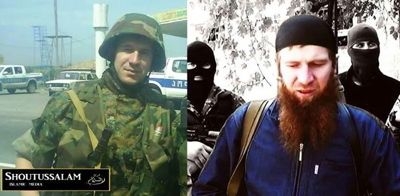
1359Shishani as a Georgian special forces soldier and as an ISIS leader.

The barbaric and elusive Chechen commander who recruited British executioner “Jihadi John” has moved to Sirte, Libya to assume control of ISIS operations in the terrorist organization’s metastasizing Mediterranean caliphate.

The Investigative Project on Terrorism first learned about the movement of Abu Omar al-Shishani – among the world’s most-wanted terrorists – through its exclusive Middle East sources. Other news organizations later confirmed the account.

Al-Shishani is a former American-trained officer in the Georgian special forces. He developed a reputation for his ferocity and effectiveness while fighting against the Russians during the 2008 invasion of Georgia and later for ISIS against dictator Bashar al-Assad in Syria.

He established his presence not long after arriving in former dictator Muammar Gaddafi’s hometown Sirte by ordering one execution and chopping the limbs off another individual.

Western intelligence officials believe that up to 6,500 ISIS fighters – twice the number previously thought – have relocated to Libya as a result of coalition airstrikes on ISIS in the Middle East and new difficulties entering Syria.

Libya’s emergence as an ideal location in which to foster its new caliphate arose after NATO assisted radical jihadists in killing Gaddafi in 2011 and abruptly abandoned the country. Left in its wake were two rival governments competing for power, which created space for Islamists to turn Libya into a cesspool of extremism.

ISIS’s new caliphate along the Mediterranean coastline reaches as close as 200 miles from the vulnerable southern border of Europe. It exploits Libya as a base to export weapons, jihadists and ideology to Europe, Africa and the Middle East.

Benghazi and Derna have long been nests of radicalism. They provided more fighters per capita to Afghanistan and Iraq than nearly any other geographic area in the world. The difference between then and now is that Gaddafi kept the lid on the garbage can.

With al-Shishani hanging his hat in Sirte, Libya has become a safe haven for one of the most murderous leaders in the world today. The situation demonstrates the total failure of a Western foreign policy that “leads from behind.”

Report: Hizballah Has Russian Technology Capable of Downing Israeli Jets

February 16, 2016

Report: Hizballah Has Russian Technology Capable of Downing Israeli Jets, Investigative Project on Terrorism, February 16, 2016

Hizballah is using advanced radar technology to “lock on” to Israeli aircraft flying reconnaissance missions over Lebanon, according to Israel’s Walla news service and reported by i24 News.

The new technology enables Hizballah to identify Israeli jets and fire missiles at them, Israeli security sources said.

“The connection between Hizballah, Russia and Syria have greatly changed the rules of the game in the region…Hizballah is indicating to Israel that it is ready for the next stage,” said an Israeli security official, quoted in Walla.

Israeli fighter jets are capable of detecting radar that threatens them, allowing pilots to alter their course. Nevertheless, the reports signal a troubling development that could hinder Israel’s freedom of movement in airspace across the northern border and its ability to effectively monitor Hizballah.

Following the 2006 war between Israel and Hizballah, the terrorist organization began acquiring sophisticated anti-aircraft systems and other advanced weapons from Syria and Iran. A recent report suggests that Hizballah is using Iranian anti-tank missiles in Syria that could be used against Israel in a future confrontation.

In light of these developments, Israel has allegedly targeted Hizballah weapons convoys on several occasions coming into Lebanon from Syria over the past few years. Nevertheless, the terrorist organization continues to build up its weapons arsenal and consolidate a base of operations on the Syrian Golan in order to attack the Jewish state.

Last month, Hizballah field commanders with operatives fighting in Syria told the Daily Beast that Russia is providing the terrorist organization with advanced weaponry amid enhanced coordination among both actors. The report outlines that Hizballah is acquiring long-range tactical missiles, anti-tank systems, and laser guided rockets from the Russians.

Saudi Arabia, Yemen and the Politicized UN

February 16, 2016

Saudi Arabia, Yemen and the Politicized UN, Gatestone InstituteRichard Kemp and Jasper Reid, February 16, 2016

♦ The UN’s assertion that the Saudi-led coalition has committed war crimes in Yemen is unlikely to be true. UN experts have not been to Yemen, depending instead on hearsay evidence and analysis of photographs.

♦ The UN has a pattern of unsubstantiated allegations of war crimes against the armed forces of sovereign states. Without any military expertise, and never having visited Gaza, a UN commission convicted the Israel Defense Force of deliberately targeting Palestinian civilians in the 2014 conflict. It was an assessment roundly rejected by America’s most senior military officer, General Martin Dempsey, and an independent commission.

♦ The Houthis have learned many lessons from Hamas and Islamic Jihad in Gaza, groups also supported by Iran. Those lessons include the falsification of civilian casualty figures and their causes. The UN swallowed the fake Gaza figures hook, line and sinker, and are now making the same error in Yemen.

♦ The Houthis exploit gullible or compliant reporters and human rights groups to facilitate their propaganda, including false testimony and fabrication of imagery.

♦ Forensic analysis shows that rather than deliberately targeting civilians, the Saudis and their allies have taken remarkable steps to minimize civilian casualties.

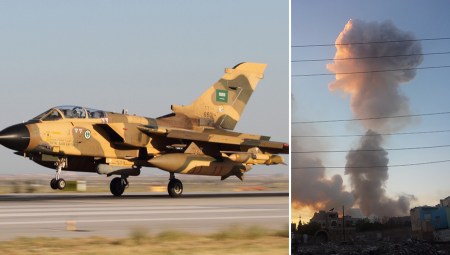
The United Nations, Amnesty International and other groups have accused the Saudi-led coalition of war crimes in Yemen. A leaked UN report claims the bombing campaign against Iranian-supported Houthi insurgents seeking violently to topple the legitimate government of Yemen has conducted deliberate, widespread and systematic attacks on civilian targets.

If the UN’s assertion is true, and the coalition is deliberately and disproportionately killing thousands of innocent civilians, it is a war crime. But it is unlikely to be true. The UN has produced no actual evidence of war crimes. None of their allegations is based on investigation on the ground. Their experts have not been to Yemen, depending instead on hearsay evidence and analysis of photographs.

The UN has a pattern of unsubstantiated allegations of war crimes against the armed forces of sovereign states. Only last year, without any military expertise, and never having visited Gaza, a UN commission convicted the Israel Defense Force of deliberately targeting innocent Palestinian civilians in the 2014 conflict. It was an assessment roundly rejected by America’s most senior military officer, General Martin Dempsey, the Chairman of the Joint Chiefs of Staff.

Dempsey’s own findings were confirmed by an independent commission of experienced senior military officers and officials from nine countries. The High Level Military Group found that Israel had not committed war crimes, but had in fact set a bar for avoiding civilian casualties so high that other armed forces would struggle to reach it.

Moreover, last September the UN said that a US airstrike against a hospital in Kunduz, Afghanistan, was “inexcusable” and “possibly a war crime.” Few military forces in the world take greater precautions to prevent civilian casualties on the battlefield than the US. Anyone who has actually experienced combat knows that while such incidents are tragic, when carried out by Western forces, they are far more likely to be the result of human error or the chaos of battle than deliberate war crimes.

There is every reason to believe that the UN is again crying wolf. There is no doubt that thousands are dying in Yemen in horrific circumstances. But we cannot just accept the UN’s figures and its attribution of the proportion of deaths being inflicted by the Saudi coalition. Most of the data comes from the Houthi insurgents, either directly or via non-governmental organizations (NGOs), and is simply accepted as fact. The Houthis have learned many lessons from Hamas and Palestinian Islamic Jihad in Gaza, groups also supported by Iran. Those lessons include the falsification and distortion of civilian casualty figures and their causes. The UN swallowed the fake Gaza figures hook, line and sinker, and are now making the same error in Yemen.

As with Israel’s defensive campaign in Gaza in 2014, and the continued U.S. military support to the Afghan regime, the Saudis’ war to defend the government of Yemen and curb Iranian aggression in the region is lawful and legitimate. Therefore, the illegality of civilian deaths must be assessed according to the laws of armed conflict, in particular whether adequate precautions were taken to avoid them, whether they were proportionate to the military objectives and whether they were necessary to achieve legitimate military goals. The UN cannot possibly make such judgements without a more far-reaching and thorough investigation, and especially not on the basis of information provided by Saudi Arabia’s enemies and by interpreting photographs.

Most of us do not like the way that the Saudi regime runs their country according to the strict application of Islamic Sharia law, and we abhor their record on human rights. But the Saudi military ethos is well known and understood by Western military leaders, including from the U.S. and UK, who have worked closely with them for many years. The reality is, as our officers currently serving alongside them will attest, that the Saudis and their allies are not deliberately trying to kill innocent civilians. Indeed, they are doing their best to minimize civilian casualties. The question is whether their best is good enough.

Saudi Arabia and its coalition allies have the most sophisticated Western combat equipment, including planes, attack helicopters, drones and precision-guided munitions. But they lack battle experience. The exception to this is the Emirati forces within the coalition. They have had many years of combat experience alongside Western militaries, including in Somalia, Kosovo, Libya and Afghanistan. Because of that, they have acquitted themselves in Yemen with great professionalism and effectiveness at sea, on the ground and in the air.

But the lack of experience of the other coalition members puts them many years behind our own forces in wielding the highly complex 21st century capabilities of intelligence, surveillance, reconnaissance, communication and targeting.

Yet the coalition faces the same tough challenges that we face on battlefields everywhere. Their Houthi adversaries fight according to the well-developed doctrine of their backers, the Iranian Quds Force. Like Hizballah, Hamas, the Taliban, Al Qaeda and the Islamic State, their techniques include deliberately killing civilians, fighting from within the population and forcing innocents to become human shields.

1474

Completely ignoring the laws of war, they exploit their enemies’ adherence to them. They lure their opponents to attack and kill civilians. They exploit gullible or compliant reporters, international organizations and human rights groups to facilitate their propaganda, including false testimony and systematic fabrication of imagery. The aim is to instigate international condemnation in order to constrain their militarily superior enemies.

We have seen credible forensic analysis of strikes in Yemen that directly contradict the findings of the UN. Forensic analysis shows that rather than deliberately targeting civilians, the Saudis and their allies have taken remarkable steps to minimize civilian deaths. Of note, they have learned much from Israel’s conduct of operations in Gaza. This has included the use of guided munitions to conduct precision attacks against insurgents while seeking to reduce collateral damage.

Why would coalition forces spend vast amounts of money in a cripplingly expensive conflict firing precision strike munitions, and put their valuable pilots at risk, if they wanted to massacre civilians? Why not use much cheaper unguided munitions or Assad’s indiscriminate barrel-bombs?

The overwhelming majority of civilian deaths caused by the Saudi-led coalition have been due not to deliberate targeting, but to inexperienced pilots and unsophisticated intelligence and targeting capabilities in the face of an enemy that fights from within the civilian population. And to that the friction, confusion, stress and fog of war that leads even the most sophisticated, experienced and restrained military forces, such as American, British and Israeli, to sometimes kill civilians unintentionally. Contrary to the UN’s claim, this is unlikely to amount to war crimes.

Like every conflict in the Middle East, the war in Yemen is almost intractable, takes a heavy toll on innocent civilians, and is unlikely to end in anything approaching a perfect solution. But Saudi Arabia and its allies are making considerable efforts to restore stability to the country and its legitimate government.

Instability in Yemen undermines Western interests, including oil supplies. Instability also allows Al Qaeda and the Islamic State — proven and lethal threats to the US and the West — to flourish there.

By confronting the Houthis in Yemen, Saudi Arabia is also confronting Iran, which represents an even greater threat to the region and to the world. Emboldened by U.S. President Barack Obama’s nuclear deal, enriched by the release of billions of dollars of previously frozen funds, encouraged by the imminent boost in oil revenues, Iranian imperial aggression is today rampant in Iraq, Syria, Lebanon and Yemen.

However unpalatable to many, Saudi Arabia is and will remain a vital ally of the West. We must continue to support them in the fight in Yemen. We must not allow the false, ill-informed and increasingly shrill condemnations by the UN, human rights groups and the media to undermine Saudi’s fighting effectiveness as they have sought to do against other legitimate government forces fighting lawless insurgents in so many other places.