Archive for February 7, 2016

United Nations: ISIS Has 34 Affiliates Worldwide

February 7, 2016

United Nations: ISIS Has 34 Affiliates Worldwide, Clarion Project, February 7, 2016
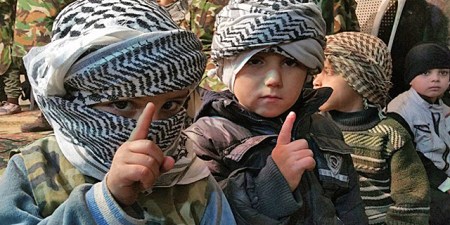
ISIS-youth

By the end of last year, 34 organizations had sworn allegiance to the Islamic State, United Nations Secretary-General Ban Ki-moon said February 5. That number will continue to rise in 2016, he warned.

“The recent expansion of the [Daesh] sphere of influence across west and north Africa, the Middle East and south and southeast Asia demonstrates the speed and scale at which the gravity of the threat has evolved in just 18 months,” he said.

The secretary general added ISIS is the wealthiest terrorist organization, with revenues of up to $500 million in 2015.

The private counter-terrorism company IntelCenter puts the number of affiliates and supporters at 43:

1.       al-I’tisam of the Koran and Sunnah [Sudan] – 1 Aug. 2014 – Support

2.       Abu Sayyaf Group [Philippines] – 25 Jun. 2014 – Support

3.       Ansar al-Khilafah [Philippines] – 14 Aug. 2014 – Allegiance

4.       Ansar al-Tawhid in India [India] – 4 Oct. 2014 – Allegiance

5.       Bangsamoro Islamic Freedom Fighters (BIFF) [Phillippines] – 13 Aug. 2014 – Support

6.       Bangsmoro Justice Movement (BJM) [Phillippines] – 11 Sep. 2014 – Support

7.       Jemaah Islamiyah [Philippines] 27 Apr. 2015 – Allegiance

8.       al-Huda Battalion in Maghreb of Islam [Algeria] – 30 Jun. 2014 – Allegiance

9.       The Soldiers of the Caliphate in Algeria [Algeria] – 30 Sep. 2014 – Allegiance

10.   al-Ghurabaa [Algeria] – 7 Jul. 2015 – Allegiance

11.   Djamaat Houmat ad-Da’wa as-Salafiya (DHDS) [Algeria] 19 Sep. 2015 – Allegiance

12.   al-Ansar Battalion [Algeria] 4 Sep. 2015 – Allegiance

13.   Jundullah [Pakistan] – 17 Nov. 2014 – Support

14.   Islamic Movement of Uzbekistan (IMU) [Pakistan/Uzbekistan] Video – 31 Jul. 2015 – Allegiance

15.   Tehreek-e-Khilafat [Pakistan] – 9 Jul. 2014 – Allegiance

16.   Leaders of the Mujahid in Khorasan (ten former TTP commanders) [Pakistan] – 10 Jan. 2015 – Allegiance

17.   Islamic Youth Shura Council [Libya] – 22 Jun. 2014 – Support

18.   Jaish al-Sahabah in the Levant [Syria] – 1 Jul. 2014 – Allegiance

19.   Martyrs of al-Yarmouk Brigade [Syria] – Dec. 2014 – Part of IS – Allegiance

20.   Faction of Katibat al-Imam Bukhari [Syria] – 29 Oct. 2014 – Allegiance

21.   Jamaat Ansar Bait al-Maqdis [Egypt] – 30 Jun. 2014 – Allegiance

22.   Jund al-Khilafah in Egypt [Egypt] – 23 Sep. 2014 – Allegiance

23.   Liwa Ahrar al-Sunna in Baalbek [Lebanon] – 30 Jun. 2014 – Allegiance

24.   Islamic State Libya (Darnah) [Libya] – 9 Nov. 2014 – Allegiance

25.   Lions of Libya [Libya] (Unconfirmed) – 24 Sep. 2014 – [Support/Allegiance]

26.   Shura Council of Shabab al-Islam Darnah [Libya] – 6 Oct. 2014 – Allegiance

27.   Jemaah Anshorut Tauhid (JAT) [Indonesia] – Aug. 2014 – Allegiance

28.   Mujahideen Indonesia Timor (MIT) [Indonesia] – 1 Jul. 2014 – Allegiance

29.   Mujahideen Shura Council in the Environs of Jerusalem (MSCJ) [Egypt] – 1 Oct. 2014 – Support

30.   Okba Ibn Nafaa Battalion [Tunisia] – 20 Sep. 2014 – Support

31.   Jund al-Khilafah in Tunisia [Tunisia] – 31 Mar. 2015 – Allegiance

32.   Central Sector of Kabardino-Balakria of the Caucasus Emirate (CE) [Russia] – 26 Apr. 2015 – Allegiance

33.   Mujahideen of Tunisia of Kairouan [Tunisia] 18 May 2015 – Allegiance

34.   Mujahideen of Yemen [Yemen] – 10 Nov. 2014 – Allegiance

35.   Supporters for the Islamic State in Yemen [Yemen] – 4 Sep. 2014 – Allegiance

36.   al-Tawheed Brigade in Khorasan [Afghanistan] – 23 Sep. 2014 – Allegiance

37.   Heroes of Islam Brigade in Khorasan [Afghanistan] – 30 Sep. 2014 – Allegiance

38.   Supporters of the Islamic State in the Land of the Two Holy Mosques [Saudi Arabia] – 2 Dec. 2014 – Support

39.   Ansar al-Islam [Iraq] – 8 Jan. 2015 – Allegiance

40.   Boko Haram [Nigeria] – 7 Mar. 2015 – Allegiance

41.   The Nokhchico Wilayat of the Caucasus Emirate (CE) [Russia] – 15 Jun. 2015 – Allegiance

42.   al-Ansar Battalion [Algeria] – 4 Sep. 2015 – Allegiance

43.   al-Shabaab Jubba Region Cell Bashir Abu Numan [Somalia]- 7 Dec. 2015 – Allegiance

Here Ban Ki-moon summarizes the U.N.’s position on ISIS:
 

Keeping us SAFEST…

February 7, 2016

IAF-WP

Be sure to expand to full resolution… – JW

Keeping us safe…

February 7, 2016

CIK67k9UsAA9vca


Middle East Strategic Outlook, February

February 7, 2016

Middle East Strategic Outlook, February

by Shmuel Bar

February 7, 2016 at 6:00 am

Source: Middle East Strategic Outlook, February

  • The EU-Turkey agreement of 25 November, which provided Turkey with 3 billion euros over two years in order to stop the flow of refugees to Europe, has not achieved that goal. Speaking privately, EU officials complain that Turkey has not taken any concrete measures to reduce the flow of refugees. In our assessment, Turkey will continue to prevaricate on steps to stem the flow of refugees as pressure on the EU to give more concessions.
  • During the coming year there will certainly be further terrorist attacks that will push European public opinion further to the right.
  • We assess that Iran will continue in indirect channels with a parallel nuclear program, realized long before the 10-year target of the JCPOA.
  • The demand for unification of Kurdistan — Iraqi and Syrian — will also begin to be heard. It is highly likely that Russia will take advantage of the trend and support the Kurds, effectively turning an American ally into a Russian one.

The announcement by the IAEA that Iran has fulfilled its obligations according to the Joint Comprehensive Plan of Action (JCPOA) has triggered “Implementation Day” and the removal of the nuclear-related sanctions on Iran. The JCPOA, however, did not deal with Iran’s ballistic missile program, and the sanctions related to it are still nominally in force. These sanctions are minor and will not have any real effect on the Iranian missile program. The missile program will mature during this period and will include Ghadr missiles with ranges of 1,650-1,950 km, which may be capable of carrying nuclear warheads.

The question now is: whither the Iranian nuclear program? After the lifting of sanctions, and taking into account the impracticality of “snap-back” of sanctions, we assess that Iran will now initiate a parallel nuclear program. This will, of course, be far slower than the program that was dismantled by the JCPOA, but it will be realized long before the 10-year target of the JCPOA. One possibility for Iran to continue its nuclear program is through North Korea. The wording of the JCPOA is ambiguous on nuclear Iranian nuclear cooperation with other countries that are not a party to the agreement. North Korea could produce the whole chain of nuclear weapons and put it at Iran’s disposal in return for Iranian funding. North Korea would certainly profit economically from such collaboration and would not risk further sanctions. Such cooperation would be difficult to detect, and even if detected, may not reach the threshold of a material breach of the JCPOA.

The most immediate reward that Iran will receive is the release of frozen Iranian funds ($100-$150 billion). In addition, Iran may now market oil stored offshore in tankers (about 50 billion barrels) and is preparing to increase its production by 500 thousand bpd (from 2.8 million bpd). It is doubtful that Iran can truly increase its production as planned. Even if it does, the addition of Iranian oil is likely to drive prices down even further, counter-balancing much of the potential profit. Sanctions relief also is not a quick fix for the Iranian economy. While it removes legal impediments for investment and business in Iran, the risks that Western companies will face due to residual non-nuclear sanctions (that may be enhanced and enforced by a future American administration), lack of government protection, corruption, and the weakness of the Iranian market cannot be removed by decree. Therefore, European banks and investors may not hurry to invest in Iran at the levels needed to jump-start the Iranian economy after years of sanctions.

The Iranian regime’s goal is not only to block the path to the reformists or reformist-minded, but also to the extremists on the right to Supreme Leader Ali Khamenei. Such a balance could help the Iranian system maintain its “centrist” orientation and guarantee the continuity in the event of Khamenei’s death and the appointment of a new successor (or a triumvirate of several potential leaders). It will also facilitate the eventual takeover of the regime by the Islamic Revolutionary Guards Corps (IRGC) after the demise of Khamenei. The backing that the Guardian Council received from the Supreme Leader for the results of its vetting process, in the face of Rouhani’s condemnation of the disapproval of almost all reformists, is also indicative of the balance of power in the regime.

The Iranian seizure of two US Navy patrol boats on January 12 and the publication of drone pictures of a US Navy aircraft carrier underlined the sense of immunity that Iran has achieved. These actions should be seen in the context of Iran’s attempt to change the rules of the game in the Persian Gulf, while testing the waters of American tolerance and sending to Saudi Arabia and the Gulf States an indirect message that Iran is ready and willing to risk conflict with the US and that the US is a paper tiger that cannot be relied upon in a confrontation between the Gulf States and Iran. In our assessment, Iran will continue with shows of force such as seizing of naval vessels of Saudi Arabia and the Gulf States, stop and search operations of commercial vessels en route to the Gulf States, naval exercises — including missile tests close to Gulf sea-lanes and to the territorial waters of the Gulf States — in international waterways that implicitly interrupt and threaten shipping in the Gulf, “spooking” of Gulf aircraft and even false flag operations of mining, piracy or attacks by proxies in the Gulf and the Red Sea along the Yemeni coast. We may expect as a result possible frontier skirmishes on the shared littoral borders of Iran and Saudi Arabia, gas fields and disputed islands and in the international waters of the Gulf.

The Iranian seizure of two US Navy patrol boats on January 12 underlined the sense of immunity that Iran has achieved.

Saudi Arabia is drawing up its own map of interests and areas of influence that it is projecting as “no-go zones” for Iran — a Saudi “Monroe Doctrine” for the region. The most critical of these are: Yemen (due to the potential for threatening the Bab al-Mandeb Straits), subversion in the Gulf States (primarily Bahrain), the Strait of Hormuz and the international waters of the Gulf. To this list one must add the obvious: any Iranian-inspired or -planned attack on the Saudi homeland itself — government facilities, oil installations etc. — would be perceived as crossing a red line. While neither Saudi Arabia nor Iran is interested in direct conflict, and both would prefer to continue to work through proxies and in areas outside their respective sovereign territories, the dynamic nature of the situation can easily lend itself to misreading of such red lines and such miscalculation may lead to direct confrontation between them. While all-out direct war between Iran and Saudi Arabia remains a low probability, this assessment should be revisited again in the near future.

In Syria, American positions have undergone a strategic shift that reflects the new balance of power created by the Russian intervention. On the military side, the Russian presence imposes a heavy constraint on the American activities, and U.S. officials caution that the success of the Ramadi operation will not be followed by a concerted effort to roll back the “Islamic State” in the Syrian theater. In regards to a political solution, the US has accepted the Russian-Iranian four-point-plan that envisages Bashar al-Assad remaining in office during a transition period and being allowed to run for President in “internationally supervised elections”. In our assessment, the Syrian opposition and their Arab supporters cannot accept any blueprint that would leave any doubt regarding Bashar al-Assad relinquishing power before any process begins. These developments will only feed the sense of the Sunni Arabs that the United States has turned its back on them and is supporting Iranian-Russian hegemony in the region. On this background, the prospects that the Syrian “peace talks” in Geneva will achieve any progress towards resolution or even mitigation of the civil war are close to nil.

Last month’s visit by Chinese President Xi Jin Ping to Saudi Arabia, Egypt and Iran was the first such visit of a Chinese President in the region since 2002, and the first foreign head of state to visit Iran since the announcement of “Implementation Day” of the JCPOA. The Chinese emphasis in all the visits was on economic cooperation, development and stability, but above all — in an implicit stab at the US and Russia — emphasizing that China does not seek proxies, to fill a power vacuum or hegemony in the region. The leitmotif of the visit was the integration of the Middle Eastern partners (i.e. the Arabs in general and Iran) into China’s “Belt and Road Initiative.” In spite of the inclusion of Iran in the visit, President Xi took care not to offend the Arabs. The agreements with Saudi Arabia included nuclear cooperation in a scope far greater than that which was offered to Iran, and the joint statement reflected the Saudi position on Yemen, stating, “both sides stressed support for the legitimate regime of Yemen.”

The “Arab Policy Paper” published on the eve of the visit stresses China’s commitment to “non-intervention and opposition to interference in the affairs of other countries”. This is seen by the Arab policy communities as a sign of implicit Chinese support for their position vis-à-vis Iran’s activities in the region, though they would have welcomed more explicit statements of support. There is no expectation in the region that China is going to play the “Big Power” card in the region. Taking sides in this conflict would be out of character for China. Saudi Arabia and the other Arab states will attempt to convince China to refrain from demonstrations of rapprochement with Iran and to support the Arab positions vis-à-vis Iranian provocations in the Gulf, Syria and Yemen. While China may show a slight implicit leaning towards the Arab position on these issues, it is not likely to take a clear anti-Iranian/pro-Arab position in the near future.

The European Union-Turkey agreement of 25 November, which provided Turkey with 3 billion euros over two years in order to stop the flow of refugees to Europe, has not achieved that goal. Speaking privately, EU officials complain that Turkey has not taken any concrete measures to reduce the flow of refugees. In our assessment, Turkey will continue to prevaricate on steps to stem the flow of refugees as pressure on the EU to give more concessions. Turkey has already signaled that the sum will not suffice for the task of maintaining the refugees inside Turkey alone, and certainly not for other security measures such as blocking the border with Turkey to prevent passage to and fro of “Islamic State” foreign fighters.

Aside from the 3 billion euros, the EU commitments will also not be easily implemented; visa waivers for Turkish citizens in general will encounter massive opposition within the EU. The road to Turkish accession to the EU must also go through complex negotiations on various aspects of compatibility of Turkey to the standards of the EU. All these discussions will encounter a veto by Cyprus, pending a peace deal with Turkish-occupied Northern Cyprus. This veto may be resolved if a referendum on unification of Cyprus takes place and supports re-unification later this year. However, the real obstacle towards Turkish accession is not technical or due to the Cyprus question; it revolves around the shift in European public opinion towards absorption of immigrants from Muslim countries. During the coming year, there will certainly be further terrorist attacks that will push European public opinion further to the right. Under these circumstances, Turkish accession or even visa waiver will be very unlikely.

In our assessment, the trend towards Kurdish independence will eventually lead to an independent Iraqi Kurdistan. The events in Syrian Kurdistan will also affect the pace and direction of the independence movement in Iraq’s Kurdistan Regional Government (KRG). Unification of the parts of Syrian Kurdistan in the face of Turkish opposition and under Russian protection will give impetus to the demand to create a political fait accompli of independence in Iraqi Kurdistan. As the principle of Kurdish independence in Iraq gains more and more support and becomes a reality, the irredentist demand for unification of Kurdistan — Iraqi and Syrian — will also begin to be heard. This is the fulfillment of the Kurdish nightmare that Turkey has always feared. With the deterioration of relations between the AKP government and the Turkish Kurds inside Turkey, such a political reality of independent Kurdistan will add fire to the flames of the Kurdish rebellion in southern Turkey. It is highly likely that Russia will take advantage of the trend and support the Kurds, effectively turning an American ally into a Russian one. If this happens, the US will have lost an important potential ally in the new map of the Middle East.

The large number of players on the ground that may take a part in the campaign for Mosul will only complicate the campaign further and — if the city or part of it is retaken, will increase the chances of internal fighting between the components of the ad-hoc alliance of Iraqi government forces, Shiite militias, Sunni militias, Kurdish Peshmarga, Turks and American forces.

On this background, the Syrian “Peace Talks” in Geneva started (29 January) as “proximity talks” in which the UN representatives shuttle between the rooms of the opposing parties. The Saudi supported High Negotiations Committee (HNC) of the Syrian opposition ceded their original conditions — cessation of the attacks on civilians — though they refuse to meet with the regime representatives while the latter refuse to meet with “terrorists”. The Syrian regime representation is low-level as an indication that there is no intention to hold real negotiations. Furthermore, the Kurdish Democratic Union Party (PYD), whose military wing, the YPG, is the most effective fighting force on the ground against the “Islamic State,” were not included in the opposition delegation because of the Turkish threat to boycott the Geneva negotiations if it participates. Under these conditions, the prospects that the talks will achieve any progress towards resolution or even mitigation of the civil war are close to nil.

Dr. Shmuel Bar is a senior research fellow at Israel’s Institute for Policy and Strategy at the Interdisciplinary Center Herzliya in Israel and a veteran of Israel’s intelligence community.

Erdoğan to US: Choose either Turkey or the PYD as your partner

February 7, 2016

Erdoğan to US: Choose either Turkey or the PYD as your partner

February 07, 2016, Sunday/ 10:51:35/

Source: Erdoğan to US: Choose either Turkey or the PYD as your partner

Erdoğan to US: Choose either Turkey or the PYD as your partner

President Recep Tayyip Erdoğan. (Photo: Reuters)

In one of his strongest remarks to date, Turkish President Recep Tayyip Erdoğan has lambasted the US after a senior official’s visit last week to the northern Syrian town of Kobani, which is under the control of the Kurdish Democratic Union Party (PYD), and called on Washington to choose either Turkey or “terrorists in Kobani” as a partner.

Erdoğan directed severe criticism at the visit to the town by Brett McGurk, US President Barack Obama’s special envoy for the anti-Islamic State in Iraq and the Levant (ISIL) coalition. The visit came at a time where Geneva peace talks were taking place, and the Turkish president declared that the US should make a choice between the PYD and Turkey.

Erdoğan has called on the US and the European Union to list the major Syrian Kurdish political party and its armed wing as terrorist organizations over their affiliation with the Kurdistan Workers’ Party (PKK), which is fighting against the Turkish state and which is regarded as a terrorist group by Washington and Brussels.

“Do you accept the PKK as a terrorist organization? Then why don’t you list the PYD and [People’s Protection Units] YPG as terrorist organizations, too?” Erdoğan asked while speaking to reporters on Friday on board a plane en route to Turkey from a week-long Latin America tour

This is not the first time Erdoğan has made such a call. His and other senior Turkish leaders’ calls reflect a split between Ankara and its allies over how to treat the Syrian Kurdish party and its armed faction.

The Kurdish militia the YPG has been a reliable ally in the fight against ISIL on the ground and has benefited from the US arms supply on several occasions.

While the US and EU share Turkey’s view toward the PKK and sees it as a terrorist organization, they differ in their views regarding the PYD and YPG.

During his visit, McGurk met with senior PYD and YPG officials and pledged further support for Syrian Kurds. He also visited a cemetery and paid his respects to YPG fighters killed during a months-long battle with ISIL in Kobani.

It was the first time a top US official has visited the YPG-controlled town, reflecting the type of relationship the US and the PYD enjoy. The US airdropped weapons and munitions during the siege of Kobani.

“We discovered advanced Russian, US and European weapons in PKK cells during military operations in southeastern Turkey. Where do these weapons come from?” the Turkish president asked, revealing Turkey’s growing anxiety that some of the weapons provided by the US and EU to the YPG end up in PKK hands.

“The PKK is a terrorist organization and the YPG is too. The PYD is what the PKK is. [US Vice President] Joe Biden came with an official. A national security official [Obama’s envoy]. He visits Kobani at the time of the Geneva talks and is awarded a plaque by a so-called YPG general. How can we trust [you]?” Erdoğan said, expressing his dismay over McGurk’s visit.

McGurk was given a plaque by YPG official Polat Can, a former PKK member. It sparked a harsh reaction from Ankara as Erdoğan called on the US to choose, saying, “Am I your ally or are the ‘terrorists’ in Kobani?”

Erdoğan also repeated his criticism of Russian air strikes in Syria. The Turkish president said on Friday that Russia must be held accountable for the people it has killed in Syria, arguing that Moscow and Damascus were together responsible for 400,000 deaths there.

While speaking at a joint press conference with his Senegalese counterpart during a brief stopover in the West African country on Friday, Erdoğan also dismissed a Russian statement that Turkey was preparing for an incursion in Syria, saying he is “laughing” at the claim.

Ankara has dismissed this as propaganda intended to conceal Russia’s own “crimes.”

Erdoğan said Russia was engaged in an invasion of Syria and accused it of trying to set up a “boutique state” for its longtime ally President Bashar al-Assad.

“Russia must be held accountable for the people it has killed within Syria’s borders,” the Doğan news agency quoted him as saying. “By cooperating with the regime, the number of people they have killed has reached 400,000.”

His comments are likely to further anger Moscow. Relations between Turkey, a NATO member, and Russia hit their worst low in recent memory last November after Turkey shot down a Russian warplane Ankara said had violated Turkish airspace from Syria.

Russian-Made T-90 Tank Goes Through Baptism by Fire in Syria

February 7, 2016

Russian-Made T-90 Tank Goes Through Baptism by Fire in Syria

Middle East

17:34 07.02.2016(updated 17:43 07.02.2016)

Source: Russian-Made T-90 Tank Goes Through Baptism by Fire in Syria

For the first time, the Syrian Army used Russian-made T-90A tanks in combat. Their baptism by fire took place near the city of Aleppo.

The T-90A, one of Russia’s most advanced weapons, went through its baptism by fire in service with the Syrian armed forces. Earlier, it was reported by Turkish and Iranian media, and then the Russian Defense Minister confirmed the fact.The Turkish pro-government newspaper Yeni Safak reported, citing a military commander, that over 80 T-72 and T-90 tanks were spotted in combat north of Aleppo. The report also read that Syrian forces backed by Russian jets took control over the towns of Nubul and Zehra, north of Aleppo.

Meanwhile, Syrian T-90s in action near Aleppo were then reported by Iran’s FARS news agency on February 2. According to the agency, T-90 tanks were deployed near the town of Khan Tuman, south of Aleppo, after the Syrian Army regained control over the town in December.

Using the advantages of the T-90 tank, the Syrian Army alongside its allies surrounded the strategic towns of Khan Tuman and Al-Karassi, along the Aleppo-Damascus highway, a military source told FARS News.

However, the first news about delivering T-90 tanks to the mechanized division of the Syrian Army came on November 29, 2015. At the time, Russia neither confirmed nor denied it.On February 5, a source in the Russian Defense Ministry told RNS news agency that in late-2015, a number of T-90 machines were delivered to Syria. According to the source, previously the tanks were in service with the Russian military. Syrian troops practiced at training fields in Russia. According to RNS, the tanks were first used in combat by the Syrian Army near Aleppo. They supported a ground assault by Syrian troops.

The T-90A tank entered service with the Russian Armed Forces in 2004. The T-90A is a modernized version of the T-90 Vladimir tank developed on the basis of the T-72B, in the 1980-1990s. It was named “Vladimir” after its constructor Vladimir Potkin. The T-90A featured a new engine and turret and was equipped with a thermal-vision system. Its engine delivers 1,000 hp at 2,000 rpm. The tanks is equipped with third-generation active armor, capable of withstanding an attack by 120-mm M829A2 and DM43A1 tank rounds, designed for the Abrams M1A1 and Leopard-2 tanks respectively.
The T-90 protective system is capable of protecting the tank from the newest TOW-2A and HOT-2 anti-tank missiles.According to FARS, in four-and-a-half years of the Syrian war various militant groups received over 9,000 US-made TOW anti-tank missile systems and M-79 grenade launchers. They were very successful against the aging T-55 and T-72 tanks of the Syrian Army. Only after the newest T-90 tanks were delivered to Syria the Syrian Army began its advance against militants.

The T-90 was delivered to Syria because the tank is equipped with the Shtora active armor, military analyst Alexei Ramm told Gazeta.Ru. Unlike, for example the T-72B, the T-90 tanks of the Russian Armed Forces were initially equipped with this type of armor. The need for it was dictated by the fact that many Syrian militants are armed with TOW missiles.

A T-90A main battle tank
Host photo agency
A T-90A main battle tank

How does the system works? There are several laser radiation receivers, mounted on the tank, as well as two projectors near the gun. These receivers can detect laser radiation when the tank is being targeted and warns the crew of the threat, Ramm explained. In this situation, the crew can evade the attack. The second option is smoke-screening, and the third option is jamming the enemy target-acquiring system with the projectors.

The T-90A is equipped with a 125-mm smooth-bore gun – the 2A46M-2 – with a barrel length of 51 calibers. Its maximum accuracy range while firing high-explosive anti-tank warheads is 4,000 meters, and while firing fragmentation projectiles – up to 9,600 meters.

According to the analyst, the Syrian Army would actively engage the Russian T-90 tanks in combat. He explained that ground relief allows for using the T-90 near Aleppo, Idlib, Hama and Homs but currently main combat actions are focused on Aleppo and northern Latakia.”The principal task now is to neutralize threats to two western regions – Latakia and Tartus. If Latakia falls it would deal a serious blow to [Syrian President Bashar] Assad’s position and would complicate the Russian aerial operation,” Ramm pointed out.

What is more, now an offensive is also underway against militants in the enclave of Salma. Tanks are not enough in this mountainous area, where ground forces backed by aviation are needed.

“If Salma and Aleppo are liberated Turkey will not be able to deliver supplies to terrorists,” he said.

In December, Syria’s news agency SANA published footage from the battlefield where Russian T-90’s were also spotted.

Just Humor .

February 7, 2016

Obama is in a traffic accident killed. His soul arrives at the gate of Heaven and hosted by Peter. “Welcome to heaven,” says Peter. “There is a small problem. I can not just leave you. We rarely put the highest person at the gate of Heaven, you see, so we do not know right away what to do with you. “

“No problem, just let me in,” says the politician. “Well, I’d like to, but I have orders from higher up. We will do this: you take one day in hell and one day in heaven. Then you can choose where you want to spend eternity. “

“Really, I do. I want to go to heaven,” says the politician. “I’m sorry, but we have here as our rules,” says Peter. So the politician is escorted by Peter to the elevator and go down, down and further down to hell. The doors open and suddenly he stands in the middle of a beautiful green golf course. At a distance stands the clubhouse before all his old friends and other politicians with whom he worked.

They are all very happy and dressed in evening dress. They run up to him, shake his hand and talk about the good times they had when they were getting richer at the expense of the citizens. They play a nice game of golf and have dinner with lobster, caviar and champagne. The devil himself is also present, which truly is a friendly guy and are entertained with dancing and telling jokes.

They had a good time together and before he has blinked an eye, it’s time to leave. Everybody says affectionate goodbye to him and waves while the elevator rises. The elevator goes up, up, up, and when he stops, Peter is waiting for him, too. “Now it’s time to visit heaven.”

In heaven it is very cozy. He spends his time with the accompany of joyful souls of dancing cloud to cloud, playing the harp and singing. Everybody has a good time, but before he know it , there are 24 hours passed and Peter comes to him. “Well, you have a day in hell and spent a day in heaven. Make your choice for eternity. “

The politician said,  wait a moment, then he answered: “Well, Well, I would never have said it before, I mean heaven was great, but I think I’m better off in hell.”  Peter escorts him to the elevator and he whizzes down, down, and down. The doors of the elevator open and he stands in a barren landscape covered with dirt and debris. He sees all his friends, dressed in rags, picking up the trash and put in black bags, while waste keeps falling down.

The devil comes over to him and puts his arms around him. “” I do not understand, “stammers obama. “Yesterday I was here and then there was a golf course and clubhouse. We ate lobster and caviar, and we drank champagne. We had it all here. Now there is only an arid landscape full of garbage and my friends look awful. What happened?”

The devil looks at him, smiles and says, “Yesterday we were on campaign. . . Today you have chosen. “

h/t Ron

www.ejbron.wordpress.com


Between Putin and Obama

February 7, 2016

Between Putin and Obama, Israel Hayom, Boaz Bismuth, February 7, 2016

The tide has turned in Syria: Aleppo, the rebel stronghold, is on the verge of falling to President Bashar Assad’s army. Hezbollah’s Shiite militias, the Iranian army and the massive Russian air strikes have been the difference.

In contrast to the rebels, Assad can count on his partners. On the Syrian dictator’s side, backed by Russia, action is being taken. On the rebel side, backed by the Americans, there has been a lot of talking. This perhaps explains why in January 2017 U.S. President Barack Obama will exit the White House, and Assad will still be in power. We can add this legacy to the American president’s splendid list of achievements.

And we haven’t even mentioned the millions of Syrian refuges, the terrible migrant crisis in Europe (leading to the rise of far-right parties across the continent), and the escalation of hostilities between Shiites and Sunnis. It’s not a short list.

Since last Monday, Aleppo has been under heavy attack from Assad’s forces. The gains on the ground have been considerable. Russia’s intervention has tipped the balance of power. No one can say this was unexpected. Washington, meanwhile, continues to grumble. U.S. Secretary of State John Kerry lambasted Moscow on Friday for the large number of dead Syrian women and children. Moscow isn’t exactly heeding his criticism. Washington still fails to understand that instead of talking, maybe it would be better to take action already. In August of 2013, however, after Assad had attacked his own people with chemical weapons for the 14th time, the Americans did nothing (red lines, remember?). Why should things be any different today?

Washington, you will say, has worked hard to find a diplomatic solution. This is a good time to remind everyone that the peace talks in Vienna have again hit a dead end. The talks aren’t likely to succeed for a number of reasons, namely that the two main players — Saudi Arabia and Iran — have reached a point of open hostilities, thanks to American foreign policy. Instead of cooperating to resolve the Syrian crisis, these two regional powers are closer than ever to a full-fledged military conflict. Riyadh is threatening to send ground forces into Syria to support the rebels. The commander of Iran’s Revolutionary Guard has already vowed that any such intervention would result in immense casualties for the Saudis. This is where things stand.

Over the weekend Turkey’s foreign minister discussed opening his country’s borders to the steady stream of refugees, but the crossings remain as shut as they were in September, 2014, when thousands of Kurds tried to flee the border town of Kobani. The European Union is trying to remind the Turks that they were given $3 billion for the expressed purpose of absorbing these 2 million refugees. But who expects agreements to be kept in today’s Middle East?

Who does have faith in agreements?

The refugee issue is becoming the hot button topic of the Syrian civil war. “The markets solved the economic crisis, the voters will solve the refugee crisis,” a French lawmaker said a few days ago. In the meantime, as Assad solidifies his power the far-right parties in Germany, Sweden, Denmark and Holland, and of course in France, are all growing in strength. It appears that everyone outside the Obama camp is thriving. And here is yet one more legacy to tell the grandchildren about.

Bush: Preemptive Strike Against North Korea ‘Necessary to Keep Us Safe’

February 7, 2016

Bush: Preemptive Strike Against North Korea ‘Necessary to Keep Us Safe’

BY:
February 6, 2016 11:50 pm

Source: Jeb Bush|North Korea|Preemptive Strike

Former Florida governor Jeb Bush hit the Obama administration Saturday night for not doing enough to prevent North Korea from developing a nuclear warhead and said that a preemptive strike against the hostile state would be necessary to keep the United States safe.

“This relates to the strategic patience of the Obama administration. They come up with these great marketing terms and what they do is they pull back and voids are filled and now filled by asymmetric threats of terror as well as nation states on the run. The next president of the United States is going to have to get the United States back in the game, and if a preemptive strike is necessary to keep us safe, then we should do it,” Bush said.

Prior to the debate, the AP reported that North Korea had launched a long-range rocket. North Korea calls the launch part of its peaceful space program but critics are calling it cover for a banned test of technology for a missile that could eventually reach the U.S. mainland.

Debate host Martha Raddatz had asked the candidates how they would have responded if they were commander in chief to the rocket launch.

Japan, South Korea, and the U.S. tracked the rocket launched from North Korea’s west coast and no damage was reported. The launch comes a month after North Korea claimed to have tested a hydrogen bomb, but the country’s claims have been widely disputed.

Jihadists reinforce other rebels during key battle in Aleppo province

February 7, 2016

Jihadists reinforce other rebels during key battle in Aleppo province, Long War Journal, February 6, 2016

Screen-Shot-2016-02-06-at-11.57.16-AM-768x433

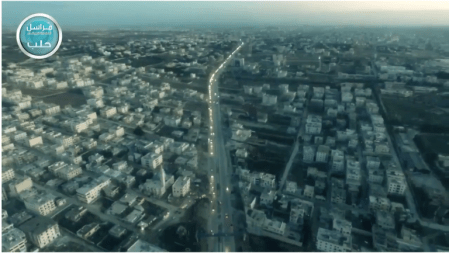
An Al Nusrah Front convoy streams into Aleppo province in late January.

Al Nusrah Front, al Qaeda’s official branch in Syria, sent a massive convoy of fighters to the Aleppo province in late January. The jihadists’ redeployment was promoted in a short video posted on Twitter. More than 100 vehicles filled with fighters streamed into the province.

It was a harbinger of the heavy fighting to come.

Bashar al Assad’s regime, backed by Russian airstrikes, Iranian-sponsored Shiite militias and Hezbollah, launched a major offensive in Aleppo earlier this month. The fight for the province is likely the most important battle in Syria since early last year, when the Jaysh al Fateh coalition, led by Al Nusrah and Ahrar al Sham (an al Qaeda-linked jihadist group) swept through the neighboring Idlib province.

If Assad and his allies are successful it will not only allow them to lay siege to the city of Aleppo, parts of which have been controlled by the insurgents since 2012, but also to cut off Idlib. Assad wants to secure the northern part of the province, which borders Turkey and houses vital supply routes for the insurgency.

The Syrian government claims to have made gains in pursuit of this objective in recent days.

The Syrian Army, “in cooperation with” paramilitary groups, “restored security and stability to Rityan and Mair towns in the northern countryside of Aleppo province,” Assad’s propaganda arm, SANA, claimed on Feb. 5.

The purported gains came two days after SANA reported that the Syrian Army and its allies “broke the siege imposed on Nubbul and al-Zahra towns by terrorist organizations.” SANA claimed that “[s]cores of terrorists were killed, most of them from [Al Nusrah Front] during the operations.” Nubbul and al-Zahra are both Shiite-majority towns in the northern part of Aleppo.

There is an ebb and flow to the fighting in Aleppo, as elsewhere, making it difficult to tell if the government’s gains are lasting, or just temporary. For example, although SANA says Rityan has been retaken from the insurgents, Al Nusrah continues to post images from the fighting there.

And although SANA says all of the opposition to the government in Aleppo comes from “terrorist organizations,” the reality is more complex. Jihadist groups such as Al Nusrah are partnering with other rebel organizations, including Free Syrian Army (FSA) and Islamist factions, in an attempt to thwart the Syrian government’s advances.

The opposition in Aleppo

One of the strongest rebel groups in Aleppo is the Nur al-Din al-Zanki Movement. Members of Zanki and Al Nusrah clashed at a checkpoint in late September and early October of last year. Zanki’s “political bureau” then denounced Al Nusrah in tweets that were published in both English and Arabic. However, the infighting did not lead to a permanent rift between the two. Instead, Zanki complied with Al Nusrah’s demands and quickly apologized.

In a statement written in Arabic and released on social media, Zanki said its criticism of Al Nusrah did “not represent the [Zanki] movement’s official position…and we owe [an] exoneration of our brothers from what was attributed to them – accusations, insinuations, and slander [libel] – to God Almighty, and we only think properly of them.”

The “relationship between us and our [Nusrah] brothers is proceeding on even better terms than what it was in the past, and this incident which occurred between us and our [Nusrah] brothers will not deter us from vigorously continuing to strengthen the bond of Islamic brotherhood between us and them, and which obligates us – religiously – to cooperate and combine efforts and fight off the aggressor enemy,” Zanki’s apology continued.

The statement ended with a call for both Zanki and Al Nusrah “to [ensure] that the only judgment in any dispute between us should be based on religious law.”

Zanki is not al Qaeda. But as the skirmish with Al Nusrah demonstrated, Zanki does not want to offend al Qaeda’s men, cooperates with them on the battlefield and believes in a version of “religious law” (sharia) that is at least similar to Al Nusrah’s.

Despite its adherence to an Islamist ideology and alliance with Al Nusrah, Zanki has received American-made TOW missiles, which it has used against both the Assad regime and the Islamic State.

Another Islamist organization in Aleppo is Faylaq al Sham (Sham Legion), which fought as part of the Jaysh al Fateh coalition in Idlib. In early January, however, Faylaq al Sham announced that it was leaving Jaysh al Fateh to concentrate on the fighting in Aleppo. The group subsequently merged with others to form the “North Brigade” in Aleppo.

In late December, Sheikh Umar Huzaifa, a senior Faylaq al Sham official, was one of 38 ideologues who signed a statement proclaiming that jihad is an “individual obligation” for all Muslims “in situations like this.” The statement’s signatories, who belong to the “Association of Scholars in Sham,” portrayed the war in Syria as one pitting a “Crusader-Zionist-Safawi [Shiites and Iranians]” alliance against Sunni Muslims.

The association’s scholars claimed it “is no longer hidden from our Beloved Ummah [community of worldwide Muslims] what has reached the land of Sham with the rushing forward of the entire nations of Kufr [disbelief] against it,” because it “has become manifest in the Crusader-Zionist-Safawi coalition rushing to eliminate the revolution of the people of Sham and their blessed jihad.” The “battle of Sham has become a decisive battle against the nations of Kufr,” the statement continued, as the rebels’ enemies “gather to establish the Rafidhi [rejectionist] Shia to fulfill their drawn up plans for their (Shia) crescent (on the map) and to eliminate” Sunni belief in Syria and elsewhere.

Other signatories on the statement issued by the “Association of Scholars in Sham” included Sheikh Abdallah Muhammad al Muhaysini (an al Qaeda-affiliated cleric and “judge” in Jaysh al Fateh), members of Al Nusrah Front and Ahrar al Sham, Sheikh Sirajuddin Zurayqat (emir of the al Qaeda-linked and Lebanon-based Abdullah Azzam Brigades), as well as a number of other officials.

The battle for Aleppo is a complex, multi-sided affair. The organizations discussed above are just some of those fighting on the ground. The Islamic State, the Kurds, and the Western-backed Syrian Democratic Forces all have a presence.

Another group is Liwa Suqour al Jabal, which has reportedly received assistance from the CIA. Liwa Suqour al Jabal fights in Aleppo and has been targeted in Russian airstrikes.

“The Russian (air) cover continues night and day, there were more than 250 air strikes on this area in one day,” Hassan Haj Ali, the leader of Liwa Suqour al Jabal, told Reuters in an interview. “The regime is now trying to expand the area it has taken control of,” Ali explained. “Now the northern countryside (of Aleppo) is totally encircled, and the humanitarian situation is very difficult.”

The fight for Aleppo may very well shape the course of the war. And as the battle has raged on, jihadists have called for even more reinforcements. Sheikh Muhaysini, a popular jihadist cleric, has repeatedly urged Muslims to join the rebel’s ranks and for the existing insurgent organizations to unite under a common banner.

It remains to be seen if the jihadists, Islamists and other rebels can thwart the Assad regime’s advances.