Archive for November 3, 2015

Heat flash over Sinai prior to Russian plane crash reportedly detected by US satellite

November 3, 2015

Heat flash over Sinai prior to Russian plane crash reportedly detected by US satellite

Published time: 3 Nov, 2015 07:16

Edited time: 3 Nov, 2015 15:56

Source: Heat flash over Sinai prior to Russian plane crash reportedly detected by US satellite — RT News

Just before a Russian passenger airliner crashed in Egypt’s Sinai on Saturday, a US infrared satellite reportedly detected a heat flash in the same vicinity, indicating that an explosion may have happened on board.

The US intelligence community believes that a fuel tank or bomb may have been the source of the heat signature, NBC News reported. The same satellite ruled out a missile attack, as it didn’t detect a heat trail that a rocket engine would have produced, the channel’s source said.

The heat flash may not be related to the crash since the Sinai Peninsula is a volatile place with regular military activity, a Pentagon official told ABC News.

As the investigation into the deadliest air incident in Russia’s history, which has claimed 224 lives, mostly Russian, is under way, officials say it’s too early to pronounce the cause of the crash – and that no version has been ruled out.

Preliminary data indicates that the Airbus 321 en route from Sharm-el-Sheikh to St Petersburg sustained heavy damage as it was traveling at an altitude of over 10,000 meters and the crew had no control over its descent. Rescue workers have found 12 large pieces of the plane’s hull at the crash site, indicating how badly it was damaged in the incident, Russian officials reported.

“There is much work to be done to study the debris of the aircraft and the data of the flight recorders,” the head of the Russian aviation authority, Aleksand Neradko, told Rossiya 24 news channel. “The debris is indeed spread over a large area indicating that the plane fell apart at a high altitude. But speculating on the cause is premature.”

READ MORE: Only external force could have broken apart crashed Russian airliner – owner

The plane’s owner, Kogalymavia, which uses the brand name Metrojet, insists that neither human error nor technical malfunction could have caused the crash, and cited an “external force” as the cause of the crash. The Russian authorities have said it is too early to confirm the claim.

arlier a militant group affiliated with the terrorist organization Islamic State claimed to have taken down the Russian plane with a missile. The claim was deemed unlikely to be true by Egyptian and Russian officials, since the militants don’t have surface-to-air missiles with a range long enough to attack high-flying passenger planes.

Russia holds joint air force drill with US in Syria

November 3, 2015

Russia holds joint air force drill with US in Syria Interfax says exercise aimed at preventing mid-air collisions, involves radio contact and exchange of messages

By Sara Miller

November 3, 2015, 2:04 pm

Source: Russia holds joint air force drill with US in Syria | The Times of Israel

Russia says its air force held joint drill with US in Syria

The Russian and American air forces have held joint drills “by crews and ground services in Syria in case of dangerous approach by aircraft,” the Interfax news agency quotes the Russian army as saying.

Both countries are conducting airstrikes in the war-torn country, ostensibly against Islamic State, although Russia has been accused of targeting Western-backed opposition forces also fighting the Assad regime.

According to the Russian army, crews from Russia and the US-led coalition against IS come “within a range of 3 nautical miles, exchange phrases in Russian [and] English in [a] specially designated area in Syria.”

The Russian army also said that Moscow and Jerusalem were “exchanging info round-the-clock to ensure safe flights over Syria.”

Israel Air Force warplanes reportedly struck Hezbollah targets in Syria on Saturday.

Our World: Showdown at the OK Corral

November 3, 2015

Our World: Showdown at the OK Corral, Jerusalem Post, Caroline Glick, November 2, 2015
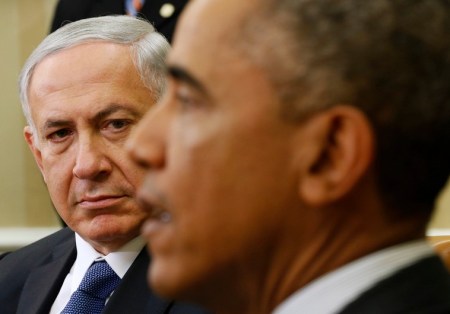
ShowImage (16)US President Barack Obama meets with Prime Minister Benjamin Netanyahu at the White House, October 1, 2014. (photo credit:REUTERS)

Whatever he says before the cameras next week when he meets with Netanyahu, Obama has no intention of letting bygones be bygones.
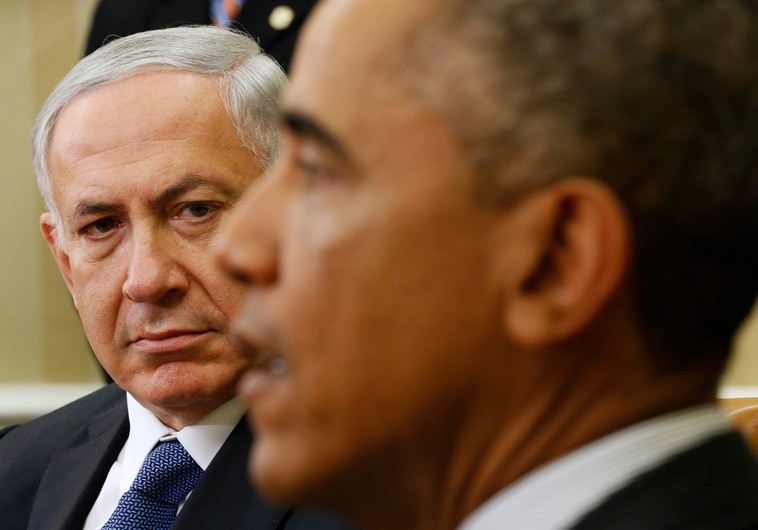
Prime Minister Benjamin Netanyahu’s meeting with US President Barack Obama next week is likely to look less like a rapprochement than a showdown at the OK Corral.

The flurry of spy stories spinning around in recent weeks makes clear that US-Israel relations remain in crisis.

Two weeks ago, The Wall Street Journal published a fairly detailed account of the US’s massive spying operations against Israel between 2010 and 2012.

Their purpose was to prevent Israel from attacking Iran’s nuclear installations. The Journal report, which was based on US sources, also detailed the evasion tactics the Obama administration employed to try to hide its covert nuclear talks with Iran from Israel. According to the report, the administration was infuriated that through its spy operations against Iran, Israel discovered the talks and the government asked the White House to tell it what was going on.

Over the past several days, the Israeli media have reported the Israeli side of the US spying story.

Friday Makor Rishon’s military commentator Amir Rapaport detailed how the US assiduously wooed IDF senior brass on the one hand and harassed more junior Israeli security officials on the other hand.

Former IDF chiefs of General Staff Lt.-Gens. Gabi Ashkenazi and Benny Gantz were given the red carpet treatment in a bid to convince them to oppose Israeli strikes on Iran’s nuclear installations. More junior officials, including officers posted officially to the US were denied visas and subjected to lengthy interrogations at US embassies and airports in a bid to convince them to divulge information about potential Israeli strikes against Iran.

Sunday, Channel 2 reported that the IDF’s Intelligence Directorate’s information security department just issued guidance to all IDF soldiers and officers warning them about efforts by the CIA to recruit them as US agents.

These stories have been interpreted in various ways. Regardless of how they are interpreted, what they show is that on the one hand, the Obama administration has used US intelligence agencies to weaken Israel’s capacity to harm Iran and to actively protect Iran from Israel. And on the other hand, Israel is wary of the administration’s efforts to weaken it while strengthening its greatest foe.

These stories form the backdrop of next week’s meeting between Netanyahu and Obama – the first they will have held in more than a year. They indicate that Obama remains committed to his policy of weakening Israel and downgrading America’s alliance with the Jewish state while advancing US ties with Iran. Israel, for its part, remains deeply distrustful of the American leader.

This Israeli distrust of Obama’s intentions extends far past Iran. Recent statements by Obama and Secretary of State John Kerry have convinced Israel that during his last 15 months in office, Obama intends to abandon US support for Israel at the UN Security Council, and to ratchet up pressure and coercive measures to force Israel to make irreversible concessions to the Palestinians.

From Netanyahu’s perspective, then, the main strategic question is how to prevent Obama from succeeding in his goal of weakening the country.

The implementation of Obama’s deal with Iran deal will form a central plank of whatever strategy the government adopts.

As far as Obama and his allies see things, the nuclear accord with Iran is a done deal. On October 21, House Minority Leader Nancy Pelosi hosted a reception for Democratic congressmen attended by White House Chief of Staff Denis McDonough to celebrate its official adoption.

Unfortunately for Pelosi and her colleagues, Iran is a far more formidable obstacle to implementing the deal than congressional Republicans. As Yigal Carmon, president of the Middle East Media Research Institute (MEMRI), explained in a report published on his organization’s website last week, at no point has any Iranian governing body approved the nuclear deal. Iran’s parliament, the Majlis, and its Guardians’ Council have used their discussions of the agreement to highlight their refusal to implement it. More importantly, as Carmon explains, contrary to US media reports, in his October 21 letter to Iranian President Hassan Rouhani, Iran’s Supreme leader Ayatollah Ali Khamenei did not give his conditional approval to the deal. He rejected it.

Carmon explained that the nine conditions Khamenei placed on his acceptance of the nuclear deal render it null and void. Among other things, Khamenei insisted that all sanctions against Iran must be permanently canceled. Obama couldn’t abide by this condition even if he wanted to because he cannot cancel sanctions laws passed by Congress.

He can only suspend them.

Khamenei also placed new conditions on Iran’s agreement to disable its centrifuges and remove large quantities of enriched uranium from its stockpiles.

He rejected inspections of Iran’s military nuclear installations. He insisted that Iran’s Arak heavy water reactor must remain capable of producing heavy water in contravention of the deal. And he insisted that at the end of the 15-year lifetime of the deal Iran must have sufficient uranium enrichment capability to enable it to develop bombs at will.

As Carmon noted, the US and EU have announced that they will suspend their nuclear sanctions against Iran on December 15 provided that by that date, the UN’s International Atomic Energy Commission certifies that Iran has upheld its part of the bargain.

By that date, in conformance with their interpretation of the nuclear deal, the US and the EU expect for Iran to have reduced the number of centrifuges operating at the Natanz facility from 16,000 to 5,060 and lower enrichment levels to 3.67%; reduce the number of centrifuges at Fordow to a thousand; remove nearly all its advanced centrifuges from use; permit the IAEA to store and seal its dismantled centrifuges; reduce its stockpile of enriched uranium to 300kg.; remove the core from the Arak reactor and disable it; and submit to agreed monitoring mechanisms of its nuclear sites.

Carmon noted that Iran has taken no steps to fulfill any of these conditions.

With Khamenei’s rejection of the nuclear deal and Iran’s refusal to implement it, there are two possible ways the US and the EU can proceed.

First, as Carmon suggests, Obama and the EU may renew nuclear talks with Iran based on Khamenei’s new position. These talks can drag out past Obama’s departure from office. When they inevitably fail, Obama’s successor can be blamed.

The other possibility is that Iran will implement some component of the deal and so allow Obama and the EU to pretend that it is implementing the entire deal. Given the US media’s failure to report that Khamenei rejected the nuclear pact, it is a fair bet that Obama will be able to maintain the fiction that Iran is implementing the deal in good faith until the day he leaves office.

So what is Israel to do? And how can Netanyahu use his meeting with Obama next week to Israel’s advantage? Israel has two policy options going forward. First, it can highlight the fact that Iran is not implementing the deal, just as Israel took the lead in highlighting the dangers of the nuclear accord with Iran over the past year. This policy can potentially force Obama onto the defensive and so make it harder for him to go on the offensive against Israel at the UN and other venues in relation to the Palestinians.

But then, it is far from clear that Obama will be deterred from adopting anti-Israel positions at the UN even if Israel succeeds making an issue of Iranian noncompliance with the nuclear deal.

Moreover, if Netanyahu leads the discussion of the Iran’s bad faith, as he drove the discussion of the nuclear deal itself, he will reinforce the already prevalent false assessment in the US that a nuclear Iran threatens Israel but is not dangerous for the US.

This incorrect assessment has made a lot of Americans believe that by seeking to prevent Iran from acquiring nuclear weapons, Israel is advancing is own interests at America’s expense.

The other policy option is the one that Defense Minister Moshe Ya’alon indicated Israel is pursuing in his meeting last week with his counterpart Defense Secretary Ashton Carter. At the Pentagon Ya’alon declared, “The Iran deal is a given. Our disputes are over.”

The downside of this position is that it indicates that Israel accepts the legitimacy of a deal that Iran is not implementing and that would imperil Israel’s national security even if Iran were implementing it.

Its upside is that it takes Israel out of the US debate regarding the nuclear deal. To the extent that opponents of Obama’s Iran policy are willing to lead the fight against the deal themselves, Israel could do worse than to take a step back and plot its own course on Iran, independent of the US policy discussion.

It is hard to know which line of action makes more sense. But as the spy stories demonstrated, one thing is clear enough. Whatever he says before the cameras next week when he meets with Netanyahu, Obama has no intention of letting bygones be bygones.

Ya’alon Warns Israel’s Enemies Divided on Ideology But United in Hatred

November 3, 2015

Defense Minister Moshe Ya’alon warns that Israel’s enemies are divided in ideology but united in their hatred of the Jewish State. By: Hana Levi Julian Published: November 3rd, 2015

Source: The Jewish Press » » Ya’alon Warns Israel’s Enemies Divided on Ideology But United in Hatred

An F-16 fighter jet takes off from Ramat David air force base.
Photo Credit: Ofer Zidon / Flash 90

Israel’s Defense Minister Moshe Ya’alon warned Tuesday that Israel’s enemies are split along ideological lines, but united in their hatred of the Jewish State.

The defense minister noted there appear are several axes among those aligned against Israel: on one side are forces united with the Muslim Brotherhood, which include Turkey and Qatar. On another, there are those united with the Global Jihad movement, which include Salafi Islamists such as Al Qaeda-linked groups such as the Army of Islam, and Da’esh (ISIS).

Both are united in their hatred of Jews and Israel, and the “unwillingness… to recognize our right to exist as the nation state of the Jewish people,” Ya’alon said – as is the Palestinian Authority.

[PLO Chairman Yasser] “Arafat and [Palestinian Authority leader Mahmoud] Abbas also did not want to end the conflict on the 1967 borders,” he said.

In remarks broadcast last week on official Palestinian Authority television, Abbas said in Arabic to the United Nations Human Rights Commission in Geneva: “Mr. President, ladies and gentlemen, haven’t you wondered: For how long will this protracted Israeli occupation of our land last? After 67 years (i.e., the re-creation of the State of Israel), how long? Do you think it can last, and that it benefits the Palestinian people?”

The remarks were translated and reported by the media watchdog organization Palestinian Media Watch (PMW). Www.palwatch.org

Israel has “zero tolerance” for arms sales to terrorists, the defense minister said in remarks following alleged Israeli air strikes against Hezbollah near the Syrian-Lebanese border.

Speaking at a Kibbutz Leadership conference in Judea-based Kibbutz Ma’ale Hamisha, near Jerusalem, Ya’alon warned in a cryptic remark, “Those who cross red lines will be hit.” It is believed that Ya’alon was referring not only to standard ordnance but also to the transfer of chemical weapons by Syria to the Hezbollah terrorists who have fought to defend President Bashar al-Asssad.

Ya’alon commented that the Hamas terror organization has only withheld hostilities out of dire necessity: “not because they have turned Zionist, but due to the price they paid [last year] in Operation Protective Edge.”

Analysis: Why Palestinians do not want cameras on the Temple Mount

November 3, 2015

Analysis: Why Palestinians do not want cameras on the Temple Mount

Source: Analysis: Why Palestinians do not want cameras on the Temple Mount – Arab-Israeli Conflict – Jerusalem Post

Why is the Palestinian Authority (PA) opposed to Jordan’s proposal to install surveillance cameras at Jerusalem’s Haram al-Sharif (Temple Mount), sacred to Christians, Muslims and Jews?

This is the question that many in Jordan have been asking in light of the recent agreement between Israel and Jordan that was reached under the auspices of US Secretary of State John Kerry. The idea was first raised by Jordan’s King Abdullah in a bid to ease tensions at the holy site in the Old City of Jerusalem.

Shortly after Israel accepted the idea, the Palestinian Authority rushed to denounce it as a “new trap.” PA Foreign Minister Riad al-Malki and other officials in Ramallah expressed concern that Israel would use the cameras to “arrest Palestinians under the pretext of incitement.”

During the past two years, the Palestinian Authority and other parties, including Hamas and the Islamic Movement (Northern Branch) in Israel, have been waging a campaign of incitement against Jewish visits to the Haram al-Sharif. The campaign claimed that Jews were planning to destroy al-Aksa Mosque.

In an attempt to prevent Jews from entering the approximately 37-acre (150,000 m2) site, the Palestinian Authority and the Islamic Movement in Israel hired scores of Muslim men and women to harass the Jewish visitors and the police officers escorting them. The men are referred to as Murabitoun, while the women are called Murabitat (defenders or guardians of the faith).

These men and women have since been filmed shouting and trying to assault Jews and policemen at the Haram al-Sharif. This type of video evidence is something that the Palestinian Authority is trying to avoid. The PA, together with the Islamic Movement, wants the men and women to continue harassing the Jews under the pretext of “defending” the al-Aksa Mosque from “destruction” and “contamination.”

The installation of surveillance cameras at the site will expose the aggressive behavior of the Murabitoun and Murabitat, and show the world who is really “desecrating” the Islamic holy sites and turning them into a base for assaulting and abusing Jewish visitors and policemen.

The cameras are also likely to refute the claim that Jews are “violently invading” al-Aksa Mosque and holding prayers at the Temple Mount. The Palestinian Authority, Hamas and the Islamic Movement have long been describing the Jewish visits as a “provocative and violent incursion” into al-Aksa Mosque. But now the cameras will show that Jews do not enter al-Aksa Mosque, as the Palestinians have been claiming.

Another reason the Palestinians are opposed to King Abdullah’s idea is their fear that the cameras would expose that Palestinians have been smuggling stones, firebombs and pipe bombs into al-Aksa Mosque for the past two years. These are scenes at the PA, Hamas and the Islamic Movement do not want the world to see: they show who is really “contaminating” the Haram al-Sharif. Needless to say, no Jewish visitors have thus far been caught trying to smuggle such weapons into the holy site.

By rejecting the idea of setting up 24-hour surveillance cameras at the Haram al-Sharif, the Palestinian Authority has found itself on a course of collision with Jordan. Jordanian politicians and columnists have voiced outrage over the stance of the PA, and have dubbed it harmful to Palestinian and Islamic interests.

The Jordanian newspaper Al-Ghad, which is close to the government, quoted Jordanian politicians as denouncing the opposition of the Palestinian Authority to the cameras as “inappropriate, clumsy, tasteless and unfair.”

Sources in Ramallah explained this week that the PA’s opposition to cameras should also be seen in the context of the power struggle between the Palestinians and Jordan over control of the Islamic holy sites in Jerusalem. The Jordanians have long been seeking to preserve their status as “custodians” of al-Aksa Mosque and other Islamic holy sites in Jerusalem. This is a status that some Palestinians and the Islamic Movement in Israel have been trying to change during the past two decades, especially after the signing of the Oslo Accords between the PLO and Israel in 1993.

The Palestinian Authority’s opposition to the installation of cameras is seen as an attempt to undermine Jordan’s status at the Islamic holy sites. Many Palestinians argue that they, and not the Jordanians, should be in charge of the Haram al-Sharif. Members of the PA are opposed to the cameras because it is a Jordanian proposal and reinforces Jordan’s role at the holy site.

As such, the Palestinian Authority’s position could be seen as an attempt to change the status quo at the holy site by driving the Jordanians out of the area. King Abdullah is obviously aware of the Palestinian attempt to prevent him from playing any role at the holy site; that is why he was quick to reach a deal with Israel about the installation of cameras. The PA, meanwhile, will continue to work against having cameras in the hope of preventing the world from seeing what is really happening at the site and undermining Jordan’s “custodianship” over Islamic holy sites in Jerusalem.

It now remains to be seen how Secretary Kerry, who brokered the camera deal between Israel and Jordan, will react, if at all, to the latest Palestinian Authority attempt to continue escalating tensions at the holy site. If Kerry fails to pressure the PA to stop its incitement and repeated attempts to exclude the Jordanians from playing any positive role at the Haram al-Sharif, the current wave of knife attacks against Jews will continue.

