Archive for July 2015

The President’s Looking-Glass Islamic World

July 10, 2015

The President’s Looking-Glass Islamic World

Obama may have forgotten about “war with Islam,” but war with Islam has not forgotten about him.

July 10, 2015

Bruce Thornton

via The President’s Looking-Glass Islamic World | Frontpage Mag.

Bruce Thornton is a Shillman Journalism Fellow at the David Horowitz Freedom Center.

President Obama recently gave a speech at the Pentagon about our efforts against ISIS that confirmed he has little awareness of the real world our enemies inhabit. The talk reprised the usual received wisdom and unchallenged orthodoxy that comprise most of the foreign policy establishment’s ideas about Islamic jihadism and how we should fight it. Consider the following particularly egregious examples:

Ideologies are not defeated with guns; they’re defeated by better ideas–– a more attractive and more compelling vision.

This statement is a classic either-or fallacy. Anyone familiar with history would have added the adverb “just” before “with guns.” Obama is indulging stealth pacifism, a variation on the “violence doesn’t solve anything” and “use your words” mantras of the junior high playground monitor. Such a stance is politically convenient when the voters are against the use of force, and a leader doesn’t have the will or ability to convince them why force is necessary.

In general, the superior quality of what men fight for is indeed a force-multiplier, as the Greeks proved at Marathon, Salamis, and Plataea. But significant force still has to be applied to kill a critical mass of the enemy. And even with the best ideas, more often it is the “guns” that in the end make the difference. Those victorious Greek hoplites and rowers had weaponry and tactics superior to the Persians’, as well as the better ideals of freedom and autonomy. World War II was another battle of freedom against tyranny. But Nazism was ultimately defeated by the U.S.’s ability to produce armaments at a rate Germany could not match––just in one month of 1944, America produced more Sherman tanks than all the tanks the Germany produced in a year. If the U.S. hadn’t entered the war, the “better ideas” of English civilization, despite their expression in the soaring oratory of Winston Churchill, would not alone have led to Hitler’s defeat.

So yes, “better ideas” are critical for winning a war. As Napoleon said, morale to the material is as three to one. But the importance of “ideas” like political freedom, confessional tolerance, and individual rights lies not, as Obama suggests, in their power to make our enemies change sides or reject the ideas they are fighting for. Rather, their power lies in the way they motivate and inspire those who fight for their own superior ideals because they are confident that they are superior. Obama in contrast is alluding to the power of mere example when he mentions “a more attractive and more compelling vision,” a phrase vague to the point of emptiness. I think he means that if the jihadists or potential jihadists could understand and experience the freedom, peace, and prosperity we enjoy, they would reject their own motivating beliefs, particularly the doctrines of traditional Islam, which they so passionately believe are superior that in their service they will murder innocents and blow themselves up.

This naïve belief in the attractive power of our ideals has been the big mistake of our war against jihad, one made by both parties. To traditionalist Muslims, the ideals we cherish are not self-evidently superior to those of Islam. What we call freedom, for example, pious Muslims like Ayatollah Khomeini understood to be license: it is the “freedom that will corrupt our youth, freedom that will pave the way to the oppressor, freedom that will drag our nation to the bottom.” Similarly, al Qaeda theorist Ayman al-Zawahiri wrote, “The freedom we want is not the freedom to use women as commodities . . . it is not the freedom of AIDS and an industry of obscenities and homosexual marriages.” Of course, our idea of political freedom is much different from these social practices, but the biggest example of Western freedom that most Muslims see is the degrading spectacles available on satellite television, Hollywood movies, and the Internet.

Likewise with democracy, tolerance, separation of church and state, sex equality, and all the other goods that define the Western civilizational paradigm but are contrary to shari’a law and Islamic doctrine. For a Muslim who takes those doctrines seriously––and poll after poll shows that hundreds of millions do–– none of these goods is worth risking his eternal soul. Indeed, they are seductive temptations for the pious, the subtle weapons the infidels use to weaken the faithful and bring about their spiritual destruction. That’s why the mullahs call us the “Great Satan”: not just because in Muslim eyes we are evil, but because we are tempters who addle the minds of the faithful with what the Iranian political activist Al-e Ahmad in 1962 called “Westoxification.”

Our strategy recognizes that no amount of military force will end the terror that is ISIL unless it’s matched by a broader effort — political and economic — that addresses the underlying conditions that have allowed ISIL to gain traction.

The assumption that ISIS exists because of a lack of political and economic opportunity is founded on a similar misunderstanding of jihadists’ motivations. This simplistic explanation of terror has been with us since 9/11, when Bill Clinton said, “These forces of reaction feed on disillusionment, poverty and despair,” and leftist “activist” Barbara Ehrenreich blamed the attacks on “the vast global inequalities in which terrorism is rooted.”

But if poverty or a lack of democracy is the cause of terror, then why aren’t the billions of poor, disenfranchised young men across the globe committing acts of terror at the rate of young Muslim men? Why do so many jihadist leaders and theorists come from affluent backgrounds, like Osama bin Laden, or lucrative professions, like the surgeon Ayman al-Zawahiri? Why do Muslim immigrants in the affluent West, with a level of material existence and citizen rights far beyond those of their cohorts in the Third World, murder their fellow citizens or flock to join ISIS?

This economic or political determinism ignores the powerful and passionate reality of religious belief among Muslims, whose faith commands them, “O believers! Fight those of the unbelievers who are near to you and let them find in you hardness” (Koran 9:123). But having reduced religion to a life-style choice, Western materialist determinism cannot imagine that violent acts can be motivated by sincere faith and obedience to Allah’s commands. So like Obama, we search for causes that suit our own materialist, secular world-view, such as poverty or lack of political freedom. But as Ayatollah Khomeini said in refutation of this received idea, “We did not have a revolution to lower the price of melons.”

We’ll constantly reaffirm through words and deeds that we will never be at war with Islam.  We’re fighting terrorists who distort Islam and whose victims are mostly Muslims.

This hoary cliché has done the most damage to our war against jihadism.  And its patent falsity can be easily documented in 14 centuries of Islamic scripture, jurisprudence, history, and practice.  As the Egyptian critic of Islam Ahmed Harqan said recently, “What has ISIS done that Mohammed didn’t do?” Behead captives? In 627, Mohammed beheaded 600-900 males of the Jewish Banu Qurayzah tribe, in line with Koran 8:12: “I will cast terror into the hearts of those who disbelieve. Therefore strike off their heads and strike off every fingertip of them.”

Enslave the defeated? Mohammed enslaved the women and children of the Banu Qurayzah, and following his model Islam has been one of history’s great slaving civilizations.  Just between 1500 and 1800, the Muslim kingdoms of North Africa took 1.5 million European slaves. These depredations were in line with Islamic doctrine, as the representative of the pasha of Tripoli explained to John Adams and Thomas Jefferson in 1785. It was “written in the Koran,” he explained, “that all nations who should not have acknowledged their [Muslim] authority were sinners, that it was their [Muslim] right and duty to make war upon whoever they could find.” And as Mohammed showed, taking slaves is the just reward for those who, like ISIS, prevail in battle.

Nor is ISIS’s goal of restoring the caliphate some fringe distortion of Islamic doctrine. Since its final dissolution in 1922––the “catastrophe” bin Laden mentioned after 9/11–– the caliphate has remained a potent dream for many Muslims, for whom secular nationalism is an alien Western idea contrary to the unified political-religious polity of Islamic doctrine. Thus as pan-Arab theorist Nuri al-Said wrote in 1943, Arab Muslim nationalism “springs from the Muslim feeling of brotherhood enjoined on them by the Prophet Mohammed . . . Although Arabs are naturally attached to their native land their nationalism is not confined by boundaries. It is an aspiration to restore the great tolerant civilization of the early Caliphate.”

We can hear the larger import of this same “aspiration” in Islamist theorist Sayyid Qutb’s claim that  “Islam came into this earth to establish God’s rule on God’s earth” and to form “a Muslim community in which individuals . . . have gathered together under servitude to God and follow only the Shari’a of God.” So too Ayatollah Khomeini’s boast: “We shall export our revolution to the whole world. Until the cry ‘There is no God but Allah’ resounds over the whole world, there will be struggle.”

Contrary to Obama and others willfully blind to the reality of Islamic doctrine and history, neither the aims of ISIS nor their methods “distort” Islam. Rather, the soldiers of ISIS are the latest in a long tradition of Muslim warriors inspired by Islamic precept and practice. They are a manifestation of Muslim Brothers theorist Hassan al-Banna’s traditional belief that “It is the nature of Islam to dominate not to be dominated, to impose its laws on all nations, and extend its power to the entire planet.” Obama may have forgotten about “war with Islam,” but war with Islam has not forgotten about him.

Just repeating the mantra “nothing to do with Islam” or “religion of peace” or “moderate Muslims” will not change reality. Neither can the other great illusions of modernity like pacifism, disarmament, or the diplomatic settling of disputes that are created by irreconcilable ideologies and conflicting beliefs. The reality of history teaches us that only mind-concentrating, overwhelming force can convince the passionate aggressor to change his ways. The alternative is this administration’s slow-motion appeasement that has left the region a shambles and is escorting Iran to possession of nuclear weapons.
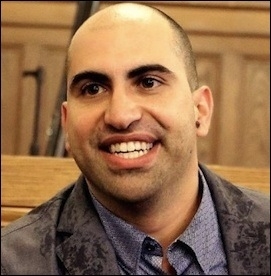
Who in the Devil Is Michael Oren? | Steven White

July 9, 2015

Who in the Devil Is Michael Oren? | Steven White.

Posted: 07/09/2015 12:11 pm EDT Updated: 13 minutes ago

The other day an acquaintance called and said: “Hey, you’re an Israel guy, just who in the devil is Michael Oren and what’s the fuss!?” I replied, “Michael is an Irish drum-playing, fellow ADHD afflicted soul who was once told, as an 8 year old boy, to “F-Off” by Mickey Mantle. Most profoundly for me, Michael is a man I am privileged to call my friend. He is also a celebrated Israeli-American historian, Israel’s former Ambassador to the United States (2009-2013) and now a member of the Israeli Knesset who recently published a highly controversial memoir of his time in Washington titled: Ally: My Journey Across the American-Israeli Divide.

The heart of the fuss is Iran. Contrary to a number of his critics, it is not about Michael’s personal analysis of what makes President Obama tick. Intelligence and diplomatic agencies have sought to divine what informs and motivates leaders for centuries. Neither is the fuss about Michael’s understanding or lack thereof of the issues that divide Israelis from Diaspora Jewish communities. It is about Michael standing up against the framework of the Obama Administration’s current nuclear deal with Iran, which Michael and I both believe is a threat to Israel and the United States.

Michael Oren, for starters, is the son of a decorated veteran of: D-Day, the Battle of the Bulge and Korea. As a young man, Michael had the unique privilege to work as the personal assistant to Orson Welles. He is also an avid rower, winning two medals in the 1977 Maccabiah games. Academically, Michael earned a BA from Columbia College and an MA and Ph.D. in Near Eastern Studies from Princeton. A prolific author, he has published works on history, fiction and poetry.

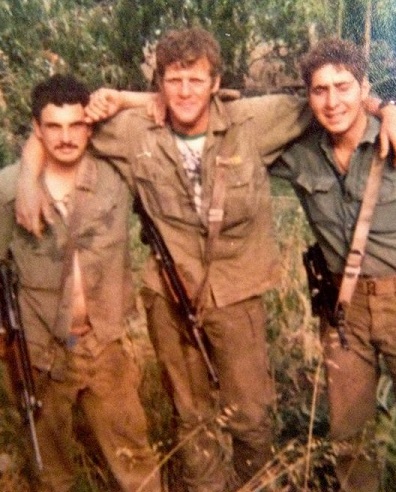
2015-07-06-1436215719-9247960-michaelidf.jpg

Michael is a man who left the comforts of America to become an Israeli citizen. There, he defended Israel as a paratrooper in front-line actions in Lebanon through both Intifadas in the Territories and beyond. Along the way, he even had the good fortune to marry Sally, the girl who inspired the Jefferson Airplane’s “Young Girls Sunday Blues.” Together they raised three children, all of whom served in the IDF, wherein Yoav, the oldest, was wounded in combat. Michael also worked for Prime Minister Yitzhak Rabin and supported the Oslo Peace Process even after his sister-in-law was murdered in a Palestinian terror bombing.

Michael is a man who willingly traded in his right to self-express for the privilege of defending his nation diplomatically. He is something he would never call himself- a patriot.

The core of the “fuss” truly is Iran. In Ally, Michael throws a hay-maker at the Obama Administration; hell bent on giving Iran a nuclear weapon and to boot, releasing $150 billion in frozen assets as “an upfront signing bonus.” The first will undoubtedly spark future nuclear proliferation as Saudi Arabia, Egypt and Turkey seek to achieve strategic parity with their Persian neighbor. The latter will immediately enhance Iran’s ability to supply funds and advanced weapons to its extremist regional allies.

In response, here comes Michael Oren with the courage to point out that this is in fact, insane. How dare he challenge the Administration’s signature foreign policy pursuit by pricking the “comfortably numb” in order to spark a conversation! His detractors forget; in Israel, expressing one’s opinion is a national sport, in America, it’s a First Amendment Right.

In an effort to discredit Michael, the politically appointed US Ambassador to Israel, Dan Shapiro, with zero specifics, told Israel Army Radio that Michael’s views were “untrue” and “imaginary,” then levied the charge that Michael has only spoken out to “sell books.” In the height of irony, Phil Gordon, the bona fide European expert whom the Obama Administration improbably appointed as White House Coordinator for the Middle East, accused Michael of “still spinning for the boss.”

As a terribly truant student living in Israel between 1990 and 2001, I was stoned by both Israelis and Palestinians, wore a gas mask during Scud Missile attacks, was stampeded in the 1996 tunnel riots, shot at and had been in close proximity to multiple suicide terror bombings.

As a former US Marine Major, I liaised with the IDF during the Iraq war. I then served almost six years during the Bush and Obama Administrations as a Senior Middle East Adviser for the USSC, an outfit dedicated to rebuilding trust and confidence between the Israeli and Palestinian security establishments.

The Bush Administration with significant support from a Democratic majority Congress, prioritized issues of Palestinian institution-building, governance and security believing it was better for nation-building to precede, rather than follow, the declaration of a Palestinian State. The Obama Administration focused almost exclusively on reaching a conflict ending agreement, blind to both previous “on the ground” progress and the argument that creating a Palestinian state that ends up a failed one, would not benefit but harm, the Palestinians. That change of focus not only undercut the USSC, but also then Palestinian Prime Minister Fayyad and the efforts of then Quartet Representative Tony Blair. It further gave Israelis, like Michael, pause to question whether this US Administration had the skill, wisdom and basic knowledge to broker peace.

As I stand shoulder to shoulder with Michael, it galls me that my government is still sucking up to Iran 36 years after the end of the Tehran embassy hostage crisis! Obama Administration officials seem lost to the reality that they are dealing with the same Iranian regime whose proxies killed 241 US Marines, Sailors and Soldiers in Beirut in 1983. The same Iran that, in Iraq, is responsible for having killed hundreds of Americans via their supply of the most sophisticated armor-piercing, roadside bombs and IEDs. An Iran, whose commander of ground forces declared, just two days before the July 7 nuclear talks deadline that “a rapprochement was out of the question, as the enemy (the US) is exploiting nations and putting them in chains.” Obviously, nothing has changed and dealing with these people under the known terms of the prospective agreement is not only naïve and dangerously misguided, it is silly.

Who is Michael Oren? He’s a mensch. “And the world will be better for this…”

Voices were raised at the Vienna nuclear talks Wednesday night against obdurate Iran

July 9, 2015

Voices were raised at the Vienna nuclear talks Wednesday night against obdurate Iran, DEBKAfile, July 9, 2915

Zarif_Mogherini__8.7.15Iranian foreign minister and EU executive in heated exchange

DEBKAfile’s sources agree that the rhetoric on both the American and Iranian sides is probably part and parcel of the bargaining tactics around the table in Vienna. It is therefore hard to judge whether their words are to be taken literally or maneuvers for stepping up pressure on the opposite side.

****************

European Union Foreign Executive Federica Mogherini is quoted by DEBKAfile’s intelligence sources as shouting Wednesday night, July 8, at Iran’s Foreign Minister Mohamed Javad Zarif: “If that’s where you stand it’s a pity to waste any more time!” Jarif is quoted as snapping back: “Don’t threaten us!” The US delegation led by Secretary of State John Kerry sat without moving a muscle. But Russian Foreign Minister Sergey Lavrov stepped in to cool tempers and urged everyone to go back to the matters at issue.

The shouting started amid the discussion of sanctions relief, after the second deadline for a final deal had slipped by. The Iranians stood by their demand for the immediate lifting of all sanctions – not just the penalties for its nuclear activities, but on the score of involvement in terrorism, which Iran has consistently denied.

Other sticking points between the six powers and Iran are still the UN embargo on Iranian arms sales, restrictions on ballistic missiles and the nature and powers of the mechanism for monitoring Iran’s nuclear activities.

Even before this angry exchange, President Barack Obama remarked at a closed meeting on Capital Hill Tuesday night, “The chances of a deal at this point are below 50:50.” He was quoted by the top Democrat Sen. Dick Durbin of Illinois, the Assistant Democratic Leader and a close ally of Obama’s. “I think it’s an indication that this is crunch time and that he said he’s not going to accept a weak or bad deal. He knows what’s at stake here,” said Durbin.

But Obama did not seem to be ruling out letting the negotiations run on for another few days.

At another meeting with US lawmakers Tuesday, Chairman of the Joint Chiefs of Staff Gen. Martin Dempsey spoke in particularly categorical terms against easing restrictions for Iran. “Under no circumstances should we relieve pressure on Iran relative to ballistic missile capabilities and arms trafficking,” he said.

In contrast to Obama, Iranian President Hassan Rouhani sounded upbeat Wednesday night, before setting out on a trip to Moscow. He said: “Negotiations with the P5+1 group are at a sensitive stage and the Islamic republic of Iran is preparing for [the period] post-negotiations and post-sanctions.”

DEBKAfile’s sources agree that the rhetoric on both the American and Iranian sides is probably part and parcel of the bargaining tactics around the table in Vienna. It is therefore hard to judge whether their words are to be taken literally or maneuvers for stepping up pressure on the opposite side.

Our sources deny Israeli media reports claiming that Undersecretary of State Wendy Sherman, who leads the US negotiating team, tried to call Israel’s National Security Adviser Yossie Cohen for an update on the state of the negotiations, but that he avoided taking her calls. If Sherman had really phoned Cohen, our sources say, her call would have certainly been put through to him.

A Vow of Terror

July 9, 2015

Iran ‘Shouts Hatred’ for Israel, Backs Palestinian Terror

BY: Adam Kredo July 8, 2015 Via The Washington Free Beacon


We will bury you. [Source: AP]

(Lest we forget who the real enemy is. – LS)

Support for terror, hatred of Jews comes as nuke deal inches closer

VIENNA—Iranian President Hassan Rouhani urged the entire country to “shout its hatred for the Zionists” and back Palestinian efforts to seize territory from Israel, according to comments made Wednesday in celebration of Quds Day, which marks the last Friday in Ramadan and has historically been used to tout Palestinian violence against the Jewish state.

As Iranian and Western negotiators in Vienna meet around the clock in a bid to strike a final nuclear accord, the Iranian president expressed his support for the Palestinian cause and urged the Islamic Republic to unite in its hatred of Israel.

“People will tell the world on the Quds Day that the Muslim nations will never forget Palestine and occupation of this territory,” Rouhani was quoted as saying on state-run television by the Fars News Agency.

Rouhani went on to state “that the Iranian nation will shout its hatred for the Zionists on the Quds Day,” according to Fars’ report.

“The Islamic Ummah will actually shout the call of unity on the Quds Day,” the leader added.

Iran’s Foreign Ministry—the head of which is currently in Vienna leading efforts to strike a nuclear deal—also released a statement explaining the need to confront “the Zionists.”

“Reaching this goal” of retaking Jerusalem from the Israelis “needs confronting the Zionist regime’s aggression and expansionism and empowerment of Palestinians to resist against such measures, since resistance is the only way to restore their rights and free the Palestinian territories and the Holy Quds,” the Iranian Foreign Ministry said in its statement.

“Based on the guidelines of Supreme Leader of the Islamic Revolution (Ayatollah Seyed Ali Khamenei) the Islamic Republic of Iran believes that peace and tranquility will not be established in the Middle-East region but by full restoration of the oppressed Palestinian people’s rights, and the Palestinian nation will continue its legitimate and legal fight to restore its rights,” the statement added.

In related remarks, the General Staff of the Iran’s Armed Forces vowed to continue backing terror organizations and remain aggressive in fighting Israel.

“The Iranian nation will remain in the frontline of support for the Islamic resistance and freedom of Quds [also known as Jerusalem],” the official was quoted as saying.

Meanwhile, a senior U.S. official who briefed reporters in Vienna on Tuesday indicated that the talks could end in a stalemate.

“Quite frankly, I’m astonished by the speculation in the press about the likelihood of getting to an agreement soon,” the official told reporters. “I just put that down to the fact that you all would like to go home.”

Differences still remain on several key issues, including the extent of Iran’s future nuclear work and the timing of sanctions relief.

If decisions on these issues are made in the coming days, “we’ll get a deal. If they’re not, obviously we won’t,” the official said.

‘Never threaten an Iranian’: nuclear talks get feisty

July 9, 2015

‘Never threaten an Iranian’: nuclear talks get feisty

Agence France Presse July 8, 2015 Via The Daily Star


Iranian Foreign Minister Javad Zarif talks to media from bacon of the Palais Coburg Hotel, venue of the nuclear talks in Vienna, Austria on July 2, 2015. AFP PHOTO/SAMUEL KUBANI

(Really? – LS)

VIENNA: A top-level meeting at the Iran nuclear talks this week was a stormy affair, Iranian media reported Wednesday, with the country’s foreign minister warning: “Never threaten an Iranian.”

The altercation happened Monday evening as foreign ministers from Iran and six major powers including US Secretary of State John Kerry met in Vienna seeking to nail down a historic nuclear accord.

They failed to overcome their remaining differences, and have given themselves until Friday to finalize the accord to end a 13-year standoff over Iran’s nuclear ambitions.

The spark, during a discussion on lifting an arms embargo as part of the nuclear deal, came when other ministers expressed concerns about Iran being a destabilizing influence in the Middle East, Iranian media reported.

This prompted Iranian Foreign Minister Mohammad Javad Zarif to threaten to drag the others before an international court for supporting former Iraqi leader Saddam Hussein, an arch enemy of Iran, the reports said.

Diplomats stopped short of confirming the comments, but one senior Western envoy said the meeting saw a “very heated exchange of views.”

The reported remarks from Zarif to EU foreign policy chief Federica Mogherini have since trended on Twitter under the hash tag #NeverThreatenAnIranian.

Russian Foreign Minister Sergei added at the talks, jokingly, that no one should ever threaten a Russian either, Iranian media reported.

During a separate meeting between Kerry and Zarif, other residents at the posh Coburg hotel heard shouting and raised voices, prompting a Kerry aide to poke his head round the door and advise the two to pipe down, a diplomatic source said.

The normally smiley Zarif, 55, who has spearheaded Iran’s efforts to seal the nuclear deal for the past almost two years, is known to have something of a fiery temper.

According to the IRNA news agency, Zarif said he was asked in February by supreme leader Ayatollah Ali Khamenei “why are you shouting in the meetings? Smile and talk as you usually do.”

A second Western diplomat said that Zarif has an “explosive temper. He is passionate, with a booming voice.”

A spokeswoman for Mogherini tweeted only that “relationships are based on openness, frankness and mutual respect.”

And a spokesman for the Iranian delegation, Alireza Miryoussefi, tweeted comments from Zarif saying that Mogherini “has always had a very positive and constructive role” and “our relations have always been governed by mutual respect.”

“The same stands true with regard to other ministers present in the negotiations and despite political differences,” he said.

The Iran Delusion: A Primer for the Perplexed

July 8, 2015

The Iran Delusion: A Primer for the Perplexed, World AffairsMichael J. Totten, Summer 2015

Totten_Iran

US foreign policy in the Middle East is focused on two things right now: containing ISIS and preventing Iran from acquiring nuclear weapons. These are both worthy goals, but if sanctions are lifted on Iran as part of a nuclear deal, whether or not it gets the bomb, Tehran will certainly have more money and resources to funnel to Hezbollah, the Assad regime, Iraq’s Shia militias, the Houthis in Yemen, and—perhaps—to Saudi Arabia’s disaffected Shia minority. The region will become even less stable than it already is. ISIS and al-Qaeda will likely grow stronger than they already are.

**************************

The chattering class has spent months bickering about whether or not the United States should sign on to a nuclear deal with Iran, and everyone from the French and the Israelis to the Saudis has weighed in with “no” votes. Hardly anyone aside from the Saudis, however, seems to recognize that the Iranian government’s ultimate goal is regional hegemony and that its nuclear weapons program is simply a means to that end.

What do these shatter zones have in common? The Iranian government backs militias and terrorist armies in all of them. As Kaplan writes, “The instability Iran will cause will not come from its implosion, but from a strong, internally coherent nation that explodes outward from a natural geographic platform to shatter the region around it.”

That’s why Iran is a problem for American foreign policy makers in the first place; and that’s why trading sanctions relief for an international weapons inspection regime will have no effect on any of it whatsoever.

Iran has been a regional power since the time of the Persian Empire, and its Islamic leaders have played an entirely pernicious role in the Middle East since they seized power from Mohammad Shah Reza Pahlavi in 1979, stormed the US Embassy in Tehran, and held 66 American diplomats hostage for 444 days.

In 1982, they went international. When the Israelis invaded Lebanon to dislodge Yasir Arafat’s Palestine Liberation Army, Iranian Revolutionary Guard Corps commanders forged a network of terrorist and guerrilla cells among their coreligionists in Lebanon’s Shia population.

Hezbollah, the poisoned fruit of these efforts, initially had no name. It was a hidden force that struck from the shadows. It left a hell of a mark, though, for an organization of anonymous nobodies when it blew up the American Embassy in Beirut and hit French and American peacekeeping troops—who were there at the invitation of the Lebanese government—with suicide truck bombers in 1983 that killed 368 people.

When Hezbollah’s leaders finally sent out a birth announcement in their 1985 Open Letter, they weren’t the least bit shy about telling the world who they worked for. “We are,” they wrote, “the Party of God (Hizb Allah), the vanguard of which was made victorious by God in Iran . . . We obey the orders of one leader, wise and just, that of our tutor and faqih [jurist] who fulfills all the necessary conditions: Ruhollah Musawi Khomeini. God save him!”

The Israelis fought a grinding counterinsurgency against Hezbollah for 18 years in southern Lebanon before withdrawing in 2000, and they fought a devastating war in 2006 along the border that killed thousands and produced more than a million refugees in both countries. Hezbollah was better armed and equipped than the Lebanese government even then, but today its missiles can reach Tel Aviv, Jerusalem, and even the Dimona nuclear power plant all the way down in the southern part of the country. 

Until September 11, 2001, no terrorist organization in the world had killed more Americans than Hezbollah. Hamas in Gaza isn’t even qualified as a batboy in the league Hezbollah plays in.

Hezbollah is more than just an anti-Western and anti-Jewish terrorist organization. It is also a ruthless sectarian Shia militia that imposes its will at gunpoint on Lebanon’s Sunnis, Christians, and Druze. It has toppled elected governments, invaded and occupied parts of Beirut, and, according to a United Nations indictment, assassinated former Lebanese Prime Minister Rafik Hariri.

Hezbollah is, for all intents and purposes, the foreign legion of Iran’s Revolutionary Guard Corps. The parts of the country it occupies—the northern Bekaa Valley, the Israeli border region, and the suburbs south of Beirut—constitute a de facto Iranian-controlled state-within-a-state inside Lebanon. 

After the United States demolished Saddam Hussein’s Sunni-dominated regime in 2003, Iran’s rulers duplicated their Lebanon strategy in Iraq by sponsoring a smorgasbord of sectarian Shia militias and death squads that waged war against the Iraqi government, the American military, Sunni civilians, and politically moderate Shias. 

Unlike Lebanon—which is more or less evenly divided between Christians, Sunnis, and Shias—Iraq has an outright Shia majority that feels a gravitational pull toward their fellow Shias in Iran and a revulsion for the Sunni minority that backed Hussein’s brutal totalitarianism and today tolerates the even more deranged occupation by the Islamic State, also known as ISIS. 

The central government, then, is firmly aligned with Tehran. Iran’s clients don’t run a Hezbollah-style state-within-a-state in Iraq. They don’t have to. Now that Hussein is out of the way, Iraq’s Shias can dominate Baghdad with the weight of sheer demographics alone. But Iran isn’t content with merely having strong diplomatic relations with its neighbor. It still sponsors sectarian Shia militias in the center and south of the country that outperform the American-trained national army. They may one day even supplant Iraq’s national army as the Iranian Revolutionary Guard Corps has more or less supplanted the Iranian national army. Iraq’s Shia militias are already the most powerful armed force outside the Kurdish autonomous region and ISIS-held territory.

When ISIS took complete control of the city of Ramadi, the capital of Anbar Province, in May of 2015, the Iraqi soldiers tasked with protecting it dropped their weapons and ran as they had earlier in Mosul, Tikrit, and Fallujah. So Iraq’s central government tasked its Iranian-backed Shia militias with taking it back. 

On the one hand, we can hardly fault Baghdad for sending in whatever competent fighting force is available when it needs to liberate a city from a psychopathic terrorist army, but the only reason ISIS gained a foothold among Iraq’s Sunnis in the first place is because the Baghdad government spent years acting like the sectarian dictatorship that it is, by treating the Sunni minority like second-class citizens, and by trumping up bogus charges against Sunni officials in the capital. When ISIS promised to protect Iraq’s Sunnis from the Iranian-backed Shia rulers in Baghdad, the narrative seemed almost plausible. So ISIS, after being vomited out of Anbar Province in 2007, was allowed to come back.

Most of Iraq’s Sunnis fear and loathe ISIS. They previously fought ISIS under its former name, al-Qaeda in Iraq. But they fear and loathe the central government and its Shiite militias even more. They’d rather be oppressed by “their own” than by “the other” if they had to choose. But they have to choose because Iran has made Iraq its second national project after Lebanon.

It doesn’t have to be this way. At least some of the tribal Sunni militias would gladly fight ISIS as they did in the past with American backing. If they did, residents of Ramadi, Fallujah, and Mosul would view them as liberators and protectors rather than potential oppressors, but Tehran and Baghdad will have none of it.

“All attempts to send arms and ammunition must be through the central government,” Adnan al-Assadi, a member of Parliament, told CNN back in May. “That is why we refused the American proposal to arm the tribes in Anbar. We want to make sure that the weapons would not end up in the wrong hands, especially ISIS.”

That may appear reasonable on the surface, but ISIS can seize weapons from Shia militias just as easily as it can seize weapons from Sunni militias. The real reason for the government’s reluctance ought to be obvious: Iraq’s Shias do not want to arm Iraq’s Sunnis. They’d rather have ISIS controlling huge swaths of the country than a genuinely popular Sunni movement with staying power that’s implacably hostile to the Iranian-backed project in Mesopotamia.

The catastrophe in Iraq is bad enough, but the Iranian handiwork in Syria is looking even more apocalyptic nowadays. ISIS wouldn’t even exist, of course, if it weren’t for the predatory regime of Bashar al-Assad, and the close alliance that has existed between Damascus and Tehran since the 1979 revolution that brought the ayatollahs to power.

Syria’s government is dominated by the Alawites, who make up just 15 percent of the population. Their religion is a heterodox blend of Christianity, Gnosticism, and Shia Islam. They aren’t Shias. They aren’t even Muslims. Their Arab Socialist Baath Party is and has always been as secular as the Communist Party was in the Soviet Union (and it was in fact a client of the Soviet Union). A marriage between an aggressively secular Alawite regime and Iran’s clerical Islamic Republic was hardly inevitable, but it’s certainly logical. The two nations had a common enemy wedged between them in Saddam Hussein’s Iraq, and both have been threatened by the region’s Sunni Arab majority since their inception. 

Hezbollah is their first child, and the three of them together make up the core of what analyst Lee Smith calls the Resistance Bloc in his book, The Strong Horse. The Party of God, as it calls itself, wouldn’t exist without Iranian money and weapons, nor would it exist without Damascus as the logistics hub that connects them. And it would have expired decades ago if Syria hadn’t conquered and effectively annexed Lebanon at the end of the Lebanese civil war in 1990.

Every armed faction in Lebanon, including Hezbollah, signed on to the Syrian-brokered Taif Agreement, which required the disarmament of every militia in the country. But the Assads governed Lebanon with the same crooked and cynical dishonesty they perfected at home, and as the occupying power they not only allowed Hezbollah to hold onto its arsenal, but also allowed Hezbollah to import rockets and even missiles from Iran.

“For Syria,” historian William Harris wrote in The New Face of Lebanon, “Hezbollah could persist as both a check on the Lebanese regime and as a means to bother Israel when convenient.”

The Party of God is now a powerful force unto itself, but it rightly views the potential downfall of the Assad regime as the beginning of its own end. The fact that Assad might be replaced by the anti-Shia genocidaires of ISIS compelled its fighters to invade Syria without an exit strategy—with the help of Iranian commanders, of course—to either prop up their co-patron or die.

Rather than going all-in, the Iranians could have cut their losses in Syria and pressured Assad into leaving the country. ISIS would be hiding under rocks right now had that happened. Hardly any Sunnis in Syria would tolerate such a deranged revolution if they had no one to revolt against. But the Resistance Bloc will only back down if it’s forced to back down. If ISIS devours Syria and Iraq as a result, then so be it.

And while the Resistance Bloc is fighting for its survival in the Levant, it’s expanding into the Arabian Peninsula.

The Shia-dominated Houthi movement took control of Yemen’s capital, Sanaa, earlier this year following the revolution that toppled former President Ali Abdullah Saleh, and its fighters are well on their way to taking the port city of Aden, in the Sunni part of the country.

The Houthis, of course, are backed by Iran.

They’re no more likely to conquer every inch of that country than Iran’s other regional proxies are to conquer every inch of anywhere else. Shias make up slightly less than half of Yemen’s population, and their natural “territory” is restricted to the northwestern region in and around the capital. Taking and holding it all is likely impossible. No government—Sunni, Shia, or otherwise—has managed to control all of Yemen for long. 

And the Saudis are doing their damnedest to make sure it stays that way. Their fighter jets have been pounding Houthi positions throughout the country since March.

Saudi Arabia is more alarmed at Iranian expansion in the region than anyone else, and for good reason. It’s the only Arab country with a substantial Shia minority that hasn’t yet been hit by Iranian-backed revolution, upheaval, or sectarian strife, although events in Yemen could quickly change that.

In the city and province of Najran, in the southwestern corner just over the Yemeni border, Shias are the largest religious group, and they’re linked by sect, tribe, and custom to the Houthis.

Not only is the border there porous and poorly defined, but that part of Saudi Arabia once belonged to Yemen. The Saudis conquered and annexed it in 1934. Najran is almost identical architecturally to the Yemeni capital, and you can walk from Najran to Yemen is a little over an hour. 

Will the Houthis be content to let Najran remain in Saudi hands now that they have Iranian guns, money, power, and wind at their back? Maybe. But the Saudis won’t bet their sovereignty on a maybe.

Roughly 15 percent of Saudi Arabia’s citizens are Shias. They’re not a large minority, but Syria’s Alawites are no larger and they’ve been ruling the entire country since 1971. And Shias make up the absolute majority in the Eastern Province, the country’s largest, where most of the oil is concentrated. 

Support among Yemen’s Sunnis for al-Qaeda in the Arabian Peninsula—the most dangerous branch of al-Qaeda on earth—is rising for purely sectarian reasons just as it has in Syria and Iraq. Iran can’t intervene anywhere in the region right now without provoking a psychotic backlash that’s as dangerous to Tehran and its interests as it is to America’s.

If Iranian adventurism spreads to Saudi Arabia, watch out. Everywhere in the entire Middle East where Sunnis and Shias live adjacent to one another will have turned into a shatter zone.

The entire world’s oil patch will have turned into a shatter zone.

US foreign policy in the Middle East is focused on two things right now: containing ISIS and preventing Iran from acquiring nuclear weapons. These are both worthy goals, but if sanctions are lifted on Iran as part of a nuclear deal, whether or not it gets the bomb, Tehran will certainly have more money and resources to funnel to Hezbollah, the Assad regime, Iraq’s Shia militias, the Houthis in Yemen, and—perhaps—to Saudi Arabia’s disaffected Shia minority. The region will become even less stable than it already is. ISIS and al-Qaeda will likely grow stronger than they already are.

We’re kidding ourselves if we think that won’t affect us. It’s not just about the oil, although until every car in the world is powered by green energy we can’t pretend the global economy won’t crash if gasoline becomes scarce. We also have security concerns in the region. What happens in the Middle East hasn’t stayed in the Middle East now for decades. 

The head-choppers of ISIS are problematic for obvious reasons. Their leader, Abu Bakr al-Baghdadi, said, “I’ll see you in New York,” to American military personnel when they (foolishly) released him from Iraq’s Camp Bucca prison in 2004. But the Iranian-led Resistance Bloc has behaved just as atrociously since 1979 and will continue to do so with or without nuclear weapons.

US involvement in Syria and Iraq is minimal now, but even the little we are doing makes little sense. We’re against ISIS in both countries, which is entirely fine and appropriate, but in Iraq we’re using air power to cover advances by Shia militias and therefore furthering Iranian interests, and in Syria we’re working against Iranian interests by undermining Assad and Hezbollah. Meanwhile, the nuclear deal Washington is negotiating with Tehran places a grand total of zero requirements on Iran’s rulers to roll back in their necklace of shatter zones.

We don’t have to choose between ISIS and Iran’s revolutionary regime. They’re both murderous Islamist powers with global ambitions, and they’re both implacably hostile to us and our interests. Resisting both simultaneously wouldn’t make our foreign policy even a whit more complicated. It would, however, make our foreign policy much more coherent.

Steven Salaita Heads to Beirut, While Malcolm Kerr Spins in His Grave

July 8, 2015

Steven Salaita Heads to Beirut, While Malcolm Kerr Spins in His Grave, Middle East Forum, Winfield Myers, July 6, 2015

1132Former Virginia Tech professor Steven Salaita maintains that Israel’s alleged excesses have transformed anti-Semitism “into something honorable.”

In 1980 Malcolm Kerr, the distinguished Middle East studies scholar who served as AUB president, wrote a gentlemanly but devastating critique of Orientalism in which he mentions almost forty excellent scholars whose work Said ignored because noting their contributions would undermine his thesis that Western scholarship on the Middle East was uniformly reductionist and racist. Four years after writing his review, Kerr was assassinated near his AUB office by members of Islamic Jihad.

********************

How utterly appropriate: Steven Salaita will be the Edward W. Said Chair of American Studies at the American University of Beirut (AUB) for the 2015/16 academic year. A supposed expert on Native Americans whose anti-Semitic attacks on Israel cost him a job at the University of Illinois at Urbana-Champagne, Salaita will assume a chair named for the late Columbia University English professor whose 1978 book Orientalism contributed more than any other work to the systemic intellectual decadence that still characterizes Middle East studies.

Salaita is Said’s equal when it comes to producing polemical revisionist history that relies more upon postcolonial victimization studies than upon rigorous research. Although Illinois expected him to teach American Indian studies and he’ll teach American studies at AUB, all six of his books deal with modern Arab studies, Arab Americans, or Israel.

In the through-the-looking-glass historiography of Salaita and his academic allies, these disparate fields are connected by a typology of the victim that is easily transferred from antiquity to the present, so that Canaanites are Native Americans and ancient Hebrews are modern Zionists. It’s a handy way of attacking the entire history of a people or civilization without having to bother with facts, research, doubt, unanswerable questions, or the human agent at the heart of all genuine historical research.

In 1980 Malcolm Kerr, the distinguished Middle East studies scholar who served as AUB president, wrote a gentlemanly but devastating critique of Orientalism in which he mentions almost forty excellent scholars whose work Said ignored because noting their contributions would undermine his thesis that Western scholarship on the Middle East was uniformly reductionist and racist. Four years after writing his review, Kerr was assassinated near his AUB office by members of Islamic Jihad. If he could know that a chair named for Said now exists at AUB—and that next occupant will be a man as dedicated to politicized, vindictive scholarship as its namesake—he would be spinning in his grave.

America’s latest failure in Syria

July 8, 2015

America’s latest failure in Syria, Washington Post, The Editorial Board, July 7, 2015

(Another mild WP Editorial Board Op Ed critical of Obama’s foreign policies (please see also, The U.S. response to Iran’s cheating is a worrying omen.) This WaPo editorial does not suggest any linkage between Obama’s opposition to attacks on the Iran-supported Syrian regime and his efforts to get a nuke “deal” with Iran.– DM)

IN MAY 2014, President Obama promised a new U.S. effort to train and equip moderate Syrian rebel forces. The next month, the administration asked Congress for $500 million to fund the effort, with the aim of deploying 5,000 U.S.-backed fighters a year for three years. Numerous analysts quickly pointed out two big flaws in the plan: The new force was too small to make a significant difference on Syria’s multi-sided battlefield, and the administration was hamstringing it by insisting that it target only the Islamic State and not the regime of Syrian President Bashar al-Assad. As so often in his handling of Syria, Mr. Obama dismissed proposals for a more robust approach.

Now, once again, the president is reaping the consequences of his half-measures. On Tuesday, Defense Secretary Ashton B. Carter reported the pitiful result of the training program: After a year, he told the Senate Armed Services Committee, just 60 Syrians were enlisted. Meanwhile, Gen. Martin Dempsey, chairman of the Joint Chiefs of Staff, testified that Israel and Jordan “very much believe [in] the possibility” that the Assad regime could soon collapse, touching off “a foot race” of al-Qaeda and Islamic State forces “converging on Damascus.”

Since the United States has failed to train or support a moderate Syrian force capable of countering the extremists, it has no ready way to prevent that disaster. “I won’t sit here today and tell you that I have the answer to that,” Gen. Dempsey told the committee.

The latest U.S. failure in Syria is particularly striking because, as Mr. Obama emphasized in an appearance Monday at the Pentagon, the foundation of his policy in Iraq and Syria is to train local forces that the United States can support. The president conceded that “this aspect of our strategy was moving too slowly”; in fact, it has failed in both countries. According to Mr. Carter, the 3,500 U.S. personnel deployed in Iraq since last year had trained just 8,800 Iraqi army and Kurdish militia soldiers. Just 1,300 Sunni tribesmen have been recruited, though Mr. Carter said such Sunni forces were essential to retaking cities captured by the Islamic State.

Administration officials have a penchant for blaming Iraqi and Syrian Sunnis for lacking the “will” to fight, without considering why that might be. A couple of the principal reasons are the product of Mr. Obama’s policies. Sunni leaders don’t trust the United States to defend them against the Iranian-backed Shiite militias that operate in concert with the Iraqi government. They wonder why the White House still refuses to deploy Special Operations forces advisers or tactical air controllers to the front lines with Iraqi units, even though, as Gen. Dempsey testified, that “would make them more capable.”

Syrian Sunni fighters want to join a force that will take on the Assad regime as well as the Islamic State, but the Obama administration won’t even commit to defending the fighters it is training if they are subjected to the regime’s signature “barrel bomb” attacks. “That decision will be faced when we introduce fighters into the field,” Mr. Carter told the Senate panel. Unless Mr. Obama is prepared to make a more decisive commitment to training and defending U.S.-allied forces, there won’t be many of them.

The U.S. response to Iran’s cheating is a worrying omen

July 8, 2015

The U.S. response to Iran’s cheating is a worrying omen, The Washington Post, The Editorial Board, July 6, 2015

(The Washington Post, usually supportive of the Obama administration, speaks moderately in this Editorial Board offering. However, it manages to point out a few of the major problems with an Obama-led P5+1 “deal.” Please see also, White House Instructs Allies To Lean On ‘Jewish Community’ to Force Iran Deal. — DM)

Mr. Albright, a physicist with a long record of providing non-partisan expert analysis of nuclear proliferation issues, said on the Foreign Policy Web site that he had been unfairly labeled as an adversary of the Iran deal and that campaign-style “war room” tactics are being used by the White House to fend off legitimate questions.

*******************

IF IT is reached in the coming days, a nuclear deal with Iran will be, at best, an unsatisfying and risky compromise. Iran’s emergence as a threshold nuclear power, with the ability to produce a weapon quickly, will not be prevented; it will be postponed, by 10 to 15 years. In exchange, Tehran will reap hundreds of billions of dollars in sanctions relief it can use to revive its economy and fund the wars it is waging around the Middle East.

Whether this flawed deal is sustainable will depend on a complex set of verification arrangements and provisions for restoring sanctions in the event of cheating. The schemes may or may not work; the history of the comparable nuclear accord with North Korea in the 1990s is not encouraging. The United States and its allies will have to be aggressive in countering the inevitable Iranian attempts to test the accord and willing to insist on consequences even if it means straining relations with friendly governments or imposing costs on Western companies.

That’s why a recent controversy over Iran’s compliance with the interim accord now governing its nuclear work is troubling. The deal allowed Iran to continue enriching uranium, but required that amounts over a specified ceiling be converted into an oxide powder that cannot easily be further enriched. According to the International Atomic Energy Agency, Iran met the requirement for the total size of its stockpile on June 30, but it did so by converting some of its enriched uranium into a different oxide form, apparently because of problems with a plant set up to carry out the powder conversion.

Rather than publicly report this departure from the accord, the Obama administration chose to quietly accept it. When a respected independent think tank, the Institute for Science and International Security, began pointing out the problem, the administration’s response was to rush to Iran’s defense — and heatedly attack the institute as well as a report in the New York Times.

This points to two dangers in the implementation of any longterm deal. One is “a U.S. willingness to legally reinterpret the deal when Iran cannot do what it said it would do, in order to justify that non-performance,” institute President David Albright and his colleague Andrea Stricker wrote. In other words, overlooking Iranian cheating is easier than confronting it.

This weakness is matched by a White House proclivity to respond to questions about Iran’s performance by attacking those who raise them. Mr. Albright, a physicist with a long record of providing non-partisan expert analysis of nuclear proliferation issues, said on the Foreign Policy Web site that he had been unfairly labeled as an adversary of the Iran deal and that campaign-style “war room” tactics are being used by the White House to fend off legitimate questions.

In the case of the oxide conversion, the discrepancy may be less important than the administration’s warped reaction. A final accord will require Iran to ship most of its uranium stockpile out of the country, or reverse its enrichment. But there surely will be other instances of Iranian non-compliance. If the deal is to serve U.S. interests, the Obama administration and its successors will have to respond to them more firmly and less defensively.

Yes We Can’t Get Other Countries to Defeat ISIS

July 8, 2015

US asked Indonesia to send troops to fight Islamic State, says former Jakarta foreign minister

David Wroe 29 June 2015 Via The Sydney Morning Herald


Indonesia’s former foreign minister Marty Natalegawa prefers the USA do all the heavy lifting. [Source: AFP]

(One rejection among many, I’m sure. Indonesia of all places. The ‘ask’ list must be growing short for boots on the ground. So I ask, why the hell should the US commit our young brave troops to yet another Mideast meat grinder? – LS)

Indonesia was asked by the United States to send troops to join the fight against the Islamic State terror group in Iraq but declined because it feared a backlash among radical Muslims at home, the country’s former foreign minister has revealed.

Marty Natalegawa, the long-serving top envoy under Jakarta’s previous administration, said Indonesia felt it could better contribute by tackling its own domestic extremism problem, whereas sending forces would be “cosmetic”.

Despite Washington’s eagerness to pull together as broad a coalition as possible to fight the terror group, the US had accepted Jakarta’s refusal, Dr Natalegawa said at an event at the Australian National University’s Crawford School.

“When Indonesia was asked to join in the coalition of forces to fight ISIS on the ground at one time, our response at that time was our best contribution to fighting the ISIS menace would be to ensure such an ideology, such a menace, does not proliferate in what is the world’s largest Muslim-populated country,” he said, using an alternative acronym for the group.

“That to us is a more meaningful contribution … Having to join such an effort to simply make up the numbers … makes for a wonderful photo opportunity whenever these friends or groups meet in Geneva or some other European capitals, but it can create a backlash, an unintended backlash, back home.”

Dr Natalegawa did not name the US. But asked which country had made the request of Jakarta, he joked: “Who would be the main proponent of the gathering of [countries]? So that country would be the one.”

The US pulled together a broad coalition including many Muslim countries in the Middle East. While deciding the Islamic State group needed to be stopped, the Obama administration was wary of creating perceptions of another Western invasion of Iraq.

Dr Natalegawa continued: “To be fair, the country concerned got the point that we could do far more by addressing our own internal situation rather than deploying just for superficial, cosmetic, perception purposes of this small number of troops.”

His mention of fighting “on the ground” apparently refers to a request for trainers or advisory troops, as Washington has so far refused to get involved in ground combat in Iraq.

Australia is the second-largest contributor to the fight against the Islamic State after the US, having sent about 500 training and advising troops, as well as about 400 RAAF forces as part of an air campaign.

RAAF Hornets are carrying out bombing raids, while air-to-air tankers are refuelling coalition aircraft and a Wedgetail radar plane is helping co-ordinate the air campaign.

(Excerpts from CNN article dated FEB 14, 2015 – LS)

http://www.cnn.com/2014/10/06/world/meast/isis-coalition-nations/

Six months into the conflict, this is the coalition against ISIS:

Australia: Australia has participated in airstrikes and humanitarian missions in Iraq, and has sent special forces and other troops to help train Iraqi security forces in first aid, explosive hazards, urban combat and working dog programs. NO BOOTS ON THE GROUND.

Belgium: The country has conducted airstrikes against ISIS targets, according to U.S. Central Command. NO BOOTS ON THE GROUND.

Canada: Its warplanes have flown 310 sorties against ISIS targets as of February 11, the Canadian armed forces reported. Canadian aircraft have also flown dozens of aerial refueling and reconnaissance missions in support of the anti-ISIS fight, and its cargo aircraft have been used to deliver military aid from Albania and the Czech Republic, the Canadian military said. NO BOOTS ON THE GROUND

Denmark: It has conducted airstrikes against ISIS targets, according to U.S. Central Command. NO BOOTS ON THE GROUND

Egypt: The country struck ISIS targets in Libya on Monday after the group reportedly executed 21 Egyptian Christians, and called on anti-ISIS coalition partners to do the same, saying the group poses a threat to international safety and security. Egypt had previously agreed to join the anti-ISIS coalition, but details about its role, if any, have been scarce. POSSIBLE BOOTS UNCONFIRMED

France: French planes have taken part in airstrikes against ISIS in Iraq, and the nation has flown reconnaissance flights over Iraq, contributed ammunition and made humanitarian drops over the nation. NO BOOTS ON THE GROUND

Germany: Although it has declined to participate in airstrikes, Germany has provided Kurdish forces in Iraq with $87 million worth of weapons and other military equipment, along with a handful of troops to help with training, German broadcaster Deutsche Welle reported. NO BOOTS ON THE GROUND

Italy: It has sent weapons and ammunition valued at $2.5 million to Kurdish fighters in Iraq, along with 280 troops to help train them, according to Foreign Policy magazine. NO BOOTS ON THE GROUND

Iraqi Kurdistan: The Kurdish fighting force, the Peshmerga, is battling ISIS on the ground. BOOTS ON THE GROUND!!

Jordan: The country initially joined in airstrikes against ISIS but suspended its participation when one of its aircraft went down in Syria, leading to the capture of pilot Lt. Moath al-Kasasbeh. NO BOOTS ON THE GROUND

Netherlands: The Dutch government sent F-16 fighter jets to bomb ISIS targets and troops to help train Kurdish forces. NO BOOTS ON THE GROUND

Qatar: The small but rich Gulf nation that hosts one of the largest American bases in the Middle East has flown a number of humanitarian flights, State Department officials said. NO BOOTS ON THE GROUND

Saudi Arabia: The kingdom has sent warplanes to strike ISIS targets in Syria and agreed to host efforts to train moderate Syrian rebels to fight ISIS. NO BOOTS ON THE GROUND

Turkey: Though the NATO member initially offered only tacit support for the coalition, Turkey’s government in 2014 authorized the use of military force against terrorist organizations, including ISIS, as the militant group’s fighters took towns just south of Turkey’s border. NO BOOTS ON THE GROUND

United Arab Emirates: Like its ally Jordan, the UAE initially took part in anti-ISIS airstrikes — the country’s first female fighter pilot led one of the missions. NO BOOTS ON THE GROUND

United Kingdom: The UK began airstrikes against ISIS in October, hitting targets four days after its Parliament approved its involvement. British planes helped Kurdish troops who were fighting ISIS in northwestern Iraq, dropping a bomb on an ISIS heavy weapon position and shooting a missile at an armed pickup, the UK’s Defence Ministry said. Since then, warplanes have struck targets in Iraq dozens of times, and British planes had been involved in reconnaissance missions over that country. The British military is also helping train Kurdish Peshmerga and has sent advisers to help Iraqi commanders. Britain has also pledged more than $60 million in humanitarian aid. NO BOOTS ON THE GROUND

Other nations: Also participating in one way or another are the Arab League and the European Union as well as the nations of Albania, Andorra, Austria, Bosnia and Herzegovina, Bulgaria, Croatia, Cyprus, the Czech Republic, Estonia, Finland, Georgia, Greece, Hungary, Iceland, Ireland, Japan, Kosovo, Kuwait, Latvia, Lebanon, Lithuania, Luxembourg, Macedonia, Malta, Moldova, Montenegro, Morocco, New Zealand, Norway, Oman, Panama, Poland, Portugal, South Korea, Romania, Serbia, Singapore, Slovakia, Slovenia, Somalia, Spain, Sweden, Taiwan and Ukraine. NO BOOTS ON THE GROUND

Some countries — such as Kuwait — are providing bases. Some, like Albania, the Czech Republic and Hungary, have sent weapons and ammunition. Others are providing humanitarian support, taking legal steps to curb recruitment or providing other, unspecified aid. NO BOOTS ON THE GROUND