Archive for July 17, 2015

Camel Herder Has a Lot of Horse Sense

July 17, 2015

Saudi Prince Says Iran Deal Worse Than North Korea Nuclear Agreement

By Algemeiner Staff July 17, 2015 12:05 pm


Even Prince Bandar sees the light.(Source: Wikipedia)

The nuclear deal with Iran will have worse consequences than the failed agreement with North Korea, warned Saudi Prince and former ambassador to the U.S. Bandar bin Sultan on Thursday.

President Barack Obama accepted what he knew was a bad deal because, ideologically, he felt like it was the right thing to do, according to Bandar. The U.S. president ignored the intelligence and counsel of tradition American allies in the Mideast, like Israel, which said the Iran deal would invite terrorism throughout the region, or worse, spark an all-out war.

Former President Bill Clinton never would have signed the North Korea nuclear agreement if he had had the kind of evidence Obama has now against Iran, Bandar said.

If the Iran deal collapses and the country goes for the bomb, he said, the consequences could be much worse than North Korea.

Meanwhile, the Christian Science Monitor reported that Saudi Arabia would intensify efforts to confront Iran through its proxies and allies in Yemen and Syria before the country gets windfall cash from lifted sanctions.

According to military officials cited in the report, the Saudis are weighing a ground campaign in Yemen followed by a shift in attention to Sunni-led airstrikes in Syria to provide air cover for the Free Syrian Army as it battles Iranian-backed Syrian President Bashar Assad, whose forces have been bolstered by Lebanese Hezbollah.

Israel signals may ask for more US military aid over Iran deal

July 17, 2015

Israel signals may ask for more US military aid over Iran deal

via Israel signals may ask for more US military aid over Iran deal – Israel News – Jerusalem Post.


Navy soldiers from the “Snapir” Unit train for any encounter on the high seas. (photo credit:IDF SPOKESPERSON’S UNIT)

Israel signaled on Friday that it would ask the United States for increased military aid to counter any threats that may arise as result of the international agreement on Iran’s nuclear program.

Israel gets $3 billion in annual military aid from Washington under a package due to expire in 2017 and has in recent years secured hundreds of millions of dollars in additional US funding for missile defense.

Israel and the United States had been in talks on future grants but Prime Minister Benjamin Netanyahu suspended them in the run-up to Tuesday’s agreement which curtailed Iran’s nuclear projects, which he condemned as insufficient.

Netanyahu plans to lobby the US Congress not to approve the nuclear deal.

But Defense Minister Moshe Ya’alon on Friday appeared to regard congressional ratification as a foregone conclusion and described the deferral of aid discussions with Washington as an opportunity to assess the ramifications of the agreement.

“We talk about the American defense aid, it is clear that the situation here has changed and must be studied,” Ya’alon told Israel’s Channel 2 TV.

Ya’alon said Tehran’s economic gains from a lifting of Western sanctions could boost Iranian-backed guerrillas in Lebanon and the Palestinian territories. It could also lead to an arms race with Arab states unfriendly to Israel, he said.

“We will ultimately, of course, have to go and talk about the trade-offs that Israel has coming to it in order to preserve a qualitative edge,” he said, referring to Israel’s military superiority in the Middle East.

This would not be next week, when US Defense Secretary Ashton Carter visits Israel, he said.

“It will be in several more months, certainly, after the (Iran) deal is approved and studied.”

Before Netanyahu’s suspension of aid talks, the two sides were close to a new package of grants starting in 2017 and worth $3.6 billion-$3.7 billion. US and Israeli officials said.

That sum would likely rise once talks resumed, they said.

In the interim, defense-related contacts between the allies have not ceased completely.

Yedioth Ahronoth newspaper said Defense Ministry director-general Dan Harel was in the United States this week to assess the Obama administration’s planned military aid to Gulf Arab states and its impact on the Israeli “qualitative edge.”

An Israeli official confirmed Harel’s US trip to Reuters but did not comment on Yedioth‘s account of what was discussed.

Isaac Herzog, center-left leader of Israel’s parliamentary opposition, closed ranks with Netanyahu against the Iran nuclear deal and said he would go to Washington “to work on advancing a package of security measures befitting the new situation.”

Iran deal will set off nuclear, conventional arms race, warns top Israeli official

July 17, 2015

Iran deal will set off nuclear, conventional arms race, warns top Israeli official

The terms Iran demanded prove that it seeks the bomb, says Ram Ben Barak: Why else insist on R&D rights for fast centrifuges, and reject instant inspections?

By Times of Israel staff July 17, 2015, 10:46 pm

via Iran deal will set off nuclear, conventional arms race, warns top Israeli official | The Times of Israel.

Ram Ben Barak (screen capture: Channel 2)

Ram Ben Barak (screen capture: Channel 2)

he new nuclear deal with Iran gives Tehran full legitimacy to engage in further atomic work and will set off a regional nuclear and conventional arms race, a senior Israeli official warned on Friday.

Ram Ben Barak said Iran was plainly still determined to break out to the bomb at a time of its choosing, and that its insistence in the deal on preventing inspectors from gaining instant access to suspect facilities, and on winning the right to continue R&D on fast-enrichment centrifuges, demonstrated that the regime remains committed to attaining nuclear weapons.

Ben Barak, who is director general of the Strategic Affairs Ministry and a leading candidate to be the next head of Israel’s Mossad spy agency, told Channel 10 that the 10-year deal between the US-led P5+1 world powers and Iran signed Tuesday, which is aimed at curbing Tehran’s nuclear ambitions in exchange for lifting harsh international sanctions, is “very bad.”

Ben Barak is one of three candidates vying for the coveted position of Mossad chief, contending with current National Security Council chair Yossi Cohen and an unnamed deputy to current Mossad chief Tamir Pardo. Pardo is slated to step down in January 2016.

“This is a very bad deal,” he told Channel 10, “mainly because it gives Iran legitimacy to engage in nuclear work. Also, in 10 years from now, Iran will be able to enrich uranium to whatever grade it wants and however much it wants, without any limitations.”

Iranian Supreme Leader Ayatollah Ali Khamenei, he said, realized in 2013 that the sanctions were becoming a real threat to his rule and abruptly changed tack, allowing the relatively moderate Hassan Rouhani to run for president, and win.

“The charm offensive began and the Iranians effectively led the world powers to negotiations after which they found themselves exactly where they wanted to be,” Ben-Barak said.

“They’ve reached a point [thanks to this deal] where they can decide the time and place to break out to the [nuclear] bomb,” he went on, outlining the flaws inherent in the deal, including the powers’ major concessions on the inspections mechanism — which gives Iran 24 days to prepare for an inspection at a given site — and the process of the easing of sanctions.

He said the very nature of the problematic clauses in the accord, and Iran’s insistence on forcing the world powers to compromise over them, underline that the Iranians “want to get to the bomb at the moment of their choosing.”

“All the problematic elements in the deal show that the Iranians are interested in reaching breakout capacity. If they really had no intention to secretly develop their program, they wouldn’t have had to insist [during negotiations] on this issue, which threatened to blow up the talks: In the end, the Americans conceded and the Iranians have 24 days to prepare for inspections, Ben Barak said, instead of the 24 hours originally demanded by the world powers.

Similarly, Iran’s insistence on the right to continue R&D and testing of the still-in-development IR-8 centrifuges, which can enrich uranium 20 times faster than the current IR-1s, underlined the regime’s unchanged ambition to attain nuclear weapons, said Ben Barak. There would be no need for the IR-8s if, as Iran claims, they only seek to enrich uranium to low levels, “for peaceful purposes,” he said. “But if you want to set up a secret facility, he said, in order to work toward the bomb, “it has to be small.” Fewer, faster centrifuges would therefore be necessary. “So you see that their intentions are not exactly pure,” he said dryly.

In this picture released by the official website of the Iranian supreme leader's office, Supreme Leader Ayatollah Ali Khamenei, left, gives his official seal of approval to President-elect Hasan Rouhani, in an official endorsement ceremony, in Tehran, Iran, Saturday, Aug. 3, 2013. (photo credit: AP Photo/Office of the Iranian Supreme Leader)

The prospective Mossad candidate described the world powers’ behavior in the negotiations as too conciliatory and problematic.

“There were two sides [in these negotiations]. One side came to the table after suffering from crippling sanctions — you can say they came on their knees to the negotiating table. The other side, the world powers, came to the table with many strengths. By the end of it, Iran got everything it wanted and the powers conceded on all their red lines,” he charged.

“The deal will set off a nuclear arms race and a conventional arms race,” he warned.

When asked what the alternative was, a question the US has challenged Israel to answer, Ben-Barak said the other option “was and remains engaging in negotiations that lead to a better outcome.”

Asked whether Israel still has the military means to thwart Iran, he said, “Israel is a very strong state. It can do almost anything it wants. It has the capabilities. Whether it uses them or not is a decision for the political echelons.”

The Israeli official was echoing some of the sentiments expressed by Prime Minister Benjamin Netanyahu in the wake of the deal. Netanyahu has been a vocal opponent of the negotiations with Iran and the accord itself, charging that the agreement leaves Iran a nuclear threshold state and accusing the world powers of making far-reaching concessions that endanger the State of Israel.

Under the deal signed between the world powers and Iran Tuesday, international sanctions will gradually be lifted while Iran adheres to multi-year restrictions on enrichment and nuclear research and development. Tehran will also submit to an international inspections mechanism, with 24 days’ notice. The deal also sets out a so-called “snapback” mechanism to put the old sanctions back in place. It establishes a joint commission which would examine any complaints if world powers feel Iran has not met its commitments under the accord.

The United Nations Security Council is expected to endorse the 10-year deal next Monday.

Earlier this month, Ben Barak warned that a nuclear deal with Iran would empower it to take over the Middle East.

He said the lifting of sanctions would give Tehran “an ocean of money,” allowing it to buy influence across the Middle East and “advance to a position where no one will be able to threaten it and it will acquire control wherever it pleases.”

Ben Barak noted that there is “almost no area in the Middle East today where Iran remains uninvolved: Iraq, where Iranian interests are in line with US interests, Lebanon, where Hezbollah is effectively an Iranian division, and Yemen, which was mostly conquered by Iran.”

Meet The Architect of Appeasement

July 17, 2015

Meet Wendy Sherman, architect of appeasement disasters in nuclear negotiations with North Korea and Iran

By By Ed Lasky and Thomas Lifson October 25, 2014 Via The American Thinker


Queen of Pain.(Source: Wikipedia)

(Oh-My-Goodness! – LS)

 The Pentagon says that North Korea likely has a nuclear weapon that can be mounted on a missile. Hats off to Wendy Sherman, architect of the 1999 nuclear deal with North Korea that was supposed to prevent this sort of thing. In return for hundreds of millions of dollars of food and oil at a time a million or more people were starving to death under the North Korean regime, the United States received meaningless concessions that did little or nothing to stop North Korea’s nuclear program.  That deal was described by former Secretary of State James Baker as “appeasement.”

The only positive thing that could be said about the latest agreement is that it will probably avert a short-term crisis. But at what price? It will make the United States even more reluctant to adopt a more muscular approach toward Korea and thus could actually increase the risk of war on the Korean Peninsula. And the North Koreans may well conclude that their bad behavior will continue to be rewarded.

And so they did and so it was.

For her part, Ms. Sherman displayed a disturbing tendency to gush about Kim Jong-il, the North Korean dictator with whom she negotiated. Apparently flattery of politically powerful people was a career strategy she mastered. Foreign Policy Magazine noted in 2011:

Sherman, who served as State Department counselor and North Korea policy coordinator under former Secretary of State Madeleine Albright, traveled to Pyongyang with Albright in 2000. Here’s how the NPR obit on Kim, who died this past weekend, described her take on Kim:

Wendy Sherman, a special adviser to President Clinton on North Korea, accompanied then-Secretary of State Madeleine Albright to Pyongyang in 2001, and met Kim along with Swedish Prime Minister Goran Persson.

“We shared similar impressions of meeting him. He was smart and a quick problem-solver,” Sherman says. “He is also witty and humorous. Our overall impression was very different from the way he was known to the outside world.”

Sherman sat next to Kim at a stadium to watch a huge festival of synchronized dancing. She says she turned to Kim and told him she had the sense that in some other life, he was a “great director.”

“He clearly took such delight in putting these performances together,” she says. “And he says, yes, that he cared about this a great deal and that he owned every Academy Award movie, he had watched them all, and he also had every film of Michael Jordan’s NBA basketball games and had watched them as well.”

The New York Times obit has more juicy quotes about Kim from Sherman, comments she made in 2008:

Wendy Sherman, now the No. 3 official in the State Department, who served as counselor to Secretary of State Madeleine K. Albright and accompanied her to North Korea, said in 2008: “He was smart, engaged, knowledgeable, self-confident, sort of the master-director of all he surveyed.”

Ms. Albright met Mr. Kim in October 2000 in what turned out to be a futile effort to strike a deal with North Korea over limiting its missile program before President Bill Clinton left office.

“There was no denying the dictatorial state that he ruled,” Ms. Sherman said. “There was no denying the freedoms that didn’t exist. But at the time, there were a lot of questions in the U.S. about whether he was really in control, and we left with no doubt that he was.”

When Ms. Albright and Ms. Sherman sat down to talk through a 14-point list of concerns about North Korea’s missile program, “he didn’t know the answers to every question, but he knew a lot more than most leaders would — and he was a conceptual thinker,” Ms. Sherman added.

That was then, this is now, as the Wall Street Journal reports:

A top U.S. commander said Friday that North Korea likely has the capability to produce a nuclear warhead that could be mounted on a rocket, putting its wherewithal to build a nuclear missile within closer reach.

North Korea has struggled for years in its attempts to develop nuclear warheads and long-range missiles, as well as with the steep technical challenges of combining warhead and missile technology.

But the secretive dictatorship apparently has moved a significant step closer, according to Pentagon officials. Speaking to reporters at the Pentagon on Friday, Gen. Curtis Scaparrotti, commander of U.S. forces on the Korean peninsula, said North Korea now is capable of building a miniaturized nuclear warhead, a step needed to complete development of a nuclear-tipped missile.

Undated photo from KCNA official news agency, via Getty and the Wall Street Journal

The brutal and repressive dictatorship may now have the ability to hit the western United States with a nuclear warhead, not to mention the ability of hit Japan. That nation’s response is yet to be seen, but one can expect the Japanese “nuclear allergy” to fade even more in the face of a potential mortal threat.

Even more ominously:

Gen. Scaparrotti said North Korea may have gained know-how on warhead-miniaturization technology through its relationships with Iran and Pakistan.

Iran does not yet possess nuclear weapons.  What are the odds that North Korea, hard-pressed for foreign exchange, will sell missiles, warheads, and related technologies to Iran?

And guess who is on the job negotiating with Iran on preventing that country from obtaining nuclear weapons? None other than Wendy Sherman, now head of the US negotiating team, bringing her appeasement approach to the mullahs.
If she is as successful with Iran as she was with North Korea, we can expect the mullahs to obtain the capability of ushering in the Armageddon they see as paving the way for the return of the Twelfth Mahdi, the ultimate goal of the regime, which has taken the trouble to pave a highway leading from the Mahdi’s tomb, so he can travel with ease when he rises from the dead during the nuclear holocaust they seek, wiping out both the Little Satan (Israel) and the Great Satan (America).

What about her qualifications and experience?

Ms. Sherman brings just the sort of credentials you would expect in a Clinton and Obama appointee, currently the fourth-ranking employee in the Department of State:

  • A degree and work experience in social work;
  • The former director of EMILY’S list, the abortion-supporting political fundraising organization contributing almost exclusive to Democrats;
  • Former head of the DC office of the failed Dukakis presidential campaign;
  • The former director of the office of child welfare of Maryland
  • Founding president of the Fannie Mae foundation, a money-dispensing offshoot of the quasi-governmental agency that more than anyone else was responsible for the 2008 mortgage crisis.

The last two Democrat presidents found these qualifications so compelling they made her responsible for some of the most complex and highest stakes negotiations of the current era.

Nothing succeeds like failure in certain places in Washington.

How Israel Might Destroy Iran’s Nuclear Program

July 17, 2015

How Israel Might Destroy Iran’s Nuclear Program, National Review Online, Daniel Pipes, via Middle East Forum, July 16, 2015

1505Israeli alternatives in dealing with the Iranian nuclear threat

The Vienna deal has been signed and likely will soon be ratified, which raises the question: Will any government intervene militarily to stop the nearly inevitable Iranian nuclear buildup?

Obviously it will not be the American or Russian governments or any of the other four signatories. Practically speaking, the question comes down to Israel, where a consensus holds that the Vienna deal makes an Israeli attack more likely. But no one outside the Israeli security apparatus, including myself, knows its intentions. That ignorance leaves me free to speculate as follows.

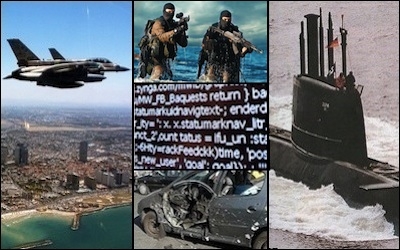
Three scenarios of attack seem possible:

Airplanes. Airplanes crossed international boundaries and dropped bombs in the 1981 Israeli attack on an Iraqi nuclear installation and in the 2007 attack on a Syrian one, making this the default assumption for Iran. Studies show this to be difficult but attainable.

Special ops. These are already underway: computer virus attacks on Iranian systems unconnected to the Internet that should be immune, assassinations of top-ranking Iranian nuclear scientists, and explosions at nuclear installations.

Presumably, Israelis had a hand in at least some of these attacks and, presumably, they could increase their size and scope, possibly disrupting the entire nuclear program. Unlike the dispatch of planes across several countries, special operations have the advantage of reaching places like Fordow, far from Israel, and of leaving little or no signature.

Nuclear weapons. This doomsday weapon, which tends to be little discussed, would probably be launched from submarines. It hugely raises the stakes and so would only be resorted to, in the spirit of “Never Again,” if the Israelis were desperate.

Of these alternatives, I predict the Netanyahu government will most likely opt for the second, which is also the most challenging to pull off (especially now that the great powers promised to help the Iranians protect their nuclear infrastructure). Were this unsuccessful, it will turn to planes, with nuclear weapons as a last resort.

Cartoon of the day

July 17, 2015

H/t Joopklepzeiker


screenshot_442

The irrelevance of Congress

July 17, 2015

The irrelevance of Congress, Power LineScott Johnson, July 17, 2015

The gambit undermines the Corker bill – to say nothing of American sovereignty – on multiple levels. On a policy level, the UNSCR on its own would compel American action even if Congress rejects the Iran deal. On a political level, the administration intends to take the UNSCR and go to lawmakers while they’re considering the deal and say ‘you can’t reject the agreement because it would put America in violation of international law.’

*********************

Omri Ceren writes to elucidate the unfolding process in the Iran deal brought to us by President Obama. Omni’s message explores the issue I noted yesterday here. This is important. Omni writes:

Lead negotiator Wendy Sherman confirmed for journalists yesterday that the Obama administration will, over the next few days, pursue a binding United Nations Security Council resolution (UNSCR) that will lift sanctions on Iran. The resolution was circulated yesterday by the U.S. and a leaked text is already online [1]. When asked how the move could be reconciled with the 60-day Congressional review period mandated by the Corker legislation, Sherman sarcastically responded that you can’t really say “well excuse me, the world, you should wait for the United States Congress” because there has to be some way for “the international community to speak.” [2]. She noted that at least the UNSCR would have a 90 day interim period before its mandatory obligations kick in.

The gambit undermines the Corker bill – to say nothing of American sovereignty – on multiple levels. On a policy level, the UNSCR on its own would compel American action even if Congress rejects the Iran deal. On a political level, the administration intends to take the UNSCR and go to lawmakers while they’re considering the deal and say ‘you can’t reject the agreement because it would put America in violation of international law.’

The pushback from the Hill yesterday was immediate and furious. Corker: “an affront to the American people… an affront to Congress and the House of Representatives” [3]. Cardin: “it would be better not to have action on the U.N. resolution” [4]. Cruz: “our Administration intended all along to circumvent this domestic review by moving the agreement to the UN Security Council before the mandatory 60-day review period ends” [5]. Kirk: “a breathtaking assault on American sovereignty and Congressional prerogative” [6]. McCarthy: “violates the spirit of the Iran Nuclear Agreement Review Act of 2015, which the President signed into law… inconceivable – yet sadly not surprising” [7].

The Washington Post article [by Karen DeYoung here covers some of those statements and has a bunch of background. The story will develop throughout the day and through the beginning of next week. It’s going to be particularly brutal given that the Corker legislation was created and passed to stop exactly this scenario.

Remember how we got here. The March 9 Cotton letter, signed by 47 Senators, declared that without Congressional buy-in any deal with Iran would not be binding on future presidents [8]. Iranian FM Zarif responded with a temper tantrum in which he revealed that the parties intended to fast-track an UNSCR that would make Congress irrelevant and tie the hands of future presidents: “I wish to enlighten the authors that if the next administration revokes any agreement with the stroke of a pen, as they boast, it will have simply committed a blatant violation of international law”[9]. That created a firestorm of criticism from the Hill [10]. Zarif doubled down from the stage at NYU: “within a few days after [an agreement] we will have a resolution in the security council … which will be mandatory for all member states, whether Senator Cotton likes it or not” [11].

And so Congress responded with the Corker legislation. 98 Senators and 400 Representatives passed the bill with the intention of preventing the Obama administration from immediately going to the U.N. after an agreement and making good on Zarif’s boast. President Obama signed the bill. Now the administration is doing exactly what the legislation was designed to prohibit.

______________________

[1] http://www.scribd.com/doc/271711382/Iran-Deal-Draft-UNSC-Resolution-as-Uploaded-by-Inner-City-Press#scribd
[2] http://www.c-span.org/video/?327147-1/state-department-briefing
[3] http://www.cbsnews.com/news/biden-woos-hill-democrats-on-iran-nuclear-deal/
[4] http://thehill.com/homenews/senate/248228-senators-balk-at-un-action-on-iran
[5] http://www.cruz.senate.gov/files/documents/Letters/20150716_LettertoPOTUSonIranDeal.pdf
[6] http://www.kirk.senate.gov/?p=press_release&id=1474
[7] http://www.majorityleader.gov/2015/07/16/un-not-consider-iran-deal-congress/
[8] http://www.cotton.senate.gov/content/cotton-and-46-fellow-senators-send-open-letter-leaders-islamic-republic-iran
[9] http://www.npr.org/sections/thetwo-way/2015/03/10/392067866/iran-calls-gop-letter-propaganda-ploy-offers-to-enlighten-authors
[10] http://www.thedailybeast.com/articles/2015/03/12/gop-goes-ballistic-over-plan-to-take-the-iran-nuke-deal-to-the-u-n.html
[11] http://freebeacon.com/national-security/zarif-a-few-days-after-deal-un-will-drop-all-sanctions-whether-sen-cotton-likes-it-or-not/

NOTE: Noah Rothman has more here.

Read Chattanooga Shooter’s Blog

July 17, 2015

Read Chattanooga Shooter’s Blog, Daily Beast, Katie Zavadski, July 16, 2015

(Nothing to do with the Islam with which “we” are not at war? — DM)

1437132442555.cachedHandout

“We ask Allah to make us follow their path,” Abdulazeez wrote. “To give us a complete understanding of the message of Islam, and the strength the live by this knowledge, and to know what role we need to play to establish Islam in the world.”

***********************

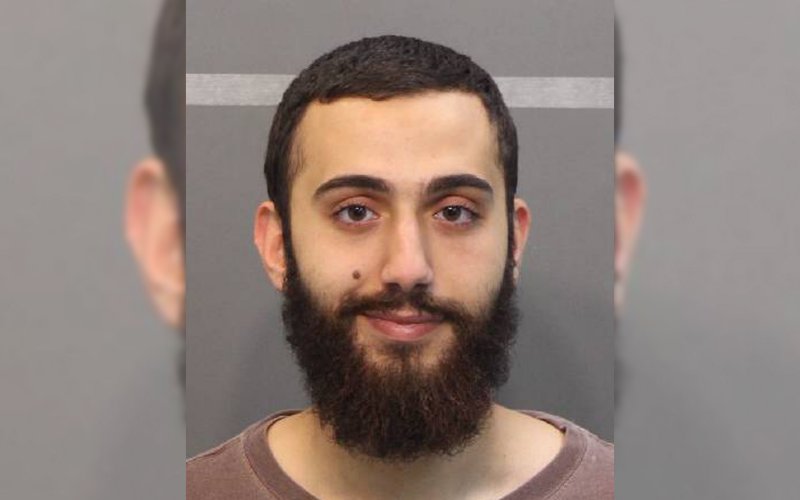
The killer of four U.S. Marines in Chattanooga maintained a short-lived blog that hinted at his religious inner life. Mohammad Youssef Abdulazeez’s blog had only two posts, both published July 13 and written in a popular style of Islamic religious reasoning.

The first post was entitled “A Prison Called Dunya,” referring to the temporal world. In it, Abdulazeez uses the hypothetical example of a prisoner who is told he would be given a test that would either take him out of his earthly prison—or send him into a more restrictive environment.

“I would imagine that any sane person would devote their time to mastering the information on the study guide and stay patient with their studies, only giving time for the other things around to keep themselves focused on passing the exam,” Abdulazeez wrote. “They would do this because they know and have been told that they will be rewarded with pleasures that they have never seen.”

This life is that test, he wrote, “designed to separate the inhabitants of Paradise from the inhabitants of Hellfire.”

The second post is called “Understanding Islam: The Story of the Three Blind Men.” It suggests Abdulazeez felt his fellow Muslims had a “certain understanding of Islam and keep a tunnel vision of what we think Islam is.”

He uses the example of blind men who feel an elephant but can’t quite tell what the creature is. He says Muslims have a similar understanding of the earliest companions of the Prophet Muhammad. That they were “like priests living in monasteries is not true,” he says; rather they were “toward the end of the lives were either a mayor of a town, governor of a state, or leader of an army at the frontlines.”

“We ask Allah to make us follow their path,” Abdulazeez wrote. “To give us a complete understanding of the message of Islam, and the strength the live by this knowledge, and to know what role we need to play to establish Islam in the world.”

A Nostalgic Look at Past Nuclear Breakthroughs

July 17, 2015

(Those who don’t learn from history’s mistakes are doomed to repeat them…..or something like that. – LS)

Senator Asks Why FBI Let Benghazi Attacker Go

July 17, 2015

Senator Asks Why FBI Let Benghazi Attacker Go

Terrorist operative later joined the Islamic State as a recruiter of foreign fighters

BY:
July 17, 2015 4:59 am

via Senator Asks Why FBI Let Benghazi Attacker Go | Washington Free Beacon.

The FBI mishandled the case of an Islamic State terrorist linked to the murder of four Americans in Benghazi, the chairman of the Senate Judiciary Committee says.

Sen. Chuck Grassley (R., Iowa) wrote a letter to James Comey, the FBI director, and Loretta Lynch, the U.S. attorney general, earlier this month regarding Ali Awni al Harzi, a Tunisian recruiter and arms trafficker for the Islamic State (IS, also known as ISIS or ISIL) who was killed in a U.S. drone strike last month.

Just after the Sept. 11, 2012, attack on the U.S. diplomatic mission in Benghazi began, al Harzi is reported to have posted messages on social media about the fighting, which assisted U.S. intelligence in later finding him in Turkey. He was then transferred to Tunisian authorities.

Once in Tunisian custody, he was eventually released in January 2013 after being interviewed for three hours by FBI investigators. He went on to join IS in Iraq.

Grassley asks in his letter how al Harzi “somehow slipped out of our government’s reach,” despite his reported links to Ansar al-Sharia, an al Qaeda-affiliated group that is believed to be a key perpetrator of the Benghazi assault. Militants killed four Americans in the attack, including Ambassador Chris Stevens.

“Although al Harzi was on our radar in 2012 for his terrorist activities, he somehow slipped out of our government’s reach, only to continue his terrorist career for years,” Grassley wrote. “This raises important questions about the Obama administration’s policies and procedures related to the apprehension, interrogation, and detention of terrorists and the roles of the Justice Department and the FBI.”

FBI investigators were finally able to interview al Harzi in December 2012 after months of requests to Tunisian authorities. In addition to his social media postings, U.S. officials have said video footage captured al Harzi at the attack on the consulate in Benghazi and made him a “person of interest.”

Yet a Tunisian judge released him in January 2013—a move opposed by the attorney general’s office in the country—citing a lack of evidence. According to Grassley’s letter, Hillary Clinton, U.S. secretary of state at the time, told lawmakers in congressional testimony that she was “assured that [al Harzi] is under the monitoring of the court” after his release. She also consulted Robert Mueller, then the FBI director, about his case.

“He was released, because at the time—and Director Mueller and I spoke about this at some length—there was not an ability for evidence to be presented yet that was capable of being presented in open court,” Clinton said.

Tunisian authorities eventually lost track of al Harzi, who had joined the Islamic State, also known as ISIS or ISIL. Seth Jones, a terrorism expert at the RAND Corporation, told the New York Times that al Harzi’s “links with ISIL recruitment and financial networks in such locations as Europe, Africa and the Persian Gulf helped ISIL expand from a local group to a more globalized organization.” U.S. forces relocated al Harzi last month in Mosul, Iraq, where he was killed in a drone strike.

Tom Joscelyn, a senior fellow at the Foundation for Defense of Democracies and an expert on jihadist networks in the Middle East, said that U.S. officials have never explained why they allowed al Harzi to walk free. Tunisian authorities did not appear to monitor al Harzi very closely after his release, he said, despite their assurances to the Obama administration. And U.S. officials apparently chose not to use a wealth of evidence at their disposal to further prosecute him, including social media posts, details from the FBI interview, or other classified information, he added.

“None of the excuses that were made for him being released, or for not being concerned about his release, made any sense,” Joscelyn said.

In his letter, Grassley posed several questions to the FBI and Justice Department, including why al Harzi was not extradited to the United States, and why classified information was not used in a criminal case against him. He also asked whether officials considered a military operation to retrieve al Harzi.

U.S. special operations forces captured Ahmed Abu Khattala, leader of Ansar al-Sharia in Benghazi and the suspected coordinator of the 2012 attack, in a raid last year.

While questions remain unanswered about al Harzi’s release, the House Select Committee on Benghazi has been attempting to obtain all government records pertaining to the attack and then issue a final report.

Rep. Jim Jordan (R., Ohio), a member of the committee, said the State Department’s response to records requests has been “pathetic.” According to a recent report, some emails between Clinton and her top aides—which involved the Obama administration’s talking points about the attack—were withheld from the committee due to “deliberative process privilege.”

“We’re not going to have a complete record,” Jordan said. “We’re just going to have do the best we can, and try to get the information for the American people and also importantly for the families of those four individuals” who were killed.

Neither the FBI nor the Justice Department responded to requests for comment for this article. A spokesman for Clinton also did not respond.

Mueller, the former FBI director, declined to comment through a spokeswoman