Archive for June 25, 2015

Israel Asks for Better Gas Mileage

June 25, 2015

Possible Revised F-35 Could Make It for Israel Easier to Attack Iran

By: Tzvi Ben-Gedalyahu Published: June 25th, 2015 Via Jewish Press


F-35 in trial run. Simply awesome. [Photo Credit: Screenshot]

(The engineers at Lockheed have done some pretty amazing stuff. I bet they deliver on this one. – LS)

Lockheed-Martin is studying an Israel request for a longer flight range that would make refueling easier.

The manufacturer of the F-35 stealth attack plane, which Israel might use to attack Iran, is examining an Israeli request to extend the flight range by 30 percent, Amir Rapaport of the Israel Defense website reported Thursday.

Approximately 1,000 miles (1,500 kilometers) separate Israel and Iran, and the current F-35 is designed to fly approximately the same distance without refueling.

The IDF has asked the range to be extended to 1,500 miles, according to Rapaport.

That still would require refueling before Israeli attack planes could return home, but a longer flight range would preclude refueling en route or having to use a base closer to Iran, such as Azerbaijan. A longer flight range also would widen the choices where Israeli pilots could land for refueling on their way home from a bombing mission.

Israel Defense noted that special versions of the F-15 and F-16 include additional fuel tanks, but that option is less practical for the F-35. Even adding fuel capacity by 30 percent would make the airplane larger, challenge engineers to retain the F-35’s stealth capabilities.

IAF teams reportedly are working with Lockheed-Martin in Texas before the first F-35s are due to arrive in Israel towards the end of 2016.

As in the previous planes, Israel has introduced several improvements for the stealth fighter.
Rapaport wrote that sources said:

Israel will significantly improve the aircraft as it once did with the F-15 and F-16.

The F-35 is considered by many Israeli defense officials to be its answer to Iran’s development of a nuclear weapon if an agreement between the P5+1 powers and Tehran does not halt the program.

Below: Video of F-35 in action.

Everyone in Holding Pattern Except Iran

June 25, 2015

Israel Freezes Defense Aid Talks with US Pending Iran Deal

By Cynthia Blank 6/25/2015 Via Israel National News


Defense Minister Moshe Ya’alon at Arrow 2 test [Photo Credit: Flash 90]

(While the world waits, Iran moves forward. More extensions anyone? – LS)

A joint meeting of senior representatives in the Defense Ministry, Foreign Ministry and Prime Minister’s Office resulted in the decision to temporarily suspend dialogue with the United States regarding defense aid to the Jewish state.

The freeze will remain in place until the conclusion of talks between Iran and P5+1 world powers on Tehran’s nuclear program, if not later.

The main reason for suspending the dialogue, officials told Walla! News, is the mounting tension between the White House and Prime Minister Binyamin Netanyahu’s government.

According to a senior defense official, who confirmed the report, freezing talks now will allow Israel to present a new request for defense materials after a deal with Iran has been finalized.

The official asserted that Israel is waiting for negotiations between Iran and Western powers to conclude, to see what exactly the US signs, and from there make demands for maintaining Israel’s security in the region.

Other officials though have suggested Israel may prolong the freeze until a new US president is inaugurated in early 2017, thereby avoiding contact with current US President Barack Obama, whose relationship with Israel has been contentious.

The pressure of a looming nuclear deal with Iran has also begun to affect US officials.

A group of top US experts on security and foreign policy, including former Obama advisors, sent a letter Wednesday night to the President, warning him that the pending accord “may fall short of meeting the administration’s own standard of a ‘good’ agreement.”

Iran’s supreme leader is laughing, for good reason

June 25, 2015

Iran’s supreme leader is laughing, for good reason, Israel Hayom, Boaz Bismuth, June 25, 2015

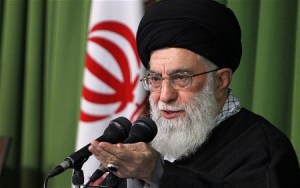
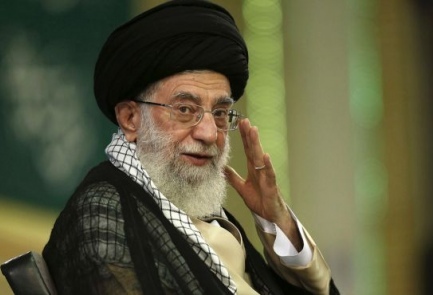
143522169662385559a_bIranian Ayatollah Ali Khamenei | Photo credit: AP

In Tehran on Tuesday, Khamenei spoke about his country’s “red lines.” Red lines? Can someone maybe explain what those are to the Obama administration?

********************

Iranian Ayatollah Ali Khamenei feels confident enough, only a few days before June 30 (the deadline for a final-status nuclear deal with world powers), to thumb his nose at the international community, including the American government, and declare Iran’s three noes: no to freezing its nuclear program, no to international oversight at its nuclear facilities, no to a phased lifting of sanctions (as proposed by the French). In other words, Khamenei is telling the world: Dear superpowers — bite me.

Meanwhile, almost simultaneously, we have received an Associated Press report from Vienna that the U.S. and its partners conducting the negotiations with Iran are prepared — for the sake of reaching a deal — to even provide the Iranians with advanced nuclear reactors and equipment. This isn’t a joke.

It’s possible, perhaps, to imagine Khamenei rejecting this generous offer outright because the Americans aren’t also including ballistic missiles in the package. If you’re going to be generous, then you might as well go all the way.

Truth be told, this entire business to this point seems quite like a joke. The problem is that it’s coming at our expense. And it’s also not that funny.

French Foreign Minister Laurent Fabius met on Wednesday with his Saudi counterpart and promised him a “tough deal.” The Saudis are no less worried than we are about a bad deal. But who is promising us a “tough deal?” The French, who ultimately always fall in line with the Americans, whose help they need for more burning issues closer to home (Ukraine)? Who? The Russians? The Chinese? The Americans? The Germans? The British? The truth is, it would be best to trust the Iranians to torpedo the deal on their own, but Khamenei’s and even Iranian President Hassan Rouhani’s promulgations from two weeks ago aren’t enough to scare anyone off.

In November 2013, as a reminder, we were just several days before the interim agreement. I remember how the Iranian and Western delegations leaked information about the many difficulties in the negotiations, but that in the end, in the middle of the night, the deal was born (how shocking). Eventually, we saw virtually the same scenario unfold in Lausanne this past March — the numerous problems were made public, the deadline was extended by a few days, and finally on April 2 we received the framework deal.

We can assume that in the coming days we will get to see “the best show in town,” at the end of which, in contrast to the previous rounds, we can expect a final status deal with an Iran that is not only slated to become a nuclear power but a stabilizing force in our crumbling Middle East.

In Tehran on Tuesday, Khamenei spoke about his country’s “red lines.” Red lines? Can someone maybe explain what those are to the Obama administration?

The West’s Misconceptions Over the Final Nuclear Deal

June 25, 2015

The West’s Misconceptions Over the Final Nuclear Deal, Front Page Magazine, June 25, 2015

ayatollah_2146641b-450x282

[W]hat is the Obama administration’s strategy? Apparently, the Obama administration does not have one. This is due to the fact that the administration believes that the Islamic Republic will not cheat, interfere in other nations’ affairs, or do any harm in case sanctions are lifted. In other words, the Islamic Republic is going to be another Switzerland.

****************

In a recent interview that President Obama gave to Israeli outlet Channel 2’s Ilana Dayan, he indirectly defended the Islamic Republic and suggested that the ruling clerics are not going to cheat on the terms of the final nuclear deal. But how can President Obama be so sure about Iran’s compliance if a deal is reached and when economic sanctions are lifted? Is he making such an argument based on Iran’s past history of nuclear defiance? Or based on its current military intervention in several nations and support for Shiite militia groups, proxies, and Islamic Jihad?

It is crucial to point out that the nuclear activities of the Islamic Republic came to the international spotlight due to Iran’s clandestine and underground nuclear sites. Iran had since repeatedly violated the IAEA’s terms by building additional underground nuclear sites and inching towards nuclear capabilities in order to obtain nuclear weapons.

President Obama also argued that sanctions will snap back in case Iran cheats. Nevertheless, the truth is that there is no such thing as automatic snapping back of sanctions.  In addition, by the time that the international community realizes that Iran has cheated, Iran would have reduced the nuclear break-out capacity to zero, boosted its Revolutionary Guards’ economy, and gained billions of dollars. Secondly, Russia and China will scuttle any process that would snap back the economic sanctions.

There exists a crucial underlying misconception in the West headed by the Obama administration regarding the final nuclear deal with the Islamic Republic, which is approaching its June 30th deadline.

From President Obama and the Western powers’s perspective,  the nuclear deal with the Islamic Republic is going to be transformational and revolutionary. This follows that the West, and particularly the White House, contends that the final nuclear deal or the nuclear resolution is going to transform the character of Iran’s political system in the long term; hence it will fundamentally alter Iran’s regional, domestic policies, shift its support for Shiite militia groups and proxies across the Middle East, moderate Iran’s foreign policy, and probably change the government in the long term.

On the other hand, from the Iranian leaders’s perspective, the nuclear deal is transitory, fleeting, momentary and transactional. In other words, Iranian authorities will follow the rules of the nuclear agreement for the limited time assigned in the deal. They will boost their economy, regain billions of dollars, and reinitiate their nuclear program soon after.

As long as Iran’s Supreme Leader, Ayatollah Ali Khamenei, is alive, the Islamic Republic is going to prioritize its Islamist revolutionary ideologies. The 75-years-old man, who has ruled over 25 years and continuously spread anti-American and anti-Semitic propaganda, is not going to change his position and become a Western-loving person open to forces of globalization and integration. His has created a powerful social base based on his anti-American and anti-Semitic propagandas.

Since Iranian leaders view the final nuclear deal on a short-term basis, from the perspective of Iranian leaders, particularly Ayatollah Ali Khamenei and influential officials of Iran’s Revolutionary Guard Corps (IRGC), reaching a final nuclear deal is a no-brainer, economically speaking. In addition, the leaders of the Islamic Republic are cognizant of the fact that they will not give up their nuclear program based on the current terms of the nuclear agreement.

Most recently, Royal Dutch Shell PLC, which owes the Islamic Republic an outstanding debt of more than $2 billion, has been talking about repaying Iranian leaders the debt after the nuclear deal is signed. and consequently the related sanctions are lifted. Several other foreign companies were unable to pay Iran due to the financial and banking sanctions imposed by the United Nations Security Council and previous US administrations. Nevertheless, President Obama is opening the way for the flow of billions of dollars into the revolutionary Islamist ideology of the Islamic Republic.

It is crucial to point out that the flow of billions of dollars into the Islamic Republic will not trickle down to the Iranian ordinary people or even be distributed equally among the governmental institutions such as Iran’s foreign ministry. An overwhelming majority of the cash will likely be controlled by the IRGC, Quds forces (an elite revolutionary branch of IRGC fighting in foreign countries) and office of the Supreme Leader. The IRGC and office of the Supreme Leader do enjoy a monopoly over major economic sectors of the Islamic Republic.

The issue of immediate access to billions of dollars is particularly appealing and crucial for the Iranian leaders due to the notion that Tehran looks at the final nuclear deal through the prism of short-term, immediate economic and geopolitical boosts.

As a result, the final nuclear deal is viewed as purely short-term business for the IRGC and the Supreme Leader.

Finally, it is rational for every government to have strategies to rein in Iran’s full economic return. But, what is the Obama administration’s strategy? Apparently, the Obama administration does not have one. This is due to the fact that the administration believes that the Islamic Republic will not cheat, interfere in other nations’ affairs, or do any harm in case sanctions are lifted. In other words, the Islamic Republic is going to be another Switzerland.
Unbelievable: Is UN Report on 2014 Israel-Gaza War Actually Excusing Hamas Use of Human Shields?

June 25, 2015

Unbelievable: Is UN Report on 2014 Israel-Gaza War Actually Excusing Hamas Use of Human Shields?

June 24, 2015 – 10:06 am

via Unbelievable: Is UN Report on 2014 Israel-Gaza War Actually Excusing Hamas Use of Human Shields? | The Rosett Report.

The UN has given terrorists worldwide a field guide on how to use human shields for propaganda in the future.

To the colossal compost heap of anti-Israel screeds churned out by the United Nations, we can now add the so-called Schabas Report on the 2014 summer war between Gaza and Israel.

Not that the eponymous William Schabas saw the production of this report right through to the end. Appointed last summer as chair of this UN inquiry, Schabas was forced to resign this past February when news emerged that he had served as a paid adviser to the Palestinian Authority. (This UN report notes that he resigned – but does not say why.)

Officially, this document is titled: “Report of the independent commission of inquiry established pursuant to Human Rights Council resolution S-21/1.”

A more fitting title would be: “A UN Field Guide to Making the Most of Human Shields.”

Of course there’s more than that to this report, which runs 34 pages, accompanied by 200 pages of “detailed findings.” There is the UN’s usual moral equivalence between the democratic state of Israel — which withdrew from Gaza in 2005 hoping for peace — and the Hamas terrorists who then came to power in Gaza, devoted in practice to terrorizing Israel and dedicated in their charter to obliterating Israel entirely.

You can find a good rundown on the overall report from Anne Bayefsky writing for Fox News, and no doubt there will be more coverage when this report is formally presented next Monday for what the UN Human Rights Council is pleased to describe as “debate.” But let’s focus here on how this report deals with the Hamas tactic of using human shields.

So pervasive is this horrifying practice that even the UN’s investigators cannot quite manage to ignore it. So they make do, instead, with embarking on a series of bizarre locutions that effectively excuse it.

Step One, in paragraph 63 (page 16) of the main report, is to suggest uncertainty that any such thing might have happened (boldface mine):

Palestinian armed groups allegedly often operated from densely populated neighborhoods, including by firing rockets, mortars and other weapons from built-up areas. In addition, they were alleged to have frequently placed command control centers and firing positions in residential buildings and to have stockpiled weapons and located tunnel entrances in prima facie civilian buildings.

“Allegedly”? “Alleged”? The report goes on in this vein, beset by existential doubts.

Step Two, in paragraph 64, is to excuse this use of human shields just in case it really did happen:

The commission recognizes that the obligation to avoid locating military objectives within densely populated areas is not absolute. The small size of Gaza and its population density make it difficult for armed groups to comply with this requirement.

Really?

Beyond the technical point that even in densely populated Gaza there are open areas, this UN locution reduces the use of human shields to an accident of bad urban planning — as if the solution were to provide Hamas with more acceptable locations from which to launch its attacks.

The real problem is that instead of providing civilized government in Gaza, Hamas and its brethren “armed groups” devote themselves to firing rockets and mortars and digging attack tunnels into Israel. Those were the prolific bombardments and threats that triggered the 2014 conflict. And when Israel finally acted in its own defense, the horrifying use by Hamas of human shields provided the expected grist for propaganda aimed at damaging Israel, including this report.

But the UN investigators are not done with this topic.

Step Three: just in case the “alleged” use of human shields was not entirely a function of inconvenient geography, they slather on the kind of bureaucratic language that would have captivated George Orwell (boldface mine):

While the commission was unable to verify independently the specific incidents alleged by Israel, the frequency of Palestinian armed groups carrying out military operations in the immediate vicinity of civilian objects and specially protected objects suggests that such conduct could have been avoided on a number of occasions. In those instances, Palestinian armed groups may not have complied to the maximum extent feasible with their obligations.

Civilian “objects”?

The problem was not that Hamas and its fellow terrorists used “objects” as protection, but that these terrorists used other human beings as shields. And the grave abuse here was not that that Hamas “could have” avoided such conduct, but that it didn’t.

Step Four: the UN investigators conclude (paragraph 65, page 17) that however questionable “the case-by-case legality of the actions of Palestinian armed groups,” that “does not modify Israel’s own obligations to abide by international law.”

How is Israel supposed to defend itself from very real terrorist bombardments by “Palestinian armed groups” whose members may have allegedly, reportedly, perhaps not entirely complied to the maximum extent feasible with their obligations to avoid using other human beings as shields? The UN investigators do not explain.

This report serves brilliantly as a guide for terrorists who might on future occasions wish to make use of human shields. The lesson: as long as they are attacking Israel, the UN can be relied upon to give them a pass.

ISIL re-enters Syrian Kurdish town Kobane

June 25, 2015

ISIL re-enters Syrian Kurdish town Kobane

At least 12 killed in bomb blast in battleground border town, as fighting flares in several other key Syrian cities.

25 Jun 2015 11:35 GMT

via ISIL re-enters Syrian Kurdish town Kobane – Al Jazeera English.

ISIL fighters attacked the battleground town from three sides [Getty Images]

Islamic State of Iraq and the Levant (ISIL) fighters have launched attacks on two fronts in northern Syria, re-entering the Kurdish town of Kobane and seizing parts of the city of Hasakah.

Dozens of ISIL fighters attacked Kobane on the border with Turkey, where at least 12 people were killed in a car bomb attack at the start of the offensive on Thursday morning.

ISIL fighters were wearing Kurdish and Free Syrian Army uniforms, the sources told Al Jazeera, as they attacked from three sides and took several positions inside the battleground town.

Al Jazeera’s Nisreen El Shamayleh, reporting from Amman, said several ISIL fighters “carried out suicide attacks; decimated themselves and caused a lot of casualties” after entering the city.

“There’s a lot of fighting going on there, that we understand is ongoing,” our correspondent said.

“Dozens of people have been trying to flee.”

The Kurdish group YPG asked civilians to stay home as it sent reinforcements to the town.

The fighting prompted Kurdish activists and Syrian state television to accuse Turkey of allowing ISIL to attack Kobane from its side of the border.

A Turkish foreign ministry spokesman later “strongly denied” that the ISIL fighters crossed into Syria from Turkey.

Kurdish forces in January had reclaimed Kobane from ISIL in a victory touted by Anwar Muslim, the prime minister of the self-declared Kurdish canton of Kobane, as “the beginning of the end for Daesh [ISIL]”.

Losing Kobane after more than four months of intense fighting was seen as a significant propaganda blow to ISIL after it had invested extensive military resources to capture the isolated border town.

“Daesh [ISIL] took most of the places it wanted in Syria and Iraq but could not capture Kobane,” Muslim told Al Jazeera at the time.

Can these forces stop a rotten Iran deal?

June 25, 2015

Can these forces stop a rotten Iran deal? The Washington Post, Jennifer Rubin, June 25, 2015

(Ms. Rubin is one of the Washington Post’s token conservatives, and anything she says is routinely disparaged by many WaPo readers. Others? Not so much. — DM)

Between the press leaks revealing serial concessions, the public incoherence of Secretary of State John Kerry and Ayatollah Ali Khamenei’s public declarations, the forces opposing an imminent Iran deal have plenty of material to work with. And if there is any doubt as to Israel’s position, opposition leader Isaac Herzog — whom President Obama dearly hoped would replace Prime Minister Benjamin Netanyahu, made clear what Israel-watchers already knew:

“There is no difference between me and [Prime Minister Benjamin] Netanyahu in reading the threat of Iran,” Herzog said in an interview with The Telegraph. “There is no daylight between us on this issue at all. I do not oppose the diplomatic process.

However, the proof of the pudding is in the eating.

We want to know ‘what is the deal?’ What’s the best deal possible that can be reached and would it change the region in a better direction? And here we are worried.”

In the article, Telegraph chief foreign correspondent David Blair appeared to express frustration that Herzog did not come across as opposing Netanyahu on Iran.

“If the US administration hoped that Mr. Herzog might dilute Israel’s visceral suspicion of an imminent nuclear deal with Iran, however, then he seems likely to disappoint,” Blair wrote.

There is no divide in the country at large, with 80 percent of Israelis declaring they have no confidence in President Obama’s handling of Iran.

Most GOP presidential hopefuls have decried the president’s giveaways. On Wednesday, former Texas governor Rick Perry, for example, put out a statement, which read in part: “In reckless pursuit of any agreement, President Obama has conceded point after point after point. Iran has used deadlines and extensions as a tactic for eliciting still more concessions from the U.S. We are well past the time where further concessions are tolerable if we still intend to prevent Iran from getting a nuclear weapons capability rather than manage its breakout time. This agreement is shaping up to spark a nuclear arms race in the Middle East and increase the odds of a devastating and catastrophic military conflict in the future. President Obama should abandon these dangerous negotiations and resume international sanctions until Iran understands and accepts that they cannot have a nuclear weapon.”

Meanwhile, the most influential Democrat on Iran, Sen. Robert Menendez (N.J.), has been taking to the Senate floor on a regular basis to denounce the reported concessions. On Wednesday, former Bill Clinton secretary of defense William Cohen denounced the deal as likely to start a nuclear arms race: “Once you say they are allowed to enrich, the game is pretty much up in terms of how do you sustain an inspection regime in a country that has carried on secret programs for 17 years and is still determined to maintain as much of that secrecy as possible.” He echoed multiple critics who saw it was all downhill once Obama did an about-face on the Syrian red line: “It was mishandled and everybody in the region saw how it was handled. And I think it shook their confidence in the administration. … The Saudis, the UAE and the Israelis were all concerned about that. They are looking at what we say, what we do, and what we fail to do, and they make their judgments. In the Middle East now, they are making different calculations.” (While Sen. Lindsey Graham strongly supported military action, none of the other three senators running for president did.)

More bipartisan opposition comes from ex-lawmakers. The American Security Initiative, headed by former senators Joe Lieberman (I-Conn.), Evan Bayh (D-Ind.), Norm Coleman (R-Minn.) and Saxby Chambliss (R-Ga.), announced a $1.4 million ad buy to inform the public about the contents of the imminent deal. Its targets include Democratic Sens. Richard Blumenthal of Connecticut, Michael Bennet of Colorado and Chuck Schumer of New York and independent Angus King of Maine. While Schumer likes to fancy himself as a great friend of Israel, when the chips are down, he has often given the administration cover, as he did in supporting the nomination of former senator Chuck Hagel (R-Neb.) for defense secretary.

In addition, an all-star group of Iran and military experts including former Obama advisers Dennis Ross, Robert Einhorn and Gary Samore warn against a deal that does not include anytime/anywhere inspections, revelation of possible military dimensions of Iran’s program before sanctions relief begins, “strict limits on advanced centrifuge R&D, testing, and deployment in the first ten years, and [measures to] preclude the rapid technical upgrade and expansion of Iran’s enrichment capacity after the initial ten-year period,” gradual lifting of sanctions and no relief from non-nuclear sanctions and a timely mechanism to reimpose sanctions if Iran cheats. In other words, they’ll support a deal utterly unlike the one we are likely to get.

Other voices now are speaking out on the administration’s willingness to lift sanctions while Iran continues its support for terrorism. Manhattan’s long-time Democratic district attorney Robert Morgenthau  (who tracked Iranian finances and relations with dictators in our hemisphere) writes that “the fundamental question to be asked is whether the deal the U.S. is negotiating with Iran will curtail its role as a state sponsor of terrorism. The answer appears to be a resounding no. . . . These sanctions, particularly over the past decade, have given the U.S. powerful leverage. It appears that this leverage is being frittered away as U.S. negotiators bend over backward to strike a deal. But meaningful deals are negotiated from strength; not from desperation. Any deal that fails to address or curtail Iran’s role as a state sponsor of terrorism—and that actually undercuts our ability to confront that threat—is a deal that we must not make.”

There is little doubt that the most prominent pro-Israel organization, the American Israel Public Affairs Committee (AIPAC) will go all-out to defeat the deal if it contains the sorts of concessions reported in the media. As we have noted, it already has begun warning lawmakers and the public of the dangers in a deal that does not stop Iran from getting nuclear weapons.

The White House, aided by every left-wing group it can round up (including persistent Israel antagonist J Street) will try to make this a choice between war and its crummy deal. It will strong-arm every Democrat who will listen. It will gloss over concessions, trying to pass off critics as unfamiliar with the fine print of the deal. Working against the president, however — in addition to the ludicrous concessions — are two factors. He, according to every recent public poll out there, is distrusted on foreign policy. And he is increasingly ineffective in bullying his own party, as we saw on the Corker-Menendez bill giving Congress an up-or-down vote. (If not for GOP leadership in both houses, he’d never have gotten trade-promotion authority.) Still, opponents of the deal do not underestimate the task of getting enough votes in the Congress to override the president’s veto of a resolution of disapproval.

The most interesting figure in all this may be Hillary Clinton. Unlike trade authority, it is inconceivable that she could refuse to take a clear position on an Iran nuclear deal. If she breaks with the president (highly unlikely), the left will attack her mercilessly. If she stands by him she risks — as he does — a bipartisan repudiation and an irate electorate. It is fitting that the biggest loser in this may be Clinton, who initiated engagement with Iran and continually opposed congressional efforts to tighten sanctions. Obama’s name may be on the deal, as the president said, but if there is a deal, it will be a direct result of four years of her Iran policy that set the pattern for her successor.

Former Obama advisers warn against emerging Iran deal

June 25, 2015

Former Obama advisers warn against emerging Iran deal | The Times of Israel.

Bipartisan group calls on US administration to hold out for a ‘good agreement,’ address Israel’s concerns over accord

June 25, 2015, 3:42 am
US President Barack Obama speaks during a news conference at the G-7 summit in Schloss Elmau hotel near Garmisch-Partenkirchen, southern Germany, Monday, June 8, 2015. (AP/Carolyn Kaster)

US President Barack Obama speaks during a news conference at the G-7 summit in Schloss Elmau hotel near Garmisch-Partenkirchen, southern Germany, Monday, June 8, 2015. (AP/Carolyn Kaster)

Several former members of President Barack Obama’s inner circle are among a bipartisan group of 18 diplomats, legislators, and experts warning against the emerging nuclear deal with Iran and urging the US administration to address Israel’s concerns regarding the pending accord.

In a public statement issued to the press Wednesday, the group said the deal being negotiated between the P5+1 and Iran “may fall short of meeting the administration’s own standard of a ‘good’ agreement’” and laid out a series of key requirements it said Iran should agree to ahead of the June 30 target date for the deal.

“The [current] agreement will not prevent Iran from having a nuclear weapons capability,” the group charged. “It will not require the dismantling of Iran’s nuclear enrichment infrastructure…It does not address Iran’s support for terrorist organizations (like Hezbollah and Hamas), its interventions in Iraq, Syria, Lebanon, and Yemen (its ‘regional hegemony’), its ballistic missile arsenal, or its oppression of its own people.”

The signatories include Dennis Ross, a former special assistant to the president who oversaw Israeli-Palestinian negotiations and the White House’s Iran policy during Obama’s first term; David Petraeus, the former director of the CIA; Olli Heinonen, a former deputy director general of the International Atomic Energy Agency; Robert Einhorn, a former special adviser to the Secretary of State for nonproliferation and arms control (2009-2013) who also helped devise sanctions against Iran; Gary Samore, a former coordinator for arms control and weapons of mass destruction under President Obama who now heads United Against a Nuclear Iran; and General James Cartwright, who in 2007-2011 was the vice chairman of the Joint Chiefs of Staff.

Former CIA director David Petraeus leaves the federal courthouse in Charlotte, N.C., Thursday, April 23, 2015 after pleading guilty to sharing top government secrets with his biographer [photo credit: AP/Chuck Burton]

The letter writers urged a more robust monitoring and inspections mechanism that would grant IAEA inspectors “timely and effective access to any sites in Iran” and “review and copy documents as required for their investigation of Iran’s past and any ongoing nuclear weaponization activities.”

The administration recently backed away from a promise to force Tehran to reveal its past nuclear activities as part of the negotiated deal, alarming opponents and supporters alike. And Iran has repeatedly indicated that not all its sites would be open to inspectors.

While the signatories said that the US should not impose new sanctions while negotiations are underway, they warned that sanctions relief “must be based on Iran’s performance of its obligations,” and “must not occur until the IAEA confirms that Iran has taken the key steps required to come into compliance with the agreement.”

Sanctions for non-nuclear affairs, like terrorism, should remain in effect, the letter said.

Former Middle East ambassador and Obama adviser Dennis Ross at an event at the Jewish People Policy Institute in Jerusalem earlier this year (photo credit: Uri Lenz/Flash90)

“Precisely because Iran will be left as a nuclear threshold state (and has clearly preserved the option of becoming a nuclear weapon state), the United States must go on record now that it is committed to using all means necessary, including military force, to prevent this. The President should declare this to be US policy and Congress should formally endorse it,” the group said, adding that “without these features, many of us will find it difficult to support a nuclear agreement with Iran.”

They also urged the Obama administration not to treat the June 30 deadline as “inviolable” and called for US negotiators to stay at the table until a “good” agreement is reached.

“US alternatives to an agreement are unappealing, but Iran’s are worse. It has every incentive to reach an agreement and obtain relief from sanctions and international isolation well in advance of its elections next February. If anyone is to walk out of the negotiations, let it be Iran,” they warned.

Acknowledging Israel’s vociferous objections to the deal and its repeated warnings against allowing Iran to remain a nuclear threshold state, the signatories called on the Obama administration to “create a discreet, high-level mechanism with the Israeli government to identify and implement responses” to Israel’s concerns.

Regarding the US’s other regional allies, the letter called on the Obama administration to bolster any Iran agreement by “doing more in the region to check Iran and support our traditional friends,” including the expansion of training and arming of Iraqi and Kurdish Peshmerga forces and the sidelining of Iranian militias in Iraq; the acceleration of US train and equip programs in Syria for non-extremist opposition fighters; increased support for Saudi Arabia in the ongoing Yemen crisis; and generally curbing Iranian hegemony in the region.

Palestinians set to kick off war crimes case against Israel

June 25, 2015

Palestinians set to kick off war crimes case against Israel

Papers alleging misdeeds in West Bank and Gaza to be handed to chief prosecutor of International Criminal Court

By Stuart Winer June 25, 2015, 9:57 am

via Palestinians set to kick off war crimes case against Israel | The Times of Israel.

Fatou Bensouda

Born 31 January 1961 (age 54)
Banjul, Gambia
Alma mater University of Ife
Nigerian Law School
International Maritime Law Institute
Religion Islam[1]


Palestinian Authority Foreign Minister Riyad al-Malki (Issam Rimawi/Flash90)

Palestinian Authority Foreign Minister Riyad al-Malki (Issam Rimawi/Flash90)


alestinian Authority Foreign Minister Riyad al-Maliki was expected on Thursday to personally deliver to the International Criminal Court files describing alleged Israeli crimes in the West Bank and Gaza.

The move by the Palestinians marks a first step toward opening criminal proceedings against the Jewish state, and comes days after a UN panel found Israel could be guilty of war crimes during fighting in Gaza last summer.

Maliki was to present the files, which mainly contain background data and statistics, for review by ICC Chief Prosecutor Fatou Bensouda.

The files describe Israeli control in the West Bank, arrest policies, and daily life.

A team of ICC investigators is scheduled to arrive in Israel by the end of the month to examine Palestinian allegations of Israeli war crimes and crimes against humanity in the West Bank and Gaza Strip, though Israeli officials have described the visit as routine.

The files to be presented by Maliki are intended to aid Bensouda in deciding whether or not to upgrade the preliminary probe into a full investigation of criminal activity.

A decision to order a full investigation can only come from judges in the ICC’s pretrial department.

International Criminal Court prosecutor Fatou Bensouda announced a preliminary examination concerning the 'situation in Palestine.' (Andreas Rentz/Getty Images/ via JTA)

International Criminal Court prosecutor Fatou Bensouda (Andreas Rentz/Getty Images/ via JTA)

Should the review lead to an investigation, the court may also look into crimes allegedly committed by the Palestinians as well.

The Palestinian Authority officially joined the International Criminal Court on April 1, after having signed the court’s founding treaty, the Rome Statute, last December.

Though Israel is not a member of the court, cases could be brought before it against Israeli individuals suspected of war crimes committed in territory claimed by the Palestinians.

In January, Bensouda initiated an investigation into alleged war crimes committed by Israel during last summer’s war between Israel and armed factions in Gaza.

On Monday, a report by the UN Human Rights Council found Israel and Palestinian groups could have committed war crimes, and urged The Hague to launch an investigation.

The International Criminal Court in The Hague, Netherlands (photo credit: Vincent van Zeijst/Wikimedia Commons/File)

Israel has dubbed the Palestinians’ joining the court as “scandalous,” with Prime Minister Benjamin Netanyahu warning that it turns the ICC “into part of the problem and not part of the solution.”

Meanwhile, the Israeli non-governmental organization Shurat Hadin-Israel Law Center has begun collecting incriminating information on Palestinian leaders as a deterrent measure at the ICC.

Earlier this week Shurat Hadin petitioned the ICC demanding that the court disqualify Bensouda from dealing with the matter because she has already made comments to the media about the Israeli-Palestinian situation, contravening the court’s own guidelines, the Hebrew-language Ynet website reported.

Elhanan Miller contributed to this report.

Getting to yes

June 25, 2015

Getting to yes, Power LineScott Johnson, June 24, 2015

(Just a few more reasons why the version of the P5+1 – Iran nuke “deal” now under discussion is terrible. — DM)

Omri Ceren writes to comment on George Jahn’s AP story “Document outlines bit-power nuke help to Iran.” If you have been following our posts presenting Omri’s comments on the breaking news of our capitulation to the Islamic Republic of Iran, please don’t miss this one:

The Associated Press got ahold of one of the five secret annexes being worked on ahead of a final deal between the P5+1 global powers and Iran. This one – titled “Civil Nuclear Cooperation” – details a range of nuclear technology that various members of the P5+1 will be obligated to provide Iran, including “high-tech reactors and other state-of-the-art equipment.” The draft that the AP saw wasn’t finalized, and so some of the concessions are subject to change.

As the annex is written right now, however, this is no longer a deal to stop the Iranian nuclear program. It’s a deal to let the Iranians perfect their nuclear program with international assistance and under international protection.

The uranium concession: As well, it firms up earlier tentative agreement on what to do with the underground site of Fordo, saying it will be used for isotope production instead of uranium enrichment. Washington and its allies had long insisted that the facility be repurposed away from enrichment because Fordo is dug deep into a mountain and thought resistant to air strikes — an option neither the U.S. nor Israel has ruled out should talks fail. But because isotope production uses the same technology as enrichment and can be quickly re-engineered to enriching uranium, the compromise has been criticized by congressional opponents of the deal.

Some country in the P5+1 will be helping the Iranians develop next-generation centrifuges in a facility impenetrable to American and Israeli bombs. Conversely, any country that wants to sabotage that development will be unable to do so, because the program will be protected and maintained by a major power.

As the centrifuges are being developed they’ll be spinning non-nuclear elements, but once they’re perfected the Iranians will be able to use them to enrich uranium. The international community will literally be investing in helping Iran achieve a zero breakout.

A couple of obvious points. First, it means the P5+1 will be actively providing the Iranians with the tools to break out while a deal is in place. The Iranians will already have 300kg of 3.67% uranium on hand, and they’ll be able to scale up production as they need because the JCPOA lets them keep 5,000 centrifuges enriching uranium at Natanz and lets them keep another 10,000 centrifuges in storage available to be installed. They can bring low enriched material to Fordow and quickly enrich it to weapons-grade levels in the next-generation centrifuges they’ll have developed with P5+1 assistance. Second – again – it means that the P5+1 will be actively ensuring that Iran will have the technology to go nuclear at will the instant the deal expires. The technology the Iranians learn to develop at Fordow will be applied on a mass scale.

The plutonium concession: To that end, the draft, entitled “Civil Nuclear Cooperation,” promises to supply Iran with light-water nuclear reactors instead of its nearly completed heavy-water facility at Arak, which would produce enough plutonium for several bombs a year if completed as planned… Outlining plans to modify that heavy-water reactor, the draft, dated June 19, offers to “establish an international partnership” to rebuild it into a less proliferation-prone facility while leaving Iran in “the leadership role as the project owner and manager.”

Light-water reactors are significantly more proliferation-resistant than heavy-water reactors (in fact there’s no reason to build a heavy water reactor – of the type that the Iranians have been working on – unless you want to produce plutonium for a nuclear weapon). But even LWRs are not proliferation proof, and a plutonium bomb isn’t the only concern.

Imagine that 15 years from now the Iranians have built a dozen LWRs with help from a P5+1 nation. One concern is indeed that they’ll kick out inspectors, keep the spent fuel, and start reprocessing on the way to creating a plutonium bomb. But a more subtle concern is that they will use the existence of the LWRs as a pretext for industrial-scale uranium enrichment – because they’ll say they need the uranium fuel for their plutonium plants – which can serve as a cover for breaking out with a uranium bomb. The P5+1 would be actively providing the Iranians with diplomatic leverage to use against the P5+1 in the future. The answer to this latter concern is that the JCPOA sunset clause already allows the Iranians to have an industrial-scale uranium enrichment program that can serve as a cover for breaking out with a uranium bomb. I’m not sure the administration wants to overemphasize that point.