H/t Freedom is just another word.

Muslim world reacts to Obama’s latest speech – IPhoneConservative, MEMRI TV via IPhoneConservative via You Tube, May 20, 2015
(Another update: Now the video is up at Front Page Magazine, with a caveat about Poe’s law.
Poe’s law is an internet adage which states that, without a clear indicator of the author’s intent, parodies of extremism are indistinguishable from sincere expressions of extremism.[1][2] Poe’s Law implies that parody will often be mistaken for sincere belief, and sincere beliefs for parody.[3]
– DM)
(UPDATE, May 27th: the subtitles were edited by IPhoneConservative. In a comment beneath the video, posted on May 26th, it was stated:
I must admit I find it fascinating that so many people commenting here are voicing their outrage at my editing of the subtitles in this clip from MEMRI. For those that don’t know who they are………..they are an invaluable site that documents and translates much of what goes on in Middle East media. This clip was from their site. Every day they post videos with leading Islamic figures and personalities making hideous statements about Jews and Christians. About killing gays and beating women. I wonder how many of those outraged by my use of the clip in this way are equally outraged by the real sentiments expressed on these program’s? Not enough I would guess.
– DM)
***********************
(Offensive? Yes. Well worth watching? Yes.– DM)
No army in Mid East is challenging ISIS. Iran regroups to defend S. Iraqi Shiites, Assad to save Damascus, DEBKAfile, May 25, 2015
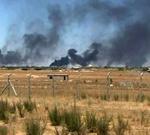 Iranian troops in fight to evict ISIS from Baiji refinery
Hassan Nasrallah Saturday, May 23, called his Lebanese Shiite Hizballah movement to the flag, because “we are faced with an existential crisis” from the rising belligerence of the Islamist State of Iraq and the Levant. His deputy, Sheik Naim Qssem, sounded even more desperate: “The Middle East is at the risk of partition” in a war with no end in sight, he said. “Solutions for Syria are suspended. We must now see what happens in Iraq.”
The price Iran’s Lebanese proxy has paid for fighting alongside Bashar Assad’s army for four years is cruel: some 1,000 dead and many times that number of wounded. Its leaders now understood that their sacrifice was in vain. ISIS has brought the Syrian civil war to a new dead end.
This week, a 15-year old boy was eulogized by Hizballah’s leaders for performing his “jihadist duty” in Syria.
Clearly, for their last throw in Syria, the group, having run out of adult combatants, is calling up young boys to reinforce the 7,000 fighting there.
The Syrian president Bashar Assad is in no better shape. He too has run dangerously short of fresh fighting manpower. Even his own Alawite community has let him down. Scarcely one-tenth of the 1.8 million Alawites have remained in Syria. Their birthrate is low, and those who stayed behind are hiding their young sons to keep them from being sent to the front lines.
Assad also failed to enlist the Syrian Druze minority to fight for his regime, just as Hizballah’s Nasrallah was rebuffed when he sought to mobilize the Lebanese army to their cause. This has left Hizballah and the Syrian ruler alone in the battlefield with dwindling strength against two rival foes: ISIS and the radical Syrian opposition coalition calling itself Jaish al-Fatah – the Army of Conquest – which is spearheaded by Al Qaeda’s Nusra Front and backed to topple Assad by Saudi Arabia, Qatar and Turkey.
Nasrallah tried to paint a brave picture of full mobilization to expand the war to all parts of Syria. However, Sunday, May 24, a key adviser to Assad admitted that his regime and its allies were being forced to regroup.
Their forces were withdrawing from the effort to shift the Islamists from the land they have conquered – about three-quarters of Syrian territory – and concentrating on defending the cities, Damascus, Homs and Latakia, home to the bulk of the population, as well as the strategic Damascus highway to the coast and Beirut. Hizballah needed to build up the Lebanese border againest hostile access.
But Syrian cities, the Lebanese border and the highway are still under threat – from Syrian rebel forces.
The Iraqi army, for its part, has been virtually wiped out, along with the many billions of dollars the US spent on training and weapons. There is no longer any military force in Iraq, whether Sunni or Shiite, able to take on ISIS and loosen its grip on the central and western regions.
The Kurdish peshmerga army, to whom President Barack refused to provide armaments for combating the Islamists, has run out of steam. An new offensive would expose the two main towns of the semi-autonomous Kurdish Republic – the capital Irbil and the oil city of Kirkuk – to the depredations of the Islamist belligerents.
A quick scan of Shiite resources reveals that in the space between the Jordan River and the Euphrates and Tigris, Iran commands the only force still intact in Iraq – namely, the Iraqi, Afghan and Pakistani Shiite militias, who are trained and armed by the Revolutionary Guards.
This last remaining fighting force faces its acid test in the battle ongoing to recover Baiji, Iraq’s main oil refinery town. For the first time, Iranian troops are fighting in Iraq, not just their surrogates, but in the Baiji campaign they have made little headway in three weeks of combat. All they have managed to do is break through to the 100 Iraqi troops stranded in the town, but ISIS fighting strength is still not dislodged from the refinery.
The Obama administration can no longer pretend that the pro-Iranian Shiite militias are the panacea for the ISIS peril. Like Assad, Tehran too is being forced to regroup. It is abandoning the effort to uproot the Islamists from central and western Iraq and mustering all its Shiite military assets, such as the Badr Brigade, to defend the Shiite south – the shrine towns of Najef and Karbala, Babil (ancient Babylon) and Qadisiya – as well as planting an obstacle in the path of the Islamists to Iraq’s biggest oil fields and only port of Basra.
The Shiite militias flown in by Tehran from Pakistan and Afghanistan have demonstrated in Syria and Iraq alike that they are neither capable nor willing to jump into any battlefields.
The upshot of this cursory scan is that not a single competent army capable of launching all-out war on ISIS is to be found in the Middle East heartland – in the space between the 1,000km long Jordan and the Euphrates and Tigris to the east, or between Ramadi and the Saudi capital of Riyadh to the south.
By Sunday, May 24, this perception had seeped through to the West. US Defense Secretary Ashton Carter, remarked: “What apparently happened was that the Iraqi forces just showed no will to fight.” The former British army chief Lord Dannatt was more down to earth. Since the coalition air force campaign had failed to stop ISIS’s advance, he said “it was time to think the previously unthinkable” and send 5,000 ground troops to fight the Islamists in Syria and Iraq.
The next day, Monday, Tehran pointed the finger of blame for the latest debacles in Iraq at Washington. Al Qods Brigades chief Gen. Qassem Soleimani was quoted by the English language Revolutionary Guards mouthpiece Javan as commenting: “The US didn’t do a damn thing to stop the extremists’ advance on Ramadi.”
(Tip of the hat to joopklepzeiker.– DM)

Video: The Ongoing War Between Islam and Europe, Front Page Magazine, , May 25, 2015
In the following video, Hanne Nabintu Herland, a Norwegian historian of religions, author, and public debater, interviews Raymond Ibrahim on the history of Islam and the West. Topics include the original (but forgotten) Arab conquests, the (demonized) Crusades, and why the modern West’s notion of “history” is immensely skewed:
US didn’t do ‘damn thing’ against IS in Ramadi, Iran commander says | The Times of Israel.
Qassem Soleimani’s accusation come after Defense Secretary Ash Carter says fleeing Iraqi forces didn’t have will to battle jihadists

The chief of an elite unit in Iran’s Revolutionary Guard has accused the US of having “no will” to stop the Islamic State group after the fall of the Iraqi city of Ramadi, an Iranian newspaper reported Monday.
The comments by General Qassem Soleimani, the head of the Guard’s elite Quds force, come just after US Defense Secretary Ash Carter accused Iraqi forces of lacking the “will to fight” in an interview aired the day before.
It wasn’t clear whether Soleimani’s remarks came as a direct response to Carter’s, though tensions remain high between the two countries amid negotiations over Iran’s contested nuclear program.
The report in the daily newspaper Javan, which is seen as close to the Guard, quoted Soleimani as saying the US didn’t do a “damn thing” to stop the extremists’ advance on Ramadi.
“Does it mean anything else than being an accomplice in the plot?” he reportedly asked, later saying the US showed “no will” in fighting the Islamic State group.
Soleimani said Iran and its allies are the only forces that can deal with Islamic State group,

“Today, there is nobody in confrontation with (the Islamic State group) except the Islamic Republic of Iran, as well as nations who are next to Iran or supported by Iran,” he said.
US officials, including Carter, have said Iraqi forces fled the Islamic State advance on Ramadi without fighting back, leaving behind weapons and vehicles for the extremists. So far, the American approach to the conflict has been to launch airstrikes as part of an international coalition it leads, as well as equipping and training Iraqi forces.
Iran meanwhile has offered advisers, including Soleimani, to direct Shiite militias fighting against the extremists. Iran has said it does not have combat troops fighting in Iraq, though some Revolutionary Guard members have been killed there.
Copyright 2015 The Associated Press.
Unconfirmed: Huge explosion kills hundreds in central Tehran, DEBKAfile, May 24, 2015
(Update: DEBKAfile has deleted the post, which it had acknowledged had not been confirmed, suggesting that nothing of interest happened.– DM)
According to first unconfirmed reports, central Tehran was hit Sunday night with massive blasts leaving many hundreds of people dead. Witnesses report heavy Revolutionary Guards and Basij forces speeding to the area. Thee are also reports of explosions in the southern Iranian town of Isfahan – also unconfirmed.
Exclusive: ISIS columns heading from Syria toward Jordan, first targeting the border crossing, DEBKAfile, May 24, 2015
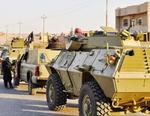 ISIS on the march to Jordan
The Islamic State in Iraq and the Levant – ISIS – was on the move Sunday, May 24, from central Syria to the Jordanian border, DEBKAfile’s exclusive military sources report. They were advancing from the central town of Palmyra, which they seized last week, in columns of US-made tanks and armored cars taken booty in Iraq. No Syrian military force was there to block their advance on the border.
Our sources report that the initial ISIS mission is to take control of the eastern section of the border, including the meeting point between the Syrian, Jordanian and Iraqi frontiers. They are estimated to cover the 250 km from Palmyra to the Jordanian border byTuesday, May 26, passing through Deir el-Zour in the east, which they already occupy.
After the border crossing, ISIS is expected to seize villages and towns in northeastern Jordan, especially Ar Ruwayshid, where 800,000 Syrian refugees shelter.
The Jordanian army, our sources report, had the foresight earlier this month to reinforce its western frontier against a potential ISIS assault on the frontier from point where it links with the Israeli and Syrian borders and up to the Tanaf border crossing, However, the Islamists are heading for the eastern sections whic the Jordanian army did not fortify with extra troops.
It is important to note that the United States maintains in the Kingdom of Jordan 7,000 special operations troops and an air force unit to guard its northwestern border with Syria. Most are stationed at Jordanian military bases in Mafraq, opposite the central sector of the border with Syria.
By reaching Jordan’s doorstep, the Islamic State is posing a challenge to President Barack Obama and forcing him to reach a decision, avoided thus far, about sending US troops to confront the terrorists.
The ISIS approach may stir into action the clandestine cells the group maintains in the towns of central Jordan with strong local support. ISIS is popular in the kingdom, especially in the southern regions abutting on Israel and Saudi Arabia. Ma’an is seen as an Islamic State stronghold in southern Jordan.
(We can give them equipment and training. But how can we give them time — and training requires time as well as motivation on the part of the trainees — when the Islamic State gives them neither? — DM)
ISIS advances on Baghdad, faces little resistance, DEBKAfile, May 24, 2015
The Islamic State continued its push toward Baghdad and on other fronts. Saturday, the group took the Iraq-Syrian town of Husaybah on the Tigris, rounding off its control of the border and the river and gaining an easy and rapid route for transferring reinforcements between the two countries.
The Islamists closed the distance to the big Iraqi base of Habbaniyah, taking Khalidiya on the way.DEBKAfile: Claims in Baghdad that Iraqi forces are preparing to recapture Ramadi have no substance in fact. The only place the ISIS is facing resistance is at the eastern exit of Khalidiya, where pro-Iranian Shiite militias are attempting to bar their progress towards Habbaniyah whic would bring them to within 12 km from Baghdad.




 anneinpt
 artaxes
 danmillerinpanama
 davidking1530
 Peter Hofman
 Joseph Wouk
 Peter
Peter Louisiana Steve
 WarSclerotic
Recent Comments