Archive for May 2015

ISIS Announces the Winners of its Death Lottery

May 6, 2015

ISIS POSTS WARNING: ‘We Have 71 Trained Soldiers in 15 States’ – NAMES 5 TARGETS
Posted by Jim Hoft on Tuesday, May 5, 2015, 8:59 PM Via Gateway Pundit


(What’s the matter ISIS? You can’t take a joke? – LS)

ISIS released a new online threat today on JustPasteIt.

The terrorist group says they will murder Pamela Geller and kill anyone who shields her.

The terrorists also say they have 71 fighters in 15 different states and they 23 have signed up already for missions like the failed Sunday attack in Garland, Texas.

Via Sooper Mexican:

Bismillah Ar Rahman Ar Raheem

“The New Era”

To our brothers and sisters fighting for the Sake of Allah, we make dua for you and ask Allah to guide your bullets, terrify your enemies, and establish you in the Land. As our noble brother in the Phillipines said in his bayah, “This is the Golden Era, everyone who believes… is running for Shaheed”.

The attack by the Islamic State in America is only the beginning of our efforts to establish a wiliyah in the heart of our enemy. Our aim was the khanzeer Pamela Geller and to show her that we don’t care what land she hides in or what sky shields her; we will send all our Lions to achieve her slaughter. This will heal the hearts of our brothers and disperse the ones behind her. To those who protect her: this will be your only warning of housing this woman and her circus show. Everyone who houses her events, gives her a platform to spill her filth are legitimate targets. We have been watching closely who was present at this event and the shooter of our brothers. We knew that the target was protected. Our intention was to show how easy we give our lives for the Sake of Allah.

We have 71 trained soldiers in 15 different states ready at our word to attack any target we desire. Out of the 71 trained soldiers 23 have signed up for missions like Sunday, We are increasing in number bithnillah. Of the 15 states, 5 we will name… Virginia, Maryland, Illinois, California, and Michigan. The disbelievers who shot our brothers think that you killed someone untrained, nay, they gave you their bodies in plain view because we were watching.

The next six months will be interesting, To our Amir Al Mu’mineen make dua for us and continue your reign, May Allah enoble your face.

May Allah send His peace and blessings upon our Prophet Muhummad and all those who follow until the last Day.

Abu Ibrahim Al Ameriki

The threat was posted by Abu Al Ameriki.


Iran leader puts kibosh on talks under ‘US threat of attack’

May 6, 2015

Iran leader puts kibosh on talks under ‘US threat of attack’ | The Times of Israel.

Ayatollah Ali Khamenei reacts angrily to what he says were two US officials warning they could strike Iran’s nuclear program

May 6, 2015, 3:19 pm
Iranian Supreme Leader Ayatollah Ali Khamenei Thursday, March 20, 2014,  (photo credit: AP/Office of the Supreme Leader)

Iranian Supreme Leader Ayatollah Ali Khamenei Thursday, March 20, 2014, (photo credit: AP/Office of the Supreme Leader)

Iran’s supreme leader warned Wednesday that his country will not sit down for further talks about its nuclear program when it is being threatened with military action, citing comments from two unnamed US officials.

Ayatollah Ali Khamenei also urged Iranian negotiators to not suffer “humiliation” or retreat beyond the “red lines” of national interest, hours after officials in Brussels and Tehran said they would resume talks next week to nail down a definitive accord on Iran’s nuclear program.

Speaking to teachers as Iran marked its national teacher’s day, Khamenei said that negotiating under threat is “unacceptable.”

“How dare US officials threaten Iran militarily?” Khamenei asked. “Recently two US officials threatened to take military action against Iran. What does negotiation mean under ghost of a threat?”

“Negotiation under threat is meaningless and the Iranian nation does not tolerate negotiation under the shadow of threat,” he said, according to the semi-official Fars news agency.

“First of all, you can’t do a damn thing,” he added. “Secondly, as I had already stated during the term of the former US president, the era of hit and run is long gone and the Iranian nation will not let go anyone intending to make an aggression.”

Although media reports did not make it clear to which US officials the Iranian leader was referring, last month The Washington Post reported that Sen. Tom Cotton (R-Ark.) called for a limited military strike on Iran’s nuclear facilities similar to the four-day bombing campaign of Operation Desert Fox in 1998 against Iraq for failing to comply with United Nations Security Council resolutions.

He may have also been referring to US Secretary of State John Kerry, who referenced the idea that the US could still strike at Iran in an interview with Israel’s Channel 10 which aired on Sunday.

In the interview, Kerry mentioned a 30,000-pound bunker-buster bomb designed to be able to penetrate Iranian nuclear facilities hidden deep underground.

“I say to every Israeli that today we have the ability to stop [the Iranians] if they decided to move quickly to a bomb. And I absolutely guarantee that in the future we will have the ability to know what they are doing, so that we can still stop them if they decided to move to a bomb,” Kerry said.

In further comments posted to Khamenei’s personal Twitter account, he claimed that the US is also under pressure to see the talks reach an agreement and called on Iranian officials to not back down on key issues.

The defiant Khamenei also claimed that “many Western officials secretly confirm Iran’s grandeur and power” and admire the country for it’s resistance to international pressure and sanctions applied over its controversial nuclear program.

Negotiations between Iran and six world powers — the US, Britain, France, Russia, China and Germany — were scheduled to resume on May 12 in Vienna, the European Union and Tehran said Tuesday.

EU negotiator Helga Schmid and her Iranian counterparts Abbas Araqhchi and Majid Takht Ravanchi “will resume their work on 12 May in Vienna,” the EU diplomatic service said in a statement.

The political leaders of the other world powers involved in the negotiations will join the talks on May 15, the statement said.

Iran’s Deputy Foreign Minister  Abbas Araghchi, speaking on state television in Tehran, confirmed the plans.

“We will resume negotiations next Tuesday up to Friday when the G5+1 (global powers) will join us and we will arrive at some conclusions,” said Araqhchi, who is part of an Iranian team currently taking part in expert-level talks in New York, on the  margins of a UN disarmament summit.

Iran and the G5+1  — the five permanent members of the UN Security Council plus Germany  — want to turn a framework accord reached in Switzerland on April 2 into a full agreement by June 30.

US top diplomat John Kerry met his Iranian counterpart Mohammad Javad Zarif in New York on Monday hoping to push forward the tough nuclear negotiations as they reach the final phase.

Lower-level negotiations resumed last week in Vienna after the April 2 breakthrough in Lausanne, but little has trickled out about the discussions.

Following a marathon of negotiations in Switzerland, Iran agreed on April 2 to what US President Barack Obama called a “historic understanding… which, if fully implemented, will prevent (Iran) from obtaining a nuclear weapon.”

Under the agreed parameters, Iran, which denies seeking the atomic bomb, is set to scale down its nuclear program for 10 to 15 years or more, and allow closer UN inspections.

In return, the United States and five other major powers committed to lift certain sanctions that have caused the Islamic republic of 75 million people major economic pain by strangling its oil exports and financial system.

However, Israeli officials, led by Prime Minister Benjamin Netanyahu, have harshly criticized the framework agreement as leaving Iran with the ability to develop nuclear weapons in the future.

Obama’s New Answers on Iran Fall Flat

May 6, 2015

Obama’s New Answers on Iran Fall Flat – Bloomberg View.

Top Obama administration officials have released new details about how they would lift most sanctions against Iran. Those are unnerving some experts, who doubt the administration’s claims about the sanctions will hold up.

In speeches last week to a conference at the Washington Institute for Near East Policy, Treasury Secretary Jack Lew and Vice President Joe Biden revealed new details about the end of most sanctions against Iran if a nuclear deal is reached. The officials also claimed that most of the sanctions, including multilateral sanctions, could be snapped back into place if Iran cheated, and they argued that giving Iran tens of billions of dollars in cash won’t dramatically increase Iran’s spending on terrorism and other nefarious activities.

Lew spoke to a private meeting of Washington Institute members last Wednesday, after which Treasury posted his remarks. He said that President Obama planned to use his own authority to suspend sanctions against Iran’s oil, banking and trade sectors after Iran complied with the initial parts of the deal and that Congress wouldn’t actually be asked to lift sanctions during his presidency.

“Only after many years of compliance would we ask Congress to vote to terminate sanctions, and only Congress can terminate legislative sanctions,” he said.

Lew said this suspension, rather than a legislative repeal of sanctions, would allow the administration to quickly reinstate U.S. sanctions if Iran is caught cheating. He also said that United Nations sanctions would be able to snap back easily and no single nation would be able to stop that.

“We have made it abundantly clear that if Iran breaks its commitment, it will face once again the full force of the multilateral sanctions regime,” he said. “The snapback would not be vulnerable to a veto by an individual P5 member, including China and Russia.”

That explanation directly conflicts with what Iranian Foreign Minister Javad Zarif told an audience at New York University earlier that day. Zarif said that UN sanctions would be lifted within days of an agreement being signed and that all sanctions would be permanently lifted, including Congressional sanctions, once Iran met its initial obligations.

Treasury officials told me that Lew’s statements were in line with previous administration explanations about how sanctions would be suspended and potentially put back into place later. But the Washington Institute’s Matt Levitt, a former Treasury official who moderated the April 29 event with Lew, said that once sanctions are suspended, especially the multilateral sanctions, there’s no easy way to put them back into place.

“No one should be fooled into thinking there will be any automaticity here,” he said. “If we thought Iran was cheating, the debate then moves to whether there was in fact a violation. You can see a situation where Russia and China will dispute whether there is in fact a violation.”

Levitt and other experts also noted that Lew said the sanctions on one specific part of the Iranian regime, the Quds Force of the Iranian Revolutionary Guard Corps, will stay in place. Treasury considers it linked to terrorism.

Lew didn’t say anything about the rest of the Revolutionary Guard, which is sanctioned for both proliferation and human rights violations and controls as much of a third of the Iranian economy through shell companies in mining, banking and oil. It stands accused of directing huge amounts of illicit activity around the region.

“Lew is signaling that the administration is planning on delisting IRCG banks, energy companies and shipping companies, and perhaps the entire IRGC,” said Mark Dubowitz, executive director of the Foundation for Defense of Democracies.

Hagar Chemali, a Treasury spokeswoman, told me Lew was not stating directly that the entire IRGC would be free from sanctions if a nuclear deal were signed.

“As we have stated numerous times, sanctions related to Iran’s support for terrorism, human rights and other destabilizing behavior will remain in force,” she said. “It would be a mistake to pre-judge any other potential future actions.”

Several experts said that in order for Iran to receive the sanctions relief it seeks as part of a deal, most if not all of the IRGC sanctions would have to go. That could allow for a huge expansion of the group’s influence and activities.

“Isolating the Quds force from the rest of the IRGC ignores the fact that there is a vast IRGC infrastructure that has been involved in human rights violations, proliferation, and terrorism,” said Jonathan Schanzer of the Foundation for Defense of Democracies.  “It leaves the IRGC with a great deal of room to maneuver.”

The exact amount of money Iran would receive after a deal is signed is also in dispute, but Lew said not to worry about that either: Iran has between $100 billion and $140 billion of oil revenue frozen in foreign banks. $30 billion to $50 billion could be released to Iran right after signing a deal, according to Congressional officials who have been briefed on the negotiations. But Lew said Iran was likely to spend that cash on domestic needs and not on terrorism or support for violence.

“President Rouhani was elected on a platform of economic revitalization, and Iranians are demanding proof that engagement with the international community will produce tangible economic benefits,” Lew said. “As a result, Iran is expected to use new revenues chiefly to address those needs, including by shoring up its budget, building infrastructure, maintaining the stability of the rial, and attracting imports.”

Lew also said that Iran has lost so much money to the sanctions, it would take the Iranian government years to recoup those losses. Levitt disagreed and said that the Iranian economy doesn’t have to recoup losses like a business would.

“It’s a cute argument, but it misses the point,” said Levitt. “I don’t think the argument is going to sway people in the region, particularly the Gulf states, who are very worried about the near-term release of significant amounts of money that will empower Iran to do all sorts of things.”

Dubowitz sees the same risk: “When you give bad people bad money, they use it for bad things.”

Biden, in his April 30 speech at the Washington Institute, made a more emotional argument for the deal, praising the administration’s work to build up sanctions against Iran and the progress of the negotiations so far.

“It’s true that Iran could try to cheat, whether there’s a deal or not,” he said. “Now they didn’t cheat under the interim deal — the Joint Plan of Action — as many were certain they would.”

That record of good behavior is debatable. Iran stands accused of violating the interim deal in a number of ways and also reportedly violated other parts of the existing sanctions regime, including by expanding an illicit nuclear procurement network that operates through two blacklisted firms.

Under the deal being discussed, Biden said, Iran would allow inspectors to visit “not only declared nuclear facilities, but undeclared sites where suspicious, clandestine work is suspected.” He said the the international community would have “the ability to challenge suspect locations.”

Experts following the talks say the Iranians have ruled out any access to military sites, which makes Biden’s pitch a little weak.

“Having the ability to ‘challenge’ suspect sites is not the same thing as getting access to them, which is the key thing,” particularly when the Iranians have taken military installations off the table, said Eliot Cohen, who served as State Department Counselor during the George W. Bush administration.

The speeches by Lew and Biden constituted the administration’s most assertive effort to date to detail their thinking about how sanctions will be lifted. The two officials seemed to be eager to get ahead of any and all the criticisms they are anticipating. But they did not. Unless the nuclear talks shift significantly before the June 30 deadline, the administration will continue to face questions it can’t answer.

Charlie Hebdo: How the tables turn

May 6, 2015

Israel Hayom | Charlie Hebdo: How the tables turn.

Zalman Shoval

Last January, in the first days following the massacre committed by Muslim terrorists at the Paris office of French satirical magazine Charlie Hebdo and the Jewish supermarket Hyper Cacher, many people across the globe took to the streets to protest against the atrocities and to champion freedom of expression, carrying signs that said they, too, were Charlie Hebdo.

A few short months later, however, the tables began to turn, and in a perfect Orwellian twist the murderers are now being described by segments of the “enlightened” masses as victims, while the people they murdered are being portrayed as responsible for the fate which befell them.

In New York, the annual PEN World Voices festival for international literature commenced this week, and organizers decided to grant this year’s Freedom of Expression Courage Award to Charlie Hebdo — a worthy and logical decision in my view. The magazine’s editor and one of his employees, who were lucky not to be in the office on the day of the massacre, were invited to New York to receive the award. Five American and British authors, however, announced they would boycott the event, and over 100 Western intellectuals expressed their displeasure over the choice.

While many of the objectors labored to camouflage their true views with allegedly liberal explanations, such as discomfort over the magazine’s “cultural intolerance” (author Rachel Kushner), their carefully chosen words weren’t enough to conceal an inclination toward intellectually identifying with the killers’ motivations.

Others expressed their criticism more bluntly. Take for example novelist Peter Carey, who accused PEN of “blindness to the cultural arrogance of the French nation, which does not recognize its moral obligation to a large and disempowered segment of their population [in other words, the Muslim minority].”

In an article that appeared in The New Yorker after the attack last January, author Teju Cole accused the magazine of reinforcing pre-existing anti-Islamic and anti-Arab sentiments in Western society. Another writer, Francine Prose, has equated Charlie Hebdo to neo-Nazis.

In the eyes of these authors and those in agreement with them, the Muslims in France are oppressed and discriminated against, and therefore it is possible to justify, in their opinion, violent acts against a magazine that has aimed “specifically for racist and Islamophobic provocations” (Cole).

Standing to challenge the aforementioned group of peace-loving writers, incidentally, was British-Indian author Salman Rushdie, himself a Muslim, who has been persecuted by Muslim radicals ever since his book “The Satanic Verses” was published in 1988. On April 27, after the authors announced their withdrawal from the PEN gala, Rushdie posted the following message on his Twitter account: “The award will be given. PEN is holding firm. Just 6 pussies. Six Authors in Search of a bit of Character.”

Meanwhile, in an article appearing in the Financial Times on April 30, senior British editor Robert Shrimsely pointed to the hypocrisy and dishonesty of the authors spearheading the campaign against Charlie Hebdo and the PEN awards committee.

It appears, however, that neither cowardice nor hypocrisy lie at the heart of objecting to granting Charlie Hebdo the award. It is rather a tendency shared by a considerable portion of the global Left to ideologically identify with those who plot to destroy the Western and democratic value system of which they are a part. This distortion of the radical Islamist threat is also fostered by Western leaders, among them U.S. President Barack Obama, who refuse to call this monstrous child by name and shy away from acknowledging the one true reason behind the acts perpetrated by Islamist terrorist groups — which is the fundamentalist Islamist ideology they all share.

We must not, of course, blame these authors for the shooting attack in Texas on Monday, in which two terrorists opened fire outside a contest for cartoon depictions of the Prophet Muhammad. But the aforementioned authors’ lack of solidarity with the Charlie Hebdo victims undoubtedly could encourage other terrorist attacks.

A lot of noise, signifying nothing‎

May 6, 2015

Israel Hayom | A lot of noise, signifying nothing‎.

Richard Baehr

The next deadline for an agreement between the P5+1 nations and Iran over its ‎nuclear program is June 30. As with prior deadlines, the next one can be extended ‎a few days to iron out “final” details as occurred with the prior March 31 deadline, ‎or rolled over a few more months if significant gaps remain.

This was what ‎occurred with earlier rounds of the talks, and may well describe what occurred ‎after the last round of talks concluded, despite the happy talk from both sides as ‎they left Switzerland. In any case, the actions of the Obama administration, the U.S. ‎Congress, and Iran in the five weeks since the last round of talks ended, make it ‎fairly clear that the dynamic in place since the talks began has not been ‎fundamentally altered.

This dynamic includes the following:

1. Concessions by the P5+1: The concessions are largely from the P5+1, not ‎Iran. Sometimes the concessions come in stages — where initially they are ‎not admitted, but only become obvious further down the road in an ‎extended period of negotiations. Of particular interest in this regard is ‎what the two sides have said about sanctions relief for Iran, and access to ‎over $100 billion in oil revenues, now withheld from the country. Access to ‎this cash is, of course, the principal reward to Iran for making any changes ‎to its current nuclear program. The United States has stated publicly that ‎sanctions relief would be gradual, and tied to specific performance by Iran ‎in mothballing or decommissioning aspects of its nuclear program, and ‎satisfying the new supposedly tougher inspections regime. When the ‎Iranian leadership declared in early April that this was not the case, and ‎sanctions relief was to be immediate, with an estimated $50 billion released ‎pretty much upon inking the deal, President Barack Obama retreated and seemed to ‎be agreeable to this interpretation. He stated to reporters that sanctions ‎disagreement could be “creatively addressed” in future negotiations, but no ‎one need worry, since there were sanctions “snapbacks” that would occur ‎quickly to reinstate sanctions if Iran regressed from its commitments. Of course, Iran ‎would already have $50 billion in hand, perhaps more, and ‎Obama’s assurances on snapbacks do not appear to have incorporated the ‎views on this issue of some of the other P5+1 members, which have veto ‎authority at the United Nations Security Council, such as Vladimir Putin’s ‎Russia or China. In essence, inspectors would have to do ‎their work and point out violations. Then nations such as Russia and China ‎would have to accept that the inspectors were correct, and that there had ‎been significant violations of the agreement. Finally the Security Council ‎would have to vote to restore the sanctions in some form. The description ‎of this process as a “snapback,” suggesting any kind of immediacy or high ‎likelihood of success, seems, as a result, largely unwarranted. Again, these ‎snapbacks were what Obama proposed as providing security that ‎Iran would not cheat after first releasing an enormous amount of money to ‎the country for having done little more than sign an agreement. The ‎Americans’ deal sheet that was ‎released by Secretary of State John Kerry after the Lausanne talks ‎concluded, and which the Iranians claimed were a fiction in some areas, ‎appear to have largely been an American spin in those areas where ‎disagreements remained, or an attempt to hide concessions already made ‎or yet to be made. This was especially the case in regard to sanctions relief. ‎Despite some attempts to put the deal in the best light as a true compromise ‎with roughly equal concessions by both sides, the American deal sheet, which ‎indicated that sanctions relief would match performance by Iran, appears to ‎be inaccurate.

From that fact sheet:

‎”Sanctions:

“‎•‎ Iran will receive sanctions relief, if it verifiably abides by its commitments.‎

‎”‎•‎ U.S. and E.U. nuclear-related sanctions will be suspended after the IAEA has ‎verified that Iran has taken all of its key nuclear-related steps. If at any ‎time Iran fails to fulfill its commitments, these sanctions will snap back ‎into place.‎

“‎•‎ The architecture of U.S. nuclear-related sanctions on Iran will be retained for ‎much of the duration of the deal and allow for snapback of sanctions in ‎the event of significant nonperformance.‎

“‎•‎ All past U.N. Security Council resolutions on the Iran nuclear issue will be ‎lifted simultaneous with the completion, by Iran, of nuclear-related ‎actions addressing all key concerns (enrichment, Fordo, Arak, PMD, ‎and transparency).”‎

The administration’s latest admissions now indicate that lack of ‎performance might at best bring some sanctions back (assuming Russia and ‎China are willing) but will not delay initial sanctions relief. ‎

‎2. Iranian public statements and behavior: If Obama’s seeming obsession ‎with reaching a nuclear deal with Iran is consummated, the real question is ‎whether Iran has in any way become a changed nation after a few years of talking ‎with “the great Satan,” the nation that Iranians have clamored for “death to” ‎for 36 years. ‎So far, there is no evidence of any kind that Iran seems willing to join the ‎‎”community of nations,” and become less of a belligerent on the world stage. ‎While the talks have been going on, Iran has stepped up its military involvement in ‎Syria, Iraq, and Yemen, and most recently has seized a foreign ship belonging to ‎theMarshall Islands. ‎Iranian leaders have also made clear that their military programs are off limits to ‎nuclear inspectors. With tens of billions of dollars in sanctions relief, Iran’s ability to further ‎project its power in the region, and arm Israel’s enemies Hezbollah and Hamas, will ‎only be elevated. As mentioned earlier, Iran has also issued its own interpretation ‎of what was agreed to in the recently concluded round of negotiations, and it ‎includes a lot fewer Iranian concessions than the Americans have claimed even ‎apart from sanctions relief.

‎3.‎ Congressional action: The Senate Foreign Relations Committee has passed ‎unanimously the Corker-Menendez bill, which provides for a quick review ‎by Congress of the Iran deal after it is finalized. Some ‎regarded this as a big victory for Congress, since the president had fought ‎congressional review, arguing this was not a treaty but an executive action ‎or agreement. It is highly likely that the Congress will pass the current ‎version of the bill, and it will be signed by the president. Where conflict may ‎emerge is if a final deal is signed with the Iranians, and it is submitted to ‎Congress. Assume a majority in Congress oppose the deal. For sure, the president ‎will veto that action. An override of this veto in Congress would require a ‎‎2/3 vote in each house: 67 votes in the Senate and 290 in the House of ‎Representatives. In the 2014 midterms, Republicans won 54 Senate seats, ‎and 247 house seats. Assuming all current house vacancies are filled by the ‎party that had held these seats in January, and that all Republicans voted ‎to override a presidential veto (not a certainty by any means), Republicans would need ‎‎13 Democrats in the Senate and 43 in the House to succeed in the veto ‎override. The chances of this occurring are not good. If the Iran deal were ‎viewed as a treaty, then the president would need 67 votes in the Senate for ‎ratification. Now Obama only has to hold 34 members of his party in the ‎Senate. There are a lot of games being played with congressional action on ‎this bill. A series of recent public opinion polls show that the president’s ‎loud and aggressive campaign against Prime Minister Netanyahu’s speech to ‎Congress, including implied threats of hostility at the U.N., ‎antagonized a sizable number of normally reliably Democratic Jewish voters. With a presidential election 18 months away, and ‎Democrats anxious to regain the Senate this cycle, many party members are ‎looking for a way to show solidarity with Israel, after 60 Democrats in the ‎Senate and House rudely boycotted the prime minister’s speech to Congress. Voting for the Corker-Menendez bill is an easy ‎way to do that — since it only enables Congress to get a shot at reviewing the ‎deal, but does not commit any Democrat to in fact oppose the deal when it is ‎reviewed, or vote to override the president of his own party if a veto is cast ‎by Obama. Jewish organizations such as the American Israel Public Affairs Committee, which preach the gospel ‎of bipartisanship, are also anxious to show that the bonds between ‎Democrats and Israel have not been broken. As a result, efforts to ‎strengthen the Corker-Menendez bill to give it more teeth, including‎amendments from Florida Senator Marco Rubio and Arkansas Senator Tom ‎Cotton, were opposed by Democrats and some ‎Republicans as well, ostensibly fearing that any change in the language of ‎the bill would generate a presidential veto, killing Republican efforts to get ‎any kind of congressional review and Democratic efforts to fake that the ‎party is still largely pro-Israel. In other words, there is a saleable picture of ‎congressional behavior attached to a fairly weak bill. But this is viewed as ‎better than no bill due to a presidential veto or loss of Democratic support.

It does not take a forecaster with Nate Silver’s skills to predict where this is going. A deal is ‎likely to be signed. The U.S. Congress will not be able to stop it. Iran will continue ‎to behave as Iran has behaved. And over time, sooner or later, Iran will have its ‎nuclear weapons.

Sudan Claims it Shot Down Israeli Drone

May 6, 2015

Sudan Claims it Shot Down Israeli Drone – Defense/Security – News – Arutz Sheva.

Sudan denies Arab media reports Israeli war planes hit Scud factory, missile storehouses near Khartoum, destroying Iranian missile shipment.
By Ari Yashar
First Publish: 5/6/2015, 9:39 AM / Last Update: 5/6/2015, 11:51 AM


Israeli Heron drone (illustration)

Israeli Heron drone (illustration)
Reuters

The Sudanese army claimed it shot down an Israeli drone, after Arab media reported on Wednesday that Israeli war planes struck sites around the Sudanese capital of Khartoum, destroying weapons sites apparently destined for Hamas terrorists in Gaza.

The London-based Arabic-language Al-Araby Al-Jadeed and other Arab news sources reported the strikes, saying they hit a factory producing long-range Scud missiles, a rocket storage site, as well as a convoy that was leaving the military site in Omdurman to the north of Khartoum.

Witnesses reported hearing explosions and secondary explosions, apparently from the weapons detonating in the strike. There are no clear indications regarding the scope of the damage and whether there are any dead.

The report claimed that foreign jets were behind the incident and indicated Israel had conducted the strike, although no official sources in Sudan or outside of it gave confirmation to the appraisal in the report.

However, a spokesperson for the Sudanese army denied that military sites were hit in airstrikes, with military sources saying a flying object resembling a plane or rocket was shot at by an anti-aircraft unit in the area, according to the Lebanese paper Charles Ayoub.

Later on Wednesday the Sudanese army claimed it had shot down an Israeli drone.

The Lebanese Al Meyadeen, considered to be close to the Iran-backed Hezbollah terrorist organization, reported that the Sudanese army had announced shooting down an Israeli drone in the region of Wadi Seidna, to the north of Khartoum. Wadi Seidna houses an army airbase.

Not the first such report

Sudan has been a key route for smuggling weapons originating in Iran and destined for Hamas in Gaza.

Israel has not yet responded to the report.

This is not the first time Israel has been reported as having struck in Sudan. Last July, Arab media reported Israel bombed an Iranian long-range missile shipment meant for Hamas being stored in a Sudanese military base north of Khartoum.

Last March, IDF forces seized the Klos C in waters off the shores of Sudan, which was smuggling a massive weapons shipment from Iran to Hamas. The IDF said the weapons cargo was likely to be offloaded in Sudan and smuggled to Gaza through the Sinai.

And back in October 2012, Sudan claimed that Israeli airstrikes caused an explosion and fire at a military factory south of Khartoum, killing two people.

Israel refused all comment on Sudan’s accusation about the factory blast, though a top Israeli defense official said Sudan “serves as a route for the transfer, via Egyptian territory, of Iranian weapons to Hamas and Islamic Jihad terrorists.”

Iranian warships regularly dock in Port Sudan, in what Khartoum describes as “routine” visits.

The Texas ISIS attack was not averted owing to US “human intelligence” deficit

May 5, 2015

The Texas ISIS attack was not averted owing to US “human intelligence” deficit, DEBKAfile, May 5, 2015

Elton_Simpson_30.4.15Elton Simpson and Nadir Soofi, Texas

(“Racial” profiling? Why hasn’t anyone thought of that before? Oh. Wait. That would offend Islamists. — DM)


That Simpson and Soofi were permitted to get so far is best explained by a certain weakness in the human intelligence capabilities of US and Western intelligence, the shortage of undercover agents able to mingle in communities and populations with the potential for producing radical elements capable of committing terrorist murder and suicide in the name of their faith. These agents must be able to pass unnoticed in mosques, bazaars and cafes, and have an ear for local dialects, street talk and inflections, so as to catch onto dangers through innuendo.

*********************

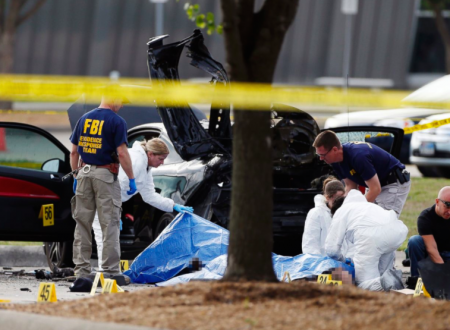
The two American gunmen who Sunday, May 3, tried – and failed – to shoot up an exhibit of caricatures of the Prophet Mohammad at the Curtis Culwell Center in Garland, northeast of Dallas, sounded a wakeup call for US intelligence and counter-terrorism agencies – even before the Islamic State warned that this first attack on US soil would not be its last. The two homegrown terrorists, Elton Simpson, a Christian who converted to Islam, and Nadir Soofi, son of a Pakistani father and American mother, carried submachine guns and explosives and wore body armor – attesting to the existence of an organization behind the attack.

That organization is believed to be made up of small sleeper cells of two to three terrorists each, ready to spring into action on orders from distant controllers.

Both were young men in their mid-twenties. The half-Pakistani Muslim Soofi scraped a living from cleaning carpets, while Simpson was out of work. They failed to perpetrate mass murder because they made every possible mistake. And so after inflicting a scratch on one of the unarmed guards, both were shot dead by local police officers securing the “Muhammad Art Exhibit and Contest” at the Curtis Culwell Center, which offered a $10,000 prize for the best artwork or cartoon depicting the Prophet.

For the past two years, Simpson and Soofi have been running posts and images on Twitter, Facebook and Instagram extolling the Islamic State in Iraq and the Levant (ISIS) and all its works, threatening American Christians with revenge and declaring that terrorist attacks were coming.

Shortly before the Dallas event opened, an explicit threat to mete out punishment to those insulting the Prophet Mohammad in Texas, like in Denmark and Paris, appeared on a Twitter account (since de-activated) belonging to AbuHussainAlBritani, known to security services as an ISIS platform.

Simpson had been known as an FBI target since 2010. Then, he made no secret of his plans to travel to Somalia, take advanced studies in Islam and die as a martyr. He was arrested , convicted only of making a false statement to the forces of the law and released on probation. After that, a double agent persuaded him to talk for hundreds of hours on tape, candidly admitting that he intended one day in the future to take part in a deadly terrorist operation.

Yet Simpson was not detained, or even placed under extra surveillance.

Data flowing from Open Source Intelligence (OSINT) is critical in the war on terror: social networks like Twitter and Facebook serve terrorists around the world widely for passing information, arranging rendezvous, filling in the gaps of operational directives and, above all, disseminating their messages.
The US National Security Agency, as well as European and other agencies, maintain blanket surveillance of the social networks, transferring their content in almost real time to giant computers at agency headquarters for filtering and analysis. It is hard to understand how the radical online messages and outspoken tweets by Soofi and Simpson, which left no room to doubt their intentions, escaped interface by those computers with their past records and views.

The pair was therefore free to drive from Arizona to Texas in late April, in a car registered in one of their names, and armed with machine guns.

They pulled up at the Curtis Culwelll center, where the Mohammed cartoon exhibit opened in the presence of Pamela Geller, president of the American Freedom Defense Initiative (AFDI), which has sponsored anti-Islamic advertising campaigns across the country, and Geert Wilders, a Dutch politician and anti-Islamic campaigner who is on an al Qaeda hit list. When they reached their destination, they were not stopped until they actually started shooting – and only then thanks to the fast reflexes of a police guard on the spot.

That Simpson and Soofi were permitted to get so far is best explained by a certain weakness in the human intelligence capabilities of US and Western intelligence, the shortage of undercover agents able to mingle in communities and populations with the potential for producing radical elements capable of committing terrorist murder and suicide in the name of their faith. These agents must be able to pass unnoticed in mosques, bazaars and cafes, and have an ear for local dialects, street talk and inflections, so as to catch onto dangers through innuendo.

Digital intelligence, however extensive, is no substitute for human intelligence. It takes an undercover human agent on the ground to pick up on terrorist threats in time to thwart attacks.

N. Korea Submarine Missile Allows Covert Nuclear Strike on US

May 5, 2015

N. Korea Submarine Missile Allows Covert Nuclear Strike on US, Israel National News, Ari Yashar, May 5, 2015

(Perhaps North Korea and Iran can make a deal — North Korea gets sanctions-relief money and Iran gets missile equipment and nukes for its submarines. Or maybe Iran could just pay North Korea to attack the U.S. mainland.– DM)

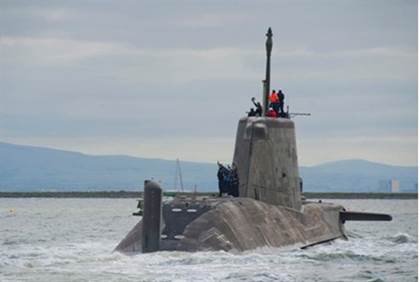
img369953Military submarine (illustration) Reuters

[I]t was reported last month that US President Barack Obama hid intel from the UN about North Korea transferring rocket components needed to create a nuclear missile to Iran even during the nuclear talks, to try and prevent the UN from acting on the information with increased sanctions.

[O]nce the KN-11 and mobile KN-08 “systems go operational, it potentially gives North Korea a dual threat for attacking the United States with nuclear or chemical weapons – a threat generated from difficult to detect mobile platforms on both land and sea.”

***********************

In a worrying step showing North Korea’s rapidly expanding nuclear strike capabilities, the Communist regime recently held a test of a new submarine-launched ballistic missile (SLBM), the first time it has launched a missile capable of carrying a nuclear warhead from underwater.

According to US defense officials cited by the Washington Free Beacon on Tuesday, the test took place on April 22 from an underwater test platform near the coastal city of Sinpo in the southeast of the country, and tested what the US is calling a KN-11 missile.

The test appears to have been successful, and is the third KN-11 test showing the high-priority of the nuclear missile program for North Korea. Previous tests in January and last October were from a sea-based platform not underwater and a land-based platform.

The KN-11 joins the KN-08 mobile intercontinental ballistic missile (ICBM) as being part of a varied North Korean missile arsenal on platforms that would be hard for the US to detect, and consequently allow a strike that would be difficult to shoot down.

Admiral Bill Gortney, Commander of North American Aerospace Defense Command (NORAD) and US Northern Command, admitted last month that North Korea could hit the continental US with a nuclear strike. That admission accompanied the announcement that NORAD is reopening its nuclear-EMP-proof Cheyenne Mountain bunker, apparently amid renewed concerns of an EMP attack by which a nuclear weapon would be detonated over the US, knocking out all of its electronic devices, and thereby rendering it defenseless to secondary nuclear strikes.

The latest launch test also comes after Chinese experts warned the US last month that American estimates are wrong and North Korea actually has 20 nuclear weapons, with that arsenal to double next year thanks to the regime’s higher than anticipated advanced enrichment capabilities.

Nuclear strikes the US won’t see coming

Admiral Cecil D. Haney, commander of the Strategic Command, confirmed the SLBM launch test in comments to the Senate on March 19, reports the Washington Free Beacon. The program is in violation of UN Security Council resolutions.

Regarding the UN, it was reported last month that US President Barack Obama hid intel from the UN about North Korea transferring rocket components needed to create a nuclear missile to Iran even during the nuclear talks, to try and prevent the UN from acting on the information with increased sanctions.

Former US Defense Intelligence Agency official Bruce Bechtol, Jr. told the paper that North Korea’s SLBM program is meant to give it the ability to strike the US, and to not have the strike be detected in advance.

“With an SLBM they get both,” said Bechtol. “The submarine can get the platform to launch the missile within range of the continental United States, Alaska, or Hawaii. Thus, once operational, this immediately brings key nodes in the United States within range of what would likely be a nuclear armed missile.”

He noted that once the KN-11 and mobile KN-08 “systems go operational, it potentially gives North Korea a dual threat for attacking the United States with nuclear or chemical weapons – a threat generated from difficult to detect mobile platforms on both land and sea.”

Obama is bringing the US to “tragedy”

A number of American officials responded sharply to the KN-11 test, placing the blame squarely on Obama’s shoulders.

“This missile, along with the KN-08, happened on Obama’s watch and nothing has been done,” one US intelligence official told the Washington Free Beacon.

Former US Ambassador to the UN John Bolton added his criticism, saying, “by utterly ignoring North Korea’s growing missile threats, Obama has allowed the threat of rogue state proliferators to fall out of the center of the national political debate.”

“This is a potential tragedy for the country,” Bolton warned.

Air Force Lt. Gen. (ret.) Thomas McInerney said that the KN-08 and KN-11 programs constitute “threats to the continental United States and have been developed under the Obama administration’s leadership.”

“Leading from behind is a failed strategy as evidenced by this very dangerous strategic threat to the continental United States of nuclear attack by a very unstable North Korean government,” said McInerney.

The general also spoke about Obama’s admission that the nuclear deal being formed with Iran will allow it to obtain a nuclear weapon in under 15 years if it doesn’t breach conditions and obtain it sooner, noting that the deal “puts the United States in the most dangerous threat of nuclear attack since the height of the Cold War but from multiple threats – North Korea, China, Russia, and Iran.”

Opponents of the nuclear deal being formulated with Iran ahead of a June 30 deadline have warned it follows in the footsteps of the failed deal sealed by then-President Bill Clinton with North Korea in 1994.

Despite the deal, North Korea tested its first nuclear weapon in 2006, just over ten years after the agreement.

Cartoonists are Controversial and Murderers are Moderate

May 5, 2015

Cartoonists are Controversial and Murderers are Moderate, Front Page Magazine, Daniel Greenfield, May 5, 2015

garland1-450x330

[I]f you believe the media, cartoonists are more controversial than killers. A former Muslim sketching a cartoon of Mohammed is bigoted, but justifying attacks on Jews is moderate. Plotting to overthrow the United States and replace it with an Islamic theocracy is right up the alley of your local civil rights group, but a cartoon contest threatens the nation and all of creation by bringing down the wrath of men who spent their time at moderate and Muslim organizations which only occasionally support terrorism.

****************

Controversial, intolerant and provocative. Mainstream media outlets broke out these three words to describe the “Draw the Prophet” contest, the American Freedom Defense Initiative and Pamela Geller.

While the police were still checking cars for explosives and attendees waited to be released, CNN called AFDI, rather than the terrorists who attacked a cartoon contest, “intolerant.” Time dubbed the group “controversial.” The Washington Post called the contest, “provocative.”

Many media outlets relied on the expert opinion of the Southern Poverty Law Center, a multi-million dollar mail order scam disguised as a civil rights group, which had listed AFDI as a hate group. Also listed as hate groups were a number of single author blogs, including mine, a brand of gun oil and a bar sign.

The bar sign, which hangs outside a bar seven miles outside Pittsburgh, appears to be made out of metal and plastic. It is reportedly unaware that it is a hate group and has made no plans to take over America.

The SPLC’s inability to conduct even the most elementary fact checking did not stop news networks from inviting its talking head on to suggest that AFDI got “the response that they — in a sense — they are seeking.” Neither CNN nor MSNBC were impolitic enough to mention that no AFDI supporter had used its materials to plan a killing spree, while at least one of SPLC’s supporters had done just that.

But being “controversial” and “provocative” has nothing to do with who is doing the shooting. It’s a media signal that the target shouldn’t be sympathized with. The Family Research Council, which was shot up by a killer using the SPLC’s hate map, is invariably dubbed “intolerant.” The SPLC, which targeted it, is however a “respected civil rights group” which provides maps to respected civil rights gunmen.

A contest in which Bosch Fawstin, an ex-Muslim, drew a cartoon of a genocidal warlord is “controversial” and “provocative,” while the MSA, which has invited Sheikh Khalid Yasin, who has inspired a number of terrorists, including apparently one of the Mohammed contest attackers, is a legitimate organization that is only criticized by controversial, intolerant and provocative Islamophobes.

Khalid Yasin has held such controversial and provocative views as claiming that the US created AIDS, that gays should be stoned to death and that women should be beaten. But the mosques and MSAs that he has appeared at have not been described as controversial, intolerant and provocative for inviting him.

Elton Simpson, the first gunman, attended the Islamic Community Center of Phoenix. The mosque was listed as being controlled by the Muslim Brotherhood’s North American Islamic Trust front group.

The Muslim Brotherhood holds such controversial and provocative views as “waging Jihad” against American infidels, “raising a Jihadi generation that pursues death” and “destroying the Western civilization from within.” Despite these extremely provocative and intolerant views, the Muslim Brotherhood is usually described by the media as a “moderate” group.

The Brotherhood’s American arm believes in launching a “Grand Jihad” to Islamize America. Its final phase calls for “Seizing power to establish their Islamic Nation” in the United State.

Some might say this is a slightly more controversial activity than drawing cartoons of a dead warlord.

The Islamic Community Center of Phoenix featured an appearance by Lauren Booth, a convert to Islam employed by Iran, who has been photographed with the leader of Hamas, and holds such controversial and provocative views, as the Boston Marathon bombing being faked and attacks on Jews being justified as “a frustrated backlash.

Some might say Booth’s views are controversial, provocative and intolerant. And that the gunman’s mosque was intolerant for inviting her. But don’t expect the media to call out terrorist intolerance.

Booth came as part of a fundraising effort for the Muslim Legal Fund of America, which funded the defense for Islamic Jihad boss Sami al-Arian and aided some of the terrorists involved in the provocative and controversial Fort Dix terror plot to “kill as many soldiers as possible.”

If the two Mohammed cartoon gunmen had survived, the Muslim Legal Fund of America might be having Lauren Booth spout Jewish conspiracies to fundraise on their behalf.

But if you believe the media, cartoonists are more controversial than killers. A former Muslim sketching a cartoon of Mohammed is bigoted, but justifying attacks on Jews is moderate. Plotting to overthrow the United States and replace it with an Islamic theocracy is right up the alley of your local civil rights group, but a cartoon contest threatens the nation and all of creation by bringing down the wrath of men who spent their time at moderate and Muslim organizations which only occasionally support terrorism.

Cartoons can be provocative, but the only people inspired to kill over them, are killers. No one took a shot at Gary “Punching Up” Trudeau, despite decades of mocking conservatives. None of the assorted arts projects that involve defiling and mocking the sacred symbols of Christianity and Judaism resulted in gunmen in body armor trying to storm a cartoon competition. And yet it keeps happening with Islam.

Satire exposes sociopaths and sociopathic ideologies. And it’s the very attack on the “controversial” and “provocative” contest that shows why exposing them is so important.

Elton Simpson had already been on the radar of the FBI. He should have been in jail, but Judge Mary H. Murguia, a Clinton appointee who has been bandied about as a possible Obama Supreme Court nominee, chose to believe a claim by his public defender that when he was taped talking about Jihad, it might have meant “an internal struggle to maintain faith,” instead of killing non-Muslims.

Simpson had said that Allah loves those who fight non-Muslims, that Jihadists go to paradise and stated, “I’m tellin’ you man. We gonna make it to the battlefield… it’s time to roll.”

But that was just too ambiguous for Judge Murguia, who wrote, “It is true that the Defendant had expressed sympathy and admiration for individuals who “fight” non-Muslims as well as his belief in the establishment of Shariah law, all over the world including in Somalia. What precisely was meant by “fighting” whenever he discussed it, however, was not clear.”

“Neither was what the Defendant meant when he stated he wanted to get to the ‘battlefield’ in Somalia,” she added.

If nothing else, events like these help clarify the question of just what “fighting” non-Muslims involves, and whether it’s an internal struggle to maintain faith or an external struggle waged with assault rifles.

Satire helps expose the idiocy and absurdity of our betters, whether it’s Gary Trudeau or Judge Murguia. Every act of Islamic terror discredits them and their dishonest worldview even further. And they know it.

We cannot fight Islamic terrorism until we deal with it and we cannot deal with it as long as we are burdened by a political establishment that frantically censors any mention of its existence or its agenda.

The two gunmen did not attack the cartoon event simply because they were offended, but because they believed that their religion gave them a mandate to impose Islamic law on Americans. Until we deal with this supremacist reality, any effort to fight Islamic terrorists will be futile and will ultimately fail.

The Mohammed cartoons are so vital because they expose the theocracy at the heart of Islamic terrorism. When Muslim terrorists attack cartoonists, they’re not fighting our foreign policy; they are killing and dying to impose the foreign policy of the Muslim Brotherhood and its numerous daughter groups, such as Al Qaeda, Hamas and ISIS, on us.

The controversial and provocative cartoonists go into battle with pencils in their hands. The terrorists come with body armor and assault rifles. This clash is what real political dissent looks like.

The cartoonists believe in the controversial, intolerant and provocative idea that America should not be a theocracy. But the only people who should be provoked by that provocative idea are the Jihadists who want to impose a theocracy on America and the useful idiots lying and denying on their behalf.

Iranian Supreme Leader following Lausanne Declaration: Nothing Has Been Achieved So Far

May 5, 2015

Iranian Supreme Leader following Lausanne Declaration: Nothing Has Been Achieved So Far, MEMRI TV via You Tube, May 5, 2015

(Khamenei delivered this speech last month, but this fourteen minute video includes some comments I had not seen him make previously. — DM)