Archive for April 17, 2015

Obama says US open to talks with Iran on immediately lifting sanctions

April 17, 2015

Obama says US open to talks with Iran on immediately lifting sanctions, Times of Israel, April 17, 2015

Obama-US-Italy_Horo-e1429295936721-635x357President Barack Obama listened as Italian Prime Minister Matteo Renzi speaks during their news conference in the East Room of the White House in Washington, Friday, April 17, 2015. (Photo credit: AP Photo/Susan Walsh)

Obama also said Friday that a bill introduced by Congress seeking a review and approval of a nuclear deal with Iran would not derail negotiations with Tehran, set to resume next week, and that the proposed legislation was a “reasonable compromise” he planned to sign off on.

The legislation would block Obama from waiving congressional sanctions against Iran for at least 30 days after any final agreement, which would give lawmakers time to weigh in. Obama said he still has concerns that some lawmakers are treading on his unilateral power as president to enter into a political agreement with another country, but the bill has language that makes it clear that lawmakers’ review will be limited to the sanctions imposed by Congress.

***********************

U.S. President Barack Obama on Friday left open the door to “creative negotiations” in response to Iran’s demand that punishing sanctions be immediately lifted as part of a nuclear deal, even though the initial agreement calls for the penalties to be removed over time.

Asked whether he would definitively rule out lifting sanctions at once as part of a final deal aimed at keeping Iran from developing a nuclear weapon, Obama said he didn’t want to get ahead of negotiators in how to work through the potential sticking point. He said his main concern is making sure that if Iran violates an agreement, sanctions can quickly be reinstated — the so-called “snap back” provision.

“How sanctions are lessened, how we snap back sanctions if there’s a violation, there are a lot of different mechanisms and ways to do that,” Obama said. He said part of the job for Secretary of State John Kerry and the representatives of five other nations working to reach a final deal with Iran by June 30 “is to sometimes find formulas that get to our main concerns while allowing the other side to make a presentation to their body politic that is more acceptable.”

Iran’s Supreme Leader Ayatollah Ali Khamenei and President Hassan Rouhani insisted last week that they would not sign a deal unless all sanctions are lifted right after an agreement is signed. Obama initially portrayed their comments as a reflection of internal political pressure, while pointing out that the initial framework agreement reached earlier this month allows for sanctions to be phased out once international monitors verify that Tehran is abiding by the limitations.

Obama also said Friday that a bill introduced by Congress seeking a review and approval of a nuclear deal with Iran would not derail negotiations with Tehran, set to resume next week, and that the proposed legislation was a “reasonable compromise” he planned to sign off on.

The legislation would block Obama from waiving congressional sanctions against Iran for at least 30 days after any final agreement, which would give lawmakers time to weigh in. Obama said he still has concerns that some lawmakers are treading on his unilateral power as president to enter into a political agreement with another country, but the bill has language that makes it clear that lawmakers’ review will be limited to the sanctions imposed by Congress.

“That I think at least allows me to interpret the legislation in such a way that it is not sending a signal to future presidents that each and every time they’re negotiating a political agreement, that they have to get a congressional authorization,” Obama said. He said he takes lawmakers who have drafted the legislation at their word that they will not try to derail negotiations.

The president also weighed in on Russia’s announcement earlier this week that it would lift a five-year ban on delivery of anti-aircraft missiles, giving the Islamic republic’s military a strong deterrent against any air attack. The White House initially objected, but Obama said, “I’m frankly surprised that it held this long.”

Russia signed the $800 million contract to sell Iran the S-300 missile system in 2007, but suspended their delivery three years later because of strong objections from the United States and Israel. “Their economy is under strain and this was a substantial sale,” Obama said.

Russia, which also is party to the talks along with China, France, Britain and Germany, said the preliminary nuclear agreement made its 2010 ban on sending missiles to Iran no longer necessary.

Off topic|Bordering On Catastrophe: ISIS Camp on US Border?

April 17, 2015

Bordering On Catastrophe: ISIS Camp on US Border? Front Page Magazine, April 17, 2015

border

The bottom line is that both Mexico and parts of the United States are providing safe-havens for terrorists who have made it clear that they have placed our country and our citizens in their cross-hairs.

*********************

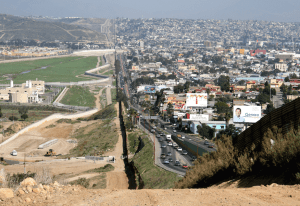
Time and again reports have surfaced from various sources along the U.S./Mexican border that is supposed to separate the United States from Mexico. On April 14, 2015 Judicial Watch posted a chilling report, “ISIS Camp a Few Miles from Texas, Mexican Authorities Confirm” that was purportedly based on information provided to Judicial Watch by a “Mexican Army field grade officer” and a Mexican Federal Police Inspector.

This is the report as posted by Judicial Watch:

ISIS is operating a camp just a few miles from El Paso, Texas, according to Judicial Watch sources that include a Mexican Army field grade officer and a Mexican Federal Police Inspector.

The exact location where the terrorist group has established its base is around eight miles from the U.S. border in an area known as “Anapra” situated just west of Ciudad Juárez in the Mexican state of Chihuahua. Another ISIS cell to the west of Ciudad Juárez, in Puerto Palomas, targets the New Mexico towns of Columbus and Deming for easy access to the United States, the same knowledgeable sources confirm.

During the course of a joint operation last week, Mexican Army and federal law enforcement officials discovered documents in Arabic and Urdu, as well as “plans” of Fort Bliss – the sprawling military installation that houses the US Army’s 1st Armored Division. Muslim prayer rugs were recovered with the documents during the operation.

Law enforcement and intelligence sources report the area around Anapra is dominated by the Vicente Carrillo Fuentes Cartel (“Juárez Cartel”), La Línea (the enforcement arm of the cartel) and the Barrio Azteca (a gang originally formed in the jails of El Paso). Cartel control of the Anapra area make it an extremely dangerous and hostile operating environment for Mexican Army and Federal Police operations.

According to these same sources, “coyotes” engaged in human smuggling – and working for Juárez Cartel – help move ISIS terrorists through the desert and across the border between Santa Teresa and Sunland Park, New Mexico. To the east of El Paso and Ciudad Juárez, cartel-backed “coyotes” are also smuggling ISIS terrorists through the porous border between Acala and Fort Hancock, Texas. These specific areas were targeted for exploitation by ISIS because of their understaffed municipal and county police forces, and the relative safe-havens the areas provide for the unchecked large-scale drug smuggling that was already ongoing.

Mexican intelligence sources report that ISIS intends to exploit the railways and airport facilities in the vicinity of Santa Teresa, NM (a US port-of-entry). The sources also say that ISIS has “spotters” located in the East Potrillo Mountains of New Mexico (largely managed by the Bureau of Land Management) to assist with terrorist border crossing operations. ISIS is conducting reconnaissance of regional universities; the White Sands Missile Range; government facilities in Alamogordo, NM; Ft. Bliss; and the electrical power facilities near Anapra and Chaparral, NM.

Clearly the lawlessness found along America’s southwest border represents a major vulnerability to the United States. That military bases and other important facilities are within striking distance of those ISIS camps constitute a serious threat — and not just to those important facilities and locations along our southwest border that appear to have been targeted by ISIS, but to our entire nation as well.

Furthermore, when massive numbers of illegal aliens, including the torrents of unaccompanied minors, flood our border, Border Patrol agents become mired in dealing with this onslaught, further exacerbating the lack of resources to secure that dangerous border and overloading the already dysfunctional immigration system — ranging from a lack of an adequate number of immigration judges, detention space, attorneys and funding, leading to chaos for the entire immigration system.

Consequently, while it may be easy to make the presumption that this lack of security along the U.S. Mexican border is only of concern to residents of the supposed “four border states,” the reality is that, as I have noted on many, many occasions, the United States has 50 border states.

Consider that any state that has an international airport, access to the tens of thousands of America’s meandering coastline or lies along the northern or southern borders are all border states because they provide access to people and cargo entering the United States. This was the premise for my FrontPage Magazine article, “Border Security and the Immigration Colander” in which I not only discussed the ways that aliens might enter the United States in violation of law, but the many components to the immigration system that include the enforcement of our immigration laws from within the interior of the United States and the way that the adjudication of applications for immigration benefits for aliens is conducted with precious little integrity.

When aliens run our borders they do not emulate Neil Armstrong or the other Apollo astronauts who landed on the moon, planted a flag, did a bit of research, grabbed some rocks and promptly returned to the Earth. These aliens do not remain along the border for long. Their goal is to head for the rest of the United States. There are, in point of fact, very large communities of illegal aliens living in states across the U.S. who entered the United States by evading the inspections process that is supposed to prevent the entry of terrorists, criminals and other foreign nationals whose presence in the United States would be problematic. It would be incredibly naïve to think that terrorists from ISIS and other terrorist organizations have not already made their way to towns and cities around the United States.

Once in the United States, aliens who seek to engage in criminal or terrorist activities next need to find a way to hide in plain sight or, in the words of the 9/11 Commission, embed themselves in communities around the country.

I addressed the way that so-called “Sanctuary Cities” provide all too many opportunities to those who are determined to attack us to embed themselves in towns and cities across the United Stats in my September 24, 2014 FrontPage Magazine article, “‘Sanctuary Cities’ or ‘Safe Havens’ for Terrorists?”

In my commentary I noted that both President George W. Bush and Barack Obama said that they would deny sanctuary to terrorists anywhere in the world. Meanwhile, mayors and governors who declare their cities and states to be “sanctuaries” for illegal aliens are providing sanctuary to millions of foreign nationals whose identities (including their countries of citizenship) are unknown and not readily determinable. There is, therefore, no way to know if among those millions of trespassers are aliens who are fugitives from justice, members of transnational criminal organizations or international terrorists — perhaps, indeed, members of ISIS.

That is a clear example of what you don’t know can hurt you.

Yet neither the Bush administration nor the Obama administration sought to prosecute and/or punish “sanctuary cities” that are acting in violation of federal immigration law, Title 8, United States Code, Section 1324 that deems it a felony to aid, abet, encourage or induce aliens to enter the United States in violation of law or to harbor or shield illegal aliens from detection federal immigration enforcement officers.

Here is an excerpt from that section of law:

Title 8, U.S.C. § 1324(a) Offenses

Title 8, U.S.C. § 1324(a) defines several distinct offenses related to aliens. Subsection 1324(a)(1)(i)-(v) prohibits alien smuggling, domestic transportation of unauthorized aliens, concealing or harboring unauthorized aliens, encouraging or inducing unauthorized aliens to enter the United States, and engaging in a conspiracy or aiding and abetting any of the preceding acts. Subsection 1324(a)(2) prohibits bringing or attempting to bring unauthorized aliens to the United States in any manner whatsoever, even at a designated port of entry. Subsection 1324(a)(3).

Harboring — Subsection 1324(a)(1)(A)(iii) makes it an offense for any person who — knowing or in reckless disregard of the fact that an alien has come to, entered, or remains in the United States in violation of law, conceals harbors, shields from detection, or attempts to conceal, harbor, or shield from detection, such alien in any place, including any building or any means of transportation.

Encouraging/Inducing — Subsection 1324(a)(1)(A)(iv) makes it an offense for any person who — encourages or induces an alien to come to, enter, or reside in the United States, knowing or in reckless disregard of the fact that such coming to, entry, or residence is or will be in violation of law.

Conspiracy/Aiding or Abetting — Subsection 1324(a)(1)(A)(v) expressly makes it an offense to engage in a conspiracy to commit or aid or abet the commission of the foregoing offenses.

Now add to all of the foregoing the fact that as was noted at the end of the fifth paragraph of the report by Judicial Watch:

These specific areas were targeted for exploitation by ISIS because of their understaffed municipal and county police forces, and the relative safe-havens the areas provide for the unchecked large-scale drug smuggling that was already ongoing.

The bottom line is that both Mexico and parts of the United States are providing safe-havens for terrorists who have made it clear that they have placed our country and our citizens in their cross-hairs.

Yet those politicians who bear responsibility for creating those havens face no consequences. Of course while this is disturbing, if not infuriating, it should not surprise anyone. After all it is the federal government and the administration’s policies and actions, as well as its lack of actions, that make our federal government the most reponsible for the ability of illegal aliens, terrorists and criminals to not only enter the United States but successfully embed themselves in communities from border to border and coast to coast.

Our porous borders, the ever increasing Visa Waiver Program and failures to enforce our nation’s immigration laws on the federal level from within the interior of the United States, coupled with sanctuary policies of cities and states and their willingness to not only ignore violations of our immigration laws, but provide driver’s licenses and in some instances, municipal identity documents to aliens who evaded the inspections process, all work against our national security and facilitate the ability of international terrorists and transnational criminals to enter the United States and embed themselves in our country.

I appear in a Tea Party Patriots hard-hitting documentary, “The Border States of America.” The subtitle of this film makes the importance and relevance of the immigration crisis clear to all Americans irrespective of where they may live: “Every State is Now a Border State.”

This film dispels the propaganda that our U.S./Mexican border is secure. Among those interviewed for this film were Alabama Senator Jeff Sessions, Iowa Congressman Steve King, Texas Congressman Louie Gohmert, sheriffs, Border Patrol agents, ranchers and others living along the southern border of the United States.

My good friend Mark Hager, a history professor from North Carolina, went to the border with an amazing team to conduct the interviews and film the parts of the border for the documentary that the administration would undoubtedly not want anyone to see.

The notion that it is reasonable to ignore violations of our borders and our immigration laws ignores commonsense and the findings and recommendations of the 9/11 Commission.

On December 19, 2014 Californians for Population Stabilization (CAPS) posted my extensive article: “Obama’s ‘Gift’ to International Terrorists: Immigration Executive Action.”

On January 23, 2015 FrontPage Magazine published my article: “Sleeper Cells: The Immigration Component of the Threat.”

On February 25, 2015, The Daily Caller published my commentary on the lack of integrity to the process by which political asylum applications are adjudicated creates vulnerabilities for America and Americans. The title of my commentary was, “Political Asylum: How America’s Compassion Creates National Security Nightmares” which was predicated on a February 12, 2015 ABC News report, “U.S. Officials Admit Concern Over Syrian Refugee Effort.”

This is hardly the first time I have written or discussed the vulnerabilities created by the failures of the immigration system especially where the process by which applications for immigration benefits are adjudicated.

Back on February 8, 2014 I was interviewed by Tucker Carlson when I was a guest on Fox & Friends to discuss how the administration had unilaterally decided to eliminate the bar against providing political asylum to aliens who may have had incidental contacts with terrorists or terror organizations.

Tucker is not only one of the hosts on Fox & Friends but is also the editor-in-chief of The Daily Caller.

As I noted during my interview with Carlson last year, I am particularly sensitive to the need for our nation to treat people with compassion and protect those who are vulnerable and are at risk inasmuch as my grandmother (my mother’s mother) for whom I was named, was slaughtered in Poland during the Holocaust. However, it is clear that failures of the vetting process and a lack of integrity to the immigration system have provided all too many aliens with criminal and terror intentions to enter the United States, thereby undermining public safety and national security.

Permitting America’s compassion and kindness to be turned against our nation and our citizens is unacceptable. The video of my interview was posted on the Fox News website under the title, “New immigration exemptions putting US at risk?” — ‘Loose’ terror ties allowed for asylum.”

Terrorists must never see in America’s kindness and compassion weakness that can be exploited.

Failures of the immigration system have permitted millions of illegal aliens to enter our country and acquire lawful status in the United States thereby undermining national security, public safety and a host of issues and challenges that confront our nation and our citizens today. Conversely, our immigration laws, if effectively harnessed, could become a most effective weapon in combatting international terrorism, transnational criminals organizations and other serious threats and challenges.

What would be needed is a commitment from our elected politicians to live up to their oaths of office and demonstrate real integrity.

The reason that the Joint Terrorism Task Force (JTTF) has immigration agents assigned to that task force is because of just how significant our immigration laws are.

In the face of the threats posed by ISIS- the time has come for our leaders to put American lives and the security of our nation at the top of their list of priorities- the stakes are way to high for them to not finally do what is essential.

To borrow a phrase and mind-set most of us were raised with as kids: “Safety first!”

Al Qaeda on winning streaks in Yemen and Iraq, exploiting stalemate in proxy wars

April 17, 2015

Al Qaeda on winning streaks in Yemen and Iraq, exploiting stalemate in proxy wars, DEBKAfile, April 17, 2015

Thursday and Friday, April 16-17, two branches of Al Qaeda took the lead in violent conflicts, catapulting key areas of the Middle East into greater peril than ever. In Yemen, Al Qaeda in the Arabian Peninsula (AQAP) and in Iraq, the Islamist State in Iraq and the Levant (ISIS), launched new offensives 3.050 kilometer apart.

DEBKAfile’s military sources report that both branches of the Islamist terror movement used the absence of professional adversarial troops on the ground – American and Saudi – to push forward in the two arenas. Washington and Riyadh alike had decided to trust local forces to carry the battle – Iran-backed Shiite militias alongside Iraqi troops against ISIS in Iraq, and the Yemeni army against Iran-backed Houthi rebels in Yemen.

This gave Al Qaeda a free passage to carry on, especially when offered the further benefit of contradictions in the Obama administration’s attitude toward its foe, Tehran: On the one hand, Iran was offered lead role in the region for the sake of a nuclear deal; on the other, it faced US opposition for its support of rebel forces in Yemen.

The conflict in Yemen is no longer a straight sectarian proxy war between Sunni-ruled Saudi Arabia and Shiite Iran (that also stretches to Iraq and Syria.), as a result of what happened Thursday, April 16.

AQAP embarked on a broad offensive in southern Yemen’s Hadhramaut region on the shore of the Gulf of Aden and captured the important seaport of Mukalla as well as the coatal towns of Shibam and Ash-Shirh. The group also overran Yemen’s Ryan air base in the absence of real resistance from the Yemen army’s 27th Brigade and 190th Air Defense Brigade – both of which are loyal to the escaped president Mansour Hadi.

This winning AQAP offensive was instructive in four ways:

1. For the first time in two decades, Al Qaeda in Arabia is operating on professional military lines. Its sweep across Yemen’s southern coastland showed the Islamists to be plentifully armed with antiair missiles and other air defense systems.
2.  AQAP’s smuggling rings run a large fleet of vessels which collaborate with Somali pirates. This fleet is now preparing to seize control of the strategic Socotra archipelago of four islands opposite Hadhramaut and only 80 kilometers from the Horn of Africa. Socotra sits in the bottleneck for shipping from the Arabian Sea and Persian Gulf to the Gulf of Aden and on to the Suez Canal.

On one of the Socotra islands, the US set up an air base and deployed special forces in 2011,  in readiness for an attack on Iran’s nuclear facilities. AQAP does not have enough strength to capture this island, but is capable of holding it siege and under barrage from sea and land.

3. The Arabian branch of Al Qaeda has for the first time gained control of a large sweep of territory in Yemen, a feat analogous to its fellow branch’s advances in Iraq since last June.
4. Hadramauth is bounded to the north and the east by the Saudi Arabian Rub’ al Khali or Empty Quarter, which is the world’s second largest desert region.  AQAP has therefore gained proximity to the oil kingdom through its desolate back door.

Our military sources note that Saudi Arabian and United Arab Emirate air forces have controlled Yemeni air space since March 26, supported by US intelligence assistance. They might have been expected to bomb AQAP units and stall their advance through Hadhramaut.

But they refrained from doing so for a simple reason: Both Riyadh and its Gulf ally are unwilling to throw their own ground forces into the war against the Shiite Houthi rebels. Still in proxy mode, they expect Al Qaeda’s Arabian jihadis to save them the trouble of putting their troops on the ground to vanquish the Shiite rebels.

The same principle guides Washington in Iraq – albeit with different players. There, the Americans rely increasingly on the pro-Iranian Iraqi Shiite militias, under the command of Iranian Revolutionary Guards officers, rather than the Iraq army, to cleanse the ground of ISIS conquests.

Two weeks after Western publications trumpeted the militias’ success in liberating the Iraqi town of Tikrit from its ISIS conquerors, it turns out that the fighting is still ongoing and the jihadis are still in control of some of the town’s districts.

Iraqi Prime Minister Haidar al-Abadi, while on a visit to Washington this week, told reporters that, after the Tikrit “victory,” his army was to launch an offensive to recapture the western province of Anbar on the Syrian border from the grip of ISIS.

The situation on the ground is a lot less promising. As Abadi and President Barack Obama discussed future plans for the war to rid Iraq of the Islamists, ISIS launched fresh offensives for its next goals, Ramadi, a town of half a million inhabitants 130 kilometers west of Baghdad, and the oil refinery town of Baiji

The jihadis have already moved in on Ramadi’s outskirts after the Iraqi army defenders started falling back.

PART II: Michael Rubin on Obama: ‘He is Constructing an Imaginary Iran’

April 17, 2015

PART II: Michael Rubin on Obama: ‘He is Constructing an Imaginary Iran’ Breitbart, Adelle Nazarian, April 17, 2015

Rubin

Obama doesn’t understand that the Middle East isn’t a neighborhood to organize. He doesn’t understand that he’s the leader of the free world and not a zoning commissioner. In effect, the bad guys are running all over him. And the problem is, he’s too naive or too arrogant to care.

****************************

Breitbart’s Adelle Nazarian had the opportunity to speak with renowned Middle East expert and resident scholar at the American Enterprise Institute (AEI) Dr. Michael Rubin recently. Dr. Rubin provided his analysis on U.S.-Iran relations under the Obama Administration and provided a look into the future through the periscope of the past.

This is Part II of a two-part series. For the first installment, click here.

BREITBART: Why didn’t the Obama administration look back at Khomeini’s letter from 1988 calling for nuclear weapons and compare it to Khamenei’s supposed nuclear fatwa today when approaching the nuclear talks?

RUBIN: You’ve got a situation where the Obama Administration is cherry picking dishonestly. And frankly, if Obama acted this way as a university professor, he would be dismissed. He is constructing an imaginary Iran. Take the case of the fatwa.

Does the fatwa actually exist? According to open source center there was something delivered in 2014 that purports to  be the text of the fatwa to the United Nations. But in that text — according to the open source center of the United States — it doesn’t use the word “never.”

Here’s another problem. It’s Diplomacy 101 to know that you don’t rely on anything that’s not written down. Even with North Korea, we got the North Koreans and the Americans to agree on a piece of paper.

I’m not sure John Kerry is even competent to negotiate with a 5-year-old over chocolate or vanilla ice cream. I mean how could you not get something in writing? It’s the same thing with Obama and the fatwa. Get it in writing. How come Obama can’t put this up on the White House website? He puts up everything else.

BREITBART: Is it true that a fatwa, either verbalized or written, can be changed at any time?

RUBIN: Yes. It can. And Obama is operating in a vacuum.

It’s like Groundhog Day. In 2003, Mohammaed Javad Zarif negotiated with the Americans with regard to non-interference in Iraq. According to the Iranian press, the Iranians proceeded to break that agreement and inserted 2,000 Revolutionary Guardsmen into Iraq.

Now the question is, did Zarif lie? Or was he sincere but he didn’t have the power to ensure that all aspects of the Iranian government would abide by the agreement? And why is it that, 12 years later, we’re having the same discussion about the same man? Either Zarif is a liar, in which case we never should have sat down with him again. Or he’s powerless and a conman, in which case we should have never sat down with him again.

There is a major misconception under the current administration– with Obama and Kerry– that it was due to a lack of diplomacy under the Bush Administration that the number of centrifuges skyrocketed in Iran.

#1: Between 2000-2005, the European Union almost tripled its trade with Iran and sat down with them regularly. That directly corresponds to the rapid increase in Iranian centrifuges. It was because of diplomacy, not because of coercion.

#2. During that same period, the price of oil almost quintupled and the bulk of hard-currency windfall went into Iran’s nuclear and ballistic missile programs. That was under the so-called “reformists,” and this is why the so-called reformists like to claim that they are responsible for the success of the nuclear program. But this raises questions about why Obama would again repeat the same issue.

The Iranian economy, according to Iran’s Central Bank, had declined 5.4% in the year before we sat down to negotiate the joint plan of action. Now, Iran’s economy is in the black because we’ve given them an infusion of cash. But if we hadn’t given them that infusion of cash in conjunction with the halving of the price of oil, then we could literally force Iran to drink from the chalice of poison.

Those were the words that Khomeini said when he ended the Iran-Iraq War after swearing he would never do it until Jerusalem was liberated.

Giving someone $12 billion is not forcing them to drink from a chalice of poison. What Obama did was the equivalent to giving a five-year-old dessert first and then asking him to eat his spinach.

BREITBART: What has to be done strategically to stop Iran from expansion?

RUBIN: It’s the same thing with Putin and any other expansionist dictators. The more you appease, the more you show that your red lines are drawn in pink crayon and the more they are going to test you. What we forget is when Iran tested the U.S. under Reagan, Reagan responded with Operation Praying Mantis. He sank the Iranian Navy which gave way to a joke from that time. “Why does the Iranian Navy have glass bottomed-boats? So they can see their air force as well.”

Operation Praying Mantis was the largest surface naval engagement since WWII and it taught the Iranians that you don’t mess with the United States. Obama doesn’t understand that the Middle East isn’t a neighborhood to organize. He doesn’t understand that he’s the leader of the free world and not a zoning commissioner. In effect, the bad guys are running all over him. And the problem is, he’s too naive or too arrogant to care.

BREITBART: Should the next President of the United States of America be an expert on Iranian issues?

RUBIN: What you need in a presidential candidate is not someone that knows the Iran issue inside and out. What you need is someone that is true to their values, can provide moral leadership, is not afraid of moral clarity and understands the following:

#1. The importance of individual liberty, because individual liberty is a character which no dictatorship can withstand. You need someone who isn’t afraid of understanding that we should not live in a morally and culturally equivalent world.

#2. The United States is not the equal to countries like Iran or Russia. We are their moral superiors and as such it is important that we win and our adversaries lose. It’s important that freedom and liberty triumph.

You don’t need to be an expert in Iran to understand that. But you need to be someone who is not going to calibrate their foreign policy to the latest poll. Principles have to trump polls and I think that’s where Bush and Clinton are going to be disasters.

ISIS attacks Ramadi: It’s way worse than we’re being told

April 17, 2015

ISIS attacks Ramadi: It’s way worse than we’re being told, Alanbwest.com, Allen West, April 17, 2015

dfre-300x180

[T]ens of thousands are fleeing Ramadi, the largest city in Anbar province of some half a million — the city lies 100 miles from Baghdad. And ISIS has also launched an attack on the major oil refinery city of Baiji, just north of Tikrit. Could it be that ISIS conducted a very well planned and executed deception plan to make Iraqi Security Forces and their Iranian allies focus on Tikrit, while they focused their offensive operations elsewhere? If so, it’s a brilliant operational level ruse.

But there is an even more important question — how did ISIS do this without any detection? How did they reposition their force — in open desert — and no one saw it? This is a direct reflection of the intelligence failure of the so-called Obama coalition.

***********************

One of the best lessons I learned in my years of service in the military is a quote often share with y’all: “the enemy has a vote.”

You can try and sell the American people — and others — a politicized line such as “al-Qaida has been decimated and destroyed” or “we have reached the framework of a deal with Iran” or “ISIS is not Islamic,” but the bad guys are not affected by empty rhetoric.

And here we go again with the Obama administration and the conflagration against Islamic terrorism. We’ve been told that ISIS has stalled. Their recruiting is low and they’re demoralized – by the way, what is up with the Ohio man just arrested after returning from Syria and training with ISIS?

The Daily Beast, not exactly a conservative outlet, reports, “ISIS is reportedly marching on the key Iraqi city of Ramadi—upending the momentum the U.S.-led military coalition seemed to have just days ago, and threatening to shatter an already delicate recent power shift that both the U.S. and Iraq hoped to exploit.

“Until Wednesday’s reports about Ramadi both U.S. and Iraqi officials were examining what effects ISIS’s recent losses could have in future battles. The officials were even talking about where they would take down ISIS next. During his visit to Washington, Iraqi Prime Minister Haider al Abadi suggested in an interview Wednesday with reporters that his troops could move on both Anbar Province—where Ramadi in the local capital—and the oil-rich city of Baiji.

But that was before, according to residents, three cities near Ramadi fell into ISIS hands. Hours later, area security forces reportedly asked for more support from the central government to retain control of the city. Pentagon officials stopped short of saying the city was on the brink of falling. But they didn’t sound confident it would hold, either.

“The situation in Ramadi remains fluid and, as with earlier assessments, the security situation in the city is contested. The ISF [Iraqi Security Forces] continue to conduct clearing operations against ISIL-held areas in the city and in the surrounding areas of Al Anbar province,” U.S. Central Command spokesman Army Major Curt Kellogg said in a statement, using the government’s preferred acronym for ISIS. The coalition continues to coordinate with ISF forces and provide operational support as requested.”

The truth is, tens of thousands are fleeing Ramadi, the largest city in Anbar province of some half a million — the city lies 100 miles from Baghdad. And ISIS has also launched an attack on the major oil refinery city of Baiji, just north of Tikrit. Could it be that ISIS conducted a very well planned and executed deception plan to make Iraqi Security Forces and their Iranian allies focus on Tikrit, while they focused their offensive operations elsewhere? If so, it’s a brilliant operational level ruse.

But there is an even more important question — how did ISIS do this without any detection? How did they reposition their force — in open desert — and no one saw it? This is a direct reflection of the intelligence failure of the so-called Obama coalition.

However, let me digress for a moment and consider the effect this is having on those brave and courageous men and women who just a decade ago bled, sacrificed, lost limbs, and died in order to drive the enemy out of Ramadi.

Can you imagine what it is doing to them to hear this news — of course it appears that President Obama cares little. His campaign promise was more important than acknowledging the enemy has a vote. His defiance would not allow him to admit that he was wrong and that our men and women who DID serve with honor and distinction defeated the enemy, al-Qaida in Iraq. The emotional scars run deep, and sadly the person inflicting the damage and reopening wounds resides at 1600 Pennsylvania Avenue.

During a Senate Armed Services hearing Chairman John McCain, a former combat fighter pilot, asked an astonishing question — which those of us in the know, knew. How many total sorties have been flown since last August when we announced the air campaign against ISIS? The answer is approximately 12,000. How many of these sorties have dropped weapons (munitions)? The answer was 3,000. When queried, the new Secretary of Defense, Ash Carter, explained that the problem is that we don’t have G-FACs (Ground- Forward Air Controllers) on the ground. As well, it appears we don’t have intelligence gathering capability. ISIS is not being pushed back. They are on the offense, and how can that be happening?

Not only in Iraq, but in Yemen, where President Obama stated last September that this was a shining example of success. Al-Qaida in the Arabian Peninsula (AQAP) has taken over a vital airfield, port, and oil facility. And if you haven’t been paying attention, Americans are fleeing the country by whatever means they can find. Right now they are escaping on boats to Dijbouti. For those of you who aren’t aware, the U.S. Marine Corps always has a regional force afloat called a Marine Expeditionary Unit (Special Operations Capable) — MEU(SOC). One of their mission sets is called NEO – Non Combatant Evacuation Order — which is where they coordinate with the local embassy to extricate Americans from a hostile country. Remember, ARG/MEU (Amphibious Ready Group/Marine Expeditionary Unit) was sitting off the coast of Yemen, but the Obama administration ordered our embassy evacuated as the Marines destroyed their weapons and flew out on Oman Air.

I know, you’re saying, why should I care? You think I’m just complaining and running my mouth. I believe the same was said of one Winston Churchill whilst the people of England were embracing Neville Chamberlain. The point is that the enemy is being emboldened and domestic prosperity means nothing when planes fly into buildings. The redistribution of wealth will mean little when someone shouts “Allahu Akhbar” and guns down American troops in America. Income inequality will not be a pressing issue if another woman is beheaded at her workplace by an Islamist — and it’s just dismissed.

We are suffering from the sickness of soundbite mentality and as the Taliban says, “you may have watches but we have the time.”

We have an administration that is lying to us and refuses to confront a very threatening enemy. The last time such a maniacal threat was disregarded — well, millions lost their lives. I pray that a catastrophic event does not have to occur to wake us up — but it seems we are on that road. This is not about bravado, it is about making a stand to defeat Islamo-fascism and its spawn, terrorism and jihadism. And let us not forget that meanwhile Vladimir Putin lurks in the dark places and China slowly extends its regional hegemony.

Remember, peace through strength.

Two More Iraqi Cities At Risk Of Falling Into ISIS Control – John McCain – America’s Newsroom

April 17, 2015

Two More Iraqi Cities At Risk Of Falling Into ISIS Control – John McCain – America’s Newsroom, via You Tube, April 17, 2015


Arab world: Egypt’s dangerous stalemate

April 17, 2015

Arab world: Egypt’s dangerous stalemate, Jerusalem Post, Zvi Mazel, April 17, 2015

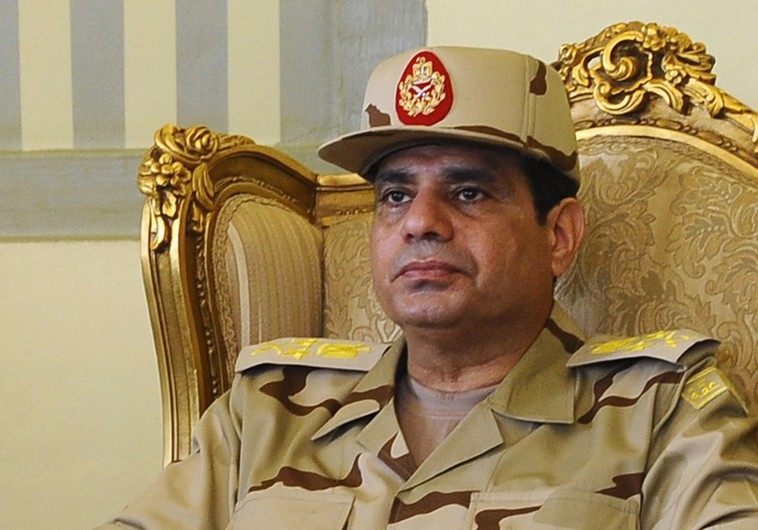
Egypt's Defense Minister Abdel Fattah al-Sisi is seen during a news conference in Cairo on the release of seven members of the Egyptian security forces kidnapped by Islamist militants in SinaiAbdul Fattah Sisi. (photo credit:REUTERS)

Vainly did the Egyptian president try to convince the US-led coalition against Islamic State to extend its activities to the whole Middle East. But US President Barack Obama is unwilling to acknowledge that there is a regional and international dimension to the movement.

*****************

Egyptian President Abdel Fattah al-Sisi is fighting for his country’s survival – and his own.

Islamic terrorism is not abating, hampering vital efforts to bring a better life to the people through a revitalized economy and political stability. Sisi knows he has to show results soon to prevent Egypt from slipping back into anarchy and chaos.

Despite the army’s all-out effort to defeat Islamist insurgency in Sinai, there is no end in sight. F-16 fighter planes and Apache helicopters have joined the campaign, security forces have killed or wounded hundreds of terrorists, destroying their haunts and their training groups – but more keep coming.

Ansar Bayt al-Maqdis gunmen, who have pledged allegiance to Islamic State, continue making daring raids against police stations and other security targets, leading to loss of life and heavy damage.

In one instance on April 14, the commander of the central police station of El-Arish was wounded in a raid; the assailants were able to escape.

For all intents and purposes the situation has reached a stalemate, though the army has managed to contain the terrorists in the northern part of the Sinai Peninsula, preventing them from extending their activities to the south and to the Suez Canal – where they could have inflicted untold damage to economic and security infrastructure, and severely undermined public morale.

However, there are still sporadic terrorist attacks in Cairo and other parts of the country.

Bombs explode, killing and maiming; power lines are blasted. A number of terrorist groups are involved, from Ansar Bayt al-Maqdis and the so-called Soldiers of Egypt to the ever-present Muslim Brotherhood; many of their members have been arrested, their leaders sentenced to death – though no one has been executed yet – but they keep on demonstrating against the regime (though in diminishing numbers).

In Yemen, Iranian-backed Houthi tribes are poised to take over the strategic Red Sea straits, threatening free passage to the Suez Canal – a reminder, if one was needed, of the fact that Islamic terrorism knows no border.

Vainly did the Egyptian president try to convince the US-led coalition against Islamic State to extend its activities to the whole Middle East. But US President Barack Obama is unwilling to acknowledge that there is a regional and international dimension to the movement.

The fact remains that Islamic State dispatches terrorists and weapons to Ansar Bayt al-Maqdis in the Sinai Peninsula from Libya, where there is an unlimited supply of both. No matter how many guerrillas are intercepted or killed by the Egyptian army, more are coming through the vast mountainous and desert region, along the 1,200-km border between the two countries.

Then there is Gaza, where terrorists can find refuge, regroup and train, and where new weapons can be tested.

Cairo is desperately trying to cut off the peninsula from the Strip. The Rafah crossing is closed most of the time, and when it opens it is under the strict supervision of Egyptian authorities. More than 2,000 contraband tunnels have been destroyed and a 1-km.-deep sanitized zone has been installed; thousands of families have been uprooted.

They have been compensated but resentment is high, and the move has prompted widespread condemnation by human rights associations.

Against this backdrop, the regime is weighing extending the zone to 5 km. and making the digging of contraband tunnels punishable by life imprisonment. A court in Cairo has forbidden Hamas activities in Egypt, and another has declared Hamas a terrorist organization; however, the central government is appealing that decision for the sake of its ongoing dialogue with Gaza’s leaders on the Palestinian issue.

The Iranian-Houthi threat has led Sisi to call for the creation of a rapid-response Arab unit, as Saudi Arabia has rallied neighboring states to form a coalition against the rebels in Yemen – who are threatening its border in the south, and were about to take control of the strategic port of Aden.

Though the creation of a united Arab unit was decided at a summit in Sharm e-Sheikh last month, implementation will not be easy. A number of states such as Lebanon and Iraq have warned they would not allow any infringement to their sovereignty; some Gulf states and Jordan have been more forthcoming, and meetings between army commanders are scheduled.

The problem is that these countries are not keen to risk their troops in a ground operation in neighboring states. Armies are the traditional bulwark of Arab regimes; a failed intervention outside their borders could cause their downfall. Nevertheless, since the West is largely indifferent to what is happening, Sisi and his Gulf allies have no choice but to unite against the common threat of Islamic terrorism, be it Sunni or Shi’ite.

On the home front, Sisi has launched a series of impressive projects – a new canal parallel to the old one to enable simultaneous crossing in both directions, thereby doubling receipts; an industrial, commercial and tourist zone between the two canals; 3,000 km of modern roads. Perhaps his most ambitious project is the creation of a new administrative capital city east of Cairo, at an estimated cost of $45 billion. Arab states have rallied to his side, pledging billions of dollars at a special economic summit last month; international groups have indicated their interest in some of the projects – a significant victory for the embattled president.

But Egypt’s endemic problems – population explosion, illiteracy leading to widespread unemployment and enduring poverty, as well as corruption on an epic scale – are not making Sisi’s task easier.

He is also calling to reform Islam by purging it of its extremist discourse, and has already instructed the Education Ministry to eliminate extremist content such as the call to jihad and attacks on other religions.

Meanwhile, the political situation is still unclear and elections are repeatedly postponed, allegedly because of ambiguities in the election law.

The fact is that the president has not been able to secure a large enough block to ensure his electoral victory, while the Muslim Brotherhood – though banned – and other Islamic parties can still muster a sizable vote.

Can Sisi win all his battles? How long will the Egyptian people wait for some much-needed economic results? Egypt is going it alone, still waiting for the West to understand that Cairo remains its best ally against the rising tide of terrorism now lapping at its shores.

Blog: Obama plans to hand over F-16s to Iranian-infiltrated Iraq government

April 17, 2015

Obama plans to hand over F-16s to Iranian-infiltrated Iraq government

By Thomas Lifson

April 17, 2015

via Blog: Obama plans to hand over F-16s to Iranian-infiltrated Iraq government.

Last year, the US government delayed the delivery of 36 F-16 fighter aircraft to Iraq, as ISIS threatened to take over the Balad air base where they would be located. But in the wake of Tuesday’s White House visit of Iraqi PM Haider al-Abadi, it appears that the deliveries are back on track. Max Boot, writing in Commentary, expresses justifiable doubt as tp the wisdom of handing over advanced fighters to a nation under the thumb of, and infiltrated by Iran:

The reality is that Abadi is far from the most powerful man in Iraq, a title that probably belongs rightfully to Gen. Qassem Suleimani, head of Iran’s Quds Force (snip)

…the government of Iraq is heavily infiltrated by Iranian agents. Does it really make safe under those circumstances to deliver to Iraq three dozen high-performance fighter aircraft? I, for one, am worried that the fighters could eventually wind up in Iranian hands, buttressing an Iranian Air Force that until now has had to rely on aging F-14 fighters from the 1970s and even F-4s and F-5s from the 1960s. Granted, F-16s aren’t top of the line aircraft anymore—they are outclassed by F-22s and F-35s—but as a matter of policy and law the U.S. does not sell arms to hostile states or to states that might transfer them to hostile states.

Paging the House and Senate Armed Services Committees! Congress needs to get involved in this issue urgently to assess whether it makes sense to continue with the F-16 transfer to Iraq—and, if it doesn’t, to block the sale before Gen. Suleimani’s boys are using F-16s to drop bombs on the heads of American or Israeli soldiers.

Hat tip: Less Smith, The Weekly Standard