Archive for March 22, 2015

For Obama, Bibi’s words matter while Iran’s don’t

March 22, 2015

For Obama, Bibi’s words matter while Iran’s don’t, Times of IsraelShmuley Boteach, March 22, 2015

(Please see also, Iranians Chant “Death to America” While Negotiations Continue. — DM)

President Obama says that Bibi’s words matter when it comes to a Palestinian state. “We take him at his word when he said that it wouldn’t happen during his prime ministership,” he told The Huffington Post. The President used Netanyahu’s statement as cause for a “reassessment” of American ties with Israel.

White House spokesman Josh Earnest echoed the sentiment in last Thursday’s White House briefing that the Prime Minister’s words could bring punishment. “Words matter,” he said. There could be “consequences” for Netanyahu’s statements. “Everybody who’s in a position to speak on behalf of their government understands that that’s the case, and particularly when we’re talking about a matter as serious as this one.”

So let’s get this straight. When foreign leaders speak, it matters. What they say is consequential. Bibi’s going to have to pay for his remarks.

But I have one question. Why doesn’t any of this apply to Iran? Why, on Saturday Ayatollah Ali Khameini uttered the words “Death to America” even as John Kerry was expressing optimism the very same day that the United States would come to a nuclear accord with Iran!

Suddenly, Iran’s words don’t matter?

Taking this further, the most hair-raising aspect about the growing American rapprochement with Iran is that it has all happened while Iran has continued to repeatedly threaten the annihilation of the Jewish people. Ayatollah Khameini has called Jews dogs and tweeted as recently as this past November that “there is no cure for Israel other than annihilation.”

Now, if words matter, how can the United States continue to speak to his government while they are openly threatening a second holocaust? Why did President Obama and John Kerry not establish a repudiation of these genocidal words and threats as a precondition for any talks?

The hypocrisy is startling. And it leads to a more important point.

By now it’s clear to all that President Obama positively loathes Prime Minister Netanyahu more any other world leader. His hostility to the Prime Minister has become so pronounced that the President can no longer disguise or control it.

Am I the only one that finds it just a touch unseemly for the leader of the free world to hate the leader of the only free country in the Middle East?

The President has a good relationship with Erdogan, the tyrant of Turkey, who has destroyed his nation’s democracy and allows fighters to pass through his nation to join ISIS. President Obama traveled to Saudi Arabia to pay his personal condolences upon the passing of arch-misogynist King Abdullah of Saudi Arabia, a man who wouldn’t even allow women to drive a car. And he utters not an unkind word about Ayatollah Khameini, the world’s foremost terrorist.

But he hates Netanyahu. Go figure.

For years we Americans have heard that our President is cerebral and unflappable. That he famously remains cool under the most challenging circumstances. It turns out that this is true for every world leader except one, Benjamin Netanyahu, who makes the President’s blood boil.

Don’t we deserve to know why?

If the two leaders merely had bad personal chemistry, I could understand. They’re not the best of friends. Fine. But for Obama the hatred of Netanyahu has become positively visceral, personal, and irrepressible.

My own belief is this. President Obama is desperate for some foreign policy victories. There’s a year-and-a-half left to his Presidency and the world is on fire. From Iran to Boko Haram to ISIS to Putin to Hezbollah to Al Qaida and Hamas, bad guys are running amok under this president. American Foreign policy is a shambles.

The only ally President Obama can truly expert pressure on for a deal that would give him the lasting foreign policy legacy he needs and craves is Israel. And in the past Israeli Prime Ministers have proven so utterly malleable. American Presidents have squeezed them like lemons.

But Bibi refuses to be squeezed. He won’t play ball. He won’t withdraw from Judea and Samaria and allow “Hamastan” on his eastern border the way it is in Gaza. He won’t shut up about America’s capitulation to the Iranian mullahs that would leave them with a military-grade nuclear program. He won’t go quietly into the nuclear night while America appeases one of the most violent and vile regimes on earth.

This darned Bibi guy just won’t bend.

And our President finds the intransigence so utterly frustrating.

He prayed and hoped that someone else might win the Israeli election. And some of the President’s top political operatives went and worked for Herzog. But, huff and puff as he might, the President could not blow Bibi’s house down.

So now he’s stuck with him. A stick-necked Prime Minister, getting in the way of the President’s peace deals with Iran and the Palestinians.

And with no way of getting rid of the Israeli nuisance, all the President can do is continue to give interviews that express his dislike and frustration, not realizing that we’re reaching a point where the President is beginning to look positively un-Presidential and where is enmity is becoming unbecoming.

It’s called democracy, Mr. President. Bibi won. And it’s time for the world’s foremost democracy, the United States of America, to live with it and work with the man who has the mandate of the Israeli people, just as you have the mandate of the American people.
 

Unstated Factor in Iran Talks: Threat of Nuclear Tampering

March 22, 2015

Unstated Factor in Iran Talks: Threat of Nuclear Tampering, New York Times, 

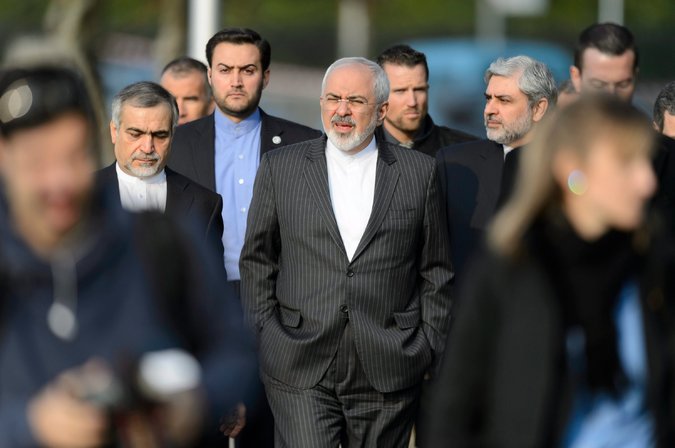
JP-SABOTAGE-master675Foreign Minister Mohammad Javad Zarif, center, said someone had tried to sabotage an Iranian reactor’s cooling system. Credit Laurent Gillieron/European Pressphoto Agency

[R]eaching an accord is quite different than reaching a state of trust. Inside Iran, there will be pressure to keep making slow progress on a nuclear program that is central to the ambitions of the Iranian Revolutionary Guard Corps and thousands of scientists who have labored for years. And in the uneasy alliance among Israel, the United States and Europe there will be continued debate about whether to supplement diplomatic pressure with covert action to keep Iran from getting to the threshold of being able to build a weapon.

*********************

WASHINGTON — In late 2012, just as President Obama and his aides began secretly sketching out a diplomatic opening to Iran, American intelligence agencies were busy with a parallel initiative: The latest spy-vs.-spy move in the decade-long effort to sabotage Tehran’s nuclear infrastructure.

Investigators uncovered an Iranian businessman’s scheme to buy specialty aluminum tubing, a type the United States bans for export to Iran because it can be used in centrifuges that enrich uranium, the exact machines at the center of negotiations entering a crucial phase in Switzerland this week.

Rather than halt the shipment, court documents reveal, American agents switched the aluminum tubes for ones of an inferior grade. If installed in Iran’s giant underground production centers, they would have shredded apart, destroying the centrifuges as they revved up to supersonic speed.

Iranians Chant “Death to America” While Negotiations Continue

March 22, 2015

Iranians Chant “Death to America” While Negotiations Continue, The Clarion Project, March 22, 2015

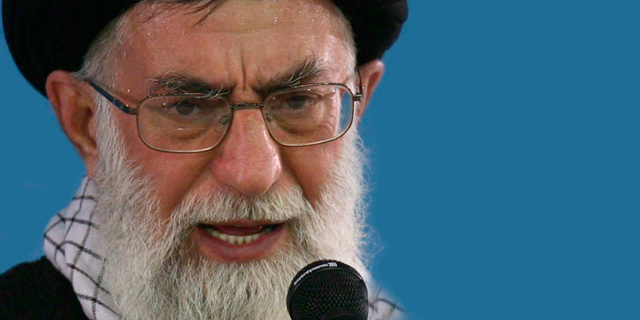
Iran-Ayatollah-Khamenei-IP_0Supreme Leader of the Islamic Republic of Iran Ayatollah Khamenei (Photo: © Reuters)

Ayatollah Khamenei, the Supreme Leader of Iran, presided over chants of “Death to America” in his Nowruz address to the people of Iran.

Nowruz is the Persian New Year and the Supreme Leader traditionally gives on address to mark the festival.

As part of his Nowruz address, Khamenei responded to President Obama’s Nowruz video message, in which he spoke directly to the Iranian people and called on them to support a nuclear deal.

Ayatollah Khamenei said that Obama’s Nowruz message was asking Iranians to submit to American demands in exchange for economic relief, couching the negotiations in terms of struggle rather than mutual benefit.

The crowd then broke out in chants of “Death to America” which was repeated multiple times over the course of the hour long speech.


By contrast, Obama’s Nowruz message to the Iranian people said that a nuclear deal would bring a brighter future for the people of Iran and urged them to support the negotiations.


Jerusalem: US ‘reassessment’ threat aims to distract attention from Iran nuke deal

March 22, 2015

Jerusalem: US ‘reassessment’ threat aims to distract attention from Iran nuke deal – Israel News – Jerusalem Post.

Some in Jerusalem viewed White House threats of ‘reassessing’ ties as a way of putting Israel on the defensive, US House Speaker Boehner to visit Israel.

Jerusalem is concerned that Washington’s threat to reassess US policy toward the Middle East diplomatic process is an effort to deflect attention from the Iranian nuclear negotiations as they approach a conclusion, diplomatic sources said Saturday.

Despite a congratulatory phone call from US President Barack Obama to Prime Minister Benjamin Netanyahu Thursday night, and Netanyahu clarifying in several US media interviews since his reelection on Tuesday that he remains committed to the two-state solution, Washington continued to threaten to “reassess” its position on the Mideast diplomatic process over the weekend, even as it continued to pledge continued security support for Israel.

Some in Jerusalem viewed this as a way of putting Israel on the defensive, and perhaps blunting Netanyahu’s criticism of a possible deal with Iran.

Netanyahu’s comment on Monday, the day before the election, that a Palestinian state would not emerge as long as he is prime minister, as well as his Election Day encouragement to his supporters to go to the polls ostensibly because Arab voters were voting en masse, triggered fierce criticism in Washington.

White House spokesman Josh Earnest said at his daily press briefing on Friday  that if Israel was no longer committed to a two-state solution then that would impact on US policy decisions at the UN, a hint that the US may not protect Israel down the line from what Jerusalem views as problematic UN Security Council resolutions calling for two states.  Any re-evaluation of policy, Earnest stressed, would “not include a reassessment of our strong and close security cooperation with Israel,” which he said “will endure.”

Obama, in his first public comments on the election in an interview with the Huffington Post on Friday said of Netanyahu’s comment regarding a Palestinian state that “We take him at his word when he said that it wouldn’t happen during his prime ministership, and so that’s why we’ve got to evaluate what other options are available to make sure that we don’t see a chaotic situation in the region.”

Regarding Netanyahu’s comment about the Arab voters, Obama said that in his conversation with the prime minister “we indicated that that kind of rhetoric was contrary to what is the best of Israel’s traditions. “

Obama said that “although Israel was founded based on the historic Jewish homeland and the need to have a Jewish homeland, Israeli democracy has been premised on everybody in the country being treated equally and fairly. And I think that that is what’s best about Israeli democracy. If that is lost, then I think that not only does it give ammunition to folks who don’t believe in a Jewish state, but it also I think starts to erode the name of democracy in the country.”

Earnest said that if Israel were no longer committed to a two-state solution, this would impact US policy decisions at the UN. This was a clear hint that the US may not protect Israel down the line from what Jerusalem views as problematic UN Security Council resolutions calling for two states. Any re-evaluation of policy, Earnest stressed, would “not include a reassessment of our strong and close security cooperation with Israel,” which he said “will endure.”

“But, now that our closest ally in the region, and one of the two parties who would be responsible for negotiating a two-state solution, has withdrawn from their commitments to that ideal, it means that we need to rethink the kinds of policy decisions that we’re going to have to make going forward,” he said.

Asked why the White House does not believe Netanyahu when he said in post-election interviews that he was still committed to a two-state solution, Earnest said because “he said earlier this week that he wasn’t.” The spokesman did not give a direct reply when reminded that Obama has reversed himself on policy matters over the years.

While the PMO did not issue a read-out of the call from the president, which came four days earlier than it did in 2013, when Obama waited six days to congratulate Netanyahu, the White House did issue a statement that said Obama “emphasized the importance the United States places on our close military, intelligence and security cooperation with Israel, which reflects the deep and abiding partnership between both countries.”

The statement said the two men agreed to continue consultations on a range of regional issues, “including the Israeli-Palestinian conflict,” and that Obama reaffirmed America’s “long-standing commitment to a two-state solution that results in a secure Israel alongside a sovereign and viable Palestine.”

The statement said that, regarding Iran, Obama reiterated that Washington is focused on “reaching a comprehensive deal with Iran that prevents Iran from acquiring a nuclear weapon and verifiably assures the international community of the exclusively peaceful nature of its nuclear program.”

In a related development, Netanyahu on Saturday gave his full backing to Israel’s ambassador to the US, Ron Dermer, amid whispers in Washington that replacing Dermer may be necessary to restore a better working relationship with the Obama administration.

A statement put out Saturday by the Prime Minister’s Office said Netanyahu made clear at the AIPAC conference earlier in March that he “couldn’t be prouder to have Ron Dermer representing Israel in Washington.”

“That is as true today as it was then,” the statement read. “The prime minister has full confidence in Ambassador Dermer, whose service to the people and State of Israel continue to reflect his extraordinary dedication, professionalism, and passion.”

The statement came after Earnest was asked at his daily briefing whether work to repair the relationship could take place with Dermer as ambassador.

Earnest said the decision about ambassadorial appointments “is the responsibility of the leaders of the country. And so, obviously, Prime Minister Netanyahu will decide who is the person who is best positioned to represent his country in the United States.”

Last week, The New York Times quoted administration officials as saying it would “improve the atmosphere” if Dermer stepped down, though it would not change fundamental policy differences between Washington and Jerusalem.

Dermer, viewed by some administration officials since his appointment in September 2013 as too close to the Republicans, sparked anger in the White House because it perceived him as being responsible for working with House Speaker John Boehner to invite Netanyahu to address Congress on Iran.

Boehner, meanwhile, is expected to visit Israel before the end of the month. One government official, asked about the wisdom of Boehner – a stalwart Obama political adversary – coming now at a point of great friction between Netanyahu and Obama, said “If the speaker of the House of Representatives wants to come to Israel, he is a welcome guest.”

Earnest was asked about the Boehner visit in his press briefing and said that it is “certainly not uncommon for members of Congress in both parties to travel to Israel,” adding that “it doesn’t come as a surprise to anybody here.”


