Archive for February 2015

Gantz: Entire Middle East is Upside Down

February 2, 2015

IDF Chief of Staff Gantz: Entire Middle East is Upside Down

The instability in Lebanon, the IDF Chief of Staff said, was a good example of how the old order in the Middle East was being eroded.

By Moshe Cohen

First Publish: 2/1/2015, 4:43 PM

via Gantz: Entire Middle East is Upside Down – Defense/Security – News – Arutz Sheva.


Read this very well, and understand what he is saying between the lines.

The gathering storm ?


Benny Gantz

Benny Gantz
Flash 90

IDF Chief of Staff Benny Gantz said Sunday that Israel could “not afford” to let the northern front get too active. “We cannot allow the front to heat up too much with terror attacks launched against us,” Gantz said. The instability in Lebanon, he said, was a good example of how the old order in the Middle East was being eroded – and it is not clear what will replace it.

Speaking at a memorial service for former IDF Chief of Staff Amnon Lipkin-Shahak, who passed away four years ago, Gantz said “we are currently at what could be called a historical junction. There is a wide chasm between the way the Western countries split up this region 100 years ago through various agreements – mostly for their own convenience – and the reality of today,” with the arrangements for the nation-states decided upon in previous agreements between France, Britain, and other countries falling victim to revolution in places like Syria and Libya.

“As a result there is a conceptual threat to the entire structure of the Middle East, as we have known them,” said Gantz. “There are several different groups struggling now – the radical Sunni Jihadists, who are attacking countries like Saudi Arabia, Jordan, and Egypt. There is also Lebanon, which is now torn between different forces, and the group that seeks to preserve Syria and Lebanon’s connection with Iran. And of course, there is the ‘Arab street,’ which is making itself heard loudly, even in Egypt, where even President a-Sisi cannot ignore it.”

In addition to the military threats, Israel also had a new field of battle – the cyber field, where enemies were constantly on the attack. “Once, you knew who the players were and what their relative strengths and weaknesses were in the military sphere. Things have changed drastically,” Gantz said; just a few years ago, no one could have guessed that hackers could imperil national defense, but today “the arc of threats is very wide. While we are speaking here, hackers can destroy an Israeli bank.”

“We are witnesses to a very unstable geopolitical situation today,” Gantz added. “There is no reason to believe that what was and is will still be in another five or ten years.”

Islamist State plots terror attacks inside Tehran. Hizballah high-up killed in Damascus bus blast

February 2, 2015

Islamist State plots terror attacks inside Tehran. Hizballah high-up killed in Damascus bus blast, DEBKAfile, February 2, 2015

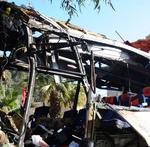
Shiite_Bus_in_Damascus_1.2.15Shiite pilgrim bus explosion in Damascus

The Islamic State of Iraq and the Levant has launched a new terror offensive against Iranians, their followers and other Shiites.  It was kicked off Sunday, Feb. 2 with an attack on a Damascus bus carrying Lebanese Shiite pilgrims to shrines in Syria. Nine people were killed and at least 20 injured. ISIS has set its sights next on the Muslim Shiite heartland, Iran and its cities – especially the capital Tehran.

The Damascus bus attack is ascribed by some sources to a Saudi suicide bomber by the name of Abu al-Ezz al-Ansari. The claim that the Syrian rebel Jabhat al-Nusra was the perpetrator was false, say DEBKAfile’s intelligence and counter-terrorism sources. This group does not go in for Saudi recruits and certainly not suicide bombers of that ilk.

ISIS fingered Nusra to conceal its own responsibility for the attack and its real target. Our sources reveal that the Islamic State attacked the Shiite pilgrims in order to get at a high-ranking officer of Hizballah’s armed wing, who was on the bus.

Hizballah headquarters in Beirut has imposed deep hush on his death and identity. But because they could not pretend the bus explosion did not happen, they pinned it Monday on “takfir [infidel] groups” which they say collaborate with Israel.

This attack revealed most significantly that Hizballah has begun covering the tracks in Syria of its top Hizballah men by inserting them among Shiite pilgrims traveling by bus from Lebanon to Damascus. They are camouflaging the movements of their top men in Syria by an elaborate security net, ever since an Israeli air strike on Jan. 18, killed around nine Hizballah and Iranian officers, including the Iranian general, Ali Allah Dadi.

Still, ISIS agents were able to find the bus and blow it up, indicating deep hostile penetration of the Iranian and HIzballah forces assigned to Syria to fight for Bashar Assad.

Conscious of the Islamic State’s next plans, the Iranian Al Qods Brigades commander, Gen. Qassem Soleimani, paid an unscheduled visit to Beirut last Thursday, Jan. 29, for urgent talks with Hizballah leader Hassan Nasrallah and briefings for the organization’s military council members. Their most pressing concern was the detailed ISIS program, which is ready to go, for a broad new campaign of terror against Iranian and pro-Iranian targets in Lebanon, Syria, Iraq and the Iranian homeland.

What Are the Metaphysics of Islamic Denial?

February 2, 2015

What Are the Metaphysics of Islamic Denial?

February 2nd, 2015 – 12:45 am

By Victor Davis Hanson

via What Are the Metaphysics of Islamic Denial? | Works and Days.


obama_weakness_big_1-27-14-1

After six years, it is no surprise that the Obama administration does not see the Taliban as “terrorists” or that it will not associate “violent extremism” with radical Islam or just Islam.

After all, when Maj. Hasan murdered U.S. soldiers it was nothing more than “workplace violence,” as if he were a disgruntled post office employee of the 1970s. Our two top intelligence chiefs assured us that the Muslim Brotherhood was “largely secular” and that jihad “was a legitimate tenet of Islam.” Add in “workplace violence” and the old “overseas contingency operations.” Do we remember that Ms. Napolitano’s Department of Homeland Security warned us about right-wing returning veterans as the most likely to terrorize us? When someone blows up people at the Boston Marathon, beheads a woman in Oklahoma, or puts a hatchet in a NYPD officer’s head, he is not a terrorist or proselytizer fueled by Islamic hatred of non-Muslims as much as mentally confused. (I suppose in a way that a Hitler or Stalin was not.)

The problem is not that the administration is just too fond of euphemisms. At times it can be quite candid. The Republican House has been characterized as “terrorists” in their efforts to stop more federal borrowing. The Tea Party was slurred as “tea-baggers” — a derogative sexual term.  Mr. Netanyahu is variously a “coward” or “chickensh-t” — pejoratives not floated for even the vicious Mahmoud Ahmadinejad.

So why the elaborate façade about the Islamic roots of global terrorism and spreading instability in the Middle East? There are a few possible explanations.

I. Strategy

The Obama administration knows full well that the Taliban, ISIS, al Qaeda, Boko Haram and the rest of the pack draw their zeal from the Koran. But to say such might turn off two or three useful constituencies — the hard Left at home that hates any judgmentalism, “moderate” Muslims in the Middle East who are essential to nullifying the “radicals” in their midst, and the global community that is always suspicious when America goes to war against a particular group or ideology. The Obama administration with a wink-and-nod, then, accepts radical Islam as the problem, but for strategic reasons, and in the manner occasionally of the Bush administration, prefers euphemisms. Nonetheless, the administration goes on Predatoring thousands of suspected Islamic terrorists even as it won’t say what its targeted victims all have in common. Given that Americans know that the enemy is radical Islam, why turn off potential allies by reiterating that fact?

II. Appeasement

The Obama administration is terrified of radical Islamic terrorism, in the manner that Europeans are — and were scared stiff in the 1930s of Nazi Germany. They know full well that caricaturing Islam is dangerous in a way joking about other religions is not. They are afraid of more televised beheadings, more torturing, and more Benghazis. If they can blame a pathetic U.S. resident for making a video for the deaths in Benghazi, then perhaps the appreciative Islamist culprits will leave it at one harvest at Benghazi (especially before the 2012 elections). If the Taliban sense that Obama will not dare to call them terrorists, then maybe they will negotiate in good faith and enter a stable “coalition” government when we depart entirely from Afghanistan. Bowing to a Saudi royal might assuage his anger at the U.S. Carefully avoiding reference any longer to Syrian regime change might win back Assad to our side. When we don’t condemn “Islamic terrorism,” then perhaps even ISIS mutters, “Hmmm, these Americans are not that bad after all; shoot rather than behead the next hostage.”

Note that essential characteristic of appeasement, the narcissism of the appeaser: An FDR lecturing Churchill that he alone had the skills to win over “Uncle Joe” Stalin, a Jimmy Carter’s unique understanding of Iranian theocracy that as thanks would release the hostages, and the locus classicus of Neville Chamberlain alone with the fluency and sensitivity to make Herr Hitler see what is in his real interest. So, too, only the Peace Prize winner Obama can suavely appease radical Islam and convince them why leaving America alone suits their interest as well. The more we accommodate radical Islamists through euphemism and circumlocution, the more likely they might just go away.

III. Postmodern Therapy

The Obama administration has a fuzzy therapeutic view of human nature in general, as does much of America by now. There is no “welfare” anymore, just “pubic assistance” or better “health and human services.” Beau Bergdahl is confused and complex, hardly a “traitor,” a slur that leaves no room for nuance. The purpose of language is not disinterested and accurate description; rather, language is employed for the political, whether you know it or not.

So the unwillingness to use the world “Islam” in connection with global terrorism simply reflects the leftwing, relativist view that nothing is ever absolute. There is not good versus evil, failure or success, but only gradations that are conditioned by the preexisting prejudices of elites who make up these categories largely to protect their own privilege. Generalization is always reactionary stereotyping. “Islam” or “Muslim” hardly can characterize 400 million people from Indonesia to Dubai. (To be fair, I think the Left’s postmodern relativism is itself mostly political and ad hoc; after all, it often enjoys blanket categorization and has no problem with disparagement like “Republicans,” “tea-baggers,” “conservatives,” “males,” or “whites” as inclusive terms that serve well enough to stereotype millions — or for that matter “gays” and “women” in the hagiographic sense.) “Islam” and “Muslim” are meaninglessly vague, and are used as pejoratives rather than descriptive terms; like most of our race/class/gender vocabulary these rubrics cannot be used as inclusive terms when the aim is not laudatory.

IV. Multicultural Understanding

Finally, perhaps the Obama administration does not see us in a war at all or at least a righteous conflict against cold-blooded religious fanatics from the Islamic world. While it disproves of the methodology of terrorism, it is ambiguous about the origins of such anti-Western rage. Thus Obama chose to skip the march after the Paris killings in a way he would not miss going overseas to lobby for a Chicago Olympics. Collate the apology tour, the initial Al Arabiya interview, and the Cairo speech, and perhaps add in the relevant passages from Dreams from My Father and keen voluntary attendance at Rev. Wright’s sermons. What arises is a consistent Obama worldview that the present U.S.-inspired global order is not fair, but rather fuelled by neo-colonialism, past imperialism, racism, and capitalist exploitation, Western but especially American in nature. In such a moral landscape, obviously some liberationists, revolutionaries, reformers and dissidents will go too far, in the manner that Castro killed or jailed a bit too many or Arafat himself was on occasion a little bit too much the killer.

But as Andrew Young once said of Khomeini that he “will be somewhat of a saint when we get over the panic,” so, too, the Obama administration more or less understands why young men in the Middle East take up arms against the U.S. Note the leftwing hatred of American Sniper, or Michael Moore’s (the object of hero-worship at the Democratic Convention of 2004) rationale for September 11 (“If someone did this [9/11] to get back at Bush, then they did so by killing thousands of people who DID NOT VOTE for him! Boston, New York, D.C., and the planes’ destination of California — these were places that voted AGAINST Bush!”). In the world of Michael Moore’s leftism, the problem was not that Islamists had killed Americans, but rather that they blew up the wrong Americans who were against what the other bad red-state Americans — quite deserving of death — had done.

The point is not that the administration simply sympathizes with radical Islamists or thinks in lockstep with a Michael Moore or Bill Ayers, only that it is intellectually, politically, and culturally unable to damn entirely the Islamist cause by dubbing it “terrorism” or Islamism, given the complexity of past Western culpability for the present mess of the Middle East.

Why do they hate us? For Obama, it is not because of Islamic self-induced pathologies that are the logical result of entrenched tribalism, gender apartheid, religious fundamentalism and intolerance, statism, anti-Semitism, and autocracy, which can only lead to stagnation, poverty, and repression that in turn present as envy, jealousy and hatred of the West.

No, the West is responsible for the lack of parity, and thus the anger of the Middle East is somewhat legitimate and understandable. Just as Obama has apologized for Western culpability of Middle East pathologies, so, too, he does not necessarily see Islamic terrorists as primordial enemies driven on by religious zealotry, as much as variants of more legitimate groups such as the Muslim Brotherhood, Hamas, and the Palestinian Authority.

Summary

These four exegeses are not entirely constant, but transmogrify to meet the administration’s current political realities (e.g., the euphemisms may cease for a while should there be another 9/11).  They also overlap and are not mutually exclusive. Nevertheless, which of them most often drives the Obama’s administration peculiar institution of Islamic denial?

I doubt Strategy is the prime mover, although many naïve people in the administration may mistakenly believe that it is. Appeasement is closer to the mark, but perhaps in this case better applies to individuals such as journalists and cartoonists than the U.S. government that protects its own and is all-powerful. Moreover, appeasement is a tactic. It can be conditioned by ideology or individual temperament, but is not a consistent ideology (Chamberlain was a conservative appeaser). Most liberals embrace Postmodern Therapy’s view of human existence, but not all of them to the degree to deny Islamic culpability for global terrorism. I am left with explanation IV, Multicultural Understanding. The Obama administration is preconditioned to consider anti-Americanism not as a logical tic of anti-capitalist, anti-democratic systems or just the whining abroad of the jealous and envious of an exceptional United States, but rather as something often legitimate that has its origins in our inequality, unfairness, and exploitation.

In such a mental landscape, it is almost impossible for those in the administration with any confidence to say that Islamists or even radical Islamists hate us for what we are and will do everything in their power to destroy us, and that the larger neutral Middle East is watching the struggle to see which side proves the stronger horse and thus is worthy of alliance with, or at least worthy of not offending.

Confronting European anti-Semitism – Alan Dershowitz

February 1, 2015

Confronting European anti-Semitism – Opinion – Jerusalem Post.

This common form of the new anti-Semitism – we love the Jews, it’s only their nation-state that we hate – is pervasive among many European political, media, cultural and academic leaders.

There are several distinct, but sometimes overlapping, types of anti-Semitism. The first is traditional, right-wing, fascist Jew hatred that has historically included theological, racial, economic, social, personal and cultural aspects. We are seeing a resurgence of this today in Greece, Hungary and other European countries with rising right-wing parties that are anti-Muslim as well as anti-Jewish.

The second is Muslim anti-Semitism. Just as not all Greeks and Hungarians are anti-Semitic, so too not all Muslims suffer from this malady. But far too many do.

It is wrong to assume that only Muslims who manifest Jew hatred through violence harbor anti-Semitic views. Recent polls show an extraordinarily high incidence of anti-Semitism – hatred of Jews as individuals, as a group and as a religion – throughout North Africa, the Middle East and Muslim areas in Europe. This hatred manifests itself not only in words, but in deeds, such as taunting Jews who wear kippot, vandalizing Jewish institutions, and occasional violence directed at individual Jews. Among a small number of extremists it also results in the kind of deadly violence we have seen in Toulouse, Paris, Brussels and other parts of Europe. Several decades ago it manifested itself in attacks on synagogues by Palestinian terrorists, including some operating on behalf of the Palestine Liberation Organization.

Third, there is hard Left anti-Zionism that sometimes melds into subtle and occasionally overt anti-Semitism. This pathology is seen in the double standard imposed on everything Jewish, including the nation-state of the Jewish people. It is also reflected in blaming “Jewish power,” and the “pushiness” of Jews in demanding support for Israel. I’m not referring to criticism of Israeli policies or actions.

I’m referring to the singling out of Israel for extreme demonization. The ultimate form of this pathology is the absurd comparison made by some extreme leftist between the extermination of policies of the Nazis and of Israel’s efforts to defend itself against terrorist rockets, tunnels, suicide bombers and other threats to its civilians.

Comparing Israel’s actions to those of the Nazis is a not-so-subtle version of Holocaust denial. Because if all the Nazis really did was what Israel is now doing, there could not have been a Holocaust or an attempt at genocide against the Jewish people. A variation on this perverse theme is apartheid denial: by accusing Israel – which accords equal rights to all its citizens – of apartheid, these haters deny the horrors of actual apartheid, which was so much more horrible than anything Israel has ever done.

Fourth, and most dangerous, is eliminationist anti-Zionism and anti-Semitism of the kind advocated by the leaders of Iran, Hezbollah, Hamas, and Islamic State. Listen to Hezbollah leader Hassan Nasrallah: “If [the Jews] all gather in Israel, it will save us the trouble of going after them worldwide,” or, “If we search the entire world for a person more cowardly, despicable, weak and feeble in psyche, mind, ideology and religion, we would not find anyone like the Jew. Notice I didn’t say the Israeli.”

These variations on the theme of anti-Semitism have several elements in common. First, they tend to engage in some form of Holocaust denial, minimization, glorification or comparative victimization.

Second, they exaggerate Jewish power, money and influence. Third, they seek the delegitimation and demonization of Israel as the nation-state of the Jewish people. Fourth, they impose a double standard on all things Jewish.

Finally, they nearly all deny that they are anti-Semites who hate all Jews. They claim that their hatred is directed against Israel and Jews who support the nation-state of the Jewish people.

This common form of the new anti-Semitism – we love the Jews, it’s only their nation-state that we hate – is pervasive among many European political, media, cultural and academic leaders. It was evident even among some who came to commemorate the liberation of the death camps. A recent poll among Germans showed a significant number of the children, grandchildren and great-grandchildren of Nazi supporters didn’t want to hear about Nazi atrocities, but believed what Israel was doing to the Palestinians was comparable to what the Nazis had done to the Jews.

This then is the European problem of anti-Semitism that many European leaders are unwilling to confront, because they have a built in excuse! It’s Israel’s fault – if only Israel would do the right thing with regard to the Palestinians, the problem would be solved.

Tragically, it won’t be solved, because the reality is that hatred of Israel is not the cause of anti-Semitism.

Rather, it is the reverse: anti-Semitism is a primary cause of hatred for the nation-state of the Jewish people.

ISIS in full swing under ex-Iraqi general: 70 deaths in a month, on the march in 10 countries

February 1, 2015

ISIS in full swing under ex-Iraqi general: 70 deaths in a month, on the march in 10 countries, DEBKAfile, February 1, 2015

Kenji-Goto_31.1.15Kenji Goto in ISIS hands

ISIS strategists, not content with these “successes,” are still in full thrust and believed to be planning to expand their operations and hit Israel – whether from the south or the north.

*********************

Saturday night, January 31, the Islamic State of Iraq and Levant capped a month of atrocities by beheading its second Japanese hostage, Kenjo Goto, a 47-year old journalist. Jordan vows to do everything its power to save the Jordanian pilot Lt. Moaz al-Kasasbeh, but it may be too late.

In March alone, the Islamists are known to have killed at least 70 people in 10 targeted European and Middle East countries. This is a modest estimate since exact figures are not available everywhere – like in Saudi Arabia and Egypt. ISIS terrorists trailed their horror that month through France, Spain, Belgium, Iraq, Saudi Arabia, Syria, Jordan, Egypt and Libya.

US President Barack Obama, who heads a 20-state coalition fighting ISIS in Iraq, strongly condemned the Goto murder. Secretary of State John Kerry, trying to sound positive, commended the recovery of the Syrian town of Kobani by Kurdish forces as “a big deal.”

ISIS was indeed forced to concede defeat in battle under US air strikes. But Kerry forgot to mention that the battle is far from over:  the Islamists pulled back from Kobani’s districts, but are still pressing hard on the walls of the town and heavy fighting for its control continues.

If Kobani is the only military gain achieved by US-backed forces in months of coalition effort, who will be able to stop the brutal ISIS offensive going forward in Europe, North Africa and the Middle East?

The British government keeps on warning that an Islamist attack is coming soon. Foreign Secretary Philip Hammond said Sunday that this was a “generational struggle that must be fought in other parts of the world in addition to the Middle East.”

It was obvious from these lame comments that the West is totally at a loss for ways to pre-empt the thrusting danger.

Some Western intelligence agencies have sought cold comfort by pointing to the Islamists’ willingness to negotiate the release of the Jordanian pilot held hostage since his capture in Syria in December as a symptom of weakness, signaling its readiness to part with its murderous image. Others judged the latest video clips unprofessional and a sign that ISIS leadership was in disarray.

Neither of these judgments is supported by the facts.

DEBKAfile’s counter-terrorism and intelligence sources report that the high command of the Islamic State functions at present with machinelike efficiency in pursuit of its goals. The name of Abu Baqr al-Baghdadi has been circulated widely as ruler of the Islamic “caliphate” he founded in parts of Syria and Iraq. But behind the scenes, he is assisted by a tight inner group of 12-15 former high officers from the Baath army which served the Saddam Hussein up until the 2003 US invasion of Iraq. Members of this group ranged in rank from lieutenant-colonel to general.

Ex-Maj. Gen. Abu Ali al-Anbari, its outstanding figure, acts as Al Baghdadi senior lieutenant.

He also appears to be the brain that has charted ISIS’s current military strategy which, our sources learn, focuses on three major thrusts: the activation of sleeper cells in Europe for coordinated terrorist operations: multiple, synchronized attacks in the Middle East along a line running from Tripoli, Libya, through Egyptian Suez Canal cities and encompassing the Sinai Peninsula; and the full-dress Iraqi-Syrian warfront, with the accent currently on the major offensive launched Thursday, March 29, to capture the big Iraq oil town of Kirkuk.

DEBKAfile was first to report the arrival in Sinai during the first week of December of a group of ISIS officers from Iraq to take command of their latest convert, Ansar Beit Al-Miqdas.

Another former Iraqi army officer was entrusted with coordinating ISIS operations between the East Libyan Islamist contingent and the Sinai movement. Their mission is to topple the rule of President Abdel-Fatteh El-Sisi.

The imported Iraqi command made its presence felt in Libya Tuesday, Jan. 27 with the seizure of the luxury Corinthia Hotel in Tripoli and execution of the foreigners taken there, including an American and a British man. Two days later, ISIS terrorists fanned out across Sinai for their most devastating attack ever on Egyptian military and security forces. They launched simultaneous attacks in five towns, Rafah on the border of the Gaza Strip, El Arish and Sheikh Suweid in the north and  the Suez Canal cities of Port Said and Suez to the west – killing some 50 Egyptian personnel and injuring more than double that figure.

ISIS strategists, not content with these “successes,” are still in full thrust and believed to be planning to expand their operations and hit Israel – whether from the south or the north.

How Iran Is Making It Impossible for the US to Beat ISIS

February 1, 2015

How Iran Is Making It Impossible for the US to Beat ISIS, Daily Beast, Michael Weiss, Michael Pregent, February 1, 2015
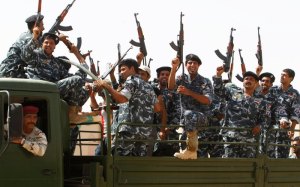
1422791113178.cachedAhmed Saad/Reuters

Washington needs to quit pretending it can work with Iran to defeat the Islamic State. Tehran’s real objective is to defeat Washington.

It was August 2007, and General David Petraeus, the top commander of U.S. forces in Iraq, was angry.  In his weekly report to then-Defense Secretary Robert Gates, Petraeus wrote:  “I am considering telling the President that I believe Iran is, in fact, waging war on the U.S. in Iraq, with all of the U.S. public and governmental responses that could come from that revelation. … I do believe that Iran has gone beyond merely striving for influence in Iraq and could be creating proxies to actively fight us, thinking that they can keep us distracted while they try to build WMD and set up [the Mahdi Army] to act like Lebanese Hezbollah in Iraq.”

There was no question there and then on the ground in Iraq that Iran was a very dangerous enemy. There should not be any question about that now, either. And the failure of the Obama administration to come to grips with that reality is making the task of defeating the so-called Islamic State more difficult—indeed, more likely to be impossible—every day.

There are lessons to be learned from the experience of the last decade, and of the last fortnight, but what is far from clear is whether Washington, or the American public, is likely to accept them because they imply much greater American re-engagement in the theater of battle. As a result, what we’ve seen is behavior like the proverbial ostrich burying its head in the desert sand, pretending this disaster just isn’t happening. But at a minimum we should be clear about the basic facts. In Iraq and Syria, as we square off against ISIS, the enemy of our enemy is not our friend, he is our enemy, too.

In 2007, there were 180,000 American troops in Iraq. Under Petraeus’s oversight, U.S. Joint Special Operations Command (JSOC), the elite forces responsible for hunting terrorists around the world, was divided into two task forces. Task Force 16 went after al Qaeda in Iraq, the group that eventually would spawn ISIS, while Task Force 17 was dedicated to “countering Iranian influence,” chiefly by killing or capturing members of Iraq’s Shia militias—though in some cases, it even arrested operatives of Iran’s Revolutionary Guards Corps-Quds Force (IRGC-QF) who were arming and supervising those militias’ guerrilla warfare against coalition troops.

At one point, in the summer of 2007, Petraeus concluded that the Mahdi Army, headed by the Shiite demagogue Muqtada al-Sadr, posed a greater “hindrance to long-term security in Iraq” than al Qaeda did. As recounted in The Endgame, Michael Gordon and Bernard E. Trainor’s magisterial history of the Second Iraq War, two-thirds of all American casualties in Iraq in July 2007 were incurred by Shiite militias.  Weapons known as explosively formed penetrators, or EFPs, were especially effective against the U.S. forces. They were Iranian designed and constructed roadside bombs that, when detonated, became molten copper projectiles able to cut through the armor on tanks and other vehicles, maiming or killing the soldiers inside.

So it came as a surprise to many veterans of the war when Secretary of State John Kerry, asked in December what he made of the news that Iran was conducting airstrikes against ISIS in Iraq, suggested “the net effect is positive.” Similarly, Chairman of the U.S. Joint Chiefs of Staff Gen. Martin Dempsey—formerly the commander of the 1st Armored Division in Baghdad—told reporters last month, “As long as the Iraqi government remains committed to inclusivity of all the various groups inside the country, then I think Iranian influence will be positive.”

Whatever the Iraqi government says it is committed to, “inclusiveness” is not what’s happening on the ground.

Iran’s influence in Iraq since ISIS sacked Mosul last June has resulted in a wave of sectarian bloodletting and dispossession against the country’s Sunni minority population, usually at the hands of Iranian-backed Shia militia groups, but sometimes with the active collusion of the Iraq’s internal security forces. Indeed, just as news was breaking last week that ISIS’s five-month siege on the Syrian-Turkish border town Kobane finally had been broken, Reutersreported that in Iraq’s Diyala province at least 72 “unarmed Iraqis” —all Sunnis—were “taken from their homes by men in uniform; heads down and linked together, then led in small groups to a field, made to kneel, and selected to be shot one by one.”

Stories such as these out of Iraq have been frequent albeit under-publicized and reluctantly acknowledged (if at all) by Washington both before and after Operation Inherent Resolve got underway against ISIS.

For instance, 255 Sunni prisoners were executed by Shia militias and their confederates in the government’s internal security forces between June 9 and mid-July, according to Human Rights Watch. Eight of the victims were boys below the age of 18.  “Sunnis are a minority in Baghdad, but they’re the majority in our morgue,” a doctor working at Iraq’s Health Ministry, told HRW at the end of July. Three forensic pathologists found that most of the victims in Baghdad were shot clean through the head, their bodies often left casually where they were killed. “The numbers have only increased since Mosul,” one doctor said.

On August 22, 2014, the Musab Bin Omair mosque in Diyala—the same province where last week’s alleged executions occurred—was raided by officers of the security forces and militants of Asaib Ahl al-Haq (the League of the Righteous), which slaughtered 34 people, according to HRW.  Marie Harf, the U.S. State Department spokeswoman, said at the time: “This senseless attack underscores the urgent need for Iraqi leaders from across the political spectrum to take the necessary steps that will help unify the country against all violent extremist groups.”

Since then, however,  U.S. warplanes have provided indirect air support to Asaib Ahl al-Haq and Kataib Hezbollah, a U.S.-designated terrorist entity, both of which were at the vanguard of the troops that ended ISIS’s months-long siege of Amerli, a Shia Turkomen town of about 15,000, in November 2014.  These militias have also been seen and photographed or videoed operating U.S. Abrams tanks and armored vehicles intended for Iraq’s regular army, which means that there are now two terrorist organization, Sunni ISIS and Kataib Hezbollah, armed with heavy-duty American weapons of war.

The Hezbollah-ization of Iraq’s military and security forces has been overseen by the IRGC-QF, another U.S.-designated terrorist entity, which is headed by Maj. Gen. Qassem Suleimani, a man personally sanctioned by the Treasury Department for his role in propping up Bashar al Assad’s mass murderous regime in Syria.

Suleimani is the same Iranian operative Petraeus  once called “evil” because of his well-documented role orchestrating attacks on U.S. servicemen. The most notorious episode happened in Karbala in 2007—in a raid that was carried out by Asaib Ahl al-Haq and resulted in the death of five G.I.s  One of the founders of this militia and a main perpetrator of the attack, Qais al Khazali, was captured by coalition forces and subsequently released in a prisoner swap for a British hostage in 2009. Today, al Khazali moves freely around Iraq, dressed in battle fatigues, commanding Asaib militants.

Another one of Suleimani’s major proxies, the Badr Corps, is headed by Hadi al-Amiri, who happens to be Iraq’s current minister of transport, in which capacity he’s been accused by the U.S. government of helping to fly Iranian weapons and personnel into Syria. Not only was one of al-Amiri’s Badr henchmen, the group’s intelligence chief Abu Mustafa al-Sheibani, the man chiefly responsible for importing explosively formed projectiles into Iraq from Iran’s Mehran province during the occupation, but another of his subordinates, Mohammed Ghabban, is currently Iraq’s Interior Minister. This gives the Badr Corps purview over all of Iraq’s internal security forces, including its federal police—that is to say, the men in uniform who have allegedly acquiesced or connived in the Shia militias’ anti-Sunni pogroms.

Indeed, Iraq’s Interior Ministry gained notorious reputation in the last decade for being a clearinghouse for sectarian bloodletting. During the civil war in the mid-2000s, its agents, nominally aligned with U.S. troops, moonlighted as anti-Sunni death squads that functioned with the impunity of officialdom. The ministry also ran a series of torture-prisons in Baghdad, such as Site 4, where, according to a 2006 U.S. State Department cable, 1,400 detainees were held in “in squalid, cramped conditions,” with 41 of them bearing signs of physical abuse. Ministry interrogators, the cable noted, “had used threats and acts of anal rape to induce confessions and had forced juveniles to fellate them during interrogations.”

Needless to add, Badr has hardly mended its ways with the passage of time and the exit of U.S. troops from Iraq. Today, the militia has been accused of “kidnapping and summarily executing people…[and] expelling Sunnis from their homes, then looting and burning them, in some cases razing entire villages,” in thewords of Human Rights Watch’s Iraq research Erin Evers, who added for good measure that the current White House strategy in Iraq is “basically paving the way for these guys to take over the country even more than they already have.”

As if taunting the Obama administration’s, Suleimani has takento popping up, Zelig-like, in photographs all over Iraq, usually from a front-line position from which ISIS has just been expelled.  It is hard to overestimate the propaganda value such images now carry.

Consider this week’s blockbuster disclosure that the CIA and Israel’s Mossad collaborated in the 2008 assassination of one of Suleimani’s other high-value proxies, Hezbollah security chief Imad Mughniyeh. In close collaboration with Iran, Mughniyeh coordinated suicide attacks ranging from the 1983 U.S. Marine barracks bombings in Beirut to the blowing up of the AMIA Jewish center in Buenos Aires in 1994.  Mughniyeh also was linked to the kidnapping of several Europeans and Americans in Lebanon in the 1980s, including CIA Station Chief William Buckley, believed to have died in 1985 after months of torture by Iranian and Iranian-trained interrogators.

So it is not surprising that Langley wanted Mughniyeh dead. What is suprising is that according to the Washington Post the CIA and Mossad had “a chance to kill” the Iranian master-spy Suleimani as he strolled through Damascus with Mughniyeh in 2008, but passed it up because of potential collateral damage. No doubt U.S. satellite surveillance is currently tracking Suleimani’s plain-sight movements in Iraq and Syria, too.

Last month, an Israeli attack in the Syrian sector of the Golan Heights killed Mughniyeh’s son, Jihad, who was said to have been an “intimate” protégé of Suleimani.

While segments of the U.S. intelligence establishment and punditocracy believe Iran to be a credible or necessary force for counterterrorism, the fighters associated with Suleimani’s paramilitaries profess a different agenda entirely.

In October, ISIS was driven from Jurf al-Sakher, a town about 30 miles southwest of Baghdad. The operation was said to have been planned personally by Suleimani. It featured Quds Force agents and Lebanese Hezbollah militants embedded with some 7,000 troops form the Iraqi Security Forces.

Ahmed al Zamili, the head of the 650-strong Al Qara’a Regiment, one of the militias party to that fight, told the Wall Street Journal that he actually welcomed the invasion of Iraq by ISIS because this dire event would only hasten the return of the Hidden Imam, a religious prophecy which in Shia Islam precedes the founding of a worldwide Islamic state.  Al Zamili made it clear that his notion of counterinsurgency was holy war. Meanwhile, 70,000 Sunnis were driven from Jurf al-Sakher, which means “rocky bank” and has now been renamed Jurf al-Nasr (“victory bank”). The provincial council told them they would not be allowed to return for eight or ten months.

“Iran has used Iraq as a petri dish to grown new Shia jihadist groups and spread their ideology,” says Phillip Smyth, an expert on Shia militias. By Smyth’s count, there are more than 50 “highly ideological, anti-American, and rabidly sectarian” Shia militias operating in Iraq today, and recruiting more to their ranks, all with the acquiescence of the central government.

Some of Iraq’s Shia politicians have acknowledged the dismal reality that has attended Baghdad’s outsourcing of its security to “Khomeinists” — and the potential it carries for the kind of all-out sectarian bloodletting that nearly tore the country apart in the mid-2000s.

One unnamed  Shia politician told the Guardian newspaper last August that groups of Shia extremists “equal in their radicalization to the Sunni Qaeda” are being created. “By arming the community and creating all these regiments of militias, I am scared that my sect and community will burn,” he said.

More recently, Iraq’s Vice President for Reconciliation, Ayad Allawi, a secular Shia who once served as the interim prime minister, told the same broadsheet that pro-government forces have been ethnically cleansing Sunnis from Baghdad. This is a starker admission of the atrocities being committed by America’s silent partner than currently is on offer by the State Department or Pentagon, and many Sunnis now suspect Washington of full collaboration with Tehran, whatever the protestations to the contrary.

When Michael Pregent, one of the authors of this essay, briefed a team of U.S. military advisors headed to Iraq recently, he warned them that they are now operating in an environment in which Iranian and Shia-militia targeting choices take priority over the recommendations of U.S. advisors and intelligence officers.

The consequence of this tacit collaboration with the Quds Force and its assets is obvious: the United States will be portrayed by ISIS propagandists as a helpmeet in the indiscriminate murder and dispossession of Sunnis.

Kerry and Dempsey would do well to pay closer attention to Iran’s air war, too. According to one Kurdish Iraqi pilot interviewed by the Guardian, Suleimani’s command center in Iraq, the Rasheed Air Base south of Baghdad, is where “the Iranians make barrel bombs” and then use Antonov planes and Huey helicoptetrs to drop them in Sunni areas — thus replicating one of the nastiest tactics of Assad’s air force in Syria.

The Anbar Awakening critical to stabilizing Iraq in the middle of the last decade was made possible by the presence of U.S. ground forces who represented to the influential Sunni tribes an impartial bulwark against the draconian rule of al Qaeda in Iraq.

Many in the Obama administration express the hope that another such awakening can be fomented, given the current political and military dynamics in Iraq. But how? ISIS has cleverly exploited the sensitivities and fears of Iraq’s Sunni tribes, offering those it hasn’t rounded up and murdered the chance to “repent” and reconcile with the so-called “Calihpate.”

ISIS: Inside the Army of Terror, a new book by the co-author of this piece, documents the tragic situation of those Sunni tribesmen who have risen up against ISIS only to be slaughtered mercilessly, sometimes with the help of their fellow tribesmen, whom ISIS had already won over. The rest of the constituents of this bellwether Sunni demographic are thus given a choice between cutting a pragmatic deal with ISIS or embracing Shia death squads as their saviors and liberators. Most have, predictably, opted for the former.

“The American approach is to leave Iraq to the Iraqis,” Sami al-Askari, a former Iraqi MP and senior advisor to former Prime Minister Nouri al-Maliki, told Reuters last November. “The Iranians don’t say leave Iraq to the Iraqis. They say leave Iraq to us.”

For the White House, that ought to define the problem, not the solution.

Defining The Taliban as the Enemy

February 1, 2015

Defining The Taliban as the Enemy, Fox News via You Tube, January 31, 2015


The Strategic Implications of Iran’s STD Epidemic

February 1, 2015

The Strategic Implications of Iran’s STD Epidemic, David P. Goldman, via Asia Times online, January 30, 2016

925

We know how this will end: Iran’s economy will be crushed under an avalanche of elderly dependents a generation from now. What we do not know is what will happen en route to the end. The sad task of Iran’s neighbors is to manage its inevitable decline and prevent its own sense of national tragedy from turning into tragedies for other peoples as well. Iran’s position is without precedent among the nations of the world. It knows as a matter of arithmetic that it has no future. Its leadership feels that it has nothing to lose in strategic adventures, which means that the rest of the world should take no chances with Iran.

******************

In the 5th Century BC, the “Persian disease” noted by Hippocrates probably was bubonic plague; in 8th-century Japan, it meant the measles. Today it well might mean chlamydia. Standout levels of infertility among Iranian couples, a major cause of the country’s falling birth rate, coincide with epidemic levels of sexually transmitted disease. Both reflect deep-seated social pathologies. Iran has become a country radically different from the vision of its theocratic rulers, with prevailing social pathologies quite at odds with the self-image of radical Islam.

Iran’s fertility decline from about seven children per female in 1979 to just 1.6 in 2012 remains a conundrum to demographers. Never before in recorded history has the birth rate of a big country fallen so fast and so far. Iran’s population is aging faster than that of any other country in the world. In 2050, 30% of its people will be over 60, the same ratio as in the United States but with a tenth of America’s per capita GDP. I see no way to avoid a social catastrophe unique in human experience. Since I first drew attention to Iran’s demographic implosion a decade ago, I have heard not one suggestion as to how Iran might avert this disaster, despite some belated efforts to raise the birth rate.

Iran was the first Muslim country to achieve mass literacy, thanks in large part to the Shah’s Literacy Corps of the 1970s. Muslim total fertility rates correlate closely with female literacy rates: As soon as Muslim women have the means to make their own decisions, they reject traditional society and the fertility behavior associated with it.

But another factor is at work. Iran has the highest incidence of lifetime infertility of any country in the world, estimated at between 22% and 25% in separate Iranian government surveys. Roughly a quarter of Iranian couples, that is, are unable to bear children.

By comparison, lifetime infertility ranges from 11% in Europe and 15% in India. The Iranian data are more extensive than in most other countries because Iran’s government has devoted enormous resources to finding explanations and remedies for its uniquely high infertility rate.

The lifetime infertility in selected countries: Iran (year of survey 2004-2005) 24.9%; Australia(1991-1993) 18.4%; Denmark (1995) 15.7%; Indian Kashmir (1997) 15.1%; UK (1988) 14.1%; France (1988) 12.2%; Europe (1991-1993) 11.3%; Norway (1985-1995) 6.6%.

One explanation for Iran’s strikingly infertility rate is the high level of consanguineous (cousin) marriages, that is, inbreeding. Azadeh Noaveni writes:

Iran, like other Middle Eastern countries, has an extremely high infertility rate. More than 20 percent of Iranian couples cannot conceive, according to a study conducted by one of the country’s leading fertility clinics, compared with the global rate of between 8 and 12 percent. Experts believe this is due to the prevalence of consanguineous marriages, or those between cousins. Male infertility is “the hidden story of the Middle East,” says Marcia Inhorn, a Yale University medical anthropologist and a specialist on assisted reproduction in the region.

This surmise probably is wrong. Iran’s rate of cousin marriage is about 25%, lower than most of the Middle East. We do not have permanent infertility data for most Middle Eastern countries, but the fertility rate in neighboring Iraq (at four children per female) is more than double that of Iran. In fact, the proportion of cousin marriages is inversely correlated with fertility, because women in the sort of traditional society that fosters cousin marriage tend to bear more children.

A more probable cause of Iran’s extremely high rate of infertility according to reports made by STD Aware, is sexually transmitted disease, particularly chlamydia, the most common bacterial STD and one likely to go undetected in countries with poor public health systems. This may seem incongruous, for the Islamic Republic of Iran represents itself as the guardian of social standards against Western decadence. Nonetheless, the government’s own data strongly support this inference.

A 2013 paper by a team of Iranian researchers, “Effects of Chlamydia trachomatis Infection on Fertility: A Case Control Study,” observes:

The molecular prevalence of C. trachomatis was 12.6% in woman in Tehran, the capital of Iran, and in another study it was 21.25% in women attending Shahid Beheshti Hospital in Isfahan, Iran. Considering the different prevalence rates of C. trachomatis infection in Iran, it is vitally essential to assess the impact of C. trachomatis on the reproductive health of women.

By contrast, the US Center for Disease Control reports a rate of 643 cases per 100,000 American women, or an infection rate of only 0.6%. Among sexually active females aged 14-19 years, the American population segment most at risk, the infection rate was 6.8%. Globally, the chlamydia infection rate was 4.3% in 2008, according to the World Health Organization.

Iran appears to have the world’s highest rate of lifetime infertility because it also has the world’s highest rate of STD infections. This is a tentative conclusion, to be sure, because Iran’s fairly primitive public health system has produced only fragmentary evidence about STD infection rates. It is nonetheless convincing.

Iranian authorities have made dire warnings about epidemic rates of STD infection. As Muftah.org reported in late 2013:

On World AIDS Day (December 1st), Iran’s Health Minister Hassan Hashemi, announced that Iran is facing a dramatic increase in HIV diagnoses. Speaking at an AIDS-awareness conference at the Ministry of Health, Hashemi noted that over the past eleven years, AIDS cases have increased nine-fold. He further warned that the lack of sexual education and persistent social taboos surrounding sexually transmitted diseases (STDs) in Iranian society were factors in this alarming trend.

Just weeks later on December 18th, news about increases in Iran’s STD infection rates again made national headlines. Mostafa Aqlyma, the President of the Association of Social Workers told the Iranian Labor News Agency (ILNA) that the country was experiencing an outbreak of genital warts and that “nearly one million people have been affected” by the virus. Aqlyma described the epidemic as “more dangerous than HIV,” and noted that he had treated almost ten times the number of male patients this year as compared to last.

That is at odds with the Islamic Republic’s image in the West, but it is quite consistent with the complaints of Iranian officials about the widespread increase in casual sexual relationships. Premarital sex is illegal in Iran, but the peculiar Shi’ite institution of Sigha, or temporary marriage, allows Iranians to engage casual sex with official as well as clerical sanction. Iran’s Sharzad news service reported in 2014:

Figures released by the Iranian National Statistics Office indicate that Sigha – temporary partnership – is on the rise, while fewer and fewer people are marrying in the conventional way. According to the deputy justice minister, Sigha rose by 28% in 2012 and by a further 10% in the first half of this year. Sociologist Mustafa Aghlima told the ISNA news agency: “The increase in Sigha at the cost of fewer proper marriages means the collapse of family life and its cultural values.”

I have been unable to find statistics on the total number of Sigha liaisons in Iran, but anecdotal evidence suggests that they are very common. The Azerbaijani website Trend reports:

Some 84.5 percent of Iranians aged 18 to 29 years are in favor of temporary marriage, Iranian Sharghnewspaper reported citing Iran’s Youth Affairs and Sports Ministry’s study. According to the study which has conducted tests among 3,000 young people of Iran’s 14 cities, about 62.9 percent of Iranian youth avoid temporary marriage due to fear of bad reputation. During the last several years, number of websites which offer temporary marriage services to Iranians has increased.

926Former President Mahmoud Ahmadinejad once said that Iranian women who decline to bear children are guilty of “genocide” against their nation.

The survey seems to conclude that the vast majority of young Iranians the support the idea of temporary marriage and can arrange one online, while 63% decline to do so – which suggests that 37% do.

Prostitution also is quite common in Iran, although I have been unable to find an official estimate later than a 1994 International Labor Organization estimate of 300,000 working prostitutes. Estimates vary widely, but the Iranian authorities acknowledge that it is a serious social problem.

Iran’s leaders are well aware of the consequences of the sudden aging of its population; former President Mahmoud Ahmadinejad said that Iranian women who decline to bear children were guilty of “genocide” against their country:

‘Two children’ is a formula for the extinction of a nation, not the survival of a nation … The most recent data showing that there are only 18 children for every 10 Iranian couples should raise an alarm among the present generation … This is what is wrong with the West. Negative population growth will cause the extinction of our identity and culture. The fact that we have accepted this places us on the wrong path. To want to consume more rather than having children is an act of genocide.

Iran promotes In Vitrio Fertilization (IVF) as a solution to infertility, as Ms Moaveni reported at Foreign Policy:

Women chat openly about IVF on state television, couples recommend specialists and trade stories on Internet message boards, and practitioners have begun pushing insurance companies to cover treatment. And the state runs subsidized clinics, so the cost for treatment is lower than almost anywhere else in the world: A full course of IVF, including drugs, runs the equivalent of just $1,500.

IVF is a godsend for couples who wish to have children but cannot conceive otherwise, but it is unlikely to have much of an impact on Iran’s overall numbers.

Directly or indirectly, Iran’s childlessness stems from a deep and intractable national anomie, a loss of personal sense of purpose in a country whose theocratic elite has no more support at the grass roots than did the Communist Party of the Soviet Union in the 1980s.

We know how this will end: Iran’s economy will be crushed under an avalanche of elderly dependents a generation from now. What we do not know is what will happen en route to the end. The sad task of Iran’s neighbors is to manage its inevitable decline and prevent its own sense of national tragedy from turning into tragedies for other peoples as well. Iran’s position is without precedent among the nations of the world. It knows as a matter of arithmetic that it has no future. Its leadership feels that it has nothing to lose in strategic adventures, which means that the rest of the world should take no chances with Iran.