Archive for January 2015

Kurdish Land-Grab Stuns Baghdad

January 27, 2015

Kurdish Land-Grab Stuns Baghdad, Newsweek and , January 27, 2015

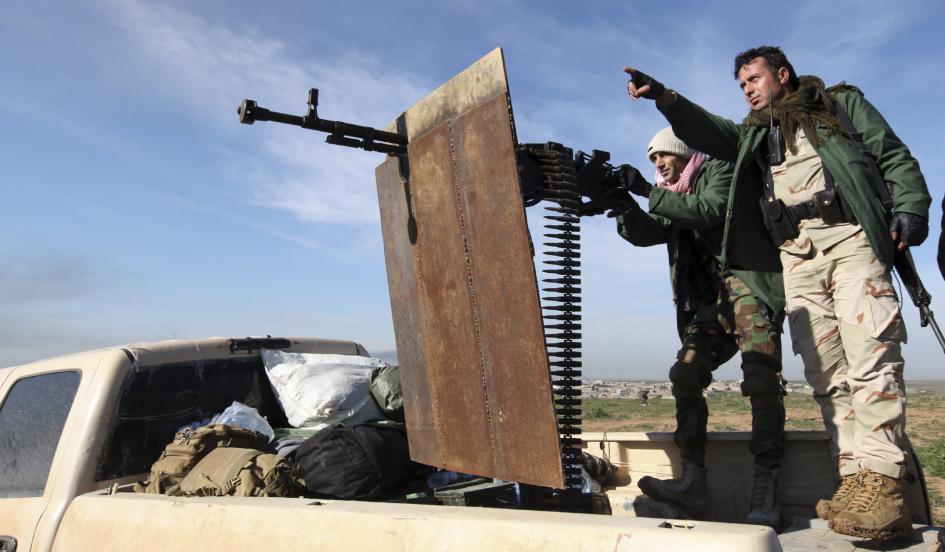
peshmergaKurdish Peshmerga fighters keep watch during the battle with Islamic State militants on the outskirts of Mosul January 21, 2015. AZAD LASHKARI/REUTERS

A senior Kurdish federal official, who declined to be named, said that Peshmerga forces would never hand back areas captured after Isis’s march across northern Iraq, which brought the group to within miles of the semi-autonomous Kurdish region.

While the threat of Isis remains significant, Kurds may have to put their independence dreams on hold and the Iraqi government will worry about Kurdish territorial claims later. As the terror group continues to grow, both parties need each other and the radical Islamist threat will bind them together, at least for now.

******************

Kurdish forces launched a barrage of Grad missiles against Islamic State (Isis) positions inside Mosul last week, for the first time since Isis overran Iraq’s second-largest city in June last year, marking a dramatic shift in the Kurds’ battle against the terrorist group.

The bombardment was preceded by a large-scale Kurdish operation against Isis in northern Iraq, which saw 5,000 Kurdish fighters, supported by US-led coalition airstrikes, sweep around Mosul to recapture an area larger than the size of Andorra, Liechtenstein and San Marino combined.

In the offensive, Kurdish Peshmerga fighters killed over 200 Isis militants, ousting the group from almost 300 square miles of territory, capturing a number of areas contested with Baghdad. As they advanced, encircling Mosul on three sides and cutting vital Isis supply lines to the nearby towns of Tal Afar and Sinjar, the Kurdish forces began a counter-offensive that analysts worry may be the start of a territory war between the Kurdish capital, Erbil, and Baghdad.

The Kurdish forces captured Makhmour, to the east of the city; the towns of Zimar and Wannah, and several Arab villages located in the Sinjar Mountains, west of Mosul; and the area around Mosul Dam, in what amounts to a Kurdish land-grab backed by Western airstrikes.

Iraqi Kurds believe that the recaptured territory around the city is rightfully theirs while the Iraqi government “fears that the Kurds will use territory as leverage during political negotiations”, according to Ranj Alaaldin, a visiting scholar at Columbia University.

A senior Kurdish federal official, who declined to be named, said that Peshmerga forces would never hand back areas captured after Isis’s march across northern Iraq, which brought the group to within miles of the semi-autonomous Kurdish region. “All the current military operations that involve the Peshmerga are implemented in coordination with the international military coalition and the central government is aware of it, but, in the Kurdish areas, we will never ever let Arabs control them again,” the official warned. “We are not ready to fight, terrify our fighters’ souls to liberate these areas and hand them to a traitor who would sell it to the killers. We will not allow this scenario to take place again in these areas.”

While the Kurds argue that they have taken control of this territory to defend against Isis, many Iraqis believe that the Kurds will never give up what they have captured because of their ambitions for an independent state.

“In the chaos that followed the Isis assault on Iraq in June, the Iraqi army melted away from its positions throughout northeastern and northwestern Iraq and the Peshmerga swiftly moved in to take their place – taking control of the whole of Kirkuk,” she said.

Despite these aspirations, Iraqi officials seem content to let Kurdish forces claim the territory from Daesh (as Isis is also known), for now. “As long as we are not ready to move as far as to fight in Mosul, it would be better to let them (Kurds) re-control these areas rather than leave it at the hands of Daesh,” a senior Iraqi military officer said. “Now, we will not raise any political disputes. Let [the Kurds] drive the militants away from these areas and we will think about the consequences later,” he added.

Hamed al-Khudari, a senior Shia lawmaker, agreed that Iraqis should “clear our lands” and “talk about this [territorial dispute] later”. Nevertheless, analysts do not believe that the Iraqi government in Baghdad is capable of ousting Kurdish forces from the territory they have seized in the recent advance. “Baghdad cannot do much to kick out the Kurds from any territory they have captured,” says Wladimir van Wilgenburg, analyst on Kurdish politics for the Jamestown Foundation.

The Kurds’ success on the battlefield, coupled with rumours of a potential Iraqi operation in Mosul, has put Isis on the back-foot but also caused disagreement between Erbil and Baghdad. Differences remain over involvement in any potential operation to recapture Mosul. Masrour Barzani, the head of Kurdistan’s regional security council, has said that Mosul will soon be “liberated” from the terror group’s self-proclaimed caliphate. “I don’t think anyone would envy the situation the people of Mosul are in,” he said. “The terror of Isis is too much for anyone to handle.”

But Kurdish officials believe that the responsibility for the recapture of the predominantly Sunni-Arab city lies solely with Baghdad. “Peshmerga are now 8km away from Mosul but they will not fight inside the city,” the official, who declined to be named, said. “When it comes to liberating Mosul, its people have to fight, not anyone else. We will just support them because we do not want anyone to say that Kurds are fighting Arabs. The [Iraqi] government understands that Mosul is not our battle or Shiites’ battle. Arab Sunnis in Mosul have to take the initiative to liberate their areas.”

Whereas Kurdish officials believe that Baghdad should take leadership over the battle for the city, where citizens now live under the group’s radical version of Islamic law, Iraqi officials claim that the battle against “Daesh is everyone’s to fight. The main goal now for all Iraqis is to fight Daesh and drive them away from all the Iraqi lands, so we will not allow anyone to talk about these [territorial] issues”, says al-Khudari. “This [fighting against IS] is the responsibility of everyone including the central government, the Kurdish forces, the public crowd (Shia militias and volunteers) and the anti-IS Sunni tribes.”

The lack of Kurdish motivation to enter into a battle for Mosul alongside Iraqi forces is due to the knowledge that any fight would be a drawn-out and lethal affair, according to van Wilgenburg. “They know the battle is going to be very heavy if it has to involve street to street fighting,” he says.

“The Kurds are already assisting the fight in Mosul. They recently fired into the city.” Erbil and Baghdad both have “to be pragmatic”, says Gonul Tol, executive director at the Center for Turkish Studies at the Middle East Institute. Baghdad is focused on recapturing Isis-held territory as opposed to Kurdish territory while Kurds “do not want to get involved” in Mosul to avoid “igniting a Kurdish-Arab war”.

While the threat of Isis remains significant, Kurds may have to put their independence dreams on hold and the Iraqi government will worry about Kurdish territorial claims later. As the terror group continues to grow, both parties need each other and the radical Islamist threat will bind them together, at least for now.

Behind Obama’s love affair with Iran

January 27, 2015

Behind Obama’s love affair with Iran

The murder of dozens of Jews in Buenos Aires 20 years ago by Iran-backed Hezbollah terrorists is being whitewashed in Barack Obama and the West’s desperate policy of making nice with Tehran

BY Steve Apfel
On 26 January 2015 09:06

via Behind Obama’s love affair with Iran – The Commentator.

AMIA attack in Buenos Aires, 1994
In downtown Buenos Aires there is a cream painted building locked down like Fort Knox. Alongside the building is a billboard, but it’s no suave ad for Kelvin Klein. The billboard is black, and eighty five names, handwritten in white, cover it from top to bottom.

They are mainly the names of Jews. Iranian-backed Hezbollah terrorists murdered the eighty five when they blew up the Jewish community building, badly injuring many more. This happened in 1994.

Lately, Argentinian President Cristina de Kirchner, another Eva Peron in her beauty and blinding ambition, has been bartering with Iran: a cover-up of the crime in exchange for Iranian oil and Argentine grain.

To add to the witch’s brew, the prosecutor who spent a decade compiling a million page case on the bombing, and was about to testify on the cover-up of de Kirchner and her cronies, got a bullet to the head in his bathtub. His name was Alberto Nisman. Last year he indicted a Hezbollah man and some former Iranian officials of high rank, for whom arrest warrants were then issued.

Now comes word that American President Obama tipped his own bag of tricks into the bubbling pot. Diplomatic sources have told World Tribune that the US pressed Argentina to end, or at least fudge the investigation of Iran’s involvement in the bombing of the Jewish building.

It was to be Iran’s quid pro quo for a thaw in relations with America and Europe. At one high-level meeting the US boldly asked Argentina “to lay off, according to a source close to de Kirchner. “Buenos Aires,” said the source, “eventually complied.”

The murdered Alberto Nisman left a 289 page complaint against the Argentine government. In it, Nisman writes that leaders “took the criminal decision of inventing Iran’s innocence to satisfy commercial, political and geopolitical interests.” What is not clear is whether the report contained evidence of U.S. involvement in the plot to clear Iran of the crime.

Now, as America and Europe go helter skelter to ‘make nice’ with Iran, Obama has vowed to veto a congressional bill that would re-impose sanctions on Iran. Senator Robert Menendez, the ranking Democrat of the Senate Foreign Relations Committee, considers Obama to be Iran’s leading defender.

Menendez claims that the administration is coordinating with Teheran in efforts to block U.S. sanctions. The US State Department may have been playing a supportive role as far back as 2013. In that year Alberto Nisman was invited by U.S. lawmakers to testify about his findings at a Congressional hearing on, “Threat to the Homeland: Iran’s extending influence in the Western Hemisphere.”

Argentina’s public prosecutor stopped Nisman from testifying, but in his absence, panel chairman Rep. Jeff Duncan noted that the State Department had omitted Nisman’s findings in its assessment that Iranian influence in Latin America and the Caribbean was “waning.”

Duncan added: “In stark contrast to the State Department’s assessment, Nisman’s investigation revealed that Iran has infiltrated for decades large regions of Latin America through the establishment of clandestine intelligence stations and is ready to exploit its position to ‘execute terrorist attacks when the Iranian regime decides to do so.”

Obviously there is more to the West’s nuclear talks with Iran than meets the eye. One thing is clear: the West puts a higher priority on ‘making nice’ with Iran than in bringing to justice the murderers of several dozen Jews.

Exclusive: Obama Cuts Funds for the Syrian Rebels He Claims to Support

January 27, 2015

Exclusive: Obama Cuts Funds for the Syrian Rebels He Claims to Support, Daily Beast, January 27, 2015

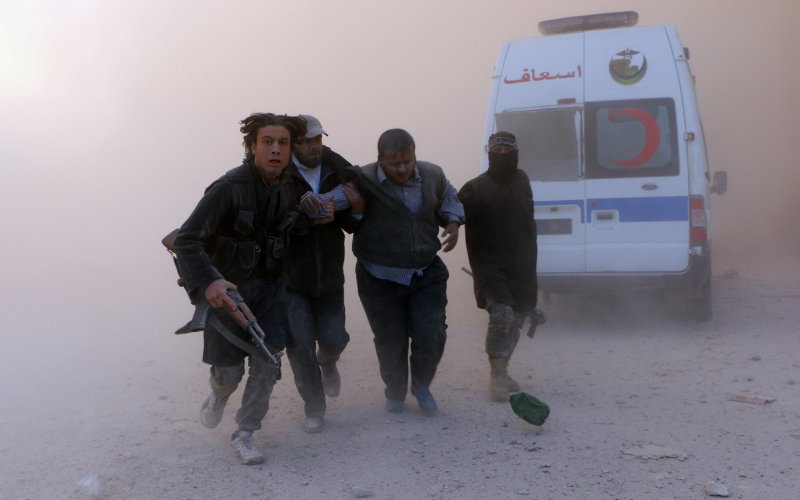
1422366030311.cachedFadi al-Halabi/AFP/Getty

LOST CAUSE?

Even the favored secular militias groomed to fight ISIS have seen their funding cut in half.

GAZIANTEP, Turkey — In the past several months many of the Syrian rebel groups previously favored by the CIA have had their money and supplies cut off or substantially reduced, even as President Obama touted the strategic importance of American support for the rebels in his State of the Union address.

The once-favored fighters are operating under a pall of confusion. In some cases, they were not even informed that money would stop flowing. In others, aid was reduced due to poor battlefield performance, compounding already miserable morale on the ground.

From afar, the U.S.-approved and partially American-armed Syrian “opposition” seems to be a single large, if rather amorphous, organization. But in fact it’s a collection of “brigades” of varying sizes and potentially shifting loyalties which have grown up around local leaders, or, if you will, local warlords. And while Washington talks about the Syrian “opposition” in general terms, the critical question for the fighters in the field and those supporting them is, “opposition to whom?” To Syrian President Assad? To the so-called Islamic State, widely known as ISIS or ISIL? To the al Qaeda affiliate, Jabhat al Nusra?

That lack of clarity is crippling the whole effort, not least because of profound suspicions among rebel groups that Washington is ready to cut some sort of deal with Assad in the short or medium term if, indeed, it has not done so already. For Washington, the concern is that the forces it supports are ineffectual, or corrupt, or will defect to ISIS or Nusra—or all of the above.

Republican lawmakers in D.C. are at their boiling point over the Obama administration’s anti-ISIS strategy, whether it is a failure to establish a no-fly zone in Syria, or unreliability with the issue of aid, or the Pentagon’s promised train and equip plan for the Syrian rebels.

“This strategy makes Pickett’s Charge appear well thought out,” said Sen. Lindsey Graham of South Carolina, referring to the poorly-planned and futile Confederate assault at Gettysburg. “We’re about to train people for certain death.”

In late October, al Qaeda’s Jabhat al Nusra routed American-backed militias in the northwest Syrian province of Idlib.

As a direct result, four of the 16 U.S.-approved brigades operating in the northern part of the country had their funding cut off and have been dropped from the list of “ratified” militias, say a State Department official and opposition sources. Since December, the remaining 12 brigades in the region have seen shortfalls or cuts in promised American assistance.

Syrian rebel sources who spoke on condition of anonymity say the 7thDivision, which is affiliated with the Syria Revolutionaries Front and aligned to the Free Syrian Army, has not received salaries from the CIA in months, although the State Department has maintained food shipments to the unit.

The secular Harakat al-Hazm, the most favored of the U.S.-backed brigades and one of the very few to be supplied with TOW anti-tank missiles, has seen a severe cutback in the monthly subsidy for its nearly 4,000 fighters. It is now receiving roughly 50 percent of the salaries it was receiving before. Weapon shipments arrived recently but commanders are nervous about whether future ones will come through. And the Farouq Brigade, a militia formed originally by moderate Islamist fighters based in the city of Homs, is getting no money for salaries at the moment.

CIA officials tell rebel commanders that unspecified “other funders” have ordered the cuts, or that Langley just doesn’t have the resources any longer. “What are the fighters meant to do?” complains one rebel commander. “They have families to feed.” Another says, “The idea that they don’t have the money is insulting. I don’t believe this—it is a political decision.”

Syrian rebel groups and their Washington, D.C. allies argue that CIA funding cuts —explained and unexplained—create relative advantages for extremist groups like al Nusra and ISIS, even as the president heralds the rebels as America’s on-the-ground-partners in the campaign to defeat the self-proclaimed Islamic State.

“It’s not just that the administration is failing to deliver on committed resources, it’s that they aren’t even communicating with formerly affiliated battalions regarding the cutoff,” says Evan Barrett, a political advisor to the Coalition for a Democratic Syria, a Syrian-American opposition umbrella group. “This puts our former allies in an incredibly vulnerable position, and ensures that groups like al Nusra will be able to take advantage of their sudden vulnerability in the field.”

The Obama administration says publicly that its support of moderate rebel brigades is not waning: the State Department continues to dispense non-lethal aid, the Pentagon supplies weapons, and the CIA pays salaries to brigades affiliated with the umbrella organization known as the Free Syrian Army. A CIA spokesman declined to comment for this story.

Privately, U.S. officials concede there have been funding changes. But American intelligence sources insist this is not a reflection of any shift in CIA strategy. They talk about “individual case-by-case shut offs” that are the consequences of brigades collapsing or failing to perform. And these sources dispute suggestions there’s an overall decrease in CIA subsidies, saying they are not giving up on the Syrian rebels—even though the Syrian rebels in the north of the country in the vicinity of the Turkish border increasingly believe this to be true. (Those in the south, near the Jordanian border and Damascus, may fare better.)

A State Department official told The Daily Beast that “the CIA has more money now than before and the State Department pie has not shrunk,” but confirms there has been some cutting off and cutting down. The official cited the “poor performance” of rebel brigades in Idlib last October as a primary reason.

When they were up against al Nusra, this official said, “they didn’t fight hard enough.” Several moderate brigades failed to come to the assistance of the Syria Revolutionaries Front, in particular, because they disapproved of its leader, who has been widely accused of corruption. The ease with which al Nusra was able to pull off its offensive angered U.S. officials—as did American-supplied equipment falling into jihadist hands.

That anger was compounded when the members of some U.S.-backed rebel groups actually defected to al Nusra during the offensive. One senior U.S. official admitted that some brigades have been “getting too close for our liking to al Nusra or other extremists.”

On Christmas Day armed groups formed an alliance for the defense of besieged rebel-held areas in Aleppo, where Assad had launched a major offensive to encircle them. Al-Jabha al-Shamiyya (Shamiyya Front), as the operational alliance is called, includes not only hardline Salafist factions from the groups known as the Islamic Front but more moderate brigades like the Muslim-Brotherhood-linked Mujahideen Army and Harakat Nour al-Din al-Zenki, which also has received TOW anti-tank missiles from Washington in the past.

Although al Nusra was not invited to join formally, it coordinates with the Shamiyya Front via the so-called Aleppo Operations Room, a joint headquarters for armed factions. It’s an arrangement that Washington does not like at all.

Aleppo-based rebels say they have no choice but to work with al Nusra and the Islamic-Front-aligned factions that are among the strongest armed groups in the war-torn city. Without them Assad’s forces would overwhelm the rebels.

“What do the Americans expect us to do?” asks a commander in the operations room. “Al Nusra is popular here. It is a perilous time for us—Assad is pushing hard.”

Syrian rebel sources who spoke on condition of anonymity say the 7th Division, which is affiliated with the Syria Revolutionaries Front and aligned to the Free Syrian Army, has not received salaries from the CIA in months, although the State Department has maintained food shipments to the unit.

The secular Harakat al-Hazm, the most favored of the U.S.-backed brigades and one of the very few to be supplied with TOW anti-tank missiles, has seen a severe cutback in the monthly subsidy for its nearly 4,000 fighters. It is now receiving roughly 50 percent of the salaries it was receiving before. Weapon shipments arrived recently but commanders are nervous about whether future ones will come through. And the Farouq Brigade, a militia formed originally by moderate Islamist fighters based in the city of Homs, is getting no money for salaries at the moment.

CIA officials tell rebel commanders that unspecified “other funders” have ordered the cuts, or that Langley just doesn’t have the resources any longer. “What are the fighters meant to do?” complains one rebel commander. “They have families to feed.” Another says, “The idea that they don’t have the money is insulting. I don’t believe this—it is a political decision.

For the Syrian rebels, uncertainties over funding changes by the CIA add doubt to already high skepticism over American policy toward the war in Syria. That skyrocketed when the Obama administration failed to enforce in 2013 its “red line” against Assad’s alleged use of chemical weapons, and the skepticism has merely grown since.

On the ground, the combatants say they suffer from the Obama administration’s inconsistency and argue that all too often they are being left out to dry, like some Syrian version of the Bay of Pigs, but much, much bloodier.

In the coffee shops of the Turkish border town Gaziantep last week, Syrians gathered on the safer side of the frontier listened incredulously as State Department spokesperson Jen Psaki insisted, “We maintain our belief that al Assad has lost all legitimacy and must go.” It was the first such inflexible anti-Assad statement for weeks from a senior U.S. official.

But that wasn’t what they’d heard from President Obama in his State of the Union address a few days before. Gone was the rhetoric of 2013 when he said he had “no doubt that the Assad regime will soon discover that the forces of change cannot be reversed, and that human dignity cannot be denied.” Instead, last Tuesday Obama spoke about the administration’s so-called train-and-equip plan to build a force that will target ISIS, and he made vague noises about helping Syria’s moderate opposition.

Those moderates are precisely the men and women on the ground who feel that bit by bit they are being abandoned.

Already, nearly four months after Secretary of State John Kerry announced the plan to train and equip Free Syrian Army units, Kurdish Peshmerga, and Iraqi Shia militiamen as anti-ISIS forces, the project appears to be facing major hurdles.

U.S. Senators emerged grim-faced last week from a classified briefing on the train-and-equip mission, with some of them predicting disaster from a Pentagon program that will train too few fighters and too slowly to make a difference.

At its best, Republican senators argue, it’s not going to work. At its worst, it will lead to the mass slaughter of the trained rebels.

“This strategy makes Pickett’s Charge appear well thought out,” said Sen. Lindsey Graham of South Carolina, referring to the brave but futile Confederate assault at Gettysburg. “We’re about to train people for certain death.”

The number of recruits required for a “strategic change in momentum is years away,” said Graham. “The concept of training an army that will be subject to slaughter by two enemies, not one, is militarily unsound,” and “if the first recruits you train get wiped out, it’s going to make it hard to recruit.”

Sen. Jeanne Shaheen, a Democrat who emerged from the same classified briefing, was tight-lipped: “I think we have a lot to do, and a lot of questions to answer.”

In Syria, few rebel fighters want to join a force focused only on ISIS. They argue that Assad is responsible for considerably more deaths among them and their extended families than ISIS, which is able to draw defectors from their ranks because it pays much higher salaries to its fighters and because it is able to exploit distrust of American intentions towards the Syrian revolution.

U.S. officials now acknowledge difficulties recruiting from insurgent ranks, conceding it is a serious challenge finding enough recruits willing to put off fighting the Assad regime.

So American officials recruiting for the train and equip mission are now hoping to fish in the pool of rebel fighters from eastern Syria who disbanded, quit the war and fled to Turkey when ISIS established control of the cities of Raqqa and Deir ez-Zor. The U.S. officials say the anti-ISIS force in Syria will have to be smaller than envisaged initially, but they are hoping early victories on the ground will convince more people to enlist.

Obama Sends Campaign Team to Israel to Defeat Netanyahu

January 27, 2015

Obama Sends Campaign Team to Israel to Defeat Netanyahu

So he DOES have more campaigns to run

1.26.2015

News

Trey Sanchez

via Obama Sends Campaign Team to Israel to Defeat Netanyahu | Truth Revolt.


According to Haaretz, President Obama’s 2012 campaign field director has been selected to be a part of a “five-man Obama team” that will run a campaign against Israeli Prime Minister Benjamin Netanyahu.

As Caroline Glick–Israeli journalist and Shillman Fellow at the David Horowitz Freedom Center–notes, the far-left Israeli news outlet “for whatever reason… chose not to translate this article in its English edition.” Fortunately, Independent Media Review and Analysis did:

Foreign Funding Bankrolls Anti-Netanyahu Campaign – Flies in 5-Man Obama Team
Dr. Aaron Lerner Date: 26 January 2015 

Haaretz reporter Roi Arad revealed in an article in the Hebrew edition today that the foreign funded organization, “One Voice”, is bankrolling the V-2015 campaign to defeat Binyamin Netanyahu’s national camp in the March 2015 Knesset Elections. 

One indication of the generous financing is that it has now flown in a team of five American campaign experts (including Jeremy Bird, the Obama campaign’s national field director) who will run the campaign out of offices taking up the ground floor of a Tel Aviv office building. 

V-2015 is careful not to support a specific party – rather “just not Bibi”. As such, the foreign funds pouring into the campaign are not subject to Israel’s campaign finance laws. 

The revelation, PJMedia observes, stands in direct contrast with President Obama’s declaration in his State of the Union that he has no more campaigns to run:

‘No more campaigns to run’ in America, at least.

Here is Glick’s post:


Two rockets fired from Syria at Israel, IDF returns fire

January 27, 2015

Army fires 20 artillery shells at Syrian positions from which rockets launched at northern Golan originated; no injuries or damages reported on Israeli side.

Ynet reporters

Latest Update: 01.27.15, 14:36 / Israel News

via Two rockets fired from Syria at Israel, IDF returns fire – Israel News, Ynetnews.


At least two rockets from Syria hit the northern Golan Heights on Tuesday and IDF returned fire, nine days after an Israeli air strike in Syria killed an Iranian general and several Lebanese Hezbollah fighters.

The IDF said it fired 20 artillery shells at Syrian positions from which the rockets originated. The rockets hit open areas and no injuries or damages were reported.

Residents in Druze villages near the border reported to hearing several explosions, shortly after a Code Red rocket alert siren was sounded near the border.

IDF soldiers evacuating visitors from Hermon ski site.

The IDF has instructed the evacuation of some 1,000 visitors from the Hermon Mountain ski site, and the resort has been closed until further notice.

Officials at the Hermon ski site said the rockets fell in several places in the Golan Heights. “Following this, the IDF instructed to evacuate the visitors from the Hermon site … the IDF is also at the scene,” they said.


the Hermon ski site (Photo courtesy of Hermon ski site
Visitors being evacuated from the Hermon ski site (Photo courtesy of Hermon ski site)

Residents in the Maron Golan area were asked to remain close to safe rooms and shelters and farmers in the area were instructed to evacuate. Israel Police briefly blocked all roads leading to the Golan Heights, and has since re-opened all but the ones leading to the Hermon.

Fighting in neighboring Syria’s civil war has spilled over to Israel in the past. Mortar shells have exploded sporadically inside Israeli territory since the conflict began, sometimes causing minor damage. Israel believes most fire is errant shots but has at times accused Syria of aiming at Israeli targets. Israeli troops have returned fire on several occasions.

This time, however, “it does not seem that it was errant fire,” Lieutenant-Colonel Peter Lerner, an IDF spokesman, told Reuters.

Hezbollah’s Al-Manar TV network reported that Israel Air Force planes were circling over the Israel-Syria border at Quneitra on the Israeli side.

The IDF raised its alert level on the northern front last Monday in positions along the border with Syrian and Lebanon and deployed an Iron Dome rocket interceptor battery near the northern border, after a strike attributed to Israel killed senior Hezbollah officers and an Iranian general nine days ago. Both Hezbollah, which is backed by Iran and fought a 34-day war with Israel in 2006, and the Revolutionary Guards vowed to avenge the deaths.

On Sunday, a number of roads were closed amid a possible security incident along Israel’s northern border. Shortly afterwards the roads were reopened, indicating that if there was an event it had come to an end.

Senior security sources in Lebanon who are affiliated with Hezbollah recently said that the attack, in which Iranian general Mohammad Ali Allahdadi and the son of master terrorist Imad Mughniyah were killed, “shows that Israel has crossed the red line in the security war with Hezbollah, which means the rules have changed.”

This is an ongoing event, updates are forthcoming.

Yoav Zitun, Ahiya Raved, Michal Margalit, Reuters, AP contributed to this report.

Holocaust Memorial Day 2015

January 27, 2015

Holocaust Memorial Day 2015 | Anne’s Opinions, 27th January 2015

(On the 70th anniversary of the liberation of Auschwitz by the Allies, anti-Semitism is resurgent again. So much for “Never Again”.– anneinpt)

Holocaust Memorial Day

The world cries “Never Again” every year on the annual International Holocaust Memorial Day. And yet, seventy years after the liberation of Auschwitz and the defeat of the Nazis by the allies, it is becoming sickeningly evident that the lessons have not been learned, and that “never again” means “maybe now it’s acceptable”. Antisemitism is not only raising its ugly head again, but is alive and kicking and growing daily, as we have seen in the huge rise (some say by 400%) in antisemitic attacks throughout Europe. This is also not to ignore the constant drip-drip of anti-Semitic incitement, disguised as anti-Israel or anti-Zionism, emanating from the Muslim world, and particularly from the Palestinians.

We have seen several nasty examples of this anti-Semitism in the guise of pro-Palestinian, or rather anti-Israel, activism in recent days. One of the most blatant occurred, of all places, in a New York City Council meeting commemorating the liberation of Auschwitz, when anti-Israel pro-Palestinian protestors chose to interrupt precisely as the name of Auschwitz came up during a discussion of an upcoming Council visit to Israel.

Legal Insurrection has the details:

Anti-Israel activists in New York City have started a campaign as part of the Boycott, Divest and Sanctions movement to try to prevent City Council members and other politicians from visiting Israel. A coalition of 40 groups, most of which are quite small but including the usual suspects like the inaccurately named Jewish Voice for Peace are leading the effort.

At a NY City Council meeting today, anti-Israel activists disrupted a vote commemorating the 70th anniversary of the liberation of Auschwitz, shouting for one of the council members not to travel to Israel, as reported by Jacob Kornbluh at Jewish Political News & Updates website, which has video:

Pro-Palestinian and anti-Israel activists disrupted the City Council’s stated meeting on Thursday while members were voting on a resolution commemorating the 70th anniversary of the liberation of Auschwitz.

The protesters started yelling, “shame on you, Melissa”, “why are you supporting an apartheid” and “Palestinian lives matter.”

After five minutes of yelling and screaming, the some 40 protesters were ordered to leave and escorted out the balcony.

Council member Cory Johnson called it “incredibly disrespectful and offensive. Simply awful.” Councilman Mark Weprin added, “The State of Israel has never supported the killing of innocent people, and they want to love in peace.”

NYC councilman David Greenfield, grandson of Holocaust survivors, hit back with admirable ferocity and eloquence:

In Britain, as previously reported, anti-Semitism is on the rise,of which an extreme example occurred in Gateshead when a gang of Muslim youth decided to go “Jew-bashing and beat up a passing Jewish man walking in the street.

Generally, though, British anti-Semitism is of a more genteel type, although it is still not only prevalent, but becoming fashionable again, as Philip Mark McGough documents in his Huffington Post article: “Anti-Semitism means hating the Jews more than necessary”:

There exists a weighty and sublimely pointless literature about the difference between so-called Old Anti-Semitism (religious, racial, xenophobic) and New Anti-Semitism (political, anti-Zionist, Third Worldist); but lately this academic fine-tuning of distinctions between various shades of hate has become practically and provisionally meaningless. Among a long litany of prejudices, anti-Semitism robed as anti-Zionism (when it even bothers to dress for the occasion) is now uniquely acceptable, even respectable, in a style quite without precedent in these hyper-sensitive, judgment-phobic times. Society has given itself a free pass, an ideological Rumspringa, where canards, tropes, and stereotypes totally forbidden in any other context can be affixed to Israel (and, by extension, the Jews) with impunity.

… while after each and every Islamist atrocity we are warned- and warned incessantly- of the dangers of an anti-Muslim backlash, the fact remains that in Britain, in 2015, it’s the Jews who are double-bolting their doors.

CiFWatch (Cross posted from Richard Millett’s Blog) brings us a concrete example of the above in its report of an obtuse former British diplomat who said that Israel should “dismantle its security fence “for peace”.

Elsewhere in Europe, (via Honest Reporting) Ynet brings us the story of a Swedish journalist who donned a kipa and posed as a Jew to see what people’s reactions would be. Unsurprisingly he encountered much anti-Semitic abuse. He’s lucky he escaped unharmed.

After more anti-Semitic crimes were reported in Malmo than in any other city in Sweden, Swedish reporter Peter Lindgren decided to conduct a social experiment by putting on a kippa (yarmulke or skullcap) and a Star of David necklace and walking around the city to see how locals treated Jews.

With a hidden camera and microphone documenting his stroll through the streets of Malmo, Lindgren encountered harsh verbal and physical anti-Semitic abuse.

The footage, aired Wednesday on Sveriges Television as part of a 58-minute documentary titled “Jew-hatred in Malmo,” shows Lindgren sitting at a cafe in central Malmo reading a newspaper as several passersby hurled abuse at him.

In another location, Lindgren was called “Jewish shit” and a “Jewish Satan” and one person even hit his hand – though that incident was not recorded, only recounted. One passerby told Lindgren to “get out,” while another warned him to leave for his own safety.

In Rosengard, a neighborhood heavily populated by Muslims, Lindgren was surrounded by a dozen men who threatened him, while residents of nearby apartments threw eggs at him and shouted anti-Semitic slogans. Lindgren then decided to leave for fear of increased violence.

In 2013, Patrick Riley, a journalist for The Local, conducted a similar social experiment in which he donned a kippa and walked through the streets of Malmo. He encountered stares of “disbelief and menace” and insults.

Writing about his experience, Riley said: “As an Irish person abroad I’ve never felt remotely threatened, but wearing the kippa for a few hours was enough to instill feelings of fear. Even when I didn’t feel afraid I was made to feel different and unwelcome.”

Watch this Swedish language video with English subtitles:

Another European anti-Semite pretending to be “only” anti-Israel is the Dutch ex-minister who said (h/t Reality) that if only all the Israeli Jews would move to the US there would be world peace. Because when the Jews did not live in Israel there was world peace… I seriously worry about this man’s sanity.

On the other side of the world, Damian Pachter, the Argentinian journalist who exposed the story of the suspicious death of prosecutor Alberto Nisman has fled to Israel fearing for his life:

The first journalist to report on the death of a Argentine state prosecutor, who was investigating the deadly 1994 bombing of a Jewish community center in Buenos Aires, arrived in Israel on Sunday after fleeing the South American country.

Damian Pachter, who also holds Argentine-Israeli citizenship, said he had “quickly” fled Argentina fearing for his life following threats to his security.

“I’m leaving because my life is in danger. My phones are tapped,” Pachter, a journalist with the Buenos Aires Herald, told the website Infobae.

The website carried a photograph of Pachter, wearing a cap and carrying sunglasses, at the airport before he boarded an Aerolineas Argentinas flight.

Despite the fact that his and Nisman’s persecution were as much political as religious, the basis of this whole story was the bombing of a Jewish – not Israeli – community center, and the subsequent cover-up and perversion of justice by the Argentinians and Iranians.

One the 70th anniversary of the liberation of Auschwitz, a group of survivors hold up and point to a picture of themselves, which was taken the day the camp was freed by the Soviet army

Returning to today’s commemoration events in Europe, this year, on the 70th anniversary of the liberation of Auschwitz, a grand memorial ceremony is taking place at Auschwitz, including survivors of that hell-on-earth. Check out the Daily Mail link above for the story including pictures, videos.

One very important person however will be skipping the ceremony: Barack Obama, who has refused to see Binyamin Netanyahu on his visit to Washington, is not going to attend the memorial service at Auschwitz. (H/t TCKT)

Treasury Secretary Jack Lew will represent the United States at the 70th anniversary ceremony for the liberation of the Auschwitz concentration camp on Tuesday—rather than President Barack Obama or Vice President Joe Biden—while other countries are slated to send their heads of state.

Obama’s absence demonstrates an apathy towards the fate of the Jews both in the past and in the present – not the best attitude to display if he hopes to persuade Israel of his determination to confront Iran. Besides the questionable propriety of his decision, I’m surprised that Obama is prepared to miss such a feel-good PR opportunity. I wonder what his advisors were thinking.

But for sheer surealism, Israeli President Reuven Rivlin visited the UN and thanked Ban Ki-Moon for fighting antisemitism. Considering that the UN is one of the prime movers of antisemitism in the entire world, all I can do is agree with the following Tweeter:

https://twitter.com/Yaakov_Shmuel/status/559946752875175936

As I always do on these days of commemoration, I invite readers to visit my pages on my family history during the Shoah.

How Iran Is Encircling the Gulf and Israel

January 27, 2015

How Iran Is Encircling the Gulf and Israel’
by Khaled Abu Toameh January 27, 2015 at 5:00 am Via The Gatestone Institute


(Not a pretty picture. I’m sure if and when the Iranian infiltration is complete, they will declare themselves a nuclear power and begin with their demands on Israeli territory. Of course, that’s just opinion. I could be entirely wrong. (hopefully) – LS)

With bases in Lebanon, Syria, Yemen and Iraq, Iran has surrounded all the oil fields of the Persian Gulf. This encirclement can be comfortably backed with Iran’s ongoing nuclear weapons program.

The Iranians already have Hezbollah sitting on Israel’s northern border. All they need now is another terror group sitting in Gaza to the south, in order to create a similar encirclement. And they are working hard to achieve that goal.

“We welcome any party that supports the Palestinian cause.” — Osama Hamden, Hamas leader.

Iran is not interested in the reconstruction of the Gaza Strip. The only thing Iran is interested in there is turning Hamas into another Iranian-backed army that would be used to attack Israel.

As U.S. President Barack Obama continues to seek a negotiated deal on Iran’s nuclear program, the Iranians have been working hard in recent weeks to infiltrate the Palestinian arena and re-establish ties with their erstwhile ally, Hamas.

Emboldened by Obama’s obsession with the nuclear negotiations, which are set to resume next month, Iran’s leaders apparently trust that the Obama Administration is prepared to turn a blind eye to whatever they do.

So the Iranians are apparently feeling free to meddle once again in the internal affairs of the Palestinians, to strengthen their hand still further in the Middle East.

With bases in Lebanon, Syria, Yemen and Iraq, Iran has surrounded Saudi Arabia and all the oil fields of the Persian Gulf. This encirclement can be comfortably backed with Iran’s ongoing nuclear weapons program.

Tehran’s main goal is to regain control over the Palestinian Islamist movement so that it can turn itself into a player in the Israeli-Arab conflict.

The Iranians already have Hezbollah sitting on Israel’s northern border. All they need now is another terror group in Gaza to the south, in order to create a similar encirclement. And they are working hard to achieve this goal.

Relations between Iran and Hamas had become strained after Hamas’s refusal to support the regime of Iran’s client, Syria’s Bashar Assad, in his fight against the Syrian opposition forces.

Iran and Hamas need each other badly. Iran wants Hamas because it does not have many Sunni allies left in the region. An alliance with Hamas would enable Iran to rid itself of charges that it is leading a Shiite camp fighting against the Sunnis.

Hamas, for its part, is desperate for any outside support, especially in wake of its increased isolation in the Palestinian and international arenas.

Hamas is also beginning to feel the heat at home in light of its failure to rebuild the Gaza Strip after last summer’s war with Israel. Hamas leaders are now hoping that Iran will resume its financial aid to the movement and avoid a situation where Palestinians might revolt against it.

Egypt’s tough security measures along its border with the Gaza Strip, including the demolition of hundreds of smuggling tunnels and the creation of a security zone, have also tightened the noose on Hamas.

Hamas leaders say they have taken a “strategic” decision to restore their ties with Iran. Ismail Haniyeh, the former prime minister of the Hamas government in the Gaza Strip, announced recently that his movement is working toward establishing “open relations” with Iran.

Another Hamas leader, Osama Hamdan, announced that the differences between his movement and Iran have been resolved. He said that Hamas establishes its relations with all parties on the basis of providing support for the Palestinian cause. “We welcome any party that supports the Palestinian cause,” Hamdan said. “Relations between Iran and Hamas have returned to normal.”

As part of Hamas’s efforts to appease the Iranians, the Islamist movement’s armed wing, Izaddin al-Qassam, issued a rare statement “thanking Iran for providing money and weapons” to Hamas and other Palestinian groups in the Gaza Strip over the past few years.

Hamas knows that improving its relations with Iran also means rapprochement with Tehran’s proxies in Hezbollah. That is why Hamas has taken a number of steps over the past week to restore its ties with Hezbollah.

The commander of Izaddin al-Qassam, Mohamed Deif, last week sent a letter of condolence to Hezbollah chief Hassan Nasrallah over the death of some senior Hezbollah operatives, who were killed in an Israeli air strike in Syria.

In his letter, Deif called on Hezbollah to join forces with Hamas against “the real enemy — the Zionist entity.”

The Hamas-Iran rapprochement is yet another sign of Tehran’s effort to use its allies in the Middle East to destroy Israel. Hamas leaders are now hoping that Iran will resume not only its financial aid to their movement, but the supply of weapons as well.

Iran is not interested in the reconstruction of the Gaza Strip or providing shelter to thousands of Palestinian families who lost their homes during the last war. The only thing Iran is interested in there is turning Hamas into another Iranian-backed army that would be used to attack Israel. This is all happening at a time when the Obama Administration is busy preparing for another round of talks with Iran over its nuclear program. It is obvious by now that Tehran is using these negotiations to divert attention from its efforts to deepen its involvement in the Middle East, with the hope of taking over the oil fields and eliminating Israel.

Obama and cognitive dissonance

January 26, 2015

Obama and cognitive dissonance, Dan Miller’s Blog, January 26, 2015

(The views expressed in this article are mine and do not necessarily reflect those of Warsclerotic or its other editors. — DM)

It has been argued that Obama’s cognitive dissonance is demonstrated by His dealings with Iran and His other disruptive efforts in the Middle East.  Perhaps the contrary is more accurate.

Basis of His foreign policies?

Basis of His foreign policies?

An article at Front Page Magazine by Bruce Thorton is titled The Dangers of Obama’s cognitive dissonance (also at Warsclerotic). It argues that Obama mistakenly believes that Iran and “we” want many of the same things and that He acts on that belief.

The heart of this mistake is the belief that whatever their professed beliefs, all peoples everywhere are just like us and want the same things we want. Since our highest goods are peace and prosperity, we think other nations’ privilege the same things. If peoples behave differently, it’s because they are warped by poverty or bad governments or religious superstitions, and just need to be shown that they can achieve those boons in rational, peaceful ways, especially by adopting liberal democracy and free-market economies. Once they achieve freedom and start to enjoy the higher living standards economic development brings, they will see the error of their traditional ways and abandon aggression and violence, and resolve conflicts with the diplomacy and negotiation we prefer. [Emphasis added.]

The Islamic Republic of Iran most likely does want peace and prosperity, but on its own terms.

Iran hangings by crane

Iran wants Islamic “peace” — the peace of universal submission to (a Shiite?) Allah — and at least sufficient prosperity to force its will on others who do not want “peace” of that sort. If Iran gets (or gets to keep) nuclear weapons, along with increasingly longer range missiles, it will be in an increasingly improved position to do that.

Obama may well have very similar goals for Iran. His demands that the P5+1 process continue despite Iran’s persistent refusals to make significant concessions, even as it continues to enhance its nuclear war machine, and His disposition to give Iran whatever concessions it wants, suggest that His and Iran’s objectives are similar. There is support for an alternative, that Obama is simply delusional. However, unless His closest, most trusted and therefore most important advisors are at least equally delusional, that alternative makes little sense. Although she appears to be a despicable person, Valerie Jarrett seems quite competent at what she does on His behalf. Others fall on their swords, fall into line and salute or leave.

Obama’s “extraordinary disconnect” in foreign policy was recently highlighted on CBS’ Face the Nation.

John Bolton said much the same.

Is it more likely that Obama merely fails to understand what’s happening, or that He understands and likes it? His State of Union address was full of foreign policy nonsense, much of it about Iran. However, it seems to have worked quite well with the large segment of the American public which neither understands nor cares about foreign affairs (except amusing affairs of a salacious nature) and believes that He strives mightily to give them the “free stiff” they believe they want, without understanding the economic hardships it has brought and will bring to them. If members of the public who already worship Him (and that includes most of the “legitimate news” media) continue to do so, it may well make little if any difference to Him or to His closest advisors whether those who disagree with Him still like, or continue to like, Him.

Leftist beliefs

After all, as we learned at the Democrat National Convention that nominated Obama for a second term, “we all belong to the Government,” it’s “one big happy family” and Obama is the head of “our family.”

In the final analysis, it may make little difference whether Obama is incompetent and delusional or is competent, understands His plans for Iran and the rest of the world far better than the rest of us and has perverse conceptions of evil and good.

Both theories are worth considering because both can help us to understand what He does, why He does it and what He intends to accomplish. However, delusional actions and intentions are difficult for those who are not delusional to understand and therefore to challenge. Actions and intentions that are, instead, based on a rational thought process — but one that views evil as good and good as evil — are easier to understand and therefore to challenge.

As I have watched Obama and His accomplishments over the years, I have come to lean toward the notion that He is competent, evil, understands what He is trying to achieve and likes it.

Journalist Who Reported on Argentine Prosecutor’s Death Flees to Israel – NYTimes.com

January 26, 2015

Journalist Who Reported on Argentine Prosecutor’s Death Flees to Israel – NYTimes.com.

JERUSALEM — Damián Pachter, the journalist who broke the story of the recent death of an Argentine prosecutor investigating the 1994 bombing of a Jewish center in Buenos Aires, has fled to Israel, saying he feared for his life in Argentina.

In a first-person account of the days before his flight from Argentina published on Monday in the Israeli newspaper Haaretz, Mr. Pachter said he concluded late Friday that he was being followed by an intelligence officer who “wore jeans, a jeans jacket and Ray-Ban sunglasses” and decided to leave the country immediately. He said that he bought a ticket to Montevideo, Uruguay, from Buenos Aires, and that he traveled on to Madrid and Tel Aviv.

After landing in Tel Aviv on Sunday evening, Mr. Pachter told reporters waiting for him at the airport, “They are using their security forces to chase me.”

“I just had to move fast and quick, as fast as I could in order to get onto a plane and leave the country,” he added, speaking in English.

In the televised remarks, he noted that he held Israeli citizenship.

Photo

Damián Pachter, a journalist who fled Argentina after reporting on the death of a prosecutor investigating the 1994 bombing of a Jewish center in Buenos Aires, arrived in Israel on Monday.  Credit Amir Cohen/Reuters

“These are the most important years of my life,” he added. “This is the place where I feel safe.”

Mr. Pachter could not immediately be reached for comment.

Relying on a source he said he considered reliable, Mr. Pachter, a journalist for the English-language Buenos Aires Herald, was the first to publicize the suspicious death of Alberto Nisman, the prosecutor. Mr. Nisman was found dead in his Buenos Aires apartment from a gunshot wound to the head on Jan. 18, the day before he was to testify before lawmakers about his accusations regarding the 1994 attack on the Jewish center and its aftermath.

Mr. Nisman, 51, had been investigating for a decade the bombing in which 85 people were killed. He had accused Iranian officials of planning and financing the attack and Iran’s Lebanese ally, Hezbollah, of carrying it out. He also accused President Cristina Fernández de Kirchner of Argentina and top aides of having conspired with Iran to cover up responsibility for the bombing as part of a deal that would supply Iranian oil to Argentina.

Mr. Pachter first took to his Twitter account to report that there had been “an incident” at Mr. Nisman’s home. He then posted that Mr. Nisman was found in his bathroom in a pool of blood, that he was not breathing, and that doctors were at the apartment.

Argentine officials at first said that evidence at the scene, including a .22-caliber pistol and spent cartridge found near Mr. Nisman’s body, indicated suicide. By Friday, Argentina’s government was asserting that an ousted spymaster was involved.

Mr. Pachter seemed to have first become alarmed about his own safety on Friday. He wrote in Haaretz that he was working in the newsroom when a colleague drew his attention to a story about Mr. Nisman’s death by the state news agency. It quoted what was said to be a post on Twitter by Mr. Pachter, but he denied writing that message.

Mr. Pachter said he realized it was “a kind of coded message” and was advised by a friend to get out of the city. He took a bus to an undisclosed location and, he wrote, and while he waited for his friend at a gas station cafe, he noticed the man wearing the sunglasses — at night — sitting two tables from him.

“When an Argentine intelligence agent is on your tail, it’s never good news,” Mr. Pachter wrote. “He didn’t just want to have a coffee with me, that’s for sure.”

Mr. Pachter added that after he left Argentina, he found that the government was still publishing false information about him on social media. He said the Twitter feed of the Argentine presidential palace had posted the details of the airline ticket he had bought and claimed, wrongly, that he intended to return to Argentina by Feb. 2.

“In other words, I hadn’t really fled the country,” he wrote. “In fact, my return date is in December.”

“Argentina has become a dark place led by a corrupt political system,” he added. “I still haven’t figured out everything that has happened to me over the past 48 hours.”

Jorge Capitanich, Argentina’s cabinet chief, defended the publication of Mr. Pachter’s movements on the Twitter account of the presidential palace. At a news conference on Monday morning, he said, “If a journalist says that he feels threatened, it’s important to publish his whereabouts.”

Télam, the national news agency, also sought to defend itself from Mr. Pachter’s accusation that it had published invented comments, writing in a piece that it had never “alluded to a fake tweet.”

The conduct of Aerolíneas Argentinas, the state-run airline, was also criticized by opposition politicians. It was the airline that released the information about Mr. Pachter’s tickets. Julio Cobos, an opposition figure, said that releasing the information may have constituted a criminal act. He also pointed to the “complete irresponsibility” of the presidential palace’s Twitter account.

Jonathan Gilbert contributed reporting from Buenos Aires.

Why Netanyahu is right to go around Obama to Congress – The Washington Post

January 26, 2015

Why Netanyahu is right to go around Obama to Congress – The Washington Post.

January 26 at 9:41 AM

Do they talk this way about Iranian President Hassan Rouhani?

After learning that Israeli Prime Minister Benjamin Netanyahu had accepted an invitation to address a joint session of Congress about the need for new sanctions to stop Iran’s nuclear program, the Obama administration went . . . well, nuclear.

One “senior American official” threatened Netanyahu, telling the Israeli newspaper Haaretz that “Netanyahu ought to remember that President Obama has a year and a half left to his presidency, and that there will be a price.” Meanwhile a “source close to [Secretary of State John] Kerry” told The Post that the “secretary’s patience is not infinite” and that “playing politics with that relationship could blunt Secretary Kerry’s enthusiasm for being Israel’s primary defender.”

Oh, please. No wonder Netanyahu is going around these people to Congress for support. Is Kerry defending Israel as a favor to Netanyahu, or because it is in the United States’ vital interests to stand with our closest ally in the Middle East? Just the threat of withdrawing that support validates Netanyahu’s suspicion that the Obama administration does not have Israel’s back in its negotiations with Iran.

Using anonymous officials to attack Netanyahu is nothing new. Unnamed officials have called him “chickens—,” “recalcitrant,” “myopic,” “reactionary,” “obtuse,” “blustering,” “pompous,” and “Aspergery” — all to one journalist (Jeffrey Goldberg of the Atlantic, who keeps a running list).

The Obama team’s outrage is a bit overwrought. Clearly, it is not a breach of protocol for a foreign leader to lobby Congress. After all, Obama himself deployed British Prime Minister David Cameron to lobby lawmakers to oppose new sanctions on Iran. It seems Netanyahu’s crime is not so much a breach of diplomatic protocol, but rather, opposing the administration’s position.

The fact that Netanyahu felt compelled to speak directly to Congress in order to oppose the administration’s position speaks poorly, not of Netanyahu, but of Obama. If the leader of one of our closest allies is so worried about the deal Obama is going to cut with Iran that he is willing to risk a diplomatic rift with the administration to speak out, perhaps the problem is not with Israel, but with the Obama administration. And it is not just Israel that opposes Obama’s deal with Iran; Arab leaders have made clear that they share Israel’s view.

No doubt politics plays a role in Netanyahu’s decision to address Congress. His speech will come just two weeks before the Israeli elections. But is it wrong for a politician to use the foreign stage of an ally to buttress his electoral case back home? If it is, then Barack Obama — who gave a campaign speech in Berlin before 200,000 adoring Germans who could not vote for him — is the wrong man to level that criticism.

Obama claims that new sanctions on Iran “will all but guarantee that diplomacy fails.” If the mere threat of sanctions is enough to derail Iran’s nuclear talks, then whatever deal is in the works is not worth having. It means that Obama is far more desperate for a deal than Tehran is — which is a sure-fire way to guarantee a bad agreement.

Obama wants a nuclear deal with Iran because it would be a major feather in his political cap at a time when his foreign policy is imploding across the world, from Yemen to Syria to Iraq. For Israel, Iran’s nuclear program is not a political challenge; it is an existential one.

Obama can afford a bad deal because, as that anonymous official put it, he has a year and a half left to his presidency. The people of Israel, on the other hand, will have to live with the consequences long after Obama is gone.

Netanyahu understands this — which is why it is good that he is coming to Washington, and why House Republicans deserve credit for inviting him.