Archive for January 27, 2015

Holocaust Remembrance Day. – Netanyahu on Iran and Europe

January 27, 2015

Holocaust Remembrance Day. – Netanyahu on Iran and Europe – YouTube.

Published on Jan 27, 2015

Prime Minister Benjamin Netanyahu’s Remarks at Yad Vashem – Commemorating the International Holocaust Remembrance Day.

דברי ראש הממשלה בנימין נתניהו בכנס שגרירים ודיפלומטים לציון יום השואה הבינלאומי ב”יד ושם”.


Iran sends warning to Israel via US officials

January 27, 2015

Iran sends warning to Israel via US officials
January 27, 2015 at 5:00 am Via AP News


(I suggest we keep our eyes on the proverbial ball. Sure, Obama and his policies towards Israel are a mess. Yet, it is Iran who is the blame. They are up to something and, like a snake, they could strike at a moment’s notice. Now, we’ve crossed their ‘red line’. – LS)

TEHRAN, Iran (AP) — Iran’s official IRNA news agency is reporting the country has sent a warning to Israel through the United States over the recent killing of an Iranian general in an alleged Israeli airstrike.

The Tuesday report quotes Deputy Foreign Minister Hossein Amirabdollahian as saying, “We told the Americans that the leaders of the Zionist regime should await the consequences of their act.”

He added, “The Zionist regime has crossed our red lines.”

Iranian Gen. Mohammad Ali Allahdadi was killed along with six Lebanese Hezbollah fighters in a Jan. 18 airstrike in the Syrian-controlled part of the disputed Golan Heights.
Both Iran and Hezbollah blamed Israel for the strike; the Israeli government refused to comment.

Amirabdollahian says Iran delivered the message to U.S. officials via diplomatic channels. He did not elaborate.

Iran says it sent warning to Israel via US officials

January 27, 2015

Iran says it sent warning to Israel via US officials

As rockets hit Golan Heights, foreign minister in Tehran says Americans told to tell Israel to ‘await consequences’ of deadly airstrike last week

By AP and Times of Israel staff January 27, 2015, 7:14 pm

via Iran says it sent warning to Israel via US officials | The Times of Israel.


This is a banger, lets watch who is spinning this like an iranian centrifuge .


Civilians and members of the armed forces carry the flag draped coffin of Iranian Revolutionary Guard Brig. Gen. Mohammad Ali Allahdadi during his funeral ceremony outside the Guard compound in Tehran, Iran, January 21, 2015 (photo credit: AP/Vahid Salemi)

 
Iran said Tuesday it has sent a warning to Israel through the United States over the recent killing of an Iranian general in an alleged Israeli airstrike, the official IRNA news agency reported.

The report came as Israel’s Golan Heights came under rocket attack from Syria, over a week after several Hezbollah and Iranian operatives were killed in the airstrike in Syria.

“We told the Americans that the leaders of the Zionist regime should await the consequences of their act,” Deputy Foreign Minister Hossein Amirabdollahian was quoted by IRNA as saying.

He added, “The Zionist regime has crossed our red lines.”

Iranian General Mohammad Ali Allahdadi, a senior commander in the Revolutionary Guard, was killed along with six Lebanese Hezbollah fighters in a January 18 airstrike in the Syrian-controlled part of the Golan Heights.

Both Iran and Hezbollah blamed Israel for the strike and vowed to respond; the Israeli government refused to comment.

Amirabdollahian said Iran delivered the message to US officials via diplomatic channels. He did not elaborate.

Amirabdollahian’s remarks came during a commemoration ceremony in Tehran for the slain general and the Hezbollah fighters. In the same ceremony, General Hossein Salami, acting commander of the Guard, said Iran will retaliate soon.

“We tell [Israel] to await retaliation, but we will decide about its timing, place and the strength,” he said, according to the IRNA report.

Allahdadi was one of the highest ranking Iranian officers known to have been killed abroad in decades.

On Tuesday afternoon, two rockets slammed into open Israeli territory in what was widely viewed as retaliation for the airstrike. Israel responded to the rockets by shooting 20 shells into Syria.

The Israeli military has been on high alert along the northern border since the airstrike, fearing retaliatory action from Hezbollah or its patron in Tehran.

At the same time Israeli leaders have warned that Hezbollah, Lebanon and Syria will pay a price for any attacks against Israel.

“They who play with fire – will be hit with fire,” Prime Minister Benjamin Netanyahu said Tuesday.

On Monday, Arabic daily al-Hayat reported that Israel had sent a message to Hezbollah via foreign diplomats warning against attacking Israeli or Jewish interests abroad.

Iran and the US cut diplomatic ties after militant Iranian students stormed the US embassy in Tehran during the 1979 revolution and held a group of American diplomats for 444 days.

The two nations normally exchange diplomatic messages through the Swiss embassy, which looks after US interests in Iran. But diplomats from both countries also meet directly on other occasions — such as the current negotiations to limit the scope of the Iranian nuclear program in exchange for easing harsh international sanctions against Tehran.

Also on Tuesday, Iranian Defense Minister Brigadier General Hossein Dehqan stressed that his country fully supported Hezbollah and added that Tehran would aim to heavily arm Palestinians in the West Bank, the Iranian Fars news site reported.

“The Islamic Republic of Iran’s position on the Zionist regime is unchangeable, and given the fact that the resistance stream is standing against the Zionists and the terrorist and Takfiri groups, we will make our utmost efforts to support and strengthen Hezbollah and the resistance of the Lebanese people,” Dehqan told reporters in Tehran on Tuesday.

“The constant and general policy of the Islamic Republic is arming the West Bank and strengthening the resistance stream and Hezbollah forces to confront the Zionists’ usurping and occupying regime,” Dehqan said.

Mission Accomplished: ISIS Overruns Libyan Hotel Used by United Nations

January 27, 2015

Mission Accomplished: ISIS Overruns Libyan Hotel Used by United Nations

January 27, 2015 by Daniel Greenfield

via Mission Accomplished: ISIS Overruns Libyan Hotel Used by United Nations | FrontPage Magazine.


Remember the time that Obama lied and claimed that Gaddafi was committing genocide and began bombing Libya? That turned out really well. We currently don’t recognize the government in charge of Libya which almost got taken out by ISIS.

Which is now also in Libya. Because Obama’s regime change in Libya turned out almost as well as ObamaCare.

Gunmen stormed a luxury hotel in Libya’s capital Tuesday, killing at least five foreigners and three guards, authorities said.

The attack, which included a car bombing, struck the Corinthia Hotel, which sits along the Mediterranean Sea.

Another security official earlier said the gunmen killed three guards and took hostages, but had no further information on the captives’ identities.

Mahmoud Hamza, commander of the so-called Special Deterrent Force, said five foreigners were killed, without elaborating.

Another security official earlier said the gunmen killed three guards and took hostages, but had no further information on the captives’ identities.

He said the hotel had Italian, British and Turkish guests, but the hotel was largely empty at the time of the attack. He said the militia-backed Prime Minister Omar al-Hassi usually resides at the hotel, but was not there Tuesday.

Why is Hamza’s force so-called? Because we don’t recognize it either.

Fighters wearing black uniforms labeled “police” and loyal to the Tripoli government — one of two rival governments now fighting for control of Libya — responded to the attack, cordoning off streets and surrounding the hotel. Their forces entered a long standoff with assailants still inside.

A group calling itself the Tripoli Province of the Islamic State, the extremist group that has seized territory in Syria and Iraq, issued a statement on social media claiming responsibility for the attack just as it was beginning. The group portrayed the assault as retaliation for the abduction last year by American commandos of a Libyan Qaeda operative, Nazih Abdul-Hamed al-Ruqai, also known as Abu Anas al-Libi.

Mr. Ruqai, 50, died this month in a New York hospital of complications from liver surgery as he was waiting to stand trial for a role in Qaeda bombings of the American Embassies in Kenya and Tanzania in 1998.

Tripoli is currently controlled by an alliance of Islamists ranging from the Muslim Brotherhood (as the New York Times calls them “moderate Islamists” to straight up Al Qaeda.

Since ISIS likes to pick fights with its own pals, it may have been targeting them. Or it may have been aiming for the UN. Or random foreign hostages.

The Malta-owned hotel is also where the United Nations support mission in Libya holds its meetings. The mission is currently hosting political talks with rival Libyan groups in Geneva.

So that’s going well.

Meanwhile here’s a brief overview of the latest headlines from the Libya Herald, not even counting this attack, to give you a snapshot of how screwed up things are.

United States reiterates it does not recognize GNC and its Tripoli Hassi government

Hardline Hassi claims US coming to the rescue

Confusion as Audit Bureau reverses its freezing of all government accounts

Abducted Deputy Foreign Minister freed; government probe begins

Tanker crew still held over fuel smuggling claim

Many reported dead in Benghazi as LNA moves to flush out Ansar Al-Sharia

Further clashes in both east and west despite ceasefire

Libyan Ambassador to Egypt insists he is still in post

Civilians involved in Zawia attacks

Health sector legal advisor kidnapped in Tripoli

Tripoli’s Dat Al-Imad office complex received ”serious destruction threat” – LANA

This is what happens when a really smart ‘smart power’ guy like Obama practices regime change. He walks away whistling and the media pretends nothing happened.

How Iran continues to deceive the West

January 27, 2015

How Iran continues to deceive the West

By Missing Peace

via How Iran continues to deceive the West | Missing Peace | missingpeace.eu | EN.


Last week’s IAF strike on a Hezbollah convoy near Kuneitra on the Israel-Syria border in which six members of the Iranian Revolutionary Guard Corps (IRGC) were killed has led to increased Iranian threats to annihilate the Jewish State.

Iranian top officials vowed to hit Israel with ‘devastating thunderbolts’ that would cause “the collapse of the Zionist regime”. The IAF strike killed Brig. Gen. Mohammad Ali Allahdadi who oversaw Iranian military actions in Syria on behalf of Syrian president, al-Assad.

The presence of the IRGC members on the Golan Heights in Syria has led to speculation that Iran and Hezbollah were on the verge of executing a military operation against Israel.

Eyal Ben Reuven, a retired Israeli major general and former deputy head of the Northern Command of the Israeli Defense Forces (IDF) last week said that if the “highest level of Hezbollah and IRGC commanders were in the Golan Heights it means that what they’re planning could be an operation on a high level”.

Other reports claimed that Hezbollah planned to bring rocket launchers to the Kuneitra area in order to open a new front against Israel from the Golan Heights.

This seems to be pure speculation. The fact of the matter is that IRGC members were on a reconnaissance mission on the Golan Heights.

What does that mean? It is new evidence of Iran’s success in advancing its strategy for Syria and other parts of the Middle East (Iraq,Yemen,Gaza,Bahrain)

The aim of this strategy is to widen Iran’s influence in the Middle East and beyond. It is for this reason too that Iran develops nuclear weapons and long-range ballistic missiles and it is one of the reasons it aims to destroy Israel, the sole regional superpower. It is therefore more reasonable to assume that Israel delivered a strong signal to Iran to not upset the delicate status quo on the Golan Heights and that it will put limits on Iran’s activities adjacent to Israeli borders.

Iran’s involvement in Syria

Israel apparently realizes that Iran has taken over control of (what remains of) Syria from President al-Assad.

Here is how that happened.

In late 2012 Assad was on the ropes in his battle with opposition groups such as al-Nusra in the north of Syria and the area around Damascus. He had to make tough choices and decided to shift his forces from the Qusayr area to the area of Damascus and to eastern Ghouta and Daraya.

At that point Hezbollah and IRGC stepped in to defend Qusayr to make sure that Homs would not be cut off from Damascus and to secure access from the Beqaa Valley in Lebanon to Damascus and Homs.

However as has become clear from a recent Der Spiegel report there was another reason for the Iranians to step in at Qusayr.  The German Magazine reported on January 9th that it had obtained secret information that made clear that the world had again been misled about Syria’s nuclear ambitions. A new nuclear facility had been built after Israel destroyed Syria’s nuclear reactor in Deir al-Zur in 2007.

This new nuclear facility is located west of Qusayr, two kilometers from the border with Lebanon.  The area saw heavy fighting between al-Nusra and elite Hezbollah units in the spring of 2013. Hezbollah suffered heavy losses but succeeded in holding the area.

Intercepted radio traffic between a high-ranking Hezbollah operative and Ibrahim Othman, the head of the Syrian Atomic Energy Commission delivered the clearest proof that an underground nuclear facility has been built in Qusayr.  The Hezbollah man referred to the site as the “atomic factory”.  During the intercepted conversations he also mentioned that members of the IRGC were working at the facility.

According to Der Spiegel it is almost certain that Chou Ji Bu, the  engineer who built the nuclear reactor in Yongbyon in North Korea is also involved in the new nuclear project at Qusayr.

Der Spiegel labeled the secret facility at Qusayr “a new Syrian push for nuclear weapons”. However the area has been controlled by Hezbollah and the Iranian Revolutionary Guard since mid-2013. The commander of the Iranian paramilitary al-Quds Force, Qassem Soleimani was the one who fully orchestrated the Hezbollah take-over of Qusayr.

Though it is true that al-Assad originally directed the work in Qusayr that began in 2009, today it is clear that Hezbollah and the IRGC are the ones controlling the facility.

Members of the Free Syrian Army in the area of Qusayr reported on January 12th that Iranian officers were supervising the secret facility and that the Syrian regime is only a cover-up for this.

Another indication that Iran has de facto taken over Syria came from IRGC commander Haji Zadeh. He said that Iran is now manufacturing Iranian missiles on Syrian soil. He also said that Iranian missiles were made to hit Israel in the first place.

From Zadeh’s statement it becomes clear that Iran uses the territory of Syria to advance its quest for regional domination and to advance its plans for the destruction of Israel.

Qusayr and JPOA

It is no coincidence either that Iran now controls a nuclear facility outside its own territory. Although Syria is a signatory to the Treaty on the Non-Proliferation of Nuclear Weapons inspections by the IAEA are not possible because of the turmoil in the country. This is an ideal situation for Iran that is currently negotiating with the P5+1 countries about a deal designed to curb its nuclear program.

Under the Joint Plan of Action (JPOA) that was part of the interim deal between Iran and the six UNSC countries from November 2013, Iran should halt activities at its plutonium plant in Arak. The White House fact sheet stated: “Iran has committed to no further advances of its activities at Arak and to halt progress on its plutonium track.”

Observers were quick to notice that the text contained a loophole. The reference to activities at Arak seemed to allow unlimited research and work on locations away from the site as long as they did not physically happen at Arak.

Later it became clear that Iran had noticed the loophole too. Foreign Minister Zarif announced that Iran would continue construction at the facility. State Department spokeswoman Jen Psaki did not see any problem when reporters pressed her on the issue. “What’s the big deal about a road here or a building there”, she said.

Foreign Policy last month reported that the United States has privately accused Iran of an international shopping spree to acquire components for a heavy water reactor such as in Arak. The magazine wrote that a U.S. delegation informed a UNSC panel of experts that Iranian procurement agents have been increasing their efforts to illicitly obtain equipment for the reactor at the Arak nuclear complex.

It is not clear yet what type of nuclear facility has been built at Qusayr. Weapons expert Jennifer Dyer says it is certainly not a centrifuge facility like the complexes in Natanz and Fordo in Iran. It could be a plant where yellowcake is converted to UF4 and is metalized into fuel rods for a reactor. But it also could be a plutonium facility.

The reactor in Deir al-Zur was assessed to be a gas-graphite reactor like the one in Yongbyon, North Korea. That reactor could produce enough plutonium for one or two plutonium bombs per year, Dyer wrote.

Whatever the type of nuclear facility in Qusayr, the fact is that Iran has decided to use Syrian territory to advance its nuclear program.  The US State Department however, insists that the facility in Qusayr has nothing to do with the Iranian nuclear program and that the issue will not be discussed in the ongoing negotiations with Iran.

Israeli TV shows Iranian IBM

Other evidence of Iran’s aggressive ambitions was published by Israeli TV Channel Two last week.

The Channel showed a satellite image taken by the Israeli EROS B satellite of a twenty seven meter long Iranian Intercontinental Ballistic Missile (IBM) on a launch pad close to Teheran. This type of missile is generally used to carry a nuclear warhead and can reach the United States.

The existence of such a missile was known to Israeli intelligence. But Channel Two now reported that although images of the missile were never shown in the US and Europe, the existence of the IBM has been known to the West for at least two years. So both EU and US knew about the existence of the missile before they signed the interim agreement with Iran.

Iran is obligated by United Nations Security Council resolutions to suspend work on ballistic missiles. The images published by Channel Two clearly show that Iran has violated these UNSC resolutions.

More astonishing however, is the fact that the JPOA that was part of the interim agreement between Iran and the 5+1 countries did not impose any restrictions on ballistic missile development. Originally an US National Security Council official said that an Iranian ballistic-missile test would” be in violation of the agreement” and cause the deal to “cease to exist”.         Obama officials however, clarified their stance. Instead of imposing absolute restrictions on such tests, the JPOA apparently imposed no restrictions on ballistic missile tests. As a result Iran now possesses a missile that can carry a nuclear warhead to the United States.

Twelve fruitless years of negotiations

These recent developments involving Iran show clearly that the regime in Teheran has not changed its ways and is still advancing its agenda of exporting the Islamic revolution by destabilizing the region.

It is also very clear that Iran keeps making progress on its nuclear program and is only conducting talks with the P5+1 -countries to buy time.

How do we know this? In fact it is a simple story. The West has been negotiating with Iran for twelve years now. Iran’s position has remained unchanged since 2003 when the EU3 countries started to engage Iran regarding its nuclear program, through 2008 when U.S. Under Secretary of State William Burns joined the negotiations, until today when the Obama administration is trying to obtain a deal.

The regime in Teheran insists on its right to enrich uranium and to build new nuclear facilities. Iran continues to work on the development of ballistic missiles which are used to carry nuclear warheads. The Iranians also breached the JPOA by feeding gas into IR-5 centrifuges and by testing advanced IR-8 centrifuges.  They illicitly acquired parts for their heavy-water reactor and busted through energy caps every single month of the deal. Iran is also heavily involved in a new nuclear facility in Syria that could be a plutonium plant.

Last week IAEA director Yukiya Amono  said that Iran still refuses to give the Atomic Agency all the information it needs to determine if all of the Iranian nuclear activities are for peaceful purposes.

Here is what Amono said during a speech at the University of Indonesia last Friday: “As far as Iran is concerned, the Agency is able to verify the non-diversion of nuclear material declared to us by Iran under its Safeguards Agreement. But we are not in a position to provide credible assurance about the absence of undeclared nuclear material and activities in Iran, and therefore to conclude that all nuclear material in Iran is in peaceful activities.”

When the moment of truth came in the current negotiations in July and November last year the Iranians refused once again to accept the proposals to limit their nuclear program.

At the same time the positions of the West have totally collapsed. Gone is the demand that Iran dismantles its centrifuges and ship its uranium stock to a third country. Also gone is the demand that Iran ceases all uranium enrichment as well as the demand to downgrade its plutonium reactor. And finally the original demand to halt all proliferation-sensitive missile activity has gone too.

The original Western threat that “all options (including the military) are on the table” to stop Iran from becoming a nuclear threshold power has become a joke. Now the U.S. administration even opposes a Congressional bill to impose deadline-triggered sanctions against Iran if no reasonable deal is reached by July of this year.

During a closed-door meeting of Senate Democrats in Baltimore last week Obama charged that the Congressmen who favor the bill were doing so only to please “donors”. Everybody in the room understood that he meant Jewish and pro-Israel donors. Senator Robert Menendez who initiated the bill took this as a personal affront but Obama didn’t back away from his statement.

In CBS’ ‘Face of the Nation’ Senator John McCain this weekend said that the president has lost touch with reality. He said that Iran is on the march everywhere and there is no strategy to defeat them. McCain stated that there is a need for congressional ratification of any agreement that is made and that it is important that Israeli PM Netanyahu speaks to the American people about the dangers of a nuclear Iran.

Pat Condell: A special kind of hate – Muslim anti-Semitism in Europe

January 27, 2015

A special kind of hate, Pat Condell via You Tube, January 27, 2015

( IMPORTANT !   PLEASE watch this video… –  JW )

Kurdish Land-Grab Stuns Baghdad

January 27, 2015

Kurdish Land-Grab Stuns Baghdad, Newsweek and , January 27, 2015

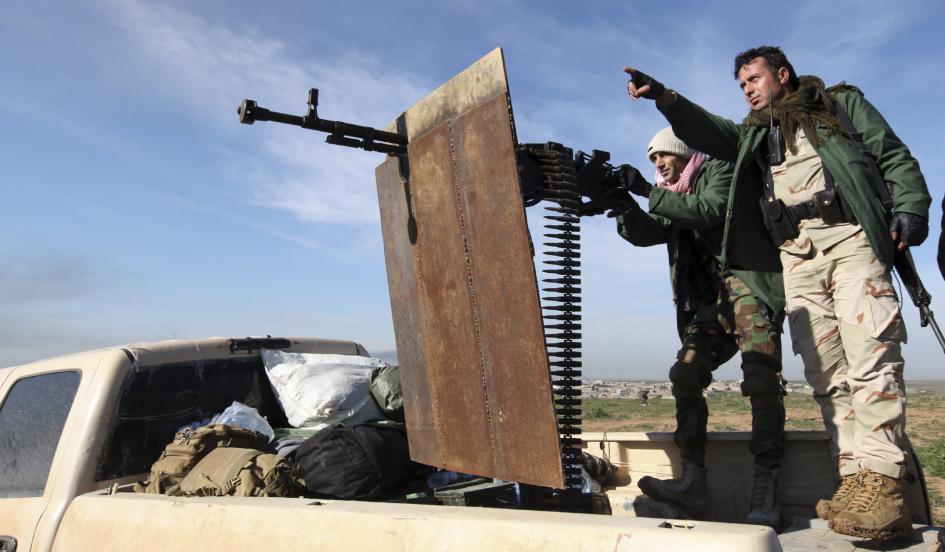
peshmergaKurdish Peshmerga fighters keep watch during the battle with Islamic State militants on the outskirts of Mosul January 21, 2015. AZAD LASHKARI/REUTERS

A senior Kurdish federal official, who declined to be named, said that Peshmerga forces would never hand back areas captured after Isis’s march across northern Iraq, which brought the group to within miles of the semi-autonomous Kurdish region.

While the threat of Isis remains significant, Kurds may have to put their independence dreams on hold and the Iraqi government will worry about Kurdish territorial claims later. As the terror group continues to grow, both parties need each other and the radical Islamist threat will bind them together, at least for now.

******************

Kurdish forces launched a barrage of Grad missiles against Islamic State (Isis) positions inside Mosul last week, for the first time since Isis overran Iraq’s second-largest city in June last year, marking a dramatic shift in the Kurds’ battle against the terrorist group.

The bombardment was preceded by a large-scale Kurdish operation against Isis in northern Iraq, which saw 5,000 Kurdish fighters, supported by US-led coalition airstrikes, sweep around Mosul to recapture an area larger than the size of Andorra, Liechtenstein and San Marino combined.

In the offensive, Kurdish Peshmerga fighters killed over 200 Isis militants, ousting the group from almost 300 square miles of territory, capturing a number of areas contested with Baghdad. As they advanced, encircling Mosul on three sides and cutting vital Isis supply lines to the nearby towns of Tal Afar and Sinjar, the Kurdish forces began a counter-offensive that analysts worry may be the start of a territory war between the Kurdish capital, Erbil, and Baghdad.

The Kurdish forces captured Makhmour, to the east of the city; the towns of Zimar and Wannah, and several Arab villages located in the Sinjar Mountains, west of Mosul; and the area around Mosul Dam, in what amounts to a Kurdish land-grab backed by Western airstrikes.

Iraqi Kurds believe that the recaptured territory around the city is rightfully theirs while the Iraqi government “fears that the Kurds will use territory as leverage during political negotiations”, according to Ranj Alaaldin, a visiting scholar at Columbia University.

A senior Kurdish federal official, who declined to be named, said that Peshmerga forces would never hand back areas captured after Isis’s march across northern Iraq, which brought the group to within miles of the semi-autonomous Kurdish region. “All the current military operations that involve the Peshmerga are implemented in coordination with the international military coalition and the central government is aware of it, but, in the Kurdish areas, we will never ever let Arabs control them again,” the official warned. “We are not ready to fight, terrify our fighters’ souls to liberate these areas and hand them to a traitor who would sell it to the killers. We will not allow this scenario to take place again in these areas.”

While the Kurds argue that they have taken control of this territory to defend against Isis, many Iraqis believe that the Kurds will never give up what they have captured because of their ambitions for an independent state.

“In the chaos that followed the Isis assault on Iraq in June, the Iraqi army melted away from its positions throughout northeastern and northwestern Iraq and the Peshmerga swiftly moved in to take their place – taking control of the whole of Kirkuk,” she said.

Despite these aspirations, Iraqi officials seem content to let Kurdish forces claim the territory from Daesh (as Isis is also known), for now. “As long as we are not ready to move as far as to fight in Mosul, it would be better to let them (Kurds) re-control these areas rather than leave it at the hands of Daesh,” a senior Iraqi military officer said. “Now, we will not raise any political disputes. Let [the Kurds] drive the militants away from these areas and we will think about the consequences later,” he added.

Hamed al-Khudari, a senior Shia lawmaker, agreed that Iraqis should “clear our lands” and “talk about this [territorial dispute] later”. Nevertheless, analysts do not believe that the Iraqi government in Baghdad is capable of ousting Kurdish forces from the territory they have seized in the recent advance. “Baghdad cannot do much to kick out the Kurds from any territory they have captured,” says Wladimir van Wilgenburg, analyst on Kurdish politics for the Jamestown Foundation.

The Kurds’ success on the battlefield, coupled with rumours of a potential Iraqi operation in Mosul, has put Isis on the back-foot but also caused disagreement between Erbil and Baghdad. Differences remain over involvement in any potential operation to recapture Mosul. Masrour Barzani, the head of Kurdistan’s regional security council, has said that Mosul will soon be “liberated” from the terror group’s self-proclaimed caliphate. “I don’t think anyone would envy the situation the people of Mosul are in,” he said. “The terror of Isis is too much for anyone to handle.”

But Kurdish officials believe that the responsibility for the recapture of the predominantly Sunni-Arab city lies solely with Baghdad. “Peshmerga are now 8km away from Mosul but they will not fight inside the city,” the official, who declined to be named, said. “When it comes to liberating Mosul, its people have to fight, not anyone else. We will just support them because we do not want anyone to say that Kurds are fighting Arabs. The [Iraqi] government understands that Mosul is not our battle or Shiites’ battle. Arab Sunnis in Mosul have to take the initiative to liberate their areas.”

Whereas Kurdish officials believe that Baghdad should take leadership over the battle for the city, where citizens now live under the group’s radical version of Islamic law, Iraqi officials claim that the battle against “Daesh is everyone’s to fight. The main goal now for all Iraqis is to fight Daesh and drive them away from all the Iraqi lands, so we will not allow anyone to talk about these [territorial] issues”, says al-Khudari. “This [fighting against IS] is the responsibility of everyone including the central government, the Kurdish forces, the public crowd (Shia militias and volunteers) and the anti-IS Sunni tribes.”

The lack of Kurdish motivation to enter into a battle for Mosul alongside Iraqi forces is due to the knowledge that any fight would be a drawn-out and lethal affair, according to van Wilgenburg. “They know the battle is going to be very heavy if it has to involve street to street fighting,” he says.

“The Kurds are already assisting the fight in Mosul. They recently fired into the city.” Erbil and Baghdad both have “to be pragmatic”, says Gonul Tol, executive director at the Center for Turkish Studies at the Middle East Institute. Baghdad is focused on recapturing Isis-held territory as opposed to Kurdish territory while Kurds “do not want to get involved” in Mosul to avoid “igniting a Kurdish-Arab war”.

While the threat of Isis remains significant, Kurds may have to put their independence dreams on hold and the Iraqi government will worry about Kurdish territorial claims later. As the terror group continues to grow, both parties need each other and the radical Islamist threat will bind them together, at least for now.

Behind Obama’s love affair with Iran

January 27, 2015

Behind Obama’s love affair with Iran

The murder of dozens of Jews in Buenos Aires 20 years ago by Iran-backed Hezbollah terrorists is being whitewashed in Barack Obama and the West’s desperate policy of making nice with Tehran

BY Steve Apfel
On 26 January 2015 09:06

via Behind Obama’s love affair with Iran – The Commentator.

AMIA attack in Buenos Aires, 1994
In downtown Buenos Aires there is a cream painted building locked down like Fort Knox. Alongside the building is a billboard, but it’s no suave ad for Kelvin Klein. The billboard is black, and eighty five names, handwritten in white, cover it from top to bottom.

They are mainly the names of Jews. Iranian-backed Hezbollah terrorists murdered the eighty five when they blew up the Jewish community building, badly injuring many more. This happened in 1994.

Lately, Argentinian President Cristina de Kirchner, another Eva Peron in her beauty and blinding ambition, has been bartering with Iran: a cover-up of the crime in exchange for Iranian oil and Argentine grain.

To add to the witch’s brew, the prosecutor who spent a decade compiling a million page case on the bombing, and was about to testify on the cover-up of de Kirchner and her cronies, got a bullet to the head in his bathtub. His name was Alberto Nisman. Last year he indicted a Hezbollah man and some former Iranian officials of high rank, for whom arrest warrants were then issued.

Now comes word that American President Obama tipped his own bag of tricks into the bubbling pot. Diplomatic sources have told World Tribune that the US pressed Argentina to end, or at least fudge the investigation of Iran’s involvement in the bombing of the Jewish building.

It was to be Iran’s quid pro quo for a thaw in relations with America and Europe. At one high-level meeting the US boldly asked Argentina “to lay off, according to a source close to de Kirchner. “Buenos Aires,” said the source, “eventually complied.”

The murdered Alberto Nisman left a 289 page complaint against the Argentine government. In it, Nisman writes that leaders “took the criminal decision of inventing Iran’s innocence to satisfy commercial, political and geopolitical interests.” What is not clear is whether the report contained evidence of U.S. involvement in the plot to clear Iran of the crime.

Now, as America and Europe go helter skelter to ‘make nice’ with Iran, Obama has vowed to veto a congressional bill that would re-impose sanctions on Iran. Senator Robert Menendez, the ranking Democrat of the Senate Foreign Relations Committee, considers Obama to be Iran’s leading defender.

Menendez claims that the administration is coordinating with Teheran in efforts to block U.S. sanctions. The US State Department may have been playing a supportive role as far back as 2013. In that year Alberto Nisman was invited by U.S. lawmakers to testify about his findings at a Congressional hearing on, “Threat to the Homeland: Iran’s extending influence in the Western Hemisphere.”

Argentina’s public prosecutor stopped Nisman from testifying, but in his absence, panel chairman Rep. Jeff Duncan noted that the State Department had omitted Nisman’s findings in its assessment that Iranian influence in Latin America and the Caribbean was “waning.”

Duncan added: “In stark contrast to the State Department’s assessment, Nisman’s investigation revealed that Iran has infiltrated for decades large regions of Latin America through the establishment of clandestine intelligence stations and is ready to exploit its position to ‘execute terrorist attacks when the Iranian regime decides to do so.”

Obviously there is more to the West’s nuclear talks with Iran than meets the eye. One thing is clear: the West puts a higher priority on ‘making nice’ with Iran than in bringing to justice the murderers of several dozen Jews.

Exclusive: Obama Cuts Funds for the Syrian Rebels He Claims to Support

January 27, 2015

Exclusive: Obama Cuts Funds for the Syrian Rebels He Claims to Support, Daily Beast, January 27, 2015
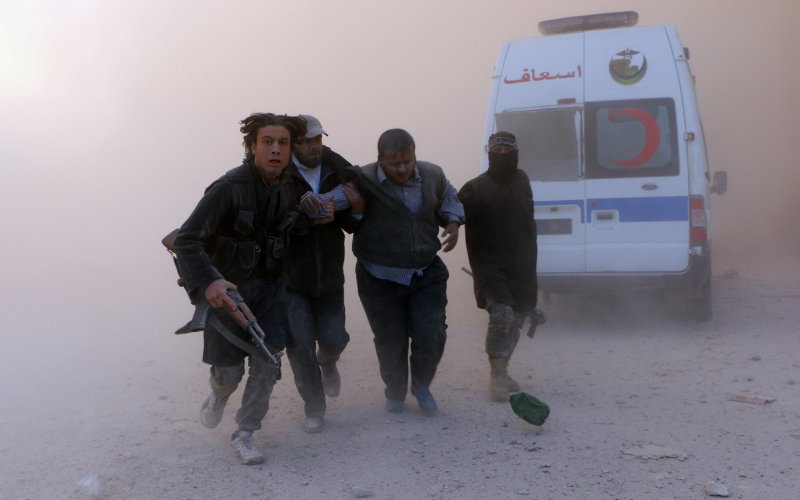
1422366030311.cachedFadi al-Halabi/AFP/Getty

LOST CAUSE?

Even the favored secular militias groomed to fight ISIS have seen their funding cut in half.

GAZIANTEP, Turkey — In the past several months many of the Syrian rebel groups previously favored by the CIA have had their money and supplies cut off or substantially reduced, even as President Obama touted the strategic importance of American support for the rebels in his State of the Union address.

The once-favored fighters are operating under a pall of confusion. In some cases, they were not even informed that money would stop flowing. In others, aid was reduced due to poor battlefield performance, compounding already miserable morale on the ground.

From afar, the U.S.-approved and partially American-armed Syrian “opposition” seems to be a single large, if rather amorphous, organization. But in fact it’s a collection of “brigades” of varying sizes and potentially shifting loyalties which have grown up around local leaders, or, if you will, local warlords. And while Washington talks about the Syrian “opposition” in general terms, the critical question for the fighters in the field and those supporting them is, “opposition to whom?” To Syrian President Assad? To the so-called Islamic State, widely known as ISIS or ISIL? To the al Qaeda affiliate, Jabhat al Nusra?

That lack of clarity is crippling the whole effort, not least because of profound suspicions among rebel groups that Washington is ready to cut some sort of deal with Assad in the short or medium term if, indeed, it has not done so already. For Washington, the concern is that the forces it supports are ineffectual, or corrupt, or will defect to ISIS or Nusra—or all of the above.

Republican lawmakers in D.C. are at their boiling point over the Obama administration’s anti-ISIS strategy, whether it is a failure to establish a no-fly zone in Syria, or unreliability with the issue of aid, or the Pentagon’s promised train and equip plan for the Syrian rebels.

“This strategy makes Pickett’s Charge appear well thought out,” said Sen. Lindsey Graham of South Carolina, referring to the poorly-planned and futile Confederate assault at Gettysburg. “We’re about to train people for certain death.”

In late October, al Qaeda’s Jabhat al Nusra routed American-backed militias in the northwest Syrian province of Idlib.

As a direct result, four of the 16 U.S.-approved brigades operating in the northern part of the country had their funding cut off and have been dropped from the list of “ratified” militias, say a State Department official and opposition sources. Since December, the remaining 12 brigades in the region have seen shortfalls or cuts in promised American assistance.

Syrian rebel sources who spoke on condition of anonymity say the 7thDivision, which is affiliated with the Syria Revolutionaries Front and aligned to the Free Syrian Army, has not received salaries from the CIA in months, although the State Department has maintained food shipments to the unit.

The secular Harakat al-Hazm, the most favored of the U.S.-backed brigades and one of the very few to be supplied with TOW anti-tank missiles, has seen a severe cutback in the monthly subsidy for its nearly 4,000 fighters. It is now receiving roughly 50 percent of the salaries it was receiving before. Weapon shipments arrived recently but commanders are nervous about whether future ones will come through. And the Farouq Brigade, a militia formed originally by moderate Islamist fighters based in the city of Homs, is getting no money for salaries at the moment.

CIA officials tell rebel commanders that unspecified “other funders” have ordered the cuts, or that Langley just doesn’t have the resources any longer. “What are the fighters meant to do?” complains one rebel commander. “They have families to feed.” Another says, “The idea that they don’t have the money is insulting. I don’t believe this—it is a political decision.”

Syrian rebel groups and their Washington, D.C. allies argue that CIA funding cuts —explained and unexplained—create relative advantages for extremist groups like al Nusra and ISIS, even as the president heralds the rebels as America’s on-the-ground-partners in the campaign to defeat the self-proclaimed Islamic State.

“It’s not just that the administration is failing to deliver on committed resources, it’s that they aren’t even communicating with formerly affiliated battalions regarding the cutoff,” says Evan Barrett, a political advisor to the Coalition for a Democratic Syria, a Syrian-American opposition umbrella group. “This puts our former allies in an incredibly vulnerable position, and ensures that groups like al Nusra will be able to take advantage of their sudden vulnerability in the field.”

The Obama administration says publicly that its support of moderate rebel brigades is not waning: the State Department continues to dispense non-lethal aid, the Pentagon supplies weapons, and the CIA pays salaries to brigades affiliated with the umbrella organization known as the Free Syrian Army. A CIA spokesman declined to comment for this story.

Privately, U.S. officials concede there have been funding changes. But American intelligence sources insist this is not a reflection of any shift in CIA strategy. They talk about “individual case-by-case shut offs” that are the consequences of brigades collapsing or failing to perform. And these sources dispute suggestions there’s an overall decrease in CIA subsidies, saying they are not giving up on the Syrian rebels—even though the Syrian rebels in the north of the country in the vicinity of the Turkish border increasingly believe this to be true. (Those in the south, near the Jordanian border and Damascus, may fare better.)

A State Department official told The Daily Beast that “the CIA has more money now than before and the State Department pie has not shrunk,” but confirms there has been some cutting off and cutting down. The official cited the “poor performance” of rebel brigades in Idlib last October as a primary reason.

When they were up against al Nusra, this official said, “they didn’t fight hard enough.” Several moderate brigades failed to come to the assistance of the Syria Revolutionaries Front, in particular, because they disapproved of its leader, who has been widely accused of corruption. The ease with which al Nusra was able to pull off its offensive angered U.S. officials—as did American-supplied equipment falling into jihadist hands.

That anger was compounded when the members of some U.S.-backed rebel groups actually defected to al Nusra during the offensive. One senior U.S. official admitted that some brigades have been “getting too close for our liking to al Nusra or other extremists.”

On Christmas Day armed groups formed an alliance for the defense of besieged rebel-held areas in Aleppo, where Assad had launched a major offensive to encircle them. Al-Jabha al-Shamiyya (Shamiyya Front), as the operational alliance is called, includes not only hardline Salafist factions from the groups known as the Islamic Front but more moderate brigades like the Muslim-Brotherhood-linked Mujahideen Army and Harakat Nour al-Din al-Zenki, which also has received TOW anti-tank missiles from Washington in the past.

Although al Nusra was not invited to join formally, it coordinates with the Shamiyya Front via the so-called Aleppo Operations Room, a joint headquarters for armed factions. It’s an arrangement that Washington does not like at all.

Aleppo-based rebels say they have no choice but to work with al Nusra and the Islamic-Front-aligned factions that are among the strongest armed groups in the war-torn city. Without them Assad’s forces would overwhelm the rebels.

“What do the Americans expect us to do?” asks a commander in the operations room. “Al Nusra is popular here. It is a perilous time for us—Assad is pushing hard.”

Syrian rebel sources who spoke on condition of anonymity say the 7th Division, which is affiliated with the Syria Revolutionaries Front and aligned to the Free Syrian Army, has not received salaries from the CIA in months, although the State Department has maintained food shipments to the unit.

The secular Harakat al-Hazm, the most favored of the U.S.-backed brigades and one of the very few to be supplied with TOW anti-tank missiles, has seen a severe cutback in the monthly subsidy for its nearly 4,000 fighters. It is now receiving roughly 50 percent of the salaries it was receiving before. Weapon shipments arrived recently but commanders are nervous about whether future ones will come through. And the Farouq Brigade, a militia formed originally by moderate Islamist fighters based in the city of Homs, is getting no money for salaries at the moment.

CIA officials tell rebel commanders that unspecified “other funders” have ordered the cuts, or that Langley just doesn’t have the resources any longer. “What are the fighters meant to do?” complains one rebel commander. “They have families to feed.” Another says, “The idea that they don’t have the money is insulting. I don’t believe this—it is a political decision.

For the Syrian rebels, uncertainties over funding changes by the CIA add doubt to already high skepticism over American policy toward the war in Syria. That skyrocketed when the Obama administration failed to enforce in 2013 its “red line” against Assad’s alleged use of chemical weapons, and the skepticism has merely grown since.

On the ground, the combatants say they suffer from the Obama administration’s inconsistency and argue that all too often they are being left out to dry, like some Syrian version of the Bay of Pigs, but much, much bloodier.

In the coffee shops of the Turkish border town Gaziantep last week, Syrians gathered on the safer side of the frontier listened incredulously as State Department spokesperson Jen Psaki insisted, “We maintain our belief that al Assad has lost all legitimacy and must go.” It was the first such inflexible anti-Assad statement for weeks from a senior U.S. official.

But that wasn’t what they’d heard from President Obama in his State of the Union address a few days before. Gone was the rhetoric of 2013 when he said he had “no doubt that the Assad regime will soon discover that the forces of change cannot be reversed, and that human dignity cannot be denied.” Instead, last Tuesday Obama spoke about the administration’s so-called train-and-equip plan to build a force that will target ISIS, and he made vague noises about helping Syria’s moderate opposition.

Those moderates are precisely the men and women on the ground who feel that bit by bit they are being abandoned.

Already, nearly four months after Secretary of State John Kerry announced the plan to train and equip Free Syrian Army units, Kurdish Peshmerga, and Iraqi Shia militiamen as anti-ISIS forces, the project appears to be facing major hurdles.

U.S. Senators emerged grim-faced last week from a classified briefing on the train-and-equip mission, with some of them predicting disaster from a Pentagon program that will train too few fighters and too slowly to make a difference.

At its best, Republican senators argue, it’s not going to work. At its worst, it will lead to the mass slaughter of the trained rebels.

“This strategy makes Pickett’s Charge appear well thought out,” said Sen. Lindsey Graham of South Carolina, referring to the brave but futile Confederate assault at Gettysburg. “We’re about to train people for certain death.”

The number of recruits required for a “strategic change in momentum is years away,” said Graham. “The concept of training an army that will be subject to slaughter by two enemies, not one, is militarily unsound,” and “if the first recruits you train get wiped out, it’s going to make it hard to recruit.”

Sen. Jeanne Shaheen, a Democrat who emerged from the same classified briefing, was tight-lipped: “I think we have a lot to do, and a lot of questions to answer.”

In Syria, few rebel fighters want to join a force focused only on ISIS. They argue that Assad is responsible for considerably more deaths among them and their extended families than ISIS, which is able to draw defectors from their ranks because it pays much higher salaries to its fighters and because it is able to exploit distrust of American intentions towards the Syrian revolution.

U.S. officials now acknowledge difficulties recruiting from insurgent ranks, conceding it is a serious challenge finding enough recruits willing to put off fighting the Assad regime.

So American officials recruiting for the train and equip mission are now hoping to fish in the pool of rebel fighters from eastern Syria who disbanded, quit the war and fled to Turkey when ISIS established control of the cities of Raqqa and Deir ez-Zor. The U.S. officials say the anti-ISIS force in Syria will have to be smaller than envisaged initially, but they are hoping early victories on the ground will convince more people to enlist.

Obama Sends Campaign Team to Israel to Defeat Netanyahu

January 27, 2015

Obama Sends Campaign Team to Israel to Defeat Netanyahu

So he DOES have more campaigns to run

1.26.2015

News

Trey Sanchez

via Obama Sends Campaign Team to Israel to Defeat Netanyahu | Truth Revolt.


According to Haaretz, President Obama’s 2012 campaign field director has been selected to be a part of a “five-man Obama team” that will run a campaign against Israeli Prime Minister Benjamin Netanyahu.

As Caroline Glick–Israeli journalist and Shillman Fellow at the David Horowitz Freedom Center–notes, the far-left Israeli news outlet “for whatever reason… chose not to translate this article in its English edition.” Fortunately, Independent Media Review and Analysis did:

Foreign Funding Bankrolls Anti-Netanyahu Campaign – Flies in 5-Man Obama Team
Dr. Aaron Lerner Date: 26 January 2015 

Haaretz reporter Roi Arad revealed in an article in the Hebrew edition today that the foreign funded organization, “One Voice”, is bankrolling the V-2015 campaign to defeat Binyamin Netanyahu’s national camp in the March 2015 Knesset Elections. 

One indication of the generous financing is that it has now flown in a team of five American campaign experts (including Jeremy Bird, the Obama campaign’s national field director) who will run the campaign out of offices taking up the ground floor of a Tel Aviv office building. 

V-2015 is careful not to support a specific party – rather “just not Bibi”. As such, the foreign funds pouring into the campaign are not subject to Israel’s campaign finance laws. 

The revelation, PJMedia observes, stands in direct contrast with President Obama’s declaration in his State of the Union that he has no more campaigns to run:

‘No more campaigns to run’ in America, at least.

Here is Glick’s post: