Archive for November 22, 2014

Exclusive: Cornered but unbound by nuclear pact, Israel reconsiders military action against Iran

November 22, 2014

Exclusive: Cornered but unbound by nuclear pact, Israel reconsiders military action against Iran, Jerusalem Post,  Michael Wilner, November 22, 2014

( “By framing the deal as fundamentally flawed, regardless of its enforcement, Israel is telling the world that it will not wait to see whether inspectors do their jobs as ordered.” )

Israeli official cites “sunset clause” in proposed comprehensive deal, which guarantees Iran a path into the nuclear club and may corner Israel into war.
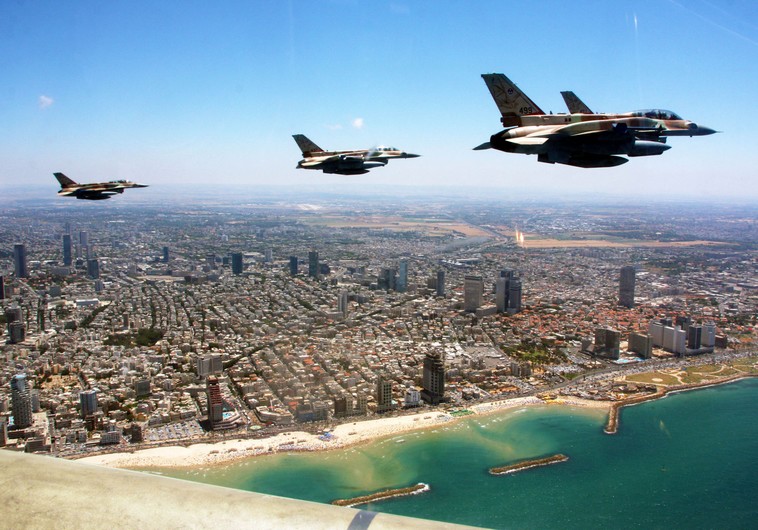
IAF pix Israel Air Force planes fly over Tel Aviv. . (photo credit:IDF SPOKESPERSON’S UNIT)

[M]ore than any single enforcement standard or cap included in the deal, Israel believes the Achilles’ heel of the proposed agreement is its definitive end date – the sunset clause.

“You’ve not dismantled the infrastructure, you’ve basically tried to put limits that you think are going to be monitored by inspectors and intelligence,” said the official, “and then after this period of time, Iran is basically free to do whatever it wants.”

***************

WASHINGTON —  Historic negotiations with Iran will reach an inflection point on Monday, as world powers seek to clinch a comprehensive deal that will, to their satisfaction, end concerns over the nature of its vast, decade-old nuclear program.

But sharing details of the deal under discussion with The Jerusalem Post on the eve of the deadline, Israel has issued a stark, public warning to its allies with a clear argument: Current proposals guarantee the perpetuation of a crisis, backing Israel into a corner from which military force against Iran provides the only logical exit.

The deal on the table

World powers have presented Iran with an accord that would restrict its nuclear program for ten years and cap its ability to produce fissile material for a weapon during that time to a minimum nine-month period.

Should Tehran agree, the deal may rely on Russia to convert Iran’s current uranium stockpile into fuel rods for peaceful use. The proposal would also include an inspection regime that would attempt to follow the program’s entire supply chain, from the mining of raw material to the syphoning of that material to various nuclear facilities across Iran.

Israel’s leaders believe the best of a worst-case scenario, should that deal be reached, is for inspections to go perfectly and for Iran to choose to abide by the deal for the entire decade-long period.

But “our intelligence agencies are not perfect,” an Israeli official said. “We did not know for years about Natanz and Qom. And inspection regimes are certainly not perfect. They weren’t in the case in North Korea, and it isn’t the case now – Iran’s been giving the IAEA the run around for years about its past activities.”

“What’s going to happen with that?” the official continued. “Are they going to sweep that under the rug if there’s a deal?”

On Saturday afternoon, reports from Vienna suggested the P5+1 – the US, United Kingdom, France, Russia, China and Germany – are willing to stop short of demanding full disclosure of any secret weapon work by Tehran.

Speaking to the Post, a senior US official rejected concern over limited surveillance capabilities, during or after a deal.

“If we can conclude a comprehensive agreement, we will have significantly more ability to detect covert facilities – even after its duration is over – than we do today,” the senior US official said. “After the duration of the agreement, the most intrusive inspections will continue: the Additional Protocol – which encompasses very intrusive transparency, and which Iran has already said it will implement – will continue.”

But compounding Israel’s fears, the proposal Jerusalem has seen shows that mass dismantlement of Iran’s nuclear infrastructure – including the destruction, and not the mere warehousing, of its parts – is no longer on the table in Vienna.

“Iran’s not being asked to dismantle the nuclear infrastructure,” the Israeli official said, having seen the proposal before the weekend. “Right now what they’re talking about is something very different. They’re talking about Ayatollah Khamenei allowing the P5+1 to save face.”

Officials in the Netanyahu government are satisfied that their ideas and concerns have been given a fair hearing by their American counterparts. They praise the US for granting Israel unprecedented visibility into the process.

But while those discussions may have affected the talks at the margins, large gaps – on whether to grant Iran the right to enrich uranium, or allow it to keep much of its infrastructure – have remained largely unaddressed.

“It’s like the chemical weapons deal in Syria,” the official said. “They didn’t just say: Here, let’s get rid of the stockpile and the weapons, but we will leave all the plants and assembly lines.”

‘Sunset clause’

Yet, more than any single enforcement standard or cap included in the deal, Israel believes the Achilles’ heel of the proposed agreement is its definitive end date – the sunset clause.

“You’ve not dismantled the infrastructure, you’ve basically tried to put limits that you think are going to be monitored by inspectors and intelligence,” said the official, “and then after this period of time, Iran is basically free to do whatever it wants.”

The Obama administration also rejects this claim. By e-mail, the senior US administration official said that, “‘following successful implementation of the final step of the comprehensive solution for its duration, the Iranian nuclear program will be treated in the same manner as that of any non-nuclear weapon state party to the NPT – with an emphasis on non-nuclear weapon.”

“That has in no way changed,” the American official continued, quoting the interim Joint Plan of Action reached last year.

But the treatment of Iran as any other signatory of the Nuclear Non-Proliferation Treaty –189 countries are members, including Iran – would allow Tehran to ultimately acquire “an industrial-sized capability,” the Israelis say. “The breakout times [to a nuclear weapon] will be effectively zero.”

Israel and world powers seek to maximize the amount of time they would have to identify non-compliance from a nuclear deal, should Iran choose to defy its tenets and build a bomb.

But in the deal under discussion in Vienna, Iran would be able to comply with international standards for a decade and, from Israel’s perspective, then walk, not sneak, into the nuclear club.

“You’ve not only created a deal that leaves Iran as a threshold nuclear power today, because they have the capability to break out quickly if they wanted to,” the Israeli official contended. “But you’ve also legitimized Iran as a military nuclear power in the future.”

From the moment this deal is clinched, Israel fears it will guarantee Iran as a military nuclear power. There will be no off ramp, because Iran’s reentry into the international community will be fixed, a fait accompli, by the very powers trying to contain it.

“The statement that says we’ve prevented them from having a nuclear weapon is not a true statement,” the Israeli official continued. “What you’ve said is, you’re going to put restrictions on Iran for a given number of years, after which there will be no restrictions and no sanctions. That’s the deal that’s on the table.”

Revisiting the use of force

Without an exit ramp, Israel insists its hands will not be tied by an agreement reached this week, this month or next, should it contain a clause that ultimately normalizes Iran’s home-grown enrichment program.

On the surface, its leadership dismisses fears that Israel will be punished or delegitimized if it disrupts an historic, international deal on the nuclear program with unilateral military action against its infrastructure.

By framing the deal as fundamentally flawed, regardless of its enforcement, Israel is telling the world that it will not wait to see whether inspectors do their jobs as ordered.

“Ten, fifteen years in the life of a politician is a long time,” the Israeli said, in a vague swipe against the political directors now scrambling in Vienna. “In the life of a nation, it’s nothing.”

Prime Minister Benjamin Netanyahu has threatened the use of force against Iran several times since 2009, even seeking authorization from his cabinet in 2011. Iran’s program has since grown in size and scope.

According to his aides, the prime minister’s preference is not war, but the continuation of a tight sanctions regime on Iran’s economy coupled with a credible threat of military force. Netanyahu believes more time under duress would have led to an acceptable deal. But that opportunity, in his mind, may now be lost.

Whether Israel still has the ability to strike Iran, without American assistance, is an open question. Quoted last month in the Atlanticmagazine, US officials suggested that window for Netanyahu closed over two years ago.

But responding to claims by that same official, quoted by Jeffrey Goldberg, over Netanyahu’s courage and will, the Israeli official responded sternly: “The prime minister is a very serious man who knows the serious responsibility that rests on his shoulders. He wouldn’t say the statements that he made if he didn’t mean them.”

“People have underestimated Israel many, many times in the past,” he continued, “and they underestimate it now.”
West seen easing demands on Iran atom bomb ‘mea culpa’ in deal

November 22, 2014

West seen easing demands on Iran atom bomb ‘mea culpa’ in deal, Reuters via Yahoo News, Fredrik Dahl and Louis Charbonneau, November 22, 20014

(The past indicates what the future will bring. Since Iran continues to refuse to acknowledge its past efforts to get nukes, and even to permit inspections to determine what it did and is doing now, there is no  reason to assume — or even to hope — that it will permit effective future inspections of its efforts to get and  use nukes. — DM}

Iran has made clear that it is not an issue it is ready to budge on. “PMD [possible military dimensions] is out of question. It cannot be discussed,” an Iranian official said.

IAEA Director General Yukiya Amano this week said Iran had again failed to provide explanations needed for the inquiry, making clear it has made scant headway in recent months.

**********

VIENNA (Reuters) – World powers will press Iran to cease stonewalling a U.N. atomic bomb investigation as part of a wider nuclear accord, but will likely stop short of demanding full disclosure of any secret weapon work by Tehran to avoid killing an historic deal.

Officially, the United States and its Western allies say it is vital that Iran fully addresses the concerns of the U.N. nuclear agency if it wants a diplomatic settlement that would end sanctions severely hurting its oil-based economy.

“Iran’s previous activities have to come to light and be explained,” a senior Western diplomat said.

Privately, however, some officials acknowledge that Iran would probably never admit to what they believe it was guilty of: covertly working in the past to develop the means and expertise needed to build a nuclear-armed missile.

Iran denies this and says its nuclear program is peaceful.

The six powers face a delicate balancing act: Israel and hawkish U.S. lawmakers – wary of any rapprochement with old foe Iran – are likely to pounce on a deal if they believe it is too soft on Tehran’s alleged nuclear arms activity.

A senior Western official said the six would try to “be creative” in coming up with a formula that would satisfy demands by those who want Iran to come clean about any atomic bomb research and those who say it is unrealistic to expect the country to openly acknowledge it.

The outcome could also affect the standing of the International Atomic Energy Agency (IAEA), which for years has been trying to investigate what it calls the possible military dimensions (PMD) of Iran’s nuclear program.

While the global powers – the United States, France, Germany, Russia, China and Britain – seek to persuade Iran to scale back its uranium enrichment program to lengthen the timeline for any bid to assemble nuclear arms, the IAEA is investigating possible research on designing an actual bomb.

The aim is to reach a comprehensive solution to end a 12-year nuclear dispute by a Nov. 24 deadline, though diplomats say it is more likely that the negotiations will be extended.

If an eventual accord does not put strong pressure on Iran to increase cooperation with the IAEA by making it a condition for some sanctions relief, it may hurt its future credibility, according to some diplomats accredited to the agency.

“You don’t want to undermine the integrity of the IAEA,” one said.

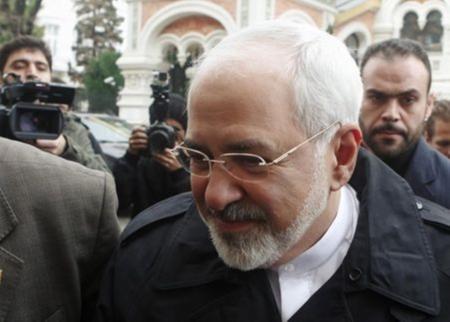
2014-11-22T141622Z_1_LYNXNPEAAL04H_RTROPTP_2_IRAN-NUCLEARIranian Foreign Minister Mohammad Javad Zarif arrives at the Iranian embassy for lunch with former European Union foreign policy chief Catherine Ashton in Vienna November 18, 2014. REUTERS/Heinz-Peter Bader

The IAEA issued a report in 2011 with intelligence information indicating concerted activities until about a decade ago that could be relevant for developing nuclear bombs, some of which the U.N. agency said may be continuing.

“SIMPLY IRRELEVANT”

Iran has made clear that it is not an issue it is ready to budge on. “PMD is out of question. It cannot be discussed,” an Iranian official said.

IAEA Director General Yukiya Amano this week said Iran had again failed to provide explanations needed for the inquiry, making clear it has made scant headway in recent months.

“I believe the PMD issue is not a deal-breaker even though it probably should be,” another Western official said. The official added that many inside the IAEA and Western governments shared concerns about the deadlocked investigation and felt uneasy about compromising on the issue.

Iran denies ever harboring any nuclear bomb ambitions and its supreme leader, Ayatollah Ali Khamenei, has issued a religious decree against atomic weaponry.

Because of this, experts say, it is virtually impossible for the Iranian leadership to make any “mea culpa” about activity geared toward developing nuclear bombs.

Another reason Tehran might be reluctant to admit to any wrongdoing is that it could later be used as a justification for Iran’s enemies to attack it out of “self-defense”.

As a result, the powers are weighing how hard to press it.

A U.S. official said it was “a fine line” that needs to be walked on PMD. The six want to make sure the Iranians address the issue to some extent, but do not want to hit them so hard with it that they feel like they will lose face.

Experts differ on whether Iran must come completely clean: some argue it is necessary to ensure that any such work has since been halted but others say this can be achieved without a “confession”.

Former Muslim Bosch Fawstin Sounding the Alarm

November 22, 2014

Former Muslim Bosch Fawstin Sounding the Alarm

November 21, 2014
by Thomas Lifson

via Former Muslim Bosch Fawstin Sounding the Alarm | FrontPage Magazine.

Reprinted from American Thinker.

Bosch Fawstin, a former Muslim raised in America, was recently interviewed (18 min) by Jamie Glazov. Fawstin spoke the hard truth about Islam, which he describes this way:

Islam is submission. Islam is death and destruction. Islam is here to control. Islam is here to make life on earth hell.

In this interview, as well as an interview (7 min) last month on a program called The Flipside, Fawstin spoke of how he was raised in a so-called “moderate” Muslim family – a family where Hitler was greatly admired.

Fawstin spoke of Islam’s hatred toward women and how commonplace physical abuse was in his immediate and extended family. He spoke of arranged marriages, of tears shed when babies were born who were girls, and of girls being told to expect physical violence after they are married.

He spoke of vile Jew-hatred that is endemic in Islamic culture.

He spoke of how his journey away from Islam was a process, noting several pivotal experiences such as observing how non-Muslim friends lived in households that did not embrace violence. He was also deeply affected by Ayn Rand.By 9/11, Fawstin had abandoned his religion and says that after the jihadist attack he was in a “flat-out rage,” not only because of seeing fellow Americans jumping out of the towers, but because of our “pathetic response” to what happened:

Our government’s job it seems post 9/11 was to protect Islam, not us. Defend Islam. Defend Islam. From George Bush to Obama.

Asked whether there is such a thing as moderate Islam, Fawstin said: “No. There is only Islam. Islam is immoderate by nature.”

Fawstin spoke of how very few leaders speak the truth about Islam. In fact, essentially no leaders, as he pointed out that even Allen West has softened his language and that while Ted Cruz uses the word “jihad,” he never speaks about “Islam.” Fawstin tweeted this last month:

Islam doesn’t make our Islamic enemy believe they’re going to win, Islamophilic Western politicians make them believe they’re going to win.

Fawstin seems to be on a mission to educate others about the threat that Islam poses to all of civilization. His primary tool of communication is through the creation of a comic-book superhero – Pigman – who battles jihadists. Fawstin talks about how Muslims dread contact with anything related to pigs, noting that if he had an airline he would have all the seats covered with pigskin leather, making it the safest airline flying.

He is also outspoken on other matters, as when he created a bold, graphic image featured on his blogspot that reads:

Ebolatarianism: Barack Obama’s refusal to do what’s necessary to protect Americans from a deadly disease.

Fawstin is a serious man talking about the most serious matters of our time.

His comics can be found at comixology, here. His blog can be found here.

Thomas Lifson is editor and publisher of American Thinker.

Obama Helps Terror Go Nuclear

November 22, 2014

Obama Helps Terror Go Nuclear

November 21, 2014

by Noah Beck

via Obama Helps Terror Go Nuclear | FrontPage Magazine.


Last Tuesday’s terror attack on a Jerusalem synagogue killed five people: four rabbis (including three born in the USA) and a Druze police officer. Two Palestinians entered during morning prayers and attacked worshipers with knives, meat cleavers, and a handgun. Congress showed moral clarity when blaming the horrors on Hamas and Palestinian Authority incitement, but Obama’s statements were perfunctorily “balanced.” Obama warned of a “spiral” of violence – an obtuse refrain of those suggesting moral equivalency between terrorism and the fight against it. Obama also misleadingly claimed that “President Abbas…strongly condemned the attacks” omitting that Abbas did so only after pressure from the administration and with equivocation (Abbas suggested a link between recent terrorism and visits by Jews to the Temple Mount, as if to justify the attacks). It’s also worth noting that Palestinians celebrated the massacre (as they did after the 2013 Boston bombing and the 9/11 attacks).

Obama’s weak reaction is consistent with his mostly impotent response to ISIS terrorists who behead Americans and Mideast Christians and grow their Islamist empire by the day. Frighteningly, his approach to Iranian nukes follows the same meek pattern, but the stakes are exponentially higher, because when Iran goes nuclear, so does terrorism.

Iran is already the world’s leading state sponsor of terrorism, without nuclear weapons. Iran-supported Hamas has already tried to commit nuclear terror: last summer, Hamas launched rockets at Israel’s Dimona nuclear reactor. How much more dangerous will Iran become when it has nukes? Even if Iran doesn’t directly commit nuclear terrorism, an Iranian nuclear umbrella will embolden the regime and the terrorist organizations it sponsors.

Obama has a long record of weakness towards Iran. In 2009, when Iran’s Basij paramilitary force brutalized demonstrators protesting Iran’s fraudulent presidential election, Obama kept his response irrelevantly mild for the sake of “engaging” Iran. That surely helped Iranian voters understand the risks of protesting the “free” election of 2012 (involving eight regime-picked candidates). It was indeed a very orderly rubberstamp.

In 2011, when a U.S. drone went down on Iranian soil, Obama cordially requested it back. The regime recently scoffed at such impotence by showcasing its knock-off based on that drone and some U.S.-made helicopters that it purchased, highlighting just how useless sanctions have become.

President Hassan Rouhani’s election vastly improved the public face of Iran’s nuclear program, and Obama was charmed too. Obama has been unilaterally weakening the sanctions against Iran by not enforcing them. He has threatened to thwart any Congressional attempt to limit his nuclear generosity by simply lifting sanctions without Congressional approval. Yet despite these concessions and Rouhani’s smiles, human rights abuses in Iran have actually worsened.

Obama declared in 2012 (while running for reelection) that he doesn’t bluff when it comes to stopping Iranian nukes, and that containment was not an option, unlike military force. But the credibility of that statement collapsed after Obama shrunk away from his “red line” against Syrian chemical weapons use. In 2013, Basher Assad gassed his own people and Obama took no military action. So if Obama cowers against a disintegrating state, what are the chances that he’ll militarily prevent Iranian nukes?

And Obama has dangerously undermined the only military threat to Iranian nukes that anyone still takes seriously: Israel. On the Iranian nuclear issue, Obama has isolated Israel on how close Iran is to a nuclear capability with estimates that are far laxer. And as long as Obama continues negotiating (even if Iran is clearly playing for time as the U.S. offers ever more desperate proposals) or reaches a deal allowing Iran to become a threshold nuclear weapons state, an Israeli military option to defang Iranian nukes appears less legitimate.

The media’s anti-Israel bias is well known (they can’t even get a simple story about vehicular terrorism against Israelis correct (compare how The Guardian writes accurate headlines when Canada suffers an Islamist car attack but not when Israel does). So if Obama accepts Iran’s nuclear program and Israel then attacks it, the media will be even harsher on Israel (even though the world will be silently relieved, if Israeli courage succeeds at neutralizing what scared everyone else).

Downgrading US-Israel relations seems to be part of Obama’s détente with Iran. Iran’s Supreme Leader Khamenei recently tweeted his plan for destroying Israel, but Obama grows even more determined to reach an accord that legitimizes Iran’s nuclear program. And the Obama administration’s diplomatic abuse of America’s closest Mideast ally is unprecedented – from his humiliation of Prime Minister Netanyahu in 2010, to Secretary of State John Kerry’s betrayal of Israel during Operation Protective Edge, to calling Netanyahu a “chickenshit” a few weeks ago, without even apologizing later (note the irony of calling Netanyahu a coward anonymously). Obama seems far more concerned by Israeli construction of apartments in Jerusalem than a nuclear Iran. And he has been pressuring Israel to retreat from more disputed territory, effectively rewarding Palestinians for launching the third missile war against Israel from Gaza in five years last summer and now the third Intifidah inside Israel in 17 years. That puts Obama just behind the European appeasers who think Palestinian bellicosity merits statehood. They all naively think — at Israel’s peril — that peace is possible with raw hatred.

Obama indeed appears desperate to get a nuclear accord with Iran at any price. He has written letters asking for Iran’s help against ISIS after they hinted at an ISIS-for-nukes exchange, and has pursued an agreement at all costs. Obama’s top aide, Ben Rhodes, was caught saying how a nuclear accord is as important to Obama as “healthcare”; at least there’s a fitting slogan to sell the deal to Americans: “If you like your nukes, you can keep them.”

Russia, the serial spoiler, suggested extending nuclear talks past the November 24th deadline. Iran will undoubtedly agree to more enrichment time (while it keeps stonewalling the IAEA’s investigations into it nukes), as it did last July. For Obama, a bad agreement or an extension looks far better than concluding that talks have failed and issuing more empty threats to stop Iran militarily. And so U.S. foreign policy will continue its freefall, as the world’s bad actors will want to see what they can extort from a leader even weaker than President Carter. While Carter permitted Iran to hold 52 American diplomats and citizens hostage for 444 days, Obama may allow Iran to hold the world hostage with nuclear terrorism. It’s now dreadfully obvious: without massive public pressure, Obama will help Iran get nukes; anyone concerned about nuclear terrorism should sign this petition: http://www.nobombforiran.com

Noah Beck is the author of The Last Israelis, an apocalyptic novel about Iranian nukes and other geopolitical issues in the Middle East.

Freedom Center pamphlets now available on Kindle: Click here.


