Archive for May 2014

Iranian official suggests Israel attempting to torpedo nuclear deal

May 7, 2014

Iranian official suggests Israel attempting to torpedo nuclear deal | JPost | Israel News.

By JPOST.COM STAFF

05/07/2014 12:38

Senior member of Iranian negotiating team tells ‘Guardian’ that “dark forces” are working against the conclusion of a deal: “It is clear some people don’t want to resolve this issue in a peaceful and logical way.”

iran talks

Iranian FM Mohammad Javad Zarif (L) and EE foreign policy chief Catherine Ashton at nuclear talks in Vienna March 19, 2014. Photo: REUTERS

Iranian diplomats suggested that Israel is attempting to torpedo the nuclear deal between the P5 +1 group of world powers and Iran, The Guardian newspaper reported.

Seyed Abbas Araqchi, the deputy foreign minister for legal and international affairs, told Guardian reporters that “there are spoilers everywhere who don’t want an agreement, there are dark forces who don’t like this process … It is clear some people don’t want to resolve this issue in a peaceful and logical way.”

“I don’t want to use the word ‘warmongers’. But these people want continuing tension, a continuing crisis in our region. They don’t want the sanctions on Iran to end. They don’t want Iran to be a major player in this region, although in fact it already is,” he added.

Although the leader of the 3-member negotiating team from Tehran wouldn’t specifically say which country he was alluding to, the Guardian surmised he was speaking about Israel. Prime Minister Binyamin Netanyahu has been outspoken against any sort of diplomatic deal with Iran.

Araqchi, however, with a hint of optimism, said the talks were still on the right track. “Whether it gets to a conclusion is something else. Obviously we are hopeful. For our part, we are very serious and we have goodwill. If the other side reciprocates, hopefully we will come to an end. But anything can happen.”

He also said that Iranian President Hassan Rouhani has invested a lot of effort into reaching a deal and has “raised expectations.”

“But I think people understand the complexities of the situation. I don’t think it would be a big blow to Rouhani if there is no agreement. People understand he has done his best,” he said.

Top American officials
will travel to Israel on Wednesday to brief Israel, their chief regional ally, on the progress of the negotiations.

US National Security Adviser Susan Rice will travel from Washington to Jerusalem, and Under Secretary of State for Political Affairs Wendy Sherman, President Barack Obama’s chief negotiator in the talks with Iran, will depart directly for Vienna after the briefings, where the fourth round of nuclear talks resume next week.

Michael Wilner contributed to this report.

Off Topic: Top Netanyahu aide: Here’s proof Abbas deliberately destroyed peace talks

May 7, 2014

Top Netanyahu aide: Here’s proof Abbas deliberately destroyed peace talks | The Times of Israel.

In letter to White House, EU and world ambassadors, PM’s national security chief presents ‘damning evidence’ of sabotage by Ramallah


May 7, 2014, 12:29 pm
Palestinian Authority President Mahmoud Abbas, center, and negotiator Saeb Erekat, left, attend the Arab foreign ministers' meeting at the Arab League headquarters in Cairo, on April 9, 2014. (photo credit:  AFP PHOTO / MOHAMED EL-SHAHED)

Palestinian Authority President Mahmoud Abbas, center, and negotiator Saeb Erekat, left, attend the Arab foreign ministers’ meeting at the Arab League headquarters in Cairo, on April 9, 2014. (photo credit: AFP PHOTO / MOHAMED EL-SHAHED)


A letter reportedly sent by Israel’s national security chief to the White House, the EU and numerous ambassadors blames the Palestinians for the collapse of peace talks, and claims to include hard proof that PA officials were devising measures to thwart the process even before Israel refused to release a fourth round of Palestinian prisoners at the end of March.

In the April 22 letter, Prime Minister Benjamin Netanyahu’s national security adviser, Yossi Cohen, revealed that chief Palestinian negotiator Saeb Erekat wrote a policy paper in March in preparation for a Palestinian rejection of American mediation efforts and Israeli overtures — nearly a month before Palestinian Authority President Mahmoud Abbas made a unilateral move to sign 15 international conventions, ostensibly in response to Israel’s refusal to honor its commitment to release the final round of prisoners, Haaretz reported Wednesday.

In fact, Cohen said, according to a copy of the latter published alongside the report (PDF here), Erekat had planned the maneuver weeks before Israel announced its refusal to release the prisoners — timing that, according to Cohen, demonstrates that the Palestinian leadership never intended to follow the peace talks through.

Cohen attached Erekat’s policy paper to his letter, copies of which were reportedly sent to his US counterpart Susan Rice, US Ambassador to Israel Dan Shapiro, all Israel-based EU ambassadors, and ambassadors from China, Russia and other countries. He appealed to the recipients to peruse the Erekat document and “draw conclusions” as to the Palestinians’ “bad faith” and responsibility for the failure of the latest round of peace talks.

Yossi Cohen, Prime Minister Benjamin Netanyahu's national security advisor (photo credit: courtesy)

According to Cohen, the 65-page Erekat document, which contained a “highly selective” account of the peace talks held since July and a “series of recommendations” for unilateral Palestinian actions, was presented by Erekat to Abbas on March 9, prior to Abbas’s visit to the United States and his meeting at the White House with US President Barack Obama on March 17.

The paper, Cohen said, serves as proof that Palestinian policymakers had recommended a strategy of unilateral moves “outside of the agreed negotiation framework” to Abbas as early as March, nearly two months before the April 29 deadline for the completion of the talks. Thus when Obama tried at their White House meeting to persuade Abbas to make progress at the negotiations, Cohen indicated, the PA president was already bent on torpedoing the talks and following a unilateral course.

“The document serves as damning evidence of bad faith on the part of the Palestinian side,” Cohen wrote. “It suggests that plans to reject American proposals and pursue unilateral actions were in place well in advance, despite the unwavering commitment shown by Secretary Kerry and his team in facilitating these negotiations, and the seriousness which Israel has demonstrated throughout the negotiation process.”

In the document, Erekat recommended that the Palestinian Authority apply to international treaties such as the Geneva Convention.

He also recommended reconciliation with Hamas, revealing that the push for a unity government with the terrorist organization, which does not recognize Israel, began long before negotiations with Israel reached a stalemate.

This, Cohen said, proved that the Palestinians’ unilateral moves, ostensibly direct responses to perceived Israeli intransigence, were actually “premeditated” and “calculated” steps aimed at sinking the peace process and hindering American mediation efforts.

The Palestinians have blamed Israel for the failure of the talks, saying that if Israel had released the prisoners as planned, they would not have made unilateral moves, culminating with the Fatah-Hamas pact, that saw Israel suspend the negotiations and the April 29 deadline pass with no substantive progress and no agreement for further talks.

Israel had conditioned the release of the fourth batch of prisoners, some of them Arab Israelis, on the continuation of talks past their April 29 deadline. The Palestinians refused, and made a unilateral move for international recognition.

“This document refutes the current Palestinian claim that the decision to apply for accession to the conventions – in direct violation of Palestinian obligations and of the understandings that enabled the resumption of negotiations in July 2013 – was taken strictly in response to what they considered a delay in the release of the fourth tranche of prisoners,” Cohen wrote in the letter.

“Similarly, it indicates that advancing the reconciliation process with Hamas and bringing Hamas into a new government was under active consideration at the very time intensive negotiations were meant to be under way,” he continued.

“The document points to premeditation and to Palestinians’ calculations to renege on their commitments and pursue a unilateral strategy regardless of the release of prisoners, in a manner that would gravely endanger if not destroy the negotiation process.”

American officials were quoted last weekend, in an extensive account of the negotiations published by Yedioth Ahronoth, overwhelmingly blaming Israel for the failure of the talks. It was later claimed that Kerry’s special envoy Martin Indyk was the prime source for the report, which highlighted Netanyahu’s settlement policies as “the primary sabotage.” An official was quoted in the report telling Israel, The Palestinians are tired of the status quo. They will get their state in the end — whether through violence or by turning to international organizations.”

David Ignatius: Damage to Obama’s foreign policy has been largely self-inflicted – The Washington Post

May 7, 2014

David Ignatius: Damage to Obama’s foreign policy has been largely self-inflicted – The Washington Post.

By , Wednesday, May 7, 3:31 AM

It’s painful watching the YouTube video of President Obama in Manila last week, talking about hitting singles and doubles in foreign policy. Everything he says is measured, and most of it is correct. But he acts as if he’s talking to a rational world, as opposed to one inhabited by leaders such as Russia’s Vladimir Putin.

In the realm of power politics, U.S. presidents get points not for being right but for being (or appearing) strong. Presidents either say they’re going to knock the ball out of the park, or they say nothing. The intangible factors of strength and credibility (so easy to mock) are, in fact, the glue of a rules-based international system.

Under Obama, the United States has suffered some real reputational damage. I say that as someone who sympathizes with many of Obama’s foreign policy goals. This damage, unfortunately, has largely been self-inflicted by an administration that focuses too much on short-term messaging. At key turning points — in Egypt and Libya during the Arab Spring, in Syria, in Ukraine and, yes, in Benghazi — the administration was driven by messaging priorities rather than sound, interests-based policy.

That’s why the Benghazi “talking points” fiasco still has legs. Not because of some goofy criminal conspiracy, as imagined by conservatives, but because it shows the administration spent more time thinking about what to say than what to do.

How can Obama repair the damage? One obvious answer is to be careful: The perception of weakness can goad a president into taking rash and counterproductive actions to show he’s strong. The deeper you slide into a perceived reputational hole, the worse this dilemma.

One of Obama’s strengths is that he does indeed understand the value of caution. He can be decisive, as in the May 2011 raid to kill Osama bin Laden. But he’s usually reluctant to make large bets when the outcome is uncertain, which is commendable. The country should value a deliberative president who knows U.S. military options are limited in dealing with Putin in Ukraine, as opposed to a hothead who pretends otherwise.

You can sympathize with Obama in Manila, when he hectored those who advocate tougher policy: “What do you mean? . . . What else are you talking about?” Some of his critics’ proposals are half-baked or downright dangerous. But Obama is right only up to a point. Nearly two years ago his own advisers recommended covert support for the Syrian opposition; Obama should have said yes. His critics didn’t make him draw a “red line” on Syrian chemical weapons; that was self-inflicted. Obama didn’t need to delay so long to move more military assets to the Baltic states and Poland to signal decisive protection for NATO members.

“Say less and do more” is how one U.S. official puts it. That’s a simple recipe, and a correct one.

The key for Obama is to base policy on the fundamentals, where U.S. strength is overwhelming and the weakness of Russia (or any other potential adversary) is palpable. Just look at some numbers. The U.S. economy is growing solidly again, at an annual rate of roughtly 2.6 percent , generating jobs and reducing public and private debt. A shale oil and gas boom has analysts talking about the United States as a new Saudi Arabia. Even the screwballs in Congress can’t derail the recovery.

Russia, in contrast, is a mess and getting worse. An April 30 report by the International Monetary Fund said Russia’s growth will slow to 0.2 percent this year from an anemic 1.3 percent in 2013. Capital outflows were $51 billion in the first quarter. Russia’s economic strategy is based on energy, but “this growth framework has reached its limits,” says the IMF. “More integration with the world economy should help close the productivity gap with other countries, foster investment and diversification, and enhance growth.” But that’s precisely what Putin is forfeiting with his reckless Ukraine policy.

Ukraine, in contrast to foundering Russia, has a new $17 billion IMF loan, with plans for stabilizing its financial system, reducing corruption and ending dependence on Russian energy.

Stay the course, in other words. With sanctions, diplomatic pressure, NATO resolve. If Obama can hold the Western alliance together with these measured policies, the essential weakness of Putin’s position will be obvious in a few years. If Putin is foolish enough to invade Ukraine, he will face a protracted guerrilla war, city by city, as he moves toward Kiev.

The counter to Putin is strong, sustainable U.S. policy. To a battered Obama, three words: Suck it up.

Off Topic: Hamas Blessing For Israel’s 66th Independence Day (Updated)

May 7, 2014

Hamas Blessing For Israel’s 66th Independence Day (Updated), Israellicool, May 6, 2014

(Peace process partners. — DM)

Soon, The end of hope

Hamas blessing

Translation:

A message to all Zionists

That mark Independence Day and celebrate, while Hatikva plays in the background

Soon

The end of hope

Their use of Hebrew is, apart from cheap PSYOP, the easiest way to circumvent the media. As has been shown, Hamas’ slick English online presence is a smoke-screen for their unchallenged genocidal Arabic presence.

On the light side, flashy memes are the best they can do, while Israel celebrates one Independence Day after the other.

Update: Apparently, “End of Hope” is a Hamas song and snazzy animation about how they want to deport or kill all Jews, and install a Muslim Caliphate in Israel.

Make sure you turn on annotations and captions.

Large explosion rocks northern Iranian city

May 6, 2014

Large explosion rocks northern Iranian city – Israel News, Ynetnews.

Blast shakes Iranian city of Qazvin which some claim is site of secret nuclear facility.

News agencies

Published: 05.06.14, 21:20 / Israel News

Iran’s semi-official Fars news agency says a heavy explosion has rocked Qazvin city in the country’s north, and that authorities expect many casualties.

However, local Governor Saeed Mirbaha was quoted as saying by Fars there were no deaths in the explosion, but firemen and rescue workers have intensified efforts to control a raging fire that has covered the sky in a large part of Qazvin city.

Image from Google Maps

Image from Google Maps

The city’s emergency department said two rescuers had been badly injured from smoke inhalation.

The Tuesday report said the explosion happened in a storage facility in Qazvin, a commercial city with many stores. The city was once the seat of Persia’s ancient capital and is located roughly 100 miles northwest of Tehran.

The Los Angeles Times reported that the city might also be home to a secret nuclear facility. According to their report Iranian officials in the past had strongly denied claims by “a cult-like” group of Iranian exiles called Mujahedin Khalq Organization, or MKO, who claim there is a secret nuclear enrichment facility in Abyek, in Qazvin.

According to the Times, the MKO has ties to “neoconservative opponents” of Iran’s nuclear program in Washington.

An additional report claimed the in 2009, Fars reported that an inspection team from the International Atomic Energy Agency inspected a uranium mine in central Iran – a possible reference to the facility.

Earlier, the semi-official Fars news agency said the explosion happened in a wood and oil storage facility, leaving nearly 50 people injured – many in serious condition. Many cargo depots are located in the city, some 130 kilometers (80 miles) west of the capital, Tehran.

Fars also said police have closed off roads to the area where the explosion took place, in an old neighborhood.


Immense Explosion in Iran May Have Nuclear Origins

May 6, 2014

Immense Explosion in Iran May Have Nuclear Origins – Middle East – News – Israel National News.

Huge blast in Qazvin, rumored site of nuclear center; ‘many casualties’ expected.

By Eliran Aharon, Tova Dvorin

First Publish: 5/6/2014, 9:15 PM / Last Update: 5/6/2014, 9:21 PM

Explosion (illustrative)

Explosion (illustrative)
Thinkstock

An immense explosion has been heard throughout the northern Iranian city of Qazvin, semi-official Fars news agency reported, and many casualties are expected from the blast.

Around 1.1 million people live in the city, which is located about 100 miles north of Tehran.

The blast may be related to nuclear development in Iran, according to the Los Angeles Times. Iranian officials in the past have strongly denied claims by Mujahedin Khalq Organization, or MKO, a cult-like Iranian exile group, that it has a secret nuclear enrichment facility in Abyek, near the major city, according to the daily.

The source of the blast remains undetermined. Several mystery explosions have been reported in the past several years in the region, none of which were ever verified.

A fire has now broken out in the city, local reports say, and as many as 50 people are injured. State media blames an oil depot for the blast.

Off Topic: China publishes PM adviser’s hawkish book on Jerusalem

May 6, 2014

China publishes PM adviser’s hawkish book on Jerusalem | The Times of Israel.

( That China is publishing Gold’s book is no small matter.  It reflects the ever increasing respect and collaboration between our two nations.   EXCELLENT news…  – JW )

Dore Gold’s ‘The Fight for Jerusalem’ calls for city to remain undivided under Israeli sovereignty — in contrast to Beijing’s policy

Dore Gold (Photo credit: Moshe Shai/Flash90)

Dore Gold (Photo credit: Moshe Shai/Flash90)

The Foreign Ministry of China has published a book about Jerusalem by Prime Minister Benjamin Netanyahu’s foreign policy adviser Dore Gold, whose core thesis appears to contradict Beijing’s positions on the Middle East conflict.

Gold’s “The Fight for Jerusalem: Radical Islam, the West, and the Future of the Holy City,” first published in 2007, argues that the city needs to remain united under Israeli sovereignty, based on the Jewish people’s historical rights and Israel’s responsibility to safeguard the holy sites in the Old City. China’s official position, by contrast, requires a division of Jerusalem.

Last May, President Xi Jinping announced a four-point proposal to solve the Israeli-Palestinian conflict, calling for the creation of a Palestinian state on the basis of the pre-1967 lines, with East Jerusalem as its capital.

According to Gold, who earlier this year rejoined the Prime Minister’s Office as a part-time foreign policy adviser, the new-found interest in his book has to do with Beijing’s increased focus on regional policy.

“China right now is in a learning phase. They want to understand the Middle East,” Gold, a former Israeli ambassador to the United Nations, told The Times of Israel last week in his Jerusalem office. “Therefore, a book that explains an Israeli view — I believe it’s a mainstream view in the state of Israel — on Jerusalem is something of interest to them. Not just purely to learn the facts but to see also the analysis: why does Israel claim that Jerusalem has to remain united under Israeli sovereignty, what’s the underlying logic of that?”

President Shimon Peres meets with Chinese President Xi Jinping in Beijing, China on Tuesday, April 8, 2014. (photo credit: Amos Ben Gershom/GPO/Flash 90)

Gold, who still serves as president of the hawkish Jerusalem Center for Public Affairs, said his book — a former New York Times bestseller — explains that Jerusalem was always a Jewish city, and argues that its holy sites would be in danger of destruction if any authority other than Israel were to rule over the Old City.

The Chinese people and government have a deep appreciation for the ancient civilization of the Jewish people, as they see themselves as an ancient civilization as well, Gold said. “Their own diplomatic approach to territorial disputes is related to the issue of historical rights. I don’t think Israel is going to get involved in the question of historical rights in the South China Sea or in Tibet or other places. But it is interesting that that is an issue for them and the whole restoration of the Jewish state is based on historical rights,” he said.

The cover of Dore Gold's "The Fight for Jerusalem" in Chinese

Gold first connected with the Chinese government in 2012, when his center hosted in Israel a delegation from a think tank affiliated with the Communist Party’s Central Committee. After he delivered a briefing on Jerusalem, they expressed interest in translating his book, which in Chinese is simply called “Jerusalem.” According to Gold, “a few thousand” copies of his book were printed in China, aimed mainly at diplomats and people dealing with policy matters.

On the cover of the Chinese edition of “The Fight for Jerusalem,” Gold is described as a “famous Israeli politician.” On the back cover of the book, the translators note that “undoubtedly, in this book the writer expresses his own ideas of history, national feelings and value judgments, some of which we do not agree with. But we tried our best to keep the original text and do not abridge anything in order to maintain the integrity of the book, and also give researchers more Israelis views.”

Off Topic: ‘Hamas Will Rise to Power in Judea and Samaria’

May 6, 2014

‘Hamas Will Rise to Power in Judea and Samaria,’ Israel National News, Tova Dvorin, May 6, 2014

(Nevertheless, the peace process will continue, sorta.

“Abbas’s actions brought Hamas to power in Gaza and now it will rise to power in Judea and Samaria,” Liberman warned, stressing that “no matter when elections are, Hamas will win and take control of the Palestinian Authority.”

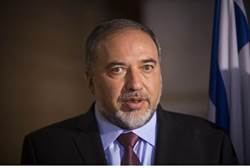
LibermanAvigdor Liberman, Flash90

Foreign Minister Avigdor Liberman (Yisrael Beytenu) sharply criticized Palestinian Authority (PA) Chairman Mahmoud Abbas Tuesday, at a Diplomatic Corps dinner hosted at the Presidential Residence for Israel’s 66th Independence Day.

“Abbas’s actions brought Hamas to power in Gaza and now it will rise to power in Judea and Samaria,” Liberman warned, stressing that “no matter when elections are, Hamas will win and take control of the Palestinian Authority.”

He added that “there are, especially in Europe, those who do not want to see the Palestinians not trying for peace. The time has come to remove the mask from the face of Mahmoud Abbas and show that he clearly rejects peace.”

Hamas continues to be adamant over its control of a “unity” government, expressing over and over again that it would remain in control of both Gaza and the PA after elections and insisting that Ismail Haniyeh would rule the government.

Mahmoud Al-Zahar, a senior official and co-founder of Hamas, took issue with claims of a united military force last week, spewing sharp criticism over the issue to Reuters.

“Nobody will touch the security sections in Gaza. No one will be able to touch one person from the military group. Nobody asked for that,” Zahar declared. He also claimed that PA Chairman Mahmoud Abbas is “lying” about being in charge of a unity government and charged him with vying for the continuation of US aid.

Hamas and Fatah’s reconciliation deal last month has raised security concerns in Israel and utterly torpedoed peace talks.

However, as Liberman may have alluded, the European Union (EU) has dismissed those concerns based on its conviction that PA Chairman Mahmoud Abbas, not Hamas leader Ismail Haniyeh, would remain in charge of a unity government.

“The EU expects any new government to uphold the principle of non-violence, to remain committed to achieving a two-state solution and to a negotiated peaceful settlement … including Israel’s legitimate right to exist,” EU foreign policy chief Catherine Ashton insisted last month.

 “The fact that President Abbas will remain fully in charge of the negotiation process and have a mandate to negotiate in the name of all Palestinians provides further assurance that the peace negotiations can and must proceed.”

Iranian FM: I won’t allow official Holocaust denia

May 6, 2014

Iranian FM: I won’t allow official Holocaust denial | The Times of Israel.

Zarif, grilled by lawmakers over softened stance, says new diplomacy has isolated Israel, Netanyahu

May 6, 2014, 12:56 pm Updated: May 6, 2014, 4:22 pm
Iranian Foreign Minister Mohammad Javad Zarif at a press conference in Tehran, Sunday, December 22, 2013. (Photo credit: AP/Vahid Salemi)

Iranian Foreign Minister Mohammad Javad Zarif at a press conference in Tehran, Sunday, December 22, 2013. (Photo credit: AP/Vahid Salemi)

TEHRAN, Iran — Hard-line lawmakers grilled Iran’s foreign minister on Tuesday on Tehran’s official step-back from past policies of denying the Holocaust.

Mohammad Javad Zarif was summoned to parliament and questioned in a session that was broadcast live on state radio on Tuesday.

Comprised of religious figures, former lawmakers and officials as well as some current MPs, the critics were unhappy about Zarif’s more moderate foreign policy, including what they call his “reactionary stance towards the bastard (Israeli) Zionist regime and the Holocaust.”

Zarif said that, as long as he is foreign minister, he will not allow Iran’s reputation to be damaged with statements about “Holocaust denial.”

Zarif fought back against the increasingly scathing criticism from the hardliners, saying his pragmatic approach to diplomacy had stolen Israel’s thunder.

After years of bellicose rhetoric from ex-president Mahmoud Ahmadinejad, the foreign minister added that the new government had managed to put an end to Israel’s portrayal of Iran as “a danger” over its nuclear ambitions.

“We shall not allow the Zionist regime — who is illegally in possession of chemical and nuclear weapons and is the biggest violator of non-proliferation laws — to portray Iran as a danger,” Zarif said.

Prime Minister Benjamin “Netanyahu shamelessly makes a scene saying Iran denies the Holocaust, Iran wants to build a nuclear bomb to carry out another Holocaust,” he went on.

“But my colleagues and I are telling the world Iran is opposed to anti-antisemitism and genocide,” he said.

The Iranian foreign minister added that the Islamic Republic’s new approach has led to the international isolation of Israel.

“The government’s foreign policy has taken away peace and comfort from Netanyahu and has isolated him internationally and this is a great victory that all the resistance forces of the region have each appreciated us for,” he said, according to a translation by the semi-official Iranian Fars news outlet.

After the questioning, the hard-line legislators said they were “satisfied” with Zarif’s “explanation.”

In 2005, Ahmadinejad prompted an international outcry when he called the Holocaust a “myth.”

His successor, Hassan Rouhani, a moderate, has offered outreach in place of saber-rattling and Holocaust denial.

The summoning and grilling of Zarif is apparently part of the hard-liners’ increasing pressures on the Rouhani administration.

Zarif and Rouhani have sought to soften that anti-Israeli image, despite supreme leader Ayatollah Ali Khamenei repeatedly casting doubts over the existence and scale of the Holocaust.

The Holocaust remains a polarising issue in Iran, but the leadership appears to be united in seeking to reduce tensions with the world.

Khamenei, who has the final say on key state affairs including nuclear policy, has lent qualified support to Rouhani to push for a permanent deal that would ultimately lift sanctions on Iran in exchange for curbs on its atomic drive.

Western powers suspect Iran’s atomic drive masks military objectives despite Tehran’s insistence that it only seeks peaceful applications of the technology to produce electricity and medical isotopes and conduct research.

Senior US officials to visit Israel this week

May 6, 2014

Senior US officials to visit Israel this week | The Times of Israel.

National Security Advisor Susan Rice will lead delegation meeting with Netanyahu, Peres ahead of resumption of Iran nuclear talks

May 6, 2014, 6:19 pm

US National Security Advisor Susan Rice (photo credit: AP/Craig Ruttle/File)

US National Security Advisor Susan Rice (photo credit: AP/Craig Ruttle/File)

US National Security Advisor Susan Rice will visit Israel this week for high-level talks only days after the collapse of a US-led peace bid, the White House said Tuesday.

Rice will “lead the US delegation to the US-Israel Consultative Group meetings” on Wednesday and Thursday, said Caitlin Hayden, spokeswoman for the National Security Council.

It will be Rice’s first trip to Israel since becoming the top security advisor to President Barack Obama in July and also comes just ahead of resumed negotiations on Iran’s nuclear program.

The consultative group meets regularly for “strategic interagency consultations with senior members of the US and Israeli governments to discuss a wide range of bilateral and regional security issues.”

Rice will also meet with Israeli President Shimon Peres and Prime Minister Benjamin Netanyahu, Hayden said in a statement.

The trip comes as the White House is evaluating whether to continue with its hard-fought negotiations to strike a peace deal after Netanyahu last month announced Israel was pulling out of the process.

The Israeli leader has angrily denounced moves by the Palestinian Authority President Mahmoud Abbas to strike a reconciliation deal with Hamas militants, who control the Gaza Strip.

State Department deputy spokeswoman Marie Harf Monday dismissed reports that Secretary of State John Kerry had decided to dismantle the team of negotiators who have been based on the ground in Jerusalem for months trying to push forward the Israeli-Palestinian peace process.

“We’re going to see where this goes from here and, you know, figure out what makes sense in terms of staffing,” she told reporters, saying “we have some senior officials that will be going soon” to the region, without going into specifics.

Chief US negotiator Martin Indyk was said to have been quoted anonymously in an interview in the Israeli daily, Yedioth Ahronoth, in which US officials blamed Israel for the breakdown in the talks and said Netanyahu “did not move more than an inch.”

Harf insisted no one side was to blame, saying “both sides did things that were incredibly unhelpful.”

She did confirm, however, that Kerry is mulling whether to release a document laying out some of the principles reached during the nine months of talks.

Indyk, a former US ambassador to Israel, has meanwhile returned to Washington for consultations, Harf confirmed.

In February, Rice made headlines in Israel when she criticized Israeli government ministers for personally attacking Kerry and his peace efforts.

Describing the attacks against Kerry as “totally unfounded and unacceptable,” Rice wrote in a series of tweets that “John Kerry’s record of support for Israel’s security and prosperity [is] rock solid.”

Although Rice’s comments were seen as particularly harsh, in her previous position, as US permanent representative to the United Nations, she defended Israel against some of its most strident critics.

In October 2012, she used strikingly similar language to condemn then-UN Special Rapporteur Richard Falk over his call to boycott companies that profit from Israeli settlements. Rice described Falk’s call as “irresponsible and unacceptable” and accused Falk of being “highly biased.”

Rice added that Falk’s recommendations did “nothing to further a peaceful settlement to the Israeli-Palestinian conflict and indeed poisoned the environment for peace.”

In January 2011, Rice said that she was “appalled” by a blog post written by Falk in which, she said, Falk “endorses the slurs of conspiracy theorists who allege that the September 11, 2001, terrorist attacks were perpetrated and then covered up by the US government and media.”

“Mr. Falk’s comments are despicable and deeply offensive, and I condemn them in the strongest terms,” wrote Rice, who at the time filed a “strong protest” with the UN on behalf of the United States.