Archive for May 24, 2014

Iran’s Levantine strategy

May 24, 2014

Iran’s Levantine strategy, Long War Journal, Behnam Ben Taleblu, May 24, 2014

Safavi, who presently serves as an adviser to Iran’s Supreme Leader Ayatollah Seyyed Ali Khamenei, also revealed a powerful hypothetical. If the Assad regime fell, he noted, “… it will be the turn of Hezbollah of Lebanon, the Islamic government of Iraq, and finally the Islamic Republic of Iran ….” Safavi’s formulation best explains why Iran is so invested in Syria. It’s not just interests, it is a matter of regime survival.

[W]hat many analysts fear to be the emergence of a “Shiite axis” seems to already be taking place. Iran’s involvement in Syria is presently widening. Recent reports, as described in The Wall Street Journal, indicate that Iran is actively soliciting Afghans to go to Syria and fight. Other Persian media reports cited by The Wall Street Journal reportedly claim that “an all-Afghan battalion … is fighting in Syria to protect Shiite shrines.”

In the aftermath of several controversial statements by two former IRGC Officers, a “pro-Hezbollah” forum recently became engulfed in a discussion of the organization’s true allegiance. According to a statement obtained and translated by the SITE Intelligence Group, Qawem, the aforementioned forum, became host to debate over Hezbollah’s role and perceptions of Lebanon’s sovereignty. The online controversy also brought to the fore the Islamic Republic of Iran’s thinking on Syria and other regional matters.

The comments, initially made on May 4 by IRGC Brigadier General Hossein Hamadani about Iran’s involvement in Syria, shed light on the origins of Hezbollah. According to Mehr News Agency, Hamadani stated, “By the grace of God, Iranians created a second Hezbollah in Syria ….” Later, Radio Free Europe Radio Liberty reported that Hamadani’s statements were removed from the website of another prominent Iranian news outlet.

The impact of these comments was heightened due to earlier statements by a former IRGC commander, Major General Yahya Rahim Safavi. According to the Islamic Republic of Iran News Network (IRINN), Safavi said, “The influence of Iran and Iran’s Islamic Revolution has spread to the borders of the Zionist regime ….” Back on the forum, one user took issue with the fact that the Lebanese government allegedly never responded to this charge.

Safavi, who presently serves as an adviser to Iran’s Supreme Leader Ayatollah Seyyed Ali Khamenei, also revealed a powerful hypothetical. If the Assad regime fell, he noted, “… it will be the turn of Hezbollah of Lebanon, the Islamic government of Iraq, and finally the Islamic Republic of Iran ….” Safavi’s formulation best explains why Iran is so invested in Syria. It’s not just interests, it is a matter of regime survival.

Moreover, Iran’s narrative of its role in Syria is continually evolving. Despite disavowals by Iran’s Foreign Ministry in 2012 of an IRGC presence in Syria as reported by the Mehr News Agency, in 2013 Qassem Soleimani, the Commander of the IRGC’s Quds-Force (IRGC-QF), claimed that, “We will defend Syria to the end,” Hamshahri reported. More recently, in his controversial statements, Brigadier General Hamadani also specified that, “[i]n the present conditions, Iran is a hidden and unknown power in Syria ….”

The forces of Hezbollah in Syria, however, may not be so disguised. According to a recent piece in Haaretz, the number of Hezbollah fighters who have died in Syria is estimated to be around 500. In March, The New York Times cited an Israeli military source as claiming that “Hezbollah has 4,000 to 5,000 soldiers today in Syria.”

Thus, what many analysts fear to be the emergence of a “Shiite axis” seems to already be taking place. Iran’s involvement in Syria is presently widening. Recent reports, as described in The Wall Street Journal, indicate that Iran is actively soliciting Afghans to go to Syria and fight. Other Persian media reports cited by The Wall Street Journal reportedly claim that “an all-Afghan battalion … is fighting in Syria to protect Shiite shrines.”

Back on the Qawem forum, however, another user opined that, “I want the Lebanese to rule the land and not Iran or any other country.” This sentiment is in direct contradiction to a previous statement by former IRGC Commander Jafari, who said that “Lebanon, Iraq and Syria are now under Iranian influence.”


U.S. may use secret team to cinch Iran nuclear deal: WSJ

May 24, 2014

U.S. may use secret team to cinch Iran nuclear deal: WSJ, Tehran Times, May 24, 2014

U.S. and European officials said it was possible, if not likely, Messrs. Burns and Sullivan could re-engage in the diplomatic process with Iran in a final push to get the agreement over the line. They stressed that no final decision has been made.

Both men are held in high esteem by President Barack Obama, said these officials, and Iran might need to see the White House’s direct commitment to the final agreement. Negotiations through the P5+1 format can also be unwieldy due to the sometimes competing interests of the Western powers and Russia and China.

American and European diplomats said it was unlikely any negotiations involving Messrs. Burns and Sullivan would require the secrecy displayed last year.

TEHRAN – The Obama administration may reopen a bilateral negotiating channel with Iran in an effort to cinch a final agreement on Tehran’s nuclear program by this summer, the Wall Street Journal on Wednesday quoted U.S. and European officials involved in the diplomacy as saying.

The Wall Street Journal claimed that the White House secretly used this bilateral track last year to reach an interim deal with Iran in November that froze parts of its nuclear activities in return for a temporary easing of Western economic sanctions.

The stealth American team was purportedly led by Deputy Secretary of State William Burns and Jake Sullivan, national security adviser for Vice President Joe Biden. Their meetings with Iranian negotiators took place in Oman, New York, and Geneva, without the knowledge of the U.S.’s closest Middle East allies including Israel and Saudi Arabia.

Negotiations to reach a final deal on Iran’s nuclear program are currently taking place in Vienna. They involve Tehran and the five permanent members of the United Nations Security Council plus Germany, a diplomatic bloc known as the P5+1.

The U.S.’s lead negotiator is Undersecretary of State Wendy Sherman.

U.S. and Iranian diplomats are planning for a frenzied two months of negotiations in a bid to make a soft July 20 deadline that Tehran and the P5+1 set to forge a final nuclear agreement. Both sides concede there remain large gaps between their positions, particularly on the issue of the size and scope of Iran’s uranium enrichment program.

U.S. and European officials said it was possible, if not likely, Messrs. Burns and Sullivan could re-engage in the diplomatic process with Iran in a final push to get the agreement over the line. They stressed that no final decision has been made.

Both men are held in high esteem by President Barack Obama, said these officials, and Iran might need to see the White House’s direct commitment to the final agreement. Negotiations through the P5+1 format can also be unwieldy due to the sometimes competing interests of the Western powers and Russia and China.

“I think, ultimately, we’ll need to return to the bilateral track,” said a senior U.S. official, noting that any agreement in Vienna will likely boil down to the positions of Tehran and Washington. Iran is demanding the rollback of vast U.S. financial sanctions as part of the deal.

American and European diplomats said it was unlikely any negotiations involving Messrs. Burns and Sullivan would require the secrecy displayed last year. Ms. Sherman and her negotiating team now regularly meet directly with their Iranian counterparts, including holding a three-hour session in Vienna last week.

Messrs. Burns and Sullivan have both indicated they’re preparing to leave the Obama administration by the end of the year, according to U.S. officials. But both men are expected to remain in their positions through the duration of the Iran talks.

The big charade: Nuclear diplomacy is a flop, the finale is secretly postponed to 2015

May 24, 2014

The big charade: Nuclear diplomacy is a flop, the finale is secretly postponed to 2015, DEBKAfile, May 24, 2014

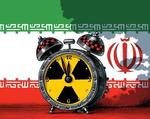
IranNuclearClockIran’s nuclear clock ticks faster than diplomacy

[T]he Obama administration in the last week of April reached two important decisions:

1. To postpone the deadline for a final nuclear accord with Iran from July 2014 to January 15, 2015 – possibly not for the last time –  a delay which is viewed by Israel as extremely problematic.

2.  In a move to dissuade Israel from resorting to military action to curb this process, the White House is drafting legislature that would empower the president to use force against Iran without referring back to Congress, if Tehran was found cheating on its nuclear commitments.

No one in Washington or Tehran believes President Barack will actually use military force against Iran. However, prior congressional endorsement of his military option might, Obama hopes, hold Israel back and provide extra leverage in the negotiations with Iran, which he is determined to continue notwithstanding their futility.

All hands on board the project for proving that Iran is amenable to dialogue and concessions on its nuclear program worked overtime this week to mask the truth, which is that negotiations were going nowhere.

On May 21, Iran’s President Hassan Rouhani, for instance, said “The nuclear negotiation is progressing and is on the threshold of reaching a conclusion.”

On May 23, the Vienna-based nuclear watchdog, the International Atomic Energy Agency, reported that the nuclear stockpile left to Iran after most of its enriched material, 80 percent, had been either converted or diluted “was far below the 250 kg which experts say is needed for one nuclear bomb.”

In other words, the IAEA was affirming that Tehran had lived up to the commitments it undertook in last November’s interim nuclear accord.

But the agency report was careful to edit out the negative side of the picture, which is: Iran is left with a stockpile of 3.5 tons of lower-grade 5.3 percent enriched uranium, which can quickly be enriched further to 20 percent grade. It would then be sufficient to produce 5-7 nuclear bombs. Dilution of the higher grade material is moreover reversible and could provide fuel for another bomb.

But the 80 percent figure captured the headlines of the world media and usefully fueled the show of optimism surrounding the stalled nuclear talks with Iran.

For more than a year, DEBKAfile has been following the back-channel talks the Obama administration has kept going with Tehran through a hub in the Omani capital of Muscat. They have been handled by Undersecretary of State William Burns and Vice President Joe Biden’s national security adviser Jake Sulllivan. Friday, the Wall Street Journal reported that the two diplomats were told to give this track “a last push” this summer, in order to bring it to a successful conclusion in time for the July deadline.

But nothing has gone according to plan.

The mid-May round of six-power talks with Iran in Vienna broke up without assent on essential points. The gaps between Washington and Tehran on the two tracks, the official one in Vienna and the private one through Muscat, are widening instead of closing.

In Tehran itself, the omnipotent Ayatollah Ali Khamenei has clipped the wings of the pro-diplomacy President Rouhani and curtailed his leeway for concessions on Iran’s nuclear program.

A severe crisis in relations is also developing between Washington and Jerusalem over dissonant approaches to Iran’s nuclear advances, its ballistic missile arsenal and the Islamic Republic’s Middle East designs.

Because of all these constraints, the Obama administration in the last week of April reached two important decisions:

1. To postpone the deadline for a final nuclear accord with Iran from July 2014 to January 15, 2015 – possibly not for the last time –  a delay which is viewed by Israel as extremely problematic.

The commitment undertaken by Tehran under the November interim accord – not to use its advanced IR2 centrifuges for rapid uranium enrichment – was valid for only six months, during which a final agreement was supposed to have been negotiated to take its place.

Therefore, the discussions conducted in the current rounds of talks on the number of centrifuges and the amount of enriched uranium Iran is allowed to stockpile are meaningless. Once the extra-fast centrifuges are spinning, neither Washington nor Jerusalem can tell any longer how much enriched material the Iranians are producing.

DEBKAfile’s military sources quote the Israeli experts involved in national policy-making on Iran as determining that, with the diplomatic track dragging into limbo and Iran off the hook of its interim commitments, Tehran will be able to reach the nuclear threshold in two to three months’ time, i.e. by July-August.

2.  In a move to dissuade Israel from resorting to military action to curb this process, the White House is drafting legislature that would empower the president to use force against Iran without referring back to Congress, if Tehran was found cheating on its nuclear commitments.

No one in Washington or Tehran believes President Barack will actually use military force against Iran. However, prior congressional endorsement of his military option might, Obama hopes, hold Israel back and provide extra leverage in the negotiations with Iran, which he is determined to continue notwithstanding their futility.

US urges Israel, Palestinians to refrain from unilateral steps

May 24, 2014

US urges Israel, Palestinians to refrain from unilateral steps, Jerusalem Post, May 24, 2014

(How about pushing Iran instead of Israel? Is resumption of a peace process in Israel more important? Or do Kerry et al think that the world is the way they wish it were rather than the way it is? Unicorn stew may be hearty, but it is indigestible.  — DM)

Harf said the US “would like to resume peace negotiations” and was urging both sides to refrain from actions that would undermine the groundwork for restarting the talks that broke down in late April.

“There is an emerging consensus that we don’t have a partner who can challenge constituencies, do something unpopular, do something that is difficult. Abbas has not done anything to challenge the prevailing Palestinian consensus. In fact, he’s doing the opposite: the Hamas reconciliation, internationalizing the conflict, not giving one iota on the right of return, not giving an iota on the Jewish state. He wouldn’t deal with Kerry’s framework,” Netanyahu said.

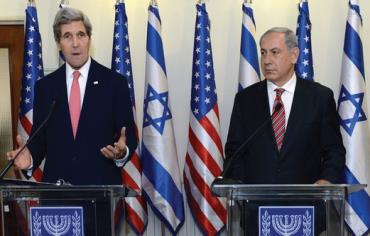
1Kerry and NetanyahuBB and Kerry dec 5 Photo: MATTY STERN / US EMBASSY / FLASH 90

The United State reiterated its opposition to any unilateral step made by either Israel or the Palestinians amid the absence of peace negotiations, State Department spokeswoman Marie Harf said on Friday in response to remarks made by Prime Minister Binyamin Netanyahu in a BloombergView interview earlier Friday.

Harf said the US “would like to resume peace negotiations” and was urging both sides to refrain from actions that would undermine the groundwork for restarting the talks that broke down in late April.

She state[d] that: “we don’t think either side should do anything to complicate efforts right now to build the trust necessary to resume negotiations.”

The State Department’s comments came following Netanyahu’s comments in the interview dismissing the possibility of unilateral territorial withdrawals and appeared open to annexation plans for portions of the West Bank in the absence of a peace process.

“The idea of taking unilateral steps is gaining ground, from the center-left to the center-right,” Netanyahu said in the interview with Jeffrey Goldberg.

“Many Israelis are asking themselves if there are certain unilateral steps that could theoretically make sense,” he added.

But Netanyahu appeared to dismissed left-wing ideas of territorial withdrawal from portions of the West Bank as one possible unilateral option.

He explained that Israel’s 2005 disengagement from Gaza, a unilateral plan designed to rescue a frozen peace process, had strengthened terrorist groups bent on destroying Israel and had failed to bring peace.

“People also recognize that the unilateral withdrawal from Gaza didn’t improve the situation or advance peace — it created Hamastan, from which thousands of rockets have been fired at our cities,” Netanyahu said.

There are some points of consensus in Israel around the peace process with the Palestinians and the nation’s future, he said.

“The first point of consensus is that we don’t want a binational state. Another point of consensus is that we don’t want an Iranian proxy in territories we vacate.

“We want a demilitarized Palestinian state that recognizes the nation-state of the Jews. How do you get that if you can’t get it through negotiations? “The Palestinians don’t agree to recognizing Israel as the Jewish nation-state, and it’s not clear to me that they’ll agree to elements of demilitarization that are required in any conceivable plan that works,” Netanyahu said.

The problem with a negotiated solution he said, is that at present there is no ground for consensus with the Palestinians.

“The minimal set of conditions that any Israeli government would need cannot be met by the Palestinians,” Netanyahu said.

He spoke with Goldberg, after a nine-month US led negotiating process ended on April 29th, with no tangible results. Initially when nine-month negotiating period began, the US had hoped to arrive at a final status agreement, but then downgraded that expectation to a framework document of agreed upon principles. Israelis and Palestinians were unable to even agree on those principles. Discussion about simply renewing negotiations came to a screeching halt, however, when Fatah announced that it planned to unite with Hamas to form one government.

In response, Israel suspended talks with Fatah and said that it could not negotiate with an entity that aligned itself with a terrorist group bent on Israel’s destruction. Netanyahu explained that he preferred to solve the issue through negotiations, but did not think that it was possible at this time.

“No matter what the spin is about blaming Israel, do we actually expect Abbas, who seems to be embracing Hamas, to give a negotiated deal? In all likelihood, no. I hope he does, but I’m not sure he’s going to do it,” Netanyahu said.

“There is an emerging consensus that we don’t have a partner who can challenge constituencies, do something unpopular, do something that is difficult. Abbas has not done anything to challenge the prevailing Palestinian consensus. In fact, he’s doing the opposite: the Hamas reconciliation, internationalizing the conflict, not giving one iota on the right of return, not giving an iota on the Jewish state. He wouldn’t deal with Kerry’s framework,” Netanyahu said.

John Kerry’s three delusions about Mideast peace – The Washington Post

May 24, 2014

John Kerry’s three delusions about Mideast peace – The Washington Post.

By Aaron David Miller, Published: May 23


John Kerry’s recent failed effort to get the Israelis and the Palestinians closer to a peace agreement shows what happens when you see the world the way you want it to be rather than the way it really is.


The good news is that the negotiations wouldn’t have started without Kerry. But that’s the bad news, too. He wanted talks far more than the Israelis and the Palestinians did. The secretary of state fell into one of the classic traps of negotiation and mediation: He became convinced of his own indispensability and centrality to the process — and badly exaggerated his ability to achieve a breakthrough.

I’ve worked for several of his predecessors, and never have I encountered a more self-confident secretary of state. Willful, relentless and a true believer in a two-state solution, Kerry miscalculated his role in three ways: He thought it was his time; it wasn’t. He thought he had the persuasive skills to pull it off; he didn’t. And he thought that this was his last chance; it wasn’t that, either.

The timing

Kerry’s timing did seem fortuitous. President Obama, in his second term and determined to focus on his domestic legacy, had to delegate more of his foreign policy decisions, not dominate them, as he had with Hillary Rodham Clinton. And there were many international headaches that required managing, including Russia, Iran and Syria, which became a much bigger crisis in Obama’s second term.

Yet, while this might have been Kerry’s moment, it wasn’t Benjamin Netanyahu’s nor Mahmoud Abbas’s, at least not for peacemaking. That the first phase of these negotiations, the direct meetings between the two sides, couldn’t get traction might have set off alarm bells for a less-confident diplomat. An Israeli prime minister preoccupied with Iran and never imagining himself to be the father of Palestinian statehood would not or could not make the decisions on the core sticking points — such as borders and how to divide Jerusalem — required for an agreement. Abbas, trapped in a rigid Palestinian consensus on those same questions and profoundly mistrustful of Netanyahu, wouldn’t oblige Kerry, either.

Without enough urgency to do a deal, the talks became Kerry’s process far more than one fashioned and owned by Israel and the Palestinians. Nor was Obama all that seized with the matter, either — and a secretary needs a president’s total support to succeed. By the spring, the Kerry effort devolved into an attempt just to keep the talks going. And in the end, he couldn’t do even that.

The skills

Kerry’s conviction that this was his moment invariably led him to believe too much in his own skills. By all accounts, he was a one-man show. Having served in the Senate and dealt with the Israelis, Arabs and Palestinians for years, Kerry rightly fashioned himself an expert on these matters. His capacity to listen, according to those who know him well, is legendary. But he soon became his own best analyst and policymaker, surrounding himself with former Senate staffers and aides who were not going to challenge their strong-willed boss.

I’ve been told by those familiar with the recent talks that Kerry had little use for experts and no use for skeptics. James Baker would let his advisers argue with one another; so would Madeleine Albright. They’d take what was useful and discard the rest. Kerry dove into the substance with a fervor and certainty the peace process hadn’t seen since Jimmy Carter. Too much analysis, he seemed to believe, led to paralysis. The only way around this was to ignore the doubters, deal directly with the leaders and push them relentlessly on his agenda. This risk-readiness might have paid off if Kerry had Israeli and Palestinian partners willing and able to take risks,too.

With the exception of Henry Kissinger, who had the 1973 war to motivate him, none of Kerry’s predecessors who worked this process — George Shultz, James Baker, Lawrence Eagleburger, Warren Christopher, Madeleine Albright, Colin Powell, Condoleezza Rice, Hillary Clinton — were that willing to plunge ahead and risk their reputations, political capital and credibility. They were quite skeptical and very often uncertain about how to proceed, and they depended to varying degrees on a small circle of advisers for analysis and recommendations.

These reality checks could be constraining. But they also kept U.S. diplomacy grounded. Even Baker, who scored a major success with the Madrid Peace Conference in 1991, wouldn’t travel to the region during his first two years as secretary because he knew he had no chance of getting anywhere close to an agreement between Israelis and Palestinians. And several of these secretaries of state had far more to work with than Kerry did: Israelis and Palestinians, Jordanians and Syrians who were prepared to make serious sacrifices, some who were even ready to reach an agreement.

We don’t know what assurances Kerry received from Netanyahu and Abbas on the borders of a Palestinian state, whether it would recognize Israel as a Jewish state, how to handle Palestinian refugees. or whether he was getting the sides closer to a zone of agreement. Kerry managed to keep the leaders publicly silent when it came to the substance. I’ve been told two stories by people who were in a position to know: first, that the leaders came far on substance, and conversely, that there wasn’t really much there.

One thing we do know: After nine months of intensive effort, the process devolved from an attempt to reach a comprehensive deal on borders, security, refugees and Jerusalem, to discussions of a more general framework agreement, to a losing fight over a mere extension of the talks.

All mediators need to believe in themselves. But it’s possible to lose perspective, believe too deeply and think about negotiations largely in terms of personalities and personal relationships. And perhaps with the best of intentions, Kerry got lost in a “can do” mind-set when the leaders and negotiators were saying, “Oh, no you won’t.”

As a mediator, you spend hundreds of hours with these leaders while in negotiations. They encourage you by seeming willing to consider fixes and compromises that appear new and potentially historic, even on the most sensitive issues. They pledge not to reveal what they’ve heard, through you, from the other side. And you think that somehow your personal ties can move a leader on a specific issue. So you are tempted to believe that you can deliver something that none of your predecessors have. Quite understandably, you tend to diminish other factors more important to the deal than your persuasive skills — namely domestic politics and national interest. Indeed, you forget the thought attributed to Charles de Gaulle, that cemeteries are filled with indispensable people.

I saw this happen to Israeli and Palestinian negotiators during secret talks in Sweden in May 2000, and to Bill Clinton after his masterful success with Netanyahu and Yasser Arafat at the Wye River peace summit in October 1998. The president emerged from that meeting having impressed the Israelis, the Palestinians, himself and the rest of us with his formidable personal and negotiating skills. The Palestinians were amazed that he could rattle off the names and affiliations of their prisoners held in Israeli jails. And the Israelis were impressed with his commitment to their security and his willingness to use the CIA to facilitate Israeli-Palestinian security cooperation. One factor in the decision to convene the Camp David Summit in July 2000 — this time with a risk-averse Arafat and a more risk-ready Israeli Prime Minister Ehud Barak — was Clinton’s conviction that he could bring these two together by virtue of his persuasive power. We had no real strategy at Camp David other than Clinton as our secret weapon. Not surprisingly, it was insufficient. And so was Kerry’s confidence in his ability to persuade the Israelis and the Palestinians to make decisions they didn’t want to make.

The opportunity

Kerry’s faith and conviction created a last-chance trope that was counterproductive. Like the ghost of Christmas future in Charles Dickens’s “A Christmas Carol,” Kerry told the world that if there were no two-state solution, calamity would follow. He warned of a third intifada , an end to Israel as a Jewish state, international boycotts , and even Israel emerging as an apartheid state .

The future without a two-state solution is grim, no doubt. But the question is not whether Kerry believes that; it’s whether the two sides do. Kerry cannot scare Israeli and Palestinian leaders into doing things they don’t want to do. And this approach is an empty demonstration of American resolve and power, particularly if it’s not backed up by the White House.

Nor is this, as Kerry has maintained , the last chance for Middle East peace. That reflects a certain narcissism and lack of perspective. If this really is the final chance, then the question for the president and his talented secretary of state is: Why not make this the focus of your foreign policy and do everything you can — risk it all — to bring about an agreement? The answer seems pretty obvious.

When the Kerry peace process does resume, as it surely will, the United States needs to get the two sides to own it as least as much as Washington does — and to heed the words of another Frenchman, Charles-Maurice de Talleyrand-Périgord, who cautioned diplomats everywhere: Above all, not too much zeal.

Aaron David Miller, a vice president at the Woodrow Wilson International Center for Scholars, has served as a Middle East adviser for Republican and Democratic secretaries of state. He is the author of the forthcoming “The End of Greatness: Why America Can’t Have (and Doesn’t Want) Another Great President.”

aaron.miller@wilsoncenter.org