(Al Arabiya is a Saudia owned publication. This article takes a different approach than Behind the Lines: Saudi shuffle but there are points of at least partial congruence. “There is a new trend in the region, and the most prudent step is to be an early follower, not a late comer.” The position of the U.S. — whatever it may seem to be from time to time — can be considered at least in passing. If it eventually seems useful to get in step, so be it.– DM)
Some would say one should wait and see how the matter between the U.S. and Iran develops. Who knows what the Iranians are up to? Who knows if they will live up to their commitments or not? I think that waiting is wrong. There is a new trend in the region, and the most prudent step is to be an early follower, not a late comer. The Saudis can always withdraw if this trend recedes or changes direction.
A Saudi-Iranian rapprochement that did not seem possible a few months ago is now happening.
Saudi Arabia invited Iran’s foreign minister to visit the country. Hashemi Rafsanjani is also coming. This is good news for the future of a region that has suffered from devastating conflicts since 1980 when the Iran-Iraq war broke out. Yet there are analysts who insist that it will fail, or that this is not the right time for it. And I think they are mistaken.
Let us take, as an example of major analytical mistakes, the prevailing expectations after the U.S.-Iran rapprochement. The Gulf countries in general were angered by that surprising and fast paced rapprochement; and most analysts could only think of how the American step would push away the Gulf States from America, and make them seek other alliances to ensure their security. Some even suggested that the Saudis and the Israelis would form an alliance against Iran. Of course they were all wrong. The U.S. – Gulf alliance is still as secure as ever, and will remain so as long as there is a mutual need between both. For the foreseeable future, the U.S. will consider Gulf oil an integral part of its national security. And the Gulf countries will consider the U.S. the only reliable and dependable ally in the world.
The fact is that Saudi-Iranian strategic interests are much more important that the conflict in Syria
Abdullah Hamidaddin
The reason those analysts made such a mistake about Gulf-U.S. relations is that they looked at them through the prism of issues of conflict, and not through the prism of strategic geo-political realities. They saw the U.S. and the Saudis disagree over Syria and Egypt and then they concluded that Iran will be the last straw. They didn’t see that the balance of power which created the Gulf-Saudi alliance has not shifted for the past 70 years. Lots of things have happened over those seven decades, but the reasons to stay together have remained intact. So regardless of all differences, regardless of all political rhetoric, this is an alliance that will continue.
Now they are making the same mistake. They see the Iran-Saudi Arabia conflict through the prism of regional conflict. Iran’s position in Syria, in Yemen, in Iraq and Lebanon are at odds with Saudi interests. They miss looking at it from a geo-political perspective. The Saudi-Iranian conflict was mainly about the Iranian-American conflict. Saudi Arabia has no inherent conflict with the Iranians, on the contrary positive relations with them would benefit the Saudis. But Iran had to first realign its positions in a way that meets the interests of the U.S. and the world. Then the Saudis could step in. And this is exactly what is happening.
Wait and see
Some would say one should wait and see how the matter between the U.S. and Iran develops. Who knows what the Iranians are up to? Who knows if they will live up to their commitments or not? I think that waiting is wrong. There is a new trend in the region, and the most prudent step is to be an early follower, not a late comer. The Saudis can always withdraw if this trend recedes or changes direction.
There will remain issues which the Saudis and the Iranians will never agree on. That’s normal in any relationship between states. But the strategic value of those differences will change. The Syrian tragedy serves as an example. The Iranians would have wanted it to spill over into Jordan to threaten the Saudis. This was when they were head to head against the Americans. Today the Iranians will continue to support Bashar, but will no longer been keen for a spillover. What some of us forget, is that the nuclear deal has a subtext, which is to stop seeking to disrupt Gulf security affairs.
The Saudis and the Iranians will continue to disagree over Syria, but they will no longer use it against each other. The strategic value of Syria has changed. But we need to acknowledge that the only way the Syrian crisis will come to an end is when the Saudis and the Iranians reach an agreement over it. This agreement will not succeed overnight. But it needs to start. And now is a good time.
The fact is that Saudi-Iranian strategic interests are much more important that the conflict in Syria. And for that reason the Saudi-Iran rapprochement will succeed; with a few bumps along the way, eventually we will have warm relations with our neighbor across the river.
The IAEA report, which has a pivotal role in verifying that Iran is living up to its part of the six-month accord reached in November, made clear that Iran so far is undertaking the agreed steps to curb its nuclear program.
M-302 rockets from Iran’s weapons shipment to Gaza Photo: IDF
VIENNA – Iran has sharply reduced its most sensitive nuclear stockpile in implementing an interim pact with world powers and has begun engaging with a long-stalled IAEA investigation into suspected atom bomb research, the UN nuclear agency said on Friday.
The findings, in a quarterly report by the International Atomic Energy Agency, are likely to be welcomed by the six powers that are trying to negotiate a long-term deal with Iran on ending a decade-old dispute over its nuclear program.
Iran rejects Western allegations that it has been trying to develop the capability to build nuclear weapons.
The monthly update by IAEA, which has a pivotal role in verifying that Iran is living up to its part of the six-month accord reached in November, made clear that Iran so far is undertaking the agreed steps to curb its nuclear program.
As a result, it is gradually gaining access to some previously blocked overseas funds, under the interim accord that was struck with the United States, Russia, France, Germany, Britain and China in November.
Under the breakthrough half-year agreement that took effect on Jan. 20, Iran halted some aspects of its nuclear program in exchange for a limited easing of international sanctions that have laid low the major oil producer’s economy. It was designed to buy time for talks on a permanent settlement.
The IAEA report showed that Iran since January had acted to reduce its stockpile of higher-grade enriched uranium gas – a relatively short technical step away from weapons-grade material – by more than 80 percent.
(“Unexpectedly,” winners are more popular and more relied upon than losers — particularly when the losers appear to support the winners. How odd is that? — DM)
Saudi gestures should be placed in a context of clear US pressure on their Gulf clients to get “on board” with Washington’s regional diplomacy, close to the center of which appears to be a desire to “flip” Iran from foe to friend.
According to a report on the Intelligence Online website, both US President Barack Obama and Secretary of Defense Chuck Hagel stressed this matter in their recent visit to the Gulf. Obama reportedly raised the matter in his meeting with King Abdullah bin Abdulaziz.
Hagel, meanwhile, urged greater Saudi “openness” to Iran in meetings with Saudi Arabia’s Crown Prince Salman, Deputy Crown Prince Muqrin and Foreign Minister Saud al-Faisal.
The lesson of all this is that there is no simple regional substitute for US leadership in the effort to hold back the advance of Iran – both on the nuclear track and with regard to Tehran’s broader regional ambitions, of which the nuclear drive constitutes a crucial component. The problem is that the current US administration is embarked on a course which is producing Iranian victories.
Saudi Arabia, because of perceived necessity, appears for now to be adjusting its own course to follow this path.
Saudi Arabia’s King Abdullah (R) and his brother Prince Salman. Photo: REUTERS
A number of recent Saudi moves and official statements have led to speculation regarding a possible shift on the kingdom’s stance toward Iran.
The Saudis appear to be moving, at least on a declarative level, away from a position according to which Iranian ambitions are a threat to be resisted – toward an attempt to accommodate Tehran.
The speculation regarding a changed Saudi stance rests largely on three recent public events.
The first was the meeting last month between newly minted Saudi ambassador to Tehran Abdul Rahman al-Shehri, and former Iranian president Ali Akbar Hashemi Rafsanjani.
Shehri demonstrably kissed Rafsanjani on the forehead during the meeting. In addition to displaying the depth of the ambassador’s patriotism, this act was held by some commentators to portend a renewed Saudi determination to set relations with Iran on a new footing.
The second was the Saudi announcement of an invitation to Iranian Foreign Minister Mohammad Javad Zarif to visit the kingdom.
The third element that many analysts have pointed to in asserting a change in the direction of Saudi policy is the recent replacement of Prince Bandar bin Sultan from his position as head of the Saudi intelligence services.
Bandar had been associated with a proactive Saudi policy in Syria, Lebanon, Bahrain and other points of Saudi-Iranian tension. His replacement by Muhammad Bin Nayef was seen as portending a less activist regional policy.
This was accompanied by the replacement of deputy defense minister Salman bin Sultan. Bin Sultan is the half-brother of Bandar, and like him was associated with a policy of activist resistance to Iran’s regional advance.
These Saudi gestures should be placed in a context of clear US pressure on their Gulf clients to get “on board” with Washington’s regional diplomacy, close to the center of which appears to be a desire to “flip” Iran from foe to friend.
According to a report on the Intelligence Online website, both US President Barack Obama and Secretary of Defense Chuck Hagel stressed this matter in their recent visit to the Gulf. Obama reportedly raised the matter in his meeting with King Abdullah bin Abdulaziz.
Hagel, meanwhile, urged greater Saudi “openness” to Iran in meetings with Saudi Arabia’s Crown Prince Salman, Deputy Crown Prince Muqrin and Foreign Minister Saud al-Faisal.
As the nuclear negotiations with Tehran stumble on, and Iran’s clients hold their own or emerge victorious in Lebanon, Syria and Iraq, the US apparently remains convinced of its strategy to normalize relations with Tehran through meeting it halfway.
Saudia Arabia, along with Bahrain and the United Arab Emirates, has hitherto remained similarly convinced that Iranian ambitions cannot be accommodated, without Saudi and Western surrender of vital interests. It is for this reason that they have regarded the current US push for rapprochement with Tehran to be a fool’s errand.
According to Intelligence Online, Gen. Khalifa bin Ahmad al-Khalifa, the Bahraini chief of staff, bluntly articulated the concerns of the Gulf Cooperation Council countries with regard to the Iranian threat and the current US response to it.
The Gulf countries, he said, were “profoundly concerned about Iran’s ambitions to destabilize the region, via its sponsorship of terrorism from the shores of the Mediterranean to the provinces of southern Yemen… Your [US] intelligence services have proof of this terrorism enterprise.
What are you doing to halt its spread?” Khalifa went on to accuse the US of “backing down” over Syria and letting President Bashar Assad’s “chemical attacks go unpunished.”
Gulf concerns are not hard to understand. The goal of ending the presence of foreign (i.e. US) forces in the Gulf is a core Iranian strategic objective. Tehran regards its own domination of the Persian Gulf as a “natural” state of affairs reflecting Iran’s greater demographic and societal strength compared with the fragile, energy-rich Arab monarchies on the other side of the Gulf.
Iran has also shown skill and determination in pursuit of its goals further afield, over the last turbulent decade in the region.
How, then, to explain the Saudis’ apparent about-face and attempt to get behind US policy? The Saudis are aware that the US remains the main physical guarantor of Gulf security, whatever the problems with its current strategy. Other Gulf countries are aware of this, too.
There are no indications that the current administration has any intention of reducing the US military presence of 35,000 personnel in the Gulf, including the Fifth Fleet and a number of advanced missile defense systems.
Indeed, Hagel went out of his way during his visit to the Gulf to stress the continued US commitment to this presence and to Gulf security, regardless of the differences over Iran policy.
It has also long been the contention of the most astute Gulf analysts that it would be mistaken to imagine that Saudi Arabia will constitute an unyielding bulwark to Iranian ambitions, if it becomes clear that the US and the West prefer to accommodate the Iranians.
The Saudi kingdom is simply too fragile an entity to play such a role. Rather, if Western weakness in the face of the Iranian advance becomes apparent, Riyadh is likely to accommodate itself to the new situation.
The shifting Saudi strategy in Syria – which over the last three years has gone from supporting Islamist and jihadi groups to seeking to offer limited support to the rebels, largely within the definitions and dictates of US policy – may offer a window into the current broader direction of Saudi policy toward Tehran.
This runs along clear lines of basic disagreement toward the regional strategy being pursued by the Obama administration, a pragmatic awareness of the need to appear to accommodate Washington’s declared direction, and energetic efforts to prepare as best Riyadh can to cope with the challenges of a Middle East in which a continued Iranian advance seems to be a given.
Are these, on the evidence available, likely to produce a changed Saudi policy with regard to Iran? The answer is yes. Increased direct or mediated dialogue between the two is, at the very least, likely.
It may also be that the shift will produce concrete policy results in specific regional “files” of contention – such as Yemen, Lebanon or even Syria – as the Saudis seek to avoid confrontation with the advancing Iranian power.
The lesson of all this is that there is no simple regional substitute for US leadership in the effort to hold back the advance of Iran – both on the nuclear track and with regard to Tehran’s broader regional ambitions, of which the nuclear drive constitutes a crucial component. The problem is that the current US administration is embarked on a course which is producing Iranian victories.
Saudi Arabia, because of perceived necessity, appears for now to be adjusting its own course to follow this path.
The international community does not seem to be listening to what Hamas is saying. Hamas is telling everyone not to believe Abbas when he say that the Palestinian Unity Government will renounce violence and recognize Israel’s right to exist.
“The reconciliation will actually consolidate the resistance … from one intifada to another until the liberation of Palestine.” — Khaled Mashaal, leader of the Hamas political bureau.
“Who is this crazy guy who would be able to go to the resistance groups and ask them to hand over their weapons?” — Mahmoud Zahhar, senior representative of Hamas.
Abbas is especially interested in winning the backing of the U.S. and EU for the deal with the Islamist movement because his Palestinian Authority is almost entirely dependent on American and European financial aid.
Palestinian Authority President Mahmoud Abbas is busy these days trying to persuade the West to accept his recent unity accord with Hamas.
Abbas is especially interested in winning the backing of the U.S. and EU for the deal with the Islamist movement because his Palestinian Authority is almost entirely dependent on American and European financial aid.
Abbas’s main argument is that the “reconciliation” deal with Hamas, signed last month in the Gaza Strip, would not affect the peace process with Israel.
Abbas was quoted as saying that there is “no contradiction” between the unity deal and the peace talks with Israel and that he remains committed to a “just peace on the basis of a two-state solution in accordance with international legitimacy.”
Earlier, Abbas, in the context of his efforts to calm the U.S. Administration and EU governments over the unity accord, declared that the new Palestinian government would recognize Israel and reject violence. His remarks, however, have been strongly denied by Hamas leaders, who say their movement intends to pursue “jihad” against Israel.
Musa Abu Marzouk, deputy chairman of Hamas’s political bureau, announced that his movement would never recognize Israel. “This is a red line that cannot be crossed,” he said.
In other words, Hamas is telling everyone not to believe Abbas when he says that the Palestinian unity government will renounce violence and recognize Israel’s right to exist.
This week, further evidence emerged that Hamas has no intention of changing its ideology in the wake of the unity agreement with Abbas’s Fatah faction.
Hamas’s two most senior representatives, Khaled Mashaal and Mahmoud Zahar, have both made it clear that their movement is planning to continue “resistance” actions against Israel even after the formation of the unity government. They also emphasized that Hamas has no intention of dismantling its military wing, Izaddin al-Kassam, as part of the unity accord.
Mahmoud Abbas (left) and Khaled Mashaal. (Image source: Abbas – European Union / Mashaal – Wikimedia Commons)
Asked about the possibility that Hamas would disarm, Zahar said: “Who is this crazy guy who would be able to go to the resistance groups and and ask them to hand over their weapons? Who would dare to do so?”
Zahar also disclosed that Hamas is planning to take advantage of the unity deal to move its terror attacks against Israel to the West Bank. Worse, he declared that after its men set foot in the West Bank, Hamas will target Palestinians who “collaborate” with Israel. “Who said that those who are conducting security coordination with Israel would remain forever?” he asked, referring to the Fatah-dominated security forces in the West Bank.
Zahar, who also said that Hamas would pursue the fight against Israel until the “liberation of all Palestine,” is in fact sending a warning message to the Western-funded Palestinian Authority security forces in the West Bank. “We believe in what was mentioned in the Quran: that Palestine, all of Palestine, will be liberated,” he added. “The Israeli entity should expect more from Hamas after our rockets reached Tel Aviv.”
His remarks may also been seen as a direct and personal threat to Abbas, who has repeatedly vowed to continue security coordination with Israel.
Mashaal, for his part, also vowed that Hamas will never abandon the armed struggle against Israel. Like Zahar, he sees the “reconciliation” as an opportunity for Hamas and all Palestinians to “solidify the resistance” against Israel.
“The reconciliation and politics are not an alternative to resistance,” he said. The reconciliation will actually consolidate the resistance. Our steadfast people are continuing to move from one revolution to another and from one intifada to another until the liberation of Palestine.”
Abbas says that the unity agreement with Hamas is a chance to bolster the peace process and achieve the two-state solution. This is the message that Abbas is trying to relay to the international community, above all, to American and European donors.
Hamas, on the other hand, considers the unity agreement with Fatah an opportunity to extend its control beyond the Gaza Strip and use the West Bank as a launching pad for more terror attacks against Israel.
The international community does not seem to be listening to what Hamas is saying.
Ignoring Hamas’s declared intentions will pave the way for the movement to use the unity agreement to seize control over the Palestinian Authority and many parts of the West Bank. It will also facilitate Hamas’s plans to launch terror attacks from the West Bank against Israel.
It now remains to be seen whether the U.S. Administration and EU governments, by blindly endorsing the new unity government, will help Hamas to achieve its goals.
Israel’s prime minister, Benjamin Netanyahu, has some uncharacteristically positive words for one of U.S. President Barack Obama’s most controversial foreign policy initiatives: the deal struck last year to remove chemical weapons from Syria.
I met Netanyahu last Friday afternoon in his bunkerlike office in Jerusalem. During the course of our discussion, I asked him about the famous “red line” crisis — Obama’s last-minute decision to abort a missile strike and instead negotiate the destruction of Syria’s chemical weapons stockpile — that colors so much of foreign-policy commentary today.
Netanyahu issued what was for him a full-throated endorsement of an Obama initiative, calling it “the one ray of light in a very dark region.”
“It’s not complete yet,” he went on. “We are concerned that they may not have declared all of their capacity. But what has been removed has been removed. We’re talking about 90 percent. We appreciate the effort that has been made and the results that have been achieved.”
The chemical weapons of Syrian President Bashar al-Assad’s regime have posed a murderous threat to Israel, and there is broad relief in Jerusalem that this particular menace appears to be dissipating. Obama actually gets more credit for the deal in Israel — particularly among leaders of the country’s national-security apparatus — than he often does in Washington.
Netanyahu is only intermittently pro-Obama, of course. The two men have a famously contentious relationship. During our discussion, Netanyahu did not hesitate to highlight broad areas of disagreement with the U.S. administration, particularly on matters related to the ongoing Iran nuclear negotiations and the defunct Israeli-Palestinian talks led by Obama’s secretary of state, John Kerry. The latest round of peace talks failed, according to U.S. negotiators, in good part because of Israel’s insistence on expanding settlements in the West Bank.
Netanyahu was careful to stress his pro-American bona fides, and he vociferously denied recent reports that Israel is engaged in aggressive acts of espionage in the U.S. “Israel has not conducted any espionage operations in the United States, period. Full stop,” he said. “Not direct espionage, not indirect espionage, nothing, zero.”
The prime minister was expansive; he had just completed what both Israeli and U.S. participants described to me as a productive meeting with U.S. Secretary of Defense Chuck Hagel. (It is my impression that Netanyahu would prefer to see Hagel — who was accused during his confirmation process of being anti-Israel — than to find the indefatigable peace processor Kerry showing up in his office.)
But Netanyahu, though seemingly relaxed, was also quite difficult. We spent the first 10 minutes of our discussion renegotiating the terms of our meeting (when I could use a digital recorder, topics we could cover on the record, and so on). I quickly remembered a truism about Netanyahu: that he would give live television interviews on background if such a thing were possible.
We soon enough turned to business — first, to the mostly dead peace process. In his most extensive comments to date on the reasons he thinks the process has failed, Netanyahu made it clear he believes his Palestinian counterpart, Mahmoud Abbas — who sometimes refers to Netanyahu as “that man,” according to officials — is unable or unwilling to grapple with the core issues of the conflict. Netanyahu also hinted that he is weighing suggestions from a large number of Israelis that he should consider taking unilateral steps to disengage from sections of the West Bank that are heavily populated by Palestinians, even if this means uprooting Jewish settlements.
“We want a demilitarized Palestinian state that recognizes the Jewish state,” Netanyahu said. “How do you get that if you can’t get it through negotiations? It’s true that the idea of taking unilateral steps is gaining ground, from the center-left to the center-right. Many Israelis are asking themselves if there are certain unilateral steps that could theoretically make sense.”
But he was quick to add that Israelis — himself included — don’t want a repeat of their Gaza experience. In 2005, then-Prime Minister Ariel Sharon unilaterally withdrew Israeli soldiers and settlers from Gaza; it was soon taken over by the radical Islamist group Hamas, which has since used the territory to launch rockets at Israeli civilian targets.
Nevertheless, Netanyahu said that something must be done to prevent the collapse of Israel as a Jewish-majority democratic nation. “We don’t want a binational state, and we don’t want a Palestinian-Iranian state next door,” he said. “There is an emerging consensus that we don’t have a partner who can challenge constituencies, do something unpopular, do something that is difficult. Abbas has not done anything to challenge the prevailing Palestinian consensus.”
Similar criticism has been leveled at Netanyahu, both domestically and internationally. Obama administration officials and European leaders doubt his willingness to confront the powerful settler lobby head-on in order to convince Palestinians that he is ready for painful compromise. He rejects this criticism.
“Look at what I’ve done,” he said. “I gave the speech at Bar-Ilan University, a religious university, five years ago recognizing the two-state solution. Second, I tried a 10-month [settlement] freeze, and Abbas did nothing. Then I did something that was the toughest of all — I released terrorist prisoners, killers of innocent people. That was the hardest decision.”
“And what has Abbas done? Nothing,” he said. “He’s refused to entertain Kerry’s efforts to try and lock horns on the core issues. He internationalized the conflict. He went to the UN organizations in express violation of Oslo and all the interim agreements. And now he’s embracing Hamas” by bringing the organization into a unity government.
I asked Netanyahu why he simply doesn’t bypass the current impasse and declare an indefinite settlement freeze, particularly in areas outside the thickly settled suburbs of Jerusalem and communities near Tel Aviv. Right now, the burden is on Netanyahu to prove that he is interested in compromise. Such a move — while politically difficult — would shift the onus onto Abbas and restore some of Israel’s international standing.
“I don’t think it would work. Having tried once, I saw that it doesn’t work,” he said, referring to the time-limited settlement freeze during Obama’s first term. “The Americans said the only way Abbas is going to come into negotiations is either you release prisoners or freeze settlements: Choose. We chose [to release prisoners]. We made it very clear to the U.S. and to the Palestinians exactly how much we would build, including in Jerusalem. We built exactly what we said we would build in every one of the tranches. It wasn’t that we surprised anyone with extra construction.”
Here are excerpts from our conversation. I’ve edited my questions for length and clarity.
Chuck Hagel and Benjamin Netanyahu in Jerusalem on May 16. Photographer: Mandel Ngan – Pool/Getty Images
JEFFREY GOLDBERG: The peace process is in a coma. When do you go to a Plan B? How do you extract Israel from a situation that many people say is unsustainable?
BENJAMIN NETANYAHU: There are a couple of points of consensus in Israel that are beginning to emerge. The first point of consensus is that we don’t want a binational state. Another point of consensus is that we don’t want an Iranian proxy in territories we vacate. We want a demilitarized Palestinian state that recognizes the nation-state of the Jews. Now how do we get that? The Palestinians don’t agree to recognizing Israel as the Jewish nation-state, and it’s not clear to me that they’ll agree to elements of demilitarization that are required in any conceivable plan that works.
GOLDBERG: A lot of people in Israel, from [former Israeli Ambassador to the U.S.] Michael Oren to [former head of Israeli military intelligence] Amos Yadlin, are looking at the idea of taking unilateral steps to disengage from the Palestinians.
NETANYAHU: We want a demilitarized Palestinian state that recognizes the Jewish state. How do you get that if you can’t get it through negotiations? It’s true that the idea of taking unilateral steps is gaining ground, from the center-left to the center-right. Many Israelis are asking themselves if there are certain unilateral steps that could theoretically make sense. But people also recognize that the unilateral withdrawal from Gaza didn’t improve the situation or advance peace — it created Hamastan, from which thousands of rockets have been fired at our cities.
GOLDBERG: So you’re still committed to negotiations?
NETANYAHU: Let me be clear — negotiations are always preferable. But six prime ministers since Oslo have failed in their pursuit of a negotiated settlement. They’ve always thought we were on the verge of success, and then [Yasser] Arafat backed off, Mahmoud Abbas backed off, because they can’t conclude these negotiations. We don’t have a Palestinian leadership that is willing to do that. The minimal set of conditions that any Israeli government would need cannot be met by the Palestinians. No matter what the spin is about blaming Israel, do we actually expect Abbas, who seems to be embracing Hamas, to give a negotiated deal? In all likelihood, no. I hope he does, but I’m not sure he’s going to do it.
GOLDBERG: So go back to this question of what to do next.
NETANYAHU: We don’t want a binational state, and we don’t want a Palestinian-Iranian state next door. There is an emerging consensus that we don’t have a partner who can challenge constituencies, do something unpopular, do something that is difficult. Abbas has not done anything to challenge the prevailing Palestinian consensus. In fact, he’s doing the opposite: the Hamas reconciliation, internationalizing the conflict, not giving one iota on the right of return, not giving an iota on the Jewish state. He wouldn’t deal with Kerry’s framework.
GOLDBERG: Do you still think that the Palestinians embrace the idea of destroying Israel in stages — by setting up a state and then using that state to continue to press their demand through violence and other means for all of Palestine?
NETANYAHU: What the Palestinians keep saying is, Look, we want the maximum. We will not make any adjustments in our demands. Nothing. Not tactical, not strategic. I said to them, You tell me that you want me to draw a map of a state, but you won’t tell me that the state on the map will recognize the Jewish state next to it. They want a map without an end of conflict.
I think Palestinian society is divided into two. The first half openly calls for Israel’s destruction. And the second half refuses to confront this and refuses to confront the demons inside their own camp.
In Israel, there is a vigorous debate about what compromise would entail. There is no such debate in the Palestinian Authority. I’m not talking about Hamas. I’m talking about the so-called moderates who will not talk about the minimal conditions that are necessary for peace from the point of view of any Israeli government and just about any Israeli. They expect us to just leave, shut our eyes, tear out the settlements. Well, been there, done that. We did it in Gaza. And what we got was not peace, but rocket fire.
GOLDBERG: What I don’t understand is why you don’t just leapfrog this negotiations morass and declare an indefinite settlement-building freeze — not tearing them out, but freezing them? That way, the onus will be on the Palestinian side, not on you, to prove that they are interested in compromise.
NETANYAHU: I don’t think it would work. Having tried once, I saw that it doesn’t work. The Americans said the only way Abbas is going to come into negotiations is either you release prisoners or freeze settlements: Choose. We chose [to release prisoners]. We made it very clear to the U.S. and to the Palestinians exactly how much we would build, including in Jerusalem. We built exactly what we said we would build in every one of the tranches. It wasn’t that we surprised anyone with extra construction.
GOLDBERG: Why continue to grow settlements at all when you’re trying to negotiate? The American critique of your position is that you keep building in ways that set back the possibility of a Palestinian state.
NETANYAHU: The settlements are an important issue, but they are not the core of the problem. This conflict has been going on for almost a century. During the first half of that century, there wasn’t a single settlement. From 1920, when this conflict effectively began, until 1967, there wasn’t a single Israeli settlement or a single Israeli soldier in the territories, and yet this conflict raged. What was that conflict about? It was about the persistent refusal to recognize a Jewish state, before it was established and after it was established.
GOLDBERG: You’ve spoken about this before as an illusion.
NETANYAHU: Just a few years ago, we were told that the Palestinian issue was the core of the conflict in the Middle East. Now you see Syria imploding, Lebanon imploding Yemen imploding, Iraq imploding, Libya imploding. Until three years ago, people believed this, and I was laughed out of court when I mentioned this. This absurdity was widely believed. There was no challenging it.
Then there was a second illusion: that if you solved the Palestinian problem, you’ll get the Arabs to agree with you on a tougher policy on Iran. Well, that’s out the window now because they oppose Iran regardless of the Palestinian issue.
Now the last illusion remains: The core of the problem in the Israel-Palestinian conflict is the settlements. That’s about as truthful as the previous illusions. The real issue was and remains opposition to the Jewish state. That’s the demon that they have to confront, just as we’ve confronted the demon of a greater Israel. Not easy, but we did it.
GOLDBERG: A lot of people would say you haven’t done this yet, because you haven’t risked the stability of your ruling political coalition in pursuit of territorial compromise with the Palestinians.
NETANYAHU: Look at what I’ve done. I gave the speech at Bar-Ilan University, a religious university, five years ago recognizing the two-state solution. Second, I tried a 10-month [settlement] freeze, and Abbas did nothing. Then I did something that was the toughest of all — I released terrorist prisoners, killers of innocent people. That was the hardest decision.
That’s what I did to facilitate the negotiations. And what has Abbas done? Nothing. He’s refused to entertain Kerry’s efforts to try and lock horns on the core issues. He internationalized the conflict. He went to the UN organizations in express violation of Oslo and all the interim agreements. And now he’s embracing Hamas.
GOLDBERG: Why do you think that Kerry and [U.S. special envoy] Martin Indyk believe that the settlements are a great impediment to peace? Indyk in particular has denounced “rampant settlement activity” as a key factor undermining negotiations.
NETANYAHU: Most of the settlement population, between 80 to 90 percent, is clustered in three urban blocs, in suburbs of Tel Aviv and Jerusalem that everyone knows will stay in a final peace settlement. Effectively, the territory that is involved has not increased. It’s marginal. It’s been marginal for the last 20 years. No new settlements have been built since the time I was first prime minister, which was 1996.
What you are talking about is an increasing population within these urban blocs. It doesn’t materially affect the map. If you took an aerial photograph to see how much territory has been “consumed” by so-called “rampant” settlement activity, the answer is practically nothing. If you can make a deal, you can make a deal. The addition of a few hundred housing units a year in this territory doesn’t alter it. Successive Israeli governments have offered deals and couldn’t get them because the Palestinians would not lock horns with the primary obstacle to peace, which is the refusal to end the conflict with Israel once and for all. To recognize that the Jewish people have the right to self-determination, just as the Palestinian people do. My insistence on recognition of the Jewish state is not a tactical PR stunt. It goes to the core of the conflict.
GOLDBERG: There are people in Washington who think that John Kerry is borderline delusional for pursuing negotiations so hard.
NETANYAHU: Kerry made a big effort. We made a huge effort together. I think he tried very hard. It’s a tough go.
GOLDBERG: Come back to this point: If the settlements aren’t a big deal, then what’s a big deal?
NETANYAHU: In the Middle East today, there are two great threats. The threat is militant Islam in its Shia variety or Sunni variety. The threat is what happens when radicals get a state. Shia militants have taken over a state called Iran that is seeking nuclear weapons and which threatens everyone in the region. The Arabs see both threats as supreme. There is very broad agreement. Does the Palestinian issue play a role here? It hinders more open relations, but such relations are taking place anyway.
GOLDBERG: What will you say to the Americans if they come to you and say, “We’ve got a deal that keeps Iran perpetually a year or more from reaching the possibility of nuclear breakout”? That seems like a reasonable conclusion, no?
NETANYAHU: I think this is a setup for the same mistake that was done with North Korea. You leave Iran with a breakout capability — let’s say a year. During that year, you have two problems. Will you muster the political will and capability to deal with this in a year? What if there is another unfolding crisis somewhere? Second, on the matter of inspections that are promised — they built their underground bunkers when they were under inspection!
Intelligence isn’t perfect — far from it. Intelligence did not prevent enrichment sites from being built without anyone knowing for years.
Everybody in the region — everybody — shares my assessment that what you have to do is dismantle Iran’s enrichment capability. If you leave them with enrichment capability, then everybody will scramble to get their own capability. They might do two things simultaneously: They might actually kowtow to Iran and begin relations with Iran, and at the same time scramble for their [own] nuclear weapons. So this agreement that is meant to stop the proliferation of nuclear weapons will be instead a tremendous force for proliferation.
Look at what Iran does without nuclear weapons. They’re in Syria; they’re in Gaza, sending ships with weapons. They’re in Yemen, in Bahrain, Iraq, everywhere. So if [Ayatollah Ali] Khamenei’s Iran becomes a threshold nuclear power, what do you think will happen? Is this going to move Iran into greater moderation, when he has greater force, or is he going to be even less moderate?
GOLDBERG: There’s been a lot of criticism of President Obama on Syria, the “red line” controversy, and the deal he engineered with [Russian President Vladimir] Putin to bring about the removal of Assad’s chemical weapons. It’s now nine months or so after that particular crisis. What’s your assessment of the chemical weapons deal today?
NETANYAHU: I think this is the one ray of light in a very dark region. It’s not complete yet. We are concerned that they may not have declared all of their capacity. But what has been removed has been removed. We’re talking about 90 percent. We appreciate the effort that has been made and the results that have been achieved.
READ MORE: Jeffrey Goldberg’s exclusive interview with President Barack Obama
GOLDBERG: Chuck Hagel was just here. He was under fire during his confirmation process for being anti-Israel. How do you view him today?
NETANYAHU: The relationship has truly been fine. Our defense cooperation and intelligence sharing, which has been substantial in both directions, and our work on anti-missile and anti-rocket defense have been very good, and this work continues under Chuck Hagel and President Obama, and I’m pleased with that. That doesn’t mean we can’t have differences of opinion on Iran.
GOLDBERG: So how deep are those differences?
NETANYAHU: The Americans say, “We will not let Iran have nuclear weapons.” We say we should not let Iran have the capability to produce nuclear weapons. There’s a difference. If Iran is allowed to maintain what is called a threshold capability, then in all likelihood, they will break out. We think they should be pushed back so that they don’t have that capability to produce nuclear weapons. We need to dismantle their capability, to take away their enriched uranium and, of course, to address the other components of their system. What is the justification for giving it [enrichment] to them? They are a systematic violator of every UN resolution, including a UN report that shows they’re still violating even today.
GOLDBERG: Recently, we’ve seen charges that Israel continues to aggressively spy on the United States. Does your government run spying operations against American targets?
NETANYAHU: This is an outright lie. Since [Jonathan] Pollard, almost 30 years ago, Israel has not conducted any espionage operations in the United States, period. Full stop. Not direct espionage, not indirect espionage, nothing, zero. We do not conduct in any way, shape or form espionage operations in the United States.
GOLDBERG: You just got off the phone with the newly elected prime minister of India. You’re increasingly isolated in parts of Europe. Are you looking east in ways that Israel hasn’t before?
NETANYAHU: We still have a ways to go to solve the Israel-Palestinian dispute. But there is a broader recognition that this issue shouldn’t hold us hostage. Israel is rapidly developing relations in Asia. I was recently in China, and I just came back from Japan. We have conversations with many Asian countries, Latin American countries, African countries. These countries want to seize the future, and they recognize that the only way they can win is to innovate, and Israel is one of the great centers of innovation in the world. These countries understand that they have to upgrade their products and services with technology in order to compete in a rapidly changing world. Israel is seen as an R&D lab by many governments and companies, and they’re interested in Israeli technology. These countries and companies are not being held back by the continuing conflict.
I hope we resolve it, for our sake. I hope we resolve it because I don’t want a binational state. I hope we resolve it because I’d like to have broader and more open relations with the Arab world, and I hope to resolve it in order to remove the unjustified attacks on Israel. But we are proceeding ahead despite this. We don’t mortgage our future to the maturation of Palestinian politics.
To contact the writer of this article: Jeffrey Goldberg at jgoldberg50@bloomberg.net.
Egypt: Leader of Ansar Bayt al-Maqdis, organization responsible for 2011, 2012 deadly cross-border assaults, shot by gunmen
By AP and Times of Israel staffMay 23, 2014, 3:10 amUpdated: May 23, 2014, 8:27 am
Egyptian military helicopters fly over the eastern Sinai Peninsula, October 18, 2012. (photo credit: Egyptian Presidency/AFP)
EL-ARISH, Egypt — The top leader of an al-Qaeda-inspired group in Egypt’s restive Sinai and three of his associates were killed in a drive-by shooting in the peninsula on Thursday, senior Egyptian security officials said.
According to three senior security officials, Shadi el-Manaei, who headed Ansar Bayt al-Maqdis — or the Champions of Jerusalem, as the group is also known — and the three other militants were found dead after unidentified gunmen sprayed their vehicle with bullets on a road in central Sinai.
Ansar Bayt al-Maqdis first arose in Sinai, where for years militant groups largely made of up local Bedouin had carried out attacks, lobbing rockets into neighboring Israel and opening fire on soldiers and police officers.
The terror group was responsible for the repeated attacks on Egypt’s gas pipeline to Israel and for attacks on Israeli soil.
The four terrorists killed Thursday were reportedly on their way to bomb a natural gas pipeline in the area, according to Army Radio.
In 2012, the group claimed responsibility for the deadly cross-border attack in September that year in Israel, in which three terrorists, wearing explosive belts and armed with RPG launchers, attacked a group of IDF soldiers securing civilian contractors who were working on the Israel-Egypt fence. IDF soldier Netanel Yahalomi was killed in the attack. The three terrorists were killed in the ensuing gunfight with soldiers.
Ansar Bayt al-Maqdis was also reportedly involved in the sophisticated, multi-pronged August 2011 attack on Highway 12 near Israel’s border with Egypt, which killed a total of eight Israelis.
In March, the group’s former leader, Tawfiq Mohamed Fareej, was killed by a bomb. Fareej was the “field commander” of the 2011 attack.
The terror group has also claimed responsibility for the suicide car bombing targeting Egypt’s interior minister in September last year, an attack from which he escaped unharmed. Scores of Egyptian police officers and soldiers have been killed in attacks by suspected Islamic militants since.
El-Manaei, the mastermind behind Ansar Bayt al-Maqdis’s attacks, has long been on the run.
The officials said that according to the police investigation, 15 men in vehicles and armed with automatic machineguns, attacked el-Manaei’s car to avenge the killings of tribesmen by his terror group.
The tribesmen were killed after the militants claimed they had cooperated with police against Ansar Bayt al-Maqdis. The officials spoke on condition of anonymity because they were not authorized to talk to the media.
The development deals a heavy blow to the militant group, which has claimed scores of deadly attacks across Egypt since the ouster of Islamist president Mohammed Morsi last July. It is also a boost for Egypt’s military-backed authorities ahead of the country’s presidential elections next week.
Attacks by the group escalated after the 2011 fall of autocrat Hosni Mubarak, but increased dramatically after Morsi’s overthrow at the hands of the military.
Egypt’s military-backed interim government has blamed Morsi’s Muslim Brotherhood group for the violence, outlawing it and calling it a terrorist organization. But the Brotherhood denies being involved in the violence.
The United States has designated Ansar Bayt al-Maqdis a foreign terrorist organization.
Elsewhere in Egypt, police beat protesters with batons and rifle butts to disperse a rally on Thursday in the northern port city of Alexandria, held to denounce a rights lawyer’s two-year prison sentence, two activists said.
The rally was in support of Mahienour el-Masry, a rights lawyer convicted earlier this year of breaking a controversial law that bans public demonstrations without advance police approval. She was sentenced to two years in prison and her sentence was upheld this week.
Activist Ranwa Youssef and attorney Mohammed Ramadan said police later arrested 19 activists over the rally, but released four — two lawyers and two women.
The convicted el-Masry has joined several icons of Egypt’s 2011 uprising that toppled longtime autocrat Mubarak who have been imprisoned under a controversial law on demonstrations adopted late last year.
Egypt’s retired army chief, Abdel-Fattah el-Sissi, who is the front-runner in next week’s presidential elections, says he will keep the law if elected in the May 26-27 vote.
Many pro-democracy activists maintain the imprisonments are part of a concerted campaign to isolate and stain the reputation of the youth leaders of the anti-Mubarak revolt.
At the same time, there has been a massive crackdown against the Brotherhood — at least 16,000 Brotherhood members and allies have been jailed and hundreds have been killed during protests since July 2013. Morsi and most other senior group leaders are in detention.
Also Thursday, a Christian was killed and two people, a Christian and a Muslim, were wounded when they were caught in the crossfire between two feuding groups of Muslims in the southern city of Luxor. The three were outside an Anglican church in the city center when the shooting took place, said the city’s security chief, Mustafa Bakr.
Egypt’s Coptic Christians make up about 10 percent of the country’s estimated 90 million citizens. They have long complained of discrimination by the Muslim majority, but the two communities have generally lived in peace with each other.
Hamas politburo chief Khaled Meshaal signs pact with Iran
The Palestinian Hamas terrorist group has been restored to the Iranian fold and won the promise of an annual allowance of $200 million per year, military assistance and advanced weapons on a par with the hardware supplied to Jihad Islami. debkafile’s sources report that this deal was secretly sealed in Doha on Thursday, May 22, at a meeting between Iran’s Deputy Foreign Minister Hossein Amir-Abdollahian and Hamas’s politburo head Khaled Mashaal.
It culminated a month of intense Hamas-Tehran negotiations, which were conducted quietly in parallel with Hamas’s unity talks with the rival Palestinian Authority Chairman Mahmoud Abbas.
(This double track was first revealed by DEBKA Weekly 635 on May 16: Hamas forges Unity with Fatah – But Also Reopens Gaza Door to Iran.)
Hamas is now reinstated as a member of the radical Iran-Syrian-Hizballah Middle Eastern bloc, with all the accoutrements of an ally which it forfeited by turning its back on Bashar Assad at a low moment in the civil war. Tehran has promised to restore the flow of cash and advanced weapons, and go back to training Hamas operatives at courses run by the Revolutionary Guards.
US Secretary of State John Kerry knew this was going on when he met Abbas in London on May 14, but preferred not to raise the issue. Israel’s Justice Minister and negotiator, Tzipi Livni, likewise ignored the Hamas-Tehran pact when she talked to Abbas the next day.
Before clinching the deal, Iran required Meshaal to publicly endorse Iran’s policy in Syria and his support for Bashar Assad.
The Hamas politburo chief accordingly stated in Doha Thursday night that he “welcomed the position of Tehran toward Syria,” adding: “We will never forget Syrian President Bashar Al- Assad’s support for the Palestinian nation.”
Meshaal was fully backed by his own movement. Shortly before the Kerry-Abbas interview in London, the Hamas Shura Council, its supreme forum for policy and military decisions, carried three resolutions:
1. Hamas would strive to restore its ties with Tehran.
2. Khaled Meshaal would travel to Tehran to discuss the military and financial aspects entailed in the restoration of ties.
3. The revived pact with Iran should not interfere with the steps towards uniting the two Palestinian territories, the Gaza Strip and West Bank, and reconciling their rulers, Hamas and Fatah.
debkafile’s military sources add that Hamas was not only desperate for an influx of funds to its empty coffers, but extremely worried by Iran’s massive investment in building up another terrorist organization, Jihad Islami, as its senior military arm in Gaza. It was taking shape as a modern army, larger and better equipped and trained than Hamas’ own military wing, Ezz e-Din al-Qassam.
In recent months, hundreds of Jihad fighters were returning home from Iran, after training at Revolutionary Guards courses for commanders and taking instruction as military engineers and technicians for handling the new weapons. Iran was spending large sums on high-quality arms in Libya and getting them smuggled through Egypt into Gaza for Jihad.
Hamas leaders feared that if they did not move fast to repair their ties with Tehran, the Jihad Islami would soon take their place as the dominant military force in the territory.
The deal struck Thursday in Doha confronts Israel with Iran about to be ensconced solidly – not just in Syria and Lebanon, but also on the Gaza Strip to the south. Tehran’s most radical surrogate forces, like Hizballah on Israel’s northern border, are being armed to the teeth with the most sophisticated tools of war.
In the beginning, when Britain ruled Palestine, mere glimpses emerge: of twenty-three Jewish frogmen and their British commander disappearing without a trace on a seaborne mission against Vichy Lebanon (1941);1 of Jewish soldiers learning naval skills at the British naval base in Haifa (1943); and of Jewish workers posing proudly next to two minesweepers they have constructed for the Royal Navy in Tel Aviv harbor (1944).
The historian, however, begins his labors where he will, and our story commences not in British Palestine but at Fleet Landing in distant Newport, Rhode Island. It was here in April 1946 that a motorized liberty launch put in carrying crewmembers of the USS Massey and their guests—a group of Annapolis midshipmen who had come aboard for two weeks of drills. On reaching land, some of the midshipmen and crewmembers bounded ashore only to be summoned back to the launch, where they received an informative lecture from Lieutenant Paul Shulman, the Massey’s engineering officer. The topic was standard disembarkation from a naval vessel, and the take home message was this: If the sailors wanted to do things according to regulations, then officers were to debark first, followed by midshipmen (since they were destined to be officers) and finally crewmembers. While highly enlightening, the lecture seems not to have been appreciated by men anxious to begin their liberty—although they did do a commendable job of applying their new knowledge when Shulman finally let them leave the launch.2
Gruffness was nothing new to Paul Shulman. His biographer, J. Wandres, relates that five years earlier, while an Annapolis midshipman himself, he had had a terse exchange with a revered houseguest at his parents’ home. The visitor had remarked that he was delighted that Jewish boys like Shulman were studying to be naval officers since an independent Jewish state, once it came into being, would require men with such skills. Shulman snapped back that he intended to be a career officer in the U.S. Navy and wished the houseguest luck with recruitment elsewhere.3 The houseguest, David Ben-Gurion, found Shulman’s sense of commitment impressive and did not forget him.
Career plans enunciated by 18-year-olds are apt to change. And so it was in the case of young Shulman. The Holocaust—and Britain’s subsequent refusal to allow the survivors of that catastrophe to immigrate to the Jewish National Home in Mandatory Palestine—made a deep impression on the maturing officer. Obtaining his release from active naval duty in 1946, he helped front an organization that purchased decommissioned U.S. and Canadian naval vessels for use in smuggling European Jews to Palestine in the teeth of Britain’s draconian blockade. (Unfortunately, the Royal Navy intercepted most of these vessels, sending the passengers back to Europe or to internment on Cyprus.)4
In April 1948, the 25-year-old Shulman accepted an offer to serve as Chief-of-Staff for naval training in the nascent Israeli Navy.5 Weeks later—on May 15th—five Arab armies crossed the frontier of the newborn Jewish state intent on annihilating it. Within the navy, at this time, there existed two competing operational philosophies. The Palyam—a frogman-based commando unit—believed that commando operations could meet all of Israel’s naval requirements, including staging attacks, keeping sea-lanes open, blockading enemy ports and transporting marines.6 Shulman adhered to the rival view, outlined by former Royal Navy officer, Robert Stephenson Miller, that a traditional navy would better serve Israel’s needs.
In the event, both operational schools were vindicated. At the outset of the war, four decommissioned naval vessels intercepted by Britain during the illegal immigration campaign were at anchor in Haifa harbor. Just prior to declaring independence, Israel took possession of these vessels, carried out repairs and formed them into the so-called “Big Flotilla” in accordance with Miller’s conception.7 In the meantime, an Israeli agent had purchased six “explosive” speedboats. Formerly belonging to the “Decima Mas” special operations unit of the Italian Navy,8 these became the chief strike weapon of the Palyam (now know as the “Marine Sabotage Unit”9 and soon to be renamed “Flotilla 13”—a name that finally stuck10).
The stage was now set for the most stunning naval feat of the war—a combined operation, involving both the Big Flotilla and the Palyam. Because the explosive boats could not travel long distances on the open sea, they were being transported in the lifeboat position aboard one of the Big Flotilla ships when the latter, commanded by Shulman, cornered the Egyptian flagship, Al Emir Farouq, off the Gaza coastline on October 21, 1948. A ceasefire had just gone into effect, but when an Egyptian shore battery opened fire on the Israeli flotilla, Shulman obtained permission to attack directly from Ben-Gurion.11 The explosive boats were lowered into the water and sped toward their quarry—each carrying 650 pounds of explosive in the prow. At a distance of 100 yards, the Palyam pilots, commanded by Yochai Bin-Nun,12 locked their rudders in position and jumped overboard. On impact, the explosives separated from the boats, sunk and exploded below the water line.13 Struck twice, the Egyptian flagship broke in half, carrying 500 men to the bottom, while a third torpedo boat crippled an Egyptian minesweeper.14 Five days later, Ben-Gurion promoted Shulman to command of the Israeli Navy with the rank of Aluf (i.e., Admiral). According to J. Wandres, Shulman would muse afterwards that he must be the first U.S. Naval lieutenant to achieve the rank of admiral in just three years.15
Notwithstanding the success of the Al Emir Farouq operation, Israel’s War of Independence was decided on land. The navy had neither to clash with an enemy fleet nor to forestall an attempt at amphibious invasion, nor even to protect seaborne commerce. (Marine insurance rates actually fell by half during the war.16) Mere shore bombardment proved beyond the fleet’s means. Because the U.S. and Canadian navies had removed the original artillery from the ships comprising the Big Flotilla, the Israeli Navy employed field guns (secured to the decks by rope) for such bombardment attempts with most unsatisfactory results.17 In sum, says one historian, the Israeli Navy emerged from the war as “a disorganized collection of unsuitable ships, operated by inadequately trained crews,” which was manifestly unable “to come up with a useful role for their service…”18 To square the circle, Shlomo Shamir, a distinguished army officer with no naval experience, was chosen to succeed Shulman in command.19
Although the equipment improved with the purchase of some bona fide naval destroyers in 1955, finding a useful mission remained problematic. Given little guidance from the rest of the military, the navy began training for the purpose of protecting Israel’s sea lines of communication in the event of another war. But the IDF (Israel Defense Force) did not intend to ask the navy to fulfill this purpose in wartime. Because Israel relied heavily on citizen reserves, a prolonged conflict was deemed impracticable. The widespread requisitioning of manpower, trucks, planes and ships at a moment’s notice upon the outbreak of war would bring the economy to a standstill—a condition that could not be long maintained. Consequently, all planning was geared toward rapid blitz-style military actions—the outcome of which would be determined before open or closed sea lines could come into play.20 The main reason that the navy was able to requisition the aforementioned destroyers21 at all seems to have been a belief on the part of the IDF brass that it would force Israel’s enemies to overspend on their own navies in order to keep up, thereby diverting the enemies’ resources from military equipment needed for the decisive battle on land.22
The navy’s new equipment saw its first action during Operation Kadesh (i.e., the 1956 Sinai Campaign), wherein Israel joined Britain and France in a war against Egypt—the Israelis responding to Egyptian-sponsored terrorist raids and the blockade of Eilat (her southern port); the British and French retaliating for Egyptian President Gamel Abdel Nasser’s nationalization of the British- and French-owned Suez Canal. At the outset, Israel’s Anglo-French allies insisted that the Israeli Navy avoid the main area of operations so as not to become entangled with the large allied naval assault force. Israeli landing craft (obtained during the early 1950s) did play a role in the Gulf of Aqaba by transporting four light tanks to southern Sinai for the IDF assault on Sharm-el-Sheikh, but it appeared that the destroyers would be consigned to the sidelines for the duration. In the event, they were spared this disappointment by the Egyptian Navy, which dispatched the frigate, Ibrahim El Awal, to bombard Haifa. As the ship withdrew, the destroyers gave chase supported by torpedo boats and IAF fighter-bombers. Crippled in the water by Israeli fire, the Ibrahim El Awal was boarded by Israeli sailors and towed back to Haifa, where it was repaired and re-commissioned as an Israeli naval vessel.23
This positive outcome did not negate the fact that the Israeli Navy had been taken by surprise at its own base of operations (Haifa) or that the Egyptian ship had fired off 160 shells and begun sailing for home before the Israelis were able to react. It was a humbling reminder that the principal duty of a small state’s navy is to guard the coastline.24 This message was driven home with finality the following year when the Soviet Union sold a new weapon—the missile boat—to Syria and Egypt. Capable of traveling at 38 knots and firing the ship-to-ship Styx missile at targets up to 40 kilometers distant, the new threat rendered Israel’s destroyer-based navy all but obsolete. Although the missile boats could not detect specific land targets owing to the cacophony of shoreline radar echoes, were they to open fire on Israel’s target-rich coastal cities, there was nothing the lumbering destroyers could do about it.25
While such weapons systems were in development in Western nations including the United States, they were not yet operational or available for sale.26 Hence, a new conception for Israel’s Navy was necessary—tilting the balance away from the “traditional navy” Miller plan and towards small ships for coastal defense. Chosen to lead the drive was former Palyam commander, Yochai Bin-Nun, who served as Commander of the Israeli Navy from 1960 to 1966. Under his leadership, the old Palyam commando concept became so preponderant that the effects still reverberate. Says one historian, “Nearly every navy in the world has commando forces at its disposal. But … in no other navy in the world do commando operations have such a predominant status.”27
Directly countering the Syrian and Egyptian missile boat threat was a prime challenge for the new navy. With no similar weapons systems existing in the West, Israel began work on its own—the Gabriel missile.28 Based on a blueprint developed by MIT-trained IDF Major General Amos Horev in 1953 and brought to fruition by the Drexel-trained engineer, Ori Even-Tov, in 1965, the new missile was smaller and of shorter range than the Soviet Styx, but had a more advanced guidance system and was virtually invisible to targeted vessels since it traveled just above the ocean plane.29 To carry the Gabriel, Israel chose German-designed patrol craft manufactured in France.30
At the outbreak of the 1967 Six Day War, these weapons were still in production. Consequently, commando operations formed the crux of the navy’s contribution. The results were discouraging. The day of explosive boats had passed with the widespread adoption of radar.31 Israel’s naval commandos now based their operations on a lone operational submarine—the 1930s-vintage, former Royal Navy S-Class Tanin—and a flotilla of underwater, Bond-like “Swimmer Delivery Vehicles (SDVs),” whose prototypes—known by the very un-kosher term maiale or “pigs” (a name which stuck with them ever after despite protests from the IDF’s chief rabbi32)—had been developed in Mussolini’s Italy. On the first night of the war, frogmen deployed by the Tanin attempted to raid Alexandria harbor only to find the base empty of military targets. Worse still, on their return they missed the rendezvous and were later captured in an attempt to hide on land. The Tanin, meanwhile, went 0 for 8 in torpedo shots against an Egyptian frigate and then got pinned down for three hours by depth charges launched in retaliation.33
On the same night the SDVs attempted a raid on Port Said at the entryway to the Suez Canal. They, too, found no targets in port, and only narrowly withdrew after shore batteries and patrol boats spotted them and opened fire. Operations off the Syrian coast—one of them commanded by Yochai Bin-Nun, who had been summoned from retirement34—fared no better, and in the end, the navy’s lone success in the war came accidentally with the capture of Sharm-el-Sheikh on June 7. The site, from which Egypt had blockaded the Straits of Tiran making war inevitable, was to have been taken by Israeli paratroopers with the navy in support. Owing to catastrophic losses in the Sinai, however, the Egyptians had already fled. Consequently, when Israeli naval forces arrived ahead of the paratroopers, they were able to come ashore unmolested to secure the vital position.35
It remained for the navy to play a role in the one great blunder of the war: In a dreadful mishap on June 8th, Israeli jets and torpedo boats attacked the American signals intelligence ship, USS Liberty, severely crippling the vessel and inflicting 205 casualties including 34 deaths. The ship had been specifically identified as the USS Liberty earlier that morning after an Israeli Noratlas reconnaissance plane detected its hull number.36 But the vessel was then lost to follow up—in large measure because after the lapse of several hours, its position marker was taken off Naval Command’s situation map as being no longer accurate. Worse still, word of the ship’s sighting was not passed on at the ensuing shift change.37
In an unfortunate coincidence one hour later, a loud explosion at El Arish in Sinai (now held by Israeli forces) was mistaken for an Egyptian naval bombardment. At the time, all other U.S. naval vessels had withdrawn from the coast, but the Liberty acting under separate orders from the National Security Agency and Joint Chiefs of Staff, had failed to receive its orders to do likewise. Thus, it continued patrolling the coastal waters north of Sinai where Israeli torpedo boats, which had not been alerted to the possible presence of an American warship, now sighted it and mistook it for an Egyptian vessel.38 Acting in accordance with IDF Chief-of-Staff Yitzhak Rabin’s standing orders to sink all unidentified vessels in the war zone, the torpedo boats requested air force assistance. After two initial flyovers failed to discern friendly markings,39 the ship was attacked from the air. Later, the Israeli torpedo boats arrived on the scene to inflict more damage.
The first clue that a tragic mistake had been made was the recovery, by one of the torpedo boats, of a life raft from the Liberty that possessed a U.S. Naval insignia. Israel immediately offered apologies to the U.S. government and offered to pay compensation. The episode has become the subject of conspiracy theories and cover-up charges, but ten subsequent U.S. government (and three Israeli) investigations have failed to expose any evidence or motive to support the notion that the attack was anything but a terrible and unintentional blunder.40
Four months after the war, the navy suffered a humiliating setback. During a routine patrol along the Sinai coastline on October 21st, the destroyer Eilat, Israel’s flagship, discerned a flash of light from Egypt’s Port Said at the outlet of the Suez Canal. It was a Soviet-made Styx missile, and it found its mark in the Eilat’s stern. Some 15 minutes later a second missile found its target. The ship began to list. For two hours, Israeli sailors attempted to salvage the destroyer, but when a third Styx struck the vessel’s magazine, her captain issued the order to abandon ship. Within a quarter of an hour, the Eilat went to the bottom. A fourth of the crew were killed and fully half wounded in this sea-to-sea missile strike—the first ever in naval history.41
Three months later, disaster struck anew when the T-class submarine, Dakar, manned by a crew of 69, disappeared without a trace during its maiden voyage home after purchase in Great Britain. Its fate remained a mystery for 30 years until its wreckage was discovered on the ocean bottom, 1.8 miles down, off the island of Crete in 1999. The cause of the tragedy has never been determined.42
Despite these devastating reverses, new vistas were opening for Israel’s navy. Possession of the Sinai Peninsula with its extensive coastline promised a vast expansion in its scope of operations. Hoping to capitalize on this fact, Israel’s new naval chief, Avraham “Cheetah” Botzer, sought to enhance the navy’s relevance by realigning its mission in accordance with the needs of the other branches.43 Henceforth, the navy was to regard itself not as a separate entity, but as an integral part of the IDF. Reflective of the new outlook, it adopted IDF-style uniforms to replace its former navy attire and relocated “Naval Command” from Haifa to Tel Aviv where the rest of the IDF was headquartered.44
In order to patrol Sinai’s Mediterranean and Red Sea coastlines effectively, the navy needed to press ahead with procurement of the French-built, German designed missile boats that were to carry the new Gabriel missile. Known by the designation SA’AR (Hebrew for “Storm”45), the new boats were less than 1/10th the size of a destroyer.46 Hence, they were faster, more maneuverable and required far smaller crews (eliminating the risk of an Eilat-magnitude disaster should a single ship be lost). At the same time, the compact new missile system allowed them to pack a stronger punch, all at a fraction of the cost of a new destroyer.47
Unfortunately, there was a problem. Just prior to the Six Day War, the French government had placed an embargo on military sales to Israel in order to appease Arab sentiment. Two of the missile boats had already been delivered, and France allowed two more, which had been paid for while under construction, to sail for Israel after the war. But when Israel used French-made helicopters in a raid on Beirut Airport in retaliation for Palestinian terrorist attacks on Israeli planes (1968), President de Gaulle ordered a halt to all further deliveries. Alerted to the decision several days before the orders reached Cherbourg where the boats were under construction, Israel informed the port authorities that they would be running sea trials on two nearly complete boats on January 4, 1969. Unaware of de Gaulle’s decision, the port approved. Once out to sea, the boats simply kept going until they reached Haifa.48
As these vessels, too, had been purchased in advance, the action didn’t exactly constitute theft, but de Gaulle angrily declared that five boats still being built at Cherbourg—for which contracts had been signed replete with a 30% down-payment49—were not to reach Israel. Instead, they were resold to a Norwegian company involved in oil exploration off the coast of Alaska with Israel being reimbursed from the proceeds. The boats set sail from Cherbourg on Christmas Eve 1969 in the teeth of 30-foot waves and 70-knot winds. Two days later they were sighted off Gibraltar, where the British authorities effectively winked at them by signaling, “bon voyage” as they sailed past.50 On New Year’s Eve they arrived in Haifa. Though headed by a well-known Norwegian shipping agent, the Norwegian “company,” was actually a front for Israeli buyers, and the crewmen were actually Israeli sailors participating in Operation Noah to recover Israel’s contractual property.51
With the missile boats now on hand to fill the roles of attack and forward defense, the Israeli Navy rounded out its inventory upgrade by obtaining shallow-draught, U.S.-made Dabur (“hornet”) class patrol boats for coastal and rear defense and by incorporating landing craft (some of which were built domestically at Haifa’s “Israel Shipyards”) for amphibious operations carried out in cooperation with the IDF.52 Equipped with its new arsenal, Israel’s Navy was poised to sail into a new era.
________________________
Notes
1 This was Operation Boatswain—an attempt to sabotage the oil refineries in Tripoli (Samuel M. Katz, The Night Raiders: Israel’s Naval Commandos at War. New York: Pocket Books, 1997, 27-28).
2 J. Wandres, . The Ablest Navigator: Lieutenant Paul N. Shulman, USN, Israel’s Volunteer Admiral. Annapolis: Naval Institute Press, 2010, 28.
3 Wandres, 14.
4 Wandres, 39.
5 The course was taught in English since Hebrew lacked naval terminology (Wandres, 58).
6 Mommsen, 22-23.
7 Mommsen, 28, 30.
8 A former Italian naval officer (and ex-Fascist), Fiorenzo Capriotti, trained the Palyam in the boats’ operation. (Katz, 60-61).
9 Moshe Tzalel, From Ice-Breaker to Missile Boat: The Evolution of Israel’s Naval Strategy. Contributions in Military Studies, Number 192. Westport: Greenwood Press, 2000, 10. 10 The name derived from the unit’s tradition of toasting its membership on the 13th of each month (Katz, 72-73).
11 Mommsen, 40.
12 After targeting the minesweeper and locking his rudder, Bin-Nun had trouble ejecting with his flotation device—finally exiting the boat under fire with only 40 meters to spare. He received the Medal of Valor for his role in the raid (Katz, 68-69; Abraham Rabinovich, The Boasts of Cherbourg. New York: Seaver Books, 1988, 24-25).
13 Mommsen, 29.
14 Wandres, 1-3; Mommsen, 40; Tzalel, 90. The reason the Al Emir Farouq had 500 men aboard was because it was transporting troops to the Gaza front (Katz, 69).
15 Wandres, 3.
16 Tzalel, 11.
17 Tzalel, 10.
18 Tzalel, 14.
19 After serving one year as naval Aluf, Shamir was given command of the air force.
20 Tzalel, 16-18; Mommsen, 44-46.
21 Also obtained was a small flotilla of torpedo boats, several WWII-surplus infantry landing craft and three small wooden Italian boats, which were carried overland across the Negev to Eilat to serve as the Israeli Navy in the Gulf of Aqaba (Mommsen, 52).
22 Mommsen, 46.
23 Mommsen, 67-68; Moshe Dayan, Diary of the Sinai Campaign, New York: Harper & Row, 1965, 110-14. On November 3, the IAF accidentally attacked a British frigate in the Gulf of Aqaba, mistaking it for an Egyptian ship that had been sunk by the British two days earlier. The Israelis lost a plane in the attack. (Mommsen, 69; Tzalel, 27)
24 Tzalel, 2, 93.
25 Mommsen, 77-78.
26 Mommsen, 81.
27 Mommsen, 79.
28 The name was suggested by a Canadian engineer, whose firm codenamed its war materiel after angels and Catholic saints (Rabinovich, 48).
29 Mommsen, 80; Rabinovich 37.
30 There was domestic opposition in Germany to the sale of weapons to Israel, so the German manufacturer subcontracted production to a French shipyard.
31 Mommsen, 52-53.
32 Katz, 93.
33 Mommsen, 85, 105-07; see also Tzalel, 101.
34 Mommsen, 113.
35 Mommsen, 107-111; Tzalel, 100.
36 Mommsen, 116; Tzalel, 144-45.
37 Tzalel, 145; Michael B. Oren, “The USS Liberty: Case Closed.” Originally published in Azure, Spring 5760 / 2000, No. 9. Accessed here November 19, 2013.
38 Oren, op cit.
39 Admiral Thomas Moorer of the U.S.N., would later express astonishment that Israeli pilots could not identify ships accurately, but in a prior exercise, this had been shown to be a distinct shortcoming of Israeli fighter pilots. (Tzalel, 147-48)
40 Mitchell Bard, Myths and Facts: A Guide to the Arab-Israeli Conflict. Chevy Chase: The American Israeli Cooperative Enterprise (AICE), 2002, 62-64; Oren, op cit.
41 Rabinovich, 5-9; Mommsen, 127-28; Tzalel, 108.
42 No distress call was ever received. Examination of the wreckage, which was discovered by Nauticos—the same company that located the wreckage of the Titanic— showed that the periscope was extended (indicating that the submarine was near the surface when the problem occurred). The hull, broken into two pieces, had imploded—evidence that the submarine broke apart under pressure (Mommsen, 144).
43 Tzalel, 43-44.
44 Mommsen, 152; Tzalel, 46-47. Naval Command did not relocate until 1972.
45 Rabinovich, 65.
46 The boats displaced 250 tons compared with 3,500 tons for the average destroyer (Rabinovich, 28).
47 Rabinovich, 28, 67.
48 Rabinovich, 13-20.
49 Rabinovich, 88.
50 Rabinovich, 151-52.
51 Mommsen, 137-42. France had considered bombing the vessels after they were sighted off Gibraltar, but as this technically would have been an act of war, they dropped the idea.
52 Mommsen, 145-46.
_____________________________________________
Part Two
While Israel revamped its fleet, Egypt embarked on the so-called War of Attrition (1969-1970) with the intention of breaking Israeli morale by causing a steady stream of casualties through artillery actions along the Suez Canal. Notwithstanding its new equipment, Israel’s navy fulfilled its role in this conflict not with missile boats but with old-fashioned Palyam-style raids and Navy-IDF combined amphibious operations. Following its subpar performance in the Six Day War, Flotilla 13 had undergone a complete overhaul under the leadership of its new commander, Ze’ev Almog—a converted infantryman who had joined the naval commandos in 1954.1 Later to obtain a Master’s Degree at the U.S. Naval War College (1972) and to serve as Israel’s naval Commander-in-Chief (1979-1985), Almog was famous at this juncture for accosting senior officers, map in hand, with an unsolicited plan for a raid.2 Under his tutelage naval commandos were trained for combined diving activity/ground raiding and outfitted with specialized webbing gear appropriate for action on land and in the water. Thanks to Almog’s persistent lobbying, the new gear was finally put to use on June 21, 1969, when Flotilla 13 commandos swam a third of a mile from rubber dinghies and stormed ashore at Adibiyah, destroying an Egyptian monitoring station and inflicting heavy casualties. The attack, says Almog, “proved [Flotilla 13’s] ability to execute an infantry assault from the sea.”3
In July 1969, Flotilla 13 and the IDF’s special commando unit Sayeret Matkal undertooka combined operation against heavily garrisoned “Green Island” in the Gulf of Suez—a position so “unassailable” that its Egyptian defenders dubbed it the “Rock of Gibraltar.”4 The raid required twenty Flotilla 13 commandos to arrive simultaneously at the landing site after a half-mile swim—something that had never been done. To facilitate the task, the swimmers formed a “human centipede”—ten swimmers (swimming one behind the other) on one side of a central cord paired with ten swimmers on the other side. Each pair of swimmers was attached to the central cord by a contact rope to avoid separation from the group.5 Once ashore the commandos successfully secured the assigned “grip area,” from which the Sayeret Matkal commandos were to press forward to subdue all resistance. As the Sayeret Matkal force had not yet landed, however, the naval commandos pressed ahead with successful attacks on both flanks, with the unfortunate consequence that an Egyptian grenade felled two of their number.6
Subsequent to this, the twenty Sayeret Matkal commandos stormed ashore from rubber dinghies, accompanied by Commander Almog who promptly established a command post atop the fortress roof. In a battle lasting just under forty minutes, Green Island was “crushed to smithereens”7 and Flotilla 13 dispelled any and all doubt as to its status as an elite unit. Even Egyptian sources regard the attack as a crucial turning point whereby Israel seized the initiative in the War of Attrition.8 But the 40% casualty rate (six killed and ten seriously wounded out of a 40-man combined force) made a deep impression on the IDF brass.9 Consequently, no further raids of this magnitude were attempted during the Attrition War.10
This is not to say that Flotilla 13 remained inactive. Just two months later, it achieved another coup with operations Escort and Raviv (September 1969). In the first of these paired operations, naval commandos driving submerged SDVs mined two Egyptian torpedo boats at Ras Sadat. They succeeded in destroying the boats, but a self-destruct mine aboard one of the two SDVs malfunctioned and exploded during the return voyage, killing three of its crewmembers. (A rescue helicopter found the survivor six hours later, treading water and guarding the bodies of his fellows.11) Despite this tragedy, the way was now open for Operation Raviv in which Israeli-manufactured12 landing craft transported three Egyptian tanks (captured as war booty during the Six Day War) across the Gulf of Suez. The tanks roamed the Egyptian coastline Trojan-horse style, destroying Egyptian military installations (which took them for friendly vehicles) before successfully rendezvousing with the landing craft for the trip back home. There were no Israeli casualties in this ten-hour raid, during which 150 Egyptian soldiers were killed.13
With the coming of the Yom Kippur War (October 1973), naval warfare entered a new era. The Israeli Navy’s main concern at this time was the possible deployment of enemy missile boats off Israel’s heavily populated coastal plain. To pre-empt such a strike, Israel deployed its own missile boats in a “forward defense” posture close to its enemies’ bases. On October 6th, Yom Kippur, the first night of the war, the tactic paid high dividends. The first ship-to-ship missile battle in naval history took place that night at Latakia on the Syrian coast. Although the first Gabriel missile fired in wartime missed its mark, Israel finished the encounter, with the sinking of 5 Syrian ships—including three Syrian missile boats whose Styx missile proved utterly ineffectual despite their superior range. Once launched, the Styx relied upon an on-board guidance system to locate its target. Israel managed to dodge everything that was fired at them by using evasive maneuvers, launching chaff decoys14 and jamming the Styx’s target acquisition electronically. In contrast, Israel’s superiorly designed Gabriel could receive continued guidance input from the firing ship throughout its flight to the target, switching to on-board guidance only if the target was definitely locked. The result was the destruction of a patrol boat, a minesweeper and three Syrian missile boats on October 6th, and the sinking of two more missile boats in a second raid five days later.15
Similar engagements ensued on the Egyptian front. At Port Said, an Egyptian flotilla reached the safety of its harbor solely because misconnected wiring on the pursuing SA’ARs prevented effective fire.16 At the Battle of Damietta, however, the Russian-made Styx again proved ineffectual against Israeli countermeasures—and this time the Egyptians could find no safe harbor. Three of four Egyptian missile ships were overtaken and destroyed by Gabriel missiles while attempting flight. The victories at Latakia and Damietta left Israel free to target and destroy naval stations, radar installations, oil refineries and ammunition stores along the Syrian and Egyptian coastlines.17
In the southern theatre, naval Commander-in-Chief “Bini” Telem had devised an amphibious operation for the Gulf of Suez that would allow for the crossing of tanks, which could then attack Egyptian forces from behind.18 As a prerequisite, Israel had to destroy two Egyptian missile boats guarding this theatre. As the Israeli Navy had no missile boats of its own south of the Canal, Flotilla 13 commandos were tasked with the mission. On the first attempt (October 11), they managed to sink one of the Egyptian missile boats in its harbor with underwater explosives. An attempt to destroy the second one with a new generation explosive boat on October 19th failed when the boat’s rudder jammed after the pilot abandoned ship. (The boat navigated chaotically in the darkness—menacing the Israeli commandos as much or more than the Egyptians—until it finally self-destructed within the harbor.19) Two nights later, another attempt was carried out with anti-tank missiles fired from speedboats. The first eight shots with these clumsy weapons missed, whereupon Ze’ev Almog, who had accompanied his commandos on the mission, threatened to fire the weapon himself. His gunners pleaded for another chance, and with their last two rockets destroyed the target.20
Nevertheless, there would be no amphibious tank foray across the Gulf of Suez: Days earlier the IDF had affected its own crossing further north—over the Suez Canal—to threaten the Egyptian 3rd Army in Sinai with encirclement. (Unit 707, the navy’s diving corps, assisted IDF engineers in laying the initial bridge for this otherwise IDF-conducted crossing.21)
In contrast to its gross underperformance in the Six Day War, the Israeli Navy’s success in 1973 constituted one of the few untarnished bright spots of the war. The sole naval limitation to be exposed during the conflict was the navy’s inability to counter Egypt’s closure of the Bab el Mandeb Strait. Unable to blockade Eilat by closing the Straits of Tiran as it had done prior to the Six Day War,22 Egypt achieved the same purpose by halting traffic far to the south at Bab el-Mandeb where the Red Sea enters the Gulf of Aden. Oil shipments from Iran were thus interdicted, although Israel was able to continue importing oil from the deposits it had discovered in the Sinai.23 Having foreseen the possibility of such a blockade prior to the war, Israel had augmented its fleet of missile boats with two state-of-the-art SA’AR-4s capable of operating at this distant strait.24 Unfortunately, both ships were in the Mediterranean at the outbreak of the war and were thus unavailable for their intended mission. More ominous, however, was the fact that even properly positioned, they would not have been capable of prolonged intervention at Bab el Mandeb since air support—available to the enemy owing to its ties to local nations—would not have been feasible for Israel at this distance. The Israeli ships might strike, but they would soon have to depart, leaving the enemy once again in control of the strait. After the IDF surrounded the Egyptian 3rd Army in Sinai, Sadat capitalized on his control of Bab el Mandeb—offering to allow a modest number of ships to pass through to Eilat in return for Israel’s allowance of the passage of non-military necessities to the encircled Egyptians.25
Hence, Israel’s possession of Sharm el-Sheikh at the tip of the Sinai Peninsula was shown to be insufficient to maintain open sea-lanes to Eilat, Israel’s southern port. A definitive solution to this puzzle would only come with the signing of the 1979 Camp David Accords establishing peace with Egypt.26 The new treaty not only guaranteed navigation in Israel’s southern sea-lanes, but also greatly reduced the likelihood that Israel or her navy would be drawn into a full-scale conflict with her neighbors in the near term.
Unfortunately, the 1970s had seen a new naval threat arise in the form of seaborne Palestinian terrorism. Originating from Lebanon—to which the bulk of the PLO had fled after its ouster from Jordan in 1970—the attacks employed rubber dinghies—some proceeding directly along the coastline from Lebanon, others deployed from “merchant” boats further offshore.27 Two of the most infamous anti-Israel terrorist raids in history were carried out in this fashion—namely the 1975 Savoy Hotel attack and the 1978 “Coastal Road Massacre” (which remains the deadliest terrorist attack against Israel to date). To combat this onslaught Israel relied on its “second line” (i.e., coastal) defense, comprised of patrols by Dabur patrol craft augmented by smaller, commando-driven Snunit (“Swallow”) speedboats.
The navy’s approach, however, was by no means purely defensive. The missile boats used in the Yom Kippur War were now used to transport Naval and IDF commandos to the Lebanese coast for raids against terrorist facilities and munitions stores.28 At times, the disparity in equipment between the Israeli Navy and its terrorist adversaries led to a “theatre of the absurd” as when an Israeli missile boat fired nearly 1,000 shells of varying calibers at a lone terrorist on a small island before finally dispatching him.29 But with Ze’ev Almog now in command of the Israeli Navy (1979-1985) there would not be a single successful terrorist strike by sea from Lebanon.30
During Operation Peace for Galilee (the First Lebanon War, 1982) the Israeli Navy was able to operate unopposed off the coast of Lebanon, supporting the coastal arm of Israel’s infantry advance with flanking fire from the sea. More significantly, the navy carried out the first large-scale amphibious landings in its history—first at a sandy beach secured in advance by naval commandos just north of Sidon (where ultimately 2,400 troops and 400 tanks and APCs were unloaded),31 and later at Junieh, north of Beirut. In both cases, the amphibious forces were able to assist the infantry by approaching PLO positions from the rear.32
Throughout this period and beyond, the Israeli Navy continued to modernize its arsenal. After the Yom Kippur War, the Gabriel-II missile with a range of 36 km (comparable to the 40 km range of the Soviet Styx) replaced the 20 km range Gabriel-I. Soon thereafter, the navy obtained Harpoon class missiles from the U.S. with a stunning 100 km range. The extended strike capability created a new problem for the Israeli Navy because targets 100 km distant were “beyond the horizon” (i.e., beyond radar range). Israel solved the quandary with ship-borne helicopters that could take off from the deck and fly forward to assist with targeting. However, the helicopters proved a poor fit for the navy’s existing missile boats, and a larger version specifically designed to carry helicopters had to be developed. Although it would not become operational until the late 1990s, the SA’AR-5 missile boat would boast a mind-boggling arsenal, including the Gabriel II (for short and medium range targets), the Harpoon (for “beyond the horizon targets”), a helicopter to guide the latter, anti-submarine warfare torpedoes, a 20 mm, six-barrel Phalanx gun which could fire 3,000 rounds per minute to shoot down incoming anti-ship missiles at a range of 1.5 km, and the newly developed, vertically-launched Barak missile which could speed off at Mach 2 to destroy incoming anti-ship missiles up to 10 km away.33 As seaborne Palestinian terrorists were now utilizing racing boats which greatly outpaced the navy’s Daburs, Israel also updated its coastal-defense flotilla with new Super Dvora-class patrol boats capable of speeds up to 46 knots.34
Also requisitioned during the 1990s were two Dolphin-class diesel-electric submarines. Built by a German contractor, they had an operational range of 8,000 nautical miles making them suitable for deep-sea operations. But dating to the 1950s, when it obtained its first submarine, the Israeli Navy had used the vessels to deliver underwater naval commandos to the vicinity of their targets.35 Hence, the new generation subs were also outfitted for coastal commando operations with large-diameter torpedo tubes capable of transporting swimmer delivery vehicles36 and blue-green exterior paint for camouflaged near-surface activity.37
While these various upgrades were taking place, the Israeli Navy maintained a near perfect record in interdicting seaborne terrorism. Attempted raids from Lebanon using small boats or rubber dinghies were universally unsuccessful. A more novel attempt came from further away. In April 1985, a “cargo” vessel sailing towards Israel from Algiers was ordered to stop and identify itself. Instead, the ship’s crew fired rocket-propelled grenades at an approaching Israeli missile boat. The missile boat sank the vessel on the spot—learning afterwards from survivors that the ship was bound for Tel Aviv, where terrorists (who were to leave the ship and come ashore in rubber dinghies) intended to raid the Ministry of Defense in order to assassinate then Defense Minister, Yitzhak Rabin.38 With the Palestinian attacks originating from more distant sites, the Israeli Navy began retaliating against more distant targets (thus letting the involved terrorists know that they were not immune to retribution). Hence, when PLO terrorist Abu Jihad orchestrated the “Bus of Mothers Massacre”—a deadly bus hijacking in Beersheba during the first Intifada (1987-1993)—the Israeli Navy sent naval and Sayeret Matkal commandos all the way to Tunis by missile boat to kill Abu Jihad in his own home. The mission (which was aided by Mossad) was a complete success.39 A similar type of raid against Hezbollah in Lebanon in 1997, however, ended in complete disaster. Tipped off in advance, Hezbollah laid an ambush in which eleven Israeli commandos were killed.40
On the High Seas, the Israeli Navy sought to intercept terrorist arms shipments. In May 2001, during the second Intifada (2000-2005), it seized the Santorini, a cargo vessel loaded with weaponry bound for Gaza. More celebrated was the January 2002 capture of the Karine A in the Red Sea. In a lightning raid, naval commandos boarded the ship by ropes lowered from helicopters, while patrol boats raced alongside.41 The operation—which recovered a hold full of munitions bound for Gaza from Iran—came off without a hitch.
The Second Lebanon War (2006), launched in retaliation for a deadly cross-border raid by Hezbollah, found the Israeli Navy enforcing a tight blockade of the Lebanese coast. The only vessels allowed in or out of Lebanese ports were ships participating in the evacuation of foreign nationals from Lebanon to Cyprus. With Hezbollah lacking a naval arm, the Israeli Navy was able to operate close in to shore, launching commando raids, shelling Hezbollah positions and destroying coastal roads to cut off lines of retreat. Unfortunately, these lopsided operations led to an act of negligence. The Hanit, a state-of-the-art SA’AR-5 missile ship, confident that it would not face fire from the shore, shut off its anti-missile electronic warning systems so that the signals would not interfere with Israeli jets flying overhead. While operating in this condition, the ship was struck by a land-based C-802 anti-ship missile and suffered significant damage (although it was rapidly repaired). Iran had transferred the missile to Hezbollah only one day prior to the attack.42 Henceforth, the SA’AR-5s maintained themselves on high alert.43
Following the war, the Israeli Navy was barred from operating off the Lebanese coast, which was instead patrolled by a UN-mandated Maritime Task Force. At the coastal border with Lebanon, the Israelis had already erected an underwater barrier with sensor-equipped netting capable of detecting contact with swimmers or boats. A similar safeguard was now put in place at the coastal border with Gaza.44 But here, the Israeli Navy would soon require something more. In 2007, Hamas illegally seized control of Gaza from the lawful Palestinian Authority. An escalation in rocket attacks from Gaza followed, leading to the outbreak of an open conflict—Operation Cast Lead—that was fought over a three-week period between December 2008 and January 2009. The navy supported the land campaign with seaborne artillery fire and amphibious naval commando raids.45 Additionally, it enforced a sea blockade as part of a comprehensive effort to halt the flow of rocket-making materials to Gaza.46 But the most stunning naval exploit of Operation Cast Lead took place far from the main theatre of action—in distant Sudan—where Israeli naval commandos reportedly damaged an Iranian arms ship bound for Gaza while it lay docked at Port Sudan.
After completion of Operation Cast Lead, persistent arms smuggling mandated continuation of the Gaza blockade. In May 2010, this led to an international incident when a flotilla of ships from Turkey attempted to run the blockade, purportedly to deliver humanitarian aid. Ignoring an Israeli offer to offload its cargo at Ashdod for inspection and overland transport to Gaza, the six-ship flotilla was intercepted by the Israeli Navy, which announced by loudspeaker that it would not be allowed to proceed. When the flotilla pressed on nonetheless, the navy attempted to reprise the raid it had carried out eight years earlier against the Karine A. Speedboats lowered by davit from a SA’AR-5 came alongside the Mavi Marmara in an effort to board, but were forced to break off the attempt when sprayed with water hoses and pelted with chains, boxes of dishes and a stun grenade. Similarly, Israeli naval commandos attempting to repel onto the deck from helicopters were immediately assaulted with metal clubs. Not having anticipated this reception, the commandos had come aboard with riot control paint ball guns as their primary weapons. They also carried holstered pistols, but were told not to employ them except in situations of life and death. Sadly that was precisely the situation they found themselves in. By the time order was restored, nine of the Turkish perpetrators had been killed and some 50 more wounded. Nine Israeli commandos were also wounded, including one who sustained a skull fracture after being thrown from an upper deck to a lower one.
At the present day, Israel faces new naval challenges. The recent discovery of offshore gas fields has placed novel defense responsibilities on the Israeli Navy at a time when many of its original missile boats are nearing the end of their operational lifespan. The navy is responding with a new generation of naval vessels and missile systems. In a back-to-the-future move, it has placed an order in Germany for two naval destroyers to patrol its pipeline routes. Likewise, in October 2013, Israel Aerospace Industries was contracted to build three new Super Dvora patrol boats capable of 50-knot speeds to guard the gas fields against seaborne attack. More impressive is a new stealth-technology-equipped SA’AR-72 mini-corvette, which will become operational in 2015. Capable of deploying two helicopters and a variety of unmanned vehicles, the ships can also transport twenty commandos and a flotilla of inflatable boats in addition to its fifty-man crew. With a range of 3,000 U.S. nautical miles, the ship boasts an electronic warfare system and an arsenal of advanced weaponry including the vertically launched, 1500 mph Barak-8 missile capable of striking aircraft and incoming missiles at a range of 70 kilometers. The latest Barak arrives just in time, as it is capable of countering the new Russian Yakhont cruise missile reportedly acquired by Hezbollah in 2012 (which can be used to threaten Israel’s gas rigs). On the submarine front, Israel has received the first of three “advanced” Dolphin-class subs from Germany featuring a hyper-quiet, air-independent propulsion system, which averts the need for surfacing for up to seven days. Enlarged torpedo tubes can double as housing for swimmer delivery vehicles—the swimmers, themselves, deploying from a wet/dry compartment. There is also much unconfirmed speculation that the subs can be modified to fire nuclear cruise missiles, thus giving Israel a submarine-based “second strike” capability as Iran threatens to go nuclear.
Israel’s tiny navy led the Western world into the naval missile age, and it hasn’t lost its capacity to innovate. In time, its saga is sure to embrace more chapters, but as the future has yet to unfold we must end our survey just as we began it—with mere glimpses.
_____________________
Notes
1 Samuel M. Katz, The Night Raiders: Israel’s Naval Commandos at War. New York: Pocket Books, 1997, 74.
2 Katz, 150.
3 Rear Admiral Ze’ev Almog, Flotilla 13: Israeli Naval Commandos in the Red Sea, 1967-1973. Annapolis: Naval Institute Press, 2010, 7-9, 19-22, 34 [quote].
4 Katz, 163-64.
5 Almog, 41-42. The cord was invented by Italy’s elite frogman unit, “COMSUBIN.” (Commando Subacquei ed Incursori). Katz, 166.
6 Almog, 66.
7 Commando Uri Matityahu, quoted in Almog, 95.
8 Almog, 90-91.
9 Ami Ayalon, still fighting despite wounds in the neck and both legs, received Israel’s rare Medal of Valor for his part in the raid. Afterwards, he eloped from the hospital to rejoin Flotilla 13 for its next big mission—Operation Escort (Katz, 186, 196-97).
10 Moshe Tzalel, From Ice-Breaker to Missile Boat: The Evolution of Israel’s Naval Strategy. Contributions in Military Studies, Number 192. Westport: Greenwood Press, 2000, 102-03; Klaus Mommsen, 60 Years Israel Navy. Bonn: Bernard and Graefe, 2011, 158.
11 Almog, 27-28. The survivor, Aryeh Yitzchak, was partially shielded from the blast by the three who were killed—Oded Nir, Rafi Miloh and Shlomo Eshel (Almog, 121-25).
12 Mommsen, 87.
13 Mommsen, 159-60; Tzalel, 103-04.
14 Two Israeli Navy officers, Titzhak Shoshan and Herut Tsemach, purchased £20 British pounds worth of hand-held chaff dispensers abroad, and proved that the chaff decoys could create enough static to cloak to a torpedo boat (Rabinovich, 181-82).
20 Israel determined later that this had been the missile boat that sank the Eilat (Almog, 183-84; Mommsen, 199; Katz, 277-79; Rabinovich, 296-98).
21 Mommsen, 201.
22 Sharm el-Sheikh at the tip of the Sinai Peninsula was the critical position from which to implement such a blockade, but like the rest of Sinai, it had been in Israeli hands since Israel’s victory in the Six Day War.
23 Mommsen, 185-86; Rabinovich, 197.
24 Tzalel, 52.
25 Tzalel, 135.
26 Tzalel, 59-60.
27 Mommsen, 237.
28 For examples, see Mommsen, 136-37, 248 and Katz, 216 and 232-44.
29 Tzalel, 75-76.
30 Katz, 295-96.
31 Mommsen, 258. See also Katz, 303-04.
32 Mommsen, 258-59.
33 Mommsen, 224-25, 229-30, 271-72.
34 Mommsen, 280.
35 Tzalel, 29.
36 Mommsen, 273-75.
37 The decision to purchase the SA’AR-5 and the Dolphin from foreign contractors left Israel’s government-owned Israel Shipyards without any large-scale projects. Consequently, in 1995, the government declared the concern bankrupt (Tzalel, 70). Today, it thrives under private ownership as the eastern Mediterranean’s most innovative shipbuilding company. See http://www.israel-shipyards.com.
38 Mommsen, 288, Katz, 305-06.
39 Mommsen, 290; Katz, 309-10.
40 Mommsen, 297; Tzalel, 76.
41 Mommsen, 299-300.
42 Mommsen, 308-10.
43 Later, when Hezbollah proved its ability to reach Haifa with its land-based rocket arsenal, consideration was given to placing missile boats in Haifa harbor to see if their vertically launched Barak missiles could serve as a missile shield (Mommsen, 311).
44 Mommsen, 319.
45 Yanir Yagna, Eli Ashkenazi and Anshel Pfeffer, “Hamas launches first phosphorus rocket at Negev; no injuries reported,” Haaretz.com, 1/15/2009. Accessed 1/8/2014.
46 Sir Geoffrey Palmer, Chair. Report of the Secretary-General’s Panel of Inquiry on 31 May 2010 Flotilla Incident. United Nations, September 2011, 39.
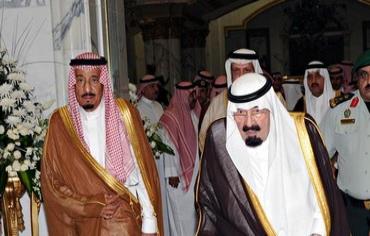
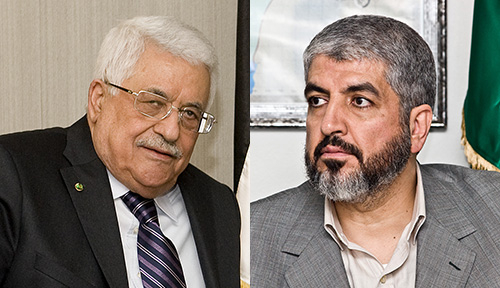






 anneinpt
 artaxes
 danmillerinpanama
 davidking1530
 Peter Hofman
 Joseph Wouk
 Peter
Peter Louisiana Steve
 WarSclerotic
Recent Comments