Archive for May 20, 2014

Jordan army’s 2nd Mechanized Division is deployed along Syrian border, army leaves cut

May 20, 2014

Jordan army’s 2nd Mechanized Division is deployed along Syrian border, army leaves cut, DEBKAfile, May 20, 2014

(IDF reserves? What reserves?– DM)

[T]he IDF has manned all the Syrian border positions with conscripts. No reserve units have been deployed.

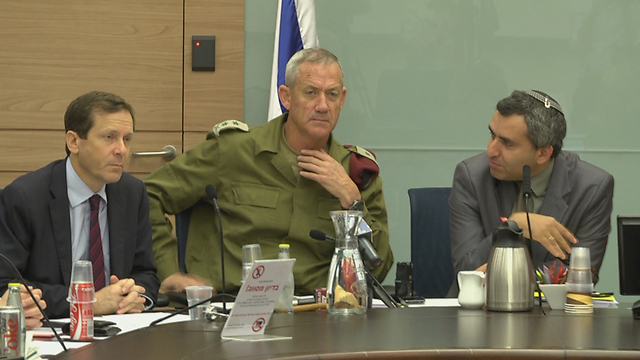
The deep concern over the serious security situation evolving on Israel’s northern frontier was strongly reflected in IDF Chief of Staff Gen. Benny Gantz’s explanation to the Knesset Foreign Affairs and Security Committee Monday for the urgent need to reverse defense budget cutbacks.

jordan-syria-border_5.14Jordanian-Syrian border

The Syrian army offensive, launched Tuesday, May 20 to break the stalemate developing with rebel forces in the tussle for the Syrian Golan town of Quneitra, has raised forebodings in Israel and Jordan lest Assad’s troops bring the fighting up to their borders. So far, the rebel offensive has failed to break through to Quneitra – or even lay it to siege. The Syrian army command, although seriously short of fighting men man, has seized the moment for a counter-offensive.

The Jordanian army has accordingly deployed its 2nd mechanized division along the entire 380 km of the kingdom’s porous border with its Syrian neighbor in battle formation, along with its 60th armored battalion. All leaves have been suspended for officers and men serving in the border sector.

Earlier, the IDF augmented its border troops opposite the Golan and the Hermon range, according DEBKAfile’s military sources.

In its counter-offensive, the Syrian army’s managed Tuesday to capture the village of Um Aswaj near the southern Syrian town of Deraa and is continuing to advance on further rebel positions in the south. It went into action after the rebels Monday captured sections of the main highway from Quneitra to Damascus. This step was supposed to have led to the encirclement of the Golan town. But this did not happen. The intense fire from Syrian 9th Division tanks forced the rebels to abandon the strategic highway.

To make up for its shortage of ground troops for the Golan, the Syrian army has brought in Grad and Scud ground-to ground missiles and conducting air strikes on the rebels with warplanes and and assault helicopters.

The deep concern over the serious security situation evolving on Israel’s northern frontier was strongly reflected in IDF Chief of Staff Gen. Benny Gantz’s explanation to the Knesset Foreign Affairs and Security Committee Monday for the urgent need to reverse defense budget cutbacks.

“The national order of priorities is changing,” he said, “and with it, unfortunately, national decisions relating to defense. “We are in the throes of a complex challenge to our resources not encountered in the past, with dramatic repercussions for the IDF. I come to you after a difficult week,” said the chief of staff in reference to the situation on the Israeli- Syrian border.

“We are obliged at this time to make painful decisions which affect all systems and all spheres of action for the reserves and the regular army – when it comes to training, the situation in the field and the home front.

“The country has clear orders of priority and on security we have already taken as many risks as are permissible.”

DEBKAfile’s military sources report that, for now, the IDF has manned all the Syrian border positions with conscripts. No reserve units have been deployed.

Off Topic: Finance Ministry rebuffs Defense Ministry on budget

May 20, 2014

Finance Ministry rebuffs Defense Ministry on budget, Ynet News, Avital Lahav, May 20, 2014

(With the Middle East basking in eternal peace, Israel’s enemies vanquished and no problems on the horizon requiring a military response, why give the IDF more money to waste on such frivolities as training reserves?

Does anyone else remember the consequences of U.S. cutting of military spending “to the bone and then more” in the years before the “unexpected” North Korean invasion of South Korea on June 25, 1950? The only two U.S. Marine divisions in the U.S. were at half wartime strength or lower and the reserves were needed, ASAP. At least they were generally well trained. — DM)

Source tells Ynet that military establishment’s request for cash injection will be rejected, Finance Ministry will recommend further cuts in 2015.

The defense establishment was rebuffed by the Finance Ministry only a few hours after IDF Chief of Staff Lieut. Gen. Benny Gantz announced the cancellation of all further reservist trainings.

A source told Ynet that not only would the Finance Ministry refuse to authorize a cash injection for the defense establishment, but that it would recommend further cuts in future discussions of the 2015 budget.

The source commented on an estimate released by the Bank of Israel on Monday, which said the government would have to cut ministries’ budgets and raise taxes totaling 18 billion shekels for 2015.

Gantz at budget meetingIDF Chief of Staff Lieut. Gen. Benny Gantz at Knesset’s Defense Committee meeting (Photo: Eli Mandelbaum)

“This makes an injection of funds for defense impossible. In a situation where you need to pare down, every dollar for defense will come at the expense of other ministries – who already have to make their own cuts.”

According to the source, not only would the defense not receive the additional funds it wants, but it would also have to share in the burden of the government’s cutting costs.

“It is only fitting that the ministers will take the position that the Defense Ministry cannot avoid sharing the burden. This government has a significant civil agenda and it is not appropriate that the entire burden falls on the transportation and education budgets.”

The source noted that the Finance Ministry had yet to settle the figures for 2015, but that that it was clear the Bank of Israel numbers were not accurate and the final figure would be smaller than the 18 billion shekels previously mentioned.

When asked about future cuts to the government, the source said that was a misperception and the budget would actually increase by a few billion shekels – but the administration had made decisions which result in financial expenses even beyond the amount of the increase.

Earlier on Tuesday, Defense Minister Moshe Ya’alon responded to the cancellation of IDF reservist training: “The IDF is in financial distress which is not new; the figures were presented to the cabinet at the beginning of the year.

“The defense budget is not the biggest one, but it is growing smaller. We will not call up reserves even for operational activity.”

IDF Chief of Staff Lieut. Gen. Gantz also addressed the cancellation. “This is not trick and no shtick. I am very concerned. The IDF is in the service of the people, not the other way around. We will make every effort to secure the safety of Israeli citizens no matter the circumstances.”

Off Topic: Modi and Begin

May 20, 2014

Modi and Begin, Israel Hayom, Elliot Abrams, May 20, 2014

(Anneinpt  posted a very good piece about Narendra Modi yesterday, including a summary of relations between Israel and India. — DM)

One aspect of India’s foreign policy under the Congress Party governments has been hostility to Israel, a part of India’s fealty to Third World, Non-Aligned Movement pieties. Today Indian-Israeli relations are better and Israeli commerce with India is growing, but it will be interesting to see if Modi warms the relationship up.

The new prime minister was elected to the nation’s top office in his 60s after many years in politics. He had been an opposition leader while another party, tied to the nation’s very creation, ruled most of the time and claimed to be the “natural” party of government. His victory was heralded as creating a new era in politics, with the hold of the old political clique apparently broken for good.

The new prime minister brought a new economic policy, rejecting the socialist approach of most of his predecessors. He was oriented toward the free market, and toward helping bring prosperity to the masses of poor voters who felt excluded under the old system.

He was a controversial figure, with many allegations about involvement in violence and extremist groups as a younger man. He had, in fact, been called a fascist and a demagogue by his political enemies.

This portrait fits India’s new prime minister, Narendra Modi — and it fits Menachem Begin, Israel’s prime minister from 1977 to 1983.

Of course, there are many differences in their careers and lives as well, and one should not push the comparison further than it will go.

But there are enough parallels to evoke interest, not least the concern that each was an extremist who could not be trusted with power. As Begin broke the power, and socialist economic approach, of the Labor party ruling clique that had governed Israel since its independence in 1948, so Modi has broken the power of the Congress Party and the Nehru-Gandhi dynasty that ruled India for much of the period since independence in 1947. Modi’s association with the RSS and Begin’s with the Irgun were the source of many accusations about their political values. Both men seemed to win election by gaining the trust of masses of people who felt excluded by the ruling elites and felt the government was indifferent to their poverty and lack of opportunity. Both men brought a greater religious aspect into a politics that had seemed militantly secular.

One aspect of India’s foreign policy under the Congress Party governments has been hostility to Israel, a part of India’s fealty to Third World, Non-Aligned Movement pieties. Today Indian-Israeli relations are better and Israeli commerce with India is growing, but it will be interesting to see if Modi warms the relationship up.

A suggestion: Prime Minister Netanyahu should send Modi a copy of Daniel Gordis’ excellent biography, “Menachem Begin: The Battle for Israel’s Soul.” And let him draw his own parallels.

Elliot Abrams is a senior fellow for Middle East Studies at the Council on Foreign Relations. This piece is reprinted with permission and can be found on Abrams’ blog “Pressure Points” here.

Replacement of EU foreign policy chief could complicate Iran talks

May 20, 2014

Replacement of EU foreign policy chief could complicate Iran talks, Ynet News, May 20, 2014

(An interesting hagiography. — DM)

Ashton, 58, a former nuclear campaigner, social worker and hospital administrator who was made a baroness for life by Britain’s Labor party in 1999, had no foreign policy experience when she was unexpectedly named to her post in December 2009.

Despite those shortcomings and a difficult time early in her tenure as she battled to establish herself, she is said to have forged a close personal relationship with Iran’s foreign minister, Mohammad Javad Zarif, her counterpart in the talks. Zarif occasionally addresses her as Cathy.

Catherine Ashton’s departure will create a temporary diplomatic gap; someone familiarity with the issues or rapport with the Iranians could have difficulty moving talks forward.

BRUSSELS – As Iran and international negotiators work towards a July deadline to complete an accord with Tehran on its nuclear program, a practical issue may be on their minds: the looming changeover of the European Union’s foreign policy chief.

Catherine Ashton, the British baroness who has held the EU’s top foreign policy post for the past five years, may not be the critical decision-maker in the talks, but she has been the prime coordinator of the negotiations since 2010.

The role requires her to work with the United States, Russia, China, Britain, France and Germany to present a clear and united position, while trying to build trust with the Iranians to keep the sensitive talks trundling along.

Ultimately, it is Iran and Washington who will determine if a deal is done. But Ashton’s shepherding of the process has won her accolades and helped silence some of her many detractors.

She may not be an international stateswoman in the making, but her upcoming departure could complicate diplomacy at a critical time, potentially exposing the talks to risks.

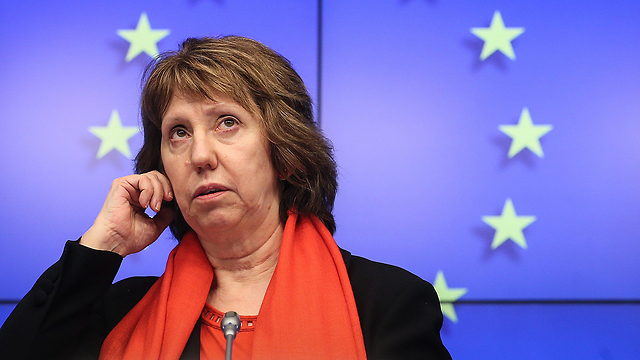
AshtonCatherine Ashton (Photo: EPA)

“Her departure will create a gap, even if temporarily,” said Ali Vaez of the International Crisis Group, a think-tank. “Personal relations matter too, in fact enormously.”

All sides are still hoping a deal can be finalized by July 20, potentially making history. If that’s the case, Ashton would be able to see the diplomacy through – her mandate does not finish until the end of October.

But given the sensitivity of the talks, constant concerns raised by outside parties like Israel and deep divisions between the sides, delays are possible: a round of negotiations in Vienna last week made less headway than hoped.

A delay would mean a new EU foreign policy chief taking over, someone with less familiarity with the issues or rapport with the Iranians. Alternatively, although it is unlikely, it could result in the baton being handed to another, non-EU party, which might reset the clock from Iran’s perspective.

‘Common Touch’

Ashton, 58, a former nuclear campaigner, social worker and hospital administrator who was made a baroness for life by Britain’s Labor party in 1999, had no foreign policy experience when she was unexpectedly named to her post in December 2009.

Despite those shortcomings and a difficult time early in her tenure as she battled to establish herself, she is said to have forged a close personal relationship with Iran’s foreign minister, Mohammad Javad Zarif, her counterpart in the talks. Zarif occasionally addresses her as Cathy.

While it may be a small matter in an incredibly complex set of negotiations, Ashton’s common touch – she has a northern English person’s aversion to high ceremony – appears to have helped her engage with Zarif. It may not clinch a deal, but it allows the parties to stay engaged.

“At the root, these talks will be decided on national interest, not personality,” said Cliff Kupchan, Middle East analyst at the Eurasia Group, a risk consultancy.

“(But) personalities matter and her departure would at least at the margins impair the atmosphere and momentum.”

Ashton has presided over diplomacy with Iran during the most significant developments for years, including the signing of an interim deal last November under which Tehran agreed to scale back some of the most delicate aspects of its program in return for limited sanctions relief.

That deal followed a resumption of formal negotiations in early 2012, after the European Union and the United States cranked up sanctions because of mounting concerns that Iran may be seeking the capability to make an atom bomb. Iran denies it has any military intentions.

The Negotiators, The Experts

The key question is what sort of personality might replace Ashton when her mandate expires.

Nominations will only formally emerge in the coming weeks and months, and even then the candidate may only be decided at the last minute. Once named, the candidate must be vetted and approved in hearings before the European Parliament, and only then can begin to think about priorities. Delays on the European side could easily prompt the same from Tehran.

Depending on which country the new foreign policy comes from, who it is and what the state of play is with Russia by that time, it may be that Iran slips down the agenda. What’s more, the new foreign policy chief may have a different manner and approach.

“Ashton was chosen because she wasn’t going to be bullish in her foreign policy. She is the voice of consensus, soft-spoken,” said Dina Esfandiary, a research associate at the International Institute for Strategic Studies.

“If there is someone more vocal, that could change the dynamics of the talks.”

Among the names mentioned as possible successors are Sweden’s foreign minister, Carl Bildt, and his Polish counterpart, Radoslaw Sikorski, both vocal on issues ranging from economic sanctions to trade and defense policy.

Since both have had to drive their countries’ foreign policies, they are less accustomed to playing a shepherding role and more inclined to take the driving seat – a potentially disruptive change of attitude from the Iranian point of view, not to mention the US, Russian or Chinese perspective.

Ashton’s departure could also mean her team of negotiators leaves, to be replaced by people chosen by her successor, complicating technical aspects of the negotiations.

Officials say it is not clear whether Helga Schmid, the EU’s German-born top negotiator, would stay in her post after the changeover, despite having forged close ties with her Iranian counterparts since 2011.

And in a further element that could shape the future, Ashton’s successor will to a large extent determine what sort of relationship the EU has with Iran if a nuclear deal is struck.

Companies from Europe and the United States will be eager to seize trade and investment opportunities in Iran as and when Western sanctions are lifted.

But at that stage the EU may also have to consider Iran’s human rights record, a long-term bugbear that has not figured in the nuclear talks but could well become critical as future trade and investment ties are discussed.

“(Ashton) had the luxury of not having to think about that,” said Daniel Keohane, an analyst with the FRIDE think tank
Iran: A Big Lie and Getting Away With It

May 20, 2014

Iran: A Big Lie and Getting Away With It, Gatestone Institute, Avideh Motmaen-FarShabnam Assadollahi, et al, May 20 2014

(Since the Iranian perception of human rights is Islamist, why should anyone be surprised? — DM)

The truth is that the Rouhani administration has not been any more “moderate” than its predecessor, the Ahmadinejad administration. If anything, it is worse. The rate of executions, for instance, has increased even more alarmingly.

There is a common saying, “If you want to tell a big lie and not be caught at it, don’t tell a complete lie; rather, tell two-third lies and one-third truth, for that way the crust of truth will cover the core of lie.” That is exactly what Saeed Kamali Dehghan did when he wrote about the situation in the Islamic Republic of Iran under President Rouhani. In his latest article, published on May 15, 2014 in the prestigious Guardian, he claims that “Canada is getting it wrong on Iran;” and to prove that claim, he constructs a clever narrative that suits his aim much more than it conforms to reality.

He states that Canada broke off diplomatic relations with the Tehran regime, and claims that this means Canada, in a pro-Israeli move, has toughened its stance on Iran. What he does not say is that Canada has had no formal relations with the Islamic Republic for a long time. There was effectively no contact since the Canadian ambassador was expelled from Tehran in 2007. That expulsion came after Canada successively rejected the two individuals the Islamic Republic had nominated for the post of ambassador to Ottawa – both had apparently been involved in seizing the U.S. embassy in Tehran in 1979 and taking its diplomats hostage.

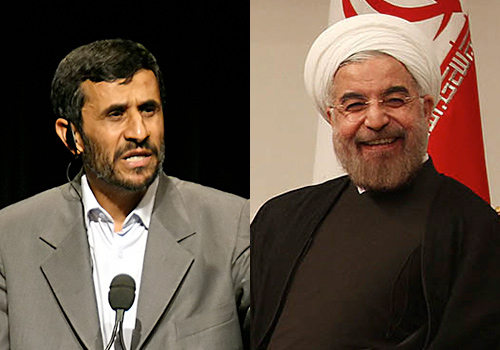
Rouhani and friendPictured at right, Iran’s smiling President Hassan Rouhani. At left, his predecessor, Mahmoud Ahmadinejad.
“Kind words, a smile and a charm offensive are not a substitute for real action.” — Canadian Minister of Foreign Affairs John Baird. (Image source: Wikimedia Commons)

Since 2007, each country’s mission in the other country has been headed, at Iran’s insistence, by a chargé d’affaires rather than an ambassador, and relations have been drastically circumscribed. However, this was not the end: Canada later decided unilaterally to shut down the Islamic Republic’s embassy and expel its diplomats due to strong allegations of espionage and sabotage against these diplomats.

Iranian activists in Canada, for their part, have been asking Ottawa to expel the Islamic Republic’s diplomats since 2003, when the Canadian photojournalist Zahra Kazemi was murdered in a prison in Iran. They asked again in 2009, when the regime in Tehran stepped up its efforts to crack down on the protesters after the rigged presidential elections.

Kamali Dehghan also claims that while other Western countries seem to have seized upon the opportunity to engage with the “moderate” President Rouhani, Canada is doing exactly the opposite and instead is siding with “dodgy exiled groups” such as the MEK and “rightwing Israelis.” As such, he not only attributes all those Iranians in Canada who are fighting against the tyranny of the Islamic Republic to the causes of the MEK and supposedly “rightwing Israelis,” but also tries very hard to convince the reader that Canada is wrong not to accept Rouhani as a moderate.

The truth is, however, that the Rouhani administration has not been any more “moderate” than its predecessor, the Ahmadinejad administration, within Iran. If anything, it is worse. While Iran initially had the highest per capita execution rate in the world prior to Rouhani’s taking office, the rate of executions has increased even more alarmingly under his rule. More than 600 executions have been carried out since he took office in August 2013 – with as many as 20 executions alone during the week of Rouhani’s “charm offensive” at the United Nations.

Dr. Ahmed Shaheed, Human Rights Council Special Rapporteur on Iran, has thoroughly documented the horrific treatment the Iranian prisoners endure. According to his report: physical torture, including beating, whipping and assault occurs in 100% of the cases; sexual torture, including rape, molestation, and violence to genitals, occurs in 60% of the cases; and psychological and environmental torture, such as solitary confinement, are also prevalent.

One recent shocking example of the rampant violence perpetrated against the Iranian prisoners was the brutal raid by the prison guards against the Ward 350 Evin Prison inmates on April 17, 2014. Rouhani has not only remained silent about the crimes committed in Ward 350, he promoted Head of the Iran Prisons Organization, Gholam-Hossein Esmaili, to the position of Director General of the Justice Department in Tehran Province.

According to Dr. Shaheed’s recent testimony, there are presently at least 895 prisoners of conscience and political prisoners in Iran. Among them are political activists, religious practitioners, human rights defenders, civic activists, student activists, journalists, labor activists and other civil society activists. And most of the opposition activists imprisoned before Rouhani became president are also still incarcerated.

As for tolerance, despite President Rouhani’s initial promises to ensure greater tolerance of religious minorities in Iran, the Supreme Leader, Ayatollah Khamenei, recently issued a fatwa calling on Iranians to avoid any interactions with members of the Baha’i faith. Nevertheless, the persecution of the Baha’is continues under Rouhani even more thoroughly than before. A number of Baha’is have recently been murdered; a larger number expelled from work and school, as well as sent to prison, and the old Baha’i cemetery in Shiraz has been razed to ground by bulldozers.

In the meantime, the Islamic Republic also incites hatred and violence against other religious and ethnic minorities, and violates their political, social, religious, economic, cultural, linguistic and educational rights. Balochis, Kurds, Arabs, and Christians have recently been imprisoned on spurious charges such as “spreading corruption on earth.”

Although Rouhani speaks eloquently about gender equality, women continue to face widespread and systematic discrimination in education, employment, state benefits, family relations and access to justice. Journalists are still prosecuted under Rouhani. Lesbian and gay people also continue to be victims of discrimination and violence under Rouhani.

We just wanted to bring these facts to Mr. Kamali Dehghan’s attention so that he will know, in case he does not know, that this is why Canada is not fooled by the Islamic Republic and warns that “kind words, a smile and a charm offensive are not a substitute for real action.” In the end, we must congratulate Mr. Kamali Dehghan for his clever choice of words throughout his recent article that casts reality in such a misleading light.

Just to mention one case, when he says that “Zahra Kazemi died while in jail in Iran under torture because of a skull fracture,” he attempts to downplay that Kazemi was indeed ruthlessly raped and then killed in prison under torture — a murder committed by Tehran’s Chief Prosecutor, Saeed Mortazavi, who struck her on the head and thereby caused the fatal skull fracture. No need to mention, of course, that he got away with it.

  • Dr. Avideh Motmaen-Far, Journalist, Political Activist,Toronto
  • Shabnam Assadollahi, Human Rights Activist, Freelance Journalist, Ottawa
  • Dr. Ahmad Mostafalou, Political Activist, Montreal
  • Afshin Afshin Jam, Human Rights and Political Activist, Vancouver
  • Shadi Paveh, Human Rights Activist, Ottawa
  • Sima Tajdini, Human Rights Activist, Toronto
  • Mehrdad Rahbar, Human Rights Activist, Artist, Vancouver
  • Marie-France DelBorrello, Human Right Activist, Vancouver
  • Mehran Mahboobi, Workers Rights Activist, Toronto
  • Cyrus Assadi, Retired Engineer, Ottawa
  • Soheyla Dorostkar, Human Rights Activist, Ottawa
  • Dr. Nouri Assemi, Ottawa
  • Dr. Manouchehr Assemi, Ottawa
  • Nina Taban, Toronto
  • Shahbaz Sobhani, Halifax, Nova Scotia
  • Parivash Zati,Retired Teacher, Toronto
  • Shahrzad Haddadi, Retired Nurse, Ottawa
  • Mehran Amiri, Human Rights Activist, Vancouver:
  • Shohreh Ghanbari, Artist, Human Rights Activist, Vancouver
  • Moe Eskandarpour, Human Right Activist, Vancouver
  • Mehrdad Amiri, Human Right Activist, Montreal
  • Shirin Mehrbod, Singer, Human Right Activist, Montreal
  • Taha Hassaniani, Journalist, Political Analyst, Toronto
  • Mansoureh Nasserchian, Political Activist, Radio Producer, New Brunswick
  • Hamid Ghahramani, Political Activist, Toronto

White House said ready to work with PA unity government

May 20, 2014

White House said ready to work with PA unity government, Times of Israel, May 20, 2014

A senior official in the White House reportedly said the US would cooperate with a soon-to-be-formed Palestinian unity government, despite Israeli opposition.

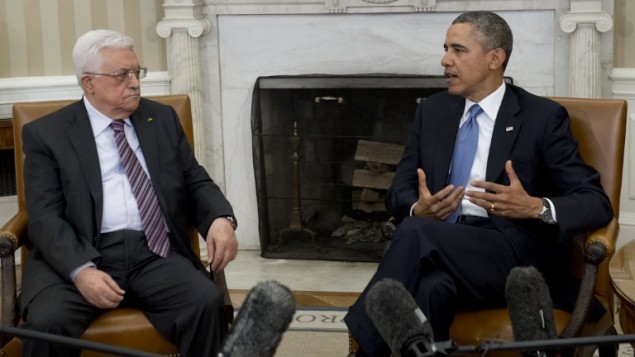
ObamaabbasUS President Barack Obama, right, and Palestinian Authority President Mahmoud Abbas hold a meeting in the Oval Office of the White House in Washington, DC, Monday, March 17, 2014 (photo credit: Saul Loeb/AFP)

TEL AVIV — A senior official in the White House reportedly said the US would cooperate with a soon-to-be-formed Palestinian unity government, despite Israeli opposition.

A unity government is set to be established within a week by Fatah, which controls the West Bank’s Palestinian areas, and Hamas, the terrorist group that governs Gaza. United States policy is not to work with Hamas unless it recognizes Israel, commits to nonviolence and abides by previous Israeli-Palestinian agreements.

Although it will have Hamas’s support, the new government will be made up of technocrats, rather than representatives of Hamas or Fatah. Palestinian Authority President Mahmoud Abbas has said that the new government will abide by the conditions mandated by the US.

An anonymous senior White House official told the Haaretz newspaper on Tuesday that the US would work with the new government as long as it abides by the conditions, even if it has Hamas’s support. A meeting of 28 European Union foreign ministers last week took a similar position.

“We want a Palestinian government that upholds those principles,” the White House official told Haaretz. “In terms of how they build this government, we are not able to orchestrate that for the Palestinians. We are not going to be able to engineer every member of this government.”

When the Palestinian factions announced the unity agreement in April, the Israeli government announced that it would not negotiate with any government backed by Hamas.

Israel and the US have been at odds over the collapse of the peace talks last month, with Foreign Minister Avigdor Liberman saying over the weekend that the US was mistaken for blaming Israel’s continued settlement activity for the breakdown.

Addressing recent reports that US President Barack Obama, Secretary of State John Kerry and special envoy Martin Indyk have all primarily blamed the settlements for the failure, Liberman said Israel and the US are great friends and that “even good friends are [sometimes] mistaken.”

“The Americans are mistaken on the settlements. Just like they were mistaken when pushing for Palestinian elections [in 2006, which saw Hamas rise to power]. The settlements are not an obstacle to peace and never have been,” Liberman charged.

Commenting on a meeting Thursday between Israel’s chief negotiator and Justice Minister Tzipi Livni and Abbas in London, Liberman said Livni was “entitled to meet with whomever she wished,” and insisted that she was in London mainly on other business and not for continued efforts for peace. “There was a cabinet decision to halt talks, which Livni supported,” Liberman said.

In the wake of the Palestinian unity pact last month, Israel’s key security cabinet, of which Livni is a member, voted unanimously to suspend negotiations with the PA, saying Israel could not hold peace talks with a government supported by Hamas, an Islamic terrorist organization committed to Israel’s destruction.

On Saturday, the US State Department denied allegations that Kerry’s envoy Indyk “bashed” Israel during a private conversation at a hotel bar in Washington earlier this month, and blamed Israel solely for the failure in peace talks.

Indyk criticized both sides for the failed peace talks in a speech at the Washington Institute for Near East Policy earlier this month. Days earlier, a feature in the Yedioth Ahronoth newspaper, reportedly based on a briefing by Indyk, quoted unnamed US officials offering a withering assessment of Netanyahu’s handling of the negotiations, indicated that Abbas has completely given up on the prospect of a negotiated solution, and warned Israel that the Palestinians will achieve statehood come what may — either via international organizations or through violence. The officials highlighted Netanyahu’s ongoing settlement construction as the issue “largely to blame” for the failure of Kerry’s July 2013-April 2014 effort to broker a permanent peace accord.

On Thursday, The New York Times published an article, quoting an unnamed US senior official, saying that Obama believes, more than any other factor, that Israeli announcements of construction in the West Bank and East Jerusalem throughout the nine months of talks led to the negotiations’ collapse.

In July 2013, Kerry coaxed the Israelis and the Palestinians back to the negotiating table after a three-year hiatus, and both sides agreed to keep talking for nine months. That period expired at the end of April, and the talks collapsed with each side blaming the other for major breaches of the negotiating agreements.


Time For Tough Choices In Iran Nuke Talks

May 20, 2014

Time For Tough Choices In Iran Nuke Talks « Breaking Defense – Defense industry news, analysis and commentary.

on May 19, 2014 at 3:51 PM

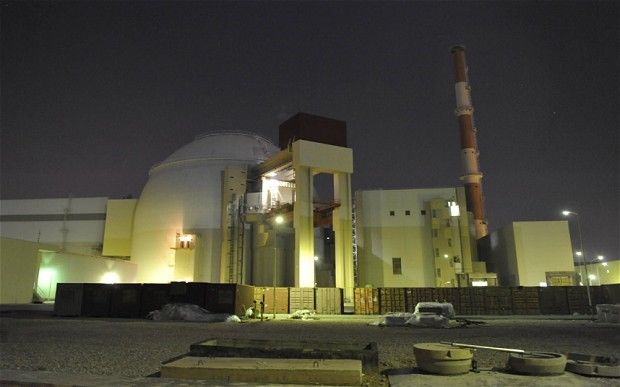
iran nuke plant

It is now clear that differences in negotiations between Iran and six major powers led by the United States remain intractable, despite the conciliatory words and much friendlier atmosphere which have reigned in recent months.

When the two sides met in Vienna last week for a first round of hard-core haggling after months of laying out their positions, it was as if they had run into a wall. Instead of confidently saying an agreement over Iran’s nuclear ambitions could be reached by the July 20 deadline, officials were now talking of “significant gaps” in their positions. It is “not about being optimistic or not optimistic. It is about being realistic,” a senior US official said.

The official said the six nations negotiating with Iran – the United States, Russia, China, Britain, France and Germany – now were “worried about the short time left” until the deadline, the US official said. “In any negotiations you have good days and bad days,” the official said. The Wednesday to Friday meeting in the Austrian capital was clearly among the bad ones. “We need to see some tough decisions being made … more than we’ve seen thus far,” the US official said, referring to such matters as the number of centrifuges Iran will get to keep. Iranian negotiators meanwhile were talking about the deadline possibly being extended six months until next January but the American said the six nations still had a “sense of urgency” about reaching an agreement in July.

There are to be more senior-level talks in June; experts from the two sides are consulting on a full-time basis. Talks are expected to become non-stop as the July 20 deadline nears. The bottom line is that the fundamental divide which has existed since the beginning of the Iranian nuclear crisis in 2002, when secret Iranian nuclear work was first revealed, has not diminished. The devil may be in the details in the talks but the details reflect ways of thinking about nuclear goals and needs. Compromising on issues such as centrifuges, which refine uranium into either reactor fuel of bomb material, are as political as they are technical and therein lies the rub. Here is a look at what the main issues are going forward:

Centrifuges

These are at the heart of Iran’s capability to produce enough high-grade uranium to do a so-called “break-out” and to make a bomb. Iran currently has some 19,000 centrifuges installed, 10,000 of which are actually enriching uranium gas into higher levels of the isotope U-235, which is used for fission. Low enriched uranium is used for power reactors. High enriched uranium can be used for atom bombs. At its current capacity, Iran could “break-out” and make enough high-enriched uranium for one atom bomb in about two months, although estimates about this differ. Israel has said it expects Iran to be reduced to at least a one-year break-out time.

The United States also wants Iran to reduce its number of centrifuges. The Iranians say they won’t do this. They argue that their right to enrich is inalienable under the Non-Proliferation Treaty, which authorizes the peaceful use of nuclear energy. The Iranians also argue that a “break-out” to make a weapon would be a political decision, which could take place no matter how many centrifuges were turning. Iranian officials now talk about having 100,000 or more centrifuges in order to make enough fuel for power reactors. Iran has only one power reactor at the current time, the Bushehr plant which is fueled by the Russians. It says it wants eventually to fuel Bushehr and to build more power reactors.

There is another quite significant wrinkle. Iran claims an unrestricted right to do research, including on advanced centrifuges which could enrich uranium more quickly than more basic models. If Iran perfected these machines, then the number of centrifuges would not matter. They could enrich the same amount of uranium with fewer centrifuges. The solution to this might be to limit the total capacity of enrichment, the number of “SWU” (Separative Work Units), instead of the number of centrifuges.

Arak

This is the heavy-water reactor under construction. When finished it could produce plutonium, like uranium a bomb material. Iran has said it is ready to accept a technical fix, such as fueling the reactor in a way that reduces its proliferation risk. But whatever fix is found, a problem remains. Once the reactor is fueled it can not be bombed because of the risk from radiation contamination. Israel may oppose any fueling of the Arak reactor, which is, by the way, above-ground and therefore open to attack.

The Other Hard Points

There are a host of other issues, such as calls on Iran to clarify possible military dimensions of its nuclear work, particularly past work. This goes to the heart of Iran’s intentions; Iran has been stonewalling on this issue since 2008.

There is also the question of Iran’s missile work, since a bomb needs a delivery vehicle. Iran has refused to discuss its missile work within the framework of the talks on a comprehensive agreement, but the United States insists that this must be a matter for discussion.

Sanctions are, of course, also an issue. Iran may press for faster and wider sanctions relief if it compromises on its positions. The sanctions have limited Iran’s oil sales and cut into its ability to do business internationally.

It is not a good sign that drafting an agreement failed to begin in Vienna last week. Achieving a deal is still a long shot. But there is a great deal of negotiating yet to come, and both the United States and Iran, the main players, have invested much in the current diplomacy.

Michael Adler, an expert on Iranian nuclear issues at the Woodrow Wilson Center, writes regularly on the issue for Breaking Defense.

Exclusive: Powerful Pro-Israel Lawmaker Suddenly Pulls Pro-Israel Bill

May 20, 2014

Exclusive: Powerful Pro-Israel Lawmaker Suddenly Pulls Pro-Israel Bill.

Foreign Policy

BY John HudsonMAY 19, 2014 – 07:54 PM


Facing a difficult vote that would have forced Democrats to choose sides between the White House and members of the pro-Israel community, Senator Bob Menendez, the chairman of the Senate Foreign Relations Committee, removed a key piece of pro-Israel legislation from the committee’s agenda, according to congressional aides familiar with the matter.

The bill, the U.S.-Israel Strategic Partnership Act, would expand cooperation between the two nations in a number of areas, including defense, intelligence, energy, and homeland security. The legislation enjoys broad bipartisan support and would have likely passed the foreign relations committee. But Menendez surprised Republicans by calling off a vote on the bill after it became clear that the committee’s ranking member, Sen. Bob Corker (R-Tenn.), planned to introduce an amendment related to the Obama administration’s nuclear talks with Iran that would have forced Democrats to make a politically difficult choice in the run up to this year’s midterm elections.

Should President Obama reach a deal with Iran and five other world powers to restrain the country’s nuclear program, the Corker measure would have forced the president to submit the full plan to Congress within three days. The amendment would then give Congress the right to hold a “vote of disapproval” on the final deal and make way for hearings on the matter. Notably, the legislation would not give Congress the power to block the deal, only to express its will on the issue.

Such a vote would have likely divided Democrats torn between standing behind the White House’s hard-fought diplomatic efforts and members of the pro-Israel community, many of whom are deeply skeptical of an Iran deal.

In a statement Monday evening, the American Israel Public Affairs Committee, the powerful pro-Israel lobbying organization, gave support to Corker’s amendment. “AIPAC supports provisions such as the Corker Amendment which underscore the key role that Congress must play in defining the terms of an acceptable deal and its implementation,” an AIPAC official said.

A spokesman for Menendez declined to comment. One Senate aide, speaking against the new measure, said Corker’s amendment didn’t belong in a bill pertaining to the U.S.-Israel partnership. “It is deeply disappointing that a bipartisan bill cosponsored by over 60 senators sending a strong message extending far beyond the United States – Israel security partnership is being politicized when it should be passed,” said the aide. “This is the right bill for the right time as the United States and Israel continue to make advances in technology, homeland security, agriculture, and other areas. It is not the appropriate vehicle to legislate on Iran.”

Many in the pro-Israel community have argued that the Iran nuclear issue is part and parcel of any pro-Israel legislation given the perception that the nuclear program is an existential threat to the Jewish state. However, the amendment has also been viewed by some as a political tool aimed at driving a wedge between pro-Israel Democrats. AIPAC has traditionally avoided legislation aimed at politicizing the Israel issue in favor of support for bipartisan legislation.

When asked directly about the Corker amendment, a senior U.S. administration official declined to oppose or support it.  “Preventing Iran from acquiring a nuclear weapon has been a top priority for the administration, toward which we have worked diligently with Congress and our international partners,” said the official. “The administration is fully committed to continuing to brief and consult closely with Congress so that the United States government speaks with one voice and does not undermine our negotiators’ efforts to achieve a strong deal that will protect our interests and those of our partners and the international community.”

Off Topic: All Israeli army reserve training canceled for 2014

May 20, 2014

All Israeli army reserve training canceled for 2014, Times of Israel, May 20, 2014

IDF chief of staff Gantz cites unprecedented financial constraints, laments changing national priorities

Benny GantzDF Chief of the General Staff Benny Gantz at the Western Wall Monday, after participating at his son bar mitzvah, May 19, 2014. Photo by Flash90

Warning that the army was operating under unprecedented financial constraints, IDF Chief of Staff Benny Gantz said Monday that he had cancelled reserve training for the rest of the year because of cuts to the defense budget

Speaking at a ceremony at the IDF staff and command college in Glilot honoring outstanding reservist soldiers, Gantz said that “the national priorities have changed. And with it, sadly, so have the national decisions that have to do with security.”

“As a result,” he continued, “we are dealing with a complicated resource challenge, the likes of which we have not seen before, and which could have dramatic consequences for the future… These days we are forced to make painful decisions which affect all areas — reserves and standing army, training in the field and operations in the rear.”

“The state has clear priorities, but we have taken all the security risks possible.”

Gantz went on to say that “the very important security programs having to do with the reserves will not be able to take place this year. This year, the reserves will not train.”

A senior military official was quoted saying last week that “the IDF has run out of funds” and that the military needs “billions of shekels within days in order to continue to operate.”

The official was speaking anonymously last Monday to Channel 10 about deep cuts to the defense budget that had hurt the army’s training programs and general readiness.

He noted that the military had cut armored units and fighter jet squadrons and fired a thousand people in under three months, but said that was still not enough to counter the lack of cash.

“In the next few days IDF chief Benny Gantz will decide which exercises and trainings to cancel,” the official said at the time.

Also last week, Deputy Finance Minister Miki Levy (Yesh Atid) warned that the Defense Ministry would not see its budget increased, despite the news Friday that Defense Minister Moshe Ya’alon and Gantz had decided to cancel a major upcoming national preparedness exercise in light of the ongoing budgetary dispute.

Levy accused the defense establishment of mismanaging the budget and urged defense officials to “sit down and prioritize.”

Ya’alon last Wednesday described the fiscal state of the country’s defenses as a “crisis,” and criticized the Finance Ministry’s conduct in doling out funds.

“We are in a crisis; this is a fatal blow to training,” he told the Knesset’s Foreign Affairs and Defense Committee. “We are going to decrease the level of air, sea, and land training even further, and preparedness, readiness and competence will suffer.

“Starting next month we will be forced to enter a difficult period. This is a harsh blow to the competency of the regular fighters, not to mention the reserves,” he said.

Last May, the government set the IDF budget at NIS 51 billion ($14.5 billion). The military took a cut of NIS 3 billion from its 2014 budget, but argued that the cuts would actually amount to NIS 7.4 billion ($2.1 billion) due to factors beyond the IDF’s control, such as higher electricity costs and taxes, payments for injured soldiers and additional benefits for career soldiers due to the rising retirement age.

Meanwhile, the IDF said it had done its part, making cuts to its workforce and, in June, halting operational activity for reservist units for the rest of this year.

The standoff between the Finance and Defense ministries over the 2014 defense budget was thought to have come to an end in late October with the security cabinet approving an infusion of NIS 2.75 billion ($780 million) for the defense establishment.

The cabinet was unanimous in its decision, and the Prime Minister’s Office said in a statement that the cash for the budget increase would be drawn from a budget surplus.

The IDF had hoped to secure a NIS 4.5 billion ($1.28 billion) increase.