Archive for May 12, 2014

Iranian refusal to explain atomic detonators could sink talks

May 12, 2014

Iranian refusal to explain atomic detonators could sink talks, Times of Israel, May 12, 2014

Unnamed diplomats warn deal may not be reached by July 20 deadline; Iran, IAEA decline comment after meeting.

[T]he UN’s International Atomic Energy Agency is no nearer to closing the books on persistent allegations that Iran worked on nuclear arms in the past. While the IAEA’s probe is formally separate from the talks, the US and its allies insist that Tehran must provide satisfactory explanations to the UN agency as part of any overall deal.

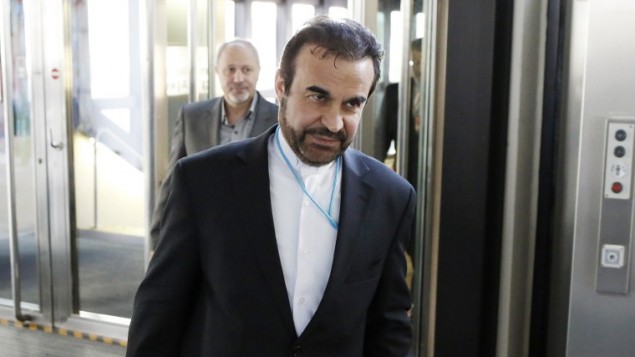
Iranian negotiatorIran’s ambassador to the International Atomic Energy Agency (IAEA) Reza Najafi arrives for a new round of talks with the IAEA at the UN headquaters in Vienna, Austria on May 12, 2014. (photo credit: AFP PHOTO / DIETER NAGL)

VIENNA (AP) — A once-promising UN attempt to probe suspicions that Tehran worked on atomic arms is faltering — and with it, hopes that Iran and six world powers can meet their July target date for an overarching nuclear deal.

With efforts to draft the text of an agreement starting in Vienna on Wednesday, both sides say that meeting the informal July 20 deadline remains possible. The US administration gives it a 50-50 chance, and Iranian Foreign minister Mohammad Javad Zarif recently said the talks are progressing at an “unexpectedly fast pace.”

The United States, Russia, China, Britain, France and Germany want to reduce Iran’s present nuclear weapons-making potential. Tehran has been engaging with them over the past six months in exchange for full sanctions relief, even though it insists it has no interest in such arms.

But the UN’s International Atomic Energy Agency is no nearer to closing the books on persistent allegations that Iran worked on nuclear arms in the past. While the IAEA’s probe is formally separate from the talks, the US and its allies insist that Tehran must provide satisfactory explanations to the UN agency as part of any overall deal.

Back in November, Tehran agreed to go into deeper explanations of its work on detonators that have a variety of uses, including sparking a nuclear explosion.

That has not happened. Three diplomats told The Associated Press Monday that in a recent formal response, Iran continues to insist that there is no nuclear link to the detonators. Tehran says they were developed only to set off conventional military blasts, and later for civilian uses.

The IAEA outlined its suspicions in a 2011 report on a wide range of suspected weapons experiments. It said then that Iran’s work on the detonators is of concern, “given their possible application in a nuclear explosive device, and the fact that there are limited civilian and conventional military applications for such technology.”

Signed soon after Iran’s reformist government took office, the November Iran-IAEA deal as seen as important for testing Tehran’s professed willingness to de-escalate tensions over its nuclear program.

The UN agency and its Western members had hoped the agreement would finally mean Iran would crack open the door on what they say was secret nuclear weapons work.

But Tehran’s latest response suggests it is not ready to change its stance.

The IAEA first approached Iran about the detonators six years ago. When told of their latest response, Olli Heinonen, who headed the agency’s Iran investigation until 2010, said it was “pretty much how they explained it in 2008.”

With the clock ticking down on the informal July comprehensive deal target, IAEA chief Yukiya Amano was pushing ahead on the probe nonetheless.

Two of the diplomats said senior agency officials met Monday with Iranian representatives in attempts to persuade Tehran to engage on three additional areas of suspected weapons work even as they sought more answers on the detonators.

The diplomats are involved with international efforts to track and curb Iran’s nuclear program. They did not detail what those new areas could be and demanded anonymity because they were not authorized to divulge confidential information.

Calls to the Iranian mission to the IAEA went to voicemail, while IAEA spokeswoman Gill Tudor said the agency had no comment.

Gary Samore, who negotiated with Iran until last year as US President Barack Obama’s chief adviser on weapons of mass destruction, said he expects the talks to go past July as Iran and the IAEA wrestle over the nuclear arms allegations.

Ultimately, he said Iran may find some “useful fiction” — for instance, claiming that renegade scientists were behind the program or that research was done to understand the nuclear weapons technology possessed by Tehran’s enemies.

“I think that if all the other issues are resolved this issue will be resolved,” he said. “But it will be the last one to be resolved.”

Experts say other, much trickier questions remain to be resolved, though.

Other claims outlined in a major November 2011 IAEA report include alleged explosives testing at the Parchin military base near Tehran that the watchdog says would be “strong indicators” of missile development.

Iran and the six world powers aim to turn into a lasting accord a temporary deal from November under which Iran scaled back certain nuclear activities for six months in return for minor relief from painful UN and Western sanctions.

As part of this sought-after comprehensive accord, as well as reducing in scope its nuclear activities, the six powers want Iran to answer all the IAEA’s outstanding questions.

Iranian Foreign Minister Mohammad Javad Zarif is due to hold a working dinner with the powers’ main negotiator, EU foreign policy chief Catherine Ashton, on Tuesday before the talks start in earnest on Wednesday.

Iran and the Bomb

May 12, 2014

Iran and the Bomb, Prager University, Bret Stephens via You Tube, May 12, 2014

(Simplistic but pretty good. — DM)

Obama shrinks away in the face of evil

May 12, 2014

Obama shrinks away in the face of evil, NY Post, Michael Goodwin, May 11, 2014

Although he is guilty of executive overreach at home, that bully behavior only sharpens the contrast with a foreign policy that is feeble when it is not comatose. The president’s estrangement from the demands of global leadership is giving a green light to tyrants and malevolent opportunists everywhere.

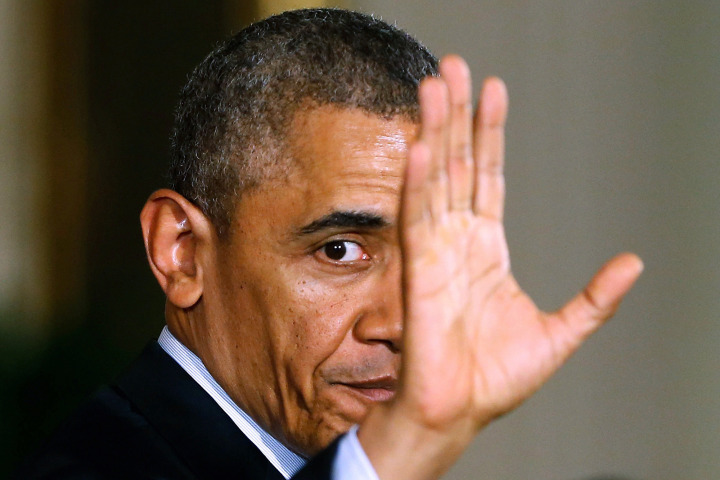
Obama waves as he departs the National Teacher of the Year ceremony in the East Room of the White House in WashingtonPhoto: Reuters

As Barack Obama enters the twilight of his tenure, the debate over his legacy is ­beginning, but one conclusion already seems certain. It can best be described as “Honey, I shrunk the presidency.”

Not since Jimmy Carter was held hostage by Iran has the Oval Office seemed so inconsequential against the forces of international darkness. The mismatch is particularly striking because smallness has been Obama’s choice.

Although he is guilty of executive overreach at home, that bully behavior only sharpens the contrast with a foreign policy that is feeble when it is not comatose. The president’s estrangement from the demands of global leadership is giving a green light to tyrants and malevolent opportunists everywhere.

His preference for navel gazing over action was on full display last week. As Russia and China menaced their neighbors and Islamist terrorists set off bombs in a half-dozen countries, Obama accepted an award from Hollywood pal Steven Spielberg for fighting genocide. Passing up a chance to give a full-throated defense of freedom and Western civilization, the president lapsed into what The New York Times called a “meditation” on the limits of his power.

That’s far too kind. It was a white flag of surrender and more proof that Obama lacks the capacity to shoulder the responsibilities that have belonged to the Oval Office for 100 years.

The speech sounded like that of a man who is shocked to find that evil still roams the Earth, and doesn’t have a clue what to do about it. A long paragraph of his meandering remarks, released by the White House, captures his sense of helplessness.

“I have this remarkable title right now — president of the United States — and yet every day when I wake up, and I think about young girls in Nigeria or children caught up in the conflict in Syria — when there are times in which I want to reach out and save those kids — and having to think through what levers, what power do we have at any given moment, I think, ‘drop by drop by drop,’ that we can erode and wear down these forces that are so destructive, that we can tell a different story,” Obama said.

If there was a course of action buried in that litany of woe, it ­escapes me. The sequence amounts to a counsel of defeat.

Earlier, he had talked about rising anti-Semitism and the spread of sectarian and tribal conflicts.

“We cannot eliminate evil from every heart, or hatred from every mind,” he said. “But what we can do, and what we must do, is make sure our children and their children learn their history so that they might not repeat it. We can teach our children the hazards of tribalism. We can teach our children to speak out against the casual slur. We can teach them there is no ‘them,’ there’s only ‘us.’ ”

There you have it. We can teach our children warm and fuzzy things — assuming they and we are not killed by madmen first. In which case, there’s nothing we can do.

The speech reflects how little Obama has grown in office. He initially viewed American power as a problem that needed to be checked if the world was to find lasting peace and harmony.

By and large, he followed that bad prescription by deliberately shrinking America’s global footprint, and the result is the astonishing chaos we see around us. The vacuum is being filled not with democratic movements but by al Qaeda, China, Russia and other authoritarian regimes eager to take advantage of our retreat.

Obama’s view of the world was wrong, and his policies are making it more dangerous and less stable. Yet he is still sounding the call to retreat, proposing new cuts to the military that would shrink it to pre-World War II levels.

Having failed to listen or learn, Obama surveys the incomprehensible brutality and sinks into an intellectualized self-pity. Indeed, there is special poignancy to the fact that First Lady Michelle Obama joined the Twitter nation over the Nigerian schoolgirl abductions.

The photo of her holding a sign saying “Bring Back Our Girls” is riveting, but also odd.

Did she think to push her husband to do something?

And you wonder whom she expects to save the girls. The United Nations? The terrorists themselves? Nigeria’s government?

Maybe all of the above, which is to say no one, because, without the leadership of the United States, there is no one who can maintain peace and security.

This is the result of the choice Barack Obama made. This is what the world looks like when a president laments evil ­instead of confronting it.

The Perils of International Idealism

May 12, 2014

The Perils of International Idealism, Front Page Magazine, May 12, 2014

(It just might work, in a world populated only by green unicorns. — DM)

[V]iolence as an instrument for pursing national aims, including intentional violence against non-combatants, is proscribed by international law and agreements like the Geneva and Hague conventions. Yet different can have different conceptions of when such violence is legitimate. In many Middle Eastern countries, for example, guerilla attacks against non-combatants far from any battlefield are called terrorism by Westerners, yet dubbed legitimate “resistance” by those like the Palestinian Arabs, who name parks and streets after notorious terrorists, celebrate their deeds in school curricula, and subsidize them and their families with stipends. This disagreement about the legitimacy of violence and its acceptable victims reflects radically different beliefs that cannot be harmonized in some larger set of global “norms.”

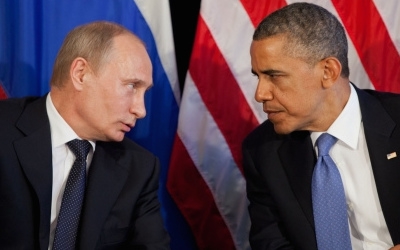
Putin and Obama

United States foreign policy has been defined lately by serial failures. Russian President Vladimir Putin annexed Crimea and appears to be preparing a reprise in eastern Ukraine, and possibly in the Baltic states. Syrian strongman Bashar al Assad is poised to win the civil war in Syria at the cost so far of over 200,000 dead. Negotiations with Iran over its uranium enrichment program have merely emboldened the regime and brought it closer to its goal of a nuclear weapon. And yet another attempt to broker peace between Israel and the Palestinian Arabs has failed. In all these crises the U.S. has appeared weak and feckless, unable to direct events or achieve its aims, even as its displeasure and threats are scorned.

The responsibility for these setbacks is often laid at the feet of President Obama and Secretary of State John Kerry. The political calculations, ideology, and character flaws of both do indeed deserve much of the blame for America’s weakness and ineffectiveness abroad. Yet another factor is larger than any one individual, administration, or party––the flawed and often incoherent ideals shaping our understanding of interstate relations and our expectations of state behavior. Those ideals comprise a set of global norms that assume a universal morality shared by all countries despite the variety of cultures, religions, and governments in the world’s 196 nations. And those norms in turn are embodied in the international order that encompasses the various multinational institutions, tribunals, organizations, conventions, declarations on human rights, and treaties, the purposes of which is to regulate state behavior, deter or stop oppression and violence, promote peace and prosperity, and adjudicate conflict.

Official remarks and commentary on the current crises have been informed by this notion of a global consensus about which state behaviors are legitimate and which are not. John Kerry’s comments on Russia’s conflict with Ukraine, for example, scolded Putin, “You just don’t in the 21st century behave in 19th century fashion by invading another country on a completely trumped up pretext.” Similarly, President Obama protested, “Russia’s leadership is challenging truths that only a few weeks ago seemed self-evident––that in the 21st century, the borders of Europe cannot be redrawn with force, that international law matters, that people and nations can make their own decisions about their future,” for such aggression “is not how international law and international norms are observed in the 21st century.”

Critics of the president’s handling of the crisis have endorsed this same international order they feel has been weakened by the U.S.’s timid or inept response. Fareed Zakaria of The Washington Post referred to “broader global norms––for example, against annexations by force. These have not always been honored, but, compared with the past, they have helped shape a more peaceful and prosperous world.” So too David Rivkin and Lee Casey in The Wall Street Journal evoked “the three basic principles of international law, reflected in the United Nations Charter and long-standing custom,” which “are the equality of all states, the sanctity of their territorial integrity, and noninterference of outsiders in their international affairs.”

Rivkin and Casey allude to the two main sources of international law: treaties of the sort that created the United Nations, and “long-standing custom.” Both have their weaknesses and questionable assumptions. As Robert Bork writes in Coercing Virtue, “There is nothing that can be called law in any meaningful sense established by custom. If there were, it would not restrain international aggression; it is more likely to unleash it . . . if custom is what counts, it favors aggression.” This judgment is empirically validated by the incessant warfare, ethnic cleansing, civil wars, invasions of neighbors, and genocide that have attended the modern international order since its birth in the 19th century.

As for treaties, a sovereign nation can refuse to sign a treaty. The United States, for example, has not signed the Ottawa Treaty banning anti-personnel mines. Nations can ignore or undermine treaties too, just as Russia violated the 1994 Budapest Memorandum giving “security assurances” to Ukraine in exchange for the surrender of its nuclear arsenal. Or a nation can withdraw from a treaty if it no longer serves its interests. North Korea did this in 1994 when it withdrew from the International Atomic Energy Agency on its way to acquiring nuclear weapons. This behavior surprises no one who recognizes the wisdom expressed by George Washington, who said of the new nation’s alliance with France, “It is a maxim founded on the universal experience of mankind, that no nation can be trusted farther than it is bounded by its interests.”

Internationalism, in contrast, assumes that “customary norms,” and the terms of a treaty like those creating international institutions, encode the universal morals and values that over time have emerged as the human race has progressed and become more civilized. Yet there is little evidence supporting this optimism, and much that shows Washington was right: national or regime interests determine whether these norms and terms, either customary or codified in treaties, are ignored, endorsed, or violated. We should not be surprised at this lack of consensus, given the variety of cultures, religions, and interests that shape both the means and the ends a state will pursue.

For example, violence as an instrument for pursing national aims, including intentional violence against non-combatants, is proscribed by international law and agreements like the Geneva and Hague conventions. Yet different peoples can have different conceptions of when such violence is legitimate. In many Middle Eastern countries, for example, guerilla attacks against non-combatants far from any battlefield are called terrorism by Westerners, yet dubbed legitimate “resistance” by those like the Palestinian Arabs, who name parks and streets after notorious terrorists, celebrate their deeds in school curricula, and subsidize them and their families with stipends. This disagreement about the legitimacy of violence and its acceptable victims reflects radically different beliefs that cannot be harmonized in some larger set of global “norms.”

The primacy of national interest likewise explains the failure of states to consistently intervene in order to punish those violators of international “norms” such as “noninterference of outsiders” in another nation’s affairs, or respect for “territorial integrity.” China’s absorption of Tibet, or Turkey’s annexation of northern Cyprus, was met with diplomatic censure but left unpunished. Today these ongoing occupations––like Putin’s earlier violation of Georgia’s territorial integrity–– are faits accomplis, rarely mentioned even as Russia’s similar annexation of Crimea is condemned. So too with violations of the universal prohibition against genocide, perhaps the most grievous crime in international law.  Over 400,000 people in Darfur have been killed by Arab militias at the instigation of the Sudanese government, and 800,000 were slaughtered in Rwanda.

These horrific crimes and violations of international law were not stopped or punished because it was not in the national interests of any major power to expend the necessary money and lives of its citizens, or to risk the unforeseen geopolitical consequences and blowback of such an intervention, to do so. These political calculations of national interests, which more often than not conflict with those of other nations, when camouflaged by public protestations of fealty to international norms and law, has opened up Western nations to the charge of hypocrisy and cynicism, and consequently eroded their moral authority. Given that “international law is not law but politics,” Bork writes, “it is dangerous to give the name ‘law,’ which summons up respect, to political struggles that are essentially lawless.”

A further incoherence bedevils the idea of international norms binding on all peoples. The cultural relativism dominant in the West proscribes making negative judgments about the cultures and practices of other nations. Such criticisms are thought to bespeak a lingering imperialist and colonialist, if not racist, arrogance—an attempt to impose Western morality and values on peoples with their own distinct and cherished cultures. Yet the foundational ideals of internationalism, such as human rights that exist apart from any particular regime or culture, imply not just a universalism contradicting cultural relativism, but also a moral ranking of cultures determined by their adherence to human rights, sex equality, tolerance for religious minorities, honesty in negotiation, individual freedom, and the stigmatizing of brutality and violence.

Yet how can these privileged norms be coherently integrated with the idea of national sovereignty and self-determination, and the imperative to respect and tolerate the cultural differences that define a unique national identity? If we are unwilling to say that ideals like respecting the territorial integrity of neighbors are superior to, not just different from, the cultures of other nations that violate such ideals; and if we cannot affirm that they trump the “sanctity” of the offenders’ territorial integrity and so justify our interventions to stop or punish violators––even if the aggressor’s behavior is motivated by beliefs and values integral to that nation’s culture and identity––then the foundations of the international order are built on sand, and our foreign policy will appear to be yet another hypocritical perfuming of realpolitik with idealistic rhetoric, or the empty diplomatic gestures of a weak state eager to avoid conflict.

In all the current crises, these contradictions and inconsistencies have compromised our responses and limited our actions, with the result that our interests and security have been endangered by the perception of weakness such failures invite. We need to recognize that the belief in norms established by custom or by treaty will not truly exist until nations share, as Bork writes, “a common political morality or are under a common sovereignty. A glance at the real world suggests we have a while to wait.” And as we wait for that utopian day unlikely to ever arrive, we should not be surprised that global predators continue to scorn “customary norms” and violate treaties, governed only by the timeless Thucydidean maxim–– “The strong do what they can, and the weak suffer what they must.”

Israel: Iran Nuclear Deal Unacceptable

May 12, 2014

Israel: Iran Nuclear Deal Unacceptable, Washington Free Beacon,  , May 12, 2014

(The only new aspect of Prime Minister Netanyahu’s comments appears to be his failure to note — or even to hint — that, if necessary, Israel will attack the Iranian nuke establishment alone. Why? — DM)

In recent weeks, Israeli political and national security figures have been publicly outlining what they would find intolerable in a final agreement, and hinting that a bad deal could force Israel to take military action.

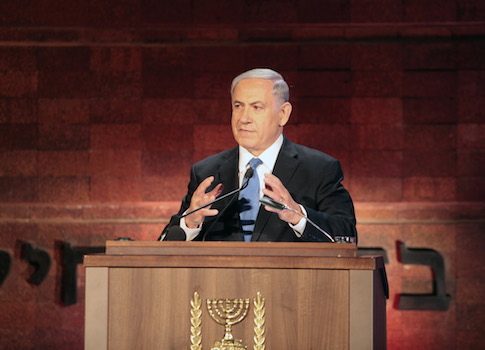
Benjamin Netanyahu

As world powers and Iranian leaders prepare to meet for the next round of nuclear talks on Tuesday, Israeli officials are bracing for an unacceptable final nuclear deal and have started to take their case to the public.

In recent weeks, Israeli political and national security figures have been publicly outlining what they would find intolerable in a final agreement, and hinting that a bad deal could force Israel to take military action.

“If there is a deal, [the Israelis] will have to decide whether to campaign against it, or urge Congress to demand that it be toughened before sanctions are lifted, or remain quiet,” said Elliott Abrams, former deputy national security adviser to President George W. Bush. “I doubt they will remain quiet, and why should they: their national existence is on the line, and they don’t owe Obama many favors.”

Israeli Prime Minister Benjamin Netanyahu has raised concerns about a final deal in his last two high-profile speeches, denouncing any potential agreement that would “eliminate the sanctions” against Iran but “leave its [nuclear] capabilities intact.”

“Such a deal, which will enable Iran to be a nuclear threshold state, will bring the entire world to the threshold of an abyss,” said Netanyahu in a speech at Yad Vashem on Holocaust Remembrance Day, April 27.

“Unlike our situation during the Holocaust, when we were like leaves on the wind, defenseless, now we have great power to defend ourselves, and it is ready for any mission,” he said.

His comments were echoed by former Israeli Gens. Yaakov Amidror and Amos Yadlin, who warned that Iran could covertly restart its nuclear program at any point if the program is not dismantled.

“American intelligence officials have publicly admitted that they cannot guarantee identification in real time of an Iranian breakout move to produce a nuclear weapon,” wrote Amidror.

He added that even if Western intelligence could spot an Iranian breakout effort, the Obama administration cannot be relied on to take military action.

“With such a flimsy agreement, I wonder what will be left of Western commitment to preventing Iran from obtaining a nuclear weapon,” wrote Amidror. “And Israel will have to draw its own conclusions.”

Ehud Barak, Israel’s former defense minister, also criticized the Obama administration’s negotiating position at a conference in Washington, D.C., last Thursday.

“The American administration changed its objective from no nuclear military Iran to no nuclear military Iran during the term of this administration,” Barak said.

He argued that Iran’s nuclear facilities could be destroyed in a “fraction of one night,” if the United States chose to take military action.

But analysts remain skeptical that Netanyahu’s public statements carry any influence inside the Obama administration.

“Alas, the chance that Netanyahu’s rhetoric will sway Obama is somewhere between zil and null,” said Michael Rubin, a resident scholar at the American Enterprise Institute and former Pentagon adviser under President George W. Bush.

“Obama dislikes Netanyahu and will dismiss anything the Israeli leader says. Netanyahu, for his part, has not helped his own case for whenever he speaks, all anyone on the fence will think about is the cartoon bomb.”

Other analysts said the Israeli arguments could be intended to bolster congressional opposition to a bad nuclear deal.

“Any criticisms they offer will I think be adopted by many Republicans, and the open question is what Democrats will do. Stick with Obama? Fully? Or distance themselves a bit,” said Abrams. “The problem for [the Israelis] will be a big White House campaign saying that it’s this deal or war.”

The six-month deadline for reaching a long-term nuclear agreement is July 20.

What Would Abbas’ Palestinian State Look Like?

May 12, 2014

What Would Abbas’ Palestinian State Look Like? Algemeiner, Reuven Berko, May 12, 2014

Now one can only hope that the Americans finally understand with whom they are dealing. Only the future will tell if the dog is wagging its tail or if the tail is wagging the dog.
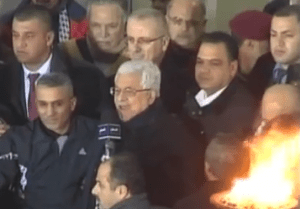
Abbas with other terroristsPalestinian Authority President Mahmoud Abbas embracing the returning 26 convicts from Israeli jails as “heroes” in Ramallah, on December 30, 2013. Photo: Screenshot / WAFA.

Al-Qaeda leader Ayman al-Zawahiri recently calledMahmoud Abbas “a traitor who is selling Palestine.” The statement was made in a speech available on al-Qaeda-affiliated websites, and he also said that while Fatah claimed to be a national liberation movement, it had in fact become the movement that was selling out the homeland, and that its president had waived the rights of the refugees to appease the United States.

Shortly after the speech was made public, top Fatah members called al-Zawahiri a hypocrite. They accused him of trying, “in the service of the Zionist plot,” to cause a rift within the Palestinian people at a time when Mahmoud Abbas was facing threats and pressure to surrender to American and Israeli demands. Fatah spokesman Ahmed Assaf accused al-Qaeda of never having taken an interest in the Palestinian cause, and although the entire world was their battlefield, it had not carried out so much as one action against the Israeli occupation.

Al-Zawahiri’s accusations reflect the atmosphere of failure surrounding Abbas and his supporters after the last round of negotiations with Israel, and are an omen for the future. Something upset the Palestinian leadership’s recent sense of euphoria, and the situation is such that Abbas has threatened to resign, dismantle the Palestinian Authority and turn everything over to Israel.

Until just recently, Abbas and his supporters were convinced they could link the European Union’s pressure on Israel to the American effort brokered by Secretary of State John Kerry to twist Israel’s arm and force it to make further concessions toward establishing a “Palestinian state,” without the Palestinians having to concede anything. The Palestinian tactic was inherited from Yasser Arafat, author of the “salami plan” to dismantle Israel slice by slice, an illustration of the Arabic saying “khuz watalib,” “Take and demand more.” The Palestinians had aspirations to obtain a state without having to pay Israel any price that the Palestinian, Arab and Islamic streets might consider “unfavorable.” The illusion of exploiting the negotiations’ momentum and getting “Palestine” for free was joined by the Israeli left’s cry of “gevalt,” lest Israel’s not caving in to the Palestinians’ demands would immediately lead to the third Intifada, to sanctions, to forcing Israel to become a binational state or, heaven forbid, to Mahmoud Abbas’ resignation, which would leave Israel to deal with the chaos in Judea and Samaria alone.

In response to the Palestinian mantra of “Take and demand more,” Prime Minister Benjamin Netanyahu formulated his own mantra, “Give and you will get, don’t give and you won’t get.” In the meantime and quite unexpectedly, the Palestinians had the global media rug pulled out from under them and were forced to the sidelines by the talks with nuclear Iran, the drama unfolding in Ukraine, and the ongoing slaughter in Syria. Israel’s firm position on the issue of its Jewish character put the Palestinians in a vise. They are now at a crossroads, where accepting Israel as a Jewish state will write “finis” to the so-called “right of return” (the “right” of all the descendants of the Palestinian refugees to return to the territory of the State of Israel), and will of necessity lead to the end of the Israeli-Palestinian conflict.

The last round of talks made it clear that Abbas and the rest of the Palestinian leadership reject a peace agreement with Israel and the establishment of a Palestinian state, and are manipulating marginal technical excuses. The threats, veiled or not, by radical Islamists (such as those made by al-Zawahiri) and a quick look at Arab-Muslim world, especially Syria, have made it clear to the Palestinians what the future has in store for them, and it now appears that in the meantime, they prefer the status quo to the establishment of an independent Palestinian state. Thus, it is easy to understand why the negotiations with Israel have faltered and stalled.

Abbas and his advisers are gradually abandoning the illusion that Israel will agree to commit suicide just to please them and are beginning to realize that Israel will never accept the descendants of the original refugees who fled in 1948, to say nothing of the jihadists who will try to hitch a ride on the so-called “right of return.” Abbas knows that if the Palestinians really do decide to establish an independent state alongside Israel, as part of the peace agreement they will have to accept all those descendants. That is a message Abbas will never be able to send to the Palestinians in the “dispersal.” If he agrees to the condition that there will be no “right of return” into Israeli territory, the future Palestinian state will have to allow the millions of Palestinian descendants spread around the globe to enter “Palestine” and claim Palestinian citizenship. Legions of them will do so to escape the poverty, slaughter, racism and discrimination that have been their lot in the poverty-stricken, conflict-ridden Arab states in which they have lived for years, where they are second-class residents with neither citizenship nor basic civil rights.

The Palestinian leadership knows that if their demand for Palestinian control of the Jordan Valley crossings were accepted, the operative result would be floods of people seeking entrance into “liberated Palestine.” They know that among them would be operatives of all the Palestinian terrorist organizations, to say nothing of the armed jihadists currently active in the Arab-Muslim world, especially in Syria, Iraq and Lebanon, who would stream in “to liberate all Palestine.” The new Palestinian state would have no grounds to refuse entrance to the “jihad heroes,” or to close its borders to all those attracted by the prosperity in Judea and Samaria, or to those who hoped to enter Israel or to those who intended use “Palestine” as a convenient base from which to attack Israel.

The Palestinian leadership, which is supposed to establish a Palestinian state alongside Israel in the West Bank, understands that what is happening in Syria, i.e. the destruction caused by the Islamic organizations fighting there, will be replicated in the new Palestinian state itself. Simple observation of the activities of al-Qaeda-affiliated organizations in Syria, among them the Al-Nusra Front and the Islamic State in Iraq and Syria, reveals that they are on a rampage of murder, rape and robbery, and that innocent civilians are their hapless victims. In addition, the Palestinian leadership has not forgotten how its people were killed and thrown from the roofs in the Gaza Strip as Hamas took over, not a particularly encouraging lesson.

In addition, the masses that stream into “Palestine” will demand a role in government and will clash with Palestinian property owners and demand that resources be reapportioned. Jihad fighters who enter Judea and Samaria in the name of the “right of return” will use force to introduce a lifestyle based on the Sharia, and with Hamas will begin a revolution that will end with the establishment of an Islamic emirate alongside the one in the Gaza Strip. Later, the Islamist terrorist organizations will quarrel among themselves and vie for control of the territory (exactly like what is happening now in Syria, where the Islamist organizations war with one another as they fight to wrest control from Bashar Assad), even as they wage a military confrontation with Israel.

This scenario will inevitably lead to the end of Palestinian security collaboration with Israel, which the Palestinian Authority currently enjoys and which serves its interests. The final act will be the internal destruction of the Palestinian Authority, crowned by the hanging of Abbas and those close to him, after which their bodies will be dragged to the main square in Ramallah. The property of the corrupt upper echelons of Fatah will be confiscated – property they stole and money they embezzled from Western and Arab aid funds which were originally intended for projects for the Palestinians.

After that, Hamas and the Salafist-jihadi organizations will force themselves on the local population, but the battles between the Palestinian and Islamist organizations will give rise to chaos and destruction within Palestinian territory, mass murders and the destruction of the infrastructure built when the West Bank was under Israeli control. The Islamists, some of them jihad tourists from other killing fields, will wreak havoc among Palestinians civilians, their property and their women exactly as they are currently doing in Syria. Terrorist attacks on Israel will increase and Israel will respond with increasing violence and the almost-flowering Palestinian territory, currently neighboring on Israel, will become a wasteland, sharing the fate of the cities of the Arab Spring. As usual, Israel will be held responsible for the internal Palestinian slaughter, just as it was held responsible for the slaughter of the Palestinians by the Maronites in the Sabra and Shatila refugee camps in Beirut.

Abbas conducted negotiations in an attempt to wrest tactical gains from Israel in order to preserve the momentum, extend his rule (which is neither legal nor supported by a Palestinian consensus) and wait until a better opportunity presents itself to act against Israel, for, according to the Arab saying, “Allah favors the patient.” Abbas wants neither peace nor an independent Palestinian state because it would mean the end of the conflict with Israel and the establishment of a state coexisting with Israel, the recognition of Israel as legitimate and as a Jewish state. That result goes against Palestinian interests and is an infallible recipe for the internal destruction of the Palestinian Authority. The establishment of a Palestinian state coexisting with Israel will shatter the newborn Palestinian dream of the “return,” the expulsion of the Jews, and the takeover of all “Palestine.”

Actually, Abbas does not want an independent Palestinian state under any conditions. An independent Palestinian state would entail free and democratic elections, which he and his associates would lose to Hamas. An independent Palestinian state would need Palestinian leaders who would finally have to take responsibility for their citizens without being able to blame the “occupation” for their own failures. An independent Palestinian state would have to end the embezzlement of funds and force the introduction of an independent economy with fiscal transparency. The establishment of a Palestinian state would end the massive influx of Arab and Western resources delivered in the name of “the Palestinian cause.”

The government in the Palestinian state would be forced to prevent the return of the descendants of the original Palestinian refugees even to “liberated Palestine” because of limitations of security, economy and territory. This action will enrage and cause antagonism among those who will not be allowed to settle in “Palestine.” The Palestinian state will also have to find a way to deal with the Gaza Strip, whose population suffers from every form of socio-economic backwardness and is completely different from the population of the West Bank. It will have to cope with Hamas, the dominant factor in the Gaza Strip, which is belligerent and hostile to the other Palestinian organizations and their supporters. Hamas will use force to Islamize the secular lifestyle of the Palestinians in the West Bank, just as it has in the Gaza Strip.

Establishing a state side by side with Israel is not good for the Palestinians. The Palestinian Authority’s situation will deteriorate even further if Israel abandons the Jordan Valley border and turns it over to the Palestinians. Abbas is trying to squeeze interim concessions out of Israel as a way of maintaining his regime’s momentum and convincing the Palestinians, an increasing number of whom support Hamas and the Salafist-jihadis in their campaign against Israel and the West and do not want a Palestinian state that will live in peaceful coexistence with Israel, that he has actually achieved something. Secretary of State John Kerry is to be congratulated on his efforts to bring peace to Israel and the Palestinians, but as far as Abbas and his followers are concerned, the vision of establishing a Palestinian state is like the work of recently-deceased Gabriel Garcia Marquez, a “chronicle of a death foretold.”

Pursuing a policy of brinkmanship, the Palestinians instituted moves for an international boycott of Israel, increasing the tension and violence on the ground, and also asked for recognition and the status of a national state in various UN agencies, violating agreements with Israel. In addition, Abbas threatened to resign, dismantle the Palestinian Authority and make Israel responsible for the fate of the Palestinians in Judea and Samaria. His threats were virtually unnoticed and had no effect.

The need for a Palestinian decision to recognize Israel as a Jewish state and abandon the so-called “right of return” was raised in the negotiations Kerry brokered. It is a just, legitimate demand, and it became an obvious and accepted condition for ending the conflict, achieving peace and establishing a Palestinian state. Abbas refused, and his refusal meshed with the ideology of Hamas, an arrogant Palestinian terrorist organization that not only rejects any peace agreement with Israel, but is committed to destroying it. Internal Palestinian reconciliation became attractive to Hamas because of its precarious position, having lost the support of Syria, Iran and Hizballah. In addition, Hamas has been outlawed by Egypt as a terrorist organization and is being pursued as such. The Egyptian army has destroyed 1,400 smuggling tunnels under the border at Rafah, which served to provide Hamas with ammunition, logistics and funding for its terrorist activities.

Thus, at the end of April, the PLO and Hamas held a series of meetings in the Shati refugee camp near Gaza City. They pieced together a unity agreement on the only single common factor of their totally different ideologies, which is seeking Israel’s destruction and the establishment of a Palestinian state in its place, but until recently they disagreed over authority and the way to realize their dream. The agreement reached included the formation of an interim government of “technocrats,” elections, and processing a joint new national agenda that would crystalize and express both sides’ “national and religious” aspirations. Nevertheless President Mahmoud Abbas claims that he will continue supporting the negotiations with Israel, but his new-found ally Ismail Haniyeh, who is head of the terrorist administration in the Gaza Strip, insists on establishing a Palestinian state on “all the land of Palestine.”

Now one can only hope that the Americans finally understand with whom they are dealing. Only the future will tell if the dog is wagging its tail or if the tail is wagging the dog.

EXCLUSIVE: Iran Unveils New Missile Equipped with MRV Payloads

May 12, 2014

EXCLUSIVE: Iran Unveils New Missile Equipped with MRV Payloads, FARS News Agency, May 12, 2014

(This has nothing to do with Iranian nukes, intended only for peaceful purposes. It’s also none of the business of P 5 + 1, sayeth P 5 + 1. See also Nuclear talks in jeopardy: Khamenei orders Rev Guards to mass-produce missiles – regardless — DM)

Qadr is a 2000km-range, liquid-fuel and ballistic missile which can reach territories as far as Israel. Qiam is also a new type of surface to surface and cruise missile of Iran.

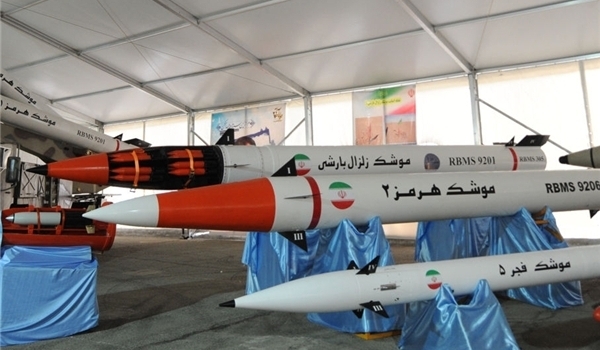
Iranian missiles new

TEHRAN (FNA)- The Islamic Revolution Guards Corps (IRGC) Aerospace Force has equipped its short-range Zelzal missiles with newly developed Multiple Reentry Vehicle (MRV) payloads, a military hi-tech owned only by a handful of the world states.

The surface-to-surface Zelzal missile is equipped with thirty 17-kg bombs which can destroy a wide range of targets and is a proper option for targeting airport runways and equipments, installations and facilities on the ground.

The solid-fuel missile with a 300-km range is among the most important missiles which can attack enemy targets and bases in short distances.

Zelzal was unveiled on Sunday in the presence of Supreme Leader of the Islamic Revolution Ayatollah Seyed Ali Khamenei in a two-hour tour of the IRGC’s Aerospace Exhibition, where state-of-the-art equipment and hardware were showcased.

The missile was earlier test-fired in 2011 during the drills, codenamed Payambar-e Azam (The Great Messenger) 6, but it was then armed with regular payloads.

In the drills, 9 Zelzal missiles were fired concurrently by triple launchers. The launchers granted the country the ability to fire larger numbers of Zelzal missiles with a much shorter time needed for doing preparations.

Then this March, the Iranian Defense Ministry announced that it had equipped its Qadr H and Qiam ballistic missiles with its newly developed MRV payloads.

The two missiles are capable of carrying different types of ‘Blast’ and ‘MRV’ payloads, and can destroy a wide range of targets. The new version of Qadr H and Qiam can be launched from mobile platforms or silos in different positions and can escape missile defense shields due to their radar-evading capability.

Qadr is a 2000km-range, liquid-fuel and ballistic missile which can reach territories as far as Israel. Qiam is also a new type of surface to surface and cruise missile of Iran.

A Multiple Reentry Vehicle payload for a ballistic missile deploys multiple warheads in a pattern against a single target. (As opposed to Multiple independently targetable reentry vehicle, which deploys multiple warheads against multiple targets.) The advantage of an MRV over a single warhead is that the damage produced in the center of the pattern is far greater than the damage possible from any single warhead in the MRV cluster, this makes for an efficient area attack weapon. Also, the sheer number of Warheads make interception by Anti-ballistic missiles unlikely.

Improved warhead designs allow smaller warheads for a given yield, while better electronics and guidance systems allowed greater accuracy. As a result MIRV technology has proven more attractive than MRV for advanced nations. Because of the larger amount of nuclear material consumed by MRVs and MIRVs, single warhead missiles are more attractive for nations with less advanced technology. The United States deployed an MRV payload on the Polaris A-3. The Soviet Union deployed MRVs on the SS-9 Mod 4 ICBM. Refer to atmospheric reentry for more details.

In recent years, Iran has made great achievements in its defense sector and attained self-sufficiency in developing and manufacturing its essential needs to military tools, weapons, equipment and systems.

Tehran launched an arms development program during the 1980-88 Iraqi imposed war on Iran to compensate for a US weapons embargo. Since 1992, Iran has produced its own tanks, armored personnel carriers, missiles and fighter planes.

Yet, Iranian officials have always stressed that the country’s military and arms programs serve defensive purposes and should not be perceived as a threat to any other country.

Jihadists capturing southern Syria, local fighter warns

May 12, 2014

Jihadists capturing southern Syria, local fighter warns | The Times of Israel.

( Ehud Yaari said that Israel and Jordan will not allow Jihadist control of the south.  This may be relevant to why Israel has closed off the Golan heights.  Rumors are flying that an intervention is immanent… – JW )

While Arab countries close their doors, Israel opens them to us, says Free Syrian Army spokesman in Daraa

May 11, 2014, 6:43 pm
Syrian rebels hold their weapons as they prepare to fight against Syrian troops, in Homs province, June 18, 2012 (photo credit: AP)

Lack of funds and quality weaponry may enable the Islamist Al-Nusra Front – a group classified as a terror organization by the US and other Western countries — wrest control of Syria’s southern province of Daraa away from the opposition’s Free Syrian Army, an FSA spokesman told The Times of Israel on Sunday.

The spokesman, who identified himself as Abu Omar Al-Hourani, said in a phone interview from Daraa that Al-Nusra’s higher salaries and high-quality weapons have spurred many local FSA soldiers to break ranks and join the Islamist group. He estimated that 80 percent of Al-Nusra’s fighting force in Daraa is currently comprised of Syrians, and the other 20 percent of foreign fighters.

“Daraa is partially controlled by Al-Nusra Front and affiliated groups, but it could fall entirely to their hands,” he said. “They receive huge external support, but we haven’t managed to figure out from where.”

Hourani said that Free Syrian Army fighters are “moderate Muslims” who believe in “a free democratic Syria open to all,” whereas Al-Nusra envisions a Syria where “the Islamic religion will control everyone.”

This January 2013 citizen journalism image shows rebels from al-Qaeda affiliated Jabhat al-Nusra, as they sit on a truck full of ammunition, at Taftanaz air base, that was captured by the rebels, in Idlib province, northern Syria. The photo was authenticated based on its contents and other AP reporting. (photo credit: AP Photo/Edlib News Network, ENN, File)

“They have no notion of pluralism,” he said, but emphasized that Al-Nusra does not share Al-Qaeda’s extreme views; represented in Syria by the Islamic State of Iraq and the Levant (ISIL).

Villages immediately to the east of Daraa such as Taiybeh, Al-Jeeza and Al-Musayfrah are entirely controlled by Al-Nusra, which currently holds some 30 positions in and around the city. Meanwhile, the city itself and its western suburbs are still held by the Free Syrian Army.

Al-Nusra has managed to obtain superior weapons from international black markets, including 23 millimeter anti-aircraft guns, Soviet Grad missiles, and SA-7 surface to air missiles. It has also managed to capture tanks from the Assad regime, he noted.

“Today you can even buy weapons from Syrian Assad officers and get whatever you want,” he said. “They don’t care who buys, all they care about is making money.”

Syria’s porous border with Iraq also allows for the flow of weapons into Islamist hands.

In addition to its military power, Al-Nusra is engaged in civilian projects such as sanitation, road paving, and medical rescue.

“They do this to win support among the population,” he said.

Hourani said that during meetings held in Jordan with Western and Arab states supporting the rebels, his forces have repeatedly requested anti-aircraft and anti-tank weapons. But fearing these weapons may fall to the hands of extremist fighters, donor states refuse to supply them. The FSA suggested that the West track the weapons using GPS systems; or even send Western teams into Syria to fire advanced American Stinger anti-aircraft missiles at regime airplanes under FSA guard, but to no avail.

“The [regime’s] explosive barrels are ravaging us,” he pleaded.

About a month ago, a shipment of 600 advanced anti-tank TOW missiles was sent to the FSA’s Syria Revolutionaries Front fighting in the northern provinces of Idlib and Aleppo, but none of these weapons reached his forces in Daraa, he said. FSA fighters in Daraa have only received machine gun ammunition and the occasional machine gun or sniper rifle, as well as a number of HJ-8 Chinese anti-tank missile systems. But these weapons too have also stopped reaching the rebels over the past six months.

The clash between the FSA and Al-Nusra came to a head on May 3, when the Islamist group abducted Colonel Ahmad Al-Ni’meh, the FSA commander of Daraa province, along with five other FSA commanders. According to Hourani, Al-Nusra accused him of collaborating with American and British intelligence, as well as supporting peace with Israel.

In a statement issued on Sunday, the Free Syrian Army in Daraa announced that it was halting all military cooperation with Al-Nusra pending Al-Ni’meh’s release.

A senior Israeli intelligence source told the Associated Press in January that Israel was reassessing its neutrality toward the civil war in Syria for fear of a possible spillover of jihadist fighters from Syria into Israel.

Israeli aid and public opinion

Hourani said that two men from his unit, badly injured in fighting, were treated in Israel. The health care provided by Israel has caused the people of Daraa to regard Israel as a “friendly country,” irrespective of past wars between Israel and Syria.

“Israel’s treatment is different from that of other countries,” he said. “Even Arab countries prevent the entry of Syrians. Inside Syria people are dying of hunger, and outside they’re dying of humiliation.”

Iran says it could go back to 20% enrichment

May 12, 2014

Iran says it could go back to 20% enrichment | The Times of Israel.

Rouhani vows Tehran won’t accept ‘nuclear apartheid’ or give up right to maintain program

May 12, 2014, 2:29 pm
Iranian President Hassan Rouhani delivers a speech during a ceremony at the Iran's Atomic Energy Organization (AEOI) in Tehran on May 11, 2014.  (photo credit: AFP/HO/ PRESIDENCY WEBSITE)

Iranian President Hassan Rouhani delivers a speech during a ceremony at the Iran’s Atomic Energy Organization (AEOI) in Tehran on May 11, 2014. (photo credit: AFP/HO/ PRESIDENCY WEBSITE)

Iranian President Hassan Rouhani said his country will go back to producing 20 percent enriched uranium “whenever necessary” and won’t back down from achieving its nuclear goals, Iran’s Mehr News agency reported on Sunday.

Iran will not accept “nuclear apartheid” but is willing to offer more transparency over its atomic activities, Rouhani declared ahead of new talks with world powers.

The limiting of production and stockpiles of 20% uranium is a key demand from Western powers seeking to curb Iran’s ability to produce nuclear weapons.

Iran and the P5+1 group of nations will start hammering out a draft accord Tuesday aimed at ending a decade-long stand-off over suspicions that the Islamic republic is concealing military objectives.

“We have nothing to put on the table and offer to them but transparency. That’s it. Our nuclear technology is not up for negotiation,” Rouhani, referring to the West, said in remarks broadcast on state television.

“Iran will not retreat one step in the field of nuclear technology… we will not accept nuclear apartheid,” he said.

The self-declared moderate president has faced a battle from domestic critics of his diplomatic outreach since taking power last August.

Hardliners accuse Rouhani of making concessions for little gain under talks that have started to reverse the political isolation Iran grappled with under his hard line predecessor Mahmoud Ahmadinejad.

Other skeptics of the nuclear talks, including members of the US Congress, doubt Rouhani’s sincerity in seeking a lasting agreement.

The world’s leading powers have long suspected that Iran is developing the capability to build an atomic bomb, an allegation Tehran has repeatedly denied.

“We want to tell the world they cannot belittle the Iranian nation; they have to respect it,” Rouhani said on Sunday.

Iran has suffered years of economic hardship exacerbated by international sanctions designed to coerce Tehran into curbing its nuclear work.

A potential deal under discussion between Iranian negotiators and counterparts from the United States, Britain, France, China and Russia plus Germany — under the P5+1 grouping — this week will focus on the scope of Iran’s nuclear activities.

Such an agreement will aim to render Iran incapable of making any push toward atomic weapons while also removing the sanctions.

The negotiators have a July 20 deadline, set by an interim deal reached in November that put temporary limits on Iran’s nuclear activities in exchange for modest sanctions relief.

Iran’s supreme leader Ayatollah Ali Khamenei, meanwhile, said Sunday problems such as the sanctions should not be linked to the nuclear talks, the IRNA news agency reported.

“Officials should address the question of sanctions by other means,” he added, speaking at an exhibition about Iran’s military capabilities organised by the powerful Revolutionary Guards.

He added that Iran will not limit its ballistic missile program as the United States, Israel and some European countries have demanded.

“The US and European countries call for Iran to limit its ballistic program while continually making military threats. Such an expectation is therefore stupid,” he said.

Tehran has developed an extensive ballistic missile program, with some weapons capable of hitting targets 2,000 kilometers (1,200 miles) away, putting Israel and US regional bases within range.

Iran claims it replicated captured US spy drone

May 12, 2014

Iran claims it replicated captured US spy drone | The Times of Israel.

Supreme leader Ali Khameni reviews missiles and locally built UAV based on American RQ-170 Sentinel

May 12, 2014, 8:59 am A photo released from the office of Iran's Supreme Leader Ayatollah Ali Khamenei on May 11, 2014 shows him (C-L) sitting next to the captured US RQ-170 sentinel high-altitude reconnaissance and its locally made copy at the Islamic Revolutionary Guard Corps Aerospace Force exhibition in Tehran.  (photo credit: AFP/HO/Iranian Leader's Website)

A photo released from the office of Iran’s Supreme Leader Ayatollah Ali Khamenei on May 11, 2014 shows him (C-L) sitting next to the captured US RQ-170 sentinel high-altitude reconnaissance and its locally made copy at the Islamic Revolutionary Guard Corps Aerospace Force exhibition in Tehran. (photo credit: AFP/HO/Iranian Leader’s Website)

TEHRAN — Iran said on Sunday it has succeeded in copying a US drone it captured in December 2011, with state television broadcasting images apparently showing the replicated aircraft.

Tehran captured the US RQ-170 Sentinel in 2011 while it was in its airspace, apparently on a mission to spy on the country’s nuclear sites, media in the United States reported.

“Our engineers succeeded in breaking the drone’s secrets and copying them. It will soon take a test flight,” an officer said in the footage.

The broadcast showed supreme leader Ayatollah Ali Khamenei’s visit to an exhibition organised by the powerful Revolutionary Guards air wing about Iran’s military advances, particularly regarding ballistic missiles and drones.

Footage showed two nearly identical drones.

“This drone is very important for reconnaissance missions,” Khamenei said, standing in front of the Iranian copy of the American unmanned aircraft.

Iran said it had taken control of the ultra hi-tech drone and forced it down in the desert where it was recovered nearly intact.

Washington said it had lost control of the aircraft.

At the time, US military officials tried to play the incident down, saying Iran did not have the technology to decipher its secrets, and President Barack Obama asked the Islamic republic to return the Sentinel.

Iran has been working to develop a significant drone program of its own, and some of its unmanned aircraft have a range of hundreds of kilometers (miles) and are armed with missiles.

The state broadcaster also showed images that the commentary said had been recorded by an Iranian drone above a US aircraft carrier in the Gulf.

In the pictures, which were relatively clear, it was possible to see American personnel working on planes and helicopters aboard the vessel.