Archive for May 4, 2014

Off Topic: Hamas Insists on Retaining Military Control in Unity Government

May 4, 2014

Hamas Insists on Retaining Military Control in Unity Government, Israel National News, Tova Dvorin, May 4, 2014

Hamas continues to be adamant over its control of a “unity” government, expressing over and over again that it would remain in control of both Gaza and the PA after elections and insisting that Ismail Haniyeh would rule the government. [Italic emphasis added.]

“The EU expects any new government to uphold the principle of non-violence, to remain committed to achieving a two-state solution and to a negotiated peaceful settlement … including Israel’s legitimate right to exist,” EU foreign policy chief Catherine Ashton insisted last week.

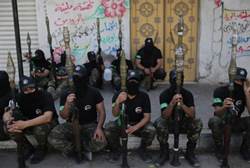
1Hamas TerroristsHamas terrorists Flash 90

Hamas representatives clarified Saturday night that they would not dismantle their “military wing,” the Al-Qassam Brigades, as part of their unity pact with Fatah.

Nor would the Brigades be merged with the Palestinian Authority (PA) police forces, according to the official.

Talk over such a move is nonsense,” a representative stated to Al-Monitor Saturday. “The Al-Qassam Brigades existed before the [Palestinian] Authority, and they retain the right to independent decision regarding the struggle against Israel.”

Hamas members fervently deny reports by London-based Al Quda Al-Arabi that the wing would be merged with Fatah’s “military forces” as part of the unity pact and a reconciliation agreement between the groups.

Hamas continues to be adamant over its control of a “unity” government, expressing over and over again that it would remain in control of both Gaza and the PA after elections and insisting that Ismail Haniyeh would rule the government.

Mahmoud Al-Zahar, a senior official and co-founder of Hamas, took issuewith claims of a united military force last week, spewing sharp criticism over the issue to Reuters.

“Nobody will touch the security sections in Gaza. No one will be able to touch one person from the military group. Nobody asked for that,” Zahar declared. He also claimed that PA Chairman Mahmoud Abbas is “lying” about being in charge of a unity government and charged him with vying for the continuation of US aid.

Duping the EU

Hamas and Fatah’s reconciliation deal last month has raised security concerns in Israel and utterly torpedoed peace talks. However, international response to the deal has been mixed, and the European Union (EU) has dismissed those concerns based on its conviction that PA Chairman Mahmoud Abbas, not Hamas leader Ismail Haniyeh, would remain in charge of a unity government.

“The EU expects any new government to uphold the principle of non-violence, to remain committed to achieving a two-state solution and to a negotiated peaceful settlement … including Israel’s legitimate right to exist,” EU foreign policy chief Catherine Ashton insisted last week. “The fact that President Abbas will remain fully in charge of the negotiationprocess and have a mandate to negotiate in the name of all Palestinians provides further assurance that the peace negotiations can and must proceed.”

High-ranking Iranian cleric visits Shiraz synagogue, confirms Biblical version of Jewish homeland

May 4, 2014

High-ranking Iranian cleric visits Shiraz synagogue, confirms Biblical version of Jewish homeland, DEBKAfile, May 4, 2014

According to DEBKAfile’s Iranian sources, Yanessi acted out a gesture on behalf of President Rouhani that was designed to allay Iranian Jews’ fear of fallout from the constant denunciations of the rulers of Tehran by Israel’s leaders.

Rouhani sent his ally to the synagogue most of all in the hope of winning points with American Jews and their support for the comprehensive nuclear accord soon to be signed between Iran and the Six Powers.

Even if this was part of the Iranian president Hassan Rouhani’s campaign of smiles for the West, the visit to the Shiraz synagogue Friday night, May 1, by the head of his assistant for minority affairs, Hojat- Islam Ali Yunessi, was especially noteworthy. He was the first high-ranking Iranian cleric to visit a Jewish synagogue in a decade and, moreover, he delivered a speech in praise of Iran’s ancient Jewish community’s successful coexistence with other groups.

But most remarkably, he admitted that historical research and archeological excavations in the last 150 years had corroborated the Biblical account of the deeds of the Persian emperor Cyrus the Great (550-530 BCE).

(The Bible recounts that Cyrus issued a fabled decree for the emancipation of slaves, including the Jewish people, from Babylonian captivity, and allowed them to return to their homeland in Judah and rebuild their Temple in Jerusalem.)

That reference alone will undoubtedly be enough to bring Iran’s radical elements down on Yunessi’s head for his temerity in gainsaying precepts laid down by the founder of its Islamic Revolution.  Ayatollah Ruhollah Khomeini declared the Jewish Bible a forgery because of its many contradictions of the Koran text and denounced all Persian rulers prior to his revolution as symbols of despotism and repression.

Yanessi did, however, take the precaution of pointing out that it would be a mistake to equate Judaism and Zionism because, he said, some Jews are anti-Zionist.

According to DEBKAfile’s Iranian sources, Yanessi acted out a gesture on behalf of President Rouhani that was designed to allay Iranian Jews’ fear of fallout from the constant denunciations of the rulers of Tehran by Israel’s leaders.

The Voice of America TV this week quoted the late Rabbi Ovadia Yosef as cursing the Iranians and hoping for their destruction. Although this quote was lifted from a speech the rabbi made many years ago, it got Iranian Jews worried.

But Rouhani sent his ally to the synagogue most of all in the hope of winning points with American Jews and their support for the comprehensive nuclear accord soon to be signed between Iran and the Six Powers.

The Iranian president has demonstrated notable diplomatic and tactical versatility for making sure that the accord goes through and results in the substantial easing of sanctions, urgently needed to boost the ailing Iranian economy.

Tehran is pinning high hopes on the visit to Israel this week by US National Security Adviser Susan Rice and the senior US negotiator Wendy Sherman on a twofold mission:

1.  To try and talk Prime Minister Binyamin Netanyahu out of his absolute conviction that the accord to be signed, which will acknowledge Iran as a nuclear threshold state, is bad and harmful to Israel’s and world security.

2.  If that doesn’t work, Rice and Sherman will try and obtain an Israeli pledge not to resort to a military strike against Iran’s nuclear facilities, an action that would scuttle the Obama administration’s entire Iran strategy.

The coming visit by these two senior American officials has caused few ripples in Israel.  However, for the Iranians, so much is at stake, that Rouhani sent a prominent cleric to stand up in a Shiraz synagogue and underwrite Cyrus the Great’s acknowledgement of the Jewish homeland in Judah and their temple in Jerusalem. He considered it was worthwhile for the sake of an international accord that accepts Iran’s nuclear threshold status and averts an Israeli attack.

▶ Yom HaZikaron, Israeli Memorial Day

May 4, 2014

▶ Yom HaZikaron, Israeli Memorial Day – YouTube.

May Their Memory Be for a Blessing – יהיה זכרם לברכה

Glorified and sanctified be God’s great name throughout the world which He has created according to His will. May He establish His kingdom in your lifetime and during your days, and within the life of the entire House of Israel, speedily and soon; and say, Amen.

May His great name be blessed forever and to all eternity.

Blessed and praised, glorified and exalted, extolled and honored, adored and lauded be the name of the Holy One, blessed be He, beyond all the blessings and hymns, praises and consolations that are ever spoken in the world; and say, Amen.

May there be abundant peace from heaven, and life, for us

and for all Israel; and say, Amen.

He who creates peace in His celestial heights, may He create peace for us and for all Israel; and say, Amen.

יִתְגַּדַּל וְיִתְקַדַּשׁ שְׁמֵהּ רַבָּא
בְּעָלְמָא דִּי בְרָא כִרְעוּתֵהּ וְיַמְלִיךְ מַלְכוּתֵהּ
בְּחַיֵּיכוֹן וּבְיוֹמֵיכוֹן וּבְחַיֵּי דְכָל בֵּית יִשְׂרָאֵל
בַּעֲגָלָא וּבִזְמַן קָרִיב,
וְאִמְרוּ אָמֵן:

יְהֵא שְׁמֵהּ רַבָּא מְבָרַךְ לְעָלַם וּלְעָלְמֵי עָלְמַיָּא:
יִתְבָּרַךְ וְיִשְׁתַּבַּח וְיִתְפָּאַר וְיִתְרוֹמַם וְיִתְנַשֵּׂא
וְיִתְהַדָּר וְיִתְעַלֶּה וְיִתְהַלָּל שְׁמֵהּ דְּקֻדְשָׁא.
בְּרִיךְ הוּא.
לְעֵלָּא מִן כָּל בִּרְכָתָא וְשִׁירָתָא
תֻּשְׁבְּחָתָא וְנֶחֱמָתָא
דַּאֲמִירָן בְּעָלְמָא.
וְאִמְרוּ אָמֵן:
יְהֵא שְׁלָמָא רַבָּא מִן שְׁמַיָּא
וְחַיִּים עָלֵינוּ וְעַל כָּל יִשְׂרָאֵל. וְאִמְרוּ אָמֵן:
עוֹשֶׂה שָׁלוֹם בִּמְרוֹמָיו הוּא יַעֲשֶׂה שָׁלוֹם עָלֵינוּ
וְעַל כָּל יִשְׂרָאֵל.
וְאִמְרוּ אָמֵן

Geopolitics: The decline of deterrence

May 4, 2014

Geopolitics: The decline of deterrence | The Economist.

( “American power is not half as scary as its absence would be.” –  “Say it ain’t so Joe.” Wish the hell I could… – JW )

America is no longer as alarming to its foes or reassuring to its friends

AMERICA’S allies are nervous. With Russia grabbing territory, China bullying its neighbours and Syria murdering its people, many are asking: where is Globocop? Under what circumstances will America act to deter troublemakers? What, ultimately, would America fight for?

The answer to this question matters. Rogue states will behave more roguishly if they doubt America’s will to stop them. As a former head of Saudi intelligence recently said of Vladimir Putin’s land grab in Ukraine: “While the wolf is eating the sheep, there is no shepherd to come to the rescue.” Small wonder that Barack Obama was asked, at every stop during his just-completed four-country swing through Asia, how exactly he plans to wield American power. How would the president respond if China sought to expand its maritime borders by force? How might he curb North Korea’s nuclear provocations? At every press conference he was also quizzed about Ukraine, for world news follows an American president everywhere.

When it came to formal pledges of reassurance, Mr Obama did not stint. In Tokyo he offered fresh guarantees that the defence treaty between Japan and America covers all Japanese-administered territory, including the Senkaku islands, which China also claims. While visiting some of the 28,000 American troops stationed in South Korea, he vowed that his government would not hesitate to use “military might to defend our allies”. In the Philippines Mr Obama signed a new, ten-year agreement to give American forces greater access to local bases.

While Mr Obama was in Asia on April 28th American officials unveiled new sanctions against Russia: visa bans and asset freezes for Putin cronies such as Igor Sechin, the boss of Rosneft, a big state oil firm. On the same day a final detachment of American paratroopers arrived in Estonia, bringing to about 600 the number of American soldiers now on exercises in Poland and the three Baltic countries (all of which fear Russia). Whereas Russia tried to mask its deeds in Ukraine by deploying troops with no insignia, the whole point of America’s action was to show off the Stars and Stripes on the uniforms.

Philosopher-in-chief

Yet even as he did his duties as planetary peacekeeper, Mr Obama could not help pondering the limits of American power, out loud. There are “no guarantees” that sanctions will change Mr Putin’s thinking over Ukraine, he mused on April 25th. He said it would be in Mr Putin’s interests to behave better, but he might not.

In recent years, Mr Obama went on, people have taken to thinking that hard foreign-policy problems may actually have a definitive answer, typically involving the use of force. Mr Obama disagrees. “Very rarely have I seen the exercise of military power providing a definitive answer,” he told an audience in Seoul.

In the Philippines he was asked whether his handling of crises from Ukraine to Syria might have emboldened America’s enemies. He retorted that his tactics “may not always be sexy”, but have strengthened America’s global position. Many of his hawkish critics, he said, were the same people who supported the “disastrous” war in Iraq and who “haven’t really learned the lesson of the last decade.”

Such sentiments may appeal to war-weary voters back home. Most Americans say that defending the security of allies is “very important”, but just 6% would use force over Ukraine, says a Pew poll, and huge majorities oppose action in Syria. For countries that rely on American protection, this is troubling. The Baltic states of Estonia, Latvia and Lithuania, for example, feel exposed (see Charlemagne). Like Ukraine, they were once part of the Soviet Union, have Russophone minorities and doubt that Mr Putin respects their borders.

For Toomas Hendrik Ilves, the president of Estonia, the legal order preserving Europe’s borders changed utterly when Russia invaded Crimea. The European Union’s meek response has made it a laughing stock. “There is nothing left to hold on to,” declares Mr Ilves.

Except NATO. Unlike Ukraine, the Balts are members of the NATO military alliance, under whose founding treaty an armed attack on any member is considered an attack on all. This means America is committed to protecting its European allies. And for now, they believe it will. “I do believe that the borders of NATO are a red line. I have faith in that,” declares President Ilves. If any NATO ally tried to block a response to an armed attack, NATO would, in effect, cease to exist, he says.

In recent years, Mr Obama has scaled back plans for missile defence in Europe and reduced America’s military presence there to two brigade combat teams. But Russia’s aggression has had the unintended consequence of giving NATO a renewed sense of purpose: hence those American paratroopers in Poland.

François Heisbourg, of the Fondation pour la Recherche Stratégique in Paris, reckons America would still fight to defend the Baltic states: “The moment a Russian tank crosses the bridge at Narva [on Estonia’s border with Russia] it will be zapped.” But America’s commitment to defend Europe is undermined by the Europeans’ tendency to freeload, which American taxpayers resent. Few allies except Britain meet the NATO target to maintain military spending at 2% of GDP.

In the short term there are two military concerns. One is that the Baltic states are difficult to defend. Their airspace is entirely covered by Russian missiles. A greater worry is that Russia’s aggression might be stealthy, as in Ukraine. “Mr Putin does not do frontal attack; he does judo,” says Mr Heisbourg. What would America and NATO do if Russia starts to undermine the Balts by stirring unrest among ethnic Russians there and deploying mysterious armed men? NATO was not designed for such contingencies.

Middle Eastern gloom

Nowhere is the perception of growing American timidity so strong as in the Middle East. Eleven years ago America conquered Iraq in a matter of weeks. Yet when Mr Obama pulled America’s last troops out in 2011, there was little to show for all the lives lost and billions spent. The regime America has left behind in Baghdad is barely friendly.

In the rest of the region the story is not much cheerier. The new government in Egypt ignores American finger-wagging about human rights and buys lots of Russian weapons. In Syria President Bashar Assad was caught red-handed last year gassing his own people, an act that Mr Obama had specifically warned would trigger American punishment. Yet this “red line” was crossed almost with impunity.

There were sound arguments for all these apparent American retreats. Yet the widespread impression in the Middle East is that the lion has turned into a pussycat. Its foes rejoice; its allies bewail their perceived abandonment.

Iraq’s leader, Nuri al-Maliki, is chummier with Iran than America. Iran jauntily backs militias and political parties in Iraq. It sends bullets and “advisers” to Syria via Iraqi airspace. It sponsors Iraqi Shia volunteers to fight American-supplied Sunni rebels in Syria.

Of late, America has sometimes taken a back seat to other countries, as with France’s intervention in Mali and NATO’s in Libya. Or it has simply shied from doing anything much, as in Syria.

Yet reports of the death of American influence in the Middle East are exaggerated. Mr Obama can claim some successes: oil prices are stable, Israel has never been so prosperous or secure and Iran has agreed (under intense pressure) to curb its nuclear ambitions somewhat. Terrorism now poses far more danger within the Middle East than to the rest of the world.

America’s regional military bootprint has shrunk, but only from the inflated dimensions of the Bush-era “surge” in Iraq. A constellation of American military bases dots the region, from the 5th Fleet’s headquarters in Bahrain to Central Command’s massive base in Qatar, to secret airstrips sending drones into the skies of Yemen. No outside power can plausibly replace America there. The Gulf monarchies still rely on American protection, as do Jordan and (to a lesser extent than before) Israel.

The perception of American timidity has yet to do serious damage to American interests in the Middle East. It has, however, spurred allies to look out for themselves. Israel has cultivated military and economic ties with China and India. Gulf states are arming themselves: Saudi Arabia, Qatar and the UAE have all recently ordered huge arsenals.

Facing China

Moving to Asia, America has been fighting in Afghanistan for more than a decade now. This year Mr Obama plans to bring home almost all of the more than 30,000 American troops there. It may yet be all of them. Afghanistan’s president, Hamid Karzai, has refused to sign an agreement that would allow 5,000-10,000 or so to stay on in non-combat roles. But both candidates in the run-off election to succeed him are supporters of the agreement. So American boots will still be on the ground, providing targets for insurgents. Even if a broader civil war is avoided, America may find itself an unwilling party to bloodshed. If the American-backed government in Kabul finds itself unable to control swathes of the country, al-Qaeda or other groups with global terrorist ambitions might regroup there, as they might in the ungoverned tribal areas of Pakistan. Should they succeed in staging an attack on mainland America, the cycle might start again: experience shows that to avenge the victims of murder at home, America will fight.

It seems far-fetched to think that America would go to war over the islands known to Japan as the Senkakus and to China as the Diaoyus. Nestling in the East China Sea between the two countries, they are tiny, barren and uninhabited save for hundreds of goats and the elusive “Senkaku mole” (a critter, not a double agent). When America administered the islands from 1945-72, it used them for bombing practice.

Yet Mr Obama has put American military credibility on the line over the Senkakus (even if he did not explicitly promise that the 50,000 American troops stationed in Japan would help fight for them). For more than two years now China has been buzzing the islands by air and sea to challenge Japan’s claim of control, and last November included them in an “Air Defence Identification Zone”. There is a real risk that an accidental clash might escalate. So these desolate rocks may pose the most immediate test of Mr Obama’s “pivot” towards Asia.

The South China Sea sets others. Five countries have claims there that overlap with China’s. The Philippines’ dispute is the most active. In 1995 China evicted it from one reef, and two years ago from another. America takes no position on sovereignty, but backs Manila’s efforts to contest Beijing’s claims under international law.

In South Korea 28,000 American troops sit near the border to deter the North Korean regime. Few expect that regime to last for ever (see Banyan). Should it collapse, China, fearing the abrupt arrival of a unified Korea on its borders that is America’s ally and stuffed with American armour, might intervene. Loth to upset its erratic ally, China refuses to co-ordinate contingency plans for a North Korean implosion with America.

Both big powers hope that Taiwan’s deepening economic ties with mainland China will dampen the island’s enthusiasm for formal independence. But as Yan Xuetong, a Chinese scholar, has noted, at least 70% of people on Taiwan still see themselves as “Taiwanese” first, “Chinese” second. One day Beijing’s impatience at Taiwan’s failure to submit may force America into very difficult choices. A 1979 law binds America’s government to deem any attempt at forcible reunification “as a threat to the peace and security of the Western Pacific Area and of grave concern to the United States”.

Would America really go to war with China? China plainly seeks to become the dominant power in Asia. Many Asians doubt that America is reconciled to being number two. That said, many Asians also doubt that America would risk a shooting war with a nuclear power. They point to American silence when China seized the Scarborough shoal from the Philippines in 2012; and to its advice to American airlines late last year to comply with China’s air-defence zone over the Senkakus. In Asia, as elsewhere, America’s allies are boosting their armed forces. Some suspect that America’s security umbrella has holes in it. Sotto voce, a Japanese diplomat says Japan has never relied on it—though what he perhaps means is that it no longer does.

Under its pacifist constitution, imposed by America after the second world war, Japan is barred from “collective self-defence”, even if it means shooting down a North Korean missile on its way to Hawaii. Its current prime minister, Shinzo Abe, wants to change this. The aim, as one scholar puts it, is to become a “normal” ally, like a NATO member, partly to encourage America to keep defending it, and partly because it is not sure it will.

The trigger-point

Mr Obama’s hands-off approach dismays the foreign-policy establishment back home. Democrats and Republicans alike chide him for leaving a security vacuum for enemies to fill. Yet others note that he does not want to be the American president who failed to honour a treaty. He chose to deploy ground forces to the Baltics and Poland, when he could have sent only a few ships or planes.

A defender of the president, Ivo Daalder, American ambassador to NATO from 2009-13, suggests that if NATO allies suffered provocations short of an invasion (eg, Russian passports being distributed to Russian-speakers, challenges to Baltic frontiers) more troops, ships and warplanes would be deployed, making America’s commitment to collective security ever-more visible. It was also under Mr Obama that NATO finally drew up contingency plans to cover threats to all members.

Kurt Volker, George W. Bush’s final NATO ambassador and Mr Obama’s first, suggests that—despite Mr Obama’s distrust of military force—he would still act if there were a loud enough “domestic outcry”. An outright invasion of a NATO ally would trigger such an outcry, Mr Volker says, as would a serious attack on Israel. But short of that, Mr Volker worries that other countries see within Team Obama “a creeping willingness to let things go”.

A senior former defence official says that Mr Obama acted slowly in sending reinforcements to NATO members, and would do so again. “I think Mr Putin is going to keep coming until someone stands up to him,” says this source. In the case of Russian adventurism inside NATO’s borders, he predicts that Team Obama would respond: “I would worry that it would be late. Not too late, but late, and that would send a message around the world.”

America’s obligations in Asia are “nuanced”, says another senior figure. Where American troops are stationed in large numbers—in South Korea, or on the main islands of Japan—the security commitment is “absolute”. Under Mr Obama, American forces have pushed back (somewhat) against Chinese sabre-rattling in disputed seas. Should China threaten Taiwan, America would feel a “moral obligation” to send ships or planes to serve as a referee. Yet during previous crises, as in 1996, when China tested missiles before a Taiwanese election and America sent warships to the area, even hawkishly pro-Taiwan members of Congress privately told officials “you’d sure as hell better not get us into a war with the Chinese”, this source recalls.

A skirmish over the Senkakus would trigger help of some sort, says another veteran of many crises: perhaps early-warning planes to patrol the skies for Japan, and warships to show the American flag. But the American public “would not be excited to go to war over a bunch of rocks”.

So much for America’s formal commitments. When it comes to other countries and regions, insiders worry that Mr Obama sees the world as a jungle full of thugs, forever causing crises that America cannot fix. His failure to enforce his own “red line” over chemical weapons in Syria gravely damaged his credibility.

Team Obama is divided, with an unhappy State Department under John Kerry desperate to see more help for anti-Assad forces in Syria, while the Pentagon has spent months explaining why extra weapons shipments cannot work. Meanwhile, Mr Obama is described as analysing every option to exhaustion before concluding that inaction is the prudent course.

In a few areas, a toughening of current policies is possible. Mr Obama’s guiding principle is to avoid new wars. Because a nuclear-armed Iran might start a war which drags in America, he treats Iranian talks with great seriousness.

There are few overt hawks in Congress: the Republican Party of the Bush era, with its dreams of creating democracies across the world, is a distant memory. But some senators are pushing Mr Obama to take tougher, faster action against Russia. On a visit to Ukraine on April 25th Carl Levin, the Democratic chairman of the Senate Armed Services Committee, called for harsher sanctions on Russian banks and energy interests. Bob Corker, the top Republican on the Senate Foreign Relations Committee, grumbles that the Russian stockmarket actually rose after the latest American sanctions were announced, suggesting those sanctions are weaker than the world expected. Mr Corker says several senators want the government to examine the pros and cons of permanently stationing American NATO forces in such countries as the Baltic republics. Russia maintains that any such move would breach understandings reached with NATO in the 1990s. But Mr Obama will be under pressure to declare that the world has changed, and ignore Russian complaints.

Some will celebrate the decline of America’s ability to deter. But wherever they live, they may find that whatever replaces the old order is much worse. American power is not half as scary as its absence would be.
Iranian commander: Front line now in southern Lebanon

May 4, 2014

Iranian commander: Front line now in southern Lebanon | The Times of Israel.

Top adviser to ayatollah claims victory in Syria, says Tehran’s strategic depth extends to Mediterranean

May 4, 2014, 12:46 pm
Senior Advisor to Supreme Leader in Military Affairs, Yahya Rahim Safavi at an inaugural ceremony marking the opening of the 4th international general assembly of the Shiite Ahlul-Bayt (members of Prophet Muhammad household) in Tehran, Iran, on Saturday Aug. 18, 2007. (photo credit: AP/Hasan Sarbakhshian/File)

Senior Advisor to Supreme Leader in Military Affairs, Yahya Rahim Safavi at an inaugural ceremony marking the opening of the 4th international general assembly of the Shiite Ahlul-Bayt (members of Prophet Muhammad household) in Tehran, Iran, on Saturday Aug. 18, 2007. (photo credit: AP/Hasan Sarbakhshian/File)

A top adviser to Iranian Supreme Leader Ayatollah Ali Khamenei boasted of Iran’s robust influence in the Middle East Saturday, claiming victory in Syria, and said that his country’s first line of defense is now the Lebanese border with Israel.

“Our frontmost line of defense is no more [in southern Iran], rather this line is now in southern Lebanon [on the border] with Israel, as our strategic depth has now stretched to the Mediterranean coasts and just to the north of Israel,” Yahya Rahim Safavi said in a speech to a group of Islamic Revolution Guards Corps (IRGC) veterans, the semi-official Fars news outlet reported Saturday.

Iran has long maintained hegemony in southern Lebanon via its support of the Hezbollah terror group, which is seen as Tehran’s regional proxy.

Safavi said Iran’s strategy of supporting Syrian President Bashar Assad against an insurgency had succeeded in thwarting Western powers.

“Certainly, the US, Saudi Arabia, Turkey, Qatar and the European countries’ strategy to overthrow [Syrian President] Bashar Assad has failed and this failure is a strategic failure for the western, Arab and Zionist front and a great victory for the Islamic Republic of Iran,” he said.

Iran is the Assad regime’s staunchest ally and has exhibited the extent of its regional influence in helping to turn the tide of the Syrian civil war in Assad’s favor.

For much of the war Hezbollah declined to get involved, but sent troops last year after reportedly receiving pressure to do so from Iran.

Since Hezbollah became involved, forces loyal to the regime have made major gains in the war, pushing rebels out of key areas along the Lebanese border.

While Iran was shut out of an international peace conference on Syria in January, many analysts have questioned whether a peaceful solution can be attained without the Islamic Republic’s involvement, and numerous countries, including Russia, as well as the UN, have lobbied for its inclusion.

Americans stand with you

May 4, 2014

Israel Hayom | Americans stand with you.

Ambassador Dan Shapiro

Memorial Day and Independence Day…  Grief and joy…   Sadness and rebirth…

To an outsider, the sudden transition from mourning to celebration can seem jarring. It was to me when I first experienced it in 1987, as a student living with an Israeli family. Their oldest son, today a senior police officer, was just entering the army. I learned first-hand about the anxiety of a family that sends their loved ones into danger — all five of their children went on to serve in combat units — and the pride in all that has been built through the Israeli people’s sacrifice. This moving combination connects the State of Israel and its citizens.

America is inspired by Israel’s achievements and knows Israel’s losses. Sixty-six years ago, when Israel declared its independence, it was besieged by seven armies, and had to fight for its very existence. Since that time, even as 23,169 Israelis have fallen in the defense of their country, Israel has thrived and flourished in economics, security, culture, and science. From the moment the United States was the first country to recognize Israel’s independence, America has shared in Israel’s pains and losses, as well as her triumphs and successes.

Americans fell in our own struggle for independence two centuries ago, and more recently in Iraq, Afghanistan, and in the terror attacks of September 11. Our own memorial ceremonies tell the story of our losses, each one a wound that doesn’t heal. But Americans, like Israelis, mourn what we have lost, and celebrate what we have achieved.

Through pain and triumph, the close and special ties between the United States and Israel have grown more intimate. In the realm of security, our soldiers train together and learn from each other, as they will in a major exercise this month. We jointly develop military hardware, from missile defense to avionics. The Iron Dome batteries that protect Israeli cities, and the F-35s and V-22s that the Israeli Air Force is acquiring, are the newest generation of this cooperation. Behind the scenes, our intelligence professionals work to protect our citizens and thwart terrorists and extremists. Our political and military leaders visit each other frequently, and are in daily contact.

In recent years, our deepening economic ties have strengthened us and made us more secure. In cybersecurity, natural gas, and biomedicine, our governments and private sectors work closely together to our mutual benefit. In March, I joined Prime Minister Netanyahu for his visit to Silicon Valley, where he and Governor Brown of California signed an agreement to intensify cooperation in science and technology. Trade delegations and companies from many of America’s 50 states are streaming here to expand commercial opportunities with Israel. Next month a delegation of senior U.S. government officials and business leaders will visit Israel for a full week dedicated to finding new ways to expand our economic partnership.

All of these successes will be more enduring with the achievement of an end to the conflict with the Palestinians through a two-state solution. As President Barack Obama said while visiting Israel last year, the United States believes firmly that “peace is possible,” and it is essential to ensure Israel’s future as a secure, Jewish, democratic state. The United States will continue to offer constructive approaches to bring the parties together and will encourage them to reach political compromises for the good of their people.

As Israelis mourn, Americans stand with you. And when Israelis celebrate 66 years of independence tomorrow, we will share in your joy. We are bound together as allies with shared interests, but even more so, by the values of independent, open, and thriving democracies. In President Obama’s words: “Our alliance is eternal, it is forever — lanetzach.”

As we mark Memorial Day and celebrate Independence Day, we hope for a future with Israel and its neighbors living side-by-side in peace and security, commemorating those who died, without adding more loved ones to their memorials.

Dan Shapiro is the U.S. ambassador to Israel.

IDF deploys Patriot missile battery next to Eilat

May 4, 2014

IDF deploys Patriot missile battery next to Eilat | The Times of Israel.

Ahead of upcoming national holidays, army imposes general closure on West Bank, beefs up aerial defenses in south

May 3, 2014, 10:29 pm
A Patriot anti-missile system in Israel (Photo credit: Shay Levy/Flash 90)

A Patriot anti-missile system in Israel (Photo credit: Shay Levy/Flash 90)

The IDF deployed a Patriot missile battery in Eilat on Saturday and stationed it alongside the Iron Dome anti-missile battery in the southern city, ahead of the Memorial Day and Independence Day holidays.

According to a report on Ynet, this Patriot anti-aircraft and anti-missile installation includes an advanced radar system and replaces the older Hawk missile battery previously stationed near Israel’s southern border with Egypt and Jordan. The report said that the Patriot battery will be a permanent defensive installation, like the one located on Mount Carmel near the northern city of Haifa.

The American-made Patriot missile defense system, together with the Israeli-designed Iron Dome system, will provide Israel’s port city on the Gulf of Eilat protection from short range projectiles such as Kassam rockets, as well as longer range ballistic threats, aircraft and drones.

The IDF declined to respond to inquiries about the stationing of the Patriot battery next to Eilat, saying it would not comment on Israel’s air defense systems.

The military also announced a restriction of movement on Palestinian residents of the West Bank ahead of the beginning of two days of national mourning and celebration — the annual Memorial Day (Yom Hazikaron) for fallen soldiers and victims of terrorism, which begins Sunday night, and the 66th Independence Day (Yom Ha’atzmaut), which begins on Monday night.

According to the army spokesperson’s office, Defense Minister Moshe Ya’alon decided to impose a general closure of the West Bank until Tuesday night at midnight based on security assessments.

During the closure, Palestinian movement in the area will be restricted, except for humanitarian and medical cases approved by Israel’s Civil Administration.


