Archive for February 2014

Off Topic: American silence on Abbas’ insolence

February 21, 2014

American silence on Abbas’ insolence, Israel Hayom, David M. Weinberg, February 21, 2014

(Secretary Kerry, who is “not in the business of bad deals” and has the bit firmly between his teeth, can’t afford to offend the Palestinian sides. If he did, they might become even more intransigent. Then, despite all Israeli concessions, the “peace process” would fail prematurely taking the desired Kerry legacy down with it. — DM)

No matter what happens, no matter how recalcitrant and contemptuous Abbas is, no matter how militant and hard-line the PA proves — no failure of the peace process will ever be pinned on the Palestinians.
The world judges Palestinian Authority President Mahmoud Abbas and his government by truly meek standards. How else can you explain the rot that the Palestinians get away with, while supposedly engaged in a peace process with Israel?

Abbas’ minions can savage U.S. Secretary of State John Kerry, cast ugly aspersions on his motivations, organize demonstrations against him, brutally mock his proposals, intransigently reject any moves towards Israel, threaten renewed warfare against Israel, cozy up to Iranian officials in preparation for such future battle, and glorify terrorism against Israel — yet the Obama administration and European leaders remain mum.

The State Department doesn’t get offended when Yasser Abed Rabbo, the PLO’s secretary-general and one of the closest advisors to Abbas, accuses Kerry of seeking to “appease Israel.” No apologies were demanded by the State Department when Jamal Muhaissen, a senior Fatah official, called for Kerry to be indicted in the International Criminal Court (for supposedly spelling out to Abbas, in private of course, the implications of diplomatic failure).

The State Department doesn’t loudly denounce as unacceptable the protests in Ramallah and Bethlehem where Palestinians cry, “Oh Kerry, you coward, you have no room in Palestine,” and carry placards accusing Kerry of working toward “liquidating” the Palestinian cause and trying to extort the Palestinians.

Nor does it seem to bother Kerry’s State Department when senior representatives of Abbas’s ruling Fatah faction, such as Jibril Rajoub and Tawfik Tirawi, both former commanders of Palestinian security forces in the West Bank and close allies of Abbas, issue a string of increasingly strident statements in support of “armed resistance” against Israel. Or when they fly to Iran to seek the support of Ayatollahs Mohammad Khatami and Hassan Rouhani.

In fact, the State Department has had nothing to say at all about a series of recent stories that detail a Palestinian political culture that remains violent, anti-democratic, and wedded to historical lies.

The stories and statements ignored by Washington include Abbas’ venal assertion that Jesus was a Palestinian persecuted by the Zionists. They include chief Palestinian negotiator Saeb Erekat’s accusation that Prime Minister Benjamin Netanyahu wants Abbas assassinated, and Erekat’s outrageous claim to be an indigenous descendant of the biblical Canaanites. (Erekat excreted that “Joshua Bin Nun burned my hometown Jericho”). They include Abbas’ classic double-talk: Swearing commitment to peace when speaking to Israeli students, while glorifying the murder of Israeli students by Palestinian terrorists, when speaking in Arabic to his home base.

More American silence has resounded in response to a well-documented new report detailing the hate that is routinely broadcast on Palestinian television, published in Palestinian newspapers, and taught in PA schools — demonizing Jews and inculcating the notion that the evil Jews and Zionists have no rights to any part of the country.

Next is complete American disregard of new reports that detail gross human rights abuses in the PA — including arbitrary detentions, torture and cruel punishment, restriction of freedom of the press, denial of religious and minority rights, and more.

Utter disregard has been the reaction of the international community to the PA’s large cash payouts to terrorists released from Israeli jails as part of Kerry’s peace process. The terrorists are getting PA grants of up to $50,000 each and monthly stipends ranging from $1,000 to $4,000; sums that are about four times the average monthly salary in the PA.

The PA also makes large monthly payments to Palestinians and Israeli Arabs still in jail, as long as they were imprisoned for terrorism against Israel. This included prisoners serving multiple life sentences for murder. Their families receive the stipends. Arabs from Jerusalem and Israeli Arabs imprisoned for terror offenses get additional supplements, in honor of their “exceptional heroism.”

In short, the more heinous the act of terrorism and the longer the prison sentence, the higher the salary. And note: The PA is an equal opportunity terrorist employer. Its salaries for terrorists are granted to members of Fatah, Hamas, and Islamic Jihad alike.

It is estimated that at least six percent of the Palestinian budget is diverted to directly paying terrorist salaries. All this money comes from donor countries like the U.S., U.K., Norway, and Denmark. I’ve scratched my head again and again wondering why. Shouldn’t abjuring terror, refraining from glorifying terror, and stopping to pay for terror, be a central international demand of the Palestinians in the current peace talks?

Over the past two years, the Shin Bet security agency has identified and pre-empted more than 80 plans for attacks in the West Bank, plans that originated with individuals released by Israel as part of the Gilad Schalit deal. Hamas headquarters in Gaza transmits detailed instructions as well as funds for these attacks to the West Bank Palestinian terrorists; and Abbas’ PA has been mainly inactive and ineffective in doing anything about this Hamas infiltration.

Despite all this, Kerry and his State Department seem religiously wedded to the cheery fiction that a Palestinian state would be a stabilizing force for peace. All evidence to the contrary mysteriously escapes them.

They are tremendously exorcised about the urgency of establishing a Palestinian state, but much less worried about the character of that state and what it portends for that state’s relationship with Israel down the road.

Then there is Abbas’ diplomatic intransigence. By all accounts, Abbas is not prepared to make any significant concessions on the key issues of recognition, refugees, security, settlements and Jerusalem. Abbas says he will “never” recognize Israel as the national state of the Jewish people, “never” forgo the so-called right of return to Israel of Palestinian refugees, “never” accept Israeli security control of Jordan Valley and other key air and ground security assets, “never” allow Jews to live in Judea, and “never” accept Israeli sovereignty in any part of Jerusalem’s Old City. In short, “never” will there be a peace agreement.

Yet I haven’t heard Kerry publicly strong-arming Abbas, as he has notoriously done with Netanyahu. I haven’t heard Kerry warn Abbas of PA diplomatic isolation or economic collapse if progress isn’t made.

In fact, Kerry has failed to even hint that Palestinian intransigence could be a possible cause of failure. Kerry has signaled that failure would be/could be Israel’s fault, but not the PA’s fault.

The American ear also seems deaf to the broader context in which the current talks are taking place. Netanyahu is under great pressure from within his own coalition government and beyond to make enormous concessions to the Palestinians. Abbas is under no such domestic or regional pressure at all. In fact, nobody in the Fatah leadership (never mind Hamas or the Saudis) is pushing Abbas to cut Kerry some slack or show some flexibility in order to obtain a peace deal with Israel.

After all, the Palestinians feel no urgent need for an agreement. They don’t really crave the “statelet” along the 1967 lines that Israel might be offering, and they think that have a better route (through the international courts and international boycotts) to cut Israel down to size.

So why on earth is Kerry publicly pressuring Netanyahu but not Abbas? As we painfully know only too well, every Israeli official who speaks out of line with regard to the terrific Kerry process is pummeled by the Obama administration. Any Israeli statement that questions the wisdom or direction of the diplomatic process led by Kerry becomes an international scandal; and Washington responds to the wayward official with fury.

Just ask Defense Minister Moshe Ya’alon or Economy and Trade Minister Naftali Bennett. For doubting Kerry’s effort, the Obama administration has gone after them like a hotly provoked bull in a bullfight. Their criticisms of Kerry have been called offensive and unacceptable by Washington, and apologies have been loudly demanded.

Yet Abbas and his insolent, defiant Palestinian Authority apparently are international angels. The toughest criticism Abbas ever has faced from the U.S. is “disappointment and concern” over anti-Israel rhetoric. This gentle comment came yesterday in a background briefing, noticed by few, of the State Department deputy spokesman. “Personal attacks are unhelpful,” murmured the tender spokesman almost apologetically. Kerry himself has said nothing critical of Abbas.

And so you know for sure: No matter what happens, no matter how recalcitrant and contemptuous Abbas is, no matter how militant and hard-line the PA proves — no failure of the peace process will ever be pinned on the Palestinians.
Britons will never back preemptive strike on Iran, MP says

February 21, 2014

Britons will never back preemptive strike on Iran, MP says, Times of Israel,  David Horovitz, February 21, 2014

(After the P5+1 kerfuffle ends with Iran a regional nuclear power, will any Western nation even attempt to restore effective sanctions? — DM)

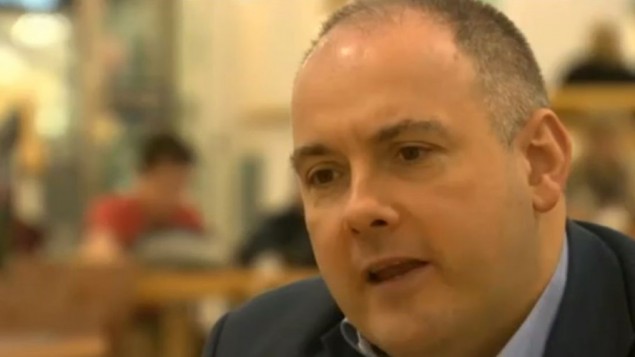
Conservative Robert Halfon says UK is so scarred by Iraq war, it will only support resort to force if it is directly attacked.

Robert Haflon, MPRobert Halfon (screen capture: YouTube)

The member of Parliament representing Winston Churchill’s former constituency said that the British public will never countenance military intervention to prevent Iran attaining nuclear weapons.

Robert Halfon, the Conservative MP for Harlow, said more broadly that Britons are so scarred by what they regard as having being drawn into war against Saddam Hussein’s Iraq on false pretenses that they will not now support the use of military force unless Britain itself or a British target overseas is directly attacked.

Halfon, who was visiting Israel this week in a delegation of Conservative Friends of Israel, told The Times of Israel in an interview that the vote in the House of Commons last August against a resort to force in Syria, following President Bashar Assad’s use of chemical weapons against his own people, was “a tragic day for our country.” The vote, a crushing defeat for Prime Minister David Cameron, reflected the “scarring” effect the Iraq war has had on the British psyche, he said, with Britons believing that were misled about Saddam’s non-conventional weapons capacity. Cameron’s defeat was also a result of “political opportunism” by the opposition Labour Party.

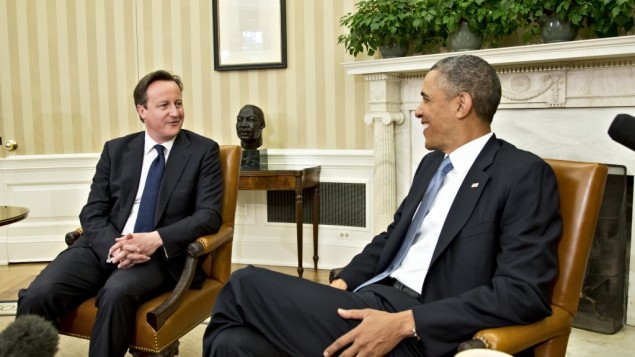
Obama CameronUS President Barack Obama welcomes British Prime Minister David Cameron in the Oval Office in May 2013. (photo credit: AP/J. Scott Applewhite

That vote, in turn, Halfon said, had a “massive effect” on US President Barack Obama, who subsequently changed course, having indicated that a “punitive” strike against Assad was imminent. “The one dependable ally of the US was saying no,” Halfon said.

Instead, the US accepted a Russian-mediated initiative under which Assad has agreed to give up his entire chemical weapons capability, but Halfon rejected the idea that this represented an enviable result. He said he was not yet convinced that Assad would indeed shed his entire WMD capacity and capability, that the US and UK positions sent a dismal signal to dictators everywhere, and that Iran perceived Obama’s behavior as signalling weakness — which in turn gave it confidence to continue to pursue its nuclear program.

He stressed that while he had emphatically backed military intervention in Syria, “my constituents were all against. They see the body bags coming back from Iraq and Afghanistan,” he said.

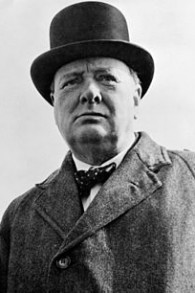
ChurchillWinston Churchill (photo credit: Wikimedia Commons)

Halfon, 44, who grew up in a Jewish family in north London, won election to Parliament in 2010 in the seat formerly held by Churchill, Britain’s inspirational World War II prime minister. He said he lamented that in today’s Britain, there was both an “importing and exporting” of Islamist terrorism. Islamic extremists, “indoctrinated in Britain, are going to Syria to fight,” and radical Islamist preachers were coming into the UK to teach hatred. “We were only able to extradite [radical preacher] Abu Qatada [to face terrorism charges in Jordan] after a long struggle,” he noted.

He said Britain was grappling with “lots” of terrorist plots hatched by Muslim extremists and that a Kurdish leader who visited the UK recently and went to a mosque in the north of England told him that “a mosque that radical would have been closed down in Kurdistan.” (In the worst recent Islamist terror attack in the UK, in July 2005, four British-raised Muslims carried out simultaneous suicide bombings on a London bus and three underground trains, killing 52 people and injuring 700.)

Unfortunately, Halfon charged, the right-wing UKIP political party exploits the Islamist danger to “bash moderate Muslims,” while the political left “appeases” the extremists.

Halfon said Israel’s image in the UK has improved a little since a low point at the time of May 2010 Mavi Marmara raid, when Israeli naval commandos, commandeering a Turkish vessel seeking to break the security blockade of Gaza, opened fire and killed 9 activists after coming under attack. “Since the Arab Spring erupted, people are registering that Israel is the region’s only democracy, and seeing on TV the oppression in Arab countries, notably by Assad,” he said.

Nonetheless, among those pushing boycotts of Israel, there was no change in the level of hostility — “but all that, don’t forget, is organized by Israel’s enemies… There’s not been one [major] demonstration over the killings of 140,000 Syrians, he said.

Scarlet JohScarlett Johansson with Sodastream’s Daniel Birnbaum (photo credit: Mike Coppola/Getty Images for SodaStream/via JTA)

Relating to British charity Oxfam’s criticism of Scarlett Johansson for representing Israel’s SodaStream, with its West Bank settlement factory employing Jews, Israeli Arabs and Palestinians, he wondered why Oxfam does not boycott the likes of Russia and China. Noting that its protests over SodaStream had prompted the US actress to step down from her role as an Oxfam ambassador, Halfon said “SodaStream is an enlightened company, and Johansson is a hero.”

The Collapse of Sanctions on Iran

February 21, 2014

The Collapse of Sanctions on Iran – The Weekly Standard.

The White House gets what it wants.

Mar 3, 2014, Vol. 19, No. 24 • By LEE SMITH

The economic news from Tehran is good—good, that is, if you are a state sponsor of terror moving toward a nuclear weapons program. If on the other hand you were hoping that sanctions might persuade the Iranians to cease and desist, the news is disastrous.

Hassan Rouhani

Hassan Rouhani

Since the Obama administration relaxed sanctions on Iran, oil sales are up 25 percent, from 1.06 million barrels per day to 1.32 million, and the White House reportedly has no intention of preventing the rise in sales and consequent swelling of Revolutionary Guard bank accounts. And that’s not all. The leading economic indicators show an Iranian economy on the mend, thanks to the interim nuclear agreement struck in November. Inflation has decreased from 40 percent-plus to 20 percent and falling. The rial-to-dollar exchange rate is steadily recovering from the depths to which it had fallen in 2012. And where Iran’s GDP fell 3 percent in 2012, the IMF now projects modest increases for 2014 and 2015.

In short, with the sanctions regime eroding, Iran’s business climate has been transformed. What was once a foolish gamble is now a promising opportunity, and trade delegations are exploring investment options in Iran’s petrochemical and automobile industries. The White House’s early assessment that the regime was getting only $7 billion in sanctions relief was way off. The figure is far closer to those estimates of $20 billion that administration officials scoffed at.

What happened? Is it possible that the White House, with all the economic expertise at its disposal, simply miscalculated? Is the Obama administration just bad at math?

No, it was intentional. Contrary to the administration’s public stance, sanctions relief was never about rewarding the regime with relatively small sums of money in exchange for steep concessions on the nuclear program. The plan rather was to get Iranian president Hassan Rouhani lots of cash, the more the better. The White House’s idea is that once Rouhani understands how much easier his life is with lots of money pouring into the economy, it will be in his interest to petition Supreme Leader Ali Khamenei for more concessions on the nuclear file. The problem with the strategy is that it shows how badly the White House has misunderstood not only the regime’s behavior, but also Rouhani’s role and how sanctions affect it.

“The administration wanted to strengthen Rouhani’s position vis-à-vis the hardliners,” Iran’s Revolutionary Guard Corps (IRGC), says Mark Dubowitz, executive director of the Foundation for Defense of Democracies, whose work has been central in building the Iran sanctions regime. According to Dubowitz, the White House wanted to empower Rouhani while weakening figures like Quds Force commander Qassem Soleimani, who use their proximity to Khamenei to argue against concessions. The administration assumes, says Dubowitz, that “the more Rouhani becomes ‘addicted’ to cash, the better he’ll be able to make the case to Khamenei that they need to make more concessions. The White House’s idea was to show Rouhani some leg.”

They gave away much more than that. What was significant about sanctions relief was not merely the exact amount of money. Rather, it was that any relaxation of sanctions would give rise to an international lobby with a vital interest in making sure the White House never made good on its threats to reimpose stiff sanctions on the Tehran regime. And it’s not just businesses wanting to trade with Iran that have a stake in sanctions relief, but also politicians. A European corporation doing business in Tehran means jobs back home. What politician would gladly turn his back on thousands of jobs or potential jobs to agree to observe the restoration of a sanctions regime that the Obama White House wasn’t serious about in the first place?

Accordingly, businesses sensing a new climate have flocked to Tehran. “Administration officials said our estimate of $20 billion was exaggerated,” says Dubowitz. “But they had to know about the secondary effects of sanctions relief. They were counting on it. It was key to their whole economic strategy of giving Iran’s economy a lift to incentivize Rouhani to deliver more on the nuclear file. As Iran’s economy continues its shift from a deep recession to a modest recovery, and Congress challenges administration officials on the impact of sanctions relief, administration officials may begin to change their tune and claim that this was their strategy all along.” 

John Kerry chastised a French business delegation for visiting Tehran, but other State Department officials saw it differently. “We hope people don’t go to Tehran,” said undersecretary of state for political affairs Wendy Sherman, the administration’s lead Iran negotiator. “That is our preference. But those who go raise hopes that the Rouhani administration’s going to have to deliver on.”

The administration’s strategy, says Dubowitz, “has nothing to do with rational economic models. Rather, it’s a psychological profile of the regime based on its assessment of Rouhani as a pragmatist who was elected to secure sanctions relief and will be further strengthened if he can deliver.”

But that’s a misreading of Rouhani’s position. The last thing he wants is more sanctions relief, says Iran specialist Ali Alfoneh. “Rouhani uses the sanctions regime, and the threat of new sanctions, as a stick in his fight with the IRGC and Khamenei. It may seem counterintuitive, but the fact is that sanctions relief and Obama’s threat to veto additional sanctions are only likely to weaken Rouhani in Iran’s political power structure.”

To be sure, Rouhani was elected to win sanctions relief for a beleaguered Iranian economy—and perhaps more importantly for the Revolutionary Guards. “The IRGC was initially a beneficiary of the international sanctions regime,” says Alfoneh, a senior fellow at FDD. Sanctions eliminated competition, especially in Iran’s energy sector, and further concentrated economic power in the IRGC’s hands. “However, as the sanctions regime continued,” Alfoneh explains, “the IRGC suffered because of the overall deterioration of the Iranian economy and shrinking oil revenues.” Contrary to the White House’s understanding, sanctions relief not only enriches the IRGC but also weakens Rouhani.

Khamenei has long seen Rouhani as a useful asset in his dealings with the West. The Iranian president often boasts of his role in duping his American and European counterparts as lead negotiator when he held the regime’s nuclear file from 2003-05. But that was after the U.S.-led coalition invaded Iraq, and Khamenei was terrified the Bush administration might move on Iran next. Rouhani was the regime’s happy face. When Khamenei saw that the Americans were tied down in Iraq, says Alfoneh, he got rid of Rouhani and moved back to hardball tactics.

The same is likely to happen here. Now that Western businessmen and politicians are pecking away at the sanctions regime, Rouhani has already served his purpose. Khamenei has a deal he’s perfectly happy with. He’s getting paid for doing nothing, and if the interim agreement is renewed after six months, as many anticipate, then it’s just more money to spend on whatever he likes—backing Bashar al-Assad in the Syrian civil war, or building the bomb. What’s peculiar is that the White House seems just as pleased with the agreement.

Lee Smith is a senior editor at The Weekly Standard.

Obama Calls Retreat

February 21, 2014

Obama Calls Retreat – The Weekly Standard.

Mar 3, 2014, Vol. 19, No. 24 • By WILLIAM KRISTOL

Kiev is ablaze. Syria is a killing field. The Iranian mullahs aren’t giving up their nuclear weapons capability, and other regimes in the Middle East are preparing to acquire their own. Al Qaeda is making gains and is probably stronger than ever. China and Russia throw their weight around, while our allies shudder and squabble.

Newscom

The B-team

Why is this happening? Because the United States is in retreat. What is the Obama administration’s response to these events? Further retreat.

Having withdrawn from Iraq, and seeing it now fall apart, the administration is nonetheless determined to get out of Afghanistan. Its Russia “reset” is a joke, and its “pivot to Asia” an empty slogan. Secretary of State John Kerry huffed and puffed when Bashar al-Assad used chemical weapons last year, and asserted it was a Munich moment. How right he was! Kerry came back brandishing a piece of paper, and Assad remains in power.

Having failed to hold Assad accountable for the use of weapons of mass destruction, Kerry now says that global climate change may be the weapon of mass destruction we should most fear. Sure. Meanwhile, in the real world of real weapons, our military is being decimated in size as it is being enervated by political correctness. And on the matter of sheer competence in the execution of foreign policy, to say that we have a B-team in charge is an insult to B-teams everywhere.

We’re tempted to produce at this point appropriate Winston Churchill warnings and statements from the 1930s. But the current situation is almost too pathetic to be worthy of Churchillian exhortation. We’re dealing with no recent memory of the Great War, no Great Depression, no Hitler or Tojo or even a Mussolini. We don’t need extraordinary heroism or exemplary statesmanship to deal with the second- and third-rate threats that we face. We require competent men taking serious measures.

 But we don’t have them. And of course second- and third-rate threats, if unchecked, can cause much death and destruction. Minor league gangs and small-time thugs can destroy a neighborhood if there’s no police force. A small infection, if untreated and allowed to spread, can kill as surely as a cancer. Rome fell not to the majestic Hannibal but to groups of unimpressive barbarians. Chaos that results from weakness and dissolution can be as hard to remedy as defeat by formidable and well-organized foes. A panicked retreat can be hard to reverse even if the original opponent isn’t that formidable. It’s undoubtedly true that “Lilies that fester smell far worse than weeds.” But weeds can kill a garden too. And under President Obama, we’ve allowed the weeds to spread and multiply at an amazing rate.

All of which leads us—in this instance at least—to cite the Lincoln of 1838 rather than the Churchill of 1938: “If destruction be our lot, we must ourselves be its author and finisher. As a nation of free men, we must live through all time, or die by suicide.” Suicide isn’t yet imminent. But we are on the cusp of accepting—even embracing?—a stance of shirking fearfulness and shrinking timidity. A nation of free men needs at times like this leaders who step forward to “sound forth the trumpet that shall never call retreat.” Obama has a piccolo that only calls retreat.

Off Topic: Report: U.S. Officials Downplay New Syrian Chemical Strike Allegations

February 21, 2014

Off Topic: Report: U.S. Officials Downplay New Syrian Chemical Strike Allegations – Global Security Newswire.

Feb. 20, 2014

A man receives treatment following an alleged Jan. 13 poison gas attack by Syrian government forces in the rebel-held city of Daraya. U.S. State Department officials reportedly offered a muted response to claims about the incident. 

A man receives treatment following an alleged Jan. 13 poison gas attack by Syrian government forces in the rebel-held city of Daraya. U.S. State Department officials reportedly offered a muted response to claims about the incident. (Fadi al-Halabi/AFP/Getty Images)
Allegations of a new chemical attack in Syria’s civil war appear to have gained little attention in Washington, the Daily Beast reports.

Representatives from the rebel-held city of Daraya are demanding a U.N. inquiry into the purported Jan. 13 strike, the publication said on Thursday. However, local leader Oussama al-Chourbaji said U.S. State Department officials “didn’t seem to care that much” when they heard last week from a delegation of witnesses visiting Washington.

The pro-opposition Syrian Support Group accused forces loyal to President Bashar Assad of killing four rebel combatants with a grenade-like device loaded with an unidentified gas. The substance is said to have caused a range of ailments partially alleviated by a sarin nerve agent antidote.

Dan Layman, a spokesman for the U.S.-based group, said “all of those who were affected or killed had the exact same symptoms” as victims of an Aug. 21 sarin strike in a rebel-occupied area close to Damascus. Assad’s regime never claimed responsibility for the 2013 attack, but later confirmed holding chemical weapons and agreed to surrender them amid warnings of a potential U.S. military response.

Al-Chourbaji, a spokesman for the Daraya local council’s medical branch, said an individual claiming to be from the U.S. State Department had asked his municipal body to transfer samples from the incident to neighboring Jordan for analysis. The council member said that request came shortly after the Jan. 13 event, but the Daily Beast reported that materials collected from the possible attack had yet to leave the city as of Thursday.

Al-Chourbaji added that State Department officials directed the witnesses visiting Washington last week to take photographs as they collect chemical traces from any future incidents.

“They said, ‘If they strike you again with chemical weapons, take pictures and tell us,'” he said. “They just advised us to take pictures [to document the taking of the samples] as if we were in a CSI episode. People are dying [and] we are making a movie.”

Israel: IAEA report proves Iran taking world for a ride

February 21, 2014

Israel: IAEA report proves Iran taking world for a ride, Times of Israel, February 21, 2014

(“[T]he IAEA report showed that the interim agreement did not alter ‘Iran’s military nuclear program,’ and the report ‘did not address the military components of Iran’s nuclear program,’ Israeli government officials said in a statement.” Picky, picky. But at least they are charming. — DM)

Interim deal has given Tehran sanctions relief without requiring a significant change to its nuclear program, officials charge.

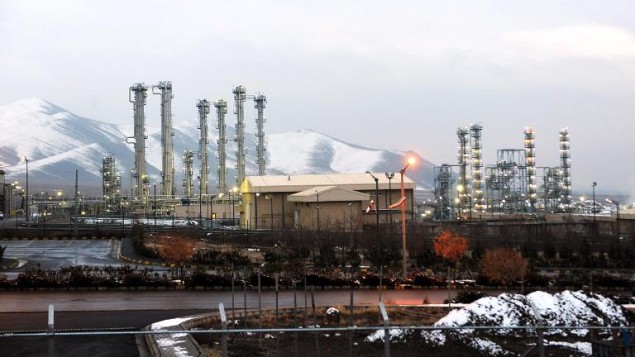
Arak-635x357The future of Iran’s Arak heavy water IR-40 reactor is one of the key points in a landmark nuclear deal Tehran signed with world powers in Geneva, November 2013. (photo credit: ISNA/AFP/File Hamid Foroutan)

Thursday’s UN report on Iran’s nuclear capabilities and its compliance with the interim agreement signed in November with Western powers noted that the Islamic Republic has reduced its stockpile of highly-enriched uranium.

But Israeli government officials said the report actually shows the world that Iran has not made any true concessions on its nuclear program and still has the capacity to quickly break out to a nuclear weapon.

The UN nuclear agency reported that Iran is abiding by its commitments under the interim pact that led to the first round of talks on a permanent accord, which took place this week in Vienna. The talks are set to resume March 17.

Among other findings, the agency noted that Iran’s stockpile of nuclear material that can be turned quickly into the fissile core of a nuclear warhead had diminished by nearly 20 percent to 161 kilograms (355 pounds) under the first-step agreement, which took effect last month.

However, the IAEA report showed that the interim agreement did not alter “Iran’s military nuclear program,” and the report “did not address the military components of Iran’s nuclear program,” Israeli government officials said in a statement.

The IAEA “cannot confirm that Iran’s nuclear program is for peaceful purposes only,” and the report shows that “Iran consistently continues to violate UN Security Council and IAEA Board of Governors decisions” with regards to the program, the officials noted.

In the report, the IAEA commended Iran’s “positive step forward” in granting greater access to nuclear facilities. But alluding to the agency’s attempts to probe suspicions that Tehran worked secretly on nuclear weapons, the IAEA said “much remains to be done to resolve all outstanding issues.”

“The bottom line” is that in return for a “significant easing of sanctions against Iran,” Tehran has not made any “significant concessions” in return, the Israeli officials noted.

Despite last year’s election of Iranian President Rouhani, who is widely seen as more moderate than his predecessor Mahmoud Ahmadinejad, the Islamic Republic still funds terror activities around the world, provides arms and aid to the Assad regime in Syria, which is “slaughtering innocent people, executes its own innocent citizens and “tramples” human rights, the Israeli officials said.

“Such a state should not have the capability to produce nuclear weapons,” the officials said, and noted that Iran has not agreed to give up its centrifuges and its heavy water reactor, even those those technologies are not necessary for a peaceful nuclear power plant, just for creating the highly-enriched material necessary for a nuclear bomb.

Iran and six world powers on Thursday ended nuclear talks with agreement on a framework for future negotiations but little progress on the main issue of what nuclear concessions Tehran must make in exchange for an end to sanctions stifling its economy.

Off Topic: Kerry: I’m not in the business of bad deals

February 21, 2014

Kerry: I’m not in the business of bad deals, Ynet News, February 20, 2014

(“People who know me know that when I sink my teeth into something, if I get the bit between my teeth, I try to get it done . . . .” A poor, albeit accurate, metaphor. When a horse “gets the bit between his teeth,” he ceases to be under control. He can neither be made to stop nor to change the direction in which he is galloping. A voluntary emergency dismount, or trying to throw him off balance so that he becomes distracted and stumbles, are the generally recommended tactics. In that sense, the metaphor is accurate. With Secretary Kerry “in control,” what could go wrong? — DM)

In interview to Israeli television, Kerry says he remains optimistic about reaching a peace deal, but stresses he is not naïve: I want this to be leap of reason, of choice and of rationality, not a leap of faith.

US Secretary of State John Kerry said Thursday that he is “not in the business of making bad deals,” and stressed that he remains “committed” and “determined” to reaching a peace accord between Israelis and Palestinians.

“I have no argument with anyone in Israel who says that no deal is better than a bad deal. I say that myself,” he said in an interview with Channel 2’s investigative program Uvda. “I’m not in the business of trying to put together a bad deal. I am working with both sides on security arrangements.”

“You cannot turn to the people of Israel with the prospect that what you are offering will turn the West Bank into Gaza. Israel’s security is iron clad,” he added.

Throughout the interview, Kerry repeatedly insisted that he is not distracted by the naysayers and has not given up hope that a deal is attainable.

“That’s not the way I operate. I’m an optimist and I am a believer in possibilities,” he said. “People who know me know that when I sink my teeth into something, if I get the bit between my teeth, I try to get it done,” he said.

He also noted that he isn’t naive, and seeks to reach a realistic agreement.

“My job is to help create a situation where the realities of the agreement are such that it is not such a leap of faith. I want this to be a leap of reason, of choice and of rationality based on a very understandable and tangible agreement about security,” Kerry noted.

On the opposition to the talks coming from right-wing coalition members, Kerry said that while there will always be those who support a Greater Israel, 70 percent of Israelis support the two-state solution.

Kerry also responded to claims that previous failed attempts – like the 2005 disengagement from Gaza – serve as proof that withdrawal from land is not the answer.

“I would say very respectfully to people… in the current government who were opposed to (the Gaza disengagement) who argued that if you just pull back it wouldn’t change the dynamic, because they didn’t do what we are doing today and that is to put the end game on the table,” he said.

While he is the only one allowed to publicly discuss the negotiations, Kerry repeatedly refused to go into the talks details. 

When pressed about the viability of an agreement in regards to settlers, he asserted that “I don’t know that the settler will have to leave his home. That’s for the parties to decide.”

Security and prosperity

Kerry has visited the region more than a dozen times since the most recent round of talks were launched in July. With an April target date for an agreement approaching, Kerry has said he will soon return with bridging proposals for a framework deal. Recently, both sides appear to have hardened their positions while questioning the effectiveness of Kerry’s efforts.

He has come under fire from West Bank settlers who fear he is pushing Israel to make dangerous territorial concessions. Some Israeli ministers also have criticized what they consider to be his overzealous drive for an accord, despite a Palestinian refusal to recognize Israel as a Jewish state and past terrorist attacks.

During the interview, Kerry repeatedly stressed his position that Israel’s security and prosperity would grow if a peace agreement is reached. “I believe Israel will get so much stronger and so much more prosperous, as would the West Bank, there is so much to benefit.”

“I have had an Arab foreign minister tell me that if we make peace, Israel would be a powerhouse and would do enormous amounts of business with the Arab word,” he added.

At the beginning of the interview, journalist Ilana Dayan opened by asking Kerry about his spat with Defense Minister Moshe Ya’alon, who called his efforts “messianic” and “obsessive,” claiming Kerry’s security arraignments “were worth the paper they were written on.”

The secretary of state dismissed Ya’alon’s claims, saying that he is not obsessive, but rather committed.

“I don’t want to get into food fights … there is a bigger picture and concept called peace…I’ve learned to be called everything in the book, but I am able to stay focused.”

From Vietnam to Israel

Uvda’s profile focused on Kerry’s personal life as well as his political activities, reviewing his years fighting in the Vietnam War and also Kerry’s recently discovered Jewish roots. During the interview, Kerry was asked whether he had ever spoken with Israelis about his experience in Vietnam vis-a-vis Israel’s security concerns.

“The people of Israel know war. It would be almost insulting for me to assert my experience when Israel has experienced wars and siege,” he said, adding “I would not venture there except to say that my experience … helps me peruse diplomacy instead of war. (Vietnam) was defining for me, but not imprisoning… I am informed by it. I don’t see everything through that prism.”

The secretary of state also described his experiences visiting bomb shelters in Sderot and Kiryat Shmona, and even recalled being in Tel Aviv when a bomb went off on the last day of the 2012 Operation Pillar of Defense.

End goals

After numerous visits to the region and lengthy conversations with both Prime Minister Benjamin Netanyahu and Palestinian Authority President Mahmoud Abbas, Kerry has developed a close relationship of respect with both leaders.

Kerry and Netanyahu reportedly spend hours on the phone, yelling at one another and then quickly making up. Some believe, Dayan said, that Kerry is Netanyahu’s last friend in Washington.

“I spend a lot of time talking to Netanyahu and Abbas. I feel I understand (Netanyahu) who has chosen great courage and leadership in putting this to the test,” he said. “He has enormous complications to face … and he repeatedly tells me he has to guarantee security and that means a lot of things have to happen.”

The US diplomat noted that American General John Allen and over 60 military experts were looking into how Israel can have its desired level of security following an accord with the Palestinians.

When asked to describe each leader’s end goals, Kerry said Netanyahu would only be content with an agreement that answers all the security challenges, secures the nation state of Israel as the home of the Jewish people, and properly resolves the refugees question.

Regarding Abbas and what he can be proud of at the final analysis, Kerry said the PA president “was willing to do what was necessary to return to talks. Given the right set offers on the table… I think he can come to an agreement… are we there yet? No. But it needs to be developed going forward.”

UN nuclear watchdog: Iran’s uranium stockpile has declined for first time in 4 years

February 20, 2014

UN nuclear watchdog: Iran’s uranium stockpile has declined for first time in 4 years | JPost | Israel News.

By REUTERS

02/20/2014 17:47

IAEA report indicates that Iran meeting its commitments under the Geneva nuclear agreement with western powers, has stopped uranium enrichment activity.

A bank of centrifuges at nuclear facility in Iran

A bank of centrifuges at nuclear facility in Iran Photo: REUTERS

VIENNA – Iran’s stockpile of higher-enriched uranium has declined significantly for the first time in four years after it stopped such enrichment activity under a landmark nuclear deal with world powers, the UN atomic agency reported on Thursday.

The report by the International Atomic Energy Agency (IAEA) also indicated that Iran was meeting its commitments under the Nov. 24 pact with the powers to curb its most proliferation-prone nuclear work in exchange for some easing of sanctions.

It was issued to member states just hours after Iran and the six big powers – the United States, France, Germany, Britain, China and Russia – wound up a first round of negotiations in Vienna aimed at a final settlement of the decade-old dispute over Tehran’s nuclear program. The next round is slated for March 17.

UN nuclear inspectors are playing a critical role in monitoring that Iran is living up to its side of last year’s six-month accord, designed to buy time for the negotiations on a comprehensive agreement over atomic activity Tehran says is entirely peaceful but the West fears may have military aims.

Iran’s reserve of uranium refined to a 20 percent fissile concentration fell to 161 kg in February from about 196 kg in November, the IAEA report said. Iran suspended higher-grade enrichment under the November deal and has since converted some of the material into oxide and diluted some to a lower purity.

However, the stock of low-enriched – or 5 percent purity – uranium rose to 7,609 kg from 7,154 kg in November. This apparently resulted from a delay in constructing a plant to convert some of the material into a form less suitable for processing into high-enriched bomb material.

Iran’s holding of uranium – which Tehran says it needs to fuel a planned network of nuclear power plants – is closely watched in the West as it could provide weapons-suitable material if refined much further. Iran denies any such goal.

(Reporting by Fredrik Dahl; Editing by Mark Heinrich)

Obama’s Foreign Policy: Enemy Action

February 20, 2014

Obama’s Foreign Policy: Enemy Action | FrontPage Magazine.

US-POLITICS-ECONOMY

It’s often hard to determine whether a series of bad policies results from stupidity or malicious intent.

Occam’s razor suggests that the former is the more likely explanation, as conspiracies assume a high degree of intelligence, complex organization, and secrecy among a large number of people, qualities that usually are much less frequent than the simple stupidity, disorganization, and inability to keep a secret more typical of our species. Yet surveying the nearly 6 years of Obama’s disastrous foreign policy blunders, I’m starting to lean towards Goldfinger’s Chicago mob-wisdom: “Once is happenstance. Twice is coincidence. Three times, it’s enemy action.”

Obama’s ineptitude started with his general foreign policy philosophy. George Bush, so the narrative went, was a trigger-happy, unilateralist, blundering, “dead or alive” cowboy who rushed into an unnecessary war in Iraq after alienating our allies and insulting the Muslim world. Obama pledged to be different. As a Los Angeles Times editorial advised him in January 2009, “The Bush years, defined by ultimatums and unilateral actions around the world, must be brought to a swift close with a renewed emphasis on diplomacy, consultation and the forging of broad international coalitions.” Obama eagerly took this advice, reaching out not just to our allies, but also to sworn enemies like Syria, Venezuela, and Iran, and serially bowing to various potentates around the globe. He went on the apology tour, in which he confessed America’s “arrogant, dismissive, derisive” behavior and the “darker periods in our history.” And he followed up by initiating America’s retreat from international affairs, “leading from behind,” appeasing our enemies, and using rhetorical bluster as a substitute for coherent, forceful action. Here follow 3 of the many mistakes that suggest something other than inexperience and a lack of knowledge is driving Obama’s policies.

Russia

Remember the “reset” button Obama offered to Russia? In September 2009 he made a down payment on this policy by reversing George Bush’s plan to station a radar facility in the Czech Republic and 10 ground-based missile interceptors in Poland. Russia had complained about these defensive installations, even though they didn’t threaten Russian territory. So to appease the Russians, Obama abandoned Poland and the Czech Republic, who still live in the dark shadow of their more powerful former oppressors, while Russia’s Iranian clients were emboldened by their patron’s ability to make the superpower Americans back down. As George Marshall Fund fellow David J. Kramer prophesized at the time, Obama’s caving “to Russian pressure . . . will encourage leaders in Moscow to engage in more loud complaining and bully tactics (such as threatening Iskander missiles against the Poles and Czechs) because such behavior gets desired results.”

Obama followed up this blunder with the New START arms reduction treaty with Russia signed in 2010. This agreement didn’t include tactical nuclear weapons, leaving the Russians with a 10-1 advantage. Multiple warheads deployed on a missile were counted as one for purposes of the treaty, which meant that the Russians could exceed the 1550 limit. Numerous other problems plague this treaty, but the worst is the dependence on Russian honesty to comply with its terms. Yet as Keith B. Payne and Mark B. Schneider have written recently, for years Russia has serially violated the terms of every arms-control treaty it has signed, for obvious reasons: “These Russian actions demonstrate the importance the Kremlin attaches to its new nuclear-strike capabilities. They also show how little importance the Putin regime attaches to complying with agreements that interfere with those capabilities. Russia not only seems intent on creating new nuclear- and conventional-strike capabilities against U.S. allies and friends. It has made explicit threats against some of them in recent years.” Busy pushing the reset button, Obama has ignored all this cheating. Nor did Obama’s 2012 appeasing pledge to outgoing Russian President Dmitri Medvedev–– that after the election he would “have more flexibility” about the proposed European-based anti-missile defense system angering Russia––could convince Vladimir Putin to play ball with the U.S. on Iran and Syria. Obama’s groveling “reset” outreach has merely emboldened Russia to expand its influence and that of its satellites like Iran and Syria, at the expense of the interests and security of America and its allies.

Syria

Syria is another American enemy Obama thought his charm offensive could win over. To do so he had to ignore Syria’s long history of supporting terrorists outfits like Hezbollah, murdering its sectarian and political rivals, assassinating Lebanon’s anti-Syrian Prime Minister Rafiq Hariri in 2005, and facilitating the transit of jihadists–– during one period over 90% of foreign fighters–– into Iraq to kill Americans. Yet Obama sent diplomatic officials on 6 trips to Syria in an attempt to make strongman Bashar al Assad play nice. In return, in 2010 Assad hosted a cozy conference with Hezbollah terrorist leader Hassan Nasrallah and the genocidal Iranian president Mahmoud Ahmadinejad, where they discussed “a Middle East without Zionists and without colonialists.” Despite such rhetoric, even as the uprising against Assad was unfolding in March 2011, Secretary of State Clinton said, “There’s a different leader in Syria now. Many of the members of Congress of both parties who have gone to Syria in recent months have said they believe he’s a reformer.”

In response to the growing resistance against the “reformer” Assad, Obama once again relied on blustering rhetoric rather than timely action to bring down an enemy of the U.S. Sanctions and Executive Orders flew thick and fast, but no military aid was provided to Assad’s opponents, the moderates soon to be marginalized by foreign terrorists armed by Iran. As time passed, more Syrians died and more terrorists filtered into Syria, while Obama responded with toothless tough rhetoric, proclaiming, “For the sake of the Syrian people, the time has come for President Assad to step aside.” Equally ineffective was Obama’s talk in 2012 of a “red line” and “game-changer” if Assad used chemical weapons. Assad, obviously undeterred by threats from the world’s greatest military power, proceeded to use chemical weapons. Obama threatened military action, only to back down on the excuse that he needed the permission of Congress. Instead, partnering with the Russian wolf his own weakness had empowered, he brokered a deal that in effect gave Assad a free hand to bomb cities and kill civilians at the price of promising to surrender his chemical stockpiles. The butcher Assad magically changed from a pariah who had to go, into a legitimate partner of the United States, one whose cooperation we depend on for implementing the agreement. Given such cover, he has continued to slaughter his enemies and provide invaluable battlefield experience to tens of thousands of terrorist fighters.

Of course, without the threat of military punishment for violating the terms of the agreement­­––punishment vetoed by new regional player Russia––the treaty is worthless. Sure enough, this month we learned that Assad is dragging his feet, missing a deadline for turning over his weapons, while surrendering so far just 5% of his stockpiles. And those are just the weapons he has acknowledged possessing. In response, Secretary of State John Kerry has blustered, “Bashar al-Assad is not, in our judgment, fully in compliance because of the timing and the delays that have taken place contrary to the [Organization for the Prohibition of Chemical Weapons]’s judgment that this could move faster. So the options are all the options that originally existed. No option has been taken off the table.” You can hear Assad, Rouhani, Nasrallah, and Putin rolling on the ground laughing their you-know-what’s off over that empty threat.

Iran

Now we come to the biggest piece of evidence for divining Obama’s motives, Iran. The Islamic Republic has been an inveterate enemy of this country since the revolution in 1979, with 35 years of American blood on its hands to prove it. Even today Iranian agents are facilitating with training and materiel the killing of Americans in Afghanistan. The regime is the biggest and most lethal state sponsor of terrorism, and proclaims proudly a genocidal, anti-Semitic ideology against Israel, our most loyal ally in the region. And it regularly reminds us that we are its enemy against whom it has repeatedly declared war, most recently in February when demonstrations celebrated the anniversary of the revolution with signs reading, “Hey, America!! Be angry with us and die due to your anger! Down with U.S.A.” At the same time, two Iranian warships crowded our maritime borders in the Atlantic, and state television broadcast a documentary simulating attacks on U.S. aircraft carriers.

Despite that long record of murder and hatred, when he first came into office, Obama made Iran a particular object of his diplomatic “outreach.” He “bent over backwards,” as he put it, “extending his hand” to the mullahs “without preconditions,” going so far as to keep silent in June 2009 as they brutally suppressed protests against the stolen presidential election. But the mullahs contemptuously dismissed all these overtures. In response, Obama issued a series of “deadlines” for Iran to come clean on its weapons programs, more bluster the regime ignored, while Obama assured them that “We remain committed to serious, meaningful engagement with Iran.” Just as with Russia and Syria, still more big talk about “all options are on the table” for preventing the mullahs from acquiring nuclear weapons has been scorned by the regime.

Doubling down on this failed policy, Obama along with the Europeans gambled that sanctions would bring Iran to its knees before it reached breakout capability for producing a weapon. Odds of success were questionable, but just as the sanctions appeared to be pushing the Iranian economy, and perhaps the regime, to collapse, in November of last year Obama entered into negotiations that resulted in a disastrous agreement that trades sanction relief for empty promises. This deal ensures that Iran will become a nuclear power, since the agreement allows Iran to continue to enrich uranium in violation of numerous U.N. Security Council Resolutions. Finally, in an act of criminal incoherence, Obama threatened to veto any Congressional legislation imposing meaningful economic punishment for future Iranian cheating and intransigence.

Given this “abject surrender,” as former U.N. Ambassador John Bolton called it, it’s no surprise that the Iranians are trumpeting the agreement as a victory: “In this agreement, the right of Iranian nation to enrich uranium was accepted by world powers,” the “moderate reformer” Iranian president Hassan Rouhani bragged. “With this agreement … the architecture of sanctions will begin to break down.” Iranian foreign minister Mohammed Javad Zarif, agreed: “None of the enrichment centers will be closed and Fordow and Natanz will continue their work and the Arak heavy water program will continue in its present form and no material (enriched uranium stockpiles) will be taken out of the country and all the enriched materials will remain inside the country. The current sanctions will move towards decrease, no sanctions will be imposed and Iran’s financial resources will return.” Memo to Mr. Obama: when the adversary loudly brags that the agreement benefits him, you’d better reexamine the terms of the deal.

As it stands today, the sanction regime is unraveling even as we speak, while the Iranians are within months of nuclear breakout capacity. Meanwhile the economic pain that was starting to change Iranian behavior is receding. According to the International Monetary Fund, Iran’s economy is projected to grow 2% in fiscal year 2014-15, compared to a 2% contraction this year. Inflation has dropped over 10 points since last year. Global businesses are flocking to Tehran to cut deals, while Obama blusters that “we will come down on [sanctions violators] like a ton of bricks.” Add that dull cliché to “red line,” “game-changer,” and the other empty threats that comprise the whole of Obama’s foreign policy.

These foreign policy blunders and numerous others––especially the loss of critical ally Egypt–– reflect ideological delusions that go beyond Obama. The notion that aggressors can be tamed and managed with diplomatic engagement has long been a convenient cover for a political unwillingness to take military action with all its dangers and risks. Crypto-pacifist Democrats are particularly fond of the magical thinking that international organizations, summits, “shuttle diplomacy,” conferences, and other photogenic confabs can substitute for force.

But progressive talk of “multilateralism” and “diplomatic engagement” hides something else: the Oliver Stone/Howard Zinn/Noam Chomsky/Richard Falk self-loathing narrative that the United States is a force of evil in the world, a neo-colonialist, neo-imperialist, predatory capitalist oppressor responsible for the misery and tyranny afflicting the globe. Given that America’s power is corrupt, we need a foreign policy of withdrawal, retreat, and apologetic humility, with our national sovereignty subjected to transnational institutions like the U.N., the International Court of Justice, and the European Court of Human Rights ––exactly the program that Obama has been working on for the last 5 years. Given the damage such policies are serially inflicting on our security and interests, it starts to make sense that inexperience or stupidity is not as cogent an explanation as enemy action.

Bruce Thornton is a Shillman Journalism Fellow at the Freedom Center, a Research Fellow at Stanford’s Hoover Institution, and a Professor of Classics and Humanities at the California State University. He is the author of nine books and numerous essays on classical culture and its influence on Western Civilization.


Iran Has the Bomb

February 20, 2014

Articles: Iran Has the Bomb.

American Thinker

By Peter Vincent Pry

For several years now, myself and others have been warning that Iran probably already has the bomb. Contrary to Obama Administration promises that they will know when Iran crosses “the red line” to build the bomb, we have warned that such claims are false.

U.S. intelligence is not good enough to so precisely and with such high confidence monitor and verify the status of Iran’s nuclear weapons program.

Defense Science Board Report

A recently published Defense Department study “Assessment of Nuclear Monitoring and Verification Technologies” (January 2014), by the blue ribbon Defense Science Board, concludes the following:

“Closing the nation’s global nuclear monitoring gaps should be a national priority. It will require, however, a level of commitment and sustainment we don’t normally do well without a crisis. …monitoring for proliferation… presents challenges for which current solutions are either inadequate, or more often, do not exist. Among these challenges are… Small inventories of weapons and materials…. Small nuclear enterprises designed to produce, store, and deploy only a small number of weapons…Undeclared facilities and/or covert operations, such as testing below detection thresholds, or acquisition of materials or weapons through theft or purchase… Use of non‐traditional technologies…”

These intelligence blind-spots align perfectly with U.S. monitoring gaps against Iran’s nuclear weapons program. The Defense Science Board Report is tantamount to an admission that Iran probably already has the bomb.

Clandestine Nuclear Weapons Program

Like the North Korean nuclear weapons program, Iran’s nuclear weapons program is clandestine, mostly underground, mostly inaccessible to international inspections, and impenetrable to U.S. national technical means. Most of what we know about Iran’s nuclear program has been disclosed voluntarily by Tehran to the International Atomic Energy Agency.

The U.S. did not even suspect Iran was working on the bomb until 2002, after the program was in operation for some 15 years.

We should know from our own experience that Iran probably already has the bomb. During its World War II Manhattan Project, when nuclear weapons were only a theoretical possibility, and working with 1940s era technology, the U.S. built two atomic bombs of radically different design that both worked perfectly — in a mere three years.

Iran, with access to copious unclassified information on nuclear weapon designs, working with 21st Century technology, helped by the A.Q. Khan network, North Korea, Russia, and China, supposedly has been unable to build the bomb — after thirty years of trying. This is an implausibly optimistic assessment.

North Korea developed its first nuclear weapons in no more than 8 years.

Unreported by the mainstream media are warnings that Iran might already have the bomb by such experts as former Director of Central Intelligence R. James Woolsey; former Chairman of the National Intelligence Council Fritz Ermarth; President Reagan’s Science Advisor Dr. William R. Graham; former Director of the Defense Nuclear Agency Vice Admiral Robert Monroe; former Director of the Strategic Defense Initiative Ambassador Henry Cooper; and Israeli intelligence officers, the latter going public in the Israeli newspaper Maariv in September 2013.

Historically, the U.S. intelligence community has underestimated and been surprised by foreign nuclear weapon programs. They were surprised by the first Soviet A-bomb test in 1949, by the Soviet H-bomb test in 1955, by China’s first nuclear test in 1964, by discovery after the 1991 Persian Gulf War that Iraq under Saddam Hussein was within 6 months of developing an atomic bomb, by Pakistan and India’s nuclear tests in 1998, and by North Korea’s nuclear test in 2006.

Nuclear Testing Not Necessary

Nuclear testing is not necessary to develop a nuclear weapon deliverable by aircraft or missile. The U.S. Hiroshima bomb (a “gun-type” uranium bomb) was not tested before use — Hiroshima was the test. Israel, South Africa, and North Korea all developed nuclear weapons without nuclear testing.

North Korea developed its first nuclear weapon by 1993, according to a declassified CIA report and Senate testimony by then Director of Central Intelligence R. James Woolsey. North Korea’s first nuclear test years later, in 2006, was probably for political purposes — nuclear blackmail of the U.S. and its allies — and to develop more sophisticated nuclear weapons.

Iran and North Korea are strategic partners and by treaty and in practice share science and technology. North Korean scientists are present in Iran helping its missile and nuclear programs. Iranian scientists reportedly have been present at all three North Korean nuclear tests.

A prudent U.S. foreign and defense policy would assume that Iran’s nuclear weapons program is probably on a par with North Korea’s.

See No Evil

America has a bigger problem with its intelligence community than the inadequacy of national technical means to monitor rogue state and terrorist nuclear weapon programs.

Intelligence community leaders General James Clapper, Director of National Intelligence, and Michael Morrell, until recently the Deputy Director of CIA, are proven liars, willing to lie to Congress and the American people to cover up the failures and transgressions of the Obama Administration.

Clapper lied about National Security Agency spying on the American people. He lied again in covering for President Obama’s false assertion that North Korea does not have nuclear missiles — during the crisis over North Korea’s threatened nuclear missile strikes in 2013 — belittling the Defense Intelligence Agency’s accurate assessment that Pyongyang does, in fact, have nuclear armed missiles.

Morrell lied when he altered CIA talking points on Benghazi to protect then Secretary of State Hillary Clinton and the Obama Administration.

Clapper and Morrell are clear indicators that the Obama Administration has corrupted — the technical word is “politicized” — the intelligence community. How can Congress and the American people trust their intelligence leaders to tell the truth about anything that reflects badly on this White House? The fish rots from the head down.

The biggest liar is in the White House.

The Obama Administration’s Geneva interim agreement with Iran is probably calculated to kick the can down the road so some future administration will get blamed if Iran eventually does a nuclear test. The model is the Clinton Administration’s Agreed Framework with North Korea, which never had any realistic chance of denuclearizing North Korea, but kicked the can to the Bush Administration, so they got blamed for the North Korean bomb when Pyongyang tested in 2006.

Nuclear Surprise

If Iran already has the bomb, why have they not yet tested?

Fritz Ermarth thinks Iran is following the example of North Korea, and probably wants to clandestinely build such robust capabilities so that its nuclear status will become irreversible.

Israel and South Africa never tested because they elected to pursue a policy of deliberate ambiguity, to reap the deterrence benefits of being known nuclear weapon states while avoiding the international opprobrium of making their nuclear status official by testing.

However, most of my colleagues and I conclude from analysis of Iranian and Jihadi statements and writings that Tehran is not interested in the bomb for status or deterrence. The word “deterrence” does not even appear in their military writings about the bomb. It is all about nuclear use, in particular a nuclear electromagnetic pulse (EMP) attack that would cause a protracted national blackout, potentially killing millions of Americans through starvation and societal collapse.

For example: “If the world’s industrial countries fail to devise effective ways to defend themselves against dangerous electronic assaults, then they will disintegrate within a few years…. American soldiers would not be able to find food to eat nor would they be able to fire a single shot.” (Tehran, Nashriyeh-e Siasi Nezami)

The mullahs who run Iran want the bomb for reasons of religious eschatology having to do with the Shiite version of Apocalypse, the return of their 12th Imam, and the ultimate triumph of Islam in the secular and spiritual universe. In this vision, the Jews and Infidels (that’s us) must convert or die.

The Islamic Bomb has nothing to do with deterrence theory or geostrategic calculations familiar to Western nuclear strategists. The Mullahs have their own timetable for the Apocalypse. They hold a “12th Imam Conference” in Tehran every year to study signs and portents. Their development of nuclear weapons, and the failure of the West to stop them, is itself interpreted as one of the “miracles” indicating the Apocalypse is nigh.

The possibility of nuclear EMP attack is another “miracle” as it destroys the high-tech society and weaponry that is the source of U.S. strength. In this view, Western materialism and worship of the False God that is Technology becomes our downfall.

A Nuclear EMP attack would cause us to destroy ourselves by means of the corrupt lifestyles of an anti-spiritual civilization wholly focused and dependent upon high-tech materialism. We would die for our sins in the perfect act of divine retribution:

“In the context of the final battle… all of the planes and satellites will fall, computers will fail, other equipment will be made useless and… the Earth will be shaken … by nuclear war,” prophesy Abdallah and Shayk Muhammed an-Naqshbandi, “Technology will stop or turn against the Americans.”

The Congressional EMP Commission warned that Iran has several times detonated its Shahab III missile at high altitudes, apparently simulating a nuclear EMP attack. Iran has also demonstrated the capability to launch a ballistic missile from a freighter and make a nuclear EMP strike anonymously, and so perhaps escape retaliation. Iran has also orbited several satellites on trajectories consistent with practicing a surprise nuclear EMP attack against the United States.

Iran has not conducted a nuclear test because its theocracy is not interested in diplomatic “signaling” or Western theories of nuclear deterrence and arms control bargaining. When the mullahs are ready, they will make a surprise nuclear attack. The vaporization of New York City and an EMP attack that crashes American society will be their nuclear tests.

The bottom line is that Iran is a nuclear truck bomb headed our way.

Dr. Peter Vincent Pry served in the CIA, the House Armed Services Committee, the Congressional Strategic Posture Commission, the Congressional EMP Commission, and is the author of Electric Armageddon and Apocalypse Unknown both books available through CreateSpace.com and Amazon.com.Facebook