Archive for February 2, 2014

US and Iran meet privately, in public agreement on stakes of nuclear talks

February 2, 2014

US and Iran meet privately, in public agreement on stakes of nuclear talks | JPost | Israel News.

By MICHAEL WILNER

02/02/2014 17:29

Senator McCain and Secretary Clinton offer different perspectives on new sanctions legislation; Zarif says it would be a ‘disaster’ if talks fail.

Zarif

Iranian FM Zarif addresses Munich Security Conference Photo: REUTERS

WASHINGTON — US Secretary of State John Kerry held rare, private discussions with Iranian Foreign Minister Mohammad Javad Zarif on Sunday on the sidelines of a security conference in Munich, where the two top diplomats discussed the next phase of negotiations over the Islamic Republic’s nuclear program.

The next round of talks, now oriented towards a comprehensive solution to the decade-old nuclear crisis, will take place in Vienna on February 18.

A senior State Department official said Kerry “made clear” to Zarif “that the United States will continue to enforce existing sanctions” during the closed-door meeting. The official also said Kerry pressed Zarif on the importance of abiding by an interim deal that took effect last month.

That interim deal, formally known as the Joint Plan of Action, effectively caps Iran’s high-level nuclear work for six months in exchange for $7 billion in sanctions relief.

EU foreign policy chief Catherine Ashton, who coordinates the nuclear talks with Iran on behalf of the P5+1– the United States, Russia, China, Britain, France and Germany– welcomed the bilateral meeting.

“It is incredibly important that as the international community now looks to build towards the comprehensive talks, that the dialogue is taking place and that we’re working out how to develop a comprehensive approach to this,” she told reporters in Munich.

But Republican US Senator John McCain sounded a cautious note, saying Iran had a long record of deception, and accusing Iran of cheating.

“Rouhani bragged to one of his media outlets how he had deceived the Americans and negotiators when he was a negotiator,” he told the Munich conference.

“Construction continues around Arak, the centrifuges, 19,000 of them continue to spin, and most importantly implicit in this agreement is the right to enrich,” McCain added.
McCain is one of over three-dozen Republicans in Congress who have joined 16 Democrats in support of a bill that would trigger sanctions tools against Iran should negotiations fail to reach a comprehensive agreement within a year.

In a letter dated January 26 obtained by POLITICO this week, former secretary of state Hillary Rodham Clinton said the sanctions legislation in Congress would “rob [the US] of the diplomatic high ground we worked so hard to reach, break the united international front we constructed, and in the long run, weaken pressure on Iran by opening the door for other countries to chart a different course.”

“If the world judges– rightly or wrongly– that negotiations have collapsed because of actions in the United States Congress,” Clinton continued, “even some of our closest partners abroad – to say nothing of countries like Russia and China– may well falter in their commitment.”

Iranian Zarif said at the conference on Sunday that it would be a “disaster for everybody” if the negotiations failed to achieve a lasting agreement.

But in a separate interview, Zarif added that Iran was not prepared to give up research on centrifuges used to purify uranium as part of a final nuclear deal.

“It’s just the beginning of the negotiations for a final agreement. It is the first step of the final step and I expect it to take some time,” he said. “We are ready because we believe it is in our interests and we have no other intention. So theoretically it shouldn’t be that difficult.

“The detail may be a bit more difficult to achieve,” he added, “so we will see.”

The latest diplomatic talks between Iran the US haven’t quelled all fears of the Iranian threat, however.

Sen. Jeanne Shaheen (D-New Hampshire) wrote a letter to European Union high representative Catherine Ashton last week expressing deep concern that EU trade delegations were preparing to open “extensive” channels for business with the Islamic Republic.

“Given the importance of continued US-EU cooperation on Iran, I am deeply troubled by recent reports of EU member states sending or preparing to send extensive government and trade delegations to Iran,” Shaheen wrote in the letter dated January 30.

“Delegations to Iran, including those from Europe, are premature and represent a step in the wrong direction as P5+1 negotiators work toward a comprehensive agreement that fully addresses the world’s concerns over the Iranian nuclear program,” she wrote.

Asked on Friday about the letter, State Department deputy spokeswoman Marie Harf said reiterated that Iran is “not open for business.”

“We’ve had Under Secretary of Treasury David Cohen traveling around to different countries, talking to them about what exactly is in the Joint Plan of Action and what isn’t – we’ve had State Department folks involved in that as well,” Harf said. “Because we’ve been very clear that as the Joint Plan of Action is implemented, we need to keep communicating with our partners around the world who helped us put in place the sanctions architecture.”

Reuters contributed to this report.

Iran: We’re serious about nuke talks

February 2, 2014

(Sure, you are serious about talking. Talking never hurts. – Artaxes)

Iran: We’re serious about nuke talks – Politico.

Iranian Foreign Minister Mohammad Javad Zarif is pictured. | AP Photo

‘I think the opportunity is there, and I think we need to seize it,’ says Zarif. | AP Photo

By ASSOCIATED PRESS | 2/2/14 7:46 AM EST

MUNICH — Iran’s foreign minister said Sunday his country is prepared to move ahead in negotiations over its nuclear program, assuring Western diplomats that Tehran has the political will and good faith to reach a “balanced” long-term agreement.

Mohamad Javad Zarif told a gathering of the world’s top diplomats and security officials that his country and Western nations were at a “historical crossroads” and just beginning to build the trust necessary for a long-term agreement.

“I think the opportunity is there, and I think we need to seize it,” he said.

The comments came after Zarif met one-on-one with U.S. Secretary of State John Kerry on the sidelines of the conference Sunday morning.

Kerry reiterated to Zarif the importance of both sides negotiating in good faith, and of Iran abiding by its commitments, according to the State Department. Zarif described it as a “good meeting.”

Iran and the International Atomic Energy Agency struck a deal Nov. 11 granting U.N. inspectors wider access to Iran’s nuclear facilities. The deal is parallel to an agreement reached with world powers Nov. 24 in Geneva to have Iran halt its most sensitive uranium enrichment activities in return for an easing of Western sanctions over its nuclear program.

“That’s an important beginning, it’s not the end of the road,” Zarif said of the two deals. “There are important questions and we are prepared to address them.”

IAEA director general Yukiya Amano said he could report that “practical measures are being implemented as planned” by Iran, and that there would be new negotiations over the next phase on Feb. 8.

Iran also has agreed to a new round of negotiations on Feb. 18 in Vienna with a six-nation group of world powers, the five permanent members of the U.N. Security Council plus Germany.

“What I can promise is that we will go to those negotiations with the political will and good faith to reach an agreement, because it would be foolish for us to only bargain for six months — that would be [a] disaster for everybody,” Zarif said.

Zarif said Iran and the international community needed to restore mutual trust, and said Tehran’s end goal was “a good solution – a balanced solution.” He added that “an unbalanced solution is inherently not stable.”

“Believe me, you do not possess the monopoly on mistrust — there is a lot of mistrust in Iran,” he told the audience. “Iranians believe, with good reason, that the West wants to deprive Iran of its ability to have access to technology.”

Zarif said that “the answer at the end of the day is you need to put aside all narratives and take concrete steps.”

Implemented Jan. 20, the agreement with world powers will be in effect for six months while further negotiations are held aimed at reaching a permanent agreement eliminating concerns that Tehran might use its nuclear program to build nuclear weapons.

Tehran denies such aims but says it is ready to reach a deal in exchange for full sanctions relief.

Under the six-month deal, Iran has agreed to halt its 20 percent enrichment program, which produces uranium just steps away from military grade, but will continue enrichment up to 5 percent. It also will convert half of its stockpile of 20 percent enriched uranium to oxide, and dilute the remaining half to 5 percent.

In return, the U.S. and the EU simultaneously announced the lifting of sanctions on petrochemical products, insurance, gold and other precious metals, passenger plane parts and services. They also plan to release $4.2 billion in Iranian assets of oil revenues blocked overseas, in eight installments over six months.

Off Topic: Ya’alon: If we won’t reach deal with Palestinians, ‘we’ll manage’

February 2, 2014

Off Topic: Ya’alon: If we won’t reach deal with Palestinians, ‘we’ll manage’ – ynetnews.

After surprisingly not leaving plenum hall when Iran’s top diplomat addressed conference, defense minister says Israel, moderate Arab states share common enemy – Iran, stresses settlements are not obstacle to peace

Eldad Beck

Published:  02.02.14, 19:03 / Israel News
 
 
“I hope we can reach an agreement with the Palestinians. If not, we’ll manage,” Defense Minister Moshe Ya’alon concluded the recent developments in the negotiations on Sunday.

Under the threat of boycott against Israel and the American initiative to compensate Arab Jews, Ya’alon brought about another piece in the Middle East puzzle, noting that Israel and the Mideast’s Sunni-Arab camp, led by Saudi Arabia, share many interests and common enemies, such as Iran, Shiites, radical Islam and al-Qaeda .

Contrary to the years-long tradition in which Israeli leaders ostentatiously left conferences and events in which Iranian officials spoke, Defense Minister Ya’alon stayed in the Munich security conference plenary hall as Iranian Foreign Minister Mohammad Javad Zarif addressed the conference and spoke about the situation in his country.

Defense Minister Ya'alon stays in plenary hall as Iranian Foreign Minister addresses conference. Photo: Ariel Hermoni

Defense Minister Ya’alon stays in plenary hall as Iranian Foreign Minister addresses conference. Photo: Ariel Hermoni
 

Ya’alon even took a seat in the front row and listened to the top Iranian minister, as he was invited to address the conference immediately after the debate on Iran.

Despite the alleged gesture, Ya’alon made clear in his remarks that Israel sees Iran as an enemy shared with more moderate Arab states. In the past, as well as in this event, representatives from Middle Eastern countries, even those who hold ties with Israel, avoided publicly appearing with Israeli officials in any one of the Munich conference’s panels.

Ya’alon stressed in his speech that “I support the negotiations, I support any political engagement, but we should tell the truth to ourselves and not delude ourselves and to deceive ourselves regarding President Mahmoud Abbas ‘ intentions,” who he claims is “running away” as Yasser Arafat did during the 2000 Camp David Summit.

He further emphasized that Abbas was forced to join the negotiations table by US Secretary of State John Kerry and refuses to answer basic questions regarding the recognition of Israel as a Jewish state and the matter of right of return.


According to him, “settlements are not the obstacle to peace. The settlements include today less than 5% of the territory in the Palestinian arena. If we are going for peace – we have Arabs living side by side with us in Galilee and Jaffa and Acre – we don’t deny this right.

“Why does the Palestinian leadership insist on getting the territory without Jews? If we have to live together, we can benefit from each other.”

Off Topic: Bullying tactics by Kerry and Europeans fuel anti-Israel terror, stir boycott threats

February 2, 2014

Bullying tactics by Kerry and Europeans fuel anti-Israel terror, stir boycott threats.

DEBKAfile Exclusive Analysis February 2, 2014, 3:18 PM (IST)
John Kerry addresses the Munich Security Conference

John Kerry addresses the Munich Security Conference

US Secretary of State John Kerry freely used scare tactics, such as a fresh Palestinian “intifada,’ international boycotts and isolation, to cow Israel into signing on the dotted line when the framework accord he has drawn up is submitted to Israel and the Palestinian Authority.

At the Munich Security Conference Saturday, Feb. 1, “Mr. Interim agreement,” as he is known in diplomatic circles for his partial deals on Iran’s nuclear program and Syria’s chemical arsenal, Kerry snapped back at Prime Minister Binyamin Netanyahu’s claim to have brought Israel a period of relative calm, by calling it “an illusion.”

Clearly, this was just a mild foretaste of the coercive tactics in store for Israel when the time comes round to approve a final accord with the Palestinians.

“Boycotts of Israel are amoral and unjustified and will not achieve their aims,” said Prime Minister Binyamin Netanyahu Sunday, Feb. 2: “First of all, they cause the Palestinians to become entrenched behind their intransigent positions and push peace farther away, and secondly, no pressure will cause me to give way on Israel’s vital interests, first and foremost the security of its citizens.”

His comments were quickly rejected by the State Department. The Secretary was merely describing the situation exactly as it is, said a spokesperson, and his record of dedication to Israel’s security goes back three decades.
However, debkafile’s sources note with comparable accuracy that since Kerry last year warned Israel of a new intifada, Palestinian terrorist strikes against Israeli targets have proliferated for the first time in years.
It is a matter of record that Israel-Palestinian peacemaking has always had its flip side. The aftermath of a former framework accord, which actually got signed by both sides in Oslo, vividly illustrated the recurring cycle of one peace process after another breaking down under escalating Palestinian terrorist violence followed by expanded Jewish settlement.

In accordance with the Declaration of Principles on Interim (Palestinian) Self-Government signed in Oslo in 1993, Israel dissolved its military government in Palestinian areas in 1995 and turned over the seven main cities of Jenin, Nablus, Tulkarm, Qalqilya, Ramallah, Bethlehem and Hebron – and virtually all the West Bank’s 1.4 million Palestinians – to Palestinian jurisdiction.
Yet terrorist attacks never abated and, in 2000, the year Israel offered Yasser Arafat independence in the Gaza Strip and 92 percent of the West Bank with east Jerusalem its capital, the Palestinian leader declared open war on the Jewish state with his “Al Aqsa Intifada” and years of death and destruction by suicide bombings and burnt buses.

So the charge of “occupation” does not exactly stand up even to the most cursory scrutiny – especially when the West Bank came under Israeli control in the first place as as the result of a defensive war fought and won against multiple Arab armies.

In the electrically charged Middle East climate, Kerry’s threats quickly became self-fulfilling prophecies.
His warning in Munich Saturday of an international boycott was followed the next day by news of Sweden’s Nordea Bank and Denmark’s Danske Bank, the largest banks in their respective countries, serving together over 16 million customers, actually blacklisting one of Israel’s three biggest banks, Bank Hapoalim, for maintaining branches “across the Green Line.”

The other two, Leumi and Mizrahi-Tefahot, faced the “demand” to “immediately make public their operations in the West Bank” – as though they were kept secret and owed Scandinavia an accounting.
However, pushing the button for the escalation of Palestinian terrorism and thespread of boycott action by pro-Palestinian financial and academic institutions was in line, debkafile’s sources report, with US-EU tactics for building up a volume of international and Israeli public high enough to scare Netanyahu into bowing to American dictates.

The US Secretary appears confident that his bullying won’t go too far or cause Israel irreparable harm. But he may not have taken into account that in this neighborhood, there is always a volunteer ready to strike the match for blowing up a combustible situation, especially after the Palestinian leader Mahmoud Abbas laid the kindling and Kerry and the European Union’s Catherine Ashton heaped on the fuel.

At the same time, Israel holds two powerful weapons for fighting back, provided it has the will to deploy and use them: the IDF has time and again proved its mettle against terrorism; and US Jewry coupled with American popular support could defeat BDS – the pro-Palestinian boycott, divestment and sanctions campaign.

There is no need of a grand announcement to launch a counter-BDS campaign. It is enough for American Jewish or other sympathetic banks and academic institutions to quietly make the punishment for boycotters fit the crime.

European bankers queuing in Tehran for post-sanctions business, while at the same time, boycotting Israeli banks doing business on the West Bank, should find themselves ostracized by American Jews.

The Danish and Swedish banks which blacklisted Israel institutions should see the backs of American business partners. British manufacturers and exporters who refuse to take orders from Israeli customers should see their goods pilling up unsold in American stores.

This battle demands clear-sighted, focused policies. What can’t work any longer is Netanyahu’s method of juggling all his options between right, left and center in the air, in the framework of a broad-based coalition government.
Last week, the pro-settlement minister of trade and industry, Naftali Bennett (Jewish Home), condemned the prime minister’s peace policy from the right-wing perceptive. This week, Finance Minister Yair Lapid (Yesh Atid) pulled the government in the opposition direction.

Bennett scored points in the prime minister’s own camp by blasting him for proposing to leave Jewish settlements under Palestinian jurisdiction. Lapid, who is already losing ground by behaving like a political amateur, is losing more points by cutting budget allocations to West Bank settlements and warning that international boycotts will throw thousands of Israelis out of work.
Lapid is seen as supporting US-EU intimidation efforts.

Iran: ‘We Won’t Leave Zionists with Air to Breathe’

February 2, 2014

(Salami tactics? DM)

Iran: ‘We Won’t Leave Zionists with Air to Breathe’ Israel National News, Tova Dvorin

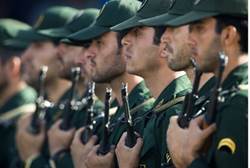
Iran's National Guard Members of Iran’s Revolutionary Guard (IRGC) Reuters

Iran’s Revolutionary Guard taunts US, West that Iran would win in the event of a military strike.

Hossein Salami, commander of the Iranian Revolutionary Guards, threatened US, the West, and Israel in a televised interview Saturday, according to Maariv.

“If the Islamic nation would unite, it could minimize the breathing room of the US and the West until the Zionist regime would no longer have room to breathe,” the commander threatened on Iranian state television.

Salami downplayed the possibility of a military attack against Iran, while noting that the US stated recently that it is leaving a military option on the table.

“We also have strong military capabilities that can attack and destroy [our enemies],” Salami boasted. “We can threaten the interests of major powers in every arena; but during the diplomatic negotiations we are not talking about military power.”

“Americans are wrong in their assessments [of Iran], which leads them to adopt mistaken policies,” he continued. “They need to look at the distant past and learn their military might not yield results. If they think that by means of threats they will make us retract our positions, they are wrong.”

Salami was nonchalant about the possibility of a military confrontation.

“Can they [the US] withstand a total war against Iran? Would they be able to protect their many interests during an attack against Iran? Can they protect energy security in the region? Can they defend their naval shipsand the security of the Zionist regime?,” he asked.

“The United States can devise an airstrike or ground strike or launch missiles at us,” Salami boasted. “We’ve analyzed all the possibilities and we have plans for winning each one. We analyzed the US’s military strategy and strengthened our capabilities and identified the weaknesses they have that will shock the United States [when they lose]. All the enemy’s military bases in the region are within our range.”

“If anyone attacks us, we will not hold back when we wage war,” Salami threatened. “We will injure the US until it falls.”

The threats echo remarks made by Ayatollah Ali Khamenei last week, where he warned the US to “show self-restraint” after US Secretary of State John Kerry told Iran that a military strike could still be possible.

In January, the Iranian Supreme Leader referred in a speech to theUnited States as “Satan”, claiming that the United States is “the greatest violator of human rights in the world.” The crowd responded by chanting, “Death to America!”

Report: Hamas Gives ‘Green Light’ For More Rocket Attacks

February 2, 2014

Report: Hamas Gives ‘Green Light’ For More Rocket Attacks – israelnationalnews.

Hamas forces preventing rocket fire on Israel withdrawn from their posts, may give free reign for more attacks on Israel.

By Tova Dvorin

First Publish: 2/2/2014, 10:23 AM

Illustration: Gaza terrorists manufacturing rockets

Illustration: Gaza terrorists manufacturing rockets. Flash 90

Hamas has ordered its forces preventing against rocket fire into Israel to retreat, Walla! reports Sunday – giving various terrorist groups a green light to attack Israel. 

Palestinian Arab insiders revealed to the daily that Hamas’s military wing ordered the preventative forces to withdraw in retaliation to the Israeli Air Force’s air strike on the Islamist-controlled territory last Thursday. That strike was Israel’s retaliation measure after rockets from Gaza landed near Netivot.

The move provides a virtual “green light” for terrorists of various groups to fire on Israel, worsening an already precarious defense situation. Major General Aviv Kohavi revealed Wednesday night that some 170,000 rockets and missiles are already aimed at Israel. 

In the meantime, rocket fire has not escalated since the order was made Saturday night, leading experts to believe that the move is more political rather than military. Analysts theorize that the move is symbolic; in actuality, Hamas anti-rocket forces are still working behind-the-scenes to prevent rocket fire until Hamas clarifies its stance on escalation. 

Not all is well on the Gaza front, however. On Saturday, Intelligence Minister Yuval Steinitz warned that Israel will need to enter Gaza to destroy Hamas if attacks continue. 

“In the last year or two there has been an improvement in the security situation, fewer rockets have been fired at Israel and fewer Israelis have been injured,” noted Steinitz. “But if the trickle of rockets from Gaza continues, we’ll have no choice but to enter and eliminate the Hamas rule, allowing the Palestinian Authority (PA) to rule Gaza again.”

Defense Minister Moshe Ya’alon warned Friday that he holds Hamas responsible for the attacks. 

“We view Hamas as responsible for what is happening in Gaza, and if it doesn’t know how to impose its authority over the [terror] cells that fire [rockets] and attack Israel, it will pay a heavy price,” Ya’alon declared.

“The IDF and security forces will continue to pursue anyone who shoots at Israel or tries to carry out attacks against it, and will not hesitate to hurt him and the people who send him.”

Off Topic: Navy considers purchasing ships from Germany to defend gas fields

February 2, 2014

Off Topic: Navy considers purchasing ships from Germany to defend gas fields – israelhayom.

Defense Minister Moshe Ya’alon meets with German counterpart Ursula von der Leyen in Berlin • Ya’alon: “The situation in the Middle East is very complex and unstable, and we expect there will be chronic instability in the coming years.”

Lilach Shoval, Israel Hayom Staff and Reuters 

German Defense Minister Ursula von der Leyen with Defense Minister Moshe (Bogie) Ya’alon in Berlin on Thursday
Photo credit: Ariel Harmoni / Defense Ministry

Defense Minister Moshe (Bogie) Ya’alon met with German counterpart Ursula von der Leyen in Berlin on Thursday and discussed the possible purchase of surface ships to defend natural gas fields in Israeli waters.

The Israeli Navy has recently begun evaluating naval vessels for defending the valuable natural gas installations off the Israeli coast. The navy intends to purchase four ships, though it has yet to be determined from which country it will purchase them.

“The situation in the Middle East is very complex and unstable, and we expect there will be chronic instability in the coming years,” Ya’alon told von der Leyen. “We are great supporters of democracy and I wish there were more democratic states around us. We have experience in the Palestinian arena, in Gaza, where Hamas won the elections but there is no democracy. This was also the case in Egypt with the Muslim Brotherhood.”

Ya’alon also spoke about Iran, warning that the “messianic-apocalyptic” regime’s nuclear program must be stopped “one or way another … otherwise it will become a nightmare for the Middle East and the entire world.”

Ya’alon thanked Germany for its support and said he “appreciated very much the cooperation between Germany and Israel.”

“Knowing very well the relationship, the good cooperation between our two countries, looking back to the dark past but looking to the bright future, these two democracies sharing the same values, I believe sharing the same interests, challenged by common threats like terror, rockets, missiles, weapons of mass destruction in the Middle East and beyond,” Ya’alon said.

Der Leyen, Germany’s first female defense minister, said, “This is the first foreign guest I have the pleasure of welcoming here in my function as defense minister. It shows the special relationship between Germany and Israel.”

Iran receives $500 million installment, says it won’t give up centrifuge research

February 2, 2014

Iran receives $500 million installment, says it won’t give up centrifuge research – Jerusalem Post.

Funds unfrozen in first phase, others to be distributed throughout six-month period; Zarif says Iran not willing to give up centrifuges research.

By JPOST.COM STAFF, REUTERS

02/02/2014 05:52
Geneva nuclear talks, November 24, 2013.
Geneva nuclear talks, November 24, 2013. Photo: REUTERS/Denis Balibouse

Iran has received the first portion of unfrozen funds, $500 million,  that they are set to receive as the beginning phases of the nuclear deal between Iran and six world powers sets into motion, AFP reported on Sunday.

Deputy Foreign Minister Abbas Araqchi told ISNA news agency Saturday that the transfer of funds was all done according to the agreement.

“The first tranche of $500 million was deposited in a Swiss bank account, and everything was done in accordance with the agreement,” Araqchi said.

The first of six installments of sanctions relief, prior to the funds transfer described by the White House as “restricted,” were not accessible by Iran’s government until February 1. Each installment interval is $450- 550 million. Iran will receive a final bulk installment of $4.2 billion on the last day of the six-month period.

The Geneva agreement struck on November 24 requires Iran to begin diluting its stockpile of uranium already enriched to nearly 20% – considered the hardest part of the enrichment process, unnecessary for purposes of civilian power but required for the construction of a warhead

The IAEA is tasked with not only ensuring that Iran disable its centrifuge cascades producing near-20% enriched material, but also that it begins the dilution process.

Other concessions by the P5+1 will not go into effect until “the IAEA has confirmed Iran is implementing its commitments,” the White House said last week.

In what some might see as a step backwards, Iranian Foreign Minister Mohammad Javad Zarif said on Saturday in Munich that Iran is not prepared to give up research on centrifuges used to purify uranium as part of a final deal.

Diplomats have said that one sticking point in the talks has been over the research and development of a new model of advanced nuclear centrifuge that Iran says it has installed.

Centrifuges are machines that purify uranium for use as fuel in atomic power plants or, if purified to a high level, weapons.

Asked if Iran would be prepared to give up research on centrifuges as part of a final deal, Zarif said: “No, but I am not prepared also to negotiate over the air.”

“We are going to discuss various aspects of the nuclear program and I do not think technology and science has anything to do with proliferation,” he said in an interview with Reuters and The International Media Associates, a television production company.

ADVANCED CENTRIFUGES

Diplomats now say, however, that Iran has told the six countries it wants to press ahead with the development of even more advanced centrifuges than the IR-2m.

The November agreement allows Iran to engage in research and development, but bars it from installing new centrifuges.

Western diplomats say they are uncomfortable with the idea of Iran pressing ahead with the development of more advanced centrifuges. But Iran says centrifuge research is crucial.

Asked his expectations for the Feb. 18 talks and how long he thought it would take to reach a final agreement, Zarif said: “It’s just the beginning of the negotiations for a final agreement. It is the first step of the final step and I expect it to take some time.”

“Of course, in our view it is not that difficult to reach an agreement provided there is good faith and the willingness on the part of all parties to try to examine various options to address the common objective of the Iranian nuclear program being exclusively used for peaceful purposes,” he said, speaking on the sidelines of the Munich Security Conference.

“We are ready because we believe it is in our interests and we have no other intention. So theoretically it shouldn’t be that difficult. The detail may be a bit more difficult to achieve, so we will see,” said Zarif, speaking in English.

On Jan. 20, the United States and European Union suspended some trade and other restrictions against the OPEC oil producer after the United Nations’ nuclear watchdog confirmed that Iran had fulfilled its side of the Nov. 24 agreement.

The announcements allowed six months of negotiation on a definitive accord.

Iran should be able to recover $4.2 billion in oil revenues frozen in foreign accounts over the six months of the interim deal, as well as resume trade in petrochemicals and gold and other precious metals.

TOO EARLY

Zarif said the six powers had “pretty much” kept their side of the bargain in suspending some sanctions, but it was too early to see the results on Iranian trade.

“The psychological impact is there but the practical implications on petrochemicals and other trade is yet to be seen,” he said.

Responding to reports  that Iran would receive the first $550 million installment of the blocked overseas funds on or about Feb. 1, Zarif said he believed Iran had received the installment but was not sure.

Off Topic: Assad said to be hoarding chemical weapons

February 2, 2014

Off Topic: Assad said to be hoarding chemical weapons – The Times of Israel.

Syrian leader squirreling away advanced arms in the Alawite regions in case country partitioned, report says

By Times of Israel staffFebruary 2, 2014, 6:26 am
Syrian President Bashar Assad during an interview broadcast on al-Manar television on Thursday, May 30, 2013. (photo credit: AP/al-Manar television)

Syrian President Bashar Assad has been stockpiling chemical, biological and other advances weapons in Syria’s Alawite areas so that they will remain in his hands in the event that the country is partitioned, London’s Sunday Times reported.

According to the report, among the weapons Assad has been squirreling away are chemical warheads.

Assad is a member of the minority Alawite sect, a mystical offshoot of Shiite Islam largely concentrated in northwestern Syria. He has been fighting an almost three-year-long civil war against rebel forces of mostly Sunni origin.

Sources close to the world’s chemical watchdog said last week that less than five percent of the around 700 tons of chemicals that, according to a deal with the West, were supposed to have left Syria by December 31 last year have done so.

A source quoted by the Sunday Times said that Assad “probably will miss the June 30 deadline when the entire 1,300 tons of lethal chemical weapons were due to be destroyed.”

According to the report, Assad has recently been consolidating his hold on the Alawite regions.

“This region is now totally fortified and isolated from the rest of Syria,” an unnamed Israeli military intelligence source was quoted as saying. “The most advanced weapons manufactured in Syria and imported from Russia are kept there.”

Peace talks between the Assad regime and the Western-backed opposition ended in Geneva on Friday with no concrete progress and no immediate commitment from Assad’s envoys to return on February 10 for more meetings.

The US has insisted that Assad cannot be part of a transitional government, while Russia has been a key ally of Assad’s government.

News agencies contributed to this report


Off Topic: New York Senate bill ends funding to schools linked to Israel boycott group

February 2, 2014

New York Senate bill ends funding to schools linked to Israel boycott group | JPost | Israel News.

( Now if only the US Senate/Congress could function this ethically, America and Israel’s problems would be behind us. – JW )

By JPOST.COM STAFF, JTA

01/29/2014 04:04

“Bill sends a message – we should never ask taxpayers to support religious, ethnic, or racial discrimination.”

Boycotting Israel

Boycotting Israel Photo: REUTERS

The New York Senate passed a bill on Tuesday that would prohibit private or public state colleges and universities from spending taxpayers funds on academic groups that support boycotting Israel, Capitol Confidential reported.

The legislation, introduced earlier this month by Democratic Senator Jeff Klien, passed by a vote of 51-4.

This is the first time a legislative body has managed to pass a bill targeting the American Studies Association over its decision to boycott Israel.

“This legislation sends a very simple message, which is that we should never ask taxpayers to support religious, ethnic, or racial discrimination. We need to marginalize the politics of intolerance whenever it rears its ugly head,” Klein said in a statement.

”I will not allow the enemies of Israel or the Jewish people to gain an inch in New York. The First Amendment protects every organization’s right to speak, but it never requires taxpayers to foot the bill,” he added.

Under the new legislation, New York academic institutes could no longer reimburse students or scholars traveling to conventions of the three groups that have voted to boycott Israel: the ASA, the Native American and Indigenous Studies Association and the Association for Asian American Studies.

In addition, state schools will be henceforth prohibited from paying membership fees to the ASA.

The state will cut off aid to any academic institution that violates the legislation during the academic year the violation occurred.

A companion bill is currently being considered in the New York State Assembly. The bill, which currently has 48 sponsors out of 150 members, was introduced by Assembly Speaker Sheldon Silver.

A number of New York-based universities have Israel branches, and Silver made clear in a statement that the target was groups that boycott Israel.

Silver said he initiated the measure “in response to the American Studies Association’s boycott of Israel and its academic institutions.”

“Colleges should not use funds to support boycotts, resolutions or any similar actions that are discriminatory and limit academic opportunities,” he said in the statement.