Archive for February 2014

Iran: ‘We Won’t Leave Zionists with Air to Breathe’

February 2, 2014

(Salami tactics? DM)

Iran: ‘We Won’t Leave Zionists with Air to Breathe’ Israel National News, Tova Dvorin
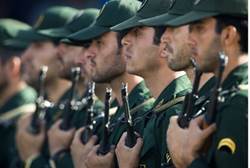
Iran's National Guard Members of Iran’s Revolutionary Guard (IRGC) Reuters

Iran’s Revolutionary Guard taunts US, West that Iran would win in the event of a military strike.

Hossein Salami, commander of the Iranian Revolutionary Guards, threatened US, the West, and Israel in a televised interview Saturday, according to Maariv.

“If the Islamic nation would unite, it could minimize the breathing room of the US and the West until the Zionist regime would no longer have room to breathe,” the commander threatened on Iranian state television.

Salami downplayed the possibility of a military attack against Iran, while noting that the US stated recently that it is leaving a military option on the table.

“We also have strong military capabilities that can attack and destroy [our enemies],” Salami boasted. “We can threaten the interests of major powers in every arena; but during the diplomatic negotiations we are not talking about military power.”

“Americans are wrong in their assessments [of Iran], which leads them to adopt mistaken policies,” he continued. “They need to look at the distant past and learn their military might not yield results. If they think that by means of threats they will make us retract our positions, they are wrong.”

Salami was nonchalant about the possibility of a military confrontation.

“Can they [the US] withstand a total war against Iran? Would they be able to protect their many interests during an attack against Iran? Can they protect energy security in the region? Can they defend their naval shipsand the security of the Zionist regime?,” he asked.

“The United States can devise an airstrike or ground strike or launch missiles at us,” Salami boasted. “We’ve analyzed all the possibilities and we have plans for winning each one. We analyzed the US’s military strategy and strengthened our capabilities and identified the weaknesses they have that will shock the United States [when they lose]. All the enemy’s military bases in the region are within our range.”

“If anyone attacks us, we will not hold back when we wage war,” Salami threatened. “We will injure the US until it falls.”

The threats echo remarks made by Ayatollah Ali Khamenei last week, where he warned the US to “show self-restraint” after US Secretary of State John Kerry told Iran that a military strike could still be possible.

In January, the Iranian Supreme Leader referred in a speech to theUnited States as “Satan”, claiming that the United States is “the greatest violator of human rights in the world.” The crowd responded by chanting, “Death to America!”

Report: Hamas Gives ‘Green Light’ For More Rocket Attacks

February 2, 2014

Report: Hamas Gives ‘Green Light’ For More Rocket Attacks – israelnationalnews.

Hamas forces preventing rocket fire on Israel withdrawn from their posts, may give free reign for more attacks on Israel.

By Tova Dvorin

First Publish: 2/2/2014, 10:23 AM

Illustration: Gaza terrorists manufacturing rockets

Illustration: Gaza terrorists manufacturing rockets. Flash 90

Hamas has ordered its forces preventing against rocket fire into Israel to retreat, Walla! reports Sunday – giving various terrorist groups a green light to attack Israel. 

Palestinian Arab insiders revealed to the daily that Hamas’s military wing ordered the preventative forces to withdraw in retaliation to the Israeli Air Force’s air strike on the Islamist-controlled territory last Thursday. That strike was Israel’s retaliation measure after rockets from Gaza landed near Netivot.

The move provides a virtual “green light” for terrorists of various groups to fire on Israel, worsening an already precarious defense situation. Major General Aviv Kohavi revealed Wednesday night that some 170,000 rockets and missiles are already aimed at Israel. 

In the meantime, rocket fire has not escalated since the order was made Saturday night, leading experts to believe that the move is more political rather than military. Analysts theorize that the move is symbolic; in actuality, Hamas anti-rocket forces are still working behind-the-scenes to prevent rocket fire until Hamas clarifies its stance on escalation. 

Not all is well on the Gaza front, however. On Saturday, Intelligence Minister Yuval Steinitz warned that Israel will need to enter Gaza to destroy Hamas if attacks continue. 

“In the last year or two there has been an improvement in the security situation, fewer rockets have been fired at Israel and fewer Israelis have been injured,” noted Steinitz. “But if the trickle of rockets from Gaza continues, we’ll have no choice but to enter and eliminate the Hamas rule, allowing the Palestinian Authority (PA) to rule Gaza again.”

Defense Minister Moshe Ya’alon warned Friday that he holds Hamas responsible for the attacks. 

“We view Hamas as responsible for what is happening in Gaza, and if it doesn’t know how to impose its authority over the [terror] cells that fire [rockets] and attack Israel, it will pay a heavy price,” Ya’alon declared.

“The IDF and security forces will continue to pursue anyone who shoots at Israel or tries to carry out attacks against it, and will not hesitate to hurt him and the people who send him.”

Off Topic: Navy considers purchasing ships from Germany to defend gas fields

February 2, 2014

Off Topic: Navy considers purchasing ships from Germany to defend gas fields – israelhayom.

Defense Minister Moshe Ya’alon meets with German counterpart Ursula von der Leyen in Berlin • Ya’alon: “The situation in the Middle East is very complex and unstable, and we expect there will be chronic instability in the coming years.”

Lilach Shoval, Israel Hayom Staff and Reuters 

German Defense Minister Ursula von der Leyen with Defense Minister Moshe (Bogie) Ya’alon in Berlin on Thursday
Photo credit: Ariel Harmoni / Defense Ministry

Defense Minister Moshe (Bogie) Ya’alon met with German counterpart Ursula von der Leyen in Berlin on Thursday and discussed the possible purchase of surface ships to defend natural gas fields in Israeli waters.

The Israeli Navy has recently begun evaluating naval vessels for defending the valuable natural gas installations off the Israeli coast. The navy intends to purchase four ships, though it has yet to be determined from which country it will purchase them.

“The situation in the Middle East is very complex and unstable, and we expect there will be chronic instability in the coming years,” Ya’alon told von der Leyen. “We are great supporters of democracy and I wish there were more democratic states around us. We have experience in the Palestinian arena, in Gaza, where Hamas won the elections but there is no democracy. This was also the case in Egypt with the Muslim Brotherhood.”

Ya’alon also spoke about Iran, warning that the “messianic-apocalyptic” regime’s nuclear program must be stopped “one or way another … otherwise it will become a nightmare for the Middle East and the entire world.”

Ya’alon thanked Germany for its support and said he “appreciated very much the cooperation between Germany and Israel.”

“Knowing very well the relationship, the good cooperation between our two countries, looking back to the dark past but looking to the bright future, these two democracies sharing the same values, I believe sharing the same interests, challenged by common threats like terror, rockets, missiles, weapons of mass destruction in the Middle East and beyond,” Ya’alon said.

Der Leyen, Germany’s first female defense minister, said, “This is the first foreign guest I have the pleasure of welcoming here in my function as defense minister. It shows the special relationship between Germany and Israel.”

Iran receives $500 million installment, says it won’t give up centrifuge research

February 2, 2014

Iran receives $500 million installment, says it won’t give up centrifuge research – Jerusalem Post.

Funds unfrozen in first phase, others to be distributed throughout six-month period; Zarif says Iran not willing to give up centrifuges research.

By JPOST.COM STAFF, REUTERS

02/02/2014 05:52
Geneva nuclear talks, November 24, 2013.
Geneva nuclear talks, November 24, 2013. Photo: REUTERS/Denis Balibouse

Iran has received the first portion of unfrozen funds, $500 million,  that they are set to receive as the beginning phases of the nuclear deal between Iran and six world powers sets into motion, AFP reported on Sunday.

Deputy Foreign Minister Abbas Araqchi told ISNA news agency Saturday that the transfer of funds was all done according to the agreement.

“The first tranche of $500 million was deposited in a Swiss bank account, and everything was done in accordance with the agreement,” Araqchi said.

The first of six installments of sanctions relief, prior to the funds transfer described by the White House as “restricted,” were not accessible by Iran’s government until February 1. Each installment interval is $450- 550 million. Iran will receive a final bulk installment of $4.2 billion on the last day of the six-month period.

The Geneva agreement struck on November 24 requires Iran to begin diluting its stockpile of uranium already enriched to nearly 20% – considered the hardest part of the enrichment process, unnecessary for purposes of civilian power but required for the construction of a warhead

The IAEA is tasked with not only ensuring that Iran disable its centrifuge cascades producing near-20% enriched material, but also that it begins the dilution process.

Other concessions by the P5+1 will not go into effect until “the IAEA has confirmed Iran is implementing its commitments,” the White House said last week.

In what some might see as a step backwards, Iranian Foreign Minister Mohammad Javad Zarif said on Saturday in Munich that Iran is not prepared to give up research on centrifuges used to purify uranium as part of a final deal.

Diplomats have said that one sticking point in the talks has been over the research and development of a new model of advanced nuclear centrifuge that Iran says it has installed.

Centrifuges are machines that purify uranium for use as fuel in atomic power plants or, if purified to a high level, weapons.

Asked if Iran would be prepared to give up research on centrifuges as part of a final deal, Zarif said: “No, but I am not prepared also to negotiate over the air.”

“We are going to discuss various aspects of the nuclear program and I do not think technology and science has anything to do with proliferation,” he said in an interview with Reuters and The International Media Associates, a television production company.

ADVANCED CENTRIFUGES

Diplomats now say, however, that Iran has told the six countries it wants to press ahead with the development of even more advanced centrifuges than the IR-2m.

The November agreement allows Iran to engage in research and development, but bars it from installing new centrifuges.

Western diplomats say they are uncomfortable with the idea of Iran pressing ahead with the development of more advanced centrifuges. But Iran says centrifuge research is crucial.

Asked his expectations for the Feb. 18 talks and how long he thought it would take to reach a final agreement, Zarif said: “It’s just the beginning of the negotiations for a final agreement. It is the first step of the final step and I expect it to take some time.”

“Of course, in our view it is not that difficult to reach an agreement provided there is good faith and the willingness on the part of all parties to try to examine various options to address the common objective of the Iranian nuclear program being exclusively used for peaceful purposes,” he said, speaking on the sidelines of the Munich Security Conference.

“We are ready because we believe it is in our interests and we have no other intention. So theoretically it shouldn’t be that difficult. The detail may be a bit more difficult to achieve, so we will see,” said Zarif, speaking in English.

On Jan. 20, the United States and European Union suspended some trade and other restrictions against the OPEC oil producer after the United Nations’ nuclear watchdog confirmed that Iran had fulfilled its side of the Nov. 24 agreement.

The announcements allowed six months of negotiation on a definitive accord.

Iran should be able to recover $4.2 billion in oil revenues frozen in foreign accounts over the six months of the interim deal, as well as resume trade in petrochemicals and gold and other precious metals.

TOO EARLY

Zarif said the six powers had “pretty much” kept their side of the bargain in suspending some sanctions, but it was too early to see the results on Iranian trade.

“The psychological impact is there but the practical implications on petrochemicals and other trade is yet to be seen,” he said.

Responding to reports  that Iran would receive the first $550 million installment of the blocked overseas funds on or about Feb. 1, Zarif said he believed Iran had received the installment but was not sure.

Off Topic: Assad said to be hoarding chemical weapons

February 2, 2014

Off Topic: Assad said to be hoarding chemical weapons – The Times of Israel.

Syrian leader squirreling away advanced arms in the Alawite regions in case country partitioned, report says

By Times of Israel staffFebruary 2, 2014, 6:26 am
Syrian President Bashar Assad during an interview broadcast on al-Manar television on Thursday, May 30, 2013. (photo credit: AP/al-Manar television)

Syrian President Bashar Assad has been stockpiling chemical, biological and other advances weapons in Syria’s Alawite areas so that they will remain in his hands in the event that the country is partitioned, London’s Sunday Times reported.

According to the report, among the weapons Assad has been squirreling away are chemical warheads.

Assad is a member of the minority Alawite sect, a mystical offshoot of Shiite Islam largely concentrated in northwestern Syria. He has been fighting an almost three-year-long civil war against rebel forces of mostly Sunni origin.

Sources close to the world’s chemical watchdog said last week that less than five percent of the around 700 tons of chemicals that, according to a deal with the West, were supposed to have left Syria by December 31 last year have done so.

A source quoted by the Sunday Times said that Assad “probably will miss the June 30 deadline when the entire 1,300 tons of lethal chemical weapons were due to be destroyed.”

According to the report, Assad has recently been consolidating his hold on the Alawite regions.

“This region is now totally fortified and isolated from the rest of Syria,” an unnamed Israeli military intelligence source was quoted as saying. “The most advanced weapons manufactured in Syria and imported from Russia are kept there.”

Peace talks between the Assad regime and the Western-backed opposition ended in Geneva on Friday with no concrete progress and no immediate commitment from Assad’s envoys to return on February 10 for more meetings.

The US has insisted that Assad cannot be part of a transitional government, while Russia has been a key ally of Assad’s government.

News agencies contributed to this report


Off Topic: New York Senate bill ends funding to schools linked to Israel boycott group

February 2, 2014

New York Senate bill ends funding to schools linked to Israel boycott group | JPost | Israel News.

( Now if only the US Senate/Congress could function this ethically, America and Israel’s problems would be behind us. – JW )

By JPOST.COM STAFF, JTA

01/29/2014 04:04

“Bill sends a message – we should never ask taxpayers to support religious, ethnic, or racial discrimination.”

Boycotting Israel

Boycotting Israel Photo: REUTERS

The New York Senate passed a bill on Tuesday that would prohibit private or public state colleges and universities from spending taxpayers funds on academic groups that support boycotting Israel, Capitol Confidential reported.

The legislation, introduced earlier this month by Democratic Senator Jeff Klien, passed by a vote of 51-4.

This is the first time a legislative body has managed to pass a bill targeting the American Studies Association over its decision to boycott Israel.

“This legislation sends a very simple message, which is that we should never ask taxpayers to support religious, ethnic, or racial discrimination. We need to marginalize the politics of intolerance whenever it rears its ugly head,” Klein said in a statement.

”I will not allow the enemies of Israel or the Jewish people to gain an inch in New York. The First Amendment protects every organization’s right to speak, but it never requires taxpayers to foot the bill,” he added.

Under the new legislation, New York academic institutes could no longer reimburse students or scholars traveling to conventions of the three groups that have voted to boycott Israel: the ASA, the Native American and Indigenous Studies Association and the Association for Asian American Studies.

In addition, state schools will be henceforth prohibited from paying membership fees to the ASA.

The state will cut off aid to any academic institution that violates the legislation during the academic year the violation occurred.

A companion bill is currently being considered in the New York State Assembly. The bill, which currently has 48 sponsors out of 150 members, was introduced by Assembly Speaker Sheldon Silver.

A number of New York-based universities have Israel branches, and Silver made clear in a statement that the target was groups that boycott Israel.

Silver said he initiated the measure “in response to the American Studies Association’s boycott of Israel and its academic institutions.”

“Colleges should not use funds to support boycotts, resolutions or any similar actions that are discriminatory and limit academic opportunities,” he said in the statement.

Off Topic: Op-Ed: Is Hezbollah About to Withdraw from Syria?

February 2, 2014

Op-Ed: Is Hezbollah About to Withdraw from Syria? Israel National NewsBrig.-Gen. (ret.) Dr. Shimon Shapira

(“Above all, the Revolutionary Guards and Khamenei want to preserve Hezbollah’s power and status so that it can pursue its principal mission of anti-Israeli jihad. At the end of the day, Hezbollah’s entire raison d’être is to be Iran’s spearhead in its struggle against Israel.” From the article. DM)

Hezbollah has trouble functioning as a movement when its leaders, operatives, and supporters are busy trying to survive and searching for car bombs.

Hezbollah’s military involvement in Syria is now a subject of heated domestic debate in Iran. This debate is being waged against the backdrop of the international refusal to let Iran take part in the Geneva 2 talks on Syria’s future, in light of Iran’sopposition to the principle of a transitional period leading to Bashar Assad’s removal from power.

On one side of the debate is the Islamic Revolutionary Guards, which is backed by Supreme Leader Ali Khamenei and favors ongoing military involvement in Syria as one way of advancing Iran’s regional ambitions. Those ambitions entail making Iraq, Syria, and Lebanon a sphere of Iranian influence, to which Bahrain and Yemen are eventually to be added.

Against the Revolutionary Guards and Khamenei stand President Rouhani and Foreign Minister Zarif, who are supported by former president Hashemi Rafsanjani and see the Syrian involvement as an albatross that hampers Iran’s efforts at rapprochement with the West – efforts which are primarily aimed at vitiating the sanctions regime that is seriously damaging the Iranian economy.

An echo of the struggle in Tehran could be heard at the World Economic Forum in Davos, Switzerland, where Zarif denied that Iran had dispatched Hezbollah to Syria – “We are not sending people, Hezbollah has made its own decision.” Zarif, however, refused to call for Hezbollah’s removal from Syria, though he agreed to call on all foreign forces to leave the country. His words, in any case, provoked the rage of the Revolutionary Guards. They are well aware of the Hezbollah leadership’s difficult straits in light of the growing military entanglement in Syria and, even more, the recent Salafi bombing attacks on the organization’s home base, the Dahiya quarter of Beirut.

Although Hezbollah’s leaders claim it is fighting in Syria in order to protect Lebanon, Lebanese Shiites are not convinced and Hezbollah’s supportersare dubious. Hezbollah has now lost almost 350 men in Syria, not all of whom have been brought back to Lebanon for burial, while the number of wounded has passed a thousand.

This puts into question Hezbollah’s ability to keep sacrificing its fighters in Syria when its target of jihad is Israel. Moreover, the devastating Salafi terror attacks in Beirut, including an attack on the symbolically charged Iranian embassy, have left Hezbollah helpless to respond.

Even more critically, Hezbollah has trouble functioning as a movement when its leaders, operatives, and supporters are busy trying to survive and searching for car bombs. Indeed, Hezbollah is losing the public and popular support that is so important for a movement of its kind.

The question of Hezbollah’s continued involvement in Syria will not be decided in Lebanon. The heads of the Revolutionary Guards in Tehran, who are aware of the organization’s intensifying plight, will have to ponder which is worse – the loss of Hezbollah’s power and influence in Lebanon or its removal from Syria, which at this stage would not influence Assad’s ability to continue slaughtering his opponents in the Syrian revolt.

Above all, the Revolutionary Guards and Khamenei want to preserve Hezbollah’s power and status so that it can pursue its principal mission of anti-Israeli jihad. At the end of the day, Hezbollah’s entire raison d’être is to be Iran’s spearhead in its struggle against Israel.

Hence, it appears that the more Hezbollah is battered, the greater will be the pressure on Khamenei to order his representative in Lebanon, Hassan Nasrallah, to significantly scale back the organization’s involvement in Syria. Nasrallah will humbly and unquestioningly obey.

Obama and Iran in business

February 2, 2014

Obama and Iran in business | JPost | Israel News.

By JPOST EDITORIAL

02/01/2014 22:36

The early bird really does catch the worm and, mindful of that, European firms are rushing with headlong alacrity to do deals with Iran.

US President Barack Obama gestures during news conference

US President Barack Obama gestures during news conference Photo: REUTERS

The early bird really does catch the worm and, mindful of that, European firms are rushing with headlong alacrity to do deals with Iran – even though pro forma only some sanctions on the ayatollah regime have been lifted.

Europe’s eagerness might well give the impression to the uninitiated that all sanctions were dropped.

It seems reentering the Iranian market is a chance not to be missed for a gamut of concerns – from banks and financial conglomerates to the oil and gas sector and even car makers and assorted other manufacturers.

The French, for example, are flying planeloads of executives from no fewer than 100 firms for “exploratory talks” hot on the heels of the partial sanctions suspension.

Their German, Dutch and Swiss counterparts are not far behind. Simultaneously, from Asia come equally keen Chinese and Indian overtures toward Tehran.

While Europeans and Asians fall over themselves to restore chumminess with Iran – its terror-mongering and nuclear machinations notwithstanding – the international community is awash with amplified boycott threats against democratic Israel.

Washington, which once spearheaded sanctions but has now eased them, is setting the tone for the surge of interest in the Iranian economy.

The Islamic Republic’s business boosters could only take heart from US President Barack Obama’s State of the Union address on Tuesday. His principal foray into the mine field of foreign relations was to declare his intention to veto the conditional sanctions bill sponsored by a bipartisan group of senators – 13 Democrats and 13 Republicans. This bill would exacerbate sanctions only in the event that negotiations with Iran on a final agreement fail.

Ostensibly, this should not rile Obama, as it reinforces his bargaining position.

But instead, the US leader exploited his most important annual address to put his political weight behind the Iranians against a bipartisan coalition representing the majority of American congressmen. This is nothing if not extraordinary.

Obama appears to side with his Iranian interlocutors, who had already lashed out against the legislation, warning that its passage would scuttle the interim agreement reached in Geneva in November. But that is patently specious. The bill’s very rationale is that sanctions would be intensified only if talks fail.

Obama acknowledges that Tehran was compelled to accept the interim agreement because the sanctions inflicted substantial pain on its economy. The natural assumption then should be that Iran would be motivated to be more accommodating by the prospect of tougher constraints on its oil exports, access to bank holdings abroad and funding for assorted construction and other projects in the country.

The inescapable conclusion is that Obama – in the name of diplomatic prudence – has come out forcefully in defense of the Iranian position while Iran and the US in continue to be at loggerheads, including on how to interpret the interim deal.

Tehran, in other words, can literally stick to its guns and evince an extreme hardnosed approach, while Washington’s response is implausible indulgence that triggers an unnerving competition in Europe and Asia for Iranian business.

If anything, the Senate bill, authored by Democrat Robert Menendez and Republican Mark Kirk, might cool the ardor to curry favor with the Islamic Republic. Its unmistakable bottom line is that any investment in Iran before a final nuclear deal is struck is unsafe.

It is obvious why Iran should bristle against this measure.

The bet in Tehran is that the limited sanctions reprieve will generate an across-the-board collapse of the entire sanctions structure. This could spawn a fait accompli even if the talks are irredeemably deadlocked.

But while Iran’s self-serving logic is transparent, it is exceedingly difficult to fathom the White House’s reasoning.

The bill would not curtail Obama’s freedom to negotiate, as long as he focuses on his much-touted goal of actually dismantling Iran’s rogue nuclear project rather than settling for its sham pledges to do so.

If Obama were truly sincere in wishing to ensure Israel is safe from the menace of Iranian nukes, he surely would not oppose even such minimal pressure on the mullahs.

Off Topic: Ansar Jerusalem takes credit for latest Eilat rocket attack

February 1, 2014

Ansar Jerusalem takes credit for latest Eilat rocket attack, The Long War Journal, David Barnett

In a statement released to jihadist forums today, the Sinai-based jihadist group Ansar Jerusalem (Ansar Bayt al Maqdis) claimed responsibility for a rocket attack yesterday evening on the southern Israeli city of Eilat. The rocket, fired from the Sinai, was intercepted over Eilat by an Iron Dome missile defense battery stationed near the city.

In its statement, Ansar Jerusalem accused the Egyptian military of working with “the Jews.” Egypt is allowing Israeli drones to fly over the Sinai and “spy on the mujahideen,” the jihadist group charged.

The communiqué concluded by warning: “Jews, you have to know that nothing will stop us from fighting you, even if the entire world’s armies move on your instructions. If they create a barrier between us and you, with God’s help and strength, we will get you and kill you.”

The latest attack came just over 10 days after Ansar Jerusalem had taken credit for a separate rocket attack on Eilat in January. With the two recent attacks, an Iron Dome missile defense battery is likely to stay in the Eilat area for the foreseeable future.

In August, the Mujahideen Shura Council in the Environs of Jerusalem (MSC) took responsibility for a rocket attack on Eilat. The MSC said it fired the Grad rocket, which was intercepted by one of Israel’s Iron Dome missile defense systems, in response to the killing of four members of Ansar Jerusalem.

Although Eilat has not normally been a target of rocket fire from terror groups in the region, it has increasingly come under fire during the past two years. On Nov. 20, 2012, Ansar Jerusalem claimed to have fired rockets at Eilat. The same group also took responsibility for a rocket attack on Eilat in mid-August 2012.

More recently, in early July last year, Ansar Jerusalem issued a statement claiming responsibility for the firing of two rockets toward Eilat. Prior to that, in April, the Mujahideen Shura Council in the Environs of Jerusalem claimed responsibility for a rocket attack on Eilat.

Ansar Jerusalem, which was founded by Egyptians, is the dominant jihadist group operating in the Sinai Peninsula today. The group, whose fighters are often seen with the al Qaeda flag, has claimed credit for a number of attacks against Israel and Egypt over the past two years.

In September 2013, Ansar Jerusalem, which releases material through the jihadist forums of Al Fajr Media Center, al Qaeda’s exclusive media distribution outlet, declared that “it is obligatory to repulse them [the Egyptian army] and fight them until the command of Allah is fulfilled.” Recent reports in the Egyptian media have suggested that Ansar Jerusalem may have links to Muhammad Jamal and the Muhammad Jamal Network [MJN], which were added to the US government’s list of designated terrorists and the UN’s sanctions list in October 2013.

Jamal, whose fighters have been linked to the Sept. 11, 2012 Benghazi terror attack, is said to have established “several terrorist training camps in Egypt and Libya” with funding from al Qaeda in the Arabian Peninsula. In late August, Ansar Jerusalem was lauded by an AQAP official as “our mujahideen brothers in Sinai.”

Eilat goes back to business after rocket fire from Sinai

February 1, 2014

Eilat goes back to business after rocket fire from Sinai – Israel News, Ynetnews.

Though frequency of rockets towards resort city increases recently, Eilat’s residents, tourists feel confident under Iron Dome’s protective shield, try to maintain regular routine, spirits

Meir Ohayon

Published: 02.01.14, 18:18 / Israel News

After yet another rocket was intercepted by Eilat’s Iron Dome battery, an understanding is gradually setting in that the rockets threat on one of Israel‘s most famous resort towns is here to stay, at least for now.

Still, residents and tourists of the area are expressing much optimism Saturday, a day after a rocket was launched towards the city. The siren that pierced the Shabbat evening quiet did not alarm the citizens and visitors, and large crowds arrived Saturday morning at the city’s sites, promenade and businesses as they do every weekend, as if nothing happened. The return to normal in Eilat once again proves to be quite quick.

From the residents’ remarks, it is notable that the Iron Dome battery that was deployed in the city instills much confidence with them, and perhaps this is the fact that allows them not to sink into greater fears in light of the increasing frequency of missiles fired towards the city.

“There is no doubt that Iron Dome has proven itself time and time again,” said acting chairman of the Eilat tourism board, Yossi Chen, who travelled in the city Saturday morning. “I think of Eilat as a touristic city that needs this protection in order to keep being a safe city for its citizens and guests.” Chen praised the resilience shown by Eilat’s residents and visitors: “The proof is that when there’s fire towards the city of Eilat it does not deter tourists and vacationers from coming here, and the residents go about their business as usual immediately after the fire.”

Eilat beach on Saturday morning (Photo: Meir Ohayon)

Shlomit Biton-Rassoni, an owner of several convenience stores and mother of two, went to work as usual on Saturday: “In my opinion, now that the frequency of rockets has increased, we face a potential blow to our businesses, but if that happens it’s only up to us and how we react.” On her part, she tries to keep “business as usual” in order to instill confidence with her children, customers and employees: “That’s what needs to be done, and we should definitely avoid hysterical remarks that only cause stress.”

No rocket-talk

Yoram Nadal, an owner of an organic farm in the area, barely had time to talk. Like all other Saturdays, he was swamped with visitors: “Nothing happened. It’s nothing, a passing episode. Many tourists and visitors came, all strolling around the farm,  young children playing outside and jumping on the toddler trampoline, mothers near by, many sitting at the café here. Everyone is enjoying the lovely weather. No one speaks of the rockets that were launched (Friday) night.”

Large crowds arrived Saturday morning at the city's promenade (Photo: Meir Ohayon)
Large crowds arrived Saturday morning at the city’s promenade (Photo: Meir Ohayon)

Galina Reznikov, a secretary, spoke about her experience Friday night: “I was in a parking lot near my house. I just got out of the car and then I heard the siren. I looked up because hordes of birds began flying around. I saw the rocket coming, it was very bright, and heard the explosion. I got in the car and turned around. I saw lots of police cars but nothing else, and then I just returned home. I hope Iron Dome will always be here, this way we’ll be protected.”

A siren sounded in Eilat little after 9:30 pm on Friday, and the Iron Dome battery intercepted a rocket that was launched from the Sinai Peninsula. Security forces blocked roads in the area and conducted searches to find the rocket remains. The radical Salafi organization Ansar Bait al-Maqdis, affiliated with al-Qaeda , took responsibility for the rocket fire.

In the beginning of last week, two Grad rockets were launched towards Eilat, and they were located several hours later in an open field. Following the fire, the defense establishment assessed that the launches were related to an assassination attempt that took place in the Gaza Strip a few days earlier, and the fire was aimed, among other things, to increase tensions between IDF and the Egyptian army.


