Archive for February 2014

Regional Reverberations of a Bad Iran Deal

February 8, 2014

Regional Reverberations of a Bad Iran Deal – Commentary Magazine.

@mrubin1971
02.07.2014 – 11:15 AM

In 1971, as Britain prepared to grant the United Arab Emirates its independence and as British forces withdrew from the Greater and Lesser Tonb Islands and Abu Musa, Iranian forces swooped in and seized the islands. While legally the islands belong to the United Arab Emirates, the United States turned a blind eye and, as per the Nixon Doctrine of embracing pivotal states, may actually have encouraged Iran, the pillar of American policy in the region at the time. (An alternate academic argument sympathetic to Iranian sovereignty can be found here.)

What once may have seemed as a stabilizing influence turned disastrous for the United States after the Islamic Revolution in Iran because of the strategic location of the islands in the Persian Gulf, and how the extension of Iranian territorial waters impacts maritime traffic.

I am currently in the Persian Gulf and have spent the last week in various countries and have been fortunate to have a number of very senior meetings with diplomatic and security officials. Attitudes and concerns of course differ between countries, but there have been a few consistencies: First, a sense that the United States is being outplayed by Iran; second, a belief that the nuclear deal being negotiated will not resolve the Iranian nuclear impasse because of the loopholes which American negotiators have allowed and so will simply legalize it; and third, real anger that the United States did not consult its allies and instead seems prepared to throw them under the bus. On this third point, the argument is not against diplomacy, but rather how the Obama administration conducts it without a sense of the region’s history, its allies’ interests, and its allies’ experience.

Because American allies remain effectively in the dark, they feel they must make accommodation with Iran in order to prepare for a post-American order. The Iranians believe they are winning, and they are eager to extract the concessions they believe their strengthened hand deserves.

Enter the disputed islands. The Iranians have been negotiating with the Emiratis for the return of the islands to UAE sovereignty. Sounds good on the surface, but the coming deal is disastrous. While Iran might evacuate the islands—not a huge deal since their population consists only of small Iranian garrisons—the Iranians would win claim to their waters, and so would maintain their military exclusion zone. In addition, the Iranians would win a facility on Oman’s Musandam Peninsula, on the other side of Iran from the strategic Strait of Hormuz. According to ArabianBusiness.com:

“Iran will retain the sea bed rights around the three islands while the UAE will hold sovereignty over the land,” they continued. “Oman will grant Iran a strategic location on Ras Musandam mountain, which is a very strategic point overlooking the whole Gulf region. “In return for Ras Musandam, Oman will receive free gas and oil from Iran once a pipeline is constructed within the coming two years,” the source added.

Perhaps the United States believes, here too, that reaching a deal trumps the substance of a deal. But any Iranian presence on Musandam should be a non-starter: It doesn’t matter what the safeguards in the deal are: possession is everything. Sultan Qaboos, the leader of Oman, is progressive and pro-Western, but he is also is aging, has no children, and so no apparent heir. When he passes away, Tehran will not only work to influence his succession, but can simply create a fait accompli while any new leader consolidates control. UAE officials, however, feel that with the United States weak and Iran strong, this is the best for which they can hope. That is the tragedy of the situation.

The UK’s Pro-Iran Lobby

February 8, 2014

The UK’s Pro-Iran Lobby – Commentary Magazine.

(“It suits them to demonise Iran”. No need for that. They demonise themselves without our help. If Jack Straw’s view is the dominant one, then Britain WAS great. – Artaxes)

02.07.2014 – 9:40 AM

At a recent meeting of the British Parliament’s All-Party Parliamentary Group on Iran, a strange tone dominated proceedings. Not only was the atmosphere unmistakably leaning toward an attitude favorable to Iran, but there were open expressions of anti-American and anti-Israel views from the parliamentarians. Some of the members seemed so pro-Iranian that they even made sure to take a good swipe at Saudi Arabia, Iran’s primary rival in the Islamic world. Nor were these expressions coming from fringe members of the House, but from Conservative and Labour politicians who have held some of the highest offices in the land.

Leading the way throughout the proceedings was former foreign secretary Jack Straw. Straw, who has inexplicably become one of the Islamic Republic’s staunchest defenders in recent years, could barely contain his enthusiasm for the country. Whereas he took the opportunity to lambast the pro-Israel lobby in America, Straw spoke warmly of “the big and vibrant Iranian diaspora in the United States.” Like some sort of travel agent he also reflected whimsically on his trips to Iran, insisting “people thought I was going to the Moon or something. It was absolutely amazing. In fact Tehran feels like Madrid or Athens rather than Cairo or Mumbai.” Straw is right, Tehran is nothing like Cairo or Mumbai; in those cities one doesn’t find people being publicly executed on charges of drug dealing and homosexuality. As for Athens and Madrid, Straw must have caught them on an off day.

He took quite a different attitude to the U.S. however. Straw claimed that “neocons in the Bush Administration” had derailed his efforts to broker a nuclear deal with Iran and pursued a policy that got Ahmadinejad elected as Iranian president: “they begat the Ahmadinejad regime.” But elsewhere Straw has also claimed that the same neocons in the Bush administration essentially had him fired as foreign secretary. Their channels of influence were beyond parallel it seems.

Where Straw really surpassed himself was when he treated the parliamentary committee to a diatribe about the influence of Israel and the “axis” of the Israel lobby, before indulging in some pop-psychiatry about the driving force behind American foreign policy:

What worries me, at the same time, is that there is an agenda by the right-wing in Israel, typified by Netanyahu and those to the right of him in the very fractious coalition he leads, and those in the United States, with the axis being the American Israel Public Affairs Committee. It suits them to demonise Iran. I think that for a long time there has been a pervasive vulgarity to part of the narrative of American foreign policy. It requires there to be a demon. For a long time, the obvious demon was the Soviet Union, and that suited everybody. That collapsed and we have moved on to other demons. They need a demon. It is not about foreign policy analysis; they have a psycho-political need. Iran is that demon. The parody of Iran that comes across the Atlantic is extraordinary in my view.

These remarks are reminiscent of those that former Israeli MK Einat Wilf reported from Straw when she told of how, during one meeting, Straw had spoken of how “unlimited funds available to Jewish organizations and AIPAC in the U.S. are used to control and divert American policy in the region and that Germany’s obsession with defending Israel were the problem.” Indeed, with these comments and the others mentioned here, Straw not only advocates for Iran, he even appears to be parroting Iranian conspiracies. Last year Straw penned a piece in the Times of London titled “Israel must learn that cruelty does not pay,” which is presumably what attracts Straw to the mullahs and their anti-cruelty regime in Iran.

This effort to explicitly demonstrate how much more virtuous than Israel the Iranians are seems to be a favorite of Straw’s. Apparently forgetting that Iran is a signatory of the Non-Proliferation Treaty, or ignoring the vast body of intelligence that exists to indicate that Iran is in breach of that treaty, Straw said:

You can make that case against any international partner at all—you can easily make it against Israel, let me say, who signs up to all sorts of things and then doesn’t do them—but on the whole, the history of Iran is that where they sign up to texts, they implement them.

What the proceedings of this committee demonstrated, however, is that Straw’s views are not simply those of someone going head-to-head with Jimmy Carter to be known as the leading out-of-office crank. For also during the hearing, Labour MP Jeremy Corbyn expressed his view that “the UK Government are right to develop relations with Iran; there is no question about that” and warned against what he described as the “rightwing” view in America that aims to isolate Iran. Corbyn spoke, almost hopefully, of how “there might be an interesting parting of the ways between the USA and western Europe somewhere down the line.”

Also adding to the chorus of Iranian sympathizes was former-Chancellor Norman Lamont, who claimed that Saudi Arabia and Israel had distorted Iranian president Rouhani’s words against him. Lamont added “I think both Saudi Arabia and Israel, and it is convenient for them, want to keep Iran as a country that is beyond the pale. They would face a challenge if there was any normalization of relations and then there would be another power in the area with some influence on the West.”  

British politicians, in their readiness to embrace Iran, seem to be forgetting the many British servicemen killed by Iranian-made IEDs, the British naval personnel kidnapped in 2007, or the storming of the British embassy in Tehran in 2011.

Kristol: Will the Pro-Israel Community Choose Bipartisanship Over Stopping Iran?

February 8, 2014

Kristol: Will the Pro-Israel Community Choose Bipartisanship Over Stopping Iran? – The Weekly Standard.

10:37 AM, Feb 7, 2014 • By DANIEL HALPER

In response to various media reports on the Iran sanctions bill, the chairman of the Emergency Committee for Israel, William Kristol, released this statement:

Iran

We commend 42 Senators for their strong letter demanding a vote on S. 1881, the bipartisan Nuclear Weapon Free Iran Act, which has been cosponsored by more than half of the Senate. The bill is simple and reasonable. It would reimpose existing sanctions suspended under the interim agreement if Iran cheats; it would ensure that a final agreement requires Iran to dismantle its illicit nuclear infrastructure; and it promises to impose additional economic sanctions in the future should Iran fail to agree to a final deal that dismantles its nuclear infrastructure.

“As the Senators put it in their letter to the Majority Leader, ‘Now we have come to a crossroads. Will the Senate allow Iran to keep its illicit nuclear infrastructure in place, rebuild its teetering economy and ultimately develop nuclear weapons at some point in the future?’

“The answer to this question must be no. The Senate should act now to deliver that answer. It would be nice if there were universal bipartisan support for acting now to stop a nuclear Iran. But there apparently is not. And it would be terrible if history’s judgment on the pro-Israel community was that it made a fetish of bipartisanship — and got a nuclear Iran.”

Top Iranian official: Israel a ‘cancer’ in the Middle East

February 8, 2014

Top Iranian official: Israel a ‘cancer’ in the Middle East – Jerusalem Post.

(Yep, the face of the new moderate Iran. The US delegation did the right thing. – Artaxes)

US delegation walks out of Tunisia constitution party in protest of remarks made by Iran’s parliamentary speaker Ali Larijani.

By REUTERS, JPOST.COM STAFF 02/08/2014 08:34

Ali Larijani

Iran’s parliamentary speaker Ali Larijani in Tunisia, February 7, 2014. Photo: REUTERS

TUNIS – Iran’s parliamentary speaker Ali Larijani referred to Israel as a “cancer” in the region on Friday and accused it and the United States of trying to “sterilize” the Arab Spring revolutions.

“Even after the revolutions that happened in the region, the US and Israel tried to divert and devastate some of the revolutions so that Israel can benefit,” Iran’s official Press TV news quoted Larijani as saying at a ceremony in Tunisia celebrating the country’s new constitution.

In light of the Iranian official’s address, a US delegation walked out in protest from the assembly in Tunis.

The ceremony, which included French President Francois Hollande and other foreign dignitaries, was meant to mark Tunisia’s newly adopted constitution, widely praised as a model for the region.

Three years after its uprising inspired the “Arab Spring” revolts across the region, Tunisia is progressing to full democracy with a new charter and caretaker government in charge until elections later this year.

“What was intended to be a ceremony honoring Tunisia’s achievements was used by the Iranian representative as a platform to denounce the United States,” the US embassy in Tunis said in statement.

The US delegation left after the “false accusations and inappropriate comments”, it said.

While Tunisia has advanced towards democracy, other countries such as Libya and Egypt have struggled with unrest and violence since overthrowing their long-ruling autocratic rulers.

Off Topic: Former PM Olmert: No trust exists between Netanyahu and Abbas

February 8, 2014

Former PM Olmert: No trust exists between Netanyahu and Abbas, Jerusalem Post, February 7, 2014

(Former PM Olmert apparently secured Abbas’ trust and offered a spectacular deal. Abbas rejected it. — DM)

Olmert tells Channel 2 news that building personal trust was critical in order to reach a peace deal; says Netanyahu not demonstrating the sufficient flexibility that would make a deal possible.

Olmert Former prime minister Ehud Olmert. Photo: Marc Israel Sellem/The Jerusalem Post

Former prime minister Ehud Olmert said Friday evening that a major obstacle to making peace with the Palestinians was the absence of trust between Prime Minister Binyamin Netanyahu and Palestinian Authority President Mahmoud Abbas.

Olmert, in an interview with Channel 2 news, said that the process of building personal trust was critical for the possibility of reaching a peace agreement but that the trust between Netanyahu and Abbas was “below water level and nonexistent.”

The former prime minister said that in his talks with Abbas in 2008 he made sure always to address the Palestinian leader by his official title as a way to build trust and to create a sense of equality.

Abbas turned down the far reaching concessions that Olmert made in 2008. The former prime minister could not explain why Abbas would be likely to accept an offer from Netanyahu when he rejected the generous 2008 offer. But Olmert noted that Netanyahu was not demonstrating the sufficient flexibility that would make a deal with Abbas even possible.

“I am sure that Netanyahu wants to reach a peace settlement. But I think that there is a huge gap between what Netanyahu is willing to offer Abbas and what everyone agrees is required to form the basis of an agreement,” Olmert told Channel 2.

Olmert said that Abbas told him that he did not want to “change the character of the state of Israel” which he interpreted as the Palestinian president’s willingness to be flexible on the Palestinian “right of return.”

On the question of whether Abbas would recognize Israel as the homeland of the Jews, Olmert said that Abbas gave him an answer on the issue that would satisfy Israel at the end of a diplomatic process when a peace deal was reached. Olmert did not specify what Abbas’s position was.

Netanyahu said at the beginning of the week, that it would be “absurd” for Israel to recognize a Palestinian state in the framework of a peace agreement without the Palestinians recognizing Israel as the Jewish state.

Treasury Dept Accuses Iran of Working with Al Qaeda: Obama Rejects Sanctions

February 7, 2014

Treasury Dept Accuses Iran of Working with Al Qaeda: Obama Rejects Sanctions, Front Page Magazine, February 7, 2014

(Iran “deal” skeptics are as bad as climate change deniers. Besides, the Obama Administration has ceased adding al-Qaeda leaders to the “kill list” and it has been suggested that “The decision to define al Qaeda down to irrelevancy seems to be part of the administration’s policy of declaring victory and going home.” Iranian nukes? Why not? — DM)

Iran-al-qaeda-234x350

This is coming from inside Obama’s own administration. It’s not Dick Cheney or Donald Rumsfeld talking. And still Obama insists on pandering to Iran, letting it go nuclear and accusing skeptics of seeking war.

The Obama administration charged that Tehran has allowed senior al Qaeda members operating from Iranian soil to facilitate the movement of Sunni fighters into Syria.

The allegation by the Treasury Department on Thursday would suggest that elements of Iran’s government or military were at least tacitly supporting the opposing sides of Syria’s civil war.

Iranian officials denied the accusations, saying Washington was harming diplomatic efforts aimed at ending the international standoff over Tehran’s nuclear program.

This is Iran’s Get Out of Jail Free card for everything. “You’re damaging the diplomatic effort.” This is why Iran is playing out the diplomatic game because it knows that the Chamberlains don’t have the guts to end the diplomatic hoax no matter what it does.

The Iranian government is Syrian President Bashar al-Assad’s closest military and diplomatic ally. U.S., European and Arab governments have repeatedly charged Iran’s elite military unit, the Islamic Revolutionary Guard Corps, or IRGC, of deploying soldiers to Syria to bolster Mr. Assad’s regime, an accusation Iran has denied.

U.S. officials, however, have intermittently accused Tehran and the IRGC of colluding with Sunni militant groups, who historically are enemies of Tehran’s Shiite government, but also are fighting the U.S. and its allies.

On Thursday, the Treasury Department sanctioned three IRGC officers for allegedly providing support for Afghanistan’s Taliban, a hard-line Sunni group.

Nothing to see here. Just the diplomats of Iran hard at work.

Economic warfare?

February 7, 2014

Economic warfare? | Jerusalem Post – Blogs.

Ira Sharkansky

Are they or aren’t they threatening Israel?

The US Secretary of State and the EU Representative in Israel both said, within days of one another, that the failure of the Israel-Palestine peace talks will increase the economic pressure on Israel.

Israeli officials responded to both with counter threats that such language has no place in discussions between allies.

The implication: stop threatening if you want the talks to continue.

That brought immediate responses that the Israelis did not understand the Secretary or the Representative. Both opposed boycotts and other sanctions on Israel, but they were talking about what activists and companies in the private sector would do for their own economic and political reasons.

Claims of misunderstanding are conventional diplomatic restatement. In these cases, it does not hold up in the presence of government funded organizations actively leading the calls to boycott. Moreover, a simple reading of what the Secretary and Representative said, in context, seems a pretty clear either do what I want or there will be consequences.

Israeli business executives and  the Minister of Finance have expressed their own fears of what an extension of the boycotts can do to the Israeli economy. Cynics heard them taking advantage of boycott activity to express once again their views that Netanyahu should offer more to the Palestinians.

Kerry and EU officials–supposedly schooled in the history of international relations, or with aides having such education–ought to be more aware of the complications associated with economic warfare, and work harder to prevent it.

The story of the last major economic confrontation involving important western countries was the tariff war of the 1920s. Extremist defenses of each national economy via high tariffs brought retaliation, and is said to have made a significant contribution to the Great Depression of the 1930s.

Israelis should not delude themselves into thinking that they wield the tools of a great economic power. However, we are not without opportunities to defend ourselves.

Dare the goyim–or Jews who identify with them–to think they can best the Jews of Israel at economic warfare? No surprise that Tom Friedman has signed on to Kerry, the EU, and the threat of boycotts. His solution is also no surprise. It’s something he has been tooting for years: freeze settlement activity.

We’ve been dealing with enemies and adversaries for 3,000 years. We’ve survived Shakespeare,  Sabbtai Zevi, and a host of others. Kerry and Friendman may be next.

The Palestinians who created BDS (boycott, disvestment, sanctions) even before they have been able to create a peoplehood that is not chronically on the verge of civil war, are not likely to succeed where others have tried and failed.

The Arab boycott, dating from 1948 and reaching a peak in 1973, not only failed to bring Israel to its knees, but the country emerged with more prosperity spread throughout its population than any Muslim country. The multitude of players in the international economy allowed Israel to avoid energy shortages as well as any country, and did not keep Israel from finding energy companies willing to deal with it. Israel has not been invited to join OPEC, but it is on the verge of being an energy exporter.

The Arab boycott sought to cut off not only energy to Israel, but all opportunities for international commerce. It led Israeli companies to disguise their connection with Israel, and do business with some of the very governments that were trumpeting their boycott activities.

We can expect a flood of disinformation and political posturing in the current campaign. This week’s news featured the proclamation of a Danish bank that it would stop doing business with Bank Hapoalim on account of Bank Hapoalim’s branches in “settlements.” The response from Bank Hapoalim was that the Danish bank had no business with it that would require being stopped.

Public relations campaigns are slippery things. The firms offering their services may claim great weight, but their impacts may be lost in the noise coming from many sources.

The Israeli government, companies, and individuals are not without the capacity to engage in our own propaganda blitz, with the help of overseas Jews who feel themselves one step away from being pressed. The BDS  campaign is a product of Palestinian efforts to delegitimize Israel, which resembles what came along with Kristalnacht, i.e., signs forbidding Jews from entering Jewish stores, and the outlawing of Jewish lawyers and physicians..

Israeli media headlined the Kerry and EU Representative statements with language like, Hitting Jews where it hurts, in their pocketbook. That sounds like the onset of a campaign linking BDS to the stain of anti-Semitism.

I have done my own jeering against Jews who claim a God-given right to the whole of the Promised Land. However, one must recognize that the notion of a Covenant promising a land and other benefits is as central to Judaism as the virgin birth and resurrection  to Christianity, or what the Muslims believe about Mohammed.

Blatant demands that Israel stop settlement activity resembles what used to be called Gentlemen’s Agreements or Real Estate Covenants, forbidding sale or rental of housing to Jews in desirable neighborhoods.

Does a concern for political correctness only protect the sensitivities of Christians and Muslims, but not Jews?

It is no easy task to separate Israel’s settlement activity from the right of Jews to live where they want. Also involved is Palestinian rejections of Israeli efforts from 1967 onward to reach mutual agreements that would limit settlement activity to land that Israel would be recognized as calling its own.

Would the humanitarians of the world  make clear in their support of liberal migration policies that all should be able to live where they want, except Jews?

What Kerry and the EU Representative have tried to say in their clarifications is that the real threat of boycotts comes not from governments, but from consumers and companies not wanting to do business with Israelis. However, the threat of consumer boycotts is a minor annoyance. If the consumers’ cooperative of Olympia Washington and like minded worthies feel proud for denying their shopping carts to Israeli products, they should recognize that the blow to Israel’s economy is more symbolic than real. The foreign trade in humus, noodles, and snack food is not at the forefront of what Israel earns in foreign exchange. The principal market  for those products is Israeli consumers, who have not yet signed on to a boycott of Israel.

The export of flowers, fruits, and vegetables is more important to Israel’s economy, but concerns may learn to blur their Israeli origins. Buyers of diamonds and those concerned with defense and high-tech medicine and communications are closer to what is important for the Israeli economy, and are less vulnerable to the public campaigns against settlements.

Boycotts against products made over the 1967 borders appear to threaten Palestinians more than Israeli Jews.

The entrepreneurs who operate those factories may cut back on their personnel, and put their money elsewhere.

The people who lose their livelihood will, for the most part, be Palestinian workers.

The Protocols exaggerate. Jews neither control the world’s economy nor aspire to do so.

However, we do have friends and allies.

Pension funds, banks, and insurance companies in Europe and North America can be vulnerable to pressure in favor as well as opposed to Israel. There is some weight to the argument that Israel has been gentle with the Palestinians (compared to how the Palestinians and other Arabs treat one another), despite a great deal of incitement and violence against civilians. If some investors weasel out of anti-boycotting pressure by claiming that they are not investing in Israeli companies for “economic” reasons, others may be led by political connections to increase their investments in Israeli companies.

The recent incident focused on SodaStream shows that Israel is not without friends who can get media attention, as well among the Palestinians who work in settlement enterprises. According to the lead paragraph of a Ha’aretz item on the brouhaha surrounding a Superbowl commercial:

“I can bring a million people who want to work here,” boasted Ahmed Nasser, taking a break from his job as a SodaStream assembly line worker.”

One can respond in numerous ways to the question as to whether Israel will be blamed for what is shaping up to the failure of the current peace talks, and thereby suffer heightened boycott activities.

The most likely bottom line is that those inclined to blame Israel will do so, while those suspicious of Palestinian activities will find enough incidents of violence, and enough threats of violence by Palestinian and other Islamic rejectionists to justify the claim that Palestinians once against did not miss an opportunity to miss an opportunity.

Iran ready to answer all of the IAEA’s questions on nuclear program

February 7, 2014

Iran ready to answer all of the IAEA’s questions on nuclear program, Jerusalem Post, February 7, 2014

(Will the answers be as candid as usual? — DM)

Senior Iranian official says that Iran will cooperate with nuclear watchdog; IAEA wants Iran to address long held suspicions that it researched how to build an atomic bomb.

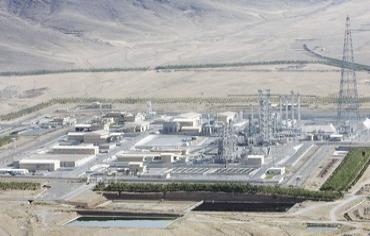
Arak Iran’s heavy-water production plant in Arak, southwest of Tehran. Photo: REUTERS

ANKARA – Iran is ready to answer the UN atomic agency’s questions about its nuclear program, a senior official was quoted as saying ahead of talks on Saturday expected to broach sensitive military-related issues.

The International Atomic Energy Agency hopes to persuade Iran to finally start addressing long-held suspicions it may have researched how to build atomic bombs.

Tehran has rejected the accusations of weaponization-related work as forged and baseless, while saying it will cooperate with the IAEA to clear up any “ambiguities”.

Saturday’s meeting comes 10 days before Tehran and world powers, building on a landmark interim deal that took effect last month, start talks on a long-term accord on Iran’s nuclear aspirations that would avert the threat of a Middle East war.

The “aim is to answer the IAEA’s questions”, Behrouz Kamalvandi was quoted as saying by ISNA, without elaborating.

Iran’s Press TV English-language state television said in a headline on its website, citing the same official: “Iran ready to answer all IAEA questions.”

Diplomats are cautiously optimistic that after Saturday’s talks in Tehran the team of senior IAEA inspectors will be able to show at least some progress in gaining Iran’s cooperation.

A spokesman for Iran’s Atomic Energy Organization said the meeting had been scheduled for one day but might be extended, the ISNA news agency reported on Friday.

Iran-IAEA relations have improved since last year’s election of a relative moderate, Hassan Rouhani, as president of Iran on a platform to ease the country’s international isolation.

Under an agreement signed in November, the IAEA has already visited a heavy water production plant and a uranium mine in Iran. However, those first steps did not go to the heart of its investigation and Western diplomats will watch Saturday’s meeting closely to see whether the next phase achieves that.

“CRUCIAL MEETING”

One Vienna-based envoy said there was an expectation that at least one issue related to the IAEA’s inquiry into what it calls the “possible military dimensions” to Iran’s nuclear program would be among the next steps to be taken by Tehran.

“It is quite a crucial meeting,” the diplomat added.

The IAEA wants Iran to clarify alleged activities in a range of areas of potential application to developing bombs, including various experiments and computer calculations.

Western diplomats hope an accord will lead to Iran scaling back its nuclear program sufficiently to deny it the capability to assemble a nuclear weapon any time soon.

The IAEA’s investigation is focused on the question of whether Iran sought atomic bomb technology in the past and, if it did, to determine whether such work has since stopped.

Although separate, it is still closely aligned with the wider-ranging diplomacy between Tehran and the six powers – the United States, Russia, China, France, Britain and Germany.

Iran says its nuclear program is peaceful and that it is Israel’s assumed atomic arsenal that threatens peace.

Ali Akbar Velayati, a senior adviser to Iranian Supreme Leader Ali Khamenei, said Iran would not back down “an iota from its nuclear rights”.

“These talks (with the powers) will continue in the case of the opposite party’s goodwill,” he added.

Off Topic: After Abbas: It’s battle stations for the men who would be president

February 7, 2014

After Abbas: It’s battle stations for the men who would be president Times of Israel February 7, 2014

(“Not one of them speaks about peace anymore. They don’t even whisper it.” — DM)

An exiled former close aide is openly challenging the leadership; others are moving more subtly; and the most likely candidate is behind bars.
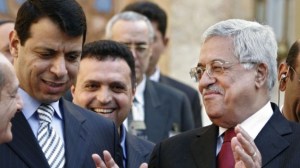
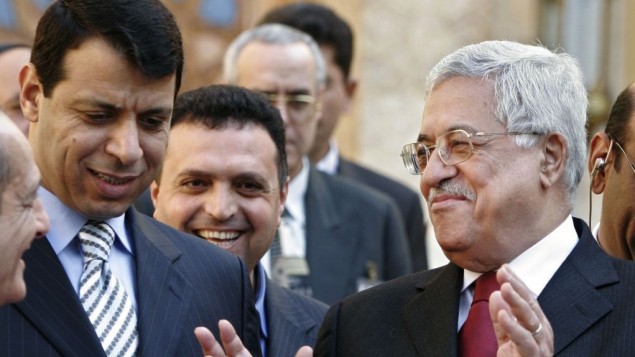
Abbas successors Palestinian Authority President Mahmoud Abbas (right) smiles as he leaves a news conference in Egypt, in February 2007. At left is Mohammad Dahlan, then a close confidant of Abbas. (photo credit: AP/Amr Nabil)

Officially, leaders in the PA and Fatah don’t talk about it. It’s almost taboo. But Palestinian Authority President Mahmoud Abbas, who is also chairman of both the PLO and Fatah, has no clearly mandated successor for any of these positions.

Unofficially, however, there is now a steady and growing buzz from Fatah officials who are trying to position themselves as Abbas’s potential heirs. Not a young man — he will celebrate his 79th birthday next month — he is a heavy smoker, with a history of health problems.

Health aside, for years Abbas used to threaten to step down if and when he came to the conclusion that he could no longer advance the cause of a Palestinian state. Despite this threat not being voiced for some time, it remains relevant — in the absence of any political breakthrough.

Indeed, the perennially faltering peace process, and the Seventh Fatah General Conference (where the movement’s leadership is selected) six months from now, are contributing to the Abbas succession buzz. Everyone wants to be the next president or PLO chairman, but no one has thus far managed to stand out from the pack.

Well, almost no one. The exception is Marwan Barghouti, “Prisoner No. 1,” who enjoys widespread popular support. But his incarceration in Israel, convicted of direct involvement in Second Intifada-era murders and other terrorism, gives his colleagues in the Fatah leadership a reason, or excuse, not to nominate him as their candidate to be the next president.

Increasingly extreme and bellicose statements have come from various heads of Fatah recently, stemming primarily from their desire to brand themselves as zealous combatants and patriots — and thus as credible leadership candidates. Many Palestinian commentators see this rise in rhetoric as preparation for the presidential race, which will start in earnest in the run-up to August’s Fatah conference. Until then, we can expect many extreme statements, the sort that can make the leaders of Hamas seem like a bunch of ardent Zionists.

So who is likely to emerge from the field of would-be Abbas successors?

Dahlan’s return

On Tuesday, there was a mass wedding in Gaza at which several dozen Palestinian youths held their ceremonies and celebrations together. Portraits of Abbas and his predecessor, Yasser Arafat, hung on the walls. The PA chairman recorded a special message for the event, which was funded entirely by the PA.A week earlier, a similar ceremony was held in Jericho, with 300 grooms, again sponsored by the PA and Abbas. But it’s unlikely that the crowd knew about the machinations behind the scenes at these two events. Both initially enjoyed the patronage of Mohammad Dahlan, formerly the Fatah “prince” in Gaza, who today lives in the UAE, from where he publicly — and uniquely — challenges Abbas’s Fatah leadership.Dahlan became a persona non grata in the last two years in the Palestinian territories for daring to criticize Abbas and his sons Yasser and Tarik. The president’s men accused him of attempting a coup, and made sure he left the area. Since his exile, it has become an open secret: Dahlan is not only trying to undermine the leadership of Abu Mazen, but is also preparing the ground for his return and, he hopes, succession.Dahlan, 53, started life in the Khan Younis refugee camp but is considered today a very rich man, maybe even a billionaire. He enjoys close ties with the royal family in the UAE.

It was Dahlan and his staff who provided the funds to finance the mass weddings, and to provide a grant to every one of the hundreds of grooms. But Abbas’s men soon learned of the events, and decided to take over the sponsorship, financing the weddings and providing the $4,000 grant for each young couple.

This is just one small example of the Abbas-Dahlan tussling, which extends to the Abbas camp’s hounding of Dahlan’s allies within Fatah in the past two years. The president’s allies were not satisfied with the removal of “Abu Fadi,” a commander of the Preventive Security Service in Gaza. They also pursued his friends and associates, like Samir Masharawi Rashid Abu Shabak (who was tried in absentia recently on an alleged corruption scandal), who then also left the territories. Past heads of the various security apparatuses, Dahlan associates, were also removed from their positions and kicked out of Fatah.

Zaida Sufian Abu Zaida, former Fatah cabinet minister (photo credit: Flash90)

Another highlight of the never-ending Dahlan persecution campaign took place in November of last year. One of Dahlan’s close friends, Sufian Abu Zaida, a Fatah Revolutionary Council member and former government minister, left his gym in Ramallah one morning. He discovered that his car was riddled with bullets. Abu Zaida declared that the responsibility for the act lay entirely with the Palestinian Authority.

In the past few weeks, there have been several attempts to mediate between Dahlan and Abbas, largely unsuccessful. Just recently, however, Masharawi met with two Abbas associates, Azzam al-Ahmad and the head of PA intelligence, Majid Faraj. The word was that Abbas has agreed to allow the return of Dahlan loyalists to their positions in Fatah and in the Palestinian government, but continues to rule out the possibility of Dahlan himself returning to the territories.

Abbas’s camp claims, with some justification it seems, that Dahlan has become “relentlessly subversive.” From his Abu Dhabi office, they claim, he orchestrates a well-funded campaign to weaken Abbas. And he has significant influence, they add, over the the anti-PA unrest in the refugee camps in the northern West Bank around Jenin and Nablus.

At the same time, he is investing millions of dollars, with the help of his friends in the UAE, in creating a base of support in the old refugee camps in Lebanon, as well as in the new ones created after the outbreak of the civil war in Syria.

Above all, the exiled security chief-turned-businessman is engaged in political activities fit for a head of state, they note. Only two weeks ago, he visited Cairo and met the strongman there, Abdel-Fattah el-Sissi. He also visited the head of Egyptian intelligence, and even met with Coptic representatives in Egypt. In the past few weeks, he has also sat down with US Secretary of State John Kerry and has addressed the European Parliament.

These are not the meetings of a successful businessman, but of someone with aspirations to become president. “The Egyptians want Dahlan back in the territories,” a Fatah official told The Times of Israel. “They know that he has the ability to affect the Gaza Strip and they need him in order to topple Hamas. Therefore, they are pressuring Abbas to reconcile with Dahlan.”

But Dahlan’s way back to the territories, and maybe someday to the presidency, will not be easy — his wealth notwithstanding. And not only because of Abbas. Dahlan has a base of support in Fatah, but continues to suffer from a poor public image, and the Palestinian street does not forget his corruption scandals in Gaza and his past command of the Preventive Security Force, which worked with Israel. He is hardly mentioned in polls that list the names of possible candidates for the presidency.
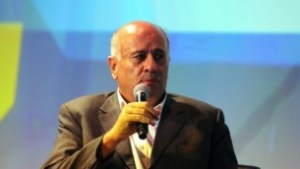
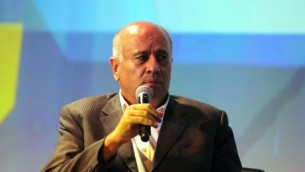
JibrilFatah official Jibril Rajoub (photo credit: Yossi Zamir/Flash 90)

Above all, he can expect stiff resistance among the members of the Fatah Central Committee, the body that will choose Abbas’s heir in Fatah and the PLO. One of his chief political rivals is the vice president of the committee, Jibril Rajoub. “Abu Rami,” almost 62, born in the town of Dura south of Hebron, was once Dahlan’s close friend. In his youth, he spent 17 years in an Israeli prison and, like Dahlan, went to Tunis and grew close to Arafat. After his return to the West Bank, he was appointed commander of the Preventive Security Force there, making him the counterpart to Dahlan in Gaza.

They used to socialize together and were considered extremely close, at least until Operation Defensive Shield in April 2002, when the IDF moved into the West Bank to dismantle the infrastructure of Second Intifada terrorism. Immediately after the IDF occupied the headquarters of the Preventive Security Force in Bethany, Dahlan went to the media hinting that Rajoub had turned over Hamas members to Israel. Rajoub still remembers the knife Dahlan placed in his back.

With time, Rajoub also began to suspect that it was Dahlan who gave Israel information that Marwan Barghouti, Israel’s most wanted suspect, was hiding in Rajoub’s headquarters. Only hours before Barghouti was arrested, Dahlan had actually brought him to Rajoub, demanding that Barghouti be allowed to hide in his headquarters. Rajoub instructed his people to get Barghouti away from the building, but the IDF nabbed him before he could leave.

Twelve years have passed since then, and the bad blood remains. Rajoub retired from his security roles, and has gained support and strength through sports. He was appointed chairman of the Palestinian Football Federation and the Olympic Committee. He also handles reconciliation talks with Hamas in Abbas’s name, and was sent by the president to Tehran last week to discuss the sensitive relations between Iran and Hamas.

In recent years, Rajoub has toughened his tone towards Israel, attacking it at every opportunity. His prominent role in Palestinian sports, and his outspoken criticisms of Israel, have made him one of the most prominent figures in Fatah.

And yet it is unlikely Rajoub could be Abbas’s heir. He suffers from problems similar to those of Dahlan: Fatah Central Committee members are expected to torpedo his chances, and the public hasn’t forgotten his former security ties with Israel.

The Palestinian el-Sissi

All of which underlines that the leading candidate, despite his incarceration, remains Barghouti, who was arrested in 2002 and sentenced to six life sentences.

He is not expected to be released anytime soon. But if he decides to run for president, even from prison, he would win at a canter. This week, another survey was released in Ramallah indicating that he leads any other candidate, from Fatah or Hamas, by a substantial margin.
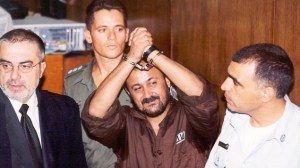
Barghoui Marwan Barghouti in court in 2002 (photo credit: Flash90)

Barghouti is 55 and was born in the small village of Kobar north of Ramallah. He is not a favorite of the Fatah Central Committee, but the public loves him, both in Gaza and the West Bank. And Fatah Central Committee Support is anything but a boon.

“If the members of the Central Committee won’t back him,” Nasser Lahham, chief editor of the leading Palestinian Ma’an news site, told The Times of Israel this week, “it would actually be great for Marwan. I’ll give you an example. In the last local elections, the Central Committee decided not to allow Ghassan a-Shikaa to run as the Fatah candidate for mayor of Nablus. So he ran as an independent and won, of course. If the committee supports Marwan, it is not good for him because of Fatah’s [lousy] image.”

Lahham sounded convinced about who the successor would be. “There will be quite a few candidates. And it’s good they try. But forget it. I am telling you, the Palestinian public will not allow anyone except Marwan to be elected. Neither from the old leadership, nor from the new. Marwan is the Palestinian el-Sissi [the leading candidate in the Egyptian elections]. We prefer a prisoner who is president than a president who is a prisoner.”

As preparations gather apace for the General Conference, the Fatah leadership will apparently choose whomever Abbas prefers for the key positions, including for the post of secretary general of the Central Committee, theoretically Abbas’s successor-in-waiting in Fatah.

Evidently pushing his own candidacy, Muhammad Shtayeh, a former member of the PA negotiating team, said this week that the Palestinian Authority should become the “Resistance Authority,” a reference to the ostensible need to renew the struggle against Israel. His colleague on the committee, Tawfiq Tirawi, said that Fatah could go back to the “armed struggle” and the rifle at any time. Another member of the committee, chief negotiator Saeb Erekat, talks about the need to turn away from the talks with Israel toward unilateral moves at the UN. (Erekat, by the way, may be a compromise candidate for members of the Central Committee, since he has barely any enemies in the movement.) Not one of them speaks about peace anymore. They don’t even whisper it.

Appeasement and economic sanctions

February 7, 2014

Israel Hayom | Appeasement and economic sanctions.

Yoram Ettinger

According to Winston Churchill, “an appeaser is one who feeds a crocodile, hoping it will eat him last.”

The U.S. administration is leading the easing of economic sanctions against — and the legitimization of — the regime of Iran’s apocalyptic, almost-nuclear ayatollahs and mullahs, the allies of North Korea, Venezuela, Cuba and other anti-U.S. rogue regimes. They are the chief sponsors of anti-U.S. Islamic terrorism, the role model of anti-U.S. incitement and non-compliance with agreements, double-talk, repression, public executions, state-sponsored terrorism and subversion against the pro-U.S. oil-producing Arab states.

Simultaneously, and against the will of the American people and the U.S. Congress, the White House and the State Department imply a not-so-subtle support of supposed European economic sanctions against the fallible Jewish state, which is the most reliable, stable, predictable, capable, democratic and unconditional ally of the U.S. in the Middle East and beyond. Israel is the only country whose alliance with the U.S. is based on shared Judeo-Christian values, the foundation of Western democracy and American morality.

Contrary to the state of mind of the American people and the U.S. Congress, the U.S. administration has not warned anti-Israel Europeans of the dire consequences should they resort to sanctions against the Jewish state — a besieged island of Western democracy surrounded and assaulted by an ocean of anti-Western Islamic tyrannies. Instead, the current U.S. policy — shaped largely by a foreign policy establishment which courted Hafez Assad, Bashar Assad, Saddam Hussein, Khomeini, Arafat, Hamas and the Muslim Brotherhood — provides a tailwind to misguided Europeans, and fuels unrealistic Palestinian expectations, radicalism and violence.

Western governments have chosen to pressure and threaten the Jewish state — the only Middle Eastern country where Jews, Christians and Muslims enjoy civil liberties and Muslim women benefit from equal opportunities — while placating and appeasing the regime of Mahmoud Abbas:

*The author of the Palestinian Authority death penalty for Arabs selling land to Israeli Jews, while Israel uproots Jews who settle disputed land

*The ethnic-cleanser who reiterates opposition to the existence of Jewish communities in the proposed Palestinian state, while the Jewish state extends freedom of religion, press, expression, assembly and association to the 1.7 million Israeli Arabs, who — including most east Jerusalem Arabs — prefer Israeli to Palestinian citizenship

*The founding father of Western-bankrolled Palestinian hate education, who heralds suicide bombers, using Western financial aid to provide monthly allowances to families of Palestinian terrorists

*The head of a repressive and corrupt regime, nicknamed, by Judea and Samaria Arabs, “Sodom and Gomorrah” and “Mr. 20%” (kickbacks)

*The liquidator of the ancient Christian communities in Bethlehem, Beit Jallah, Ramallah and Beit Sakhour. There are more Christian refugees in Belize, Central America, than there are Christians left in Beit Jallah. From a Christian majority in Bethlehem before the 1993 arrival of Abbas, the Christian community has been reduced to a 15% minority

*A graduate of KGB training and Moscow University (Ph.D. thesis — Holocaust denial); the coordinator of PLO ties with the Communist Bloc; an ally of Russia, China and North Korea; the loyal deputy of Arafat, systematically betraying the trust of Egypt (1950s), Syria (1966), Jordan (1970), Lebanon (1970-1982) and Kuwait (collaboration with Saddam’s August, 1990 invasion of Kuwait) through subversion and terrorism

*A systematic violator of most agreements with Israel since 1993, when Israel imported some 70,000 PLO terrorists from Yemen, Iraq, Sudan, Libya, Syria, Lebanon and Tunisia and provided them with control over 40% of Judea and Samaria and all of Gaza. The Ottoman Empire, the British Mandate, Jordan nor Egypt ever allowed this when they controlled that area. Mahmoud Abbas reciprocated with unprecedented hate education, terrorism and non-compliance

The current U.S. administration, however, has chosen to pressure the Jewish state and placate Iran and the Palestinian Authority.

Regardless, the ideological and strategic fabric of the mutually beneficial, win-win U.S.-Israel relationship — based on shared values, mutual threats and joint interests — will withstand appeasement and cynicism. But, vital U.S. interests could be severely compromised unless the U.S. heeds the following advice of Churchill: “This is only the first sip, the first foretaste of a bitter cup, which will be proffered to us year by year, unless by a supreme recovery of moral health and martial vigor, we arise again and take our stand for freedom as in the old times.”