Archive for February 2014

U.S. House majority leader links Holocaust, Iran sanctions

February 18, 2014

U.S. House majority leader links Holocaust, Iran sanctions – Haaretz.

Representative Eric Cantor says U.S. must counter Iran’s ‘determined march’ to produce nuclear weapons.

By |Feb. 18, 2014 | 2:10 PM

Eric Cantor

Congressman Eric Cantor Photo by AP

Representative Eric Cantor, the Republican House majority leader, cited the lateness of American actions against the Nazis in critiquing President Obama’s foreign policy.

In a speech Monday to the Virginia Military Institute, Cantor (R-Va.), who is Jewish, described leading a congressional delegation recently to Auschwitz to mark the 69th anniversary of the Nazi death camp’s liberation.

“Standing there as the frigid wind swept through the eerily quiet ruins of the camp, I could not help but regret that American action in World War II came too late to save countless millions of innocent lives,” he said.

“Hitler’s rise and conquest of Europe did not come as a surprise. We must not repeat the same mistake by reducing our preparedness, accepting the notion that we are one of many or ceding global leadership to others.”

Cantor said that “evil and hateful ideologies still exist in the world,” citing as perhaps the most evident Iran’s “determined march” to produce nuclear weapons.
“I can imagine few more destabilizing moments in world history than Iran on the threshold of being a nuclear power,” he said.

Cantor called on the United States to prepare for additional sanctions to counter what he said was the erosion of Iran’s isolation through its participation in international talks aimed at keeping it from obtaining a nuclear weapon.

“An America that leads is an America that must work to restore the badly eroded international pressure on Tehran,” he said. “We should lay the groundwork now for additional sanctions in the event Iran violates the terms of the interim agreement.”

The Obama administration has said that the removal of a number of sanctions ahead of the talks has not diminished a tough sanctions regime. It has opposed new sanctions while talks are underway, saying that unilateral U.S. sanctions could fracture the international alliance that has nudged Iran to the talks.

Iranian hacking of Navy computers reportedly more extensive than first thought

February 18, 2014

Iranian hacking of Navy computers reportedly more extensive than first thought – FoxNews.

Published February 18, 2014
FoxNews.com

NSA New Boss_Cham640.jpg

This Oct. 5, 2011, photo, provided by the U.S. Navy, shows Vice Adm. Michael Rogers. Rogers, nominated to be the next head of the NSA, led the Navy’s response to its largest unclassified network being hacked by Iran last year. (AP)

An Iranian hack of the Navy’s largest unclassified computer network reportedly took more than four months to resolve, raising concern among some lawmakers about security gaps exposed by the attack. 

The Wall Street Journal, citing current and former U.S. officials, reported late Monday that the cyberattack targeted the Navy Marine Corps Internet, which is used by the Navy Department to host websites, store nonsensitive information, and handle voice, video, and data communications. 

The paper reported that the hackers were able to remain in the network until this past November. That contradicts what officials told the Journal when the attack was first publicly reported this past September. At the time, officials told the paper that the intruders had been removed.

“It was a real big deal,” a senior U.S. official told the Journal. “It was a significant penetration that showed a weakness in the system.”

The quoted official said that the Iranians were able to conduct surveillance and compromise communications over the unclassified computer networks of the Navy and Marine Corps. However, another senior official told the Journal that no e-mail accounts were hacked and no data was stolen. There is also no evidence that Iran was able to penetrate classified U.S. computer networks. 

The cyberattack is one of the one of the most serious infiltrations of government computer systems by the Iranians. The Journal reported that U.S. defense officials were surprised at the skill of the hackers, who were able to enter the network through a security gap in a public-facing website. 

The military response to the hack was over seen by Vice Adm. Mike Rogers, President Obama’s pick to be the next head the National Security Agency. Congressional aides told the Journal that Rogers would likely face questions on plans to fix security issues that have surfaced as a result of the attack. A confirmation hearing for Rogers has not yet been scheduled. 

Despite the length of the operation to remove the hackers, officials who spoke to the Journal praised Rogers for his leadership of the cybersecurity response. The issue is not expected to prevent Rogers from being confirmed as NSA director.

Iran not expecting immediate results of nuclear talks: spokesperson

February 18, 2014

Iran not expecting immediate results of nuclear talks: spokesperson, Xinhua Net, February 18, 2014

(Another confirmation that military aspects of Iran’s nuclear plans will not be discussed and hence will not be part of any “comprehensive agreement.” — DM)

Iran’s military and defensive program has nothing to do with the nuclear talks and “a new round of talks will merely focus on Iran’s nuclear issue, and the Iranian negotiating team will insist on that . . . .”

TEHRAN, Feb. 18 (Xinhua) — Iran does not expect immediate results from a new round of nuclear talks with world powers that started in the Austrian capital of Vienna on Tuesday, Iranian Foreign Ministry spokeswoman said Tuesday.

Marzieh Afkham said Iran and the P5+1 group, which consists of the United StatesRussia, China,France and Britain plus Germany, would mainly talk about the framework of their future negotiations in Vienna.

The course of talks is “long, difficult and complicated which should be paced carefully and vigilantly,” she said.

Iran’s military and defensive program has nothing to do with the nuclear talks and “a new round of talks will merely focus on Iran’s nuclear issue, and the Iranian negotiating team will insist on that,” she added.

Referring to Monday’s remarks by Iran’s Supreme Leader Ayatollah Ali Khamenei about the talks, she said the leader was urging the Iranian negotiators to heed “predetermined principles” of Iran’s nuclear rights.

Khamenei said Monday that he was not optimistic about Iran’s nuclear negotiations with the world powers. “(Some Iranian officials believe) if we negotiate with the United States on the nuclear issue, the problem will be solved… I’m not opposed to the talks, but I’m not optimistic.”

In November, Iran and the P5+1 group reached an interim deal on Iran’s nuclear program in Geneva and started its implementing on Jan. 20. Under the deal, Iran suspended the most sensitive parts of its nuclear activities in exchange for partial relief of the sanctions slapped on it.

The two sides started a fresh round of talks in Vienna on Tuesday toward reaching a comprehensive nuclear agreement.

Iran tells talks it won’t scrap any nuclear facilities, rejecting a central demand by six world powers

February 18, 2014

Iran tells talks it won’t scrap any nuclear facilities, rejecting a central demand by six world powers – National Post.

George Jahn, Associated Press | February 18, 2014 9:43 AM ET

Iran's deputy Foreign Minister Abbas Araghchi attends the nuclear talks between world powers and Iran, in Vienna, Austria, 18 February 2014. Negotiators from Iran and six world powers were gathered in Vienna to start talks on ending the stand-off over Tehran's nuclear programme through a comprehensive agreement
Iran’s deputy Foreign Minister Abbas Araghchi attends the nuclear talks between world powers and Iran, in Vienna, Austria, 18 February 2014. Negotiators from Iran and six world powers were gathered in Vienna to start talks on ending the stand-off over Tehran’s nuclear programme through a comprehensive agreement.
EPA / Hans Punz

Iran said Tuesday it would not scrap any of its nuclear facilities, drawing a red line in negotiations with six world powers seeking deep cutbacks in Tehran’s atomic program in exchange for an end to crippling economic sanctions.

The statement by Deputy Foreign Minister Abbas Araghchi suggested tough talks ahead, constituting a rejection of a central demand by the six countries.

The talks are designed to build on a first-step deal that came into effect last month and commits Iran to initial curbs on its nuclear program in return for some easing of sanctions.

Iran insists it is not interested in producing nuclear weapons but the six powers want Tehran to back its words with concessions. They seek an agreement that will leave Iran with little capacity to quickly ramp up its nuclear program into weapons-making mode with enriched uranium or plutonium, which can used for the fissile core of a missile.

For that, they say Iran needs to dismantle or store most of its 20,000 uranium enriching centrifuges, including some of those not yet working. They also demand that an Iranian reactor now being built be either scrapped or converted from a heavy-water setup to a light-water facility that makes less plutonium.

Iran is desperate to shed nearly a decade of increasingly strict sanctions on its oil industry and its financial sector but is fiercely opposed to any major scaling back of its nuclear infrastructure.

“Dismantling (the) nuclear program is not on the agenda,” Deputy Foreign Minister Abbas Araghchi told reporters in Vienna.

The talks are formally led by Catherine Ashton, the EU’s top foreign policy official, and Iranian Foreign Minister Mohammad Javad Zarif. The United States, Russia, China, Britain, France and Germany are also at the table.

Ashton spokesman Michael Mann warned of the “intensive and difficult work lying ahead of us.”

Despite his colleague’s comments, Iranian Deputy Foreign Minister Abbas Araghchi said the talks got off to a “very good beginning.” He said even if they end later this week with nothing more than a future agenda “we’ve accomplished a lot.”

Iran’s the Problem

February 18, 2014

Iran’s the Problem – The Weekly Standard.

Feb 24, 2014, Vol. 19, No. 23 • By LEE SMITH

Two weeks ago the Treasury Department sanctioned a senior al Qaeda official, Olimzhon Adkhamovich Sadikov, also known as Jafar al-Uzbeki, for facilitating the flow of foreign fighters into Syria. The Levant appears to be ground zero in a struggle between al Qaeda and an Iranian-led axis of terror in a conflict now spreading from the Iraqi desert to the Lebanese coast. The Obama administration believes that in this contest for regional dominance, there are two clear sides and that it is al Qaeda, and not Iran, that constitutes the greatest threat to U.S. national security. Thus the Obama administration’s  reluctance to act against Bashar al-Assad’s regime in Damascus, lest this give al Qaeda sway in Syria. However, here’s a fact that should give the administration cause to rethink its assessment: Al Qaeda’s Uzbeki is operating out of Iran, with the approval of Iranian authorities.

Newscom 

Newscom

From Iran’s perspective, backing Uzbeki and his al Qaeda fighters against Assad and Hezbollah and even against its own Revolutionary Guard puts another piece into play on the chessboard. It’s an additional weapon in Tehran’s arsenal. As the 9/11 Commission Report made clear, the Islamic Republic has frequently worked with al Qaeda when it suits Iranian interests. Similarly, Assad, whose forces now battle a resistance that includes al Qaeda fighters, turned Damascus international airport into a transit hub for al Qaeda fighters entering Iraq in the mid-2000s to kill American troops. He also has a long history of using and manipulating Sunni jihadists. 

This latest designation comes at a pivotal time for the administration’s regional policy. The White House’s chief strategic goal in the Middle East is to protect the interim nuclear weapons agreement with Tehran in the hope of creating, as Obama told the New Yorker last month, a new geopolitical equilibrium that balances Iran against Saudi Arabia. To get there, Obama needs to keep the Iranians at the negotiating table, not an easy trick given the regime’s volatile, even paranoid, nature.

Obama’s judgment of the clerical regime’s psychology has dictated policy since he first came to the White House. The administration refused to support the Green movement that took to the streets in the wake of Iran’s likely fraudulent June 2009 elections for fear of driving the regime from the negotiating table. Obama ignored the advice of officials who wanted to arm the Syrian rebels and avoided any serious efforts to topple Assad because he believed that this, too, would alienate the Iranians. He resisted Congress’s push to impose sanctions on Iran and has now provided sanctions relief for the same reason—he doesn’t want to get the mullahs mad and risk losing his negotiating partner.

Iran, the White House insists, is not the problem. It can be managed through regular diplomatic and political means—engagement, deterrence, etc. But al Qaeda, a non-state actor, making war from Lebanon, Syria, and Iraq, is another animal altogether. As Director of National Intelligence James Clapper explained in his Senate testimony last month, the administration believes that al Qaeda represents the greatest threat to U.S. national security. According to Clapper, one al Qaeda affiliate in Syria that the administration has designated, Jabhat al-Nusra, even has plans to attack the United States. Unfortunately for the White House, it turns out that Nusra is funded and manned by the Iranian-based al Qaeda network. That is, Obama has tied America’s position in the Middle East to partnering with Iran, which itself has partnered with actors the White House deems the main threat to U.S. national security.

Nonetheless, the White House continues to see the regional conflict simplistically. As Obama puts it, what we’re watching unfold is a sectarian war between Sunnis and Shiites in which the United States should avoid taking sides. This is also Iran’s version of the war, promulgated in part to keep the White House on the sidelines. It’s a multipurpose public diplomacy campaign intended also to galvanize Iran’s Shia base across the region and destabilize Sunni-majority regimes. Sectarianism is a significant factor in Middle East conflicts, but the fundamental fact is that Iran is a -revolutionary regime. It means to overturn the regional status quo, the American-backed order of the Middle East, and sideline the United States once and for all. In this effort, al Qaeda, along with Hezbollah and various other Iranian-backed terrorist organizations, can all be useful to Tehran.

For five years now, traditional American allies like Israel and Saudi Arabia have told the White House that Iran is the problem. You might think, with its latest terror designation, the administration might come to that same view. But the administration is reluctant to see the implications of what it has just done. The fact is, it’s long past time to move against Tehran on all fronts. Our key struggle in the Middle East is with the Iranian revolutionary regime that supports Sunni as well as Shiite terrorism.

White House Will Not Interfere With Rising Iranian Oil Sales

February 18, 2014

White House Will Not Interfere With Rising Iranian Oil Sales, Washington Free Beacon,  , February 18, 2014

White House promised to ‘pause efforts’ to reduce Iran’s output.

Debt Showdown

The White House says that it will not interfere with Iran’s rising oil sales, despite a recent uptick that experts say is providing Tehran with billions in revenue.

Exports of Iranian crude oil jumped to 1.32 million barrels in January, up from December’s high of 1.06 million barrels, according to data from the International Energy Agency.

While the increase caused concern among some experts who worry that economic sanctions on Iran are collapsing, the White House appeared unfazed by the latest export data and promised to continue pausing its efforts to reduce these sales.

The Obama administration has said that Iran would receive no more than $7 billion in sanctions relief under the recently signed interim nuclear deal. However, experts say that the rise in oil exports and other economic spikes will give Iran “well more than $20 billion.”

“Under the Joint Plan of Action, the United States will ‘pause efforts to further reduce Iran’s crude oil sales, enabling Iran’s current customers to purchase their current average amounts of crude oil,’” White House National Security Council (NSC) spokesman Caitlin Hayden told the Washington Free Beacon when asked about Iran’s growing exports.

The administration had initially promised that “Iran’s oil exports will remain steady at their current level of around 1 million barrels per day.”

Hayden said the recent spike in exports would even out during the next few months.

“The ‘current average amounts of crude oil’ is understood to be ‘average volume’ over a six-month period,” Hayden explained. “Month-to-month variability is normal in oil markets, but we expect Iran’s total exports will average out over the six-month period.”

“There are variations in national purchasing patterns because of seasonality and circumstances such as ships being delayed for docking, disruption to insurance, etc.,” she said. “So, monthly figures may shift for each.”

Nations such as Japan, China, and India have emerged as Iran’s top oil importers. Hayden said the administration is working with these nations to ensure they do not significantly boost their imports.

“We maintain close communication with China, India, Japan, the Republic of Korea, Taiwan, and Turkey (the significantly reducing countries) to help them maintain their current average level of crude oil imports from Iran during the period that the Joint Plan of Action is in effect,” Hayden said.

Iranian oil sales have risen since November, when the interim deal was struck, leading experts to warn that sanctions on Iran are becoming ineffective.

“These numbers … cast doubt on the accuracy of the administration’s estimates for sanctions relief,” former Ambassador Mark Wallace, CEO of the advocacy group United Against Nuclear Iran, said in a statement last week. “The $6 or $7 billion estimate does not take into account the tens of billions of dollars Iran will reap from increased oil sales.”

“It is becoming more and more evident that the Geneva deal provided Iran with disproportionate sanctions relief, in exchange for far less significant concessions regarding its nuclear program,” Wallace said.

Iran is slated to receive around $4.2 billion in cash infusions from the Obama administration, which began unfreezing these cash assets last month. Iran will receive some $450 million on March 1 and another $550 million on March 7 under the deal.

Iranian President Hassan Rouhani on Monday urged the country’s oil sector increase its output, according to regional reports.

Nuclear talks open with Iran with three unattainable US pledges to Israel re Fordo, Arak, enrichment

February 18, 2014

Nuclear talks open with Iran with three unattainable US pledges to Israel re Fordo, Arak, enrichment.

DEBKAfile Exclusive Report February 18, 2014, 12:10 PM (IST)
Iran's heavy water reactor under construction at Arak

Iran’s heavy water reactor under construction at Arak

The second round of talks between the six powers and Iran – this time for a final, comprehensive resolution of the dispute over Iran’s nuclear program – opened in Geneva Tuesday, Feb. 18. But first, the Obama administration gave the Israeli government three pledges, debkafile’s Washington and Jerusalem sources reveal. It must be said, however, that none of those pledges is realistic.

One was a commitment to insist on the absolute shutdown of Iran’s underground uranium enrichment plant at Fordo. The second was the conversion of the reactor under construction at Arak from a heavy to a light water plant, in order to preclude the production of plutonium for nuclear weapons; and the third, to place a cap on the low-grade 5-percent enrichment of uranium.

Our Iranian and military sources affirm that there is not the slightest chance of Iran’s negotiators acceding to any of these demands. Its leaders have made it clear that Fordo will not be shut down under any circumstances. They are willing to discuss aspects of production, such as the number of centrifuges used and the purity level of the enriched uranium. But closure is out of the question.

With regard to the Arak reactor, Tehran may consider imposing a ceiling on plutonium production, but no other commitment.
With regard to their stockpiles of enriched uranium, the Iranians are ready to negotiate a limit on quantities, but not the number or types of centrifuges they are allowed to operate. Tehran will thus retain the capacity to go back whenever it chooses to enriching any quantities of enriched uranium it likes.

To preserve this capacity, the Iranian negotiators will reject the Western demand to dismantle the 18,000 new centrifuges already in place in the enrichment chambers (not all of them functioning) and keep only 1,000 of the older IR1 machines.

In view of the long list of rebuffs the six-power negotiators (US, Russia, UK, France, China and Germany) expect from Iran, an aura of gloom enveloped both sides Tuesday as the talks got underway.  Western sources called them a “daunting challenge,” while Supreme Leader Ayatollah Ali Khamenei commented: “I have said before… I am not optimistic about the negotiations. It will not lead anywhere, but I am not opposed either.”

Answering tough questions on Jan. 20 ahead of the final round ot nuclear talks, US senior negotiator Undersecretary Wendy Sherman assured the Senate Foreign Affairs Committee that “there will be an additional step or steps between the Phase 1 deal and the final deal, to bring Iran into compliance with UN Security Council resolutions.”

In other words, the current round is not expected to fulfill its avowed purpose of reaching “a final and comprehensive accord.” The Obama administration is gearing up instead for more interim accords with Iran.

debkafile sees the Sherman comment as giving away Washington’s negotiating tactics with Tehran: The intention is to drag out a final resolution of this irreconcilable issue along the two years remaining of President Barack Obama’s term in office, i.e. up to 2016, and land the decision on how to handle it in the lap of his successor in the White House.

Israel’s Prime Minister Binyamin Netanyahu has walked in step with Obama on the Iranian nuclear issue since the fall of 2012, when he turned away from his earlier determination to destroy Iran’s nuclear bomb capacity by military force. And of late, he no longer demands the total dismantlement of Iran’s nuclear capability either.

When Netanyahu sits down with Obama at the White House on March 3, he will likely be reduced to calling for a ceiling on the number of operational centrifuges allowed Iran, as a last-ditch effort to delay Iran’s nuclear weapons drive. But both are obviously reconciled to Iran’s rejection of any limitations on its military nuclear capacity, along with the inability of any Western power to impose its will on the Islamic Republic.

US sees Iran nuclear talks difficult, success uncertain

February 18, 2014

US sees Iran nuclear talks difficult, success uncertain, Ynet News, February 17, 2014

(More Plutonium? What difference does that make now, with the chances of a final deal at fifty percent or less? Iranian President Rouhani is a charming moderate so we have to do our best to be charming and moderate too. Right? — DM)

American official signals potential US willingness to compromise on modifications done to Arak heavy-water reactor.

VIENNA – The United States said on Monday that talks between Iran and six world powers on a long-term deal for Tehran to limit its nuclear program and see international sanctions lifted will be long and complicated with no guarantee of success.

The remarks came from a senior US official, who spoke on condition of anonymity on the eve of the first round of high-level negotiations since an interim deal struck on November 24 under which Tehran curbed some nuclear activities for limited sanctions relief.

“These next days this week are the beginning of what will be a complicated, difficult and lengthy process,” the administration official told reporters in the Austrian capital.

“When the stakes are this high and the devil is truly in the details, one has to take the time to ensure the confidence of the international community in the result,” the official said. “That can’t be done in a day, a week or even a month in this situation.”

Senior officials from Britain, China, France, Germany, Russia and the United States will begin several days of talks in Vienna on Tuesday with an Iranian delegation led by Foreign Minister Mohammad Javad Zarif and his deputy Abbas Araqchi.

European Union foreign policy chief Catherine Ashton will oversee the talks, which will be the first in what is expected to be a series of meetings in the coming months.

While cautioning the talks would take time, the official said Washington does not want them to run beyond a six-month deadline agreed in the November 24 deal. The late July deadline can be extended for another half year by mutual consent.

“Our intent is to use these six months to negotiate a comprehensive agreement,” the official said.

“I think we will certainly know in six months, in probably much sooner than that, whether the odds have increased or not to get a comprehensive agreement,” the official said.

“But our goal, our objective, is to use these six months … to get a comprehensive agreement.”

Willing to compromise? 

During a decade of on-and-off negotiations with Western powers, Iran has rejected their allegations that it is seeking a nuclear weapons capability, saying it needs atomic power plants for energy generation and medical purposes.

It has defied UN Security Council demands that it suspend uranium enrichment and other sensitive activities, leading to a crippling web of US, EU and UN sanctions that has severely damaged the oil-producing nation’s economy.

Since the June 2013 election of relative moderate Hassan Rouhani as president, Tehran has repeatedly reached out to Washington in a bid to ease more than three decades of mutual enmity and end Iran’s international isolation.

The US official said there was no guarantee the Vienna negotiations would yield an agreement.

“As President (Barack) Obama has said, and I quite agree, it’s probably as likely that we won’t get an agreement as it is that we will,” the official said.

But the official also signalled potential US willingness to compromise on one of the most divisive issues in the three rounds of negotiations in Geneva that led up the November 24 agreement with Iran – the heavy-water reactor at Arak that could one day produce arms-grade plutonium.

The official was responding to remarks from Iran’s atomic energy chief, Ali Akbar Salehi, who was quoted earlier this month as saying that Tehran might be willing to allay Western fears about Arak by modifying it.

“We were pleased to see the head of the (Iranian) atomic energy agency, Dr Salehi, say that they were open to discussions of whether there were modifications that would be viable,” the official said.

“I think we have a long way go in these discussions but I think that we all have to be open to ideas and ways to address our concerns,” the official said.

Iran’s Supreme Leader Ayatollah Ali Khamenei, however, said on Monday that he was not optimistic that the nuclear talks between Iran and the six powers would produce a viable agreement, predicting that the process “will not lead anywhere.”

Hard-line stance on Iran making Israel irrelevant in talks, official says

February 17, 2014

Hard-line stance on Iran making Israel irrelevant in talks, official says, Times of Israel,  Marissa Newman, February 17, 2014

(It’s not only Uranium enrichment and centrifuges, on which Iran has declined to negotiate substantively. “Undisclosed” military sites where warhead development and implosion testing apparently continue, missile development and testing, the heavy water installation that will apparently continue to produce Plutonium and other efforts of Iran to become a nuclear military power and threat, not only to Israel, are among the problems. Apparently, they are not “relevant” to the talks. What is “relevant,” beyond putting a happy face on the situation, keeping the “historic” deal alive and wishing for the best? — DM)

Negotiations to resume Tuesday with world powers demanding Tehran cut centrifuges and shutter Qom facility, but Israel demands zero enrichment; top US negotiator to visit Israel Sunday.
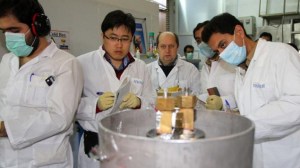
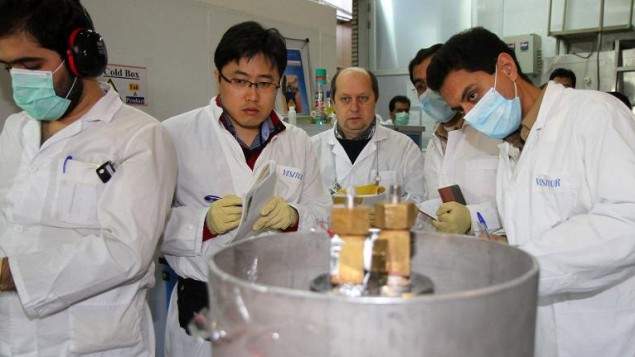
Nantz reactorInternational Atomic Energy Agency inspectors (2nd and 3rd left) and Iranian technicians at Natanz nuclear power plant south of Tehran on January, 20, 2014 (Photo credit: Kazem Ghane/IRNA/AFP)

Final-status nuclear talks between six world powers and Iran are set to kick off in Geneva on Tuesday, but Israeli officials fear Jerusalem’s obstructionist stance may have left it unable to wield any influence among negotiators.

According to a senior diplomatic official quoted in Maariv Monday, Prime Minister Benjamin Netanyahu’s demands that the Iranian nuclear deal require the Islamic Republic to dismantle all centrifuges and have no enrichment capability are unrealistic and serve only to undermine any influence Israel may have on the negotiations.

“There is no real dialogue,” he said. “The position that Netanyahu established is final and we cannot waver from it. Therefore, there is no real chance to influence the negotiations.”

Nonetheless, Israel has recently stepped up efforts to steer the talks, which will aim to curb Iran’s nuclear activities in exchange for sanctions relief.

National Security Council Head Yossi Cohen met last week with European External Action Service Deputy Secretary General for Political Affairs Helga Schmid and EU foreign policy chief Catherine Ashton in Brussels to lay down the Israeli position.

Wendy ShermanUnited States Under Secretary of State for Political Affairs Wendy Sherman, in Geneva, Switzerland, Thursday, Feb. 13, 2014. (photo credit: AP/Keystone, Valentin Flauraud)

US Undersecretary of State for Political Affairs Wendy Sherman, the US chief negotiator, is expected to visit Israel on Sunday to brief the government on the status of the negotiations.

In the talks, the six powers — US, UK, Russia,China, France and Germany — are expected to direct Iran to reduce its centrifuge stockpile to less than 5,000 and close its Qom nuclear reactor, according to a report by the Institute for Science and International Security released last month.

The Islamic Republic currently has 18,000 centrifuges installed, 10,000 of which are activated. Iran is expected to demand continued enrichment and preservation of a larger number of centrifuges in the course of the talks.

However, Netanyahu’s position has been that the world not allow any nuclear activity on Iran’s part.

“Iran is continuing with advanced research and development of centrifuges. Iran is not prepared to concede even one centrifuge,” he said at a cabinet meeting Sunday. “Israel’s policy is clear and is active on two tracks: First, to expose Iran’s unchanging aggressive policy. Second, to demand the dismantling of Iran’s enrichment capacity. Iran does not need any centrifuges for nuclear power for civilian purposes.”

The prime minister’s stance, which constitutes Israel’s official policy on the subject, came under fire a few weeks ago in a meeting on the public diplomacy regarding the talks. In the discussion, a National Security Council representative suggested revising the formal position, in light of information that the negotiating countries are not even considering demanding complete dismantlement, according to Maariv. However, he was informed by Netanyahu’s representatives that this position constitutes both Israel’s public relations strategy and its political diplomatic approach and would not be changed.

This was confirmed by a statement from the Prime Minister’s Office to the newspaper.

“Israel’s public relations effort derives from the clear-cut [political] diplomacy Prime Minister Benjamin Netanyahu established according to which Iran, the largest terror state, must not have the capability of making a nuclear weapon. The prime minister explicitly said this means zero centrifuges and the dismantlement of Iran’s other enrichment capabilities,” the statement read.

The nuclear deal talks are aimed at reaching a comprehensive accord on Iran on its controversial nuclear program following a landmark interim deal in November.

However, EU diplomats and Iranian officials have of late expressed their doubts that a final deal with Iran will be secured.

Iran’s top decision-maker Ayatollah Ali Khamenei said on Monday that while he is not against a resumption of nuclear negotiations with the world’s major powers, the talks will “lead nowhere.”
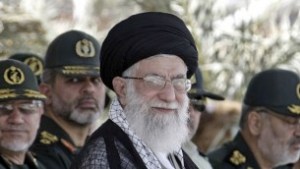
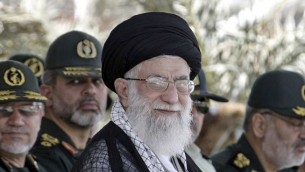
Supreme LeaderIranian Supreme Leader Ayatollah Ali Khamenei (photo credit: AP/Office of the Supreme Leader)

“Some of the officials of the previous government as well as the officials of this government think the problem will be resolved if they negotiate the nuclear issue,” Khamenei said in remarks published on his website, Khamenei.ir.

“I repeat it again that I am not optimistic about the negotiations and they will lead nowhere, but I am not against them,” he added.

Under the interim deal reached on November 24, Iran agreed to freeze some nuclear activities for six months in exchange for modest sanctions relief and a promise by Western powers not to impose new restrictions on its hard-hit economy.

Western powers and Israel have long suspected Iran is pursuing a nuclear weapons capability alongside its civilian program, charges denied by Tehran.

Minister: Iran’s oil export increased by 25 percent

February 17, 2014

Minister: Iran’s oil export increased by 25 percent, Trend, February 17, 2014

(If Iran had 30 million barrels of oil stored in tankers at the end of January, and now has only 5 to 6 million barrels stored in tankers, does that mean that she sold about 24 – 25 million barrels in the first half of February? If so, she seems to be faring well with “limited sanctions relief.”  — DM)

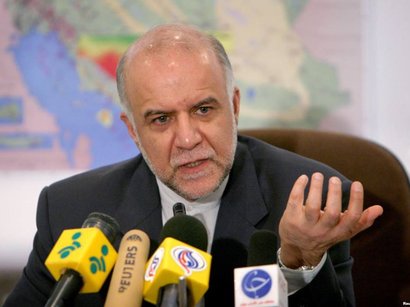
Iranian oil minister

Iran’s Oil Minister Bijan Namdar Zanganeh said that the country’s oil and condensate exports have increased by 25 percent in recent months, Shana reported on Feb.17.

According to the report, he said that there was 5 to 6 million barrels of unsold oil on tankers which prevents an increase in oil output.

According to the latest report of International Energy Agency published on Feb.13 says that the country’s oil exports reached 1.32 million barrels per day in January. Iran had an estimated 30 million barrels of crude held on tankers at the end of January, including 6 million barrels in vessels off China’s coast, according to the report.

Iran exported averagely 1.07 million barrels of oil during 2013, IEA reports indicate.

Iran’s Custom Administration latest report, published on Feb.10 indicates that the country’s condensate exports have increased by some 272.97 percent during the last three Iranian calendar months (October 23, 2013- January 20, 2014) compared to the previous months of the current year, which started on March 21, 2013.

Iran has exported $4.594 billion worth of condensates in the last three Iranian calendar months with an average monthly value of $1.531 billion.