Archive for February 28, 2014

IAEA: No Iran report with new bomb research information

February 28, 2014

IAEA: No Iran report with new bomb research information – Israel News, Ynetnews.

UN nuclear watchdog denies having prepared a report with new information relating to possible military dimensions of Tehran’s nuclear program.

Reuters

Published: 02.28.14, 17:53 / Israel News

The UN nuclear watchdog said on Friday it had not prepared a report with new information about suspected atomic bomb research in Iran, after Israel urged it to go public with all information it has regarding such suspicions.

Israel’s statement followed a Reuters report on Thursday that the International Atomic Energy Agency (IAEA) had planned a major report on Iran last year that might have revealed more of its alleged activities that could be used for designing a nuclear warhead, but had held off as Tehran’s relations with the outside world thawed.

Sources familiar with the matter said the IAEA apparently had not gone ahead with writing the report and that there was no way of knowing what extra information might have been included in such a document, although one source said it could have added to worries about Iran.

According to the sources, the IAEA was believed to have dropped the idea of a new report, at least for the time being.

In 2011, the IAEA issued a landmark report with a trove of intelligence indicating past activity in Iran which could be relevant for developing nuclear weapons, some of which it said might still be continuing. Iran rejected the allegations as fabricated and baseless.

Since then, the UN watchdog has said it has obtained more information that “has further corroborated” its analysis in the 2011 document, but has not given details.

“The IAEA has not prepared any report containing new information relating to possible military dimensions of Iran’s nuclear program,” spokeswoman Gill Tudor said in an email on Friday, in response to a question.

“The agency’s reports on Iran to its Board of Governors are factual and impartial. Their content is not influenced by political considerations,” Tudor said, giving no other details.

Interim nuclear deal

Israel disapproves of the Western rapprochement with its arch-foe over the last six months, arguing that Iran has won sanctions relief while retaining the infrastructure to pursue nuclear weapons. Iran says its atomic aspirations are peaceful.

“The role of the IAEA is to expose to the international community all information regarding military aspects of the Iranian nuclear project, and not to withhold it for reasons of diplomatic sensitivity,” Strategic Affairs Minister Yuval Steinitz said in a statement.

“Because the matter of the PMD (possible military dimensions) is so important to a final deal with Iran, I call on the IAEA to complete and publish the report at the earliest opportunity,” he said.

Israel has representatives in the IAEA but, unlike Iran, has not signed the nuclear Non-Proliferation Treaty (NPT).

The sources said the planned IAEA report would probably have amounted to a wider review of the Iranian nuclear file, including PMD and other outstanding issues. They said the idea was raised internally when the IAEA’s long-running efforts to get Iran to cooperate with its investigation appeared completely deadlocked in mid-2013.

But with a new leadership in Tehran trying to end its international isolation, Iran and the IAEA agreed a step-by-step transparency pact in November to help allay concerns about its atomic activities.

This was sealed shortly before a breakthrough November deal between Tehran and the six powers – the United States, Russia, France, Germany, Britain and China – which is meant to be capped by a final accord in July.

In follow-up talks on February 8-9, Iran agreed for the first time to address one of many PMD issues in the 2011 report, regarding so-called exploding bridge wire detonators, which can have both civilian and military applications.

Off Topic: Who lost Ukraine? – Wash. Post

February 28, 2014

Who lost Ukraine?.

The Post reports: “Several hundred armed men in green camouflage, without insignia and carrying military-style automatic rifles, entered and secured areas of the civilian airport in Crimea’s regional capital of Simferopol early Friday.

Video taken at the scene showed the men patrolling inside the airport and standing guard outside. Flights continued to operate; no shots were fired. In Kiev, Ukraine’s new interior minister, Arsen Avakov, said the armed men were Russian troops.”

Unidentified armed men patrol outside of Simferopol airport, on February 28, 2014. Ukraine accused today Russia of staging an "armed invasion" of Crimea and appealed to the West to guarantee its territorial integrity after pro-Moscow gunmen took control of the peninsula's main airport.AFP PHOTO / VIKTOR DRACHEVVIKTOR DRACHEV/AFP/Getty Images

Unidentified armed men patrol outside of Simferopol airport on Friday. (Viktor Drachev/AFP/Getty Images)

This is a sobering turn of events. After repeated public warnings from the Obama administration not to move militarily against Ukraine, Vladimir Putin appears to have done just that. And why wouldn’t he? One can imagine in that hour-long conversation between President Obama and Putin last week, Putin took the measure of the man and found him to be a push-over.

The president keeps telling the world that he doesn’t see this as a Russian problem. The idea of returning to the Cold War — when we checked Soviet expansion and stood up for free peoples — is anathema to Obama. With massive Pentagon cuts, the withdrawal of U.S. troops from Afghanistan, a prominent senator decrying efforts to brush back Russia (“tweak”) and evisceration of the Syrian “red line,” Putin has made an entirely rational calculation that he can destabilize Ukraine or, at the very least, exert Russian domination over Crimea, with very little if any consequence.

Some context is useful here. Former U.S. ambassador to the United Nations John Bolton reminds me that when President George W. Bush tried to get Ukraine and Georgia on a clear path to NATO membership, “Europe balked because of … fear of the Russian reaction.” He says, “That’s a fine irony.” Obama, by contrast, strong-armed Georgia into dropping its objections to Russia joining — condition-free! — the World Trade Organization.

Russia, of course, has a long history of moves like this. Anne Applebaum writes, “Russian agents successfully undermined the sovereignty of Georgia by offering Russian passports and other inducements to the residents of South Ossetia, a Georgian province, and then carrying out a de facto invasion. The same kinds of tactics were used to create the semi-autonomous province of Transnistria. Technically part of Moldova, Transnistria lives its own post-Soviet life under de facto Russian control.” Staged provocation, association with local pro-Russian elements calling for Crimean “separatism” from Ukraine and economic bullying can and likely will be used to sweep Ukraine into Russia’s orbit. (“The destabilization of Ukraine may only have just begun. The events in Crimea might only be the first act,” writes Applebaum.)

Many critics of the president assume that he will do next to nothing about Russian aggression. We are not without tools, however. A more deft administration could lead the Europeans in devising an economic package to keep Ukraine afloat (including the supply of energy). We can and should expose Russian meddling; some leaked phone calls between the Kremlin and Ukraine might be quite appropriate here. And we could actually take Russia provocation seriously and take limited but noticeable economic or diplomatic action against Russia. (How about finally taking Russia to task for violating existing arms agreements?)

Other foreign policy gurus stress that we should prevail upon Ukraine to reassure Moscow that it is ready to build a decent relationship with the Kremlin. Ukraine is just too weak and has so many internal problems that it cannot afford, as one expert put it, “a full-scale geopolitical rumble with Russia.”

All too frequently, Obama has things entirely wrong. This is about Russia and whether the West has the will and ability to keep Europe free and whole. Every president since George H.W. Bush has been committed to and has succeeded in that objective. Obama may be the first to fail. The list grows ever longer: Who lost Syria, Ukraine, Iran (stiffing the Green Revolution and allowing that country to go nuclear), the states of the Arab Spring and maybe Venezuela? Obama, whose presidency would go down as an “historic” and utterly failed one.

Off Topic: Chicago-Tel Aviv: $506, Dallas-Tel Aviv: $538, Miami-Tel Aviv: $689

February 28, 2014

Israel Matzav: Chicago-Tel Aviv: $506, Dallas-Tel Aviv: $538, Miami-Tel Aviv: $689.

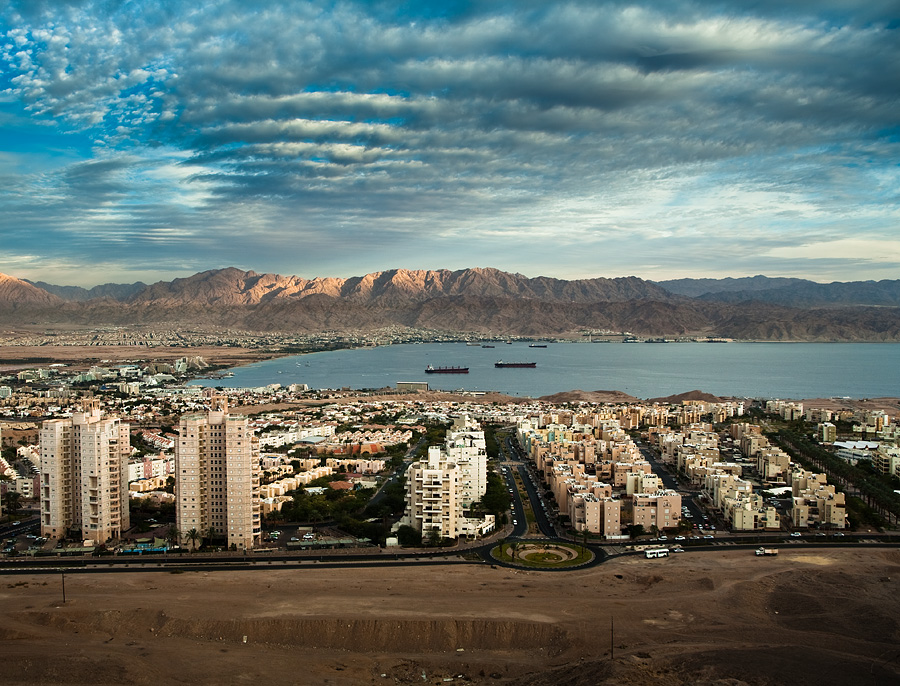
( Come visit me in Eilat!  – JW )

Eilat from mountain

Want to spend Pesach in Israel?

If you want a long Pesach trip you can go from 04/01-04/29 from Chicago for $537 or from Dallas or Miami for $641

This can work from NYC as well. Just book a one-way ticket nonstop flight to Chicago on American for 7,500 British Airways Avios.

For example a flight from Chicago to Tel Aviv for a long Pesach from 04/01-04/29 is $537 on Orbitz.

That flight goes from Chicago to Tel Aviv via Philadelphia. You can’t miss the Chicago to Philly outbound segment but you can fly Tel Aviva-Philadelphia nonstop and miss the Philadelphia to Chicago return segment. All bags must be claimed in Philly.

Or you can book a multi-city trip, just search for leg 1 from NYC to Chicago on 04/01, leg 2 from Chicago to Tel Aviv on 04/01 and leg 3 from Tel Aviv to Chicago on 04/29. The total will be $633.

Same story to go to Tel Aviv for Lag B’omer from 05/07 to 05/22. Search for leg 1 from NYC to Chicago on 05/07, leg 2 from Chicago to Tel Aviv on 05/07 and leg 3 from Tel Aviv to Chicago on 05/22. The price will show $749 but drop to $633 after selecting flights. Or just use 7,500 Avios to get to Chicago and book the $537 flight from Chicago (price drops only after selecting flights)

Unfortunately, this does not work in the other direction….

Battle lines drawn in DC over Iran sanctions push

February 28, 2014

Battle lines drawn in DC over Iran sanctions push | The Times of Israel.

Days before AIPAC goes lobbying, major Democrat donors urge Congress to back the administration; Reid decries amendment

February 28, 2014, 4:24 pm

Senate Majority Leader Harry Reid of Nevada makes his way to the Senate floor on Capitol Hill in Washington after a Democratic caucus meeting earlier this month. (photo credit: AP/J. Scott Applewhite)

Senate Majority Leader Harry Reid of Nevada makes his way to the Senate floor on Capitol Hill in Washington after a Democratic caucus meeting earlier this month. (photo credit: AP/J. Scott Applewhite)

WASHINGTON — When AIPAC brings some 10,000 activists to the halls of Congress next week on their Tuesday legislative action day, they are expected to push senators to join on as co-signers to the flagging Menendez-Kirk bill.

Although Iran will be a hot topic during AIPAC’s national conference Sunday to Tuesday, lobbyists face a tough road in convincing remaining Senate Democrats to risk the ire of the administration in supporting the bill that would increase sanctions against Iran should current talks on its nuclear program fail.

It will come as little surprise to Washingtonians when AIPAC doubles down on its pressure to recruit new co-sponsors for the legislation. But in advance of the push, over four dozen major Democratic donors – mostly Jewish – sent a letter to Congressional leadership urging them to hold off on any additional sanctions legislation.

Although the letter did not mention the legislation, the donors warned that “Congress should allow these fragile negotiations [with Iran] to proceed without making threats that could derail them or tying the hands of the negotiators by imposing unrealistic terms for a final agreement.”

The donors, who were responsible for over $7 million worth of funds for Obama’s campaigns alone, ruled out any possibility for compromise on the status of the bill, admonishing that “even if Congressional action took the form of a non-binding resolution, or if the President vetoed such legislation, its initial passage would strengthen the hand of Iranian hardliners arguing against negotiations on the ground that Congress will not accept any deal reached at the negotiating table.”

“We urge you to oppose risky Congressional action that, if taken, may lead you to wake up the next morning knowing the result has been to take the diplomatic option off the table,” they added.

Earlier Thursday, Senate Majority Leader Harry Reid (D-NV) invoked the pro-Israel lobby to argue for a delay on the bill, claiming that AIPAC agreed that the time was wrong to bring the bill to the floor.

Reid blasted Senate Republicans for tying a vote on additional sanctions against Iran to a vote on a bill that would increase health benefits and job training for US military veterans. Democrats needed 60 votes in order to pass the veterans’ bill, but hopes for the legislation dissipated when Reid refused to allow a Republican amendment to be voted upon, because it also included the additional sanctions. The veterans’ bill was ultimately defeated in a 56-41 vote

“It was disappointing – if not surprising – when Republicans almost immediately injected partisan politics into a debate over a bill that should be bipartisan – insisting on an unrelated amendment on Iran that they knew could derail the veterans’ bill,” Reid complained.

He also accused Republicans of trying to make partisan gains as a result of Iran policy. “The idea of Iran obtaining a nuclear weapon is so unthinkable that Democrats and Republicans have always worked together on this policy,” Reid wrote in a statement Thursday. “Unfortunately, it seems Republicans are trying to erase that history and politicize an issue that has historically been above partisanship.”

Reid noted that 10 committee chairmen “as well as Israel’s strongest supporter, AIPAC, also agree that now is not the right time to bring a sanctions package to the floor.” He quoted the pro-Israel group as saying that “stopping the Iranian nuclear program should rest on bipartisan support and… there should not be a vote at this time on the measure.”

There are currently 59 senators signed on the bill as co-sponsors, and AIPAC and the bill’s other supporters would like to see more than the 13 Democrats who have currently signed on to the bill get on board. Instead, the bill seems to have lost momentum over recent weeks in the face of personal campaigning against it by President Barack Obama.

On Saturday, AIPAC President Michael Kassen and Board of Directors Chairman Lee Rosenberg wrote an op-ed in the New York Times titled “Don’t let up on Iran”. In it, the two wrote that AIPAC supports “a policy that complements the current negotiations with a range of congressional actions that threaten greater economic and diplomatic pressure on the Iranian government.”

The AIPAC officials continued that they “strongly believe that the assertion by Congress of its historic role in foreign policy can, in fact, complement and enhance the administration’s efforts by forcing Iran to recognize the stark implications of intransigence.”

The influential organization included four asks for congress: to “outline for Iran the acceptable terms of a final accord”; to “exercise oversight to ensure that Tehran understands that our existing core sanctions architecture will remain in place for the full duration of the negotiations”; to “oversee continual implementation of the interim agreement”; and finally ending with a statement of support for the Menendez-Kirk bill, formally titled the Nuclear Weapons Free Iran Act.

In the op-ed, the two AIPAC leaders said that they agreed with Senator Menendez’s decision to delay a vote in the Senate, but not for the reasons cited by Reid – that it was the wrong point in negotiations to vote on it and that it would undermine talks. In fact, the entire first half of the op-ed was devoted to why AIPAC believes that the legislation would be beneficial to the United States’ negotiating stance.

The bill needs the additional support of eight more Democratic senators to render it veto-proof.

Israel demands UN nuclear watchdog issue full disclosure on Iran

February 28, 2014

Israel demands UN nuclear watchdog issue full disclosure on Iran | JPost | Israel News.

By REUTERS

02/28/2014 15:15

Steinitz says IAEA should not withhold information for diplomatic reasons; statement follows Thursday report of a file the IAEA mothballed last year that may have revealed more of Iran’s suspected nuclear weapons research.

Bushehr nuclear Iranian

Iranian security official at Bushehr nuclear plant. Photo: REUTERS

JERUSALEM – Israel urged the UN nuclear watchdog agency on Friday to go public with all information it has regarding suspicions that Iran researched how to build an atomic bomb.

The statement followed a report on Thursday, citing sources familiar with the matter, that the International Atomic Energy Agency (IAEA) last year planned a major report on Iran that might have revealed more of its alleged bomb-relevant research, but held off as the Islamic Republic’s relations with the outside world thawed.

The sources said there was no way of knowing what information collected by the IAEA might have been incorporated in such a new document, although one said it could have added to worries about Tehran’s activities.

There was no immediate comment from the IAEA.

Israel disapproves of the last half-year’s Western rapprochement with its arch-foe, arguing that Iran has won sanctions relief while retaining the infrastructure to pursue nuclear weapons. Iran says its atomic aspirations are peaceful.

“The role of the IAEA is to expose to the international community all information regarding military aspects of the Iranian nuclear project, and not to withhold it for reasons of diplomatic sensitivity,” Israeli Strategic Affairs Minister Yuval Steinitz said in a statement.

“Because the matter of the PMD (possible military dimensions) is so important to a final deal with Iran, I call on the IAEA to complete and publish the report at the earliest opportunity,” he said.

Israel is widely assumed to have the region’s only nuclear arsenal. It has representatives in the IAEA but, unlike Iran, has not signed the nuclear Non-Proliferation Treaty (NPT).

Sources told Reuters the planned IAEA report would probably have amounted to a wider review of the Iranian nuclear file, including PMD and other outstanding issues. They said the idea was raised internally when the IAEA’s long-running efforts to get Iran to cooperate with its investigation appeared completely deadlocked in mid-2013.

But with a new leadership in Tehran trying to end its international isolation, Iran and the IAEA agreed last November a step-by-step transparency pact to help allay concerns about its atomic activities.

This was sealed shortly before a breakthrough November deal between Tehran and the six powers – the United States, Russia, France, Germany, Britain and China – which is meant to be capped by a final accord in July.

In follow-up talks on Feb. 8-9, Iran agreed for the first time to address one of many PMD issues in the 2011 report, regarding so-called exploding bridge wire detonators, which can have both civilian and military applications.

The IAEA’s dossier in November 2011 contained a trove of intelligence indicating past activity in Iran which could be used for developing nuclear weapons, some of which it said might still be continuing. Iran rejected the allegations as fabricated and baseless.

Since then, the Vienna-based UN watchdog has said it obtained more information that backs up its analysis in the 2011 document, but has not given details.

Off Topic: Winds of war blow through Crimea

February 28, 2014

Israel Hayom | Winds of war blow through Crimea.

Ukrainian minister accuses Russia of “military invasion and occupation” as Russian troops block international airport Friday morning • U.S. pledges support for new Ukrainian government • Kerry: Lavrov assured me Moscow would not intervene militarily.

David Baron, News Agencies and Israel Hayom Staff

An armed man patrols a square in front of the airport in the Crimean capital of Simferopol on Friday

|

Photo credit: Reuters

Back to home page | Newsletters from:

Hezbollah’s response will come, but where and when?

February 28, 2014

Hezbollah’s response will come, but where and when? | The Times of Israel.

Shiite terrorist group cannot afford to ignore Israeli strike, but it is constrained from launching full-fledged attack

February 28, 2014, 2:28 pm

Lebanese mourners carry the coffin of Hassan al-Laqis, a senior commander of the Lebanese group Hezbollah, on Wednesday, December 4, 2013. (photo credit: AP/Hussein Malla)

Lebanese mourners carry the coffin of Hassan al-Laqis, a senior commander of the Lebanese group Hezbollah, on Wednesday, December 4, 2013. (photo credit: AP/Hussein Malla)

You can imagine what took place the day after Monday’s strike on a weapons convoy in Lebanon, when the leaders of Hezbollah met at a hideout in Beirut’s Dahiya quarter or some other secret location.

Secretary-General Hassan Nasrallah probably gave a few opening remarks, then let the other members in the room take the floor. Some might have pushed for restraint, and emphasized the need to hold back in face of the challenges ahead in Syria and Lebanon.

“We have strategic goals in Syria,” they would have told him. “Let’s not put them in danger now. A couple of Israeli missiles that caused little damage and did not result in significant loss of life, that’s just not something worth losing everything for.”

But others in the meeting may have been more aggressive.

“Look, Sayyid Hassan, this lawlessness cannot continue,” they might have said. “They killed Imad (Mughniyah) in 2008, they killed Hassan (al-Laqis) only three months ago, they bomb weapons convoys headed our way. They believe they can just do whatever they want, and if we don’t respond and clarify that there is a price for their actions, it will only continue.”

This, in essence, is the dilemma facing Hezbollah in recent days: What to do about Israel’s alleged military interventions, where to do it, and when?

At least one dilemma — Hezbollah’s public reaction to the bombing — was solved by the organization, after a little more than 36 hours. Here, too, the decision was anything but straightforward. Hezbollah’s admission that the attack was carried out over Lebanese territory will force the organization to respond, even if not immediately.

Ignoring the Israeli strike would emphasize Hezbollah’s vulnerability and weakness. As it is, Israeli and Lebanese media unaffiliated with Hezbollah reported extensively on the location of the attack and that assets belonging to the group were hit. The Israeli media’s almost celebratory reaction to the bombing may have even been exaggerated, as if trying to provoke the organization to react.

Thus far, Hezbollah has chosen the first option — to explicitly stress that, although it suffered this time, next time it will be the one to deliver the blow. This would seem to be a logical choice: Hezbollah maintains its credibility, is not portrayed as cowardly, and provides itself with unlimited time to respond.

And Hezbollah can now continue to focus on what it deems truly important. For the moment at least — as odd as it may seem — an Israeli attack on several trucks carrying missiles on the border between Syria and Lebanon is the least of the Shiite group’s worries.

Still, it seems that the organization, in contrast to its recent behavior, is unlikely to hold back and maintain its restraint in the medium-term. True, Hezbollah is currently fighting on two fronts — one in Syria, and another in Lebanon as it takes on radical Sunni terrorists. These conflicts exact a heavy toll on the organization’s military, economic, personnel and political assets. Almost every day, another attack against Hezbollah by a Sunni terrorist organization takes place, in Beirut and beyond. Every day Hezbollah suffers casualties in Syria as well. Hence a campaign against Israel is somewhat less urgent.

Yet — and this is a critical point — the strike earlier this week was the first time since the Second Lebanon War that Israel has attacked a Hezbollah target openly in Lebanon. It won’t be easy for the organization to keep silent. Revenge will come, it seems; the question is when and where.

The option of a general escalation that would drag the organization into a head-on collision with Israel may result in serious consequences not only for Hezbollah, but also for its entire axis, Iran and Syria. One can only assume that if Israeli forces were to enter Lebanon, Hezbollah would have to urgently bring back thousands of troops currently in Syria, one third of its fighting force, abandoning Bashar Assad to the Syrian opposition. This would not be good news for the Syrian or the Iranian regimes.

But Hezbollah has changed its strategy with regard to its weaponry, which could pull it into open conflict with Israel. Until a year-and-a-half ago, Hezbollah missiles were primarily stationed on Syrian soil, but the civil war led it to realize that it had better move its arsenal back to Lebanon. The fact that Israel cannot accept such a development is a major point of contention, despite the fact that both sides are not looking for a fight right now.

Therefore, Hezbollah may choose an indirect response. Hezbollah has a desire for revenge against Israel, but will not risk action that can be traced back to the organization. A massive rocket attack against Israel would not be a good option. On the other hand, an attack against Israeli tourists or embassies abroad is another story entirely. This week, Haaretz’s Amos Harel reported that Israel expects Hezbollah will try to harm Israeli officials. If Hezbollah could strike at an Israeli official, the group would consider that a tremendous achievement. An eye for an eye (Imad Mughniyeh), a tooth for a tooth (Hassan al-Laqis).

The organization has another option. One of the most significant events regarding the tension between Hezbollah and Israel took place in June 2012. Drug dealers from the village of Ghajar, on the border between Israel and Lebanon, smuggled 21 kg of explosives into Israel. The ammunition made its way to Nazareth, where it was captured by security forces. An investigation revealed that Hezbollah was behind the smuggling, and defense officials believe that the organization is interested in having Palestinian or Israeli Arabs messengers carry out the revenge attack.

Off Topic: Unidentified armed men patrol Crimea airport

February 28, 2014

Unidentified armed men patrol Crimea airport | The Times of Israel.

Kalashnikovs in hand, dozens show up in Ukrainian city, refusing to speak to press, as Kiev points finger at Russia

February 28, 2014, 1:13 pm

An unidentified armed man patrols a square in front of the airport in Simferopol, Ukraine, Friday, February 28, 2014. (photo credit: AP/Andrew Lubimov)

An unidentified armed man patrols a square in front of the airport in Simferopol, Ukraine, Friday, February 28, 2014. (photo credit: AP/Andrew Lubimov)

SIMFEROPOL, Ukraine — Armed with Kalashnikovs and looking ready for battle in full combat uniform, dozens of men patrolled outside Crimea’s main airport Friday as tensions mounted over the strategic Ukrainian peninsula where many long for Russia.

Dressed in army-green fatigues with a black badge on the upper right arm, wearing flak helmets and bulletproof vests, the men refused to speak to journalists, and it was not immediately clear what army or paramilitary group they belonged to.

They simply patrolled outside, a silent, somber presence that stood in stark contrast to the brightly dressed passengers pitching up for morning flights at the Simferopol international airport, which, according to an official, was operating normally despite the heavy contingent of armed men outside its doors.

Ukraine’s new government pointed the finger at Russia, accusing it of an “armed invasion” of the airport as well as an airfield in the southwest of the peninsula, where ethnic Russians are a majority and where pro-Moscow sentiment runs high.

Pro-Russian unarmed activists nearby said the armed men had arrived at the airport in the middle of the night following rumors that members of the new pro-West government were planning to fly in.

The activists, who were unarmed, said they were “volunteers” who were there to maintain order.

“We’re here to prevent fascists or radicals from western Ukraine from coming here by plane,” said Vladimir, 46, a former military officer dressed in an army jacket.

The comment was a clear reference to the protesters whose three-month campaign against pro-Russian President Viktor Yanukovych brought his downfall at the weekend, a movement condemned by its critics in eastern Ukraine as rife with neo-Nazis and radical nationalists.

“We’ll stay here as long as necessary,” Vladimir added.

Standing beside him, Vadim, a young engineer wearing sneakers, said he was “not an extremist.”

“We’re here to maintain public order. We’re not blocking anything. But if the nationalist criminals arrive, we’re going to fight them. We’ll find arms if we need them,” he said.

 ’We love Russia’

At the bus station in Simferopol, the regional capital, another group of five young men paced up and down, saying they too were determined to stop extremists from descending on Crimea, a peninsula given to Ukraine as a symbolic gift by a Soviet leader in 1954, and which has housed Russia’s Black Sea fleet for nearly 250 years.

The bus station was calm, Ukraine’s yellow-and-blue flag still flying above the building — “for now,” said a taxi driver.

But separatist commandos still controlled the regional parliament and government building in Simferopol, after seizing it Thursday and hoisting the Russian flag to chants of “Russia! Russia!” from hundreds of supporters outside.

After the raid, local lawmakers voted to hold a referendum on May 25 to expand the region’s autonomy from Kiev, and replaced the local government with a pro-Moscow official.

“We want this referendum because we want to be free and not under the power of the nationalists in the west,” said Maria, an elementary school teacher, outside the parliament after the vote.

“The trouble all started in Kiev, the coup and the murders. Who let them do those things? That’s why we’re keeping our Crimea,” said Anatoli, a factory worker, adding: “We love Russia.”

Report: Israel warns Lebanon against responding to alleged attack

February 28, 2014

Report: Israel warns Lebanon against responding to alleged attack – Israel News, Ynetnews.

Lebanon lodges complaint with UN over alleged Israeli airstrike claiming attack on Hezbollah arms is an infringement of ceasefire agreement

Roi Kais

Published: 02.28.14, 12:37 / Israel News

Israel is treating Hezbollah’s threat to retaliate to an alleged Israeli airstrike from last Monday seriously.

The Lebanese paper Al Nahar reported that Israel has raised its level of alertness along the border and have sent the Lebanese government a message according to which it views it as responsible for any retaliation launched by Hezbollah from Lebanon.

Meanwhile, the alleged Israeli attack in Lebanon on munitions being transfered to Hezbollah has prompted Israel’s neighbor to the northwest to lodge a complaint with the UN.

Lebanon’s Foreign Minister Gebran Bassil has asked Lebanon’s UN Ambassador Nawwaf Salam to file a complaint against Israel for allegedly carrying out two airstrikes near its border with Syria last Monday, NOW Lebanon reported.

Bassil condemned Israel for attacking Lebanon and breaching UN resolution 1701 – the 2006 UN resolution which governs the ceasefire reached between Israel and Lebanon at the end of the Second Lebanon War – Lebanon’s National News Agency reported on Thursday, and called on the UN to “enforce observance of the resolution.”

Location of alleged Israeli airstrike (Photo: Google Maps)

Israeli warplanes reportedly struck a position belonging to Hezbollah in eastern Lebanon on Monday. Israel has not acknowledged the raid, but officials have been quoted as confirming a general policy of blocking suspected arms deliveries from Syria to Hezbollah.

Hezbollah admitted Wednesday that an airstrike widely attributed to Israel did hit one of its bases on the Lebanon-Syria border, but insisted that no one had been killed, and vowed revenge.

“The new aggression is a blatant assault on Lebanon and its sovereignty and its territory…The Resistance (Hezbollah) will choose the time and place and the proper way to respond to it,” a statement on the group’s Al-Manar television station.

The announcement appears to contradict earlier claims that four Hezbollah fighters, including a senior commander, had been killed in the strike.

Al-Manar initially insisted Monday that there was “no raid on Lebanese territory,” reporting only the “strong presence of enemy planes over the area north of Bekaa” in eastern Lebanon.

The airstrike, believed to have been carried out by Israel, killed four Hezbollah members and took out “a missile shipment from Syria”, the Lebanese newspaper The Daily Star reported early Wednesday.

According to the report, the assault targeted took two trucks, one containing missiles and the other missile launchers, which were being transported to Hezbollah missile warehouses in Lebanon.

The paper quoted a “security source” as saying that the Israel Air Force had fired four missiles at the trucks, which were carrying “qualitative” weapons.

Meanwhile, Time Magazine on Tuesday quoted an Israeli official as saying that Israel was responsible for the attack, and that the convoy had apparently included missiles with larger and more dangerous warheads than ones already in Hezbollah’s possession.

Although Israel has refrained from taking sides in the Syrian civil war, Prime Minister Benjamin Netanyahu has repeatedly vowed to take action to prevent Hezbollah from obtaining “game changing” weapons from its ally Syria. Past alleged Israeli airstrikes are believed to have targeted Russian-made anti-aircraft missiles and guided missiles from Iran. Israel has never confirmed the airstrikes.

▶ “Lecha Dodi” (Come, my beloved) to greet the Sabbath bride – YouTube

February 28, 2014

▶ “Lecha Dodi” (Come, my beloved) to greet the Sabbath bride – YouTube.

A beautiful acappella rendering by the “Maccabeats” of the prayer said in the Jewish Friday night service welcoming the Sabbath.

Shabbat shalom…

JW


