Archive for February 22, 2014

Off Topic: Ukrainian parliament votes to oust president, sets early elections

February 22, 2014

Ukrainian parliament votes to oust president, sets early elections | Fox News.

( Sorry, Vlad.  Can’t win ’em all… Right?  Heh ! – JW )

Published February 22, 2014

| FoxNews.com

The Ukrainian parliament voted to set early elections for May 25 after declaring President Viktor Yanukovych unable to carry out constitutional duties.

The decision comes just hours after embattled Yanukovych said he wouldn’t respect any decisions made by parliament.

Yanukovych stated Saturday that he has no intention to resign, and called the political crisis a coup while saying it resembles the rise of the Nazis in the 1930s.

“They are trying to scare me. I have no intention to leave the country. I am not going to resign, I’m the legitimately elected president,” Yanukovych said from Kharkiv in a televised statement.

“Everything that is happening today is, to a greater degree, vandalism and banditry and a coup d’etat,” he said. “I will do everything to protect my country from breakup, to stop bloodshed.”

Parliament also arranged the release of Yanukovych’s arch-rival, former Prime Minister Yulia Tymoshenko, by voting to decriminalize the count under which she was imprisoned. Tymoshenko was convicted of abuse of office, charges that domestic and Western critics have denounced as a political vendetta.

A party spokeswoman said Tymoshenko was released after 2 1/2 years in a Kharkiv prison, and headed to the capital to join protesters there.

“You are heroes, you are the best thing in Ukraine!” she said of those killed in the violence, while speaking for a wheelchair.

Asked by crowds gathered at the hospital where she was released about her further plans, Tymoshenko said, “I will run for president,” news agencies reported.

She said she will “make it so that no drop of blood that was spilled will be forgotten.”

The agreement reached Friday between Yanukovych and leaders of the opposition protests that have brought Ukraine into crisis called for early elections that were to be held no later than December, and constitutional reforms to reduce the president’s powers.

But the possibility that he could remain in office for the rest of the year angered protesters who want his immediate departure, and said the deal did not address what triggered the protests in November — Yankuvych’s abandonment of closer ties with the European Union in favor of a bailout deal with longtime ruler Russia.

The protesters, who are angry over corruption and want Ukraine to move toward Europe rather than Russia, claimed full control of Kiev and took up positions around the president’s office and a grandiose residential compound believed to be his, though he never acknowledged it.

At the sprawling suburban Kiev compound, protesters stood guard and blocked more radical elements among them from entering the building, fearing unrest. Moderate protesters have sought to prevent their comrades from looting or taking up the weapons that have filled Kiev in recent weeks.

The compound became an emblem of the secrecy and arrogance that defines Yanukovych’s presidency, painting him as a leader who basks in splendor while his country’s economy suffers and his opponents are jailed. An Associated Press journalist visiting the grounds Saturday saw manicured lawns, a pond, several luxurious houses and the big mansion itself, an elaborate confection of five stories with marble columns.

Protesters attached a Ukrainian flag to a lamppost at the compound, shouting: “Glory to Ukraine!”

Yanukovych left Kiev for Kharkiv, his support base in the country’s Russian-speaking east, where governors, provincial officials and legislators gathered. Top Russian lawmakers joined the meeting, too, while thousands of angry protesters gathered outside chanting “Ukraine is not Russia!”

The leaders gathered in Kharkiv approved a statement calling on regional authorities to take full responsibility for the constitutional order on their territory.

Some called for forming volunteer units to protect against force by protesters from western regions. The assembly urged army units to maintain neutrality and protect ammunition depots.

Russia, the United States and the European Union are deeply worried about the future of Ukraine, a nation of 46 million whose loyalties and economy are divided between Europe and longtime ruler Moscow.

In a special parliament session, lawmakers warned that the country risks being split in two. The country’s western regions want to be closer to the EU and have rejected Yanukovych’s authority in many cities, while eastern Ukraine — which accounts for the bulk of the nation’s economic output — favors closer ties with Russia.

“The people have risen up and achieved their goals. The authorities are crumbling. Victory is in sight,” 31-year-old construction worker Sviatoslav Gordichenko said outside a residential compound believed to belong to Yanukovych.

Ukraine’s parliament, only a day ago controlled by Yanukovych supporters, seemed to be taking control of the country’s leadership.

The parliament speaker — Yanukovych ally Volodymyr Rybak — submitted his resignation, citing ill health. The president’s representative in parliament warned against splitting the country in two, an outcome that worries many but is increasingly seeming like a possibility.

The standoff between the government and protesters escalated this week, as demonstrators clashed with police and snipers opened fire in the worst violence the country has seen since the breakup of the Soviet Union a quarter-century ago. The Health Ministry put the death toll at 77 and some opposition figures said it’s even higher.

The Associated Press contributed to this report.

Off Topic: So far, so good

February 22, 2014

So far, so good | Jerusalem Post – Blogs.

( Wanna feel a little better about Israel’s reality? Read on… – JW )

so_far_so_good_462965

Ira Sharkansky

Jews are nervous.

That is a chronic condition, now heightened by talk of boycott,helped along by the likes of John Kerry and Thomas Friedman. Shimon Peres is joining those who say the conditions.are ripe for Israel to.make peace with the Palestinians, and it better succeed or else.

On the ground however,.where our feet should be, things don’t look all that bad.

A recent Gallup poll shows Israel’s support among Americans almost four time greater than the support for Palestinians. Moreover, the proportion of Americans with a favorable opinion about Israel has increased a bit in the most recent four years, while those with a favorable opinion about the Palestine Authority has stayed about the same or even decreased.

Despite a dry winter, Israelis are not moaning as they used to about drought.  Several desalination stations.are on line, and the is enough water to export. There is a sizable gas field in the same area as we now get most of our water. The country has signed its first contract to sell gas to Jordan, and there are talks to sell the stuff to Turkey and others.

It may be too early to celebrate Israel’s membership in OPEC, but there is substantial business being done with China, India, and South Korea.that appears outside the influence of boycott-touting American and European leftists.

Meanwhile the mighty Americans–whose wealth and power we can only dream of–are mired in a host of seemingly unsuccessful efforts with respect to Syria, Iran, Egypt, Libya, Afghanistan and maybe the Ukraine, while they ought to be greatly embarrassed by Iraq.

Israel is managing like Jews have done for millinnia, helped by personal and family connections whatever Jews live. Relations are decent–with successes along with disappointments–with both sides of the US-Russia tensions, along with the governments of other western democracies despite some voices supporting Palestine over Israel, and other voices worrying both Jews and Muslims with their efforts against circumcision and slaughter according to the religious laws of both Orthodox Judaism and Islam.

Young Israeli men, apparently with roots in the Ukraine, and graduates of the IDF, have been using their military training in behalf.of the rebels in Kiev. And wonder of wonders, they are reporting an absence of anti-Semitism. We’ll see if such reports continue, and Heaven forbid, if it is one of those occasions when Jews have chosen the wrong side. We are also hearing that Israel’s friend Vladimir Putin will put all his weight and skills.on.the other side. Neither the Russians nor the Ukrainians seem squeamish about casualties. It’s the Americans and Western Europeans who are saying their equivalents of Oy Gevalt about the violence. This could turn bad for everyone.

There is good news for Israel in continued  multi-million dollar sales of start ups to firms in US and Japan. They may not have been in the league with WhatsApp and Facebook, but the sale of Waze to Google was nothing to sneeze at.

There are Jews throughout Latin America.  Currently the most prominent is an Argentinian millionaire, who has become a major investor in an Israeli conglomerate in need of a financial rescue.

If it looks too much like the Protocols, with AIPAC the power in chief in the world capital, there is also George Soros, JStreet, Peace Now and a host pf other Jewish critics of just about every government’s policies, including Israel’s. There are more than a few Jews chanting the slogans of BDS.

Need we remind ourselves that Jews have been quarreling about fateful things at least since Moses tried to lead them through the desert?

Modern times have found us on different sides of bloody conflicts.

Jews fought on both sides of the American Civil War.

My own father was posted as an American soldier in World War I against Varda’s grandfather and some uncles in German uniforms. All were patriots, proud to serve their countries, not knowing of the family developments that would come decades later.

One of Varda’s uncles–trained as a sniper–risked a death sentence by not firing at a French soldier who was in his sights, and then began “Shema Yisrael.”

Jews should never put all our eggs in one basket.

The biggest annoyance at this time is John Kerry.

It is not easy being dependent on a great power, where from time to time individuals reach high positions who are obsessed with our problems. They see solutions, which we have tried over the years without success, and are determined to do what they can to bring it off. They may even see our problem as the key to a region in chaos, which threatens the entire world.

Alas, we are not the key to what is wrong among the Muslims, and others cannot solve problems that we cannot solve by ourselves. But they keep trying, and are inclined to blame us for their frustrations, perhaps because we are more like them than are our adversaries.

It is on the downside of being the Chosen People.

It is one thing to be chosen by the Almighty, given a Land and a few other goodies.

Even that comes with the great cost of its contribution to anti-Semitism.

It is something else to be chosen by politicians who do not perceive their own limitations.

We can expect Kerry and Friedman to pass, as others have before them, who knows what in the history books.

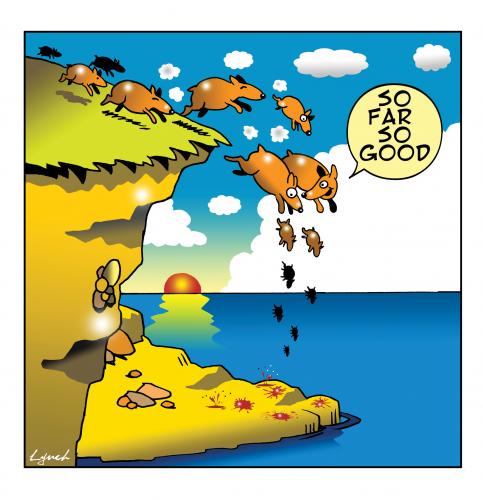
Pessimists will say we are like the mythic guy falling from a tall building, and heard to be saying “So far so good” as he passed the 20th floor.

Maybe, but maybe not.

Iran to offer more attractive, competitive oil contracts

February 22, 2014

Iran to offer more attractive, competitive oil contracts, Trend, February 22, 2014

Royal Dutch Shell, British Petroleum (BP), Malaysia’s Petronas, Spain’s Repsol, Russia’s second largest oil producer, Lukoil, France’s Total and Italy’s Eni have expressed their willingness to resume work in Iran.

1 Iraian FM

Iranian Oil Minister Bijan Namdar Zanganeh says Iran’s new model of oil contracts will be more competitive and more attractive to international investors than those offered by neighboring countries, Press TV reported.

Speaking at the 1st Iran Oil Industry Contracts Revision Forum in Tehran on Saturday, Zanganeh pointed to the changes in the global oil market over the past decade and said, “Following these essential changes, we are forced to revise our oil contracts so we can stay on the path of development like before.”

Zanganeh noted that Iran’s objective in revising its oil contracts is not only to attract more foreign investors, but also to gain access to oil’s industry latest technology and management systems.

On February 9, Mehdi Hosseini, who heads the Oil Ministry’s Oil Contracts Revision Committee, said Iran’s new contracts are sufficiently flexible and have been compiled in line with international conditions.

Iran’s Oil Ministry plans to hold a conference in London in July to introduce new contract terms to international companies.

Zanganeh established the revision committee last September to modify buyback oil contracts.

Under a buyback deal, the host government agrees to pay the contractor an agreed price for all volumes of hydrocarbons the contractor produces.

World oil giants have shown interest in returning to Iran following the easing of sanctions against Iran in light of the implementation of Tehran’s nuclear deal with world powers.

Royal Dutch Shell, British Petroleum (BP), Malaysia’s Petronas, Spain’s Repsol, Russia’s second largest oil producer, Lukoil, France’s Total and Italy’s Eni have expressed their willingness to resume work in Iran.

Off Topic: Thwarting the Sinai terrorism threat

February 22, 2014

Security and defense: Thwarting the Sinai terrorism threat | JPost | Israel News.

By YAAKOV LAPPIN

LAST UPDATED: 02/22/2014 14:45

Terror organizations are entrenched in the desert dunes of Egypt’s semi-lawless province; intelligence, hi-tech border reconnaissance, and reinforcements are part of the IDF’s preparations for years of danger.

egypt

Bus shown after explosion in Sinai, February 16 2014 Photo: REUTERS

The bomb blast that tore through a tourist bus carrying South Korean nationals on Sunday, killing four civilians and wounding several more, was heard loudly in next-door Eilat. The senseless attack on innocent civilians is the latest reminder to both Egypt and Israel that the Salafi jihadi terror organizations, entrenched in the desert dunes of Egypt’s semi-lawless province, are not going anywhere.

In the past two years, as Egypt deteriorated into anarchy (before making a partial recovery), and as radical warlords began setting up base in Sinai, posing a growing threat to Israel, the IDF’s Southern Command took a number of steps to change its security arrangements along the Egyptian border.

A new security fence was completed in 2013, meaning that for the first time, a physical barrier exists between Egypt and Israel. On the Israeli side of the fence, the IDF set up a new Combat Intelligence Collection battalion, whose companies scour the border in a variety of ways, while employing hi-tech sensory gadgets, like radar sensitive to human movement and highly advanced cameras.

These units have been joined by units specially trained to intercept incoming terrorists, such as Rimon, a desert warfare elite unit. Other units, like the mixed male and female Carakal Battalion, have been securing the border for years.

The IDF does not place tanks on the border, as this is considered a violation of the peace treaty with Cairo. But in principle, tanks can be mobilized if necessary.

The IDF also permanently maintains an Iron Dome anti-rocket battery near Eilat. Over the past two years, the IDF has swept aside its old operational conceptions to create a new working model, based on the reality of an unstable border.

The military’s Southern Command also has access to an undercover unit that storms the location of suspects, which is managed jointly by the IDF and the Israel police.

Additionally, the Eilat district Counter- Terrorism Unit remains on permanent standby in the area, and is able to use helicopters to get to any location along the border, to take on armed terrorists who may have crossed into Israel.

On a daily basis, Beduin scouts move up and down the border, sensitive to the smallest changes on the ground, and putting security forces on alert when they feel that something is wrong.

The list is impressive, but is unlikely to be adequate in the long run. When it comes to border security, measures on one’s own side of the border can only go so far, in the absence of the ability to strike targets on the other side of the border – as the IDF freely does when necessary in the Gaza Strip.

The peace treaty with Egypt is a vital strategic asset that must be guarded at all times, and this severely limits Israel’s freedom of action in Sinai. Yet, it seems impossible to conceive of a situation in which the IDF is aware of a clear and present danger to Israeli civilians, and when there is insufficient time to communicate the location of the enemy to the Egyptian security forces, and not acting.

The hope in the IDF appears to be that such drastic measures, which carry the potential to strain relations with Cairo, will not be necessary – particularly now, when Egypt has proven more willing than ever to take on jihadis in Sinai.

But hope can only go so far. In August 2013, unconfirmed foreign reports emerged from the Sinai Peninsula of an Israeli drone strike on a rocket-launching cell that was in the final stages of preparations for firing on Israel.

It would seem natural for the Shin Bet (Israel Security Agency) to also invest more resources into mapping out the latest threats in the Sinai Peninsula, to locate the presence of nerve centers for Salafi groups like Ansar Bayt al-Maqdis, and to develop the ability to provide an early warning of impending attacks – the type of intelligence enjoyed by Israel in other sectors.

Such intelligence would require a detailed study of who poses a danger in Sinai, who are the terror leaders, what are their recruitment methods, who has joined the terror groups, and what weapons they have access to.

Links with Gaza-based pro-al-Qaida groups, as well with established Palestinian terror organizations Hamas and Islamic Jihad, should also be a natural area of interest for Israel’s intelligence agencies.

But this task is not a straightforward mission, and is riddled with difficulties. Senior army commanders on the ground have said that without a doubt, they assume the next attack will occur in the near future. And they expect the attack to be a surprise, despite the preparations and the training.

Although the public only hears about the Sinai region when there is terrorism, behind the scenes, IDF units on the ground are responding to nearly daily observations of suspicious movements and figures on the other side of the frontier.

The army fully expects one of those figures to turn out to be a terrorist in the future, and is making every effort to train and equip its forces to be able to identify the jihad-driven “predators” in the desert, before they sting.

The Middle East Continues to Change

February 22, 2014

The Middle East Continues to Change.

( An excellent review of Israel’s defense challenges over the coming year… – JW  )

Amir Rapaport in a column on the ever-changing Middle East and the challenges facing the Israeli defense establishment

Reconnaissance Battalion Exercise in the Galilee (Photo: IDF)

Regional Status Picture: A regional status picture derived from the situation appraisal of the Israeli defense community for early 2014: Syria is still disintegrating, Lebanon is on the way to a civil war and disintegration and Iraq is already disintegrated. On the more optimistic side – Egypt is coming to its senses and the Egyptian Army consolidates its hold vis-à-vis the World Jihad elements in the Sinai and presses on with its struggle against Hamas in Gaza. Jordan is very stable. Hamas rules the Gaza Strip (almost) unchecked. What about the Palestinian Authority in the Judea and Samaria region? The level of violence there depends on the progress of the political negotiations (also).

Let’s begin with Syria: the first ships carrying Syrian chemical weapons have sailed recently, but it is still uncertain whether Assad will try to conceal some of the inventories he possesses. The agreement with the USA regarding the disarmament of chemical weapons has provided the Assad regime with an insurance policy of sorts, but contrary to the impression one may get from the world press, Assad is still far from deciding the outcome of the civil war in Syria. On the contrary, Assad continues to lose ground and call in Hezbollah reinforcements from Lebanon to assist him in the primary battles. The battles in Syria currently concentrate on the attempt by Assad’s military to establish territorial continuity between Damascus (parts of which have been captured by rebel forces) and the Alawi-dominated areas in north-eastern Syria. The areas bordering with Israel, on the Golan Heights, are mostly dominated by rebels of various factions, including World Jihad men who dominate the southern part of the Syrian Golan Heights.

The Syrian civil war is rapidly drifting into Lebanon. Car bombs and even rocket attacks against the Dahiya quarter, the Hezbollah stronghold in Beirut, are directly associated with Hassan Nasrallah’s support of Bashar Al-Assad. As far as Israel is concerned, these are not foreign news: the war in Lebanon is drifting into Israeli territory, too. For example, the rocket attack from Lebanon into Israel in December 2013 was carried out by a Jihad organization that attempted to provoke Israel into a confrontation with Hezbollah – a case of upside-down thinking. What about the Judea and Samaria region? The average level of violent activities is crawling upward, but the real test will take place in the spring, when the nine months allotted to the negotiations between Israel and the Palestinians come to an end. Will the negotiations be extended or will they be interrupted?

In Israel and in the Palestinian Authority they have been busy recently consolidating their respective responses to the suggestions made by US Secretary of State John Kerry during his recent visits to the region. The Israeli defense community has already rejected the American suggestion to settle for Israeli presence at the border crossings in the Jordan Valley and rely on satellite and ground surveillance technology that would replace the physical presence on the ground. Israel’s previous defense minister, Ehud Barak, was willing to “consider” such ideas. The present Minister, Moshe (“Bogie”) Yaalon, has bluntly declined.

The Jihad Era: The elements responsible for most of the fire incidents in late 2013 and early 2014 (rockets attacks from the Sinai and the Gaza Strip against Israel, as well as the attacks along the borders with Syria and Lebanon) were organizations calling themselves ‘Salafist’ organizations. The Salafists are the most extreme of extremist Muslims. They totally reject progress and aspire to return to the days of the great Islamic Caliphate that existed after the age of Muhammad the Prophet. They advocate Jihad war against all infidels – Jews, Christians and even Muslims who do not follow the teachings of their sect.

In the age of new terrorism and Jihad, orders and instructions are not issued by speech but through the Internet. There is no structured chain of command, the very last activist can establish direct contact with the senior leaders of Al-Qaeda (all under assumed names, naturally), on Facebook or through WhatsApp. The social networks convey millions of messages every day, and finding the ones that can alert of possible terrorist preparations is a highly complex undertaking. Nevertheless, the intelligence agencies and systems manage to obtain high-quality information even from those networks.

According to Israeli estimates, in early 2014 the military regime in Egypt is gaining momentum in its war against the Jihad organizations. The Jihadists in the Sinai Peninsula still impose a major threat as far as Israel is concerned, especially on air traffic in and out of the town of Eilat. This is the reason why the Israel Security Agency (Shabak) ordered, a few months ago, that the flight corridors leading to the town be changed so as to reposition them as far away as possible from the unruly territory of the Sinai. However, the big picture shows that the Jihadists are being pushed out of the Sinai and that they are shedding blood in their confrontations with the Egyptian Army. Occasionally, they succeed in releasing pressure or sending some sort of “signal” in the form of rockets fired at Eilat. These attacks are, in fact, intended to undermine the relations between Israel and Egypt.

The most severe blow, as far as Hamas in Gaza is concerned, has been the fact that in the context of their confrontation with the Salafists, the Egyptian forces had almost completely “dried out” the underground tunnels that enabled free movement of terrorists as well as the smuggling of arms and goods to and from the Sinai – to and from the Gaza Strip. This blow has had both economic and operational implications: since Operation Pillar of Defense (November 2012), Hamas has not been able to renew the smuggling of missiles from Libya or Iran through the Sinai, and is now dependent entirely on its own manufacturing potential (they are already capable of manufacturing missiles with a range that extends to Tel-Aviv, and unmanned airborne vehicles).

Nevertheless, Hamas continues to prepare for the next significant round of hostilities against Israel, and those preparations include the subterranean medium – the tunnels Hamas excavates under the fence separating between the Strip and Israel could provide the infrastructure for the next kidnapping attack, which would ignite the next confrontation.

Iran: Despite the warming relations between Iran and the West, as reflected at the Davos conference in early 2014, Israel still regards Iran as the No.1 danger in the coming year as well.

According to the Israeli perception, Iran is fooling the entire world and will continue to strive for the Bomb clandestinely after the sanctions that had been imposed on it have been dramatically reduced.

But has the option of an Israeli attack against Iran been taken off the table? Absolutely not! It may not be relevant only during the first few months of the implementation of the interim agreement with Iran, which came into effect on January 20, 2014. Israel will attempt to collect intelligence that would prove that Iran continues to strive for the Bomb, the agreement with the West notwithstanding, and if evidence to that effect is obtained – Israel may surprise the world by staging an offensive strike against Iran’s nuclear installations, some time during the later half of this year.

Of all things, it is prevailing sense in Jerusalem that the USA is willing to reach an agreement with the Iranians at almost any price which could push Israel to stage the attack on its own.

Meanwhile, Back at the Mossad: The fact that as far as Israel is concerned Iran continues to fool the entire world and that it is getting closer to the first bomb could also be regarded as a failure of sorts of the Israeli Mossad, whose highest priority mission of the last decade was to delay the Iranian nuclear project (a mission which has thus far been executed with a fair degree of success, through an extensive range of forestallment operations, as reported by foreign sources around the globe).

The atmosphere around this agency is not a comfortable one these days. The Mossad has undergone an organizational upheaval in recent years. Pursuant to the retirement of former Mossad chief Meir Dagan, not less than three division heads left the organization as well, including the heads of two of the primary divisions, Tevel and Caesarea. The transition of Yossi Cohen, formerly the deputy chief of Mossad, to the position of Chairman of the National Security Council two months ago has also generated some shockwaves in the agency. Above all, the agency is currently undergoing yet another structural change, led by Mossad chief Tamir Pardo. In the context of this change, the agency’s staff is being reinforced and responsibilities that were once the exclusive domain of the operational divisions are being assigned to it. This change, too, is not going down without internal opposition – and that’s putting it mildly.

”Te’uzah”: The IDF was unable to begin the year 2014 with a multi-year plan approved by the political echelon.

The original plan, Te’uzah (“valor”) had to undergo revisions pursuant to the allegedly final government decision regarding the final defense budget for 2014.

IDF may submit the Te’uzah plan to the government for final approval in the coming weeks, where its implications would be explained. Concerns in the IDF do not run very high – it is fairly clear that after all of the presentations and graph and figure-laden transparencies have been presented (the number of tanks, for example, is currently being reduced to the number the IDF had on the eve of the Yom-Kippur War, owing to the budget cuts and also because of the changing priorities of the IDF), the defense budget will be increased further, post factum, even if it remains curtailed when compared to the budgets of previous years.

Defense Industries: The cuts in the defense budgets, in Israel and in the West, present a major challenge to the Israeli defense industries. In addition to the cuts, the fact that the largest market of the Israeli defense industries – India – is in a state of near-standstill owing to the elections being held in the subcontinent, is very problematic indeed. If you add to it the lenient export permit policy recently applied in the USA and Europe (including Germany, which is becoming a world leader in defense exports) and the “hunger” of western industries for clients in the markets where the Israeli industry is regarded as firmly established – then the challenge will become even more acute.

At the bottom line, the Israeli defense industries are preparing for a certain decrease in new orders over the course of 2014, compared to previous years that were peak years for Israeli defense exports. Nevertheless, the Israeli defense industries start off the new year by massively participating in the giant exhibitions to be held in New-Delhi and in Singapore during the first and second weeks of February.

The excellent reputation of the Israeli defense industries may enable them to successfully negotiate the year 2014, which is going to be a tough year for everyone.
In high-stakes round, Iran talks will take place in the dark

February 22, 2014

In high-stakes round, Iran talks will take place in the dark, Jerusalem Post, February 22, 2014

(Surprise! Bismarck is claimed to have said that if we saw how our laws and sausages are made we probably would not like them. — DM)

Calling the talks “sensitive,” State Department deputy spokeswoman Marie Harf said that the parties have together agreed not to divulge details of the issues laid on the negotiating table.

1 Iraian FMIranian Foreign Minister Mohammad Javad Zarif. Photo: REUTERS/Stephanie McGehee

WASHINGTON – Negotiations amongst world powers and Iran over its nuclear program, now at a key stage geared toward achieving a comprehensive diplomatic solution to the crisis, will be kept largely private by the parties involved for the next four months, the United States said on Friday.

Calling the talks “sensitive,” State Department deputy spokeswoman Marie Harf said that the parties have together agreed not to divulge details of the issues laid on the negotiating table.

Those issues were codified in a framework agreement settled on this week in Vienna by Iran and the P5+1 powers – the US, United Kingdom, France, Russia, China and Germany.

“We’re not going to get into any specific issues that we discussed,” Harf said, confirming that a framework had been set, and that all future talks would take place in Vienna.

The next round of talks will take on March 17, but the parties will be in “constant contact” through the interim period, she added.

Harf spoke to journalists on the phone from Jerusalem, where she traveled with Wendy Sherman, US Under Secretary of State for Political Affairs and America’s lead negotiator with Iran.

Sherman was in Israel briefing Prime Minister Binyamin Netanyahu on Friday on the progress of the negotiations.

“Suffice it to say, all of our concerns must be met,” Harf said, when asked by The Jerusalem Post whether the closure of Iran’s mountain-burrowed nuclear facility in Fordo, and the dismantling of its vast infrastructure of centrifuges, were determined by Iran as legitimate topics of negotiation.

Leading up to talks in Vienna this past week, Iranian officials said they would not entertain closing “any facilities” in its nuclear program.

Jannati: Iran adheres to its motto of ˈDeath to USAˈ – IRNA

February 22, 2014

Jannati: Iran adheres to its motto of ˈDeath to USAˈ – IRNA.

(And don’t tell me it is a mistranslation. This is from Irans’s official news agency.
Jannati is not some Joe Blow but an influential politician and member of the guardian council.
– Artaxes)

Tehran, Feb 21, IRNA – Tehranˈs Substitute Friday Prayers Leader Ayatollah Ahmad Jannati said Iranˈs number one option on the table is ˈDown with USAˈ.

The senior cleric made the remarks while addressing a gathering of worshippers at Tehran University campus here Friday.

The Ayatollah praised high turnout of the Iranian nation on February 11 nationwide rallies to mark the 35th anniversary of the Islamic Revolution.

Ayatollah Jannati said the increase in the number of demonstrators this year carried the message that ˈwe are not afraid of your options on the table.ˈ

The message of Iranian people was that ˈwe are eager for your options on the tableˈ and Iranˈs number one option on the table is ˈDeath with USAˈ, Ayatollah Jannati said in response to recent remarks by a number of US officials that all options, including the military option, are still on the table to deal with Iran.