Archive for February 21, 2014

Testing detente, US firms move to sell jet parts to Iran

February 21, 2014

Testing detente, US firms move to sell jet parts to Iran, Ynet News, February 21, 2014

(It’s all for the children safety and we won’t make a penny. We promise. Really we do. Sanctions will go away eventually and we just want the head start we deserve. — DM)

“We don’t want to make a penny on it. It’s entirely for flight safety,” Rick Kennedy said, adding that GE would donate any proceeds to charity.

Boeing and General Electric have applied for export licenses, while European firms are more wary of acting due to doubts over the complex nature of the EU’s sanctions.

US aerospace companies are seeking permission to sell airliner parts to Iran for the first time in three decades, in a key test of the temporary relief on sanctions given under talks to curtail Iran’s nuclear activities.

At least two leading manufacturers, Boeing and engine maker General Electric (GE), have applied for export licenses in a six-month window agreed by Iran and six world powers in November, industry officials and other sources familiar with the matter said.

If approved, the sales would be the first acknowledged dealings between US aerospace companies and Iran since the 1979 US hostage crisis led to sanctions that were later broadened during the dispute over Iran’s nuclear activities.

Rival European groups, however, have been slower to react because of doubts over the status of the European Union’s complex Iranian sanctions legislation and fears of a backlash from the United States, which had warned them not to rush into dealings with Iran.

Other potential obstacles include uncertainty over terms and conditions for exports and the difficulty of finding banks willing to handle the transactions, which must be completed by July 20.

A GE spokesman said his company had been asking since 2004 for permission to provide parts and maintenance for engines for safety reasons, without profiting from the scheme. GE, the world’s largest maker of jet engines by sales, refiled its request after the sanctions relief came into force, he added.

“We don’t want to make a penny on it. It’s entirely for flight safety,” Rick Kennedy said, adding that GE would donate any proceeds to charity.

A source familiar with the matter said that Boeing, the world’s biggest manufacturer of passenger jets, had also filed a request for permission to export parts to Iran.

Boeing declined to comment, referring questions to the US State Department, which in turn referred queries to the US Treasury. A spokeswoman for the Treasury Department, which enforces international sanctions, declined to comment on specific license requests or applications

‘Foot in the door’

Iran agreed in November to curtail its nuclear activities for six months from January n exchange for sanctions relief from Britain, China, France, Germany, Russia and the United States. The deal provides for the sale of parts to flag carrier Iranair, the fleet of which includes vintage Boeing and Airbus jetliners delivered as long ago as 1978.

Joel Johnson, an analyst with Virginia-based Teal Group, said that US officials viewed the sale of spare aircraft parts as a powerful carrot for Iran, which for decades has relied on parts obtained on the black market or copied locally.

He said the move could also help American companies to put themselves in a position to benefit if a broader softening of sanctions is agreed.

“It allows some US companies to get a foot in the door and restore relations that they have not had for over 20 years,” Johnson said.

A senior Iranian official told Reuters in November that Iran could require between 250 and 400 jets if and when sanctions are lifted completely.

Iran says the sanctions have prevented it from renewing its fleet, forcing it to use sub-standard Russian aircraft and to patch up jets that have long since exceeded their normal years of service.

Since 1990 it has had more than 200 accidents, causing more than 2,000 deaths, according to official news agency IRNA.

Negotiations aimed at reaching a final settlement in the dispute over Tehran’s nuclear program resumed this week in Vienna, where the six powers said they had made a “good start”. 

Sanctions gap

Even though the countries are negotiating as one bloc, the temporary scheme under which aircraft parts can be exported has exposed differences in the way sanctions are handled, which could delay any benefits for European firms, trade lawyers say.

The US ban on sales of aircraft parts to Iran predates the international tensions over Iran’s nuclear activities and was relaxed in a ruling that came into force on January 20.

The EU, which had not explicitly banned sales of parts for civil airliners but instead went directly to wider sanctions, has not specifically allowed their export. Some lawyers say this means that the latest EU amendments fail to resolve the risk that exporters could be punished by other laws, such as a ban on “dual-use” items.

The EU’s most recent list of banned categories that could be adapted for military use contains 42 references to aircraft.

European executives say there has been little or no movement on exporting European-made aircraft parts to Iran.

“I have a pile of requests. There are limited situations in which we would consider this – for example, if Iranair had a problem with a specific part and we had one in stock – but we are not actively seeking to export,” a top official with a leading European aerospace company said.

“We will wait at least to see whether the six-month agreement is extended and preferably a more general agreement that gives lasting resolution to political issues. This is still more of a political stage than a commercial one.”

Industry nerves were rattled this month when the United States said that a visit by a French trade delegation to Tehran was “not helpful” and gave what it described as the wrong impression that the West could do business as usual there.

Airbus denied reports that it had taken part in the trip. Though based in Europe, Airbus includes significant quantities of US-manufactured parts in its jets and could export those by applying to the US Treasury. But experts say it may have to tread carefully and act entirely through US subsidiaries to avoid accidentally tripping over EU laws.

“We are considering a few requests; however, no licenses have been applied for,” an Airbus spokesman said.

A French government spokeswoman declined to comment on whether any suppliers had sought permission to export parts to Iran directly from France, where Airbus is based.
West had no option but to choose negotiating table: Iranian official

February 21, 2014

West had no option but to choose negotiating table: Iranian official, Tehran Times, February 21, 2014

(If the West were decisive and insisted on inspection of Iran’s missile and warhead development sites as well as other sites used for military purposes, the talks would not proceed as Iran — in sincere good faith, of course —  desires. — DM)

Iranian official

“Indecision on the part of the other side in the process of talks can be one of the main factors that can inflict irreversible damage on the West despite Iran’s show of sincere good faith in negotiations,” he said. 

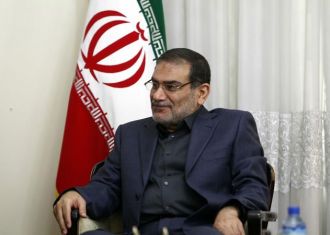
TEHRAN – Iran’s Supreme National Security Council Secretary, Ali Shamkhani, said on Thursday that the West had no option but to choose the negotiating table to engage Iran on the dispute over the country’s nuclear program.

Iran and the major powers held talks in Vienna from Tuesday to Thursday in pursuit of a final deal on Tehran’s nuclear program. They agreed to meet again in the Austrian capital on March 17.

Shamkhani also said, “If negotiators of the other side were to continue making unreasonable excuses during nuclear talks and follow the path of hostility instead of that of interaction, we state that the window of interaction and cooperation will not remain open forever.”

“Indecision on the part of the other side in the process of talks can be one of the main factors that can inflict irreversible damage on the West despite Iran’s show of sincere good faith in negotiations,” he said.

He went on to say that it is a misconception that the sanctions against Iran have affected the country’s approach toward nuclear talks.

Elsewhere in his remarks, he said that Iran has started a new confidence-building campaign in order to show its goodwill to the world, adding that the Islamic Republic intends to demonstrate its honesty in regard to its nuclear program which is meant for peaceful purposes.

“Members of the negotiating team are representing the political will of the system to have constructive interaction on the international stage,” he said.

Rousing the Americans from their slumber

February 21, 2014

Rousing the Americans from their slumber | JPost | Israel News.

By CAROLINE B. GLICK

02/20/2014 22:23.

Bolton: Obama’s three-pronged policy, based on three negotiation tracks with Iran, Syria, and the Palestinians and Israel, will almost certainly fail in its entirety.

US President Barack Obama and Iranian President Hassan Rouhani.

US President Barack Obama and Iranian President Hassan Rouhani. Photo: REUTERS

In an op-ed in the Los Angeles Times Wednesday, former US ambassador to the UN John Bolton warned his countrymen of the disaster that awaits them if President Barack Obama does not change the course of US Middle East policy.

Bolton warned that Obama’s three-pronged policy, based on three negotiation tracks with Iran, Syria, and the Palestinians and Israel, will almost certainly fail in its entirety.

In his words, “Iran will emerge more powerful, verging on deliverable nuclear weapons, while still financing and arming terrorists worldwide.

[Syrian President Bashar] Assad seems likely to survive, which is bad enough by itself, but it will be compounded by the affirmation it affords Iranian and Russian strength. Israel will trust Wash – ington even less than now, and ironically, Palestinians will be even more anti-American, because Obama will not be able to deliver to them the Israeli concessions he predicted.”

Bolton concluded mournfully, “[T]he increasing danger is that only another 9/11, another disaster, will produce the necessary awakening.

There is tragedy ahead for our country if we continue on this course.”

Writing for Strafor the same day, strategic analyst George Friedman explained why Bolton’s warning will be ignored by the public.

Friedman noted that in previous years, recent events in  Venezuela, Ukraine, Russia and beyond would have been the subject to intense public concern. But, he wrote, “This week, Americans seemed to be indifferent to all of them.”

Friedman argued that this popular indifference to foreign policy is not driven by ideological attachment to isolationism, as was the case in the 1930s. “It is an instrumental position,” not a systematic one, he explained.

Because he sees no deep-seated attachment to isolationism among the American public, Friedman argued that their current indifference will likely end when circumstances change.

Friedman’s analysis of the American mood is probably right. And Bolton is certainly right about the dangers inherent to that mood.

Every day the US is subject to greater humiliations and challenges to its power and prestige.

Declarations from Iranian leaders rejecting the dismantling of their nuclear installations, coupled with threats to attack US installations and Israel, bespeak contempt for American power and convey a catastrophic erosion of US deterrent capabilities against Tehran.

As subjects of intense US appeasement efforts, the Palestinians are second only to Iran. And as is the case with Iran, those efforts come at the direct expense of Israel, the US’s most important ally in the Middle East.

Yet like the Iranians, the Palestinians greet US efforts with scorn. Every day Palestinian leaders pile on their incitement against Israel and Jews and their derisive condemnations of the Obama administration’s efforts to force Israel to cater to their every whim.

Since 1979, Egypt served as the anchor of the US alliance structure in the Arab world. It shared the US’s opposition to Islamic terrorism, and waged a continuous campaign to defeat the forc – es of jihad in Egypt, while remaining outside the circle of war against Israel.

When protests began in Egypt three years ago, rather than stand with its ally, Obama dumped Egyptian president Hosni Mubarak and sided with the jihadist Muslim Brotherhood.

After winning a popular election, the Brother – hood immediately set about transforming Egypt into an Islamic, pro-jihadist state. And yet, the administration opposed the military’s decision to oust the Brotherhood from power last summer even though the move prevented the most strategically vital Arab state from becoming the cen – ter of the global jihad. It then cut US military aid to Egypt.

So now the military regime is renewing its ties with Russia, after ditching Moscow for Washing – ton in 1974.

And so it goes, throughout the world.

Japan is the linchpin of US power in the Far East. And today, the Japanese are openly attack – ing Washington as their frustration mounts over the administration’s weak response to Chinese adventurism.

Etsuro Honda, a key adviser to Japanese Prime Minister Shinzo Abe, told The Wall Street Journal this week that Japan needs to develop the military capacity to defend itself by itself. The impli – cation – that Japan no longer trusts the US to defend it – is obvious.

While Friedman is right that Americans don’t want to think about foreign policy, and Bolton is right that their indifference to Obama’s massive failures is dangerous, the truth is that another attack on the US of a magnitude comparable to September 11 is not the only thing that can end their flight from reality.

All that is needed to wake Americans from their slumber is an alternative to Obama’s foreign policy and a political leadership capable of convincing the public that its alternative is better.

Tragically, today the Republican Party vacillates between two foreign policies that have both failed, were seen to fail by the American public, and that on key issues have been aligned with central components of Obama’s failed foreign policy.

On the one hand, there is isolationism. Sen. Rand Paul is the most outspoken advocate of an isolationist foreign policy.

In furtherance of his position, Paul was one of only two Republican senators who opposed passing further sanctions on Iran in the event the current nuclear talks fail to produce an agreement that will neutralize the threat of a nuclear Iran.

As he recently put it, “I think the bottom line is we should give negotiations a chance. My hope is that sanctions will avoid war. We’ve been involved in two long wars in the Middle East. And I think it would be best if we can do anything possible to try to avoid another war now.”

The September 11 attacks discredited isolation – ism as a foreign affairs strategy. The attacks showed the American people that threats grow when they aren’t dealt with. Ignoring America’s enemies is not an option. Certainly enabling them to acquire nuclear weapons through use – less negotiations is not a policy that most Americans support.

As most Americans are not isolationists, Paul’s isolationism is not a viable alternative to Obama’s policies of appeasement. Moreover, since with regards to Iran, his isolationism is aligned with Obama’s appeasement, Paul is in no position to mount a serious challenge to Obama’s foreign policy or rally the public to abandon Obama’s foreign policy and replace it with his own.

Opposing Paul and the isolationists is Sen. John McCain and the Wilsonian democrats. Their idea is that the US must intervene abroad to promote democracy.

While McCain opposes Obama’s policy of appeasing Iran and so enabling the mullacracy to acquire nuclear weapons, his neo-conservative ideological assumptions caused McCain to back Obama’s decision to end US support for Mubarak in Egypt. McCain also advocated for US participation in the NATO effort to oust neutered Libyan strongman Muammar Gaddafi from power.

Today McCain supports Obama’s decision to cut US military assistance to Egypt’s anti-jihadist military regime because the jihadist Muslim Brotherhood government the military ousted was popularly elected.

The war in Iraq discredited McCain’s Wilsonian neo-conservatism in the eyes of most Americans.

And Obama’s McCain-supported abandonment of the Mubarak regime in Egypt destroyed US credibility in the Middle East and paved the way for Russia’s reemergence as a regional power bro – ker for the first time in 40 years.

Due to the unpopularity among the American public of McCain’s ideological commitment to use US power to cultivate popularly elected governments in the Islamic world, and due as well to his periodic support for some of Obama’s most disastrous policies, like Paul, McCain cannot mount a credible, popularly supported alternative to Obama’s foreign policy.

There is a third option, however, that is currently orphaned in the US foreign policy discourse.

That third option begins with understanding the ideological underpinnings of Obama’s foreign policy, and proceeds with offering an alternative policy, based on the opposite foundation.

From Russia to Iran, from Israel to the Far East, Obama’s foreign policy calls for the US to appease its adversaries at the expense of its allies. At its core, it is informed by the belief that the reason the US has adversaries is because it has allies.

By this line of thinking, if the US didn’t support Israel, then it wouldn’t have a problem with the Muslim world. If the US didn’t support Colombia and Honduras, it wouldn’t have a problem with Venezuela and Nicaragua. If the US didn’t sup – port Japan and South Korea, it wouldn’t have a problem with China and North Korea. And if the US didn’t support Egypt and Saudi Arabia, it wouldn’t have a problem with the Muslim Brotherhood and its terrorist offshoots, or with Iran and its terror armies.

The proper response to this worldview and its corresponding policy is a policy based on sup – porting US allies and opposing US enemies. It is predicated on the recognition that strong allies deter and weaken enemies.

In several key cases, supporting US allies will require fewer, rather than more, US oversees deployments.

For instance, as Israel’s leaders have stated since the founding of the state, Israel has no interest in having anyone else fight its wars for it. All it requires is the strength – military, economic, territorial and political – to defend itself by itself.

Rather than seek to weaken Israel by coercing it to recede to indefensible borders in order to make room for a Palestinian terrorist state in its historic heartland, the US should abandon its support for Palestinian terrorists and ensure that Israel has the power to defend itself in a region marked by unprecedented instability and danger.

A strong Israel will be a force for regional stability and so advance US security while forming the firm foundation of a renewed US alliance structure in the region.

So, too, the US should embrace Japan’s readiness to defend itself, by itself. With no appetite to go to war for its allies, but with rising concerns about China’s military adventurism, the US should support Tokyo’s desire to stand on its own.

The same goes for South Korea. Rather than spurn Seoul’s desire to build uranium enrichment and plutonium reprocessing facilities, Washing – ton should support South Korea’s goal of being a counterweight to Pyongyang’s nuclear arsenal and its hyperactive nuclear proliferation.

It is a schoolyard rule, but it is as true for nations as it is for 10-year-old boys: Be good to your friends and bad to your enemies. Then people will want to be your friends. And they won’t want to be their enemies.

Inspiring in its simplicity and tried and true through the ages, it can move the American people to recognize the dangers inherent to Obama’s foreign policy and embrace an alternative policy, and an alternative leadership, before disaster strikes.

Off Topic: American silence on Abbas’ insolence

February 21, 2014

American silence on Abbas’ insolence, Israel Hayom, David M. Weinberg, February 21, 2014

(Secretary Kerry, who is “not in the business of bad deals” and has the bit firmly between his teeth, can’t afford to offend the Palestinian sides. If he did, they might become even more intransigent. Then, despite all Israeli concessions, the “peace process” would fail prematurely taking the desired Kerry legacy down with it. — DM)

No matter what happens, no matter how recalcitrant and contemptuous Abbas is, no matter how militant and hard-line the PA proves — no failure of the peace process will ever be pinned on the Palestinians.

The world judges Palestinian Authority President Mahmoud Abbas and his government by truly meek standards. How else can you explain the rot that the Palestinians get away with, while supposedly engaged in a peace process with Israel?

Abbas’ minions can savage U.S. Secretary of State John Kerry, cast ugly aspersions on his motivations, organize demonstrations against him, brutally mock his proposals, intransigently reject any moves towards Israel, threaten renewed warfare against Israel, cozy up to Iranian officials in preparation for such future battle, and glorify terrorism against Israel — yet the Obama administration and European leaders remain mum.

The State Department doesn’t get offended when Yasser Abed Rabbo, the PLO’s secretary-general and one of the closest advisors to Abbas, accuses Kerry of seeking to “appease Israel.” No apologies were demanded by the State Department when Jamal Muhaissen, a senior Fatah official, called for Kerry to be indicted in the International Criminal Court (for supposedly spelling out to Abbas, in private of course, the implications of diplomatic failure).

The State Department doesn’t loudly denounce as unacceptable the protests in Ramallah and Bethlehem where Palestinians cry, “Oh Kerry, you coward, you have no room in Palestine,” and carry placards accusing Kerry of working toward “liquidating” the Palestinian cause and trying to extort the Palestinians.

Nor does it seem to bother Kerry’s State Department when senior representatives of Abbas’s ruling Fatah faction, such as Jibril Rajoub and Tawfik Tirawi, both former commanders of Palestinian security forces in the West Bank and close allies of Abbas, issue a string of increasingly strident statements in support of “armed resistance” against Israel. Or when they fly to Iran to seek the support of Ayatollahs Mohammad Khatami and Hassan Rouhani.

In fact, the State Department has had nothing to say at all about a series of recent stories that detail a Palestinian political culture that remains violent, anti-democratic, and wedded to historical lies.

The stories and statements ignored by Washington include Abbas’ venal assertion that Jesus was a Palestinian persecuted by the Zionists. They include chief Palestinian negotiator Saeb Erekat’s accusation that Prime Minister Benjamin Netanyahu wants Abbas assassinated, and Erekat’s outrageous claim to be an indigenous descendant of the biblical Canaanites. (Erekat excreted that “Joshua Bin Nun burned my hometown Jericho”). They include Abbas’ classic double-talk: Swearing commitment to peace when speaking to Israeli students, while glorifying the murder of Israeli students by Palestinian terrorists, when speaking in Arabic to his home base.

More American silence has resounded in response to a well-documented new report detailing the hate that is routinely broadcast on Palestinian television, published in Palestinian newspapers, and taught in PA schools — demonizing Jews and inculcating the notion that the evil Jews and Zionists have no rights to any part of the country.

Next is complete American disregard of new reports that detail gross human rights abuses in the PA — including arbitrary detentions, torture and cruel punishment, restriction of freedom of the press, denial of religious and minority rights, and more.

Utter disregard has been the reaction of the international community to the PA’s large cash payouts to terrorists released from Israeli jails as part of Kerry’s peace process. The terrorists are getting PA grants of up to $50,000 each and monthly stipends ranging from $1,000 to $4,000; sums that are about four times the average monthly salary in the PA.

The PA also makes large monthly payments to Palestinians and Israeli Arabs still in jail, as long as they were imprisoned for terrorism against Israel. This included prisoners serving multiple life sentences for murder. Their families receive the stipends. Arabs from Jerusalem and Israeli Arabs imprisoned for terror offenses get additional supplements, in honor of their “exceptional heroism.”

In short, the more heinous the act of terrorism and the longer the prison sentence, the higher the salary. And note: The PA is an equal opportunity terrorist employer. Its salaries for terrorists are granted to members of Fatah, Hamas, and Islamic Jihad alike.

It is estimated that at least six percent of the Palestinian budget is diverted to directly paying terrorist salaries. All this money comes from donor countries like the U.S., U.K., Norway, and Denmark. I’ve scratched my head again and again wondering why. Shouldn’t abjuring terror, refraining from glorifying terror, and stopping to pay for terror, be a central international demand of the Palestinians in the current peace talks?

Over the past two years, the Shin Bet security agency has identified and pre-empted more than 80 plans for attacks in the West Bank, plans that originated with individuals released by Israel as part of the Gilad Schalit deal. Hamas headquarters in Gaza transmits detailed instructions as well as funds for these attacks to the West Bank Palestinian terrorists; and Abbas’ PA has been mainly inactive and ineffective in doing anything about this Hamas infiltration.

Despite all this, Kerry and his State Department seem religiously wedded to the cheery fiction that a Palestinian state would be a stabilizing force for peace. All evidence to the contrary mysteriously escapes them.

They are tremendously exorcised about the urgency of establishing a Palestinian state, but much less worried about the character of that state and what it portends for that state’s relationship with Israel down the road.

Then there is Abbas’ diplomatic intransigence. By all accounts, Abbas is not prepared to make any significant concessions on the key issues of recognition, refugees, security, settlements and Jerusalem. Abbas says he will “never” recognize Israel as the national state of the Jewish people, “never” forgo the so-called right of return to Israel of Palestinian refugees, “never” accept Israeli security control of Jordan Valley and other key air and ground security assets, “never” allow Jews to live in Judea, and “never” accept Israeli sovereignty in any part of Jerusalem’s Old City. In short, “never” will there be a peace agreement.

Yet I haven’t heard Kerry publicly strong-arming Abbas, as he has notoriously done with Netanyahu. I haven’t heard Kerry warn Abbas of PA diplomatic isolation or economic collapse if progress isn’t made.

In fact, Kerry has failed to even hint that Palestinian intransigence could be a possible cause of failure. Kerry has signaled that failure would be/could be Israel’s fault, but not the PA’s fault.

The American ear also seems deaf to the broader context in which the current talks are taking place. Netanyahu is under great pressure from within his own coalition government and beyond to make enormous concessions to the Palestinians. Abbas is under no such domestic or regional pressure at all. In fact, nobody in the Fatah leadership (never mind Hamas or the Saudis) is pushing Abbas to cut Kerry some slack or show some flexibility in order to obtain a peace deal with Israel.

After all, the Palestinians feel no urgent need for an agreement. They don’t really crave the “statelet” along the 1967 lines that Israel might be offering, and they think that have a better route (through the international courts and international boycotts) to cut Israel down to size.

So why on earth is Kerry publicly pressuring Netanyahu but not Abbas? As we painfully know only too well, every Israeli official who speaks out of line with regard to the terrific Kerry process is pummeled by the Obama administration. Any Israeli statement that questions the wisdom or direction of the diplomatic process led by Kerry becomes an international scandal; and Washington responds to the wayward official with fury.

Just ask Defense Minister Moshe Ya’alon or Economy and Trade Minister Naftali Bennett. For doubting Kerry’s effort, the Obama administration has gone after them like a hotly provoked bull in a bullfight. Their criticisms of Kerry have been called offensive and unacceptable by Washington, and apologies have been loudly demanded.

Yet Abbas and his insolent, defiant Palestinian Authority apparently are international angels. The toughest criticism Abbas ever has faced from the U.S. is “disappointment and concern” over anti-Israel rhetoric. This gentle comment came yesterday in a background briefing, noticed by few, of the State Department deputy spokesman. “Personal attacks are unhelpful,” murmured the tender spokesman almost apologetically. Kerry himself has said nothing critical of Abbas.

And so you know for sure: No matter what happens, no matter how recalcitrant and contemptuous Abbas is, no matter how militant and hard-line the PA proves — no failure of the peace process will ever be pinned on the Palestinians.

Britons will never back preemptive strike on Iran, MP says

February 21, 2014

Britons will never back preemptive strike on Iran, MP says, Times of Israel,  David Horovitz, February 21, 2014

(After the P5+1 kerfuffle ends with Iran a regional nuclear power, will any Western nation even attempt to restore effective sanctions? — DM)

Conservative Robert Halfon says UK is so scarred by Iraq war, it will only support resort to force if it is directly attacked.

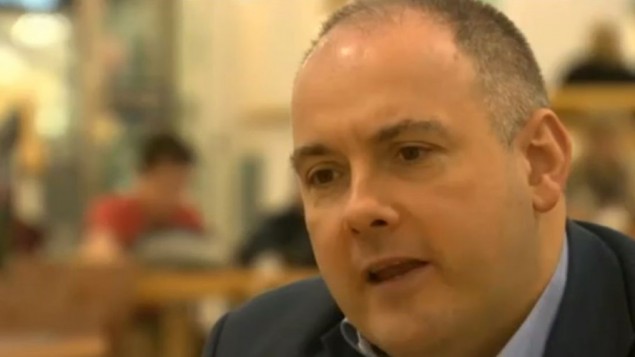
Robert Haflon, MPRobert Halfon (screen capture: YouTube)

The member of Parliament representing Winston Churchill’s former constituency said that the British public will never countenance military intervention to prevent Iran attaining nuclear weapons.

Robert Halfon, the Conservative MP for Harlow, said more broadly that Britons are so scarred by what they regard as having being drawn into war against Saddam Hussein’s Iraq on false pretenses that they will not now support the use of military force unless Britain itself or a British target overseas is directly attacked.

Halfon, who was visiting Israel this week in a delegation of Conservative Friends of Israel, told The Times of Israel in an interview that the vote in the House of Commons last August against a resort to force in Syria, following President Bashar Assad’s use of chemical weapons against his own people, was “a tragic day for our country.” The vote, a crushing defeat for Prime Minister David Cameron, reflected the “scarring” effect the Iraq war has had on the British psyche, he said, with Britons believing that were misled about Saddam’s non-conventional weapons capacity. Cameron’s defeat was also a result of “political opportunism” by the opposition Labour Party.

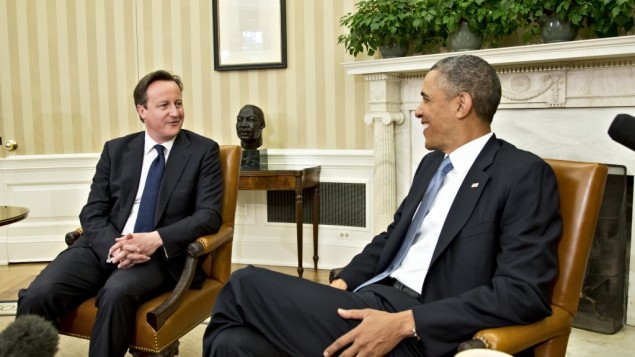
Obama CameronUS President Barack Obama welcomes British Prime Minister David Cameron in the Oval Office in May 2013. (photo credit: AP/J. Scott Applewhite

That vote, in turn, Halfon said, had a “massive effect” on US President Barack Obama, who subsequently changed course, having indicated that a “punitive” strike against Assad was imminent. “The one dependable ally of the US was saying no,” Halfon said.

Instead, the US accepted a Russian-mediated initiative under which Assad has agreed to give up his entire chemical weapons capability, but Halfon rejected the idea that this represented an enviable result. He said he was not yet convinced that Assad would indeed shed his entire WMD capacity and capability, that the US and UK positions sent a dismal signal to dictators everywhere, and that Iran perceived Obama’s behavior as signalling weakness — which in turn gave it confidence to continue to pursue its nuclear program.

He stressed that while he had emphatically backed military intervention in Syria, “my constituents were all against. They see the body bags coming back from Iraq and Afghanistan,” he said.

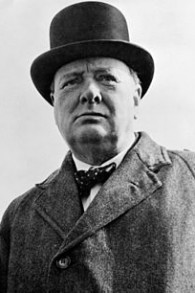
ChurchillWinston Churchill (photo credit: Wikimedia Commons)

Halfon, 44, who grew up in a Jewish family in north London, won election to Parliament in 2010 in the seat formerly held by Churchill, Britain’s inspirational World War II prime minister. He said he lamented that in today’s Britain, there was both an “importing and exporting” of Islamist terrorism. Islamic extremists, “indoctrinated in Britain, are going to Syria to fight,” and radical Islamist preachers were coming into the UK to teach hatred. “We were only able to extradite [radical preacher] Abu Qatada [to face terrorism charges in Jordan] after a long struggle,” he noted.

He said Britain was grappling with “lots” of terrorist plots hatched by Muslim extremists and that a Kurdish leader who visited the UK recently and went to a mosque in the north of England told him that “a mosque that radical would have been closed down in Kurdistan.” (In the worst recent Islamist terror attack in the UK, in July 2005, four British-raised Muslims carried out simultaneous suicide bombings on a London bus and three underground trains, killing 52 people and injuring 700.)

Unfortunately, Halfon charged, the right-wing UKIP political party exploits the Islamist danger to “bash moderate Muslims,” while the political left “appeases” the extremists.

Halfon said Israel’s image in the UK has improved a little since a low point at the time of May 2010 Mavi Marmara raid, when Israeli naval commandos, commandeering a Turkish vessel seeking to break the security blockade of Gaza, opened fire and killed 9 activists after coming under attack. “Since the Arab Spring erupted, people are registering that Israel is the region’s only democracy, and seeing on TV the oppression in Arab countries, notably by Assad,” he said.

Nonetheless, among those pushing boycotts of Israel, there was no change in the level of hostility — “but all that, don’t forget, is organized by Israel’s enemies… There’s not been one [major] demonstration over the killings of 140,000 Syrians, he said.

Scarlet JohScarlett Johansson with Sodastream’s Daniel Birnbaum (photo credit: Mike Coppola/Getty Images for SodaStream/via JTA)

Relating to British charity Oxfam’s criticism of Scarlett Johansson for representing Israel’s SodaStream, with its West Bank settlement factory employing Jews, Israeli Arabs and Palestinians, he wondered why Oxfam does not boycott the likes of Russia and China. Noting that its protests over SodaStream had prompted the US actress to step down from her role as an Oxfam ambassador, Halfon said “SodaStream is an enlightened company, and Johansson is a hero.”

The Collapse of Sanctions on Iran

February 21, 2014

The Collapse of Sanctions on Iran – The Weekly Standard.

The White House gets what it wants.

Mar 3, 2014, Vol. 19, No. 24 • By LEE SMITH

The economic news from Tehran is good—good, that is, if you are a state sponsor of terror moving toward a nuclear weapons program. If on the other hand you were hoping that sanctions might persuade the Iranians to cease and desist, the news is disastrous.

Hassan Rouhani

Hassan Rouhani

Since the Obama administration relaxed sanctions on Iran, oil sales are up 25 percent, from 1.06 million barrels per day to 1.32 million, and the White House reportedly has no intention of preventing the rise in sales and consequent swelling of Revolutionary Guard bank accounts. And that’s not all. The leading economic indicators show an Iranian economy on the mend, thanks to the interim nuclear agreement struck in November. Inflation has decreased from 40 percent-plus to 20 percent and falling. The rial-to-dollar exchange rate is steadily recovering from the depths to which it had fallen in 2012. And where Iran’s GDP fell 3 percent in 2012, the IMF now projects modest increases for 2014 and 2015.

In short, with the sanctions regime eroding, Iran’s business climate has been transformed. What was once a foolish gamble is now a promising opportunity, and trade delegations are exploring investment options in Iran’s petrochemical and automobile industries. The White House’s early assessment that the regime was getting only $7 billion in sanctions relief was way off. The figure is far closer to those estimates of $20 billion that administration officials scoffed at.

What happened? Is it possible that the White House, with all the economic expertise at its disposal, simply miscalculated? Is the Obama administration just bad at math?

No, it was intentional. Contrary to the administration’s public stance, sanctions relief was never about rewarding the regime with relatively small sums of money in exchange for steep concessions on the nuclear program. The plan rather was to get Iranian president Hassan Rouhani lots of cash, the more the better. The White House’s idea is that once Rouhani understands how much easier his life is with lots of money pouring into the economy, it will be in his interest to petition Supreme Leader Ali Khamenei for more concessions on the nuclear file. The problem with the strategy is that it shows how badly the White House has misunderstood not only the regime’s behavior, but also Rouhani’s role and how sanctions affect it.

“The administration wanted to strengthen Rouhani’s position vis-à-vis the hardliners,” Iran’s Revolutionary Guard Corps (IRGC), says Mark Dubowitz, executive director of the Foundation for Defense of Democracies, whose work has been central in building the Iran sanctions regime. According to Dubowitz, the White House wanted to empower Rouhani while weakening figures like Quds Force commander Qassem Soleimani, who use their proximity to Khamenei to argue against concessions. The administration assumes, says Dubowitz, that “the more Rouhani becomes ‘addicted’ to cash, the better he’ll be able to make the case to Khamenei that they need to make more concessions. The White House’s idea was to show Rouhani some leg.”

They gave away much more than that. What was significant about sanctions relief was not merely the exact amount of money. Rather, it was that any relaxation of sanctions would give rise to an international lobby with a vital interest in making sure the White House never made good on its threats to reimpose stiff sanctions on the Tehran regime. And it’s not just businesses wanting to trade with Iran that have a stake in sanctions relief, but also politicians. A European corporation doing business in Tehran means jobs back home. What politician would gladly turn his back on thousands of jobs or potential jobs to agree to observe the restoration of a sanctions regime that the Obama White House wasn’t serious about in the first place?

Accordingly, businesses sensing a new climate have flocked to Tehran. “Administration officials said our estimate of $20 billion was exaggerated,” says Dubowitz. “But they had to know about the secondary effects of sanctions relief. They were counting on it. It was key to their whole economic strategy of giving Iran’s economy a lift to incentivize Rouhani to deliver more on the nuclear file. As Iran’s economy continues its shift from a deep recession to a modest recovery, and Congress challenges administration officials on the impact of sanctions relief, administration officials may begin to change their tune and claim that this was their strategy all along.” 

John Kerry chastised a French business delegation for visiting Tehran, but other State Department officials saw it differently. “We hope people don’t go to Tehran,” said undersecretary of state for political affairs Wendy Sherman, the administration’s lead Iran negotiator. “That is our preference. But those who go raise hopes that the Rouhani administration’s going to have to deliver on.”

The administration’s strategy, says Dubowitz, “has nothing to do with rational economic models. Rather, it’s a psychological profile of the regime based on its assessment of Rouhani as a pragmatist who was elected to secure sanctions relief and will be further strengthened if he can deliver.”

But that’s a misreading of Rouhani’s position. The last thing he wants is more sanctions relief, says Iran specialist Ali Alfoneh. “Rouhani uses the sanctions regime, and the threat of new sanctions, as a stick in his fight with the IRGC and Khamenei. It may seem counterintuitive, but the fact is that sanctions relief and Obama’s threat to veto additional sanctions are only likely to weaken Rouhani in Iran’s political power structure.”

To be sure, Rouhani was elected to win sanctions relief for a beleaguered Iranian economy—and perhaps more importantly for the Revolutionary Guards. “The IRGC was initially a beneficiary of the international sanctions regime,” says Alfoneh, a senior fellow at FDD. Sanctions eliminated competition, especially in Iran’s energy sector, and further concentrated economic power in the IRGC’s hands. “However, as the sanctions regime continued,” Alfoneh explains, “the IRGC suffered because of the overall deterioration of the Iranian economy and shrinking oil revenues.” Contrary to the White House’s understanding, sanctions relief not only enriches the IRGC but also weakens Rouhani.

Khamenei has long seen Rouhani as a useful asset in his dealings with the West. The Iranian president often boasts of his role in duping his American and European counterparts as lead negotiator when he held the regime’s nuclear file from 2003-05. But that was after the U.S.-led coalition invaded Iraq, and Khamenei was terrified the Bush administration might move on Iran next. Rouhani was the regime’s happy face. When Khamenei saw that the Americans were tied down in Iraq, says Alfoneh, he got rid of Rouhani and moved back to hardball tactics.

The same is likely to happen here. Now that Western businessmen and politicians are pecking away at the sanctions regime, Rouhani has already served his purpose. Khamenei has a deal he’s perfectly happy with. He’s getting paid for doing nothing, and if the interim agreement is renewed after six months, as many anticipate, then it’s just more money to spend on whatever he likes—backing Bashar al-Assad in the Syrian civil war, or building the bomb. What’s peculiar is that the White House seems just as pleased with the agreement.

Lee Smith is a senior editor at The Weekly Standard.

Obama Calls Retreat

February 21, 2014

Obama Calls Retreat – The Weekly Standard.

Mar 3, 2014, Vol. 19, No. 24 • By WILLIAM KRISTOL

Kiev is ablaze. Syria is a killing field. The Iranian mullahs aren’t giving up their nuclear weapons capability, and other regimes in the Middle East are preparing to acquire their own. Al Qaeda is making gains and is probably stronger than ever. China and Russia throw their weight around, while our allies shudder and squabble.

Newscom

The B-team

Why is this happening? Because the United States is in retreat. What is the Obama administration’s response to these events? Further retreat.

Having withdrawn from Iraq, and seeing it now fall apart, the administration is nonetheless determined to get out of Afghanistan. Its Russia “reset” is a joke, and its “pivot to Asia” an empty slogan. Secretary of State John Kerry huffed and puffed when Bashar al-Assad used chemical weapons last year, and asserted it was a Munich moment. How right he was! Kerry came back brandishing a piece of paper, and Assad remains in power.

Having failed to hold Assad accountable for the use of weapons of mass destruction, Kerry now says that global climate change may be the weapon of mass destruction we should most fear. Sure. Meanwhile, in the real world of real weapons, our military is being decimated in size as it is being enervated by political correctness. And on the matter of sheer competence in the execution of foreign policy, to say that we have a B-team in charge is an insult to B-teams everywhere.

We’re tempted to produce at this point appropriate Winston Churchill warnings and statements from the 1930s. But the current situation is almost too pathetic to be worthy of Churchillian exhortation. We’re dealing with no recent memory of the Great War, no Great Depression, no Hitler or Tojo or even a Mussolini. We don’t need extraordinary heroism or exemplary statesmanship to deal with the second- and third-rate threats that we face. We require competent men taking serious measures.

 But we don’t have them. And of course second- and third-rate threats, if unchecked, can cause much death and destruction. Minor league gangs and small-time thugs can destroy a neighborhood if there’s no police force. A small infection, if untreated and allowed to spread, can kill as surely as a cancer. Rome fell not to the majestic Hannibal but to groups of unimpressive barbarians. Chaos that results from weakness and dissolution can be as hard to remedy as defeat by formidable and well-organized foes. A panicked retreat can be hard to reverse even if the original opponent isn’t that formidable. It’s undoubtedly true that “Lilies that fester smell far worse than weeds.” But weeds can kill a garden too. And under President Obama, we’ve allowed the weeds to spread and multiply at an amazing rate.

All of which leads us—in this instance at least—to cite the Lincoln of 1838 rather than the Churchill of 1938: “If destruction be our lot, we must ourselves be its author and finisher. As a nation of free men, we must live through all time, or die by suicide.” Suicide isn’t yet imminent. But we are on the cusp of accepting—even embracing?—a stance of shirking fearfulness and shrinking timidity. A nation of free men needs at times like this leaders who step forward to “sound forth the trumpet that shall never call retreat.” Obama has a piccolo that only calls retreat.

Off Topic: Report: U.S. Officials Downplay New Syrian Chemical Strike Allegations

February 21, 2014

Off Topic: Report: U.S. Officials Downplay New Syrian Chemical Strike Allegations – Global Security Newswire.

Feb. 20, 2014

A man receives treatment following an alleged Jan. 13 poison gas attack by Syrian government forces in the rebel-held city of Daraya. U.S. State Department officials reportedly offered a muted response to claims about the incident. 

A man receives treatment following an alleged Jan. 13 poison gas attack by Syrian government forces in the rebel-held city of Daraya. U.S. State Department officials reportedly offered a muted response to claims about the incident. (Fadi al-Halabi/AFP/Getty Images)

Allegations of a new chemical attack in Syria’s civil war appear to have gained little attention in Washington, the Daily Beast reports.

Representatives from the rebel-held city of Daraya are demanding a U.N. inquiry into the purported Jan. 13 strike, the publication said on Thursday. However, local leader Oussama al-Chourbaji said U.S. State Department officials “didn’t seem to care that much” when they heard last week from a delegation of witnesses visiting Washington.

The pro-opposition Syrian Support Group accused forces loyal to President Bashar Assad of killing four rebel combatants with a grenade-like device loaded with an unidentified gas. The substance is said to have caused a range of ailments partially alleviated by a sarin nerve agent antidote.

Dan Layman, a spokesman for the U.S.-based group, said “all of those who were affected or killed had the exact same symptoms” as victims of an Aug. 21 sarin strike in a rebel-occupied area close to Damascus. Assad’s regime never claimed responsibility for the 2013 attack, but later confirmed holding chemical weapons and agreed to surrender them amid warnings of a potential U.S. military response.

Al-Chourbaji, a spokesman for the Daraya local council’s medical branch, said an individual claiming to be from the U.S. State Department had asked his municipal body to transfer samples from the incident to neighboring Jordan for analysis. The council member said that request came shortly after the Jan. 13 event, but the Daily Beast reported that materials collected from the possible attack had yet to leave the city as of Thursday.

Al-Chourbaji added that State Department officials directed the witnesses visiting Washington last week to take photographs as they collect chemical traces from any future incidents.

“They said, ‘If they strike you again with chemical weapons, take pictures and tell us,'” he said. “They just advised us to take pictures [to document the taking of the samples] as if we were in a CSI episode. People are dying [and] we are making a movie.”

Israel: IAEA report proves Iran taking world for a ride

February 21, 2014

Israel: IAEA report proves Iran taking world for a ride, Times of Israel, February 21, 2014

(“[T]he IAEA report showed that the interim agreement did not alter ‘Iran’s military nuclear program,’ and the report ‘did not address the military components of Iran’s nuclear program,’ Israeli government officials said in a statement.” Picky, picky. But at least they are charming. — DM)

Interim deal has given Tehran sanctions relief without requiring a significant change to its nuclear program, officials charge.

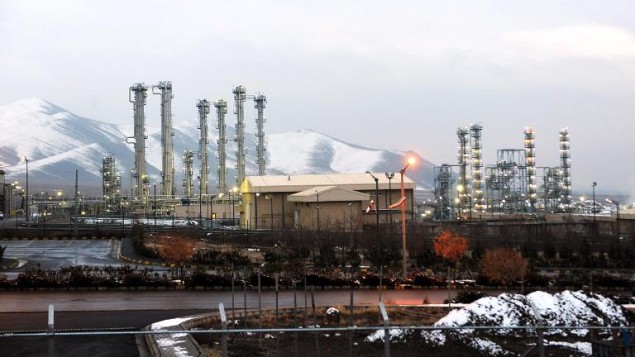
Arak-635x357The future of Iran’s Arak heavy water IR-40 reactor is one of the key points in a landmark nuclear deal Tehran signed with world powers in Geneva, November 2013. (photo credit: ISNA/AFP/File Hamid Foroutan)

Thursday’s UN report on Iran’s nuclear capabilities and its compliance with the interim agreement signed in November with Western powers noted that the Islamic Republic has reduced its stockpile of highly-enriched uranium.

But Israeli government officials said the report actually shows the world that Iran has not made any true concessions on its nuclear program and still has the capacity to quickly break out to a nuclear weapon.

The UN nuclear agency reported that Iran is abiding by its commitments under the interim pact that led to the first round of talks on a permanent accord, which took place this week in Vienna. The talks are set to resume March 17.

Among other findings, the agency noted that Iran’s stockpile of nuclear material that can be turned quickly into the fissile core of a nuclear warhead had diminished by nearly 20 percent to 161 kilograms (355 pounds) under the first-step agreement, which took effect last month.

However, the IAEA report showed that the interim agreement did not alter “Iran’s military nuclear program,” and the report “did not address the military components of Iran’s nuclear program,” Israeli government officials said in a statement.

The IAEA “cannot confirm that Iran’s nuclear program is for peaceful purposes only,” and the report shows that “Iran consistently continues to violate UN Security Council and IAEA Board of Governors decisions” with regards to the program, the officials noted.

In the report, the IAEA commended Iran’s “positive step forward” in granting greater access to nuclear facilities. But alluding to the agency’s attempts to probe suspicions that Tehran worked secretly on nuclear weapons, the IAEA said “much remains to be done to resolve all outstanding issues.”

“The bottom line” is that in return for a “significant easing of sanctions against Iran,” Tehran has not made any “significant concessions” in return, the Israeli officials noted.

Despite last year’s election of Iranian President Rouhani, who is widely seen as more moderate than his predecessor Mahmoud Ahmadinejad, the Islamic Republic still funds terror activities around the world, provides arms and aid to the Assad regime in Syria, which is “slaughtering innocent people, executes its own innocent citizens and “tramples” human rights, the Israeli officials said.

“Such a state should not have the capability to produce nuclear weapons,” the officials said, and noted that Iran has not agreed to give up its centrifuges and its heavy water reactor, even those those technologies are not necessary for a peaceful nuclear power plant, just for creating the highly-enriched material necessary for a nuclear bomb.

Iran and six world powers on Thursday ended nuclear talks with agreement on a framework for future negotiations but little progress on the main issue of what nuclear concessions Tehran must make in exchange for an end to sanctions stifling its economy.

Off Topic: Kerry: I’m not in the business of bad deals

February 21, 2014

Kerry: I’m not in the business of bad deals, Ynet News, February 20, 2014

(“People who know me know that when I sink my teeth into something, if I get the bit between my teeth, I try to get it done . . . .” A poor, albeit accurate, metaphor. When a horse “gets the bit between his teeth,” he ceases to be under control. He can neither be made to stop nor to change the direction in which he is galloping. A voluntary emergency dismount, or trying to throw him off balance so that he becomes distracted and stumbles, are the generally recommended tactics. In that sense, the metaphor is accurate. With Secretary Kerry “in control,” what could go wrong? — DM)

In interview to Israeli television, Kerry says he remains optimistic about reaching a peace deal, but stresses he is not naïve: I want this to be leap of reason, of choice and of rationality, not a leap of faith.

US Secretary of State John Kerry said Thursday that he is “not in the business of making bad deals,” and stressed that he remains “committed” and “determined” to reaching a peace accord between Israelis and Palestinians.

“I have no argument with anyone in Israel who says that no deal is better than a bad deal. I say that myself,” he said in an interview with Channel 2’s investigative program Uvda. “I’m not in the business of trying to put together a bad deal. I am working with both sides on security arrangements.”

“You cannot turn to the people of Israel with the prospect that what you are offering will turn the West Bank into Gaza. Israel’s security is iron clad,” he added.

Throughout the interview, Kerry repeatedly insisted that he is not distracted by the naysayers and has not given up hope that a deal is attainable.

“That’s not the way I operate. I’m an optimist and I am a believer in possibilities,” he said. “People who know me know that when I sink my teeth into something, if I get the bit between my teeth, I try to get it done,” he said.

He also noted that he isn’t naive, and seeks to reach a realistic agreement.

“My job is to help create a situation where the realities of the agreement are such that it is not such a leap of faith. I want this to be a leap of reason, of choice and of rationality based on a very understandable and tangible agreement about security,” Kerry noted.

On the opposition to the talks coming from right-wing coalition members, Kerry said that while there will always be those who support a Greater Israel, 70 percent of Israelis support the two-state solution.

Kerry also responded to claims that previous failed attempts – like the 2005 disengagement from Gaza – serve as proof that withdrawal from land is not the answer.

“I would say very respectfully to people… in the current government who were opposed to (the Gaza disengagement) who argued that if you just pull back it wouldn’t change the dynamic, because they didn’t do what we are doing today and that is to put the end game on the table,” he said.

While he is the only one allowed to publicly discuss the negotiations, Kerry repeatedly refused to go into the talks details. 

When pressed about the viability of an agreement in regards to settlers, he asserted that “I don’t know that the settler will have to leave his home. That’s for the parties to decide.”

Security and prosperity

Kerry has visited the region more than a dozen times since the most recent round of talks were launched in July. With an April target date for an agreement approaching, Kerry has said he will soon return with bridging proposals for a framework deal. Recently, both sides appear to have hardened their positions while questioning the effectiveness of Kerry’s efforts.

He has come under fire from West Bank settlers who fear he is pushing Israel to make dangerous territorial concessions. Some Israeli ministers also have criticized what they consider to be his overzealous drive for an accord, despite a Palestinian refusal to recognize Israel as a Jewish state and past terrorist attacks.

During the interview, Kerry repeatedly stressed his position that Israel’s security and prosperity would grow if a peace agreement is reached. “I believe Israel will get so much stronger and so much more prosperous, as would the West Bank, there is so much to benefit.”

“I have had an Arab foreign minister tell me that if we make peace, Israel would be a powerhouse and would do enormous amounts of business with the Arab word,” he added.

At the beginning of the interview, journalist Ilana Dayan opened by asking Kerry about his spat with Defense Minister Moshe Ya’alon, who called his efforts “messianic” and “obsessive,” claiming Kerry’s security arraignments “were worth the paper they were written on.”

The secretary of state dismissed Ya’alon’s claims, saying that he is not obsessive, but rather committed.

“I don’t want to get into food fights … there is a bigger picture and concept called peace…I’ve learned to be called everything in the book, but I am able to stay focused.”

From Vietnam to Israel

Uvda’s profile focused on Kerry’s personal life as well as his political activities, reviewing his years fighting in the Vietnam War and also Kerry’s recently discovered Jewish roots. During the interview, Kerry was asked whether he had ever spoken with Israelis about his experience in Vietnam vis-a-vis Israel’s security concerns.

“The people of Israel know war. It would be almost insulting for me to assert my experience when Israel has experienced wars and siege,” he said, adding “I would not venture there except to say that my experience … helps me peruse diplomacy instead of war. (Vietnam) was defining for me, but not imprisoning… I am informed by it. I don’t see everything through that prism.”

The secretary of state also described his experiences visiting bomb shelters in Sderot and Kiryat Shmona, and even recalled being in Tel Aviv when a bomb went off on the last day of the 2012 Operation Pillar of Defense.

End goals

After numerous visits to the region and lengthy conversations with both Prime Minister Benjamin Netanyahu and Palestinian Authority President Mahmoud Abbas, Kerry has developed a close relationship of respect with both leaders.

Kerry and Netanyahu reportedly spend hours on the phone, yelling at one another and then quickly making up. Some believe, Dayan said, that Kerry is Netanyahu’s last friend in Washington.

“I spend a lot of time talking to Netanyahu and Abbas. I feel I understand (Netanyahu) who has chosen great courage and leadership in putting this to the test,” he said. “He has enormous complications to face … and he repeatedly tells me he has to guarantee security and that means a lot of things have to happen.”

The US diplomat noted that American General John Allen and over 60 military experts were looking into how Israel can have its desired level of security following an accord with the Palestinians.

When asked to describe each leader’s end goals, Kerry said Netanyahu would only be content with an agreement that answers all the security challenges, secures the nation state of Israel as the home of the Jewish people, and properly resolves the refugees question.

Regarding Abbas and what he can be proud of at the final analysis, Kerry said the PA president “was willing to do what was necessary to return to talks. Given the right set offers on the table… I think he can come to an agreement… are we there yet? No. But it needs to be developed going forward.”