Archive for February 15, 2014

Off Topic: Judea-Samaria Gas Stations Refuse to Serve PA Vehicles

February 15, 2014

Judea-Samaria Gas Stations Refuse to Serve PA Vehicles, Israel National News, February 15, 2014

Fuel stations in Palestinian Authority-controlled areas of Judea and Samaria are refusing to serve PA officials due to a row over unpaid bills.

The fiasco is the latest chapter in ongoing allegations of PA corruption and mismanagement of funds.

Gas pumpsGas pump (illustration) Thinkstock

Fuel stations in Palestinian Authority-controlled areas of Judea and Samaria are refusing to serve PA officials due to a row over unpaid bills.

According to the Bethlehem-based Maan news, the West Bank Union of Gas Station Owners said the PA has not paid its fuel bills for half a year, ratcheting up a debt of $15.7 million.

The Union’s deputy spokesperson,  Nizar al-Jaabari, said officials had been given an ultimatum of February 15th to pay their bills. Both PA security forces and the Finance Ministry were notified, but Saturday came and went without the bills being paid.

He said the debts had left many gas stations in a desperate situation, unable to purchase new stocks of fuel.

The fiasco is the latest chapter in ongoing allegations of PA corruption and mismanagement of funds.

Despite complaining of a lack of money, the Palestinian Authority recently announced multimillion-dollar plans to build two new airports – one of which would be located in a part of Judea-Samaria controlled by Israel, known as Area C.

The PA, which relies heavily on foreign donors, has been begging the world to step up financial aid in order to save it from collapsing. At the same time it has continued to provide huge monthly salaries to terrorists serving time in Israeli prisons while blaming Israel for the financial crisis.

Off Topic: Egyptian army launches campaign to create buffer zone on Gaza border

February 15, 2014

Egyptian army launches campaign to create buffer zone on Gaza border, Ma’an News Agency, February 15, 2014

(Ma’an News Agency claims to have many readers in Palestinian areas. — DM)

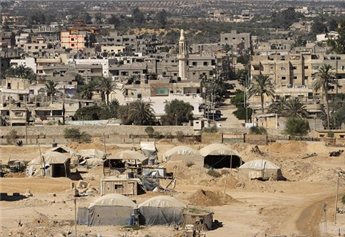
Gaza tunnels and Egypt(MaanImages/file)

Since the coup against Egyptian president Morsi in July. . . . Egypt has strictly enforced the blockade and targeted the tunnels.

CAIRO (Ma’an) — Egyptian border forces destroyed 10 tunnels and seven homes in the Sinai on Saturday as part of new campaign to create a buffer zone along the border with the Gaza Strip that would extend 500 meters in some places.

The campaign began with a military operation in the border town of Rafah, where tunnels leading into the Gaza Strip were targeted in the neighborhoods of al-Brahma, al-Sarsuriya, Salahudeen, al-Helwat, and Zoraba, an Egyptian security source said.

The security source added that the tunnels were destroyed and the homes they were located in were subsequently blown up.

He explained that the move was part of a wider campaign to set up a buffer zone along the border with Gaza in Rafah that would extend 300 meters in populated areas and 500 meters in open areas.

The zone would potentially threaten dozens of homes in the city, which has been divided by the international border since the 1982 Camp David peace accord. Thousands were displaced in the early 2000s when Israel demolished homes to build a buffer zone on the Palestinian side.

The Egyptian security source also told Ma’an that Egyptian army forces on Saturday successfully foiled three explosive devices placed in military vehicles and armored cars in Sheikh Zuwaid, including two that were placed near the Sheikh Zuweid Hospital and a third on the road to a nearby village south of Sheikh Zuewid.

He added that army forces raided “militant strongholds” in the village of al-Kharuba south of Sheikh Zuweid and destroyed three homes and five “hideouts.”

They also destroyed an olive grove that was reportedly used to hide militants following attacks taking place on the nearby road to Rafah International crossing.

Egyptian armed forces launched large scale military action against militants in the Sinai Peninsula earlier in September, in what officials described as the largest mobilization of force in the area since the 1973 war with Israel. The military action comes in the wake of rising instability and almost daily attacks in the region, following a July 3 coup by the Egyptian military which unseated President Mohammad Morsi.

Until July of this year, tunnels connecting Gaza to Egypt provided a vital lifeline for the territory amidst the otherwise crippling Israeli blockade. The blockade has been in place since 2006, and it has limited imports and exports and led to a major economic decline and wide-reaching humanitarian crisis.

Since the coup against Egyptian president Morsi in July, however, Egypt has strictly enforced the blockade and targeted the tunnels.

Egyptian Maj. Gen. Ahmad Ibrahim said in October that nearly 800 tunnels had been destroyed since the beginning of the year at that time, while Rafah officials estimated in September that these operations had demolished 95% of previously existing tunnels.

Commander Renews Leader’s Warning against Israel

February 15, 2014

Commander Renews Leader’s Warning against Israel, Fars News Agency, February 15, 2014

(Israel had better become peaceful, like Iran. That is the will of  Iran’s Master — Allah’s only legitimate spokesperson —  and hence of Allah. He does not bluff.– DM)

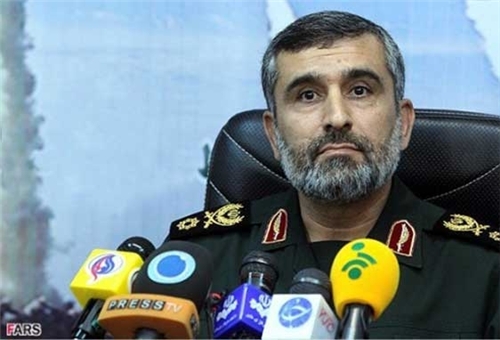
Commander, Iran Rev GuardsTEHRAN (FNA)- Commander of the Islamic Revolution Guards Corps (IRGC) Aerospace Force Brigadier General Amir Ali Hajizadeh renewed the last year warning issued by the Iranian Supreme Leader about Tehran’s crushing response to any possible Israeli attack, reiterating that Iran will destroy Israel if Tel Aviv dares to resort to military action.

“The remarks of our master (Supreme Leader of the Islamic Revolution Ayatollah Seyed Ali Khamenei in March 2013) about Iran’s response to (any aggression of) the Zionist regime is the yardstick for our action and if the Zionists make a mistake, this (Ayatollah Khamenei’s warning) will certainly happen, and the reason why they haven’t yet embarked on such a move (i.e. attacking Iran) lies in their fear of Iran’s capability and power,” Hajizadeh said, addressing a number of Iranian university students in Tehran on Saturday.

He said similar to the 33-day war against the Lebanese resistance movement Hezbollah in 2006 in which the Zionist regime was defeated due to its lack of intelligence about Hezbollah’s power, Israel is not aware of Iran’s defensive power either and will sustain a heavy defeat if it ever dares to make a military move.

Hajizadeh assured the Iranian nation and officials of the Armed Forces’ full preparedness to defend Iran against any threat.

Addressing a large and fervent congregation of the Iranian people in the country’s Northeastern holy city of Mashhad on March 21, 2013, Ayatollah Khamenei deplored Israel’s war rhetoric against Iran, and warned that any hostile move by the Zionist regime against the Islamic Republic would be reciprocated with a destructive response.

Ayatollah Khamenei pointed to the warmongering statements by Israeli officials and warned Tel Aviv against any wrongdoing against the Islamic Republic of Iran.

“Israel’s leaders sometimes threaten Iran, but they know that if they do a damn thing, the Islamic Republic will raze Tel Aviv and Haifa to the ground,” Ayatollah Khamenei stressed.

Israel and its close ally the United States accuse Iran of seeking a nuclear weapon, while they have never presented any corroborative document to substantiate their allegations. Both Washington and Tel Aviv possess advanced weapons of mass destruction, including nuclear warheads.

Iran vehemently denies the charges, insisting that its nuclear program is for peaceful purposes only. Tehran stresses that the country has always pursued a civilian path to provide power to the growing number of Iranian population, whose fossil fuel would eventually run dry.

Both Israel and the US have recently intensified rhetoric against Iran, saying an attack on the Islamic Republic’s nuclear site is impending.

Iran has, in return, warned that it would target Israel and its worldwide interests in case it comes under attack by the Tel Aviv.

Iran has also warned that it could close the strategic Strait of Hormuz if it became the target of a military attack over its nuclear program.

Strait of Hormuz, the entrance to the strategic Persian Gulf waterway, is a major oil shipping route.

Israel’s Enemies Are Too Distracted To Worry About An Attack on Iran

February 15, 2014

Israel’s Enemies Are Too Distracted To Worry About An Attack on Iran, Huffington Post (Canada), February 15, 2014

Israel’s enemies . . . .  all now have major distractions that will leave them conflicted in the event of an Israeli attack on Iran. But there are other reasons for Israel to attack now, too, these ones dealing with Israel’s current friends.

Because the U.S. acts only in its own best interest, Israel cannot count on the U.S. to remove the threat of a nuclear-armed Iran, either over the next few months in Geneva or later. So far, in the hope that the U.S. would come to its rescue or that the mullahs in Iran would be overthrown, Israel has waited rather than taking action.

While Israel has waited Iran has developed more and more nuclear weapons capability, more and more ability to harden its weapons sites to shield them from an Israeli attack, and more ability to deliver nuclear and non-nuclear missiles to targets inside Israel.

While Israel has waited, the number of missiles aimed at Israel by Iran’s allies, Hezbollah in Lebanon and Hamas in Gaza has grown, from a few thousand to 20,000 by 2006 to today’s estimates of 60,000 or more. While Israel has waited Syria has been drawn closer into Iran’s orbit, becoming a puppet state likely to do Iran’s bidding and a particularly worrisome puppet state at that, because of Syria’s chemical weapons arsenal.

Waiting has not served Israel’s need for security. It now faces far more complex dangers than it did a year ago, two years ago, or five years ago. Continuing to wait – and to hope for the U.S. or something to save it — would likely only worsen Israel’s predicament.

Because Iran has been allowed to pursue nuclear capability, Saudi Arabia and other Sunni states are pursuing nuclear weapons. If Israel waits much longer, it could be surrounded by nuclear weapons states in Egypt, Jordan and Turkey as well as Iran and Saudi Arabia. None of these countries are stable, any one of them could become an extremist state that decides to rid the region of Israel.

There is never a good time for military action but where Israel and Iran are concerned, now is always better than later.

Now, Iran is preoccupied in securing both Syria and Iraq to its sphere of influence. If Iran succeeds in securing these two states against the Sunni rebels and insurgents that are now at war there, it would represent the biggest gains for the Iranian Empire in centuries. Iran would be loath to risk losing these prizes in a prolonged war with Israel and might decide to minimize or ignore any actions Israel took, just as Syria stayed mum in 2007 after Israel took out the nuclear plant it was building.

Later, the story could be different. Should Iran secure both Syria and Iraq, it would be at the height of its powers, with the battle-hardened armies of Syria and Iraq at its disposal, with a sense of invincibility and with scant reason to fear another confrontation.

Now, Hamas is weak, the weakest it has been in a decade. It has lost the support of the Muslim Brotherhood in Egypt and it fears a coup by Egyptians and the Palestinian Authority — Egypt and Jordan with the Palestinian Authority’s blessing in 2008 proposed sending Egyptian troops into Gaza. Hamas once had strong ties to Iran, now those ties are conflicted. If Israel attacked Iran now, Hamas might choose to sit it out.

Later, Hamas might decide to reconcile fully with Iran. Other Sunni states, seeing Iran’s rise, are hedging their bets by warming relations with Iran. In this scenario, Hamas would have every reason to reconcile. According to a recent report, even the Palestinian Authority is making moves to renew its relations with Iran, in anticipation that the U.S.-brokered peace talks with Israel will fail.

Israel’s enemies, in other words, all now have major distractions that will leave them conflicted in the event of an Israeli attack on Iran. But there are other reasons for Israel to attack now, too, these ones dealing with Israel’s current friends.

Today, Israel has secret allies in Saudi Arabia and Egypt, both of whom fear Iran above all others. Both countries are likely to help Israel in the event Israel strikes Iran without U.S. help.

Egypt’s military government, for example, could quell Hamas in Gaza, which has been aiding terrorist attacks on Egypt in the Sinai Peninsula. Hamas must worry that Egypt could retake Gaza, which it ruled prior to the Six Day War. If Egypt covertly tells Hamas to stay out of a confrontation between Israel and Iran, Hamas could well stand down.

Likewise, Saudi Arabia can do a lot covertly. It’s thought that Israel could not only use Saudi airspace but a Saudi base in the event of a war. The Saudis, who are the main backers of the Syrian rebels, could ramp up military pressure on Syria at the time of an Israeli attack, pinning down Syrian forces to discourage them from supporting Iran. The Saudis and their Sunni friends in the Gulf could also massively ramp up oil exports, to stop the cost of oil shooting through the roof and upsetting Western economies.

Most importantly, an attack on Iran now would eliminate a harsh condemnation from the United States, which is heading into mid-term elections, with the U.S. Senate up for grabs. President Obama does not want to lose the Senate to the Republicans, yet that might happen if he is seen to side with Iran, which Americans detest, and against Israel, which most Americans, including mainstream Democrats, solidly support. For this reason, the Obama Administration could be counted on to veto the anti-Israel resolutions that would surely arise at the United Nations.

After the November elections, Obama would have no electoral constraints. He might well pile on Israel as would other countries.

If Israel could count on Obama and the U.S., Israel would be prudent to wait and act in concert with the U.S. Because Israel cannot and never could count on either Obama or the U.S, Israel may feel compelled to go it alone, and soon.

Iran to complete production of new air defense system by late 2015

February 15, 2014

Iran to complete production of new air defense system by late 2015, Trend, February 15, 2014

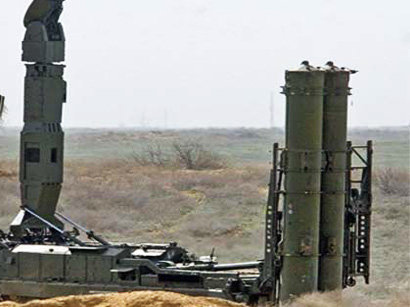
Iran air defense system

Technical and infrastructural project of a long-range air defense system Bavar-373 has been completed, the Chief of Staff of Air Defense ‘Hatamul-Anbiya’ of Iranian Armed Forces General Farzad Ismaili said, Fars news website reported on Feb.15.

Ismaili expressed hope that the long-range air defense system Bavar-373 will be improved and put into operation by the end of the country’s fifth five-year plan (until March 2015).

The fifth five-year plan envisages an increase in the quantity and improvement in quality of the country’s air defense systems.

Ismaili believes that the problems of the Bavar-373 system have been eliminated and currently works for the production of the system are at the last stage.

Bavar-373 air defense system is stronger than Russia’s S-300 missile defense system, according to Ismaili.

Off Topic: Hamas: NATO force in West Bank will be treated as occupier

February 15, 2014

Hamas: NATO force in West Bank will be treated as occupier, Ynetnews, February 15,2014

Gaza rulers calls on PA President Abbas to exit peace talks with Israel: ‘No one has authorized him to speak for the people.’

Hamas has vowed to treat the deployment of any international force in Palestinian territory under the auspices of a peace accord with Israel as an occupying force, the organization’s spokesman said on Friday, Palestinian news agency Ma’an reported.

Speaking at a rally in the Gaza Strip organized by Palestinian factions opposed to the talks with Israel, Sami Abu Zuhri said Hamas would work to “defeat this initiative.”

“No Arab country will agree to the desecration of one centimeter of its lands,” he said.

The plan proposed by US Secretary of State John Kerry only serves to “terminate the question of Palestine and what is left of Palestinian rights and principles,” Abu Zuhri said.

Off Topic: The cost of the ‘peace process’

February 15, 2014

The cost of the ‘peace process,’  Israel Hayom, Elliot Abrams, February 14, 2014

[D]o we care, or are we indifferent to what goes on within the borders Kerry is trying to negotiate? Has the U.S. reverted to the position we had in the 1990s, when Arafat visited the White House 13 times and our policy goal was to hand him a state, no questions asked? How can it possibly contribute to the building of a decent, peaceful, democratic Palestine for the U.S. to appear — or worse yet, to be — indifferent to the actual conduct of the Palestinian Authority?

Elliot Abrams is a senior fellow for Middle East Studies at the Council on Foreign Relations. This piece is reprinted with permission and can be found on Abrams’ blog “Pressure Points” here.

The goal of Secretary of State John Kerry’s energetic diplomacy with the Israelis and Palestinians is the two-state solution, which means the establishment of an independent, sovereign Palestine living at peace with its neighbor Israel.

Or is it? What’s missing in that sentence is the word “democratic.” Do we care? Once upon a time, the United States worked hard to give Yasser Arafat, a terrorist and thief, a state to rule. That policy was changed in the George W. Bush administration, when we began to care not only about the borders of the new Palestine but about what was inside those borders. Bush said he would not support establishment of a Palestinian state if that state would just be another dictatorship, another kleptocracy, another home for terrorism.

Today we appear to be back in the Arafat period — without Arafat to be sure, but with the same lack of concern about events in the real Palestine.

Consider the new January 2014 report of the Palestinian Independent Commission for Human Rights. Some highlights:

“Cases of torture and ill treatment during detention continued. Furthermore, it increased in the centers of the Preventive Security Agency in the West Bank. ICHR received 56 complaints of torture and ill treatment, 36 of which occurred in the Gaza Strip and 19 in the West Bank.

“ICHR received complaints of violations of the right to appropriate legal procedures during detention in breach of guarantees to a fair trial, which are enshrined in the basic law.

“Some official security and civil authorities still refrain from implementing courts’ decisions or procrastinate their implementation. ICHR received eight complaints in this regard in addition to 16 other previous decisions. Furthermore, one of the inmates remained in prison despite completing his sentence.

“ICHR received complaints concerning expropriation of citizens’ property by security agencies in the West Bank without judicial order.

“ICHR received a number of complaints of violations concerning the right to freedom of expression, press, peaceful assembly and academic freedoms. It also received a number of complaints concerning assaults on persons, public and private properties.”

There are plenty of other reports. The Committee to Protect Journalists noted: “Despite the immense differences between the Israeli government, Fatah and Hamas, they shared a common trait in 2013: a consistent and troublesome record of silencing journalists who reported dissenting perspective. … Local human rights organizations reported that the Palestinian Authority in the West Bank also obstructed coverage of protests, especially those in support of the Muslim Brotherhood in Egypt.”

Human Rights Watch, which is notably unsympathetic to Israel, reported that “in the West Bank, Palestinian Authority security services beat peaceful demonstrators, and arbitrarily detained and harassed scores of journalists. Credible allegations of torture committed by the PA’s security services persisted.”

One could go on. It is widely believed that corruption in the Palestinian Authority has exploded since the departure of former prime minister Salam Fayyad, who fought it. Reports on PA corruption are numerous. Just one example is theSunday Times of London storyin October reporting that “billions of euros in European aid to the Palestinians may have been misspent, squandered or lost to corruption, according to a damning report by the European Court of Auditors, the Luxembourg-based watchdog.”

So, the question again arises: do we care, or are we indifferent to what goes on within the borders Kerry is trying to negotiate? Has the U.S. reverted to the position we had in the 1990s, when Arafat visited the White House 13 times and our policy goal was to hand him a state, no questions asked? How can it possibly contribute to the building of a decent, peaceful, democratic Palestine for the U.S. to appear — or worse yet, to be — indifferent to the actual conduct of the Palestinian Authority?

Kerry and other U.S. officials have spoken often about the negotiations and their goals, but I do not recall any honest discussion of the problem of growing corruption and lawlessness in the Palestinian Authority. State Department spokesmen issue statement after statement about Israeli settlement activity, seemingly whenever one brick is laid atop another, yet ignore these serious issues. What kind of Palestine is it that the United States is seeking to create?

From “Pressure Points” by Elliot Abrams. Reprinted with permission from the Council on Foreign Relations.