Archive for February 14, 2014

Ayatollah Strangelove and drone porn

February 14, 2014

Ayatollah Strangelove and drone porn – The Times of Israel Ops&Blogs.

February 13, 2014, 7:01 pm

By Noah Efron

You try to be phlegmatic about these things, because if your nerve fails in the face of every fearsome provocation, you end up living a life of desperate vulnerability. What’s more, if you’re not phlegmatic, you end up adopting a sort of fortress mentality, maybe convinced that the only way to survive is to arm ourselves to the teeth. Still, every so often you come across something that shatters your cool. For me, that something is this video that aired on Iranian TV last week, showing Iranian drones and missiles laying waste to Tel Aviv. (If you’re pressed for time, watch from 4:30 to 5:20, and you’ll get the gist.)

The superficial message of the video is clear enough. It warns Israel and America that if either attack Iran (against the backdrop of efforts to quash its nuclear program), retribution will be brutal and effective. Presumably, too, it is meant to reassure Iranian citizens of the same. In all this, it partakes of the Herman-Cohn, Dr.-Straneglove logic of “mutually assured destruction” (MAD), and the logic of the playground: “fuck with me, fucker, and I’ll fuck you up!” But this straightforward threat seems like so much bluster. It reminds me of a training film of the Syrian army that I once saw, showing elite commandos biting the heads off snakes. Films of toughs acting tough can have a paradoxical effect – often it seems like the brutes are trying too hard – and in any case, that is not what troubles me about the video.

There is something else at play here. The video is porn, both in its formal aspects (lousy production value, cheesy sound, crazy implausibility, aspirational virility, and slow-and-steady build to impossibly sustained climax) and in its message (power is yours, control is yours, you call the shots). The film offers the bitter thrill of porn, replacing the petite mort of coitus consummated with the grande mort of a city consumed.

And it is this that disturbs me. When heads of spy organizations, think-tank fellows and generals go on TV to reassure us about Iran, they usually insist that the men calling the shots in Iran may be radical, but they are also rational. They are forever doing the sorts of cost-benefit calculations that Western countries do, and coming to the same conclusions. That beneath the traditional robes and the radical rhetoric, Iranian leaders are Just. Like. Us.

This video raises serious doubts, though. Peddling drone porn like this on national TV suggests there’s something other than rational calculation at work in Tehran. A few months ago, Prime Minister Benjamin Netanyahu warned NBC’s Andrea Mitchell that the leaders of Iran are a “messianic, apocalyptic, radical regime” and a cult “wild in its ambitions and its aggression.” Like most leftists I dismissed these statements as unfounded hyperbole. Such immoderate criticism, I thought, caused more harm than good, damaging Israel’s credibility and destroying whatever small chance we had of indirect dialogue that might allow us to settle with the Iranians using words instead of bombs.

But this video makes me realize that Netanyahu may have been more right, and his point more important, than I gave him credit for. People who made the film, aired it, and enjoyed it, may well be wild in their ambitions and their aggression.

So this short video accomplished what hours of Netanyahu’s speeches at home and abroad failed to do. It made me to see the world, for once, as he sees it, alive with peril that rational discourse alone cannot eliminate. And allowing me to see the world through Netanyahu’s eyes; that is yet another disconcerting aspect of Iranian drone porn.

Off Topic: Hizballah calls off annual Mughniyeh memorial for fear of terrorist attacks

February 14, 2014

Off Topic: Hizballah calls off annual Mughniyeh memorial for fear of terrorist attacks – Debka.

(Supreme irony. – Artaxes)

DEBKAfile Exclusive Report February 14, 2014, 10:44 AM (IST)

The late Hizballah master-terrorist Imad Mughniyeh

The late Hizballah master-terrorist Imad Mughniyeh
 

The Lebanese Shiite Hizballah, itself a listed terrorist group, was forced Thursday, Feb. 13 to cancel its most solemn annual event in memory of fabled “special security chief” Imad Mughniyeh, over an inability to keep the event safe from terrorist attacks.
In the six years since Moughniyeh was assassinated in Damascus, Hizballah’s leader Hassan Nasrallah has traditionally eulogized these annual mass-attendance events.
No reason was offered for cancelling this year’s assembly. debkafile’s counter-terror sources report that Hizballah and its Shiite following in Lebanon live in fear of devastating suicide bombing attacks by al Qaeda and other Sunni extremists. Since last July, they have staged 10 attacks and claimed scores of lives in Beirut and other parts of Lebanon over Hizballah’s participation in the Syrian war. In a single attack last year, the bombing of the Iranian embassy, 25 people were killed.

Its Syrian expedition has left the Hizballah short of manpower for self-protection. This situation has become more acute since an intelligence tip was received disclosing that the terrorists were now gunning for Nasrallah and other top operatives. This has necessitated doubling up security on their persons.

A special counterterrorism command center has begun operating at the Iranian embassy in Beirut. Two of its members are Mustafa Badr al-Din, commander of Hizballah forces, and Wafiq Safa, head of its security apparatus.

This center was set up by a high-ranking Iranian intelligence delegation, which debkafile reported exclusively on Jan. 26, had arrived in Beirut to tackle the terrorist threats to their Lebanese proxy. It was composed of senior IRGC Al Qods Brigades operatives and high officials of Iran’s Ministry of Intelligence and Security (MOIS).

The decision to cancel the Mughniyeh memorial assembly was taken by the new counterterrorism center at the Iranian embassy for four reasons:

1.  Iranian undercover agents in Syria discovered that al Qaeda elements were plotting to hit the assembly for mass casualties.
2.  This information was confirmed Wednesday, Feb. 12, by three women captured in the Lebanese Beqaa on their way to conduct suicide bombings at the Beirut event. Under interrogation, the captives revealed that several more female suicide bombers were heading for Shiite targets across Lebanon.
3.  Hizballah is in the middle of a campaign to raise additional Shiite volunteers for the different Syrian warfronts (as we reported Feb. 10). A new wave of anti-Shiite terrorism in Lebanon would quickly derail this effort, especially in view of the hundreds of Hizballah fighters who have already laid down their lives in Syria. The organization is intent on concealing the real figure, but cannot hide all the funerals.
4. Its Iranian bosses understand that until their counter-terror defense mechanism is functioning effectively and curbing those attacks, Hizballah’s manpower resources cannot be stretched both for providing security at home and for augmenting its fighting personnel input for the Syrian war.

Saudi Arabia May Go Nuclear Because of Obama’s Iran Deal

February 14, 2014

Saudi Arabia May Go Nuclear Because of Obama’s Iran Deal – The Daily Beast.

President Obama wants an agreement with Iran to prevent a Middle Eastern nuclear arms race, but it’s pushing Saudi Arabia toward its own nuke program.

Photo by Peter MacDiarmid/Reuters
 

Last month, America’s top Iran negotiator Wendy Sherman had some bad news for ambassadors from America’s Arab allies. In a meeting with envoys from Saudi Arabia, the United Arab Emirates, and other Gulf states, Sherman said that any bargain with Iran would likely leave Tehran, the Gulf states long-time enemy, with the capacity to enrich uranium, according to U.S. officials briefed on the encounter.

Sherman regularly briefs these allies after diplomatic talks with Iran, but in recent weeks those conversations have been different. While most of America’s Middle East allies—with the exception of Israel—have publicly supported the current Iran negotiations, behind the scenes, envoys from the region have expressed grave concerns that Iran could be left with a break out capacity to make the fuel for a nuclear weapon at a time of their choosing.

And now, one of the countries in the region without a full-blown nuclear programs—Saudi Arabia—may be changing its mind. Riyadh has a long-standing interest in nuclear power. But Western and Israeli intelligence services are starting to see signs that this interest is growing more serious, and extends into nuclear enrichment. Until recently, the pursuit of nuclear enrichment—or the fuel cycle—was considered by arms control experts as a tell-tale sign of a clandestine weapons program. Nuclear fuel is sold to all members of the Nuclear Non-Proliferation Treaty, but it’s far more costly to build the infrastructure and produce it indigenously. Saudi Arabia appears to be getting more serious about going down that path.

If Saudi Arabia pursue nuclear enrichment even if there is an Iran deal, then the victory to curb atomic weapons that Obama has tried to achieve will be at least partially undone by his own diplomacy.

“They view the developments in Iran very negatively. They have money, they can buy talent, they can buy training,” said David Albright, the president of the Institute for Science and International Security and a former weapons inspector. “The Saudis are thinking through how do you create a deterrent through capability.”

Albright said in this particular case, an indigenous Saudi program is in the very early stages. In 2012, the Saudi government announced plans to build 16 commercial reactors by 2030 and signed a technology agreement with China. But Albright said he has heard concerns expressed by a European intelligence agency that Saudi Arabia in recent years has quietly been developing the engineering and scientific knowledge base to one day master the nuclear fuel cycle, or produce the fuel indigenously for the reactors it’s trying to build. He said Saudi Arabia was hiring the scientists and engineers needed to build the cascades of centrifuges needed to produce nuclear fuel. “We don’t worry about the Saudis learning to operate a reactor,” he said. “I worry that they will learn the skills needed to master the fuel cycle.”

Late last year, the BBC reported that Saudi Arabia invested heavily in the Pakistani nuclear weapons program and could easily acquire nuclear technology or even weaponry if the Iranians cross a threshold. Albright, however, said he did not think Saudi Arabia would likely try to acquire a weapon from Pakistan.

A senior administration official told The Daily Beast that the U.S. was working to avoid enrichment proliferation in the Arab world and arguing to Gulf leaders that the Iranian nuclear deal is a net benefit for their own security.

“The logical response by any of Iran’s neighbors to an agreement that severely restricted Iran’s program to the point that we have confidence they would never pursue nuclear weapons, the logical response is not to build up a protomilitary capability in enrichment, it’s rather to go in the opposite direction,” said the official.

This prospect of the Saudis beginning an enrichment program was broached earlier this month at the Munich Security Conference. Sen. Lindsey Graham asked Saudi Prince Turki al Faisal, the kingdom’s powerful former intelligence chief, if any final agreement that allowed Iran to maintain an enrichment capability would cause Saudi Arabia and other Arab states to invoke their own right to enrich uranium.

“I think we should insist on having equal rights for everybody, this is part of the (Non-Proliferation Treaty) arrangement,” the prince said.

Saudi Arabia is not alone in this regard. Last month, Turkey and Japan began re-negotiating a pact whereby Japan would provide Turkey with nuclear technology, but the deal could be modified later to give the Turks its own enrichment capability if Japan agreed.

The State Department has been working towards the longstanding U.S.-stated goal of a nuclear free Middle East. There have been three meetings of Arab countries and Israel in an attempt to set up a conference in Helsinki how to pursue a Middle East without WMD. But there’s no agreement on an agenda and no expectation the conference will commence any time soon.

Whether or not the rest of the Middle East begins to acquire nuclear weapons after Iran depends a great deal for now on the Iran negotiations. Marie Harf, the deputy spokeswoman for the State Department, acknowledged that the United States is prepared to consider allowing Iran to keep a limited enrichment program.

“We are prepared to consider a strictly limited enrichment program in the end state, but only if the Iranians address all of our concerns about their capacity to get a nuclear weapon and accept rigorous limits and transparent monitoring of the on level, scope, capacity, and stockpiles,” said Harf. “If we can reach an understanding with Iran on strict constraints, then we can contemplate an arrangement that includes a very modest amount of enrichment that eliminates Iran’s capacity to obtain a nuclear weapon in any reasonable way. If we can’t, then there will be no agreement, and we will increase even further the pressure on Iran.”

Off Topic: Hamas rejects UN human right books in schools

February 14, 2014

Hamas rejects UN human right books in schools, Ynetnews, February 14, 2014

Half a year after adding ‘Israeli resistance’ to Gaza’s public school curriculum, Hamas rejects UN text books as ‘ideologically and philosophically’ unfit for Gazans, claiming books focus too heavily on ‘peaceful’ conflict resolution.

Gaza’s Hamas authorities have blocked a UN refugee agency from introducing a book promoting human rights into local schools, saying it ignores Palestinian cultural mores and focuses too heavily on “peaceful” means of conflict resolution.

Motesem al-Minawi, spokesman for the Hamas-run Education Ministry, said Thursday the government believes the UNRWA curriculum does not match the “ideology and philosophy” of the local population.

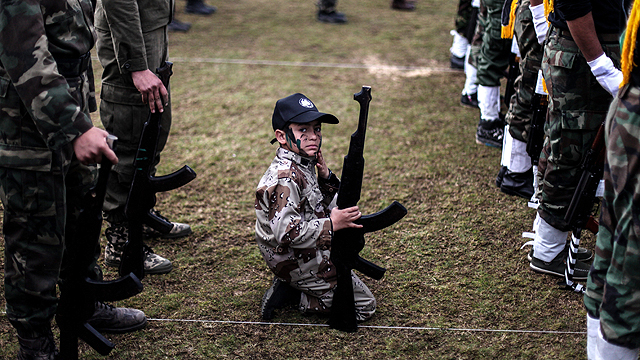
Hamas youth training campYouth in Hamas training camp. Gaza

He said the textbook, used in grades 5 through 9, did not sufficiently address Palestinian suffering and did not acknowledge the right to battle Israel. “There is a tremendous focus on the peaceful resistance as the only tool to achieve freedom and independence,” he said.

Iranian vice Speaker: No necessity to inform parliament on nuclear talks

February 14, 2014

Iranian vice Speaker: No necessity to inform parliament on nuclear talks, Trend, February 14, 2014

“The nuclear negotiations are being held under the supervision of the Supreme Leader, Ayatollah Seyyed Ali Khamenei and Iran’s key entities. . . .”

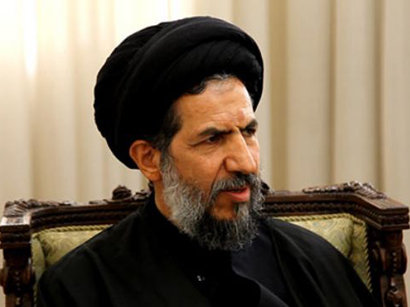
Iranian vice speaker

Informing Iranian parliament on all details of the country’s nuclear talks is not necessary, first Vice Speaker of the parliament Mohammad Hassan Aboutorabifard said, the country’s Mehr news agency reported on Feb. 13.

“The nuclear negotiations are being held under the supervision of the Supreme Leader, Ayatollah Seyyed Ali Khamenei and Iran’s key entities,” he added.

It is while some hardliner MPs in the parliament accuse the president Hassan Rouhani`s administration of hiding details of the nuclear deal, saying that the deal is beneficial to the U.S. and is directed against Iran’s interests.

On Jan. 21, some 150 Iranian MPs have wrote a letter to Speaker Ali Larijani urging him to take the necessary steps to provide details of the nuclear deal to all parliamentary representatives.

Iran and the P5+1 reached a nuclear agreement on Nov. 24. Iran has agreed to curb some of its nuclear activities for six months in return for sanctions relief. Both Iran and the P5+1 group have agreed to implement the agreement starting from Jan. 20.

Under the agreement, six major powers agreed to give Iran access to $4.2 billion in revenues blocked overseas if it carries out the deal, which offers sanctions relief in exchange for steps to curb the Iranian nuclear program.

The U.S. and its Western allies suspect Iran of developing a nuclear weapon – something that Iran denies. The Islamic Republic has on numerous occasions stated that it does not seek to develop nuclear weapons, using nuclear energy for medical researches instead.

By Umid Niayesh, Saeed Isayev

Off Topic: The obstinancy of Abbas

February 14, 2014

The obstinancy of Abbas, Israel Hayom, February 14, 2014

(Might Abbas be playing an “obstinacy card” to garner Israeli concessions he could not get were it believed that he would sign, only to “cave” when he gets them and sign?  Might the difficulties Hamas and Fatah are having reconciling with each other be a factor?– DM)

To most people, it is clear that Abbas will never sign a final-status peace deal with Israel • Since returning to office in 2009, Prime Minister Benjamin Netanyahu has worked to undo the damage caused by his predecessors.
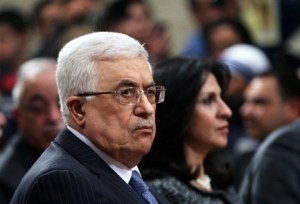
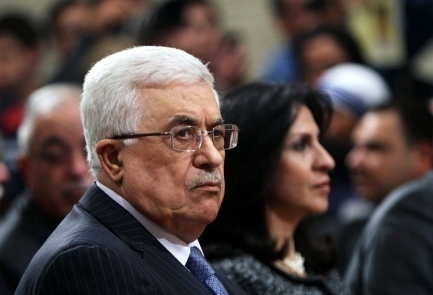
PA AbbasPalestinian Authority President Mahmoud Abbas | Photo credit: Reuters

The logical assessment that is shared by Prime Minister Benjamin Netanyahu, most of the ministers in his government, and the experts and technocrats busy in daily diplomatic and political activity, is that the Palestinian Authority President Mahmoud Abbas will never sign a final-status deal with Israel. This is the bottom line that is clear to most people.

Abbas was elected to his post eight years ago. Throughout that time, however, he has failed to win legitimacy from half the Palestinian population. Even those who have supported him in the past — as well as his opponent, Hamas — are asking him, “Where’s the money?” This question has come to the fore because of the bureaucracy and corruption that has strangled the PA.

Abbas has also lost believers in the Israeli political, diplomatic, and military establishments. They hear the arguments that there is a need to quickly proceed toward an agreement since Abbas is preferable to any other option, be it a Hamas member or a Salafist warlord. They hear these arguments, and they reject it out of hand. They believe these claims are not valid since there is no point in making an agreement or handing over territory to someone who is expected to lose it sooner or later to an Iranian-sponsored organization.

If anyone out there believes that Abbas is a realistic partner (following in the footsteps of Yasser Arafat), they should listen to former Prime Minister Ehud Olmert, who came out last week and explained what happened behind closed doors in the negotiating room. In an interview with Channel 2, Olmert said that in the 36 meetings he held with Abbas, everything was agreed The only thing that was missing was a signature.

Olmert gave up the Jordan Valley, divided Jerusalem, handed over control of the Temple Mount, returned to the 1967 lines, retreated to the settlement blocs, made territorial swaps, agreed in principle to the right of return, accepted the symbolic resettlement of 5,000 refugees, and invited Abbas to fly with him to the U.N. General Assembly, where they would jointly declare the establishment of an independent Palestinian state. He even held out a pen for Abbas to take so that he could initial the deal.

How surprising — Abbas refused. Today, there is widespread consensus. Since Abbas didn’t sign then, he won’t sign ever.

Even in the current negotiations, Abbas is confirming what everyone already knows, this at a time when he is once again presenting more and more unacceptable demands. The 11 visits that U.S. Secretary of State John Kerry has paid to the region have not had one iota of an impact on Abbas’ obstructionism. The Palestinian Authority chairman is not giving up the right of return for refugees. He refuses to recognize Israel as the nation-state of the Jewish people. He is also not giving up on the partitioning of Jerusalem.

On the issue of refugees, Abbas claims that this is an individual right. While he may have given up his right to return to his home in Safed, he does not have the authority to renounce the right of 5 million refugees and their descendants throughout the world to do the same.

“This matter will be brought before the Palestinians for a referendum,” the Palestinians say.

As for Jerusalem, once again Abbas says that he does not have the authority to make concessions, since this is a decision that it is to be made by the Arab League; Jordan, due to its historical ties; Saudi Arabia, due to its status as the custodian of Islamic holy places; and Morocco, by dint of its status as the chairman of the Al-Quds Committee of the Organization of Islamic States. As for security, Abbas wants to place the responsibility for this issue in the hands of the Americans and international forces.

In order to continue the dialogue and avoid a complete breakdown which neither side wants, a decision has been made by Netanyahu to allow the talks to continue until the end of this year. As such, Kerry has been hard at work for weeks formulating a draft paper that has yet to be shown to the two sides. The give-and-take over the language of the paper has become an individual negotiation between Kerry and both sides. There’s the U.S. and the PA, and the U.S. and Israel.

The paper seeks to attain a modest goal — one where neither side is pleased by it, but where both sides are not completely disappointed by it.

On the surface, it appears to be a document with a large number of holes. Its contents will be revealed sometime during March. Clearly, each side will offer its own set of reservations and objections to certain aspects of the paper. Nonetheless, the document will be binding so as to enable the continuation of talks held under the auspices of understandings that are still in effect (like the Palestinian pledge to refrain from unilaterally seeking recognition of a state or initiating anti-Israel measures with international institutions).

Before the wording of the American document has been finalized, it is clear to both sides what it will include — two states along the ’67 lines more or less with settlement blocs, a recognition of the changes that have taken place on the ground since the Six-Day War (a statement that will rule out the possibility of an argument over territories near the Tel Aviv-Jerusalem highway, like Latrun, since it is clear there won’t be a return to the ’67 lines).

The issue of security will be extensively dealt with in the document, including the clause that mandates an Israeli presence in the Jordan Valley for a certain period of time without the presence of any foreign forces. The document will also include recognition of Israel as the nation-state of the Jewish people without a return of Palestinian refugees to Israel.

Leaving a legacy

The news media constantly talks about the legacies which leaders seek to leave behind once they are out of office. This discussion is brought up when discussing Olmert’s “near agreement” or Ariel Sharon’s disengagement from the Gaza Strip. Netanyahu rejects the customary approach of the left and the Israeli media who believe that without an agreement and concessions on his resume, he doesn’t have a legacy of which to speak.

True, we are only at the end of the first year of Netanyahu’s third term as prime minister. Even now, though, one can argue that Netanyahu will be remembered for three things — being “Mr. Iran,” “the lord of the free-market economy,” and “the defender and protector of Israel’s core strength.”

Netanyahu insists on recognition of Israel as the Jewish state, and he has managed to enlist support on this matter from U.S. President Barack Obama. The prime minister is charting a new path, staking his territory now as the man who saved the state’s Jewish character through deeds.

As finance minister, it was Netanyahu who slashed child allowances, a move that has proved to be a key factor in the reduction of birth rates among Israeli Arabs. It was Netanyahu who initiated the construction of the fence along the borders with Egypt, the Golan Heights, and the east in order to prevent infiltrators from Africa from working in Israel. One can say that the fence ringing the country has Netanyahu’s name all over it.

There is also Netanyahu’s statement in the famous Bar-Ilan speech of 2009, in which he declared that a two-state solution was necessary to preserve the Jewish character of the state. All of these decisions attest to a clear line with precisely defined goals guided by a far-reaching, historical vision, an adherence to an objective, and an effective execution.

More than anything else, Netanyahu will be remembered for standing up to Iran and instigating the international sanctions regime that led Tehran to blink first in the negotiations with the West. He is now trying to influence the final outcome of the sanctions, which he hopes will be the cessation of all production of centrifuges by the Iranians. Aside from this, the widespread opinion holds that as long as the threat from Iran still exists, the threat against Iran — from an Israeli attack — also exists.

In 2009, Netanyahu returned to the prime minister’s office as the repair man charged with undoing the damage created by two of his predecessors — Ehud Olmert and Ehud Barak — who set a new standard of Israeli concessions. A few months ago, a senior American official told a Likud minister that in order to comprehend just how major a change Netanyahu initiated, one needs to understand what happened between Netanyahu and Obama during their first meeting in the White House.

The president was adamant in insisting that the basis for dialogue would be an Israeli retreat to the 1967 lines, “and not an inch less.” There was talk about a complete freeze on settlement construction, including in Jerusalem. There would be no Israeli presence in the Jordan Valley, and the talks would delve into the future of Jerusalem as well as recognition in principle of a right of return. As things stand today, the situation is completely different on all fronts.

Netanyahu is once again expected to meet with Obama in early March in Washington. The issue that Obama wants most to discuss is an agreement with the Palestinians, while Netanyahu will be more eager to discuss neutralizing the Iranian threat. Ron Dermer, Netanyahu’s closest aide and the man who currently occupies the post of Israeli ambassador to Washington, will be by the premier’s side. From the outside, Netanyahu’s supporters talk about his isolation and the fact that he has no one with whom to consult. Netanyahu, for his part, is making do with what he has, and there have been no leaks whatsoever.

 Labor is torn

The Labor Party’s Knesset members met in the parliament this past Monday as they do every week. After the public declarations about the day’s major news topics (Hadassah, the haredi enlistment bill), the journalists left the room. That was when the faction members began debating the diplomatic issue. The big question was whether the party should present its own peace plan or simply continue to stand on the side and permit the government to exhaust the negotiating process? MK Omer Bar-Lev prepared a plan, and he wants his party to take a clear stand immediately.

The Labor Party’s position remains adhering to the Clinton parameters. According to this plan, Jerusalem would be divided. Two faction members from Jerusalem, MKs Hilik Bar and Erel Margalit, oppose dividing the city. Like many residents of the capital, they remember how Palestinian gunmen in Bethlehem fired on homes in Gilo during the second intifada. They know that the proximity of Palestinian areas to Jewish neighborhoods and talk of “Jewish neighborhoods to Israel and Arab neighborhoods to the Palestinians” won’t stand the test of reality.

The man who will make a final decision on this matter is the party chairman, Isaac Herzog. The Labor boss knows that any decision on the matter could obligate him one way or the other on the question of whether to enter Netanyahu’s coalition if major events occur.

Meanwhile, Foreign Minister Avigdor Lieberman is enjoying his newfound status as the responsible adult and the darling of the Americans. He was in Paris this week, where he met French Foreign Minister Laurent Fabius. Lieberman did let us in some inside real estate information, telling us: “I don’t know if we’re close to a peace agreement, but I’m renovating my house in Nokdim and adding another room.”

With regards to the negotiations, Lieberman said the Americans and Europeans were busy in trying to persuade the Palestinians to concede, not Israel.

“We’re doing everything that is in our control,” the foreign minister said. “The State of Israel has made every effort and expressed a willingness to go far [in order to achieve peace]. The ball is now in the other side’s court. Everyone is aware of this, including the Americans and the Europeans. I hope that they will be able to handle the challenge on the other side.”

Dagan and Iran

In November 2012, Ilana Dayan, the host of Channel 2’s Uvda, a television newsmagazine, aired a segment on a secret defense discussion that took place in 2010 following a meeting of the Forum of Seven ministers. According to Dayan, Meir Dagan, who at the time was head of Mossad, and then-IDF chief Gabi Ashkenazi arrived in Jerusalem for a discussion that was supposed to touch on something other than the Iranian threat.

The story quoted a number of “sources close to the two men” who said that following the meeting, as they “were about to open the door to leave,” Netanyahu blurted out an order that left them stunned. The prime minister ordered them to put the defense establishment on what is known as “Pay Plus” — code for the military to prepare an attack.

Dagan and Ashkenazi thought this was a hasty move. They expressed their opposition.

“This isn’t something that you do if you are not sure that you want to do it,” the chief of staff said. Ashkenazi associates say that he feared placing the army on “Pay Plus” without immediately executing an attack would create “facts on the ground” that could lead to war.

“This accordion makes the sound of music when you play with it,” he said.

According to people who were present at the time, Dagan was even harsher in his opposition.

“You all are about to make an illegal decision to embark on war,” he told Netanyahu and Defense Minister Barak. “Only the cabinet is authorized to make such a decision.”

“To put it simply, the prime minister and the defense minister tried to steal [authorization for] a war,” Dagan would later say.

During the program, the people interviewed were careful not to repeat these statements themselves. Instead, it was Dayan who quoted them.

This past week, the former head of the Mossad delivered a lecture in Tel Aviv and dispelled all doubts. The man who according to foreign sources headed the best intelligence organization in the world said that he would speak freely since it was a private meeting. Standing in front of an audience of 150 people who in real time posted tweets and photos on Facebook, he explained how he had violated an order given to him by the prime minister and defense minister simply because it did not square with his and the chief of staff’s opinion.

“The people need to make a decision on the matter,” Dagan said even though any rational-thinking person knows this is something that needs to be discussed secretly and confidentially. Dagan added that in the modern era, Israel’s technological edge is shrinking since money can buy anything. The most important thing we have to boast of, he said, is the qualitative, human advantage.

Off Topic: Al-Qaeda-linked New Terrorists, DAESH, in Gaza Strip

February 14, 2014

Al-Qaeda-linked New Terrorists, DAESH, in Gaza Strip, Gatestone InstituteKhaled Abu Toameh, February 14, 2014

“This group is much more dangerous and radical than Hamas.” — Palestinian journalist, Gaza City

Palestinians are worried that DAESH terrorists will perpetrate atrocities against those who oppose their ideology and activities.

U.S. Secretary of State John Kerry and Palestinian President Mahmoud Abbas need to take into consideration the possibility that Palestinian unity on the pre-1967 lines would pave the way for DAESH terrorists to move into the West Bank.

It’s official: Al-Qaeda has begun operating in the Gaza Strip.

A video posted on YouTube this week showed terrorists belonging to the Al-Qaeda-affiliated Islamic State of Iraq and the Levant, known colloquially by its Arabic acronym, DAESH, announcing plans to wage jihad [holy war] against the “infidels, traitors and Crusaders.”

This is the first time that a group linked to Al-Qaeda announces its presence in the Gaza Strip.

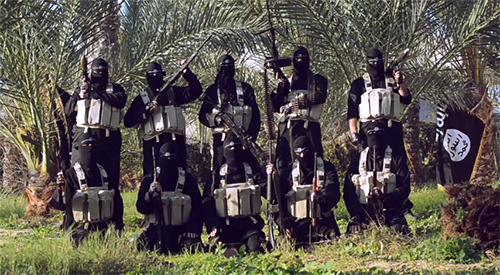
al Qaeda in GazaMembers of the Al-Qaeda-affiliated Islamic State of Iraq and the Levant [DAESH] in Gaza. (Image source: DAESH YouTube video)

The announcement is seen as a challenge to the Palestinian Islamist movement Hamas, which has been in control of the Gaza Strip since July 2007.

Palestinian Authority security officials in Ramallah expressed fear that the Al-Qaeda-affiliated group would try to establish terrorist cells also in the West Bank.

The video features 10 heavily-armed masked terrorists declaring allegiance to DAESH, whose men are responsible for most of the atrocities in Syria and Iraq over the past few years.

In the video, a spokesman for the group announces that in addition to Syria and Iraq, DAESH now has “lions and armies in the environs of Jerusalem.”

The spokesman says that the group’s goal is to restore the dignity of Muslims who have been “humiliated” by their enemies. He urges Muslims to rally behind his group and support its members in their jihad against the enemies of Islam and “Arab tyrants.”

Palestinians have reacted with panic to the emergence of the Al-Qaeda-affiliated group in the Gaza Strip.

According to reports from the Gaza Strip, Palestinians are worried that the DAESH terrorists will perpetrate atrocities against those who oppose their ideology and activities.

“This group is much more dangerous and radical than Hamas,” said a Palestinian journalist from Gaza City. “The presence of Al-Qaeda in the Gaza Strip is bad news not only for Hamas, but for all Palestinians. Palestinians see the crimes and massacres perpetrated by Al-Qaeda in Iraq and Syria and fear that they could be repeated in the West Bank and Gaza Strip.”

Hamas leaders, for their part, have reacted with skepticism to the announcement by DAESH, describing it as another attempt to “distort” Hamas’s image and “resistance.”

Salah Bardaweel, a senior Hamas official in the Gaza Strip, said that the Gaza Strip was a “small area with no room for Al-Qaeda-affiliated groups.”

Hamas has not hesitated in the past to confront tiny jihadi groups whose members had openly challenged its rule. Like DAESH, these groups believe that Hamas is too “moderate” and is no longer committed to the “armed struggle” against Israel.

In one of the deadliest confrontations, Hamas security forces killed and arrested a number of jihadi terrorists who found shelter in a mosque in the town of Rafah in the Gaza Strip. At least 28 jihadi terrorists were killed and 120 wounded during the 2009 raid on members of a group called Jund Allah [Soldiers of God].

It now remains to be seen whether Hamas will be able to crush the new Al-Qaeda-affiliated group, whose members are also operating in the neighboring Sinai Peninsula.

Those who are talking about “reuniting” the Gaza Strip and the West Bank can no longer ignore the presence of the Al-Qaeda terrorists on the streets of the Gaza Strip.

Palestinian Authority President Mahmoud Abbas continues to talk about the need for Palestinian unity to pave the way for the establishment of an independent Palestinian state in the West Bank, Gaza Strip and east Jerusalem. Last week, he even dispatched a senior Fatah delegation to the Gaza Strip to discuss ways of ending the dispute between his party and Hamas.

Now that Al-Qaeda has begun operating in the Gaza Strip, Palestinian Authority President Mahmoud Abbas needs to consider the possibility that Palestinian unity would pave the way for the DAESH terrorists to move into the West Bank – an outcome U.S. Secretary of State John Kerry and his team need to take into consideration when they talk about the establishment of an independent Palestinian state in the West Bank, Gaza Strip and east Jerusalem on the pre-1967 lines.