Archive for February 13, 2014

MP: Some 300,000 Syrian citizens underwent military training with Iran’s help

February 13, 2014

MP: Some 300 000 Syrian citizens underwent military training with Iran’s help, Trend, February 14, 2014

(What are they likely to do where, if and when they finish in Syria? — DM)

“Iran’s efforts on training Syrian citizens and Hezbollah’s readiness to launch missiles at Israel made the U.S. policy in Syria to be unsuccessful. . . .”

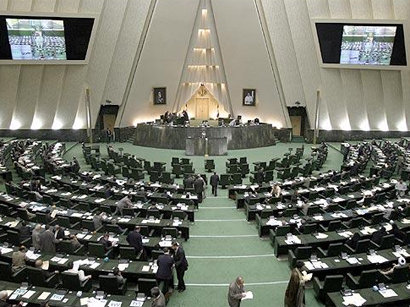
iranian_parliament_251013

Iran has trained some 150 000 Syrian citizens in Iran, and another 150 000 in Syria itself, Iranian MP Seyyed Mahmoud Nabavian said, Fars news agency reported on Feb. 12.

Nabavian said all of the mentioned Syrian citizens underwent military training, while speaking at the Islamic Association of Independent Students meeting in Iranian eastern city of Mashhad.

Nabavian went on to note that Iran sent some 50 000 Lebanese militants to Syria.

Syria has been gripped by deadly unrest since March 2011, with the UN High Commissioner for Refugees putting the number of Syrian refugees at two million.

The opposing forces in Syria claim that Iranian military forces are fighting against them, while Iran dismisses the claims, saying that Iran only has advisors in Syria, to transfer its military experience to the Syrian army.

Iran is a close ally of the Syrian government and it always shows its support for the regime of Syrian President Bashar al Assad.

Further speaking, Nabavian said that Hezbollah announced it having 80 000 missiles that can be targeted towards Israel.

“Iran’s efforts on training Syrian citizens and Hezbollah’s readiness to launch missiles at Israel made the U.S. policy in Syria to be unsuccessful,” he said.

Iranian officials have previously denied allegations that Hezbollah is a terrorist group.

During his visit to Lebanon in January 2014, Iran’s foreign minister Mohammad Javad Zarif put a wreath at the grave of assassinated Hezbollah military commander Imad Mughniyeh.

The United States later condemned the move, as spokeswoman for the White House National Security Council Caitlin Hayden said that Moughniyeh had been responsible for “heinous acts of terrorism that killed hundreds of innocent people, including Americans,” according to Reuters.

The condemnation came as the United States works with world powers to ensure Iran abides by an interim deal aimed at containing Iran’s nuclear program.

On Jan. 30, Iranian foreign ministry spokeswoman Marzieh Afkham criticized Obama for labeling Lebanon’s resistance movement Hezbollah as a terrorist group while the White House has been turning a blind eye to the crimes of foreign-backed Takfiri militants in the region.

By Umid Niayesh, Saeed Isayev

A Black Hole in the Islamic Space

February 13, 2014

A Black Hole in the Islamic Space, Israel Defense, February 13, 2014

(More light, i.e. information, emerges from Iran than from North Korea. Yet the West in general seems unwilling to use it. — DM)

Like a black hole that swallows everything around it, Iran aspires to swallow the countries surrounding it and reestablish the Persian Empire “from India even unto Ethiopia”. How will the world in general, and Israel in particular, respond?

A black hole, in the physical sense, is a tiny star with a tremendous mass: the diameter of a black hole whose mass is 3 times as high as the mass of the sun is less than 10 kilometers. This celestial body contains only neutrons – the sub-atomic particles which, along together with protons, make build up the nuclei of the atoms of all chemical elements. Owing to the tremendous density of the neutrons in it, a gravity field is created around the black hole which is so powerful, that no element, including light, can break loose escape from it. Consequently, the black hole itself does not emit light – hence its name. Moreover, any element approaching the black hole beyond a certain distance, which the theory of general relativity defines as the “event horizon”, is swallowed by it and crushed into neutrons.

The black hole is the allegory for Iran: although territorially it is by no means tiny, it aspires to draw into itself everything within the “event horizon” surrounding it in the Islamic world – in the Middle East and Central Asia.

The Persian Empire

It is a well-known fact that even under the reign of the Shah Iran aspired for the status of a regional superpower, and made no attempt to conceal its aspirations. However, since the Khomeini revolution of 1979, additional tiers have been built – Iran has become the flag bearer of Shia Islam worldwide, and has positioned itself as the sworn enemy of the USA and the West. It started hammering stakes at any site of Shiite presence: in the early 1980s, while IDF elements were deployed in Lebanon, it began developing Hezbollah as a militia which, after the pullout of the IDF, evolved into the dominating force in that country. At the same time, Iran embraced the Assad regime in Syria, with one contributing factor being the affiliation of the Assad family with the Alawi sect, which is closely associated with Shia Islam. The Iranian regime also annexed Iraq into its camp. Following the pull-out of the US troops from Iraq, a pro-Iranian government, supported by the Shiite majority (about 35%), was established in Iraq.

Apparently, that is not enough for the regime in Tehran, and it covets the natural treasures of the Arabian Peninsula as well. In any case, Iran has recently embarked on a “smile offensive” toward the Gulf region, by dispatching Minister of Foreign Affairs Mohammad Zarif, in early December 2013, on a visit of Kuwait, Oman and Qatar. Zarif expressed his desire to visit Saudi Arabia as well, very soon. The visit was intended to appease Saudi Arabia and the Gulf emirates, which feel betrayed pursuant to the nuclear agreement signed in Geneva. They are concerned about the tightening of relations between the USA and the West and Iran at their expense. They also fear that, as a result, the Shiite minorities within their own populations will gather strength. Bahrain, in particular, is apprehensive about the new situation, in view of the Shia terrorist activity within its boundaries which, according to foreign sources, is supported by the Iranian Revolutionary Guards.

In this context, Dr. Mordechai Kedar, in an article published in the newspaper Makor Rishon weekly  (December 20, 2013), addressed a meeting held a few years ago in Tehran between a Kuwaiti parliamentary delegation and Rouhani, who at that time was the Chairman of the Foreign Affairs Committee of the Iranian Majlis (parliament). Rouhani made it clear to the Kuwaiti delegation, rather bluntly, that in his country’s opinion, the entire western coast of the Persian Gulf – from Kuwait in the north to Oman in the south, was Iranian sovereign territory that Iran will dominate when the time comes.

Apparently, Iran intends to dominate even Afghanistan, her eastern neighbor. In a meeting in Tehran between Hamid Karzai, the President of Afghanistan, and Iranian President Rouhani, both agreed to sign a friendship agreement to enhance “regional security” opposite the Americans’ efforts to persuade the President of Afghanistan to sign a security pact with Washington.

However, the numerous natural treasures of Afghanistan, which are yet to be exploited, are also highly important. According to geological surveys, Afghanistan has oil and gas reserves as well as deposits of various metals and minerals. Iran clearly covets lusts for these resources.

Back in 2006, Karzai rejected any attempt by Iran to intervene in Afghanistan. Today, however, in view of the fact that the US armed forces will finally pull out of this country in about a year’s time, and his sense that the USA is about to forsake him, he has no choice but to yield to the dictates of Tehran. For this reason, Karzai will have to reject the attempts by Washington to reach an agreement that would allow American military bases to continue to operate in his country.

Dr. Kedar explained in his article why Tehran wishes to prevent Afghanistan from allowing foreign troops to remain on her soil. Firstly, Iran wishes to demonstrate that it is the “landlord” in central Asia and in the Islamic world. In Iran’s view, driving the USA out of the region will be perpetuated as a victory of Shia Islam over the infidels, including Sunni Islam led by Saudi Arabia. The other reason, according to Dr. Kedar is that US bases in Afghanistan will be used by American intelligence for monitoring communication in Iran and operating agents inside Iran, especially opposite the Iranian nuclear program.

Thus far, terrorism has served as a primary instrument employed by the regime in Tehran for the purpose of promoting its objectives, either directly through the activists of Iran’s Revolutionary Guards or through members of Hezbollah, or by providing support, in the form of financing and arms shipments, to Palestinian terrorist organizations. The terrorist activities of Iran and Hezbollah spread throughout the world: to Asia and the countries of the Middle East in particular, but also to Europe, Africa and America (particularly Latin America). Admittedly, these terrorist activities focused primarily on such Israeli objectives as embassies or tourist groups (for example, the terrorist attack in Burgas, Bulgaria, in which 6 Israelis were murdered), but were also aimed at other targets, such as the attempt uncovered in 2011 to assassinate the ambassador of Saudi Arabia to the USA. At the same time, it may be assumed that pursuant to the Geneva agreement, Iran will moderate, for the time being, its own terrorist activities and those of its proxies.

But the future crown jewel of the Iranian regime is the establishment of a pretentious technological infrastructure, with the emphasis placed on the nuclear program and the space program. The world has not been convinced yet that these programs are intended “for peaceful purposes”, as Tehran proclaimed. The Geneva agreement may slow down Iran’s nuclear weapon program, but it is reasonable to assume that once Iran’s economy has recovered, it will revert to its evil ways and speed up its military nuclear program.

Presumably, as a result of the feebleness of the West, as reflected in the Geneva agreement, Iran’s appetite for dominating its neighbors will increase. While initially it will adhere to the “diplomacy of smiles”, as its self confidence increases, it will prefer to use threats, especially if it came to possess nuclear weapons, and probably even intensify its terrorist activities. Another country located close to Iran’s “event horizon” is Pakistan, whose population also includes a sizable Shiite minority. Unlike Iran, however, Pakistan already possesses a nuclear weapon arsenal. Additionally, even some African countries could become the objectives of the spreading of Shia Islam.

If the world fails to stop Iran, then in a few years’ time it will expand further and further, and we might, heaven forbid, once again witness a Persian Empire extending “from India even into Ethiopia” (Esther 1, 1), as in the days of king Ahasuerus (Xerxes).

How Will the World Respond?

Presumably, Washington will stand aside, making no attempt to stop the potential expansion of Iran in the future. This will be the outcome of President Obama’s “active passivity” policy, which advocates courses of action that avoid the use of force for the resolution of conflicts, even if the effectiveness of such courses of action is doubtful. This has been pointed out recently by Robert Gates, former US Secretary of Defense in the George W. Bush and Obama administrations, in his new and fascinating book “Duty” – which does not compliment Obama. Still in the context of the conduct of the Obama administration, Dr. Kedar wrote in his article that Chuck Hagel, the current US Secretary of Defense, prefers to accept an agreement where Afghanistan has fallen into Iran’s hands, provided no more US servicemen return home in coffins.

Why has Obama courted Iran recently? It seems that even more than his willingness to lift the sanctions that had weighed heavily on Iran’s economy he wanted to open the Iranian market to the American industry, thereby helping the growth of the US economy. The same applies to the European countries: when they signed the Geneva agreement, they envisioned themselves standing, together with the USA, in line to enter the Iranian market.

On the other hand, the strengthening of Iran and its potential expansion through the Asian territories could challenge Russia and China, which have thus far provided Iran with political support and helped it economically. They would definitely be damaged if the scenario outlined above materialized. How will they respond?

Finally, the realization of this scenario will undoubtedly constitute an existential threat as far as the State of Israel is concerned, and then Israel would be compelled to respond using the full extent of its strength.

By Lt. Col. (Res.) Dr. Rafael Ofek, . . . an expert in the physics and technology of nuclear power. He had served in the Israeli intelligence community as a senior researcher and analyst.

Off Topic – EU states’ choice: Escape or collapse

February 13, 2014

EU states’ choice: Escape or collapse – Israel Opinion, Ynetnews.

Op-ed: The European Union’s future is migrating away from it, while it is being flooded by unskilled Muslim immigrants. The local population is aging rapidly, and there is no young generation left to support it.

Published: 02.13.14, 00:15 / Israel Opinion

The fat giant called the “European Union” – a giant led by government workers in a mixture of languages, burdened with bureaucracy, regulations, forms and mediocrity – is destroying the European continent right before our eyes. This is a historic process, which the EU members must diagnose as soon as possible.

When the EU was established, they didn’t take into consideration that it would encourage permissive norms in the EU’s southern countries, for example the collapse of the family institution and the number of children per mother. The number of children per mother in Spain fell from four to 1.4, in the Czech Republic – to 1.29, in Poland – to 1.32, and in Greece and Italy – to 1.4 today, so much that there is no new generation to support the national economies.

As a result, the southern countries – Greece, Spain, Portugal and Cyprus, but also other countries like Ireland – are incapable of settling their debts, and their young resident immigrate to the northern EU, as the EU allows residence in all of its parts. This is a real migration of nations. The southern countries are turning into senior citizens’ homes, while their future immigrates northward or outside the EU. In 2012, more than 100,000 people, mostly young, emigrated from Ireland to Australia or to New Zealand, and the same happened in Portugal.

And so the northern countries are taking control of their southern sisters, acquiring their future minds (which are employed in Holland or Germany in relief works), and in return are paying them pennies in “rescue fee,” mainly Germany.

Germany is increasingly being perceived among EU countries as an all-devouring giant, as it needs 200,000 new immigrants every year to maintain its industrialization level, thereby diluting all the others. In the southern countries those who don’t emigrate finds it difficult to work too, with a 27% unemployment level in Spain and Portugal, 13.5% in Ireland or 12% in Italy and 11% in France. The even worse figure is that at the ages of 18 to 25 the figures are double in every country. This means restlessness on the streets, with a potential for a social flare-up.

This is where the destruction processes in the Islamic countries around the EU come into play, mainly following the wretched Arab Spring. Millions of Muslim immigrants are entering the EU illegally through the southern countries, which have neither the power nor the ability to curb this migration of nations. Some 450,00 Muslim immigrants enter Spain every year, and as many as 580,000 Spaniards emigrate from the country every year, and these are destructive processes.

Because the borders in the EU are open, the moment illegal immigrants come in, most of them keep going northward, where they want to live, and most of them become a burden on the shoulders of the countries’ welfare institutions, until even the rich countries among them will soon find it difficult to deal with the large waves of immigrants. That is, for example, the apparent situation in Denmark and Britain.

In other words, the EU’s future is migrating from it, and unskilled immigrants are flooding it. Moreover, the local population is aging rapidly, and the countries will find it difficult to support this population too, as there is no young generation to support the elderly. All this is taking place in a climate of cumbersome bureaucracy and interest rate levels and economic policies which are dictated from above in an arbitrary manner to the different countries, like a Procrustean bed. The euro currency, for example, has turned out to be a disaster for many countries within the EU.

In addition, the EU’s collective leadership is busy preserving itself and finding a wide common denominator, and this is a classic recipe for mediocrity, while pushing the innovation and entrepreneurship aside. Therefore, each country will be doing the right thing by escaping this “union” now, before the collapse. Those which will fail to do it now, and will perhaps still manage to save themselves, will be very sorry later on.

Off Topic: Laser War

February 13, 2014

Off Topic: Laser War – The Washington Free Beacon.

(Definitely no joke. Really cool!. – Artaxes)

Israel unveils laser defense system to shoot down short-range rockets

An Israeli soldier is seen next to an Iron Dome rocket interceptor battery / AP

An Israeli soldier is seen next to an Iron Dome rocket interceptor battery / AP

BY:
February 13, 2014 9:59 am

JERUSALEM—Israel has unveiled a laser defense system that it says will be able to shoot down rockets and artillery shells with a high-energy beam.

The system, known as Iron Beam, was shown yesterday for the first time at the annual Singapore Air Show. The Israeli defense company that developed Iron Beam, Rafael, said it would become operational next year.

If so, it will be the first operational laser weapon in the world. Iron Beam is designed to deal with short-range threats such as rockets, mortar and artillery shells, and drones coming from Hamas in Gaza or Hezbollah in Lebanon.

Its maximal interception range is 4.5 miles, too short a distance for other systems to be effective. It would vital to the security of towns and kibbutz settlements along the border that lie within that range. American funding was involved in development of the system.

So difficult has the technology proven to harness that many in the military and defense industries wrote off lasers as impractical. However, both countries have continued working on weaponizing lasers and have apparently made significant advances.

One problem for Israel has been to miniaturize the system and make it easily transportable. Rafael said that Iron Beam can be mounted on a single truck operating with another truck carrying the radar equipment. According to one report, the beam would “superheat” the warhead of incoming shells, detonating them in flight.

The U.S. Navy has announced that a laser system will be installed this year on a transport vessel, USS Ponce, for extended testing. Iron Beam, a land-based system, has already been tested successfully, according to Rafael.

A spokesman for the U.S. Naval Sea Systems Command, Chris Johnson, said that if the Navy moves forward on the project “the first operational weapons could enter the fleet between 2017 and 2021.”

Rafael also developed the Iron Dome system for intercepting rockets up to 50 miles at present, but this range may be lengthened. The system, which became operational three years ago, has proven highly effective in blocking rockets fired by Hamas and other Palestinian militants from Gaza but it could not intercept short-range rockets fired at kibbutzim on the border. That would be the task of Iron Beam.

Another advantage of Iron Beam is that each laser blast costs only several hundred dollars while the Iron Dome anti-rocket rockets cost tens of thousands of dollars each.

Israel is also developing an interceptor known as David’s Sling for medium-range rockets beyond Iron Dome’s reach and the Arrow System against ballistic missiles such as those in Iran’s possession.

Iran Renews Demand for U.N. Atomic Evidence

February 13, 2014

Iran Renews Demand for U.N. Atomic Evidence – Global Security Newswire.

(There are good jokes. There are bad jokes. And then there is the Iran interrim deal.
Police officer: “You are suspected of having illegal weapons in your car. Please, open your car, Sir.”
Suspect: “Show me first your evidence!”

– Artaxes)

Feb. 13, 2014

Pipes and valves seen in 2005 at Iran's Natanz uranium conversion facility. Tehran has reaffirmed a call for the U.N. nuclear watchdog to turn over records used to justify suspicions about Iranian atomic activities.

Pipes and valves seen in 2005 at Iran’s Natanz uranium conversion facility. Tehran has reaffirmed a call for the U.N. nuclear watchdog to turn over records used to justify suspicions about Iranian atomic activities. (Getty Images)

Iran reaffirmed its call for a U.N. agency to provide records being cited to justify suspicions about the nation’s nuclear ambitions, Agence France-Presse reports.

Iran last weekend agreed to supply new information for an International Atomic Energy Agency investigation into allegations that the Middle Eastern nation once pursued experiments capable of supporting nuclear-arms development. The long-stalled U.N. probe is intended to clarify whether the Middle Eastern nation has ever considered tapping its peaceful nuclear program to build weapons.

Iranian Atomic Energy Organization head Ali Akbar Salehi said his country “will not accept any of the [International Atomic Energy] Agency allegations unless its documents are proven and the person who presented them clarifies on what basis we have been accused.”

“The authenticity of each allegation should be proven first, then the person who submitted it to the agency should give us the genuine document. When we are assured of the authenticity, then we can talk to the agency,” Salehi said in a Wednesday report by the state-run Mehr News Agency.

Washington is commonly thought to have provided the records to the U.N. nuclear watchdog, according to AFP. However, the Vienna-based organization has only said they came from an IAEA “member state” and “participants in a clandestine nuclear supply network.”

In remarks to Mehr News, Salehi said Iranian officials “told the IAEA negotiators that we would not accept any evidence as authentic and thus accept the accusations made in the evidence.”

Meanwhile, a new International Monetary Fund analysis suggests Iran could reinvigorate its stagnant economy with help from an international nuclear deal finalized with six other countries in November, the Wall Street Journal reported on Wednesday.

The United States and other governments hope the half-year deal will help negotiators hammer out enduring restrictions on Iranian activities that could support nuclear-arms development. However, the new IMF finding may support arguments that Tehran accepted the agreement largely to gain relief from financial sanctions, according to the Journal.

Off Topic: Being Anti-Israel is Being Anti-Semitic

February 13, 2014

Off Topic: Being Anti-Israel is Being Anti-Semitic – The Algemeiner.

February 13, 2014 11:48 am
By Marc J. Rauch

An anti-Israel billboard.

What I’m really trying to understand are those insane Irish people. I mean what’s wrong with just simply being part of England. England is a great country, they have the whole royalty and pageantry stuff down pat, and they all basically speak the same language. So what’s the problem? I guess it’s just those radical Irishists.

And while I’m on the subject, what’s up with Portugal? After all, Portugal was originally part of Spain, and Portugal and Spain are on the same bit of land, and they’re all Catholic. Can someone please tell those crazy Portagees to knock it off and just let the Spanish take control.

I just remembered about Finland and Norway, what is happening with those wacky SOBs. You mean being part of Sweden wasn’t good enough for them? They’re all on the same chunk of territory and everyone knows that there’s no difference between a Fin, a Swede, and a Norwegian. So why did they feel they needed national homelands for three different groups of the same people?

Speaking of same people, c’mon why does the world really need a separate Yemen, Kuwait, Saudi Arabia, Oman, and Qatar? They’re all Muslim, they all rely on oil for revenue, and they live in the desert. How could anyone but insane Desertists want to separate themselves from one another?

Then there’s Bangladesh. What, they couldn’t be happy just being East Pakistan, they had to break off from regular Pakistan and form their own country with their own national goals. Isn’t it enough that the Indian Muslims were able to split from India’s Hindus? Did they really need two separate Muslim countries?

Don’t even get me started on North Carolina and South Carolina, why not just one big Carolina. The people look the same, speak the same, and they’re both part of the same U.S. It’s ridiculous.

Speaking of ridiculous, how about North and South Dakota? The two states together hardly have enough population to make one decent other state. Can the North Dakotians really not get along with the South Dakotians? Does one group of Dakotians have worse breath than the other?

What’s going on? Why can’t people just all get along?

Oh, hey, here’s some bigger questions: Why aren’t the Irish vilified throughout the world for wanting their own country? Why are the Finlandists not vilified for wanting to be separate from Sweden and Norway? You never hear North Dakota being called an apartheid state. Why not? Don’t you know that at the North Dakota state capitol that they refuse to fly the South Dakota flag? What kind of sadistic neighbors are those North Dakotians?

Then there are those who try to claim that being against the existence of a Jewish nation has nothing to do with being anti-Semitic.

Off Topic: Kerry’s perilous path to failure

February 13, 2014

Kerry’s perilous path to failure, Times of Israel,  Jonathan S. Tobin, February 13, 2014

(Israel is far less likely than Iran to tell President Obama et al to sit down and shut up. Hence, Iran gets nuke concessions coupled with sanctions relief and Israel gets the shaft. — DM)

Kerry has set in motion a chain of events that is, in fact, strengthening those who seek to delegitimize and boycott Israel and may even increase the chances of a new round of Palestinian violence.

. . . .

Kerry has not only tilted the diplomatic playing field against the Jewish state. He has also signaled that if he fails, it will be Israel’s fault.

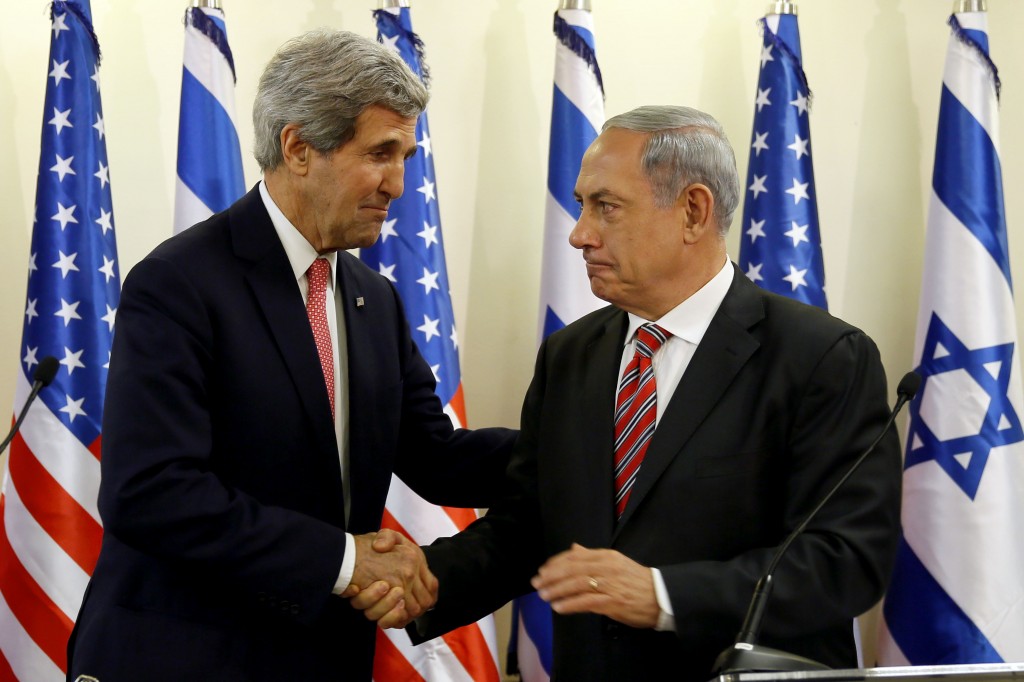
kerry-netanyahu-decemberIsraeli Prime Minister Benjamin Netanyahu and U.S. Secretary of State John Kerry hold a joint press conference on Dec. 5, 2013 in Jerusalem, Israel. (Gali Tibbon, Pool/ Getty Images)

PHILADELPHIA (JTA) — In the past few weeks, Secretary of State John Kerry has come under attack from prominent Israelis as well as American friends of the Jewish state for some of the methods he has adopted in his determination to find a solution to the Middle East conflict.

Such criticism strikes the Obama administration, as well as many friends of Israel, as absurd. After all, what better favor could the United States do for Israel than to help it find the peace for which its people have hungered since the birth of their state?

But while Kerry’s defenders are right to scorn those who seek to question his motives, the way the secretary has tried to strong-arm Israel has neither enhanced the chances for peace nor strengthened Israel’s security. Though the quest for peace is, in principle, a noble endeavor, Kerry has set in motion a chain of events that is, in fact, strengthening those who seek to delegitimize and boycott Israel and may even increase the chances of a new round of Palestinian violence.

Kerry came into office last year determined to take up a challenge that his predecessor, Hillary Clinton, did her best to avoid. Clinton assessed the chances of peace between Israel and the Palestinians in the foreseeable future in the same manner as most foreign policy hands: slim to none.

With the Palestinians hopelessly split between the Fatah-ruled West Bank and Hamas-run Gaza, there seemed little leeway for Palestinian Authority leader Mahmoud Abbas to sign an agreement that would end the conflict. Since the Palestinians had already turned down offers of statehood in almost all of the West Bank, Gaza and a share of Jerusalem in 2000, 2001 and 2008, there seemed no reason for Israel to make further concessions only to be turned down yet a fourth time.

But Kerry was undaunted by these realities and set out to restart Israeli-Palestinian talks. Kerry has persuaded the sides to negotiate and may get both Abbas and the government of Prime Minister Benjamin Netanyahu to agree to a framework to extend the talks that were slated to last only nine months.

Kerry may even coax the Israelis to offer, as has been reported, the Palestinians a state in 90 percent of the West Bank plus territorial swaps of land inside the Jewish state. If so, he may be as close to cutting the Gordian Knot of Middle East peace as any of the Americans who have preceded him. Even if he fails, this would seem to be a praiseworthy endeavor. But those who care about Israel shouldn’t be cheering.

What Kerry has forgotten — or never knew in the first place — about the failures of his predecessors is that peace initiatives don’t occur in a vacuum. The dynamic of every negotiation to broker an end to the conflict is that in the eyes of international public opinion, progress is only measured in terms of Israeli concessions.

That means that rather than bolstering Israel’s image and support around the globe, every such effort — including Israel’s aforementioned three generous offers of Palestinian statehood, as well as the Gaza withdrawal — only served to make Israel even more unpopular. In the 20 years since the signing of the Oslo Accords, Israel has made concession after concession, and yet international efforts to delegitimize Zionism and support the boycott, divestment and sanctions movement aimed at the Jewish state have only grown.

Israelis well understand that the current Palestinian leadership is not likely to sign any deal that will recognize the legitimacy of a Jewish state no matter where its borders are drawn. Nor will the Palestinians renounce a “right of return” for the descendants of the 1948 refugees.

No matter what Kerry pressures Netanyahu into offering Abbas, the answer will probably be the same one Ehud Barak and Ehud Olmert received: No. When that happens, expect the BDS campaign to redouble its efforts and for European nations to blame Israel regardless of the fact that, once again, Palestinian obstinacy will have ended the negotiations and not a lack of Israeli flexibility or generosity.

Even worse, by seeking to frighten the Israelis into concessions by speaking, as he did last fall, about the chances of a third intifada if the talks fail, and by, more recently, predicting an upsurge in boycotts if no peace deal is achieved — while failing to acknowledge Palestinian intransigence as a possible cause of any failure — Kerry has not only tilted the diplomatic playing field against the Jewish state. He has also signaled that if he fails, it will be Israel’s fault. While he may not have intended to encourage either violence or boycotts of Israel, that is exactly what he has done.

While Kerry entered this process thinking only of its success, an individual with less hubris and a clearer understanding of history would have known from the start that the costs of failure might be considerable. Israelis, who will pay the price for that failure, should be forgiven for thinking that Kerry deserves no thanks for his part in this sorry exercise in narcissism.

Navy moves carrier amid talks on Iran

February 13, 2014

Navy moves carrier amid talks on Iran – The Hill.

(Pathetic appeasement. And still it doesn’t work. – Artaxes)

February 13, 2014, 06:00 am
By Kristina Wong

Getty Images

The U.S. Navy has reduced its carrier presence in the Persian Gulf as the Obama administration seeks to complete a nuclear deal with Iran.

The Navy denies it has reduced its strength in the strategically vital waterway, let alone done so to help diplomatic efforts, and it points to an increase in the number of smaller ships that are regularly patrolling at close quarters with Iranian vessels.

But records show that the U.S.S. Harry Truman, now the sole aircraft carrier in the region, has spent more time outside the Persian Gulf in the last six months than inside it. Just a year ago, the Navy had placed two carriers in the region.

In addition, a Navy source familiar with the issue said the Truman isn’t spending as much time in the Persian Gulf as its predecessors, and that this is intended to give space for negotiators to work on the nuclear deal.

Retired Vice Adm. Peter Daly, CEO of the United States Naval Institute, said it is reasonable to think the Navy is sending a signal by limiting the Truman’s time in the Gulf.

“A carrier is an effective symbol and instrument of national power. Its mere presence is a deterrence to bad actors and bad behavior, and if necessary, it is an instrument of force,” Daly said. “That’s true in the Gulf and that’s true anywhere in the world.” 

The U.S. is seeking a final nuclear deal with Iran after reaching an interim accord in November. Congress is fiercely debating whether to threaten Iran with additional sanctions if it fails to comply with the interim deal, which eased some sanctions in exchange for Iran’s halting of elements of its nuclear program. The Obama administration opposes any new sanctions.

The Hill reviewed public data posted by officials on Facebook to estimate the days the carrier has been in the Gulf. 

From August 2013 to January 2014, the Truman spent roughly 101 days inside the Gulf of Oman and the North Arabian Sea, and only about 45 days inside the Persian Gulf, not including approximately 11 days spent transiting between or in unknown locations. 

That’s a significant shift from last year during the same period, when the U.S. had two carriers in the region.

Former Defense Secretary Robert Gates ordered a two-carrier presence to the region in 2010, with one inside the Persian Gulf, in response to Iranian-threats to close the Strait of Hormuz, through which much of the world’s oil supply travels. The carrier presence was reduced to one in February 2013, partly because of pressure from Pentagon budget cuts.

The Truman arrived to the Gulf last summer to relieve the U.S.S. Nimitz, which was temporarily extended in case of a Syria contingency. 

It’s difficult to determine exactly how many days carriers spent in the Gulf in 2011 and 2012, however, because comparable data was not posted on the carriers’ location. Still, at least one of the two carriers was devoted to keeping the Strait of Hormuz open. 

The Pentagon says U.S. presence can’t be measured just by aircraft carriers, and that the Navy has actually increased the number of smaller coastal patrol ships and other assets that are regularly patrolling the Gulf.

“There has been no diminished focus or effort with respect to the Arabian Gulf,” said Pentagon press secretary Rear Adm. John Kirby. 

Other Navy officials said the Truman is focusing on operations in Afghanistan, though carriers typically only provide a third of the air operations there, which have decreased as Afghan forces take the lead in the country. 

The U.S. last summer added three coastal patrol boats to its 5th Fleet headquarters in Bahrain on the Persian Gulf. A report in the Times of Israel said the U.S. planned to have 10 of those ships in the Gulf by early 2014.

Daly said that the increase in the number of smaller ships also sends a signal of commitment, but that the carrier is the “biggest, most powerful symbol on the scale” of doing nothing to a full kinetic response. 

“It’s demonstrated itself as the most effective visible iconic symbol of American power and resolve,” he said. 

Iran in recent days has signaled worry, not relief, about the size of the U.S. presence in the Gulf.

Over the weekend, it announced it was sending two warships toward the Atlantic Coast in response to the U.S. presence in the Gulf, and on Sunday, Iranian Revolutionary Guards Corps Navy Commander Ali Fadavi warned his country would sink a U.S. aircraft carrier if the U.S. took any force against Iran.

U.S. officials, however, have dismissed Iran’s bellicose rhetoric as being directed toward a domestic audience. They also argue Iran lacks the ability to reach the Atlantic Coast. 

A Navy official speaking on background played down the fact that the Truman is spending less time in the Persian Gulf even as he acknowledged the Navy works to defuse tensions in the region.

“Our goal out here is to do everything we can to prevent miscalculations, and not pressurize a situation that could easily be pressurized,” the Navy official said. 

“We’re doing a lot out there … it’s not just this stare-down across the way with the Iranians.”

In December, Defense Secretary Chuck Hagel visited Bahrain and sought to reassure the region the U.S. would maintain a “strong military posture” in the Gulf.

“DOD will not make any adjustments to its forces in the region or to its military planning as a result of the interim agreement with Iran,” Hagel said at a Dec. 7 press conference.

Iran Official Rules Out Change to Heavy-Water Reactor

February 13, 2014

Iran Official Rules Out Change to Heavy-Water Reactor – Global Security Newswire.

Feb. 12, 2014

By Diane Barnes

Global Security Newswire

Iran's Arak heavy-water reactor complex, shown in 2011. An Iranian government spokesman in a Wednesday article said it is "too late" to potentially convert the unfinished facility to a light-water site, as suggested by some international observers.

Iran’s Arak heavy-water reactor complex, shown in 2011. An Iranian government spokesman in a Wednesday article said it is “too late” to potentially convert the unfinished facility to a light-water site, as suggested by some international observers. (Hamid Foroutan/AFP/Getty Images)

An Iranian official on Wednesday set aside the idea of potentially altering a nuclear reactor that other nations fear could produce atomic-bomb fuel.

Iran cannot convert its Arak heavy-water reactor to a light-water facility, Hamid Babaei, a spokesman for Iran’s delegation to the United Nations, wrote in a Wednesday commentary published by the London Guardian.

Such a change would reduce the unfinished site’s capacity to produce weapon-usable plutonium once activated, addressing a major concern shared by world powers as they seek a deal with Iran aimed at preventing its atomic assets from supporting any nuclear-arms production. But the diplomatic official said this kind of modification would prove infeasible.

“It is now too late to change [the Arak reactor] into a light-water prototype, as some have suggested in the West,” Babaei wrote. “This ‘generous’ offer should have been made much earlier.”

His assertion came a week after Ali Akbar Salehi, head of the Iranian Atomic Energy Organization, reportedly expressed openness to modifying the Arak site “to produce less plutonium.”

On Tuesday, a former U.S. national security staffer said shutting down or significantly altering the Arak reactor would be one of the Obama administration’s “key considerations” in seeking a comprehensive nuclear agreement with Iran. The Persian Gulf power, which insists the site is strictly for medical use, is set on Feb. 18 to begin talks on the potential deal with China, Germany, France, Russia, the United Kingdom and the United States.

“If Iran genuinely intends Arak to be a facility that produces medical isotopes only, it should be able to agree to such modifications without significant fuss,” Jofi Joseph, a former White House nonproliferation official, wrote in a Tuesday analysis for Harvard University’s Belfer Center for Science and International Affairs.

In Senate testimony last week, the Obama administration’s senior Iran negotiator dismissed Tehran’s rationale for building the heavy-water facility.

“We do not believe there is any reason for a heavy-water reactor at all in a civil nuclear program of the type that Iran is interested in,” Under Secretary of State Wendy Sherman said during a Senate Foreign Relations Committee hearing. She did not explicitly say in testimony whether the United States would demand the facility’s closure or conversion.

Iranian official: Hezbollah’s arsenal has deemed Israel’s Iron Dome a joke

February 13, 2014

Iranian official: Hezbollah’s arsenal has deemed Israel’s Iron Dome a joke – Jerusalem Post.

(Yet another reason why nukes in the hands of cavemen is a bad idea. – Artaxes)

Hossein Sheikholeslam, a top Iranian adviser on foreign affairs, says Hezbollah has “tens of thousands” of missiles pointed at Israel; Senior aide to Khamenei: US threats of all options on the table “foolish rhetoric.”

By JPOST.COM STAFF

02/13/2014 13:57
 

Iron Dome rocket defense battery [file]

Iron Dome rocket defense battery [file] Photo: Ben Hartman

A senior Iranian official said Monday that Hezbollah’s arsenal of weapons in Lebanon has deemed Israel’s Iron Dome rocket defense system “a theoretical joke.”

Iran’s Fars News Agency quoted the Iranian Parliament Speaker’s top adviser for international affairs, Hossein Sheikholeslam as saying, “Now Hezbollah has tens of thousands of missiles ready to be fired at Israel.”

Sheikholeslam said that Hezobollah has been able to build its “deterrence power” with the help of Syrian President Bashar Assad, and his late father Hafez Assad, Syria’s former president.

The comments were the latest in a string of increased Iranian rhetoric against Israel and the US over the past week which has broken with the pacifying message of President Hassan Rouhani.

The increased rhetoric coincides with celebrations marking the 35th anniversary of the Islamic Revolution which took place earlier this week.

A senior Iranian military official was quoted by Iran’s Press TV as saying Thursday that the massive turnout at the rallies was a response to the “foolish rhettoric” by American officials against Iran.

Major General Yahya Rahim Safavi, a senior advisor to Iranian leader Ayatollah Ali Khamenei, said that the US saying that the military option is on the table “is like a joke.”

Safavi further critisized Washington’s policies, saying, “The US practically showed in the Syria issue that it supports terrorists and supplies them with arms, and this is one of the reasons behind our mistrust.”