Archive for February 12, 2014

Off Topic: Fatah accuses Hamas of evading reconciliation

February 12, 2014

Fatah accuses Hamas of evading reconciliation, Ma’an News Network, February 12,2014

(They can’t seem to agree even with each other. — DM)

Fatah said in a statement that it is ready and willing to instantly implement what was agreed upon and signed in regards to reconciliation between the two rival Palestinian factions, but stressed that Hamas was preventing progress.

Hamas Fata logos (MaanImages/file)

RAMALLAH (Ma’an) — Fatah on Wednesday accused Hamas of evading reconciliation under “feeble” pretexts and excuses.

Fatah said in a statement that it is ready and willing to instantly implement what was agreed upon and signed in regards to reconciliation between the two rival Palestinian factions, but stressed that Hamas was preventing progress.

Fatah spokesman Ahmad Assaf said in the statement that after Hamas premier Ismail Haniyeh’s phone call to President Abbas as well as Azzam al-Ahmad’s phone call to Haniyeh to “accelerate the implementation of reconciliation, … we again feel that Hamas is trying to re-open files which were previously agreed upon.”

“They talk about having new talks and setting new terms,” he added.

Assaf said that Haniyeh requested more time because Hamas leadership wanted more time for discussion.

Assaf accused Hamas of setting new terms and condition that were “more obstacles and obstructions,” and that “Hamas aims to gain more time” in order to “guarantee its sole control on the Gaza Strip in any future reconciliation process.”

Assaf added that al-Ahmad called on Haniyeh not to put any obstacles in the face of the Fatah delegation that visited Gaza.

The statements come amid ongoing unity talks between the two factions, only days after a Fatah delegation visited Gaza and met with top Hamas officials.

The division between the two Palestinian factions began in 2006, when Hamas won the Palestinian legislative elections.

In the following year, clashes erupted between Fatah and Hamas, leaving Hamas in control of the Strip and Fatah in control of parts of the occupied West Bank.

The groups have made failed attempts at national reconciliation for years, most recently in 2012, when they signed two agreements — one in Cairo and a subsequent one in Doha — which have as of yet been entirely unimplemented.

White House Keeping Tabs on Who Views Secret Iran Deal

February 12, 2014

White House Keeping Tabs on Who Views Secret Iran Deal, Washington Free Beacon, February 12, 2014

(Do they want to keep Iran from knowing what it means? Not likely. Israel? Other untrustworthy peons? — DM)

A step-by-step look at how ‘unclassified’ deal text is kept hidden from public

“If this is such a great deal and so good for peace and diplomacy in our time why is it held in secret?” Ros-Lehtinen went on to ask. “If the administration is proud of it, I think they should highlight it.”

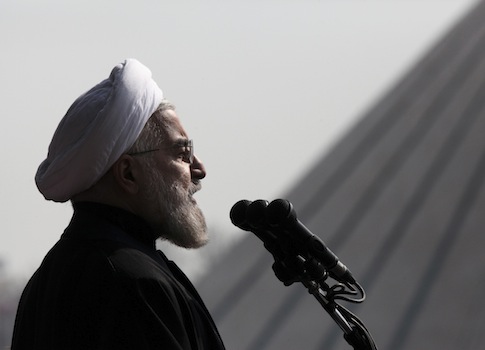
Hassan Rouhani Iranian President Hassan Rouhani / AP

The White House is keeping close tabs on who has read the text of the recently signed Iran nuclear deal, a document that has been marked as “unclassified,” yet is being kept in a highly secured location.

Members of Congress and staffers with high-level security clearances are being forced by the White House to consent to top-secret security measures in order to view the deal text, which is off limits to the American public, according to a senior Senate aide familiar with the process.

The White House has come under fire from Congress and others for refusing to publicly release text of the deal, which aims to roll back portions of Iran’s contested nuclear program in exchange for billions of dollars in economic sanctions relief.

Precise details about the deal and the exact process to view it remain hazy.

One senior Senate source described to the Washington Free Beacon an elaborate security process aimed at tracking who views the document and ensuring that no details emerge publicly.

This is the type of treatment typically reserved for highly classified information, the source said.

All members of Congress have clearance to view the deal. Yet “only staff who hold a ‘secret’ level or higher clearance are allowed to view it”—even though the deal is officially marked as an “unclassified document,” the source said.

And everyone—members and staffers alike—must submit to a series of security procedures.

Those looking to view the deal must go to a highly secured Capitol Hill office and submit to multiple security procedures meant to ensure that the Iran deal text does not become public.

“Anyone eligible to view the document must make their way to the Senate Security Office in the Capitol Visitor’s Center,” the source told the Free Beacon. “This is the central depository for all classified material held inside the Capitol.”

Upon arriving at the security office, “all communications devices must be stored outside the facility before entering” through the door.

Once inside the security office, “you must identify yourself, show [proper identification], and sign a document listing your name, office, and date/time of viewing,” the source said.

This step is to ensure that the Obama administration can keep track of who has viewed the deal and when.

“This control document can be accessed and viewed by the administration at any time to review who is looking at the document,” the source explained.

Once initial security checks are complete, the viewer is given a copy of the Iran deal.

“You may take a copy of the document into a private reading room,” the source said.

However, “no photocopies are allowed, no photos can be taken, and remember, your Blackberry or iPhone is sitting outside” the room, the source said. “Upon completion of review, you must sign it back in at the desk before leaving.”

The process has frustrated members and staffers alike.

“All of this for a document marked ‘unclassified’ at the top,” the Senate aide said. “This is complete insanity. People are right to wonder why an agreement the president hails as a milestone is being guarded from the public like gold at Fort Knox.”

Rep. Ileana Ros-Lehtinen (R., Fla.) has also described the deal text as being held in a “super secret location” that is shrouded in a “cone of silence.”

“Why is it that members of Congress have to go to a super secret location, a cone of silence … to look at the deal?” Ros-Lehtinen asked a panel of nuclear experts last month during a House hearing.

Ros-Lehtinen described the secret document as “quite eye opening” and wondered why the Obama administration continues to keep it under lock and key.

“It’s a very easy to read document; one doesn’t have to be as expert,” she said, urging other members on the committee to examine the deal.

“If this is such a great deal and so good for peace and diplomacy in our time why is it held in secret?” Ros-Lehtinen went on to ask. “If the administration is proud of it, I think they should highlight it.”

Negotiations aimed at reaching a final deal with Iran are set to resume next week.

BY: 

Off Topic: Abbas’s new red line: Israeli withdrawal within 4 years

February 12, 2014

Abbas’s new red line: Israeli withdrawal within 4 years, Times of Israel, February 12, 2014

(Gee, that seems likely to push the peace process right along. — DM)

‘Palestinians will not sign a deal without explicit recognition of East Jerusalem as their capital, full prisoner release’

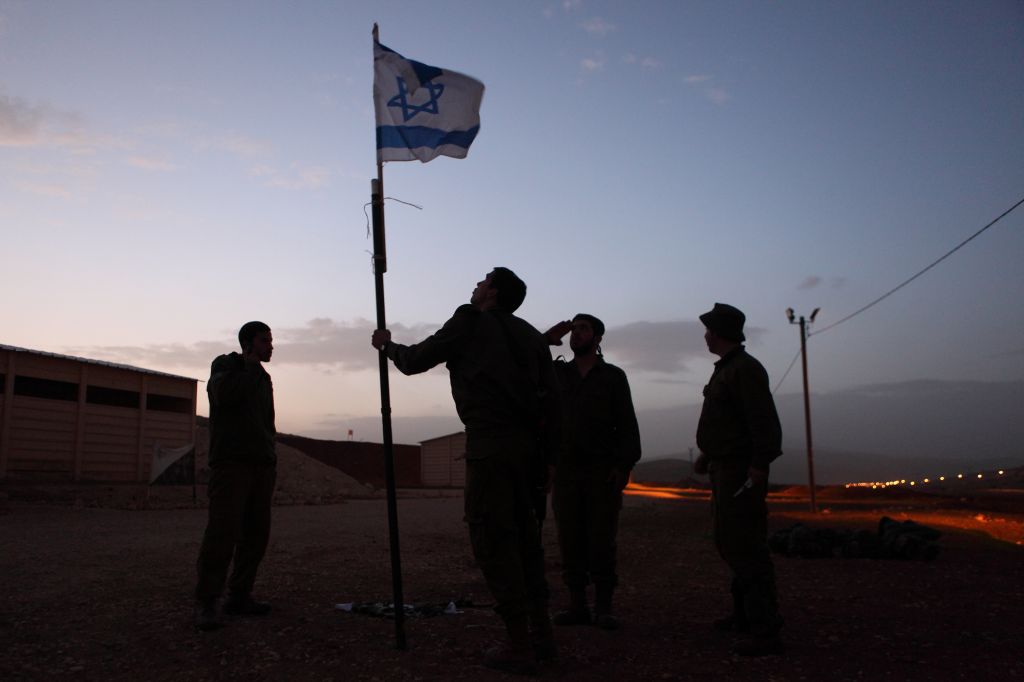
Israeli soldiers in Jordan Valley Israeli soldiers at their base in the Jordan Valley (photo credit: Yaakov Naumi/Flash90)

Preempting the American framework agreement for a Palestinian-Israeli peace deal expected within weeks, the Palestinian presidency on Wednesday issued a list of “red lines” stating PA President Mahmoud Abbas’s nonnegotiable positions.

Nabil Abu Rudeineh, a spokesman for Abbas, told the official PA daily Al-Ayyam that the American paper must include an Israeli withdrawal “from all Palestinian territories occupied in 1967″ within a time frame of three to four years, followed by the release of all Palestinian prisoners in Israeli jails. The agreement must also explicitly refer to East Jerusalem as the capital of the Palestinian state.

Abbas’s list of “red lines,” sent to the Middle East Quartet ahead of its meeting in Germany in early February as well as to US President Barack Obama, also includes a call to solve the refugee issue based on UN General Assembly Resolution 194, and a refusal to recognize Israel as a Jewish state.

“These are the red lines of the Palestinian position, since without these principles there can be no just and comprehensive peace in the region,” Abu Rudeineh said.

The four-year time limit for Israel’s withdrawal from the West Bank contradicts comments made by Abbas in an interview with The New York Times on February 2, where he allowed five years for a full Israeli pullback. Abbas made no reference to the comprehensive prisoner release in that interview, though he voiced this demand in a public speech to East Jerusalem activists in January.

In a televised interview for the INSS conference in Tel Aviv a few days earlier, Abbas set the limit for Israel’s withdrawal at three years.

In any event, senior Fatah official Nabil Shaath was doubtful on Monday that negotiations with Israel would continue beyond their original April deadline, due to American support for Israel’s demand to recognize it as a Jewish state and to maintain a long-term military presence in the Jordan Valley.

“Negotiations will not be extended [beyond their original nine-month time frame] if these conditions persist,” Shaath was quoted by the London-based daily Al-Quds Al-Arabi as saying.

By ELHANAN MILLER

Iran: Ballistic Missile Test a ‘Firm Response’ to U.S.

February 12, 2014

Iran: Ballistic Missile Test a ‘Firm Response’ to U.S. – Washington Free Beacon.

White House vows to press issue in final deal

Iranian President Hassan Rouhani

Hassan Rouhani / AP
 
BY:
February 11, 2014 1:50 pm
 

Iran’s defense minister said on Tuesday that the recent firing of two ballistic missiles was a shot across the bow to the Obama administration, which continues to maintain that the “military option” against Tehran is still on the table.

While Iran is permitted to fire these missiles under the recently signed interim nuclear deal, the White House told the Washington Free Beacon on Tuesday that “Iran’s missile program continues to pose a dangerous threat to region.”

Iranian Defense Minister Hossein Dehqan said the ballistic missile test was aimed at sending a “firm response” to the White House.

“Testing the missiles was a clear response to the U.S. officials’ worn-out phrase ‘the military option is on the table,’” Dehqan was quoted as telling the state-run Fars News Agency on Tuesday.

“The successful test-firing of the Iran-made ballistic missiles yesterday was a firm response to the prating and talkativeness of the U.S. officials who threaten the Iranian nation continuously,” he reportedly said.

The White House says that it is aware of the missile tests and aims to stop them under a final nuclear agreement with Iran, which it hopes to finalize in the next six months.

“We have seen reports that Iran has tested two missiles. Iran’s missile program continues to pose a dangerous threat to region, and is an issue we monitor closely,” White House National Security Council (NSC) spokeswoman Bernadette Meehan told the Free Beacon.

The United Nations “Security Council Resolution (UNSCR) 1929 (2010) prohibits Iran from undertaking any activity related to ballistic missiles capable of delivering nuclear weapons, including launches using ballistic missile technology,” Meehan explained. “Per the [interim nuclear deal], Iran must address the UN Security Council resolutions related to its nuclear program before a comprehensive resolution can be reached.”

U.S. negotiator Wendy Sherman admitted last week before Congress that the United States had “not shut down” Iran’s ballistic missile program.

“It is true that in these first six months we’ve not shut down all of their production of any ballistic missile that could have anything to do with delivery of a nuclear weapon,” Sherman told lawmakers during a hearing last week on the nuclear deal. “But that is indeed something that has to be addressed as part of a comprehensive agreement.”

Iran claimed on Monday to have test fired two homemade missiles, including “a laser-guided surface-to-surface and air-to-surface missile and a new generation of long-range ballistic missiles carrying Multiple Reentry Vehicle payloads,” according to Fars.

“This missile (Bina) is capable of precisely hitting important targets, including bridges, tanks, military hardware, and command centers of enemies,” Dehqan said at the time.

Iran aims to develop technology that can avoid Western anti-missile systems.

“Evading enemy’s anti-missile defense systems, the capability of destroying massive targets, and destroying multiple targets are specifications of this missile,” Dehqan said.

Meanwhile, Iranian warships continue to sail towards the U.S. coastline.

Iranian naval commander Habibollah Sayyari confirmed on Tuesday that the ships were on their way to the Atlantic Ocean.

“All countries, including Iran, are entitled to the right to be present in the free waters, and we don’t seek to violate any country’s territorial waters,” Sayyari told Fars.

“The Army’s fleet of warships is now in the Gulf of Aden and they are moving towards the Atlantic Ocean,” he added.

The Pentagon told the Free Beacon on Monday that Iran’s ships are free to sail in the Atlantic.

“Freedom of the seas applies to all maritime nations, all navies, everywhere—so long as they understand the responsibilities, which come with that freedom,” said a Pentagon spokesman. “So, if they are able to send their ships to the Atlantic, I’m sure they won’t be surprised to find many, many others already there.”

Off Topic: Hamas bolstering its long-range missile arsenal

February 12, 2014

Hamas bolstering its long-range missile arsenal, Israel Hayom, February 12, 2-14

IDF officials: Hamas has shifted focus from smuggling in weapons through tunnels to producing weapons locally • IDF believes likelihood of a third intifada breaking out is low • Palestinian official says Kerry’s framework proposal may be doomed to fail.

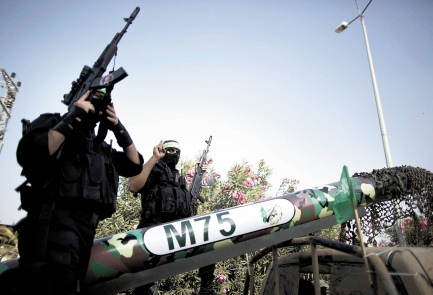
Gaza terroristsGaza terrorists stand next to an M-75 rocket, which has the ability to reach both Tel Aviv and Jerusalem | Photo credit: AFP

The likelihood of a third intifada breaking out is low, but Hamas has amassed hundreds of rockets that can hit central Israel, according to Israeli Defense Forces officials.

IDF officials said there has been a “dramatic change” in the balance of powers between Palestinian factions. The main troublemaker in the Gaza Strip is the Islamic Jihad terror group, and recent rocket fire from Gaza into Israel has shown that Hamas’ ability to control other groups in Gaza may have weakened to some extent.

 “However, Hamas’ ability to exercise authority in Gaza is still high, its electoral potential has not been hurt in the West Bank either,” IDF officials said.

 The IDF believes there is little motivation in the West Bank for a third intifada. “People remember the sight of Israeli tanks in city centers very well, and that is a serious deterrent against a third intifada,” a senior IDF officer said.

 But Hamas has not been sitting idly by. The IDF believes that terrorist group has made a shift from relying on smuggling in weapons through tunnels toward a focus on locally produced weaponry. Hamas, according to IDF assessments, and now has a stockpile of hundreds of M-75 rockets that can hit central Israel. It is also believed that this arsenal of long-range rockets will grow significantly over the next year.

 “An underground tunnel city is being built in the Gaza Strip, and could be used to move forces around and protect Hamas commanders in case of a future conflict with Israel,” an IDF official said.

 Meanwhile, three Israeli government ministers were expected to take part in a demonstration on Thursday to support construction in the E1 area between Jerusalem and Maaleh Adumim. The demonstration is an initiative of Maaleh Adumim Mayor Benny Kashriel.

 Transportation and Road Safety Minister Yisrael Katz (Likud), Housing and Construction Minister Uri Ariel (Habayit Hayehudi), and Agriculture and Rural Development Minister Yair Shamir (Yisrael Beytenu) planned to attend the demonstration.

 Foreign Minister Avigdor Lieberman (Yisrael Beytenu) referred to the current peace talks with the Palestinians on Tuesday. “I don’t know if we are close to reaching an agreement, but I am renovating my housing in Nokdim [a community in Judea] and adding a new room,” he said.

 A top Palestinian official said on Tuesday that the framework Israeli-Palestinian agreement being crafted by U.S. Secretary of State John Kerry may be doomed to fail.

Nabil Abu Rudeineh, spokesman for Palestinian Authority President Mahmoud Abbas, said the deal due to be submitted to the two sides in the coming weeks would be “useless” if it allowed them to nominally accept its principles but to express reservations.

 “Use of the word ‘reservations’ bogs down the peace process and the use of this concept in the past has got the process stuck,” Abu Rudeineh told Reuters.

 Abu Rudeineh cautioned against the Kerry document traversing any Palestinian “red lines.”

 Abu Rudeineh said the framework agreement must clearly recognize the 1967 lines as the outline demarcating the two states, designate east Jerusalem as the Palestinian capital and call Israel’s settlements “illegal.”

Obama and Kerry ask Netanyahu to hold back from responding to Iranian threats

February 12, 2014

Obama and Kerry ask Netanyahu to hold back from responding to Iranian threats, DEBKA file, February 11, 2014

(Don’t say anything kids. We adults are in charge now and you had better understand your proper place. — DM)

The White House and State Department hastened to appeal to Prime Minister Binyamin Netanyahu to ignore Iranian belligerent rhetoric and keep his ministers quiet too, so as not to throw a spanner in the works of international nuclear diplomacy with Iran and the Syrian peace conference which resumed this week in Geneva.

Iran’s leaders celebrated the 35th anniversary of their Islamic revolution Tuesday, Feb.11 with a torrent of hate rhetoric and threats surpassing even the crudely belligerent language used by former President Mahmoud Ahamedinejad.

A common theme of their speeches to the masses was threats to the United States and Israel of defeat and annihilation at the hands of the invincible Iranian army. Following the first deployment of Iranian warships – the helicopter carrier Khark and Sabalan guided missile destroyer – near America’s Atlantic shores, the commander of the Revolutionary Guards (IRGC) fleet, Navy Cmdr Ali Fadayi, actually said: “The Americans can sense… how their warships will be sunk with crews of 5,000 in combat against Iran, and how they would find their hulks in the depths of the sea.”

The Iranian officer pressed on to suggest “the Americans” were cowards, who “cannot hide themselves in the sea since the entire Middle East region, western Europe, the Persian Gulf, the Sea of Oman and the Straits of Hormuz are monitored by us!”

The IRGC commander Gen. Mohammad Ali Jafari piled it on with a boast that just two Basijj militiamen could sink one American aircraft carrier – a blatant threat of suicide attacks on US military targets.

Addressing the “Death to USA Grand Price” ceremony in Tehran, Jafari continued to mock Washington by calling its leaders’ references to a military option “ludicrous,” adding that “the Americans really cannot do a damn thing” against Iran’s military capability.

Supreme leader Ayatollah Ali Khamenei repeated the ayatollah’s old mantra slamming Israel as “a cancerous growth” in the Middle East fit only to be “eradicated.”

As his audience burned US and Israeli flags and stamped on placards depicting President Obama, President Hassan Rouhani intoned: “I say to those delusional people who say the military option is on the table that they should change their eye glasses.” His meaning was clear to his mass audience: Iran no longer faces any military threats, either from the United States or Israel.

After Iran’s military test-fired two long-range missiles Monday – one with radar-evading capabilities; the other laser-guided for firing from the ground or the air – Defense Minister Gen. Hossein Dehqan crowed that Iran now had missiles with multiple warheads able to penetrate the anti-missile defenses of the enemy (America and Israel).

DEBKAfile’s military sources took this as a sneer directed at Israel, which will not have an operational system for intercepting multi-warhead projectiles before the Arrow-3 is fully developed in 2016 or 1017. By then, Iran too will have finished developing long-range ballistic missiles with multiple warheads.

Many of the insiders in President Barack Obama’s circle preferred to dismiss these menacing speeches as no more than whistling in the dark by men frightened of their own shadows.

At the same time, the White House and State Department hastened to appeal to Prime Minister Binyamin Netanyahu to ignore Iranian belligerent rhetoric and keep his ministers quiet too, so as not to throw a spanner in the works of international nuclear diplomacy with Iran and the Syrian peace conference which resumed this week in Geneva.
Netanyahu took notice of this appeal and contented himself with a controlled speech at the IDF officers’ graduation ceremony Tuesday: “Iran today celebrates the 35th anniversary of its Islamic Revolution with new threats to destroy the Sate of Israel. The aspiration to annihilate the Jewish people and its state did not vanish when it attained statehood. What has changed is our ability to resist and frustrate that aspiration.”

Netanyahu like Obama and Kerry has opted to let the Iranian threats go unanswered. Israel may find it has to pay dearly for agreeing to bury its head in the sand.

Off Topic: Hamas can hit Tel Aviv, Jerusalem with dozens of rockets

February 12, 2014

Hamas can hit Tel Aviv, Jerusalem with dozens of rockets, Times of Israel, February 11, 2014

(Please see Off Topic: Fatah-Hamas reconciliation almost final, reports say. What a great bunch of jihadists peace lovers with whom to pursue the Obama – Kerry Peace Process.– DM)

Salvos on central Israel constitute an unprecedented threat, while Gaza’s Islamist rulers have also built sprawling underground network to move troops, fire rockets, maintain communications in future conflict.
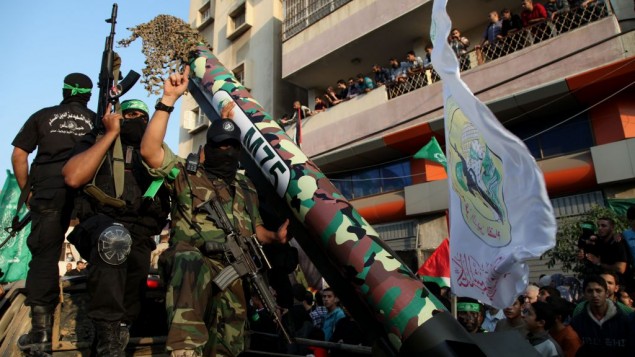
Hamas terroristsHamas terrorists show off an M-75 home made rocket in a military parade marking the first anniversary of the eight-day Operation Pillar of Defense, in Gaza City, 14 November 2013. (Photo credit: Emad Nassar/Flash90)

Just 15 months after Israel sought to drastically reduce the rocket threat from Gaza in Operation Pillar of Defense, Hamas has substantially bolstered its capacity to fire on Jerusalem, Tel Aviv and the rest of central Israel.

The Gaza Strip’s Islamist rulers have invested heavily in producing their own M-75 rockets, with a range of 75 kilometers and more, and now have an arsenal of dozens of the rockets, The Times of Israel has learned. They will have dozens more by the end of this year.

This means that the next round of conflict with Gaza will be focused on central Israel, with the Israeli military braced to defend the heart of the country against unprecedented salvos of M-75s directed at Tel Aviv, the rest of central Israel, and Jerusalem.

It is not clear how effectively Israel’s missile defense systems will be able to deal with the expected launch of numerous M-75s in large, simultaneous barrages. During the eight days of Operation Pillar of Defense, in November 2012, only about 10 of the M-75 rockets were launched at central Israel and Jerusalem, so the current threat is seen as many times more serious.
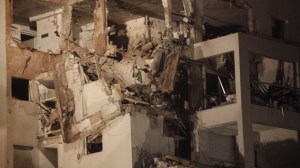
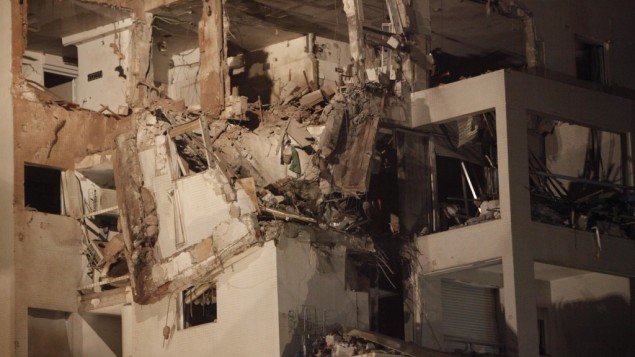
Apartment hit by Hamas rocketAn apartment building in Rishon Lezion, south of Tel Aviv, that was hit by a rocket from Gaza, November 2012 (photo credit: Miriam Alster/Flash90)

Hamas realized after Pillar of Defense that firing on central Israel immensely bolstered its prestige, and the Hamas prime minister in Gaza, Ismail Haniyeh, was recognized and hailed as only the second Arab leader, after Iraq’s Saddam Hussein, to have hit central Israel.

Since that conflict, therefore, Hamas has focused on improving its capacity to build such rockets, establishing a domestic production capacity rather than relying on smuggling rockets and components into the strip. Domestic production of the M-75 has become Hamas’s flagship project.
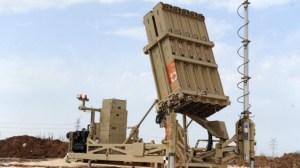
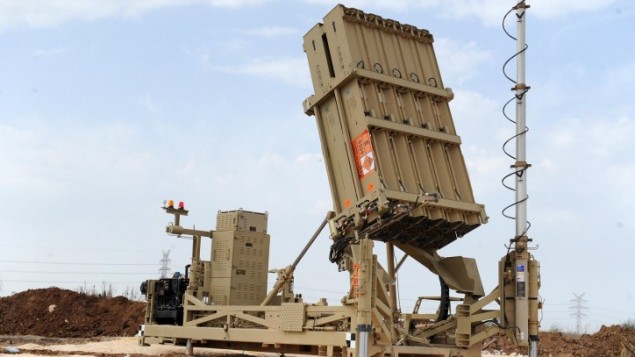
Iron dome 1An Iron Dome battery placed in the Tel Aviv area on November 17, 2012 during Operation Pillar of Defense (photo credit: Alon Besson/Ministry of Defense/Flash90)

At the same time, Hamas has also committed considerable resources to the construction of a substantial network of tunnels — dozens of miles of underground networks in key areas of the Strip — which will immensely complicate future military confrontations for Israel, The Times of Israel has learned.

Hamas’s investment in tunnels dug toward and under the border with Israel, in order to carry out terror attacks, is longstanding. It was through such a tunnel that Israeli soldier Gilad Shalit was kidnapped, and two of his colleagues were killed, in a 2006 infiltration that ultimately led to the release of some 1,000 Palestinian security prisoners in exchange for Shalit’s freedom five years later. Hamas remains committed to attempting further kidnapping operations, both to bolster its prestige and to secure additional prisoner releases. The kidnap threat is considered acute both from Gaza and in the West Bank.

Beyond this, however, Hamas in Gaza has moved far ahead with an underground military network inside the Strip — a subterranean network with several significant benefits for the Islamic extremist group: Hamas will use the tunnels to plant mines targeting Israeli land forces, the Israeli military believes. It will use the network of tunnels to move its gunmen undetected from place to place during warfare. The Israeli military further anticipates that Hamas will fire rockets from underground launchers, making them far harder to detect and target. Moreover, the Hamas command and communication facilities will be located underground, enabling it to seek to maintain effective control out of reach of Israeli air power. Finally, the Hamas leadership, which the Israeli army said in the past had taken refuge in underground bunkers beneath hospitals and other civilian facilities, will also utilize these more-sophisticated underground facilities.
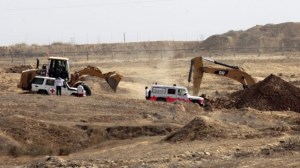
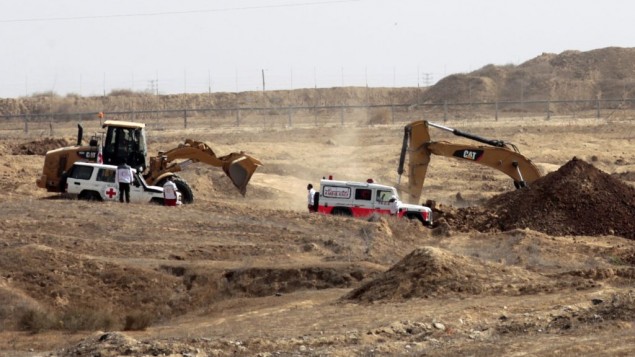
Pal rescue workersPalestinian rescue workers search for the bodies of three Hamas operatives inside a tunnel hit by an Israeli air strike, near the border between Israel and Khan Younis in the southern Gaza Strip, November 2, 2013. The Israeli military said the tunnel was to be used as a springboard for terror attacks inside Israel. (photo credit: Abed Rahim Khatib / Flash90)

In terms of its regional status, Hamas is perceived by Israel to be relatively weak, notably because of the ouster of its Muslim Brotherhood supporters in Egypt. The ongoing crackdown by Egypt on the cross-border smuggling tunnels has devastated Gaza’s economy. Water supplies are dwindling, and water quality is extremely poor. Electricity is available in some areas for only a few minutes a day. Unemployment is high. And public dissatisfaction with the Hamas government is widespread, in the Israeli assessment.

For now, Hamas is not perceived to be ready for a further round of conflict with Israel, in part because of a concern about how the consequent devastation would be received by Gazans. At the same time, however, Hamas’s practical capacity to prevent rocket fire on Israel by rival groups is on the wane. Iran is constantly prodding the rival Islamic Jihad group to attack Israel, and Islamic Jihad is indeed behind much of the recent intermittent rocket fire on Ashkelon and southern Israel. Hamas has made efforts to thwart such attacks, but is ridiculed by Islamic Jihad for trying to keep the peace with Israel, and in some cases is hamstrung by such basic factors as a lack of fuel for its vehicles as they patrol to try to thwart the rocket-launch squads.

For now, Hamas’s governance in Gaza is secure, Israel believes. Hamas fears a Tahrir Square-style popular uprising, but is proving highly effective in cracking down on occasional small public signs of dissent and is not currently facing wide scale efforts at public protest.

Ultimately, however, Israel’s military assessment is that another round of conflict is simply a matter of time. Some in the security hierarchy believe that a substantial Israeli ground offensive, possibly even a long-term operation, may be unavoidable, but there is no consensus on this.

What is clear, The Times of Israel has learned, is that when the next round of conflict does come, the IDF and the home front will be facing a Hamas with immensely greater capabilities to fire on central Israel, thanks to its domestic rocket production, and a much-enhanced capacity to defend itself against Israeli air and ground capabilities by virtue of its new underground networks.

By David Horovitz