Archive for February 7, 2014

Treasury Dept Accuses Iran of Working with Al Qaeda: Obama Rejects Sanctions

February 7, 2014

Treasury Dept Accuses Iran of Working with Al Qaeda: Obama Rejects Sanctions, Front Page Magazine, February 7, 2014

(Iran “deal” skeptics are as bad as climate change deniers. Besides, the Obama Administration has ceased adding al-Qaeda leaders to the “kill list” and it has been suggested that “The decision to define al Qaeda down to irrelevancy seems to be part of the administration’s policy of declaring victory and going home.” Iranian nukes? Why not? — DM)

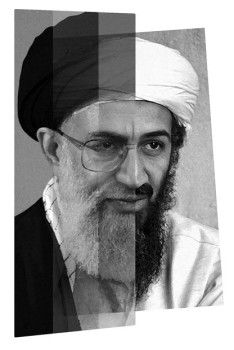
Iran-al-qaeda-234x350

This is coming from inside Obama’s own administration. It’s not Dick Cheney or Donald Rumsfeld talking. And still Obama insists on pandering to Iran, letting it go nuclear and accusing skeptics of seeking war.

The Obama administration charged that Tehran has allowed senior al Qaeda members operating from Iranian soil to facilitate the movement of Sunni fighters into Syria.

The allegation by the Treasury Department on Thursday would suggest that elements of Iran’s government or military were at least tacitly supporting the opposing sides of Syria’s civil war.

Iranian officials denied the accusations, saying Washington was harming diplomatic efforts aimed at ending the international standoff over Tehran’s nuclear program.

This is Iran’s Get Out of Jail Free card for everything. “You’re damaging the diplomatic effort.” This is why Iran is playing out the diplomatic game because it knows that the Chamberlains don’t have the guts to end the diplomatic hoax no matter what it does.

The Iranian government is Syrian President Bashar al-Assad’s closest military and diplomatic ally. U.S., European and Arab governments have repeatedly charged Iran’s elite military unit, the Islamic Revolutionary Guard Corps, or IRGC, of deploying soldiers to Syria to bolster Mr. Assad’s regime, an accusation Iran has denied.

U.S. officials, however, have intermittently accused Tehran and the IRGC of colluding with Sunni militant groups, who historically are enemies of Tehran’s Shiite government, but also are fighting the U.S. and its allies.

On Thursday, the Treasury Department sanctioned three IRGC officers for allegedly providing support for Afghanistan’s Taliban, a hard-line Sunni group.

Nothing to see here. Just the diplomats of Iran hard at work.

Economic warfare?

February 7, 2014

Economic warfare? | Jerusalem Post – Blogs.

Ira Sharkansky

Are they or aren’t they threatening Israel?

The US Secretary of State and the EU Representative in Israel both said, within days of one another, that the failure of the Israel-Palestine peace talks will increase the economic pressure on Israel.

Israeli officials responded to both with counter threats that such language has no place in discussions between allies.

The implication: stop threatening if you want the talks to continue.

That brought immediate responses that the Israelis did not understand the Secretary or the Representative. Both opposed boycotts and other sanctions on Israel, but they were talking about what activists and companies in the private sector would do for their own economic and political reasons.

Claims of misunderstanding are conventional diplomatic restatement. In these cases, it does not hold up in the presence of government funded organizations actively leading the calls to boycott. Moreover, a simple reading of what the Secretary and Representative said, in context, seems a pretty clear either do what I want or there will be consequences.

Israeli business executives and  the Minister of Finance have expressed their own fears of what an extension of the boycotts can do to the Israeli economy. Cynics heard them taking advantage of boycott activity to express once again their views that Netanyahu should offer more to the Palestinians.

Kerry and EU officials–supposedly schooled in the history of international relations, or with aides having such education–ought to be more aware of the complications associated with economic warfare, and work harder to prevent it.

The story of the last major economic confrontation involving important western countries was the tariff war of the 1920s. Extremist defenses of each national economy via high tariffs brought retaliation, and is said to have made a significant contribution to the Great Depression of the 1930s.

Israelis should not delude themselves into thinking that they wield the tools of a great economic power. However, we are not without opportunities to defend ourselves.

Dare the goyim–or Jews who identify with them–to think they can best the Jews of Israel at economic warfare? No surprise that Tom Friedman has signed on to Kerry, the EU, and the threat of boycotts. His solution is also no surprise. It’s something he has been tooting for years: freeze settlement activity.

We’ve been dealing with enemies and adversaries for 3,000 years. We’ve survived Shakespeare,  Sabbtai Zevi, and a host of others. Kerry and Friendman may be next.

The Palestinians who created BDS (boycott, disvestment, sanctions) even before they have been able to create a peoplehood that is not chronically on the verge of civil war, are not likely to succeed where others have tried and failed.

The Arab boycott, dating from 1948 and reaching a peak in 1973, not only failed to bring Israel to its knees, but the country emerged with more prosperity spread throughout its population than any Muslim country. The multitude of players in the international economy allowed Israel to avoid energy shortages as well as any country, and did not keep Israel from finding energy companies willing to deal with it. Israel has not been invited to join OPEC, but it is on the verge of being an energy exporter.

The Arab boycott sought to cut off not only energy to Israel, but all opportunities for international commerce. It led Israeli companies to disguise their connection with Israel, and do business with some of the very governments that were trumpeting their boycott activities.

We can expect a flood of disinformation and political posturing in the current campaign. This week’s news featured the proclamation of a Danish bank that it would stop doing business with Bank Hapoalim on account of Bank Hapoalim’s branches in “settlements.” The response from Bank Hapoalim was that the Danish bank had no business with it that would require being stopped.

Public relations campaigns are slippery things. The firms offering their services may claim great weight, but their impacts may be lost in the noise coming from many sources.

The Israeli government, companies, and individuals are not without the capacity to engage in our own propaganda blitz, with the help of overseas Jews who feel themselves one step away from being pressed. The BDS  campaign is a product of Palestinian efforts to delegitimize Israel, which resembles what came along with Kristalnacht, i.e., signs forbidding Jews from entering Jewish stores, and the outlawing of Jewish lawyers and physicians..

Israeli media headlined the Kerry and EU Representative statements with language like, Hitting Jews where it hurts, in their pocketbook. That sounds like the onset of a campaign linking BDS to the stain of anti-Semitism.

I have done my own jeering against Jews who claim a God-given right to the whole of the Promised Land. However, one must recognize that the notion of a Covenant promising a land and other benefits is as central to Judaism as the virgin birth and resurrection  to Christianity, or what the Muslims believe about Mohammed.

Blatant demands that Israel stop settlement activity resembles what used to be called Gentlemen’s Agreements or Real Estate Covenants, forbidding sale or rental of housing to Jews in desirable neighborhoods.

Does a concern for political correctness only protect the sensitivities of Christians and Muslims, but not Jews?

It is no easy task to separate Israel’s settlement activity from the right of Jews to live where they want. Also involved is Palestinian rejections of Israeli efforts from 1967 onward to reach mutual agreements that would limit settlement activity to land that Israel would be recognized as calling its own.

Would the humanitarians of the world  make clear in their support of liberal migration policies that all should be able to live where they want, except Jews?

What Kerry and the EU Representative have tried to say in their clarifications is that the real threat of boycotts comes not from governments, but from consumers and companies not wanting to do business with Israelis. However, the threat of consumer boycotts is a minor annoyance. If the consumers’ cooperative of Olympia Washington and like minded worthies feel proud for denying their shopping carts to Israeli products, they should recognize that the blow to Israel’s economy is more symbolic than real. The foreign trade in humus, noodles, and snack food is not at the forefront of what Israel earns in foreign exchange. The principal market  for those products is Israeli consumers, who have not yet signed on to a boycott of Israel.

The export of flowers, fruits, and vegetables is more important to Israel’s economy, but concerns may learn to blur their Israeli origins. Buyers of diamonds and those concerned with defense and high-tech medicine and communications are closer to what is important for the Israeli economy, and are less vulnerable to the public campaigns against settlements.

Boycotts against products made over the 1967 borders appear to threaten Palestinians more than Israeli Jews.

The entrepreneurs who operate those factories may cut back on their personnel, and put their money elsewhere.

The people who lose their livelihood will, for the most part, be Palestinian workers.

The Protocols exaggerate. Jews neither control the world’s economy nor aspire to do so.

However, we do have friends and allies.

Pension funds, banks, and insurance companies in Europe and North America can be vulnerable to pressure in favor as well as opposed to Israel. There is some weight to the argument that Israel has been gentle with the Palestinians (compared to how the Palestinians and other Arabs treat one another), despite a great deal of incitement and violence against civilians. If some investors weasel out of anti-boycotting pressure by claiming that they are not investing in Israeli companies for “economic” reasons, others may be led by political connections to increase their investments in Israeli companies.

The recent incident focused on SodaStream shows that Israel is not without friends who can get media attention, as well among the Palestinians who work in settlement enterprises. According to the lead paragraph of a Ha’aretz item on the brouhaha surrounding a Superbowl commercial:

“I can bring a million people who want to work here,” boasted Ahmed Nasser, taking a break from his job as a SodaStream assembly line worker.”

One can respond in numerous ways to the question as to whether Israel will be blamed for what is shaping up to the failure of the current peace talks, and thereby suffer heightened boycott activities.

The most likely bottom line is that those inclined to blame Israel will do so, while those suspicious of Palestinian activities will find enough incidents of violence, and enough threats of violence by Palestinian and other Islamic rejectionists to justify the claim that Palestinians once against did not miss an opportunity to miss an opportunity.

Iran ready to answer all of the IAEA’s questions on nuclear program

February 7, 2014

Iran ready to answer all of the IAEA’s questions on nuclear program, Jerusalem Post, February 7, 2014

(Will the answers be as candid as usual? — DM)

Senior Iranian official says that Iran will cooperate with nuclear watchdog; IAEA wants Iran to address long held suspicions that it researched how to build an atomic bomb.

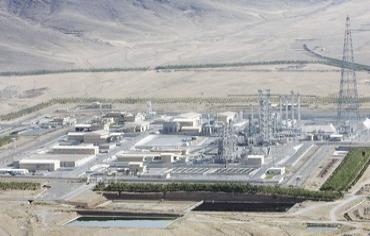
Arak Iran’s heavy-water production plant in Arak, southwest of Tehran. Photo: REUTERS

ANKARA – Iran is ready to answer the UN atomic agency’s questions about its nuclear program, a senior official was quoted as saying ahead of talks on Saturday expected to broach sensitive military-related issues.

The International Atomic Energy Agency hopes to persuade Iran to finally start addressing long-held suspicions it may have researched how to build atomic bombs.

Tehran has rejected the accusations of weaponization-related work as forged and baseless, while saying it will cooperate with the IAEA to clear up any “ambiguities”.

Saturday’s meeting comes 10 days before Tehran and world powers, building on a landmark interim deal that took effect last month, start talks on a long-term accord on Iran’s nuclear aspirations that would avert the threat of a Middle East war.

The “aim is to answer the IAEA’s questions”, Behrouz Kamalvandi was quoted as saying by ISNA, without elaborating.

Iran’s Press TV English-language state television said in a headline on its website, citing the same official: “Iran ready to answer all IAEA questions.”

Diplomats are cautiously optimistic that after Saturday’s talks in Tehran the team of senior IAEA inspectors will be able to show at least some progress in gaining Iran’s cooperation.

A spokesman for Iran’s Atomic Energy Organization said the meeting had been scheduled for one day but might be extended, the ISNA news agency reported on Friday.

Iran-IAEA relations have improved since last year’s election of a relative moderate, Hassan Rouhani, as president of Iran on a platform to ease the country’s international isolation.

Under an agreement signed in November, the IAEA has already visited a heavy water production plant and a uranium mine in Iran. However, those first steps did not go to the heart of its investigation and Western diplomats will watch Saturday’s meeting closely to see whether the next phase achieves that.

“CRUCIAL MEETING”

One Vienna-based envoy said there was an expectation that at least one issue related to the IAEA’s inquiry into what it calls the “possible military dimensions” to Iran’s nuclear program would be among the next steps to be taken by Tehran.

“It is quite a crucial meeting,” the diplomat added.

The IAEA wants Iran to clarify alleged activities in a range of areas of potential application to developing bombs, including various experiments and computer calculations.

Western diplomats hope an accord will lead to Iran scaling back its nuclear program sufficiently to deny it the capability to assemble a nuclear weapon any time soon.

The IAEA’s investigation is focused on the question of whether Iran sought atomic bomb technology in the past and, if it did, to determine whether such work has since stopped.

Although separate, it is still closely aligned with the wider-ranging diplomacy between Tehran and the six powers – the United States, Russia, China, France, Britain and Germany.

Iran says its nuclear program is peaceful and that it is Israel’s assumed atomic arsenal that threatens peace.

Ali Akbar Velayati, a senior adviser to Iranian Supreme Leader Ali Khamenei, said Iran would not back down “an iota from its nuclear rights”.

“These talks (with the powers) will continue in the case of the opposite party’s goodwill,” he added.

Off Topic: After Abbas: It’s battle stations for the men who would be president

February 7, 2014

After Abbas: It’s battle stations for the men who would be president Times of Israel February 7, 2014

(“Not one of them speaks about peace anymore. They don’t even whisper it.” — DM)

An exiled former close aide is openly challenging the leadership; others are moving more subtly; and the most likely candidate is behind bars.
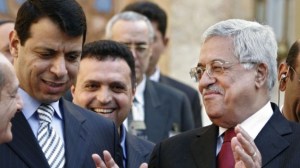
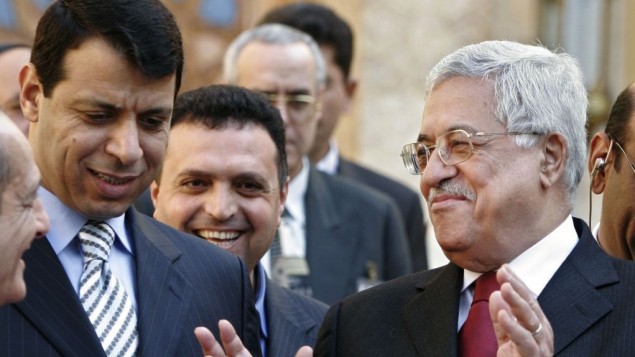
Abbas successors Palestinian Authority President Mahmoud Abbas (right) smiles as he leaves a news conference in Egypt, in February 2007. At left is Mohammad Dahlan, then a close confidant of Abbas. (photo credit: AP/Amr Nabil)

Officially, leaders in the PA and Fatah don’t talk about it. It’s almost taboo. But Palestinian Authority President Mahmoud Abbas, who is also chairman of both the PLO and Fatah, has no clearly mandated successor for any of these positions.

Unofficially, however, there is now a steady and growing buzz from Fatah officials who are trying to position themselves as Abbas’s potential heirs. Not a young man — he will celebrate his 79th birthday next month — he is a heavy smoker, with a history of health problems.

Health aside, for years Abbas used to threaten to step down if and when he came to the conclusion that he could no longer advance the cause of a Palestinian state. Despite this threat not being voiced for some time, it remains relevant — in the absence of any political breakthrough.

Indeed, the perennially faltering peace process, and the Seventh Fatah General Conference (where the movement’s leadership is selected) six months from now, are contributing to the Abbas succession buzz. Everyone wants to be the next president or PLO chairman, but no one has thus far managed to stand out from the pack.

Well, almost no one. The exception is Marwan Barghouti, “Prisoner No. 1,” who enjoys widespread popular support. But his incarceration in Israel, convicted of direct involvement in Second Intifada-era murders and other terrorism, gives his colleagues in the Fatah leadership a reason, or excuse, not to nominate him as their candidate to be the next president.

Increasingly extreme and bellicose statements have come from various heads of Fatah recently, stemming primarily from their desire to brand themselves as zealous combatants and patriots — and thus as credible leadership candidates. Many Palestinian commentators see this rise in rhetoric as preparation for the presidential race, which will start in earnest in the run-up to August’s Fatah conference. Until then, we can expect many extreme statements, the sort that can make the leaders of Hamas seem like a bunch of ardent Zionists.

So who is likely to emerge from the field of would-be Abbas successors?

Dahlan’s return

On Tuesday, there was a mass wedding in Gaza at which several dozen Palestinian youths held their ceremonies and celebrations together. Portraits of Abbas and his predecessor, Yasser Arafat, hung on the walls. The PA chairman recorded a special message for the event, which was funded entirely by the PA.A week earlier, a similar ceremony was held in Jericho, with 300 grooms, again sponsored by the PA and Abbas. But it’s unlikely that the crowd knew about the machinations behind the scenes at these two events. Both initially enjoyed the patronage of Mohammad Dahlan, formerly the Fatah “prince” in Gaza, who today lives in the UAE, from where he publicly — and uniquely — challenges Abbas’s Fatah leadership.Dahlan became a persona non grata in the last two years in the Palestinian territories for daring to criticize Abbas and his sons Yasser and Tarik. The president’s men accused him of attempting a coup, and made sure he left the area. Since his exile, it has become an open secret: Dahlan is not only trying to undermine the leadership of Abu Mazen, but is also preparing the ground for his return and, he hopes, succession.Dahlan, 53, started life in the Khan Younis refugee camp but is considered today a very rich man, maybe even a billionaire. He enjoys close ties with the royal family in the UAE.

It was Dahlan and his staff who provided the funds to finance the mass weddings, and to provide a grant to every one of the hundreds of grooms. But Abbas’s men soon learned of the events, and decided to take over the sponsorship, financing the weddings and providing the $4,000 grant for each young couple.

This is just one small example of the Abbas-Dahlan tussling, which extends to the Abbas camp’s hounding of Dahlan’s allies within Fatah in the past two years. The president’s allies were not satisfied with the removal of “Abu Fadi,” a commander of the Preventive Security Service in Gaza. They also pursued his friends and associates, like Samir Masharawi Rashid Abu Shabak (who was tried in absentia recently on an alleged corruption scandal), who then also left the territories. Past heads of the various security apparatuses, Dahlan associates, were also removed from their positions and kicked out of Fatah.

Zaida Sufian Abu Zaida, former Fatah cabinet minister (photo credit: Flash90)

Another highlight of the never-ending Dahlan persecution campaign took place in November of last year. One of Dahlan’s close friends, Sufian Abu Zaida, a Fatah Revolutionary Council member and former government minister, left his gym in Ramallah one morning. He discovered that his car was riddled with bullets. Abu Zaida declared that the responsibility for the act lay entirely with the Palestinian Authority.

In the past few weeks, there have been several attempts to mediate between Dahlan and Abbas, largely unsuccessful. Just recently, however, Masharawi met with two Abbas associates, Azzam al-Ahmad and the head of PA intelligence, Majid Faraj. The word was that Abbas has agreed to allow the return of Dahlan loyalists to their positions in Fatah and in the Palestinian government, but continues to rule out the possibility of Dahlan himself returning to the territories.

Abbas’s camp claims, with some justification it seems, that Dahlan has become “relentlessly subversive.” From his Abu Dhabi office, they claim, he orchestrates a well-funded campaign to weaken Abbas. And he has significant influence, they add, over the the anti-PA unrest in the refugee camps in the northern West Bank around Jenin and Nablus.

At the same time, he is investing millions of dollars, with the help of his friends in the UAE, in creating a base of support in the old refugee camps in Lebanon, as well as in the new ones created after the outbreak of the civil war in Syria.

Above all, the exiled security chief-turned-businessman is engaged in political activities fit for a head of state, they note. Only two weeks ago, he visited Cairo and met the strongman there, Abdel-Fattah el-Sissi. He also visited the head of Egyptian intelligence, and even met with Coptic representatives in Egypt. In the past few weeks, he has also sat down with US Secretary of State John Kerry and has addressed the European Parliament.

These are not the meetings of a successful businessman, but of someone with aspirations to become president. “The Egyptians want Dahlan back in the territories,” a Fatah official told The Times of Israel. “They know that he has the ability to affect the Gaza Strip and they need him in order to topple Hamas. Therefore, they are pressuring Abbas to reconcile with Dahlan.”

But Dahlan’s way back to the territories, and maybe someday to the presidency, will not be easy — his wealth notwithstanding. And not only because of Abbas. Dahlan has a base of support in Fatah, but continues to suffer from a poor public image, and the Palestinian street does not forget his corruption scandals in Gaza and his past command of the Preventive Security Force, which worked with Israel. He is hardly mentioned in polls that list the names of possible candidates for the presidency.
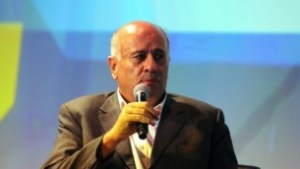
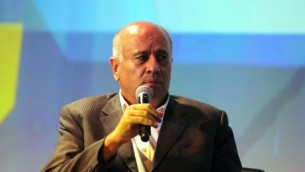
JibrilFatah official Jibril Rajoub (photo credit: Yossi Zamir/Flash 90)

Above all, he can expect stiff resistance among the members of the Fatah Central Committee, the body that will choose Abbas’s heir in Fatah and the PLO. One of his chief political rivals is the vice president of the committee, Jibril Rajoub. “Abu Rami,” almost 62, born in the town of Dura south of Hebron, was once Dahlan’s close friend. In his youth, he spent 17 years in an Israeli prison and, like Dahlan, went to Tunis and grew close to Arafat. After his return to the West Bank, he was appointed commander of the Preventive Security Force there, making him the counterpart to Dahlan in Gaza.

They used to socialize together and were considered extremely close, at least until Operation Defensive Shield in April 2002, when the IDF moved into the West Bank to dismantle the infrastructure of Second Intifada terrorism. Immediately after the IDF occupied the headquarters of the Preventive Security Force in Bethany, Dahlan went to the media hinting that Rajoub had turned over Hamas members to Israel. Rajoub still remembers the knife Dahlan placed in his back.

With time, Rajoub also began to suspect that it was Dahlan who gave Israel information that Marwan Barghouti, Israel’s most wanted suspect, was hiding in Rajoub’s headquarters. Only hours before Barghouti was arrested, Dahlan had actually brought him to Rajoub, demanding that Barghouti be allowed to hide in his headquarters. Rajoub instructed his people to get Barghouti away from the building, but the IDF nabbed him before he could leave.

Twelve years have passed since then, and the bad blood remains. Rajoub retired from his security roles, and has gained support and strength through sports. He was appointed chairman of the Palestinian Football Federation and the Olympic Committee. He also handles reconciliation talks with Hamas in Abbas’s name, and was sent by the president to Tehran last week to discuss the sensitive relations between Iran and Hamas.

In recent years, Rajoub has toughened his tone towards Israel, attacking it at every opportunity. His prominent role in Palestinian sports, and his outspoken criticisms of Israel, have made him one of the most prominent figures in Fatah.

And yet it is unlikely Rajoub could be Abbas’s heir. He suffers from problems similar to those of Dahlan: Fatah Central Committee members are expected to torpedo his chances, and the public hasn’t forgotten his former security ties with Israel.

The Palestinian el-Sissi

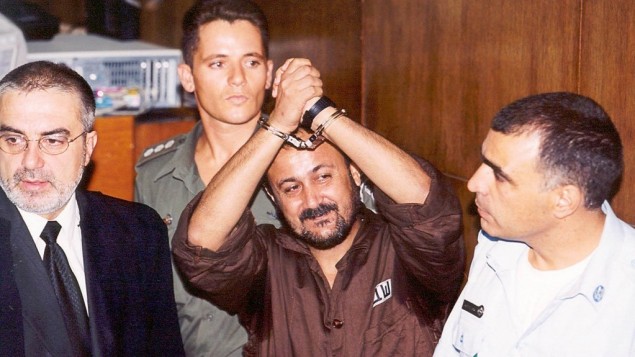
All of which underlines that the leading candidate, despite his incarceration, remains Barghouti, who was arrested in 2002 and sentenced to six life sentences.

He is not expected to be released anytime soon. But if he decides to run for president, even from prison, he would win at a canter. This week, another survey was released in Ramallah indicating that he leads any other candidate, from Fatah or Hamas, by a substantial margin.
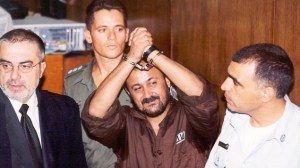
Barghoui Marwan Barghouti in court in 2002 (photo credit: Flash90)

Barghouti is 55 and was born in the small village of Kobar north of Ramallah. He is not a favorite of the Fatah Central Committee, but the public loves him, both in Gaza and the West Bank. And Fatah Central Committee Support is anything but a boon.

“If the members of the Central Committee won’t back him,” Nasser Lahham, chief editor of the leading Palestinian Ma’an news site, told The Times of Israel this week, “it would actually be great for Marwan. I’ll give you an example. In the last local elections, the Central Committee decided not to allow Ghassan a-Shikaa to run as the Fatah candidate for mayor of Nablus. So he ran as an independent and won, of course. If the committee supports Marwan, it is not good for him because of Fatah’s [lousy] image.”

Lahham sounded convinced about who the successor would be. “There will be quite a few candidates. And it’s good they try. But forget it. I am telling you, the Palestinian public will not allow anyone except Marwan to be elected. Neither from the old leadership, nor from the new. Marwan is the Palestinian el-Sissi [the leading candidate in the Egyptian elections]. We prefer a prisoner who is president than a president who is a prisoner.”

As preparations gather apace for the General Conference, the Fatah leadership will apparently choose whomever Abbas prefers for the key positions, including for the post of secretary general of the Central Committee, theoretically Abbas’s successor-in-waiting in Fatah.

Evidently pushing his own candidacy, Muhammad Shtayeh, a former member of the PA negotiating team, said this week that the Palestinian Authority should become the “Resistance Authority,” a reference to the ostensible need to renew the struggle against Israel. His colleague on the committee, Tawfiq Tirawi, said that Fatah could go back to the “armed struggle” and the rifle at any time. Another member of the committee, chief negotiator Saeb Erekat, talks about the need to turn away from the talks with Israel toward unilateral moves at the UN. (Erekat, by the way, may be a compromise candidate for members of the Central Committee, since he has barely any enemies in the movement.) Not one of them speaks about peace anymore. They don’t even whisper it.

Appeasement and economic sanctions

February 7, 2014

Israel Hayom | Appeasement and economic sanctions.

Yoram Ettinger

According to Winston Churchill, “an appeaser is one who feeds a crocodile, hoping it will eat him last.”

The U.S. administration is leading the easing of economic sanctions against — and the legitimization of — the regime of Iran’s apocalyptic, almost-nuclear ayatollahs and mullahs, the allies of North Korea, Venezuela, Cuba and other anti-U.S. rogue regimes. They are the chief sponsors of anti-U.S. Islamic terrorism, the role model of anti-U.S. incitement and non-compliance with agreements, double-talk, repression, public executions, state-sponsored terrorism and subversion against the pro-U.S. oil-producing Arab states.

Simultaneously, and against the will of the American people and the U.S. Congress, the White House and the State Department imply a not-so-subtle support of supposed European economic sanctions against the fallible Jewish state, which is the most reliable, stable, predictable, capable, democratic and unconditional ally of the U.S. in the Middle East and beyond. Israel is the only country whose alliance with the U.S. is based on shared Judeo-Christian values, the foundation of Western democracy and American morality.

Contrary to the state of mind of the American people and the U.S. Congress, the U.S. administration has not warned anti-Israel Europeans of the dire consequences should they resort to sanctions against the Jewish state — a besieged island of Western democracy surrounded and assaulted by an ocean of anti-Western Islamic tyrannies. Instead, the current U.S. policy — shaped largely by a foreign policy establishment which courted Hafez Assad, Bashar Assad, Saddam Hussein, Khomeini, Arafat, Hamas and the Muslim Brotherhood — provides a tailwind to misguided Europeans, and fuels unrealistic Palestinian expectations, radicalism and violence.

Western governments have chosen to pressure and threaten the Jewish state — the only Middle Eastern country where Jews, Christians and Muslims enjoy civil liberties and Muslim women benefit from equal opportunities — while placating and appeasing the regime of Mahmoud Abbas:

*The author of the Palestinian Authority death penalty for Arabs selling land to Israeli Jews, while Israel uproots Jews who settle disputed land

*The ethnic-cleanser who reiterates opposition to the existence of Jewish communities in the proposed Palestinian state, while the Jewish state extends freedom of religion, press, expression, assembly and association to the 1.7 million Israeli Arabs, who — including most east Jerusalem Arabs — prefer Israeli to Palestinian citizenship

*The founding father of Western-bankrolled Palestinian hate education, who heralds suicide bombers, using Western financial aid to provide monthly allowances to families of Palestinian terrorists

*The head of a repressive and corrupt regime, nicknamed, by Judea and Samaria Arabs, “Sodom and Gomorrah” and “Mr. 20%” (kickbacks)

*The liquidator of the ancient Christian communities in Bethlehem, Beit Jallah, Ramallah and Beit Sakhour. There are more Christian refugees in Belize, Central America, than there are Christians left in Beit Jallah. From a Christian majority in Bethlehem before the 1993 arrival of Abbas, the Christian community has been reduced to a 15% minority

*A graduate of KGB training and Moscow University (Ph.D. thesis — Holocaust denial); the coordinator of PLO ties with the Communist Bloc; an ally of Russia, China and North Korea; the loyal deputy of Arafat, systematically betraying the trust of Egypt (1950s), Syria (1966), Jordan (1970), Lebanon (1970-1982) and Kuwait (collaboration with Saddam’s August, 1990 invasion of Kuwait) through subversion and terrorism

*A systematic violator of most agreements with Israel since 1993, when Israel imported some 70,000 PLO terrorists from Yemen, Iraq, Sudan, Libya, Syria, Lebanon and Tunisia and provided them with control over 40% of Judea and Samaria and all of Gaza. The Ottoman Empire, the British Mandate, Jordan nor Egypt ever allowed this when they controlled that area. Mahmoud Abbas reciprocated with unprecedented hate education, terrorism and non-compliance

The current U.S. administration, however, has chosen to pressure the Jewish state and placate Iran and the Palestinian Authority.

Regardless, the ideological and strategic fabric of the mutually beneficial, win-win U.S.-Israel relationship — based on shared values, mutual threats and joint interests — will withstand appeasement and cynicism. But, vital U.S. interests could be severely compromised unless the U.S. heeds the following advice of Churchill: “This is only the first sip, the first foretaste of a bitter cup, which will be proffered to us year by year, unless by a supreme recovery of moral health and martial vigor, we arise again and take our stand for freedom as in the old times.”

Obama’s World: Embrace and Appeasement, not Realism

February 7, 2014

Faster, Please! » Obama’s World: Embrace and Appeasement, not Realism.

( A must-read coherent explanation of Obama’s Iran/Middle East policy. – JW )

Posted By Michael Ledeen On February 6, 2014 @ 6:18 pm

Appeasers believe that if you keep on throwing steaks to a tiger, the tiger will become a vegetarian.
Heywood Campbell Broun [1].

I don’t think it’s hard to understand Obama’s foreign policy.  Although there’s a lot we don’t know about him, his basic impulses are clear enough.  He’s told us what they are (although, to be sure, he often misleads and obfuscates [2]), and his actions are in keeping with his announced impulses.  Furthermore, there’s nothing unique or surprising about them — you can hear them in our classrooms and our college dorms, and read them in the establishment press every day.  He’s an establishment member in high standing.

Voilá:

He believes that most of the serious problems in the world are the result of past American actions.  Call it imperialism.  Call it meddling.  Call it arrogance (as the Iranians do).  Whatever you call it, it means that pre-Obama policies were bad.  Ergo, it’s mostly Bush’s fault. (Shorthand for “before me, they didn’t understand.  Anything.”)

It follows that the single most important action to ensure good policies is to rein in the United States.  Get it out of the messes it has created.  Weaken its abilities to meddle elsewhere.  Ergo the retreats from Iraq and Afghanistan.  Ergo the often spectacular dissing of past allies and the embarrassing embrace of previous and actual enemies.  Diss Mubarak, embrace the Muslim Brotherhood.  Ergo the incredible shrinking military budget, ergo the back-of-the-hand slap to many of our greatest warriors.

It also follows that our foreign policy requires a new language, beginning with making amends for the bad policies of the past, and continuing with a dramatic realignment, aiming at creating a new alliance structure with countries we maltreated in the past.  Ergo the global apology tour.  Ergo the refusal to respond to insults from the likes of Hugo Chavez.  Ergo the Russian “reset” stratagem.  And ergo the Iran deal, pursued eagerly and relentlessly even before the 2008 election results were in, wrapped in terms of respect (the careful pronunciation of “The Islamic Republic of Iran,” for example).  And ergo the rejection of “American exceptionalism,” putting the United States on the same moral and political platform as contemporary Greece.

Those are his core principles.  It’s a highly ideological policy matrix, beginning with his conviction that WE are the root cause of most bad things.  It’s not subtle, doesn’t require mastery of nuance or even history, as his error-ridden Cairo speech demonstrated to anyone who cared to actually read it (my favorite is the claim that Muslims invented printing, when the Chinese did that, and Portuguese Jews brought it to the Middle East).  Indeed, he and his minions are so uninterested in the facts of the world that they regularly invent the world, as Secretary of State Kerry did when he falsely announced that “last year, not one Israeli was killed by a Palestinian from the West Bank.”  Actually there were several [3].

That’s what happens when an ideological vision blinds us to reality.  Obama’s ideology is a “pidgin” version of the standard  leftist view, according to which class conflict is the engine of history, with the oppressors (call them the 1%) ruling it over the impoverished and alienated poor (the 99%).  The pre-Obama United States is the incarnation of the 1%, and most of the rest of the world, especially the poor, or underdeveloped world, make up the 99%. Obama and his followers have a romantic attachment to the 99%, and his many calls for “fairness” apply to his international impulses as well as to his domestic passions.

This notion of class conflict may have explained European history for a period right after the industrial revolution, but it has little to do with the globalized world we live in.  Since it does not explain the world, people who believe it are very poorly placed to make sensible policy, either domestic or international.  Yet those who believe it continue to embrace the happy thought that they are morally and intellectually superior to the rest of us, as Fred Siegel elaborates in his wonderful new book [4] The Revolt Against the Masses.

We have been told that Obama considers himself so smart that he is bored with the problems that afflict the real world.  He evidently thinks he’s got the answers.  If you suggest that he’s failing, he lifts his chin and mentally tosses you into the “they don’t get it” pot.

Obama is actually easy to understand, although plenty of smart people keep trying to find other explanations.  Of late, Peter Foster [5], Lee Smith [6] and Mike Doran [7] have been hard at it, looking for new ways to explain Obama’s Iran policy.  Lee Smith argues that Obama’s a “realist,” and that his guru is Harvard’s Professor Walt.  He suggests that Obama views the Middle East in old-fashioned balance-of-power terms, and accepts Iran as a major player with whom we must come to terms. Mr. Doran doesn’t think Obama really cares if Iran gets the bomb, and has been bluffing all along, and Mr. Foster thinks Obama doesn’t really care if the sanctions break down, since if Iran makes lots of money via deals with the P5+1 countries, they will be very reluctant to go back into the misery of the sanctions regime, thus making a final deal more likely.  He quotes Wendy Sherman to that effect.

I agree with Doran and Foster, but I think their focus is too narrow.  Iran policy isn’t a singular effort, it’s part of a pattern.  Obama sympathizes with the regime’s ideology, he agrees that our past actions justify branding us the “Great Satan,” and he wants to make everything right with the mullahs.  He doesn’t see the regime’s enmity toward America as a fixed principle, as their raison d’etre, and he has undertaken to change it.  He has been secretly negotiating with them all along, convinced by his ideology that it will all work out.  So he doesn’t fear a nuclear Iran any more than I fear a nuclear Britain, France or Israel.

Lee Smith’s surprising suggestion that Obama’s a “realist” strikes me as too far out.  Yes, Walt and the president agree that Israel is a terrible nuisance, but Obama’s foreign policy–of which Iran is just one component–is hardly realistic.  It’s driven by passion and a false vision of the world, not by tough-minded geopolitical analysis.

If you want a good two-word description of Obama’s approach to the world, call it passionate appeasement.  And go back and read the quotation at the top.


Article printed from Faster, Please!: http://pjmedia.com/michaelledeen

URL to article: http://pjmedia.com/michaelledeen/2014/02/06/embrace-and-appeasement/

URLs in this post:

[1] Heywood Campbell Broun: http://www.giga-usa.com/quotes/authors/heywood_campbell_broun_1_a001.htm

[2] misleads and obfuscates: http://pjmedia.com/victordavishanson/obama-as-chaos/

[3] there were several: http://www.algemeiner.com/2014/02/03/kerry-says-no-deaths-from-west-bank-terror-in-2013-just-days-after-shin-bet-lists-fatalities/

[4] wonderful new book: http://pjmedia.com/eddriscoll/2014/02/02/interview-fred-siegel/

[5] Peter Foster: http://blogs.telegraph.co.uk/news/peterfoster/100258304/obamas-dangerous-game-on-iran-is-now-becoming-clear/

[6] Lee Smith: http://www.tabletmag.com/jewish-news-and-politics/161815/stephen-walt-the-new-kennan?all=1

[7] Mike Doran: http://mosaicmagazine.com/tesserae/2014/02/i-dont-bluff/

Off Topic: Fatah and the “Armed Struggle” against Israel

February 7, 2014

Fatah and the “Armed Struggle” against Israel, Gatestone InstituteKhaled Abu Toameh, February 7, 2014

While in English Abbas was voicing his opposition to an armed struggle, in Arabic Palestinian officials were issuing statements in support of “armed resistance” against Israel.

When senior figures of the Fatah urge Palestinians to be prepared for the possibility of “armed struggle”against Israel, they are actually instructing Fatah militiamen to be prepared to launch terrorist attacks.

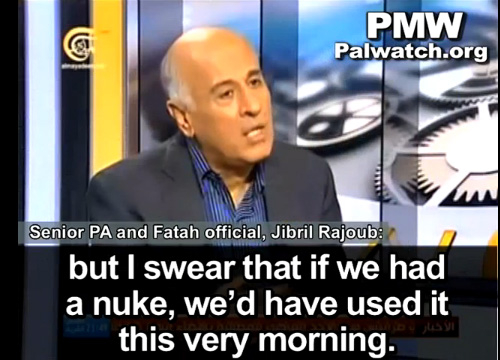
Palestinian official on nuking IsraelJibril Rajoub, a member of the Fatah Central Committee and former commander of the Palestinian security forces. (Image source: Palestinian Media Watch)

In an interview this week with the New York Times, Palestinian Authority President Mahmoud Abbas once again expressed his opposition to an armed struggle against Israel.

“In my life, and if I have any more life in the future, I will never return to the armed struggle,” Abbas declared.

But while in English Abbas was voicing his opposition to an armed struggle, in Arabic Palestinian officials were issuing statements in support of “armed resistance” against Israel. The officials who favor “armed resistance” are not low-level bureaucrats working in the Palestinian Authority [PA]. Rather, they are senior representatives of Abbas’s ruling Fatah faction. Moreover, their names are often mentioned as potential successors to Abbas, who last month entered his 10th year of his four-year term in office.

In the past, Abbas has explained his opposition to the use of violence against Israel by arguing that this has proven to be “ineffective” and could bring more “destruction” to the Palestinians.

The good news is that the Fatah leadership recently repeated its support for a “popular struggle” against Israel. The announcement was made during Fatah’s celebrations marking its 49th anniversary.

The bad news is that Fatah is not united when it comes to the issue of resorting to terrorism against Israel. Fatah has many “rebels” and armed groups that continue openly to call for an “armed struggle” against Israel as a way of achieving Palestinian goals.

In recent months, a growing number of top Fatah officials such as Jibril Rajoub, Tawfik Tirawi and Mahmoud al-Aloul – all members of the Fatah Central Committee – have publicly come out in favor of a return to an “armed struggle” against Israel. Rajoub and Tirawi are former commanders of the Palestinian security forces in the West Bank and are considered close allies of Abbas. Al-Aloul, who is also closely associated with Abbas, is a former governor of the West Bank’s largest city, Nablus.

In addition, various armed groups belonging to Fatah, such as the Aqsa Martyrs Brigades, continue to maintain a presence not only in the West Bank, but the Gaza Strip as well. The group’s militiamen never miss an opportunity to issue all kinds of threats against Israel, including turning Tel Aviv into a “mass of flame.”

Abbas has chosen not to comment on the calls by his top loyalists for an “armed struggle” against Israel. There could be three reasons for Abbas’s decision to sit on the fence. First, he may be afraid of alienating these officials and other Fatah members who are eager to resort to terrorism against Israel. Second, perhaps Abbas, deep inside, does not completely oppose the idea. Third, Abbas probably wants to use these threats as a means of extracting concessions from Israel and scaring the international community into forcing Israel to accept Palestinian demands.

The statements in favor of an “armed struggle” are aimed at preparing the Palestinian public for another round of violence with Israel if and when the US-sponsored Israeli-Palestinian negotiations fail.

Abbas may be ignoring these statements, but many Palestinians listen very carefully to the messages coming out of their top representatives.

When senior figures of the Fatah such as Rajoub and Tirawi urge Palestinians to be prepared for the possibility of an “armed struggle” against Israel, they are actually instructing Fatah militiamen and supporters to be prepared to launch terrorist attacks.

Just last week, Rajoub told the Iranian TV station Al-Alam that, “The option of resistance, including armed resistance, remains on the table.”

Tirawi, for his part, sent the following message to the Palestinians: “This who think that the negotiations [with Israel] will bring us anything are mistaken. We must return to the cycle of action. This means resistance in all forms. Fatah has not abandoned the option of armed struggle.”

Al Aloul, in a similar message, emphasized, “Fatah has not abandoned the armed struggle as a legitimate right. Fatah’s sixth conference, which was held in Bethlehem in the summer of 2009, reaffirmed this point.”

It is almost unheard-of for Hamas to say a good word about Fatah. But the increased talk about resorting to terrorism against Israel has prompted Hamas to heap praise on Fatah’s leaders. Referring to the Fatah calls for renewed violence against Israel, Hamas leader Musa Abu Marzouk commented, “These are positive statements, especially in light of the fact that the three officials are members of Fatah’s central Committee.”

Obviously, there are some in Fatah who still believe in suicide bombings and rocket attacks as a way of forcing Israel to make concessions. These Fatah officials have forgotten that Palestinians paid a heavy price for “militarizing” the Second Intifada, and are now willing to send young men and women once again to “sacrifice” themselves for the Palestinian cause.

It is nice to read Abbas’s calming and moderate statements in the New York Times. But one should also not ignore the other voices coming out of his inner circle.

A Sclerotic Goes to War Stats – Past Year

February 7, 2014
  • Since February 25, 2012
Country Views
United States FlagUnited States 561,716
Germany FlagGermany 105,595
United Kingdom FlagUnited Kingdom 102,592
Canada FlagCanada 79,415
Israel FlagIsrael 75,299
Australia FlagAustralia 46,383
France FlagFrance 27,116
Finland FlagFinland 19,994
Brazil FlagBrazil 19,419
Netherlands FlagNetherlands 18,335
Belgium FlagBelgium 17,661
Switzerland FlagSwitzerland 16,957
India FlagIndia 15,966
Poland FlagPoland 11,512
Sweden FlagSweden 11,444
Romania FlagRomania 10,943
Japan FlagJapan 10,315
Philippines FlagPhilippines 9,824
Malaysia FlagMalaysia 9,704
Italy FlagItaly 9,165
Saudi Arabia FlagSaudi Arabia 7,591
South Africa FlagSouth Africa 7,129
Panama FlagPanama 7,013
New Zealand FlagNew Zealand 6,595
Singapore FlagSingapore 6,053
Mexico FlagMexico 5,869
Lebanon FlagLebanon 5,732
Russian Federation FlagRussian Federation 5,719
Argentina FlagArgentina 5,713
Ireland FlagIreland 5,280
Thailand FlagThailand 4,886
Egypt FlagEgypt 4,571
Luxembourg FlagLuxembourg 4,566
Hungary FlagHungary 4,473
Serbia FlagSerbia 4,068
Kenya FlagKenya 3,789
Austria FlagAustria 3,694
United Arab Emirates FlagUnited Arab Emirates 3,393
Spain FlagSpain 3,116
Croatia FlagCroatia 3,080
Ukraine FlagUkraine 3,080
Portugal FlagPortugal 2,433
Greece FlagGreece 2,353
Aruba FlagAruba 2,353
Turkey FlagTurkey 2,312
Qatar FlagQatar 2,308
Korea, Republic of FlagRepublic of Korea 2,302
Slovenia FlagSlovenia 2,263
Nigeria FlagNigeria 2,245
Bahrain FlagBahrain 2,086
Papua New Guinea FlagPapua New Guinea 1,756
Uganda FlagUganda 1,703
Slovakia FlagSlovakia 1,653
Denmark FlagDenmark 1,582
Cyprus FlagCyprus 1,441
Indonesia FlagIndonesia 1,377
Pakistan FlagPakistan 1,355
Norway FlagNorway 1,344
Bulgaria FlagBulgaria 1,274
Maldives FlagMaldives 1,264
Iceland FlagIceland 1,211
Tanzania, United Republic of FlagUnited Republic of Tanzania 1,095
Angola FlagAngola 1,048
Venezuela FlagVenezuela 1,022
Dominican Republic FlagDominican Republic 1,014
Taiwan, Province of China FlagTaiwan 944
Malta FlagMalta 825
Czech Republic FlagCzech Republic 767
Latvia FlagLatvia 755
Jordan FlagJordan 640
Trinidad and Tobago FlagTrinidad and Tobago 580
Virgin Islands, British FlagBritish Virgin Islands 444
Hong Kong FlagHong Kong 438
Kuwait FlagKuwait 424
Bangladesh FlagBangladesh 397
Albania FlagAlbania 372
Viet Nam FlagViet Nam 331
Sri Lanka FlagSri Lanka 321
Morocco FlagMorocco 287
Colombia FlagColombia 262
Lithuania FlagLithuania 261
Georgia FlagGeorgia 249
Syrian Arab Republic FlagSyrian Arab Republic 241
Ghana FlagGhana 234
Palestinian Territory, Occupied FlagPalestine, State of 224
Honduras FlagHonduras 209
Bosnia and Herzegovina FlagBosnia and Herzegovina 205
Oman FlagOman 203
Estonia FlagEstonia 198
Ethiopia FlagEthiopia 188
Tunisia FlagTunisia 185
Zimbabwe FlagZimbabwe 183
Netherlands Antilles FlagNetherlands Antilles 180
Chile FlagChile 172
Algeria FlagAlgeria 170
Malawi FlagMalawi 161
Iraq FlagIraq 161
Armenia FlagArmenia 151
Azerbaijan FlagAzerbaijan 151
Jamaica FlagJamaica 147
Peru FlagPeru 144
Ecuador FlagEcuador 141
Macedonia, the former Yugoslav Republic of FlagMacedonia, the Former Yugoslav Republic 135
Uruguay FlagUruguay 133
Costa Rica FlagCosta Rica 133
Puerto Rico FlagPuerto Rico 123
Cambodia FlagCambodia 108
Iran, Islamic Republic of FlagIran, Islamic Republic of 96
Yemen FlagYemen 96
Mauritius FlagMauritius 95
Myanmar FlagMyanmar 89
Virgin Islands, U.S. FlagVirgin Islands 89
Antigua and Barbuda FlagAntigua and Barbuda 88
Bahamas FlagBahamas 87
Barbados FlagBarbados 87
Botswana FlagBotswana 79
Montenegro FlagMontenegro 77
Afghanistan FlagAfghanistan 72
Namibia FlagNamibia 70
Sudan FlagSudan 61
Brunei Darussalam FlagBrunei Darussalam 53
Moldova, Republic of FlagMoldova 52
Nepal FlagNepal 51
Fiji FlagFiji 49
Senegal FlagSenegal 47
Zambia FlagZambia 45
Guatemala FlagGuatemala 45
Libya FlagLibya 44
Lao People's Democratic Republic FlagLao People’s Democratic Republic 39
Bolivia FlagBolivia 34
China FlagChina 32
Guam FlagGuam 31
Belarus FlagBelarus 29
El Salvador FlagEl Salvador 28
Paraguay FlagParaguay 26
Réunion FlagRéunion 26
Côte d'Ivoire FlagCôte d’Ivoire 21
Comoros FlagComoros 20
Nicaragua FlagNicaragua 20
Benin FlagBenin 20
Rwanda FlagRwanda 20
Kazakhstan FlagKazakhstan 20
Cuba FlagCuba 19
Macao FlagMacao 18
Gibraltar FlagGibraltar 17
Guyana FlagGuyana 16
Djibouti FlagDjibouti 16
Suriname FlagSuriname 16
Togo FlagTogo 15
Jersey FlagJersey 15
Cameroon FlagCameroon 15
Mozambique FlagMozambique 15
Grenada FlagGrenada 14
Haiti FlagHaiti 14
Gambia FlagGambia 14
Belize FlagBelize 14
Faroe Islands FlagFaroe Islands 14
Mali FlagMali 13
Mongolia FlagMongolia 13
Guernsey FlagGuernsey 12
Isle of Man FlagIsle of Man 11
Liberia FlagLiberia 11
New Caledonia FlagNew Caledonia 10
Cayman Islands FlagCayman Islands 9
Cook Islands FlagCook Islands 9
Madagascar FlagMadagascar 9
Kyrgyzstan FlagKyrgyzstan 8
Sierra Leone FlagSierra Leone 8
Swaziland FlagSwaziland 7
Lesotho FlagLesotho 7
Gabon FlagGabon 7
Guinea-Bissau FlagGuinea-Bissau 7
Bhutan FlagBhutan 6
Tajikistan FlagTajikistan 6
Monaco FlagMonaco 6
Mauritania FlagMauritania 5
Guadeloupe FlagGuadeloupe 5
Congo FlagCongo 5
Northern Mariana Islands FlagNorthern Mariana Islands 5
Anguilla FlagAnguilla 5
French Polynesia FlagFrench Polynesia 5
Burkina Faso FlagBurkina Faso 5
Somalia FlagSomalia 4
Cape Verde FlagCape Verde 4
Saint Lucia FlagSaint Lucia 4
Dominica FlagDominica 4
Solomon Islands FlagSolomon Islands 3
Marshall Islands FlagMarshall Islands 3
French Guiana FlagFrench Guiana 3
Tonga FlagTonga 3
Bermuda FlagBermuda 3
Seychelles FlagSeychelles 3
Martinique FlagMartinique 3
Congo, the Democratic Republic of the FlagDemocratic Republic of the Congo 3
Micronesia, Federated States of FlagMicronesia, Federated States of 3
San Marino FlagSan Marino 2
Andorra FlagAndorra 2
Burundi FlagBurundi 2
Saint Vincent and the Grenadines FlagSaint Vincent and the Grenadines 2
Åland Islands FlagÅland Islands 2
Turks and Caicos Islands FlagTurks and Caicos Islands 2
Samoa FlagSamoa 2
American Samoa FlagAmerican Samoa 2
Uzbekistan FlagUzbekistan 2
Niger FlagNiger 2
Equatorial Guinea FlagEquatorial Guinea 1
Kiribati FlagKiribati 1
Central African Republic FlagCentral African Republic 1
Korea, Democratic People's Republic of FlagDemocratic People’s Republic of Korea 1
Saint Kitts and Nevis FlagSaint Kitts and Nevis 1

Off Topic: Liberman backs Kerry as ‘true friend of Israel’

February 7, 2014

Liberman backs Kerry as ‘true friend of Israel’ | JPost | Israel News.

By TOVAH LAZAROFF, JPOST.COM STAFF

02/07/2014 13:03

Foreign minister lashes out at Bennett, warns against damaging relations with Israel’s allies; Yisrael Beytenu leader criticizes government, saying “leadership with courage” is needed to make change.

Foreign Minister Avigdor Liberman.

Foreign Minister Avigdor Liberman. Photo: Marc Israel Sellem/The Jerusalem Post

Amid criticism from the Israeli Right about US diplomacy in the region, Foreign Minister Avigdor Liberman proclaimed US Secretary of State John Kerry as “a true friend of Israel,” warning that it was not wise to damage relations with allies.

Liberman took a stab a recent criticism from Economy Minister Naftali Bennett over remarks Kerry made about the possibility of boycotts on Israel if peace talks with the Palestinians break down.

While Liberman said he supported Kerry’s efforts to reach a two-state solution, he said he was not willing to pay any price for achieving such a deal and Israel’s security concerns must be addressed.

The foreign minister said he agreed that land and population swaps should be part of a peace deal.

During a speech at the Commercial and Industrial Business Club in Tel Aviv, the Yisrael Beytenu leader also addressed the management of the government, saying the splintering structure deducted from productivity.

“What is needed is leadership with courage to make changes,” he charged.

“The government needs to be managed well. With this kind of coalition of opposites, it is difficult even in the economic sphere,” he added.

Off Topic: Obama may be in two minds over Kerry’s Israeli-Palestinian peace mission

February 7, 2014

Obama may be in two minds over Kerry’s Israeli-Palestinian peace mission.

DEBKAfile Exclusive Analysis February 7, 2014, 11:51 AM (IST)
John Kerry and the boss

John Kerry and the boss

The give-and-take over an Israeli-Palestinian accord, doggedly kept afloat by US Secretary of State John Kerry, is resolving itself into a complex dynamic depending heavily on personalities and their interrelations.

Kerry needs to overcome reservations in President Barack Obama’s White House team; Israel’s A-team – Prime Minister Binyamin Netanyahu, Foreign Minister Avigdor Lieberman and Defense Minister Moshe Ya’alon – are not of one mind on the issues; Palestinian leader Mahmoud Abbas’s popular base is infamously flimsy.
The over-heated war of words between Jerusalem and Washington did not erupt in Israel’s A-Team. It came from a second-string cabinet member, Minister of the Economy Naftali Bennett, who was challenged by two fellow members, the senior negotiator, Justice Minister Tzipi Livni and Finance Minister Yair Lapid.
Yet Secretary Kerry reacted emotionally to aspersions, some of them imagined.

His warning of a boycott and international isolation threatening Israel if his initiative failed, struck a sensitive nerve and was interpreted as an attempt at intimidation. But no responsible Israeli ever accused him of anti-Semitism – as US Ambassador Dan Shapiro claimed in a radio interview Friday, Feb. 7. The words of a member of Bennett’s party may have been interpreted as such, and he quickly took them back.

The spoof parodying Kerry as scattering ridiculous concessions to the Palestinians was mild compared to the savage political satire routinely targeting Israeli politicians. It could have been laughed off. But by repeatedly rushing to the Secretary’s defense over a couple of remarks by a minister, frustrated by his exclusion from the negotiating loop, the State Department spokeswoman Jennifer Psaki made a mountain out of a molehill.
So where does the US-Israeli-Palestinian peace process go from here?

Breaking new diplomatic ground, Kerry is pressing the Israeli prime minister and Palestinian leader to submit in writing their views and reservations on the US positions he put before them in private, one-on-one conversations. He proposes to embody their comments in a non-binding paper to be the framework for further negotiations.
That paper has two-against-one support in the top Israeli threesome: Netanyahu accepts it as a basis for negotiations, but wants changes with reference to Palestinian recognition of Israel as a Jewish state and less clarity on the extent of swaps for the settlement blocs remaining on the West Bank in a Palestinian state as well as Jerusalem. These issues should be left vague, in the prime minister’s view.

Lieberman, who morphed in recent months into Washington’s most ardent fan in the Israeli cabinet, urges full acceptance of the Kerry paper.

Ya’alon is the holdout. He advocates its rejection – ruling out in particular the security plan composed by US Gen. John Allen.
Kerry and his team have marked the defense minister, rather than Bennett, as the mainspring of Israeli resistance to his effort.
The critics of the handling of his mission are to be found in Washington as well as Jerusalem. Some circles, as high as the White House level, believe Kerry erred in places and left gaps that may be hard to bridge.

His State Department team is faulted, for instance, for over-reliance on Mahmoud Abbas as the single negotiator for the Palestinians. Instead of building a broad popular foundation, they will be placing any future accord on an extremely narrow and flimsy base.

All three parties, Kerry, Israel and Abbas, are seen as missing a rare opportunity for addressing the Hamas rulers of the Gaza Strip at their lowest moment in a decade. Instead, Abbas has focused on the Palestinian refugee question. His latest demand is for each individual Palestinian refugee to be given the option of choosing where he wants to live after the conclusion of a peace accord with Israel. That was in fact the only core issue addressed last week.

It would seem that it is up to three individuals to determine the outcome of the sensitive, brittle peace process which John Kerry set in motion nearly a year ago. But that would be an over-simplification. Netanyahu must win the approval of his government and people (he has promised a national referendum for this purpose); Abbas does not speak for the Palestinian majority; and the Secretary of State will have to take the deal back to Washington for President Obama’s approval, which is far from being in his pocket.