Archive for February 1, 2014

Off Topic: Ansar Jerusalem takes credit for latest Eilat rocket attack

February 1, 2014

Ansar Jerusalem takes credit for latest Eilat rocket attack, The Long War Journal, David Barnett

In a statement released to jihadist forums today, the Sinai-based jihadist group Ansar Jerusalem (Ansar Bayt al Maqdis) claimed responsibility for a rocket attack yesterday evening on the southern Israeli city of Eilat. The rocket, fired from the Sinai, was intercepted over Eilat by an Iron Dome missile defense battery stationed near the city.

In its statement, Ansar Jerusalem accused the Egyptian military of working with “the Jews.” Egypt is allowing Israeli drones to fly over the Sinai and “spy on the mujahideen,” the jihadist group charged.

The communiqué concluded by warning: “Jews, you have to know that nothing will stop us from fighting you, even if the entire world’s armies move on your instructions. If they create a barrier between us and you, with God’s help and strength, we will get you and kill you.”

The latest attack came just over 10 days after Ansar Jerusalem had taken credit for a separate rocket attack on Eilat in January. With the two recent attacks, an Iron Dome missile defense battery is likely to stay in the Eilat area for the foreseeable future.

In August, the Mujahideen Shura Council in the Environs of Jerusalem (MSC) took responsibility for a rocket attack on Eilat. The MSC said it fired the Grad rocket, which was intercepted by one of Israel’s Iron Dome missile defense systems, in response to the killing of four members of Ansar Jerusalem.

Although Eilat has not normally been a target of rocket fire from terror groups in the region, it has increasingly come under fire during the past two years. On Nov. 20, 2012, Ansar Jerusalem claimed to have fired rockets at Eilat. The same group also took responsibility for a rocket attack on Eilat in mid-August 2012.

More recently, in early July last year, Ansar Jerusalem issued a statement claiming responsibility for the firing of two rockets toward Eilat. Prior to that, in April, the Mujahideen Shura Council in the Environs of Jerusalem claimed responsibility for a rocket attack on Eilat.

Ansar Jerusalem, which was founded by Egyptians, is the dominant jihadist group operating in the Sinai Peninsula today. The group, whose fighters are often seen with the al Qaeda flag, has claimed credit for a number of attacks against Israel and Egypt over the past two years.

In September 2013, Ansar Jerusalem, which releases material through the jihadist forums of Al Fajr Media Center, al Qaeda’s exclusive media distribution outlet, declared that “it is obligatory to repulse them [the Egyptian army] and fight them until the command of Allah is fulfilled.” Recent reports in the Egyptian media have suggested that Ansar Jerusalem may have links to Muhammad Jamal and the Muhammad Jamal Network [MJN], which were added to the US government’s list of designated terrorists and the UN’s sanctions list in October 2013.

Jamal, whose fighters have been linked to the Sept. 11, 2012 Benghazi terror attack, is said to have established “several terrorist training camps in Egypt and Libya” with funding from al Qaeda in the Arabian Peninsula. In late August, Ansar Jerusalem was lauded by an AQAP official as “our mujahideen brothers in Sinai.”

Eilat goes back to business after rocket fire from Sinai

February 1, 2014

Eilat goes back to business after rocket fire from Sinai – Israel News, Ynetnews.

Though frequency of rockets towards resort city increases recently, Eilat’s residents, tourists feel confident under Iron Dome’s protective shield, try to maintain regular routine, spirits

Meir Ohayon

Published: 02.01.14, 18:18 / Israel News

After yet another rocket was intercepted by Eilat’s Iron Dome battery, an understanding is gradually setting in that the rockets threat on one of Israel‘s most famous resort towns is here to stay, at least for now.

Still, residents and tourists of the area are expressing much optimism Saturday, a day after a rocket was launched towards the city. The siren that pierced the Shabbat evening quiet did not alarm the citizens and visitors, and large crowds arrived Saturday morning at the city’s sites, promenade and businesses as they do every weekend, as if nothing happened. The return to normal in Eilat once again proves to be quite quick.

From the residents’ remarks, it is notable that the Iron Dome battery that was deployed in the city instills much confidence with them, and perhaps this is the fact that allows them not to sink into greater fears in light of the increasing frequency of missiles fired towards the city.

“There is no doubt that Iron Dome has proven itself time and time again,” said acting chairman of the Eilat tourism board, Yossi Chen, who travelled in the city Saturday morning. “I think of Eilat as a touristic city that needs this protection in order to keep being a safe city for its citizens and guests.” Chen praised the resilience shown by Eilat’s residents and visitors: “The proof is that when there’s fire towards the city of Eilat it does not deter tourists and vacationers from coming here, and the residents go about their business as usual immediately after the fire.”

Eilat beach on Saturday morning (Photo: Meir Ohayon)

Shlomit Biton-Rassoni, an owner of several convenience stores and mother of two, went to work as usual on Saturday: “In my opinion, now that the frequency of rockets has increased, we face a potential blow to our businesses, but if that happens it’s only up to us and how we react.” On her part, she tries to keep “business as usual” in order to instill confidence with her children, customers and employees: “That’s what needs to be done, and we should definitely avoid hysterical remarks that only cause stress.”

No rocket-talk

Yoram Nadal, an owner of an organic farm in the area, barely had time to talk. Like all other Saturdays, he was swamped with visitors: “Nothing happened. It’s nothing, a passing episode. Many tourists and visitors came, all strolling around the farm,  young children playing outside and jumping on the toddler trampoline, mothers near by, many sitting at the café here. Everyone is enjoying the lovely weather. No one speaks of the rockets that were launched (Friday) night.”

Large crowds arrived Saturday morning at the city's promenade (Photo: Meir Ohayon)
Large crowds arrived Saturday morning at the city’s promenade (Photo: Meir Ohayon)

Galina Reznikov, a secretary, spoke about her experience Friday night: “I was in a parking lot near my house. I just got out of the car and then I heard the siren. I looked up because hordes of birds began flying around. I saw the rocket coming, it was very bright, and heard the explosion. I got in the car and turned around. I saw lots of police cars but nothing else, and then I just returned home. I hope Iron Dome will always be here, this way we’ll be protected.”

A siren sounded in Eilat little after 9:30 pm on Friday, and the Iron Dome battery intercepted a rocket that was launched from the Sinai Peninsula. Security forces blocked roads in the area and conducted searches to find the rocket remains. The radical Salafi organization Ansar Bait al-Maqdis, affiliated with al-Qaeda , took responsibility for the rocket fire.

In the beginning of last week, two Grad rockets were launched towards Eilat, and they were located several hours later in an open field. Following the fire, the defense establishment assessed that the launches were related to an assassination attempt that took place in the Gaza Strip a few days earlier, and the fire was aimed, among other things, to increase tensions between IDF and the Egyptian army.

Off Topic: Kerry warns of boycott against Israel if peace deal not reached

February 1, 2014

Kerry warns of boycott against Israel if peace deal not reached | JPost | Israel News.

By REUTERS, LAHAV HARKOV

LAST UPDATED: 02/01/2014 20:16

US secretary of state makes remarks at Munich Security Conference; Deputy defense minister Danon slams Kerry’s remarks saying that Israel will “not negotiate with gun to its head.”

US Secretary of State John Kerry at the Munich Security Conference in Germany

US Secretary of State John Kerry at the Munich Security Conference in Germany Photo: REUTERS

US Secretary of State John Kerry believes Israel could face an economic boycott if the current round of peace negotiations with the Palestinians does not lead to a final deal.  Kerry made  the remarks on Saturday at  the Munich Security Conference.

“There’s an increasing de-legitimization campaign that has been building up. People are very sensitive to it. There are talk of boycotts and other kinds of things, Kerry said, referring to the possible failure of the talks.

Economy Minister Naftali Bennett (Bayit Yehudi) reacted strongly to Kerry’s remarks.

“No nation has ever given up its land because of economic threats and we won’t either,” Bennett said.

“Only security will bring economic stability, not a terror state near Ben Gurion Airport,” he added. “We expect our friends in the world to stand by us during attempts at an anti-Semitic boycott of Israel, instead of being their megaphone.”

“Either way, we knew in the past and know today how to stand strong,” Bennett warned.

Deputy Defense Minister, Danny Danon (Likud-Beytenu), also criticized Kerry’s boycott related remarks on Saturday.

“We respect the [US] secretary of state but we will not negotiate with a gun put to our head,” Danon said.

Danon called Kerry’s words an “ultimatum”, and said that true friends do not set ultimatums.

“We will make decisions that protect Israel’s interests,” Danon added, “If we had made decisions according to every boycott threat, we would not be here today.”

Deputy Minister in the Prime Minister’s Office Ofir Akunis (Likud Beytenu) echoed Bennett and Danon’s criticism. “We were here before him [Kerry] and we’ll be here after him.”

“Kerry is using an aggressive policy against Israel, which is not bringing peace any closer,” Akunis added.

On the other side of the political spectrum, MK Nachman Shai (Labor) agreed with Kerry’s boycott fears and said Israel is facing an “economic tsunami” and that boycotts have “passed the point of no return.”

“Together with other sanctions, the international community is starting a joint battle to pressure Israel,” Shai stated. “Our nightmare is coming true and the government refuses to understand that things will never be the same.”

Meretz leader Zehava Gal-On also in line with Kerry’s boycott fear called on Prime Minister Binyamin Netanyahu to stop settlement construction in the West Bank.

“Continuing the occupation and settlements are not acceptable anymore not just to European countries but to banks and private companies,” Gal-On stated. “Their decisions can turn Israel into an outcast country, isolated like Cuba and South Africa.”

“The prime minister needs to wake up, because the world is losing patience and the threat of boycotts on Israel grows from day to day,” Gal-On added.

Along with his boycott warning Kerry  remained hopeful that the Obama administration’s effort to broker a peace deal between could succeed.

“I’m not going to sit here and give you a measure of optimism, but I will give you a full measure of commitment,” Kerry said.

The United States hopes to complete a “framework” accord in coming weeks and will then try to negotiate a final peace deal by the end of 2014, a US official said this week, according to a participant in a briefing with American Jewish leaders.

“I am hopeful and we will keep working on it,” Kerry, who despite widespread skepticism is leading the US effort to push the two sides toward a deal, said during remarks at the Munich security conference.

“I believe in the possibility or I wouldn’t pursue this,” he said. “I don’t think we’re being quixotic … We’re working hard because the consequences of failure are unacceptable.”

US envoy Martin Indyk said the framework would address core issues in the conflict, including borders, security, refugees and Jewish settlements, a participant in the briefing said.

Prime Minister Binyamin Netanyahu’s coalition, which includes pro-settler parties, has already shown signs of strain over talks on Palestinian statehood.

Off Topic: Steinitz: Israel may ‘eliminate’ Hamas government

February 1, 2014

(How much better than Hamas would the PA be if Israel does not give it all that it demands and the “peace process” fails?  DM)

Steinitz: Israel may ‘eliminate’ Hamas government  Times of Israel Adiv Sterman

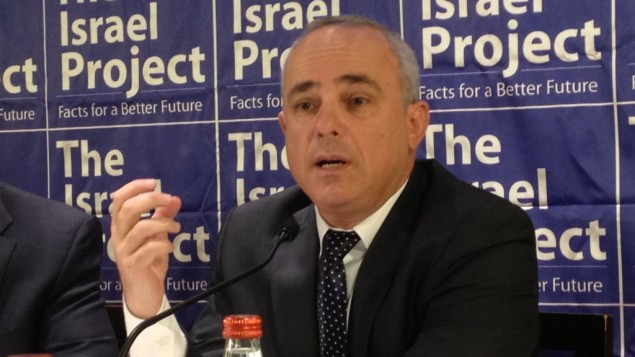
Steinitz
Intelligence Minister Yuval Steinitz briefing reporters in Jerusalem, October 14, 2013. (photo credit: Raphael Ahren/TOI)

The Israeli military may invade the Gaza Strip and topple its Hamas government if rocket fire on Israel continues, Intelligence Minister Yuval Steinitz said Saturday.

Speaking at an event in Kfar Saba, Steinitz said that though missile attacks have decreased over the past two years, Israel cannot accept a renewal of rocket fire at its territory.

“If the drip of rockets from Gaza continues, we will have no choice but to go inside [Gaza] in order to eliminate Hamas, and allow the Palestinian Authority to regain control of the Gaza Strip,” Steinitz said.

“Israel heavily retaliates to any [rocket] fire, and will continue to do so,” he added.

Steinitz’s comments came following an incident Friday in which two Grad rockets were fired at the southern city of Eilat. The Iron Dome missile defense system shot down at least one of two rockets, which were fired from the Sinai Peninsula.

An al-Qaeda-linked terrorist group that operates in the Sinai and Gaza, Ansar Bayt al-Maqdis, claimed responsibility for Friday’s attack.

The group said in a statement that the rocket attack was prompted by “the cooperation between Egypt and Israel and the bombing of Gaza residents.”

Israel launched airstrikes against targets in the Gaza Strip early Friday morning in retaliation for a rocket fired at the southern city of Netivot.

“Nothing will stop us from our objective of fighting you and hurting you,” the Sinai-based terror group said.

Eilat pays for Israel’s patchy security policy in Gaza and IDF’s quiet cooperation with Egypt

February 1, 2014

Eilat pays for Israel’s patchy security policy in Gaza and IDF’s quiet cooperation with Egypt.

DEBKAfile Exclusive Analysis February 1, 2014, 1:58 PM (IST)
A Grad missile which exploded in Eilat

A Grad missile which exploded in Eilat

Israel’s southernmost town, the Eilat tourist resort of 70,000 inhabitants, is now being targeted for missile attack from Sinai every few days.

No one has been hurt and nothing damaged – thus far. This time, Iron Dome caught the ball but no defense system is foolproof. The Red Sea tourist resort knows it must prepare for the worst, in the light of the short-sighted policy Prime Minister Binyamin Netanyahu and Defense Minister Moshe Yaalon have adopted i.e., security and intelligence cooperation with Egypt’s presidential candidate and strongman Gen. Abdel-Fattah El-Sisi, in place of direct action.

The government’s handling of the Syrian and Hizballah fronts, as well as the negotiations on the future of Jerusalem and the West Bank, show the same pattern of over-reliance on external forces to look after Israel’s essential security concerns.

In the space of two years, Israel’s prime minister and defense minister agreed to place the handling of two dangerous terrorist threats in foreign hands.
One:  It caused Israel to secretly drop – or overlook – the fundamental Sinai demilitarization clause in its 1979 peace treaty with Egypt and allow Gen. El-Sisi to inject military forces into the peninsula to combat the Islamist terrorists overrunning wide areas of northern and central regions and the borders of the Gaza Strip and Israel.

The peace treaty was ratified 35 years ago by the Knesset. Any changes should have – but were not – put before the House.
For years, the IDF, Israel’s military intelligence and air force consistently rejected all Cairo’s requests to permit Egyptian air force activity in Sinai – even during the Mubarak regime.

That restriction was waived last year. Egyptian aircraft and helicopters have taken to bombing terrorist targets and even penetrating Gaza Strip airspace for gathering intelligence.
The last Egyptian air strike Friday, Jan. 31 against Islamist terrorist targets in the peninsula was the heaviest ever. An estimated 60 missiles were dropped on the northern Sinai village of Al-Pitat near Sheikh Zuweid, killing at least 13 Ansar Bayt al-Maqdis fighters and destroying many buildings.

Al Qaeda undervalued as “global jihad”
Israeli official spokesmen never name this or any other jihadist organization, referring to “global Jihad” – apparently hoping a vague term will diminish the immediacy of the menace.

It is therefore important to lay out clearly the true nature of Ansar Bayt al-Maqdis.

It is a coalition of Islamist groups and militias led by Abdallah Al-Ashqar which brings together Al Qaeda fighters from Yemen, Saudi Arabia, Libya, Sudan, Egypt and Sinai Salafist Bedouin.
Its command structure incorporates the military arms of the Egyptian Muslim Brotherhood, the Palestinian Hamas and the pro-Iranian Jihad Islami.

Its most violent element is the virulent Al-Gama’a al-Islamiyya, a veteran Egyptian ultra-radical organization, that was responsible for the assassination of President Anwar Sadat in 1981 for signing peace with Israel.

Three years ago, Al-Gema’a terrorists stormed and torched the US and Israeli embassies in Cairo.

A year later, on Sept. 1, 2012, the same Egyptian jihadists took part in the attack on the US consulate in Benghazi, Libya, and the murder of US Ambassador Chris Stevens and another three American officials.
Both Israel and Washington have systematically glossed over the presence of the deadly Al Gama’a al-Islmamiyya in Sinai, because it would then be revealed as the connecting link between the Egyptian Ansar Bayt al-Maqdis and the Al Qaeda cells operating in eastern Libya, mainly Benghazi and Darnah.
Those cells keep the various terrorist groups operating from the Gaza Strip and Sinai well supplied with arms.

Seen from the perspective of Israeli national security and strategic interests, a highly dangerous terrorist coalition has sprung up on its southwestern border. Al Qaeda’s affiliates have gained freedom of movement and action across a vast geographic area, ranging from Libya to the Gaza Strip, and furnished with unlimited sources of arms and funds.

Gaza ceasefire culminates in Ansar Bayt al-Maqdis

Two: On Nov. 21, 2012, the prime minister agreed to cut short the IDF’s operation against protracted Palestinian missile fire for the sake of giving US Secretary of State Hillary Clinton a lever for embarking on a complex diplomatic move.

The Obama administration was in the throes of assembling a pro-US regional alliance scraped together from a group of Sunni leaders: the Egyptian Muslim Brotherhood’s President Mohamed Morsi (since overthrown), its Palestinian offspring Hamas, Turkish Prime Minister Tayyip Erdogan (currently in league with Tehran) and Qatar’s ruler, Sheikh Hamad Khalifa al-Thani (since abdicated).
The deal Clinton negotiated was for Palestinian consent to stop shooting missiles at Israel as part of a ceasefire, in return for which the pro-US alliance would rebuild the Gaza Strip and its economy and shore up Hamas rule for contesting the Palestinian Authority in Ramallah and its head, Mahmoud Abbas

This ambitious master plan soon sank into oblivion because of two developments which neither the US nor Israel took into account:
Safely buttressed by this US-sponsored bloc, the Muslim Brotherhood immediately set about furtively molding Hamas and the Ansar Bayt al-Maqdis into an underground militant arm, ready to snap into action in the event of the Brothers’ ouster for a wave of terror against Egyptian military and government targets.

Since his coup against the Muslim Brotherhood last July, Gen. El-Sisi has made the destruction of this terrorist machine his army’s top priority.

The Netanyahu government’s proclivity for depending on outside forces to pull its terrorist irons out of the fire left a tempting hole in Israel’s deterrence, which the Islamist Ansar Bayt al-Maqdis terrorists were quick to grasp.

Last week, they released a communiqué warning that missiles and other terrorist operations would descend on the Israel enemy for every Egyptian military attack they suffered.
The missile fired against Eilat Friday night was the Ansar’s response to the massive Egyptian air strike on its hideouts early that day.
Eilat and its inhabitants have been made hostages to jihadist terror against the Egyptian army. Worst of all, there is nothing much Israel can do about it when the missiles are fired from sovereign Egyptian territory. The Israeli Air Force may hope that Hamas can be forced to hold back the rocket fire under the pressure of air strikes, but so far they have not stemmed the new round of rocket fire coming in from the Gaza Strip and the Sinai Islamist terrorists are right out of their range.

Ambassador: Trade turnover between Iran and U.S. growing despite of sanctions

February 1, 2014

(Even happier days are coming when we will be able to buy more nuke stuff from North Korea and give more help to our comrades in jihad. DM)

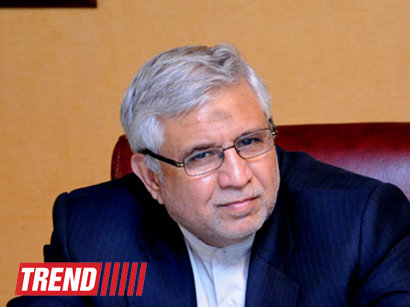
Ambassador: Trade turnover between Iran and U.S. growing despite sanctions  TREND By Temkin Jafarov

Iranian ambassador1 February 2014, 15:24 (GMT+04:00)

Despite of the sanctions imposed by the U.S. and its allies on Iran, the trade turnover between the U.S. and Iran is growing, Iranian ambassador to Azerbaijan Mohsun Pakayin told Trend on Feb.1.

The trade turnover between the two countries amounted to $360 million as of 2013, according to the ambassador. The trade turnover between the U.S. and Iran was equal to $252.3 million in 2012, according to ISNA news agency.

As a result of sanctions, the trade turnover between the two countries started to drop beginning from mid-2010, while its growth is observed from mid-2012, the diplomat said.

The trade turnover between the two countries increased by 39 percent (to $118.5 million) in January-April 2013 compared to the same period of 2012.

Pakayin pointed out that immediately after the imposing of the sanctions a decrease was observed in economic relations of the two countries. However, later the U.S. companies began to find circuitous legal ways for cooperation, after which the trade turnover began to grow.

Taking into account the agreement signed in Geneva (lifting of several sanctions against Iran), the trade turnover between Iran and the U.S. will increase even more, the ambassador said.

Bogus Chemical Weapons Deal Underscores Obama’s Failures in Syria

February 1, 2014

Bogus Chemical Weapons Deal Underscores Obama’s Failures in Syria | Peter S. Goodman – – HUFFINGTON POST.

Posted: 01/31/2014 12:40 pm
Obama Syria

NEW YORK — Barack Obama will have to account to history for his ineffectual fiddling in the face of the catastrophe playing out in Syria, much as Bill Clinton must forever contemplate the genocide that unfolded in Rwanda on his watch.

The latest evidence comes via the Obama administration’s admission on Thursday that the Syrian government of Bashar al-Assad has flouted the deadline to eliminate its stocks of chemical weapons under a deal brokered by Russia. By the end of last year all of those weapons were supposed to have been removed from Syria. The actual quantity sent out? Four percent.

You will recall that Obama recklessly put American credibility at stake in delineating as a red line any confirmed use of chemical weapons by Assad — as in, “Cross this line and terrible consequences will certainly follow.” When the regime indeed unleashed such horrors in the Syrian suburbs on Aug. 21, killing hundreds of people, many of them children, Obama did what he is wont to do in the face of a test of his resolve: He pledged strong action, backed away, then assented to a half-baked deal that managed the political optics without altering conditions on the ground.

First, he publicly marshaled what seemed a certain military strike on Assad’s capabilities, while signaling to his allies — chiefly France and Great Britain — that the fate of global security rested on following through. French President Francois Hollande promised to go along, taking a hit from domestic public opinion. British Prime Minister David Cameron sought to be a good ally, pursuing the blessing of parliament only to be rebuked — a stinging political defeat.

Then, having led his allies into harm’s way, Obama changed his mind. He sought congressional approval for a military strike, and when passage turned dubious, he lent support to the Russian initiative through which Assad promised to destroy his chemical weapons. Which is not happening, it now turns out. Meanwhile, Assad’s military position has been strengthened, as has his apparent will to maintain his oppressive rule.

During the debate over how to respond to the chemical weapons attack, I argued in this space against an American-led military strike to punish Assad absent international coordination through the United Nations. I still maintain that a unilateral strike would have been damaging. Yet such a strike would have been vastly superior to the outcome that played out — lots of threats, no action, and a plainly impossible-to-execute disarmament deal.

In short, Obama’s indecision and political inclinations reinforced the status quo inside Syria — terror, bloodshed and the prospect of endless war. If you’re Assad and you are willing to employ any means to cling to power, Obama has effectively demonstrated that you can carry on while ignoring the rhetorical threats of outside intervention. Red lines are drawn in chalk that washes away in the rain.

For students of Obama, this sort of non-policy served up as political palliative is of a piece with other episodes, notably his mishandling of the foreclosure crisis that has assailed American communities during and after the Great Recession.

In that case, Obama’s Treasury failed to reckon with the fundamentals of the mortgage market — specifically, the reality that major banks make a fortune off homeowner distress — while offering token cash payments to mortgage companies willing to give troubled homeowners a break. When the mortgage companies did next to nothing, shaking down homeowners and flouting their agreements to provide relief, the Obama administration threatened them with consequences. Then, nothing happened.

The stakes in Syria, of course, go far beyond the financial distress of American homeowners. More than 100,000 people have been killed and millions more have been turned into refugees. The Assad regime has employed a strategy of effective starvation against the rebels, denying access to international relief groups seeking to bring in food, medicine and clean water. Rebel armies affiliated with al-Qaeda employ terror tactics such as beheadings.

The existence and brutality of the Syrian war cannot be pinned on any single leader, and certainly not on Obama. It is in essence a geopolitical conflict being waged by Russia, Iran, Saudi Arabia and others via proxy forces, much as the civil war that raged in Cambodia into the early 1990s was really a continuation of the Vietnam War fought to the last Cambodian.

The Syrian war cleaves on religious lines, pitting the great Sunni Muslim power Saudi Arabia and its Western allies — who, to varying degrees, support a mix of predominantly Sunni rebel groups — against the Shiite power Iran and its ally Russia, which fervently support Assad.

Caught in the middle are ordinary Syrians.

This was put succinctly at a recent dinner in Davos by Ghassan Salame, a Lebanese-born man who served as senior adviser to former United Nations Secretary General Kofi Annan and is now dean of the Paris School of International Affairs.

“The Shia have Russia,” he said. “The Sunni have the West. The atheists have only God.”

Fully ending this tragedy will require a comprehensive political solution that now seems remote, as underscored by a wholly unproductive round of peace talks about to be concluded in Geneva. But in the meantime, basic decency demands pursuit of a humanitarian relief campaign. And that’s where Obama’s policy failures are so damaging.

The only way to force Assad to accept aid convoys is to make him fear the consequences of failing to do so. He needs to feel pressure from outside powers and anxiety over the possibility of international intervention. He must calculate that a continued campaign to hold on to power by massacring his own people could bring to his doorstep blue helmeted troops acting under the authority of the United Nations.

That threat is already remote, since Russia — Assad’s unwavering protector — holds a permanent seat on the U.N. Security Council, giving it veto power. But even if that substantial impediment were overcome, Obama’s feckless leadership has demonstrated the reality that, on his watch, consequences are things that are talked about and only rarely delivered.

Those stocks of chemical weapons still parked inside Syria stand as a perfect illustration — one surely not missed by Assad.

‘Military action likely’ if Iran talks fail, US spokeswoman says

February 1, 2014

‘Military action likely’ if Iran talks fail, US spokeswoman says | JPost | Israel News.

( Meaningless pap from a low-level nobody to assuage the Dem Senators worried about their futures after bailing on the sanctions. – JW )

By MICHAEL WILNER

LAST UPDATED: 02/01/2014 02:41

Harf says US is committed to preventing Iran from acquiring nuclear weapons, and that “riskier” options will be unavoidable if current diplomatic efforts fail.

Interior of Bushehr nuclear plant

Interior of Bushehr nuclear plant Photo: REUTERS/Stringer Iran

WASHINGTON- State Department deputy spokeswoman Marie Harf said on Friday that a resolution to the longstanding nuclear crisis with Iran, should current diplomatic efforts fail, “is likely to involve military action.”

“I’m not predicting that we would take military action right away,” Harf said. “It’s more of a broad statement that, look, if we can’t get this done diplomatically in six months or a year or at any time, we will– we are committed to resolving it. And that involves less durable and, quite frankly, riskier actions.”

In his fifth State of the Union address this week, US President Barack Obama said that negotiations between Iran and the P5+1– the US, United Kingdom, France, Russia, China and Germany– were the world’s best chance to resolve the standoff “peacefully” and to avoid “the risks of war.”

But rather than directly stating that war was the potential risk of diplomatic failure, Obama said that, should talks fail, he would be “the first” to pursue additional sanctions against the Islamic Republic from the US Congress.

Harf was asked by The Jerusalem Post whether the administration considered war or additional sanctions as more likely if diplomacy, now at a critical juncture, does not achieve a comprehensive solution in a time frame agreed upon by world powers and the Obama administration.

“I’m not saying in six months we’re going to go to war if we don’t get a deal done. Broadly speaking, the alternative to resolving this diplomatically is resolving it through other means,” Harf said.

“There are only a few scenarios that come out of this: either we resolve it diplomatically or we resolve it a different way,” Harf continued. “It’s just common sense that that different way could involve– is likely to involve military action.”

Thus far, negotiations have achieved a six-month freeze in Iran’s expansive nuclear program, which includes over 20,000 centrifuges used to enrich uranium in multiple nuclear plants as well enough stockpiled fissile material for 5-6 nuclear warheads.

Iran agreed to freeze most of its enrichment work and to begin diluting its stockpile of near-20 percent enriched uranium– a key threshold in the enrichment process– in exchange for sanctions relief from world powers amounting to roughly $7 billion.

The interim agreement, reached in Geneva on November 24 and formally known as the Joint Plan of Action, is intended to cap international sanctions pressure on Iran and its nuclear work for six months while the parties negotiate a permanent end to the decade-old impasse. The parties may extend that deadline an additional six months if all nations agree the negotiations are progressing.

Prime Minister Benyamin Netanyahu has called the interim agreement “a very bad deal” that has made the world “a much more dangerous place.”

In recent weeks, the White House has repeatedly warned that war might be a consequence of a collapse in the talks. But those inferences came in the context of a warning to the US Senate, where a bipartisan group of legislators have been mulling a bill that would trigger new sanctions tools against Iran if talks fail, or if the JPOA is not properly upheld.

Obama has threatened to veto the bill, which was introduced by Senate Foreign Relations Committee chairman Robert Menendez, a Democrat.

“I don’t think Americans want a march to war,” White House press secretary Jay Carney said in his daily briefing on January 14. “We share the desire to make sure that Iran is held to account.  But we need to do so in a way that allows maximum flexibility to achieve a resolution here peacefully.”

Senate backs down from proposing new Iran sanctions

February 1, 2014

Israel Hayom | Senate backs down from proposing new Iran sanctions.

( Cowardice and craven political brown-nosing.  “Yeah, the beat goes on…” – JW )

Several Democratic senators, who in the past said they would vote in favor of more sanctions, publicly rescind their support for the new legislation • Officials on Capitol Hill say additional senators have also backtracked, despite not yet going public.

Yoni Hirsch, Dan Lavie and Israel Hayom Staff

U.S. President Barack Obama

|

Photo credit: Reuters

Off Topic: The Kerry plan — can Israel say no?

February 1, 2014

The Kerry Plan — can Israel say no? Israel Hayom, Yoram Ettinger

The assumption that Israel must accept the Kerry plan as a basis for negotiations with the Palestinian Authority — lest it risk a rift with the U.S. — should be assessed in light of the full context of U.S.-Israel strategic cooperation, the imploding Arab street, the unique foundations and nature of U.S.-Israel ties, the U.S. political system, the ineffectiveness of prior U.S. plans and Israel’s own security requirements.

U.S.-Israel strategic cooperation transcends the Palestinian issue. Despite the 66-year-old disagreement between the two governments about the ways and means to resolve the Palestinian issue, strategic cooperation has catapulted tounprecedented heights.

Notwithstanding Arab talk— but based on the Arab walk — the Palestinian issue does not preoccupy the attention of Arab policy-makers, does not significantly impact vital U.S. interests and does not play a key role in destabilizing the Middle East, as reaffirmed by the tectonic Arab tsunami that is unrelated to Israel or the Palestinian issue.

The Palestinian issue has been superseded by regional and global mutual threats, interests and benefits, shaping the increasingly two-way mutually beneficial U.S.-Israel agenda: the U.S. supply of critical military systems to Israel and the Israeli battle-tested laboratory, which enhances the performance of U.S. military systems and the U.S. defense industries; the joint development of ballistic, space, UAV, cyber and other critical technologies; Israeli innovations upgrade the competitive edge of U.S. high-tech industries; Israel provides intelligence on Iran’s nuclear threat and Islamic terrorism on the U.S. mainland and beyond; Israel trains elite American units in counter-terrorism and urban warfare, shares battle lessons and helps shape U.S. battle tactics; Israel’s power-projection deters rogue regimes, which threaten pro-U.S. Arab regimes such as Jordan and Saudi Arabia; and so on.

Israel’s role as the most consistent, capable and willing ally of the U.S. gains in importance, as the Arab street becomes increasingly anti-U.S., Islamist, unstable and unpredictably violent. While the U.S. cuts its defense budget and withdraws its military from the Middle East, Russia and China deepen their presence in the region and West Europe is preoccupied with domestic challenges.

The disagreement over the Palestinian issue is, also,superseded by shared U.S.-Israel Judeo-Christian values, which have strongly influenced U.S. morality and its legal and political systems. This dates back to the pilgrims in the 17th century, the Liberty Bell’s inscription from Leviticus, the founding fathers, the biblically driven anti-slavery movement and the statues of Moses in the U.S. House of Representatives and the U.S. Supreme Court.

American constituents have established a unique bottom-up, systematic, positive attitude toward the Jewish state. They disassociate themselves from the executive’s moral equivalence toward Israel.

In 1948, charismatic U.S. Secretary of State George Marshall pressured Israel to accept his plan of a U.N. mandate for Palestine as a substitute for independence. Marshall considered the Jewish state a liability and the Arabs an asset. He assumed that Israel would join the communist bloc and would be unable to defend itself against the invading Arabs, thus triggering a second Jewish Holocaust in less than 10 years. Prime Minister David Ben-Gurion refused to negotiate Marshall’s proposal.

When threatened with U.N. Security Council sanctions, which dictated a withdrawal from the “occupied Negev,” Ben-Gurion stated: “What Israel has won on the battlefield, it is determined not to yield at the [U.N. Security] Council table.” Ben-Gurion’s principle-driven defiance and steadfastness produced short-term pressure, but long-term strategic respect, transforming Israel into the most reliable, stable, capable, democratic and unconditional ally of the U.S. in the Middle East and beyond.

In 1957, President Dwight Eisenhower pressured Israel to evacuate the Sinai Peninsula. Senate and House leaders, both Democrats and Republicans, threatened Eisenhower with legislative paralysis, and convinced Eisenhower to reduce his pressure. However, Israel pulled the rug from under their feet by accepting the Eisenhower plan.

In December 1969 and June 1970, then-Secretary of State William Rogers introduced his plan calling for Israeli withdrawal to the 1967 lines, allowing Arab refugees to return to Israel and joint Israeli-Jordanian rule in Jerusalem. Prime Minister Golda Meir rejected the plan, initializing the construction of three large new neighborhoods in eastern Jerusalem, home to over 100,00 people. Rogers tolerated Egypt’s advancing surface-to-air missiles in violation of commitments, which facilitated the deterioration to the 1973 Yom Kippur War.

In 1977, President Jimmy Carter pressured Israel to participate in an international conference, highlighting the Palestinian issue and a full Israeli withdrawal. Prime Minister Menachem Begin dismissed the idea and initiated the dialogue with Egyptian President Anwar Sadat, which led to a peace accord.

In September 1982, President Ronald Reagan announced his plan calling for a full Israeli withdrawal and an immediate settlement freeze. Begin rejected the plan, expanded settlements and laid the foundation for the November 1983 upgrade of U.S.-Israel strategic cooperation.

Accepting Kerry’s plan would revert Israel to the pre-1967 situation, in which Israel is only a nine to 15-mile sliver along the Mediterranean, dominated by the mountain ridges of Judea and Samaria, which would be controlled by thePalestinian Authority, a systematic violator of agreements, perpetuator of hate education and generator of terror. The irreplaceability of the Judea and Samaria mountain ridges for Israel’s national security has been reinforced by the Arab Tsunami. It has made the Middle East — the most conflict-ridden region in the world — more violently intolerant, unpredictable, unreliable, unstable and treacherous.

Accepting the Kerry plan requires the subordination of long-term vision and security to short-term convenience, and the subjugation of realism to wishful thinking, thus jeopardizing the very survival of the Jewish state, transforming Israel from a unique asset to a burden. Rejecting the Kerry plan may create short-term tension but no long-term rift. On a rainy day, the U.S. prefers a defiant, rather than a submissive, ally.