Archive for November 2013

Vive la France!

November 17, 2013

Vive la France! | JPost | Israel News.

By JPOST EDITORIAL

11/17/2013 04:58

Thanks to the French, the Islamic Republic will not, for the time being, get relief from the sanctions regime as it marches – nearly unhindered – toward nuclear capability.

French President Francois Hollande and FM Laurent Fabius

French President Francois Hollande and FM Laurent Fabius Photo: Reuters

‘Sucker’s deal” is how French Foreign Minister Laurent Fabius referred to the agreement that began to materialize in negotiations between Iran and the P5+1 a week ago.

Thanks to the French, the Islamic Republic will not, for the time being, get relief from the sanctions regime as it marches – nearly unhindered – toward nuclear capability. A historic security blunder was avoided.

The French are to be praised for demonstrating leadership. Prime Minister Binyamin Netanyahu’s harsh criticism of the purported deal turned out not to be a lone voice. A warmer-than-usual welcome awaits France’s President Francois Hollande when he arrives this week accompanied by Fabius.

Fabius’s decision to break with the consensus, break the P5+1’s informal rules and go public with his reservations regarding the interim deal, is a sign of the times. Not too many years ago – particularly under the administration of president George W. Bush – it was a decidedly hawkish and interventionist US that led international coalitions in Iraq and Afghanistan. However, US President Barack Obama, in part out of deference to a war-weary America, has scaled back his country’s dominant role in the region.

The US refrained from taking the leading role in the military intervention in Libya, preferring instead to build a broad coalition. Though the Syrians crossed his redline with regard to the use of chemical weapons, Obama refrained from ordering an air attack and then failed to receive congressional support to do so. And the US has cut its aid to Egypt.

America seems to be less than willing to maintain pressure on Iran. Secretary of State John Kerry has asked US lawmakers not to increase sanctions against Islamic Republic. And the US has failed to maintain a credible military threat against Iran at least since the Islamic Republic’s new president Hassan Rouhani launched his charm offensive.

Maj.-Gen. (res.) Amos Yadlin of the Institute for National Security Studies noted recently that Jerusalem is concerned acceptance of a nuclear Iran – also referred to using the euphemistic Cold War-era term “containment” – is taking hold in Washington.

It is in this geopolitical context that Paris has stepped in to ensure that a serious deal is offered the Iranians. A number of motivations might be behind the French decision. France, as one of the few nations with nuclear weapons, wants to retain its exclusive status and tactical advantage via anti-proliferation policies. France, after all, has long taken a hard line on Iran’s program, going back to the government of president Jacques Chirac. As part of a larger strategy to increase its influence at a time when the US is wavering, the French might be interested in strengthening relations with Saudi Arabia and other Arab nations in the Persian Gulf that face big security threats if Iran goes nuclear.

Standing up to the Americans might win Hollande points among the French people. French pride was stoked by the thought that for the first time in a while – perhaps since Charles de Gaulle’s era – instead of the Americans it was the French who were doing the leading.

Whatever the motivation, the French were right on target.

The semi-official Fars news agency in Iran criticized the “destructive roles of France and Israel” for the failure of negotiations and ran a caricature of France as a frog firing a gun. “By shooting a gun he feels important,” said the commentary.

US Sen. John McCain tweeted that Paris “had the courage to prevent a bad nuclear agreement with Iran. Vive la France!”

Israel said to be working with Saudi Arabia on Iran strike plan

November 17, 2013

Israel said to be working with Saudi Arabia on Iran strike plan | The Times of Israel.

Riyadh reported to give Jerusalem okay to use Saudi airspace on cooperate on other tactical support, according to Sunday Times

November 17, 2013, 3:41 am

King Abdullah of Saudi Arabia (photo credit: AP/Hassan Ammar/File)

King Abdullah of Saudi Arabia (photo credit: AP/Hassan Ammar/File)

Israel is working on coordinating plans for a possible military strike with Saudi Arabia, with Riyadh prepared to provide tactical support to Jerusalem, a British newspaper reported early Sunday.

The two countries have both united in worry that the West may come to terms with Iran, easing sanctions and allowing the Islamic Republic to continue its nuclear program.

According to the Sunday Times, Riyadh has agreed to let Israel use its airspace in a military strike on Iran and cooperate over the use of rescue helicopters, tanker planes and drones.

“The Saudis are furious and are willing to give Israel all the help it needs,” an unnamed diplomatic source told the paper.

The report comes as Prime Minister Benjamin Netanyahu is in the midst of a blitz to lobby against a deal and cobble together an international alliance opposed to an agreement that allows Iran to continue enriching uranium.

On Sunday, Israel will welcome French president Francois Hollande, who a week earlier put the kibosh on a deal between six world powers and Iran that would ease sanctions in return for initial steps toward curbing enrichment.

Netanyahu on Friday urged France to remain firm in its pressure on Iran ahead of a new round of talks on the Islamic Republic’s nuclear program in Geneva, kicking off Wednesday.

After meeting Hollande, Netanyahu will head to Moscow on Wednesday to meet with President Vladimir Putin and lobby against the deal.

Iran’s bid for the bomb “threatens directly the future of the Jewish state,” Netanyahu told CNN recently, in a short preview clip of an interview broadcast on Saturday. As the prime minister of Israel, he stressed, he had to care for “the survival of my country.”

CNN reported that Netanyahu also said in the interview that he would do whatever it was necessary to do in order to protect Israel. The full interview will air Sunday morning.

Should a deal be reached, according to the diplomatic source, a military option would be back on the table. Saudi tactical support, in lieu of backup from the Pentagon, would be vital for a long-range mission targeting Iran’s nuclear program.

Saudi Arabia, a Sunni Muslim country across the Persian Gulf from Iran has long been at odds with Tehran, and fears a nuclear weapon would threaten Riyadh and set off a nuclear arms race in the region.

On Iran, cavernous tactical gaps separate Israel, US

November 16, 2013

On Iran, cavernous tactical gaps separate Israel, US | JPost | Israel News.

By HERB KEINON

LAST UPDATED: 11/16/2013 18:14

While Jerusalem and Washington may be on the same page in wanting to prevent a nuclear Iran, suddenly they are not reading from the same book about how to get there.
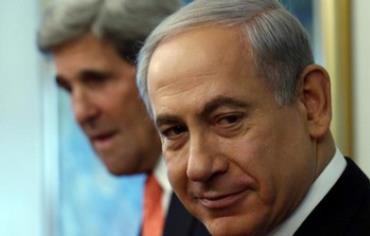
Kerry and Netanyahu

Kerry and Netanyahu Photo: Reuters

On Sunday afternoon, in the midst of considerable disagreement with Washington over Iran policy and hours after the Geneva talks between Iran and the world powers ended without agreement, Prime Minister Binyamin Netanyahu took to the US airwaves to present Israel’s case to the American public.

“I think the president and I share the goal of making sure that Iran doesn’t have nuclear weapons,” Netanyahu said with tremendous understatement on CBS’s Face the Nation, referring to US President Barack Obama. “I think where we might have a difference of opinion is on how to prevent it.”

To which one could have been forgiven for shouting at the television, “Ya think?!” Saying that Jerusalem and Washington share the goal of keeping Iran from gaining nuclear weapons, and only differ on how to achieve it, is like saying two parents concur that they want their children to grow up to be good and decent human beings, and differ only on the educational philosophy needed at home to bring it about.

What Netanyahu discussed is a pretty fundamental difference on a pretty significant issue. But, as a senior American official said in a briefing with Israeli reporters this week, that type of difference need not break up relationships. Husbands and wives love each other, the official stated, but that does not mean they don’t disagree and fight from time to time – nor that those natural fights and disagreements necessarily put the relationship in danger of collapse.

Which is a valid point, one that everyone from US Ambassador Dan Shapiro to Intelligence Minister Yuval Steinitz were at pains to stress this week.

“The truth is that the US and Israel have as close a relationship as any two countries on earth,” Shapiro said on one occasion. Steinitz said on another: “USIsrael relations are not good, they are very good.”

BUT STILL, what emerged in the very loud, public and testy dust-up this week between the US and Israel over a proposed agreement with Iran on its nuclear program were basic conceptual differences about how best to approach the issue.

Up until the June election of Iranian President Hassan Rouhani, when Mahmoud Ahmadinejad was ruling the Iranian roost and – because of his radical extremism – made it easier (though not easy) for Israel to rally opinion against Tehran, the differences over Iran had to do with timeline: when it would be necessary to act militarily to prevent Iran from getting nukes.

This was the core of the disagreement last year over redlines for Iran, with Netanyahu urging for a redline to be set, and Obama unwilling to do so.

The difference back then – pre-Rouhani days – could be summed up using a cake metaphor. Imagine you want to keep someone from baking a cake.

What is the best way to do it? Do you prevent the prospective baker from gathering all the ingredients – the eggs, flour and water – and putting them on the table to mix together and place in the oven at his pleasure (the Israeli position)? Or do you say you have time, and can wait to physically stop the baker if he dares to stick head and hands into the oven to remove the cake once it is baked (the US position)?

The entire debate over redlines was a discussion over whether military action was needed to keep the Iranians from gathering all the ingredients needed for a nuclear bomb, but not mixing them together – or whether it was wiser to wait until they mixed all the ingredients together, and were just about to pull a finished bomb out of their centrifuge-spinning military/industrial ovens.

That huge Israeli-US tactical difference could be explained by differences in proximity, threat perception and capabilities. Since Israel is so much closer to Iran than the US and feels so much more immediately threatened, and also because its military capacities are less great than those of the US, it does not feel that military action could be delayed until the very last minute – like the US. Rather, Israel asserted that military action would have to be taken to keep the Iranians from getting all the ingredients together on the table.

That was Netanyahu’s famous redline on a diagram of a cartoonish looking bomb at the UN in 2012; a redline defined as the Iranians acquiring 250 kilos of uranium enriched to 90 percent – a redline, by the way, that the Iranians have been careful not to cross.

That was then. Now, with Rouhani’s election, the discussion has shifted and is less about a redline for military action, and more about the efficacy of diplomacy, and how best to get the Iranians to back off.

Here, too, a cake metaphor can illustrate the differences.

If you don’t want the persistent baker to bake his cake, and are physically twisting his arm to keep him from doing so, do you take the pressure off his arm when he says he is no longer interested in the same type of cake and agrees not to touch the ingredients on the table for a while? Or do you only start letting up on his arm when he pours a good amount of the eggs, flour and water down the drain so he can’t make the cake, even if he might still want to?

And therein lies the major conceptual differences in the US and American approach. Those differences can be seen along two major planes. The first plane has to deal with the idea whether the P5+1 – made up of the US, Russia, China, France, Britain and Germany – should pursue an interim agreement or move only toward a final one with the Iranians, and the second has to do with sanctions.

Regarding the type of agreement to pursue, according to the American approach – as articulated this week by a senior American official who briefed Israeli journalists – the proposal put on the table in Geneva was a first stage agreement.

The idea, she said, was to get the Iranians to freeze their nuclear program for six months, and then use those six months to negotiate a comprehensive agreement on the nuclear program.

The guiding philosophy here is it will take much longer than half a year to negotiate a comprehensive deal, but that it was necessary to ensure that during these negotiations, the Iranians don’t use the time to “run out the clock” – meaning that as the negotiations plod on, they don’t use the time to continue spinning their centrifuges.

The approach advance by the US is to get the Iranians to freeze their program for six months, thereby putting some more time back on the clock for negotiations, and in return grant the Iranians some sanctions relief.

Israel has a couple of problems with that approach.

The first is that it believes that if everything is frozen for six months, then Iran – for the first time – would gain international legitimacy for being a nuclear threshold state, something it will then be more difficult to roll back.

“Iran became a de facto nuclear threshold state 12-18 months ago,” Steinitz declared this week, saying this means that once it makes a political decision to go for a bomb, it would take it less than a year to do so.

Up until now, Steinitz said, this threshold status for Iran has put it in clear violation of international law, of UN Security Council resolutions and of various stipulations of the International Atomic Energy Agency.

“Now after this interim partial agreement, Iran is actually in a very sophisticated way achieving international legitimization for being and remaining, a least for the time being, a threshold nuclear country,” he said. “It is the most dangerous thing, and it will be more difficult later to roll back their capacity, because once you give it some kind of international legitimization, it is very difficult to say it is impossible, not legitimate.”

Or, as Home Defense Minister Gilad Erdan put it even more bluntly later in the week, “We must not be mistaken: An interim agreement will be a permanent agreement.”

Steinitz said that Israel adamantly opposes a partial agreement with Iran, because Jerusalem believes in the formula that “the greater the pressure, the greater the chances for diplomacy to succeed.”

If you accept that principle, he continued, “it logically follows that the lower the pressure, the lower the chances. So the conclusion is clear: Don’t ease the pressure on the Iranians until you reach the final goal, before you reach a final comprehensive and satisfactory agreement. If you ease the pressure before that, you will lose the chances to succeed.”

Or, as Defense Minister Moshe Ya’alon put it, if the Iranians are only freezing their nuclear program, and not taking any significant steps to dismantle their centrifuges and actually roll their program back, then the world should freeze its sanctions in place, but not begin to roll them back.

A freeze for a freeze, he said, a rollback for a rollback; but definitely not a rollback of sanctions for only a freeze of the nuclear program.

Which leads to the second major conceptual difference with the US, and that has to do with sanctions – both how the Iranians will respond to heavier ones, and how to keep the world on board. These differences are larger even than the spat Wednesday between Washington and Jerusalem, about whether sanctions relief offered to the Iranians was “moderate” as the US claimed, or reached up to $40 billion, as Steinitz maintained.

ACCORDING TO the US way of thinking, if some sanctions relief is not provided in the midst of negotiations, certain countries that have been difficult to get onboard – but which are now onboard – will view this as unreasonable and begin to abandon the sanctions ship. The countries that come to mind in this context are China, Russia, Turkey, India, even South Korea.

The senior US official said that if sanctions are not relieved, but indeed more sanctions are piled on – as the US Senate is considering – two things would happen: Iran would leave the negotiating table and move more aggressively forward in its nuclear program, and the international coalition in place would say the Americans were just pressing for military action, deem this position unreasonable and begin to abandon sanctions altogether.

Israel believes the opposite.

Tougher sanctions, or at the very least not removing sanctions, would not embolden Iran to move more aggressively forward in its nuclear program, but rather render it more pliable – since the pressure of the sanctions is what brought Tehran to the table in a serious mood to begin with.

Moreover, the sanctions regime won’t collapse with more measures, but rather would begin to unravel if it is relieved because – as Netanyahu said this week – if you punch a hole in a tire, it is just a matter of time before all the air escapes and the tire goes flat.

Granted, as Netanyahu said on Meet the Press, the American and Israeli strategic goals on Iran are identical. The devil here is not in the details; rather it is in the significantly different approaches to the tactics.

Netanyahu to France: Don’t waver on Iran

November 16, 2013

Netanyahu to France: Don’t waver on Iran | The Times of Israel.

Speaking to a French daily ahead of talks in Geneva, PM urges Hollande not to let up his objections to an interim nuclear deal with Tehran

November 16, 2013, 10:41 am Prime Minister Benjamin Netanyahu and French President Francois Hollande during a welcoming ceremony in Paris Wednesday, Oct. 31 (photo credit: AP Photo/Jacques Brinon)

Prime Minister Benjamin Netanyahu and French President Francois Hollande during a welcoming ceremony in Paris Wednesday, Oct. 31 (photo credit: AP Photo/Jacques Brinon)

Prime Minister Benjamin Netanyahu on Friday compelled France to remain firm in its pressure on Iran ahead of upcoming talks on the Islamic Republic’s nuclear program in Geneva.

His comments, made during an interview with France’s Le Figaro, came days before French President Francois Hollande’s high-profile visit to Israel next week, his first trip to the country as head of state, ahead of the next round of talks on Iran’s nuclear program scheduled for Wednesday in Geneva.

Netanyahu told Le Figaro that Israel stands behind France and called on Hollande “not to waver” on its objections to an interim nuclear deal with Iran. ”We hope that France will not yield in its stance toward Iran,” Netanyahu told the French daily.

Hollande has opposed lifting sanctions on Iran until it can provide further guarantees.

In last week’s talks in Geneva between Iran and the US, Russia, China, France, Britain and Germany — the so-called P5+1 —Paris’s tough position on Iran was said to have prevented the global powers from signing an interim agreement with Tehran, one that would have included limited sanctions relief in return for a partial freeze of the country’s nuclear program.

“For us, the United States remains an important ally, the most important ally. But our relationship with France is also very special,” Netanyahu added. 

“On the Iran issue, our countries have defended common stances for years, regardless of the party in power, and we are maintaining this vital partnership with President Hollande,” he said. “We salute [Hollande’s] consistent and determined position on the Iranian issue.”

Netanyahu stated the government’s opposition to Iran having heavy water reactors or centrifuges that could be used to enrich radioactive material and conducting research that leads to the development of an atomic weapon. The Iranian regime has contended that it seeks nuclear energy for domestic programs, not for the development of nuclear weapons.

He concluded: “My view is that we must not lower our guard against a regime that helps [Syrian President Bashar] Assad kill tens of thousands of men, women and innocent children; spreading terrorism around the world; arming Hezbollah, Hamas and the Islamic Jihad with thousands of rockets aimed at Israeli towns; and finally, calls for the destruction of the State of Israel.”

Earlier Friday, a senior US official told reporters on Friday that it was “quite possible” the P5+1 powers and Iran could reach an agreement regarding the Islamic Republic’s nuclear program when diplomats meet in Geneva next week.

“I don’t know if we will reach an agreement. I think it is quite possible that we can, but there are still tough issues to negotiate,” the official, who spoke on condition of anonymity, was quoted by Reuters as saying.

In the previous round of talks, which took place earlier this month, a potential agreement was scuttled when the US, under pressure from France, inserted last-minute changes into a working draft, Russian Foreign Minister Sergey Lavrov said on Thursday.

Speaking in Cairo, Lavrov said the United States had amended the draft in response to French demands and circulated it for approval “literally at the last moment, when we were about to leave Geneva,” without consulting Iran. His comments were reported by Voice of Russia.

Earlier Friday, Netanyahu took to Twitter to keep up pressure on Western powers over negotiations with Iran on its contested nuclear program and to warn against rushing into a “bad deal.”

In his latest salvo against making concessions to Iran, Netanyahu’s Twitter account featured a cartoon-like ad that detailed what he said the pending agreement included.

“The proposal enables Iran to develop atomic bombs and build long-range missiles to reach the US and Europe,” it read. “Iran is getting everything and giving nothing.”

Netanyahu has been increasingly vocal in recent days about his opposition to a potential deal between six Western powers and Iran that would ease some sanctions while still leaving Iran with uranium-enrichment capabilities. Netanyahu has said he utterly rejects the brewing agreement and has been lobbying American allies in Congress to keep up sanctions.

Netanyahu is said to be open to an interim agreement with Iran, in principle, but only if it entails  a complete cessation of uranium enrichment by the Iranians — in exchange for which the international community could offer not to add additional sanctions. Earlier this week, an unnamed official who insisted on anonymity told The Times of Israel that the prime minister would be willing to consider “a real freeze for a real freeze” on Iran’s nuclear program.

US Secretary of State John Kerry met with Netanyahu three times last week in Israel to discuss the negotiations and US President Barack Obama followed up with a phone call to try and ease the Israeli leader’s concerns. Israel highlights relentless anti-Israeli rhetoric issued by Iran, and its support for Islamic extremist groups in southern Lebanon and Gaza, and has insisted that Tehran must be prevented from attaining a nuclear weapons capability. If necessary, Netanyahu told the UN General Assembly six weeks ago, Israel would “stand alone” to thwart the Iranian nuclear program.

Raphael Ahren and The Associated Press contributed to this report.

McCain: Don’t increase sanctions on Iran this year

November 16, 2013

McCain: Don’t increase sanctions on Iran this year – Israel News, Ynetnews.

( You too, Brutus?  – JW )

Senior senators accept White House request to not escalate sanctions on Iran during nuclear talks. ‘Whether it is 10%, 40% or 60% chance, it should be tested, probed’ senior senator says

Yitzhak Benhorin

Published: 11.16.13, 08:57 / Israel News

WASHINGTON – Senior senators have announced their readiness to accede to the request of the US government to not tighten sanctions on Iran at this time, as negotiations on the nuclear program continue. A surprising supporter of the Obama administration proposal is Republican Sen. John McCain, who has expressed skepticism regarding the success of the negotiations, yet announces he supports allowing the administration a chance.

McCain, a close friend of Secretary of State John Kerry, who heads the diplomatic efforts with Iran, said in a BBC interview: “I am skeptical of talks with Iran but willing to give the Obama administration a couple months.”

Chairman of the Senate Armed Services Committee, Jewish Sen. Carl Levin, said that “whether it is a 10%, 40% or 60% chance (that the change is real), it should be tested and probed. We should not at this time impose additional sanctions.”

Obama, McCain (Photo: Reuters)

 Chairman of the Senate Intelligence Committee Sen. Dianne Feinstein said: “I am baffled by the insistence of some senators to undermine the P5+1 talks. I will continue to support these negotiations and oppose any new sanctions as long as we are making progress toward a genuine solution.” The Jewish senator wrote on her Congress website: “The purpose of sanctions was to bring Iran to the negotiating table, and they have succeeded in doing so. Tacking new sanctions onto the defense authorization bill or any other legislation would not lead to a better deal. It would lead to no deal at all.”

Sentaor Chris Murphy from Connecticut said that “at this critical juncture in these negotiations when Iran may be on the verge of making serious concessions regarding its nuclear program, I worry it would be counterproductive for Congress to authorize a new round of sanctions, diminishing American leverage and weakening the hands of Secretary Kerry and his counterparts in the P5+1.”

This is the first time that several senior senators assent to the White House request, to allow the world powers to promote the current negotiations that will be renewed Wednesday in Geneva, without exerting pressure on Iran by imposing further sanctions. As of now, there is greater support in increasing the sanctions; however it is doubtful whether the legislation will be promoted prior to the next round of talks.

One of the major differences is Iran’s right to enrich uranium. The Iranians demand that it would be part of the agreement, while the US and the other powers oppose. The world powers’ proposal is to have Iran able to continue, for the duration of the negotiations, to enrich uranium to 3.5% and in return they would remove their already-enriched uranium to 20%, in order to assure that Iran does not advance towards a nuclear weapon during the talks.

David Ignatius: The stakes of an Iranian deal – The Washington Post

November 16, 2013

David Ignatius: The stakes of an Iranian deal – The Washington Post.

By , Saturday, November 16, 2:42 AM

BEIRUT

As Druze warlord Walid Jumblatt served a sumptuous dinner to a gathering of Lebanese notables here, the talk around the table was about who would fill the power vacuum in the region if America reaches a nuclear deal with Iran — and accelerates what’s seen as a U.S. withdrawal from the Middle East.

That’s the kind of existential anxiety I encountered across the region recently, as negotiations between Iran and the “P5+1” group — the United States, Britain, France, Russia, China and Germany — moved toward a climax. This is a deal that would alter the power dynamics that have shaped the Middle East since the Iranian revolution of 1979, and many regional players who favor the status quo, especially Israel and Saudi Arabia, are worried.

Despite the uproar since talks broke off last weekend, the process of negotiation seems about where it should be — at least from the U.S. standpoint. Iran has been asked to accept a freeze on its nuclear program in return for a limited release of its frozen assets. The Iranians, upset that the deal demands too many concessions without granting them a “right” to enrich uranium, have balked. Meanwhile, the vise of sanctions continues to squeeze their economy.

If Iran accepts the deal, it would be a strong first step toward a final agreement to halt its nuclear program. During this initial phase, the sanctions framework would remain in place and Iran would allow greater inspection of facilities. Given Iranian resistance, it’s hard to see this as the “ deal of the century ” for Tehran or a “ fool’s game ” for the West, as Israeli Prime Minister Benjamin Netanyahu and French Foreign Minister Laurent Fabius have charged, respectively.

Let’s give Netanyahu and Fabius credit for playing the “bad diplomat” role to gain maximum leverage. They’ve created a dynamic in which Tehran will have to give more than it’s getting (especially in stopping progress on its heavy-water reactor at Arak, as Fabius rightly insisted). If Tehran can’t make these concessions, the world will see that Iranian President Hassan Rouhani can’t or won’t deliver the deal that would lift sanctions and give Iran a voice in regional security issues, such as Syria.

Given the seeming benefits of the deal, it’s curious that Netanyahu has set himself so adamantly against it. Netanyahu’s rejectionist stance directly challenges the authority of President Obama, who has invested the credibility of his administration in gaining this diplomatic resolution. It’s as if West Germany had denounced John F. Kennedy while he was negotiating a deal to resolve the Cuban missile crisis in 1962.

Netanyahu seems to think that if sanctions have brought Iran to the table and gained concessions, then more sanctions will force Tehran to give up its nuclear program altogether. But administration officials fear that imposing more sanctions at this delicate moment (as Netanyahu is pushing Congress to do) will just blow up the negotiations. The administration thinks that Tehran, rather than surrendering, may accelerate the nuclear program — producing the very result that Israel fears.

If Netanyahu’s capitulation demand doesn’t work, the next step presumably would be even more crushing sanctions or eventual Israeli military action.

Here we return to the question posed by my Lebanese friends around the dinner table — about who would fill the power vacuum in the region. My sense is that Israel and Saudi Arabia would love to scuttle an American rapprochement with an Iran they regard as a deadly adversary. But if Obama presses ahead, Netanyahu is bidding to replace the United States as military protector of the status quo, including the security of the Gulf Arabs.

Strategically, this de-facto Israeli alliance with the Saudis is an extraordinary opportunity for Israel. And for Fabius, there’s a chance to position the French as the West’s prime weapons supplier to the Saudis, gaining France hundreds of billions of dollars in the post-American era in the Gulf. For opportunistic reasons, no wonder Israel and France want to detonate the U.S.-Iranian rapprochement. But will this really aid their security?

The Obama administration would counter (correctly, I think) that embracing the Saudi strategy of an ever-deepening Sunni-Shiite divide is unwise. The schism will fuel permanent sectarian war in Iraq, Syria and Lebanon. The Saudis now are blocking formation of any government in Lebanon, for example, to obstruct Iran’s ally, Hezbollah. In Syria, the Saudis seem ready to fight the Sunni-Shiite battle down to the last Syrian.

Better to seek a turn in relations with Iran through diplomacy that can limit its nuclear program, Obama reasons. He’s right.

Right-wing pro-Israel lobby slams Obama in new ad

November 15, 2013

Right-wing pro-Israel lobby slams Obama in new ad | The Times of Israel.

( The vid I posted yesterday just went National ! – JW)

Video exploits US public concerns over Obamacare to warn of president’s untrustworthiness on Iran

November 15, 2013, 6:43 pm

US President Barack Obama (photo credit: AP/Jacquelyn Martin/File)

US President Barack Obama (photo credit: AP/Jacquelyn Martin/File)

The Emergency Committee for Israel, a right-wing pro-Israel lobby in Washington, released a TV ad on Thursday bashing US President Barack Obama as untrustworthy on Israel and Iran.

The one-minute video, titled “Obama’s March to War,” strikes a very relevant cord for many Americans by beginning with the president’s promises regarding his signature healthcare legislation, popularly known as “Obamacare.”

“If you like your private health insurance plan, you can keep your plan, period” the now-famous presidential sound bite states, with the video cutting to Obama apologizing to those Americans who it now appears will not be able to maintain their previous coverage. “I am sorry they are finding themselves in this situation based on assurances they got from me.”

The clip then turns to the president’s “red line” vow to strike Syria if chemical weapons were to be used or transferred in the war-torn country. It then presents Obama as backtracking somewhat, when he tells reporters in September, “I didn’t set a red line, the world set a red line.”

The administration eventually decided to not strike Bashar Assad’s regime, in light of a last-minute deal to disarm Syria’s chemical weapons brokered by Russia.

The video resolves with an implicit warning to not take the president at his word on Iran, starting with another Obama sound bite, this time from an AIPAC conference. “When the chips are down, I have Israel’s back,” the president said in March 2012. But then the video shows Obama telling reporters that his comments to AIPAC were not a “military doctrine.”

The clip ends with Obama promising, during a debate with 2012 Republican presidential contender Mitt Romney, to prevent Iran from acquiring a nuclear weapon. The screen cuts to black and then a nuclear explosion is seen.

Meanwhile, Israeli public opinion of the president’s policies regarding Iran appeared to be solidifying. A poll in the Israeli daily Israel Hayom found Friday that 65.5% of Israelis felt that Israel should oppose the nuclear deal being formulated this month in Geneva between the P5+1 and Iran, while only 16.2% supported the potential agreement.

In addition, 52.4% of respondents said they would support an Israeli attack on Iran’s nuclear facilities, and a full 68.8% were confident that the IDF is up to the task.

The Increasing Desperation of John Kerry

November 15, 2013

The Increasing Desperation of John Kerry | Jewish & Israel News Algemeiner.com.

November 15, 2013 9:33 am 1 comment

Author:

Shmuley Boteach

Secretary of State John Kerry, then chairman of the Senate Foreign Relations Committee, speaks at a December 2009 hearing. Photo: U.S. Navy Petty Officer 1st Class Chad J. McNeeley.

Witness the transformation of John Kerry from global diplomat to global supplicant, Diplomat-in-Chief to Beggar-in-Chief.

Just a few weeks ago the new US Secretary of State bestrode the world like a colossus. The man who could not be president in 2004 got a new lease of life as second only to the President on the global stage.

And boy was he impressive. That is, until he wasn’t.

First he showed phenomenal moral fortitude in pushing for a strike against Bashar Assad after he gassed hundreds of children.

But then, after making an ill-informed comment about Syria doing a chemical dismantling deal, he quickly relented. Russia came to Assad’s rescue and the butcher of Baghdad has, to date, never been punished for the mass slaughter of kids.

Then Kerry rose to the occasion on Iran, warning the world of the dangers of the mullah’s nukes.

But here we are, just a few weeks later, and Kerry has been reduced to threats of violence against Israel in order to persuade a reluctant world to support his appeasement of Tehran.

Just this morning Kerry warned (threatened?) on MSNBC that failing to reach a nuclear deal with Iran will mean that Iran will get nuclear weapons.

Have we heard this script before?

Last week there was the even juicier nugget that if Israel did not reach an accord with the Palestinians there would be a third intifada, a comment that America’s outstanding Ambassador to Israel, Dan Schapiro, seemed to repudiate in his address to the Jewish General Assembly in Jerusalem.

I’ve discovered as a parent that when I reduced to threats of punishment against my kids it’s really because I have lost the voice of moral authority. Otherwise, I would not need external inducements to persuade them.

I feel bad for John Kerry. He is looking increasingly desperate and ridiculous. He did not learn from his predecessor, Hilary Clinton, who transformed her public image utterly as America’s top diplomat, that strength earns respect.

No, Kerry has gone in the opposite direction.

When he first started as Secretary of State there was the promise that his moral determination to hold tyrannies accountable for atrocities against their people would make America forget some of the things he unfairly said against America’s troops during Vietnam, accusing them of being the troops of Genghis Khan.

I for one could not have been more inspired by Kerry when he sounded the trumpet throughout the world that Assad was a murderer who would have to be punished. I praised him wherever I could. This is exactly what we need. An American foreign policy with a moral center.

Now I see a man whom even the French feel is weak in his negotiations with Iran, and who has been reduced to Twitter battles with Iran’s foreign minister.

The demise of Pax Americana

November 15, 2013

COLUMN ONE: The demise of Pax Americana | JPost | Israel News.

( An extreme analysis of the PERMANENT damage being done by Obama to the US.  She Pulls no punches:  “America’s appalling betrayal of Jerusalem under Obama likewise is the straw that has broken the back of American strategic credibility from Taipei to Santiago.” – JW )

By CAROLINE B. GLICK

11/14/2013 20:47

The US remains the most powerful actor in the world. But last week, American credibility was shattered.

US President Barack Obama.

US President Barack Obama. Photo: REUTERS/Kevin Lamarque

What happened in Geneva last week was the most significant international event since the collapse of the Soviet Union in 1991. The collapse of the Soviet Union signaled the rise of the United States as the sole global superpower. The developments in the six-party nuclear talks with Iran in Geneva last week signaled the end of American world leadership.

Global leadership is based on two things – power and credibility. The United States remains the most powerful actor in the world. But last week, American credibility was shattered.

Secretary of State John Kerry spent the first part of last week lying to Israeli and Gulf Arab leaders and threatening the Israeli people. He lied to Prime Minister Binyamin Netanyahu and the Saudis about the content of the deal US and European negotiators had achieved with the Iranians.

Kerry told them that in exchange for Iran temporarily freezing its nuclear weapons development program, the US and its allies would free up no more than $5 billion in Iranian funds seized and frozen in foreign banks.

Kerry threatened the Israeli people with terrorism and murder – and so invited both – if Israel fails to accept his demands for territorial surrender to PLO terrorists that reject Israel’s right to exist.

Kerry’s threats were laced with bigoted innuendo.

He claimed that Israelis are too wealthy to understand their own interests. If you don’t wise up and do what I say, he intoned, the Europeans will take away your money while the Palestinians kill you. Oh, and aside from that, your presence in the historic heartland of Jewish civilization from Jerusalem to Alon Moreh is illegitimate.

It is hard to separate the rise in terrorist activity since Kerry’s remarks last week from his remarks.

What greater carte blanche for murder could the Palestinians have received than the legitimization of their crimes by the chief diplomat of Israel’s closest ally? Certainly, Kerry’s negotiating partner Catherine Ashton couldn’t have received a clearer signal to ratchet up her economic boycott of Jewish Israeli businesses than Kerry’s blackmail message, given just two days before the 75th anniversary of Kristallnacht.

Kerry’s threats were so obscene and unprecedented that Israeli officials broke with tradition and disagreed with him openly and directly, while he was still in the country. Normally supportive leftist commentators have begun reporting Kerry’s history of anti-Israel advocacy, including his 2009 letter of support for pro-Hamas activists organizing flotillas to Gaza in breach of international and American law.

As for Kerry’s lies to the US’s chief Middle Eastern allies, it was the British and the French who informed the Israelis and the Saudis that far from limiting sanctions relief to a few billion dollars in frozen funds, the draft agreement involved ending sanctions on Iran’s oil and gas sector, and on other industries.

In other words, the draft agreement exposed Washington’s willingness to effectively end economic sanctions against Iran in exchange for Iran’s agreement to cosmetic concessions that will not slow down its nuclear weapons program.

Both the US’s position, and the fact that Kerry lied about that position to the US’s chief allies, ended what was left of American credibility in the Middle East. That credibility was already tattered by US fecklessness in Syria and support for the Muslim Brotherhood in Egypt.

True, in the end, Kerry was unable to close the deal he rushed off to Geneva to sign last Friday.

Of course, it wasn’t Iran that rejected the American surrender. And it wasn’t America that scuttled the proposal. It was France. Unable to hide behind American power and recognizing its national interest in preventing Iran from emerging as a nuclear armed power in the Middle East, France vetoed a deal that paved the way a nuclear Iran.

Kerry’s failure to reach the hoped-for deal represented a huge blow to America, and a double victory for Iran. The simple fact that Washington was willing to sign the deal – and lie about it to its closest allies – caused the US to lose its credibility in the Middle East. Even without the deal, the US paid the price of appeasing Iran and surrendering leadership of the free world to France and Israel.

Just by getting the Americans to commit themselves to reducing sanctions while Iran continues its march to a nuclear weapon, Iran destroyed any remaining possibility of doing any serious non-military damage to Iran’s plans for nuclear weaponry. At the same time, the Americans boosted Iranian credibility, endorsed Iranian power, and belittled Israel and Saudi Arabia – Iran’s chief challengers in the Middle East. Thus, Iran ended Pax Americana in the Middle East, removing the greatest obstacle in its path to regional hegemony. And it did so without having to make the slightest concession to the Great Satan.

As Walter Russell Mead wrote last week, it was fear of losing Pax Americana that made all previous US administrations balk at reaching an accord with Iran. As he put it, “Past administrations have generally concluded that the price Iran wants for a different relationship with the United States is unsustainably high. Essentially, to get a deal with Iran we would have to sell out all of our other allies. That’s not only a moral problem. Throwing over old allies like that would reduce the confidence that America’s allies all over the world have in our support.”

The Obama administration just paid that unsustainably high price, and didn’t even get a different relationship with Iran.

Most analyses of what happened in Geneva last week have centered on what the failure of the talks means for the future of Obama’s foreign policy.

Certainly Obama, now universally reviled by America’s allies in the Middle East, will be diplomatically weakened. This diplomatic weakness may not make much difference to Obama’s foreign policy, because appeasement and retreat do not require diplomatic strength.

But the real story of what happened last week is far more significant than the future of Obama’s foreign policy. Last week it was America that lost credibility, not Obama. It was America that squandered the essential component of global leadership. And that is the watershed event of this young century.

States act in concert because of perceived shared interests. If Israel and Saudi Arabia combine to attack Iran’s nuclear installations it will be due to their shared interest in preventing Iran from acquiring a nuclear arsenal. But that concerted action will not make them allies.

Alliances are based on the perceived longevity of the shared interests, and that perception is based on the credibility of international actors.

Until Obama became president, the consensus view of the US foreign policy establishment and of both major parties was that the US had a permanent interest in being the hegemonic power in the Middle East. US hegemony ensured three permanent US national security interests: preventing enemy regimes and terror groups from acquiring the means to cause catastrophic harm; ensuring the smooth flow of petroleum products through the Persian Gulf and the Suez Canal; and demonstrating the credibility of American power by ensuring the security of US allies like Israel and Saudi Arabia. The third interest was an essential foundation of US deterrence of the Soviets during the Cold War, and of the Chinese over the past decade.

Regardless of who was in the White House, for the better part of 70 years, every US government has upheld these interests. This consistency built US credibility, which in turn enabled the US to throw its weight around.

Obama departed from this foreign policy consensus in an irrevocable manner last week. In so doing, he destroyed US credibility.

It doesn’t matter who succeeds Obama. If a conservative internationalist in the mold of Harry Truman, John F. Kennedy or Ronald Reagan is elected in 2016, Obama’s legacy will make it impossible for him to rebuild the US alliance structure. US allies will be willing to buy US military platforms – although not exclusively.

They will be willing to act in a concerted manner with the US on a temporary basis to advance specific goals.

But they will not be willing to make any longterm commitments based on US security guarantees.

They will not be willing to place their strategic eggs in the US basket.

Obama has taught the world that the same US that elected Truman and formed NATO, and elected George H.W. Bush and threw Saddam Hussein out of Kuwait, can elect a man who betrays US allies and US interests to advance a radical ideology predicated on a rejection of the morality of American power. Any US ally is now on notice that US promises – even if based on US interests – are not reliable. American commitments can expire the next time America elects a radical to the White House.

Americans uninterested in surrendering their role as global leader to the likes of Tehran’s ayatollahs, Russia’s KGB state and Mao’s successors, must take immediate steps mitigate the damage Obama is causing. Congress could step in to clip his radical wings.

If enough Democrats can be convinced to break ranks with Obama and the Democratic Party’s donors, Congress can pass veto-proof additional sanctions against Iran. These sanctions can only be credible with America’s spurned allies if they do not contain any presidential waiver that would empower Obama to ignore the law.

They can also take action to limit Obama’s ability to blackmail Israel, a step that is critical to the US’s ability to rebuild its international credibility.

For everyone from Anwar Sadat to South American democrats, for the past 45 years, America’s alliance with Israel was a central anchor of American strategic credibility. The sight of America standing with the Jewish state, in the face of a sea of Arab hatred, is what convinced doubters worldwide that America could be trusted.

America’s appalling betrayal of Jerusalem under Obama likewise is the straw that has broken the back of American strategic credibility from Taipei to Santiago. If Congress is interested in rectifying or limiting the damage, it could likewise remove the presidential waiver that enables Obama to continue to finance the PLO despite its involvement in terrorism and continued commitment to Israel’s destruction. Congress could also remove the presidential waiver from the law requiring the State Department to move the US Embassy in Israel to Jerusalem. Finally, Congress can update its anti-boycott laws to cover new anti-Israel boycotts and economic sanctions against the Jewish state and Jewish-owned Israeli companies.

These steps will not fully restore America’s credibility.

After all, the twice-elected president of the United States has dispatched his secretary of state to threaten and deceive US allies while surrendering to US foes. It is now an indisputable fact that the US government may use its power to undermine its own interests and friends worldwide.

What these congressional steps can do, however, is send a message to US allies and adversaries alike that Obama’s radical actions do not represent the wishes of the American people and will not go unanswered by their representatives in Congress.

caroline@carolineglick.com

Ben-Gurion’s legacy: Defiance of US pressure

November 15, 2013

Israel Hayom | Ben-Gurion’s legacy: Defiance of US pressure.

Yoram Ettinger

Upon the 40th anniversary of Prime Minister David Ben-Gurion’s death, Israeli and American policy-makers should study the 1948 legacy of Israel’s Founding Father:

Defiance of disproportionate U.S. pressure forged Israel into a national security producer rather than a national security consumer,

Catapulted the Jewish state into the most productive U.S. strategic ally,

Enhanced the long-term U.S.-Israel mutually beneficial ties (following short-term tension), and

Advanced the national security of both the U.S. and Israel.

On May 29, 1949, toward the end of Israel’s War of Independence, which consumed 6,000 Israeli lives (1 percent of the population!), the U.S. Ambassador to Israel, James McDonald, delivered a scolding message from President Harry Truman to Prime Minister Ben-Gurion. According to McDonald, Truman “interpreted Israel’s attitude [rejecting the land-for-peace principle; annexing West Jerusalem; refusing to absorb Arab refugees; pro-actively soliciting a massive Jewish ingathering] as dangerous to peace and as indicating disregard of the U.N. General Assembly resolutions of November 29, 1947 [the partition plan] and December 11, 1948 [refugees and internationalization of Jerusalem], reaffirming insistence that territorial compensation should be made [by Israel] for territory taken in excess of November 29 [40% beyond the partition plan!], and that tangible refugee concessions should be made [by Israel] now as essential, preliminary to any prospect for general settlement. The operative part of the note was the implied threat that the U.S. would reconsider its attitude toward Israel,” (“My Mission in Israel 1948-1951,” James McDonald).

Ben-Gurion’s response — with a population of 650,000 Jews, a $1 billion gross domestic product and a slim military force in 1949, compared with 6.3 million Jews, a $260 billion GDP and one of the world’s finest military forces in 2013 — was resolute, as described by McDonald: “[Truman’s] note was unrealistic and unjust. It ignored the facts that the partition resolution was no longer applicable since its basic conditions had been destroyed by Arab aggression which the Jews successfully resisted. … To whom should we turn if Israel were again attacked? Would the U.S. send arms or troops? The United States is a powerful country; Israel is a small and a weak one. We can be crushed, but we will not commit suicide.”

McDonald further wrote: “Two U.N. Security Council resolutions passed [with U.S. support] have implicitly threatened sanctions if Israeli troops were not withdrawn [from the ‘occupied Negev’].” Ben-Gurion reacted defiantly: “Israel has been attacked by six Arab States. As a small country, Israel must reserve the right of self-defense even if it goes down fighting. … As Ben-Gurion once put it to me, ‘What Israel has won on the battlefield, it is determined not to yield at the [U.N. Security] Council table.'”

As a result of Ben-Gurion’s determined stance, “there was apparently indecision and much heart-searching in Washington…. Our [responding] note abandoned completely the stern tone of its predecessor. … Fists and knuckles were unclenched. … The crisis was past. The next few months marked a steady retreat from the intransigence of the United States’ May note. … Washington ceased to lay down the law to Tel Aviv.”

On the eve of the declaration of independence, General George Marshall, Second World War hero and Secretary of State, who was then the most charismatic office-holder in the U.S., sent Ben-Gurion a brutal ultimatum, demanding the postponement of the declaration of independence and acceptance of a U.N. Trusteeship. Marshall, along with Secretary of Defense, James Forrestal, the CIA and the top Foggy Bottom bureaucrats imposed a regional military embargo, while Britain supplied arms to Egypt, Jordan and Iraq. They contended that a declaration of independence would turn the oil-producing Arab countries against the U.S., at a time when the threat of a Third World War (USSR vs U.S.) was hovering, which could force the U.S. to fight an oil-starved war. They threatened that Ben-Gurion’s unilateral declaration of independence would trigger a war, which could doom the Jewish people to a second Holocaust in less than ten years, since the U.S. would not provide any assistance to the Jewish state. They contemplated an expanded embargo — unilaterally or multilaterally — should Ben-Gurion ignore the ultimatum.

Ben-Gurion did not blink. McDonald wrote that “[Ben-Gurion] added that much as Israel desired friendship with the U.S., there were limits beyond which it could not go. … Ben-Gurion warned President Truman and the Department of State, through me, that they would be gravely mistaken if they assumed that the threat, or even the use of U.N. sanctions, would force Israel to yield on issues considered vital to its independence and security. … [He] left no doubt that he was determined to resist, at whatever cost, ‘unjust and impossible demands.’ On these he could not compromise.”

Ben-Gurion’s tenacity was vindicated when Israel was admitted to the U.N., despite its rejection of the land-for-peace, Jerusalem and refugees demands, “evidence of the growth of respect for Israel,” McDonald wrote. Moreover, Eisenhower’s Secretary of State John Foster Dulles, who was a delegate to the U.N. in 1949, admitted that the partition plan and the anti-Israel “Bernadotte U.N. plan” were not adequate and that the U.S. underestimated the Jewish muscle and determination. General Omar Bradley, the chairman of the Joint Chiefs of Staff, proposed to consider Israel as a major ally of the U.S.

Ben-Gurion was aware that fending off pressure constituted an integral part of Jewish history, a prerequisite for survival and long-term growth, militarily, diplomatically and economically. On the other hand, succumbing to pressure intensifies further pressure, threatening to transform Israel from a unique strategic asset to a liability. On a rainy day, the U.S. would rather have a defiant — and not a vacillating — ally.


