Archive for February 6, 2013

White House: Obama will not present new peace initiative

February 6, 2013

White House: Obama will not present new peace initiative – Israel News, Ynetnews.

Published: 02.06.13, 20:30 / Israel News

White House Spokesman Jay Carney said that President Barack Obama’s visit to Israel next spring will not focus on specific suggestions to the peace process.

Regarding whether Obama intends to pressure Israel on the settlements issue Carney said that “We expect Iran and Syria will be topics of conversation. But I’m sure a variety of issues will be discussed, as they always are when the president meets with Prime Minister Netanyahu and other Israeli leaders.” (Yitzhak Benhorin, Washington)

Syrian Forces Step Up Attacks in Capital

February 6, 2013

Syrian Forces Step Up Attacks in Capital.

( Just received this: [5:38:09 PM]    BREAKING: Operation ‘Epic’ – the Battle for Damascus Underway – 7,200 FSA Troops Arrive. Sirens being Heard! Assad Troops Retreat – JW )

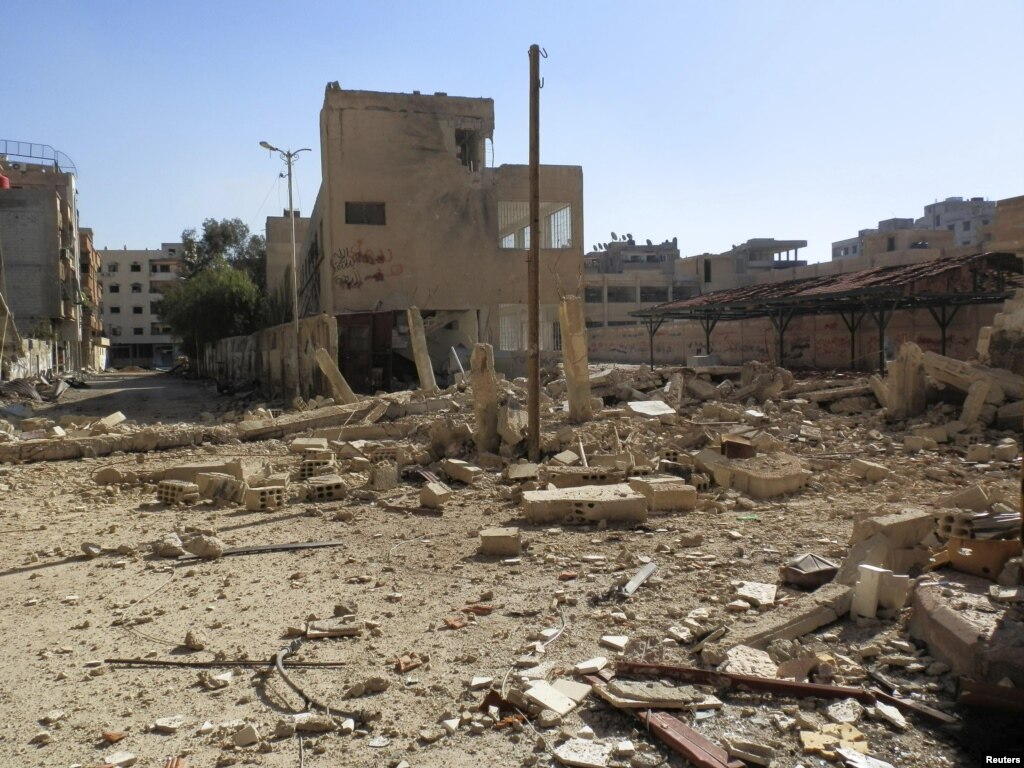
A view of rubble and damaged buildings after what activists said was shelling by forces loyal to Syria’s President Bashar al-Assad, Daraya, Feb. 4, 2013.

Government forces responded with heavy shelling of inner districts of the capital and closed off the city’s main Abbassid Square.

Amateur video shows what Syrian rebel fighters claim to be an attack on a government position in the Damascus district of Joubar.

Opposition activists say that the attack is part of a multi-pronged rebel attack on government forces near the capital’s southern ring road.

Witnesses inside Damascus say that government forces have been shelling to try and repel the rebel attack. Sources inside the capital also say that the city’s historic Abbassid Square was closed as fighting raged nearby.

Rebel declaration

The rebel Free Syrian Army issued a declaration calling Wednesday’s assault “Operation Epic in the Capital of the Omayyids” to liberate Damascus. The statement listed six rebel brigades that were participating in the battle, including the al-Qaida-linked Jabhat al-Nusra.

Earlier, a government security compound was hit in the central city of Palmyra, where a pair of suicide car bombs exploded. Activists said the bombings targeted a military intelligence compound, killing at least 12 Syrian security personnel.

State media described the explosions differently, saying they went off in a residential area and killed several people.

Peter Harling of the International Crisis Group said that the rebel attack in Damascus may be an attempt to relieve pressure on the rebel-held suburb of Daraya, which has been under heavy government shelling and aerial bombardment for days.

He said despite reports that government forces have pulled back from certain areas of the capital under rebel pressure, it was unlikely that the government was about to collapse.

“The regime has rebuilt itself into a rather cohesive fighting force and I think this notion that it’s losing ground is partly an illusion,” Harling said. “I mean the regime has been losing ground consistently on the economic, political, moral levels, but I think militarily it’s still extremely strong.”

Harling added that the government has “massive human resources and military assets in the capital” and that its forces are “entrenched in a large and very defensible area in the heights of Damascus.”

A recent call for a negotiated solution to the conflict by opposition leader Mouaz al-Khatib has hit resistance from various opposition groups. The opposition Syrian National Council said that it would meet soon to discuss the proposition.

After hating Israel, nothing in common

February 6, 2013

Israel Hayom | After hating Israel, nothing in common.

Prof. Eyal Zisser

Iranian President Mahmoud Ahamadinejad’s visit to Cairo on Tuesday started off on the wrong foot. The visitor recited his usual hateful and hostile invective against Israel to Egypt’s citizens, but they preferred instead to press Ahmadinejad on Syria, where Iran is supporting its ally President Bashar al-Assad while he slaughters the Syrian people.

And so Ahmadinejad’s hosts throughout the day leveled harsh criticism against him — some of it embarrassing — concerning the negative role of Iran in Syria, but also against Iran’s subversive behavior against the Gulf oil emirates and Saudi Arabia. Then there was criticism as well on Iranian efforts to wield influence in Iraq. It’s not surprising that someone tried to physically attack the Iranian president during his visit to one of Cairo’s mosques.

Ahmadinejad’s host, Egyptian President and Muslim Brotherhood member Mohammed Morsi, doesn’t try to conceal his criticism of and hostility toward Israel. Morsi is part of a movement that Shiites consider either a rival or outright enemy. Morsi identifies with Sunni Muslims throughout the Muslim world in their struggle against Shiite Iran and its allies, whether in Syria, Iraq or the Persian Gulf.

Following the recent wave of unrest in Egypt, Morsi better understood the importance of the special relationship between Cairo and Washington. After all, Egypt’s ability to feed 86 million hungry mouths depends on both America’s goodwill and the depth of its pockets. Morsi also knows to safeguard the relationship and coordination between Egyptian and Israeli security forces. In short, Ahmadinejad discovered in Egypt’s presidential palace a Mubarak with a beard, as Morsi’s staunch critics have dubbed the current Egyptian president.

Morsi has his own political considerations, and he was wise to invite Ahmadinejad to participate in the Organization of Islamic Cooperation summit, taking place in the Egyptian capital. But apart from mutual resentment of Israel, the two leaders can’t reach an agreement on anything else. The two nations have failed to renew full diplomatic ties, which have been severed since 1979 when Egypt moved to make peace with Israel.

This visit to Egypt was Ahmadinejad’s swan song. He will disappear from our lives in the next couple of months, following the Iranian elections this June. Even in Tehran they understand that media stunts are not a substitute for real statesmanship. Although it may be appropriate to be concerned that a better skilled and more sophisticated leader will replace Ahmadinejad, still, the divide between Shiite Iran and the Sunni Arab world, led by Egypt, remains wider than ever.

Iran’s Advanced Centrifuges – Assessment and Significance

February 6, 2013

Iran’s Advanced Centrifuges – Assessment and Significance.

The Iranian announcements concerning the country’s intention to install centrifuges at the Natanz enrichment facility remains vague. While the use of these centrifuges is not a technological leap forward, it does represent Iran’s advancement towards nuclear weapons


Iran's Advanced Centrifuges – Assessment and Significance

According to Reuters (January 31, 2013), Iran informed the IAEA by letter of its plans to install and operate advanced centrifuges at its main uranium-enrichment facility near Natanz. The report did not include details about the identity of the advanced model or the amount of centrifuges that Iran intends to install.

However, despite the vague information in the Reuters, report, the IAEA’s reports from the latter half of 2012 might shed some light on Iran’s advanced centrifuge plan. In recent years, Iran has developed two advanced versions of centrifuges: IR-2m, which is a second-generation Iranian centrifuge model, and the fourth-generation IR-4. The rotor in the IR-1 model, Iran’s first generation of centrifuges, which is the primary component in the centrifuge, is composed of an aluminum alloy. However, the rotor in the advanced models is not metallic, but made of carbon fibers. In one of the photos of Iranian President Ahmadinejad, apparently when he visited a factory for the production of centrifuge components, he is seen holding a centrifuge rotor made of carbon fiber. The use of carbon fiber makes it possible to increase the diameter of the rotor, and even significantly increase its rotation speed – thus increasing the yield of the centrifuge considerably. However, at least from the Iranian perspective, while the IR-2m and IR-4 centrifuges are advanced, the technology they are based on was actually developed in the 1970s and 1980s. They are very much copies of second-generation centrifuges, which is itself based on German design, just as the IR-1 is a copy of first-generation Pakistani centrifuges, which are based on Dutch design.

The technological knowledge in the field of centrifuges was sold to Iran in the late 1980s and the 1990s by Pakistani scientist Dr. Abdul Qadeer Khan, who gained the knowledge while working at a Dutch research facility that took part in the URENCO centrifuge project, which was shared by Germany, Britain and the Netherlands. In the 1970s, Dr. Khan returned to Pakistan, after cunningly copying the URENCO programs and smuggled them into the country. It is quite possible that detailed technological knowledge that helped in the development of the advanced Iranian centrifuges made its way to Iran from the Iraqi centrifuge program, via Iranian intelligence agents who worked in Iraq before the First Gulf War and afterwards.

The centrifuges developed by Iraq before 1990 were also based on the German centrifuge, according to plans that were covertly acquired by the country from German experts. In any case, the operation of the advanced centrifuges might be an advancement from Iran’s perspective, by significantly increasing its uranium-enrichment capability. According to David Albright, manager of the Institute for Science and International Security (ISIS) in Washington, who deals with intelligence assessments on the issue of nuclear circulation around the world, the yield from Iran’s advanced centrifuge models is five times higher than that of the IR-1 model. According to the IAEA reports, the pilot plant of the Natanz facility has advanced centrifuges installed for a while now. As of the second half of 2012, some of them are operational when fed UF6 gas. The status of these centrifuges, as of August 2012, is as follows: a small and experimental cascade of 10 IR-4 centrifuges, which was operated from time to time to carry out tests and measurements; another cascade of 123 IR-4 centrifuges, installed but not operated; and a third cascade of 162 IR-2m centrifuges, which were installed but not operated.

In the past, the Iranian cascades contained 164 centrifuges. However, according to a new design, the new cascades have 174 centrifuges. It is therefore likely that Iran’s recent announcement to the IAEA comes due to the vast experience acquired in Natanz in the experimental operation of the advanced centrifuges, and in Iran’s view that the time has come for their regular operation in industrial scope. Iran’s latest announcement to the IAEA was apparently vague. It lacks details on the number of advanced centrifuges Iran intends to operate soon, nor did it provide the rate of uranium enrichment that it will be used for. The IAEA reports that have been published so far also lack information about the amount of advanced centrifuges produced by Iran thus far, and about the production capability of the Iranian factories, which produce and assemble the centrifuges.

In any case, it can be assumed that Iran will operate at least the two cascades in Natanz in the near future; Most of the advanced centrifuges have already been installed in these cascades – whose full installation may have already concluded, or will conclude soon. It is possible that these things will be made clear in the IAEA report that will be published in the coming month.

**

Lt. Col. (Res.) Dr. Rafael Ofek is an expert of physics and Iranian technology. He has served in the past as a senior researcher and analyst in the Israeli intelligence community.

U.S., Egypt defense chiefs back security ties: Pentagon

February 6, 2013

U.S., Egypt defense chiefs back security ties: Pentagon.

U.S. Defense Secretary Leon Panetta agreed on the importance of continued U.S. military assistance for Egypt with his Egyptian counterpart. (Reuters)

U.S. Defense Secretary Leon Panetta agreed on the importance of continued U.S. military assistance for Egypt with his Egyptian counterpart. (Reuters)

U.S. Defense Secretary Leon Panetta spoke by phone with his Egyptian counterpart on Tuesday to hear an update on the tense political situation in Cairo and the “role” of the army amid recent street demonstrations, a Pentagon spokesman said.

Defense minister and military chief General Abdel Fattah al-Sissi, who has warned the state could collapse in the face of political upheaval, voiced support for maintaining strong security ties with Washington and reassured Panetta that the armed forces remained committed to his country’s peace treaty with Israel, spokesman George Little said in a statement.

Panetta called Sissi “today to receive updates on the political situation in Egypt, the role of the Egyptian Armed Forces during the recent protests, and express U.S. commitment to the defense relationship,” the statement said.

Sissi “reiterated his support for the defense relationship, and thanked Secretary Panetta for his leadership and support,” it said.

The minister “reiterated the Egyptian Armed Forces’ commitment to the Peace Treaty with Israel, and underscored that his commitment that the Sinai will not be used as a base to threaten Israel,” it said.

Both men agreed on the importance of continued U.S. military assistance for Egypt, “so that the Egyptian Armed Forces can continue to address shared security objectives while modernizing their equipment and capabilities,” the statement said.

The talks follow a wave of demonstrations and violent clashes in Egypt and a dire warning from Sissi that the country’s stability was in the balance.

Egypt’s opposition says the police have failed to reform since the uprising to topple authoritarian leader Hosni Mubarak. And the U.S. State Department on Monday called on Egypt to investigate all cases of alleged police abuse after a man was brutally beaten outside the presidential palace in Cairo last week.

The United States has maintained its longstanding relations with Egypt’s armed forces despite the political turmoil and is going ahead with deliveries of F-16 fighter jets to Cairo as part of a massive arms package, despite objections from some U.S. lawmakers.

Russia hopes to see ‘serious progress’ at Iran nuclear talks

February 6, 2013

Russia hopes to see ‘serious progress’ at Iran nuclear talks.


Deputy Foreign Minister Sergei Ryabkov said the two sides had made no progress since the last round of top-level negotiations were held in Moscow at the end of June 2012. (AFP)

Deputy Foreign Minister Sergei Ryabkov said the two sides had made no progress since the last round of top-level negotiations were held in Moscow at the end of June 2012. (AFP)


Russia said on Wednesday it hoped to see “serious progress” at this month’s talks in Kazakhstan between world powers and Iran over Tehran’s disputed nuclear program.

Deputy Foreign Minister Sergei Ryabkov said the two sides had made no progress since the last round of top-level negotiations were held in Moscow at the end of June 2012.

But he stressed that pressure will be high on both Iran and the world powers to climb down from their respective positions and seek middle ground at the February 26 meeting in Almaty.

“Despite everything, I would very much hope to see the upcoming round result in — if not an outright breakthrough — then serious progress,” Ryabkov said in a wide-ranging interview with the state-run RIA Novosti news agency.

“Because so far, we have not advanced past the stage at which we found ourselves in June” in Moscow.

“We have lost a lot of time,” Russia’s top nuclear negotiator said.

“We do not think you can lose time anymore.”

Talks between Iran and the so-called P5+1 powers — the five permanent U.N. Security Council members and Germany — have been held on three occasions at the highest level in the past year.

None of the meetings has drawn a promise from Tehran to scale back its controversial nuclear enrichment program to levels that world powers believe cannot be used to make atomic weapons.

Iran denies its nuclear program has a military component and insists on global recognition of its right to enrich uranium for peaceful purposes.

World powers counter that Iran sacrificed its enrichment rights by refusing to cooperation with international nuclear inspectors.

The dispute has resulted in four rounds of global sanctions against Tehran — in addition to unilateral U.S. and EU measures — that have crippled the Iranian economy and hit its oil exports.

Understanding Israel’s stance on Syria

February 6, 2013

Understanding Israel’s stance on Syria.

( An Arab who lives in REALITY… – JW )

Al Arabiya

By Hazem Saghieh

Hazem Saghieh

The recent Israeli airstrike, whose target remains somewhat vague, has renewed the “dispute” between the supporters of the government and the opposition in Syria. The first camp has concluded that the strike was irrefutable evidence that Israel stands against the regime of Bashar al-Assad, and is doing everything in its power to complement what has been initiated by the armed opposition and its allies, from Doha to Washington D.C.

 To say that Israel has a strategy that goes beyond these security interests and is related to the future of Syria, would entail a generosity on the side of the Israelis that experience tells us is inexistent towards the Syrians or other Arabs  

Hazem Saghieh

The revolution camp, meanwhile, has highlighted the lack of an official Syrian response, as yet another proof that the Assad regime is in collusion with the Hebrew state, having kept the Golan front quiet since 1974 to our present day.

It is clear here that both arguments build on partially correct premises, to reach a conclusion that is challengeable and questionable.

Meanwhile, building on Israel’s supposed position to demonstrate the validity of the stance of each party is a vestige of an old political culture that is common to Arab factions when they squabble and fight. This culture has become so established and entrenched decade after decade that it has become difficult for us to make sense of the world without determining in advance where Israel stands. If it seemed for a moment that any side intersects with a move made by Israel, or benefits therefrom, the side in question will be quick to engage in denial and reinterpretation of the situation to ensure its innocence and purity are preserved.

While the opposition is drawn to this mentality of taboos with naive loyalty to the “righteous intellectual predecessors,” the regime adopts the same mentality with clear cynicism that does not need to be exposed for the lies, deception and insults to intelligence and reality that it implies. This is in addition to the huge self-serving role played by the Syrian regime in fostering that worldview and method of judgment.

What makes this “dispute” even worse is that Israel is neither on this side nor on that side. Israel is first and foremost concerned about its narrow security interests, specifically in maintaining the front with Syria quiet and undisturbed, and preventing the transfer of chemical or advanced weapons to other actors especially Hezbollah. This is in addition to the concern about the alleged presence of al-Qaeda and similar groups along its border.

These “concerns” prompt the Israeli side to prefer weakening the regime while keeping it in place. To be sure, Israel has benefited from the continuation of the regime, especially in the Golan, not to mention the fact that the regime has been able to clamp down on any radical Islamists that Israel say trouble it. This is while weakening the regime would be sufficient to reduce its backing of its allies on the Lebanese arena.

But to say that Israel has a strategy that goes beyond these security interests and is related to the future of Syria, would entail a generosity on the side of the Israelis that experience tells us is nonexistent towards the Syrians or other Arabs – exactly like we cannot assume that such a thing exists among any Arab side towards the Israelis.

This may help explain the stance of Israel and its close allies in Washington D.C. on the “need to preserve the Syrian regime,” just like it explains the painful and humiliating strikes Israel carries out, from time to time, against that regime.

What is even worse, in the utilitarian sense of the word, is that this intra-Syrian “dispute” ignores the fact that when it comes to the Syrian issue, the Israeli concerns (the borders, the chemical weapons, and al-Qaeda) represent the international common denominator on Syria. In this sense, the “dispute” preoccupying us is nothing but an effort being wasted in the wrong place.

This article was published in al-Hayat daily on Feb. 5, 2013.

IDF orders civilian aircraft evacuated from Haifa airport

February 6, 2013

Israel Hayom | IDF orders civilian aircraft evacuated from Haifa airport.

( OK.  Now, even I’m scared… –  JW )

Citing security concerns, the Israeli Airports Authority has instructed all civilian planes making use of the northern airport to divert to other airports • Lebanese reports: Israeli warplanes conducting mock raids over Nabatiyeh.

Lilach Shoval and Daniel Siryoti and Israel Hayom Staff
All aircraft must be evacuated from the Haifa Airport because of security reasons. Pictured above, a local Israeli airport. [Archive]

|

Photo credit: Moshe Shai

Jerusalem expects Obama will bring new peace plan, demand breakthrough

February 6, 2013

Israel Hayom | Jerusalem expects Obama will bring new peace plan, demand breakthrough.


Visit to Israel could impact makeup of coalition and could also lead to U.S. pressure for a new peace plan • White House: the purpose is to make progress on issues like Iran and Syria • Ambassador Shapiro: No preconditions for the meeting were set.
Shlomo Cesana and Yoni Hirsch and News Agencies
Prime Minister Benjamin Netanyahu (right) with President Barack Obama. [archive]

|

Photo credit: AP

BBC News – Tunisia: Chokri Belaid assassination prompts protests

February 6, 2013

BBC News – Tunisia: Chokri Belaid assassination prompts protests.

( Arab Spring + Radical Islam = Nuclear Winter. – JW )

The body of Tunisian opposition leader and outspoken government critic Chokri Belaid is transported in an ambulance from from a clinic in Tunis to the public hospital - 6 February 2013
The assassination has prompted crowds to take to the streets of Tunis

Tunisian opposition politician Chokri Belaid has been shot dead outside his home in the capital, Tunis.

Relatives say Mr Belaid was shot in the neck and head on his way to work.

He was a prominent secular opponent of the moderate Islamist-led government and his assassination has sparked protests in towns around the country.

President Moncef Marzouki is cutting short a visit to France and has cancelled a scheduled appearance at a summit in Egypt to return home.

Tunisia is currently gripped by a political crisis as talks on a long-awaited cabinet reshuffle to include a wider range of parties in a coalition led by the Ennahda party have broken down.

BBC Arabic’s Wafa Zaiane says this is the first time a political leader has been assassinated since the Arab Spring uprising of January 2011, in a country where political assassinations are rare.

Speaking in front of the European Parliament on his visit to Strasbourg, President Marzouki said the murder of Mr Belaid should not affect Tunisia’s revolution.

“There are many enemies of our peaceful revolution. And they’re determined to ensure it fails,” he said.

Referring to Mr Belaid as a “long-standing friend”, he said his “hateful assassination” was a threat.

“This is a letter being sent to us that we will refuse to open. We reject that message and we will continue to unmask the enemies of the revolution,” said the president, who was to participate in the summit of the Organisation of Islamic Co-operation in Cairo on Thursday and is instead returning home directly from Strasbourg.

‘Death threats’

According to AFP news agency, people torched the premises of the Ennahda party in the central town of Mezzouna, and ransacked the party’s offices in the mining town of Gafsa in protest at Mr Belaid’s death.

In Tunis, crowds have gathered outside the interior ministry chanting they want a “second revolution”, the BBC’s Sihem Hassaini in the city says.

There are also protests in Sidi Bouzid, the town where the revolution that toppled Zine el-Abidine Ben Ali from the presidency began a little more than two years ago.

“More than 4,000 are protesting now, burning tyres and throwing stones at the police. There is great anger,” Mehdi Horchani, a Sidi Bouzid resident, told Reuters news agency.

Chokri Belaid (December 2010)
Chokri Belaid was a prominent secular opponent of Tunisia’s moderate Islamist-led government

It is not known who is responsible for the attack on the politician.

Prime Minister Hamadi Jebali said his murder was an “act of terrorism” and promised to pursue all efforts to “immediately” arrest the murderer.

Mr Belaid was the co-ordinator of the left-leaning Democratic Patriots party, part of a group of opposition parties which has been challenging the government since it came to power following the country’s first post-Arab Spring election in October 2011.

“This murder robs Tunisia of one of its most courageous and free voices,” French President Francois Hollande said in a statement.

On Saturday, Mr Belaid accused “mercenaries” hired by the Ennahda party of carrying out an attack on a Democratic Patriots meeting.

The Paris-based France 24 TV station has reported that Mr Belaid reportedly received recent death threats.

It said that he died in hospital after being shot by “three men in a black vehicle”.

“My brother was assassinated. I am desperate and depressed,” Mr Belaid’s brother Abdelmajid Belaid told AFP.

Correspondents say that although Mr Belaid’s party did not have a large share of the election vote, it spearheaded popular concern over the rising level of political violence in Tunisia.