Archive for July 2012

Mofaz: Strike on Iran could be catastrophic for Israel

July 28, 2012

Mofaz: Strike on Iran could be c… JPost – Iranian Threat – News.

(So sickening.  I can’t help hoping against hope that this also is disinformation.  – JW )

By JPOST.COM STAFF
07/28/2012 20:10
Opposition leader tells Channel 2 that unilateral Israeli attack against Iran’s nuclear facilities would not greatly hinder Iran’s ability to create a nuclear weapon and would likely lead Israel into war.

Kadima leader Shaul Mofaz [file photo]

Photo: Reuters / Pool Opposition leader Shaul Mofaz warned Saturday that a preemptive unilateral Israeli strike on Iran’s nuclear facilities could have “catastrophic” consequences for Israel.

Speaking in a interview with Channel 2, Mofaz said that such an attack would not greatly hinder Iran’s ability to create a nuclear weapon and it was very likely that such an attack would lead to war.

Mofaz stated that Prime Minister Binyamin Netanyahu and Defense Minister Ehud Barak’s posing a nuclear Iran as an “existential threat” to Israel alone was “manipulative.” The Kadima leader stated that the world had to be enlisted to continue to place sanctions on Iran.

The former defense minister said that a decision to strike Iran must only be made after both the professional echelon and the cabinet were consulted. He suggest that if Netanyahu’s plan to split Kadima had succeeded and former Kadima minister Tazhi Hanegbi would have been awarded a high position in the government, Netanyahu and Barak would have had more backing to strike Iran unilaterally.

Mofaz slammed Netanyahu, blaming him for attempting to break up Kadima through “political bribery.”

As Assad teeters, Israel prepares for battle to secure chemical weapons

July 28, 2012

As Assad teeters, Israel prepares for battle to secure chemical weapons | Fox News.

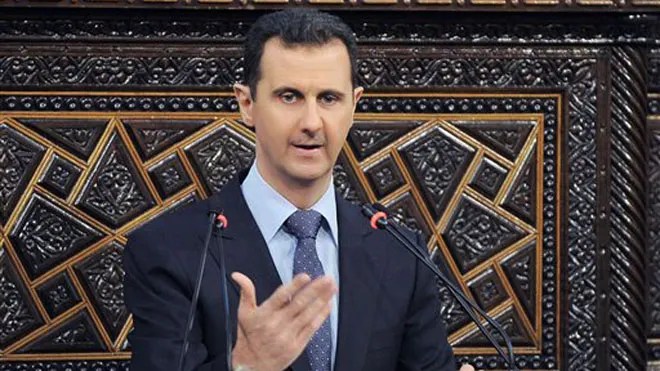
assad_bashar_060312.jpg

As Syria’s regime teeters on the brink of collapse, Israeli soldiers and civilians alike are preparing for possible military action to make sure Bashar al-Assad’s chemical weapons don’t fall into the hands of terrorist groups.

Sources close to the Israel Defense Force told FoxNews.com soldiers have been put on standby and are ready to move, while civilian demand for gas masks has jumped 66 percent over the last few weeks from 2,200 to 3,700 per day. The fears center around the prospect of Hezbollah getting Syrian chemical weapons as the Assad regime shows imminent signs of collapse.

“Israel…will not hold back and will respond decisively if this happens,” Israeli Foreign Minister Avigdor Lieberman said.

“It appears the IDF may seek to eliminate Syria’s ability to transport the weapons to proxy forces but not to eliminate the actual weapons themselves by striking at storage facilities,” Idan Kweller, political correspondent for Israel Army Radio, told FoxNews.com. “Israel’s main interest is to ensure the weapons are not passed on to the likes of Hezbollah in south Lebanon.”

The potential breakdown of the Syrian regime has reportedly paved the way for any number of Islamist terror groups, including Al Qaeda, to blend in with the Free Syrian Army, giving them cover to get at the a chemical weapons stockpile Assad acknowledges having. That could potentially pose a massive threat to Israel’s security and inflict significant civilian casualties, according to experts.

Meanwhile, the race to locate the chemical weapons has reportedly been taxing a number of international security agencies, including the CIA, desperate to ensure the arms won’t fall into the wrong hands and spark an all-out regional war. One report suggested that a group of Jordanian commandoes had been sent into Syria to try and recover the weapons, while Turkey’s intelligence agency is another with good reason to fear unaccounted for weapons.

Earlier this week, Turkey, nervous of growing activity from Kurds in western Syria, mobilized troops and missile batteries to the border, further ratcheting up tensions in the region against their former ally. Earlier on Thursday, Turkish newspaper Zalman reported officials speaking optimistically of Turkey’s “commitment to preserving warm relations with Israel,” a significant change in tone from the antagonistic relationship on both sides in recent years and a follow on from the up-beat visit of a Turkish delegation to Jerusalem who met with Israeli Prime Minister Bibi Netanyahu a day earlier.

Kweller believes Israel and Turkey could well be on the verge of setting aside recent disputes to jointly focus on the danger a de-stabilized Syria poses them both.

With increased reconnaissance of the region set to dictate the next move, the Israeli public is holding its breath to see exactly what Netanyahu and his advisors will do next. They may hold back until the last possible moment in an effort to be seen as doing everything to keep the lid on the region, or they could move proactively. The IDF and the public don’t know yet, but their jitters are real.

Paul Alster is an Israel-based broadcast journalist who blogs at www.paulalster.com

Netanyahu is no Churchill

July 28, 2012

Netanyahu is no Churchill – Israel Opinion, Ynetnews.

Op-ed: Prime Minister Netanyahu has been talking like Churchill but behaving like Chamberlain

Yoaz Hendel

Published: 07.28.12, 14:20 / Israel Opinion

Leadership is a trait. Some are born with it, while others acquire it over the years. One cannot force leadership or invent it. The Israelis are looking for leaders like the ones in the books; like the ones they knew in their youth movement or in the army. Leaders who show personal example.

There are 120 leaders in the Knesset. Most of them come in as serious people with good intentions, and then at once turn into small-time politicians. One cannot provide good explanations for this absurd display. One can come up with plenty of excuses for this situation, ranging from the commander in chief’s spirit to Israel’s public atmosphere and the urge to survive. All of it is true. Yet in the words of Dalia Itzik this week: We have a stomachache.

Few people in the State of Israelare privy to the secret aspects of the Iranian issue. The discussions are held in small forums. Few are familiar with the operational dilemmas, capabilities and possibilities. Few also understand the overall risks. Does that make all other Israelis brainless sheep? The answer is no. One is allowed to express an opinion, yet in some contexts it’s better and wiser to shut up.

The Iranian threat has been with us since the mid-1990s. Every story needs a hero and an antihero. After the fall of the Iron Curtain, Irantook over the vacant seat. For years, silence was the default option in Israel. There was much power and dignity to it; a sort of remnant of a generation that used to take secrets to the grave.

However, there was also a major drawback: Israel attempted to convince the world of the Iranian threat behind the scenes, in the dark. This is a test doomed for failure. It’s easier to refuse and to deny when nobody sees or hears it. Netanyahu was the one who broke the cycle of silence. He turned the Iranian issue into a banner. He was interviewed and he issued warnings, prompting the West to put the threat on the table. One can criticize Netanyahu in many areas, but not ignore his achievements on this front.

Netanyahu’s dilemma

The problem is that what was placed on the table in the first act will not go away until the last act. From being Netanyahu’s obsession and private dish, Iran has turned into falafel; food eaten by everyone. It’s an excuse that fits any date and every event. Everyone talks about it without thinking twice. The same is true for Kadima, the party that did not enter the government because of the Iranians and did not quit because of them.

To make a decision on the Iran issue, Netanyahu does not need Mofaz in the government. When it came to weighty operations, Israel’s prime ministers were able to elevate themselves above the disputes and share with the head of the opposition. This is what Olmert did with Barak before the latter took up the defense minister post. Olmert did the same with Netanyahu himself in similar cases. Netanyahu also does not need Tzachi Hanegbi as the home front minister. As talented as he may be, the State of Israel will be able to survive without him for a few more months.

Netanyahu only needs himself and his own decisions. After an almost full term as prime minister he found himself in a catch 22 situation. No one disputes the fact that a nuclear Iran would mean a regional arms race, terrorism under a nuclear umbrella and loss of control. On the other hand, a military strike has implications. Israel is not the United States, there is a price that must be paid, and in a satiated Western society paying it is difficult at times.

Netanyahu faces a Churchill-Chamberlain dilemma. He already declared that he is like Churchill, yet for a full term in office he’s been acting like Chamberlain. There is no reason to envy him.

Getting ready for the worst

July 28, 2012

Security Matters: Getting re… JPost – Features – Week in review.

07/26/2012 22:32
IDF Home Front Command’s Search and Rescue Battalions prepare for scenarios the rest of us would prefer not to think about.

HOME FRONT troops conduct an earthquake drill

Photo: IDF Spokesman’s Office

Missile attacks on city centers, chemical warheads and devastating earthquakes – none of these nightmare scenarios is in the realm of the impossible in our corner of the world.Most members of the public, while acutely aware of the existence of the threats, prefer to focus on other, more optimistic thoughts.But the IDF Home Front Command’s Search and Rescue Battalions – a growing division within the military – are training four (soon to be five) battalions solely to ensure that the army is able to deploy forces to potential disaster zones and save as many lives as is humanly possible.

Thirty-eight-year-old Lt.-Col. Golan Vach, a father of six, is the commander of the Search and Rescue Battalions, which do most of their training at a base in Zikim, near Ashkelon.

Vach has a wealth of infantry combat experience, having served in the Givati and Paratrooper brigades for a total of 15 years.

He told The Jerusalem Post this week that the Search and Rescue Battalions are every bit as essential to national security as combat units.

“We go in and rescue people from wrecked buildings. We operate in conventional and unconventional surroundings,” Vach said, referring to scenes that could be contaminated with radioactive, chemical and biological substances.

“With all the threats being talked about in the headlines now,” he said, acknowledging talk of Syria’s stockpile of chemical weapons, “the relevance of these types of forces is high.”

Members of the brigades have heard the headlines on Syria’s chemical weapons in recent days, but the news has not had much of an effect on them, Vach continued.

“It doesn’t matter. We work on this scenario continually around the clock [irrespective of headlines],” he said.

The IDF is working all year around to train its units to operate in an environment affected by unconventional substances and has equipped its rescue forces with what it says is the most advanced protective gear in the world.

“Our aim is to go into an area, which could be a highway affected by a spill from an bleach container… or a building struck by a chemical warhead, to identify and tag the substances, decontaminate people and then treat the chemical,” explained Vach.

Over the past five years, four search-and-rescue brigades have been created, and a fifth is set to come into existence in August.

Nevertheless, Vach said, it will be civilians themselves who will be most active in rescue efforts. “The Home Front Command invests a lot of resources to help civilians to help themselves,” he added.

During the 2010 Haiti earthquake disaster, 150,000 people who were trapped in rubble were rescued by civilians compared to 142 people who were rescued by professional units that flew in from around the world, including Israel.

Vach said he expected the percentage of people saved by professional teams to be much higher in Israel in the event of a missile attack or an earthquake situation.

Once on the scene, members of the brigades deploy engineers, electricians and doctors and disconnect gas, electricity and water.

“The latter two don’t mix well,” he said.

Then searchers are taught to “use the most advanced equipment we know about in the world – their eyes and ears,” to locate trapped individuals before relying on radar and thermal imaging systems.

“A person can give a better picture than any dog, acoustics equipment, or radar,” he explained.

“We look for people who can give us information, like a woman who might say her mother sent her a text message saying she is trapped. If we know she was in the living room, our engineer will simulate what the building looked like before it collapsed and locate the mother,” Vach said.

These kinds of pinpoint rescues are called “surgical steps” in professional jargon, and they provide the focus for the first 24 hours after the disaster.

On the second day, as time runs out for trapped survivors, the rescuers will bring in heavy equipment like bulldozers and begin sifting through rubble “in the most gentle way” possible, in order to find people.

“We’re building up soldiers who can work in very narrow spaces and deal with very difficult scenes. Their muscles must be able to break stones, with very small space for momentum, over a long period of time. They are put under pressure and, at the end of the six-month training course, we have someone who can enter this kind of scene,” Vach said.

Despite the wide range of man-made threats facing Israel, the Home Front Command believes that the threat of an earthquake remains the number one disaster scenario in terms of scope of damage.

Even in a moderate earthquake, tens of thousands of people could be impacted. “We know we’re due for one now. There has been one every 150 years. In 1837 there was one that killed 2,000 to 3,000 people in Nablus alone,” Vach said. “The chances are low, but should a major earthquake strike, the damage would be awful.”

The Search and Rescue Battalions train all year round for just such a scenario and have large numbers of trained reserve troops on call.

In the event of an earthquake, the battalions can be divided up into tiny groups to cope with the demand. The groups can be as small as four soldiers each, with one commanding over three of his comrades, should the destruction be widespread.

Asked if he is preoccupied with the disaster scenarios when he comes home to his six children, Vach said, “Even if I wanted to think about Hezbollah and Nasrallah, when I’m home, I’m only thinking about meals and showers for the kids.”

Yarden Greenhoyz, 19, has been serving in the battalions for a year and would be one of the soldiers called to respond should disaster strike.

She said that after months of training in wreckage sites, pulling dolls out of ruins and embarking on an all-night exercises that have lasted 17 hours, she is as ready as she’ll ever be.

“The training is like a war. No one knows how they will respond if they’re fired on, if they pull out a mangled body, or hear screams. The response is individual,” she said.

“I know I’ll feel stress. But I chose this role, and I will force myself to deal with it. That’s what rescuing is about,” Greenhoyz said.

“We hope these scenarios will be confined to training only,” she added.
A U.S.-Iran Naval Clash Is Not Inevitable

July 28, 2012

Politics, Power, and Preventive Action » A U.S.-Iran Naval Clash Is Not Inevitable.

Council on Foreign Relations

by Micah Zenko
July 27, 2012

U.S. Navy handout photo of the U.S.S. Abraham Lincoln (Courtesy Reuters). U.S. Navy handout photo of the U.S.S. Abraham Lincoln (Courtesy Reuters).

Share

The headline of today’s Washington Post reads, “Iran Expands Ability to Strike U.S. Navy in Gulf.” The piece describes Persian Gulf war games, paranoid comments by regional officials, and hollow threats from Iranian officials.

By now, when an Iranian official threatens the United States, we should call it what it is: ritual. Just yesterday, an anonymous official warned, ”If the Americans’ futile cyber attacks do not stop, it will face a teeth-breaking response.” While novel dental threats might now be part of Iran’s asymmetric defensive strategy, Western media elevates such blustery rhetoric to the headline news, rewarding the Iranian regime with the strategic communications coup that it desperately seeks. As a State Department spokesperson noted last month with refreshing honesty: “The Venezuelans make lots of extravagant claims. So do the Iranians.”

When reading about the U.S. military buildup in the Persian Gulf or the serial threats from Iran, it is worth keeping two things in mind.

First, as Lieutenant General Ronald Burgess, then-chief of the Defense Intelligence Agency (DIA), stated in February, “The [DIA] assesses Iran is unlikely to initiate or intentionally provoke a conflict.” In other words, the government of Iran is not looking to start a war with the United States. This is a smart call, given that the Iranian defense budget of $9 billion is less than 2 percent of the U.S. military budget of $553 billion. Iran fared poorly in its clash with the U.S. Navy in April 1988—and it would face a similar fate today.

Second, short of a third party launching a preemptive strike, it is highly unlikely that the U.S. and Iranian navies will fight each other. In March, the chief of naval operations, Admiral Jonathan Greenert, described the Iranian navy as “professional and courteous.” Last month, Admiral Greenert echoed his earlier characterization, adding, ” They have been…committing to the rules of the road—I’m talking about the Iranian navy. We have had some time before when the Iranian Revolutionary Guard has tended to maybe close a little too close for that. But frankly, that hasn’t happened recently. And when I say ‘recently,’ I’d say in the last couple of months.” After a U.S. Navy fleet replenishment oiler fired on an Indian fishing vessel earlier this month, a U.S. official went to great lengths to say, ”I can’t emphasize enough this has nothing to do with Iran.”

The most likely instigator of an outbreak of hostilities between the United States and Iran would be an Israeli attack on Iran’s suspected nuclear weapons program. U.S. intelligence officials do not believe that they will receive prior warning of such an attack on Iran, as Tel Aviv has never done so in the past. Last month, Chairman of the Joint Chiefs General Martin Dempsey described a potential Israeli strike as “destabilizing.” He continued, “I wouldn’t suggest, sitting here today, that we’ve persuaded them that our view is the correct view and that they are acting in an ill-advised fashion.”

At present, senior U.S. officials are more concerned about a bolt-from-the-blue Israeli attack of Iran than ever before. The revolving door of Obama administration officials heading to Israel underscores a position revealed recently by David Sanger: “The core of the American argument [to Israel] was simple: attack Iran, and you set the program back a few years, but you solve nothing. ‘We wanted to make it abundantly clear that an attack would just drive the program more underground’ [said one U.S. official].”

When you read front-page headlines like “Soaring Tension in the Gulf,” it is important to remember that both the United States and Iran have no intention of going to war. However, the critical—and unresolved—question is when might Israel take military action against Iran, and what would be the subsequent costs and consequences for U.S. military and national interests in the region? Despite a decade of U.S.-Israeli dialogue on the Iranian nuclear program, no one knows the answers.

Comment from a user:

July 28, 2012

Joseph,

Yes. Many of us here do care about you. A good deal, as it happens.

Those of us who support you view Israel as a haven of democracy in a region where that word is largely alien.

We respect your fortitude, your resilience and your bravery.

We realise, as so many in the world do not, that you are holding the line on behalf of civilization, for us, against a threat from a fanatical religious movement that would impose its will on the world and take us back to a medieval state of governance. That is the Great War that is potentially looming over us and which the politically correct will not countenance exists. You recognise that fact in Israel.

We argue that the West generally, not just the US, should be supporting you in every possible way, rather than subjecting you to pious and prejudiced criticism for every error that you might make, judged by their double standards.

We tell our politicians that you are fighting our wars for us. We should be ashamed.

We wish that we had statesmen of the calibre of Binyamin Netanyahu and Ehud Barak, rather than mere politicians who have never worn a uniform nor run a business but have only ever known the world of politics.

We wish that we had politicians who treated our own brave and thoroughly admirable armed forces with the same respect and consideration as do yours. Politicians who not make ever increasing demands of our splendid young men and women, while cutting down their numbers and their resources to dangerous levels.

We respect the fact that your top politicians have the intelligence to look beyond the horizon and allow both for the anticipated and for the unexpected, while many of ours look merely for the next sound bite.

I, and many others, love our own country deeply. We luckily owe our allegiance to a much respected Queen rather than passing, shallow politicians. However, we must also support those countries who should have our respect and affection and, if necessary, our forces at their side. To me, and to others who think like me, that means the Israelis.

We should also never ever forget the past, unbearable suffering of the Jews and we should join with you in saying “Never Again!”

Yes. We do care about you, Joseph.

Best wishes

Rupert

Russia warns of looming ‘tragedy’ in Syria’s Aleppo

July 28, 2012

Russia warns of looming ‘tragedy’ in Syria’s Aleppo.

Aleppo has turned into what could be the key battleground of the 16-month uprising, as government forces launched a major push to drive out rebel fighters on Saturday. (Reuters)

Aleppo has turned into what could be the key battleground of the 16-month uprising, as government forces launched a major push to drive out rebel fighters on Saturday. (Reuters)

Russia warned Saturday that a “tragedy” was looming in Syria’s second city of Aleppo but said it was unrealistic to expect the government would stand by when armed rebels were occupying major cities.

“We are persuading the government that they need to make some first gestures,” Foreign Minister Sergei Lavrov told a news conference alongside his Japanese counterpart.

“But when the armed opposition are occupying cities like Aleppo, where yet another tragedy is brewing as I understand,… it is not realistic to expect that they (the government) will accept this,” Lavrov added.

The Syrian army launched a fightback against rebels in Aleppo on Saturday, amid concern among Western governments about reprisals against the civilian population of the country’s second city.

“How can you hope that in such a situation, the government will simply reconcile itself and say ‘All right, I was wrong. Come on and topple me, change the regime’?” Lavrov asked rhetorically.

“It’s just not realistic — not because we are holding onto this regime — but it simply doesn’t work,” he said in the news conference in the southern city of Sochi which was broadcast live by state media.

Russia has repeatedly rejected accusations Moscow is backing the regime of President Bashar al-Assad in the crisis, claiming it has an even-handed approach while rebuking the West for siding with the rebels.

Aleppo has turned into what could be the key battleground of the 16-month uprising, as government forces launched a major push to drive out rebel fighters on Saturday.

Troop reinforcements poured into the southwest of the commercial hub of some 2.5 million people, where the rebels concentrated their forces after seizing much of the city on July 20.

“The fiercest clashes of the uprising are taking place in several neighborhoods of the city,” the head of the Britain-based Syrian Observatory for Human Rights, Rami Abdel Rahman, told AFP.

Before this month, Aleppo had seen sporadic protests but had been largely spared the bloodshed that has engulfed other cities since the uprising against President Bashar al-Assad’s rule broke out in March last year.

The battle for the city of 2.5 million people is seen as a crucial test for a government that has committed major military resources to retaining control of its two main power centers, Aleppo and Damascus, in the face of a growing insurgency.

While neither side has managed to gain the upper hand, the outcome of the uprising is being watched anxiously in the surrounding region and beyond, amid fears that sectarian unrest could spread to volatile neighboring countries.

Aleppo city suffered the wrath of the Assad family’s regime after an uprising led by the Muslim Brotherhood between 1979 and 1982 when many of its businessmen backed the rebellion.

“Cannot remain a spectator”

Turkey, once a friend but now a fierce critic of the Syrian government, joined growing diplomatic pressure on Assad, calling for international steps to deal with the military build-up.

Turkish Prime Minister Tayyip Erdogan said late on Friday that international institutions needed to work together to address the military assault on Aleppo and Assad’s threat to use chemical weapons against external enemies.

“There is a build-up in Aleppo, and the recent statements with respect to the use of weapons of mass destruction are actions that we cannot remain an observer or spectator to,” he said at a joint news conference in London with British Prime Minister David Cameron.

“Steps need to be taken jointly within the United Nations Security Council, the Organisation of Islamic Countries, the Arab League, and we must work together to try to overcome the situation,” he said.

Earlier, Erdogan had cheered on the rebels.

“In Aleppo itself the regime is preparing for an attack with its tanks and helicopters … My hope is that they’ll get the necessary answer from the real sons of Syria,” Erdogan said in remarks broadcast on Turkish TV channels.

Cameron said Britain and Turkey were concerned that Assad’s government was about to carry out some “some truly appalling acts around and in the city of Aleppo.”

U.N. rights chief Navi Pillay urged both Syrian government forces and rebels on Friday to spare civilians in Aleppo, voicing deep concern at the “likelihood of an imminent major confrontation” in the city reminiscent of other deadly assaults.

Chemical weapons

United Nations Secretary-General Ban Ki-moon said he was deeply concerned about reports that Syria could use chemical weapons and demanded that the government should state it would not use them “under any circumstances”.

But the White House said such a promise from the Syrian president was “certainly not enough” given Assad had paid only lip service to a U.N.-backed peace plan.

“Assad’s word is not worth very much,” White House spokesman Jay Carney said. “Any use of those weapons, any failure to safeguard those stockpiles would be a very serious transgression that would result in those responsible being held accountable.”

In stating this week that it would not use chemical weapons against its own people, but might do so against external threats, Syria caused major international concern about its stockpiles of non-conventional weapons.

The increase in fighting in Aleppo follows a bomb attack on July 18 that killed Assad’s defense minister and three other top officials in Damascus, a development that led some analysts to speculate that the government’s grip was slipping.

Since then, Assad’s forces have mounted a strong counter-attack against rebels in Damascus as well as concentrating forces for an expected assault on Aleppo.

Security and Defense: Preparing for war by surprise

July 28, 2012

Security and Defense: Prepar… JPost – Features – Week in review.

07/26/2012 22:43
Israel will need to find a way to quietly place the IDF on high alert before an attack on Iran.

IDF ARTILLERY during Second Lebanon War Photo: Ariel Jerozolimski

On Saturday December 27, 2008, Col. Ofer Levy, then deputy commander of the Givati Brigade, was out for lunch when he received a phone call informing him that Operation Cast Lead in the Gaza Strip had begun.

Brig.-Gen. Herzi Halevy, the commander during the operation of the Paratroopers Brigade, was at home with his family when he received a similar call about the extensive air strikes the Israel Air Force had just carried out against Hamas targets scattered throughout Gaza.

Why weren’t they at their bases preparing for the operation that would see them a week later inside Gaza in the largest ground invasion since Israel’s withdrawal in 2005? The answer is simple; They didn’t know that the operation would be beginning that Saturday.

The reason for the high level of secrecy ahead of the operation was obvious: the IDF wanted to draw Hamas out from its underground hideouts to be able to hit as many operatives and command posts as possible in the opening series of air strikes, a mission referred to as “Birds of Prey.”

This meant keeping the operation a secret even from the brigade commanders who would be leading troops into Gaza just a few days later.

When considering possible Israeli military action against Iran, two challenges frequently overlooked are how to launch such a mission without the entire world finding out beforehand and how to ensure that the IDF is prepared for the war that will ensue without letting out that the war is coming.

In the Iranian case this applies mostly to the Northern Command, which would be expected to wage war against Hezbollah in Lebanon if the guerrilla group decides to attack Israel following a strike against Iran’s nuclear facilities, as Israel expects it will. The forces would need to be on alert and at a high level of readiness to be able to move into Lebanon and begin working to reduce the rocket fire into the Israeli home front.

But how can they do that if they do not know that a strike against Iran is taking place, let alone a war they will be called to fight in?

When comparing a possible strike against Iran’s nuclear facilities to the bombing of Syria’s reactor in 2007, there are some similarities but also major differences. The main difference is that very few people knew about the existence of Syria’s reactor – including top Syrian officials – let alone about Israeli plans to bomb it. This meant that when Israel finally carried out the bombing it had both strategic and tactical surprise.

With Iran, this would not be the case. Israeli political and military leaders say every few weeks that the IDF has a credible and viable military option that could be used to destroy and set back Iran’s nuclear program. Just this Wednesday, Defense Minister Ehud Barak – in some of the strongest remarks he has ever made on the issue – said that Israel was better off bombing Iran than living with an Iranian bomb.

This means that all that is left for Israel is tactical surprise regarding if, how and when it will carry out such a strike.

When it came to Syria’s reactor, the IDF not only needed to prepare for the strike itself but also needed to invent an excuse why war with Syria was possible.

Very few IDF officers knew what was happening, which made the invention all the more genuine.

That is how the IDF discovered the English word “miscalculation,” which senior officers repeated often throughout the spring and summer of 2007.

They were referring to a misunderstanding that could occur between Israeli and Syrian military commanders stationed along the border that could then evolve into an allout war.

President Bashar Assad, the IDF explained, was questioning the IDF’s strength and capabilities following its poor showing during the Second Lebanon War the previous summer.

Due to the potential for conflict, these officers explained, the IDF needed to ramp up training and beef up its troops on the Golan Heights.

The problem was that in Israel, people had difficulty believing that the Syrians would actually attack Israel due to the obvious advantage the IDF had over the Syrian military.

The IDF explained that the Syrians had learned the lessons of the Second Lebanon War the year before and that even though they were lacking the military capability to defeat the IDF and capture Israeli territory, they had developed a new strategy based on some of Hezbollah’s tactics used successfully against the IDF.

The IDF made sure to pump the Israeli media full of stories about Syria’s new Hezbollah-style antitank units, which even rode on motorbikes like their Lebanese counterparts. Reporters were then told about Syria’s investment in constructing underground defense and tunnel systems like Hezbollah’s infamous nature reserves to replace the famous Syrian pitas – small, pitashaped defensive positions they had constructed atop little hills along the border in previous decades.

The stories did the job and the IDF began to prepare seriously for a potential war with Syria. By the time Israel bombed Syria’s al-Kibar nuclear reactor on September 6, the country was completely poised for war.

For Israel, the question now is how to reenact the success of 2007. Most of the work on this is being led by Military Intelligence’s Information Security Department.

One way may be to use the current volatile situation in Syria – and specifically fears over the possible proliferation of its chemical weapons – as the pretext for why the IDF needs to be on alert at all times along the northern front. Then, when the military is prepared, Israel will attack Iran.

The other option is to simply place the military on high alert – even for a period of several months – and to explain that it is being done due to the possibility that Israel will attack Iran.

The advantage in this case is that by placing the military on high alert, Israel will get the world’s attention and possibly create pressure leading to the imposition of new sanctions. Putting the military on high alert might also get the Iranians scared to the point that they will finally believe Israel is serious about using military action and suspend their enrichment of uranium.

The problem with this option is that keeping a military on a protracted high state of alert comes at a price. It is expensive, soldiers will complain that they are not allowed furloughs and it will affect the military’s overall training program, which will need to be suspended.

No matter which option Israel chooses, the most difficult part appears to still lie ahead: a decision on whether or not it should attack Iran. In recent weeks, the political establishment has been rampant with rumors about how Barak is trying to persuade Prime Minister Binyamin Netanyahu about the need for an attack and vice versa. In the army, senior officers walk around with gloomy faces, as if war is inevitable.

Barak’s comments Wednesday night at the graduation ceremony for the IDF’s National Defense College about the need for an attack against Iran are a clear break from the quiet that had overtaken the government in recent months with regard to Iran. Speaking at the same ceremony by video, Netanyahu also spoke about how the best defense when facing a missile threat, like Israel does, is the ability to attack.

The political zigzag this week involving Netanyahu’s attempt to split Shaul Mofaz’s Kadima Party as well as Tzachi Hanegbi’s return to Likud and the government add to the confusion. On the one hand, if Israel was preparing an attack against Iran in the near future, how could Mofaz leave the government at such a critical time? On the other hand, why did he hint that Netanyahu’s decision to take Hanegbi into the government was part of a scheme to create a majority in a cabinet vote on a strike?

Barak, in his remarks, went even further, admitting that Israel and the United States view the threat differently and according to different timetables. Israel, he hinted, is limited in its capabilities and therefore cannot wait as long as the Americans, who could still attack and destroy Iran’s facilities even once they have been fortified and moved deeper underground.

At the end of the day, though, Barak stressed, Israel will decide what to do based on its own national interests. For the time being, this sense of urgency is mostly on the verbal level. Once it starts to take a physical form, it will probably be the right time to begin cleaning out the bomb shelters.

Iran: The Great Game

July 28, 2012

Iran: The Great Game.

July 28, 2012: While Iran has added a lot of new weapons (especially Chinese missiles) to its arsenal in the last decade, its military leaders are well aware that their opponents (the Gulf Arabs and their Western allies, especially the U.S.) have also upgraded, and generally beefed up their military power more than Iran has.

Much of the Iranian buildup was largely propaganda. Most Iranians don’t know this, but Iran’s enemies, and Iranian military leaders (most of them) do. Thus Iran recently backed off on its threats to try and block the Straits of Hormuz (the entrance to the Persian Gulf, through which most of world oil exports move) as long as Iran was still allowed to use it.

Iran continues to refuse to negotiate restrictions on its nuclear power program and denies that it is working on nuclear weapons. Iran is equally opposed to any limitations on its ballistic missile program and is apparently trying to develop an ICBM that could hit North America. Iran appears to understand that possessing nuclear weapons (no matter how primitive) will compensate for their growing inferiority in non-nuclear weapons. Israel and Gulf Arabs are terrified at the prospect of Iranian nukes,

Iran is accusing Israel of carrying out the July 18 suicide bombing in Bulgaria that killed seven (including five Israelis). This is in response to the growing pile of evidence that Iran was behind the attack, in an effort to strike back at Israel for the many successful Israeli assaults against Iran’s nuclear weapons program in the last two years. Iran has openly vowed to strike back, and Israel claims that Iran has agents in 24 countries trying to organize attacks. In the last year, Iranians have been arrested in eight countries and charged with planning terrorism against Israel. Documents, weapons and explosives have often been seized as well. Iran denies everything, but the pattern is embarrassing. Bulgarian and Israeli investigators have tracked the July 18th attacks to a team that had spent a month in Bulgaria setting things up. It is believed that Iran used Hezbollah personnel to help organize this operation. It is believed that the bomber was a European (he had fair skin and blue eyes) who had been hired to smuggle drugs and that the bomb was set off remotely by the terrorist team that hired him. The bomb was apparently set off prematurely because the bomber (who had the bomb in his backpack) had gotten into an argument over wanting to carry his bag onto the bus instead of keeping in the cargo area under the passenger compartment. The bomber was carrying fake American documents and remains unidentified. Hezbollah is heavily involved in the drug trade and has many operatives and supporters in Europe.

Another form of terrorism, Internet monitoring and censorship, is conducted indoors. Following China’s lead (and apparently with some Chinese help) Iran has made using the Internet difficult and sometimes dangerous for Iranians. Not only are thousands of “anti-Iranian” web sites blocked, but most Iranians have their messages (via email or posting to web sites) monitored for suspicious content. There is a major effort by Iranians overseas to help their compatriots back home evade the censorship and monitoring, but Iranians caught participating in this can go to jail or be prosecuted for espionage (a hanging offence).

Iran is applying its smugglings skills (acquired over decades of beating American and UN weapons sanctions) to help sell its oil. The new round of sanctions makes it much more difficult for Iran to export oil. So Iranian agents are offering deep discounts to buyers willing to create false documents and move the Iranian crude. This is risky, for those who get caught can be prosecuted, jailed and fined. But Iranian smugglers know who is willing to take chances, if the payoff is large enough. Selling oil at discounts of 30 percent or more still costs Iran. So also does the expense of secretly buying tankers that will pretend to belong to another country while moving the black market oil. The U.S. and the UN are alert to these schemes and the great game of cat and mouse. While Iran has been successful in the past, that was because it was often moving items (like weapons components) that could be hidden in a cargo container. Oil is another matter. Iran has experimented with using shipping containers to smuggle oil, but this is very inefficient, and you can still get caught. Iran fears that, between the CIA (photo satellites and spies) and the maritime insurance industry (that monitors world shipping) it will be very difficult to move the illegal oil. How difficult will probably be known by the end of the year.  

Pointed reminder that Hizballah still holds the cards for making war on Israel

July 28, 2012

Pointed reminder that Hizballah still holds the cards for making war on Israel.

DEBKAfile Special Report July 28, 2012, 12:22 PM (GMT+02:00)


Tape of Hizballah kidnaps of two Israeli soldiers in 2006

While world audiences were transfixed by the theatrical opening of the Olympic Games in London Friday night, July 27, the ever-manipulative Hassan Nasrallah released a video clip recording his Hizballah militia’s raid in the summer of 2006 which ended in the deaths of eight IDF soldiers and the kidnapping of Ehud Goldwasser and Eldad Regev. Hot military pursuit for their rescue mired Israel in the ill-prepared, misconceived Second Lebanon War.
Six years later, Nasrallah is jogging reluctant Israeli memories with a reminder of the ease with which his raiders carried out their unprovoked incursion of northern Israel and the destructive impact he produced on its society and armed forces by starting a conflict which he also claims to have won. He is saying that his organization still holds all the cards of its “holy war to liberate all of Palestine.” Those cards, he is preparing to slap down at any time now, fully backed by Iran and Syria, and he promises the IDF will fare no better this time than it did in 2006.
The Hizballah leader’s strongest card – then and now – is his ability to keep Israel’s policy-makers in a state of uncertainty or, to put it another way, his successful blocking tactics against Israeli intelligence.
The video shows Hizballah commandos cutting through the Israel fence on July 12, 2006, surging into Israel and jumping an IDF Hammer jeep patrolling the Lebanese border near Zarit after an artillery shelling. They are seen pulling open the car doors. But then, moments before the attackers dragged Goldwasser and Eldad Regev out of the jeep, the tape is cut.
The enigma of whether they were snatched alive or dead remains. Their deaths were only revealed when they were handed back in coffins at the end of agonizing bargaining through international mediators in the hope they were still alive.
Until then, this uncertainty held Israel in a corrosive grip, causing its leaders to lurch from one tactical blunder to another and allowing Hizballah to stage more rocket attacks on northern Israeli towns and villages without an IDF response.
The Hizballah tape had another message, say debkafile’s counter-terror sources: Just as Israeli intelligence was baffled by the 2006 incursion, so too it failed to anticipate the bus bombing of July 18, 2012 in Burgas, Bulgaria, which killed 6 Israeli holidaymakers and the Bulgarian driver.
Therefore, Israel cannot hope to forestall the promised terrorist offensive still in store.
The clip was released by a new HIzballah TV channel established in Beirut by Lebanese sympathizers who quit Al-Jazeera.
As a crafty propagandist, our sources would not put it past Nasrallah to have released – or even fabricated – the 2006 tape, certainly with Iranian and Syria approval, to drive home the lack of progress made by American, Israeli and Bulgarian clandestine and anti-terror services in cracking the Burgos mystery.
Hundreds of their agents fanned out across Europe and in Turkey have failed to turn up leads to the identities of the bomber, his accomplices and the hand behind them.
Probing for gaps in Israel’s military and security defenses is a classical Hizballah method of aggression which has been fine-tuned over the years by Iranian instructors for terrorist and military operations alike.
Two years ago, US and Israeli intelligence discovered evidence that HIzballah was planning to use its next war offensive against Israel to seize and occupy territory before Israeli forces had time to take the battle into Lebanon behind its own lines.

The videotape demonstrates Hizballah’s stealth tactics for an undetected incursion.
Our military sources disclose that two years ago, the Lebanese organization’s war planners established five special forces brigades the size of expanded battalions for the specific missions of capturing parts of Galilee and raising a mutiny against the Israeli government among Arab citizens.
Hizballah has designed strategic maps dividing Galilee into patches, each of which is to be conquered by one of those brigades. Their training has been adjusted to the topography and demography of each of the areas they are intended to occupy and administer.


