The Obama administration is again considering air strikes against the regime of Syrian President Bashar al Assad following the failure of a ceasefire deal brokered by the U.S. and Russia.
Top national security officials are meeting with senior administration officials Wednesday to address the ongoing crisis in the rebel-held city of Aleppo. President Obama is expected to reject proposed airstrikes, according to the Washington Post.
Officials from the State Department, CIA, and Joint Chiefs of Staff met last week at the White House to discuss limited military strikes in Syria against the regime to punish Assad for violating the latest ceasefire and continuing to commit war crimes against his people.
Administration officials also hope to pressure Assad into diplomatic talks aimed at ending the country’s civil war, now in its sixth year.
The administration is considering a number of options that include bombing Syrian air force runways, an official participating in the discussions told the Post. The official said the White House would work around its long-standing refusal to strike the Assad regime without a U.N. Security Council resolution by covertly conducting the strikes.
“There’s an increased mood in support of kinetic actions against the regime,” one senior administration official told the Post.
Still, Obama remains unlikely to approve military action against the regime.
The U.S. on Monday suspended bilateral engagement with Russia on negotiating a diplomatic resolution in Syria. Secretary of State John Kerry had worked to restore a week-long ceasefire with Moscow, but talks ultimately fell through given Russia’s continued assault on Aleppo along with Syrian forces.
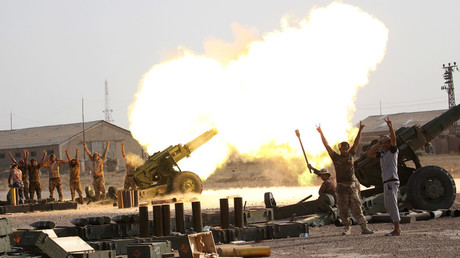
Outraged by Ankara’s decision to extend the stationing of its troops in northern Iraq, 30 kilometers from Mosul, Iraqi MPs have called on the government to review its relations with Turkey and lodge a complaint against the “occupation” with the UNSC.
On Tuesday, the majority of Iraqi legislators spoke out against the Turkish parliament’s decision to prolong the stationing of about 150 Turkish soldiers and some 25 tanks at the Bashiqa military camp in Iraq’s northern Nineveh Province, which is located at the forefront of the battle with Islamic State (IS, formerly ISIS/ISIL).
In a written statement, the MPs decried the decision, appealing to the country’s prime minister, Haider al-Abadi, to summon the Turkish ambassador and file a complaint with the United Nations Security Council that would designate Turkey’s military contingent as an “occupying” force, according to Rudaw news agency.
On Saturday, the Turkish parliament green lighted the extension of the Turkish military’s engagement in both Iraq and Syria.
Since 2014, Turkish servicemen have provided training and support to Kurdish Peshmerga units and Sunni militia known as Hashd al-Watani forces at the camp, subject to agreement with the Iraqi government. However, on December 4 of last year, Turkey beefed up its military presence at the camp, allegedly to protect its advisers. The move infuriated Bagdad, which insisted that Turkey had not asked for permission from the Iraqi government to deploy additional troops, thus violating its sovereignty.
Turkish President Recep Tayyip Erdogan refused to acknowledge this at that time, claiming that Turkey was acting within the scope of the previous agreement.
“Turkish soldiers are in Basheeqa camp at the request of Haider al-Abadi in 2014. Now I am asking why he has been silent since 2014,” Erdogan said in December, disputing claims that Turkey was intervening in Iraq.
Speaking in the wake of the vote, Abadi publicly called for Turkey’s troops to immediately leave its territory, saying that “the Turkish insistence on their presence inside Iraqi territories has no justification.”
The prime-minister told journalists on Tuesday that Iraq has managed to enlist the support of the ‘international community,’ as well as the US-led international coalition, in its bid to remove the Turkish military from its territory.
While Iraq doesn’t want to be dragged into a military conflict with Turkey, it finds the actions of its government “not acceptable by any standard,” he added.
Turkish Deputy Prime Minister Numan Kurtulmus stressed on Wednesday that Turkey’s military presence in the Bashiqa camp is intended solely to provide stability and train the local forces, and that Ankara does not aim to become an occupying force.
“Turkey will not allow this to become a matter of debate,” he told reporters as cited by Reuters.
Both Turkey and Iraq summoned each other’s ambassadors on Wednesday to discuss the growing rift between the two states.
Turkey’s foreign ministry also condemned the vote, the Daily Sabah reported.
Back in December, Iraq appealed to NATO to force Turkey to withdraw its forces, but the alliance found Ankara to be in compliance with the terms of the training agreement.
Iraq’s largest city, Mosul, fell into the hands of Islamic State in 2014, and Iraqi forces are currently preparing an offensive to retake the terrorist stronghold, aided by US-led anti-terrorism coalition.
If the operation is successful, Iraq wants to “ensure Turkish troops do not exploit the power vacuum after achieving victory against Islamic State in Mosul,” Abadi has stressed.
The Russian embassy in Damascus came under fire on Tuesday from a neighborhood controlled by militant groups, including Al-Nusra Front, the Russian Foreign Ministry reports.
One of the mortar shells fired at the embassy complex hit the residential area, while two others landed near the embassy building, the ministry said in a statement. Nobody was injured by the explosions.
“According to reports, the shelling came from the Jobar neighborhood of Damascus, which is under control of the terrorist groups Jabhat Fateh al-Sham and Failak ar-Rahman,” the ministry said.
Jabhat Fateh al-Sham is the new name taken by Al-Nusra Front, the Al-Qaeda offshoot universally considered a terrorist organization. Failak ar-Rahman is a lesser-known Islamist group.
Moscow said the shelling is “result of the actions of those who, like the US and some of its allies, provoke the continued bloodshed in Syria and flirt with militants and extremists of all flavors.”
The ministry said Russia would take “all necessary measures” to return peace and security to Syria.
The Russian embassy in Damascus has come under militant fire on several occasions. The Syrian capital remains under threat despite the efforts of the army to fend off armed groups.
Bell Pottinger worked for the US between 2007 and 2011 producing propaganda and faked al-Qaeda videosJerome Delay/AP
Lord Bell, Margaret Thatcher’s PR guru, was hired by the United States to run a $540 million covert propaganda campaign after the invasion of Iraq.
Washington was reported to have paid his company Bell Pottinger’s conflict resolution division to produce fake al-Qaeda videos, which were dropped by US forces.
The films could be tracked by “web-based analytics” when they were played on computers, allowing the Americans to track potential terrorists, according to The Sunday Times.
Martin Wells, a video editor from Bath, was recruited by Bell Pottinger to work on a “psychological operations” campaign for the Pentagon in Iraq.
German Economy Minister Sigmar Gabriel has promised to press Washington loosen its economic restrictions on Iran, as it promised to do as part of last year’s nuclear deal.
During a public speech during a landmark two-day economic cooperation visit to Tehran, Gabriel said Germany intends to “remind the United States of the commitment to get to an effective dismantling of sanctions.”
The SPD politician, who also serves as Germany’s Vice Chancellor, said that Washington “should act on its responsibilities concerning Iran so the outcome of the nuclear deal becomes visible in Iran.”
For its part, Germany said it planned to sign 10 key deals, and boost economic turnover with Iran by €2.5 billion, as a result of the visit, during which 120 senior business leaders joined Gabriel.
Iran’s banks, oil producers and government had been under severe economic restrictions from the US following the Islamic Revolution, which had been subsequently tightened several times, as a reaction to the country’s nuclear program, and ostensible support for organizations Washington classifies as terrorists, such as Hamas and Hezbollah.
Many of those, and others imposed by the EU and the UN, were officially lifted in January this year, after Iran was adjudged to have been following the terms of the Joint Comprehensive Plan of Action (JPA) – an agreement between Iran and China, France, Russia, United Kingdom, United States, Germany and the EU – that promised more favorable economic conditions in exchange for greater restrictions and tighter supervision of the country’s nuclear program.
But according to Iranian President Hassan Rouhani, the implementation of the sanctions reprieve has been “flawed.” Most problematically, many European banks are still reluctant to do business inside Iran, as they fear this may endanger their dealings with US financial institutions that are still banned from having dealings with the Islamic Republic.
But the US said that it is fulfilling its state obligations, and it is now down to individual companies if they want to invest in Iran. Last week, US Energy Secretary Ernest Moniz said that Iran’s oil exports were “essentially back to pre-sanctions levels” – Washington and Brussels imposed an embargo on Iranian petrochemicals in 2012 – and said that the Islamic Republic was now the beneficiary of “a considerable additional cash flow.”
Moscow has accused Washington of sabotaging the Syria ceasefire deal, saying that the US will be responsible for any new terror attacks in Syria, as by taking no action against Al-Nusra terrorists it shows it is ready “to make a deal with the devil.”
Washington “has never exerted any real pressure on Jabhat Al-Nusra, done nothing for delineation to succeed and taken no action against its militants,” the Russian Foreign Ministry said in a statement Monday, following the US decision to suspend cooperation on Syria.
Besides failing to deliver on its part of the deal, the US were hampering Moscow’s efforts to stop the terrorists, the Russian Foreign Ministry said, calling Washington’s decision a “reflection” of the Obama administration’s inability to meet the key condition for Russia-US cooperation on the Syrian peace process.
The way the situation has been unraveling in Syria in the past few weeks has made Moscow doubt what Washington’s real intentions are, according to the ministry.
“We are becoming more convinced that in a pursuit of a much desired regime change in Damascus, Washington is ready to ‘make a deal with the devil’,” the Foreign Ministry said. For the sake of ousting Syrian President Bashar Assad, the US appears to be ready to “forge an alliance with hardened terrorists, dreaming of turning back the course of history.”
While Jabhat Al-Nusra, a designated terrorist organization, has been known as an Al-Qaeda affiliate for many years, Washington “is not in a hurry to separate US-oriented anti-government forces from it,” Moscow points out. On the contrary, even though Al-Nusra has never been a part of any peace deal, Washington “covers it with the shield of opposition groups which formally confirmed their participation in the cessation of hostilities.”
Meanwhile, Russia’s Permanent Representative to the UN, Vitaly Churkin, who on Monday assumed the post of the President of the UN Security Council, expressed his concerns over the halt in Russia-US cooperation in Syria.
At the same time, he insisted that the current setback in Syria will not lead to another “Cold War” between Moscow and Washington.
“I think you are dramatizing the nature of our disagreements with the US,” Churkin said, replying to a reporter at a press conference, adding that there’s still a chance to revive the cooperation.
“I hope there will not be a new Cold War,” he added.
For now, the main objective in Syria for Russia is to thwart Al-Nusra’s latest offensive in Aleppo, which has seen increasing number of terrorist attacks in the wake of the ceasefire’s collapse.
“In the process of the past few weeks, after the September 9 arrangements were reached, we have seen numerous violations by Nusra and others cooperating with Nusra of the cessation of hostilities regime”, Churkin said, adding that about 1.5 million people are currently stand the risk of being besieged by its militants south of Aleppo.
“We must make sure that Nusra’s influence is not going to continue to spread,” he stressed, describing the situation in Aleppo as “extremely dramatic.”
On a broader scale, Russia’s long-term aim in the region is to “throw the terrorists out” of Iraq and Syria, as it is the only way to secure the lives of civilians, living there in constant danger from extremists.
To mitigate the impact of one of the terrorists’ most powerful weapons, propaganda, Russia has submitted a draft resolution to the UN Security Council designed “to counter terrorist ideology and the ideology of violent extremism,” Churkin said.
Meanwhile, U.S. Assistant Secretary of State for European and Eurasian Affairs Victoria Nuland is set to visit Moscow this week. However, she is expected to discuss solely Ukraine and implementation of the Minsk agreements, according to the State Department’s press release.
As relations between Russia and the US disintegrate as a result of the escalating proxy war in Syria, which today culminated with Putin halting a Plutonium cleanup effort with the US, shortly before the US State Department announced it would end negotiations with Russia over Syria, tomorrow an unprecedented 40 million Russian citizens, as well as 200,000 specialists from “emergency rescue divisions” and 50,000 units of equipment are set to take part in a four day-long civil defense, emergency evacuation and disaster preparedness drill, the Russian Ministry for Civil Defense reported on its website.
According to the ministry, an all-Russian civil defense drill involving federal and regional executive authorities and local governments dubbed “Organization of civil defense during large natural and man-caused disasters in the Russian Federation” will start tomorrow morning in all constituent territories of Russia and last until October 7. While the ministry does not specify what kind of “man-caused disaster” it envisions, it would have to be a substantial one for 40 million Russians to take part in the emergency preparedness drill. Furthermore, be reading the guidelines of the drill, we can get a rather good idea of just what it is that Russia is “preparing” for.
The website adds that “the main goal of the drill is to practice organization of management during civil defense events and emergency and fire management, to check preparedness of management bodies and forces of civil defense on all levels to respond to natural and man-made disasters and to take civil defense measures.” Oleg Manuilov, director of the Civil Defence Ministry explained that the exercise will be a test of how the population would respond to a “disaster” under an “emergency” situation.
The stage is going to practice notification and gathering of senior officials of federal and regional executive authorities, local governments and civil defense forces, deployment of civil defense management system on all levels, readying civil defense communication and notification system. After the National Crisis Management Center have brought the management signals, all management bodies, state authorities, forces and facilities on duty and people will be notified through notification systems available.
II stage: Planning and organization of civil defense actions. Deploying a team of civil defense forces and facilities designed to respond to large disasters and fires.
The stage plans to practice deployment a mobile interagency multi-functional team of civil defense forces and facilities in each federal district in order to carry our rescue and other urgent operations, civil defense actions and to deploy special civil defense units in constituent territories; putting rescue military units, divisions of the federal fire service, rescue units on standby. The stage provides for the team to be reinforced, activation of backup control centers and practicing collecting and exchanging information in the field of civil defense.
III stage: Organization of actions of civil defense management bodies and forces for response to large disasters and fires.
The stage will deal with the use of the civil defense team to respond to large disasters and fires, setting up aerial and mobile control centers, revising of routes for save evacuation of people, organization of vital services; taking off fire and rescue units of the federal fire service to put out fires and conduct rescue operations at potentially dangerous facilities, including closed administrative territorial entities.
The drill will rehearse radiation, chemical and biological protection of the personnel and population during emergencies at crucial and potentially dangerous facilities. Fire safety, civil defense and human protection at social institutions and public buildings are also planned to be checked. Response units will deploy radiation, chemical and biological monitoring centers and sanitation posts at the emergency areas, while laboratory control networks are going to be put on standby.
The fact that among the measures tasked for the civil defense team will be a response to “disasters and fires” as well as the rehearsal of “radiation, chemical and biological protection”, makes it clear that Russia is about to hold its biggest nuclear war drill since perhaps the end of the Cold War.
Why now? Perhaps, in addition to the sharp deterioration in relations between Russia and the west, where tensions are on par with the cold war, another answer may come from the Chairman of the Joint Chiefs of Staff Joseph Dunford, who last week warned Congress that the implementation of a No Fly Zone in Syria as proposed by John Kerry recently, and a centerpiece of Hillary’s foreign policy strategy, would result in World War III.
During testimony before the Senate Committee on Armed Services last week General Joseph Dunford rang the alarm over a policy shift that is gaining more traction within the halls of Washington following the collapse of the ceasefire brokered by the United States and Russia in Syria saying that it could result in a major international war which he was not prepared to advocate on behalf of. Senator Roger Wicker of Mississippi asked about Hillary Clinton’s proposal for a no fly zone in Syria in response to allegations that Russia and Syria have intensified their aerial bombardment of rebel-held East Aleppo since the collapse of the ceasefire.
“What about the option of controlling the airspace so that barrel bombs cannot be dropped? What do you think of that option?” asked Wicker. “Right now, Senator, for us to control all of the airspace in Syria would require us to go to war against Syria and Russia. That is a pretty fundamental decision that certainly I’m not going to make,” said the Chairman of the Joint Chiefs of Staff suggesting the policy was too hawkish even for military leaders.
As a reminder, Hillary Clinton strongly argued in favor of a no fly zone ever since October 2015, just days after Russia began a bombing campaign aimed at maintaining the stability of the Syrian government. “I personally would be advocating now for a no fly zone and humanitarian corridors to try to stop the carnage on the ground and from the air, to try to provide some way to take stock of what’s happening, to try to stem the flow of refugees,” said Clinton in an interview with NBC in October 2015.
Despite the warnings, the former Secretary of State and current presidential candidate, who has a well-known hawkish position towards regime change and matters related to Russia, has continued to advocate this position which has gained traction in recent weeks among top US diplomats.
Clinton is note alone: as the WSJ reported in June, more than 50 US diplomats endorsed a notorious dissent memo, demanding that that the Obama administration employ military options against Assad, such as the implementation of a no fly zone if not a direct attack against the Syrian regime. The argument from the diplomats is that the situation in Syria will continue to devolve without direct action by the US military, an argument of dubious legality if undertaken unilaterally without a UN Security Council resolution but which as Sputnik reports, the US Ambassador to the UN Samantha Power has been laying the groundwork for under the controversial “right to protect” theory of international law arguing that Russia’s opposition to a resolution should be ignored because they are a party to the conflict.
Russia, in turn, has countered that if the Assad regime falls then terrorist groups including ISIS and al-Nusra Front will likely fill the resulting power vacuum descending the country into an even greater harbor for international terrorism. Ultimately, the Syrian conflict is fundamentally about the transport of energy, and whether Russia maintains its dominance over European natural gas imports, or if – with the Syrian regime deposed – a Qatar natural gas pipeline can cross the territory and make its way to Europe.
As for the Russian nuclear war drill, we can only hope that any such rising hints of nuclear warfare remain in the realm of the purely theoretical.
And so it goes, lets trow in another Nobel peace price, priceless !
20/30 years negotiating trough the drain, and having fun already ?
Russia has suspended a post-Cold War deal with the US on disposal of plutonium from decommissioned nuclear warheads. The decision was explained by “the hostile actions of the US” against Russia and may be reversed, if such actions are stopped.
A decree signed by Russian President Vladimir Putin cites “the radical change in the environment, a threat to strategic stability posed by the hostile actions of the US against Russia, and the inability of the US to deliver on the obligation to dispose of excessive weapons plutonium under international treaties, as well as the need to take swift action to defend Russian security” as justification for suspending the deal.
While Russia suspended the plutonium reprocessing deal, it stressed that the Russian fissile material, which was subject to it, would not be used for any military purpose, be it production of new weapons or research.
The suspension decree has come into force, but it needs to be approved by the Russian parliament, which may overrule the president’s decision. Leonid Slutsky, who’s slated to be appointed head of the Foreign Relations Committee in the newly-elected parliament, said it would be given a priority.
“It’s a very important issue. It’s about taking swift action to protect Russian national security. We will deal with it as soon as the bill is submitted,” he told TASS.
A bill submitted by the president’s office to the parliament on Monday states that the uranium agreement may be resumed, provided the US takes steps to eliminate the causes of the suspension. In particular, Moscow wants Washington to curb its military presence on the territories of NATO members which have joined the alliance after September 1, 2000, to the number at which they were at the moment of signing the agreement, Russian media report.
The draft bill also mentions repeal of the so-called Magnitsky law and of sanctions against Russian regions, persons and companies introduced by the US over Ukrainian crisis, while also paying compensation for damages caused by them, including the damages caused by the counter-sanctions that Russia was forced to impose.
The Magnitsky Act is a 2012 US law intended to punish a number of Russian citizens believed to be linked to the death in custody of Russian lawyer Sergey Magnitsky.
Moscow also wants Washington to provide a clear plan how it is going to irreversibly reprocess plutonium under the agreement’s conditions.
Russian Foreign Minister Sergey Lavrov later said in a statement that Russia’s suspension of the agreement is “a forced measure.” According to the minister, Moscow has always viewed the Russia-US deal on plutonium disposal as an important step to nuclear disarmament.
“Unfortunately, in recent years the US has made a number of unfriendly steps towards Russia. In particular, under false pretexts, Washington introduced large-scale economic and other sanctions against Russia,” he said. “The US has started the build-up of its military forces and NATO infrastructure close to Russia’s borders. Washington and its allies openly talk about ‘restraining’ Russia.”
Lavrov added that Russia’s move “is a signal to Washington”:
“Trying to talk with Russia using strength, the language of sanctions and ultimatums, and still maintain selective cooperation with our country only in those areas where it is beneficial for the US, won’t work,” he added.
The development was not entirely surprising, since Russia earlier expressed its dissatisfaction with how the US wants to handle plutonium reprocessing.
Washington decided it would be cheaper to mix nuclear materials with special diluents. Russia insisted that the US was violating the terms of the deal, which required it to use a nuclear reactor to transmute plutonium. Unlike the mixing technology, the latter method makes the process irreversible.
The treaty between the US and Russia, which regulates how the two countries are to dispose of plutonium from nuclear warheads decommissioned as part of the parallel reduction of the two countries’ Cold War arsenals, was signed in 2000. Each country was required to dispose of over 34 tons of fissile material by turning it into so-called MOX fuel and burning it in nuclear reactors.
However, costs for building a facility at the Savannah River Site in South Carolina, where the US was supposed to fabricate MOX fuel from its plutonium, spiraled out of control. Under the Obama administration, the US decided that it would instead use the cheaper reversible process, arguing that it was in line with the spirit of the deal with Russia.
Russia expressed its concerns over the unilateral move in April, shortly after a nuclear security summit held in the US.
“We signed an agreement that the plutonium will be processed in a certain way, for which facilities would be purpose-built,” Putin said at the time. “We have met our commitments, and constructed the necessary facilities. The US has not.”
The US rejected the criticism from Russia. The “new US method would not require renegotiation of the agreement,” US State Department spokesperson Jennifer Bavisotto said.
The Obama administration ignited a firestorm over the weekend when it stripped the city of Jerusalem as being located in Israel in an official communication sent following a memorial service for recently deceased former Israeli President Shimon Peres.
The White House originally sent out a press release attributing Obama’s remarks at the memorial service as taking place in “Jerusalem, Israel.” However, shortly after that statement was sent, the White House reissued the statement with “Israel” crossed out as the location.
The White House’s move prompted criticism in Israel and throughout the pro-Israel community, including on Capitol Hill.
The Washington Free Beacon has assembled a list of ten other places that the White House does not believe are located in the state of Israel.
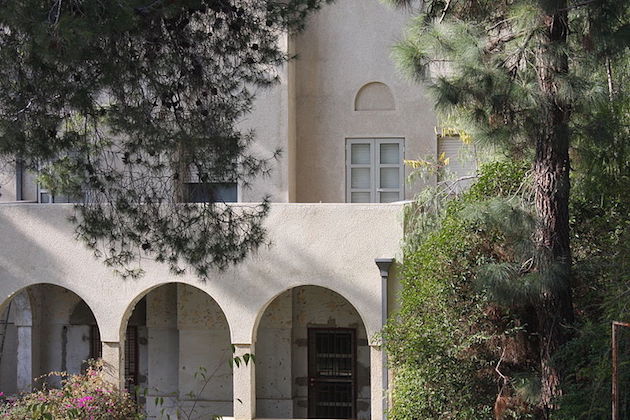
1. The Prime Minister of Israel’s Residence
Beit Aghion / Wikimedia Commons
Known as Beit Aghion in Hebrew, the prime minister’s official residence is located in the heart of Jerusalem and has served as the living space for senior Israeli officials since 1952, 14 years after construction was completed. Beit Aghion became the prime minister’s official residence in 1974.
2. The Prime Minister of Israel’s Office
Also located in central Jerusalem, the prime minister’s office coordinates a large number of governmental affairs and works to implement laws passed by the country’s parliament.
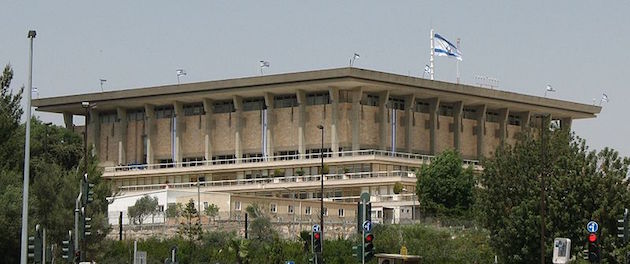
3. Israel’s Parliament, The Knesset
Knesset / Wikimedia Commons
Hebrew for “the gathering,” the Knesset is home to Israel’s 120-member legislature. It is located in the Givat Ram neighborhood in Central Jerusalem, which plays home to many of Israel’s key government bodies.
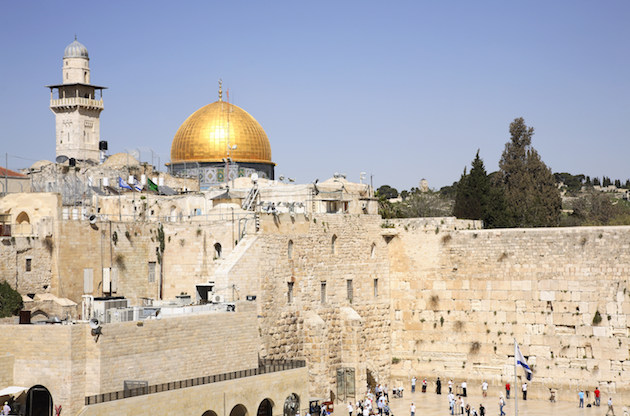
4. Judaism’s Holiest Sites, the Western Wall and the Temple Mount
The Western Wall / Wikimedia Commons
The Western Wall, or Kotel in Hebrew, is considered Judaism’s holiest site. Located behind the walls of Jerusalem’s ancient Old City, the Obama administration has long refused to acknowledge this location as Israel’s property.
5. Israel’s Holocaust Memorial Museum, Yad Vashem
Israel’s Holocaust memorial museum, located in the heart of Jerusalem, is widely viewed as one of the city’s most important modern sites. After completing the museum’s central exhibits, visitors are treated to sprawling views of Jerusalem, a reminder of how far the Jewish people have come since the Holocaust.
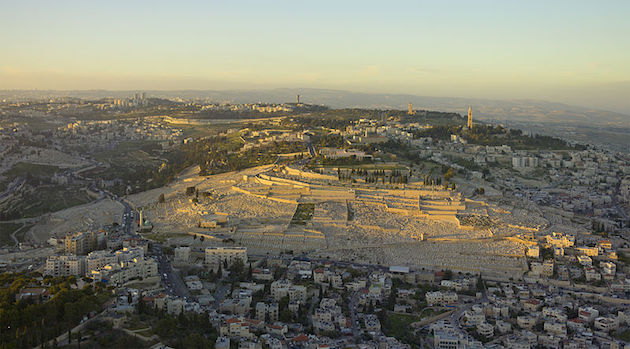
6. Judaism’s Ancient Cemetery, The Mount of Olives
Aerial view of the Mount of Olives / Wikimedia Commons
A 3,000-year-old Jewish burial site, the Mount of Olives is located nearby Jerusalem’s Old City. Many of Judaism’s central figures are noted in the Bible as having ascended the mountain. In modern days, the cemetery has been a victim of vandalism by Arabs, and stands as another key site the Obama administration views as not part of Israel.
7. The Israel Museum
Due to its location in central Jerusalem, the Israel Museum—the country’s national museum—is not recognized as part of Israel by the Obama administration. The museum is home to some of Israel’s most important cultural artifacts.
8. Israel’s Supreme Court
Also located in the central Jerusalem neighborhood of Givat Ram, Israel’s supreme court has played a central role in Israeli democracy and the promotion of human rights in the Jewish state, but is not viewed as part of Israeli territory by the Obama administration.
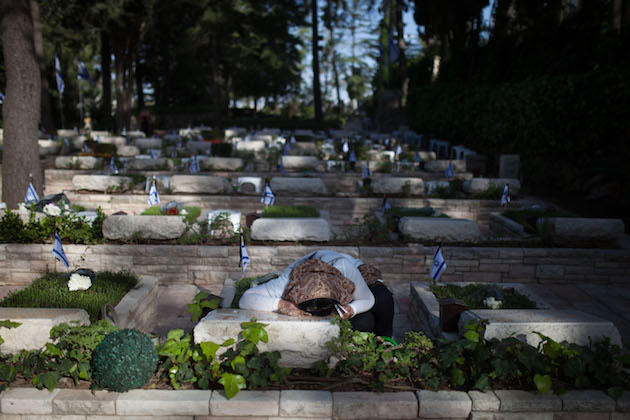
9. Israel’s National Cemetery, Mount Herzl
Mount Herzl military cemetery / AP
The site of Israel’s national cemetery, Mount Herzl is the final resting place of Israel’s founding fathers and national leaders, including former President Shimon Peres. The site is named after Theodor Herzl, the founder of Zionism. The Obama administration made clear last week that it does not view the cemetery as part of Israel.
10. Israel’s Capital City
Jerusalem / AP
Since the days of the bible, Jerusalem has served as the central home of the Jewish people. Since the state of Israel was reestablished in 1948, it has served as the cultural and political center of the Jewish people. The Obama administration has been adamant since the start of its term in 2008 that it does not believe the city belongs to the Jewish state.
Now it is done. Obama has done it. As John Bolton explains here, this could be the end of free speech on the Internet, as Islamic states move in to enforce sharia blasphemy laws. It won’t happen right away. But there is nothing preventing it from happening.
More of the poison fruit of Obama’s traitorous presidency.
“Stewardship of IANA Functions Transitions to Global Internet Community as Contract with U.S. Government Ends,” ICANN, October 1, 2016 (thanks to Christian):
Today, 1 October 2016, the contract between the Internet Corporation for Assigned Names and Numbers (ICANN) and the United States Department of Commerce National Telecommunications and Information Administration (NTIA), to perform the Internet Assigned Numbers Authority (IANA) functions, has officially expired. This historic moment marks the transition of the coordination and management of the Internet’s unique identifiers to the private-sector, a process that has been committed to and underway since 1998.
“This transition was envisioned 18 years ago, yet it was the tireless work of the global Internet community, which drafted the final proposal, that made this a reality,” said ICANN Board Chair Stephen D. Crocker. “This community validated the multistakeholder model of Internet governance. It has shown that a governance model defined by the inclusion of all voices, including business, academics, technical experts, civil society, governments and many others is the best way to assure that the Internet of tomorrow remains as free, open and accessible as the Internet of today.”
Internet users will see no change or difference in their experience online as a result of the stewardship transition.
In managing the coordination of the Internet’s unique identifiers, ICANN plays a small but significant role in the Internet’s ecosystem. For more than 15 years, ICANN has worked in concert with other technical bodies such as the Internet Engineering Task Force, the Regional Internet Registries, top-level domain registries and registrars, and many others.
The final chapter of the privatization process began in 2014, when NTIA asked ICANN to convene the global multistakeholder community, which is made up of private-sector representatives, technical experts, academics, civil society, governments and individual Internet end users, to come together and formulate proposals to both replace NTIA’s historic stewardship role and enhance ICANN’s accountability mechanisms.
The package of proposals developed by the global community met the strict criteria established by NTIA in its March 2014 announcement. Since their submission to NTIA, ICANN and its various stakeholder groups have worked tirelessly to ensure that all the necessary implementation tasks have been completed, so the IANA functions contract could expire on 30 September 2016.
The proposals reinforce ICANN’s existing multistakeholder model and are also aimed at enhancing ICANN’s accountability. The improvements include empowering the global Internet community to have direct recourse if they disagree with decisions made by ICANN the organization or the Board.
The IANA stewardship transition is a testament to the tireless work of the global community, and a validation of the multistakeholder model that frames that community.













 anneinpt
 artaxes
 danmillerinpanama
 davidking1530
 Peter Hofman
 Joseph Wouk
 Peter
Peter Louisiana Steve
 WarSclerotic
Recent Comments