Posted tagged ‘UN Security Council’

Column One: From Yemen to Turtle Bay

October 14, 2016

Column One: From Yemen to Turtle Bay, Jerusalem Post, Caroline Glick, October 13, 2016
sana-yemen


As far as Obama is concerned, Iran is a partner, not an adversary.

****************************

Off the coast of Yemen and at the UN Security Council we are seeing the strategic endgame of Barack Obama’s administration. And it isn’t pretty.

Since Sunday, Iran’s Houthi proxies in Yemen have attacked US naval craft three times in the Bab al-Mandab, the narrow straits at the mouth of the Red Sea. The Bab al-Mandab controls maritime traffic in the Red Sea, and ultimately controls the Suez Canal.

Whether the Iranians directed these assaults or simply green-lighted them is really beside the point. The point is that these are Iranian strikes on the US. The Houthis would never have exposed themselves to US military retaliation if they hadn’t been ordered to do so by their Iranian overlords.

The question is why has Iran chosen to open up an assault on the US? The simple answer is that Iran has challenged US power at the mouth of the Red Sea because it believes that doing so advances its strategic aims in the region.

Iran’s game is clear enough. It wishes to replace the US as the regional hegemon, at the US’s expense.

Since Obama entered office nearly eight years ago, Iran’s record in advancing its aims has been one of uninterrupted success.

Iran used the US withdrawal from Iraq as a means to exert its full control over the Iraqi government. It has used Obama’s strategic vertigo in Syria as a means to exert full control over the Assad regime and undertake the demographic transformation of Syria from a Sunni majority state to a Shi’ite plurality state.

In both cases, rather than oppose Iran’s power grabs, the Obama administration has welcomed them. As far as Obama is concerned, Iran is a partner, not an adversary.

Since like the US, Iran opposes al-Qaida and ISIS, Obama argues that the US has nothing to fear from the fact that Iranian-controlled Shiite militias are running the US-trained Iraqi military.

So, too, he has made clear that the US is content to stand by as the mullahs become the face of Syria.

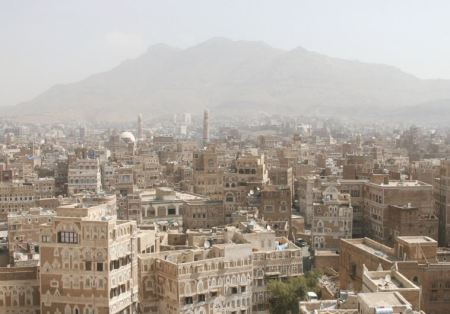
In Yemen, the US position has been more ambivalent. In late 2014, Houthi rebel forces took over the capital city of Sanaa. In March 2015, the Saudis led a Sunni campaign to overthrow the Houthi government. In a bid to secure Saudi support for the nuclear agreement it was negotiating with the Iranians, the Obama administration agreed to support the Saudi campaign. To this end, the US military has provided intelligence, command and control guidance, and armaments to the Saudis.

Iran’s decision to openly assault US targets then amounts to a gamble on Tehran’s part that in the twilight of the Obama administration, the time is ripe to move in for the kill in Yemen. The Iranians are betting that at this point, with just three months to go in the White House, Obama will abandon the Saudis, and so transfer control over Arab oil to Iran.

For with the Strait of Hormuz on the one hand, and the Bab al-Mandab on the other, Iran will exercise effective control over all maritime oil flows from the Arab world.

It’s not a bad bet for the Iranians, given Obama’s consistent strategy in the Middle East.

Obama has never discussed that strategy.

Indeed, he has deliberately concealed it. But to understand the game he has been playing all along, the only thing you need to do listen to his foreign policy soul mate.

According to a New York Times profile published in May, Obama’s deputy national security adviser Ben Rhodes is the president’s alter ego. The two men’s minds have “melded.”

Rhodes’s first foreign policy position came in the course of his work for former congressman Lee Hamilton.

In 2006, then-president George W. Bush appointed former secretary of state James Baker and Hamilton to lead the Iraq Study Group. Bush tasked the group with offering a new strategy for winning the war in Iraq. The group released its report in late 2006.

The Iraq Study Group’s report contained two basic recommendations. First, it called for the administration to abandon Iraq to the Iranians.

The group argued that due to Iran’s opposition to al-Qaida, the Iranians would fight al-Qaida for the US.

The report’s second recommendation related to Israel. Baker, Hamilton and their colleagues argued that after turning Iraq over to Iran, the US would have to appease its Sunni allies.

The US, the Iraq Study Group report argued, should simultaneously placate the Sunnis and convince the Iranians of its sincerity by sticking it to Israel. To this end, the US should pressure Israel to give the Golan Heights to Syria and give Judea and Samaria to the PLO.

Bush rejected the Iraq Study Group report. Instead he opted to win the war in Iraq by adopting the surge counterinsurgency strategy.

But once Bush was gone, and Rhodes’s intellectual twin replaced him, the Iraq Study Group recommendations became the unstated US strategy in the Middle East.

After taking office, Obama insisted that the US’s only enemy was al-Qaida. In 2014, Obama grudgingly expanded the list to include ISIS.

Obama has consistently justified empowering Iran in Iraq and Syria on the basis of this narrow definition of US enemies. Since Iran is also opposed to ISIS and al-Qaida, the US can leave the job of defeating them both to the Iranians, he has argued.

Obviously, Iran won’t do the US’s dirty work for free. So Obama has paid the mullahs off by giving them an open road to nuclear weapons through his nuclear deal, by abandoning sanctions against them, and by turning his back on their ballistic missile development.

Obama has also said nothing about the atrocities that Iranian-controlled militia have carried out against Sunnis in Iraq and has stopped operations against Hezbollah.

As for Israel, since his first days in office, Obama has been advancing the Iraq Study Group’s recommendations. His consistent, and ever escalating condemnations of Israel, his repeated moves to pick fights with Jerusalem are all of a piece with the group’s recommended course of action. And there is every reason to believe that Obama intends to make good on his threats to cause an open rupture in the US alliance with Israel in his final days in office.

Prime Minister Benjamin Netanyahu’s phone call with Secretary of State John Kerry on Saturday night made this clear enough. In the course of their conversation, Netanyahu reportedly asked Kerry if Obama intended to enable an anti-Israel resolution to pass in the UN Security Council after the presidential election next month. By refusing to rule out the possibility, Kerry all but admitted that this is in fact Obama’s intention.

And this brings us back to Iran’s assaults on US ships along the coast of Yemen.

Early on Sunday morning, the US responded to the Houthi/Iranian missile assaults by attacking three radar stations in Houthi-controlled territory. The nature of the US moves gives credence to the fear that the US will surrender Yemen to Iran.

This is so for three reasons. First, the administration did not allow the USS Mason destroyer to respond to the sources of the missile attack against it immediately. Instead, the response was delayed until Obama himself could determine how best to “send a message.”

That is, he denied US forces the right to defend themselves.

Second, it is far from clear that destroying the radar stations will inhibit the Houthis/Iranians.

It is not apparent that radar stations are necessary for them to continue to assault US naval craft operating in the area.

Finally, the State Department responded to the attack by reaching out to the Houthis. In other words, the administration is continuing to view the Iranian proxy is a legitimate actor rather than an enemy despite its unprovoked missile assaults on the US Navy.

Then there is the New York Times’ position on Yemen.

The Times has repeatedly allowed the administration to use it as an advocate of policies the administration itself wishes to adopt. Last week for instance, the Times called for the US to turn on Israel at the Security Council.

On Tuesday, the Times published an editorial calling for the administration to end its military support for the Saudi campaign against the Houthis/Iran in Yemen.

Whereas the Iranian strategy makes sense, Obama’s strategy is nothing less than disastrous.

Although the Iraq Study Group, like Obama, is right that Iran also opposes ISIS, and to a degree, al-Qaida, they both ignored the hard reality that Iran also views the US as its enemy. Indeed, the regime’s entire identity is tied up in its hatred for the US and its strategic aim of destroying America.

Obama is not the only US president who has sought to convince the Iranians to abandon their hatred for America. Every president since 1979 has tried to convince the mullahs to abandon their hostility. And just like all of his predecessors, Obama has failed to convince them.

What distinguishes Obama from his predecessors is that he has based US policy on a deliberate denial of the basic reality of Iranian hostility. Not surprisingly, the Iranians have returned his favor by escalating their aggression against America.

The worst part about Obama’s strategy is that it is far from clear that his successor will be able to improve the situation.

If Hillary Clinton succeeds him, his successor is unlikely to even try. Not only has Clinton embraced Obama’s policies toward Iran.

Her senior advisers are almost all Obama administration alumni. Wendy Sherman, the leading candidate to serve as her secretary of state, was Obama’s chief negotiator with the Iranians.

If Donald Trump triumphs next month, assuming he wishes to reassert US power in the region, he won’t have an easy time undoing the damage that Obama has caused.

Time has not stood still as the US has engaged in strategic dementia. Not only has Iran been massively empowered, Russia has entered the Middle East as a strategic spoiler.

Moreover, since 2001, the US has spent more than a trillion dollars on its failed wars in the Middle East. That investment came in lieu of spending on weapons development. Today Russia’s S-400 anti-aircraft missiles in Syria reportedly neutralize the US’s air force.

US naval craft in the Bab al-Mandab have little means to defend themselves against missile strikes.

The US’s trillion-dollar investment in the F-35 fighter jet has tethered its air wings to a plane that has yet to prove its capabilities, and may never live up to expectations.

Israel is justifiably worried about the implications of Obama’s intention to harm it at the UN.

But the harm Israel will absorb at the UN is nothing in comparison to the long-term damage that Obama’s embrace of the Iraq Study Group’s disastrous strategic framework has and will continue to cause Israel, the US and the entire Middle East.

An Obama parting gift to Israel?‎

October 2, 2016

An Obama parting gift to Israel?‎ Israel Hayom, Richard Baehr, October 2, 2016

(Please see also, Another area where Congress must be ready to oppose the president. — DM)

U.S. President Barack Obama, former President Bill Clinton and Secretary of State John ‎Kerry all flew off to Israel and attended the funeral of Shimon Peres, the ‎last remaining ‎political figure from modern Israel’s founding generation. ‎Former Secretary ‏of State Hillary Clinton‎, ‎the current Democratic Party nominee for president‎, had at one point been listed to attend‎, ‎but did not make the trip‎.‎

The United States is fewer than six weeks away from the conclusion of what is now ‎a ‎tight presidential contest. The race conceivably could soon lean more toward ‎Clinton ‎after the widely watched first debate last Monday night (84 million viewers) ‎between Clinton ‎and Republican nominee Donald Trump, which most pundits ‎suggested she won, a ‎conclusion supported by results from the first polls released after the debate.

However, it has ‎been an unusual and surprising election contest, and there are no ‎guarantees that the ‎broader voting public saw things the same way their ‎media superiors expected it to see them. ‎

The high-level attendance at the funeral by Obama and Bill Clinton will ‎certainly be a plus for Hillary Clinton’s prospects to win a large share of ‎the Jewish vote in ‎closely contested states such as Florida and Pennsylvania. Obama ‎won ‎about seven of every 10 Jewish votes in 2012, down from about eight in 10 in 2008. ‎Bill ‎Clinton scored even higher than this in his two runs for the White House, in 1992 ‎and ‎‎1996, so Hillary Clinton can only benefit from association with presidents with far ‎more ‎popular support than she has demonstrated so far. Both Obama and Bill Clinton issued ‎statements full ‎of praise for Peres’ long career and also his commitment both to ‎keep Israel strong but ‎also to seek peace.‎

Obama’s tribute may be a harbinger of something more to come, ‎presumably in the nine ‎weeks he has left in the White House after the Nov. 8 vote has been ‎cast. ‎The president has just concluded an agreement with ‎Israel for a 10-year military aid bill. ‎The most contentious part of that agreement ‎was Israel’s acceptance that if Congress ‎votes for more assistance in the first ‎two years of the agreement than the agreed $3.8 billion ‎annual amount, it ‎would have to return the excess to the United States. There are ‎constitutional separation-of-‎powers issues that arise from the agreement, and already Trump has said ‎he does not consider himself bound by the limits, a view also ‎taken by a large ‎number of members in Congress.

In any case, with this settled, Obama ‎may feel free ‎to try his hand at some legacy-building on the Israeli-Palestinian track, an ‎area in ‎which his record of failure follows a long pattern of presidents who thought ‎they ‎had the magic elixir to achieve the two-state solution.‎

What has been rumored, with no denials offered by either the State Department or ‎the ‎White House, is that Obama may seek to obtain passage of a Security Council ‎resolution ‎in which the president offers his view on the parameters of the deal ‎between the two ‎parties who should end the conflict. As with all such two-state ‎plans, Israeli settlement ‎activity is viewed as the primary culprit in the conflict. ‎Members of the Senate, ‎anticipating some new initiative of this sort, have now sent ‎a letter to the White House, ‎signed by 88 members from both parties, requesting ‎that the president, for the duration of ‎his term, continue traditional American policy, ‎which has been to block any one-sided ‎U.N. resolutions targeting Israel.‎

‎”Even well-intentioned initiatives at the United Nations risk ‎locking the parties into ‎positions that will make it more ‎difficult to return to the negotiating table and make ‎the ‎compromises necessary for peace,” the senators wrote, ‎adding that the U.S. “must ‎continue to insist that neither we ‎nor any other outsider substitute for the parties to ‎the ‎conflict.”‎

Quoting from a 2011 address Obama gave to the U.N. General ‎Assembly in which he said that ‎‎”peace will not come ‎through statements and resolutions at the United Nations,” ‎the ‎senators reminded him that his ‎‎”administration has consistently upheld the ‎long-standing ‎U.S. policy of opposing — and if necessary vetoing — one-‎sided U.N. ‎Security Council resolutions.”‎

Longtime peace processor Dennis Ross, a likely appointee ‎to a Clinton administration if ‎she wins in November, ‎argued that the president’s willingness to try to obtain ‎a ‎resolution with a defined peace plan would be far higher if Trump wins ‎the presidential contest. Then the ‎initiative could be seen as a way to try to bind the incoming ‎president to an Obama-preferred course of action. Further ‎evidence that such a plan is in ‎the works, conceivably ‎regardless of who wins the White House, was a statement ‎by an ‎unusually angry Secretary of State John Kerry. Kerry, busy as always ‎attending to his many other ‎diplomatic failures — the never-ending Syrian carnage, ‎the ‎continued appeasement and excuse offering for the ‎behavior of the U.S.’s new Iranian ‎‎”partners,” relations with ‎Russia, seemed ready to pounce once more into the ‎Israeli-‎Palestinian diplomatic wasteland by condemning Israeli ‎settlement activity, as well ‎as offering a standard (for ‎appearance of balance) criticism of Palestinian incitement. ‎

It is hard not to see this as laying the groundwork for the ‎president cynically offering the ‎‎”Obama peace plan” as his ‎final tribute to the late Shimon Peres, who was ‎always ‎committed to the two-state solution and achieving peace. ‎The United Nations is of ‎course a vipers’ nest of Israel hatred ‎with its obsessive and uniquely hostile treatment of ‎the ‎Jewish state on any number of issues. ‎

Other than a Security Council resolution that President Jimmy ‎Carter allowed to get ‎through in 1980 by abstaining on a ‎resolution calling Israel’s unification of Jerusalem ‎illegal, ‎America’s role in Security Council ‎debates on Israel has generally been to try to water ‎down ‎condemnations of Israel. Failing that, the U.S. has ‎vetoed one-sided ‎resolutions aimed at Israel. ‎

Carter’s acquiescence in the U.N. Security Council resolution ‎cost him with Jewish voters. ‎He won only 45% of the Jewish ‎vote, to 39% for Ronald Reagan and 15% for third-‎party ‎candidate John Anderson, on his way to losing 44 states, the ‎worst defeat ever for ‎an incumbent president. No Democrat ‎since 1920 has performed worse among Jewish ‎voters. This ‎presumably is why Obama’s latest attempt to squeeze ‎Israel and Prime Minister Benjamin Netanyahu ‎will come, if it does, after the presidential election, when it can do no immediate ‎electoral ‎damage to his party or preferred candidate. ‎

In an interview with Vanity Fair, Obama made ‎clear that he plans to be an activist former president, pursuing the ‎causes he cares about. Attacking police and the ‎criminal ‎justice system for their alleged racism is a near certainty. ‎Climate change ‎seems to be a big matter for Obama, as well. ‎

But eight years of bad relations with Netanyahu did not come from nowhere. Obama is ‎one of ‎the more ideological presidents the U.S. has had (Reagan, ‎Carter, and ‎Franklin Roosevelt are others). His vision of Israeli-Palestinian ‎relations comes out ‎of his “Third World” view of ‎colonialism, and the power of the strong versus the ‎weak, ‎their victims. If he can take one more shot at what he ‎regards as balancing ‎the scales and weighing in on the side ‎of the Palestinians, he will. Those last nine ‎weeks of the Obama presidency are a red-alert warning to Israel and many ‎others.‎

Another area where Congress must be ready to oppose the president.

October 2, 2016

Another area where Congress must be ready to oppose the president, American Spectator, September 30, 2016

President Obama is rumored to be considering a major reversal of decades-long U.S. policy toward Israel by supporting a UN Security Council resolution that unilaterally recognizes a Palestinian state before a peace agreement is negotiated between Israel and the Palestinians. Congress must act to counter this bold and reckless move that endangers Israel’s security and America’s strategic interests.

There is much at stake: Israel is a free and democratic ally in a hostile region that has been repeatedly attacked by its neighbors. Before it occupied the West Bank, Gaza, and Golan Heights in 1967, these territories were used as a base of war and terrorism against the Jewish state. Offers to create a Palestinian state in Gaza and most of the West Bank that would allow for a safe and secure Israel have been repaid by intifada after intifada.

Others have argued persuasively that any Palestinian state established in the absence of a peace agreement with Israel will become a virtually ungovernable hotbed of terrorism sure to threaten not just Israel, but also the region and the world. The events in Gaza in the past decade strongly support this position. Ordinary Palestinians will also suffer, forced to endure rule by the same Islamic fanatics and brutal, corrupt autocrats who have destroyed their economy.

A White House decision to support unilateral Palestinian statehood would unquestionably be contrary to the will of Congress: 88 senators recently signed a letter opposing such an action, while 388 members of the House have signed a similar letter supporting a veto of all “one-sided” UN resolutions concerning the Israel/Palestine issue.

And these numbers understate congressional opposition: several senators refused to sign the letter because they thought it was insufficiently strong. Furthermore, a White House reversal on unilateral Palestinian statehood would also be contrary to the stated policies of both the Democratic and Republican presidential nominees.

To dissuade a determined White House from this course of action, Congress will have to do more than write letters. Here are some of the legislative options that could throw significant roadblocks in its path.

First, Congress should make clear its intention to sanction any unilaterally-declared Palestinian state and its new leaders, blocking their access to U.S. banking and markets, similar tosanctions on the Iranian regime.  Loss of access to the U.S. financial system would be extremely costly to any Palestinian regime.

Second, Congress should make clear its intention to immediately and completely cut hundreds of millions of dollars in annual U.S. direct aid to the Palestinian Authority (PA) in the event that President Mahmoud Abbas succeeds in his bid to win Palestinian statehood recognition at the UN.  Congress reduced this aid by 22 percent last year in retaliation for the PA’s continuing terrorism incitement.  It would be a significant blow to a new state to cut all such aid.

Third, Congress should mandate that any newly-created Palestinian state be designated a state sponsor of terrorism. This designation would include restrictions on U.S. foreign assistance; a ban on defense exports and sales; and various other restrictions. The Palestinian Authority (PA) currently uses a shell-game topay the families of terrorists, something Congress is currently working to stop.  Other PA ties to various terrorist activities go back decades.

Finally, Congress should review and update decades-old federal laws prohibiting U.S. funding of any UN organization that “accords the Palestine Liberation Organization the same standing as member states” to ensure that they apply and cannot be skirted if Abbas wins Security Council recognition of Palestinian statehood.

Congress should use its power boldly to exert influence over this vital issue.  Large majorities in Congress opposed the Iran nuclear deal and had both the facts and public opinion on their side. But due to the peculiarities of the law and the politics of the situation, they were outmaneuvered.  Congress should work to ensure this situation is not repeated.

Though knowledgeable and trusted congressional leaders like Senators Arthur Vandenberg and Henry “Scoop” Jackson once led coalitions in Congress that held great influence in foreign affairs, there is a bipartisan belief that Congress has shirked its duty to shape foreign policy in recent decades.  Now would be a good time to start taking it back.

Hezbollah’s Massive Arms Build-up in Lebanese Civilian Areas

July 19, 2016

Hezbollah’s Massive Arms Build-up in Lebanese Civilian Areas, Front Page MagazineJoseph Klein, July 19, 2016

hn

Every calendar quarter the United Nations Security Council holds an extensive debate on the Israeli-Palestinian “situation.” The Israeli and Palestinian UN representatives make speeches following the Secretary General’s report on the current status, which are normally predictable restatements of their respective positions. This time, however, Israel’s ambassador Danny Danon, addressing the Security Council at its July 12th meeting, presented new graphic evidence of Hezbollah’s alarming arsenal of rockets and missiles located in civilian areas of southern Lebanon.

Ten years ago, when Security Council Resolution 1701 was adopted, ending the war that had broken out between Israel and Hezbollah, the terrorist group was estimated to have had about 7000 rockets. The resolution called for Hezbollah and other armed groups not officially a part of the Lebanese government’s armed forces to relinquish their weapons. Instead, precisely the opposite has happened. Hezbollah never stopped its arms build-up, which has been funded and supplied principally from the world’s leading state sponsor of terror, Iran.

Hezbollah now has approximately 120,000 rockets and missiles aimed at Israeli civilian population centers.  By way of comparison, Ambassador Danon said that “more missiles are hidden underground in 10,000 square kilometers [of Lebanon] than the above-ground 4 million square kilometers” of the European North Atlantic Treaty Organization countries.

Referring to aerial satellite imagery, based on the latest Israeli intelligence, Ambassador Danon demonstrated to the members of the Security Council the location of rocket launchers and arms depots that Hezbollah had placed in civilian areas. “The village of Shaqra has been turned into a Hezbollah stronghold with one out of three buildings used for terror activities, including rocket launchers and arms depots,” Ambassador Danon said.  “Hezbollah has placed these positions next to schools and other public institutions putting innocent civilians in great danger.”

Hezbollah, aided and abetted by Iran, was “committing double war crimes,” the Israeli ambassador charged. “They are attacking civilians, and using Lebanese civilians as human shields,” he said. “We demand the removal of Hezbollah terrorists from southern Lebanon.”

Not surprisingly, Ambassador Danon’s presentation of irrefutable evidence of Hezbollah’s clear and present danger to Israeli and Lebanese civilians, and his demand for Security Council action, fell on deaf ears. In her own statement that followed Ambassador Danon’s remarks, U.S. Ambassador to the UN Samantha Power said not a word about what was just presented regarding Hezbollah. Instead, she stuck to her canned talking points that continue to draw a moral equivalence between acts of Palestinian terrorism and Israeli self-defense. “In recent months, there’s been a steady stream of violence on both sides of the conflict,” she said. Then Ambassador Power proceeded to criticize the building of Israeli settlements, as if again to draw a moral equivalence between housing construction and terrorism. She assailed what she called Israel’s “systematic process of land seizures, settlement expansions, and legalizations of outposts that is fundamentally undermining the prospects for a two-state solution.” All that Ambassador Power said about Lebanon was to decry the political stalemate in electing a new president and to state that “the United States is helping the Lebanese armed forces build the capabilities necessary to counter violent extremism and protect the Lebanese people.”  If the Obama administration were truly interested in countering “violent extremism” in Lebanon and protecting the Lebanese people, it would start by doing everything possible to eliminate the violent extremist threat posed by Hezbollah’s massive rearmament. That, in turn, would require the Obama administration to reverse its appeasement course towards Iran and tighten, not loosen, the financial screws on the regime.

There is no doubt where the bulk of Hezbollah’s funding and arms is coming from. Even Secretary of State John Kerry acknowledged last January Iran’s leading role in arming Hezbollah.

The terrorist organization’s chief Hasan Nasrallah boasted last month about Iran’s bankrolling its operations:

“We are open about the fact that Hezbollah’s budget, its income, its expenses, everything it eats and drinks, its weapons and rockets, are from the Islamic Republic of Iran,” Nasrallah was quoted by Hezbollah’s official Al Ahed newspaper as saying.  “As long as Iran has money we will have money. Hezbollah gets its money and arms from Iran, as long as Iran has money, so does Hezbollah. We extend gratitude to the Leader Imam, [His Eminence] Sayyed Khamenei, and to the leadership of the Islamic Republic and its government, president, scholars and people for their generous support which has never stopped.”

To add insult to injury, Nasrallah made his remarks while honoring the “martyrdom” of a top Hezbollah terrorist killed in Syria whom has been linked to the 1983 attack on the U.S. Marines barracks in Lebanon. That attack took the lives of 241 Americans. Now, Hezbollah is stronger than ever, with Iran’s “generous support.”

Iran continues to fund global terrorism, with its treasury being replenished thanks to the Obama administration’s largesse.

Egypt blocks U.N. Security Council condemnation of Turkey violence

July 16, 2016

Egypt blocks U.N. Security Council condemnation of Turkey violence, Reuters, July 16, 2016

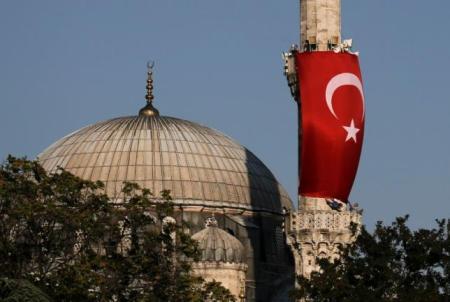
A Turkish flag is seen next to the dome of Hagia Sophia mosque in Istanbul, Turkey, July 16, 2016. REUTERS/Alkis Konstantinidis

A Turkish flag is seen next to the dome of Hagia Sophia mosque in Istanbul, Turkey, July 16, 2016. REUTERS/Alkis Konstantinidis

The United Nations Security Council failed on Saturday to condemn the violence and unrest in Turkey after Egypt objected to a statement that called on all parties to “respect the democratically elected government of Turkey,” diplomats said.

The U.S.-drafted statement also expressed grave concern over the situation in Turkey, urged the parties to show restraint, avoid any violence or bloodshed, and called for an urgent end to the crisis and return to rule of law.

Statements by the 15-member Security council have to be agreed by consensus.

Diplomats, speaking on condition of anonymity, said Egypt argued that the U.N. Security Council was not in a position to determine whether a government had been democratically elected.

Egypt’s mission to the United Nations did not immediately respond to a request for comment.

Turkish forces loyal to President Tayyip Erdogan largely crushed an attempted military coup on Saturday after crowds answered his call to take to the streets in support of the government and dozens of rebels abandoned their tanks.

Egyptian President Abdel Fattah al-Sisi is a former general who overthrew elected President Mohamed Mursi, of the Islamist Muslim Brotherhood, in 2013 after mass protests against Mursi. Turkey provided support for the Muslim Brotherhood in Egypt.

US, France say Russia’s draft resolution on Syrian sovereignty has ‘no future’

February 20, 2016

US, France say Russia’s draft resolution on Syrian sovereignty has ‘no future’

Published time: 19 Feb, 2016 21:12 Edited time: 20 Feb, 2016 00:40

Source: US, France say Russia’s draft resolution on Syrian sovereignty has ‘no future’ — RT News

© Mike Segar
A Russian draft resolution condemning any plans for foreign military intervention and warning against violations of Syrian sovereignty has been rejected by the US and French ambassadors, as having ‘no future’ ahead of a UN Security Council meeting.

Yet despite opposition from some of the UNSC members, Russia’s Deputy Permanent Representative to the UN Vladimir Safronkov told RT that there had also been “positive” reactions to the Russian proposal.

“I told our western partners, that everything that is included in the draft was previously voiced by them, declared by them and repeated many, many times,” Safronkov told RT, adding that Russia will press forward with negotiations over the draft in the hope that the resolution “will be adopted soon.”

Read more

Russian Foreign Ministry Spokesperson Maria Zakharova © Maksim Blinov

The draft, the diplomat stressed, reflects the key principles of the UN charter, compliance to which “becomes fundamental in nature because all of us are working intensely on the parameters of a political settlement in Syria.”

The Russian diplomat stressed that unless the document is adopted, “achieving a lasting peace settlement would be very difficult.”

The Moscow-proposed draft calls on all states to avoid “provocative rhetoric and inflammatory statements” that could further incite foreign interference in Syria’s internal affairs, instead of promoting a political settlement to the conflict.

However, the US and French ambassadors to the UN both said that the Russian draft resolution had no future ahead of the closed-door session, Reuters reported. France’s Francois Delattre also criticized Russia as a contributor to a “dangerous military escalation that could easily get out of control,” according to AFP.

Meanwhile Samantha Power went a step further towards accusing Moscow of trying to “distract the world” with its Security Council resolution.

The United Kingdom, in addition to Ukraine, Spain and New Zealand also reportedly voiced objections to the initial draft presented by Russia, a diplomatic source told RIA Novosti.

READ MORE: Dozens of Turkish military vehicles cross Syria border, dig trenches – report

Russia’s latest concerns are related to a dangerous escalation on the Syrian Turkish border amid Ankara’s “announced plans to put boots on the ground in northern Syria,” Foreign Ministry spokesperson, Maria Zakharova, said on Friday, adding that the situation in the region is worrying because Islamic State (IS, formerly ISIS/ISIL) fighters are freely entering Syria.

UNSC urges Turkey to ‘comply with intl law’ in Syria after Russia requests meeting

February 17, 2016

UNSC urges Turkey to ‘comply with intl law’ in Syria after Russia requests meeting

Published time: 16 Feb, 2016 21:01 Edited time: 16 Feb, 2016 22:30

Source: UNSC urges Turkey to ‘comply with intl law’ in Syria after Russia requests meeting — RT News

Following a briefing requested by Russia, the UN Security Council has urged Ankara to comply with international law in Syria. The closed-door meeting was called to discuss recent Turkish shelling of Kurdish YPG militia targets in Syria’s north.

READ MORE: Turkey shells Kurdish forces in Syria for 4th successive day

“UN Security Council members are concerned with the Turkish attacks on a number of Syrian regions,” Venezuelan Ambassador Rafael Ramirez, who now chairs the UNSC, said after the meeting, as cited by TASS.

The UN Security Council received a letter from the Syrian government in which Damascus condemned Turkey’s attacks in the north of Syria, Ramirez explained, noting that the entire council expressed “concern” about these violations.

“All members of the Security Council … agreed to ask for Turkey to comply with international law,” he added.

The UNSC also reiterated its commitment to the Munich agreement, expecting that all parties involved in the discussions will work toward a ceasefire to “allow humanitarian access for every place in the Syrian territory.”

Read more

© Abdalrhman Ismail

When asked if the UNSC discussed the shelling of the hospitals and schools in Northern Syria on Monday which left close to 50 people dead, Ramirez said the Council indeed discussed the issue, but reached “no agreement” or “consensus” because of “different sources” of information on the incidents.

“Everybody is concerned about air strikes over humanitarian installations,” said Ramirez, stressing that the UNSC is trying to get “more information.”

The UNSC president highlighted the need to have Kurds represented in the Syrian peace process, and for Ankara not to escalate the situation even further.

“One of the issues expressed by some countries, including Venezuela, is that the Kurdish people have to be included in the discussion. Now that is the principle concern of Turkey,” Ramirez said during the briefing.

“Something that is important – the Kurds are fighting against the terrorist groups on the ground and this is an important factor for everybody,” Ramirez emphasized.

Turkish artillery units have been shelling targets in Syria for the fourth day in a row, as Ankara maintains its commitment to stopping the Kurdish Democratic Union Party (PYD) from claiming more territory in the north of the country. According to the Russian Ministry of Defense, both government and opposition-held towns over the border from Turkey have fallen under Ankara’s shelling.

While the Kurdish forces remain one of Washington’s main allies on the ground in Syria, Turkey being a NATO member is also a key partner in the US-led anti-ISIS coalition. The US State Department on Tuesday urged all sides to avoid escalation of tensions on the Syria-Turkey border.

“I am aware of the reports… that they [Turkish forces] have struck the YPG affiliated forces,” State Department spokesperson Mark Toner said. “We have urged the YPG to avoid moves that will heighten tensions with Turkey. But at the same time we have also urged Turkey to cease any artillery… its artillery fire across the border.”


Report: Netanyahu Fears ‘Lame Duck’ Obama May Try to Impose Two-State Solution

February 8, 2016

Report: Netanyahu Fears ‘Lame Duck’ Obama May Try to Impose Two-State Solution

by Aaron Klein

7 Feb 2016

Source: Report: Netanyahu Fears ‘Lame Duck’ Obama May Try to Impose Two-State Solution

TEL AVIV – Israeli Prime Minister Benjamin Netanyahu is reportedly concerned that the Obama administration may attempt to impose a solution to the Israeli-Palestinian conflict before Obama leaves office.

Citing an Army Radio report on Sunday, the Times of Israel writes that Netanyahu believes Obama may make his move during his “lame duck” period between the American presidential elections and the new president’s inauguration.

His concerns focus on the UN, where rumors have been flying that an upcoming Security Council resolution will define the parameters of a two-state solution based on the 1967 borders, effectively handing the Palestinians the concessions they want from Israel without any reciprocity.  The 1967 borders refer to the West Bank, Gaza Strip and eastern sections of Jerusalem.

Such resolutions are not uncommon at the UN, but the United States has long exercised an “automatic veto” on them, holding that the conflict must be resolved by direct negotiations between the two sides.

The Times also reports that Israeli media has speculated that the UN moves will be coordinated with a renewed push for peace by Secretary of State John Kerry. If the initiative fails, writes the Times, “the Obama administration might try to impose some kind of accord.”

The State Department has denied the reports.

Israeli opposition leader Isaac Herzog appeared to confirm at least party of the report, saying that Kerry – who he met with last week – may make another push for negotiations. If Netanyahu does not respond, he said, “We’ll have an accord imposed upon us.”

Aaron Klein is Breitbart’s Jerusalem bureau chief and senior investigative reporter. He is a New York Times bestselling author and hosts the popular weekend talk radio program, “Aaron Klein Investigative Radio.” Follow him on Twitter @AaronKleinShow. Follow him on Facebook.

WATCH: Iranian Revolutionary Guard reveals underground missile base

October 14, 2015

WATCH: Iranian Revolutionary Guard reveals underground missile base

Source: WATCH: Iranian Revolutionary Guard reveals underground missile base – Middle East – Jerusalem Post

http://tinyurl.com/pwrxzv4

Iran’s Revolutionary Guard on Wednesday revealed an underground bunker in which it stores long-range ballistic missiles, Iran’s semi-official Fars News Agency reported.

Footage of the underground missile bunker was aired on Iranian state television. According to Fars, a number of ballistic missiles were shown in the underground tunnel including a model with a range of 2,000 kilometers.

Fars quoted Amir Ali Hajizadeh, head of the Revolutionary Guard’s aerospace branch, as saying that the missiles represented the next generation of Iranian long-range missile technology.

The missile bunker shown is one of many that are buried as deep as “500 meters below the high mountains,” Fars reported.

Iran state television showed on Sunday what it said was a successful launch of the new Iranian missile, named Emad, which appears to be Tehran’s first precision-guided weapon with the range to strike its regional enemy Israel.

A total of 220 of Iran’s 290 lawmakers praised the missile test on Wednesday, announcing their full support of measures that “strengthen Iran’s defense capabilities.”

The US State Department said that the missile test was an apparent violation of a UN Security Council resolution and Washington will raise it at the United Nations.

“We’ll obviously raise this at the UNSC as we have done in previous launches,” State Department spokesman Mark Toner told reporters, noting the test appeared to be a violation of U.N. Security resolution 1929.

He and White House spokesman Josh Earnest both said the issue was separate from a deal Iran struck in July with six world powers, which seeks to curb Tehran’s atomic program in return for having sanctions against it eased.

Ballistic missile tests by Iran are banned under Security Council resolution 1929, which dates from 2010 and remains valid until the July 14 nuclear deal goes into effect.

Once the deal takes effect, Iran will still be “called upon” not to undertake any ballistic missiles work designed to deliver nuclear weapons for a period of up to eight years, according to a Security Council resolution adopted in July.

The resolution says that when the deal is in effect countries will be allowed to transfer missile technology and heavy weapons to Iran on a case-by-case basis with council approval.

However, at the time the resolution was drafted, a U.S. official called this provision meaningless and said the United States would veto any suggested transfer of missile technology to Iran.

Speaking on Tuesday, White House spokesman Earnest made clear countries could more to stop the flow of ballistic missile technology to Iran.

“That is work that requires international cooperation,” he said, adding that Washington was ready to work with Gulf allies to counter Iran’s ballistic missile program.

PLO Thumbs Nose at US, Will Introduce Resolution to ‘End Occupation’

October 17, 2014

PLO ignores US threat of aid cut and within weeks will introduce resolution to ‘end occupation’ in UN Security Council

By: Lori Lowenthal Marcus

Published: October 17th, 2014

via The Jewish Press » » PLO Thumbs Nose at US, Will Introduce Resolution to ‘End Occupation’.


UN Security Council
UN Security Council
Photo Credit: Wikimedia


Despite repeated requests by the U.S. administration to refrain from doing so, the PLO will go forward this month with its threatened introduction of a resolution into the UN Security Council. The resolution will demand the “end of Israeli occupation.”

A draft of the resolution obtained by AFP calls for the “full withdrawal of Israel, the occupying power, from all of the Palestinian territory occupied since 1967, including East Jerusalem, as rapidly as possible and to be fully completed within a specified timeframe, not to exceed November 2016.”

PLO Secretary General Yasser Abed Rabbo said that despite intense pressure, his organization decided Wednesday, Oct. 15, to push ahead with the UN initiative.

“The political council of the PLO decided during its meeting last night… to go to the UN Security Council with the aim of getting a resolution passed to end the Israeli occupation in the Palestinian territories… by the end of this month,” Abed Rabbo said at a news conference in Ramallah, according to the Maan Palestinian Arab news site.

The U.S. is fully expected to veto the resolution, but it is worth watching to see if the U.S. will follow through on its threats to cut U.S. aid to the Palestinian Arabs. The U.S. just announced an additional $212 million in aid for Gaza.


