Posted tagged ‘U.S. military’

After years of empty U.S. promises, Trump arms Kurds fighting ISIS in Syria

May 31, 2017

After years of empty U.S. promises, Trump arms Kurds fighting ISIS in Syria, Hot Air, Andrew Malcolm, May 31, 2017
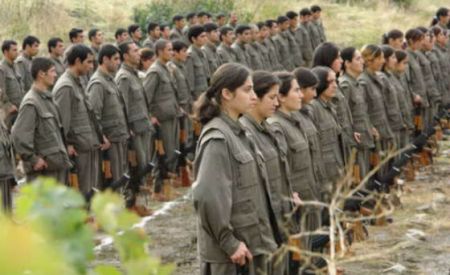
Now, Kurdish and Arab troops in Syria, working with U.S. Special Forces, will have their own armored cars, heavy machine guns, bulldozers, antitank weapons and mortars because as one Pentagon spokesman put it, the Kurds are the “only force on the ground that can successfully seize Raqqa in the near future.”

**********************

About time.

Finally, after years of dangerous dawdling the United States has actually begun arming Kurdish soldiers fighting ISIS in Syria.

Weapons supplies had been stockpiled nearby in anticipation of President Trump’s go-ahead, which came Monday. The armament distributions, which the commander-in-chief approved despite fierce opposition from NATO ally Turkey, will enable the tough Kurdish fighters to participate more aggressively in the imminent assault on the de facto ISIS capital of Raqqa.

The Obama administration talked of arming the Kurds, who also led the anti-ISIS fighting in northern Iraq, but wilted in the face of resistance from the Baghdad central government and Turkey. More than $200 million in armaments were earmarked for the Kurds and left behind in the Iraqi capital when Obama withdrew all U.S. troops in 2011. But somehow they never reached the Kurds, who were often left fighting ISIS forces that had better U.S. equipment captured from fleeing Iraqi troops.

Now, Kurdish and Arab troops in Syria, working with U.S. Special Forces, will have their own armored cars, heavy machine guns, bulldozers, antitank weapons and mortars because as one Pentagon spokesman put it, the Kurds are the “only force on the ground that can successfully seize Raqqa in the near future.”

The arming decision comes as Secy. of Defense James Mattis has ordered changes in strategy against ISIS. Mattis describes the change as moving from an “attrition strategy,” which allowed ISIS fighters to escape current battles, to an “annihilation strategy,” which involves encirclement and total destruction. Mattis has also given battlefield commanders increased leeway in decision-making, which under Obama often involved seeking time-consuming approval all the way back to the White House.

Unhappy Turkish officials were informed of Trump’s decision Monday. They regard the Kurdistan Workers Party, P.K.K., as separatist terrorists within Turkey’s borders. Indeed, the U.S. and European allies also list the PKK as a terrorist outfit. However, the U.S. recognizes the separate People’s Protection Units of the Y.P.G. as an ally with the most experienced fighters. Bottom line: The more fighting the valiant Kurds do, the less potential involvement of U.S. forces.

Turkey made its position clear last month by bombing Kurdish units fighting in Syria with the U.S., dashing hopes that President Recep Erdogan would modify his position since he’s consolidated power.

To mollify Turkish concerns, Pentagon officials said the new arms will be doled out only according to the needs of the upcoming assignments. And they said every weapon would be accounted for afterward.

Uh-huh, right.

Jerry Boykin – Secretary Mattis: Focus on War-Fighting, Ditch the Social Engineering

May 30, 2017

Jerry Boykin – Secretary Mattis: Focus on War-Fighting, Ditch the Social Engineering, BreitbartLt. Gen. (Ret.) Jerry Boykin, May 30, 2017

(Warning: Politically incorrect content. — DM)

The Associated Press

The head of the United States Pacific Command, Admiral Harry B. Harris, Jr., testified before the House of Representatives in late April that the threat posed by North Korea has grown sufficiently to endanger the Hawaiian Islands. All around the globe, serious national security problems are coming to the fore in places like Iran, Venezuela, Afghanistan, and the South China Sea. Yet, because of holdover personnel from the Obama administration, and damaging Obama-era policies remaining in place, our military continues flailing.

On June 30, 2016, Secretary of Defense Ashton Carter announced that transgender service members would no longer be discharged from military service solely for being transgendered. Later, the Department of Defense (DOD) announced that as of July 1, 2017, transgender recruits would be accepted into the military. The DOD took these steps even though transgender personnel are likely to need medical, surgical, and psychological care that undermines their readiness for battle by rendering them non-deployable.

Acutely aware of the geopolitical problems we face, President Trump announced his intention to restore the strength of our military. Americans appreciated the priorities described by Secretary of Defense James Mattis during his confirmation hearing: mission readiness, command proficiency, and combat effectiveness. Unfortunately, the implementation of President Obama’s transgender policies did not consider the impact that “transitioning” personnel would have on military readiness and combat effectiveness.

The arguments used by the Obama Administration to support its transgender policy changes stemmed from a few politically correct reports produced by well-funded LGBT activist organizations. The first “study” was released in August 2013 by the pro-LGBT Williams Institute in partnership with the National Gay and Lesbian Task Force. The next March, a private, non-governmental “Transgender Military Service Commission,” headed by Surgeon General Jocelyn Elders, released a report through the pro-LGBT think tank, the Palm Center. These two private studies and the various government reports and directives that followed have not focused on how the new transgender policies will affect military readiness and war-fighting effectiveness – the core function of the armed forces. Nor were these policy changes mandated by the Congress.  Rather, they were driven by bureaucratic reinterpretations of existing law. Given the magnitude of these changes, it would seem wise to halt the process and seek congressional guidance and statutory language.

In fact, just before the DOD issued the transgender policy change, the Center for Medicare and Medicaid Services refused to provide national coverage for gender reassignment surgery citing insufficient studies about the health outcomes of such surgeries and small sample sizes in the studies that have been conducted. However, DOD is now requiring taxpayers to foot the bill for gender reassignment surgery, with no benefit to the taxpayer or the military.

If implemented as planned, these transgender policies will require our military to assume the risks of recruiting and retaining persons who may require long-term medical treatment. Such procedures and physical changes often produce uncertain results associated with higher rates of depression and suicide. “Transitioning” service members require that the government bear the cost of hormone treatments, surgery, and post-operative care. This creates a tremendous incentive for individuals to join the military in order to receive the costly medical procedures associated with “transitioning,” since transgender individuals cannot be excluded from joining. And it’s difficult to see how any person undergoing this process would be deployable and combat-ready. What’s more, the time taken away from commanders’ combat-related duties while they take on the responsibilities of medical case workers is significant.  It’s unfair to expect them to be judged on their ability to oversee medical-psychological cases like these.

We do welcome the Pentagon’s recent nullification of an October 2016 directive imposing “open-door” shower and bathroom guidelines on all DOD schools. But continuing implementation of Obama’s transgender policies ignores the strongly-felt concerns of women who do not want to be exposed to individuals of the opposite sex in facilities which offer minimal privacy.  This is a particular problem when the incidence of rape in the military is so severe.

I received a letter from a known but confidential source in the naval service who asked me to inform the command structure in Washington about the damaging effects of these policies:

As part of the policy, CO’s must facilitate the requests of individuals for transgender treatment (surgery, cross-hormonal therapy, etc.)….  [O]nce the service member is considered “stable” in their preferred gender, and their “gender marker” is changed in a DoD database, they must be accommodated in the berthing and bathroom facilities of their preferred gender regardless of whether they still possess their opposite sex anatomy!  (And most are expected to do so).  Given the close living quarters that most military members have to share, this is particularly distressing to many of us, especially women.

These policies will ultimately undermine recruitment and retention.

Secretary Mattis must consider the many complex ramifications of these Obama-era policies that remain in effect. The DOD and the Congress need to ensure the priorities of the U.S. armed forces remain those that the Secretary has outlined:  mission readiness, command proficiency, and combat effectiveness.  Holdover personnel from the Obama Administration need to focus on these new priorities, and not on the last Administration’s social engineering projects that ignore military readiness.

Lt. Gen. (Ret.) William G. “Jerry” Boykin serves as Family Research Council’s executive vice president. He spent 36 years in the Army, serving his last four years as deputy undersecretary for intelligence in the Department of Defense.

Russian siege on Raqqa, distant from US troops

May 27, 2017

Russian siege on Raqqa, distant from US troops, DEBKAfile, May 27, 2017

DEBKAfile’s military sources can disclose that Putin has ordered the Russian commanders in Syria to impose an aerial and special forces ground siege on the northern town of Raqqa, the Islamic State’s de facto Syrian capital. This move was designed to match the American initiative on the strategic Syrian-Iraqi border, without a military clash.

Why Raqqa? Firstly, it is in the north, far from the American positions. Second, Russian intelligence had apparently discovered a deal between the Kurdish-dominated Syrian Democratic Forces – SDF – and ISIS which allowed the jihadists safe passage out of their stronghold towards the south.

************************

Russian President Vladimir Putin acted to strengthen the military alliance he had set up with Iran and Turkey for working together in Syria – as a counterweight to President Donald Trump’s spectacular success in forging a Sunni Arab bloc during his four days in the Middle East.

It was a tough call. Putin’s allies demanded action to prevent a Syrian rebel force, backed by US, Western and Jordanian special forces, from taking control of the Syrian-Iraqi border. The Russian leader had to find a way to satisfy them without getting into a clash of arms with American troops.

On Saturday, May 27, as Trump flew home from his nine-day trip, Putin turned the dilemma over with his two allies, President Tayyip Erdogan of Turkey and the newly-elected Iranian president, Hassan Rouhani.

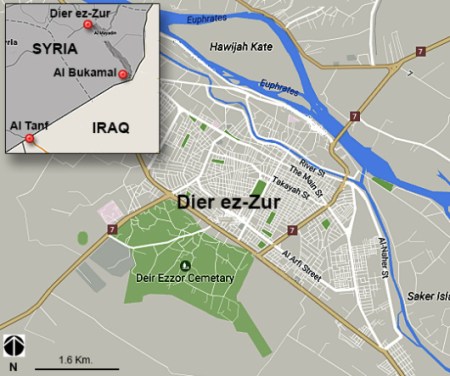
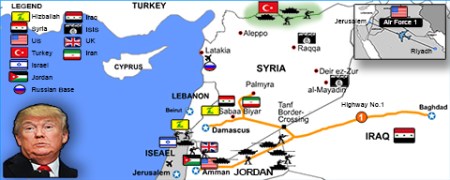
Three days earlier, the Russian president was put on the spot by Iran’s National Security Adviser Ali Shamkhani, who arrived in Moscow Wednesday, May 24. He slapped down a demand from supreme leader Ayatollah Ali Khamenei for an answer as to how the Russian leader proposed to put a stop to the takeover by American special forces and their allies of the eastern province of Deir ez-Zour and the Al-Tanf crossing at the Syrian-Iraqi-Jordanian border triangle. (See attached map)

Shamkhani warned Putin that without fast action, the Americans would block the routes from Baghdad to Damascus against the passage of Iranian and Russian forces.

The Russian leader took a couple of days to come up with a stratagem, which he revealed to Erdogan during their conversation on Saturday.

DEBKAfile’s military sources can disclose that Putin has ordered the Russian commanders in Syria to impose an aerial and special forces ground siege on the northern town of Raqqa, the Islamic State’s de facto Syrian capital. This move was designed to match the American initiative on the strategic Syrian-Iraqi border, without a military clash.

Why Raqqa? Firstly, it is in the north, far from the American positions. Second, Russian intelligence had apparently discovered a deal between the Kurdish-dominated Syrian Democratic Forces – SDF – and ISIS which allowed the jihadists safe passage out of their stronghold towards the south.

The Russian siege on Raqqa was therefore a move against the US-backed SDF and the Kurds, without getting entangled in a direct showdown with the US forces in the South: Putin had installed a Russian-backed foothold in northern Syria to counter the US-led front in the south.

Immediately after the Putin-Erdogan phone call, a Russian military source in Moscow released this story: “Russian intelligence drones have set up a perimeter around the city ([Raqqa] to monitor possible terrorist escape routes, with combat aircraft and special forces units engaged in preventing militants’ escape.” The report went on to warn that any attempts by ISIS fighters to leave the town “will be squashed.”

Putin’s maneuver in Syria was designed to achieve three goals:

1. To counterbalance the America-led takeover of the Syrian-Iraqi border in the south, the Russians would assert control of the northern section of that same border.

2.  To showcase the Russian army as the great champions fighting the Islamic State terrorists, compared with the American troops and their allies who had turned aside from this mission, although President Trump had made it the centerpiece of his nine-day trip.

Putin was careful not to name his objective as the conquest of Raqqa, but only a siege operation.

3. To hit US allies, such as the Syrian Kurds in the north, without tangling with the Americans in combat.

Syria & allies push back at US-held border post

May 20, 2017

Syria & allies push back at US-held border post, DEBKAfile, May 20, 2017

The US bombardment of that force Thursday underlined for Saudi Arabia and the dozens of Arab and Muslim rulers, gathered in Riyadh to meet the US president, his administration’s determination to prevent Iran and its Lebanese surrogate, Hizballah, from gaining control of Syria. American troops were accordingly engaged proactively in securing the border crossings between Syria and Iraq.

This clash of arms is likely to expand into an outright US showdown with the US and Syria, Iran and Hizballah in the next 24-48 hours ahead of President Trump’s visit to Israel, the second stop of his four-national trip.

*********************

The Syrian-pro-Iranian-Hizballah force in southern Syria renewed its advance on the Iraqi border on Saturday, May 20, two days after sustaining heavy casualties from a US air strike on its convoys and in spite of US Defense Secretary James’ Mattis warning, “We will defend our troops.”

Syrian military sources reported the capture Saturday of the Suweida region and another 60 square kilometers. This offensive brought the Syrian army and its allies closer to the strategic Al-Tanf crossing at the Syrian border intersection with Iraq and Jordan, which is held by US and other special operations units.

The US-led coalition force is also made up of elite units from Britain, Holland, Germany and the Czech Republic, as well as Jordan and a large contingent of the rebel Free Syria Army trained and armed by American instructors in Jordan.

The latest arrival to boost this force, DEBKAfile’s military sources report, was a unit of Norwegian special forces, which entered Syria from Iraq through the Al-Waleed border crossing in western Anbar. They arrived along with American reinforcements and linked up with the US and British forces deployed at Al Tanf.

However, the Syrian force and its allies to the US air strike moved fast enough Saturday to threaten the FSA troops fighting there with being trapped by a siege. They have pushed their offensive forward against the US-led force, despite their losses from an American air raid, as a show of defiance that was timed for President Donald Trump’s arrival in Saudi Arabia.

Another US air strike appears to be unavoidable for pushing them back. The danger is also rising of a major clash on the ground between US-led coalition special forces troops and the combined Syrian-Iranian-Hizballah force.

The US bombardment of that force Thursday underlined for Saudi Arabia and the dozens of Arab and Muslim rulers, gathered in Riyadh to meet the US president, his administration’s determination to prevent Iran and its Lebanese surrogate, Hizballah, from gaining control of Syria. American troops were accordingly engaged proactively in securing the border crossings between Syria and Iraq.

However, Tehran, Damascus and Hizballah are evidently not about to shirk a direct confrontation with Washington and the Trump administration, apparently with the support of Moscow.

This clash of arms is likely to expand into an outright US showdown with the US and Syria, Iran and Hizballah in the next 24-48 hours ahead of President Trump’s visit to Israel, the second stop of his four-national trip

Hizballah’s elite force sustains heavy casualties from US air strike

May 19, 2017

Hizballah’s elite force sustains heavy casualties from US air strike, DEBKAfile, May 19, 2017

(Please see also, The Devil’s Triangle: At-Tanf/Abu Kamal/Ar Rusafah. — DM)

US jets and assault helicopters took off from the Ayn al-Asad air base in western Iraqi for an operation to prevent the convoy from reaching the strategic Al-Tanf crossing at the intersection of the Syrian, Iraq and Jordanian borders.

***********************

Most of the damage inflicted by the US air strike Thursday in South Syria was sustained by Hizballah’s elite unit, the Radwan Force, DEBKAfile’s military sources disclose. This was the first aerial attack the United States has conducted on a combined Syrian-Iranian-Hizballah convoy in the seven-year Syrian war. Our sources add that the US jets and assault helicopters took off from the Ayn al-Asad air base in western Iraqi for an operation to prevent the convoy from reaching the strategic Al-Tanf crossing at the intersection of the Syrian, Iraq and Jordanian borders. They hit at least three of Hizballah’s armored vehicles and several trucks, which caught fire. The Americans and Hizballah have both imposed a blackout on the details of the incident and the scale of casualties.

DEBKAfile ran a number of stories this week disclosing the activities of US, British and Jordanian special operations forces in southern Syria for taking over key segments of the Syrian-Iraqi border, including the Al-Tanf crossing. US Secretary of Defense James Mattis commented this week that Washington had not change its policy of non-intervention in the Syria war, adding, “But we will defend our troops.”

Iraqi officers land in Syria, stir Israeli concern

May 17, 2017

Iraqi officers land in Syria, stir Israeli concern, DEBKAfile, May 17, 2017

Israel was deeply disquieted to discover that Iraq’s Prime Minister Haidar al-Abadi had secretly pivoted his support away from the US-Jordanian campaign for control over the borders of Iraq and Syria, and switched instead to alignment with Moscow and Tehran.

Israeli policy-makers are worried that President Donald Trump will be constrained by the daily barrage of personal attacks descending on from fully focusing on the forces building up dangerously against US military plans in Syria.

****************************

Israeli security chiefs were gravely concerned Wednesday, May 17, when they learned that a high-ranking Iraqi military delegation had arrived in Damascus, the first in decades during which the Iraqi and Syrian ruling regimes were at odds, for a discussion on the situation unfolding on the Syrian-Iraqi border – in particular the Al-Tanf crossing.

DEBKAfile’s military sources reported on May 15 and May 16 on the potential for a clash of arms over this strategic crossing, which is situated at the intersection of the Jordanian, Iraq, and Syrian borders and commands the No.1 Route linking Baghdad with Damascus and the Jordanian capital of Amman.

Wednesday saw a flurry of military activity in the area by US, British and Jordanian special forces, on the one hand, and Syrian, Hizballah and other pro-Iranian forces, on the other. A race appeared to be quietly developing over who would reach the border first and seize control of the Al-Tanf crossing.

On this very subject, the Iraqi military delegation held separate talks in Damascus with senior officers of the Russian command in Syria and senior Iranian officers posted at Syrian General Staff headquarters. Concurrently, the Russian military command announced that Russia, Iran and Iraq were holding consultations on how to secure the border regions between Syria and Iraq.

Our forces add that the three groups of officers got down to brass talks, in fact, on ways to fit Iraqi army units into the Syrian-Iranian effort for guaranteeing full control by Damascus and Tehran of the sensitive border regions.

Israel was deeply disquieted to discover that Iraq’s Prime Minister Haidar al-Abadi had secretly pivoted his support away from the US-Jordanian campaign for control over the borders of Iraq and Syria, and switched instead to alignment with Moscow and Tehran.

Israeli policy-makers are worried that President Donald Trump will be constrained by the daily barrage of personal attacks descending on from fully focusing on the forces building up dangerously against US military plans in Syria.

US, UK, Jordanian forces enter S. Syria

May 15, 2017

US, UK, Jordanian forces enter S. Syria, DEBKAfile, May 15, 2017

DEBKAfile’s military sources explain that Damascus and Tehran acted to pre-empt the US-Jordanian-Israeli military operations along the Israeli and Jordanian borders with Syria, lest they lead to the carving out of US-controlled security zones in southern Syria.

Iran continued to pour additional troops into Damascus through the Baghdad-Damascus highway, on the one hand, while, on the other, Iraqi Prime Minister Haidar al-Abadi offered Washington two of his army’s divisions, which would be sent into Syria to support US military operations in the southeast.

*****************************

US special forces, together with British and Jordanian elite troops, moved into southern Syria late Sunday, May 14. They were acting to counter the Syrian-Iranian scheme to nullify the American plan for posting Jordanian forces in southeastern Syria, which timed for the days before US President Donald Trump’s trip to the Middle East.

The US-led armored force with British and Jordanian units crossed from northern Jordan through the Tanf Border-Crossing between the Hashemite Kingdom, Iraq and Syria, and took up positions capable of consolidating their control of the main road between Palmyra and Baghdad. Some of their moves were coordinated with Israel.
(See map).

This push aimed at countering the drive in the last few days by hundreds of Syrian troops, Iranian-backed Shiite militias and Hizballah’s Radwan special forces, with tanks and heavy equipment, to take over the town of Sabaa Biyar. Located in sparsely desert territory, this town lies 110km west of the Syrian-Iraqi border, 95km north of the Syrian-Jordanian border and 128km east of Damascus.

Its high strategic importance for Tehran, Damascus and Hizballah lies in its command of the border between Syria, Iraq and Jordan and of Highway No. 1 which links the Jordanian capital of Amman with Baghdad.

DEBKAfile’s military sources explain that Damascus and Tehran acted to pre-empt the US-Jordanian-Israeli military operations along the Israeli and Jordanian borders with Syria, lest they lead to the carving out of US-controlled security zones in southern Syria.

Our military sources add that Moscow too eyes the new US-led military movements with mistrust, in view of its potential impact on the Russian plan for four ceasefire zones in Syria, in cooperation with Iranian and Turkish forces. The Russians are accordingly feeding Tehran and Damascus intelligence on the US-led movements.

On Sunday, too, the Israeli Defense Forces launched a large-scale military exercise in the Galilee and Golan regions close to its borders with Syria and Lebanon. The war game may well run over its final date in order to keep a substantial military force poised on along Israel’s northern borders, in case of attempts to disrupt the Trump visits to Saudi Arabia and Israel from May 22 to May 24.

Other military movements in the region this week were taken by the Iraqi army and Iraqi Shiite militias under the command of Iranian Revolutionary Guards officers. Iran continued to pour additional troops into Damascus through the Baghdad-Damascus highway, on the one hand, while, on the other, Iraqi Prime Minister Haidar al-Abadi offered Washington two of his army’s divisions, which would be sent into Syria to support US military operations in the southeast.

For the time being, the Trump administration’s plans for an offensive against the Islamic State appear to have been put on a back burner.

Trump authorizes heavy weapons for Kurds fighting Raqqa

May 9, 2017

Trump authorizes heavy weapons for Kurds fighting Raqqa, DEBKAfile, May 9, 2017

US President Donald Trump has approved supplying weapons to Kurdish forces fighting the Islamic State in Syria, the Pentagon says. The Kurdish YPG leading the Syrian Democratic Forces (SDF) would be equipped to help drive ISIS from its stronghold, Raqqa, a spokeswoman said. The US was “keenly aware” of Turkey’s concerns about such a move, she added. The SDF, which comprises Kurdish and Arab militias, is already being supported by elite US forces and air strikes from a US-led coalition. The group is currently battling for control of the city of Tabqa, an ISIS command centre just 50km (30 miles) from Raqqa. The equipment would include ammunition, small arms, machine guns, heavy machine guns, construction equipment such as bulldozers and armored vehicles. The Pentagon ource added that the US would “seek to recover” the equipment afterwards.


New ISIS mobile tactics against US in Syria, Iraq

May 8, 2017

New ISIS mobile tactics against US in Syria, Iraq, DEBKAfile, May 8, 2017

The effect of this tactic has been disastrous. Capable of penetrating as far as 10 km inside Iraqi lines, the deadly vehicles and suiciders have managed to slow the US-Iraqi advance and, in some places, brought it to a halt. The method has won the title of “crust mobile defense” from American commanders in Syria and Iraq

In short, the Mosul offensive, estimated to last a couple of months, is going into its eighth month with no end in sight.

A live example of this method was seen in Iraq Sunday, May 7, when at least five ISIS suicide bombers detonated their explosives vests against Kurdish Peshmerga forces outside the K1 base near the northern oil city of Kirkuk where US instructors are deployed. At least two Kurdish servicemen were killed.

****************************

It is important to get the spate of reported successes by US-backed forces fighting the Islamic State in Syria, Iraq and Afghanistan in proper proportion – in particular, the impression that ISIS is falling back from its strongholds in Mosul and Raqqa and that its certain defeat is just around the corner.

On Monday, May 8, it was disclosed that Sheikh Abdul Hasib, Islamic State commander in the Afghan province of Khorasan was killed in a raid on April 27 by US and Afghan special operations forces, in which two US Army Rangers lost their lives.

All these reports are accurate as far as they go, but they don’t take into account the upbeat sense prevailing in the ISIS command. The Islamic organization’s strategists, former officers of Iraq’s Saddam Hussein regime and Baath party, are confident they have found a convincing tactical answer to the American push for crushing them in Mosul. They don’t believe they are close to defeat or that Abu Bakr Al-Baghdadi’s caliphate is anywhere near collapse.

DEBKAfile’s intelligence and counterterrorism sources offer six reasons for the jihadists’ confidence, which the Mosul battle has if anything solidified:

1.  The numbers of ISIS fighters still fighting in the Old City of Mosul is seriously underestimated as 300-400 by American and Iraqi military sources. The true figure is ten times larger – 3,000-4,000.

2.   The American and the Iraqi commands have not worked out how to counter the ISIS forces’ device of connecting tunnels running under buildings, which are accessed through holes blown through the walls of attached buildings. The jihadists can therefore move around between battles unobserved.

3.  The only force able to combat ISIS tactics is the Iraqi Gold Division, the one elite force available to the US-Iraqi command. It is not however large enough to fight in more than one arena at once and is, moreover, too slow-moving to overwhelm the swift, invisible ISIS fighters. Most other Iraqi army units have been withdrawn from the Mosul front after being decimated.

4.  ISIS has given up the strategy of defending large urban areas, pursued early in its campaign of conquest in such places as Ramadi, Tikrit and Fallujah – and the start of its defense of Mosul. Instead, their commanders have split them up into small detachments of no more than 10-15 fighters each for commando and suicide raids against their adversaries. These detachments are supported by a large group well behind the front lines which is running assembly lines of booby-trapped cars for delivery to the commando detachments.

Each is provided with more than a dozen explosive cars for release against Iraqi and US troops for maximum losses, as well plenty of exposive vests for multiple suicide attacks.

5. The effect of this tactic has been disastrous. Capable of penetrating as far as 10 km inside Iraqi lines, the deadly vehicles and suiciders have managed to slow the US-Iraqi advance and, in some places, brought it to a halt. The method has won the title of “crust mobile defense” from American commanders in Syria and Iraq

In short, the Mosul offensive, estimated to last a couple of months, is going into its eighth month with no end in sight.

A live example of this method was seen in Iraq Sunday, May 7, when at least five ISIS suicide bombers detonated their explosives vests against Kurdish Peshmerga forces outside the K1 base near the northern oil city of Kirkuk where US instructors are deployed. At least two Kurdish servicemen were killed.

6. High on the success of their tactics in Iraq, ISIS chiefs are duplicating it at the Raqqa battlefield in Syria. They have begun relocating their northern Syrian command centers to the eastern Deir ez-Zor region and Euphrates Valley, which straddles the Syrian-Iraqi border. The terrorist organization has selected the small desert town of Al-Mayadin east of Deir ez-Zor as the next seat for its central command, mainly because of its isolation. Only five roads access the town, most of them not fit for vehicular traffic and so any approaching enemy is quickly exposed.

ISIS is now planning to post its “crust mobile defense system” squads along the 170km of road linking Al Mayadin to Raqqa.

China’s nuclear get-out clause over defence of North Korea

April 13, 2017

China’s nuclear get-out clause over defence of North Korea, South China Morning PostKristin Huang, April 13, 2017

(Another “hint” from China to North Korea? — DM)

China is not obliged to help defend North Korea from military attack if the reclusive state developed nuclear weapons, according to Chinese diplomatic and military observers.

The assessment comes as senior officials in Washington warn of a strike against the Pyongyang regime.

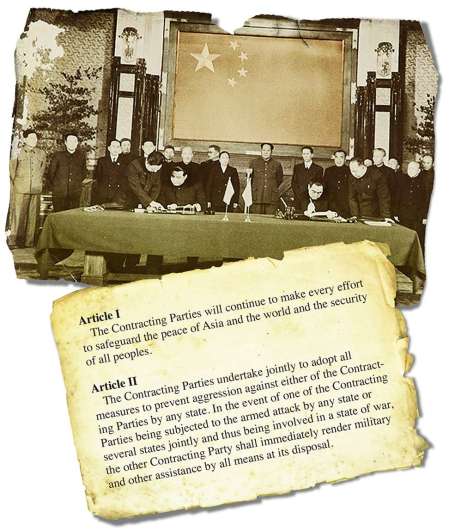
China and North Korea signed a mutual aid and cooperation treaty in 1961 as they sought to mount a united front against Western powers. It specifies that if one of the parties comes under armed attack, the other should render immediate assistance, including military support.

But the treaty also says both nations should safeguard peace and security.

For China, North Korea’s development of nuclear weapons in violation of the United Nations treaty on non-proliferation could amount to a breach of their pact, leaving Beijing with no obligation to lend a hand, observers said.


China could also have a get-out clause if any US military intervention was not deemed an armed attack.

“It’s hard to say how China would assist North Korea militarily in case of war, since North Korea is developing nuclear weapons, an act that might have already breached the treaty between the two nations,” said Li Jie, a retired Chinese naval colonel.

Shanghai-based military analyst Ni Lexiong said China would need to provide military assistance to North Korea if US land forces invaded, but Pyongyang’s violation of the UN non-proliferation treaty was a “strong reason” for Beijing to choose not to help.

Threats of military action against North Korea have grown, with US President Donald Trump saying Washington was prepared to act alone against Pyongyang.

A strike group headed by the aircraft carrier USS Carl Vinson has also been deployed to waters off the Korean peninsula.

Nevertheless, Beijing, North Korea’s economic lifeline, does have some interest in backing up its old ally. China fears the collapse of the regime in Pyongyang could lead to an influx of refugees into China and eliminate the buffer zone keeping US troops from the Chinese border.

But Ni said the possibility of a full-scale war was slim because the US was unlikely to send land forces into North Korea, preferring air strikes or missile launches instead.

“The situation would be much easier for China in this case. China would not have to mobilise its land forces to help North Korea,” he said. “China then only needs to send the North Sea Fleet or military aircraft to step up patrols of the Korean peninsula.”

Zhou Chenming, from the Knowfar Institute for Strategic and Defence Studies think tank, said war over North Korea was unlikely because all the parties involved were looking for ways to defuse tensions.

But if military conflict did erupt, China could help Pyongyang with supplies such as food and weaponry, such as old tanks.