Posted tagged ‘U.S. Congress’

Column One: Israel’s next 22 months

March 15, 2015

Column One: Israel’s next 22 months, Jerusalem Post, Caroline Glick, March 12, 2015

(The article is about more than the elections. The disconnect between Israel and the Obama administration seems likely to continue to worsen regardless of who wins, unless Israel falls completely into line with Obama’s views. — DM)

Given the stakes, the choice of Israeli voters next Tuesday is an easy one.
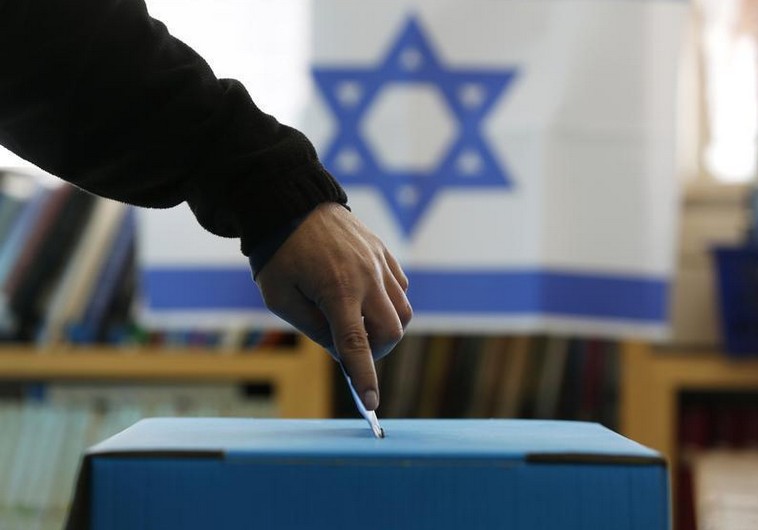
An Israeli flag is seen in the background as a man casts his ballot at a polling in a West Bank Jewish settlement, north of RamallahAn Israeli flag is seen in the background as a man casts his ballot for the parliamentary election at a polling in the West Bank settlement of Ofra. (photo credit:REUTERS)

The next 22 months until President Barack Obama leaves office promise to be the most challenging period in the history of US-Israel relations.

Now unfettered by electoral concerns, over the past week Obama exposed his ill-intentions toward Israel in two different ways.

First, the Justice Department leaked its intention to indict Democratic Sen. Robert Menendez on corruption charges. Menendez is the ranking Democratic member, and the former chairman, of the Senate Foreign Relations Committee. He is also the most outspoken Democratic critic of Obama’s policy of appeasing the Iranian regime.

As former US federal prosecutor Andrew McCarthy wrote this week at PJMedia, “It is perfectly reasonable to believe that Menendez may be guilty of corruption offenses and that his political opposition on Iran is factoring into the administration’s decision to charge him. Put it another way, if Menendez were running interference for Obama on the Iran deal, rather than trying to scupper it, I believe he would not be charged.”

The Menendez prosecution tells us that Obama wishes to leave office after having vastly diminished support for Israel among Democrats. And he will not hesitate to use strong-arm tactics against his fellow Democrats to achieve his goal.

We already experienced Obama’s efforts in this sphere in the lead-up to Prime Minister Benjamin Netanyahu’s speech before the joint houses of Congress on March 3 with his campaign to pressure Democratic lawmakers to boycott Netanyahu’s address.

Now, with his move against Menendez, Obama made clear that support for Israel – even in the form of opposition to the nuclear armament of Iran – will be personally and politically costly for Democrats.

The long-term implications of Obama’s moves to transform US support for Israel into a partisan issue cannot by wished away. It is possible that his successor as the head of the Democratic Party will hold a more sympathetic view of Israel. But it is also possible that the architecture of Democratic fund-raising and grassroots support that Obama has been building for the past six years will survive his presidency and that as a consequence, Democrats will have incentives to oppose Israel.

The reason Obama is so keen to transform Israel into a partisan issue was made clear by the second move he made last week.

Last Thursday, US National Security Adviser Susan Rice announced that the NSC’s Middle East Coordinator Phil Gordon was stepping down and being replaced by serial Israel-basher Robert Malley.

Malley, who served as an NSC junior staffer during the Clinton administration, rose to prominence in late 2000 when, following the failed Camp David peace summit in July 2000 and the outbreak of the Palestinian terror war, Malley co-authored an op-ed in The New York Times blaming Israel and then-prime minister Ehud Barak for the failure of the negotiations.

What was most remarkable at the time about Malley’s positions was that they completely contradicted Bill Clinton’s expressed views. Clinton placed the blame for the failure of the talks squarely on then-Palestinian leader Yasser Arafat’s shoulders.

Not only did Arafat reject Barak’s unprecedented offer of Palestinian statehood and sovereignty over all of Gaza, most of Judea and Samaria and parts of Jerusalem including the Temple Mount, he refused to make a counter-offer. And then two months later, he opened the Palestinian terror war.

As Jonathan Tobin explained in Commentary this week, through his writings and public statements, Malley has legitimized Palestinian rejection of Israel’s right to exist. Malley thinks it is perfectly reasonable that the Palestinians refuse to concede their demand for free immigration of millions of foreign Arabs to the Jewish state in the framework of their concocted “right of return,” even though the clear goal of that demand is to destroy Israel. As Tobin noted, Malley believes that Palestinian terrorism against Israel is “understandable if not necessarily commendable.”

During Obama’s 2008 presidential campaign, then-senator Obama listed Malley as a member of his foreign policy team. When pro-Israel groups criticized his appointment, Obama fired Malley.

But after his 2012 reelection, no longer fearing the ramifications of embracing an openly anti-Israel adviser, one who had documented contacts with Hamas terrorists and has expressed support for recognizing the terror group, Obama appointed Malley to serve as his senior adviser for Iraq-Iran-Syria and the Gulf states. Still facing the 2014 congressional elections, Obama pledged that Malley would have no involvement in issues related to Israel and the Palestinians. But then last week, he appointed him to direct the NSC’s policy in relation to the entire Middle East, including Israel.

The deeper significance of Malley’s appointment is that it demonstrates that Obama’s goal in his remaining time in office is to realign US Middle East policy away from Israel. With his Middle East policy led by a man who thinks the Palestinian goal of destroying Israel is legitimate, Obama can be expected to expand his practice of placing all the blame for the absence of peace between Israel and the Palestinians solely on Israel’s shoulders.

Malley’s appointment indicates that there is nothing Israel can do to stem the tsunami of American pressure it is about to suffer. Electing a left-wing government to replace Prime Minister Binyamin Netanyahu will make no difference.

Just as Malley was willing to blame Barak – a leader who went to Camp David as the head of a minority coalition, whose positions on territorial withdrawals were rejected by a wide majority of Israelis – for the absence of peace, so we can assume that he, and his boss, will blame Israel for the absence of peace over the next 22 months, regardless of who stands at the head of the next government.

In this vein we can expect the administration to expand the anti-Israel positions it has already taken.

The US position paper regarding Israeli-Palestinian negotiation that was leaked this past week to Yediot Aharonot made clear the direction Obama wishes to go. That document called for Israel to withdraw to the indefensible 1949 armistice lines, with minor revisions.

In the coming 22 months we can expect the US to use more and more coercive measures to force Israel to capitulate to its position.

The day the administration-sponsored talks began in July 2013, the EU announced it was barring its member nations from having ties with Israeli entities that operate beyond the 1949 armistice lines unless those operations involve assisting the Palestinians in their anti-Israel activities. The notion that the EU initiated an economic war against Israel the day the talks began without coordinating the move with the Obama administration is, of course, absurd.

We can expect the US to make expanded use of European economic warfare against Israel in the coming years, and to continue to give a backwind to the anti-Semitic BDS movement by escalating its libelous rhetoric conflating Israel with the apartheid regime in South Africa.

US-Israel intelligence and defense ties will also be on the chopping block.

While Obama and his advisers consistently boast that defense and intelligence ties between Israel and the US have grown during his presidency, over the past several years, those ties have suffered blow after blow. During the war with Hamas last summer, acting on direct orders from the White House, the Pentagon instituted a partial – unofficial – embargo on weapons to Israel.

As for intelligence ties, over the past month, the administration announced repeatedly that it is ending its intelligence sharing with Israel on Iran.

We also learned that the vice chairman of the Joint Chiefs of Staff is being fingered as the source of the leak regarding the Stuxnet computer virus that Israel and the US reportedly developed jointly to cripple Iran’s nuclear centrifuges.

In other words, since taking office, Obama has used the US’s intelligence ties with Israel to harm Israel’s national security.*

He has also used diplomacy to harm Israel. Last summer, Obama sought a diplomatic settlement of Hamas’s war with Israel that would have granted Hamas all of its war goals, including its demand for open borders and access to the international financial system.

Now of course, he is running roughshod over his bipartisan opposition, and the opposition of Israel and the Sunni Arab states, in the hopes of concluding a nuclear deal with Iran that will pave the way for the ayatollahs to develop nuclear weapons and expand their hegemonic control over the Middle East.

Amid of this, and facing 22 months of ever more hostility as Obama pursues his goal of ending the US-Israel alliance, Israelis are called on to elect a new government.

This week the consortium of former security brass that has banded together to elect a leftist government led by Isaac Herzog and Tzipi Livni accused Netanyahu of destroying Israel’s relations with the US. The implication was that a government led by Herzog and Livni will restore Israel’s ties to America.

Yet as Obama has made clear both throughout his tenure in office, and, over the past week through Malley’s appointment and Menendez’s indictment, Obama holds sole responsibility for the deterioration of our ties with our primary ally. And as his actions have also made clear, Herzog and Livni at the helm will receive no respite in US pressure. Their willingness to make concessions to the Palestinians that Netanyahu refuses to make will merely cause Obama to move the goalposts further down the field. Given his goal of abandoning the US alliance with Israel, no concession that Israel will deliver will suffice.

And so we need to ask ourselves, which leader will do a better job of limiting the danger and waiting Obama out while maintaining sufficient overall US support for Israel to rebuild the alliance after Obama has left the White House.

The answer, it seems, is self-evident.

The Left’s campaign to blame Netanyahu for Obama’s hostility will make it all but impossible for a Herzog-Livni government to withstand US pressure that they say will disappear the moment Netanyahu leaves office.

In contrast, as the US position paper leaked to Yediot indicated, Netanyahu has demonstrated great skill in parrying US pressure. He agreed to hold negotiations based on a US position that he rejected and went along with the talks for nine months until the Palestinians ended them. In so doing, he achieved a nine-month respite in open US pressure while exposing Palestinian radicalism and opposition to peaceful coexistence.

On the Iranian front, Netanyahu’s courageous speech before Congress last week energized Obama’s opponents to take action and forced Obama onto the defensive for the first time while expanding popular support for Israel.

It is clear that things will only get more difficult in the months ahead. But given the stakes, the choice of Israeli voters next Tuesday is an easy one.

_______________

* Correction: An earlier version of this article incorrectly reported that Hillary Clinton was reportedly involved in leaking sensitive information related to joint Israel-US operations to the media.
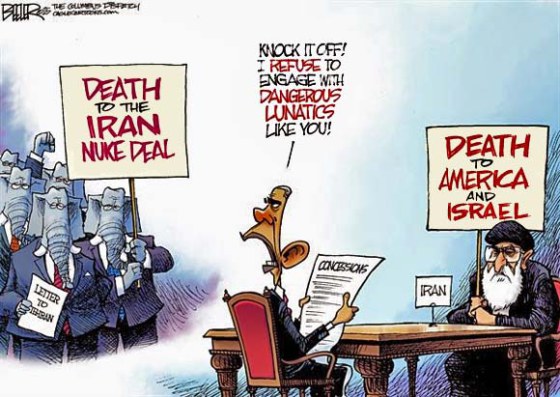
Obama’s Iran scheme is laid bare

March 13, 2015

Obama’s Iran scheme is laid bare, Washington Post, Jennifer Rubin, March 13, 2015

We surmised yesterday that the Obama administration had the idea to go to the United Nations to pass by resolution what Congress would never agree to: a lifting of sanctions on Iran in exchange for a nearly worthless deal in which Iran would keep thousands of centrifuges and get a 10-year glide path to nuclear breakout. Sen. Bob Corker (R-Tenn.), seeing what was afoot, demanded an explanation from the White House, calling such a scheme an “affront to the American people.”

On Thursday evening, after being pressed by irate Republicans, the National Security Council issued a defensive statement insisting that it would do no such thing. The story was handed to BuzzFeed:

The U.S. has “no intention” of using the United Nations to lock into place any potential deal with Iran over its nuclear program, a senior U.S. official said on Thursday.

The United States will not be “converting U.S. political commitments under a deal with Iran into legally binding obligations through a UN Security Council resolution,” Bernadette Meehan, spokesperson for the U.S. National Security Council, said in a statement emailed to BuzzFeed News.

“Past UNSC resolutions on Iran have called for a negotiated settlement of the Iran nuclear issue, and accordingly we would fully expect the UNSC to ‘endorse’ any deal with Iran and encourage its full implementation so as to resolve international concerns about Iran’s nuclear program,” Meehan continued. “But any such resolution would not change the nature of our commitments under such a deal, which would be wholly contained in the text of that deal.”

What is going on here? For starters, the existing U.N. resolutions obtained by President George W. Bush are much, much stricter than anything President Obama has indicated would be forthcoming. Those resolutions don’t permit Iran to keep thousands of centrifuges. They don’t give Iran a 10-year sunset. They require complete dismantling of Iran’s illicit program, full inspections and an accounting of past illicit behavior. In other words, any new deal negotiated by the administration would be weaker than — and in fact, in violation of — existing U.N. resolutions. That is why Obama would need to go back to the U.N., to water down, to cave into Iran’s demands.

This is not an original thought. For quite some time, former U.N. spokesman Richard Grenell has been warning that this is exactly what is coming down the pike. Last year Grenell wrote: “President Obama’s Geneva proposal to the permanent members of the United Nations Security Council allowing Iran to enrich some uranium violates previous UN resolutions demanding the Islamic Republic stop ‘all’ uranium enrichment activity. To avoid a violation of current UN resolutions, the permanent members must ask the entire Security Council to vote to weaken and supersede their previous demands.” He continued, “The UN’s four rounds of hard-fought sanctions on Iran and several other resolutions demanding compliance call for a full suspension of all enrichment activities, including research and development, then full verification of that suspension before negotiations on a permanent diplomatic solution begin. The sequencing was strategic. It was designed to build international confidence in a secretive country’s deceitful past.” But Obama deliberately departed from these restrictions, so he has always planned to go back. Otherwise, his deal would be in violation of existing international law.

That brings us to U.S. law. The U.N. resolutions don’t automatically become law, the administration was forced to concede. But under currentU.S. sanctions law, the president can waive them. And that is just what Obama intends to do. He will get the U.N. to water down international sanctions while he suspends U.S. sanctions. Why is this so dangerous? Mark Dubowitz, whose research and expertise helped lawmakers to construct the sanctions legislation, e-mails me:

President Obama risks undermining the entire sanctions edifice on which continued economic leverage depends. A future US president will need this leverage to enforce an Iran deal so that he can respond to Iranian noncompliance without resorting to either military strikes or surrender. But it increasingly appears that UN, EU and perhaps some US sanctions will be suspended and then reimposed or snap backed if Iran cheats. The snapback is a delusion. Reimposing sanctions is harder than it sounds. Amongst the United States, EU and UNSC, there are bound to be significant disputes on the evidence, differing assessments of the seriousness of infractions, fierce debates about the appropriate level of response and concerns about Iranian retaliation.

It’s also important to remember that when sanctions were first implemented, it took years before a critical mass of international companies terminated their business ties with Tehran. Once strictures are loosened, with so many international companies positioning to get back into Iran, it will be very difficult to persuade these companies to leave again. The Iranian regime will also adopt countermeasures to minimize its economic exposure to Western pressure when it anticipates that it will violate any nuclear agreement.

Obama’s legacy becomes demolition of the sanctions regime and an opening for Iran to either make a dash for breakout or to wait 10 years and get its stamped permission slip. The word for this is “containment.” The next president can reverse the waiver, but the Iranian economy will be on the road to recovery and the next president’s options will be severely limited. Iran might even have a bomb by then. As one conservative wag cracked, “If you like your sovereignty you can keep your sovereignty.” Yes, Obama tells us many soothing things but does whatever he wants.

What can Congress do? Well, it can express bipartisan outrage and pass a resolution deploring the president’s end run. But it must do more. Ideally, one would summon a bipartisan veto-proof majority to fix U.S. sanctions in law with no presidential waiver unless a deal meeting the existing U.N. resolutions was agreed upon. (I suppose Congress could use the power of the purse to defund our U.N. contributions, but let’s not get carried away.) But we also have to consider that this might simply be unattainable or susceptible to the argument that Congress can’t constitutionally eliminate all executive discretion. The next best option would be to increase the threshold for waiving existing and new sanctions — in other words, to narrow severely the president’s ability to waive U.S. sanctions, and require officials in the intelligence community and/or the military to add their certification (and thereby put their own credibility on the line as well). For example, U.S. sanctions would not be waived unless and until Iran gave a complete accounting of past nuclear activities and dismantled the Arak facility, things that the Iranians have refused to do and are objective criteria the president and the intelligence community could not honestly certify have occurred.

We have seen this again and again from this president — the complete contempt for coequal branches of government and determination to act in ways contrary to our constitutional structure and overwhelming public opinion (84 percent of Americans don’t favor a 10-year glide path to Iran getting a bomb). In the case of immigration, it took the form of an executive order overriding existing immigration laws under the theory that the president was using “discretion” to delay deportation of certain illegal immigrants. That is now in the courts. But his dual strategy of sabotaging strict U.N. resolutions and waiving U.S. sanctions is far more dangerous and nefarious. It gives primacy to an international body over Congress and the laws of the United States. It assumes sole authority in foreign affairs, something not envisioned in the Constitution, which divides powers between the two branches. Lawmakers have every right to feel as though they were misled and are being entirely marginalized once again.

A senior Republican on Capitol Hill tells me, “Everyone knows, including Democrats, that Obama and [Secretary of State John] Kerry are dangerously close to cutting a bad deal and lifting sanctions and shutting out Congress. If you don’t believe that just ask Democrats privately. They know it.” He remarks, “Instead of talking about that, we have a parade of faux outrage about Republicans and protocol, first the Bibi [Netanyahu] speech and now the letter. Historians will wonder why we did nothing to curb Iranian expansionism or shut down the nuclear program.”

The American people should demand that Congress affix existing sanctions in non-waivable legislation and tighten them as envisioned under the Menendez-Kirk legislation unless the new deal does what the president and the existing U.N. resolutions originally pledged to do — deprive Iran of an enrichment capacity sufficient to make a bomb.

Moreover, voters must demand that 2016 candidates disclose whether they would continue Obama’s explicit appeasement of Iran. Perhaps if Congress acted and 2016 candidates pledge to refuse to carry out this charade, the president would stiffen his spine and use all that as leverage to extract more concessions from Iran. Former Texas governor Rick Perry issued a forceful statement on Thursday. Wisconsin Gov. Scott Walker has also said “Republicans need to ensure that any deal President Obama reaches with Iran receives congressional review. Unless the White House is prepared to submit the Iran deal it negotiates for congressional approval, the next president should not be bound [by] it. I will continue to express that concern publicly to the President and directly to the American people.” Non-candidate Mitt Romney, who garnered respect for having been right on so many Obama foreign policy debacles, reiterates the Israeli prime minister’s message: “Walk away from a Swiss-cheese agreement; institute even more punitive and crippling sanctions than have been imposed; and remove those sanctions only when Iran agrees to dismantle its nuclear enrichment capability and to submit to unrestricted inspections. Finally, if contrary to reason and expectation those sanctions don’t bring Iran to its senses, prepare for a kinetic alternative.” But where are other candidates? Jeb Bush sounded sympathetic about the circumstances giving rise to Sen. Tom Cotton’s letter but refused to say he would not abide by a rotten deal not approved by Congress. His caution conveys weakness. All the top 2016 contenders need to stand up on this one.

If Congress and the 2016 contenders act forcefully, the White House may have to rethink its gambit. If not, the Iranians will know they won’t have a free ride (relief from sanctions) for very long.

There is one more problem for Obama. Our Sunni allies are not dim. They have every reason to be alarmed. They are already taking steps to “to match the nuclear capabilities Iran is allowed to maintain as part of any final agreement reached with world powers. This could include the ability to enrich uranium and to harvest the weapons-grade plutonium discharged in a nuclear reactor’s spent fuel.” An Obama deal of the type described would set off a Middle East arms race. Perhaps Congress should invite the king of Jordan or of Saudi Arabia to speak.

No wonder the White House was infuriated with Cotton: By suggesting there is a flaw in Obama’s scheme to leave out Congress, he made it less likely that the Iranians will be rewarded for their conduct and more likely that the next president would be able to extract concessions from Iran. He shined a light on what the administration was up to and let Democratic colleagues know they were being entirely left out of the loop by the president of their own party. He alerted the public to Obama’s belief that the U.N., not Congress, will be driving the Iran appeasement train. If the result of Cotton’s letter is to cement sanctions in law so that the president cannot waive them in his quest to appease Iran, the senator will be heralded as a heroic defender of the West’s security. If the result is to set the stage for a massive repudiation of Democratic leadership in both the Senate (should Democrats choose to drag their feet on cementing sanctions) and the White House, we can draw some comfort in the prospect of a large GOP majority in both houses and a Republican in the White House. Maybe they will have the gumption to prevent Iran from going nuclear. In any case, the message to Iran should be clear: The president’s shenanigans will not guarantee your quest for nuclear power; the only real insurance that your regime will survive is a binding treaty — and that is not happening unless you comply with existing U.N. resolutions.

Cartoon of the day

March 12, 2015

Via Vermont Loon Watch, March 12, 2015

(That’s not funny! — DM)

Obama Iran

Iranian President: Diplomacy With U.S. is an Active ‘Jihad’

March 12, 2015

Iranian President: Diplomacy With U.S. is an Active ‘Jihad’, Washington Free Beacon, March 12, 2015

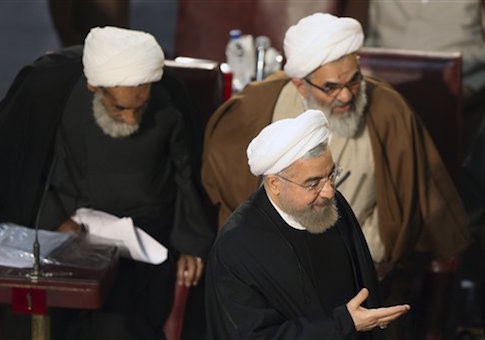
Hassan RouhaniHassan Rouhani / AP

Iranian President Hassan Rouhani described his country’s diplomacy with the United States as an active “jihad” that is just as significant to Tehran’s advancement as the slew of new weapons and missiles showcased by the Islamic Republic’s military.

Rouhani praised the country’s military leaders for standing “against the enemy on the battlefield” and said as president, he would carry out this “jihad” on the diplomatic front.

Rouhani’s comments echo those of foreign minister and lead nuclear negotiator Javad Zarif, who said Tuesday that Iran has emerged as “the winner” in talks with Western powers. Like Zarif, Rouhani boasted that Iran’s years-long diplomacy with Western nations over its nuclear program established the Islamic Republic as a global power.

Iran has made headway in convincing the U.S. to allow it to maintain much of its core infrastructure through diplomatic talks that Rouhani said are viewed as a “jihad.”

“Our negotiations with the world powers are a source of national pride,” Rouhani said earlier this week. “Yesterday [during the Iran-Iraq War], your brave generals stood against the enemy on the battlefield and defended their country. Today, your diplomatic generals are defending [our nation] in the field of diplomacy–this, too, is jihad.”

“Our power is growing each day, but we don’t intend to be aggressive toward anyone. However, we will certainly defend our country, nation, independence, and honor wholeheartedly.”

Iran stands “10 times more powerful” than it was during the time of the Iran-Iraq War, Rouhani said, which “reflects a serious deterrence to the enemies’ threats.”

Iranian leaders view the ongoing talks with the United States and other nations as a source of global legitimacy.

Rouhani’s remarks have “significant domestic implications,” according to an analysis published by the American Enterprise Institute.

“Iran’s negotiations team to the status of Iran-Iraq War commanders, who are traditionally revered by the regime as upholders of Islamic Revolutionary values, could potentially lead to rhetorical backlash from regime hardliners opposed to the nuclear negotiations,” AEI wrote.

Matan Shamir, director of research at United Against Nuclear Iran, said Rouhani’s latest comments show he is not a moderate leader.

“While Rouhani talks about a ‘win-win’ nuclear deal to global audiences, his comments make clear that he continues to view the U.S. an antagonistic global oppressor that must be triumphed over, in this case by a diplomatic ‘jihad,’” Shamir said. “This is clearly not the language of a moderate or of a regime with which rapprochement is at all realistic.”

Zarif said Tuesday that a final nuclear deal with the United States is meaningless at this point.

“We are the winner whether the [nuclear] negotiations yield results or not,” Zarif was quoted as saying by the Tasnim News Agency. “The capital we have obtained over the years is dignity and self-esteem, a capital that could not be retaken.”

As Rouhani and Zarif grandstand on the nuclear front, Iranian military leaders have begun to unveil a host of new missiles and sea-based weapons.

General Amir Ali Hajizadeh, a leader in the Iranian Revolutionary Guard Corps, said Iran’s defensive capabilities “are non-negotiable in the nuclear talks,” AEI reported.

The comments came the same day Iran paraded its new cruise missiles.

Hajizadeh also dismissed economic sanctions on Iran, saying that “his is a message which should be understood by the bullying powers which raise excessive demands.”

On Wednesday, the State Department said any final deal with Iran was “nonbinding,” meaning that neither party would be legally obliged to uphold the agreement.

Policy Ban Reversed – Iranian Students Study Nuke Science In U.S. – Fox & Friends

March 11, 2015

Policy Ban Reversed – Iranian Students Study Nuke Science In U.S. – Fox & Friends via You Tube, March 11, 2015


Presidential Commitments Then and Now

March 11, 2015

Presidential Commitments Then and Now, Commentary Magazine, March 11, 2015

(Please see also State Dept Describes Iran Deal as ‘Nonbinding’ — DM)

The White House “outrage” at the “open letter” to Iran signed by 47 senators, led by Sen. Tom Cotton, was reinforced by Vice President Biden’s formal statement, which intoned that “America’s influence depends on its ability to honor its commitments,” including those made by a president without a vote of Congress. Perhaps we should welcome Biden’s belated insight. As Jonathan Tobin notes, President Obama on taking office in 2009 refused to be bound by the 2004 Gaza disengagement deal in the letters exchanged between President George W. Bush and Israeli Prime Minister Ariel Sharon. His secretary of state, Hillary Clinton, announced that such commitments were “unenforceable”–that they were non-binding on the new administration. In 2009, Obama disregarded previous commitments not only to Israel but also to Poland, the Czech Republic, and Georgia; he “fundamentally transformed” America’s previous commitments, as he likes to describe the essential element of his entire presidency.

The Gaza disengagement deal was (1) approved by Congress; (2) included in the Gaza disengagement plan presented to the Israeli Knesset, and (3) relied on by Israel in withdrawing from Gaza later in 2005. The history of the deal (which the current secretary of state endorsed at the time as a U.S. “commitment”) is set forth here, and the reason Obama sought to undo it is discussed here. In 2009, the Obama administration refused at least 22 times to answer whether it considered itself bound by the deal; in 2011 it openly reneged on key aspects of it.

President Obama is currently negotiating an arms control agreement in secret, refusing to disclose the details of the offers his administration has made to Iran, a terrorist state according to his own State Department, and a self-described enemy of the United States since 1979. He has opposed not only a congressional debate before he concludes the deal but also a congressional vote afterwards. If he closes a deal with Iran on that basis, it will not be binding on any future president–at least not if that president chooses to follow the precedent Obama himself set in 2009.

If the administration is now seeking to restore the credibility of presidential commitments, the president might consider taking two steps: (1) acknowledge that the U.S. is bound by the disengagement deal negotiated by President Bush with Israel, endorsed by a vote of Congress; and (2) promise to put his prospective deal with Iran to a similar congressional vote once the deal is done. If not, perhaps a reporter at his next press conference will ask how he reconciles his position that (a) he could ignore President Bush’s congressionally approved deal with his view that (b) future presidents must honor the non-congressionally approved one he is negotiating now.

State Dept Describes Iran Deal as ‘Nonbinding’

March 11, 2015

State Dept Describes Iran Deal as ‘Nonbinding’, You Tube, March 11, 2015

(Huh? Does this suggest that the State Department agrees with the “traitorous” letter from Republican members of the Congress? Would a deal also be “nonbinding” on Iran?– DM)


Iran and the Perils of One-Man Rule

March 10, 2015

Iran and the Perils of One-Man Rule, Commentary Magazine, March 9, 2015

One-man rule may make sense in Tehran, but not here. This is not a question of partisanship but a defense of both the Constitution and the security of the nation. The Iranians should know that this deal is unpopular and will have no legitimacy without congressional ratification. Rather than sabotaging diplomacy, the letter is necessary pressure on the president to remember his oath to preserve the Constitution rather than to recklessly risk the country’s safety on Iranian détente.

********************

The letter sent by 47 Republican senators to Iran’s leadership is provoking predictable cries of outrage from liberals and Democrats. Obama administration supporters are decrying the missive as a blatant attempt to sabotage U.S. diplomatic efforts to end the standoff over Iran’s nuclear-weapons program. By warning Tehran that any deal approved by President Obama may be revoked by his successor after January 2017, the GOP caucus is opening itself up to charges of extending partisan warfare to foreign policy. But the letter, intended as much as a shot fired over the bow of the president as it was a lesson in the U.S. Constitution for the ayatollahs, made an important point. No matter what you think about the administration’s blatant push for détente with the Islamist regime, the president’s plans to craft an agreement that will not be submitted to Congress for approval means the senators are correct about its status in law. More importantly, they are highlighting an issue that transcends the nuclear question, even though that is a matter of life and death. A president that seeks to ignore the constitutional separation of powers cannot complain when his critics point out that his fiats cannot be expected to stand the test of time.

The impact of the letter on the Iranians is a matter of speculation. The Islamist regime needs no instructions from Republicans about how to protect their interests as they’ve been successfully stringing along Western governments for more than a decade in nuclear negotiations. In particular, they have scored a series of diplomatic triumphs at the expense of the United States as President Obama has abandoned his past insistence that Iran give up its nuclear program and instead offered concession after concession to the point where the deal that is being offered to the regime is one that will let them keep their infrastructure and will “sunset” restrictions on it. If they truly intend to take advantage of this craven retreat by the putative leader of the free world as opposed to more prevarication until the clock runs out on their march to a weapon, then nothing his Republican opponents say are likely to scare them out of it.

Moreover, the Iranians may believe that the same dynamic that has worked in their favor during the course of the negotiations may similarly ease their fears once such a bad deal is in place. Even a Republican president who has campaigned against appeasement of Iran and understands the dangers of an agreement that will make it possible for Iran to get a bomb either by cheating or, even worse, by abiding by its terms, will be hard-pressed to reverse it. America’s allies will fight tooth and nail against re-imposition of sanctions on an Iran that they want to do business with no matter what that terror-supporting regime is cooking up.

The campaign against reversal will also center on the straw-man arguments used by the president and his apologists to bolster their effort to appease Iran. We will be told that the only alternative to a deal that allows Iran to become a threshold nuclear power is war and not the return to tough sanctions and hard-headed diplomacy that President Obama jettisoned in his zeal for a deal.

But by planning to bypass Congress and treat his pact with Iran as merely an executive decision over which the legislative branch has no say, the president is steering into uncharted waters. Like his executive orders giving amnesty to millions of illegal immigrants that usurp the power of Congress to alter laws governing this issue, a nuclear deal that is not ratified by the Senate, as all treaties must be, can be treated as a presidential whim that is not binding on his successors. If it can be put into effect with only the stroke of a pen, it can just as easily be undone by a similar stroke from another president.

The difficulty of undertaking such a revision should not be underestimated. No president will lightly reverse a foreign-policy decision with such serious implications lightly. That is why an agreement that grants Western approval to Iran’s nuclear ambitions is so dangerous. That it is part of a comprehensive approach to Iran that, despite last week’s disclaimers issued by Secretary of State John Kerry, indicates that the U.S. is prepared to accept the regime’s efforts to achieve regional hegemony makes it even more perilous. Congress needs to act soon to both impose tougher sanctions on Iran and to ensure that any deal must be submitted to it for approval.

But Iran still had to be put on notice that a deal that is not approved by Congress can and should be reversed by the next president. One-man rule may make sense in Tehran, but not here. This is not a question of partisanship but a defense of both the Constitution and the security of the nation. The Iranians should know that this deal is unpopular and will have no legitimacy without congressional ratification. Rather than sabotaging diplomacy, the letter is necessary pressure on the president to remember his oath to preserve the Constitution rather than to recklessly risk the country’s safety on Iranian détente.

Ron Dermer and Dore Gold on Fox

March 8, 2015

Ron Dermer and Dore Gold on Fox, via You Tube, March 8, 2015

(Giving Iran years to pursue its ambition of obliterating the U.S. and Israel, with few or no remaining sanctions as Iran continues its efforts to control the Middle East, and no significant progress in allowing the IAEA to pursue its investigations of Iran’s past and future progress in nuclear weaponry strikes me as worse than merely absurd.– DM)

The leader of the free world

March 6, 2015

The leader of the free world, Truth Revolt, Bill Whittle, via You Tube, March 5, 2015

Scott Ott first described him thus… a brave, thoughtful, serious man doing a brave, thoughtful serious job. In his latest FIREWALL, Bill Whittle provides the amazing and disturbing contrast between The President of the United States and The Leader of the Free World


