Posted tagged ‘Turkey’

Turkey’s Frankenstein Monster

September 13, 2014

Turkey’s Frankenstein Monster, Gatestone InstituteBurak Bekdil, September 13, 2014

(Please see also Turkey’s ties to Hamas no obstacle in war on Islamic State.– DM)

Last June, Turkey’s own Frankenstein, who went by the name of ISIS, attacked the Turkish consulate compound in Mosul, and took 49 Turks, including the consul general, hostage.

The hostages are still in captivity. So is Turkey.

For each [Islamic] sect, the other is “not even Muslim.”

It all began when Turkey’s leaders thought they could build a Sunni belt under Turkish hegemony, and resting geographically under the Crescent and Star. For that to actually happen, Tunisia, Libya, Egypt, Lebanon, Syria and Iraq had to be ruled by Sunni — preferably Muslim Brotherhood-type — leaderships subservient to Ankara.

This Turkish gambit came at a time when the turbulent Middle East was even more turbulent than it always is: the Arab Spring had unmasked a 14-century-long hatred between Islam’s two main sects, a schism started by rival clans in the Prophet Muhammad’s tribe, the Quraysh. This is a feud that would survive beyond even their imagination.

Syria, with which Turkey shares a 500-mile border, was sadly being ruled by a Nusayri (Syrian Alawite), an offshoot of the Shia faith. Bashar al-Assad soon became, as the Sicilians say, “a stone in (then Prime Minister, now President) Recep Tayyip Erdoğan’s shoe.”

In the background, the Sunni-Shia feud was heating up. The Turks failed to get the message. In 2013, Iraq’s acting defense minister, Saadoun al-Dulaimi, accused Turkey of controlling Sunni anti-government protests in (Shia majority) Iraq.

For some time the United States even toyed with the idea of creating a “moderate crescent” of Sunni nations in order to contain Shia Iran, Shia-controlled Iraq and Lebanon’s Hizbullah.

The sectarian blindness explained a lot of complexities: Why, for instance, King Abdullah of Saudi Arabia fiercely supported the Syrian opposition, or sent troops across the border into neighboring Bahrain to help stamp out a Shia uprising there; why al-Qaeda’s leaders called on jihadists to join the fighting in Syria; or why, for Erdoğan, al-Assad was the “butcher of Damascus,” while Sudan’s Sunni leader Omar al-Bashir, with an international arrest warrant for crimes against humanity and the killing of hundreds of thousands, was “just an innocent friend.” The hatred explains, even to this date, why the Shia and Sunnis in Iraq kill each other by the thousands every month and bomb each other’s mosques.

The Wahhabis are virulently anti-Shia, and vice versa. They view the Shia as satanic “rejectionists.” And, for their part, the Shia view the Wahhabis as simply perverted. For each sect the other is “not even Muslim.” Saudi schools teach pupils that Shi’ism is simply a Jewish heresy.

In 2006, senior Wahhabi cleric Abdul Rahman al-Barrak released a fatwa which stated that the Shia are “infidels, apostates and hypocrites … [and] they are more dangerous than Jews or Christians.” Al-Qaeda’s younger twin, al-Nusrah, declared in 2012: “The blessed operations will continue until the land of Syria is purified from the filth of the Nusayris and the Sunnis are relieved from their oppression.”
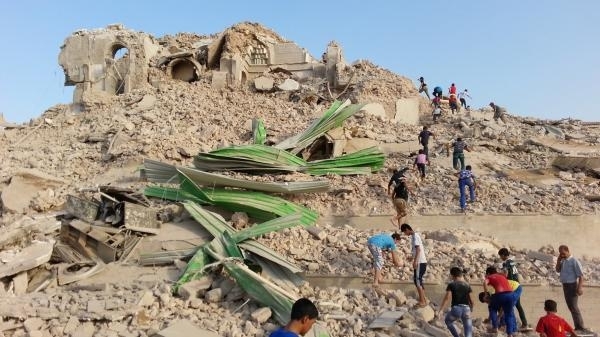
690The wreckage of the Shrine of Jonah, in Mosul, Iraq, which was destroyed by insurgents of the Islamic State in July 2014.

The Sunni supremacist Erdoğan would therefore even shake hands with Satan for the downfall of the Nusayri al-Assad. And he did. Turkey quickly became the mentor of all Syrian opposition groups which, ideally, would first defeat al-Assad, then form an Islamist government and volunteer to become a de facto colony of the emerging Turkish Empire.

At the outset, Turkey’s support was about policy and planning: conference after conference, meeting after meeting, declaration after declaration. The innocent Turks were merely expending diplomatic efforts to end the bloody civil war in a neighboring country.

In reality, Ankara slowly made Turkey’s southeast a hub for every color of radical Islamist militant arriving from dozens of different countries, including thousands from Europe. The militants would cross the border into Syria, fight al-Assad’s forces, go back to Turkey, get medical treatment there if necessary, replenish their weapons and ammunition and go back to fight again. In an audio recording leaked on the internet in March, Turkey’s top intelligence officer admits that, “Turkey has so far sent 2,000 trucks full of weapons and ammunition into Syria.”

Last June, Turkey’s own Frankenstein monster, who went by the name of the Islamic State of Iraq and Syria [ISIS] — later reflagged as “The Islamic State” [IS] — appeared at its old master’s doors. IS attacked the Turkish consulate compound in the northern Iraqi city of Mosul, after having captured large swathes of Syrian and Iraqi territory. It also took 49 Turks, including the consul general, hostage.

Ironically, only a day before the attack on the Turkish consulate, an opposition parliamentarian, speaking in parliament, warned that the consulate was exposed to the risk of an attack from ISIS — to which the government benches replied loudly: “Stop telling lies!” And only 20 hours before the Turkish consulate was attacked, Turkey’s then-Foreign Minister, Ahmet Davutoglu, tweeted that “We have taken all precautions at the Mosul consulate general.”

The hostages are still in captivity. So is Turkey, strategically and militarily. When U.S. Secretary of Defense Chuck Hagel arrived in Ankara on Sept. 8 to discuss a joint methodology to fight IS, and asked the Turks what services they could offer, the most important Turks in Ankara, including Erdoğan, shyly looked in the air and explained why they could not actively or publicly engage IS. And so 49 unfortunate Turks are still in the hands of the Turkish Frankenstein.

More than two years ago Davutoglu prophesized that al-Assad’s days in power were numbered. In a span of weeks, he predicted, the “butcher of Damascus would go.” But there is another man who can compete with Davutoglu in any “Realistic Guesses on the Future of the Middle East” competition. At the end of 2011 when the last US troops left Iraq, President Barack Obama described Iraq as “sovereign, stable and self-reliant.”
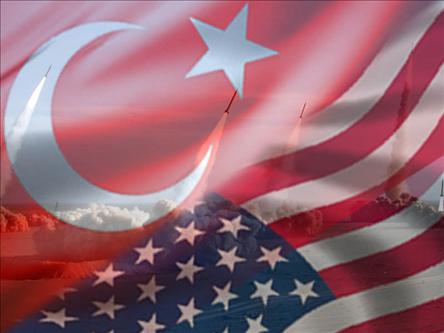
Grave setbacks for Obama’s strategy: Turkey backs out of US-led war on IS. Germany, UK say no to air campaign

September 12, 2014

Grave setbacks for Obama’s strategy: Turkey backs out of US-led war on IS. Germany, UK say no to air campaign, DEBKAfile, September 11, 2014

Erdogan-No_to_US_war_ISIS_11.9.14Erdogan’s second no to the United States

The Turkish government inflicted a stunning blow to President Barack Obama’s strategy for a broad US-led coalition for tackling and defeating the Islamic State, Thursday, Sept. 11 – just hours after the plan was unveiled in Washington. One of the 11 Sunni Muslim nations invited to Jeddah by US Secretary John Kerry Thursday to join the coalition’s establishment, Turkey announced instead that it wants no part in the US strategy for destroying IS.

In his speech Wednesday night, President Obama specifically named Turkey as one of the “friends and allies” who would contribute troops to the mission.

However, an official in Ankara, who chose to remain anonymous, stated later: “Turkey will refuse to allow a US-led coalition to attack jhadists in neighboring Iraq and Syria from its air bases, nor will it take part in combat operations against militants.” The statement continued: “Turkey will not be involved in any armed operation but will concentrate entirely on humanitarian operations.”

DEBKAfile’s military and intelligence sources report that Turkey has knocked out one of the main props from under the Obama plan, which was its reliance on regional forces for combating the Islamic State in Iraq and Syria, while the United States provided air strikes and cover.

As prime minister of Turkey eleven years ago, President Tayyip Erdogan confronted former US President George W. Bush with the same letdown when, on the eve of the US 2003 invasion of Iraq, he withheld Turkish bases for the deployment of 60,000 US troops to open a northern front against Saddam Hussein.

This act provoked a long crisis in relations between Washington and Ankara.

US sources report that, straight after the Jeddah meeting, Secretary Kerry will travel to Ankara on Friday, Sept. 12, to confront Turkish leaders.

But meanwhile, Germany and Britain have said they would not take part in the US air campaign in Iraq and Syria.

DEBKAfile reported earlier: In his speech to the American people, Wednesday, Sept. 10, President Barack Obama unveiled a four-point strategy “to roll back, degrade and ultimately destroy” ISIS, at the head of “a broad coalition of friends and allies.” The US would lead off with systematic air strikes against IS targets, while local forces would perform the fighting on the ground. “No US combat troops would be involved,” he pledged.

He described the effort as a “comprehensive and sustained counter-terror mission,” to hunt terrorists down wherever they are. “We will not hesitate to take action against IS in Syria as well as Iraq,” said Obama. “There will be no safe haven for anyone threatening America.” He therefore called on Congress to approve additional resources for training and equipping Syrian opposition forces to take part in the war on IS.

Another 475 US military personnel had been assigned to Iraq, he said, but not in combat missions. They would provide training, intelligence and equipment and judge how best to support the Iraqi military. “America can make a difference,: he stressed, “but Iraqis must do the job of fighting IS themselves.”

According to US sources, the Obama administration has earmarked the small sum of $25 million dollars for training the Iraqi and Kurdish armies.

In the past six weeks, the US has conducted 154 air strikes against IS – a relatively low number which DEBKAfile’s military sources note is far below the fire power needed to “degrade” the Islamists.

Moreover, Washington has scarcely delivered on its promises for three years to arm the Syrian opposition adequately to contest Bashar Assad and his Iranian, Russian and Hizballah-backed war machine.

Now, it will take months if not years to bring the pro-Western Syrian rebel militias up to scratch for their new mission of fighting IS.

As for the broad coalition of friends and allies, US Secretary of State John Kerry stated in Baghdad Wednesday that it would consist of 40 nations. So far only 10-15 governments have signed up. At the same time, President Obama appeared to be firm and determined in his resolve the eradicate the terrorist scourge that calls itself the Islamic State of Iraq and the Levant, but he made no bones about a mission that would start slowly and stretch out over a long period.

Israel and the U.S.-Qatari Axis

September 1, 2014

Israel and the U.S.-Qatari Axis, Front Page Magazine, September 1, 2014

US-Turkey

When considering the geo-political map of the current Middle East, not everything is negative or alarming, at least from an Israeli point of view. Although the Middle East is more splintered today than ever before, Israel’s political and diplomatic isolation in the region has faded. The Middle East is now composed of three main blocs and Israel is a partner with one major bloc, which also happens to be its immediate neighbors, or the inner circle of moderate-Sunni and hitherto pro-American Arab states: Egypt, Jordan, Saudi Arabia, and the Emirates.  However, what is counter-intuitive is the Obama administration’s choice of partners in the region. It is not the moderate Sunni-Muslim states and Israel that Washington sought out as mediators for a Hamas-Israel cease-fire, but the Muslim Brotherhood bloc of Turkey and Qatar.

David Ben Gurion, Israel’s first Prime Minister and one of the founding fathers of the Jewish State recognized early on that the State of Israel had no chance to develop friendly relations with its neighboring Arab states. Pan-Arab leaders such as Egypt’s president Gamal Abdul Nasser fanned the flames of hatred and revenge against the Jewish state, as did fellow Arab dictators in Syria and elsewhere. As a result, Israel’s leadership sought to develop friendly relations with its outer-circle non-Arab states such as Iran, Ethiopia, and Turkey.

The rise of the Islamic Republic in Iran under Khomeini following the Iranian revolution in 1979, and the departure of the Israel-friendly Shah of Iran ended Israeli-Iranian relations. Iran became the arms supplier of Israel’s Palestinian enemies and Hezbollah in Lebanon, and with its nuclear ambition, it constitutes an existential threat to the Jewish State.

Turkey was the only Muslim state to have a steady and rather friendly relationship with the Jewish state. Until the electoral triumph of the AK Party (Justice and Development Party) in 2002, Israel’s trade and military cooperation with Turkey was significant to both countries. The AK Prime Minister Recep Tayyip Erdogan changed all of that. His hostility to Israel intensified with each successive electoral victory. Following his second parliamentary victory in 2007, he began tangling with Israel. In late May 2010, Erdogan gave the green light to a Gaza flotilla headed by the Mavi Marmara. It was a deliberate provocation by Erdogan to break through the Israeli blocade. The subsequent AK victory in the 2011 parliamentary elections increased Erdogan’s arrogance and simultaneously his anti-Israel and anti-Semitic outbursts. His latest 2014 presidential victory and his unmitigated support for Hamas and the Muslim Brotherhood severed the special relations Israel has had with Turkey.

Turkey is, in fact, part of the radical Sunni, pro-Muslim Brotherhood bloc, that includes Qatar and Hamas.

The radical Shia bloc led by Iran, which includes Shiite Iraq, the Assad regime in Syria, and the Hezbollah in Lebanon, comprise the third bloc.

The puzzling question is why Washington chose to align itself with the Sunni radical Muslim Brotherhood bloc (Qatar and Turkey), and not with the more moderate bloc led by Egypt and Saudi Arabia? Both the Egyptian regime under President Abdel Abdel Fattah el-Sisi and the Saudi royals are upset with the Obama administration. Cairo resents Washington’s support for the deposed Muslim Brotherhood President Mohammad Morsi. Washington withheld arms delivery to Egypt because it considered Morsi’s removal illegitimate, albeit, over 30 million Egyptians demanded Morsi’s removal because of his gross mismanagement of the economy, his authoritarian style, his promotion of sectorial Brotherhood ideals and the erosion of civil liberties.

The Saudis resent the Obama administration rapprochement with Iran, and its November 24, 2013 nuclear agreement with Iran signed in Geneva.  Israelis are also uncomfortable with the Geneva Agreement, albeit they are more skeptical than resentful. The U.S. “Red Line” against the Assad regimes use of chemical weapons that was never put into force has added to the Saudis sense of betrayal.  Riyadh blames the U.S. for turning Iraq into an

Iranian Shiite satellite, and abandoning the Sunnis. The Saudis are also upset with Obama’s treatment of el-Sisi’s Egypt, whom they support.

The U.S. administration’s reasoning is hard to understand but for the fact that in 2003 Combat Air Operations Center for the Middle East moved from Prince Sultan Airbase in Saudi Arabia to Qatar’s Al Udeid airbase near its capital of Doha. Qatar currently serves as the host to major U.S. military facilities. The Al Udeid base and other facilities in Qatar serve as the logistics, command and control, and hub for the U.S. Central Command (CENTCOM) area of operations. Al Jazeera (the Qatari regime mouthpiece) reported on July 15, 2014 that “The United States has signed an agreement with Qatar to sell Apache attack helicopters and Patriot and Javelin air-defense systems valued at $11bn.” Qatar also has the third largest proven natural gas reserves in the world, and is the largest exporter of liquefied natural gas, benefitting mainly the Europeans.

America stands for more than multi-billion-dollar defense contracts. Its core values include human rights, religious freedom and democracy for all. The 2012 U.S. State Department Country Report on Human Rights in Qatar has concluded that “Inability of citizens to change their government peacefully, restrictions on fundamental civil liberties, and pervasive denial of expatriate workers rights” are just some of the human rights abuses by the Qatari regime. Political parties are not allowed to exist and forced labor is pervasive in Qatar, particularly in the construction and domestic labor sectors. Qatar serves as host to Sheikh Yusuf al-Qaradawi, the radical Muslim Brotherhood ideologue that the Anti-Defamation League has called “theologian of terror,” and has provided a home base to Khaled Mashal, the Hamas political chief.

Particularly worrisome are the Qatari elites, including the ruling family, who support Al Qaeda and other extremist and violent Islamist groups. Additionally, Qatar’s embrace of Iran as well as Hamas and Hezbollah, deemed by Saudi Arabia and the other Gulf states as terrorist organizations, requires a great deal of scrutiny by the U.S.  Reuters reported (March 9, 2014) that “Iraqi Prime Minister Nouri al-Maliki has accused Saudi Arabia and Qatar of openly funding the Sunni Muslim insurgents (ISIS) his troops are battling in western Anbar province.” Lebanon’s Daily Star (August 14, 2014) quoted Hezbollah’s Chief Sayyed Hassan Nasrallah as saying “Turkey and Qatar are supporting ISIS (also known as Islamic State in Iraq and the Levant and most recently as the Islamic State.), and I am convinced that Saudi Arabia fears it.”

Qatar, the hub of CENTCOM, and the recipient of top-notch U.S. weaponry, is the same state that enables Hamas’ terror against Israel by providing it with donations to buy its arms from Iran. Therefore, it was a surprise for the Israelis that Secretary of State John Kerry chose to adopt the pro-Hamas track offered by the foreign ministers of Turkey and Qatar. He ignored both the interests of Israel and Egypt who border the Hamas-ruled Gaza Strip.

Al-Monitor (July 29, 2014) summed up the divergence of interests between Israel, the U.S’s only democratic and most reliable ally in the region and the U.S.–Qatar axis. “The Israeli leadership estimates that the cease-fire initiative (regarding the Hamas-Israeli war in Gaza-JP) of U.S. Secretary of State John Kerry responds well to the interests of Qatar, Turkey, Hamas, and its own interests with Qatar – but hardly addresses Israel’s security needs.”

Talking Turkey with an Islamist academician

August 29, 2014

Talking Turkey with an Islamist academician, The Washington Times, Daniel Pipes, August 27, 2014

As Turkey’s 26th prime minister, Mr. Davutoglu faces a bubble economy perilously near collapse, a breakdown in the rule of law, a country inflamed by Mr. Erdogan’s divisive rule, a hostile Gulen movement, and a divided AKP, all converging within an increasingly Islamist (and therefore uncivil) country. Moreover, the foreign-policy problems that Mr. Davutoglu himself created still continue, especially the Islamic State hostage emergency in Mosul.

The unfortunate Mr. Davutoglu brings to mind a cleanup crew arriving at the party at 4 a.m., facing a mess created by now-departed revelers. Happily, the contentious and autocratic Mr. Erdogan no longer holds Turkey’s key governmental position, but his placing the country in the unsteady hands of a loyalist of proven incompetence brings many new concerns for the Turks, their neighbors and all who wish the country well.

**********

As Recep Tayyip Erdogan ascends Thursday to the presidency of Turkey, his hand-picked successor, Ahmet Davutoglu, simultaneously assumes Mr. Erdogan’s old job of prime minister. What do these changes portend for Turkey and its foreign policy? In two words: nothing good.

In June 2005, when Mr. Davutoglu served as chief foreign policy adviser to Mr. Erdogan, I spoke with him for an hour in Ankara. Two topics from that conversation remain vivid.

He asked me about the neoconservative movement in the United States, then at the height of its fame and supposed influence. I began by expressing doubts that I was a member of this elite group, as Mr. Davutoglu assumed, and went on to note that none of the key decision-makers in the George W. Bush administration (the president, vice president, secretaries of state and defense, or the national security adviser) was a neoconservative, a fact that made me skeptical of its vaunted power. Mr. Davutoglu responded with a subtle form of anti-Semitism, insisting that neoconservatives were far more powerful than I acknowledged because they worked together in a secret network based on religious ties. (He had the good grace not to mention which religion that might be.)

In turn, I asked him about the goals of Turkish foreign policy in the Middle East in the era of the Justice and Development Party (AKP) that had begun in 2002, noting Ankara’s new ambitions in a region it had long disdained. He conceded this change, then took me on a quick tour d’horizon from Afghanistan to Morocco, noting Turkey’s special ties with many countries. These included the presence of Turkic-speakers (e.g., in Iraq), the legacy of Ottoman rule (Lebanon), economic symbiosis (Syria), Islamic ties (Saudi Arabia), and diplomatic mediation (Iran).

What struck me most was the boastful optimism and complete self-assurance of Mr. Davutoglu, former professor of international relations and an Islamist ideologue. He not only implied that Turkey had waited breathlessly for him and his grand vision, but he also displayed an unconcealed delight at finding himself in a position to apply his academic theories to the great canvas of international politics. (This privilege occurs surprisingly rarely.) In sum, that conversation inspired neither my confidence nor my admiration.

While Mr. Davutoglu has done remarkably well for himself in the intervening years, he did so exclusively as consigliere to his sole patron, Mr. Erdogan. His record, by contrast, has been one of inconsistent policy and consistent failure, a failure so abject it borders on fiasco. Under Mr. Davutoglu’s stewardship, Ankara’s relations with Western countries have almost universally soured, while those with Iran, Iraq, Syria, Israel, Egypt and Libya, among other Middle Eastern states, have plummeted.

Symbolically, Turkey is slipping away from the NATO alliance of democracies and toward the shoddy Sino-Russian grouplet known as the Shanghai Cooperation Organization. As Kemal Kilicdaroglu, leader of the opposition, sadly notes, “Turkey has grown lonely in the world.”

Having failed as foreign minister, Mr. Davutoglu now — in an application of the Dilbert Principle — ascends to a heady but subservient leadership of both the AKP and the government. He faces two major challenges:

As AKP leader, he is tasked with producing a great victory in the June 2015 parliamentary elections to modify the constitution and turn the semi-ceremonial position of president into the elected sultanate Mr. Erdogan lusts for. Can Mr. Davutoglu deliver the votes? Color me skeptical. I expect that Mr. Erdogan will rue the day he relinquished his prime ministry to become president, as he finds himself ignored and bored living in the sprawling presidential “campus.”

As Turkey’s 26th prime minister, Mr. Davutoglu faces a bubble economy perilously near collapse, a breakdown in the rule of law, a country inflamed by Mr. Erdogan’s divisive rule, a hostile Gulen movement, and a divided AKP, all converging within an increasingly Islamist (and therefore uncivil) country. Moreover, the foreign-policy problems that Mr. Davutoglu himself created still continue, especially the Islamic State hostage emergency in Mosul.

The unfortunate Mr. Davutoglu brings to mind a cleanup crew arriving at the party at 4 a.m., facing a mess created by now-departed revelers. Happily, the contentious and autocratic Mr. Erdogan no longer holds Turkey’s key governmental position, but his placing the country in the unsteady hands of a loyalist of proven incompetence brings many new concerns for the Turks, their neighbors and all who wish the country well.

Mashaal Vows Cease-Fire a Step to New ‘Resistance’ War against Israel

August 29, 2014

By: Tzvi Ben-Gedalyahu

Published: August 28th, 2014

via The Jewish Press » » Mashaal Vows Cease-Fire a Step to New ‘Resistance’ War against Israel.


Hamas chief Khalid Mashaal rallies supporters in Gaza (archive).
Photo Credit: Screenshot

Hamas’ supreme leader Khaled Mashaal dashed any hopes of long-term peace with Israel in a speech in Qatar on Thursday in which he shot from the hip at Israel and also at his terrorist organization’s new partner, the rival Fatah movement headed by Palestinian Authority chairman Mahmoud Abbas.

His lengthy speech in Qatar, which has financed Hamas terror and which fought Egyptian cease-fire proposals, followed by one day a “victory” speech by Ismail Haniyeh, the senior Hamas political leader in Gaza. Mashaal’s silence while Haniyeh accepted the cease-fire is a clear sign of a fierce power struggle between Hamas in Gaza and between Mashaal and Qatar, which holds the purse strings.

Mashaal also claimed victory, with lies that Hamas missiles hit the Ben Gurion Airport, which is not true, and that more than 5 million Israelis hid in bomb shelters, a gross exaggeration. However, there is no doubt that Hamas succeeded in scaring the daylight out of millions of Israelis, interrupting a few flights and generally turning half of Israel into sitting ducks.

And this won’t be the last time, regardless of a cease-fire, he warned.

“Whatever happened [in Gaza] is not the end to this story, and this is not the last operation to free Palestine. It was an important stop on the way to victory,” Mashaal declared.

His speech threw every obstacle possible on the road to negotiations with Israel. The talks are supposed to begin in a month, leaving open the possibility, or probability, that Prime Minister Binyamin Netanyahu is carrying on secret negotiations that will be formalized in 30 days.

The Prime Minister suffered another blow to any trust that Israelis may have for him with a report on Thursday that he met secretly with Jordanian King Abdullah, and perhaps Abbas, prior to the cease-fire, circumstantial evidence that Israel negotiated under fire, contrary to Netanyahu’s promise.

If Mashaal gets his way, there won’t be any talks because one of the new powers in Gaza is slated to be Abbas, whose security forces would patrol Gaza borders, according to the Egyptian proposal. That would provide Cairo with another tactic to get rid of Hamas.

Mashaal nailed Abbas to the wall in his speech, accusing him of throwing cold water on the resumption of the intifada during the war by allowing his security forces to limit protests.

“The next operation needs to use all of the Palestinian capabilities, not just part of them,” Mashaal said. “The resistance is holy and weapons are holy. There is no such thing as a country without weapons.”

A country or not, Gaza still has at least 2,000 rockets as well as anti-tank rockets and presumably anti-aircraft missiles. It still has rocket factories, one of which was filmed in production by Hamas during one of the failed cease-fires during the war.

Netanyahu had demanded that any halt in violence would be accompanied by disarming Hamas, but this week’s cease-fire only left the issue to be put on the negotiating table, along with Hamas’s demands for a deep-sea port and an airport.

Mashaal’s speech was full of hate and crude accusations that Israel inflicted a “Holocaust” on Gaza by “destroying schools and hospitals,” which all but the most extreme anti-Israel media now know were used by Hamas as rocket launching and terrorist command centers.

“We are against what Hitler did to the Jews, and Israel committed a second Holocaust in Gaza. Israel is an embarrassment to Jews and to the entire world,” according to Mashaal.

His rhetoric was aimed at Abbas as well as Israel. If and when negotiations begin, Egypt and the United States will be on the side of Abbas, who despite his unity government with Hamas has proved politically smart by a patient and single-minded tactic of using international support to slowly but surely win concession after concession from Israel until there is nothing left to negotiate.

Including Gaza as part of the Palestinian Authority works to Abbas’ benefit because it will solidify position that a Palestinian Authority state needs to on contiguous territory, meaning that Sderot residents can start packing up and leaving their homes as well as their bomb shelters, which would save Hamas lots of time and money when digging terror tunnels from the Western Negev to Ashdod.

Mashaal’s aim is the same as Mashaal, but his strategy is different When Mashaal says that there will be another war to “free Palestine,” he is referring to all of Israel, from Kiryat Shmona in the north to Eilat in the south, and from the Dead Sea in the east to the Mediterranean Sea on the west.

Abbas talks about a “two-state solution,” the magic phrase that sends U.S. Secretary of State John Kerry into hallucinations and hypnotizes the foreign media into pretending that the Palestinian Authority’s maps of “Palestine” don’t include the existence of Israel.

But Mashaal reminded everyone in his speech that he has people on his side.

He thanked his sponsors for terror, namely Qatar, Turkey, Yemen and Algeria, and he thanked South Africa and Latin American countries for boycotting Israel.

Report: Qatar Plans to Fund a New Gaza Flotilla

August 28, 2014

Report: Qatar Plans to Fund a New Gaza Flotilla

Aug. 27, 2014 2:04 pm

Sharona Schwartz

via Report: Qatar Plans to Fund a New Gaza Flotilla | TheBlaze.com.

Qatar, a dedicated supporter of the Muslim Brotherhood and Hamas, will fund a flotilla to Gaza spearheaded by a Turkish group with reported terrorist ties, according to an Israeli media report.

A report by the Israeli news site NRG quoted in the Algemeiner stated that Qatar and IHH, the Turkish group that bills itself as humanitarian, signed a cooperation agreement on Monday.

The Jerusalem Post also reported on the cooperation agreement but did not state that a new flotilla was part of the agreement.


Turkish Gaza flotilla ship, the Mavi Marmara, is seen in Istanbul, Turkey, Monday, May 30, 2011. (AP)
 

IHH was the key group behind the 2010 Gaza flotilla, which tried to break Israel’s sea blockade of Gaza instituted to stop the flow of weapons to Hamas.

Instead, the Israel Defense Forces boarded one of the vessels, the Mavi Marmara, before it reached Gaza. Upon boarding, the soldiers were attacked by Islamist IHH activists wielding knives and metal bars, the IDF ultimately killing nine activists in response.

“The organization will send another flotilla after they receive permission from the government in Ankara that Turkish naval forces will defend the flotilla and its participants,” IHH leader Bulent Yildirim said, according to the Algemeiner.

Turkey had initially expressed support for a new flotilla but reversed course.

Yildirim is under investigation for financial ties to Al-Qaeda, Turkish media have reported, the Algemeiner noted.

Israeli government officials, including Prime Minister Benjamin Netanyahu, in recent weeks have lambasted the Qatari government for its support of Hamas. Al Jazeera is owned and funded by Qatar, leading to criticism in Israel of its coverage of the 50 days of violence between Hamas and Israel.

On Tuesday, a cease-fire was announced, putting an end at least for now to the 4,450 rockets that were fired into Israeli communities since July by Hamas and other terrorist groups and the IDF’s response to the launchings.

In May, the father of one of those killed on the Mavi Marmara was invited to accompany the Turkish prime minister on his visit to Washington, D.C.

The father of Furkan Dogan, a 19-year-old with both Turkish and U.S. citizenship who had expressed his desire for “martyrdom,” had a breakfast meeting with Secretary of State John Kerry during the same trip, an event touted by the Turkish foreign minister on Twitter.
Other Must-Read Stories

Turkey Hosting at Least 12 Hamas Operatives

August 28, 2014

Turkey Hosting at Least 12 Hamas Operatives

Becoming ‘a very hospitable environment’ for Hamas

BY:
August 28, 2014 5:00 am

via Turkey Hosting at Least 12 Hamas Operatives | Washington Free Beacon.


Protesters burn an Israeli flag during a protest rally outside the Israeli consulate in Istanbul, Turkey / AP


At least 12 Hamas operatives, including a senior leader and others convicted of murder, have enjoyed safe haven in Turkey, a country that regional experts say is quickly becoming “a very hospitable environment” for Hamas terrorists to plan operations.

Turkey’s ties to Hamas have come under scrutiny in recent weeks after it came to light that a senior Hamas leader accused of planning the kidnapping of three Israeli teens is being sheltered in the country with the government’s knowledge.

In addition to top Hamas official Saleh Al-Arouri, Turkey has provided shelter to at least 11 other Hamas militants, two of whom have murdered Israelis and are known to the Turkish authorities, according to data published by the Palestinian National Information Center.

While Turkey’s support for Hamas has attracted concern in prominent foreign policy circles, the State Department has not expressed concern about the developments and is going forward with weapons shipments to Ankara.

Jonathan Schanzer, a former terrorism finance analyst at the U.S. Treasury Department, warned that Turkey and Hamas are only growing closer.

“It appears that there are at least two convicted murderers running around Turkey right now with the full acknowledgment of the government in Ankara. But because their victims were Israelis, there does not appear to be a lot of concern about a possible threat to public safety,” said Schanzer, who recently exposed the full list of Hamas operatives believed to be residing in Turkey.

“It is entirely unclear how many Hamas figures are based in Turkey right now, but it is clear that the country has become a very hospitable environment for leaders such as Saleh Arouri, but also some of the rank-and-file,” warned Schanzer, the vice president for research at the Foundation for Defense of Democracies.

Israel released into Turkey 10 Hamas militants as part of its 2011 deal to free kidnapped soldier Gilad Shalit. Others were released to Syria and Qatar, Hamas’ chief financier.

Since that time, Hamas members have enjoyed unfettered access to Turkey, where members such as Al-Arouri have hatched terror plots to overthrow the Palestinian government in the West Bank and replace it with Hamas terrorists.

In the time since the Shalit deal, “Hamas men have come and gone” from Turkey, Schanzer wrote in Foreign Policy. “But one thing is clear:The Hamas members who remain in Turkey are active. They attend local universities, join Turkish organizations, and play a role in its politics, and also appear to travel freely into and out of the country.”

Other seasoned Hamas terrorists resident in Turkey include Mahmoud Attoun, who was sentenced to life in prison for kidnapping a 29-year-old Israeli father before he was released during the 2011 Shalit deal.

Attoun, who publicly acknowledges that he lives in Turkey, is now “a rising star within Hamas,” according to Schanzer, who noted in his piece that Attoun “advocates for Hamas around the region” and has appeared on television to honor Hamas terrorists.

“Attoun is also actively involved with the Hikmet Bilim Dostluk ve Yardimlasma Dernegi (HIKMET), a Turkish NGO associated with the Muslim Brotherhood, and has spoken at one of their events,” Schanzer wrote in his report.

Taysir Suleiman, another Hamas militant now residing in Turkey, was sentenced to life in prison for murdering an Israeli soldier in 1993. He also was set free under the 2011 prisoner release.

“Today, he openly notes on his Facebook profile that he lives in Istanbul, and he appeared alongside Hamas political bureau leader Khaled Meshaal in a video dated March 2012 in the city,” according to Schanzer.

“That same summer, he traveled to Southeast Asia and Tunisia, where he presented slide shows to students about the al-Qassam Brigades,” he wrote. “In October 2013, Suleiman was featured in an hour-long special on the al-Quds TV station celebrating his release from Israeli prison.”

Officials at the Turkish Embassy in Washington said they had no information on the issue and therefore could not comment.

Turkey has been criticized in the past for acting as a leading hub for terrorists and has made moves to strengthen its alliance with Iran.

Turkey and Iran were found to be engaging in a scheme to skirt U.S. sanctions on Tehran by trading gold for oil.


U.S. Has Not Expressed Concerns Over Hamas Leader in Turkey

August 21, 2014

U.S. Has Not Expressed Concerns Over Hamas Leader in Turkey

Turkish official says no ‘concerns’ expressed to Turkey following Hamas coup plot

BY:

August 20, 2014 5:00 am

via U.S. Has Not Expressed Concerns Over Hamas Leader in Turkey | Washington Free Beacon.


AP
 

he Obama administration has not expressed to Turkey any concerns over recent reports indicating that a senior Hamas operative operating in Turkey had been implicated in a coup plot to overthrow the Palestinian government in the West Bank and wage war on Israel, according to a Turkish official.

The State Department on Monday defended new missile sales to Turkey just hours after news emerged that Ankara is hosting a senior Hamas operative who Israel accused of hatching a plan to violently overthrow the Palestinian Fatah government in the West Bank.

State Department spokeswoman Marie Harf did not respond yesterday to Free Beacon requests for comment on whether the Obama administration had related any concerns to Ankara over its reported sheltering of Hamas official Saleh Al-Arouri, who is said to have been responsible for planning the kidnapping of three Israeli teens who were killed by Hamas.

A Turkish official confirmed to the Free Beacon late Tuesday that the Obama administration has not reached out to express concerns over the reports about the alleged coup and rejected allegations that Turkey may be aiding Al-Arouri.

“Turkey strongly condemns and rejects such allegations. As a matter of fact Turkey’s strong support to the National Unity Government in Palestine and to the President [Mahmoud] Abbas himself is self-explanatory and refutes such accusations,” the official said.

The Turkish official further noted that “U.S. authorities are well aware” of Turkey’s support for Abbas and his government.

“Since U.S. authorities are well aware of Turkey’s aforementioned position, there has been no such concern [expressed by the Obama administration] as you mention in your email which has been conveyed to the Turkish side,” the official said.

Turkey’s Ministry of Foreign Affairs also addressed the controversy in a statement issued Tuesday in Turkish.

“Turkey is at the top of the list of countries that have supported the Palestinian reconciliation” between Hamas and Fatah, Turkey’s Foreign Ministry said in the statement, which was translated for the Free Beacon by Merve Tahiroglu, a research associate for the Foundation for Defense of Democracies (FDD). “In this regard, our country has welcomed and supported the Palestinian unity government that was formed on June 2.”

Turkey views this unity government as “an indispensible element” for peace in the region and “the welfare of the Palestinian people,” the statement adds.

Turkey maintains that is has not “overlooked any attempts to overthrow the Palestinian national unity government,” according to the statement. “We strongly reject and condemn such slander. Turkey’s close contact and strong cooperation with the Palestinian administration will, just as it has been in the past, continue with determination in the future.”

A heated back-and-forth between reporters and Harf broke out at the State Department’s daily briefing on Monday and Tuesday when questions emerged about why the administration is going through with the transfer of U.S. missiles to Turkey while simultaneously holding up similar weapons shipments to Israel.

Harf again on Tuesday ducked questions by reporters asking if the U.S. government had conveyed concerns to Turkey over the plot.

“Do you have any concerns at all about the apparent role of Turkey in this?” AP reporter Matt Lee asked Harf.

“I don’t have any more details on this, Matt. I’m happy to check with our team,” Harf responded.

“Okay. Because I did ask this yesterday. You weren’t aware of the incident, but … now, the Israelis say that this is all being planned and funded from Turkish territory,” Lee followd up.

“Well, as I said, I think it involves some Hamas militants and cash, but let me check on that piece of it. I certainly have nothing to confirm that,” Harf told Lee.

“I’m most curious to know if you guys are planning to raise any concerns with the—I don’t know, maybe you don’t have any concerns … if you’ll raise them with the Turks,” Lee responded.

Harf responded that she would “check on that.”

Harf maintained on Monday that the Turkish and Israeli arms shipments are completely separate matters.

“Turkey is also a NATO ally,” she told reporters. “So for all of us who are—talk a lot about the importance of the NATO alliance, particularly when it comes to Russia and Ukraine and what’s happening there, we think it’s important to provide our NATO allies with resources. We think that’s an important use of our resources. The two [cases] aren’t comparable, but those are the facts behind them, I would say.”

Additionally, Harf could not explain to reporters the exact process taking place behind the scenes regarding the hold up in Israeli arms shipments.

“I don’t know how the process specifically works in that granularity,” she said, when faced with questions about who in the government holds veto power over the arms shipments.

When asked later in the briefing to comment on reports about the Turkey-backed Hamas coup, Harf could not provide much information.

“I don’t have anything to confirm those [reports],” she said. “I hadn’t heard about that otherwise. I can check,” she told reporters.

Report: Palestinians accept new 3-day cease-fire offer + Update

August 10, 2014

Report: Palestinians accept new 3-day cease-fire offer

AP, Al Arabiya claim that despite days of threats to leave Cairo talks, Palestinian delegations accepts 72-hour lull, after Netanyahu said the operation would continue until rocket fire stops.

Roi Kais Published: 08.10.14, 15:21 / Israel News

via Report: Palestinians accept new 3-day cease-fire offer – Israel News, Ynetnews.

Palestinian negotiators in Cairo say they have accepted an Egyptian proposal for a new, three-day cease-fire with Israel, the Associated Press and Al Araibya reported.

The comments came after Israel said on Sunday it was prepared for protracted military action in Gaza and would not return to Egyptian-mediated ceasefire talks as long as Palestinians kept up cross-border rocket and mortar fire.

The Palestinian decision aims to clear the way for renewed negotiations with Israel on a long-term truce arrangement in the Gaza Strip. The officials, representing various Palestinian factions, spoke on condition of anonymity because they were discussing sensitive negotiations.

A Hamas spokesman was more cautious, saying “There is a proposal for another 72-hour truce which would allow negotiations to continue. This proposal is under consideration,” Sami Abu Zuhri said, stating that the decision of the Palestinian delegation depended on the “seriousness” of Israel’s position in regards to the groups demands.

 IN DEPTH: What does Hamas want, and what it may get?

Earlier the head of the Palestinian delegation in Cairo had said it would leave unless Israeli negotiators, who flew home on Friday hours before a three-day truce expired, came back to the talks. But Egypt’s state news agency, MENA, said the Palestinians would remain for an urgent meeting with the Arab League on Monday. A source told Ynet that senior Palestinian official Saeb Erekat could also join the meeting.

Israeli air strikes and shelling killed three Palestinians in Gaza on Sunday, including a boy of 14 and a woman, medics said, in a third day of renewed fighting that has jeopardised international efforts to end a more-than-month-old conflict.

 Ceasefire efforts

Palestinian negotiators say their team will quit Egyptian-brokered talks on ending the Gaza fighting unless Israeli negotiators return to Cairo.

Izzat al-Rishq, a member of Hamas’ political bureau participating in the Cairo talks, said that the chances to reach an agreement are low and that the delegation may leave Cairo at any minute. “The possibility of negotiations to succeed is weak. It is possible that the Palestinian delegation will leave to consult its leaders any minute,” he said

Prime Minister Benjamin Netanyahu said Sunday “Operation Protective Edge continues… Israel will not conduct negotiations under fire,” indicating Israel is not shifting from its position.

Begining hours before Friday’s ceasefire was set to expire, Gaza militants renewed rocket fire, demanding talks continue, and have since fired dozens of rockets and mortar shells at Israel over the weekend, including two on Sunday morning.

Bassam Salhi, a Palestinian negotiator from Palestinian President Mahmoud Abbas’ PLO movement, says his team met with Egyptian mediators late Saturday.

He said Sunday: “We told the Egyptians that if the Israelis are not coming and if there is no significant development, we are leaving today.”

Similar comments were made by lead negotiator Azzam al-Ahmed to AFP: “We have a meeting tomorrow with Egyptian (mediators). If we confirm that the Israeli delegation is placing conditions for its return, we will not accept any conditions,” he said.

Prime Minister Benjamin Netanyahu is set to convene the Cabinet at 10:30 am Sunday, at the Defense Ministry in Tel Aviv, where the issue will likely be discussed, however since Hamas decided to renew rocket fire instead of unconditionally extending the ceasefire, Israel’s position has been that it refuses to talk while violence continues.

One of Hamas’ central demands has been an end of the Egyptian-Israeli siege on Gaza, a demand both Egypt and Israel have rejected, but indicated willingness to ease some restrictions.

Qais Abu Laila, a member of the Palestinian negotiations team in Cairo, said that “Israel wants to regulate and not lift the siege. It is has rejected most of the Palestinian demands.”

According to Abu Laila, Israel wants to renew restrictions over materials entered into Gaza and the movement of people into the Strip.

Hamas has said it wants assurances by Israel that it is willing to lift the blockade on Gaza before observing another ceasefire. Israel has said it will not open Gaza’s borders unless militant groups, including Hamas, disarm. Hamas has said handing over its weapons arsenal, which is believed to include several thousand remaining rockets, is inconceivable.

Instead, one proposal circulated by the Egyptian mediators over the weekend offered a minor easing of some of the restrictions, according to Palestinian negotiators who spoke on condition of anonymity because they were not allowed to discuss internal deliberations with journalists. It was not clear if this was an Egyptian or an Israeli proposal.

The Palestinian negotiators said they rejected the ideas, insisting on a complete end to the blockade.

A Palestinian official in Cairo said on Sunday that Turkey and Norway have expressed their willingness to operate the seaport the Palestinians have been seeking to open in the Gaza Strip.

The source also added that Israel would respond to the demands of the Palestinian delegation on Sunday. During the day, the Palestinian delegation is expected to meet with the Egyptian mediators and receive the answers in writing.

 Hamas: Israel wasting our time

Accusing Israel of stalling on ceasefire negotiations, Hamas has threatened on Saturday to quit the talks if Israel doesn’t start negotiating in earnest in the next 24 hours.

“There’s no real seriousness from Israel. The Israeli side is intentionally stalling on his response to the Palestinian demands,” Hamas spokesman in Cairo, Moussa Abu Marzouk, said.

“We won’t stay for long in the talks without a serious negotiation. The next 24 hours will determine the fate of the talks,” he added. “We’re not interested in an escalation, but we won’t accept that there’s no response to our demands.”


Update

Palestinians agree to 3-day truce, but rocket fire continues unabated

Jerusalem says no negotiations under fire, operation to continue; Palestinian foreign minister says PA will sue Israelis for war crimes; 8 Palestinians killed since Saturday, including senior Hamas official
http://www.timesofisrael.com/day-34-anti-war-protesters-gather-in-tel-aviv-as-israel-hamas-conflict-presses-on

Terror Group Tied to Turkish Gov’t Recruits Hamas Human Shields

July 24, 2014

Terror Group Tied to Turkish Gov’t Recruits Hamas Human Shields, Clarion ProjectRyan Mauro, July 24, 2014

The head of the ‘charity’ said the purpose of the shields is to spark a war between Israel and Turkey and the broader Muslim world.

hamas-human-shields-IPChildren and women acting as human shields for Hamas fighters seen in the middle of the group (Photo: CNN video screenshot)

A terror-linked charity closely linked to the Turkish government is organizing human shields in the Gaza Strip and pledging to “erect the flag of Islam everywhere.” Prime Minister Erdogan is a top backer of Hamas and allows this charity, the Humanitarian Relief Foundation (IHH), to operate.

IHH’s website has a photo of the sign-up event in front of the Israeli embassy. The website refers to the Hamas terrorists targeted by Israel as “resistance fighters.” CNN Turkey reports that IHH has signed up at least 73 volunteers to act as human shields in Gaza, with 38 being women.

Another page on the website talks about an IHH press conference where its president, Bulent Yildirim, openly talked about its organizing of human shields. Its press release was endorsed by the Association of Muslim Scholars, a body led by the spiritual leader of Hamas and the Muslim Brotherhood.

“We, as IHH started the human shield project,” Yildirim said.

He said that it is negotiating safe passage with the Syrian government and if the Assad regime refuses, they will arrive by boat. He also called on Muslim countries to “provide weaponry support for self-protection.”

Shockingly, Yildirim said the objective of sending the human shields is to spark a war between Israel and Turkey and the broader Muslim world. He explained:

“[W]e will tell Turkey that they will have to protect us. When we are passing by sea, if Israel fires at the Turkish ships protecting us, they will come face to face with the Israel and Turkey alliance. We are looking at how this war will end up. We are ready.”

The long-term goal of IHH is to create a caliphate, as Yildirim stated matter-of-factly:

“Israel has done what we could not do. Israel has laid the foundation of an Islamic Union by attacking Gaza. I believe that soon, all Muslim countries will unite to become members of the establishment of the Islamic Union,” Yildirim said.

IHH is also organizing protests in Turkey. At one event, which registered people to be human shields, Yildirim said, “Witness the enthusiasm of people gathered here to go to Gaza. We Muslims may show up in Tel Aviv and Jerusalem one day unannounced and we will erect the flag of Islam everywhere.”

IHH is headquartered in Istanbul but operates in 135 countries, including the Hamas-controlled Gaza Strip. It is best known for its role in the 2010 Mavi Marmara incident, when IHH sent a ship to break the Israeli weapons blockade on Gaza.

According to the UN, the blockade was legal. It was set up to prevent Hamas from importing weapons through the sea. Yildirim said at the IHH press conference that the Mavi Marmara will soon sail to Gaza again.

IHH members on the Mavi Marmara were armed. When Israeli soldiers boarded the vessel, nine IHH members were killed attacking the Israelis. Turkish Prime Minister Erdogan used the opportunity to confront Israel and elevate his stature among Islamists. IHH Deputy Director Huseyin Oruc said he was warmly embraced by the Deputy Prime Minister after the incident and “we have good coordination with Mr. Erdogan.”

Up to 10 MPs from Erdogan’s AK political party planned to board the ship but were told by the government not to. At least 21 people on IHH’s board of directors at the time were involved with Erdogan’s AK party. One IHH official was the chairman of the parliament’s foreign affairs committee.

According to its website, the Turkish parliament bestowed IHH with an “Award of Honor” in 2007. In 2009, Yildirim spoke at a Hamas event and declared, “All the peoples of the Islamic world would want a leader like Recep Tayyip Erdogan.”

IHH is reacting to the latest fighting between Israel and Hamas with extremist incitement, just as Erdogan is. Erdogan says Israel has “surpassed Hitler in barbarism” and has launched a campaign of“systematic genocide.” IHH falsely claims that Israel is firing missiles randomly into Gaza “without considering women and children.”

IHH’s links to Hamas would only encourage Erdogan to embrace the group. In 2010, Erdogan declared that Hamas is not a terrorist group. His government supports Hamas politically and financially and even harbors Hamas leaders. Erdogan is also an unshakeable friend of the Muslim Brotherhood, the parent organization of Hamas.

Germany, the Netherlands and Israel have all banned IHH as a terrorist organization. The U.S. has not, even though 87 Senatorshave requested it, including Senate Majority Leader Harry Reid (D-NV) and prominent leaders of both political parties.

The U.S. government has indirectly admitted that IHH is linked to terrorism. In 2008, the Treasury Department sanctioned the Union of Good, a network of charities, because it was “created by Hamas leadership to transfer funds to the organization.” IHH is a member of the Union of Good.

In 2009, a senior Treasury Department official addressed IHH’s terrorist ties with Turkish officials. A leaked State Departmentdocument records that the official mentioned how IHH is “providing material assistance to Hamas.”

In 2010, the State Department said it could not prove links between IHH and Al Qaeda but is “greatly concern[ed]” about IHH’s meetings with Hamas leaders. The State Department earlier said it was considering labeling IHH as a Foreign Terrorist Organization. It never happened.

The links of IHH to Hamas, labeled by the U.S. as a Foreign Terrorist Organization, are irrefutable. The two lavish praise upon each other. IHH sponsored a funeral for a Hamas leader named Mohammad Said Heyam. IHH’s campaign coordinator in Europe, Muhammad Sawalha,used to be a senior Hamas leader before moving to the United Kingdom.

French counterterrorism magistrate Judge Jean-Louis Bruguiere has documented links between IHH and Al Qaeda as well. For example, he has referred to phone calls between IHH and an Al Qaeda safe house in 1996. Turkish police raids on IHH in 1997 found strong evidence of its involvement in violent jihad.

The Danish Institute for International Studies quotes  from his report:

It appears that the detained members of IHH were going to fight in Afghanistan, Bosnia, and Chechnya … The essential goal of this Association was to illegally arm its membership for overthrowing democratic, secular, and constitutional order present in Turkey and replacing it with an Islamic state founded on the Shariah.

Under the cover of this organization known under the name of IHH, [IHH leaders] acted to recruit veteran soldiers in anticipation of the coming holy war. In particular, some men were sent into war zones in Muslim countries in order to acquire combat experience. On the spot, the formation of a military unit was assured. In addition, towards the purpose of obtaining political support from these countries, financial aid was transferred [from IHH], as well as caches of firearms, knives, and pre-fabricated explosives.

In 2001, federal prosecutors called upon the magistrate as an expert witness in the trial of Al Qaeda terrorist Ahmed Ressam. He was involved in the “Millennium Bomb Plot” to attack the Los Angeles International Airport.

Bruguiere testified that IHH had an “important role” in the Al Qaeda plot. He referred to phone calls from the terror cell’s apartment to IHH in Istanbul.

In 2011, two IHH members were arrested in Somalia after meeting with Al-Shabaab, Al Qaeda’s affiliate there. They traveled to an area known to be under the control of the terrorist group; IHH says they were delivering humanitarian aid to refugees.

The Erdogan government clashed with its own law enforcement earlier this year when it took action against IHH and Al Qaeda. In early January,  Turkish police stopped an IHH truck that was suspected of transferring weapons to Syria. The officers involved were retaliated against and moved to new jobs. The public prosecutorfiled a complaint against the government for obstructing justice.

About two weeks later, Turkish police raided six IHH offices as part of a terrorism investigation and arrested 23 people for allegedly having links to Al Qaeda. It was reported that two were senior Al Qaeda operatives. The lead police officer was immediately fired and the raids were condemned by the Deputy Prime Minister. The eight involved prosecutors had their bodyguards reassigned and a second police chief was fired.

IHH operates in Turkey without any interference from Erdogan as it supports Hamas and recruits human shields. Yet, the U.S. hasn’t followed Germany, the Netherlands and Israel in listing IHH as a Foreign Terrorist Organization.

Erdogan’s government would erupt in anger if the U.S. treated IHH like the terrorist entity it undoubtedly is, but that is the action required to counter the organization’s terrorist activities. At the same time, the U.S. needs to initiate a reevaluation of Ankara’s membership in NATO member since this is just the latest in a string of actions taken by the Turkish government in support of extremists and terrorism.


