Posted tagged ‘Trump and Iran’

Nuclear Agreement Under Pressure, Though Methods are Uncertain

August 29, 2017

Nuclear Agreement Under Pressure, Though Methods are Uncertain, Iran News Update, Edward Carney, August 29, 2017

(Please see also, Discussion Of Iranian Violations Of JCPOA Is Futile; The Inspection Procedure Designed By The Obama Administration Precludes Actual Inspection And Proof Of Violations. The Iran scam was never ratified by the U.S. Senate and the Iran – IAEA deals remain secret. We should exit.— DM)

As was reported last week, various Iranian officials have responded to that pressure by saying that the country could dramatically increase its levels and quantities of nuclear enrichment in a matter of days.

Although intended as a threat against decertifying Iranian compliance, these remarks may also have the effect of raising questions about how the Islamic Republic could resume nuclear activities at such a high level if it had not been engaged in undisclosed activities while the JCPOA was being enforced.

*************************************

On Monday, The Guardian reported upon the pressure supposedly being exerted on American intelligence agencies by the White House as US President Donald Trump looks forward to the October deadly for the quarter-annual report to Congress on Iranian compliance with the 2015 nuclear agreement. On the campaign trail, Trump repeatedly referred to that agreement as one of the worst deals ever negotiated, and in recent weeks he has indicated that he would have deemed Iran to be out of compliance at his earliest opportunity, thus precipitating the deal’s cancellation, if not for the intervention of his foreign policy team.

The environment in which intelligence agencies are working is one in which the president has evidently made up his mind about how to proceed, even though US Ambassador to the UN Nikki Haley made statements to the contrary last week. Haley said that the White House is examining the evidence but still maintains that the Islamic Republic is generally untrustworthy and clearly out of compliance with parallel agreements such as UN Security Council Resolution 2231, which calls upon Iran to avoid work on nuclear-capable ballistic missiles.

Haley’s comments came in the context of a visit to the International Atomic Energy Agency, which is tasked with monitoring Iran’s nuclear activities and enforcing the Joint Comprehensive Plan of Action. This visit was met with harsh criticism by Iranian officials, several of whom asserted that the actual American intention was not a neutral assessment of the IAEA’s investigations, but rather the spreading of doubt about the compliance judgments that the IAEA has already made.

The Iranian Foreign Ministry has already sent a formal letter of complaint to the head of the nuclear monitoring agency over this issue, and Daily Trust reported on Monday that the Iranians had also declared their intention to call a meeting of the nuclear negotiating parties, known as the P5+1, within the context of the larger meeting of the UN General Assembly, which is set to take place between September 12 and September 25. The announcement was made by Ali Akbar Salehi, the head of the Atomic Energy Organization of Iran, following up on his previous letter referring to “the harassing acts of the Americans” with regard to the nuclear agreement.

On Sunday, Iranian Foreign Ministry spokesman Bahram Qassemi indicated that Tehran would use the planned meeting to reinforce the notion that inspections of Iranian compliance would only be carried out within the framework of Iran’s own policies. Primarily, this signifies rejection of the idea often voiced in the US and by harsh critics of the Islamic Republic, that effective verification of Iranian compliance depends upon unqualified access to suspect sites within the country, including military sites.

It is not clear whether President Trump is personally convinced that the Islamic Republic is carrying out nuclear research or development at these sites, but The Guardian indicates that focus on military sites is one means by which the White House could precipitate the cancelation or renegotiation of the JCPOA. If the US convinces the IAEA that there is evidence of illicit activities at those sites, the international body can push for and ultimately force inspector access under the terms of the deal. But having made this issue a prominent red line in the past, the Islamic Republic might simply walk away from the deal rather than allow this procedure to proceed.

Thus, suspicious activity at military sites is one piece of intelligence that the Trump administration would very much like to get its hands on. And according to The Guardian, the White House is actively pushing for the revelation of this or any other data that might justify Trump’s decertification of Iranian compliance on the basis of something other than violations of the deal’s “spirit.”

This apparent pressure has led to numerous unfavorable comparisons to the politicization of intelligence regarding weapons of mass destruction in the run-up to the US invasion of Iraq. But The Guardian also quotes David Albright of the Institute for Science and International Security as disputing this comparison and noting that “the Obama administration downplayed and even hid violations and problems,” leaving serious questions open about the true extent of Iranian compliance.

The same report quoted Richard Nephew, a member of the JCPOA’s American negotiating team, as saying that there is a responsible way of asking intelligence analysts to sift back through information that has already been looked at and that might have been unjustifiably dismissed.

It is an open question as to whether the Trump administration is following such responsible procedures, as opposed to pushing a pre-determined narrative. But at the same time, the mere existence of pressure on this matter may be leading to the Islamic Republic unwittingly exposing itself to additional scrutiny. As was reported last week, various Iranian officials have responded to that pressure by saying that the country could dramatically increase its levels and quantities of nuclear enrichment in a matter of days.

Although intended as a threat against decertifying Iranian compliance, these remarks may also have the effect of raising questions about how the Islamic Republic could resume nuclear activities at such a high level if it had not been engaged in undisclosed activities while the JCPOA was being enforced.

How to Get Out of the Iran Nuclear Deal

August 28, 2017

How to Get Out of the Iran Nuclear Deal, National Review, John R. Bolton, August 28, 2017

(A very dispiriting article appeared at MEMRI today. It notes that

Within three months, the U.S.’s position in the Middle East has changed from one of might and deterrence against Iran to one of weakness, retreat, and being deterred by Iran. This situation, of course, in no way reflects the real balance of power between the U.S. and Iran, neither generally nor regionally. It is an image created jointly by President Trump’s policies and Iran’s offensive approach.

. . . .

It is the approach of the Trump administration – which has agreed to Iran’s regional expansion, under the cover of the war on ISIS – that has prompted this huge shift in the attitude of Iran, which also is relying on Russian backing.

It appears that some in the National Security Council and elsewhere in the Trump administration have intentionally deprived President Trump of information he needs in order to deal resolutely with Iran and Iran scam. –DM)

Although candidate Donald Trump repeatedly criticized Barack Obama’s Iran nuclear agreement, his administration has twice decided to remain in the deal. It so certified to Congress, most recently in July, as required by law. Before the second certification, Trump asked repeatedly for alternatives to acquiescing yet again in a policy he clearly abhorred. But no such options were forthcoming, despite “a sharp series of exchanges” between the president and his advisers, as the New York Times and similar press reports characterized it. 

Many outside the administration wondered how this was possible: Was Trump in control, or were his advisers? Defining a compelling rationale to exit Obama’s failed nuclear deal and elaborating a game plan to do so are quite easy. In fact, Steve Bannon asked me in late July to draw up just such a game plan for the president — the option he didn’t have — which I did.

Here it is. It is only five pages long, but like instant coffee, it can be readily expanded to a comprehensive, hundred-page playbook if the administration were to decide to leave the Iran agreement. There is no need to wait for the next certification deadline in October. Trump can and should free America from this execrable deal at the earliest opportunity.

I offer the Iran nonpaper now as a public service, since staff changes at the White House have made presenting it to President Trump impossible. Although he was once kind enough to tell me “come in and see me any time,” those days are now over.

If the president is never to see this option, so be it. But let it never be said that the option didn’t exist.

I. Background:

The Trump Administration is required to certify to Congress every 90 days that Iran is complying with the July 2015 nuclear deal (the Joint Comprehensive Plan of Action — JCPOA), and that this agreement is in the national-security interest of the United States.1 While a comprehensive Iranian policy review is currently underway, America’s Iran policy should not be frozen. The JCPOA is a threat to U.S. national-security interests, growing more serious by the day. If the President decides to abrogate the JCPOA, a comprehensive plan must be developed and executed to build domestic and international support for the new policy. Under the Iran Nuclear Agreement Review Act of 2015, the President must certify every 90 days that:

(i) Iran is transparently, verifiably, and fully implementing the agreement, including all related technical or additional agreements;

(ii)  Iran has not committed a material breach with respect to the agreement or, if Iran has committed a material breach, Iran has cured the material breach;

(iii)  Iran has not taken any action, including covert activities, that could significantly advance its nuclear weapons program; and

(iv)  Suspension of sanctions related to Iran pursuant to the agreement is – (I)  appropriate and proportionate to the specific and verifiable measures taken by Iran with respect to terminating its illicit nuclear program; and (II) vital to the national-security interests of the United States.

(I)  appropriate and proportionate to the specific and verifiable measures taken by Iran with respect to terminating its illicit nuclear program; and

(II) vital to the national-security interests of the United States.

U.S. leadership here is critical, especially through a diplomatic and public education effort to explain a decision not to certify and to abrogate the JCPOA. Like any global campaign, it must be persuasive, thorough, and accurate. Opponents, particularly those who participated in drafting and implementing the JCPOA, will argue strongly against such a decision, contending that it is reckless, ill-advised, and will have negative economic and security consequences.

Accordingly, we must explain the grave threat to the U.S. and our allies, particularly Israel. The JCPOA’s vague and ambiguous wording; its manifest imbalance in Iran’s direction; Iran’s significant violations; and its continued, indeed, increasingly, unacceptable conduct at the strategic level internationally demonstrate convincingly that the JCPOA is not in the national-security interests of the United States. We can bolster the case for abrogation by providing new, declassified information on Iran’s unacceptable behavior around the world.

But as with prior Presidential decisions, such as withdrawing from the 1972 ABM Treaty, a new “reality” will be created. We will need to assure the international community that the U.S. decision will in fact enhance international peace and security, unlike the JCPOA, the provisions of which shield Iran’s ongoing efforts to develop deliverable nuclear weapons. The Administration should announce that it is abrogating the JCPOA due to significant Iranian violations, Iran’s unacceptable international conduct more broadly, and because the JCPOA threatens American national-security interests.

The Administration’s explanation in a “white paper” should stress the many dangerous concessions made to reach this deal, such as allowing Iran to continue to enrich uranium; allowing Iran to operate a heavy-water reactor; and allowing Iran to operate and develop advanced centrifuges while the JCPOA is in effect. Utterly inadequate verification and enforcement mechanisms and Iran’s refusal to allow inspections of military sites also provide important reasons for the Administration’s decision.

Even the previous Administration knew the JCPOA was so disadvantageous to the United States that it feared to submit the agreement for Senate ratification. Moreover, key American allies in the Middle East directly affected by this agreement, especially Israel and the Gulf states, did not have their legitimate interests adequately taken into account. The explanation must also demonstrate the linkage between Iran and North Korea. We must also highlight Iran’s unacceptable behavior, such as its role as the world’s central banker for international terrorism, including its directions and control over Hezbollah and its actions in Iraq, Syria, and Lebanon. The reasons Ronald Reagan named Iran as a state sponsor of terrorism in 1984 remain fully applicable today.

We must also highlight Iran’s unacceptable behavior, such as its role as the world’s central banker for international terrorism, including its directions and control over Hezbollah and its actions in Iraq, Syria, and Lebanon. The reasons Ronald Reagan named Iran as a state sponsor of terrorism in 1984 remain fully applicable today.

II. Campaign Plan Components

There are four basic elements to the development and implementation of the campaign plan to decertify and abrogate the Iran nuclear deal: 1.     Early, quiet consultations with key players such as the U.K., France, Germany, Israel, and Saudi Arabia, to tell them we are going to abrogate the deal based on outright violations and other unacceptable Iranian

1.     Early, quiet consultations with key players such as the U.K., France, Germany, Israel, and Saudi Arabia, to tell them we are going to abrogate the deal based on outright violations and other unacceptable Iranian behavior, and seek their input. 2.     Prepare the documented strategic case for withdrawal through a detailed white paper (including declassified intelligence as appropriate) explaining why the deal is harmful to U.S. national interests, how Iran has violated it, and why Iran’s behavior more broadly has only worsened since the deal was agreed. 3.     A greatly expanded diplomatic campaign should immediately follow the announcement, especially in Europe and the Middle East, and we should ensure

2.     Prepare the documented strategic case for withdrawal through a detailed white paper (including declassified intelligence as appropriate) explaining why the deal is harmful to U.S. national interests, how Iran has violated it, and why Iran’s behavior more broadly has only worsened since the deal was agreed. 3.     A greatly expanded diplomatic campaign should immediately follow the announcement, especially in Europe and the Middle East, and we should ensure

3.     A greatly expanded diplomatic campaign should immediately follow the announcement, especially in Europe and the Middle East, and we should ensure continued emphasis on the Iran threat as a top diplomatic and strategic priority.

4.     Develop and execute Congressional and public diplomacy efforts to build domestic and foreign support.

III. Execution Concepts and Tactics

1.     Early, quiet consultations with key players It is critical that a worldwide effort be initiated to inform our allies, partners, and others about Iran’s unacceptable behavior. While this effort could well leak to the press, it is nonetheless critical that we inform and consult with our allies and partners at the earliest possible moment, and, where appropriate, build into our effort their concerns and suggestions. This quiet effort will articulate the nature and details of the violations and the type of relationship the U.S. foresees in the future, thereby laying the foundation for imposing new sanctions barring the transfer of nuclear and missile technology or dual use technology to Iran. With Israel and selected others, we will discuss military options. With others in the Gulf region, we can also discuss means to address their concerns from Iran’s menacing behavior. The advance consultations could begin with private calls by the President, followed by more extensive discussions in capitals by senior Administration envoys. Promptly elaborating a comprehensive tactical diplomatic plan should be a high priority.

2.     Prepare the documented strategic case The White House, coordinating all other relevant Federal agencies, must forcefully articulate the strong case regarding U.S. national-security interests. The effort should produce a “white paper” that will be the starting point for the diplomatic and domestic discussion of the Administration decision to abrogate the JCPOA, and why Iran must be denied access to nuclear technology indefinitely. The white paper should be an unclassified, written statement of the Administration’s case, prepared faultlessly, with scrupulous attention to accuracy and candor. It should not be limited to the inadequacies of the JCPOA as written, or Iran’s violations, but cover the entire range of Iran’s continuing unacceptable international behavior.

Although the white paper will not be issued until the announcement of the decision to abrogate the JCPOA, initiating work on drafting the document is the highest priority, and its completion will dictate the timing of the abrogation announcement.

A thorough review and declassification strategy, including both U.S. and foreign intelligence in our possession should be initiated to ensure that the public has as much information as possible about Iranian behavior that is currently classified, consistent with protecting intelligence sources and methods. We should be prepared to “name names” and expose the underbelly of the Iranian Revolutionary Guard business activities and how they are central to the efforts that undermine American and allied national interests. In particular, we should consider declassifying information related to activities such as the Iran-North Korea partnership, and how they undermine fundamental interests of our allies and partners.

3.      Greatly expanded diplomatic campaign post-announcement

The Administration, through the NSC process, should develop a tactical plan that uses all available diplomatic tools to build support for our decision, including what actions we recommend other countries to take. But America must provide the leadership. It will take substantial time and effort and will require a “full court press” by U.S. embassies worldwide and officials in Washington to drive the process forward. We should ensure that U.S. officials fully understand the decision, and its finality, to help ensure the most positive impact with their interlocutors.

Our embassies worldwide should demarche their host governments with talking points (tailored as may be necessary) and data to explain and justify abrogating JCPOA. We will need parallel efforts at the United Nations and other appropriate multilateral organizations. Our embassies should not limit themselves to delivering the demarche, however, but should undertake extensive public diplomacy as well.

After explaining and justifying the decision to abrogate the deal, the next objective should be to recreate a new counter-proliferation coalition to replace the one squandered by the previous Administration, including our European allies, Israel, and the Gulf states. In that regard, we should solicit suggestions for imposing new sanctions on Iran and other measures in response to its nuclear and ballistic-missile programs, sponsorship of terrorism, and generally belligerent behavior, including its meddling in Iraq and Syria.

Russia and China obviously warrant careful attention in the post-announcement campaign. They could be informed just prior to the public announcement as a courtesy, but should not be part of the pre-announcement diplomatic effort described above. We should welcome their full engagement to eliminate these threats, but we will move ahead with or without them.

Iran is not likely to seek further negotiations once the JCPOA is abrogated, but the Administration may wish to consider rhetorically leaving that possibility open in order to demonstrate Iran’s actual underlying intention to develop deliverable nuclear weapons, an intention that has never flagged.

In preparation for the diplomatic campaign, the NSC interagency process should review U.S. foreign-assistance programs as they might assist our efforts. The DNI should prepare a comprehensive, worldwide list of companies and activities that aid Iran’s terrorist activities.

4.      Develop and execute Congressional and public diplomacy efforts

The Administration should have a Capitol Hill plan to inform members of Congress already concerned about Iran, and develop momentum for imposing broad sanctions against Iran, far more comprehensive than the pinprick sanctions favored under prior Administrations. Strong congressional support will be critical. We should be prepared to link Iranian behavior around the world, including its relationship with North Korea, and its terrorist activities. And we should demonstrate the linkage between Iranian behavior and missile proliferation as part of the overall effort that justifies a national-security determination that U.S. interests would not be furthered with the JCPOA.

Unilateral U.S. sanctions should be imposed outside the framework of Security Council Resolution 2231 so that Iran’s defenders cannot water them down; multilateral sanctions from others who support us can follow quickly.

The Administration should also encourage discussions in Congress and in public debate for further steps that might be taken to go beyond the abrogation decision. These further steps, advanced for discussion purposes and to stimulate debate, should collectively demonstrate our resolve to limit Iran’s malicious activities and global adventurism. Some would relate directly to Iran; others would protect our allies and partners more broadly from the nuclear proliferation and terrorist threats, such as providing F-35s to Israel or THAAD resources to Japan. Other actions could include:

End all landing and docking rights for all Iranian aircraft and ships at key allied ports;

End all visas for Iranians, including so called “scholarly,” student, sports, or other exchanges;

Demand payment with a set deadline on outstanding U.S. federal-court judgments against Iran for terrorism, including 9/11;

Announce U.S. support for the democratic Iranian opposition;

Expedite delivery of bunker-buster bombs;

Announce U.S. support for Kurdish national aspirations, including Kurds in Iran, Iraq, and Syria;

Provide assistance to Balochis, Khuzestan Arabs, Kurds, and others — also to internal resistance among labor unions, students, and women’s groups; Actively organize opposition to Iranian political objectives in the U.N.

IV. Conclusion

This effort should be the Administration’s highest diplomatic priority, commanding all necessary time, attention, and resources. We can no longer wait to eliminate the threat posed by Iran. The Administration’s justification of its decision will demonstrate to the world that we understand the threat to our civilization; we must act and encourage others to meet their responsibilities as well.

___________________________

1 Although this paper will refer to “the JCPOA,” the abrogation decision should also encompass the July 14, 2015, statement by the Security Council’s five permanent members and Germany, attached as Annex B to Security Council Resolution 2231. The JCPOA is attached as Annex A to Resolution 2231.

North Korea and Iran: The nuclear result of strategic patience

August 23, 2017

North Korea and Iran: The nuclear result of strategic patience, Israel National News, Barry Shaw, August 23, 2017

(Please see also, US Says to Ask IAEA Questions about Inspecting Iran’s Military Sites and Discussion Of Iranian Violations Of JCPOA Is Futile; The Inspection Procedure Designed By The Obama Administration Precludes Actual Inspection And Proof Of Violations. “Strategic patience” —  stupidity or worse? — DM)

While American politics in melt down mode over the Democrats almost yearlong obsession in trying to find a scintilla of evidence with which they can hang Trump on charges of colluding with the Russians, both North Korea and Iran have been busy getting on with developing their nuclear missile programs.

North Korean President Kim Jong-Un has blatantly carried out a series of missile tests that show their capability of launching a nuclear missile strike that will put the west coast of the United States within range. 

When President Trump warned North Korea of the “fire and fury, never seen before” should they test America’s patience, some Democrats and Obama hang-overs, such as Ben Rhodes, the White House Deputy National Security Secretary under President Obama, accused Trump on MSNBC of “extreme and false statements about all manner of things. It’s more concerning,” he said, “when they are about nuclear weapons.”

So who gets it? Ben Rhodes, or President Trump?  Rhodes introduced a security policy of “strategic patience.” Rhodes, it should be remembered, was an ardent promoter of Obama’s nuclear deal with Iran which rewarded the Islamic Republic to the tune of $150 Billion while allowing them to continue their intercontinental ballistic missile development program.

Compare Rhodes criticism to Trump’s statement to Donald Trump’s comments about making nuclear deals with regimes like North Korea on an NBC’s ‘Meet the Press’ TV interview in October 1999. That was a decade and a half before Donald Trump entered politics. Here is what he said about the Administration’s refusal, or inability, to adequately close down North Korea’s nuclear program, “Do you want to do it in five years when they have warheads all over the place, each one of them pointing at New York and Washington, is that when you want to do it, or do you want to do it now?”

In that interview, Trump talking about the US negotiators, and using his familiar verbal style, added that the North Korean leaders “are laughing at us. They think we’re a bunch of dummies.”

Who can say, faced with today’s crisis, that Trump was wrong?

The most recent North Korean testing has seen them use their missile launch capability for carrying miniaturized nuclear weapons which they announced would be placed on their warships to aim at Guam. This is not new technology or intelligence. Revelations show that the US Military Intelligence reported this technology to the Obama Administration back on April 2013, but, operating on Ben Rhodes’s “strategic patience” paradigm, President Obama decided to deny the contents of this intelligence assessment, and do nothing about it. In other words, they covered up the intelligence as being politically inconvenient. Strategic patience bathed in denial has resulted in North Korea arriving at this dangerous moment for the United States and the Trump Administration.

It is worth reminding ourselves that Wendy Sherman was one of the architects of both the North Korean and the Iranian nuclear deals. The North Korean deal was used as the US template for the negotiations with Tehran over their advanced nuclear program.  Both were based on the fallacy of a strategic patience policy of “let’s go easy on them and see what happened in ten years’ time.”

How did the US Intelligence and the Obama Administration allow this dramatic national security failure to occur? This should be required study for leading Strategic and National Security think tanks.

The strategic patience policy is a frightening failure. It is nothing more than politically kicking the can down the road to be picked up by a future Administration when it is about to explode in a mushroom cloud.

America is in crisis mode right now. They are scrambling to come up with a solution to the North Korean nuclear threat, but there appears to be no good solution in sight, particularly when you are dealing with unpredictable rogue regimes. Conflict seems inevitable.

This is the consequence of kicking that can down the road.  Tomorrow, they will wake up to the same crisis when Iran takes the wraps off their project and are ready for a nuclear breakout.

Barry Shaw is the Senior Associate for Public Diplomacy at the Israel Institute for Strategic Studies. 

US Diplomacy: When failure became an accepted option

August 15, 2017

US Diplomacy: When failure became an accepted option, Israel National News, Meir Jolovitz, August 15, 2017

(Please see also, President [Rouhani of Iran]: Iran Could Swiftly Return to Pre-JCPOA Conditions. — DM)

For what it’s worth, future historians will judge the North Korean crisis as the less significant one of our generation – simply because China is able to control it. The more formidable and dangerous threat is the nuclearization of Iran. The occasional terror attacks in Europe, murderous as they are, pale in comparison.

In kind, the geopolitical threat that has already been unleashed – remarkably with more support than opposition by the West – is the facilitation of an Iranian nuclear capability. With the overt and covert support of the Obama Administration – despite its denials – the Iranians were fast changing the rules of the game. Unless stopped forcibly in the next year or two, Iran will be in possession of the bomb. Correction: bombs.

********************************

It’s been said by many, in various forms, that “hindsight is everyone’s favorite perspective.”  The problem is, few grasp when “it” is happening until “it” has happened.

Political analysts and pundits are seemingly in concert: the most disquieting crisis that confronts our world today is the realization that North Korea presents a horrifying threat that remains unchecked. It didn’t have to be.

When Susan Rice, President Obama’s National Security Advisor from 2013 to 2017, admitted this past week that the two-decade-old US strategy on preventing North Korea from obtaining a nuclear capability was a “failure,” our hindsight was offered some unclouded perspective.

And yet, it was her other comments that made us understand that the lessons of history remain unlearned. Rice, with a criticism directed at President Donald Trump, opined that pragmatism dictates that we should simply accept, and tolerate, a nuclear North Korea.  Worse was the quiet acquiescence:  “The fact of the matter is, that despite all of these efforts, the North Korean regime has been able to succeed in progressing with its program, both nuclear and missile. That’s a very unfortunate outcome; but we are where we are.” Rice added: “It will require being pragmatic.

Pause to laugh, and cry.

Trump, luckily, did not hire Rice as an adviser, and did what he thought was right.

In 1967, a couple of years before he achieved notoriety as the controversial founder and voice of the Jewish Defense League, Rabbi Meir Kahane coauthored a book – The Jewish Stake in Vietnam –  whose implications were largely ignored. One might still find it on the shelves of some antiquarian book store, but the book is largely lost. Its relevance, decades lately, offers food for serious thought.

While the book’s theoretical message was clear, the practical implications remain undeniable.

The radical rabbi argued that the anti-Vietnam war sentiment that had targeted the hearts and minds of a confused American population that was increasingly drawn to slogans of “peace,” “liberation,” and “democratic freedom” – would pressure its government to abandon an ally, South Vietnam. The implication, seemingly unthinkable even to Jewish liberals in the aftermath of Israel’s victory in the Six Day War, was that if the United States could not stand firm in its commitment to support an ally in Southeast Asia, it would one day be willing to abandon its commitment to its only ally in the Middle East as well. Ergo, the Jewish state.

Times have changed, and with it, America’s foreign policy. Israel is no longer considered America’s only ally in a still-troubled Middle East. In fact, the United States counts many, mostly as a result of a misbegotten reinterpretation of what allies are, thanks in great measure to the US State Department’s purposeful redefinition of American interests in the region.

One recalls the comment most often attributed to Charles de Gaulle: “Nations don’t have friends, only interests.”

Despite the very strong relationship that ostensibly exists between President Trump and Israel – at great contrast with that of his predecessor – his State Department and the National Security Council are still adherents of ‘interests before friends’. And, they mistakenly and quite foolishly attribute American interests to the wrong side. Governed by the belief that the “occupied” territories and the settlements are the reason of the impasse to the conflict between Muslims and Jews, Trump is ready to dispatch his son-in-law to once again bridge the unbridgeable gap.

In an oil-thirsty world, the Muslim states (we include here of course, the Islamic Republic of Iran) seemed to have gained a leverage that was simply unthinkable in 1967. The Europeans seemed the first to turn the other cheek when Arab terror spread, still in its nascent stages – mostly one would think, because it was not their cheeks that were being most often slapped.

Over the years, the terror in Europe proliferated. And correlatively, so did the finger of blame that was directed at Israel. As long as the Muslim antipathy was directed at the Jewish State – and more telling, Jews everywhere – the Europeans would assuage the perpetrators. It was Israel that was called to make compromises, territorial and (axiomatically) ideological. The more threatening and damaging the terror, the more shrill the calls for Israeli capitulation.

Undeniably, the greatest threat to the ever-elusive peace in the Middle East, and the invariable spill-over of violence into a Europe that is fast becoming a battlefield, is the terror that so many of its nations have voluntarily imported with the jihadis who carry the torch of Islam.

For what it’s worth, future historians will judge the North Korean crisis as the less significant one of our generation – simply because China is able to control it. The more formidable and dangerous threat is the nuclearization of Iran. The occasional terror attacks in Europe, murderous as they are, pale in comparison.

In kind, the geopolitical threat that has already been unleashed – remarkably with more support than opposition by the West – is the facilitation of an Iranian nuclear capability. With the overt and covert support of the Obama Administration – despite its denials – the Iranians were fast changing the rules of the game. Unless stopped forcibly in the next year or two, Iran will be in possession of the bomb. Correction: bombs.

Meanwhile, the new Trump foreign policy team, despite its frequent criticism of the Obama-Iran nuke deal, has yet to do anything significant. Worse, it has twice certified that Iran remains compliant. Of a deal that Trump called “the worst in diplomatic history.”

Yes, allies are often sacrificed on the mantle of political expedience. The US national security apparatus prefers to call it pragmatism.

And count on it. Susan Rice will one day again be interviewed by the New York Times and CNN, in a joint appearance with President Trump’s National Security Advisor H.R. McMaster, admitting another failure. This will be the statement that they will issue: “The fact of the matter is, that despite all of these efforts, the Iranian regime been able to succeed in progressing with its program, both nuclear and missile. That’s a very unfortunate outcome; but we are where we are.” McMaster, resplendent in his uniform and its military regalia, will add: “It will require being pragmatic.”

After all, we are where we are!

Today, despite the unmistakable danger that Iran poses to Israel directly, it is more than simply a Jewish stake. This is an American interest. The message is quite clear. The practical implications are quite ominous. Let us hope Trump deals with Iran as he is dealing with North Korea.

Pause to cry.

Meir Jolovitz is a past national executive director of the Zionist Organization of America, and formerly associated with the Institute for Advanced Strategic and Political Studies.

Time for US to Support Regime Change in Iran – Raymond Tanter

July 27, 2017

Time for US to Support Regime Change in Iran – Raymond Tanter, Iran News Update, July 27, 2017

(Please see also, US seeks to test Iran deal with its new inspections and The Iran dilemma of the Saudi crown prince. Is a “peaceful transition”  possible? Even if it is not, we should support it. — DM)

When asked whether the Trump administration supports “a philosophy of regime change in Iran, Secretary of State Rex Tillerson said the U.S. would work with Iranian opposition groups toward the “peaceful transition of that government.”

Sen. John McCain (R-Ariz.) echoed Tillerson’s view, saying “it’s time the Iranian people had a free and open society and a functioning democracy,” effectively a call for regime change.

The Obama quote reassuring the Iranian regime that its survival was not on the table stands in marked contrast to those of Tillerson and McCain, for whom the idea of regime change from the people of Iran is on the table, or at least under the table in and around the Trump White House.

****************************

The following is an op-ed by former US National Security Council staff member Professor Raymond Tanter on Iran policy options for the United States. The article was published on The Hill website on Wednesday, July 26:

The time may be right for President Trump to consider and pursue regime change in Iran. Consider three quotes that provide a way of looking back to look forward:

President Obama in 2013 address to the United Nations:

“We are not seeking regime change, and we respect the right of the Iranian people to access peaceful nuclear energy.”

When asked whether the Trump administration supports “a philosophy of regime change in Iran, Secretary of State Rex Tillerson said the U.S. would work with Iranian opposition groups toward the “peaceful transition of that government.”

Sen. John McCain (R-Ariz.) echoed Tillerson’s view, saying “it’s time the Iranian people had a free and open society and a functioning democracy,” effectively a call for regime change.

The Obama quote reassuring the Iranian regime that its survival was not on the table stands in marked contrast to those of Tillerson and McCain, for whom the idea of regime change from the people of Iran is on the table, or at least under the table in and around the Trump White House.

On July 1, an event was held in Paris; there, I had conversations with Rep. Ted Poe (R-Texas), who explicitly called for regime change from within Iran by supporting Iranian oppositionists, in particular, the National Council of Resistance of Iran (NCRI).

Ditto for other Trump allies, including John Bolton, former U.S. ambassador to the United Nations during the George W. Bush administration. On July 1, Bolton, said:

“There is a viable opposition to the rule of the ayatollahs, and that opposition is centered in this room today. I had said for over 10 years since coming to these events, that the declared policy of the United States of America should be … to change the regime itself. And that’s why, before 2019, we here will celebrate in Tehran!”

The Way Forward

“Trump time” suggests a period of analysis of options as the President’s National Security Council reviews Iran policy. The review could present three options to Trump.

First, follow the Obama precedent of reassuring Tehran the United States will not challenge the rule of the unelected Ayatollahs. Trump and the Congress, however, are so strongly opposed to the Iranian regime, they are unlikely to countenance the Obama policy toward Iran, which Trump considers “appeasement.” Obama lost his bet that Iran would moderate its ballistic missile testing, state-supported international terrorism, and human rights violations. His nuclear deal was inconsistent with regime change from within, e.g., via a coalition of dissident groups.

Second, order preparations for the kind of coup d’état the CIA and British MI-6 intelligence service carried out in 1953, which overthrew a democratically-elected government in Iran. “All the Shah’s Men” describes how the coup occurred and the unintended negative consequences for Iranian perceptions of America for changing Iran’s government by covert action.

Indicative of this option is an editorial in The New York Times of July 18, which sounds the alarm that, “A drumbeat of provocative words, outright threats and actions — from President Trump and some of his top aides as well as Sunni Arab leaders and American activists — is raising tensions that could lead to armed conflict with Iran.”

But regime change from within is more than just an American issue. It is a “people of Iran” issue and what they want; it is not about the U.S. military going to war with Iran, as the editorial suggests.

Third, support the pro-democracy coalition of dissidents, the NCRI, which is best able to mobilize other oppositionists into an even wider coalition. Also, there’s a new sheriff in town, President Trump, and he expressed a strong presence in his Riyadh address: Trump the deal-maker but one with core principles like “Drive them out.”

“Drive them out of your places of worship,” Trump said of extremists, “drive them out of your holy land. Drive them out of this earth.”

After the July 1 rally in Paris, Fox News reported the next day the president might defy the Iranian regime by signaling his willingness to look kindly on the resistance: “The Trump administration is potentially considering seeking a strategy to try to topple the regime.” The resistance, however, only needs American political and perhaps economic support to effect “regime change from within.”

Even if he does not go so far as to topple the regime, Trump could increase his leverage against the Ayatollahs by supporting the resistance, conditioned on its continued eschewing of terrorist tactics. Doing so is bound to weaken an already faltering regime. In this respect, the tide is turning against Tehran in favor of the opposition.

The Bottom Line

The Iranian resistance benefits from aligning with the United States because the resistance is firmly in the camp of civilized states and does not commit acts of barbarism. Hence, President Trump is more likely to reach out to the Iranian opposition during his review of Iran policy than did President Obama, who valued the nuclear deal with Tehran too much to jeopardize it by opening up to the resistance.

Dr. Raymond Tanter (@AmericanCHR) served as a senior member on the National Security Council staff in the Reagan-Bush administration and is now Professor Emeritus at the University of Michigan.

US seeks to test Iran deal with its new inspections

July 27, 2017

US seeks to test Iran deal with its new inspections, Times of IsraelJosh Lederman and Matthew Lee, July 27, 2017

(It may be significant that Undersecretary of State Thomas Shannon, rather than Secretary of State Tillerson, was sent to discuss the proposal with European members of the European Commission monitoring the “deal.” — DM)

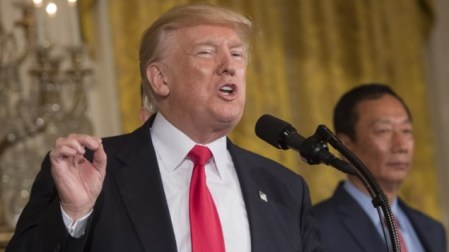
US President Donald Trump speaks during an event in the East Room of the White House in Washington, DC, July 26, 2017. (AFP/SAUL LOEB)

Trump faces another certification deadline in three months, and it’s far from clear that either new inspections or any “fixes” to address whether his concerns will be in place by then. Trump told the Wall Street Journal this week he expects to say Iran isn’t complying, setting a high bar for Secretary of State Rex Tillerson and other aides to persuade him otherwise.

“If it was up to me, I would have had them noncompliant 180 days ago,” Trump said.

************************************

A refusal by Tehran to allow monitors in military sites could give Trump the excuse he wants to cancel the nuclear agreement.

WASHINGTON (AP) — The Trump administration is pushing for inspections of suspicious Iranian military sites in a bid to test the strength of the nuclear deal that US President Donald Trump desperately wants to cancel, senior US officials said.

The inspections are one element of what is designed to be a more aggressive approach to preventing Iran from obtaining a nuclear weapon. While the Trump administration seeks to police the existing deal more strictly, it is also working to fix what Trump’s aides have called “serious flaws” in the landmark deal that — if not resolved quickly — will likely lead Trump to pull out.

That effort also includes discussions with European countries to negotiate a follow-up agreement to prevent Iran from resuming nuclear development after the deal’s restrictions expire in about a decade, the officials said. The officials weren’t authorized to discuss the efforts publicly and spoke on condition of anonymity.

The inspections requests, which Iran would likely resist, could play heavily into Trump’s much-anticipated decision about whether to stick with the deal he’s long derided.

If Iran refuses inspections, Trump would finally have a solid basis to say Iran is breaching the deal, setting up Tehran to take most of the blame if the agreement collapses. If Iran agrees to inspections, those in Trump’s administration who want to preserve the deal would be emboldened to argue it’s advancing US national security effectively.

The campaign gained fresh urgency this month following a dramatic clash within the administration about whether to certify Iran’s compliance, as is required every 90 days.

Trump was eager to declare Tehran in violation, even though the International Atomic Energy Agency that monitors compliance says its infractions are minor. At the urging of top Cabinet members, Trump begrudgingly agreed at the last-minute to avoid a showdown for another three months — but only with assurances the US would increase pressure on Iran to test whether the deal is truly capable of addressing its nuclear ambitions and other troublesome activities.

Trump faces another certification deadline in three months, and it’s far from clear that either new inspections or any “fixes” to address whether his concerns will be in place by then. Trump told the Wall Street Journal this week he expects to say Iran isn’t complying, setting a high bar for Secretary of State Rex Tillerson and other aides to persuade him otherwise.

“If it was up to me, I would have had them noncompliant 180 days ago,” Trump said.

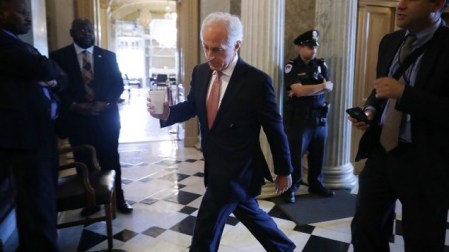
Senator Bob Corker (R-Tennessee) heads into the Senate Chamber at the US Capitol, in Washington DC, July 26, 2017. (Chip Somodevilla/Getty Images/AFP)

To that end, the administration is seeking to force Iran to let in IAEA inspectors to military sites where the US intelligence community believes the Islamic Republic may be cheating on the deal, several officials said.

Access to Iran’s military sites was one of the most contentious issues in the 2015 deal, in which Tehran agreed to roll back its nuclear program in exchange for billions of dollars in sanctions relief.

Last week in Vienna, where the International Atomic Energy Agency is based, Undersecretary of State Thomas Shannon floated the proposal to the European members of the Joint Commission that oversees the deal, one official said. Britain, France and Germany joined the US, Russia, China and the European Union two years ago in brokering the deal with Iran.

To force inspections of new sites in Iran, the US would need to enlist the support of the IAEA and a majority of the countries in the deal. But the US has run into early resistance over concerns it has yet to produce a “smoking gun” — compelling evidence of illicit activity at a military site that the IAEA could use to justify inspections, officials said.

Among the concerns about a rush toward inspections is that if they fail to uncover evidence of violations, it would undermine the IAEA’s credibility and its ability to demand future inspections. So the US is working to produce foolproof intelligence about illicit activity, officials said. The officials declined to describe the intelligence activities or the Iranian sites the US believes are involved.

Senator Bob Corker, R-Tennessee, who chairs the Senate Foreign Relations Committee, alluded to the strategy during an event hosted Wednesday by The Washington Post. Corker said the US was trying to “radically enforce” the deal by asking for access to “various facilities” in Iran.

“If they don’t let us in, boom,” Corker said. “You want the breakup of this deal to be about Iran. You don’t want it to be about the US, because we want our allies with us.”

As a candidate, Trump threatened to rip up the deal that US President Barack Obama brokered. As president, Trump has yet to take that step, as his administration finishes a broader Iran policy review expected to conclude in August.

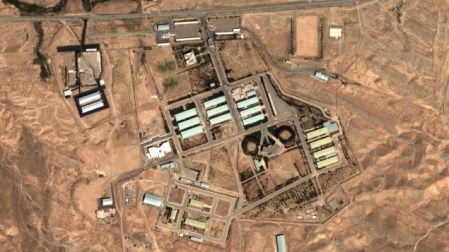
Satellite image of the Parchin facility, April 2012 (AP/Institute for Science and International Security)

The other major step to try and address what Trump has deemed flaws in the deal involves ensuring that Iran can’t revert to old behavior once the limitations on its program “sunset” over the next decade-plus. The US State Department said Trump has directed his administration to “work with allies to explore options” for dealing with that and other shortcomings. Talks are under way with the European countries about a supplemental deal, though it’s unclear how Iran could be persuaded to sign on.

The deal’s provisions for inspections of military facilities, or “undeclared sites,” involve a complex process with plenty of opportunities for Iran to stall. Tehran can propose alternatives to on-site inspections, or reject the request, which would trigger a 24-day process for the Joint Commission countries to override the rejection.

That could drag on for months. And under ambiguities built into the deal, it’s unclear whether Iran must allow IAEA inspectors into military sites, or whether the Iranians can take their own environmental samples and send them to the IAEA for testing, as was allowed under a 2015 side agreement that let Iran use its own experts to inspect the Parchin military site.

Even if Trump declares Iran in violation of the deal — a move that would invigorate his conservative base — he could still leave Iran’s sanctions relief in place.

American businesses are eager for the deal to survive so they can pursue lucrative opportunities in Iran. The aviation industry recently signed billions of dollars of contracts to sell passenger plans to Iranian airlines, including a $16.6 billion deal for Boeing.

A State Department Gone Rogue on Iran

July 25, 2017

A State Department Gone Rogue on Iran, JerusalemPostMatthew R.J. Brodsky, July 24, 2017

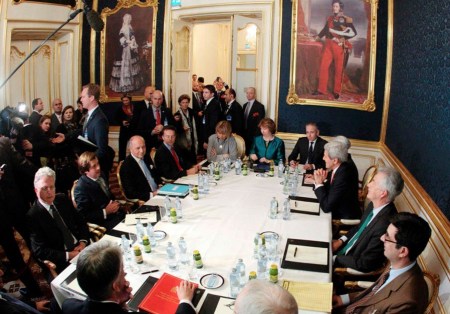
Final round of negotiations on a nuclear deal with Iran continue in Vienna November 21, 2014. (photo credit:REUTERS)

According to a recent report, the president assigned a White House team to focus on the Iran deal and sideline the State Department so that he has more options when the issue comes to the fore again in three months.

It’s not just Iran where the president sees a problem; the secretary has been actively tugging in the opposite direction when it comes to solving the Qatar crisis and on a host of issues related to Israel as well.

In many ways, the different view at the State Department should be expected, not just due to institutional issues where diplomats usually prefer finesse to force but because of personnel considerations as well.

Barack Obama holdovers are driving the State Department’s Iran policy.

****************************

For the second time during Donald Trump’s brief tenure as president, Secretary of State Rex Tillerson and the State Department won in the inter-administration battle over the fate of the nuclear deal with Iran, formally known as the Joint Comprehensive Plan of Action (JCPOA). That victory, however, may end up being short lived given the trajectory of the administration’s overall developing policy toward the regime in Tehran and the process by which the reoccurring 90-day certification of Iran took place in April and again on July 17.

The whole ordeal cast a light on the shrinking esteem in which the president seems to hold Secretary Tillerson and the crew of Obama-era holdovers upon whose guidance he relies.

Washington was briefly abuzz on the afternoon of July 17 when rumors began to circulate that President Trump was eager to declare that Iran was in breach of the conditions laid out in the 2015 Iran Nuclear Agreement Review Act (INARA).

Those receptive antennas were further heightened given the previous signals sent. After all, the State Department already released talking points to reporters on the decision to recertify Iran. The Treasury Department also had a package of fresh sanctions on over a dozen Iranian individuals and entities ready to announce to appease the hawks who were eager to cut loose from the deal.

But Trump didn’t want to recertify Iran, nor did he want to the last time around in April. That evening, a longtime Middle East analyst close to senior White House officials involved in the discussions described the scene to me: “Tillerson essentially told the president, ‘we just aren’t ready with our allies to decertify.’ The president retorted, ‘Isn’t it your job to get our allies ready?’ to which Tillerson said, ‘Sorry sir, we’re just not ready.’” According to this source, Secretary Tillerson pulled the same maneuver when it came to recertification in April by waiting until the last minute before finally admitting the State Department wasn’t ready. On both occasions he simply offered something to the effect of, “We’ll get ‘em next time.”

That for the second time, Team Tillerson forced the president to recertify Iran because they prepared no other options appears to have left a mark on Trump.

According to a recent report, the president assigned a White House team to focus on the Iran deal and sideline the State Department so that he has more options when the issue comes to the fore again in three months.

It’s not just Iran where the president sees a problem; the secretary has been actively tugging in the opposite direction when it comes to solving the Qatar crisis and on a host of issues related to Israel as well.

In many ways, the different view at the State Department should be expected, not just due to institutional issues where diplomats usually prefer finesse to force but because of personnel considerations as well.

Most pundits have pointed to the dwindling bench of the department’s roster. After all, many positions remain unfilled. When Tillerson chose Elliott Abrams to serve as deputy secretary, a well-known conservative who served under Ronald Reagan and George W. Bush, Trump even intervened to quash the appointment. The problem, however, is more about the people already in the department, rather than those yet to be appointed or hired.

Barack Obama holdovers are driving the State Department’s Iran policy.

They include Under Secretary of State for Political Affairs Thomas Shannon; Deputy Assistant Secretary for Iran in the State Department’s Bureau of Near Eastern Affairs Chris Backemeyer, who previously served as the director for Iran at the National Security Council (NSC) under Obama; and Deputy Assistant Secretary and former US special envoy for Syria Michael Ratney. The first two were directly involved in the recertification fiasco – twice. They, among others, made their careers selling the Iran deal and are dedicated to its preservation.

In April, the first draft of the language “was full of Obama-era lines” including several falsehoods promoting the utility of the JCPOA, such as the deal verifiably puts Iran a year away from a nuclear weapon, this source explained.

“There was a huge fight after they wrote it because some said it was too pro-deal and it used all kinds of Obama language.”

“The White House went ballistic,” he said, “and they forced rewrites until they had a statement that was just a few lines.”

The revised version praised neither the deal nor Iran’s actions and pointed to the NSC-led interagency review of the JCPOA – a White House victory on the language used but a State Department win on preserving the status quo in policy.

“Backemeyer and Shannon wrote the certification,” the source confirmed, “and they were closely involved in the certification process this time around.”

For an administration that otherwise sounds determined to curtail Iran’s expansionist ambitions, it’s a wonder that the same people who brought the deal across the finish line, made careers out of selling the deal and helped fill Tehran’s financial coffers are still running the show at the State Department.

What’s more, Secretary Tillerson seems supportive of that decision or oblivious to its impact.

In either case, the department is in open insubordination to the White House and neither scenario reflects well on the secretary or his team. Nevertheless, whether or not his days are numbered, the current policy of rubber stamping Iran’s certification certainly appears to be coming to an end.

The author is a senior fellow at the Security Studies Group in Washington, DC, a senior Middle East analyst at Wikistrat and a former director of policy at the Jewish Policy Center. 

U.S. Agency Promoting Trade With Iran Despite Trump Opposition

July 24, 2017

U.S. Agency Promoting Trade With Iran Despite Trump Opposition, Washington Free Beacon, July 24, 2017

(Please see also, Trump State Dept Unsure Why Palestinian Terrorists Kill Israelis. Fire the Obama hold-overs or put them where they can not impair President Trump’s agenda. How about air-conditioned igloos in northern Alaska?– DM)

Pistachio trees at an Iranian field that farmers left behind due to the lack of water / Getty Images

The U.S. Department of Agriculture is promoting increased trade with Iran, despite clear opposition to this policy by the Trump White House, according to multiple sources who described the agency’s behavior as rogue and part of a lingering effort by the former Obama administration to promote international trade with the Islamic Republic.

A July report released by USDA praises the Obama administration’s efforts to open trade with Iran following the landmark nuclear agreement that dropped major sanctions on the Islamic Republic. The report contradicts White House policy on Iran, which has taken an increasingly hardline against increased relations with Iran under President Donald Trump.

The report is being viewed by administration insiders and regional experts as the product of efforts by the former Obama administration to promote positive propaganda about Iran in a bid to boost support for the Iran deal.

These sources viewed the report as a sign that Trump administration agencies, including USDA and even the State Department, are taking increasingly rogue action contradicting official White House policy on a range of key issues.

“White House National Security Adviser H.R. McMaster should call his office,” according to Michael Rubin, a former Pentagon adviser and expert on rogue regimes. “A key component of his job—and one that his predecessors let slide—is to coordinate policy across departments. Alas, it seems that the USDA wants to pursue an independent foreign policy, one that is detrimental to broader U.S. national interests.”

The USDA report, which touts renewed prospects for trade between the United States and Iran in light of the Iran deal, outlines “the potential for new opportunities for U.S. producers in the long run.”

The report further touts the Iran deal as an opportunity to help Iran engage with international markets, including those in the United States, to sell products such as pistachios and caviar.

“The lifting of the U.S. import ban on Iranian agricultural products, including pistachios and caviar, [represents] a large new market for Iran’s most valuable export crops,” according to the USDA report. “Arguably as important, however, was the removal of certain U.S. ‘secondary sanctions,’ penalties levied on foreign persons and companies seeking to do business in Iran, particularly in its finance, banking, insurance, and energy sectors.”

“This significant change allows Iran to attract foreign investment, import equipment, and adopt new technologies, all of which bear on Iran’s agricultural production and consumption,” according to the report.

The report further claims that the United States could face competition from Iran in regards to the pistachio market and urges the American market to brace for such a scenario.

“One example of the JCPOA’s [Joint Comprehensive Plan of Action] possible effect on U.S. producers relates to pistachios,” the report states. “With relaxed import restrictions from Iran, U.S. producers potentially face new competition from the world’s largest pistachio producer and second largest pistachio exporter. Decades of sanctions and trade restrictions have pushed Iran out of the large U.S. and European markets, but news reports have suggested that Iranian pistachio imports could resurge.”

One veteran Iran analyst who is in regular contact with the White House described the report as propaganda meant to falsely promote Iranian moderation and the benefits of legitimizing the regime.

“As with Obamacare, the Obama administration conscripted the entire federal government to propagandize on behalf of the Iran deal,” the source said. “The intelligence community produced politicized reports falsely hinting at Iran moderation. The State Department produced reports saying that the Iran deal was working. The Treasury department dismantled its anti-proliferation infrastructure and then declared it couldn’t find anyone to sanction for proliferation.”

“So it’s not surprising the Agriculture Department was tasked with producing pro-deal propaganda about how the deal would benefit Americans,” the source added. “What’s surprising is that the Trump administration hasn’t managed to put a stop to that nonsense.”

Saeed Ghasseminejad, an Iran expert at the Foundation for Defense of Democracies, said the report contradicts efforts by the White House and Congress to increase pressure on Iran as a result of its illicit ballistic missile program and ongoing support for terrorism.

“The White House and Congress seek to put pressure on the mullahs in Tehran, at the same time we see that other parts of the U.S. government are endorsing and recommending policies which are not in line with the White House and Congress’ goal,” Ghasseminejad said. “The Islamic Republic of Iran is a strategic enemy of the United States; unfortunately many in DC prefer to forget this basic point.”

USDA did not respond to multiple requests for comment on the report’s origins and who authorized its production.

What Did Trump Certify?

July 21, 2017

What Did Trump Certify? Power Line,  Paul Mirengoff, July 21, 2017

“What that really foreshadows is once the policy review is done, we’re going to see a massive increase in pressure — not just sanctions pressure but using all instruments of American power.”

****************************************

Did President Trump certify to Congress on Monday that Iran is complying with the nuclear deal? This is what virtually of all of the reporting on his action says he did.

We wrote that, early in the day, National Security Council director H. R. McMaster indicated the administration would certify Iranian compliance. The next day we reported, per Eli Lake, that Trump had balked at providing certification and came close to not doing so, but in the end certified Iranian compliance.

But the invaluable Omri Ceren of the Israel Project informs us that, contrary to “almost all major reporting,” Trump stopped short of certifying that Iran is complying with the deal. Indeed, he removed language about Iranian compliance and added language emphasizing Iranian violations. This AP story confirms Ceren’s report.

What, then, did the president certify? He certified only that Iran has met the four narrow conditions of the 2015 Corker-Cardin bill, says Ceren. The four conditions are these:

(1) Iran is implementing the deal,
(2) Iran is not in material breach,
(3) Iran is not advancing its nuclear weapons program, and
(4) sanctions relief is appropriate and vital for U.S. national security.

In limiting his certification to the four conditions, and listing several Iranian violations, the administration made it clear that, although Iran is not in “material breach,” neither is it in full compliance. This is the compromise brought about by Trump’s last-minute intervention.

What difference do the changes make? They don’t change the fact that Iran will continue to get sanctions relief, for now. Only by refusing to certify one or more of the four conditions might this have changed.

However, the changes are not without significance. For one thing, they undermine the Iranian regime’s oft-repeated talking point that the Trump administration admits Iran is complying with the terms of the deal.

For another, they may signal a shift in policy towards the deal once the Trump administration completes its broad review of the Iran deal, which is expected to happen soon. As the estimable Mark Dubowitz of the Foundation for Defense of Democracies, who reportedly is advising the administration on Iran puts it: “What that really foreshadows is once the policy review is done, we’re going to see a massive increase in pressure — not just sanctions pressure but using all instruments of American power.”

Let’s hope so.

Iran may withdraw from N-deal for “US violations

July 18, 2017

Iran may withdraw from N-deal for “US violations, DEBKAfile, July 18, 2017

(Why not? Iran has already received all of the substantial U.S. financial benefits of the Iran Scam. Withdrawal would allow Iran to pursue its nuclear objectives without the minor conveniences of trying to hide them. Please see also, Iran’s Nuclear Weapons Program: On Course, Underground, Uninspected. — DM)

Iran’s Foreign Minister Mohammed Javad Zarif told a National Interest interview Tuesday: “If it comes to a major [US] violation, or what in the terms of the nuclear deal is called significant nonperformance, then Iran has other options available, including withdrawing from the deal.” This was his rejoinder to the Trump administration’s statement in certifying that Iran was in compliance of the nuclear deal while “in default of its spirit.”