Posted tagged ‘Trump and Iran’

Trump: New Iran sanctions, USS Cole to Red Sea

February 3, 2017

Trump: New Iran sanctions, USS Cole to Red Sea, DEBKAfile, February 3, 2017
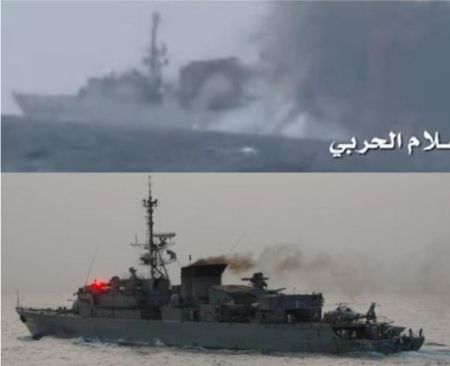
2-3

Friday, the US President laid down his markers for the US-Iranian contest which has begun to unfold, and is not ruling out its further escalation into full military confrontations, which may involve America’s allies, including Saudi Arabia and Israel.

*************************

Donald Trump ended his second week as president Friday, Feb. 3, by demonstrating his resolve to cut Iran down to size. This is his main preoccupation in the Middle East to the exclusion of all other Middle East issues.

After Trump personally warned the Islamic Republic that it was “playing with fire,” the US Treasury released a fresh round of anti-Iran sanctions, targeting 13 individuals and 12 entities, some based in the UAE, Lebanon and China. In the next hours, the USS Cole destroyer was posted to the Red Sea’s Bab al Mandeb Straits, after Iran-backed Yemeni Houthi rebels began planting mines in the strategic waterway and oil route chokepoint.

This was seen in Washington as a fresh Iranian provocation for escalating tensions, six days after a Houthi suicide attack in fast boats on a Saudi frigate on patrol in the Red Sea, and attacks on US vessels in October.

National security adviser Michael Flynn’s statement Wednesday putting Iran “on notice” for last week’s ballistic missile test, drew a snooty response Thursday night, from a top adviser to supreme leader Ayatollah Ali Khamenei that Iran will not yield to “useless” US threats from “an inexperienced person.”

Trump had evidently decided that Tehran’s scornful provocations deserved a fitting response.

He also pushed to the side all other Middle East questions.

Israel got a light tap on the wrist from another White House statement Friday, that its “new or expanded settlements in the West Bank may not be helpful in achieving Middle East peace,” although the US “has no official position on settlement activity.”

Jerusalem was given to understand that the Trump administration was too busy turning the screws on Iran to deal with “Middle East peace” and develop a settlement policy.

In this sense, Donald Trump is taking the opposite line to Barack Obama, his Secretary of State John Kerry and European powers today, who judge Jewish West Bank settlements to be the root cause – not just of the Israeli-Palestinian dispute, but of most other Middle East woes.

The US president also made little time for the visiting King Abdullah of Jordan, who, after moving heaven and earth to be received in the Oval Office, had to be satisfied with breakfast with Trump in Washington – even though Jordan is a vital element in the US-Russian safe zones plan for Syria and moreover host to a US Central Command war room for Syria.
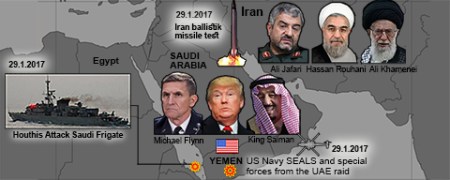
saudiiranyemenkoteret480eng

DEBKAfile’s sources in Washington report: After dodging the settlement issue, Trump was just as anxious to avoid being cornered on Jerusalem by the Jordanian monarch, which he would not have escaped had he received the king officially at the White House.

This does not mean that the new US president intends to line up with Prime Minister Binyamin Netanyahu or Education Minister Naftali Bennett on the settlement or any other issue. If he acts in character, Trump will not be sidetracked from his main objectives by actions which he views as irrelevant. He has said in the past that he would try his hand at Middle East peacemaking.

But for now, he is fully focused on getting Iran and its proxies, especially Hizballah, out of Syria. This goal is so challenging that he can’t hope to achieve it without Russia’s military assistance. Trump is willing to pay a high price for this help, including letting Vladimir Putin push his way into one corner after another n the Middle East, or standing aside for a partial reconciliation between Egypt and the Palestinian Hamas terrorists.

Last week, Ayatollah Khameinei still believed that by letting the Revolutionary Guards of the leash for provocative actions, he could push Trump back – hence the missile test, the Houthi suicide boats, and the advances made by pro-Iranian Shiite militias on the Mosul front in Iraq.

But Friday, the US President laid down his markers for the US-Iranian contest which has begun to unfold, and is not ruling out its further escalation into full military confrontations, which may involve America’s allies, including Saudi Arabia and Israel.

This contingency came up in the long conversation Trump held with Saudi King Salman on Jan. 29 and is widely covered in the Israeli prime minister’s almost daily discussions with members of his administration. Early Friday, Netanyahu talked on the phone to Secretary of State Rex Tillerson.

They all appreciate that Tehran or its Middle East proxies, such as the Lebanese Hizballah, may well hit back at the Trump administration in Syria or by limited military strikes against Riyadh and Tel Aviv.

These eventualities top Washington’s agenda for now and will dominate Middle East affairs in the near future.

Putting Iran on Notice

February 3, 2017

Putting Iran on Notice, Front Page MagazineKenneth R. Timmerman, February 3, 2017

zoobinmissile

What will the new Sheriff do? It’s easy to imagine Tehran’s leaders with their turbans in a twist, trying to read between General Flynn’s lines.

Strategic uncertainty, as long as it is followed up at some point with concrete action, is a huge advance in our policy toward the Islamo-fascist regime in Tehran. Keeping the Iranians guessing exactly what we will do, and how hard, potentially could even deter them from taking some aggressive actions.

******************************

The announcement from National Security Advisor Lieutenant General Michael Flynn on Wednesday that the Trump administration was “putting Iran on notice” after its latest ballistic missile test is bad news for the ruling clerical elite and its Revolutionary Guards, and potentially good news for Iranians who love freedom.

Pundits in the United States and Europe bemoaned a lack of specificity, although one snarky establishment commentator noted, it sounded like Flynn was saying, “do that again, and we’ll pop you.”

The Iranians responded with predictable chest-thumping. “Iran is the strongest power in the region and has a lot of political, economic and military power,” said former foreign minister Ali Akbar Velayati, now a top advisor to absolute ruler Ayatollah Khamenei.

He and other Iranian leaders warned that Iran would act in “self-defense” if the United States struck first, a scarcely-veiled threat to attack U.S. assets, U.S. friends and allies in the region, and possibly to carry out terrorist attacks on U.S. soil.

So what exactly did Flynn mean?

First, the obvious: there is a new Sheriff in town. Donald Trump is not Barack Obama. Nor is he George W. Bush, or Bill Clinton, or any of his predecessors who for the past 38-years have pretty much given the Islamic regime in Tehran a pass whenever it has attacked Americans.

What will the new Sheriff do? It’s easy to imagine Tehran’s leaders with their turbans in a twist, trying to read between General Flynn’s lines.

Did he mean the United States will blow Iranian patrol boats out of the water the next time they try to “swarm” a U.S. navy vessel in the Persian Gulf? The Islamic Revolutionary Guards Corps (IRGC) has been practicing such tactics for years, breaking off just hundreds of meters short of collision.

Those swarming attacks are a serious threat, since our naval gunners cannot know which of a dozen small boats may be intending to break off from the swarm in a suicide attack against our ship.

Or did he mean that the U.S. will respond if Iran test-fires another long-range ballistic missile? How so? Militarily? With new sanctions? Or with some form of technical sabotage such as Stuxnet?

That’s just it: they can’t know.

Perhaps General Flynn was referring to the “emergency” United Nations Security Council meeting on Tuesday, convened by the United States? But that’s where both Russia and France came to Iran’s aid, praising the nuclear deal and calling on the United States to maintain it.

Perhaps General Flynn was responding to the failure of the United Nations to respond, meaning that the U.S. is planning unilateral measures?

Oh, my: in Tehran, they just can’t know.

Strategic uncertainty, as long as it is followed up at some point with concrete action, is a huge advance in our policy toward the Islamo-fascist regime in Tehran. Keeping the Iranians guessing exactly what we will do, and how hard, potentially could even deter them from taking some aggressive actions.

A new, more muscular policy toward the Islamic state in Iran will have many moving parts. But first and foremost, it will identify the regime as an enemy of the United States of America. Because that is how they have behaved since their inception thirty-eight years ago next week.

America has never used the powerful tools at our disposal to punish – or heaven forbid, actually undermine – the Iranian regime. Here are just a few of the options that should be on the table:

• The U.S. could intensify Persian-language broadcasting from the Voice of America and Radio Free Europe/Radio Liberty, providing Iranians deprived of a free press with accurate information about the United States and about their own country. This will require major reforms at both services spearheaded by a dynamic new CEO at the Broadcasting Board of Governors.

• The U.S. could use the levers of power diplomacy to shun Iran at international organizations such as the United Nations Human Rights Council and UNESCO, and to prevent Iranian diplomats from international travel.

• The U.S. could use our permanent delegation to the IAEA in Vienna, Austria, to intensify intelligence sharing with UN inspectors to ensure they conduct rigorous inspections of Iran’s nuclear installations.

• The U.S. could take steps to curtail Iranian expansionism into Iraq, Syria, Yemen and Lebanon.

• The U.S. could actually punish the Iranian regime for its acts of international terrorism, including the 1983 Beirut bombings of our embassy and the U.S. Marine barracks, the 1996 attack on the Khobar Towers, the 1998 attacks on U.S. embassies in Africa, the 2000 attack on the U.S.S. Cole, the September 11, 2001 attacks, the ongoing supply of Explosively Formed Projectiles (EFPs) to militias in Iraq that have taken the lives of an estimated 1,500 U.S. servicemen, the bounty offered by the IRGC to Taliban terrorists for every American they kill, and the September 11, 2012 attacks in Benghazi.

Many of these attacks were carried out in conjunction with al Qaeda or al Qaeda affiliates, a relationship long pooh-poohed by the U.S. intelligence community but which in recent years has been well-documented.

Punishment could include identifying as war criminals the Iranian regime officials responsible for these acts, indicting them, and issuing Interpol Red Notices on them to prevent them from international travel. It could also include Treasury and intelligence community efforts to identify, block, and seize their overseas assets.

Finally, and most important of all, the U.S. could provide support for opponents of the Iranian regime to include open support for human rights and freedom advocates similar to what President Reagan did for Soviet refusniks, and covert support for active opposition groups inside Iran.

What will President Trump choose from this menu – and from the many other policy proposals that undoubtedly are being floated by his advisors?

Oh, my: in Tehran, they don’t know.

If it were my decision, I would say: let’s keep them guessing until the policies are ready for prime time. Then let’s roll them out and watch the Islamic State of Iran’s leaders squirm.

Trump slaps sanctions on Iran over missile test

February 3, 2017

Trump slaps sanctions on Iran over missile test, Washington Times, Dave Boyer, February 3, 2017

rockettheboatIn this Dec. 29, 2016, photo, released by the semi-official Iranian Students News Agency (ISNA), a long-range S-200 missile is fired in a military drill in the port city of Bushehr, on the northern coast of Persian Gulf, Iran.

The Trump administration hit Iran with new sanctions Friday, one day after President Trump said he had put Tehran “on notice” for testing a missile.

The Treasury Department announced sanctions against 13 individuals and 12 entities.

Speaker Paul D. Ryan said the “swift and decisive response proves that our new administration is serious about holding the Iranian regime accountable for its illicit behavior.”

Iran’s latest ballistic missile test was a flagrant violation of U.N. Security Council resolutions,” the Wisconsin Republican said. “I applaud President Trump for imposing new sanctions to crack down on Tehran’s dangerous ballistic missile program and support for terrorism across the globe.”

House Foreign Affairs Committee Chairman Ed Royce, California Republican, said Iran’s action poses “a direct threat to the United States and our allies.”

“I’m glad the administration is taking long-overdue steps to hold the regime accountable,” Mr. Royce said. “I look forward to working with the administration to build on these designations, push back against Iran’s destructive policies, and promote stability in the Middle East.”

Some of those on the sanctions list are based in the United Arab Emirates, Lebanon and China. The penalties were imposed under existing authority that had been issued by then-President Barack Obama. A bipartisan group of senators had urged Mr. Trump in a letter Thursday to take action against Iran.

“Iranian leaders must feel sufficient pressure to cease deeply destabilizing activities, from sponsoring terrorist groups to continued testing of ballistic missiles,” the lawmakers wrote. “Full enforcement of existing sanctions and the imposition of additional sanctions on Iran for its ballistic missile program are necessary.”

Iran tested a missile Sunday. On Wednesday, White House national security adviser Mike Flynn said the Trump administration was putting Iran “on notice,” calling the missile test “provocative.”

The missile launch was followed by Iran-backed Houthi militants’ deadly attack this week on a Saudi naval vessel in the Red Sea.

Mr. Trump told reporters Thursday that he wasn’t ruling out the prospect of military action against Tehran.

“Nothing’s off the table,” the president said.

Iran’s Foreign Minister Javad Zarif said on Twitter that the Iranian government was “unmoved” by Mr. Trump’s warnings.

“We’ll never initiate war,” Mr. Zarif said. “We will never use our weapons against anyone, except in self-defense. Let us see if any of those who complain can make the same statement.”

Ali Akbar Velayati, a top aide to Iran leader Ayatollah Ali Khamenei, said Thursday that Iran will continue to test ballistic missiles and “not ask any country for permission in defending itself.”

“This is not the first time that an inexperienced person has threatened Iran,” he said. “Iran is the strongest power in the region and has a lot of political, economic and military power. America should be careful about making empty threats to Iran.”

Mr. Trump said Friday that Iran is “playing with fire.”

“They don’t appreciate how ‘kind’ President Obama was to them,” he said on Twitter. “Not me!”

Mr. Obama signed an agreement with other world powers in 2015 to lift economic sanctions against Iran in exchange for limits on Tehran’s nuclear program and regular international inspections.

Mr. Trump has called it a bad deal and says he wants to renegotiate parts of it.

Russia freezes Syrian, Iranian military movements

January 31, 2017

Russia freezes Syrian, Iranian military movements, DEBKAfile, January 31, 2017

putinstopsyriaeng480

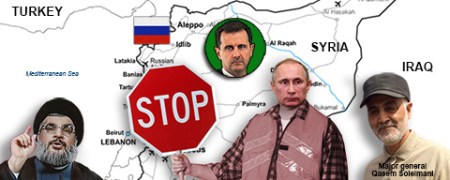
The ban came from Moscow to prevent military reprisals against the Putin-Trump deal for Syria.

Iran can no longer doubt that the two powers, America and Russia, have ganged up to push the Islamic Republic out of their way. Trepidation in Tehran was articulated on Monday, Jan. 30, at a convention staged in the Iranian capital to celebrate 515 years of Iranian-Russian relations, an anniversary that would not normally be marked by a special event.

****************************

An order to remain stationary was issued Thursday night, Jan. 26, by the Russian Commander in Syria Lt. Gen. Alexander Zhuravlev to the high commands of the Syrian army and of the Iranian and Shiite forces positioned in Aleppo, as well as Hizballah units in all parts of Syria. Gen. Zhuravlev, acting on instructions from Moscow, prohibited any movement by those forces out of their current positions as of noon local time.

DEBKAfile’s military and intelligence sources report that the order banned the opening of new battlefronts anywhere in Syria and the movement of Syrian air force units between bases.

This order has been obeyed to date.

The ban came from Moscow to prevent military reprisals against the Putin-Trump deal for Syria. There was no mention of penalties for disobedience, but the tone was peremptory. The three army commanders did not need reminding that the Russians are capable of using their electronic warfare systems to disrupt unauthorized military movements, jam their communications, and withhold fuel, ammo and spare parts to create havoc in their armies.

lieutenant_general_alexander_zhuravlev_120Russian Lt. Gen. General Alexander Zhuravlev

Moscow has never resorted to extreme action of this kind in previous Russian military interventions in Middle East lands.

The decision was taken shortly after the Kremlin was notified that US President Donald Trump had agreed to join forces with President Vladimir Putin in Syria.

Since then, the Trump administration has kept all dealings with Moscow over Syria under a cloak of secrecy, including the outcome of President Trump’s first phone conversation with his Russian counterpart Vladimir Putin. All other concerned parties, such as Israel, have been left groping in the dark about what happens next.

The Russian standstill order in Syria came shortly before the US presidential decree that barred Iranians from entering the United States (along with the nationals of six other terror-prone Muslim countries)

Iran can no longer doubt that the two powers, America and Russia, have ganged up to push the Islamic Republic out of their way. Trepidation in Tehran was articulated on Monday, Jan. 30, at a convention staged in the Iranian capital to celebrate 515 years of Iranian-Russian relations, an anniversary that would not normally be marked by a special event.

In his opening remarks, Foreign Minster Mohammed Zarif Javad said: that Iran and Russia “need to have far more extensive relations,” and “few countries in the world have relations as deep and historical as Iran and Russia.” This sounded like an appeal to Moscow for protection against the new US president. It most likely fell on deaf ears. Putin is fully engaged in promoting his new relations with Donald Trump.

Pseudo-liberal Jews cause great damage

January 29, 2017

Pseudo-liberal Jews cause great damage, Israel Hayom, Isi Leibler, January 29, 2017

We live in a world of chaos and upheaval.‎

Now is the time for all committed Jews to unite, stand together and concentrate primarily on ‎securing their own rights. Diaspora Jews who, from their comfortable armchairs, claim a ‎better understanding than Israelis of what is good for their security, should be treated with ‎contempt. Israel is entitled to expect support from committed Jews over the next few years ‎until it stabilizes its relationship with the world and creates an iron barrier to deter its ‎genocidal enemies.‎

****************************

Chaos is the order of the day throughout the entire democratic world.‎

This has been accelerated by the hypocrisy and intolerance of the vindictive Left, aided and ‎abetted by foolish bleeding-heart pseudo-liberals who have become accomplices in the ‎undermining of democracy.‎

One can understand that many Democrats were incredulous and devastated that Hillary ‎Clinton could be defeated by Donald Trump, whose lack of civility, absence of political ‎experience and coarse language even offended conservatives.‎

But the outpouring of rage, the histrionic protest marches throughout the world, the ‎establishment of committees to impeach Trump — even prior to the traditional 100-day ‎honeymoon period — is unprecedented. Contrary to all the claptrap about democracy that ‎they sanctimoniously preached while in office, leftists are unwilling to accept the fact that their ‎candidate was defeated by a parvenu.‎

The same chaos has swept through Europe, many of whose citizens are revolting against the ‎failure of the Brussels-based European Union bureaucrats to address their needs and above all ‎the collapse in the quality of their lives resulting from millions of so-called refugees flooding ‎their countries.‎

This has led to a rise in global populism, a revival of conservative and right-wing political ‎parties and rejection of the “politically correct” way of life imposed by sanctimonious liberal ‎ideologues.‎

How has this chaos impacted on Diaspora Jews?‎

As history has testified, during periods of stress and anxiety, Diaspora Jews face grave threats. ‎Anti-Semitism, already having reached record levels since the Nazi era, is poised to become ‎even more vicious. That situation has been temporarily muted because the prevailing threat of ‎Islamic fundamentalist terror attacks in many Western nations has directed public anger ‎toward Muslims rather than Jews. This does not apply to Hungary, Greece and Germany.‎

The Jews, as a minority that has suffered tyranny and persecution, would be expected under ‎current circumstances to concentrate primarily on their own security.‎

Ethics of the Fathers quotes Hillel the Elder, “If I am not for myself, who will be for me? But if I ‎am only for myself, what am I?”‎

Liberal-inclined Diaspora Jews — especially those lacking an authentic Jewish education — ‎appear to have reversed this dictum. They consider that the well-being of the world and ‎politically correct standards of social values must be their priority — with disregard to the harm ‎this inflicts on them as a community.‎

Observing Conservative and Reform Jewish leaders in the U.S., accompanied by once-‎mainstream liberal Jewish groups like the Anti-Defamation League and National Council of ‎Jewish Women, at the forefront of hysterical demonstrations accusing Trump of being fascist ‎and encouraging anti-Semitism, it is if they have been possessed by a dybbuk. ‎

The same bleeding hearts in the U.S. as well as those in Europe were at the forefront of calls to ‎open the gates to Muslim “refugees” steeped in anti-democratic behavior and nourished on ‎diets of undiluted, visceral anti-Semitism. Setting aside the question of ISIS terrorist sleeper ‎cells, there is little doubt that these elements will strengthen existing anti-Semitism in the older ‎immigrant Muslim communities that failed to integrate. Yet many Jews are so dismally ignorant ‎and oblivious that they even compare these immigrants to Jews facing annihilation during the ‎Holocaust who were denied haven by other democratic countries.‎

This behavior is even more disturbing at a time of historic opportunities with Trump’s election. ‎

Although by no means yet assured, the U.S., still the only true global superpower, may truly ‎treat Israel as a genuine ally, a move that would be reinforced by an overwhelmingly pro-Israel ‎Congress ‎

Trump has repeatedly proclaimed his determination to reverse former President Barack ‎Obama’s hostile anti-Israeli policy and create a new alliance between the U.S. and Israel that ‎would be sensitive to the security needs of the Jewish state. ‎

His commitment to recognizing Jerusalem as the capital of Israel would have more than ‎symbolic value. It would have a major impact in reversing the odious definition of the ‎settlement blocs and even the Western Wall and Temple Mount as occupied territory. Israel ‎could proceed to build homes and the Jewish neighborhoods over the Green Line would ‎prosper. ‎

Furthermore, the U.S. will hopefully no longer acquiesce to the U.N. persecution of Israel and ‎will reject calls to return to the indefensible 1949 armistice lines. ‎

Trump is also likely to bring an end to the U.S. component of the scandalous $300 million per ‎annum provided to the Palestinian Authority, much of which is doled out to murderers. ‎

Israel will also have a powerful ally that recognizes Iran as a rogue state and would ‎substantially reduce the genocidal threat from the Iranian Muslim fundamentalists.‎

All this has yet to be delivered but there is no doubt that there is now a window of opportunity ‎which Israel should exploit to dramatically minimize the security challenges and separate from ‎the Palestinians with defensible borders. This can be achieved if Israel now has the support of a ‎U.S. that can be counted on as a true ally. Over the past eight years under Obama, the U.S. ‎dramatically eroded Israel’s diplomatic standing, treated the Jewish state as a pariah and ‎provided incentives to the Palestinians to stall negotiations and engage in terror. With ‎renewed American support, Israel could at long last stabilize itself.‎

There is no disputing that many Democratic Party supporters, including large numbers of Jews, ‎were bitterly disappointed at the election result and were further outraged by Trump’s ‎triumphant and, in their view, divisive inaugural address.‎

But surely it is in the interest of the Jewish community to develop a good relationship with the ‎new administration, especially taking into account the enormous uplift it could provide to the ‎beleaguered Jewish state. Even setting aside his religious Jewish son-in-law, Trump has always ‎been close to Jews and his inner councils incorporate an unprecedented number of passionate ‎religious Zionist Jews. This was highlighted by the honored role of Rabbi Marvin Hier as the ‎first Orthodox rabbi invited to invoke a prayer at the presidential inauguration. ‎

In this context, setting aside individual political beliefs, one must question the legitimacy of ‎those purportedly mainstream Jewish organizational leaders who led the scurrilous accusation ‎of fascism against the new president and the Jewish progressive religious groups calling for ‎mourning and fasting. ‎

One of the main justifying positive elements of progressive Jews was that even if they did not ‎consider themselves obligated to follow Halachah, their activity would ensure that ‎they at least remained within a Jewish framework. What their leaders are doing now is the ‎opposite — encouraging them to take up liberal causes even if it means forsaking Israel, the ‎most fundamental component providing them with a Jewish identity. ‎

They have reversed Hillel’s maxim and act for what they perceive to be the universal needs of ‎humanity, dismissing the interests of their own people. They are undermining themselves as a ‎community and acting as lemmings marching off a cliff to their own destruction. ‎

There is only one example in Jewish history to which such behavior can be compared. The ‎Jewish Bolsheviks also turned against their own people and ultimately the revolution ‎consumed them. Unfortunately, the vociferous anti-Trump Jewish activists are a far ‎greater proportion of the American Jewish community than ‎Jewish Bolsheviks were among Russian Jews.‎

It is clear that in the Diaspora, committed Jews will remain overwhelmingly supportive of Israel ‎while the pseudo-liberal or progressive Jews will become less interested in Israel and ultimately ‎lose their identity. Indeed, Christian evangelicals now play a far greater role in promoting Israel ‎than some of the mainstream Jewish groups. ‎

We live in a world of chaos and upheaval.‎

Now is the time for all committed Jews to unite, stand together and concentrate primarily on ‎securing their own rights. Diaspora Jews who, from their comfortable armchairs, claim a ‎better understanding than Israelis of what is good for their security, should be treated with ‎contempt. Israel is entitled to expect support from committed Jews over the next few years ‎until it stabilizes its relationship with the world and creates an iron barrier to deter its ‎genocidal enemies.‎

Once the threats to the Jewish people have been overcome, we can and will become more ‎directly involved in tikkun olam and fulfilling Rabbi Hillel’s wise advice.‎

Trump-Putin deal on Syria bears on Israel security

January 28, 2017

Trump-Putin deal on Syria bears on Israel security, DEBKAfile, January 28, 2017

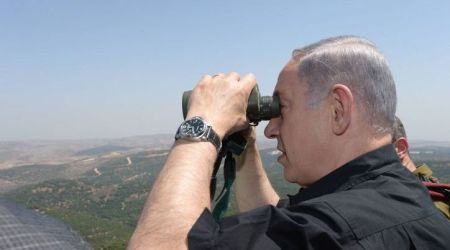
Israeli Prime Minister Benjamin Netanyahu looks through binoculars during his visit in the Northern district border of Israel on August 18, 2015. Photo by Amos Ben Gershom/GPO *** Local Caption *** ???? ??? ?????? ?????? ?????? ?????? ????? ????? ???? ????

Israeli Prime Minister Benjamin Netanyahu looks through binoculars during his visit in the Northern district border of Israel on August 18, 2015. Photo by Amos Ben Gershom/GPO

1. Will Washington and Moscow go through with the expulsion from Syria of Iranian forces and their proxies, including Hizballah – and take it all the way until it is accomplished?

2. After they are gone, who will take over the areas they evacuate?

3. Will Bashar Assad stay on as president, or has his successor been nominated?

4. The most burning question of all is the level of Hizballah’s armament. Not only must Hizballah forces be pushed out of Syria, but it is essential to strip them of their sophisticated new weaponry, including missiles. Israel’s military and security chiefs assess Hizballah’s arsenal as having been upgraded in recent weeks to a level that directly impinges on Israel’s security.

**************************

It would be a mistake to take it for granted that Prime Minister Binyamin Netanyahu’s talks with President Donald Trump in Washington early next month will be plain sailing or produce an automatic shower of benefits for the Jewish state. It is understood in Jerusalem that a new order is unfolding close to Israel’s borders, which is not yet fully in the sights of its government, military and intelligence leaders. This process is going forward at dizzying speed in Syria, currently the central Middle East arena, where Presidents Donald Trump, Vladimir Putin and Tayyip Erdogan have agreed to cooperate.

The British Prime Minister Theresa May picked up fast on the new power equation. After standing before the media with the US President Friday, Jan. 27, and declaring hopefully, “Britain and the US can once again lead the world together,” she decided to fly straight from Washington to Ankara Saturday, before returning home.

The outcome of her first meeting with President Erdogan was one of the fastest defense collaboration pacts ever negotiated for trade and the war on terror. The British leader lost no time in getting down to brass tacks on how British military and intelligence can be integrated in the joint US-Russian-Turkish military steps for Syria. Erdogan did not exactly receive her with open arms. He did not afford his visitor the courtesy of placing a British flag in the reception room in his palace.

Israel is in much the same position. Israel stayed out of military involvement in the Syrian civil war, according to a policy led by Netanyahu, former Defense Minister Moshe Ya’alon and OC Northern Command Maj. Gen. Avivi Kochavi (then Direct of Military Intelligence). This policy has left Israel out of today’s decision-making loop on Syria’s future.

Towards the end of 2015, shortly after Russia embarked on its massive military intervention in the Syrian conflict, Netanyahu took steps for safeguarding Israel’s security interests by setting up a direct line with the Russian president. It was translated into a military coordination mechanism between the Russian air force command in Syria and the Israeli air force, with Gen. Valery Gerasimov, Russia’s Chief of General Staff, and Maj. Gen. Yair Golan, Israel’s Deputy Chief of Staff, in charge of this direct military link.

Any problems that could not be solved at the military level were promptly turned over to be addressed at meetings or in phone calls between Netanyahu and Putin.

In one example, the prime minister obtained an undertaking from the Russian president to keep Iranian forces and Iran’s Shiite surrogates, including the Lebanese Hizballah, away from the Syrian-Israeli border, or allow them to use borderlands to send terrorists into Israel.

Shortly after Trump’s election victory (Nov. 8, 2016), the spadework on his collaboration with Putin was quietly begun by their national security advisers, Michael Flynn, in New York and Nikiolai Platonovich Patrushev in Moscow.

Jerusalem knew what was going on, but was taken aback by the speed at which those close understandings ripened into US-Russian deals on the ground. Before Trump had finished his first week in the White House, US warplanes had escorted a Russian air strike against ISIS in Syria.

This rush of events injects further urgency into Netanyahu forthcoming talks with the US president.  Whereas in the second term of the Obama presidency, the Israeli leader was wont to travel to Moscow or Sochi to sort out security problems relating to Syria, henceforth he must directly engage Donald Trump as the lead player.

So when the Israeli premier travels to the White House next month, he will have to address four pressing concerns, all relating to the fast-moving Syrian scene:

1. Will Washington and Moscow go through with the expulsion from Syria of Iranian forces and their proxies, including Hizballah – and take it all the way until it is accomplished?

2. After they are gone, who will take over the areas they evacuate?

3. Will Bashar Assad stay on as president, or has his successor been nominated?

4. The most burning question of all is the level of Hizballah’s armament. Not only must Hizballah forces be pushed out of Syria, but it is essential to strip them of their sophisticated new weaponry, including missiles. Israel’s military and security chiefs assess Hizballah’s arsenal as having been upgraded in recent weeks to a level that directly impinges on Israel’s security.

Not Satire | No One Can Humiliate Iranian Nation, Official Says after Trump’s Visa Ban Order

January 28, 2017

No One Can Humiliate Iranian Nation, Official Says after Trump’s Visa Ban Order, Tasnim News Agency, January 28, 2017

iranianjerk

He further highlighted the long history of peaceful coexistence among various Iranian religions, ethnicities, cultures and races, stressing that Iran has never been familiar with racial prejudice.

******************************

TEHRAN (Tasnim) – After the new US president signed an executive order banning all immigrants and visa holders from seven countries, including Iran, from entering the US for 90 days, a senior Iranian official reminded Trump of Iran’s rich history and its aversion to violence and terrorism.

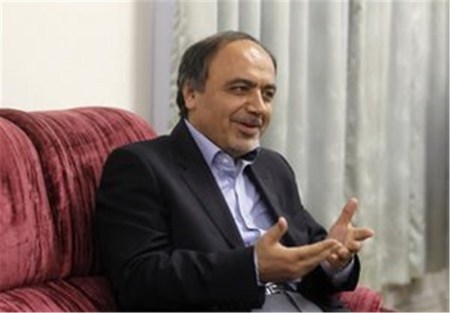
In a post on his Twitter account on Saturday, Political Deputy of Iran’s Presidential Office Hamid Aboutalebi called on US President Donald Trump to study about Iranians’ Aryan history, Islamic humanitarian values, and philanthropy, asking Trump whether he has ever heard of the Cyrus Charter – also known as the Cyrus Cylinder, believed to be the oldest charter or symbol of universal human rights.

Aboutalebi said that Iran takes pride in hosting Muslims, Jews, Christians and Assyrians for millennia and that the “old and very civilized nation of Iran” does not tolerate violence and terrorism but opposes them.

He further said that the Iranian nation has stood proud and dignified over the past 3,000 years, reminding Trump that nobody has been able to humiliate Iranians throughout the country’s history.

The new order Trump signed on Friday bars all persons from seven countries from entering the US for 90 days and suspends the US Refugee Admissions Program for 120 days. The countries impacted are Iran, Iraq, Syria, Sudan, Libya, Yemen and Somalia.

Trump’s order will also cancel the Visa Interview Waiver Program, which once allowed repeat travelers to the United States to be able to forgo an in-person interview to renew their visa. Under the new order, these travelers will now have to have in-person interviews.

In comments on Saturday, Iranian President Hassan Rouhani said today’s world would not tolerate separating peoples.

There is no room for separation of nations in the present era, the Iranian president explained, saying people of the world have turned into neighbors due to cultural, scientific and civilizational globalization.

He further highlighted the long history of peaceful coexistence among various Iranian religions, ethnicities, cultures and races, stressing that Iran has never been familiar with racial prejudice.

Re-isolate Iran now

January 27, 2017

Re-isolate Iran now, Israel Hayom, David M. Weinberg, January 27, 2017

In fact, the U.S. and Israel should reach an accord on a basket of responses to Iranian violations and aggressions, including the placement of a military option against Iran’s nuclear program back on the table.

Trump and Netanyahu must together promulgate an approach for combating the malign influence and hegemonic ambitions of Iran.

*********************************

Prime Minister Benjamin Netanyahu has made it clear that one of the top items on his agenda for consultation with U.S. President Donald Trump in Washington next month is countering Iranian aggression. With good reason. The net result of the Joint Comprehensive Plan of Action has been to foster Iran’s rise to regional hegemon.

While the JCPOA suspended a part of Iran’s nuclear weapons program for a few years, the ayatollahs see it as providing time to advance their centrifuge capability and regional sway.

In a Hoover Institution paper published this month, Professor Russell Berman and Ambassador Charles Hill call Iran a “de facto Islamic caliphate,” and the Islamic Revolutionary Guard Corps an “Iranian expeditionary force for invading strategic Arab spaces.”

They call former President Barack Obama’s declared goal — of finding and bolstering so-called moderates in Tehran via the JCPOA — an “illusion.” Iran is not a polity of moderates and hard-liners, they write. It is a revolutionary theocracy masquerading as a legitimate state actor. So the first thing Trump must do is recognize the consistently hostile character of the regime.

Alas, Obama was obsessed from the advent of his presidency with making nice to Iran, and was willing to subordinate much of American foreign policy in service of that goal. He sent many secret letters to Supreme Leader Ayatollah Ali Khamenei that recognized the prerogatives of the Islamic republic and foreswore regime change. He cut funding to anti-regime groups and abandoned Iranian moderates during the early days of the Green Revolution in 2009, after the regime fixed an election. He effectively conceded Syria as within Iran’s sphere of influence.

In his penetrating book, “The Iran Wars: Spy Games, Bank Battles, and the Secret Deals That Reshaped the Middle East,” Wall Street Journal reporter Jay Solomon exposes the money trail that accompanied this strategic sellout to Iran. In exchange for talking, Obama gave the Iranians hundreds of millions of dollars monthly, stabilizing their economy. And in the end, Obama offered Iran a deal that legalized full-blown uranium, plutonium, and ballistic missile work on a timeline, and did not force the country to disclose its previous nuclear cheating. The deal also released roughly a hundred billion dollars to Iran; had American officials traveling to drum up business for Iran; and removed restrictions on a range of Iranian terrorists.

Along the way, the administration abandoned the powerful sanctions leverage it had over Iran. Solomon chronicles the ramp-up of severe banking sanctions on Iran that were having a disastrous impact on the Iranian economy. “Iran’s economy was at risk of disintegrating, the result of one of the most audacious campaigns in the history of statecraft. The country was months away from running short on hard currency. The budget had a $200 billion black hole. And the U.S. Treasury Department had made sure Iran had no way to recover. Iranian ships and airplanes were not welcome beyond Iran’s borders, and oil revenue was frozen in overseas accounts.”

And then, behold, Obama backed off. Administration officials all of a sudden claimed that tightening the noose on the Iranian economy would cause the sanctions policy to collapse! And Secretary of State John Kerry was sent to cut a sweet deal with Iran; a deal that squandered — and then reversed — a decade’s worth of effort to constrain Iran.

Now Trump must act to constrain Iran all over again.

Over the past year, Iran has intensified a pattern of aggression and increased its footprint across the region. Iranian advisers with Shiite militias from as far away as Afghanistan have flooded Syria, giving Tehran a military arc of influence stretching to the Mediterranean.

Khamenei says that Iran’s massive military presence (alongside Hezbollah) in Syria is a supreme security interest for the regime — a front line against Israel — and that Iran has no plans to leave.

This has grave implications for Israel. Netanyahu must demand of Trump (and Putin) to include the removal of all foreign forces, especially Iran, in any future agreement regarding Syria. This will be very difficult — especially since Russia has just signed a long-term agreement to greatly enlarge its military presence in Syria, including the port in Tartus and air base in Latakia.

Iran, too, is aggressively expanding its naval presence in the Red Sea region and eastern Mediterranean. Since 2011, it has been sending warships through the Suez Canal, and has used maritime routes to send arms shipments to Hizballah and Hamas. (Israel has intercepted five of these armament ships.) And in the Strait of Hormuz, IRGC speedboats have repeatedly engaged in provocative encounters with American warships, including the conduct of surprise live rocket fire exercises in proximity to U.S. Navy vessels.

Then there is Iranian terrorism. IRGC agents have been caught planning attacks on Israeli, American, British and Saudi targets in Kenya. Over the past five years, Iranian agents were exposed while planning to attack Israeli diplomats in Azerbaijan, Cyprus, Georgia, India, Nigeria, Thailand and Turkey. Hezbollah operatives supported by Iran carried out the bus bombing of Israeli tourists at the Burgas airport.

Also: The detailing of Iranian terrorism in Arab countries such as Egypt, Jordan and Saudi Arabia could fill this entire newspaper.

Then there is Iran’s ballistic missile program. In December, U.S. Senator Ted Cruz sent a seven-page letter to three senior officials of the Obama administration, detailing his well-founded concerns that North Korea and Iran might be working together on developing nuclear missiles. (Not surprisingly, the Obama officials never answered.)

Cruz’s basic question was: Why does Iran, having promised not to make nuclear weapons, continue to pour resources into developing long-range ballistic missiles, including numerous missile tests this past year? If not for nuclear weapons, then for what?

The intrepid analyst Claudia Rosett continually has raised the suspicion that North Korea’s nuclear program is secretly doubling as a nuclear backshop for Iran. It’s very possible that the $1.7 billion in air-freighted cash that Obama granted Iran is being used to finance nuclear weapons and missile research in North Korea. It’s even possible that Iran may be bold enough to buy warheads from North Korea.

Only Washington can stop this, by re-isolating and pressuring Iran. Netanyahu should travel to Trump with a comprehensive plan to influence U.S. policy toward Iran, as well as plans for joint action against Tehran.

This should include an end to the secrecy surrounding many sections of the JCPOA. All side agreements should be disclosed relating to Iranian technology acquisitions, raw material quantities, uranium and plutonium enrichment levels, sanctions relief and financial transfers. Loopholes and exceptions made surreptitiously by Obama should be closed.

Penalties should be set firmly in place for Iran’s prohibited missile programs. (Such penalties do not exist in the JCPOA or in U.N. Security Council Resolution 2231.)

U.S. and Israeli resources should be pooled, in a renewed and formal U.S.-Israel agreement, to uncover and eliminate any undisclosed sites within Iran connected to nuclear weapons technology; to counter Iranian terror threats across the region; and to subvert any Iranian bases in Syria and Lebanon.

In fact, the U.S. and Israel should reach an accord on a basket of responses to Iranian violations and aggressions, including the placement of a military option against Iran’s nuclear program back on the table.

Trump and Netanyahu must together promulgate an approach for combating the malign influence and hegemonic ambitions of Iran.

Laugh While You Can

January 25, 2017

RIGHT ANGLE: Laugh While You Can, Bill Whittle Channel via YouTube, January 24, 2017

(This video was recorded and aired for members only shortly before Obama ceased to be President. It deals with the US Military and Iran under Obama and the differences to be expected under President Trump. — DM)

Sanctioned Iranian Airlines Ferrying Illicit Weapons to Tehran

January 24, 2017

Sanctioned Iranian Airlines Ferrying Illicit Weapons to Tehran, Washington Free Beacon, January 24, 2017

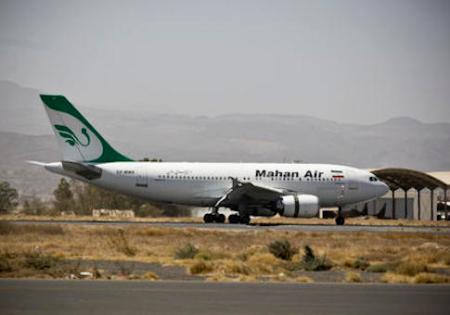
A plane from the Iranian private airline, Mahan Air lands the international airport in Sanaa, Yemen, Sunday, March 1, 2015. The first direct flight from Iran to the rebel-held Yemeni capital arrived, Sunday, an Airbus 310 carrying Iranians including aid workers from the Iranian Red Crescent as Yemen's Shiite rebels formalize ties with the regional Shiite powerhouse. The rebels, who overran the capital, Sanaa, last September, are widely believed to have support from Iran, a claim they frequently denied. (AP Photo/Hani Mohammed)

A plane from the Iranian private airline, Mahan Air lands the international airport in Sanaa, Yemen, Sunday, March 1, 2015.  (AP Photo/Hani Mohammed)

Boeing and Airbus should be paying close attention to the situation developing in Ukraine, according to one senior congressional adviser, who told the Free Beacon that the Trump administration would take sanctions enforcement more seriously than the Obama administration. The two airlines could find themselves ensnarled in sanctions violations if they move forward with deals to sell plans to Iran, the source said.

***********************************

Two airlines sanctioned by the United States for enabling Iran’s global terrorist operations appear to have played a central role in moving illicit missile components from Ukraine to the Islamic Republic, according to information obtained by the Washington Free Beacon.

Ukrainian authorities confirmed this week they had seized a shipment of missile system components bound for Iran, which could put the Islamic Republic in violation of international bans prescribed under the nuclear agreement.

Video of the seizure show Ukrainian authorities uncovering 17 boxes of missile parts bound for Iran and meant to be used in its Fagot anti-tank guided missile system.

Sources familiar with the incident told the Free Beacon that the airlines involved in this illicit activity have long been sanctioned by the United States for providing support to Iran’s global terror network. The reversal of longstanding economic sanctions on Iran provided under the nuclear agreement has boosted this activity and strengthened Iran’s illicit weapons pipeline, according to these sources.

Iran’s use of commercial airlines to import weapons has been well documented over the years. This latest incident could complicate efforts by global airplane manufacturers Boeing and Airbus to complete landmark deals with the Islamic Republic that are fiercely opposed by many in Congress.

The Free Beacon disclosed late last year that Iran secretly has been using commercial aircraft to smuggle weapons to terrorists supporting Syrian President Bashar al-Assad in that country’s bloody civil war. Many of the commercial planes flown by Iran were originally sold by the United States and later repurposed by Iran for use by its Air Force and Revolutionary Guard Corps, or IRGC, sources said.

“Iran was caught red-handed trying to import military hardware, including infrared guided anti-tank missiles,” Rep. Peter Roskam (R., Ill.), a vocal opponent of Boeing’s efforts to sell new planes to Iran, told the Free Beacon. “This is yet another example of the Islamic Republic using commercial aircraft for military purposes. Airbus and Boeing cannot claim ignorance on this—the Regime’s behavior is on full display before the world.”

The exposure of this illicit network in Ukraine demonstrates that Iran continues to use commercial airlines as cover for its movement of arms and other illicit materials, sources said.

The weapons were found onboard planes operated by Ukraine’s UM Airlines, which officially partners with Iran’s Mahan Air. The United States has sanctioned both carriers for providing support to Iran’s terror network, including the transportation of weapons and resources to the terror group Hezbollah, an Iranian proxy group.

Business between UM and Mahan reached its highest levels following the Iran nuclear agreement, when the Obama administration lifted longstanding economic sanctions on Iran. Removing the sanctions paved the way for the airline partnership and the multi-billion dollar trade deals between Iran, Boeing, and Airbus.

Mahan officially entered the Ukrainian marketplace in 2016 and now partners with UM on daily flights into Tehran.

While the removal of sanctions under the Iran deal helped to legalize business ties possible between the two airlines, they continue to carry out illicit activities, as highlighted by the missile shipment discovered this week.

Experts say there is no way to know how much illegal activity the two carriers have engaged in during their partnership.

“Authorities in Ukraine should be commended for seizing the weapons shipment, but when Ukraine asks the United States for economic and military assistance, the least it could do is not allow airlines, sanctioned for their support of the Assad regime and the IRGC, to operate from their soil,” Boris Zilberman, a regional expert and deputy director of congressional relations at the Foundation for Defense of Democracies, told the Free Beacon.

Boeing and Airbus should be paying close attention to the situation developing in Ukraine, according to one senior congressional adviser, who told the Free Beacon that the Trump administration would take sanctions enforcement more seriously than the Obama administration. The two airlines could find themselves ensnarled in sanctions violations if they move forward with deals to sell plans to Iran, the source said.

“No one is surprised that the Iranians are running weapons literally any way they can. Not even the Obama administration ever claimed that Iran stopped using civilian airlines like Iran Air for military uses,” said the source, who works with Congress on sanctions enforcement issues. “If I was Boeing or Airbus, I’d be worried about a knock on the door from Trump administration sanctions enforcers sooner rather than later.”

A State Department official was not able to provide information as to whether the missile discovery violates international agreements governing the nuclear deal.

“We’ve seen these reports but we do not have any further comment at this time,” the official said.

Emails and phone calls to the Ukrainian embassy in Washington, D.C., seeking comment were not answered.